Branding and decoration
Private Label Clothing Labels and Packaging
Labels and packaging are production items with their own suppliers, minimums and lead times, not a finishing touch. A garment cannot be packed until they exist, so they belong in the specification from the start rather than being decided once the goods are sewn.
Contents
- The label set
- Woven or printed neck labels
- Care and composition labels
- Hangtags and retail presentation
- Packing: the specification that holds goods up
- Labels and packing for merch shops, promotional distributors and staff roll-outs
- Minimums and lead times
- Sustainability requirements
- What to put in the tech pack or RFQ
- Questions buyers ask
Labels and packaging are where private-label programmes are quietly won or lost. They are the parts of the product a customer handles first, they carry legally required information, and they are a common reason finished garments sit in a factory waiting to ship.
This guide covers what the components are and how to specify them. What the law requires the labels to say is covered separately for the EU and the United States, and those requirements differ.
The label set
| Component | Purpose | Decisions to make |
|---|---|---|
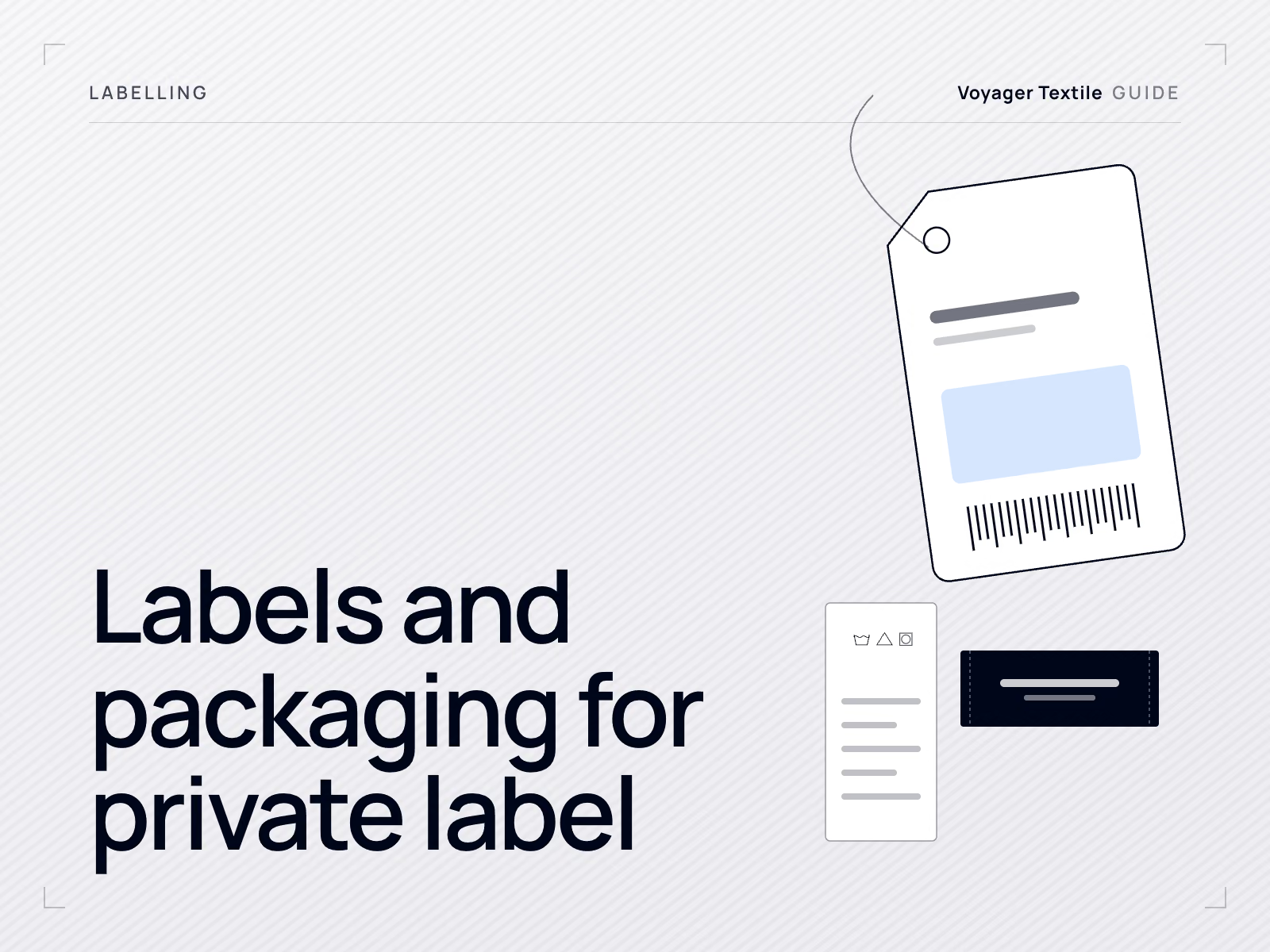
| Main or neck label | Carries the brand | Woven or printed, sewn in or heat applied, loop fold or end fold |
| Size label | Identifies the size | Separate label or printed into the main label; which market's sizing convention |
| Care and composition label | Carries fibre content, care information and identification required by your market | Content, language, position, and whether it is combined with the size label |
| Origin marking | States where the garment was made, where required | Whether it is required in your market and where it must physically appear |
| Hangtag | Retail presentation and additional information | Card, string or pin attachment, print finish, barcode |
| Additional labels | Sleeve badges, side-seam labels, flags | Placement, size, whether they are decorative or informational |
Woven or printed neck labels
Woven labels are made by weaving the design into the label, which gives a crisp, durable result and a quality feel. They come in different qualities of weave, and the choice affects both the level of detail achievable and the softness against the skin.
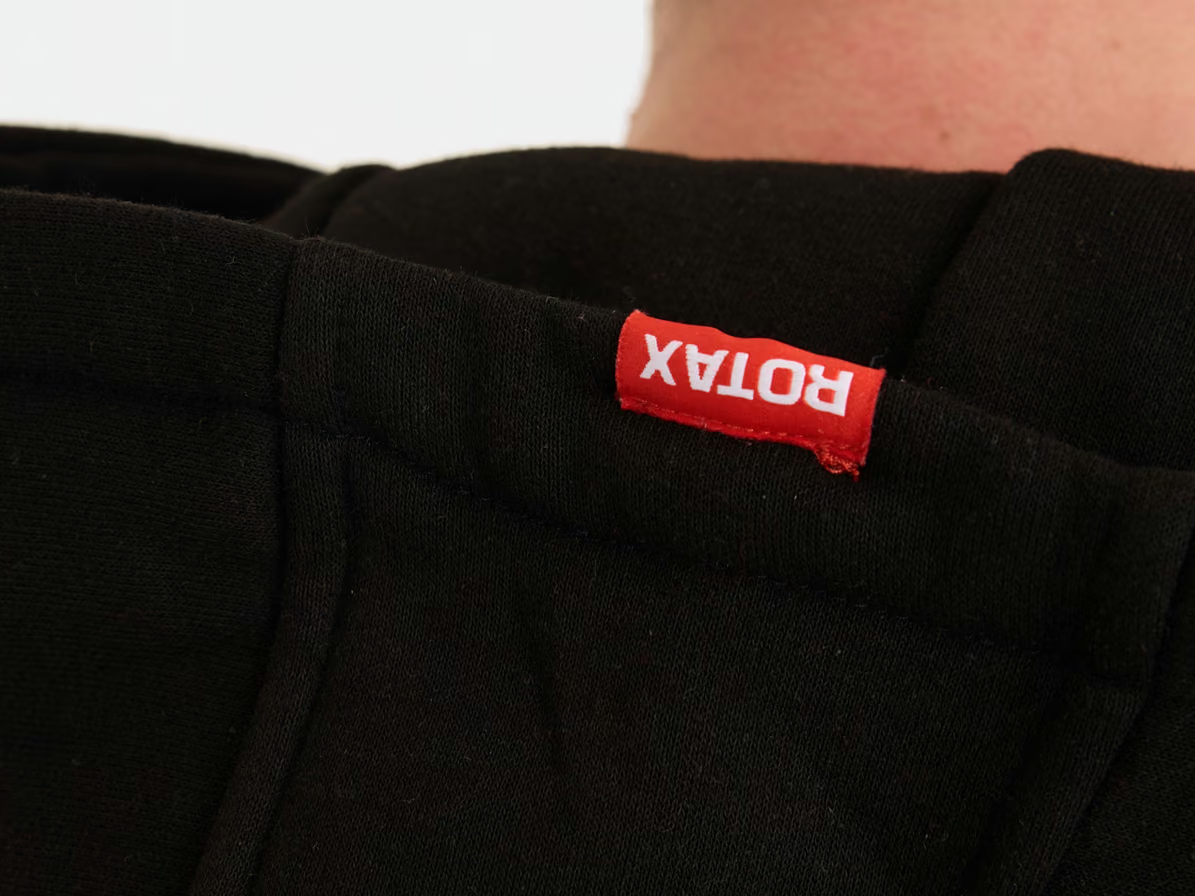

Printed labels, usually on satin or a soft tape, are cheaper and better for fine detail and photographic elements, but they wear faster with repeated washing. Printed neck labels, applied directly to the garment instead of a sewn label, have become common in streetwear and sportswear because they remove the irritation of a sewn label entirely. That decision has to be made early, because it changes how the neckline is finished.
Care and composition labels
This label is not a design element. It carries information that is legally required in most markets, and the requirements differ between the EU and the United States. Getting it wrong is a compliance problem rather than an aesthetic one, and the responsibility usually sits with the brand or importer rather than with the factory.
- Decide the content, and check it against the requirements of every market where you will sell.
- Decide the languages, since some markets require the information in specific national languages.
- Confirm the fibre content matches the actual fabric used. If the fabric changes, the label changes.
- Decide the position: side seam, inside back neck, or combined with the size label.
- Confirm the label survives the washing the garment will receive, particularly for workwear exposed to industrial laundering.
Hangtags and retail presentation
Hangtags carry price, barcode, brand story and product information. The decisions that matter are attachment, finish and whether the tag has to carry a scannable code.
- Attachment: a plastic tag pin is fast and cheap; string, cord or a safety pin reads more premium and costs more to apply.
- Attachment point: through the neck label, a buttonhole or a specific seam. Specify it, because it changes how the garment presents on a rail.
- Finish: card weight, coating, foiling and embossing all affect cost and lead time.
- Barcodes: if you need EAN or UPC codes, supply the numbers early and specify whether they appear on the hangtag, the polybag or both.
Packing: the specification that holds goods up
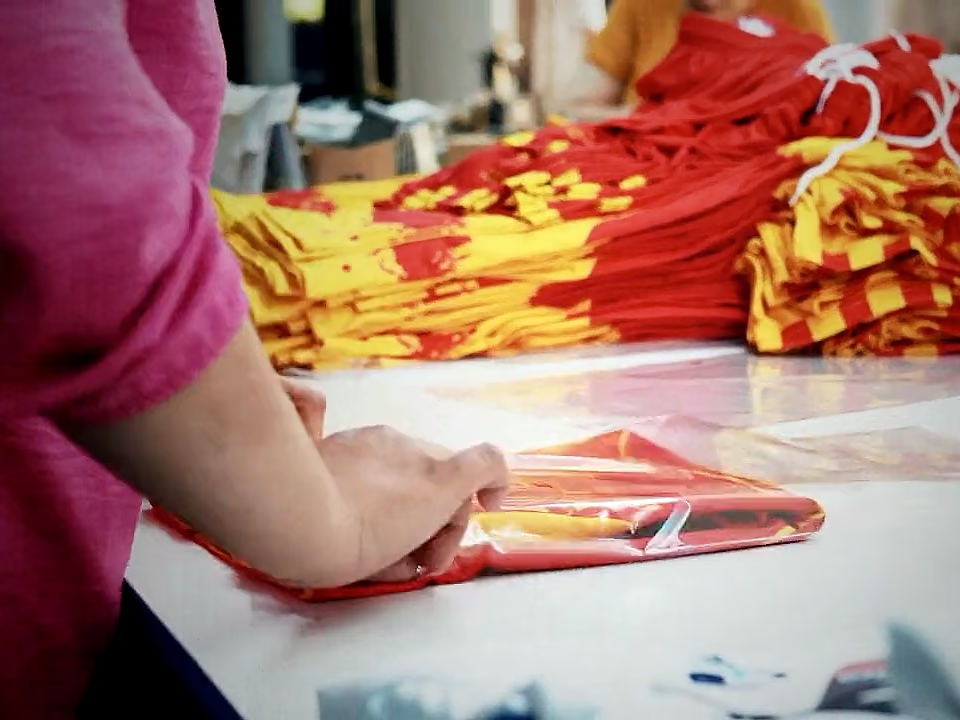
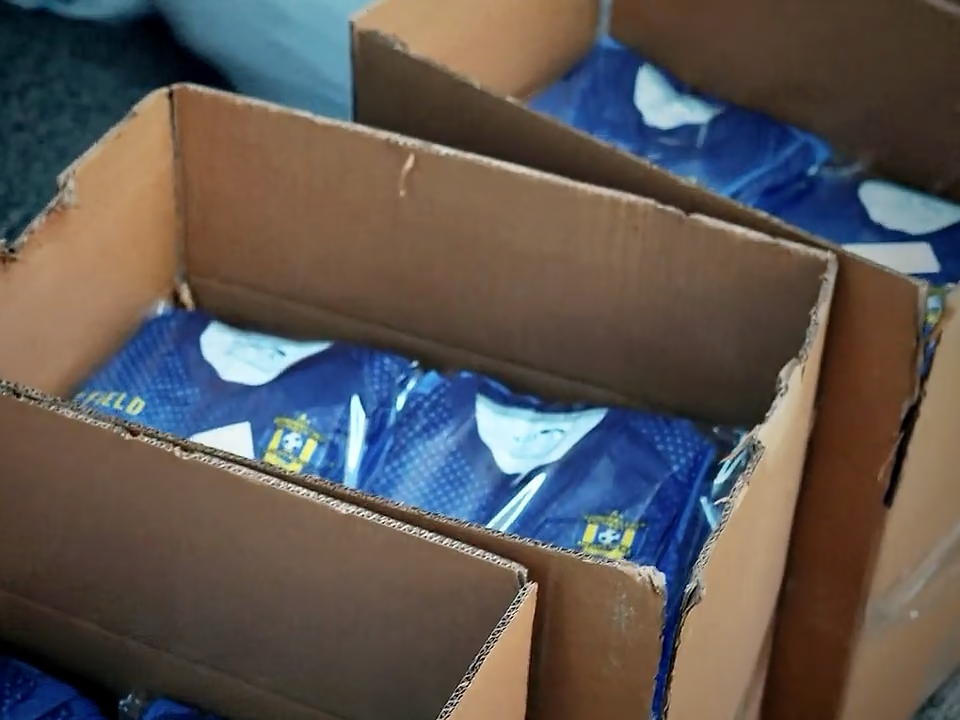
Packing is where retail requirements and warehouse requirements meet. Both need to be stated before production finishes.
| Element | What to specify |
|---|---|
| Folding | How the garment is folded, and whether it needs a board, tissue or clips |
| Individual bagging | Whether each piece is polybagged, the bag size, and any warning text your market or customer requires |
| Bag labelling | Size sticker, barcode label, or a printed bag |
| Inner cartons | Whether garments are grouped in inner boxes, and by size or colour |
| Assortment | Solid cartons by size and colour, or mixed cartons to a defined ratio |
| Carton marking | Purchase order number, style, colour, size breakdown, quantity, gross and net weight, dimensions |
| Carton size and weight limits | Any maximum weight your warehouse or courier imposes |
The assortment decision has practical consequences. Solid cartons make warehouse receiving simple and are usually preferred by distribution centres. Mixed cartons suit direct delivery to smaller locations, for example a corporate programme shipping to several sites. Decide before packing starts, because repacking a finished order is slow and expensive.
Labels and packing for merch shops, promotional distributors and staff roll-outs
Merch shops, promotional distributors and staff roll-outs each need a different label and packing set, so state which one applies in the RFQ. The options below are common in the trade; the exact set is confirmed per project at the quotation stage.
- Merch shops: a printed neck label, which carries brand and size without a sewn label against the skin, or a woven label where the merch is sold as a clothing line. A size sticker on each individual polybag lets orders be picked without opening the bag.
- Promotional distributors: garments without a brand label, or with a size-only label, because the end client's logo is added by embroidery or print. Individual polybags with size stickers keep the goods ready to pass on.
- Staff roll-outs: individual polybags with a size sticker, packed per site or made up as a pack per employee with name or size marking.
How per-employee and per-site packing fits the size survey and delivery plan is set out in the distribution and packing section of the corporate apparel programmes guide. The buyer groups are described on the merch, promotional textiles and corporate clothing pages.
Minimums and lead times
Labels, hangtags and printed packaging are produced by specialist suppliers, and they have their own minimum quantities and lead times. This is why late label artwork holds up finished goods: the garments are complete, but they cannot be packed.
- Finalise label artwork at the same time as garment artwork, not afterwards.
- Order label quantities for the whole programme where the design is stable, since label minimums often exceed a single order's requirement.
- Version and date every label artwork, and check the version at the pre-production sample.
- Re-check care label content whenever the fabric or its supplier changes.
Version control here is part of the reorder discipline that keeps repeat production consistent.
Sustainability requirements
If your programme has packaging requirements, such as recycled-content polybags, paper alternatives or certified board for hangtags, state them in the specification and ask what documentation is available to support any claim you intend to print. A claim on a hangtag is a marketing statement that has to be substantiated, in the same way as a claim about the fabric. Certified material options and what each mark means at Voyager Textile are described on the compliance section.
What to put in the tech pack or RFQ
- Every label in the set, with material, size, artwork and exact position.
- Care and composition content, with languages and market requirements.
- Hangtag design, attachment method and attachment point.
- Barcode requirements and who supplies the numbers.
- Folding and bagging instructions, including any required warning text.
- Carton assortment, marking and any weight limits.
- Who supplies each item: the factory, a nominated supplier, or you.
At Voyager Textile, woven and printed labels, hangtags, custom trims and retail-ready packaging are integrated into production rather than treated as an afterthought, and export documentation is prepared alongside them. See branding and decoration, and the RFQ guide for how to send these requirements with an enquiry.
Questions buyers ask
What labels does a private label garment need?
Typically a brand or neck label, a size label and a care and composition label carrying the information required by your market. A hangtag is a retail presentation item rather than a requirement. Exact legal content differs between the EU and the United States.
Are woven labels better than printed labels?
They are more durable and generally read as more premium, while printed labels are cheaper and reproduce fine detail better. For soft jersey products, many brands now use a printed neck label applied directly to the garment, which removes the sewn label entirely.
Can the factory supply labels and hangtags?
Usually yes, and Voyager Textile integrates woven and printed labels, hangtags and retail-ready packaging into production. You can also nominate your own supplier, in which case agree who is responsible for delivering them to the factory on time.
Why do labels delay production?
Because they are produced separately, with their own minimums and lead times, and a garment cannot be packed without them. Late label artwork is a common reason finished goods wait at a factory.
Should cartons be packed by size or mixed?
Solid cartons by size and colour suit distribution centres and make receiving simple. Mixed cartons to a defined ratio suit direct delivery to individual locations. Decide before packing begins, since repacking a finished order is slow and costly.
What information should appear on the outside of a carton?
Normally the purchase order number, style, colour, size breakdown, quantity, gross and net weight and dimensions. Add anything your warehouse specifically requires, and confirm the format before packing.
Do I need a barcode on each garment?
Only if your sales channel requires it. Retail and distribution usually do; direct corporate programmes often do not. If you need them, supply the code numbers early and state whether they go on the hangtag, the polybag or both.
Specify the labels with the garment, not after it
The operational side of that, including fold, assortment, carton marks and identification data, is set out in the pack-out specification reference. Send your label set, care content and packing requirements with the product specification. We will confirm minimums and lead times so nothing waits for a label at the end. How the care content itself is arrived at is covered in care symbols and label wording.
Send a packing specification