Buyer reference
Private Label Clothing Manufacturer in Turkey for Brands: Streetwear, Activewear and Fashion Labels
Voyager Textile is a private-label clothing manufacturer in Türkiye, producing for clothing brands: streetwear and activewear labels, athleisure and fashion brands, e-commerce brands, new brands placing a first order and brands moving production from another factory. Every garment is cut and sewn to the brand's own design from 300 pieces per colour and per style, with sizes split inside the 300. A sample takes 5–7 business days. Bulk production typically takes 4–5 weeks after sample approval; development, sampling and shipping are additional.
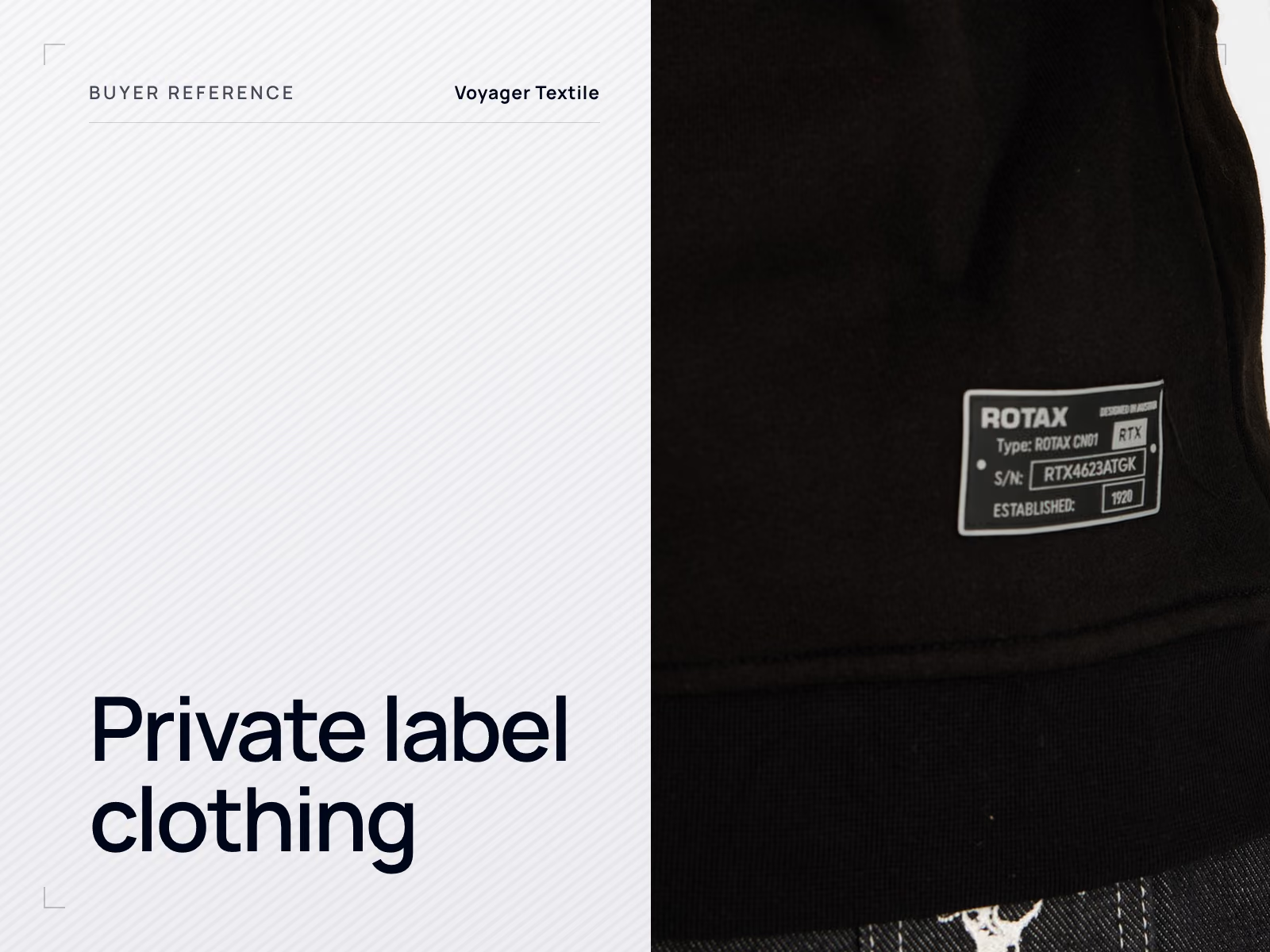
Voyager Textile is a clothing manufacturer in Türkiye. It produces private-label T-shirts, polos, sweatshirts, hoodies, shorts, activewear, outerwear and workwear for clothing brands (streetwear, activewear, fashion), merch companies, promotional product distributors, corporate fashion suppliers and workwear brands, from 300 pieces per colour and style. Brands are the largest of these groups.
Clothing brands we manufacture for
Voyager Textile manufactures for streetwear, activewear, athleisure, fashion and e-commerce brands, and for new brands and brands moving production from another factory. The table shows what each type of brand usually orders and where the detail sits. Manufacturer selection: how to find a reliable clothing manufacturer in Turkey.
| Brand type | What they usually order | Where to read more |
|---|---|---|
| Streetwear brands | Heavyweight and oversized hoodies and T-shirts, sweatpants, shorts, embroidery and puff print | Private label streetwear manufacturing |
| Activewear and athleisure brands | Leggings, crop tops, sports shorts, tennis skirts, all cut-and-sew | Activewear and leggings, shorts |
| Teamwear brands | Fully sublimated jerseys, shorts, training tops and track jackets | Sublimated teamwear |
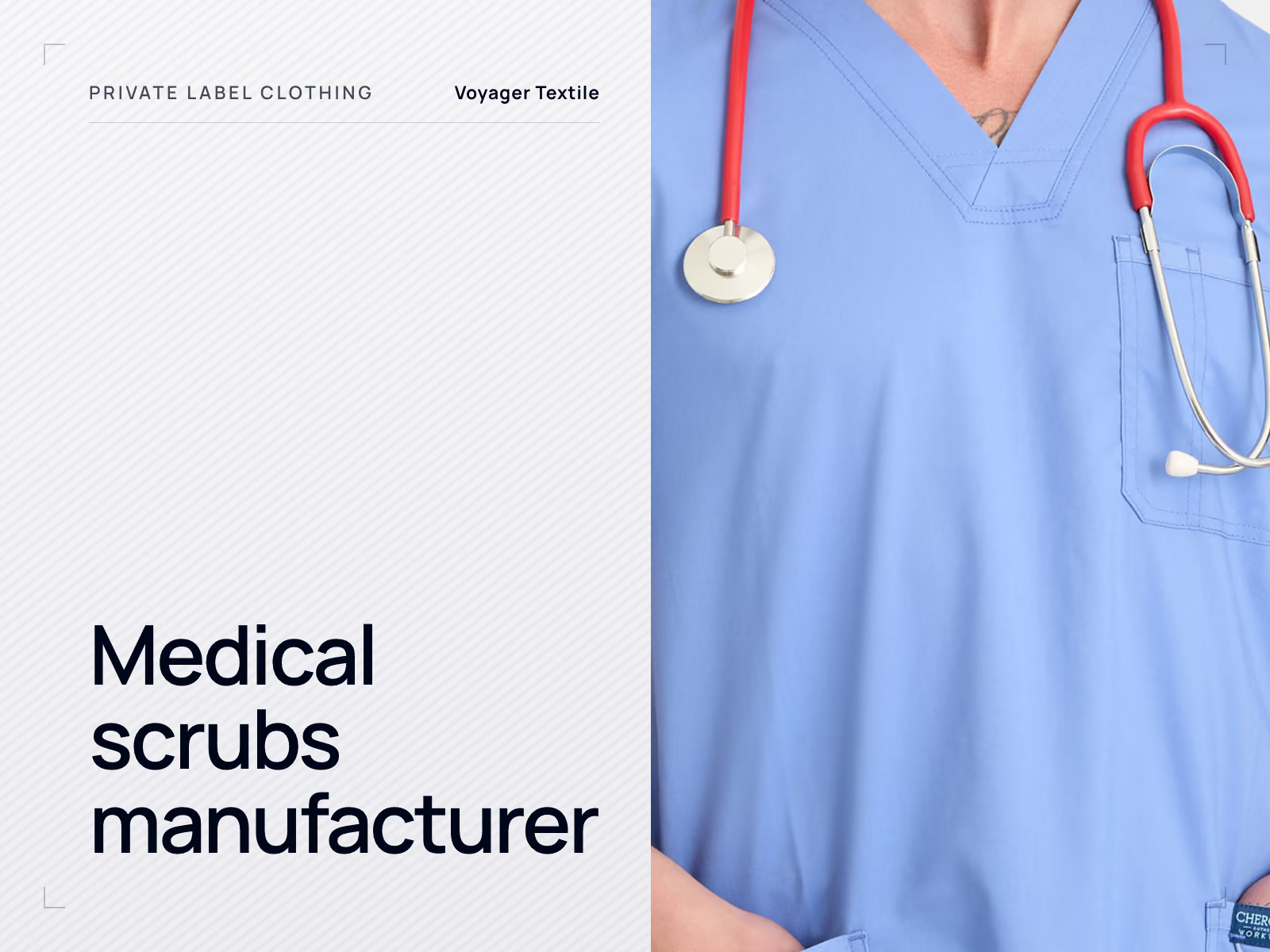
| Medical wear brands | Medical scrubs: scrub tops and trousers made to the brand's design | Medical scrubs |
| Fashion and e-commerce brands | Basics such as T-shirts, hoodies, sweatshirts, polos and tracksuits, with the brand's own labels and pack-out | Labels and packaging, pack-out specification |
| New brands | One or two styles in one colour for a first run | Your first production run, the 300-piece MOQ |
| Brands moving production | Existing styles transferred with their specification and a reference garment | Moving production to a new manufacturer, Turkey vs China, Turkey vs Portugal |
Products we manufacture
Voyager Textile manufactures knitted and woven garments in the product families below, each made to the brand's own design. Every family has its own page with fabrics, construction, decoration and the minimum.
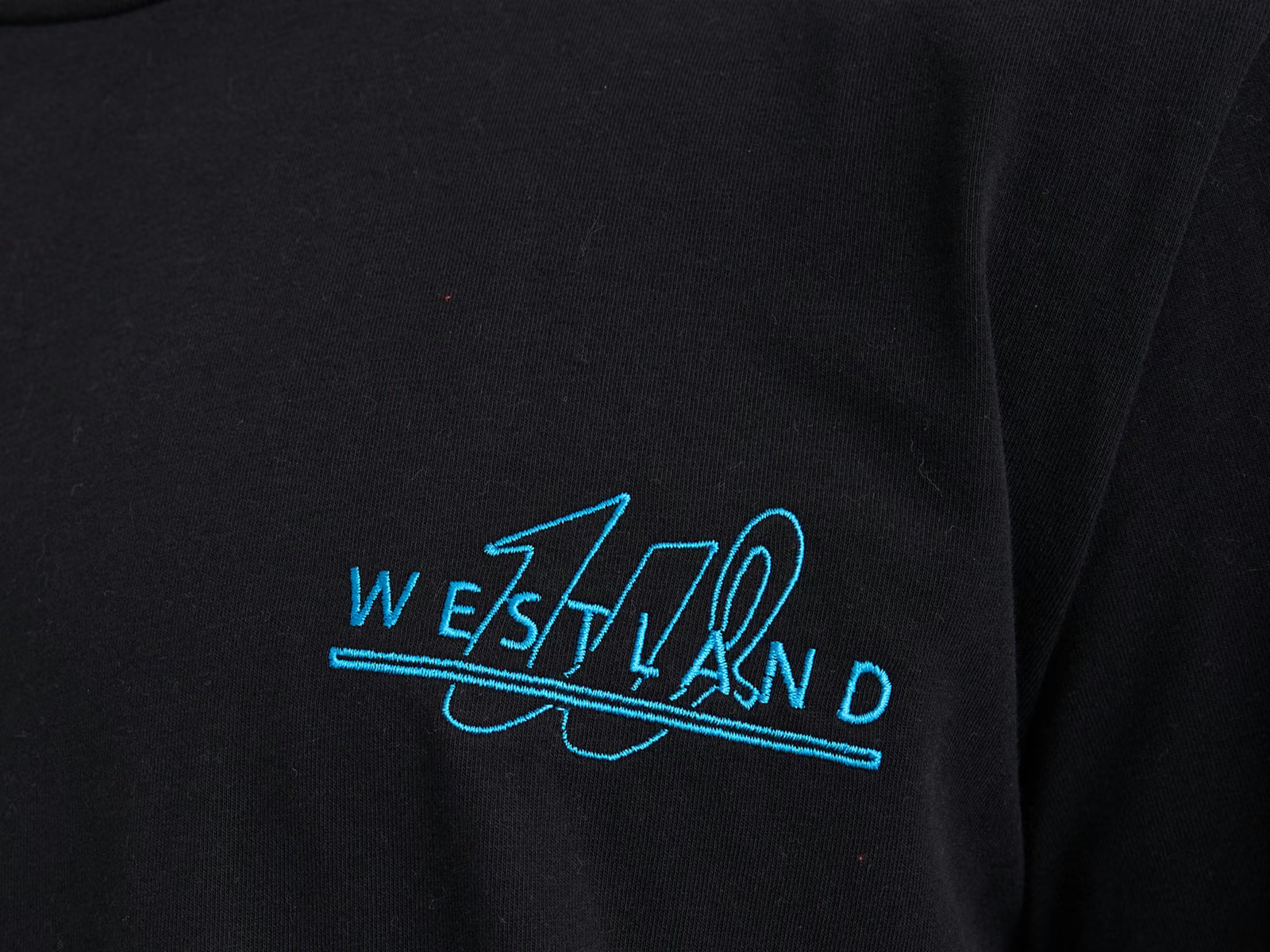
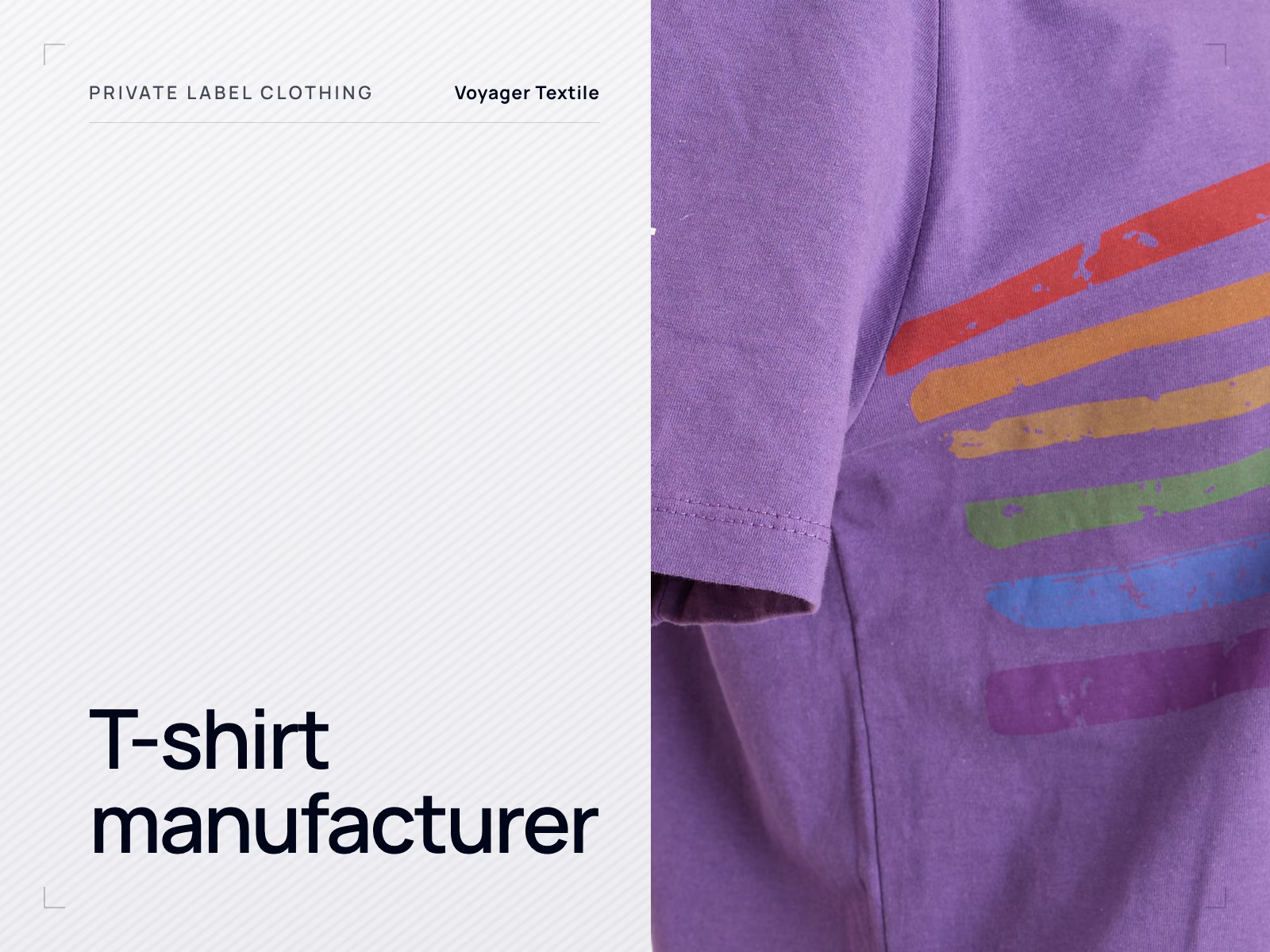
- T-shirts: regular, heavyweight, oversized, long-sleeve and polyester sports tees. T-shirt manufacturer
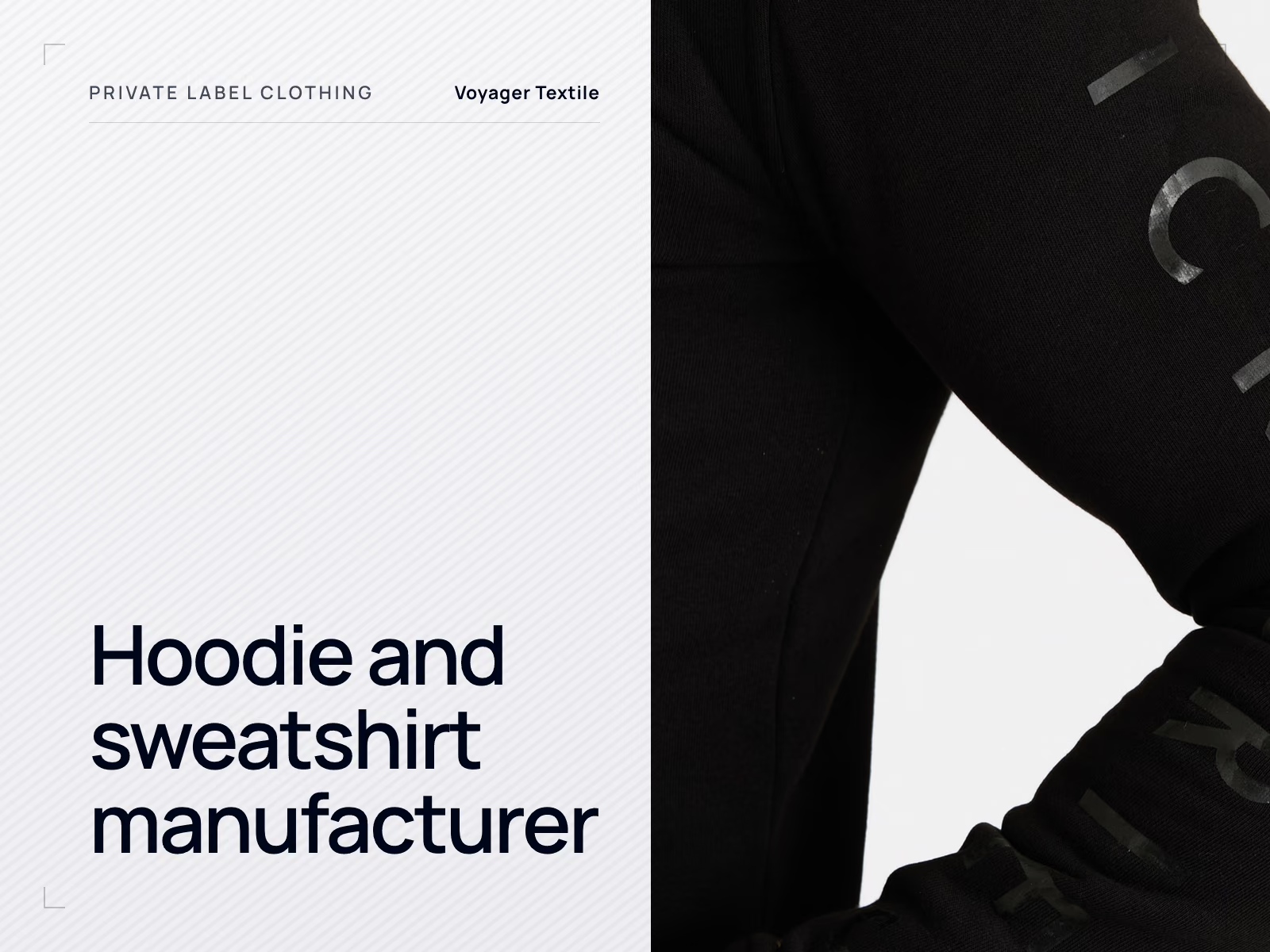
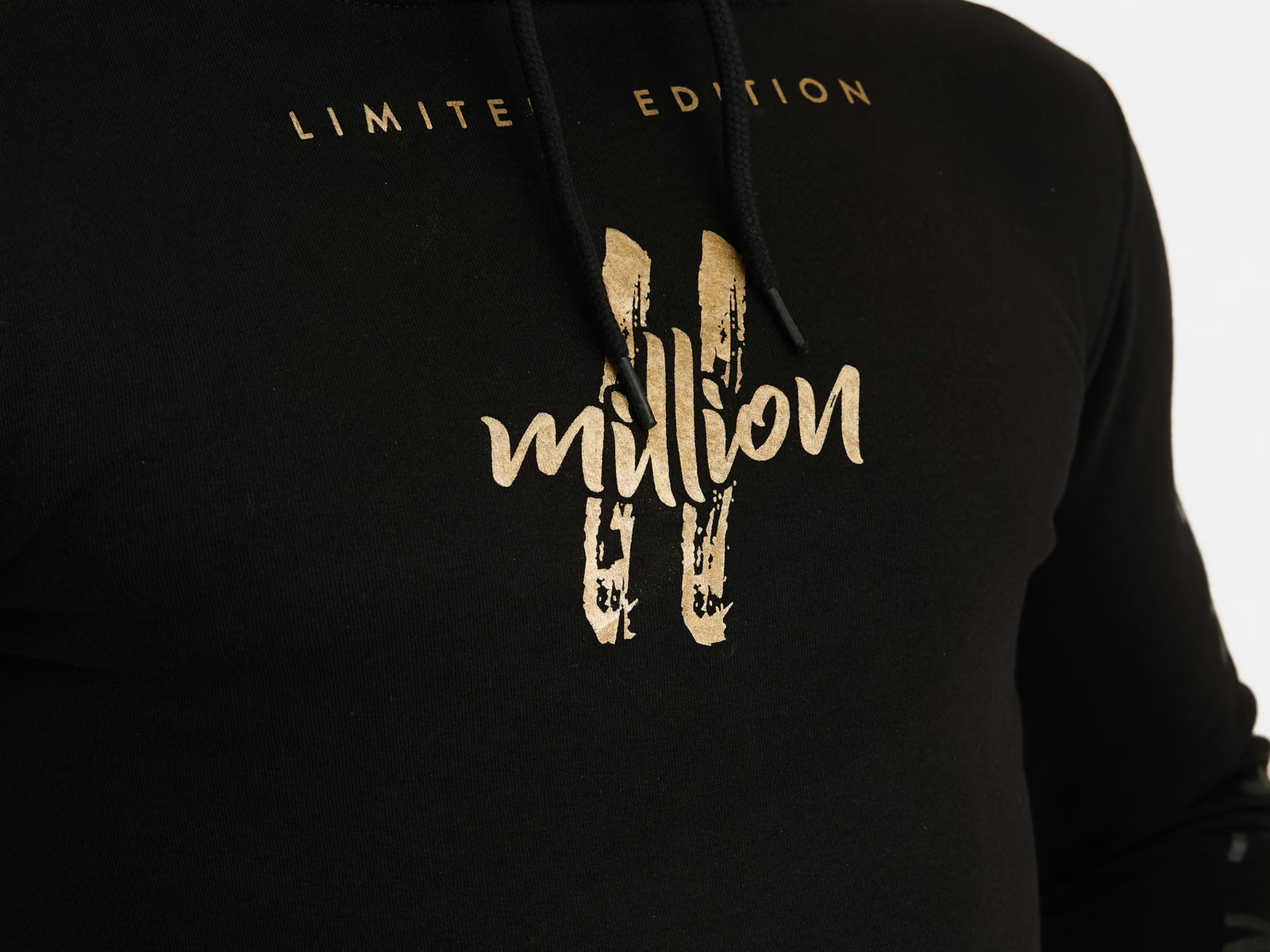
- Hoodies and sweatshirts: pullover and zip hoodies, crew-neck sweatshirts, French terry and brushed fleece. Hoodie and sweatshirt manufacturer
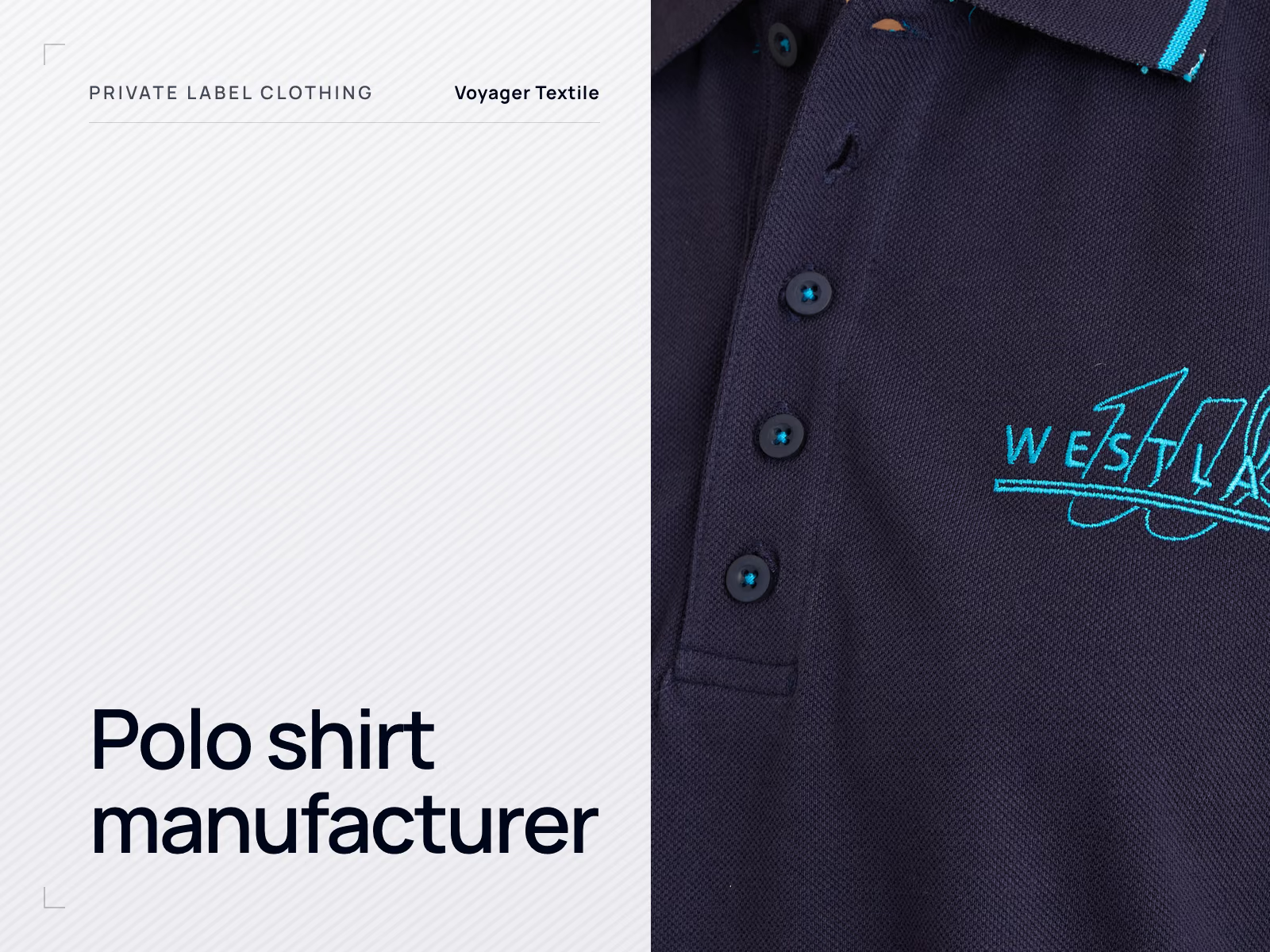
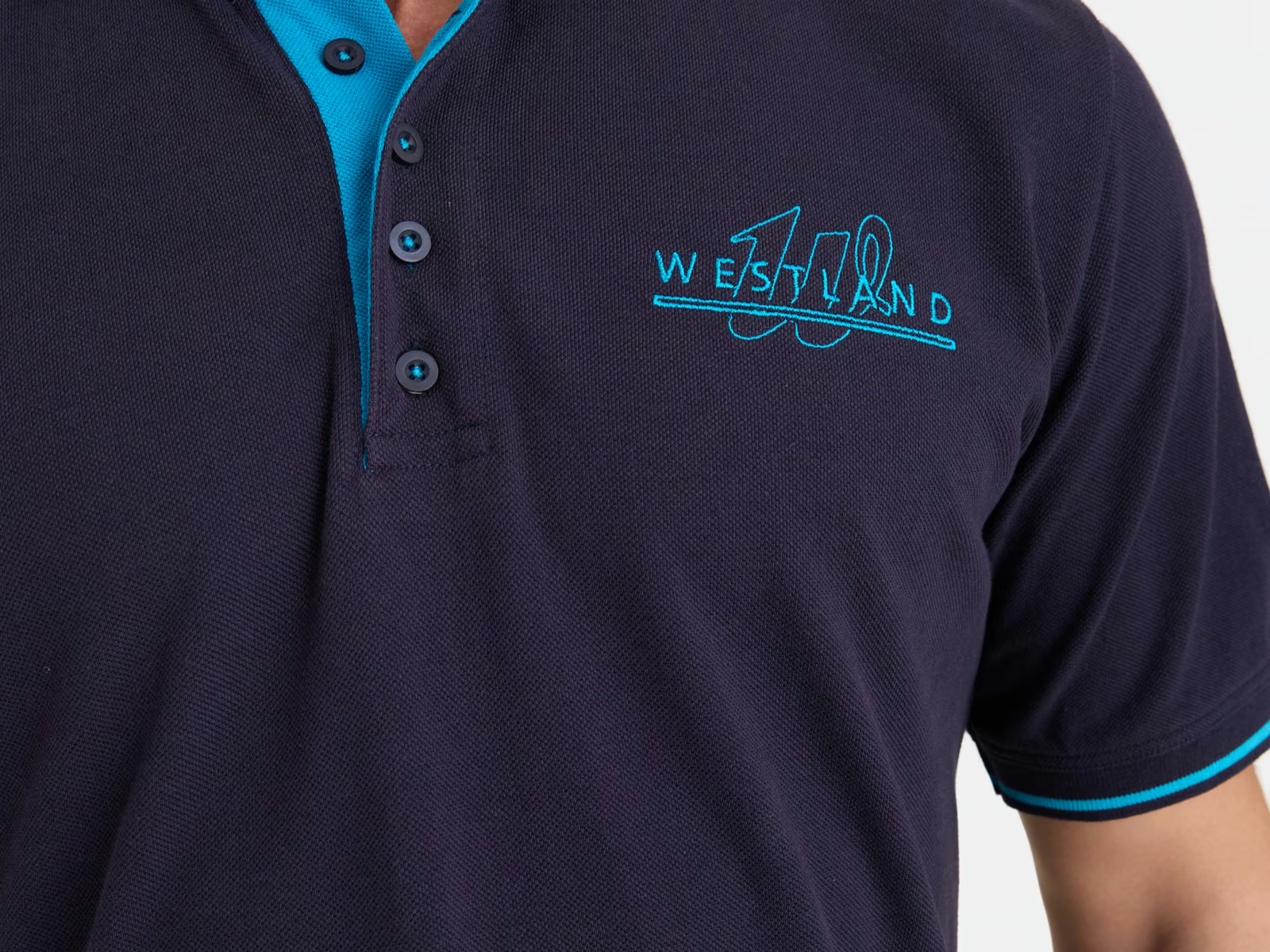
- Polo shirts: piqué and jersey polos with knitted or fabric collars. Polo shirt manufacturer
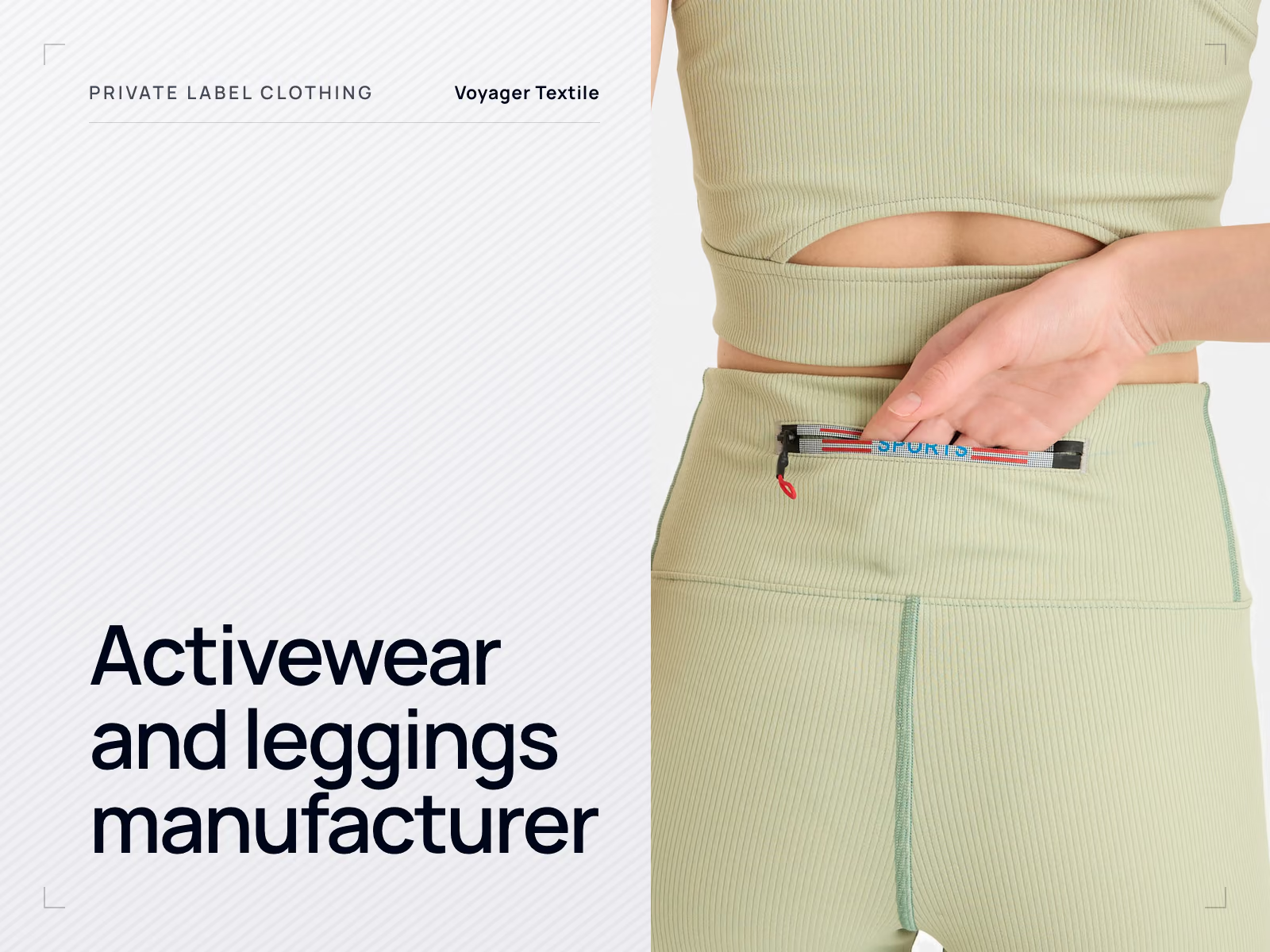
- Activewear and leggings: cut-and-sew leggings, crop tops and training wear; seamless knitting is not offered. Activewear and leggings manufacturer
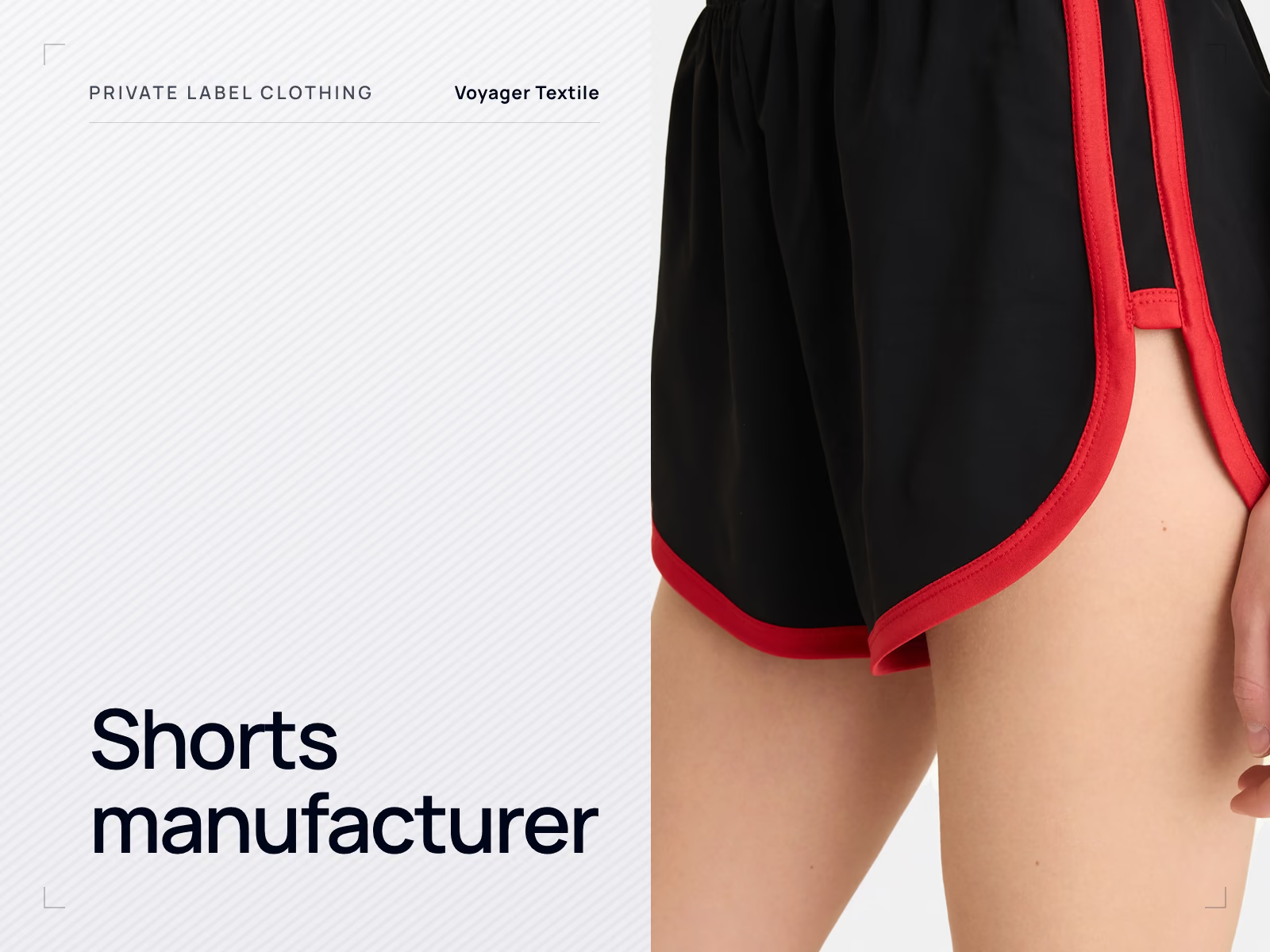
- Shorts: sweat, sports, work and woven shorts. Shorts manufacturer
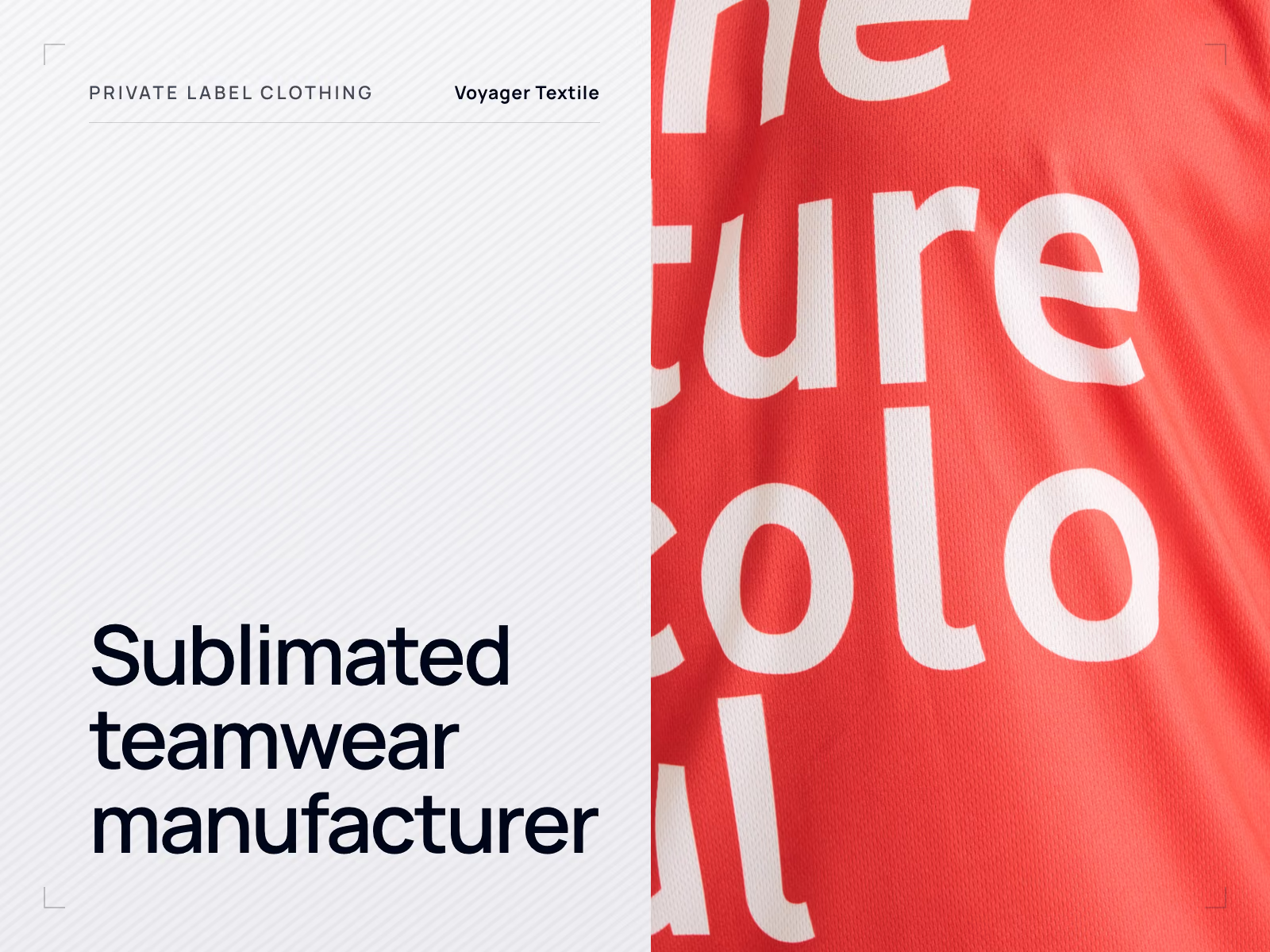
- Sublimated teamwear: jerseys, shorts and training tops printed and sewn in the same factory. Sublimated teamwear manufacturer
- Medical scrubs: scrub tops and trousers. Medical scrubs manufacturer
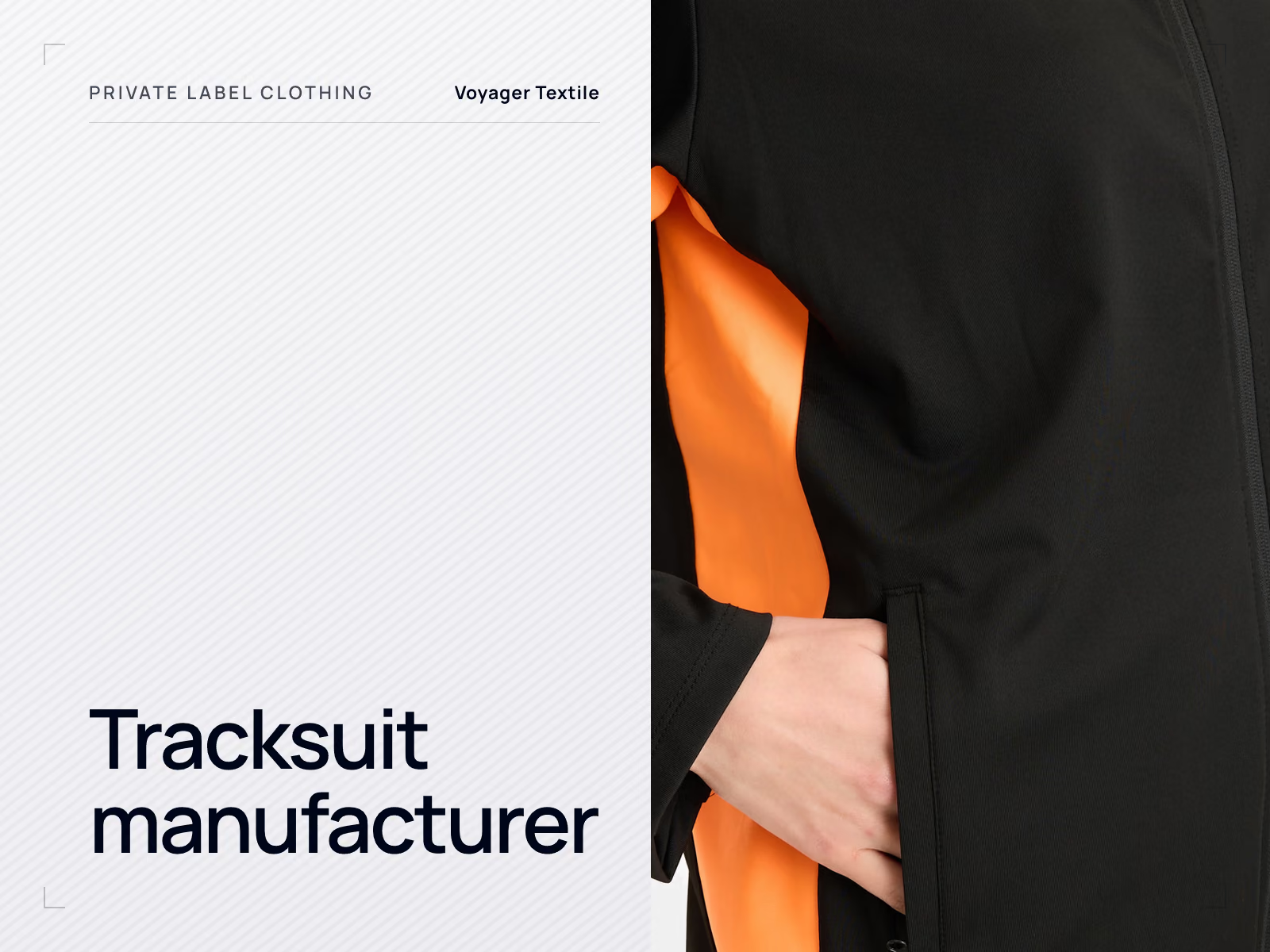
- Tracksuits, joggers, sweatpants and track pants: how tracksuits are made
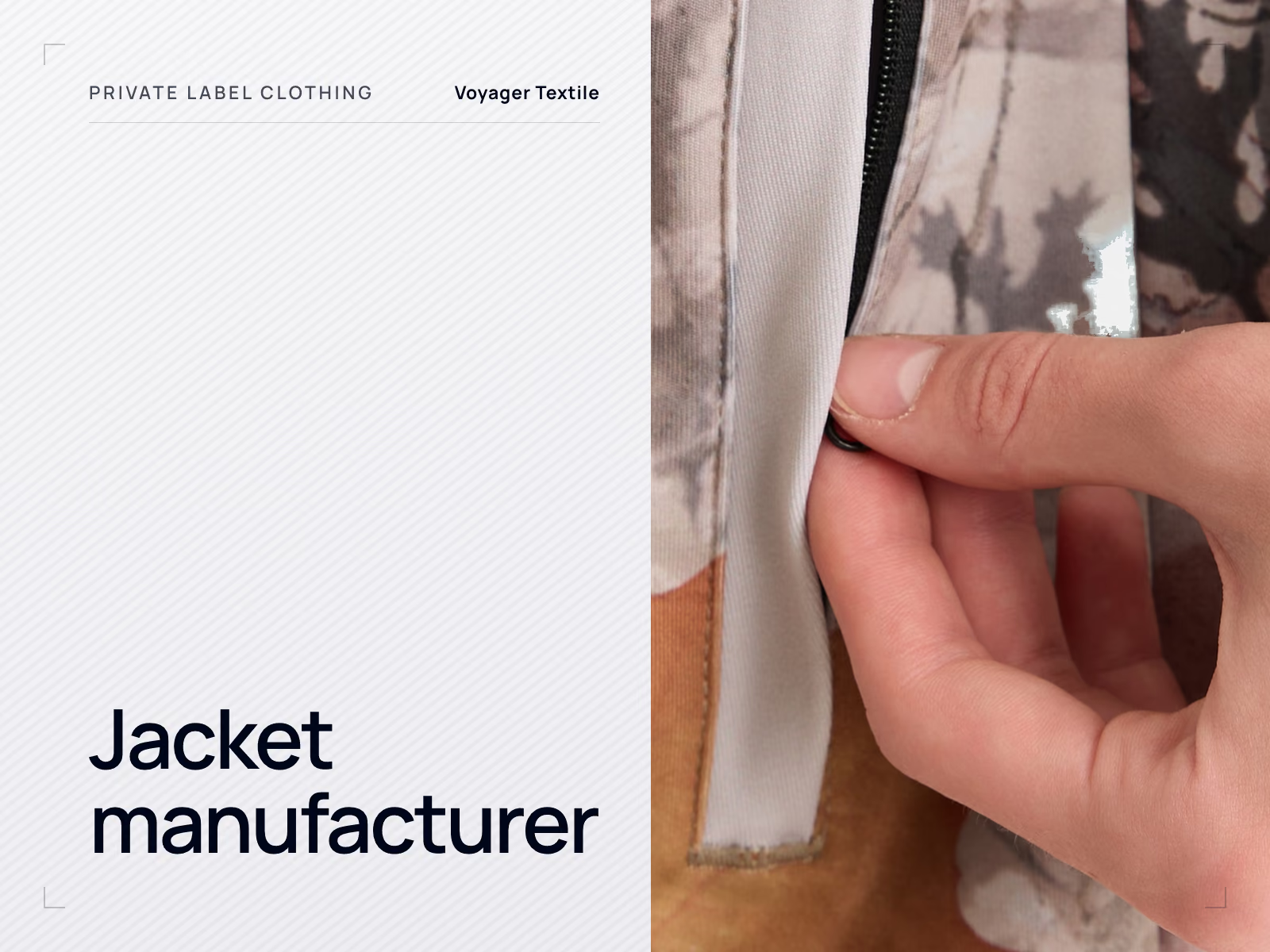
- Jackets and outerwear: softshell, bomber, windbreaker and fleece jackets, gilets, vests and bodywarmers. Jackets and coats, softshell jackets, gilets and vests
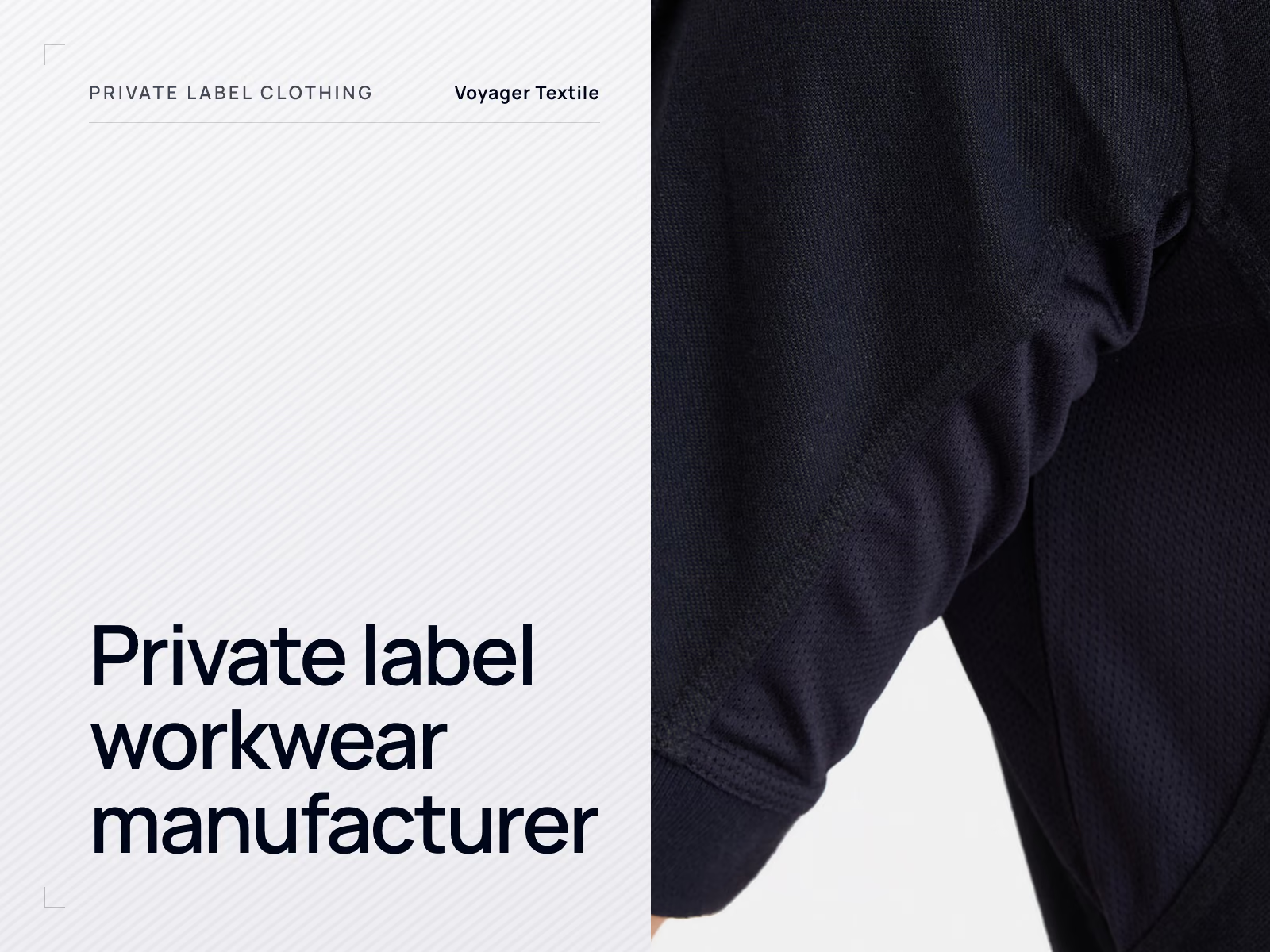
- Workwear: work trousers, work jackets, coveralls, bib-and-brace trousers and chef jackets. Work trousers
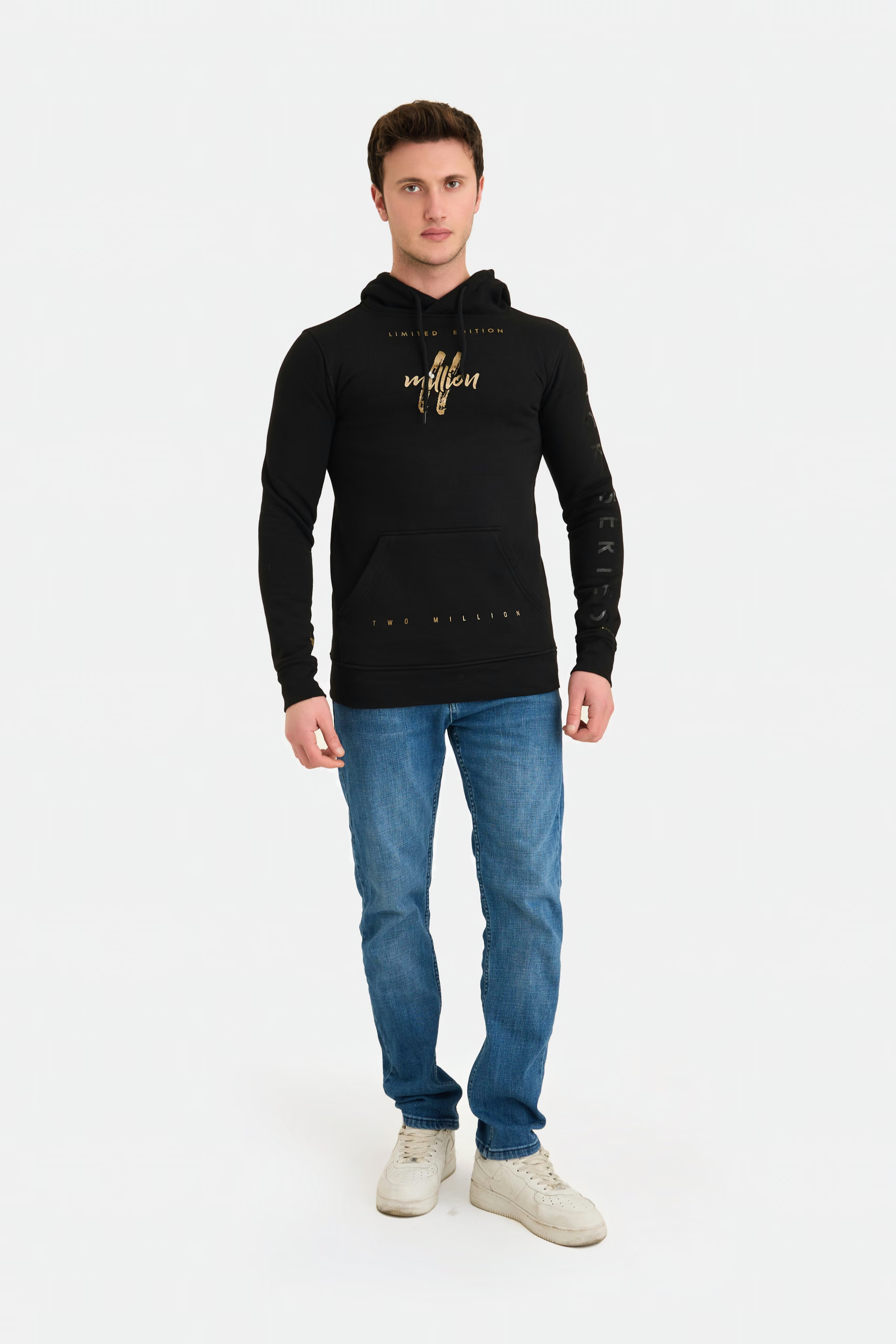
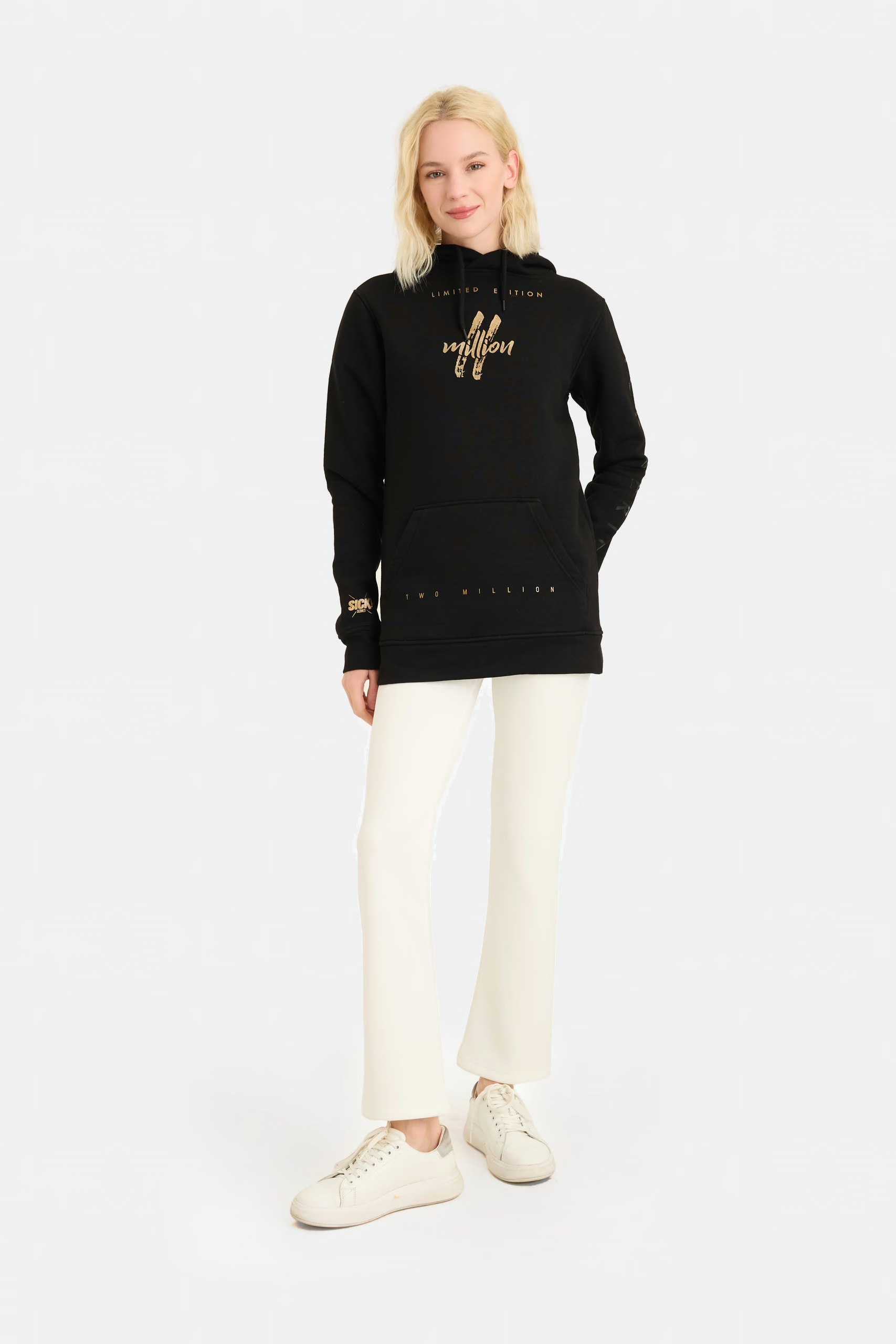
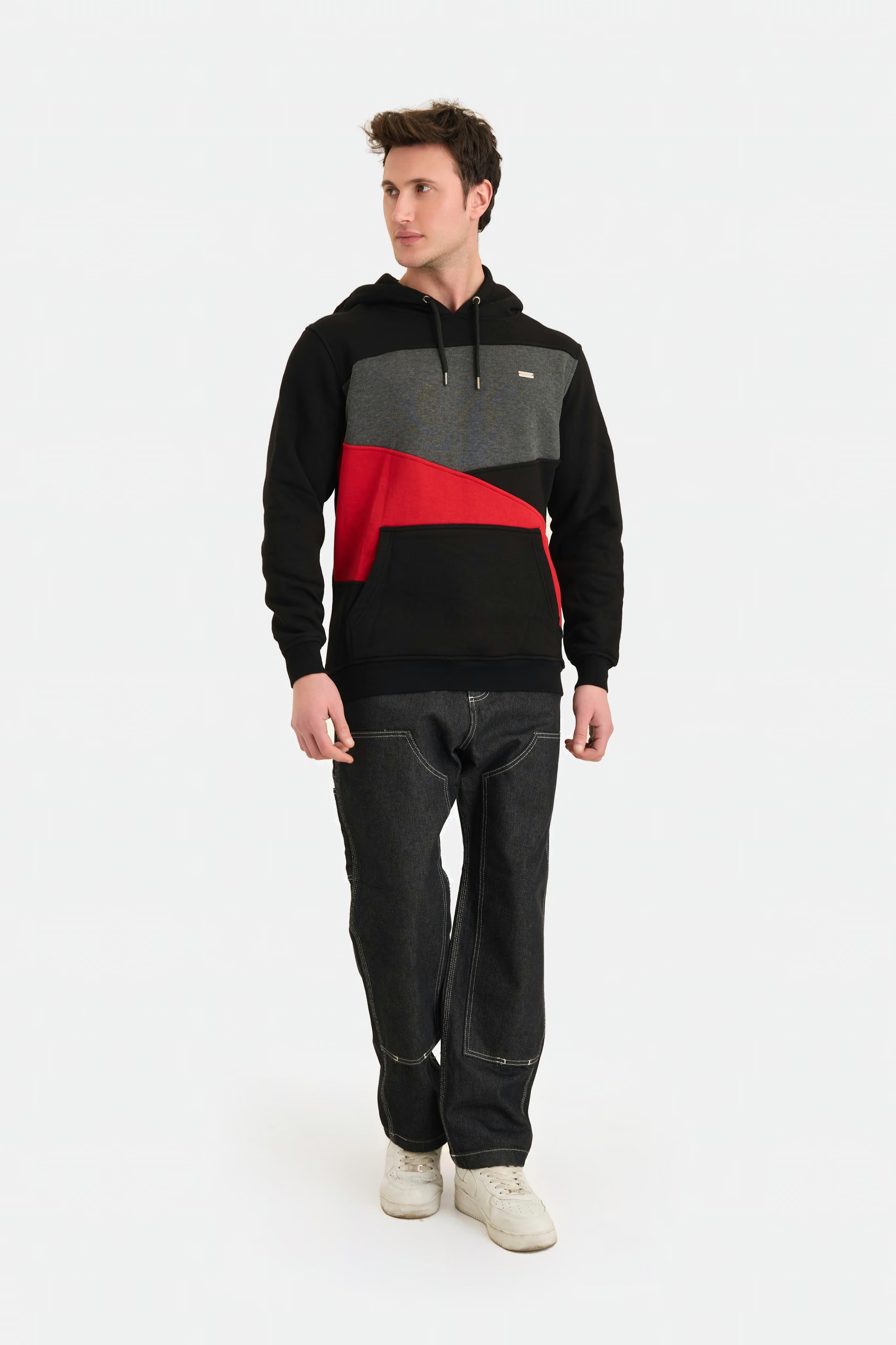
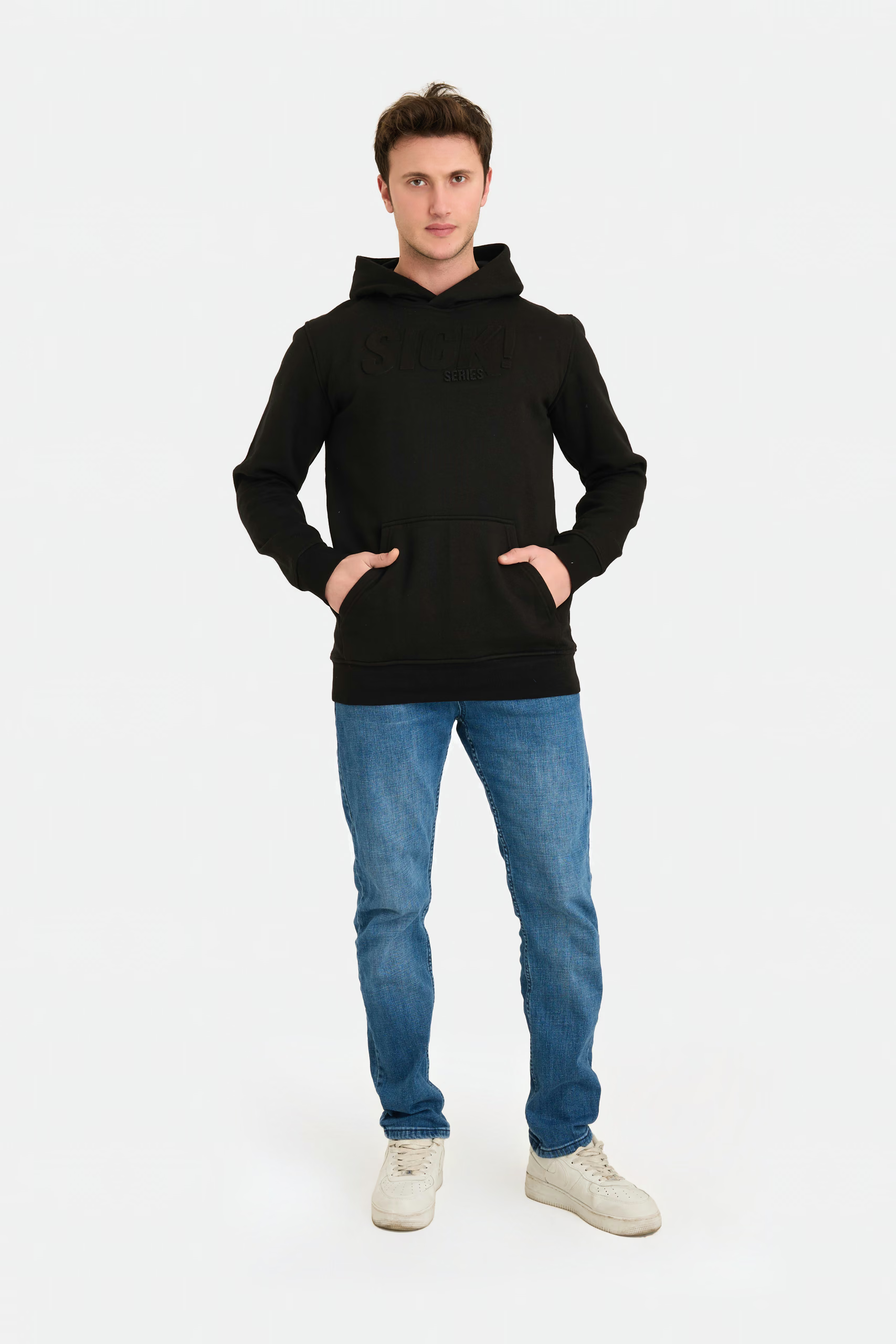
The product catalogue shows 149 references from previous production. None of them is stock; quoting an article code is a quick way to start from a construction that has already been made.
Other buyer groups
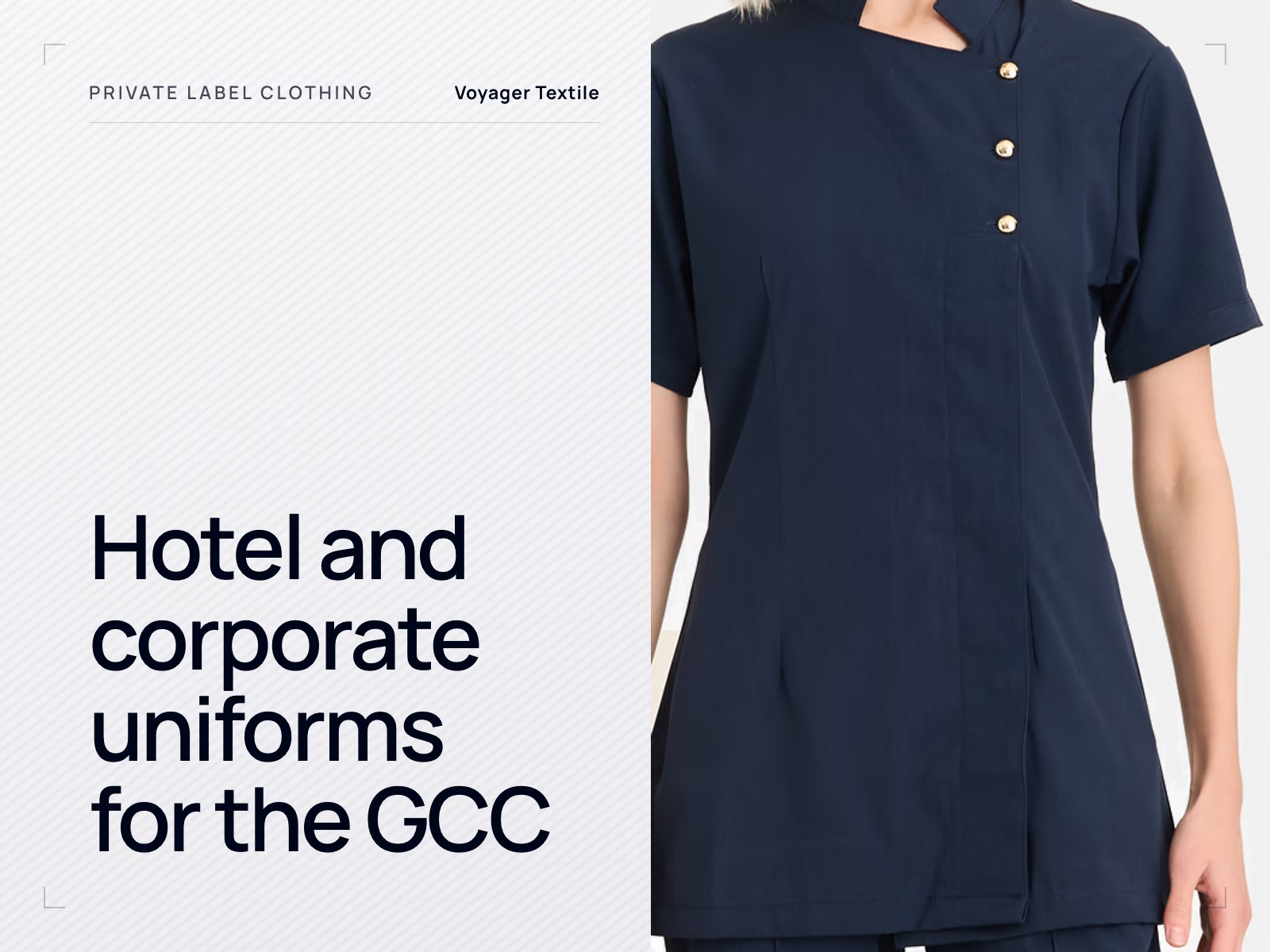
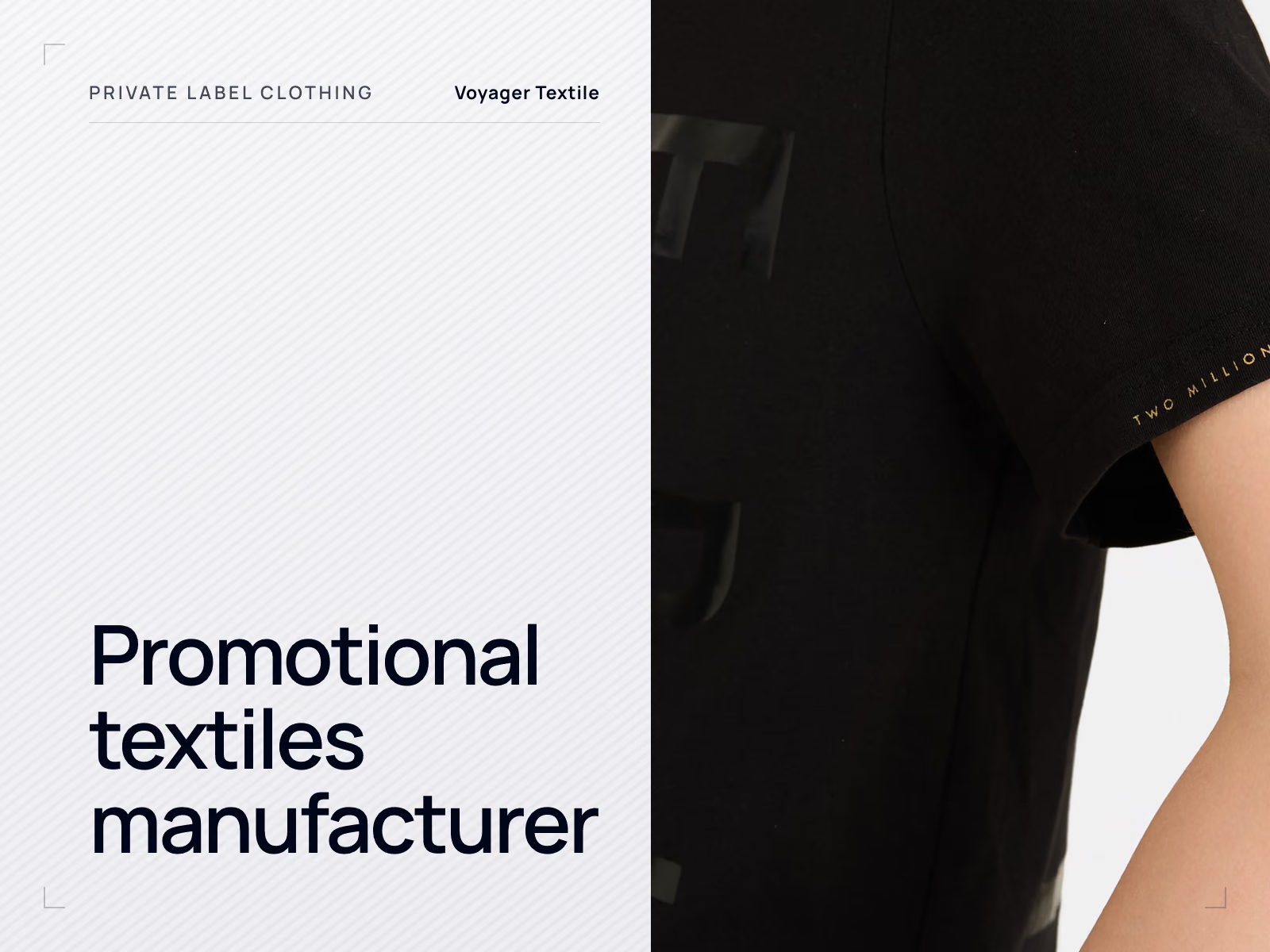
The same factory also produces for buyers who are not clothing brands, and each group has its own page: custom merch for merch companies, artists and tour teams, corporate clothing for corporate-wear suppliers and company purchasing teams, promotional textiles for promotional product distributors, and private label workwear for workwear brands and distributors.
How a brand works with a clothing factory
Private-label garments are made to your specification and carry your brand. The brand and factory agree the design, materials, approval criteria and production responsibilities before manufacturing.
Construction steps for each garment type: manufacturing process references.
How a private-label programme runs
Two starting points, two different projects
The two approaches below differ in development work, cost, timing and risk.
| Adapting an existing construction | Developing from your own specification | |
|---|---|---|
| What you supply | A reference product or an article code, plus your fabric, colours and branding | A tech pack or a detailed brief covering construction, measurements and materials |
| What the factory supplies | An existing pattern and a proven construction | Pattern development against your measurements |
| Development time | May be shorter when the existing construction needs few changes | May be longer when construction and fit need development |
| Control | You control fabric, colour, fit adjustments and branding | You control everything, including construction detail |
| Typical use | First orders, merchandise programmes, brands testing a product | Brands whose product is the differentiator |
Where a physical garment is the starting point rather than a document, the method and its limits are covered in manufacturing from a reference garment.
Who owns what
This is worth settling in writing at the beginning, because it decides what you can take with you later.
- Your specification and artwork. Who owns and may use them depends on what was agreed and on how each part arose, so agree it rather than assume it. See design ownership.
- Patterns developed for your product. Agree who owns them, and whether you can take them to another manufacturer.
- The approved sample should exist in two sealed copies, one held by each side, both signed and dated.
- Colour standards and digitised embroidery files form part of the programme record and help maintain consistency on repeat orders.
- Fabric developed to your specification may still be a mill product; ask whether it is exclusive to you or generally available.
What the factory needs, stage by stage
| Stage | What is needed | What it decides |
|---|---|---|
| Quotation | Product, quantity, fabric or intended use, colours, size range, decoration, destination, target date | Quotation scope and assumptions |
| Development | Measurements or a reference garment, construction intent, artwork files, colour references | How close the first sample lands |
| Materials | Approved fabric and colour, trim decisions, label content | Material availability and production start |
| Bulk | An approved sample, a measurement chart with tolerances, confirmed size split, packing instructions | What the goods are inspected against |
The commercial half of that first row is the subject of the RFQ guide, and the technical half is covered in what a factory actually needs. Patterns at Voyager Textile are made and graded in Gerber AccuMark from the brand's size chart; points of measure, grading and tolerances are explained in pattern making and size grading. Where the cost of a garment comes from is set out in custom clothing manufacturing cost.
Fabric and colour are your decisions
Fabric choice affects garment performance, cost and timing. Agree the required properties, colour and availability with the factory before approving the material.
Three routes exist, and they have different calendars: an available fabric in a stock colour, an available quality dyed to your reference, or a fabric developed to specification. The structures themselves are covered in the fabric references, and the colour approval sequence in the colour matching guide. Custom Pantone colour production at Voyager Textile starts at 300 pieces. Polyester-based fabrics are assessed separately.
A brand can also supply its own fabric, including imported fabric; Voyager Textile accepts buyer-supplied fabric. OEKO-TEX, GOTS or GRS material options can be sourced where specified, subject to availability and certificate scope. Using a certified material does not automatically certify the factory or the finished garment. See certified apparel materials.
Branding is a production item, not a finishing touch
What makes a garment yours is mostly assembled during production rather than applied at the end: woven or printed neck labels, care and composition labels carrying the content your market requires, size labels, hangtags, and the decoration itself. Suppliers, minimum quantities and lead times can differ between these components.
Late label artwork can delay dispatch. Include the complete label set in the garment specification. The components are covered in the labels and packaging guide, and what the label must legally say differs by market, as set out for the EU and the United States. Brands selling in the EU also have obligations under the General Product Safety Regulation, covered in GPSR for apparel.
Approval before bulk production
Bulk production is assessed against the approved sample and the agreed written specification, including measurements, tolerances, materials and finishing requirements. Resolve any differences between them before authorising production.
A proper approval is a named person, a date, a specification version, and a sealed physical garment held by both sides. What each sample stage proves is covered in the sampling guide, and the sample that specifically protects a bulk order has its own reference in the pre-production sample.
Making it repeatable
Keep an agreed record of fabric lots, component substitutions and fit changes for repeat orders. Changes left only in email or verbal discussions can lead to differences between deliveries.
Records for repeat orders include: a sealed sample, an approved physical colour standard, a versioned specification, a retained embroidery file and fabric booked for the programme rather than the order. They are set out in the reorder consistency guide.
What varies between manufacturers
Terminology in this part of the industry is genuinely inconsistent, and it is worth checking rather than assuming. Some factories describe any production to a customer's brand as private label; others reserve the term for programmes where they also developed the product. OEM and ODM are used precisely by some suppliers and loosely by others.
The same applies to what is included. Two quotations described as full package can differ substantially in who sources trims, who manages testing and who arranges freight. Rather than relying on the label, ask which specific activities are included, which are yours and which are quoted separately. The models themselves are compared in full package versus CMT, and the definitional differences between OEM, ODM, private label and white label are covered in the models guide.
How this works at Voyager Textile
Voyager Textile is a direct manufacturer and exporter in Türkiye producing private-label and custom garments to customer specification. Incoming specifications are reviewed for manufacturability before quotation, and anything unclear is raised rather than assumed. A first sample takes 5-7 business days. Bulk production starts only after a sample is approved and typically takes 4 to 5 weeks from that point, depending on the product and the project. Custom apparel production starts at 300 pieces per colour and per style, including custom Pantone colours and all-over sublimation. Approved samples, patterns, colour standards and packing instructions are kept on file to support consistency on repeat orders. Polyester-based fabrics are assessed separately. Development, sampling and shipping require additional time.
Garments produced under customer brands
Reference products from previous private-label production. Nothing shown is stock; quoting an article code is a fast way to start from a proven construction.
Buyer questions
What does private label mean in clothing manufacturing?
Garments produced to a buyer's specification and sold under the buyer's brand rather than the manufacturer's. It describes the commercial relationship rather than a specific production method, and it can sit on top of either a design you supplied or a construction the factory already had.
Where is your clothing factory?
Voyager Textile's clothing factory is in Türkiye, with about 70 people. Capacity is about 100,000 pieces per month, confirmed per project at quotation. Sampling, cutting, sewing, embroidery and transfer and sublimation printing happen in the factory.
Do you work with US brands?
Yes, Voyager Textile works with US brands; Europe and the United States are its markets. Production and shipping run from Türkiye. How duty compares by production country is covered in where to make apparel for the US market.
Can a small or new clothing brand order from you?
Yes, a small or new clothing brand can start at 300 pieces per colour and per style, with sizes split inside the 300. One style in one colour is a normal first order. The steps are set out in your first production run.
Do you manufacture streetwear for brands?
Yes, Voyager Textile manufactures streetwear for brands: heavyweight and oversized hoodies and T-shirts, sweatpants and shorts, cut and sewn to the brand's own pattern, with embroidery in the factory and puff print at partner facilities. See private label streetwear manufacturing.
Do you make activewear and athleisure for brands?
Yes, activewear and athleisure for brands are made cut-and-sew: leggings, crop tops, sports shorts and training wear from 300 pieces per colour and per style. Seamless knitting is not offered. Details are on the activewear and leggings page.
Do you work with fashion and e-commerce brands?
Yes, fashion and e-commerce brands order T-shirts, hoodies, sweatshirts, polos and tracksuits made to their own design, carrying their own neck labels and care labels. Label content and pack-out are covered in the labels and packaging guide.
Can we move our existing production to you?
Yes, brands moving production send the current specification, the graded measurement chart and a sealed reference garment, and the style is sampled again before bulk. What transfers and what does not is set out in moving production to a new manufacturer.
Do I need a tech pack to start a private-label programme?
No, but something has to define the garment before a sample is made. A reference garment with a list of changes, or measurements with clear photographs, is a workable starting point. A clear tech pack can help the first sample meet the brief and reduce revision rounds.
Who owns the patterns developed for my product?
Record ownership and permitted use of the patterns in the written agreement, including whether they may be transferred to another manufacturer. The agreement should account for applicable law and any existing rights in the design or pattern.
Can a factory sell my design to someone else?
Specify confidentiality and permitted use in the order terms, including conditions for sharing, reproducing or selling the design to third parties. Confirm that the parties have the rights needed for the agreed use.
How long does a private-label programme take from brief to delivery?
At Voyager Textile a sample takes 5-7 business days, and bulk typically 4 to 5 weeks after sample approval. Specification review, fabric sourcing, colour development and transport add time, as the lead time guide shows.
What is the minimum order for private-label production?
The minimum order for private-label production at Voyager Textile is 300 pieces per colour and per style, custom Pantone colours and all-over sublimation included. Polyester-based fabrics are assessed separately. The MOQ guide explains where the thresholds come from.
Ready to develop a product under your own brand?
Send what you have, whether that is a full tech pack, a reference garment or a description with target quantities. We review it for manufacturability, tell you what is still missing and quote on that basis.
Start a private-label enquiry