Quantities, cost and timing
What Does a 300-Piece MOQ Mean in Custom Apparel Manufacturing?
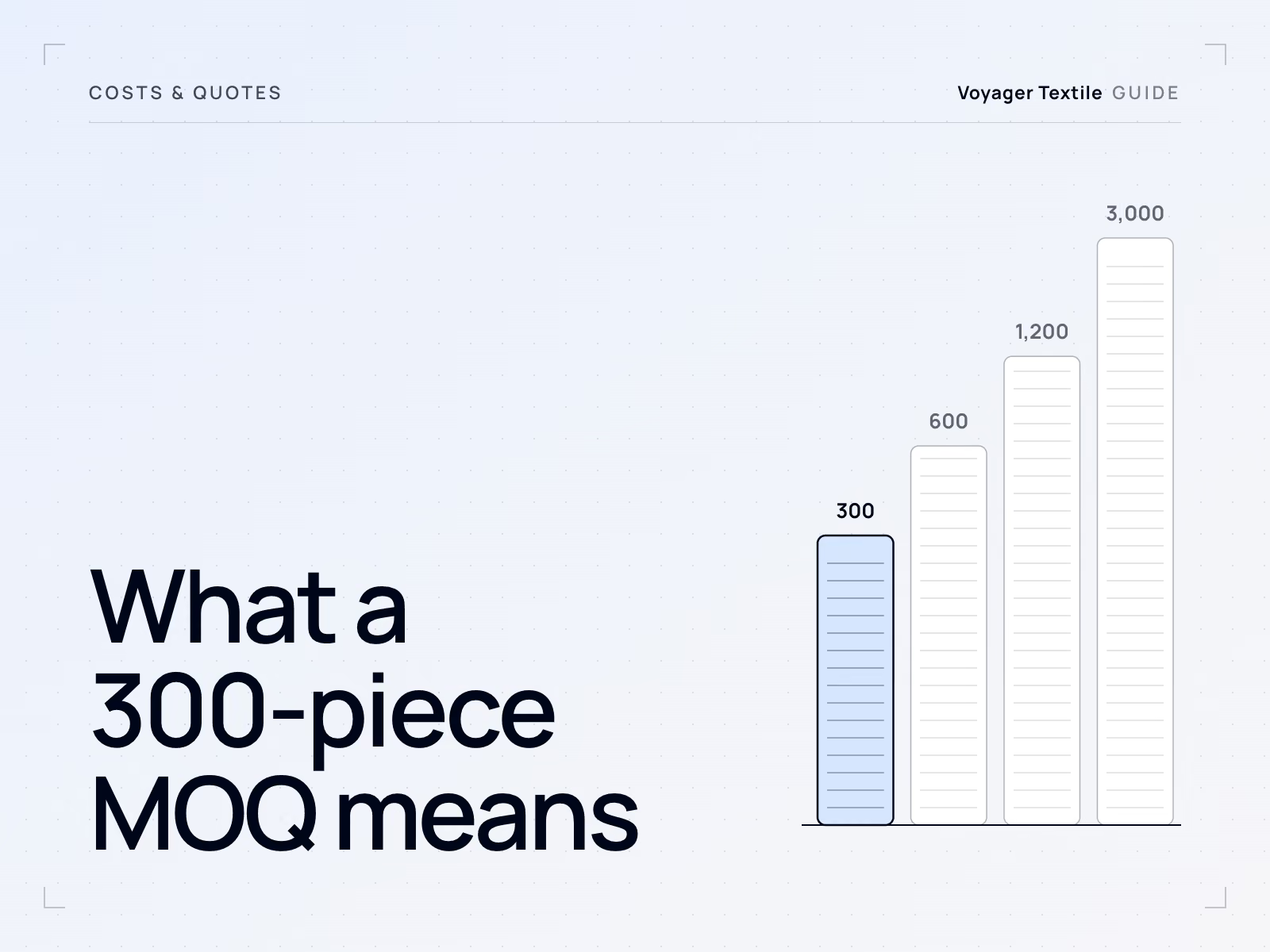
At Voyager Textile, a 300-piece MOQ means 300 pieces per colour and per style, for every product including all-over sublimation. Sizes can be split within the 300.
Contents
Minimum order quantities reflect material availability, production set-up, capacity planning and the supplier's commercial policy. Ask which constraints apply to your specification before planning quantities.
For small-quantity or low-MOQ production, the smallest run Voyager Textile makes is 300 pieces per colour and per style, with sizes split inside that number. A first run can therefore be one style in one colour across the full size range, with each further colour or style added as its own 300.
Why apparel minimums exist
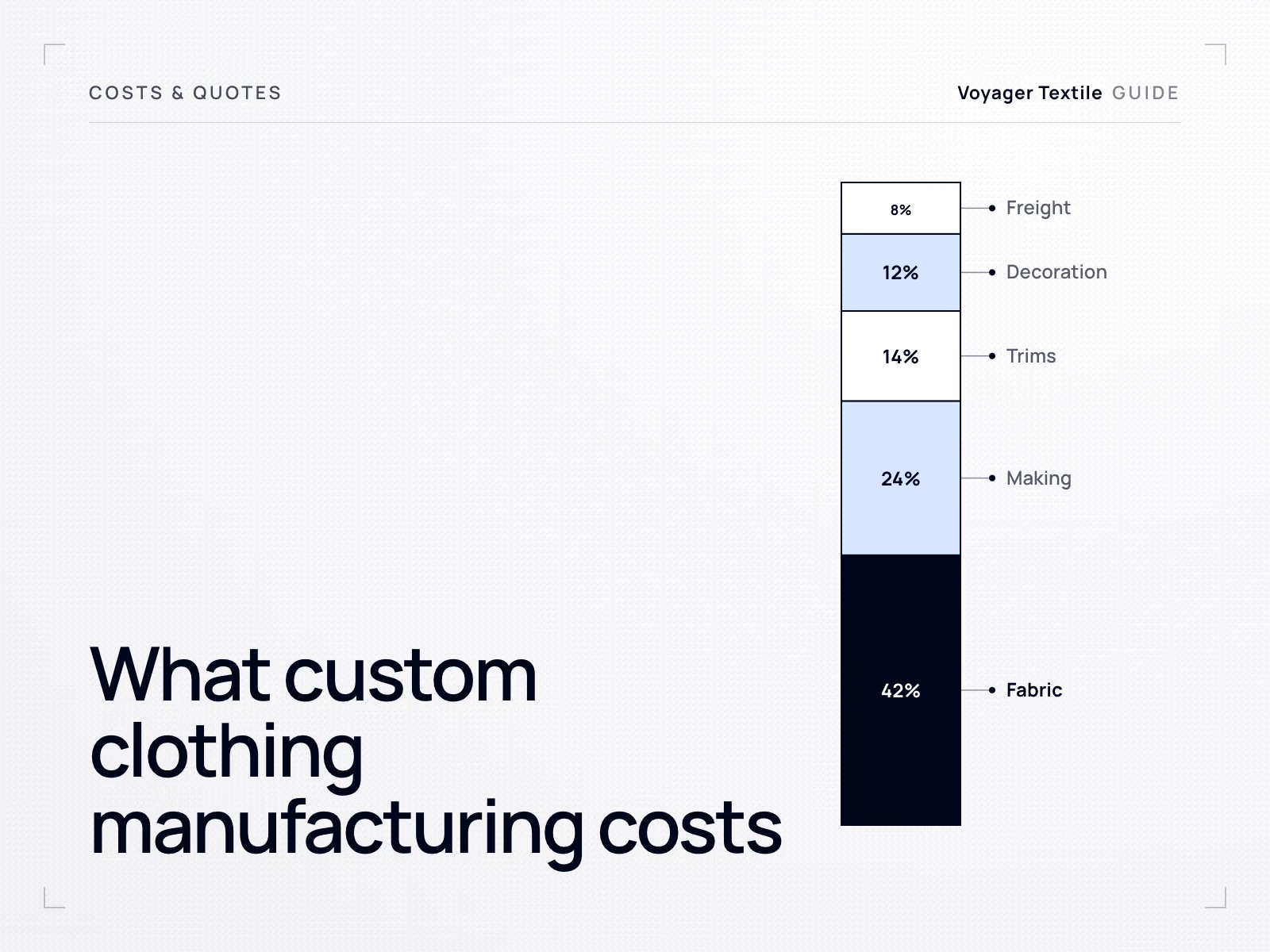
Set-up costs are spread across the production quantity. A smaller run therefore carries more of those costs per garment; the amount depends on the product and process.
| Cost | Set by | What it means for you |
|---|---|---|
| Fabric quantity | The mill or dye house | Mills and dye houses set lot minimums for custom fabric. Available stock and the required specification affect feasible quantities. |
| Marker and cutting set-up | The factory | Cutting preparation depends on the style and size mix. Fabric yield also depends on the marker, lay length and cutting method. |
| Sewing line set-up | The factory | Line set-up, training and balancing depend on the garment construction and production plan; this effort is not proportional to quantity alone. |
| Decoration set-up | The decoration process | Screens, embroidery digitising and print set-up are prepared per design and placement, independently of quantity. |
| Trims and labels | Trim suppliers | Woven labels, hangtags and custom trims are ordered in their own minimum quantities. |
| Project administration | The factory | Development, sampling and administration include order-level work; inspection and handling requirements also vary with quantity and complexity. |
This is also why a very small order is rarely cheap per piece even when a factory accepts it. The unit cost guide shows how those fixed costs move through the price as quantity changes.
Does a 300-piece MOQ mean 300 per colour?
Yes. At Voyager Textile the minimum is 300 pieces per colour and per style. It also applies to sublimation products, where printed colourways do not require separate fabric dye lots.
In practice every added colourway adds another 300 pieces, so colour count is the first thing to settle when you plan an order. If you are planning several colours, raise it at enquiry stage rather than after quotation.
Does it mean 300 per size?
No. Sizes are cut from the same fabric in the same lay, so a size range does not usually create the same constraint as a colour range. A 300-piece order spread across XS to XXL is normal. What matters is that the size curve is realistic rather than mathematically even: ordering 50 of each size regardless of demand is a common way to end up with unsold stock at both ends of the range. What may lawfully be done with that stock later is a separate question, and a narrower one than most people expect, see the EU rules on destroying unsold apparel.
All-over sublimation has the same minimum
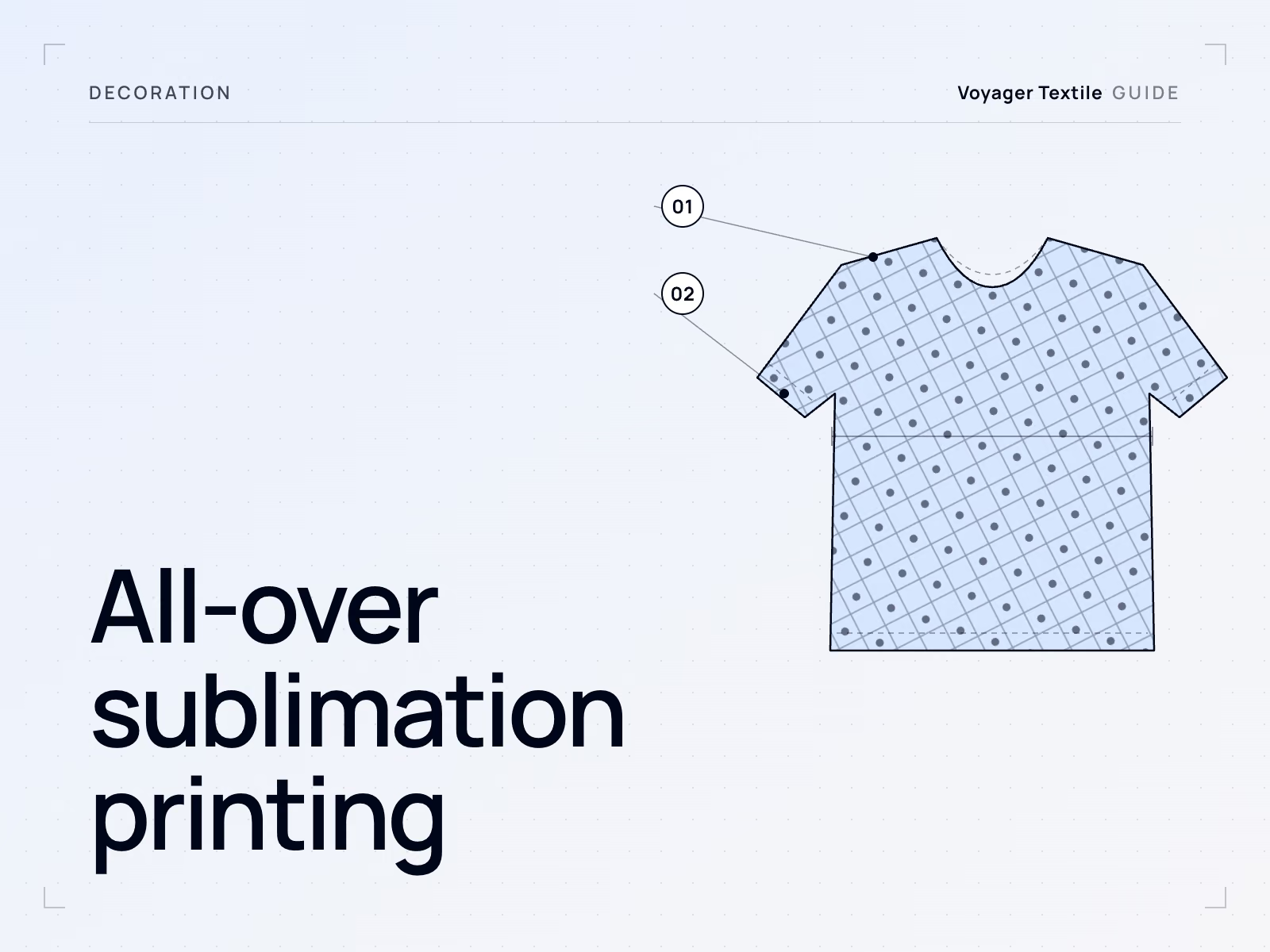
All-over sublimation follows the same rule at Voyager Textile: 300 pieces per colour and per style. In sublimation, the design is printed onto the fabric panels before the garment is assembled, using undyed or light polyester fabric, so there is no dye lot to match. The colour comes from the print rather than from the fabric supplier.
That changes the constraints rather than the minimum: the fabric must be polyester based, and the artwork has to be prepared for panel printing. See the all-over sublimation guide for how the process actually runs.
Custom Pantone colour production
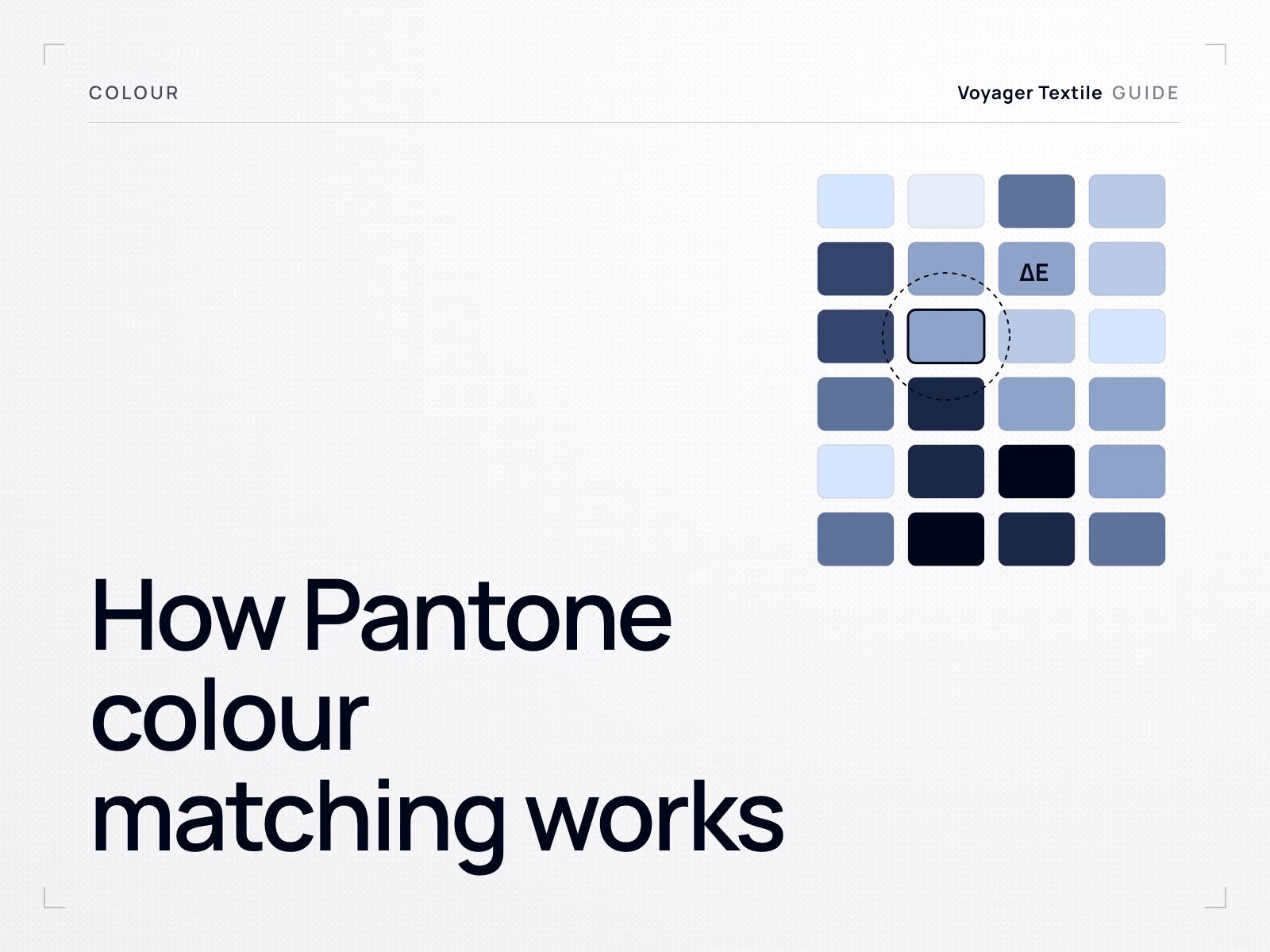
Custom Pantone colour production starts at 300 pieces. This is a separate production rule from the general apparel minimum, because dyeing fabric to a specific reference is its own process with its own approval step. A lab dip is produced and approved on the actual fabric before bulk dyeing begins, so the colour you sign off is the colour that goes into production. Polyester-based fabrics are assessed separately; confirm whether the proposed colour is produced by dyeing or sublimation printing.
How lab dips, lighting conditions and dye lots work in practice is covered in the Pantone colour matching guide.
How to plan an order that works inside a minimum
- Concentrate colour, spread sizes. Two colourways across a full size range is usually easier to produce than five colourways in a narrow range.
- Share a fabric across styles. A tee and a long-sleeve tee in the same fabric and colour each need their own 300 pieces, but they draw on one fabric order, which helps colour continuity.
- Use decoration for variety. Several artworks on one base garment add range without adding fabric colours; confirm at enquiry stage how artwork variants are counted.
- Start with the colours you will reorder. A first order is a test of the supply chain, not the moment to launch every colourway.
- Build a realistic size curve. Ask what split similar programmes actually sell before dividing the order evenly.
- Ask about the whole programme, not one style. A quotation for 300 pieces looks different when the factory knows three more orders are planned.
How the minimum works for a merch drop or a corporate wear range
A merch drop and a corporate wear range are counted the same way: each style in each colour is one line of at least 300 pieces, and sizes are split inside each line. Custom merch for a small business can start with a single line and add the next one in a later drop.
| Plan | Lines | Minimum |
|---|---|---|
| Merch drop: hoodie in black, T-shirt in black and white | 3 | 900 pieces |
| Corporate wear: polo in navy, softshell in navy | 2 | 600 pieces |
| Promotional textiles: one T-shirt in white, one logo | 1 | 300 pieces |
For a staff roll-out, build the size split from the headcount per size; for merch, from what past drops sold. A women's fit has its own pattern, so it normally counts as a separate style, confirmed at quotation. Workwear ranges are counted the same way. More on custom merch and corporate clothing.
Common mistakes
- Assuming a lower quantity is available without confirmation. Check the supplier's product-specific minimum before planning the order.
- Adding colourways after the quotation, then being surprised that the price and the minimum both changed.
- Ordering exactly the minimum with no allowance for samples, replacements or the pieces used in quality control.
- Assuming a low minimum means a low unit price. Small runs carry the same set-up costs spread over fewer garments.
- Planning a size curve by dividing the total by the number of sizes.
What happens above the minimum
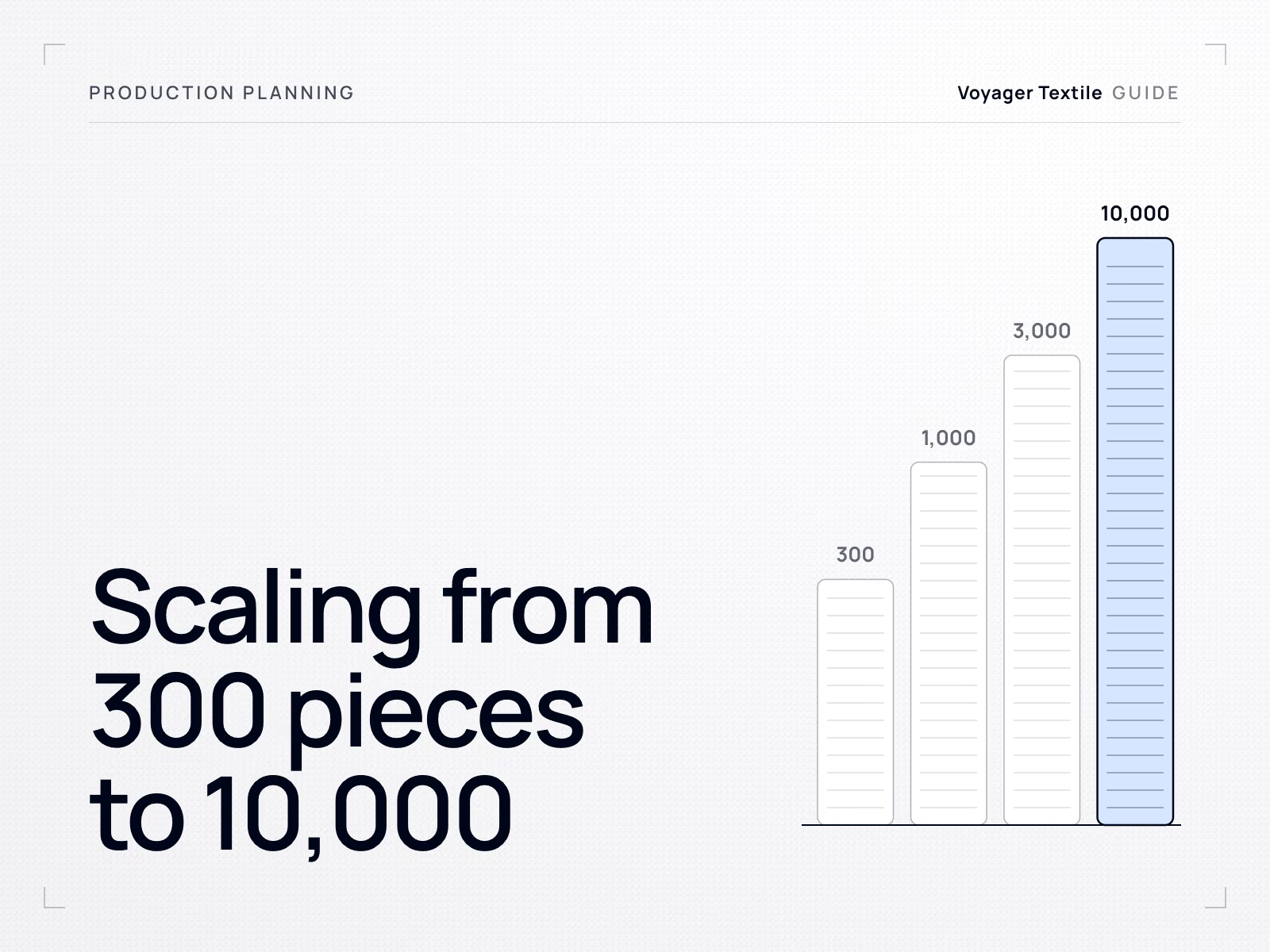
Larger quantities can spread set-up costs across more garments, but unit prices also depend on materials, construction and the production plan. Compare quotations for the same specification at the quantities you are considering. The scaling guide covers how that planning works as orders grow.
Questions buyers ask
Can a 300-piece order include several sizes?
Yes. Sizes are cut from the same fabric lay, so spreading 300 pieces across a full size range is normal. Plan the split according to expected demand rather than dividing the quantity evenly across sizes.
Can a 300-piece order include more than one colour?
Not at the minimum. The minimum is 300 pieces per colour and per style, so an order in two colours of one style starts at 600 pieces. Sizes can be split within each colour.
Does all-over sublimation have a lower minimum?
No. At Voyager Textile all-over sublimation has the same minimum as other custom apparel: 300 pieces per colour and per style. Sublimation removes the fabric dyeing step, but not the minimum.
Is the minimum per style or per order?
Per style and per colour. At Voyager Textile each style needs 300 pieces in each colour. Combining several styles into one order does not remove the per-style minimum.
Will a factory ever produce below its minimum?
Sometimes, for a sample run or where fabric is already available, and normally at a higher unit price that reflects the fixed costs. It is worth asking, but treat it as an exception rather than a plan, and check what changes in the specification to make it possible.
Does the minimum apply to reorders as well?
Usually yes, since a repeat order needs its own fabric and production run. Reorders are often easier to place if fabric was booked for a larger programme in advance. See keeping reorders consistent.
How does the minimum affect my unit price?
Larger quantities can spread set-up costs across more garments, but unit prices also depend on materials, construction and the production plan. Compare quotations for the same specification at the quantities you are considering.
What is the minimum for promotional T-shirts, merch hoodies or corporate polos?
The minimum for promotional T-shirts, merch hoodies or corporate polos is 300 pieces per colour and per style, the same as for other garments. Sizes can be split inside the 300, so one hoodie in one colour can run from XS to XXL.
Check how the minimum applies to your product
Tell us the product, the quantity, the colours and the size range you have in mind. We will confirm exactly how the minimum applies to that specification instead of leaving you to guess.
Ask about your quantity