Technical reference
Garment construction: how seams, stitches and components form a garment
A garment is a set of flat panels joined by a specific stitch in a specific configuration, with trims and internal structure added where the shape needs support. Change the stitch or the seam and you change the stretch, the strength, the thickness and the appearance of the finished piece, even when the fabric and the pattern stay identical.
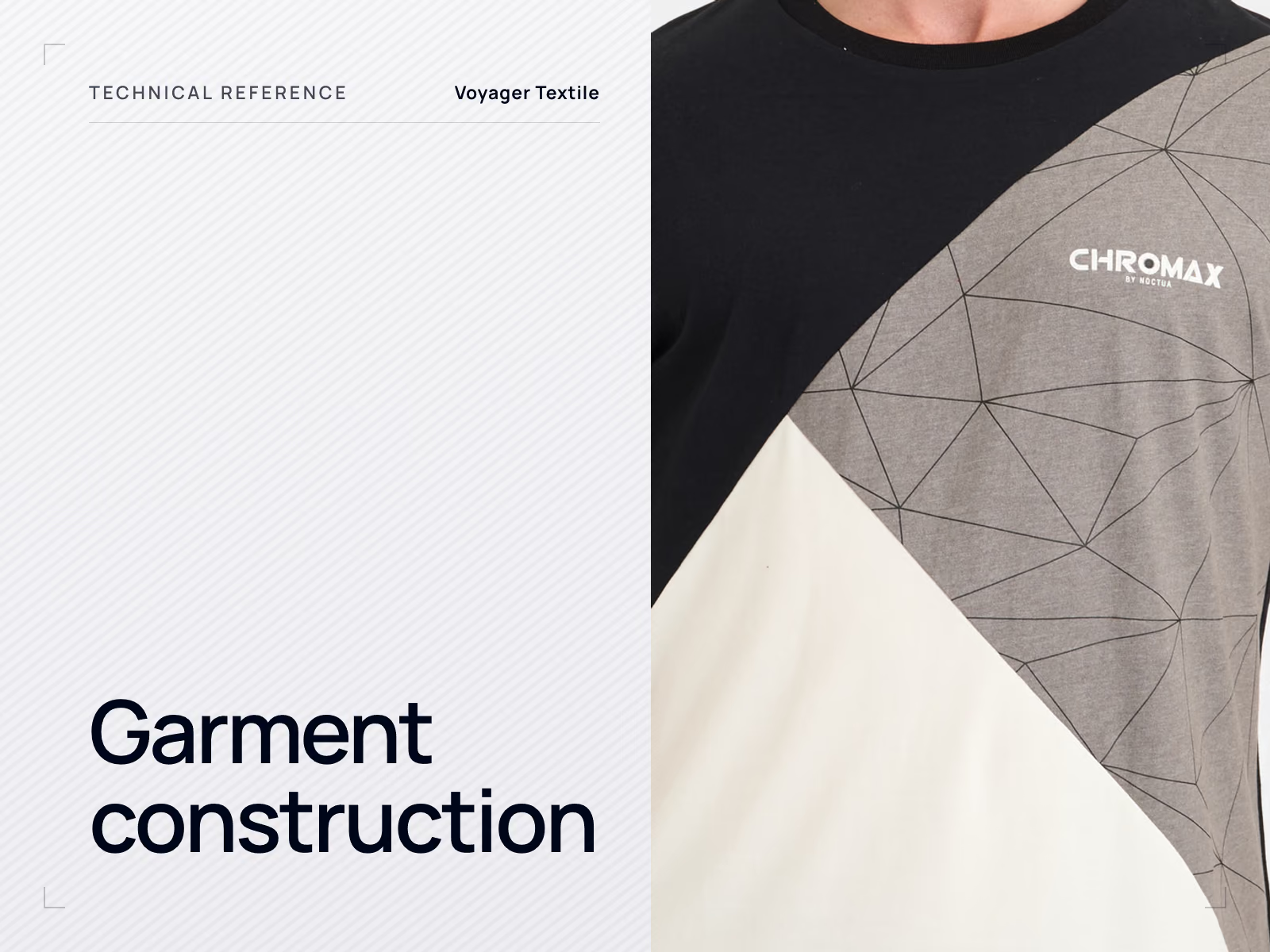
This section describes how garments are physically put together. It is deliberately separate from the manufacturing process references, which follow a garment from specification through to packing. Here the question is narrower and more technical: what holds the panels together, what the trims are doing, and what changes when one construction is chosen over another.
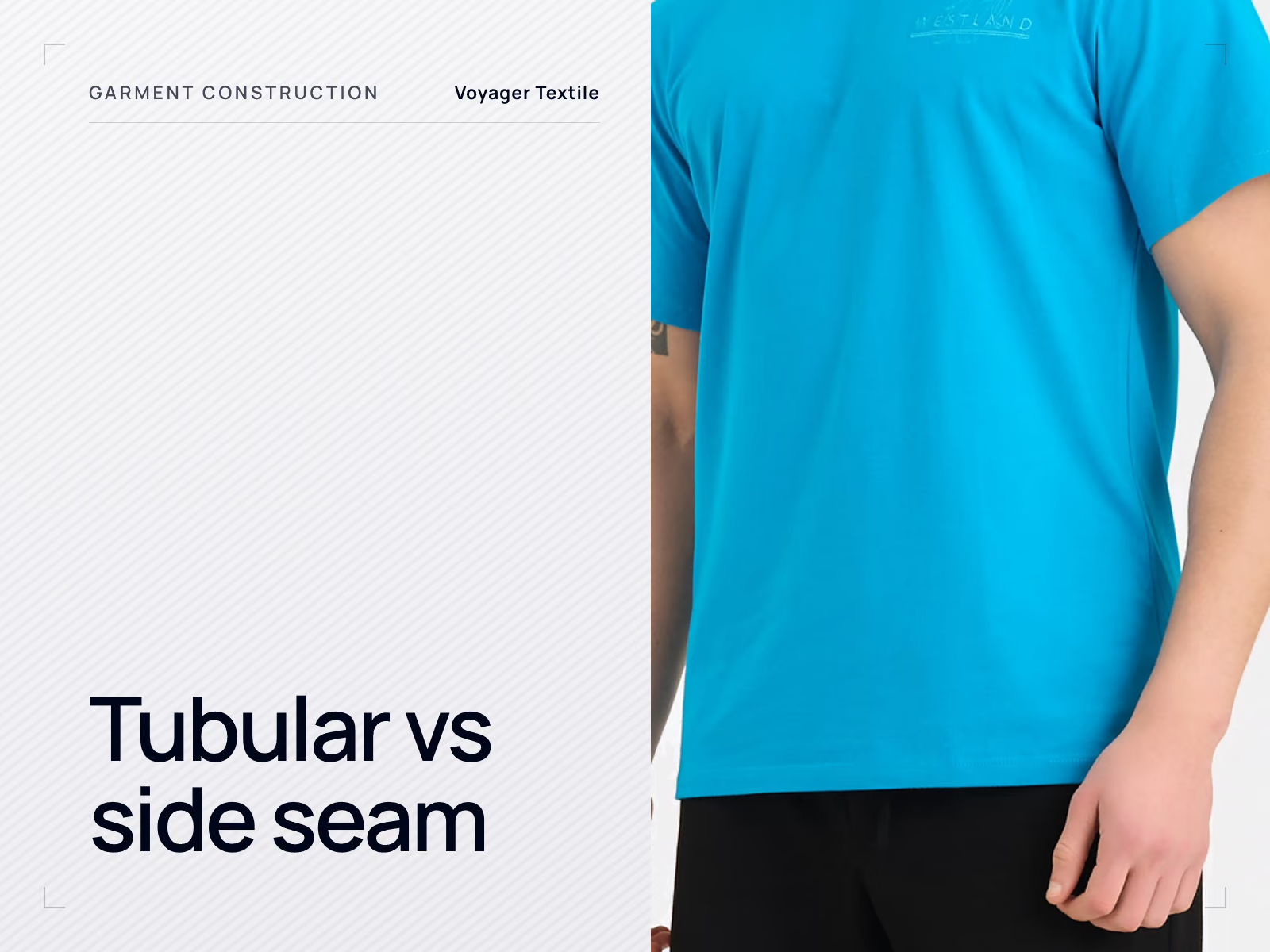
The reason this matters commercially is that construction is where two garments made from the same fabric stop being the same garment. A t-shirt in 180 gsm single jersey can be built with side seams or without them, with a coverstitched hem or a lockstitched one, with a taped shoulder or a bare one. Every one of those choices survives into the finished piece, and every one of them is something a buyer either specifies or inherits by default.
Stitches and seams are not the same thing
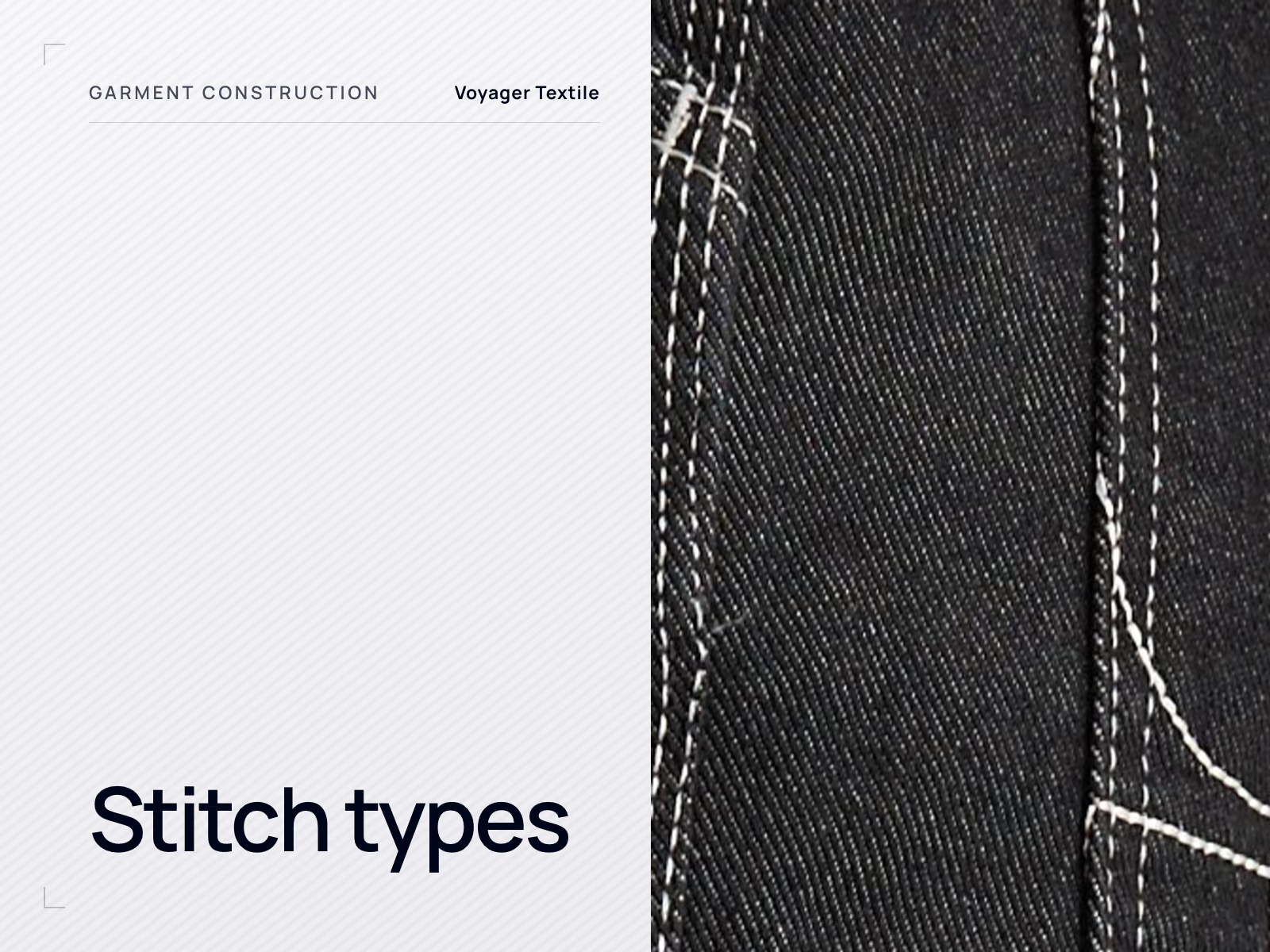
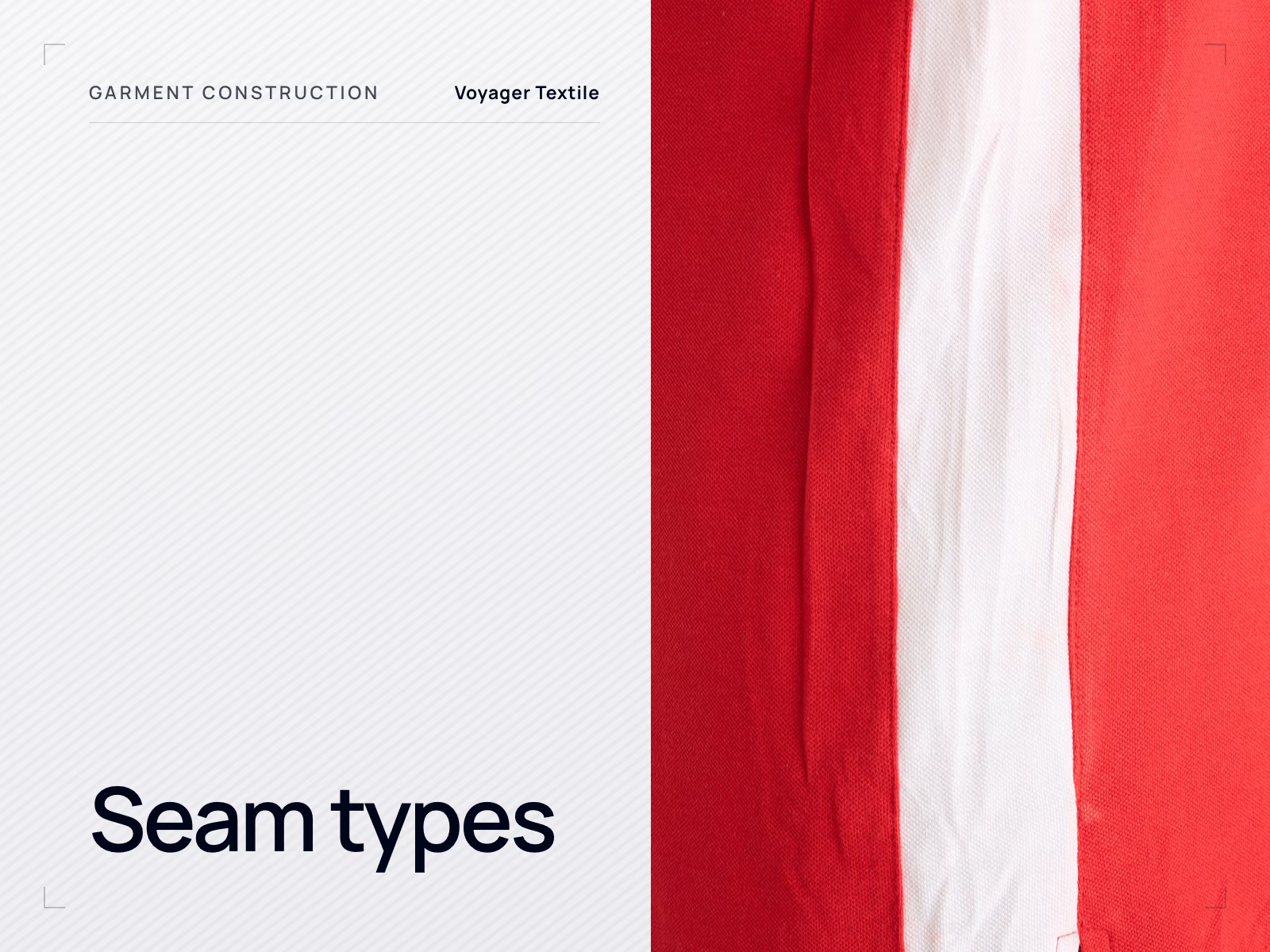
These two words are used interchangeably in everyday speech and they mean different things in production. A stitch is the geometry of the thread itself: how many threads there are, and how they interloop or interlock. A seam is the geometry of the fabric: how many plies there are and how they sit relative to each other before any thread goes through them.
Both are formally classified. Stitch types are numbered under ISO 4915, which groups them into classes by the first digit, so 301 is a lockstitch, 401 a chainstitch, 504 a three-thread overedge and 607 a flatseam. Seam types are numbered under ISO 4916, which sorts them into classes by how the material is arranged: superimposed, lapped, bound, flat, decorative, edge finishing and so on. The two systems combine. A plain side seam on a t-shirt is a superimposed seam sewn with a 504 overedge stitch, and writing only one half of that leaves the operation ambiguous. Both vocabularies, and the rest of the terminology used across this site, are defined in the apparel manufacturing glossary.
Seam configurations
Four of the seam classes in ISO 4916, seen in cross-section. The class describes how the plies are arranged; the stitch that joins them is specified separately.
What a garment is actually made of
Whatever the garment, the components fall into a small number of groups, and each group behaves differently in production.
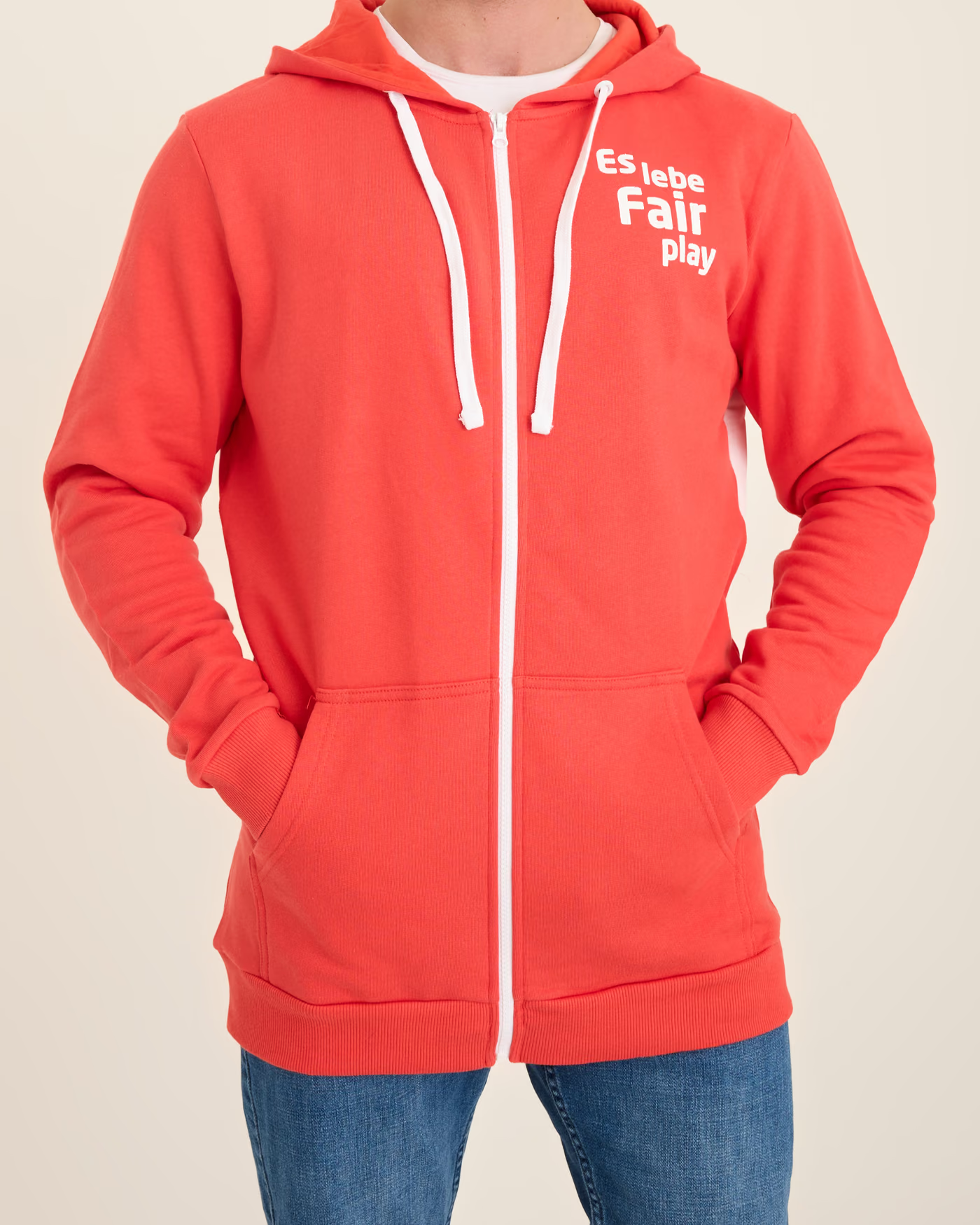
Components and what they do
Structural
- Body panels: the front, back, sleeves and legs that carry the shape
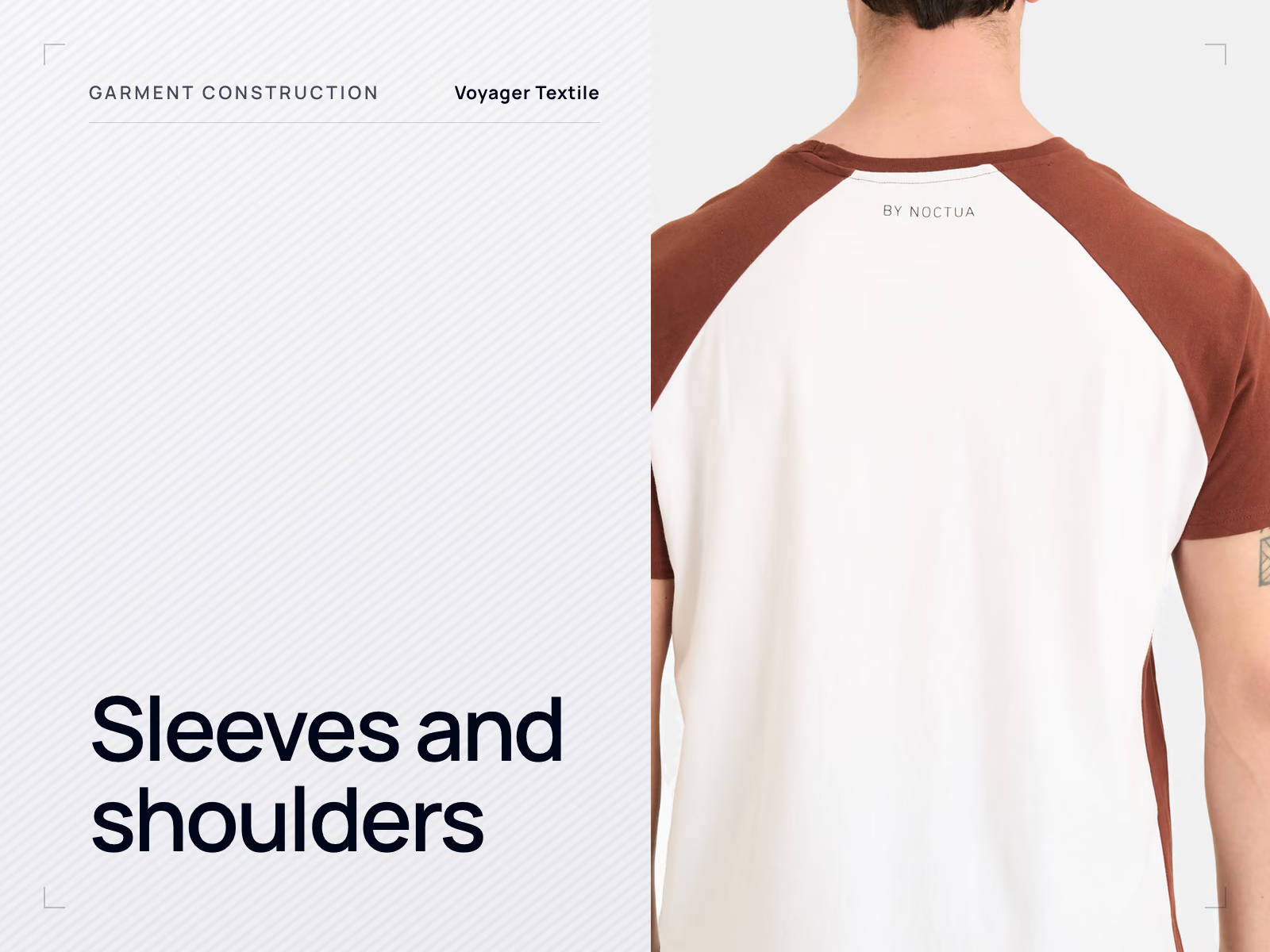
- Joining seams: shoulder, side, inseam, armhole, crotch
- Shaping: darts, pleats, gussets, yokes and panel splits
- Reinforcement: shoulder tape, neck tape, bartacks at stress points
Applied and internal
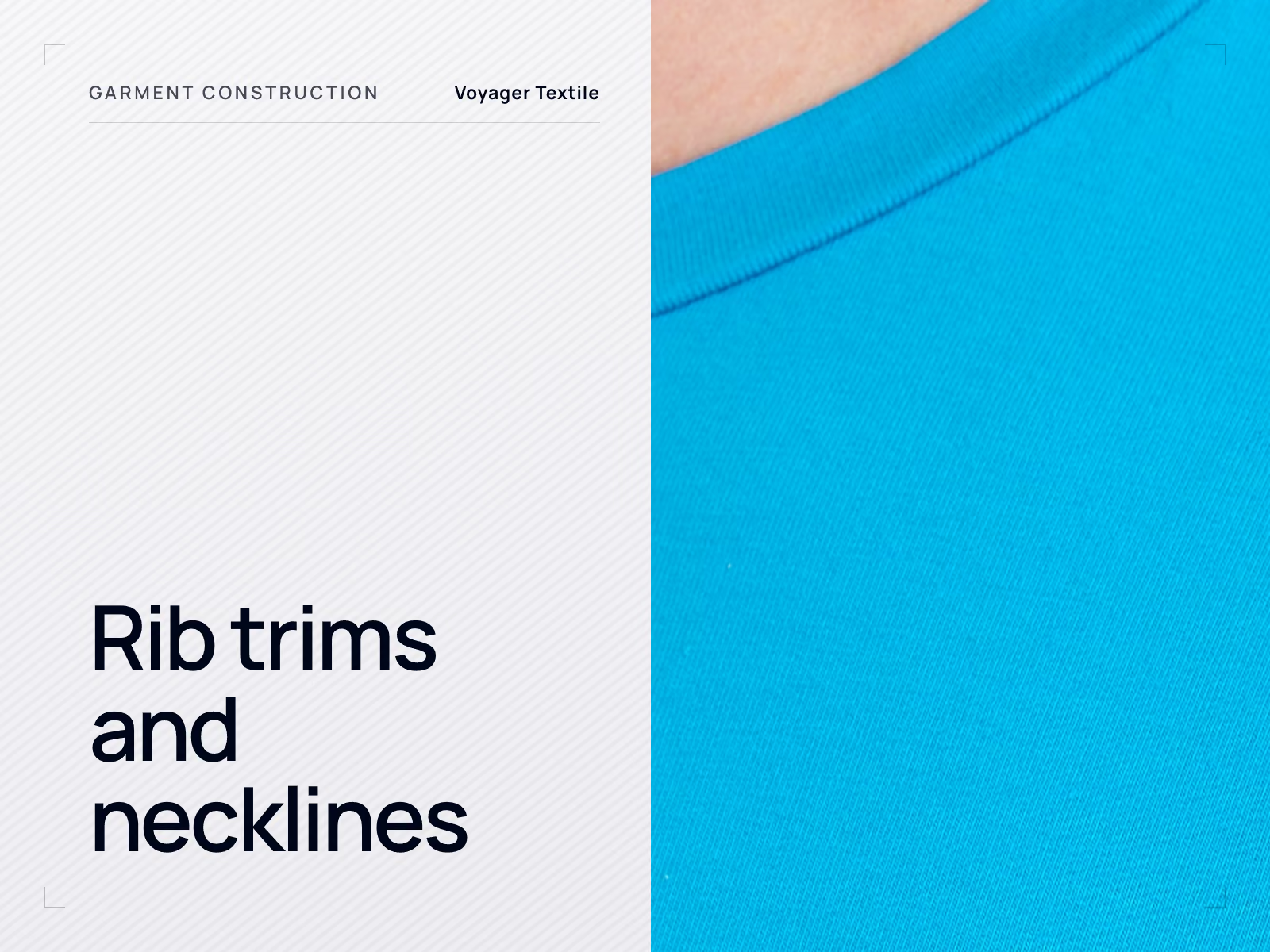
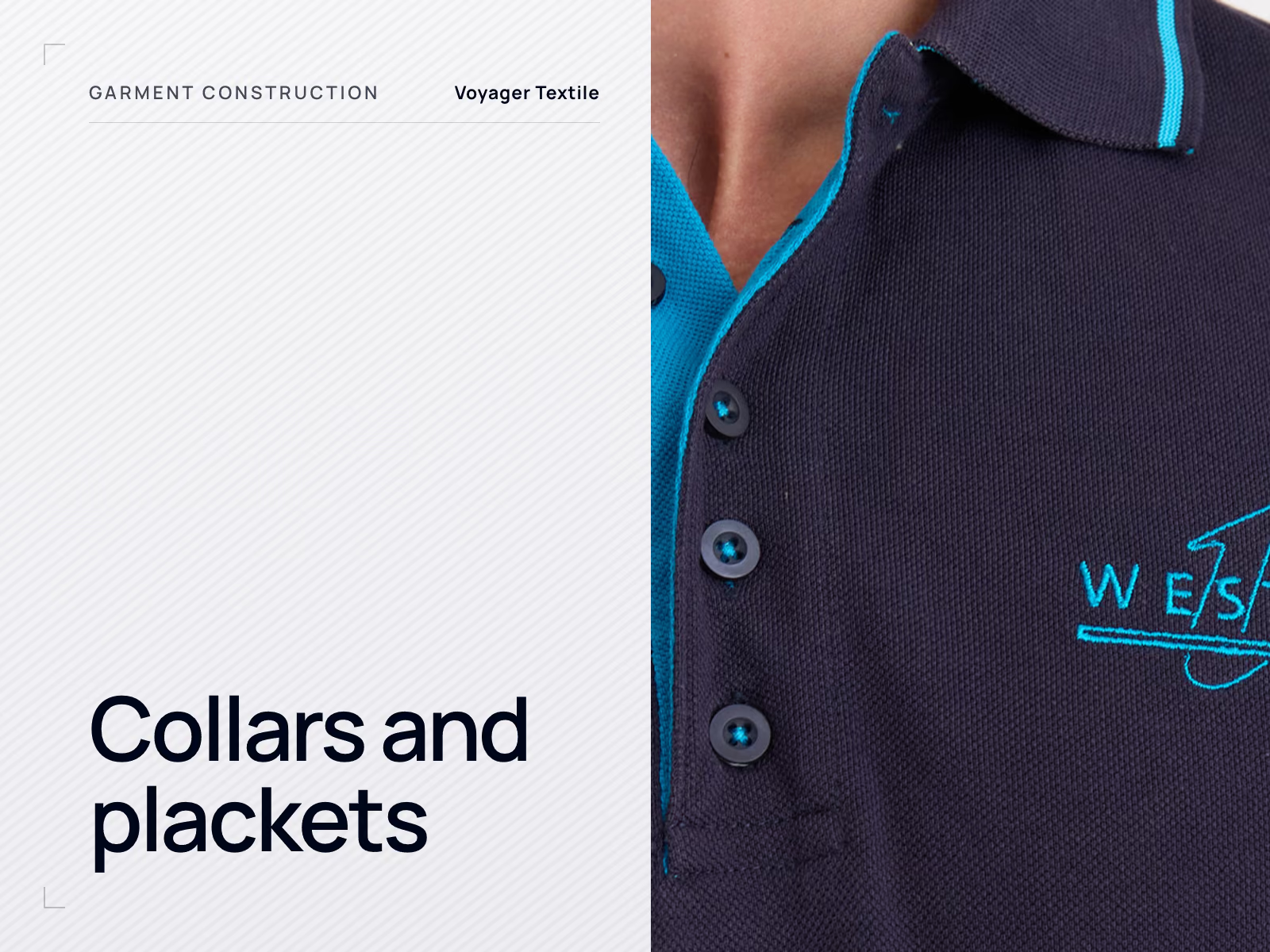
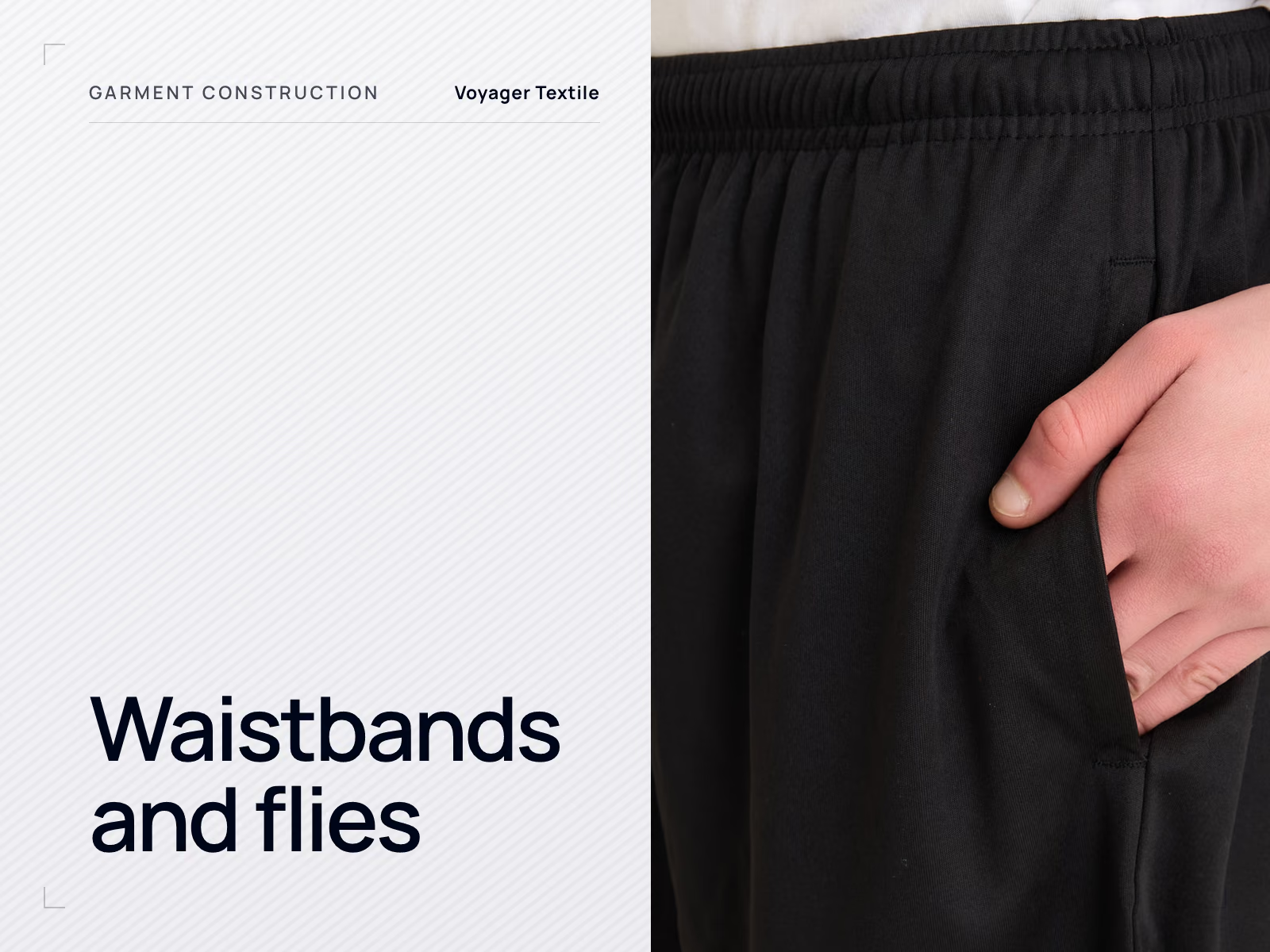
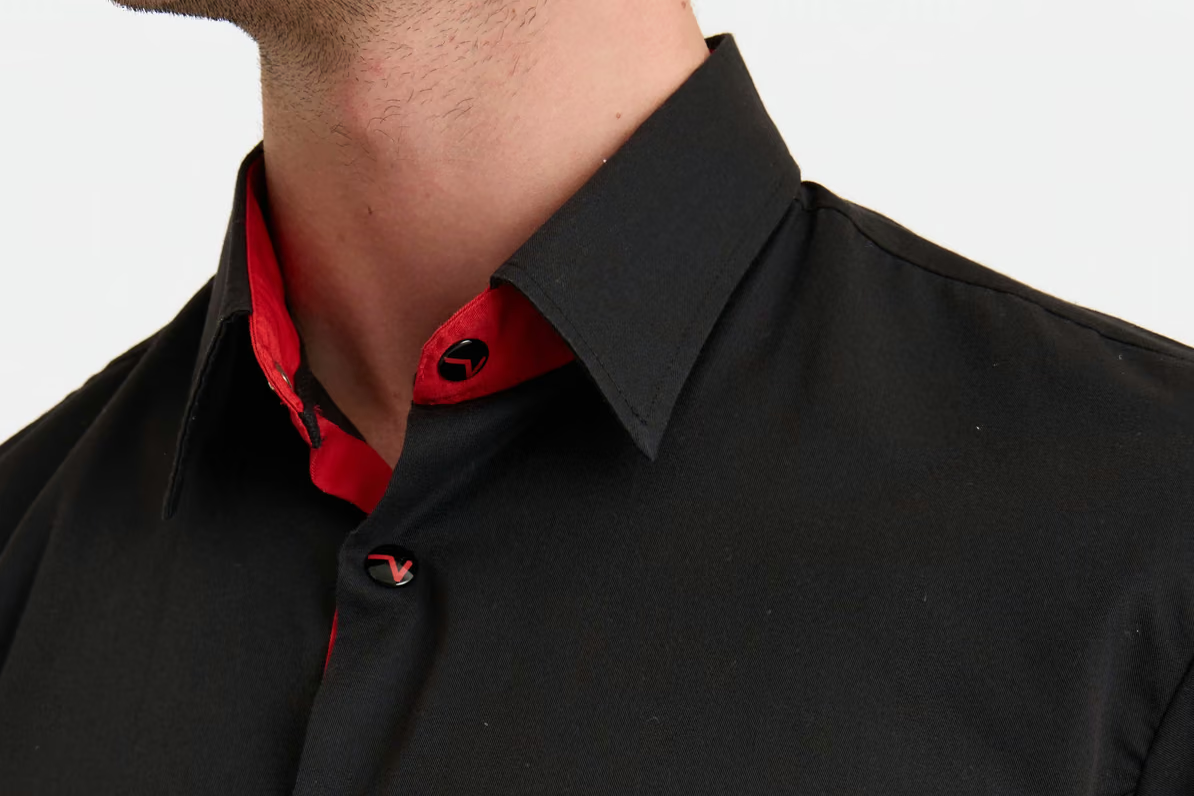
- Trims: rib neckbands, cuffs, waistbands, collars, plackets
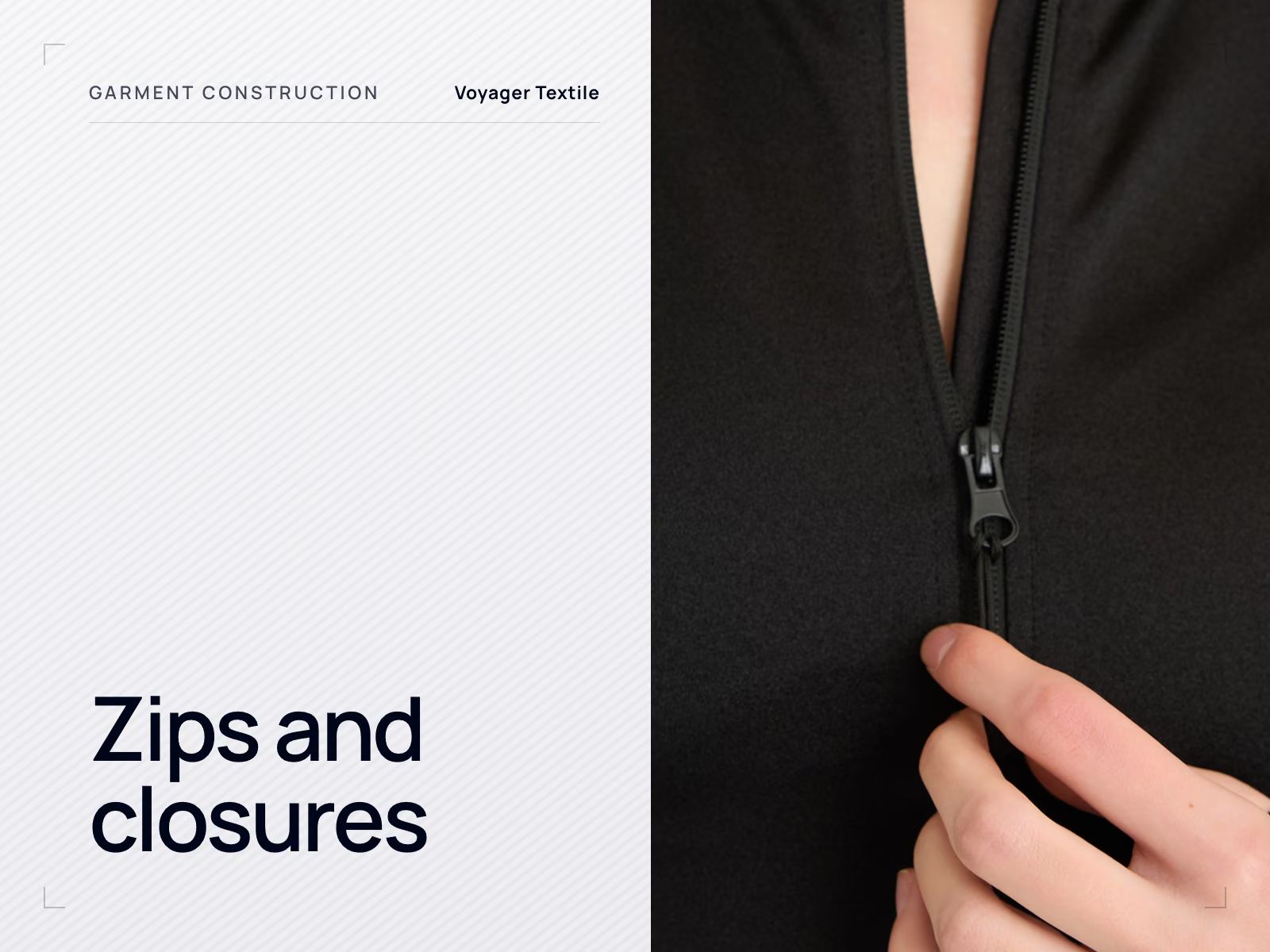
- Closures: zips, buttons, snaps, drawcords, hook and bar
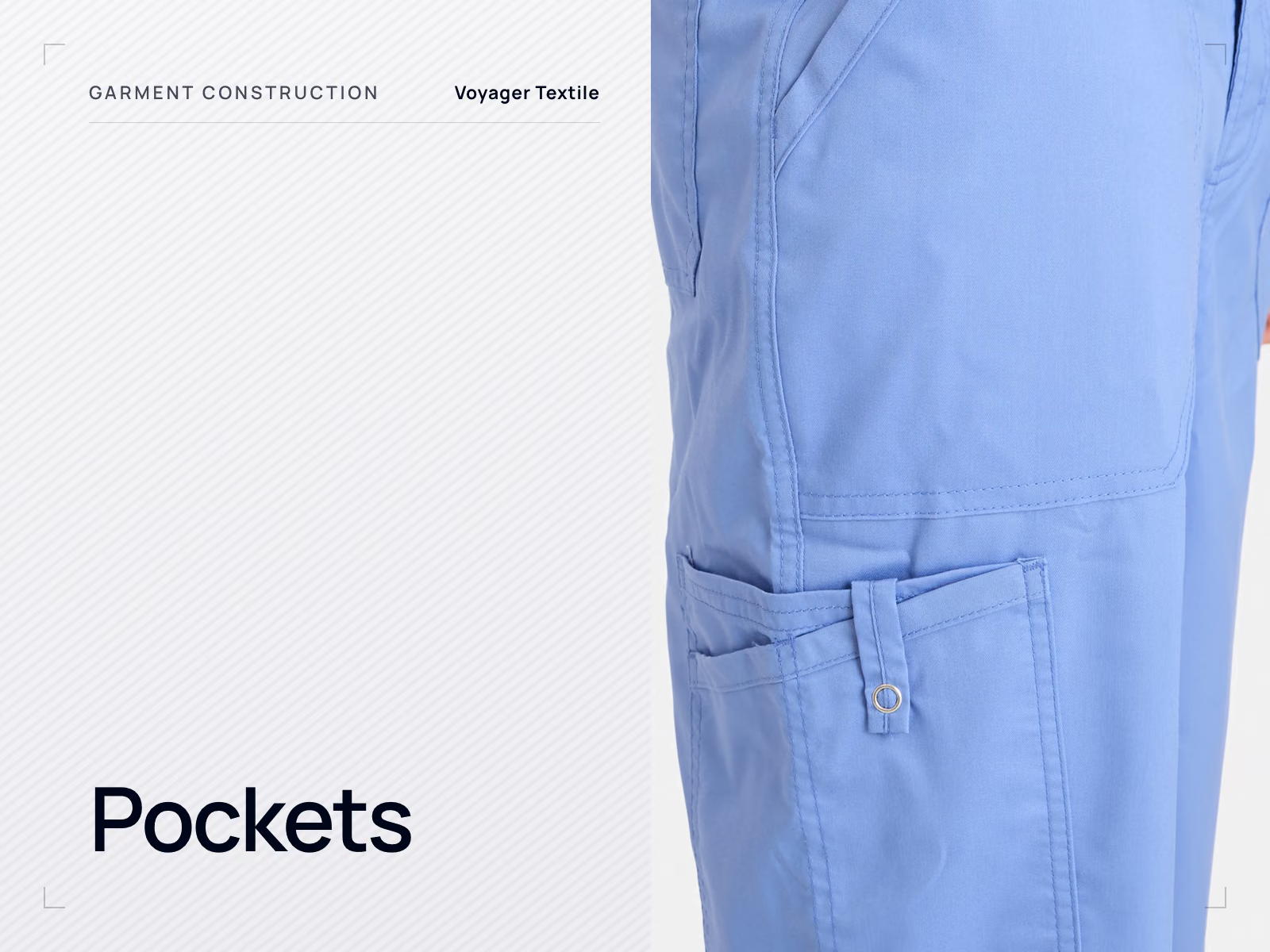
- Pockets: patch, welt, in-seam, cargo
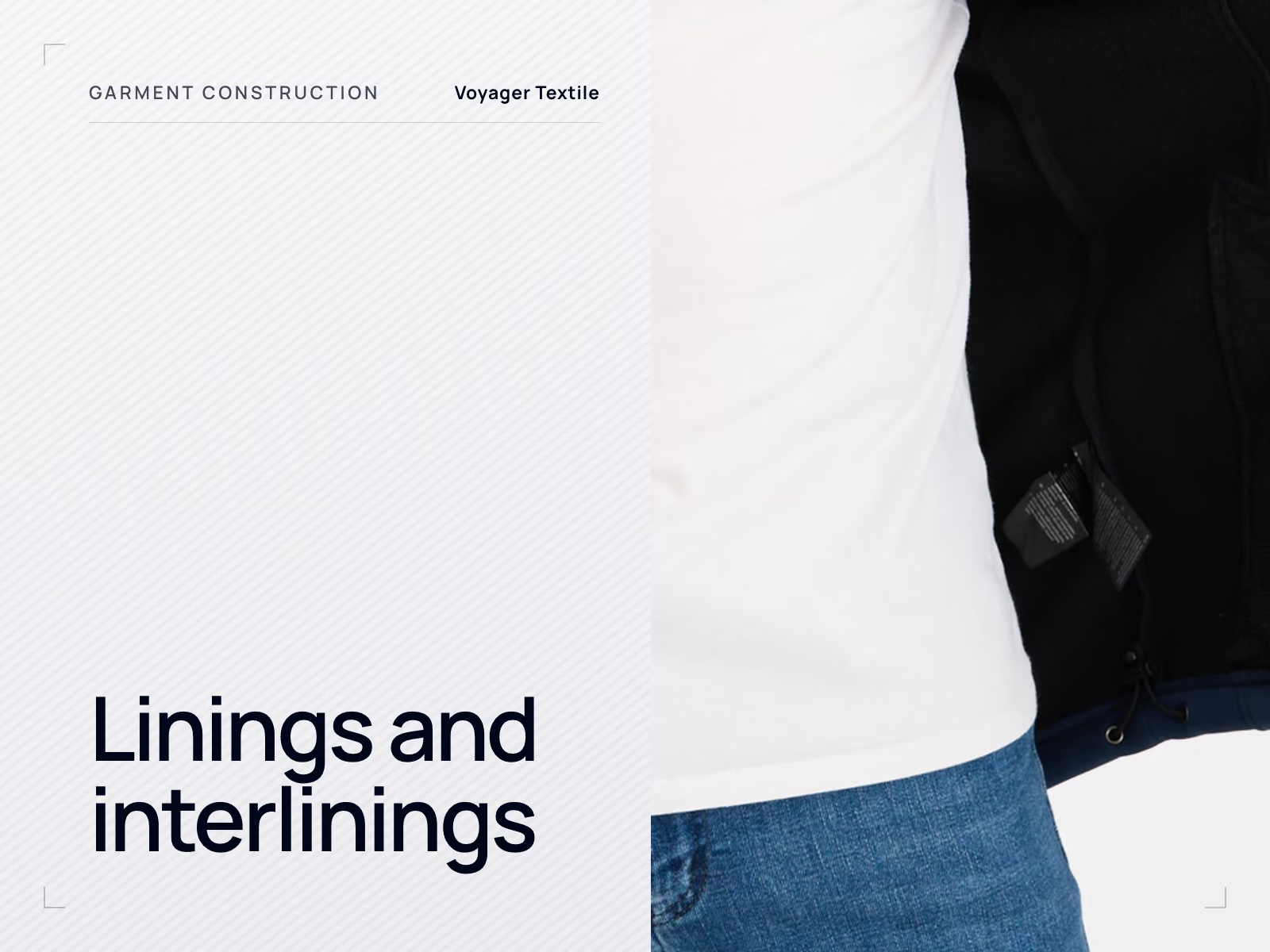
- Hidden layers: linings, facings, interlinings, pocket bags
Some of these are visible and are usually specified deliberately. Others are invisible in a photograph and are often left undefined, which is exactly why they turn into surprises at the sample stage. Nobody forgets to specify a collar. Interlinings, shoulder tape and pocket bag fabric get forgotten regularly.
Fabric decides what construction is possible
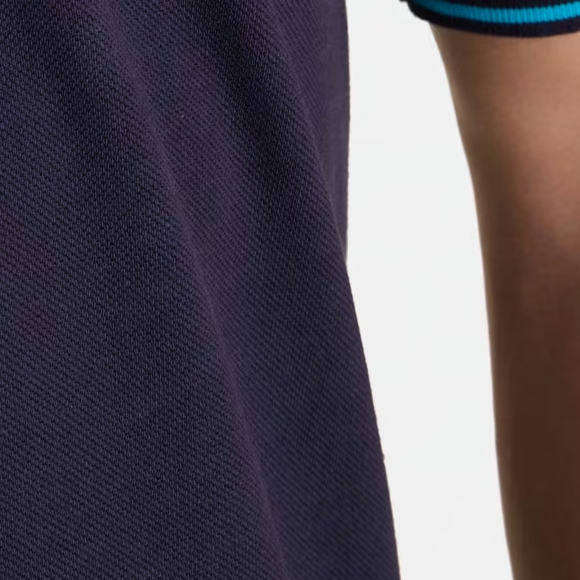
Construction cannot be chosen independently of material. A central division is between knitted and woven fabric, and the reason is behaviour at the cut edge: knits run and curl, wovens fray. That difference alone explains much of the stitch selection in an apparel factory.
| Fabric behaviour | Construction consequence |
|---|---|
| Knit fabric stretches in wear | Seams must stretch with it, which favours overedge, chainstitch-based and coverstitch constructions over plain lockstitch |
| Knit cut edges curl and run | Edges are enclosed by the stitch itself as the seam is made, rather than finished in a separate operation |
| Woven cut edges fray | Edges need a finish: serging, a folded and topstitched felled seam, a bound edge or an enclosed French seam |
| Heavy or dense fabric | Seam intersections build thickness quickly, so flat and lapped constructions become more attractive than bulky superimposed ones |
| Slippery or fine fabric | Seam slippage and puckering rise, and seam type, stitch density and thread choice all become part of the fix |
The knitted and woven comparison covers what those two constructions mean commercially. The fabrics library covers the materials themselves. This section covers what happens when you have to join them.
How a design becomes a sequence of sewing operations
A factory does not sew a garment. It sews an ordered list of operations, each one at a specific machine, and construction is the thing that determines what that list contains. Adding a chest pocket does not add a pocket to the garment; it adds pocket hemming, pocket pressing, pocket placement marking and pocket attaching, four operations at three different workstations.
How construction turns into work
This is also why construction is a cost driver rather than a styling detail. A welt pocket and a patch pocket both hold a phone; the welt takes far more operations and far more skill, and the difference shows up in the price. The cost breakdown guide explains where that lands in a quotation.
Why construction decides quality as much as fabric does
Buyers tend to judge quality by fabric because fabric is the part you can feel in a swatch. In practice many of the complaints that reach a factory are construction complaints. Seams that pucker, hems that ripple after washing, collars that lose their shape, twisted side seams, sleeve heads that sit badly, pockets that pull at the corners: none of these are fabric faults on their own.
What a tech pack has to say about construction
Construction information belongs in the tech pack in a specific form, not as a general description. The tech pack guide covers the document as a whole; the construction-specific part of it is short and should look roughly like this.
Construction lines a tech pack should carry
One line per join, written so a sewing supervisor can act on it without asking a question.
- Seam type and stitch type for each main seam, by name or by ISO number
- Seam allowance for each seam, because it changes finished measurements
- Topstitch positions, margins and needle spacing where topstitching is visible
- Trim construction: rib width, whether cuffs are rib or self-fabric, collar type
- Reinforcement: where tape goes, where bartacks go, how many
- Closure specification: zip type, length, slider, whether it is open-ended
- Internal components: interlining, lining, pocket bag fabric, and where each is used
- Thread type and colour, including whether topstitching thread differs from seaming thread
If a construction detail is not written down it will be decided by the factory using its normal practice for that garment. That is not carelessness, it is the only way production can proceed, but it means the default is the factory's rather than yours. Buyers moving between suppliers discover this quickly, which is one of the recurring themes in moving production to a new manufacturer.
How construction gets confirmed before bulk
Construction is confirmed physically, in samples, not on paper. A first prototype tests whether the construction works at all in the chosen fabric. A fit sample tests whether the seams fall where the pattern intended. The pre-production sample matters particularly here, because it is sewn with bulk fabric, bulk trims and the intended machines, so it is the first sample where the seam thickness, the trim behaviour and the stitch appearance are genuinely representative.
Construction problems that survive into bulk are usually ones that were visible on an earlier sample and were not acted on. A slightly wavy coverstitched hem on a fit sample does not correct itself in a production run of five thousand.
Why construction decides bulk consistency
Repeatability is the real reason factories care about construction detail. A construction that depends on operator judgement varies from piece to piece; a construction that is controlled by a folder, a guide or a machine attachment does not. That is why a bound neckline sewn through a binding folder is more consistent across ten thousand pieces than the same neckline sewn freehand, and why a factory will often propose a construction change that looks like a small detail but is really a consistency decision.
It is also why construction should be frozen at the same moment the rest of the specification is frozen. Changing a seam type after bulk fabric is committed can change consumption, machine allocation and the finished measurements at once. Reorder consistency depends on the construction record being as stable as the measurement chart.
Buyer questions
What is the difference between a stitch type and a seam type?
A stitch type describes the thread geometry, classified under ISO 4915: how many threads there are and how they interlock or interloop. A seam type describes the fabric geometry, classified under ISO 4916: how the plies are arranged before the stitching goes through them. A complete specification names both, because the same stitch can be used in several seam configurations and the same seam can be sewn with several stitches.
Do I need to specify construction if I am sending a reference garment?
Less of it, but not none. A physical reference answers many construction questions directly, which is why manufacturing from a reference garment works. What a reference cannot tell you is which details were deliberate. Anything you want to change from the reference has to be written down, because everything else will be copied as found.
Does construction affect cost more than fabric does?
Not usually more, but often more than buyers expect. Fabric is normally the largest single line in a garment cost. Construction determines the labour line, and it also affects fabric consumption through seam allowances and panel count. Two garments in the same fabric can differ substantially in price purely on operation count.
Can a factory change the construction I specified?
It should not do so silently, and a good factory will raise it as a question rather than a change. There are legitimate reasons to propose an alternative, usually because the specified construction will not behave well in the chosen fabric or will not run consistently in bulk. The decision stays with the buyer, and any agreed change belongs in the updated specification rather than in an email thread.
Send us the construction you need
If your specification names the seams, stitches and trims you want, we can quote and sample against it directly. If it does not yet, a reference garment or a conversation about the construction is a workable starting point.
Start a project