

Zip and closure construction, storm flaps and adjusters
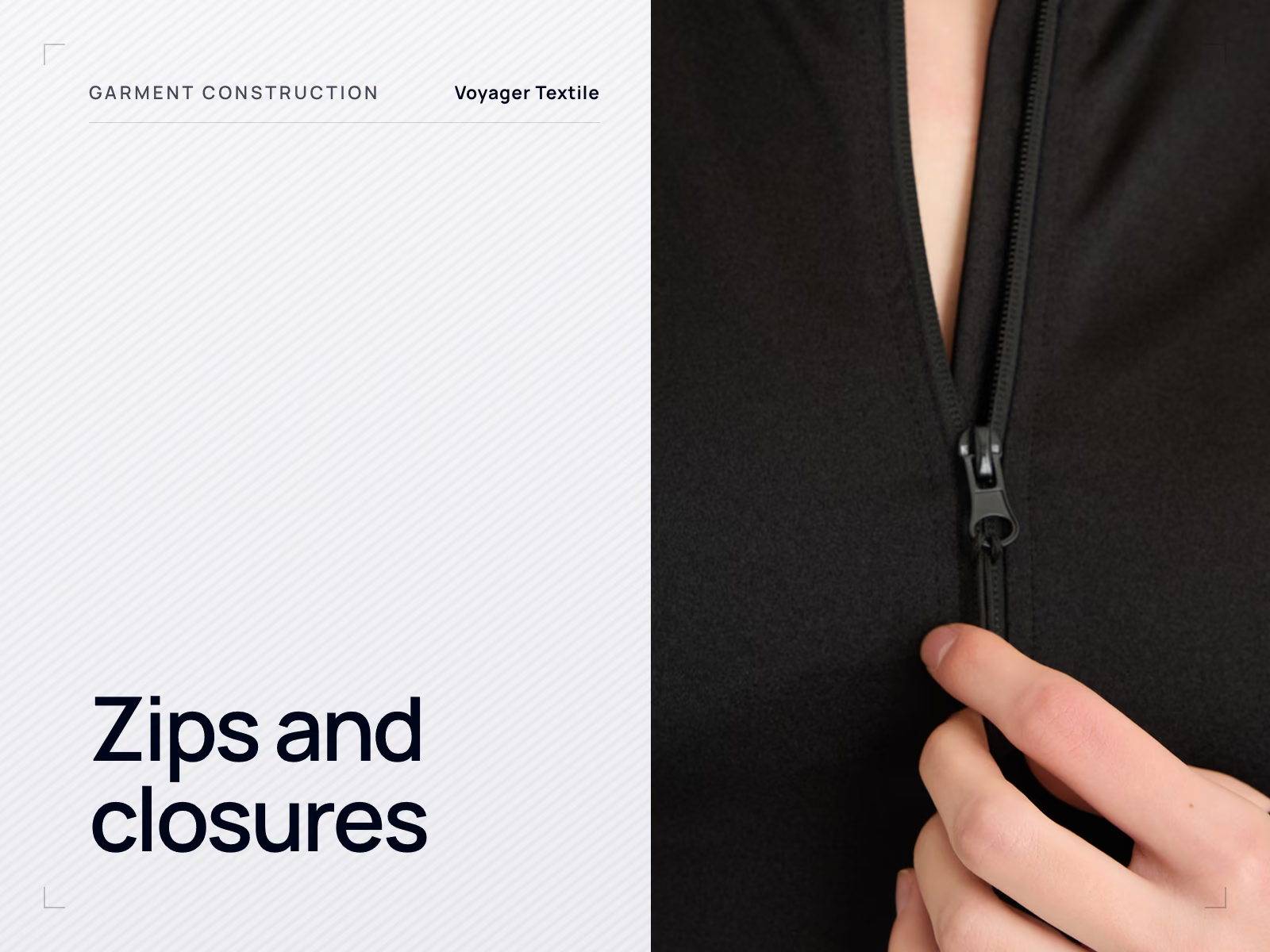
A zip is a bought component and a construction problem at the same time. It has to be the right type and length for the product, set so that both sides finish level, and supported by whatever the garment needs around it: a shield, a storm flap, a chin guard or a reinforced end.
Contents
Zips fail in production for two reasons: the wrong zip was specified, or the right zip was set badly. Both are avoidable, and both are more common than they should be because the zip is often one of the last things a buyer thinks about.
Zip types
| Type | How it is made | Character |
|---|---|---|
| Coil | A continuous monofilament coil sewn to the tape | Light and flexible, follows a curve, self-healing if the coil is displaced rather than damaged |
| Moulded plastic | Individual teeth moulded directly onto the tape | Chunky and visible, often used as a design feature; stiffer than coil |
| Metal | Individual metal teeth clamped onto the tape | Heaviest and stiffest; the traditional look on denim and workwear |
Alongside the type, five further attributes have to be specified, and leaving any of them out can hold an order.
Zips are also a lead time item. They are bought in specific lengths and colours, and on a coloured programme the tape usually has to be dyed to match the garment. That makes zip colour one of the earliest decisions in the bill of materials, not a late one.
Setting a zip
A&E's seam reference lists dedicated constructions for attaching a zip tape between the shell and the facing, and for hemming and attaching a zip tape, and notes that a zip foot may be required. Those are the two normal approaches: the tape is either enclosed between the shell and a facing, which gives a clean finish with no visible tape, or it is attached to a folded edge and topstitched, which leaves a visible stitch line.

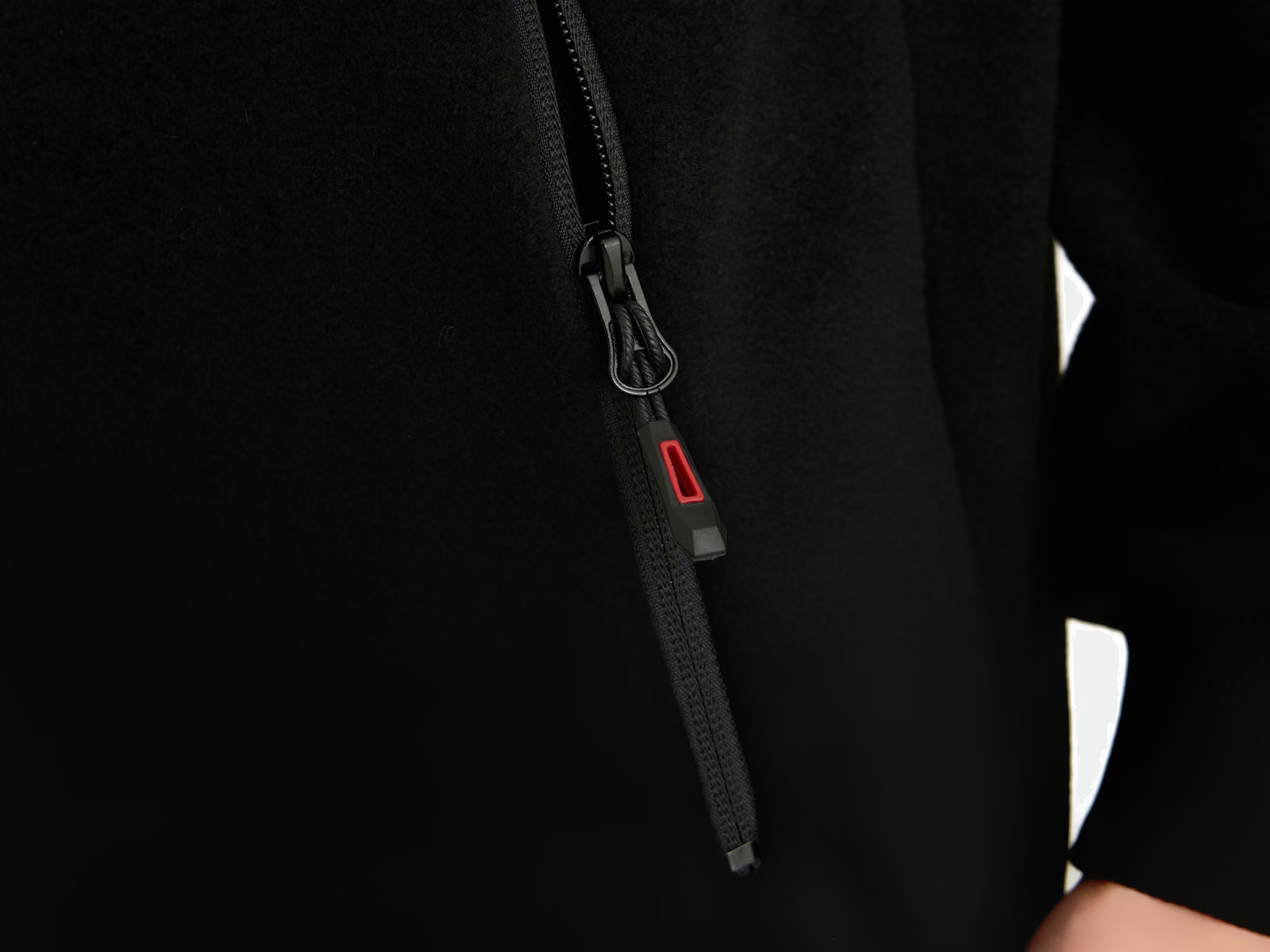
The construction question that decides quality is what happens at the two ends and at the join. Both sides of a front zip have to finish level at the hem, or the garment hangs unevenly with one front longer than the other. The top of the zip has to finish cleanly at the collar or hood, without the slider sitting proud or the tape end exposed. And where a zip crosses a horizontal seam, the seam should line up on both sides, which is a marking discipline rather than a sewing one.
What to check on a zipped sample
- Both fronts level at the hem when the zip is closed
- The zip runs smoothly through its full travel without catching on the fabric
- Any horizontal seams meeting the zip align on both sides
- The top of the zip finishes cleanly and the tape end is not exposed
- The bottom stop is secure and reinforced where the garment takes load
- The zip pull, tape and garment are an acceptable colour match
Zip fronts on knit garments
A zip in a knit garment is a specific problem: the zip does not stretch and the fabric does. If the zip is simply sewn to an unstabilised knit edge, the fabric will be eased or stretched during sewing and the front will ripple, or the two fronts will come out at different lengths.
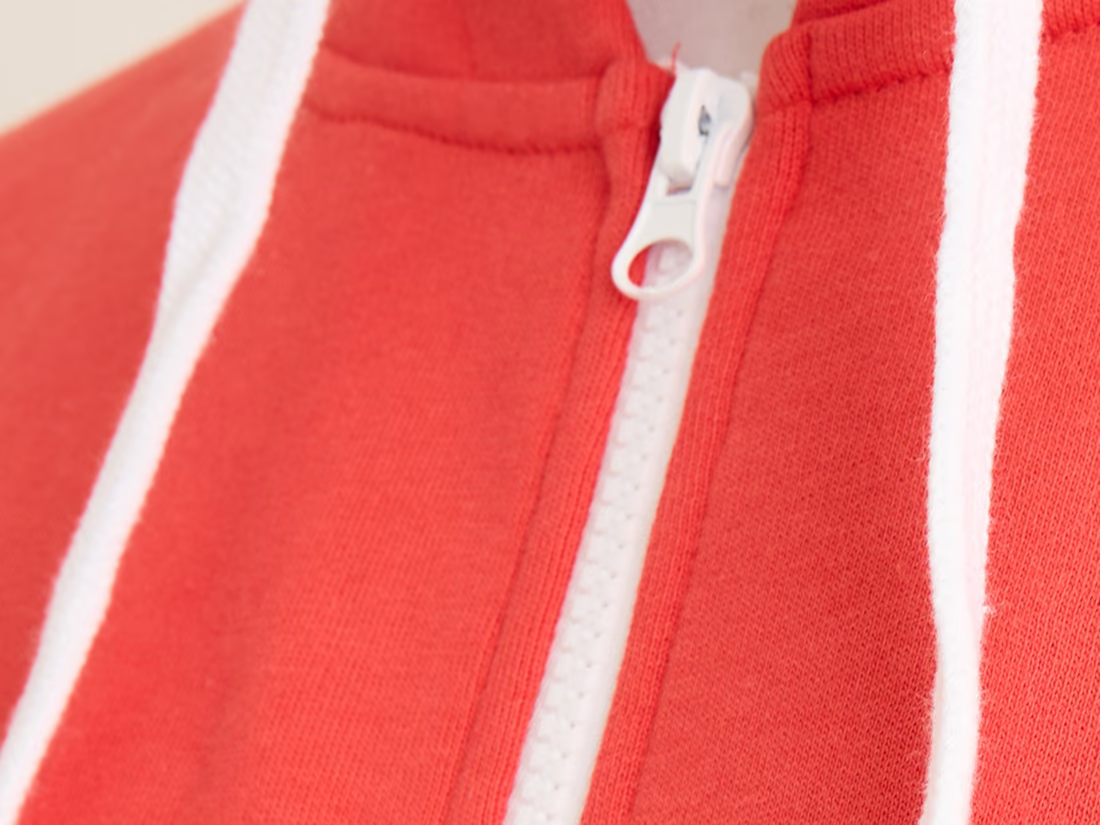
The fix is stabilisation. The front edges are normally taped or interlined along their full length so they cannot extend, and the two fronts are cut and measured against each other before the zip goes in. On a zip hoodie there is an additional junction where the two fronts, the zip and the hood all meet, and how that is finished should be specified rather than left to habit. Hood construction around that point is covered in hood construction.
Storm flaps and chin guards
On outerwear, a zip is a weak point: it is a line of hard components with gaps, and wind and water pass through it more easily than through the fabric. Several constructions address that.
| Detail | What it is | What it does |
|---|---|---|
| Inner storm flap | A strip of fabric behind the zip, attached to one front | Blocks the gap behind the zip and stops the zip touching the wearer |
| Outer storm flap | A flap covering the zip from the outside, usually held by snaps or hook and loop | Keeps wind and driven rain off the zip itself |
| Chin guard | A small piece of soft fabric at the top of the zip | Stops the slider and tape ends contacting the chin when the collar is closed |
| Zip garage | A recess at the top of the zip that houses the slider | The same purpose as a chin guard, built into the collar |
None of these makes a garment waterproof on its own. Water resistance is a property of the fabric, its finish and how the seams are treated, and a storm flap only addresses the zip. Claims about weather performance should follow from tested fabric and construction rather than from the presence of a flap, which is why the rain jacket process reference treats them separately.
Adjustable cuffs and hem adjusters
Outerwear frequently needs to close down at the openings, and there are a small number of standard constructions for doing it.
| Where | Construction | Notes |
|---|---|---|
| Cuff | A tab with hook and loop, a snap, or an elasticated section | Hook and loop adjusts continuously; a snap gives fixed positions and a cleaner look |
| Hem | A drawcord in a channel with cord locks at the sides or inside the pockets | The cord exit position is a real usability decision, not only a design one |
| Waist | An internal drawcord, often at the same level as the pocket bags | Needs to be routed so it does not interfere with the pockets |
| Hood | Drawcords at the face opening and sometimes a rear volume adjuster | Covered in more detail under hood construction |
Each of these introduces bought components: cord, cord locks, snaps, hook and loop tape. Each of those is a bill of materials line with a colour, a size and a supplier, and each one has to survive the garment's wash and wear. Metal components in particular need a corrosion check appropriate to the product's use. What it takes to define and approve a bought component, rather than to attach it, is covered in trims and components.
Other closures
Buttons, snaps and hook-and-bar closures follow the same principle: they are bought components whose attachment is a construction operation. Buttons need buttonholes cut and stitched to match, and the buttonhole direction affects how it behaves under load. Snaps are set with a press and need the fabric behind them reinforced, since an unreinforced snap will pull through a knit or a light woven. Hook-and-bar closures on trouser waistbands need the band interlined enough to carry them.
In every case the check is the same: does the fabric behind the component have enough structure to hold it under the load it will actually see. That question is answered by the interlining and reinforcement decisions covered in linings, facings and interlinings.
Zipped references
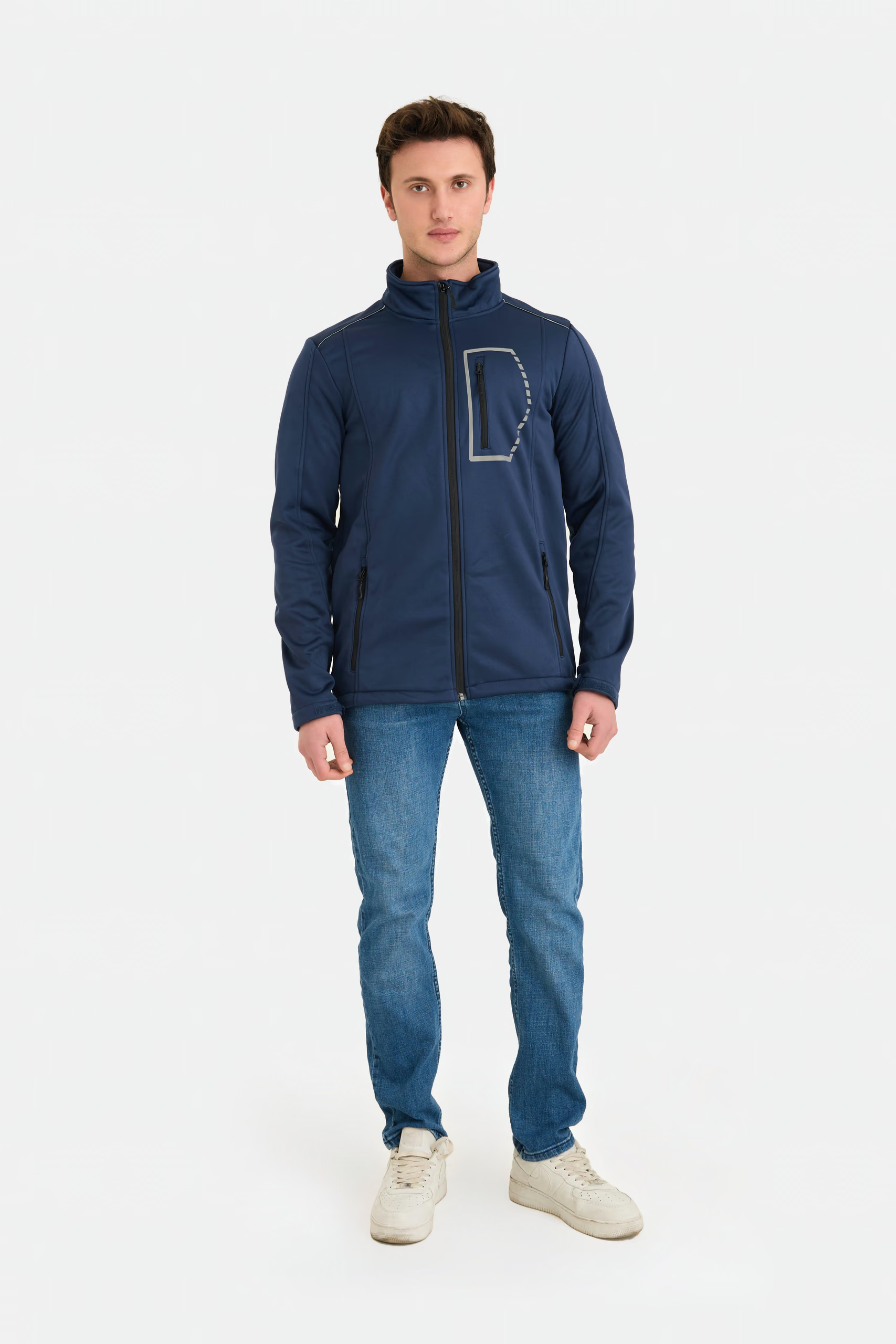
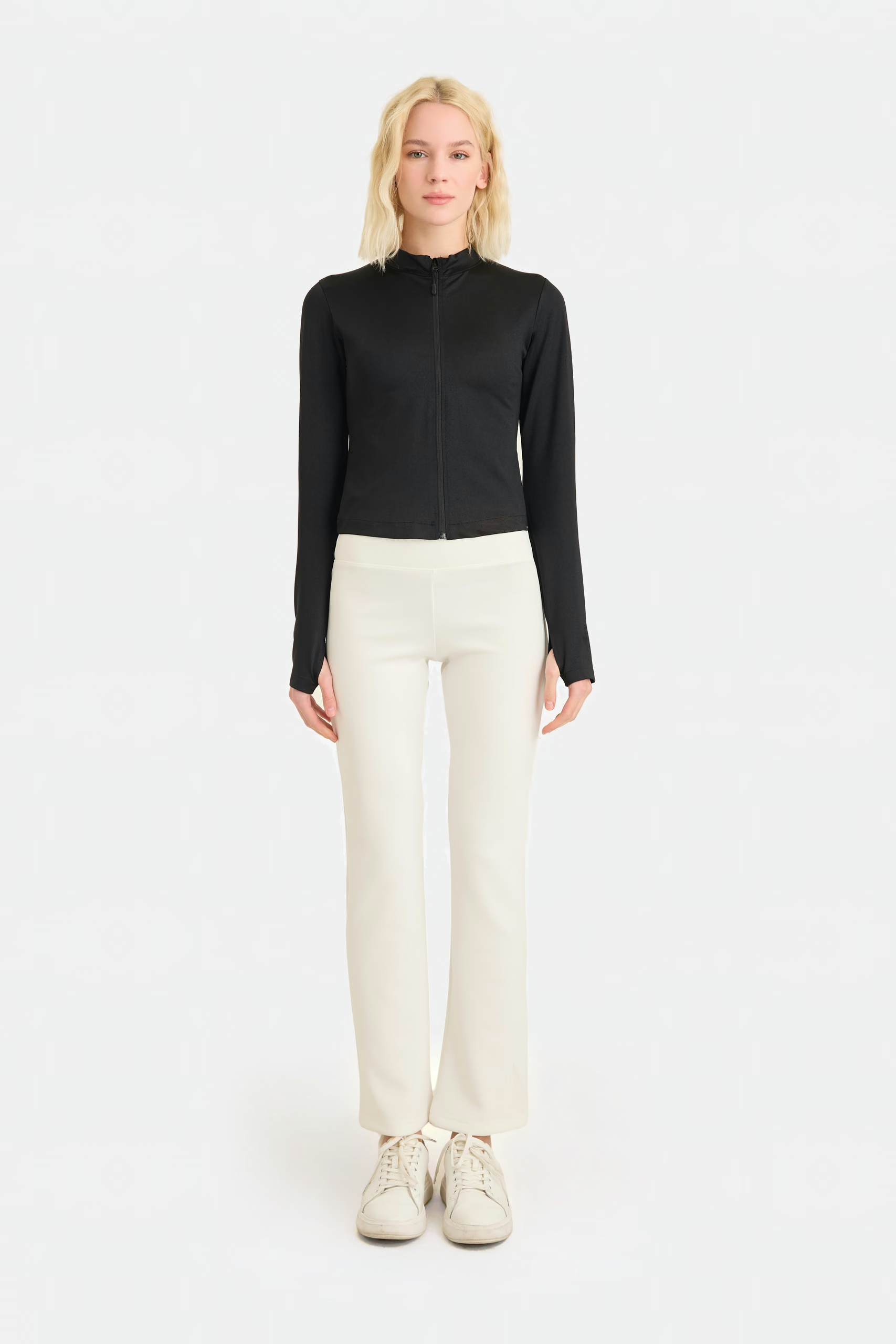
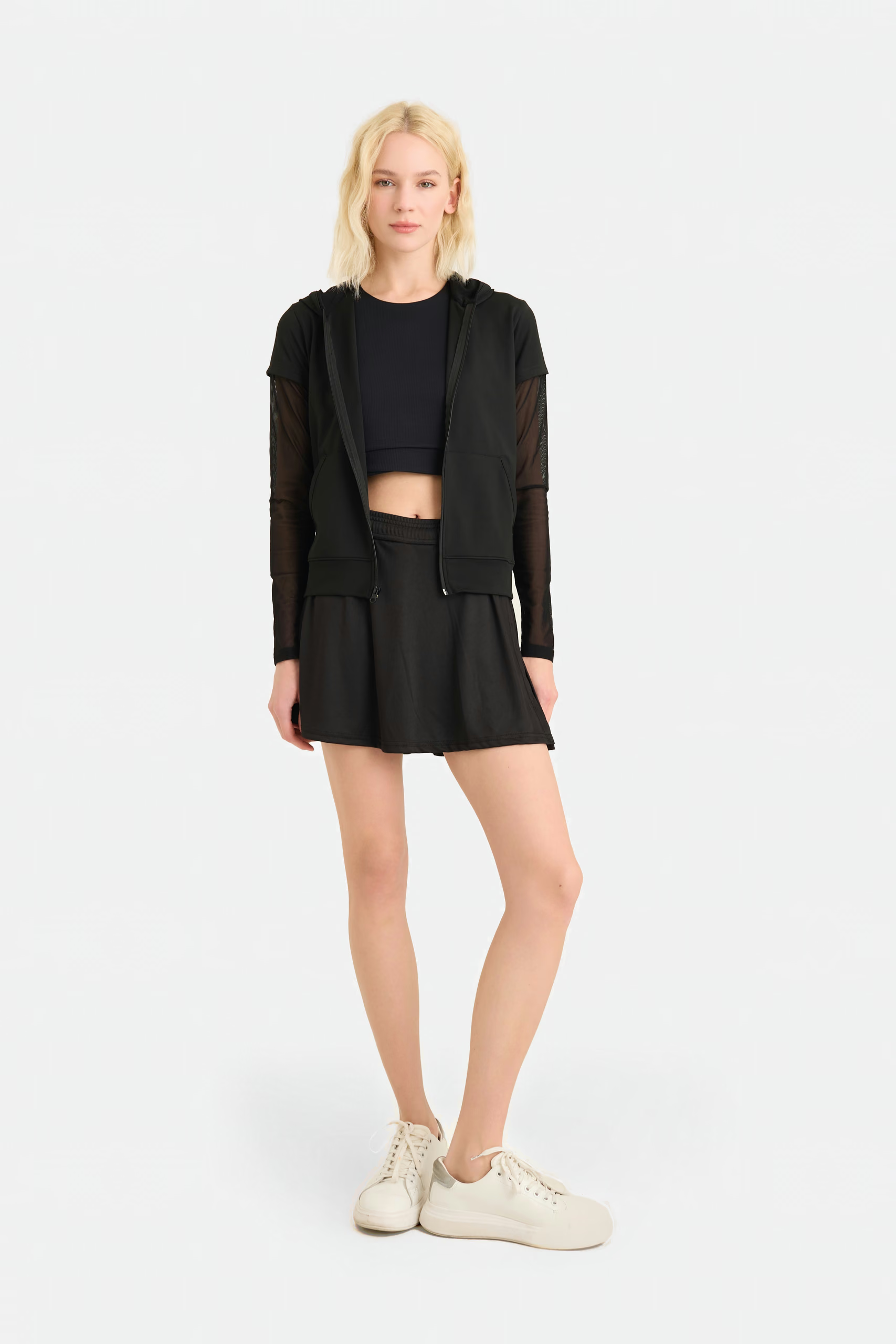
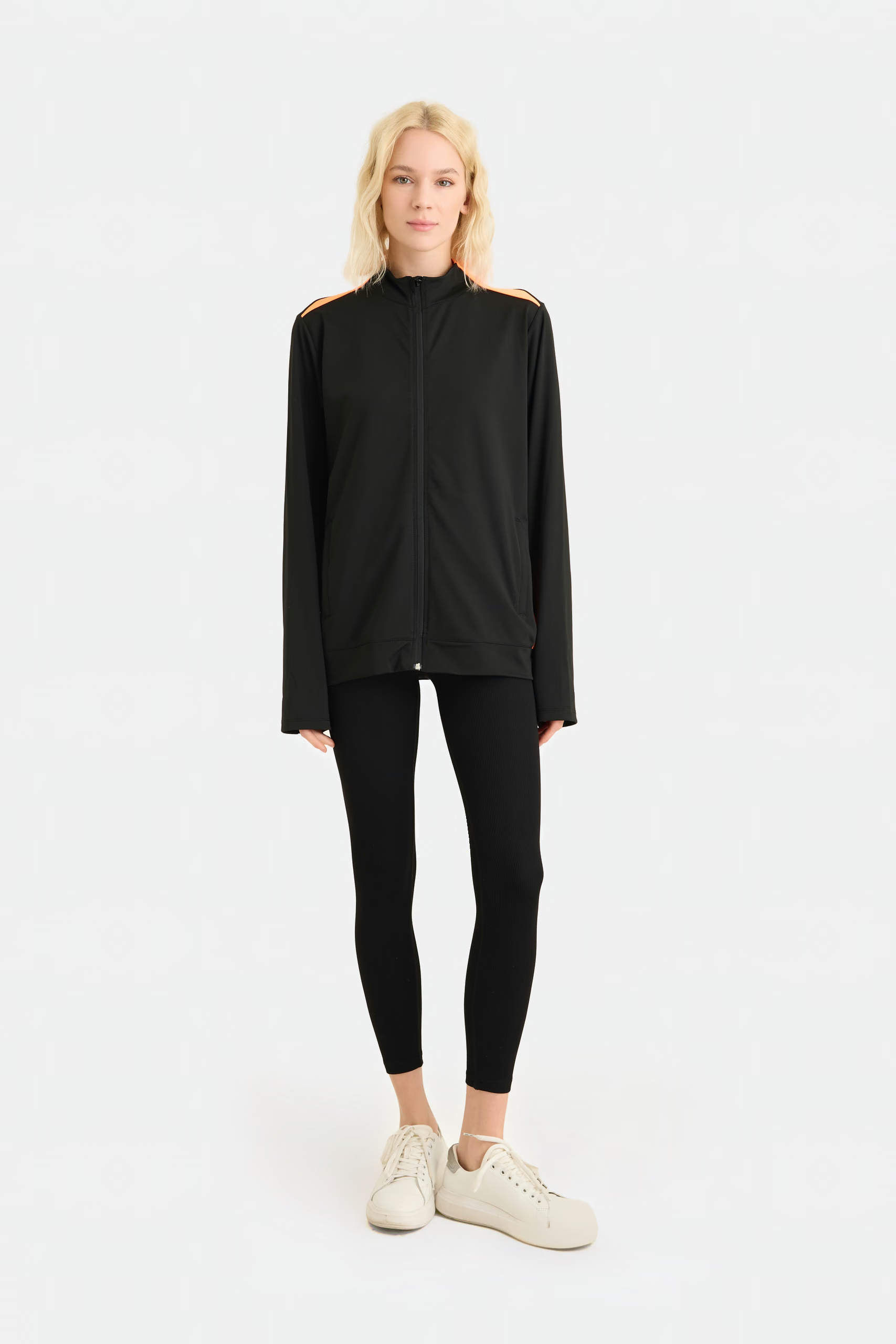
Zip-front garments previously produced to customer specifications.
Questions this raises
What is the difference between a coil zip and a moulded zip?
A coil zip uses a continuous monofilament coil sewn to the tape, so it is light and flexible and follows a curve well. A moulded zip has individual plastic teeth moulded onto the tape, which makes it chunkier and stiffer, and it is often chosen because that appearance is wanted. Metal zips are heavier and stiffer again.
Why do the two fronts of my jacket finish at different lengths?
Usually because the front edges were not stabilised before the zip was set, so one side stretched during sewing. On knit garments in particular the front edges need taping or interlining along their full length, and the two fronts should be measured against each other before the zip goes in.
Does a storm flap make a jacket waterproof?
No. A storm flap keeps wind and driven rain off the zip, which is a weak point, but water resistance comes from the fabric, its finish and how the seams are treated. A garment's weather performance should be described from what has actually been tested, not from the presence of a flap.
When do I need to decide zip colour?
Early. Zips are bought in specific lengths and colours, and on a coloured programme the tape usually has to be dyed to match, so the colour decision sits with the other long-lead trims rather than with the finishing details.
Zips are a lead time item
Type, length, colour and slider all have to be settled before trims are ordered. Send them with your enquiry and we will build them into the quotation and the schedule.
Request a quotation