Specification, sampling and quality
Do You Need a Tech Pack to Manufacture Clothing?
You do not need a tech pack to start a conversation with a factory, but something has to define the garment before a sample is made. A tech pack is the clearest form of that definition. Reference samples, measurements and clear photographs can do the same job at the start, and the factory can help you build the rest.
Contents
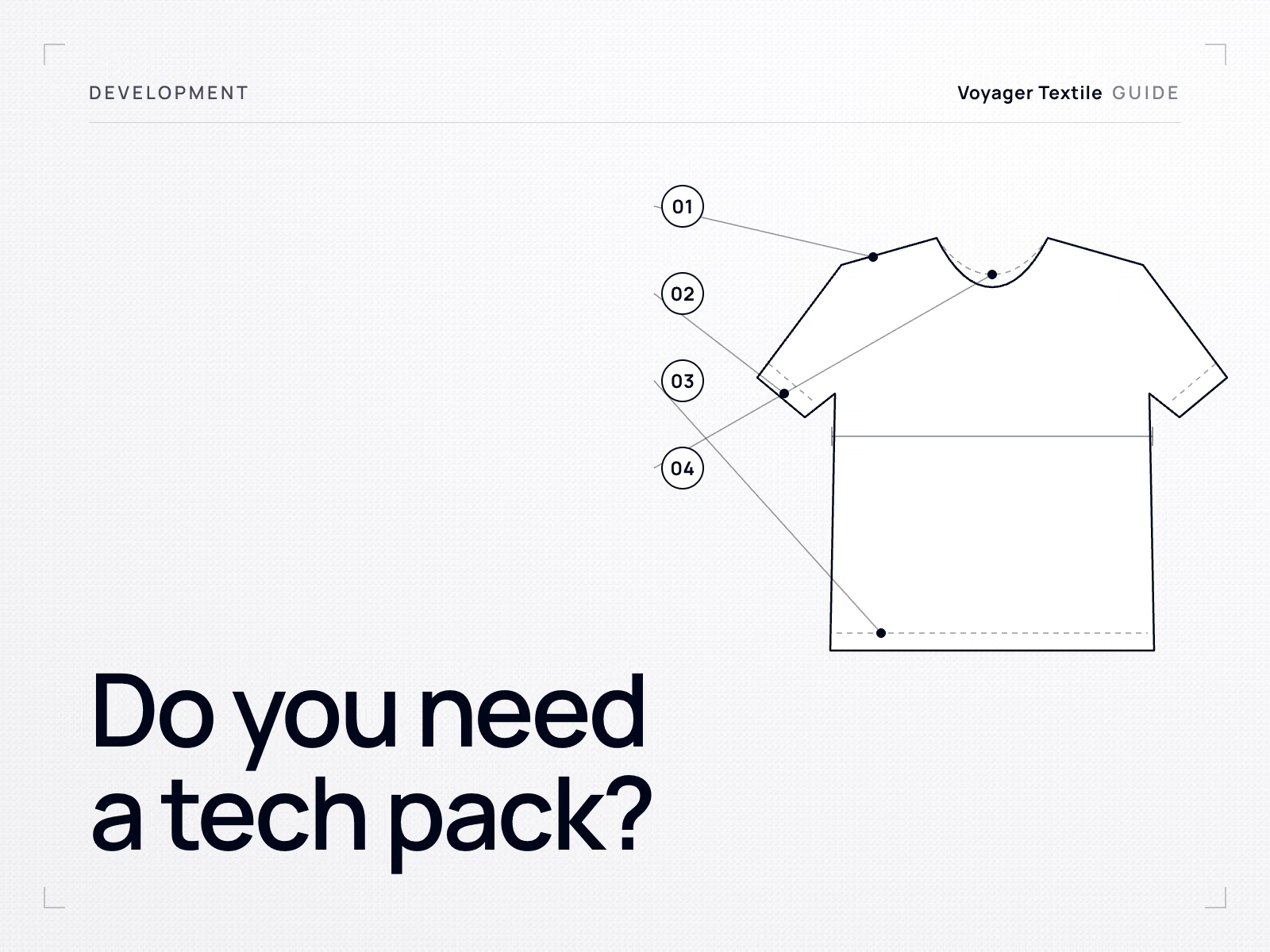
A tech pack is the technical description of a garment: what it is made of, how it is put together, what it should measure and how it should be branded and packed. It exists so that the person sewing the garment and the person buying it are describing the same product.
What a complete tech pack contains
| Section | What it holds | Why the factory needs it |
|---|---|---|
| Flat sketches | Front, back and any detail views, drawn to proportion | Establishes construction, seam lines and panel layout |
| Bill of materials | Fabric, rib, lining, thread, zips, drawcords, labels, hangtags | Everything that must be sourced, priced and booked; see the bill of materials reference |
| Measurement chart | Points of measure with values for the base size, and tolerances | Sets target dimensions and tolerances for sample review and bulk inspection |
| Construction notes | Seam types, stitch types, hems, finishes, taping, topstitching | Decides sewing operations, machinery and cost |
| Colourways | Each colour version, with Pantone references where relevant | Determines dyeing, minimums and approvals |
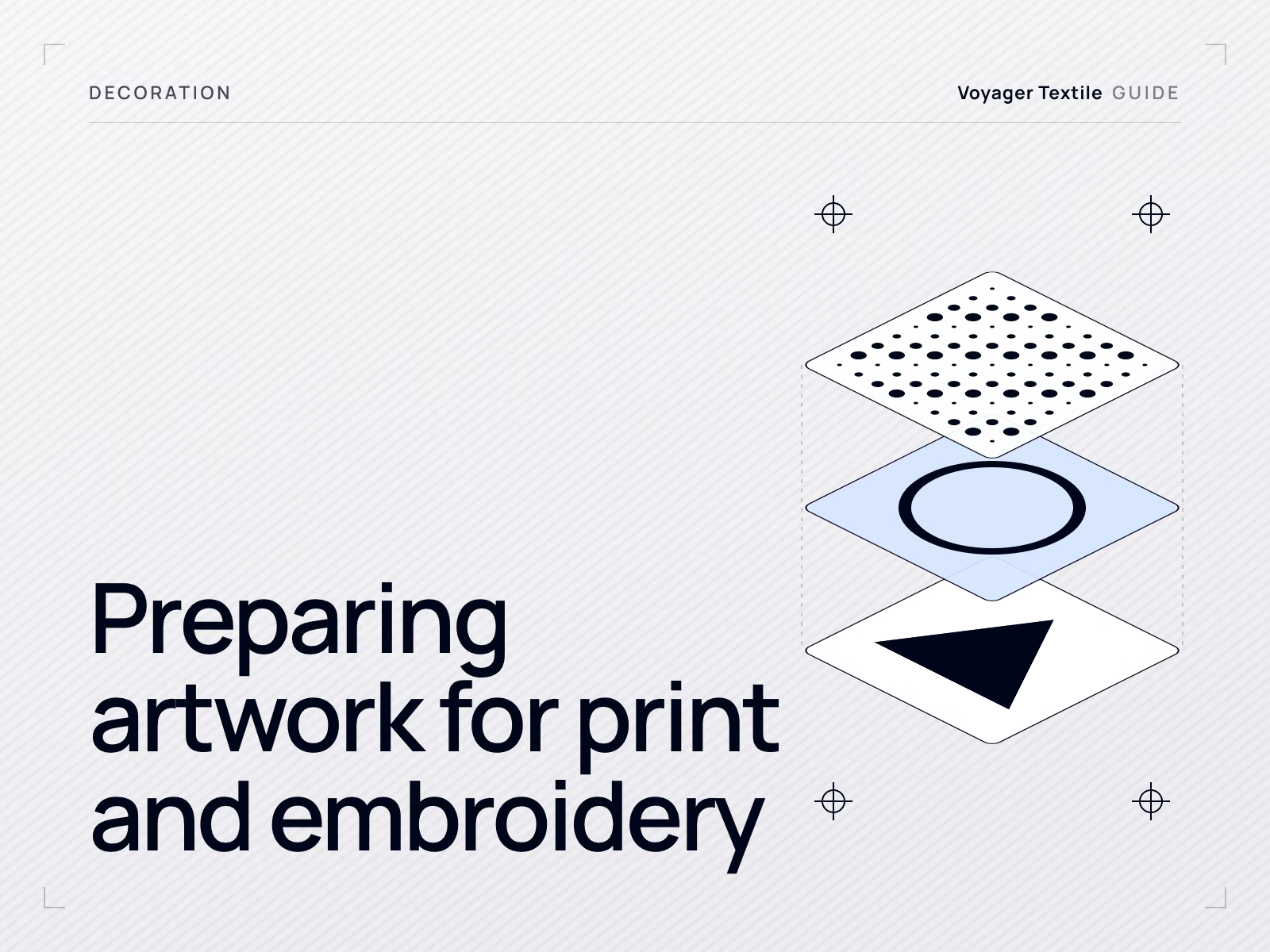
| Artwork and placement | Print and embroidery files, physical sizes, positions | Confirmed pricing needs the decoration method, dimensions, placement and sufficient artwork detail |
| Labels and packing | Neck label, care label, size label, hangtag, bagging, cartons | These are ordered separately and can delay finished goods |
| Grading | How measurements change across the size range | Needed before a size set can be produced |
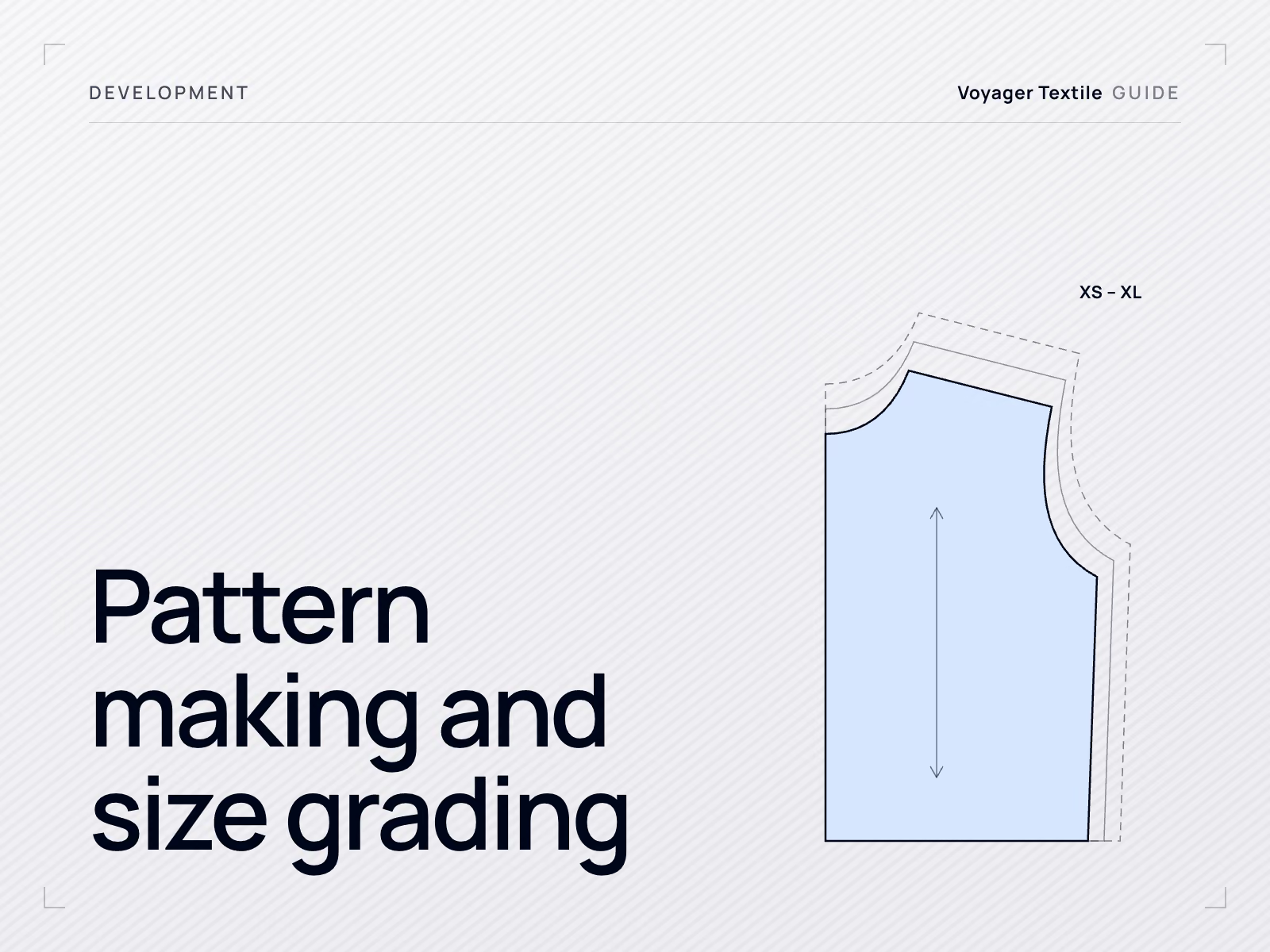
See the pattern making and grading guide for measurement methods and grading. State whether each chart contains body or garment measurements; the apparel sizing reference explains the distinction.
What a factory actually needs at each stage
| Stage | Minimum a factory needs |
|---|---|
| Initial quotation | Product type, reference images, target quantity, fabric or intended use, colours, sizes, decoration idea, destination and date |
| Sample development | Target measurements or a reference garment, fabric specification, construction intent, artwork files, colour references |
| Bulk production | An approved sample, a measurement chart with tolerances, confirmed colourways, final artwork, label and packing specification, size split |
Before bulk production, review and approve the current specification, whether it was prepared by your team or developed with the factory during sampling. Confirm that it agrees with the approved sample and any written conditions of approval.
Starting without a tech pack
If you do not yet have a tech pack, these three routes can provide a starting brief. Agree the remaining development work with the factory.
- Send a reference garment. Say explicitly what you want kept, what you want changed, and where the reference falls short. What a garment can and cannot tell a factory is covered in manufacturing from a reference garment.
- Send measurements from a garment that fits. Measure a garment you already own flat, list the points of measure, and state which ones matter most.
- Send clear references and describe the intended product. Photographs can communicate style and details. Add notes on fabric weight, fit, length and intended use, then clarify missing measurements, materials and construction with the factory before making the sample.
A factory can propose a fabric, a construction and a fit, but someone on your side has to approve them. The garment construction reference sets out the choices a construction line is actually making. Voyager Textile reviews incoming briefs for manufacturability and flags what is missing before quoting, and development frequently starts from a reference garment rather than from a document.
The mistakes that cost sampling rounds
Missing decisions can lead to repeated development work. See What determines the cost of a sample.
- Measurements without tolerances. A chest measurement with no allowed variation cannot be met exactly in production. State the tolerance you can accept.
- Fabric described by brand rather than specification. Give composition, weight in GSM and finish. See the GSM guide.
- Performance described as an adjective. Breathable and waterproof are not requirements until the property, method and acceptance criterion are named. See performance claims.
- Artwork supplied only as a mock-up. A drawing showing a logo on a chest is not a printable file. See artwork preparation.
- Colour described in words. Navy means several different things. Use a Pantone reference or supply a physical swatch.
- No base size stated. A measurement chart without a specified base size is ambiguous.
- Conflicting information between sketch and measurements. Resolve the discrepancy and update both in the approved specification before production.
- Labels and packing left until the end. They have their own lead times and can hold up goods that are otherwise finished.
Who should write the tech pack
Who writes it also bears on who ends up owning it, which is worth settling at the same time rather than discovering later. See design ownership.
A technical designer or freelance product developer can prepare the tech pack, the factory can develop it from your references during sampling, or you can prepare it yourself if you have the required technical knowledge. Agree the scope, fees, file formats, ownership and permitted use before work starts.
Whichever route you choose, agree who owns the resulting patterns and specifications. It matters later if you move production or add a second factory, as the scaling guide explains.
A tech pack is also not the safety documentation an EU programme may need, though the two share many of the same facts. The difference is set out in product safety documentation.
Keep it a living document
The component list inside it has its own reference in the bill of materials, and the wider sequence it belongs to is set out in apparel product development. The tech pack should be updated as decisions are made during sampling, not left as the original wish list. When bulk is inspected, it is inspected against the approved sample and the current specification, so the two must agree. Version the file with a date, and make sure both sides are working from the same version before production starts. This supports consistency in repeat orders, alongside checks on materials and production.
Questions buyers ask
Can I manufacture clothing without a tech pack?
Yes, if you can define the garment another way: a reference sample, a measurement list or detailed references with clear intent. A specification still has to exist before bulk, because bulk production is checked against something. The factory can help build it during sampling.
What is the difference between a tech pack and a pattern?
A tech pack describes the garment and its measurements. A pattern is the set of templates used to cut the fabric. It may be supplied by the buyer or developed by the factory or a pattern maker. Agree who prepares and approves the pattern, measurements and fit.
Does a factory charge for making a tech pack?
Practice varies. Some factories build the specification during paid sampling, some charge for development separately. Ask early, and ask specifically who owns the resulting document and patterns.
What is the most important part of a tech pack?
Priorities depend on the product. The measurement chart with tolerances and the bill of materials are important, together with construction details, artwork, labels and the approved sample. Drawings can communicate dimensions and construction, but must agree with the rest of the specification.
Can I send a garment I already own as the reference?
Yes. Send the garment, state clearly what you want kept and what you want changed, and note anything you dislike about it. Confirm that you have the rights needed to use the proposed design and materials.
How detailed should a tech pack be for a simple t-shirt?
Fabric composition and weight, fit description, a measurement chart for the base size with tolerances, neck and hem construction, colour references, artwork with placement and size, and label and packing details. Confirm any missing details with the factory before sample development begins.
Send what you have and we will tell you what is missing
A full tech pack, a reference garment or a set of photographs with measurements: all three are normal starting points. We review the specification for manufacturability and list exactly what is still needed before sampling.
Send your specification