Programme types
Your First Production Run: From Tech Pack to 300 Finished Pieces
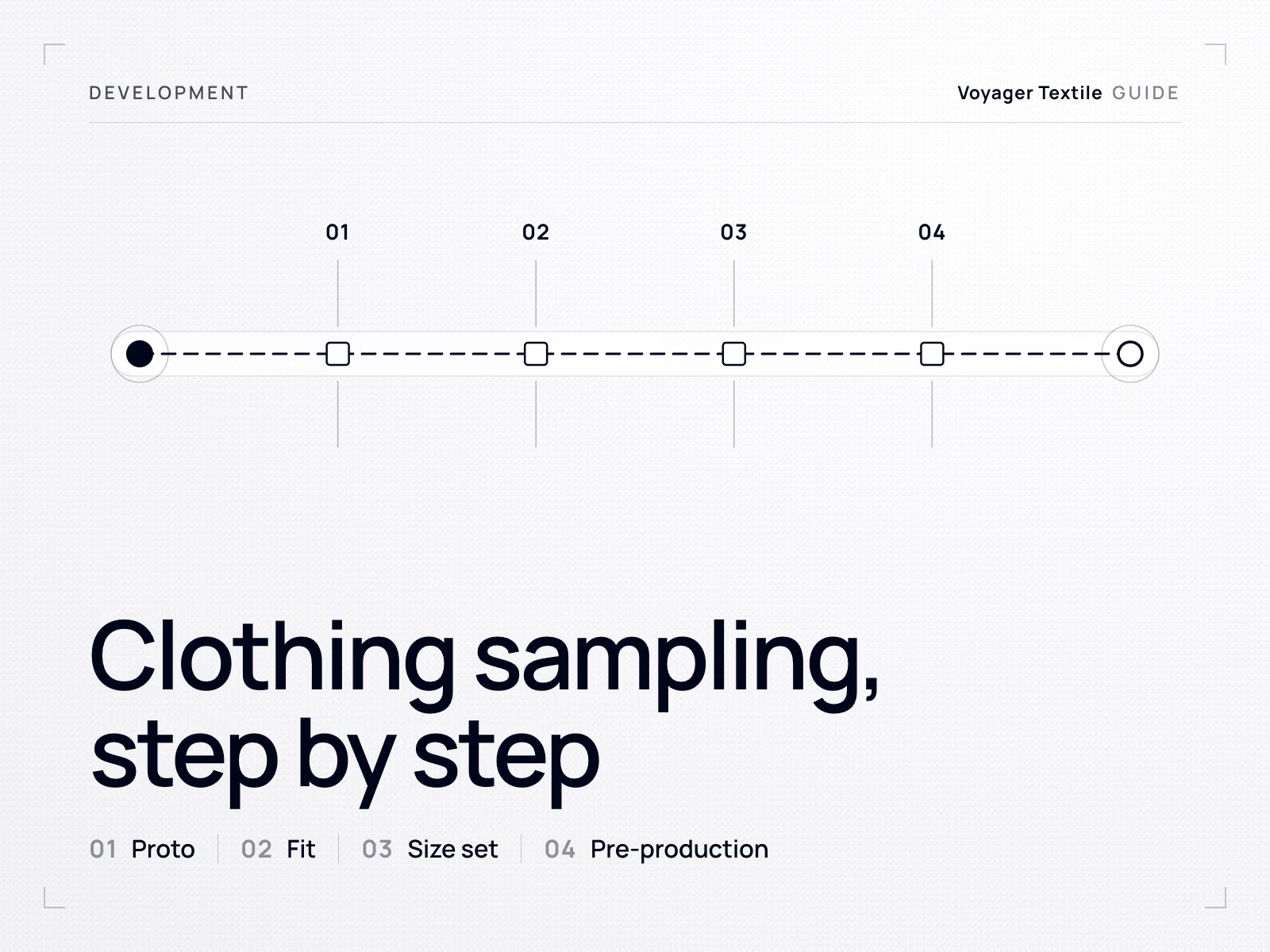
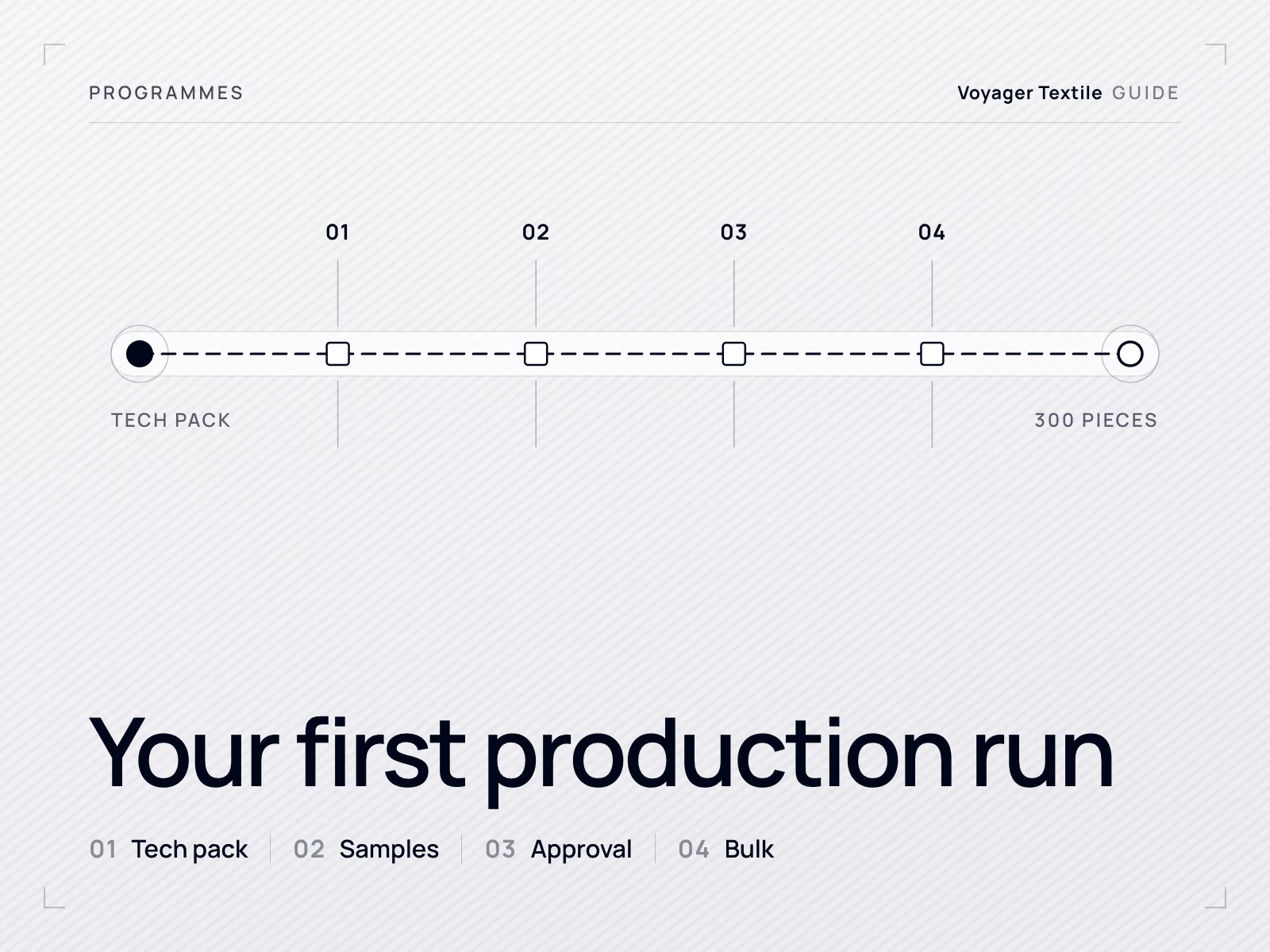
A first production run for a new clothing brand has five stages: prepare the specification, sample, approve, produce in bulk, then inspect and ship. At Voyager Textile a sample takes 5-7 business days, bulk takes 4-5 weeks after sample approval, and the minimum is 300 pieces per colour and per style, with sizes split inside the 300.
Last reviewed:
Contents
A new brand can start production with either a tech pack or a physical reference garment. Whichever you start from, the path to 300 finished pieces is the same: the factory reviews what you send, makes a sample, you approve it, and bulk production is made and inspected against that approved sample. Many first runs that go wrong do so before cutting starts, through a missing size chart, a colour agreed on screen or label artwork that arrives late. This guide goes through each stage in order and shows how the minimum shapes a first range.
From first contact to finished pieces
What to have ready before you contact a manufacturer
Have the garment, the fabric, the sizes, the artwork, the labels and the quantities defined before you ask for a quotation. None of it has to be perfect, but every gap you leave open is a decision the factory has to guess or ask about, and each guess can cost a sampling round.
What a first-run brief should contain
- The garment: a tech pack, or a reference garment with a written list of what should change
- Fabric: composition, knit or weave and weight in g/m², or a fabric swatch; say if you will supply the fabric yourself
- Colours: Pantone TCX references or a physical colour standard, never a screen colour alone
- A size chart with the base size, the size range and the points of measure
- Artwork files in vector format, with the size and position of each print or embroidery
- Labels: neck label artwork, care and composition content for your market, hangtags if any
- Quantity per style and per colour, with a planned size split
- The market you sell in and the date you need the goods
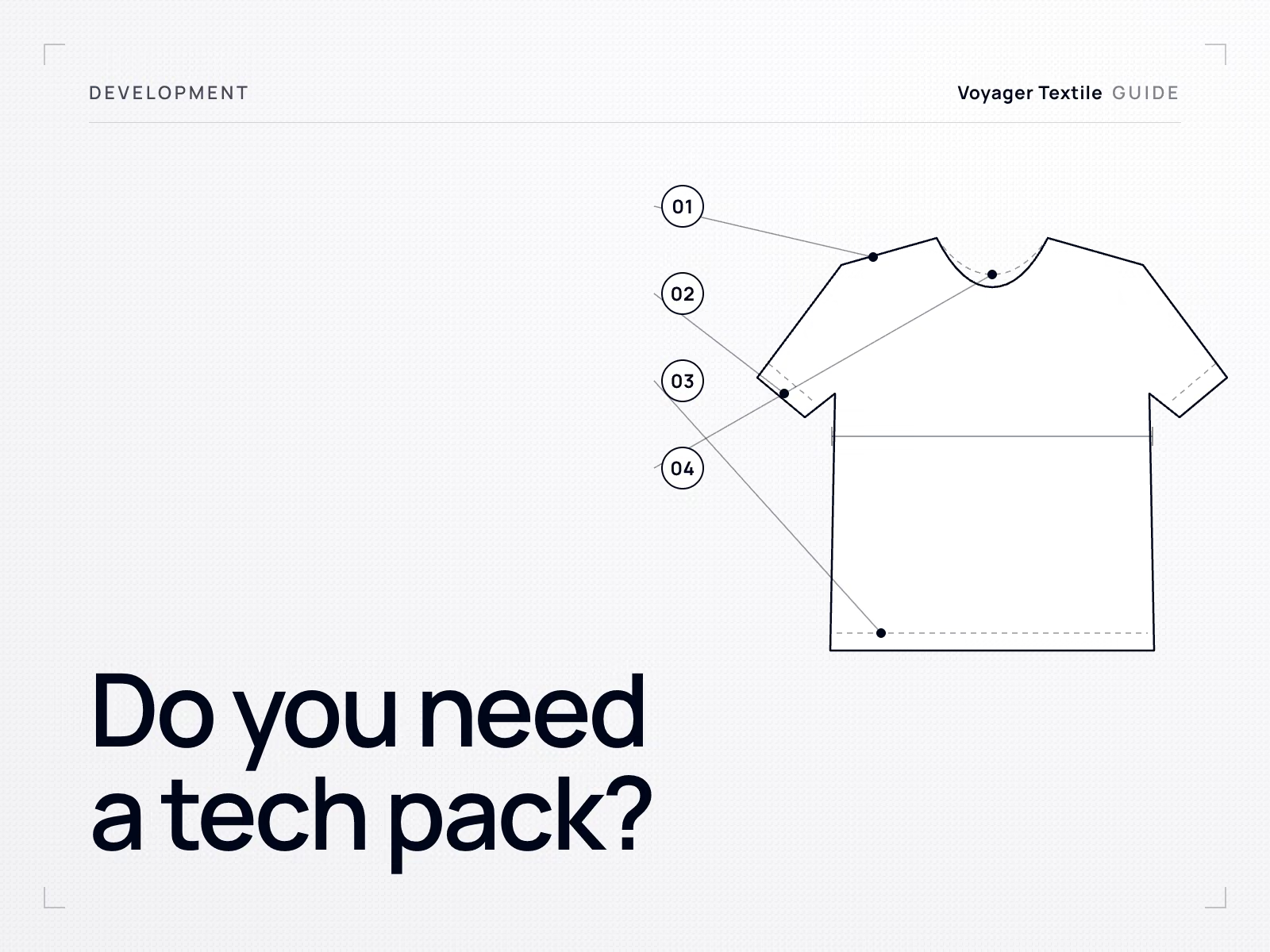
What a complete tech pack contains, and how to start without one, is covered in the tech pack guide. If a garment you already sell or like is the starting point, the method and its limits are set out in manufacturing from a reference garment. For the size chart, the size chart for production page shows which measurements a factory needs, and artwork files for decoration lists the file formats that avoid redrawing.
Stage 1: specification review and quotation
The first thing a factory does with your brief is check whether the garment can be produced as described. At Voyager Textile every incoming specification is reviewed for manufacturability before quotation, and missing or unclear points are raised in the reply rather than assumed. Expect questions about fabric weight, seam types, trim sources and label content. Answering them now is faster than correcting a sample later.
The quotation is only as accurate as the brief behind it. A quote based on an assumed fabric or a missing size range will change once those facts are known. What a request for quotation should contain is set out in the RFQ guide, and the cost structure behind a quote in custom clothing manufacturing cost.
Stage 2: the sample
The sample turns your specification into a physical garment, and at Voyager Textile it takes 5-7 business days. The pattern is made from your size chart or taken from the reference garment, the fabric is cut and the garment is sewn with the construction and decoration you specified. A sample in the final fabric and colour tells you much more than one in a substitute, so if fabric development is still running, agree which points the first sample is meant to prove.
Plan for one revision. A first sample that needs no changes is uncommon, and a second round that fixes fit and a few details is a normal part of the calendar rather than a failure. Each stage of sampling and what it proves is covered in the sampling guide, and why a sample costs more per piece than bulk in what a sample costs.
How to review a first sample
- Measure the sample against your size chart at each point of measure and note every difference outside the tolerance.
- Wear it, or put it on a fit model, and check the fit in movement, not only flat on a table.
- Wash it as your care label will instruct, then measure again; shrinkage and twisting show up here, not in the unwashed sample. Laboratories test this with ISO 6330 washing and ISO 5077 dimensional change.
- Check the decoration: position, size, colour and how it looks after washing.
- Check every label for content and position.
- Send all comments in one written list, with photographs and measurements, not as separate messages.
Stage 3: approval
Approval is the moment you confirm that bulk production should match this sample. It should be recorded: a named person, a date, the specification version and a sealed sample, with one copy kept by you and one by the factory. Bulk production is inspected against that garment, so a vague approval by message leaves nothing to measure against later.
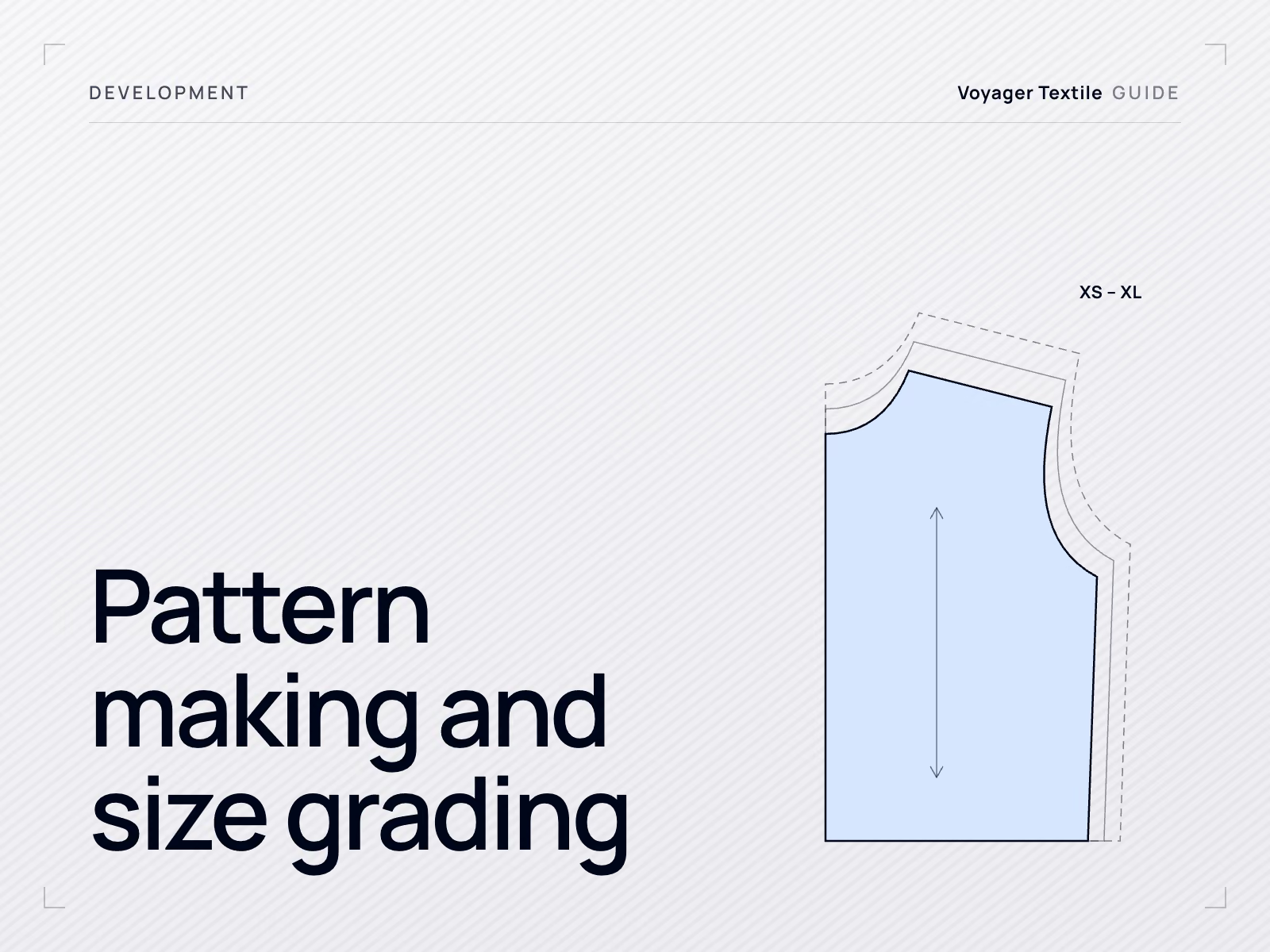
If you have approved the fit in one size only, ask how the other sizes will be checked. Sizes are not scaled copies, and grading rules decide how each measurement moves from size to size; they are explained in pattern making and size grading. The last check before cutting is the pre-production sample, made in the bulk fabric and trims.
Stage 4: bulk production
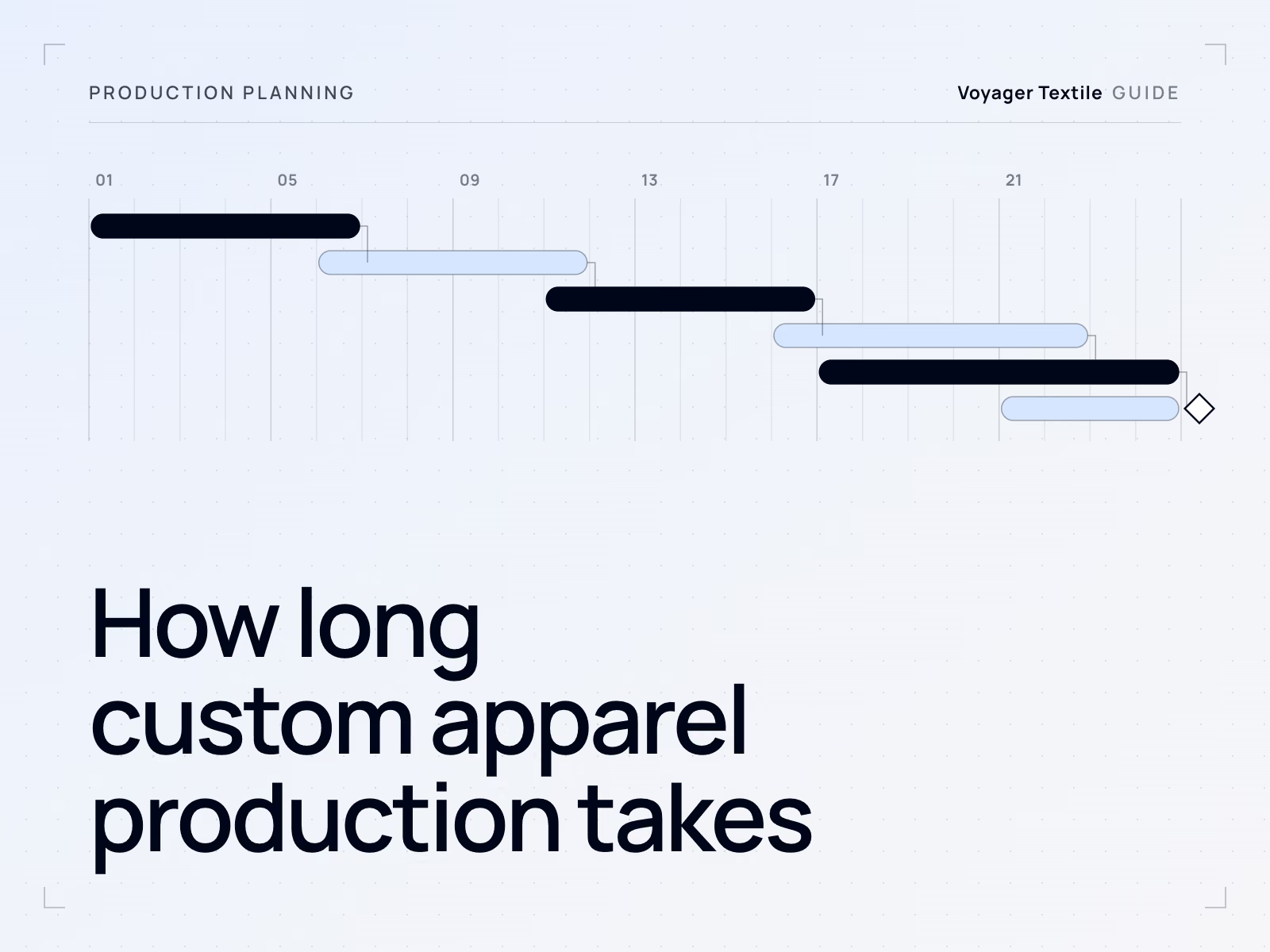
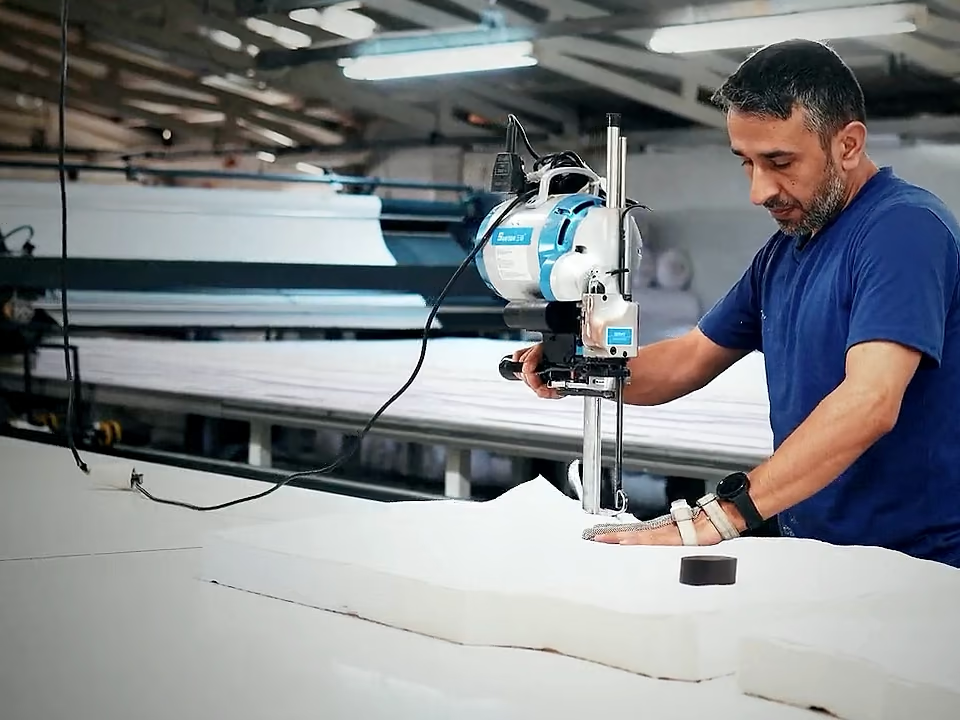
Bulk production at Voyager Textile takes 4-5 weeks after sample approval, counted in calendar weeks. Fabric sourcing, custom colour development, any further sampling rounds and transport come on top of that. During bulk the fabric is checked and cut, the decoration is applied, the garments are sewn and pressed, and the goods are inspected and packed to your instructions.
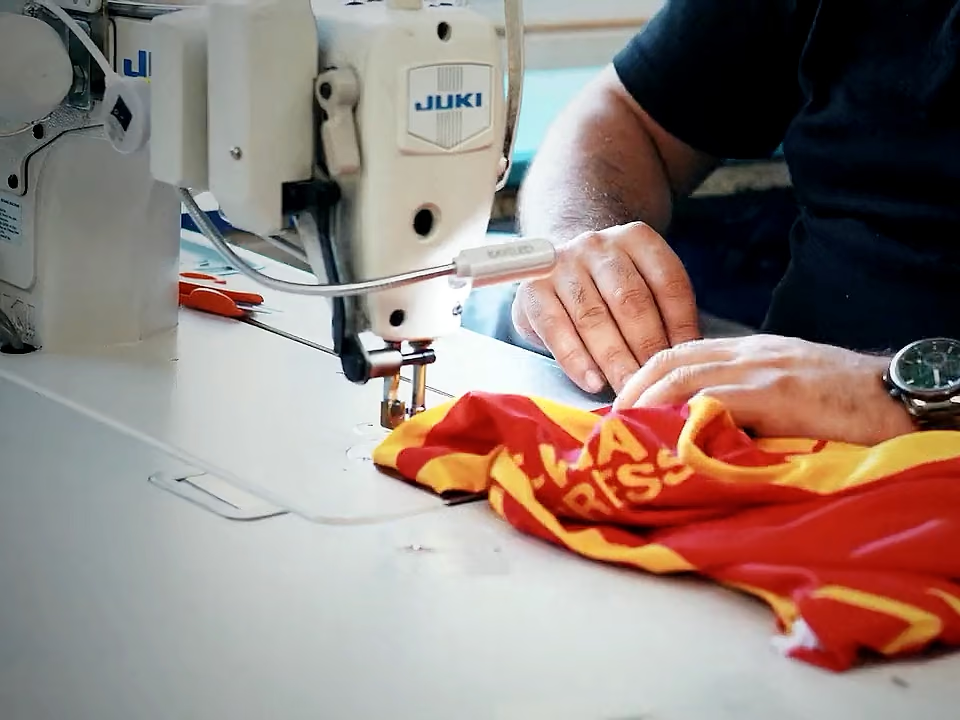
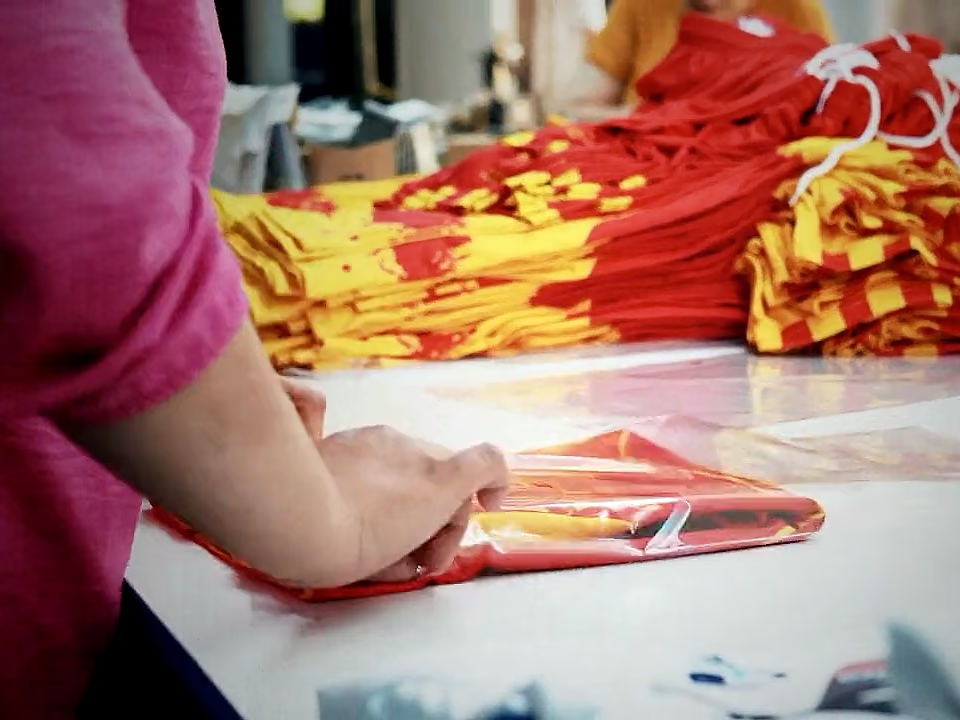
Two things are worth agreeing before cutting starts. The first is the inspection standard: which defects count as major or minor, and which measurement tolerances apply, as described in the quality control guide. The second is the pack-out: folding, polybags, carton contents and marks, set out in the pack-out specification. How the whole calendar fits together, working back from your launch date, is in the lead time guide.
How the 300 minimum shapes a first range
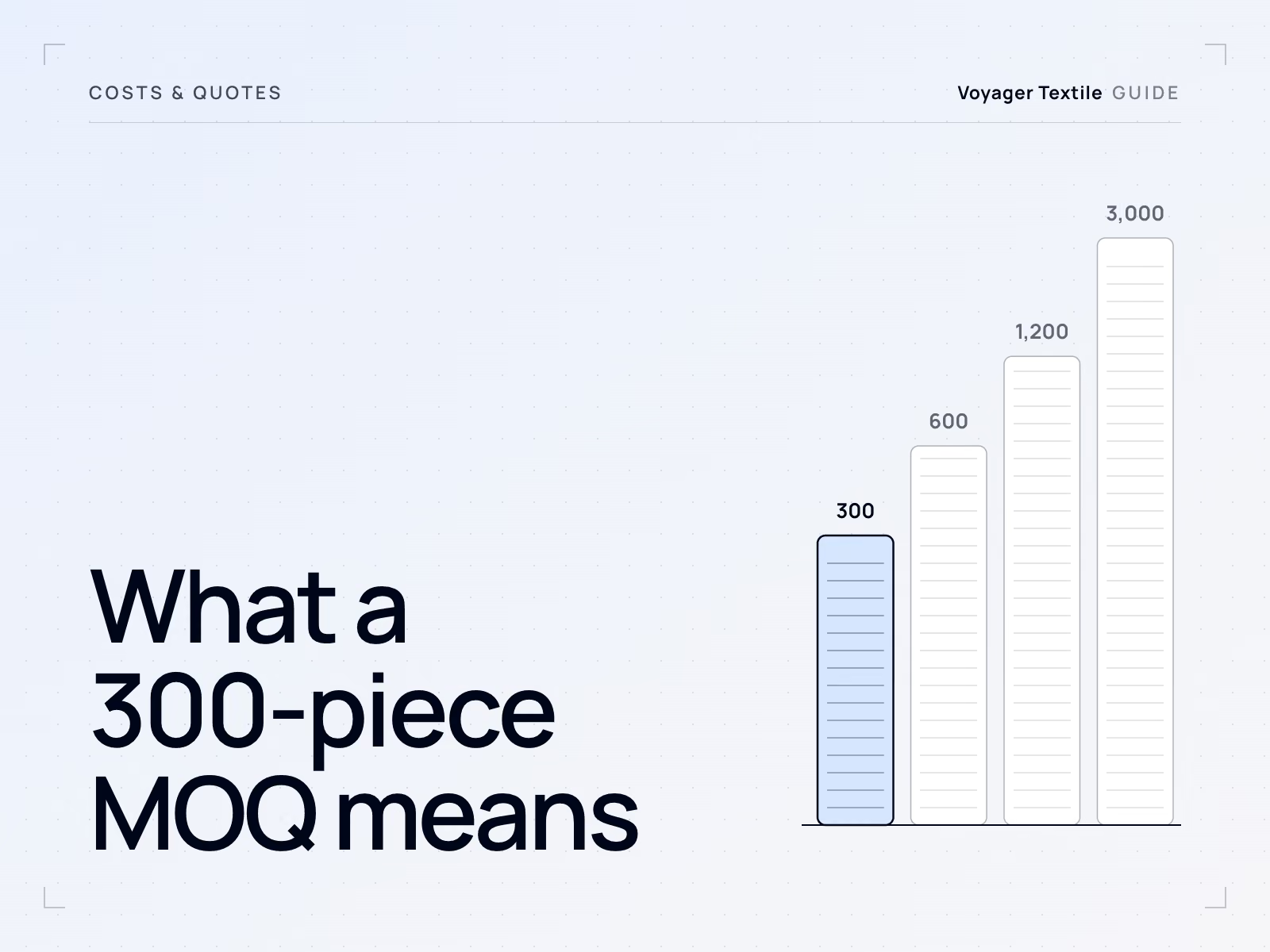
The minimum at Voyager Textile is 300 pieces per colour and per style, and sizes can be split inside the 300. Colour is the limit because each colour is its own fabric dyeing; sizes are cut from the same fabric in the same lay, so they do not add to the minimum. A women's fit has its own pattern and normally counts as a separate style, confirmed at the quotation stage. Why the minimum sits where it does is explained in the MOQ guide.
| Plan | Styles | Colours | Pieces | Within the minimum |
|---|---|---|---|---|
| One hoodie in black | 1 | 1 | 300 | Yes |
| One T-shirt in black and in ecru | 1 | 2 | 600 (300 + 300) | Yes |
| A hoodie and sweatpants, both in grey | 2 | 1 each | 600 (300 + 300) | Yes |
| One T-shirt split 150 black and 150 white | 1 | 2 | 300 | No: each colour needs 300 |
| One T-shirt in a men's and a women's fit | 2 | 1 each | 600 (300 + 300) | Yes, if each fit is 300 |
Inside each 300, the size split should follow what you expect to sell, not an even spread. Ordering 60 of each size across five sizes usually leaves unsold pieces at both ends of the range. A curve weighted to the middle sizes is a more common starting point, adjusted to your own customers:
| Size | S | M | L | XL | XXL | Total |
|---|---|---|---|---|---|---|
| Even split | 60 | 60 | 60 | 60 | 60 | 300 |
| Weighted to the middle | 45 | 90 | 90 | 50 | 25 | 300 |
For many new brands, one style in one core colour, or two colours of one style, keeps the first run within 300 to 600 pieces and makes the test clear: one product, one fit, a real sell-through. Adding colours before the first product has sold multiplies the stock without adding much information. Whether a first run should be made to your own design at all, or started on blanks, is compared in custom apparel vs blanks.
What usually goes wrong in a first run, and how to prevent it
Many first-run problems come from decisions that were left open, not from sewing. The table lists the ones that recur and the step that prevents each.
| What goes wrong | Why it happens | How to prevent it |
|---|---|---|
| Bulk does not match the sample | The approval was a message, and no sealed sample exists | Seal two copies of the approved sample; see bulk differs from sample |
| Garments shrink or twist after washing | The sample was approved unwashed | Wash the sample before approval; see measurement change after washing |
| The colour is not what you expected | The colour was agreed on a screen | Approve a lab dip against a physical standard; see Pantone colour matching |
| Some sizes fit badly | Only one size was checked | Approve the size chart with tolerances and check the grading |
| Finished goods wait for labels | Label artwork and content were sent late | Put the label set in the brief; see labels and packaging |
| Sampling starts again | A change was made after approval | Collect all comments before approving; any later change reopens sampling |
| The launch date slips | The calendar counted bulk weeks only | Plan sample, revision, fabric and transport as well, working back from the launch date |
| Stock is left in the end sizes | The size split was even | Weight the split to expected sales |
After the first run
Keep the record of the first run: the approved sample, the specification version, the colour standard, the size split and any comments from inspection. A reorder is made from that record, and the more of it exists in writing, the closer the second run matches the first. The controls are set out in the reorder consistency guide.
What Voyager Textile makes for clothing brands, from streetwear and activewear to fashion and e-commerce labels, and how a brand works with the factory over time, is set out on the private label clothing page.
Questions buyers ask
Can a new clothing brand start with 300 pieces?
Yes, a new clothing brand can start with 300 pieces of one style in one colour at Voyager Textile. Sizes are split inside the 300, so a full size range is possible within the minimum.
Do I need a tech pack for my first production run?
No, a tech pack is not required for a first production run. A reference garment with a written list of changes, a size chart and your artwork is a workable start. A tech pack usually makes the first sample closer to what you want.
How long does a first production run take?
A first production run at Voyager Textile needs 5-7 business days for the sample, and 4-5 weeks of bulk production after sample approval. Specification review, any revision, fabric sourcing and transport add to that.
Can I split 300 pieces across two colours?
No, the 300-piece minimum applies per colour and per style, so two colours need 300 pieces each. Sizes, by contrast, can be split freely inside each 300.
Can I supply my own fabric for a first run?
Yes, buyer-supplied fabric is accepted for a first run, including imported fabric. Send the fabric details with the brief so the quantity per garment and the delivery date can be agreed before sampling.
What should I check on the first sample?
Check the first sample's measurements against your size chart, its fit when worn, its behaviour after washing, the decoration and the labels. Send all comments together in one written list with photographs.
Planning your first production run?
Send your tech pack or a reference garment, your size chart and the quantity per colour. We reply with what is still missing, sample in 5-7 business days and quote from 300 pieces per colour and per style.
Start an RFQ