Quantities, cost and timing
How Much Does Custom Clothing Manufacturing Cost?
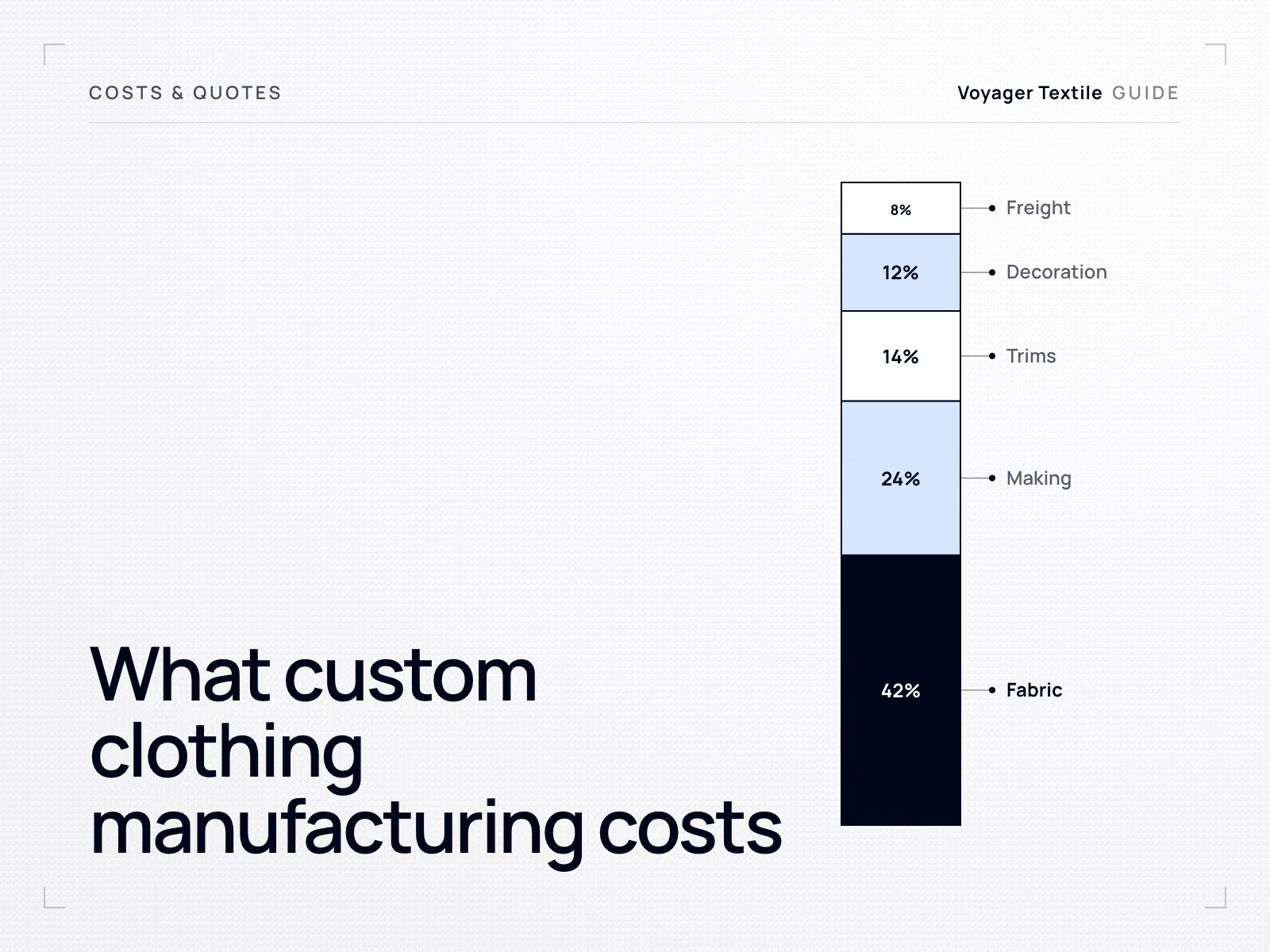
There is no useful price list for custom apparel, because the same garment can differ in price several times over depending on fabric, weight, construction and quantity. What is useful is knowing which lines make up a quotation, which of them you control, and how to compare two quotes that appear to be for the same product.
Contents
- What a garment quotation is made of
- Fabric price and consumption
- Quantity: where the savings actually come from
- Construction: the cost you cannot see in a photograph
- Decoration: the easiest line to control
- The lines buyers forget
- Cost drivers by programme: merch, promotional textiles, corporate wear and workwear
- How to compare two quotations properly
- Ways to reduce cost that do not damage the product
- Ways buyers try to save that usually backfire
- What Voyager Textile needs in order to price accurately
- Questions buyers ask
A garment quotation depends on materials, fabric consumption, construction, decoration, quantity and the agreed supply and delivery scope. A change may affect several cost lines. This guide explains those lines so you can compare quotations on the same basis.
What a garment quotation is made of
| Cost line | What drives it | How much control you have |
|---|---|---|
| Fabric | Composition, weight in GSM, quality of yarn, dyeing, finish | High. Usually the largest single line in a knitted garment |
| Fabric consumption | Pattern size, fit, garment length, marker efficiency | Medium. Oversized fits and long bodies consume noticeably more fabric |
| Cut, make and trim | Number of operations, seam types, construction complexity | Medium. Every extra panel, pocket, zip or topstitch adds sewing time |
| Trims and components | Zips, drawcords, rib, elastic, buttons, thread | Medium. Branded or specialist hardware costs more than standard equivalents |
| Colour | Stock colour versus custom dyeing, number of colourways | Depends on whether colour is supplied from stock, custom dyed or printed, and on the required approvals |
| Decoration | Method, number of colours, size, number of placements, set-up | High. Often the easiest place to reduce cost without weakening the product |
| Labels and packing | Woven labels, care labels, hangtags, polybags, cartons, retail-ready packing | Medium. Small per piece, but easy to underestimate across a programme |
| Quality control | Inline checks and final inspection against the approved sample | Low, and not a sensible place to save |
| Freight, duty and delivery | Incoterm, mode, destination, product classification | High, and frequently left out of comparisons entirely |
Fabric price and consumption
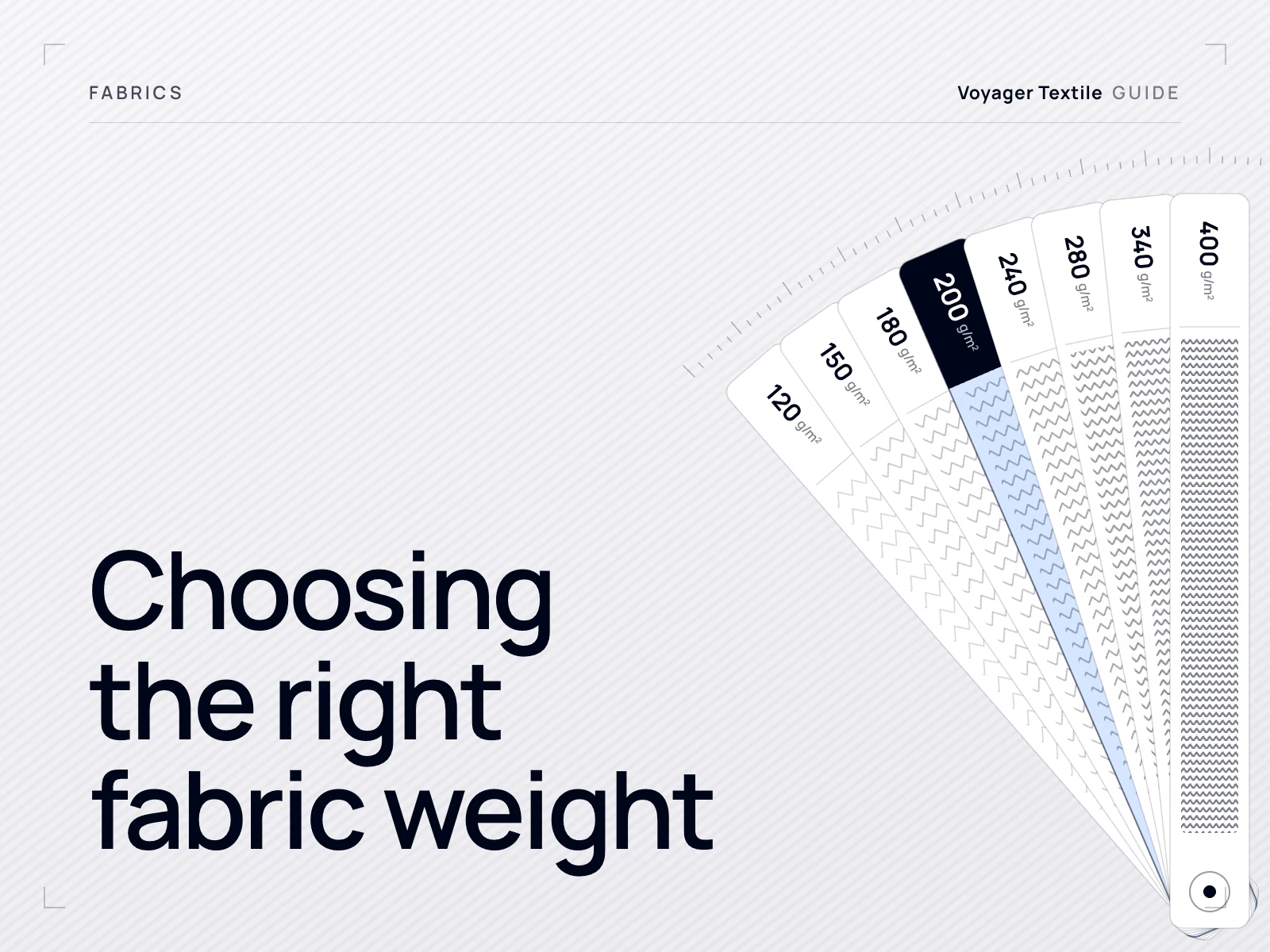
Fabric cost depends on its price and the quantity consumed, including cutting losses. Composition, yarn, construction and finishing can affect the price; GSM is mass per square metre. At the same fabric area, 240 GSM weighs one third more than 180 GSM. That is not automatically a one-third increase in the fabric price or the finished garment price.
This is why a heavier garment is not automatically a better one commercially. Weight should follow the intended use, climate and decoration method rather than a general belief that heavier means premium. The GSM guide covers how to choose a weight deliberately, and the composition guide covers what each fibre actually delivers.
Quantity: where the savings actually come from
Higher quantities can spread set-up costs over more pieces. The quoted unit price also depends on materials, construction, capacity and the production plan, so a fixed price-reduction curve cannot be assumed.
Ask for quotations at feasible quantities using the same specification, and discuss the full programme when planning materials and capacity. See the MOQ guide for order constraints and the scaling guide for volume planning.
Construction: the cost you cannot see in a photograph
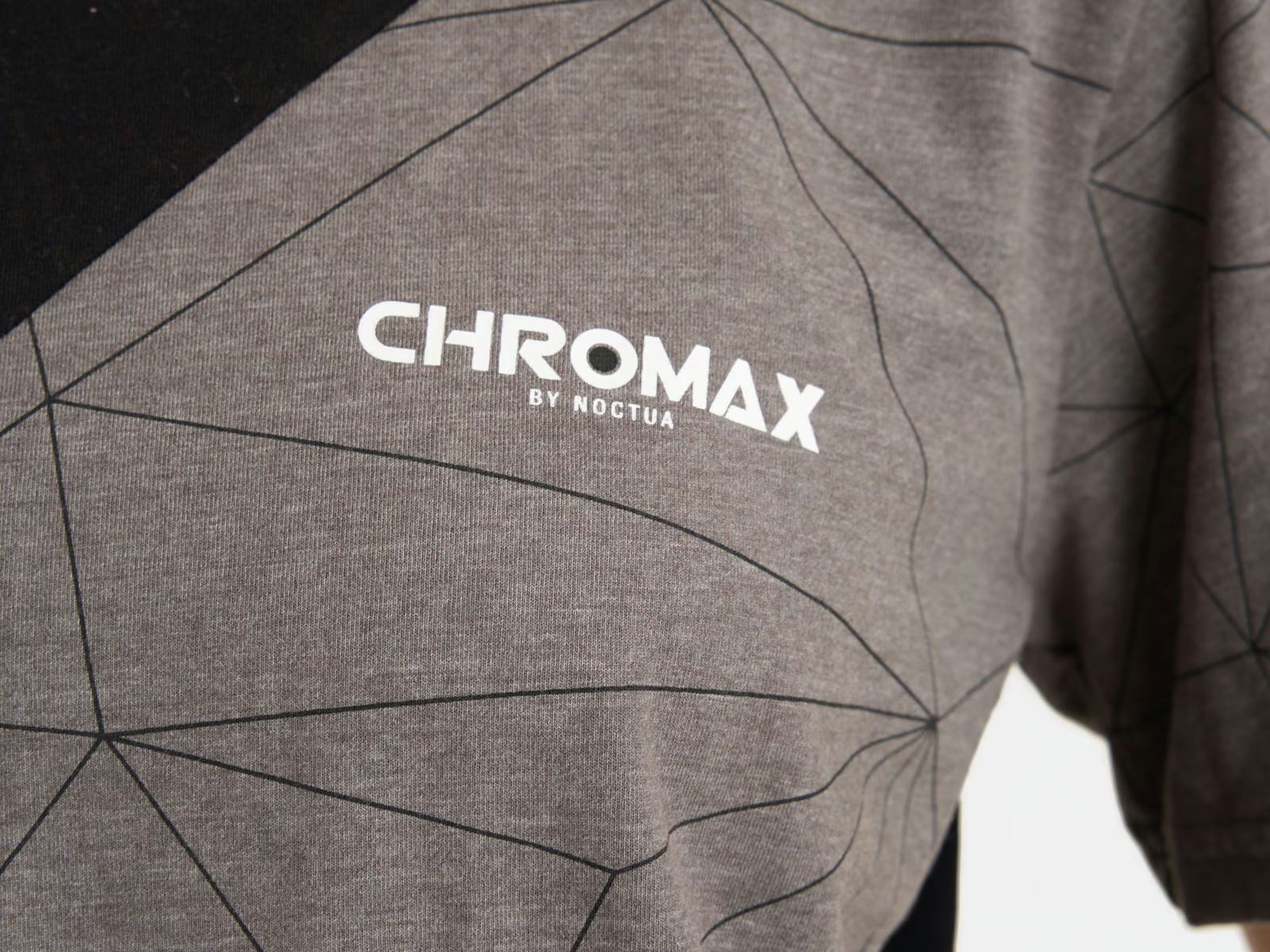
Sewing cost is a function of operations. A plain tee is a handful of operations. A hoodie with a lined hood, kangaroo pocket, ribbed cuffs and hem, tipped drawcord and taped neck is many more, and each one is labour. Details that read as small in a design can be significant in cost: a set-in pocket bag, a topstitch that requires a second pass, a lining that must be attached separately, or an unusual seam finish. Pocket construction is the clearest example, because a welt pocket and a patch pocket hold the same contents at very different operation counts.
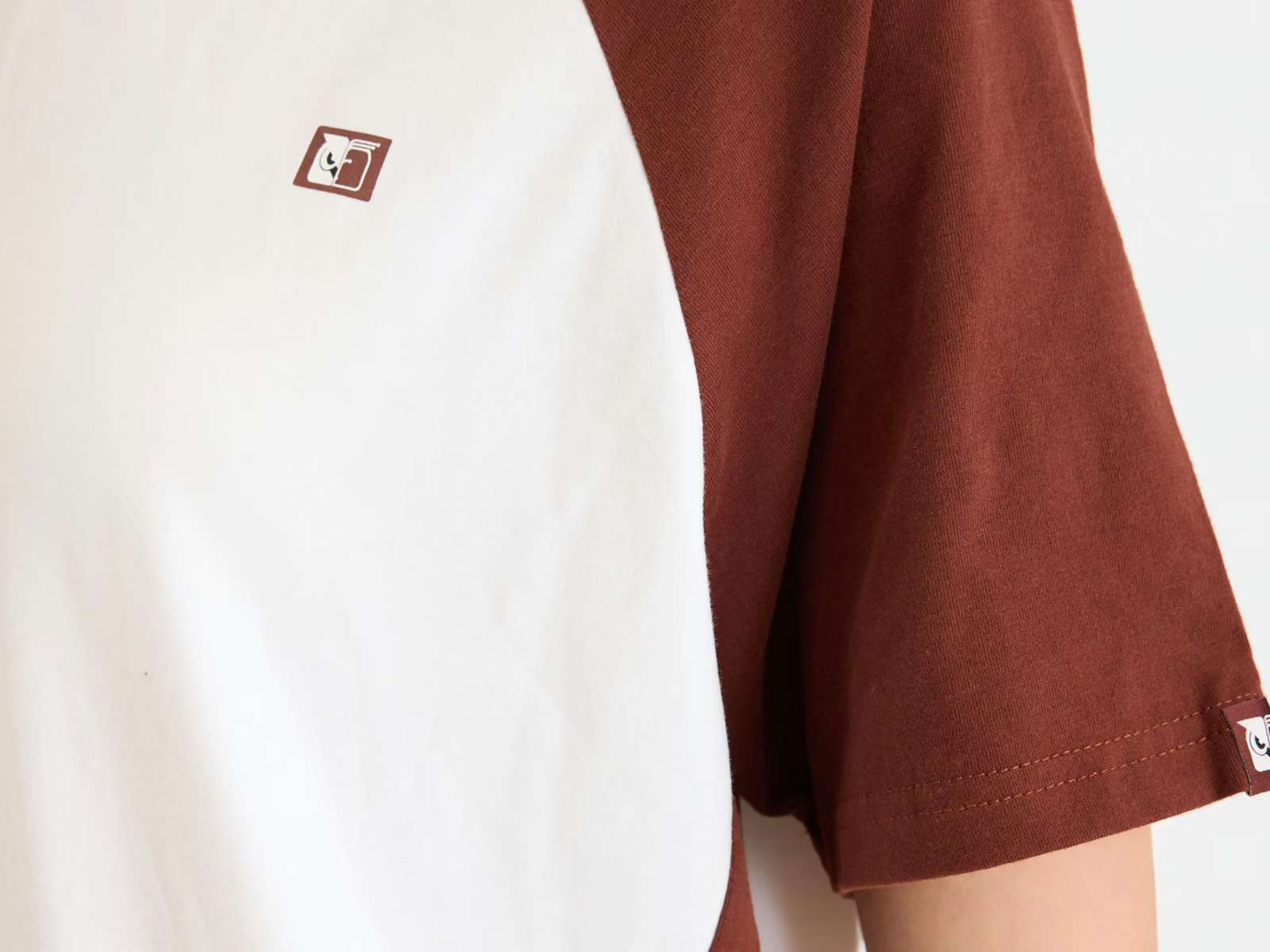
The useful conversation with a factory is not remove details to save money, it is which of these details are expensive and which are nearly free. Some finishes cost very little; others double a step. Ask the factory to identify the three most expensive operations in your garment, then decide whether each of them earns its place.
Decoration: the easiest line to control
Screen-printing costs depend on artwork, colours, placements, underbases, set-up and quantity. A four-colour front design and a one-colour sleeve design do not by themselves establish the screen or production-pass count; confirm the separations and process. Embroidery costs depend on stitch count, size, placement, thread changes and production requirements.
Reducing print colours, consolidating placements or simplifying embroidery can reduce decoration costs; confirm the saving and the effect on the design. The decoration comparison explains which method suits which artwork, quantity and fabric.
One thing a quotation does not settle is when any of it is paid. Unit price and payment structure are separate negotiations, and they are covered separately in payment terms.
The lines buyers forget
- Labels and hangtags. Woven labels have their own minimum quantities and lead times, and a full private-label set is several separate items.
- Packing. Individual polybags, folding, size stickers, barcode labels and retail-ready cartons all cost money and time. Specify them at quotation stage rather than after.
- Sampling. Development samples, fit revisions and pre-production samples are real costs, usually charged separately from bulk, and they follow different unit economics from the order itself. See what determines the cost of a sample.
- Freight and duty. An EXW price and a DDP price for the same garment are not comparable. See the shipping and Incoterms guide.
- Changes after approval. Changes after material booking or production start can add rework, replacement material and delay costs; assess the specific impact.
Cost drivers by programme: merch, promotional textiles, corporate wear and workwear
Across merch, promotional textiles, corporate wear and workwear, compare fabric, construction, decoration, quantity and delivery costs. Whether import duty is included depends on the agreed delivery terms. For EU imports, see importing clothing from Türkiye into the EU.
| Programme | Lines that usually weigh most | What to fix in the RFQ |
|---|---|---|
| Merch | Fabric weight and hand-feel, garment dyeing or washes, the number of decoration placements | Target weight, wash effect, every placement with its method |
| Promotional textiles | Quantity per colour, print colours and set-ups, individual packing | Quantity per colour and style, number of print colours, packing per event or site |
| Corporate wear | Custom colour to the brand standard, trims and labels, the width of the size range | Pantone references, the full size range, the reorder plan for the staff roll-out |
| Workwear | Fabric chosen for the washing regime, reinforcement, fastenings, decoration that survives laundering | Washing temperature and frequency, points to reinforce, test methods |
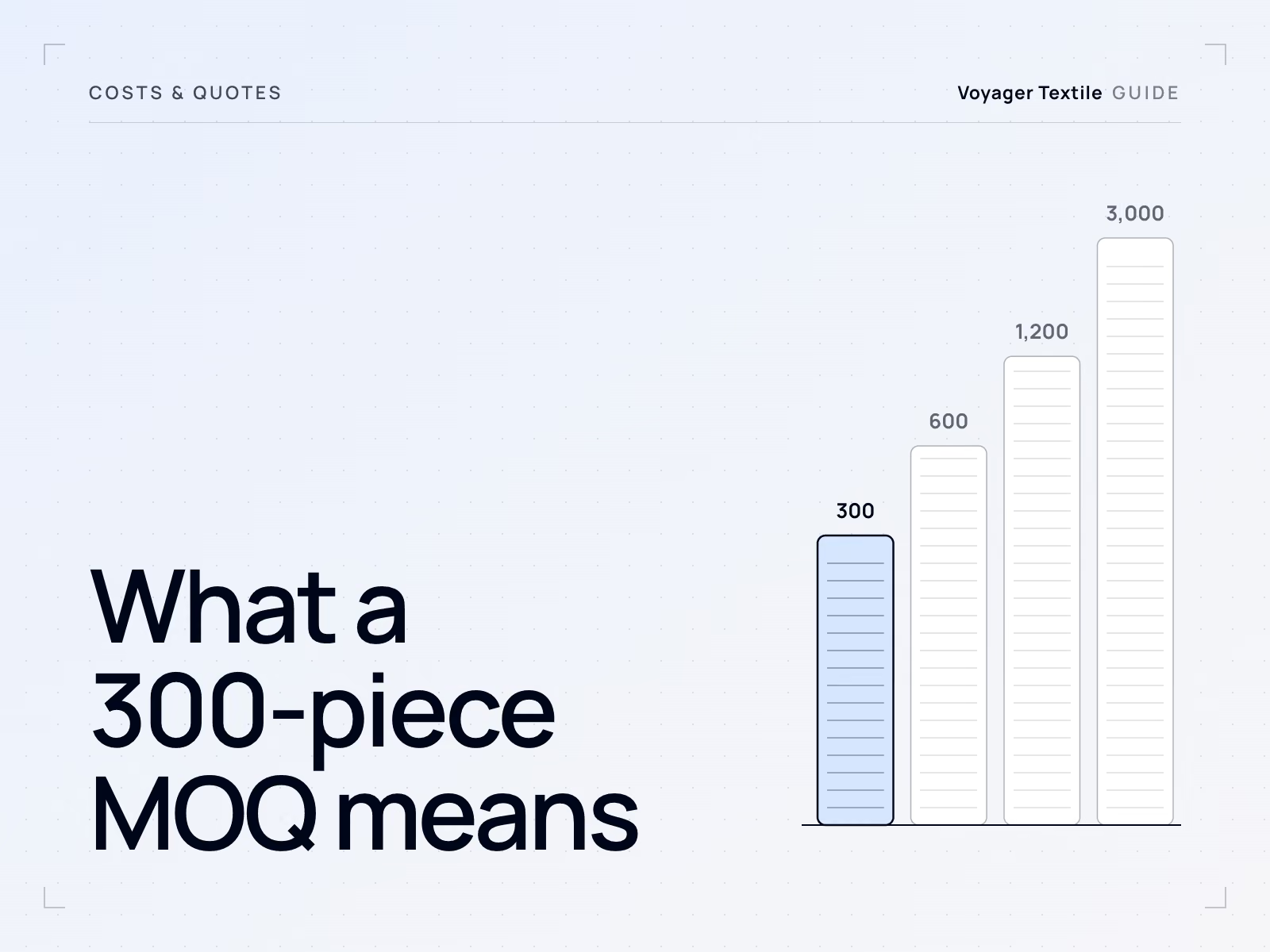
Compare EXW, FCA and DDP quotations on a common delivery basis. Voyager Textile requires 300 pieces per colour and per style, so additional colourways increase the minimum total quantity. Size mix can also affect consumption and price.
How to compare two quotations properly
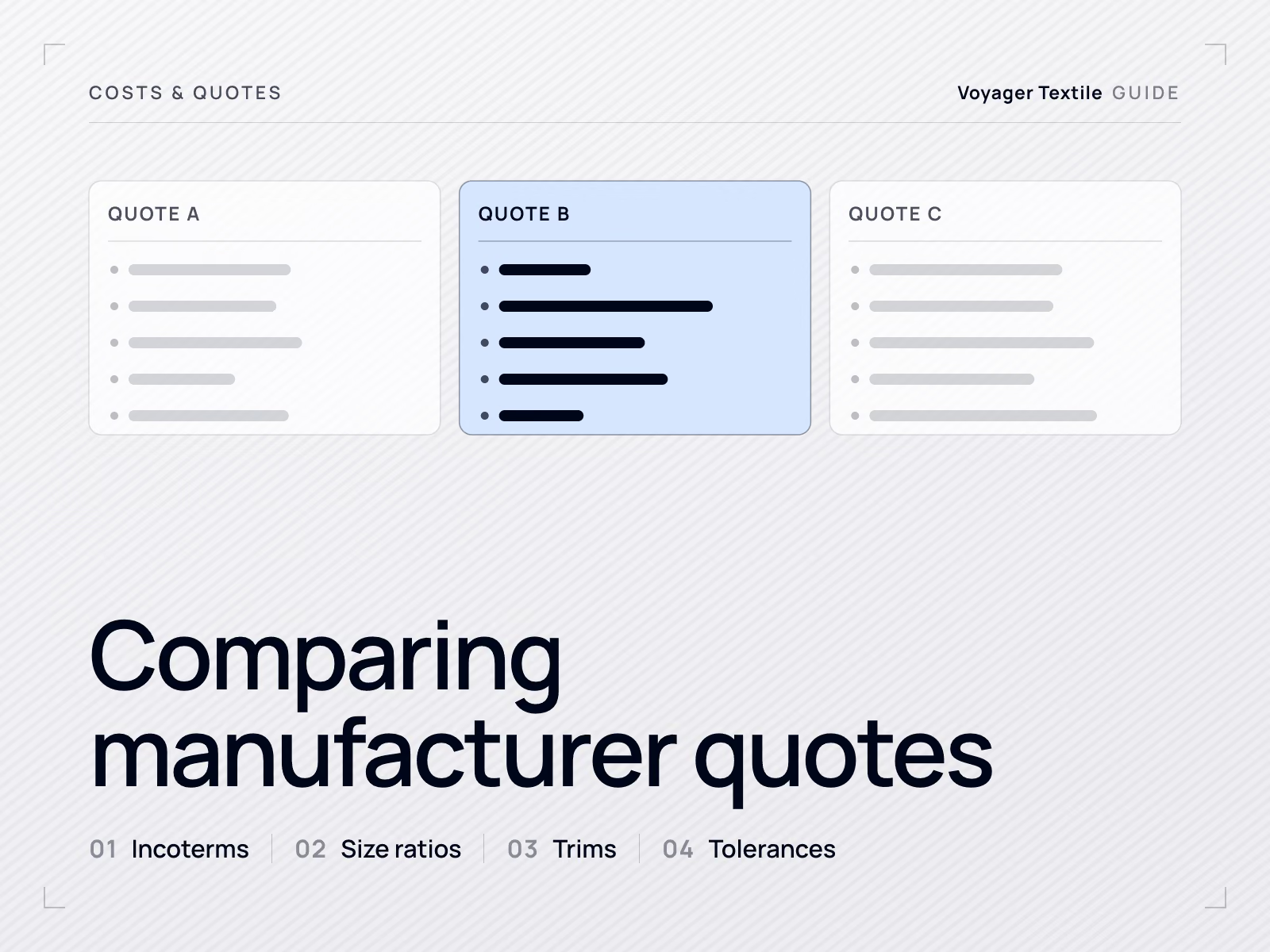
- Line the quotes up against the same specification: composition, GSM, construction, colour approach, decoration, labels, packing. What packing detail a quotation actually needs is set out in pack-out specification.
- Check the Incoterm on each. Convert everything to the same delivery basis before comparing.
- Check what quantity each price refers to, and whether it is per style or per colour.
- Ask what is excluded. Sampling, screens, digitising, labels and packing are commonly quoted separately.
- Ask each supplier what would happen to the price at half and at double the quantity. The shape of the answer tells you how the quote was built.
- Confirm the assumptions and exclusions behind each quotation, including any points the supplier has not yet resolved.
Why Turkish manufacturers quote in EUR or USD, and how long a quotation holds
Confirm the quotation and payment currencies rather than assuming every Turkish supplier uses the same currency. When comparing EUR and USD quotations, use a stated exchange rate and date, and account for conversion costs where relevant.
Ask for the quotation validity date, when the price becomes fixed, and which changes could trigger repricing. At Voyager Textile, currency and validity are confirmed in the quotation. Lining quotes up on the same basis is covered in how to compare clothing manufacturer quotes.
Ways to reduce cost that do not damage the product
- Tune fabric weight to the use rather than defaulting to the heaviest option.
- Reduce print colours, or move a multi-colour design to a method that prices differently.
- Consolidate several styles onto one fabric and one colour so fabric is bought once.
- Simplify trims where they are not visible or not load-bearing.
- Order fewer colourways and more depth per colour.
- Give the factory a realistic delivery window instead of paying for expedited production or air freight.
- Book fabric for a full programme rather than order by order.
Ways buyers try to save that usually backfire
- Cutting agreed inspection checks without assessing the resulting quality risk and potential rework, rejection or delay costs.
- Skipping the pre-production sample to save a week.
- Accepting an unnamed equivalent fabric to hit a target price.
- Choosing the lowest quote without checking GSM and composition.
- Ordering the absolute minimum when the programme is clearly larger, then paying set-up costs again three months later.
What Voyager Textile needs in order to price accurately
A useful quotation needs the product, target quantity, fabric composition and weight or the intended use, colour approach, size range, decoration with artwork, labels and packing requirements, destination and target delivery date. Partial information is a normal starting point and we will tell you what is missing. The RFQ guide sets it out as a checklist you can send straight to any factory.
Questions buyers ask
How much does it cost to manufacture a custom t-shirt?
There is no single figure, because the same tee can vary several times over in price depending on fabric composition, weight, construction, decoration and quantity. A supplier who quotes a price before knowing those five things is quoting an assumption. Send a specification and compare real quotations.
Why do two factories quote very different prices for the same garment?
Specifications, trim quality, decoration, packing and delivery terms may differ. Even for an identical scope, supplier costs, capacity and margins can produce different prices. Ask both suppliers to confirm the specification and delivery terms in writing.
Does a higher GSM mean a better garment?
No. GSM measures fabric mass per unit area. Warmth, durability and suitability also depend on fibre, fabric construction and finishing. Select weight for the intended use rather than assuming higher GSM is always better; see the GSM guide.
How much cheaper is a larger order?
Ask for quotations at feasible quantities using the same specification and delivery scope. Larger quantities can spread set-up costs, but the actual saving depends on the product, materials and production plan.
Is decoration included in the garment price?
Confirm whether printing or embroidery is included in the quoted garment price and whether screens, digitising or other set-up costs are separate. Ask for a breakdown so you can assess the effect of a design change.
What is the most expensive mistake in apparel costing?
Late specification changes can be costly when materials or production time are already committed. The impact depends on what changes and what can still be used. Settle key requirements during sampling and assess revisions before authorising them.
Get a quotation built line by line
Send the specification you have. We will quote with fabric, decoration, labels, packing and delivery terms shown separately, so you can see exactly what you are paying for and where you could change it.
Request a quotation