Fabric and colour
Cotton, Polyester and Blends: Choosing the Right Composition
Cotton is comfortable, breathable and takes reactive dyeing well, but it shrinks and dries slowly. Polyester is strong, stable, fast drying and the only base for sublimation printing, but it manages odour less well. Blends exist because many end uses want part of each. Choose composition from what the garment has to do, not from a preference for natural or synthetic.
Contents
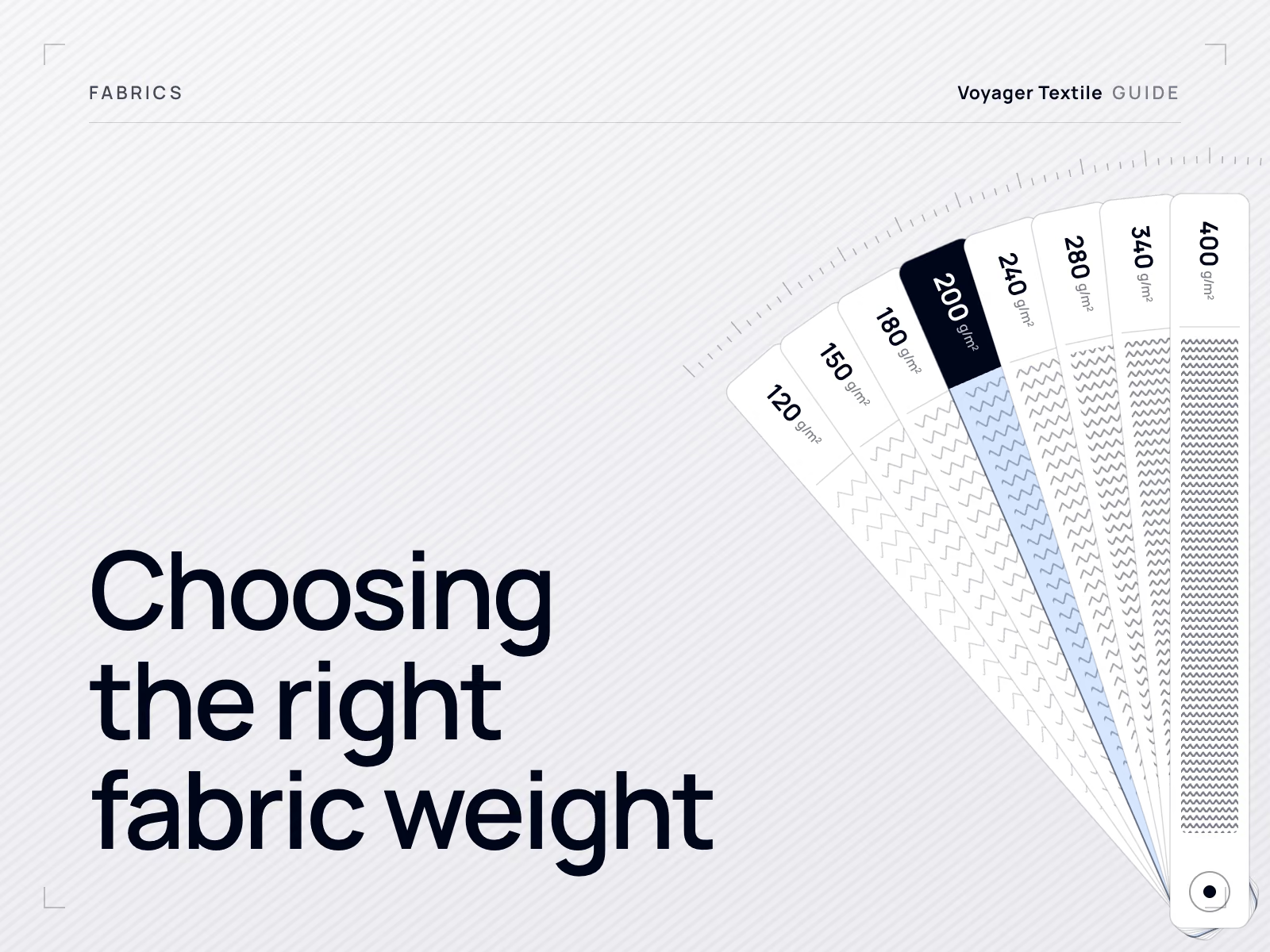
Composition is the second half of a fabric decision, alongside weight and structure. It determines how the garment feels, how it behaves in washing, what it can be printed with and how long it survives. This guide covers what each fibre actually delivers. For how heavy the fabric should be, see the GSM guide.
What each fibre gives you
| Fibre | Strengths | Limitations | Typical use |
|---|---|---|---|
| Cotton | Soft, breathable, comfortable next to skin, takes reactive dyeing well, ages pleasantly | Shrinks, dries slowly, wrinkles, loses shape when wet, weaker when abraded | T-shirts, hoodies, everyday wear, retail and merchandise programmes |
| Polyester | Strong, dimensionally stable, dries quickly, holds colour, accepts sublimation printing | Less breathable, can retain odour, feels synthetic unless well engineered | Sportswear, teamwear, workwear, sublimated products |
| Cotton and polyester blends | Balances comfort with stability, less shrinkage, good durability, cost effective | A compromise on both sides; solid colour can be harder to achieve | Uniforms, workwear, corporate programmes, hard-wearing hoodies |
| Elastane, added in small percentages | Stretch and recovery, better fit retention | Sensitive to heat and chlorine, can degrade over time | Leggings, fitted tops, activewear, stretch workwear |
| Viscose and modal | Soft, fluid drape, good colour depth | Weaker when wet, more delicate in washing | Fashion tops and blends where drape is the point |
| Recycled polyester | Comparable performance to virgin polyester with recycled content | Requires chain-of-custody documentation to substantiate any claim | Programmes with recycled-content requirements |
Match composition to the end use
| End use | Usual direction | Why |
|---|---|---|
| Everyday retail t-shirt | 100 percent cotton, often combed and ring-spun | Comfort and hand-feel are the product |
| Promotional t-shirt at volume | Cotton, or a cotton-rich blend | Cost and print quality matter more than technical performance |
| Sportswear and teamwear | Polyester based, often with elastane | Moisture management, fast drying, and sublimation compatibility |
| Uniforms and workwear | Cotton and polyester blend | Durability, shape retention and industrial wash tolerance |
| Heavyweight streetwear hoodie | Cotton or cotton-rich fleece | Hand-feel, structure and the way the fabric ages |
| Leggings and fitted activewear | Polyester or polyamide with elastane | Stretch, recovery and opacity under tension |
| Towels and bathrobes | Cotton terry | Absorbency, which synthetic fibres do not match |
Cotton is not one material
Two garments can both be 100 percent cotton and feel entirely different. The variables that matter are the yarn and the finishing.
- Combed versus carded. Combing removes short fibres, giving a smoother, stronger, less fluffy yarn. Carded cotton is cheaper and coarser.
- Ring-spun versus open-end. Ring-spun yarn is finer and softer; open-end yarn is more economical and typically firmer.
- Staple length. Longer fibres produce smoother, more durable fabrics.
- Finishing. Enzyme washing, brushing, singeing and compacting all change hand-feel and shrinkage.
This is why quoting only 100 percent cotton, 180 GSM is not a complete specification. Say what the garment is for and ask the factory to propose a yarn and finish to match, then confirm it on a physical sample.
Blend ratios and what they change
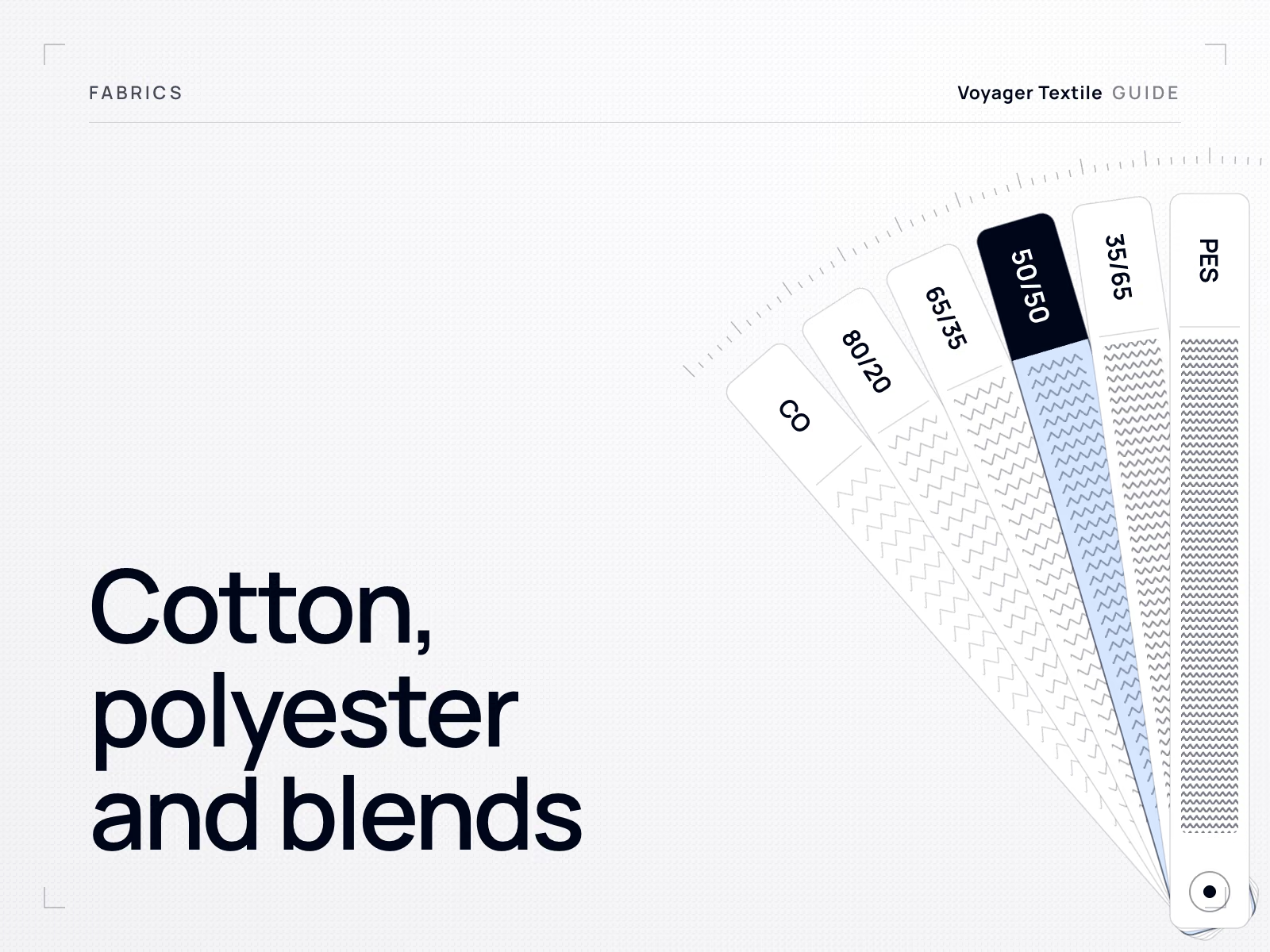
Blends are usually described by percentage, and the ratio moves the fabric along a spectrum. A cotton-rich blend feels closer to cotton with improved stability and reduced shrinkage. A polyester-rich blend is more durable, faster drying and more colour stable, with less of the cotton hand-feel. Tri-blends adding viscose bring a softer drape and a slightly heathered look.
Two consequences for buyers. Blends often produce a subtle heathered appearance because the fibres take dye differently, which can be desirable or not depending on the product. And a blend may need more than one dyeing process, which affects colour development, as covered in the Pantone guide.
Composition decides your decoration options
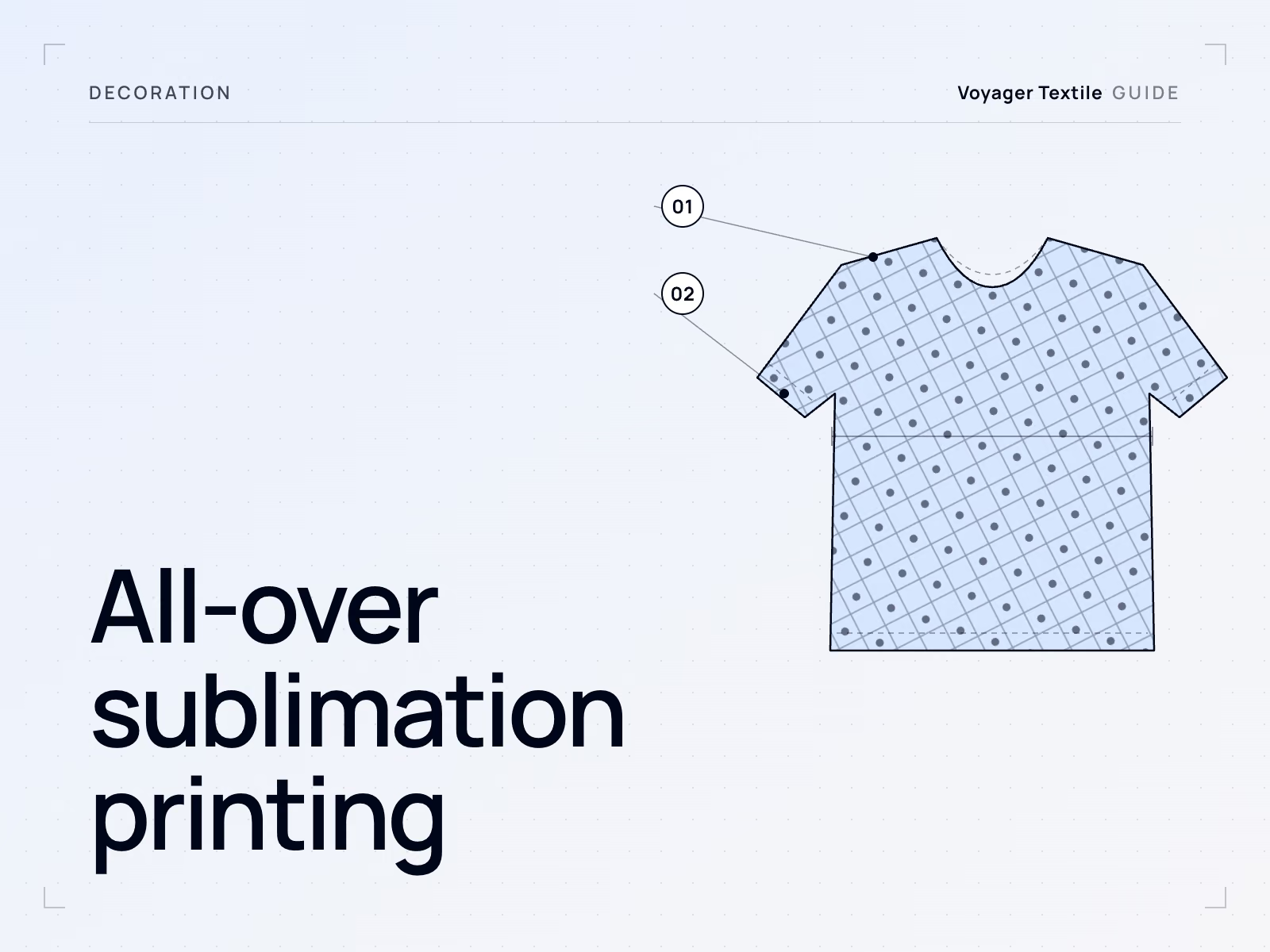
- Sublimation requires polyester-based fabric. It is not possible on cotton, which is why sublimated products are polyester by definition. See the sublimation guide.
- Screen printing works well on cotton and blends; polyester can require ink systems that resist dye migration, especially on dark grounds.
- Transfer printing, including DTF, works across a wide range of compositions.
- Direct-to-garment printing performs best on cotton and cotton-rich fabrics.
- Embroidery works on almost any composition, with backing chosen for the fabric.
Decide fabric and decoration together. The decoration comparison covers method selection in detail.
Performance to specify rather than assume
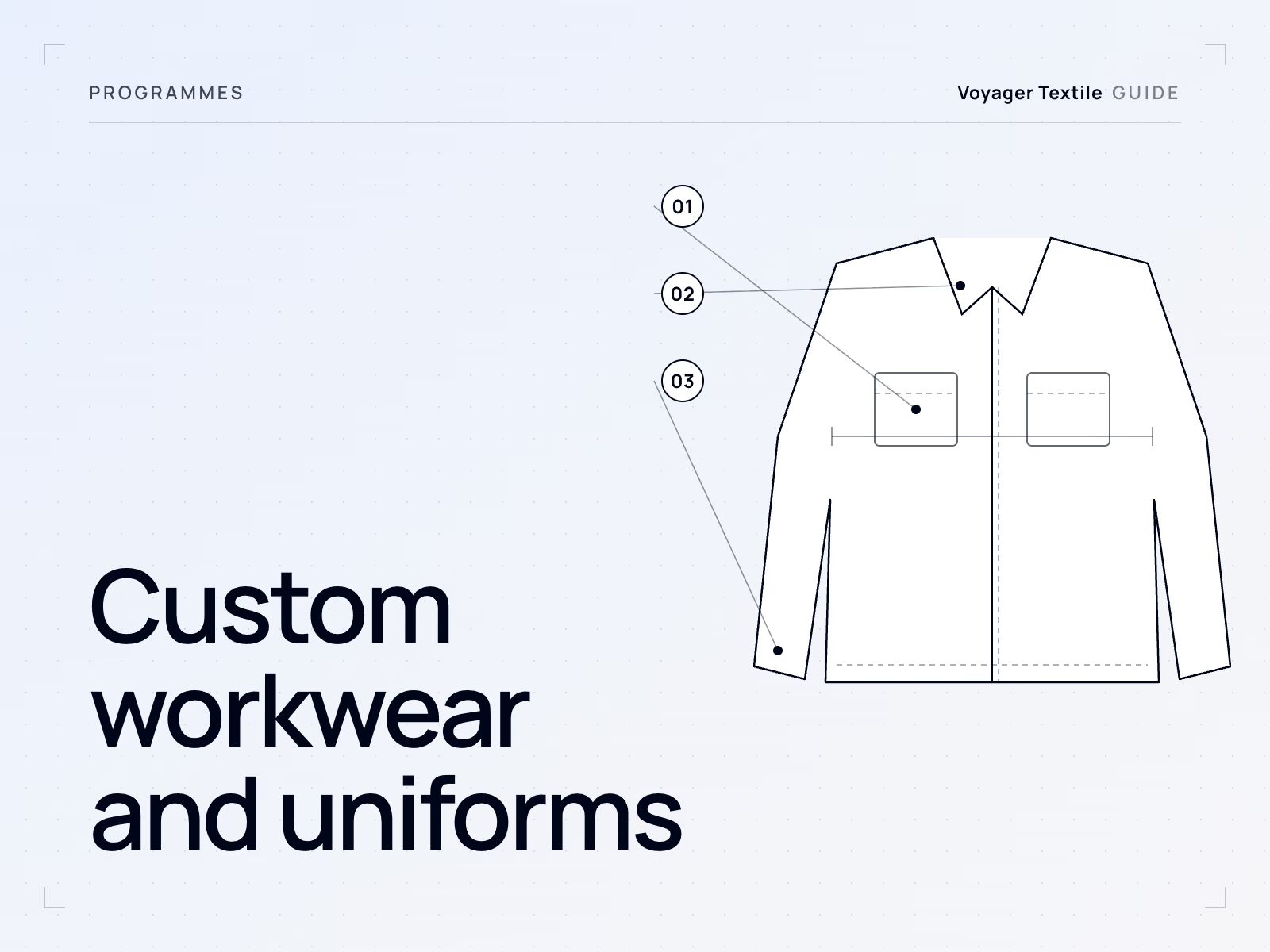
If performance matters, put it in the specification and test it. Shrinkage after washing, colourfastness to washing and rubbing, pilling resistance and seam strength are all measurable, and each is relevant to a different product. Workwear and uniforms that face industrial laundering need this most, as covered in the workwear guide and the quality control guide.
Certified and recycled materials
Where a programme requires certified inputs, fabrics carrying certifications such as OEKO-TEX, GOTS for organic cotton and GRS for recycled content can be sourced with documentation for your records. Two points are worth being precise about. These certifications belong to materials and their chain of custody rather than to a factory as a company, and a claim on your label or website needs to be supported by that documentation. Voyager Textile states exactly what each mark means in its context on the compliance section.
How to specify composition properly
- State the composition with percentages, for example 95 percent cotton and 5 percent elastane.
- State the yarn quality where it matters: combed, ring-spun, or a specific yarn count.
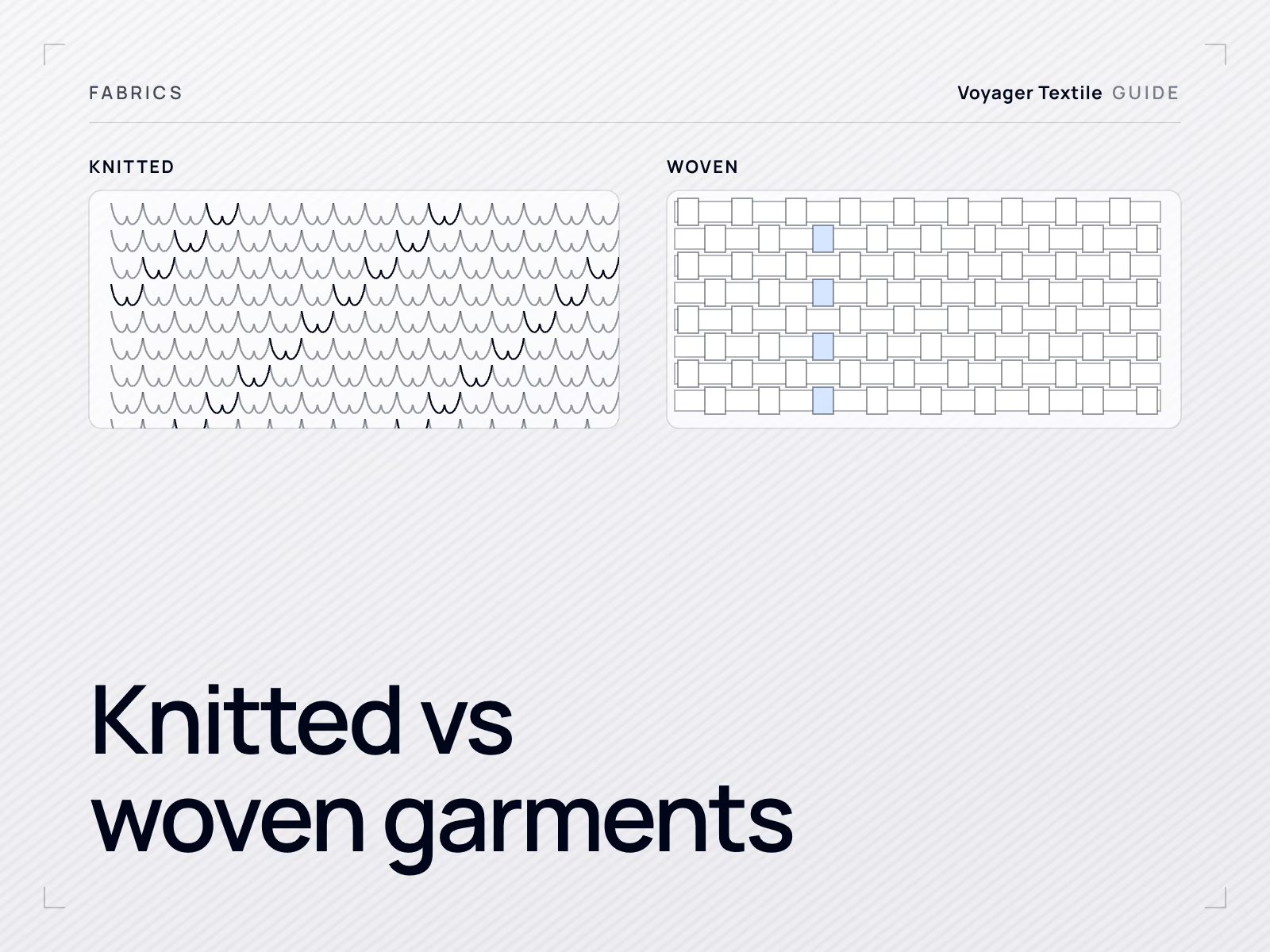
- State the fabric structure: single jersey, pique, brushed fleece, loopback terry, twill.
- State the weight in GSM with an acceptable range.
- State the finish: enzyme washed, brushed, peached, or none, and whether it is applied to the fabric or to the sewn garment, since the same words are used for both.
- State the performance requirements and how they will be tested.
- Approve a physical swatch or sample before bulk, because composition on paper is not a hand-feel.
The fibre content you finally use is also a legal statement on the label in both the EU and the United States, so make sure the specification, the fabric actually used and the label all agree.
Questions buyers ask
Is cotton or polyester better for t-shirts?
Cotton for comfort, hand-feel and everyday retail wear. Polyester for sport, fast drying, colour stability and any product that will be sublimation printed. A blend is the usual answer when the garment needs both comfort and durability, such as uniforms.
What does a 50/50 cotton polyester blend actually give you?
A balance: more stability and less shrinkage than pure cotton, more comfort and breathability than pure polyester, and generally good durability at a competitive price. It often shows a slightly heathered appearance because the two fibres take dye differently.
Why does my cotton garment shrink?
Cotton fibres relax and contract when washed, particularly in knits. Factories relax fabric before cutting and build shrinkage into the pattern, but the effect is never zero. Specify shrinkage testing and agree whether the measurement chart applies before or after washing.
Can polyester be printed with screen printing?
Yes, though dye migration can occur on dark polyester, where the fabric dye moves into the print over time. Ink systems designed to block migration are used for this. Tell the factory the fabric composition when you specify the print method.
Why can sublimation only be used on polyester?
Sublimation dye bonds with polyester fibres under heat. Cotton fibres do not accept it in the same way, so the colour will not hold. This is why all-over sublimated products are polyester based.
Is recycled polyester as good as virgin polyester?
For most apparel uses the performance is comparable. What differs is documentation: any recycled-content claim needs chain-of-custody evidence covering the specific material used in your order, as set out in recycled-content certification.
How should I write composition in a specification?
As percentages that add up to 100, together with yarn quality, fabric structure, weight in GSM and finish. Composition alone does not define a fabric, and the same percentages can produce very different garments.
Let the end use choose the fabric
Tell us what the garment is for, how it will be washed and how it will be decorated. We will propose compositions and weights that fit, and send a sample in the actual fabric before bulk.
Ask for a fabric proposal