Programme types
Custom Workwear and Uniform Manufacturing
Workwear is judged over years, not seasons. Fabric that survives repeated hot washing, construction reinforced where garments actually fail, decoration that does not peel and a size range that stays available are what matter. Appearance is a requirement, but durability and repeatability are the specification.
Contents
- Fabric: start from the washing regime
- Specify performance and test it
- Construction: reinforce where garments actually fail
- Decoration that survives the laundry
- Sizing that stays available for years
- Colour continuity across years
- Structuring a multi-year programme
- What Voyager Textile produces
- Questions buyers ask
Workwear and uniform buyers are solving a different problem from merchandise buyers. The garment will be worn several days a week, washed frequently and often at high temperature, worn alongside garments bought two years earlier, and replaced piece by piece as it wears out. Every one of those facts is a specification requirement.
This guide covers durable workwear and uniform programmes: hospitality, medical, technical and service clothing. Branded staff clothing for events and campaigns is a different problem, covered in the corporate apparel guide.
Fabric: start from the washing regime
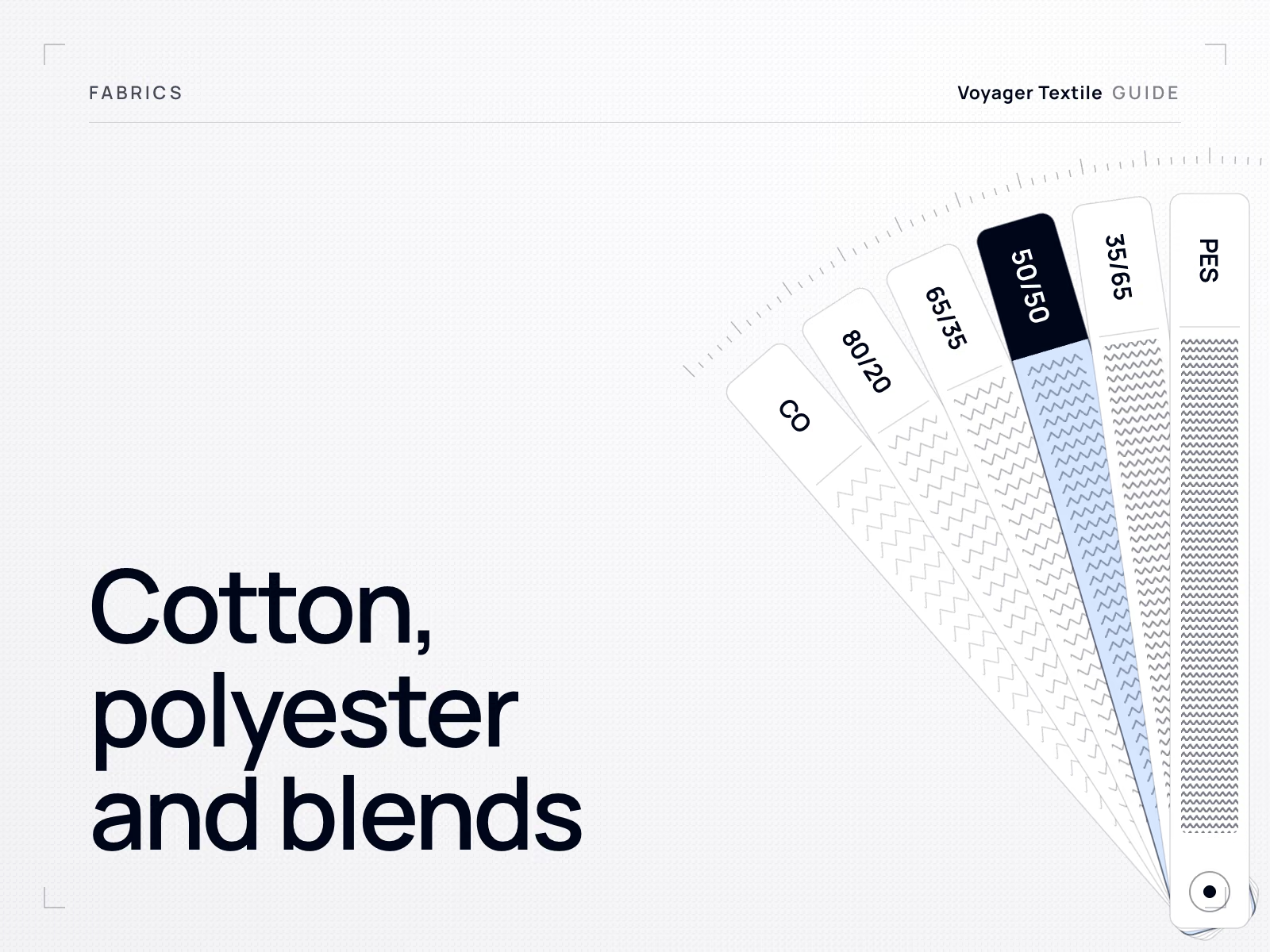
The first question in workwear is not what the fabric feels like, it is how the garment will be laundered. Industrial laundering at high temperature is far harder on a garment than domestic washing, and it drives fabric selection more than any other factor.
| Requirement | Usual direction | Why |
|---|---|---|
| Frequent hot washing | Polyester-rich blends | Better dimensional stability and colour retention than pure cotton |
| Comfort in hot conditions | Cotton-rich blends or breathable structures | Comfort determines whether staff actually wear the garment |
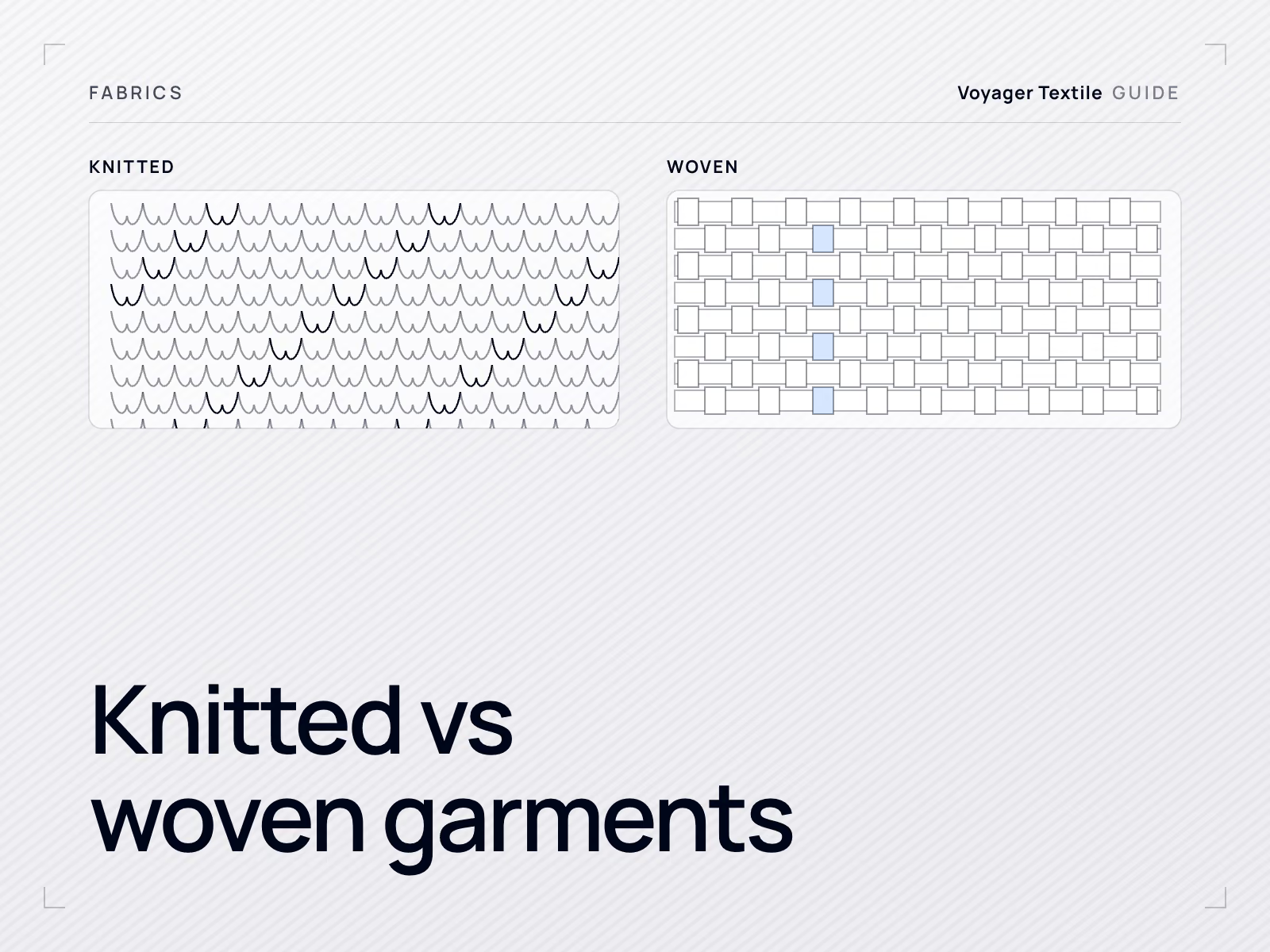
| Abrasion resistance | Densely woven twill, canvas or drill | Wovens resist abrasion better than light knits |
| Movement | Small elastane content, or gusseted construction | Stretch reduces seam stress and improves comfort in active roles |
| Stain and appearance retention | Darker or mid shades, and appropriate finishes | Pale colours show wear quickly in service environments |
Fibre behaviour is covered in the composition guide and construction differences in the knit versus woven guide.
Specify performance and test it
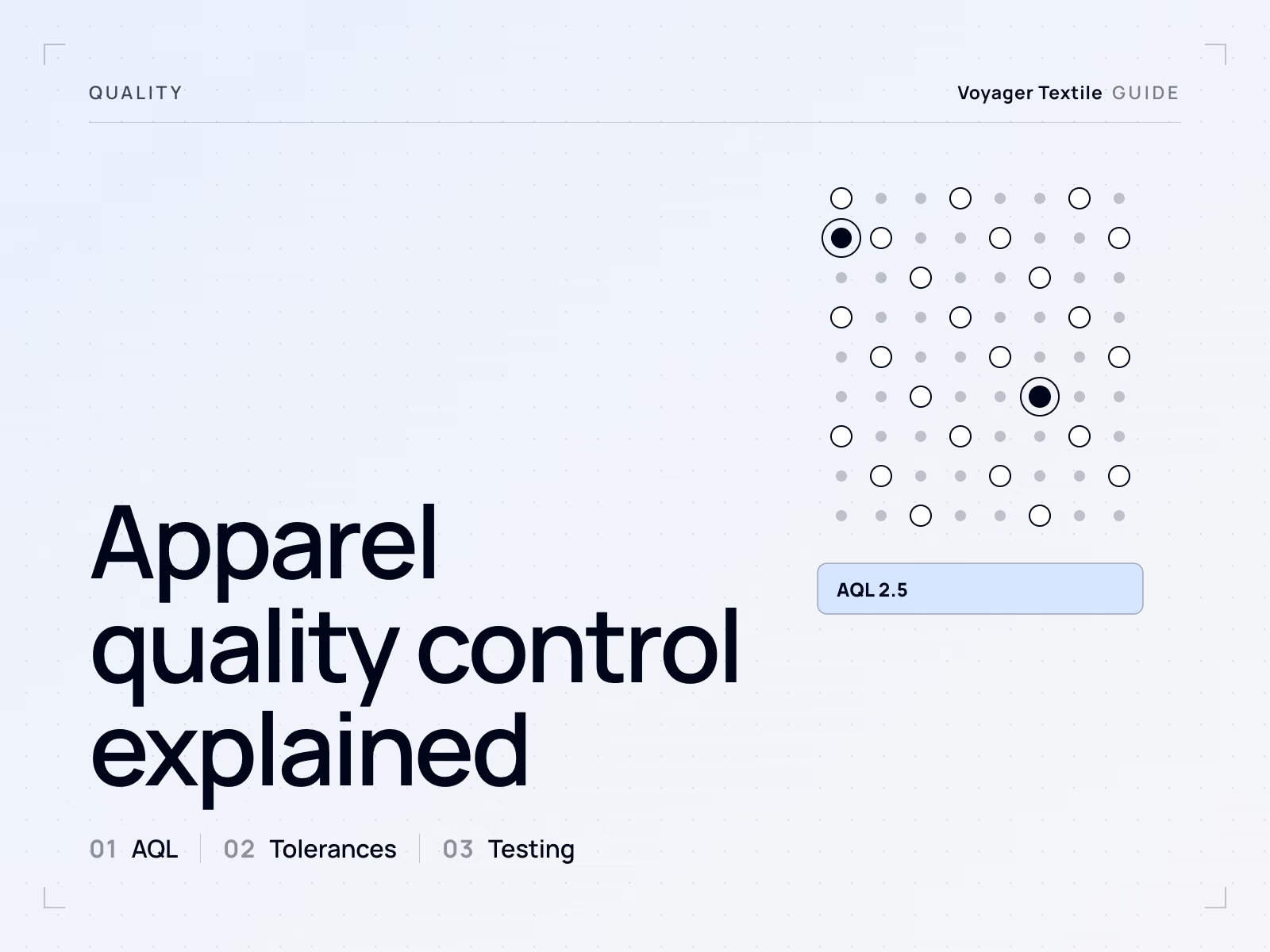
Workwear is the category where laboratory testing genuinely earns its cost, because failures appear after months of use rather than at inspection.
- Dimensional stability, tested at the washing temperature the garment will actually face, not at a gentle cycle.
- Colourfastness to washing and to rubbing, particularly for dark shades worn against skin.
- Pilling and abrasion resistance, which determine how the garment looks after a year.
- Seam strength and seam slippage, which predict where the garment will fail.
- Colourfastness to perspiration and light where the role is outdoors or physically demanding.
Agree methods and pass criteria before production, as set out in the quality control guide. Testing once per fabric is usually enough, and it becomes the baseline for every reorder.
Construction: reinforce where garments actually fail
Failure points in workwear are predictable, which makes them easy to specify against.
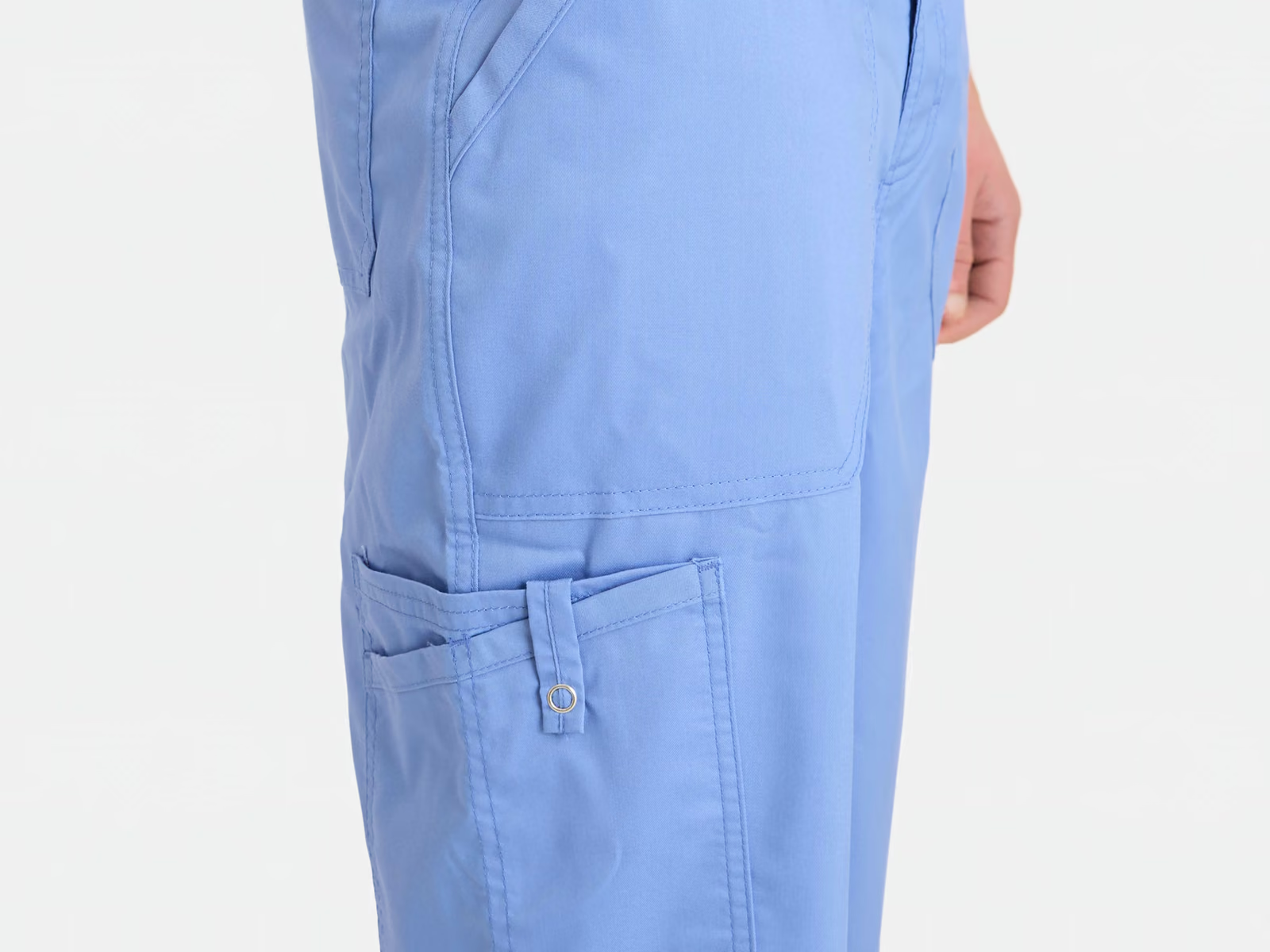
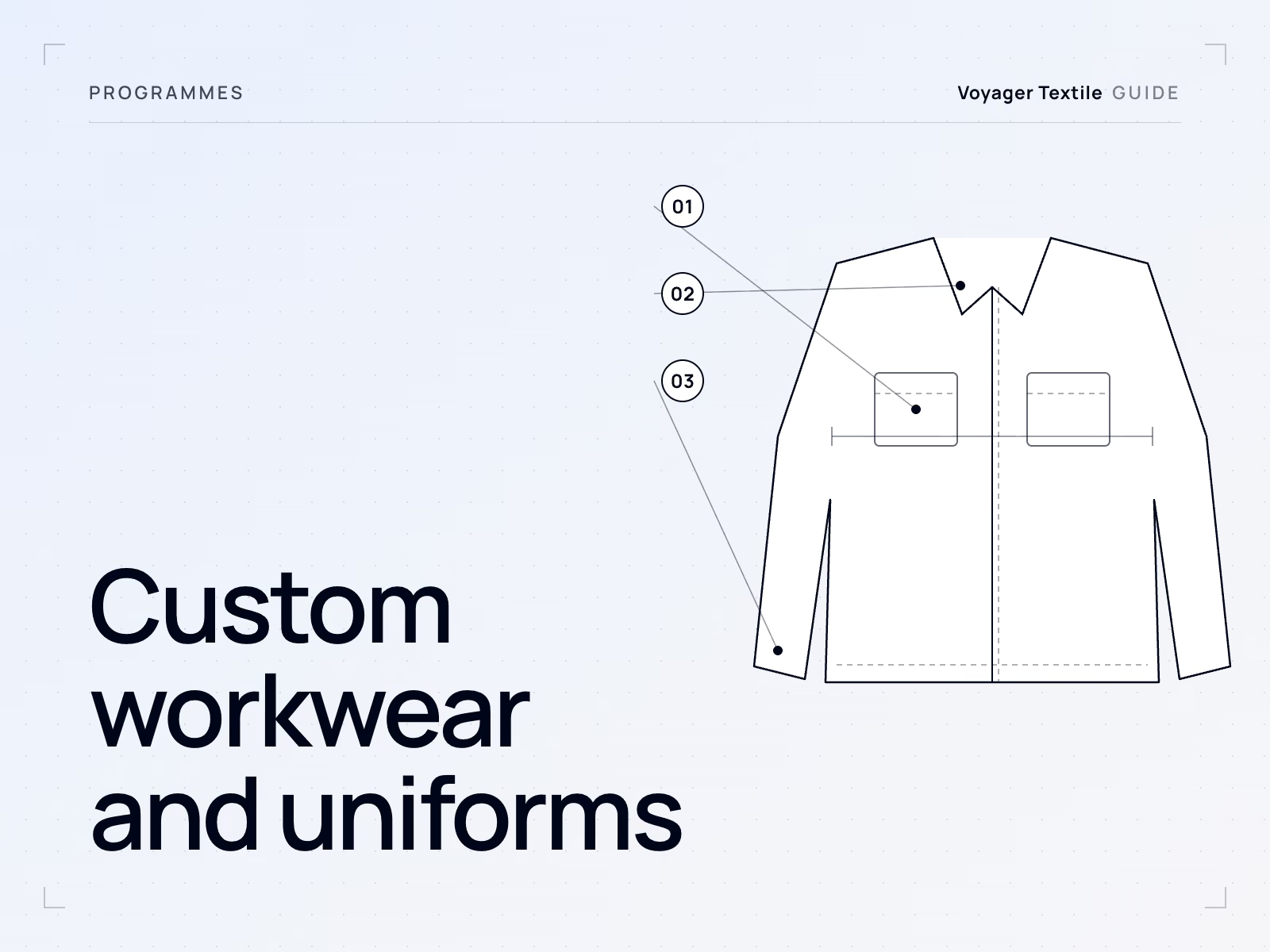
- Pocket openings and pocket corners, which take repeated stress: bar tacking is the standard answer.
- Crotch and inner leg seams on trousers, where reinforcement or a gusset prevents a common failure.
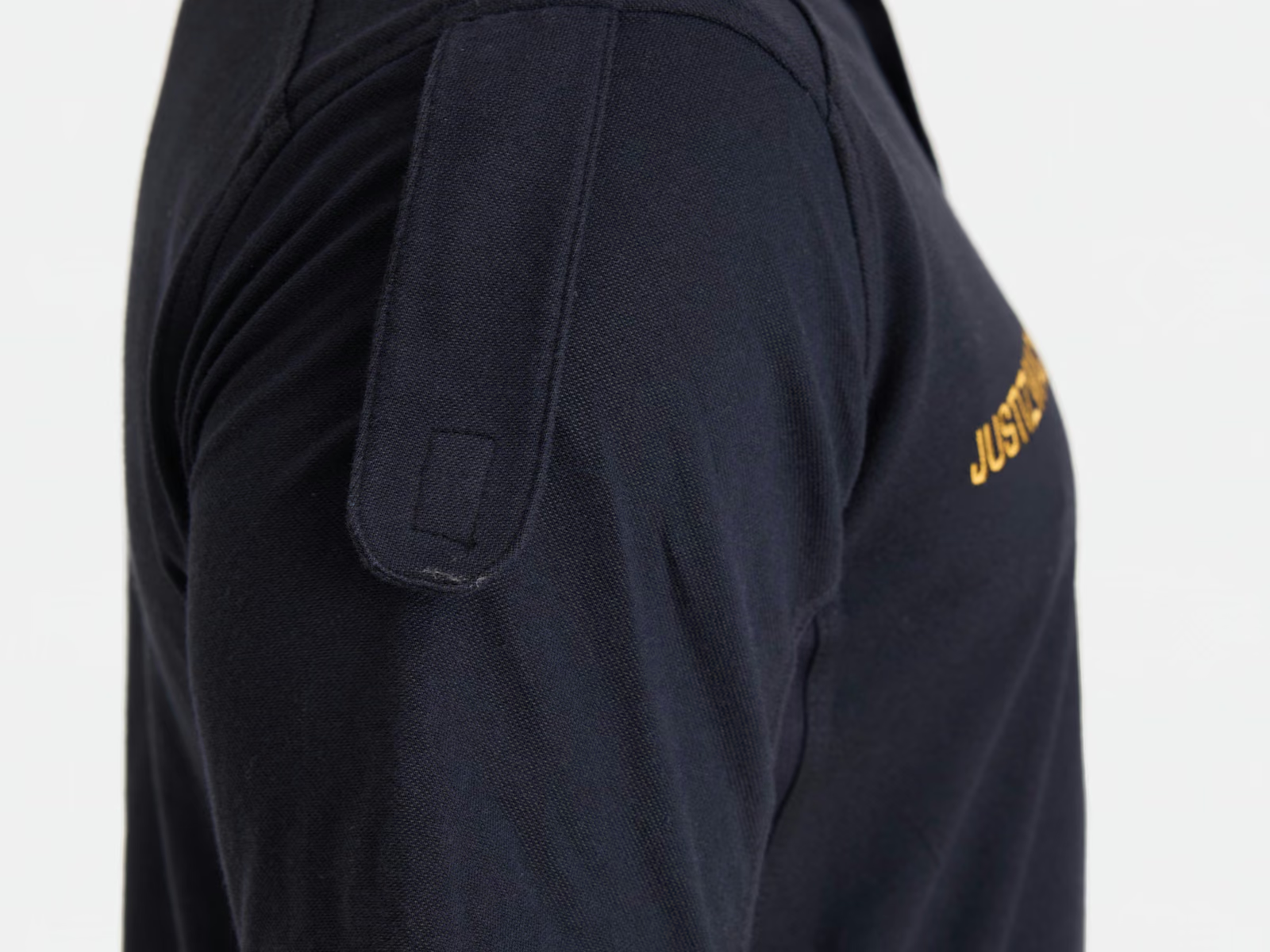
- Armholes and shoulder seams on garments involving reaching and lifting.
- Hems and cuffs, where abrasion is concentrated.
- Fastenings: zips, buttons and studs are frequently the first component to fail, so specify quality rather than accepting a default.
- Thread quality, which is invisible in a sample and decisive after a hundred washes.
Ask the factory which three points it would reinforce for your specific garment and use case. A manufacturer that produces workwear regularly will answer immediately.
Decoration that survives the laundry
Embroidery is generally the most robust decoration under industrial laundering, which is why uniform programmes favour it for logos and name badges. Prints can perform well, but they must be specified and applied for the washing regime rather than for appearance alone.
- State the washing temperature and frequency when you request decoration, not only the artwork.
- For names or roles that change, consider removable badges or a separate label rather than permanent decoration on the garment.
- Keep logo placement consistent across garment types so the programme looks coherent.
- Approve a stitch-out or strike-off on the actual fabric, and if durability is critical, wash the sample before approving it.
Each method needs its own specification on workwear; the washing regime decides between them.
| Method | What to specify | Trade-off |
|---|---|---|
| Embroidery | Polyester embroidery thread for garments washed hot or with bleach; cotton thread only where a matt look matters more than colourfastness, since it fades and shrinks faster. Backing suited to the fabric | The most robust under repeated laundering; less suited to fine detail and very large areas |
| Heat transfer | A transfer rated for the agreed washing temperature, with press temperature, time and pressure recorded for bulk | Fine detail and many colours; adhesion is the failure point, so it is checked after washing |
| Sublimation | Polyester or polyester-rich fabric in light shades | The dye sits in the fibre, so there is no film to crack or peel; not possible on cotton or dark grounds |
| Screen print | Ink system and curing suited to the washing regime; run through partner facilities | Suits simple artwork in larger runs; the ink film wears with abrasion |
Before bulk, a decorated sample is washed under the test conditions agreed with the buyer, with the temperature, detergent and number of cycles set for industrial laundering. Once approved, that wash-tested sample is sealed and kept as the reference for bulk and for every reorder.
Method selection is covered in the decoration comparison.
Branded workwear: logos, colours and reorders
Branded workwear stays consistent when three things are fixed in writing: the logo file and its placement per garment type, the garment colours as physical standards, and the decoration method per fabric. Keep one logo position across polos, jackets and trousers, and record thread colours or transfer references with the artwork. For reorders, approved samples, colour standards and decoration settings are kept on file so later batches match the first; the practical steps are in reorder consistency. The garments made for branded workwear programmes are on the workwear page.
Sizing that stays available for years
A uniform programme needs the same sizes to be available and to fit the same way in year three as in year one. That requires the graded measurement chart to be frozen and versioned, and the approved sample sealed and retained.
- Publish the measurement chart with the size names so staff can choose accurately.
- Offer a genuinely inclusive size range, and check the extremes with a size set rather than trusting the grade.
- Decide whether separate cuts are needed, since comfort determines compliance with the dress policy.
- Keep fit samples on site for new starters to try before ordering.
- Treat any pattern change as a new version with a new sample, never as a small adjustment.
See pattern making and grading and reorder consistency.
Colour continuity across years
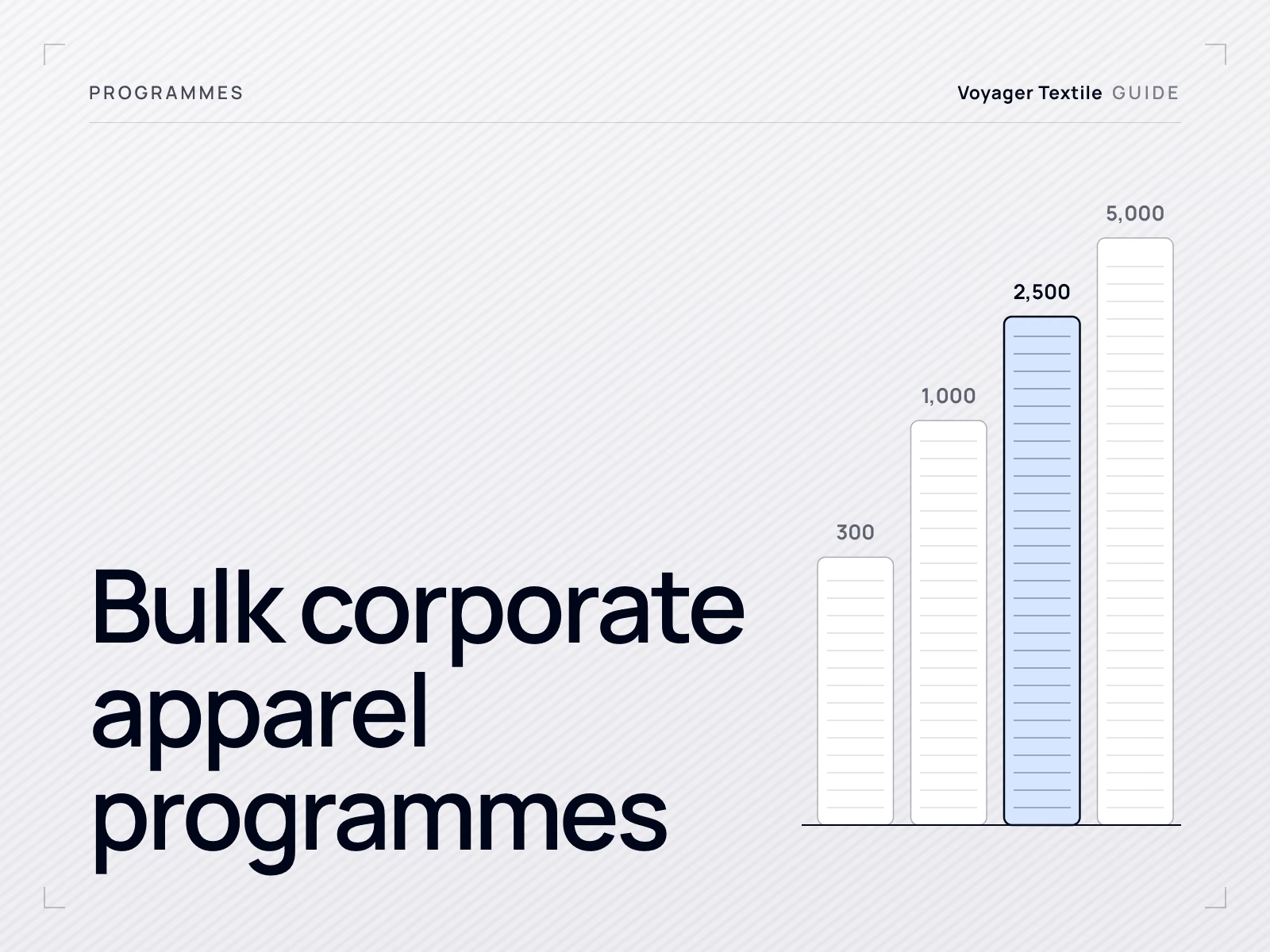
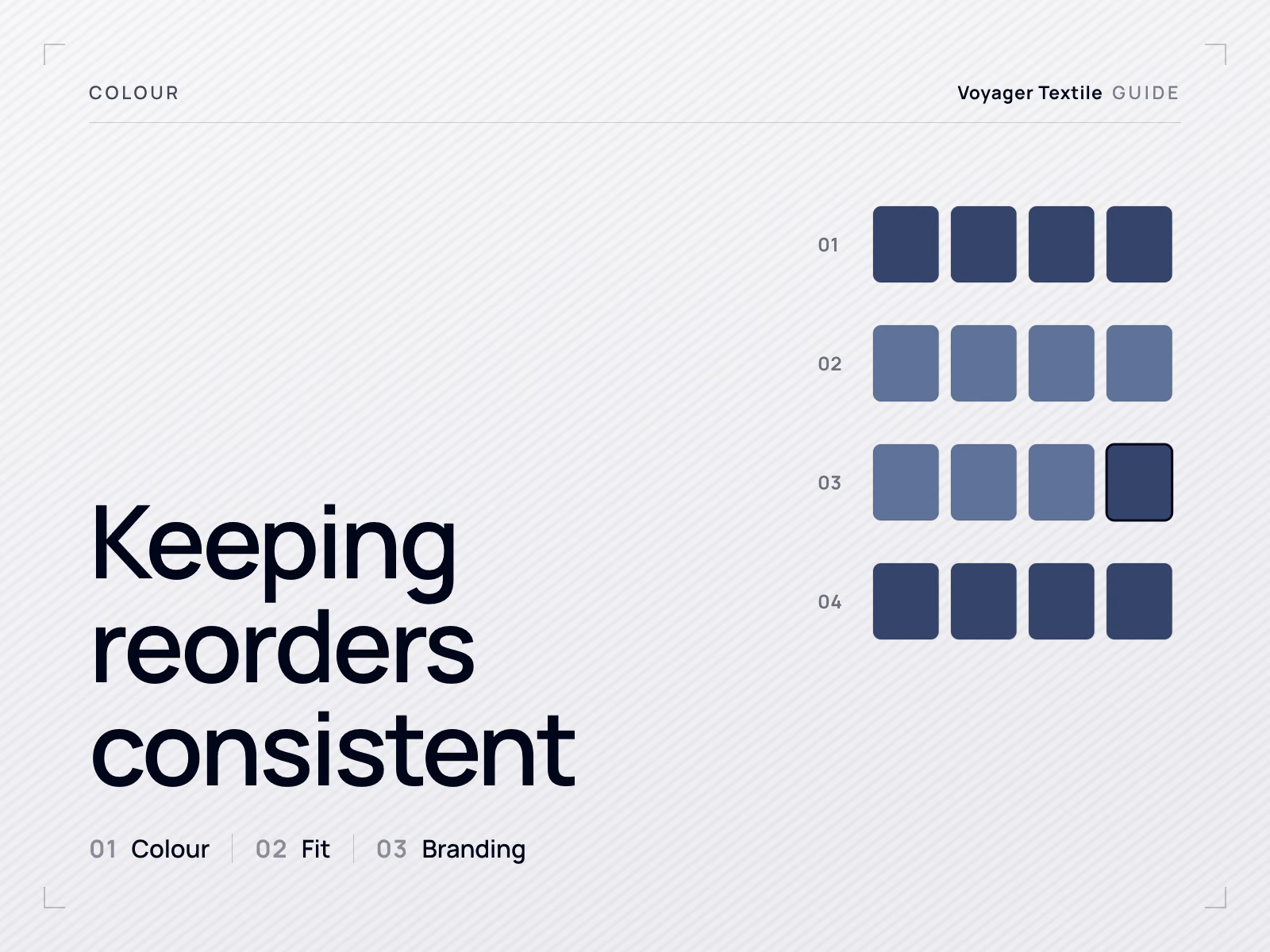
In a uniform, colour drift is visible in a way it is not in a retail collection, because garments from different orders are worn side by side every day. Fabric dyed in one lot removes the issue for that period, and where several lots are unavoidable, an approved physical colour standard and an agreed tolerance are essential. Custom Pantone colour production at Voyager Textile starts at 300 pieces per colour and per style, and the process is described in the colour matching guide.
Structuring a multi-year programme
- Define the garment set per role, and the replacement cycle for each item.
- Estimate annual consumption, including new starters and replacements, not just the initial fit-out.
- Agree how repeat orders will be placed: scheduled, on a stock trigger, or on demand.
- Book fabric for the programme where volumes allow, protecting both colour and price.
- Fix the specification, tolerances and test results as the baseline for every subsequent order.
- Agree packing per site, so distribution does not become a manual sorting exercise.
- Review annually with the factory: what wore out first, what staff complained about, what should change.
That last step is the one many programmes skip, and it is the cheapest quality improvement available. Wear data from your own staff is better information than any specification review.
What Voyager Textile produces
Uniform and workwear production includes scrub sets, uniform sets, aprons, polos, lab coats and coordinated programmes, produced to customer specification from 300 pieces per colour and per style. How a multi-garment programme is actually manufactured is covered in the uniform manufacturing process. Embroidery, transfer and sublimation printing run in-house, and approved samples, patterns, colour standards and packing instructions are kept on file so repeat orders reproduce the original. Previously produced references are in the catalogue, including uniform references and medical and scrub references.
Questions buyers ask
What fabric is best for workwear uniforms?
Usually a polyester-rich blend where garments face frequent hot or industrial washing, because it holds dimensions and colour better than pure cotton. Where comfort in heat matters more, a cotton-rich blend is preferable. Choose from the laundering regime first, then adjust for comfort.
Can you make certified protective clothing?
Certified personal protective equipment, such as flame-retardant or high-visibility garments, is a regulated category with its own certification requirements under Regulation (EU) 2016/425 in the EU. Confirm explicitly with any manufacturer whether certified PPE is within its scope before treating it as a normal workwear order.
Which decoration lasts longest on uniforms?
Embroidery is generally the most durable under industrial laundering, which is why uniform programmes favour it. If you use printing, state the washing temperature and frequency so the correct system is specified, and wash a sample before approving it.
How do we keep uniforms matching over several years?
Freeze the graded measurement chart, seal and retain an approved sample, keep an approved physical colour standard, and book fabric for the programme where volumes allow. Treat every pattern or trim change as a new version with a new sample.
What is the minimum order for custom uniforms?
At Voyager Textile, custom apparel production starts at 300 pieces per colour and per style, with custom Pantone colour production also from 300 pieces per colour and per style. Repeat orders are subject to the same minimums, so plan annual consumption rather than ordering only the initial fit-out.
Which tests should we specify for workwear?
Dimensional stability at the actual washing temperature, colourfastness to washing and rubbing, pilling and abrasion resistance, and seam strength. Agree methods and pass criteria with your supplier and laboratory before production.
Should we hold stock or reorder as needed?
Many programmes need both: buffer stock in the most-used sizes for new starters and replacements, plus scheduled repeat orders. Estimate annual consumption including replacements so fabric can be booked for the whole period.
Specify for the third year, not the first delivery
Tell us the roles, the washing regime and how many garments you expect to replace each year. We will propose fabrics and construction that hold up, and set the specification so reorders match.
Discuss a uniform programme