Programme types
Bulk Corporate Apparel Programmes: A Procurement Guide
Corporate clothing is branded clothing that a company issues to its staff for work, events and customer contact, made to one specification and reordered as the workforce changes. A corporate apparel programme often fails on logistics rather than on product. Size planning, a workable approval process, colour continuity across years and a clear distribution model decide whether people actually wear the clothing. The garment itself is the easy part.
Contents
- Define the programme before the product
- Size planning: where programmes go wrong
- Colour, and why it drifts
- Branding that works across items
- Approvals: agree the process, not just the product
- Event programmes have a hard deadline
- Distribution and packing
- Plan the replenishment model
- A realistic first-year plan
- Questions buyers ask
Corporate clothing, also called corporate wear, is the branded clothing a company gives its people to wear at work: polos, T-shirts, sweatshirts and jackets in the company's colours and with its logo. Where the brand look matters as much as function, the same range is sometimes called corporate fashion. Voyager Textile makes it to the buyer's specification, as described on the corporate clothing manufacturer page. Buying branded clothing for a company is not the same as buying merchandise. The clothing has to fit a specific group of named people, arrive at several locations, be reordered as staff change, and still match in two years when the first batch is worn out. Those requirements are what make it a programme rather than an order.
This guide covers corporate and event clothing: staff uniforms in the presentation sense, conference and campaign clothing, and multi-site branded programmes. Hard-wearing workwear with industrial laundering and durability requirements is a different problem, covered in the workwear guide.
Define the programme before the product
- Who wears it. Headcount by location, role and, where relevant, customer-facing or not.
- What each group gets. A tiered structure is common: everyone receives a polo, customer-facing staff also receive a jacket, and event staff receive a distinct item.
- How often it is replaced. Annually, on wear, or on joining.
- Who pays. Central budget, departmental budget, or a mix, which affects approvals more than it affects production.
- What happens to new starters. This is a requirement often forgotten, and it determines whether you need stock or a repeat production plan.
- Where it is delivered. One central warehouse or many sites, which changes how the goods are packed.
Size planning: where programmes go wrong
A common failure is a size split guessed from a standard curve. Real workforces do not match retail size distributions, and the cost of getting it wrong is visible: unworn boxes of the wrong sizes and people without clothing.
- Run a size survey where you can, and give people a measurement chart rather than only S, M and L. Chart-based answers are more accurate than remembered sizes.
- Provide fit samples for people to try before the bulk order, particularly the first time. One try-on session prevents many size complaints.
- Order buffer stock in the sizes most likely to be needed later, rather than an even spread.
- Ask whether separate men's and women's cuts are needed, or whether a unisex fit is acceptable to everyone. Comfort determines whether the clothing is worn at all.
- Publish the measurement chart with the size names, since S in one programme is not S in another. See pattern making and grading.
Colour, and why it drifts
Corporate programmes are unusually exposed to colour continuity, because garments bought in different years are worn side by side. A polo from the first order and a polo from the third order should match on the same day at the same event.
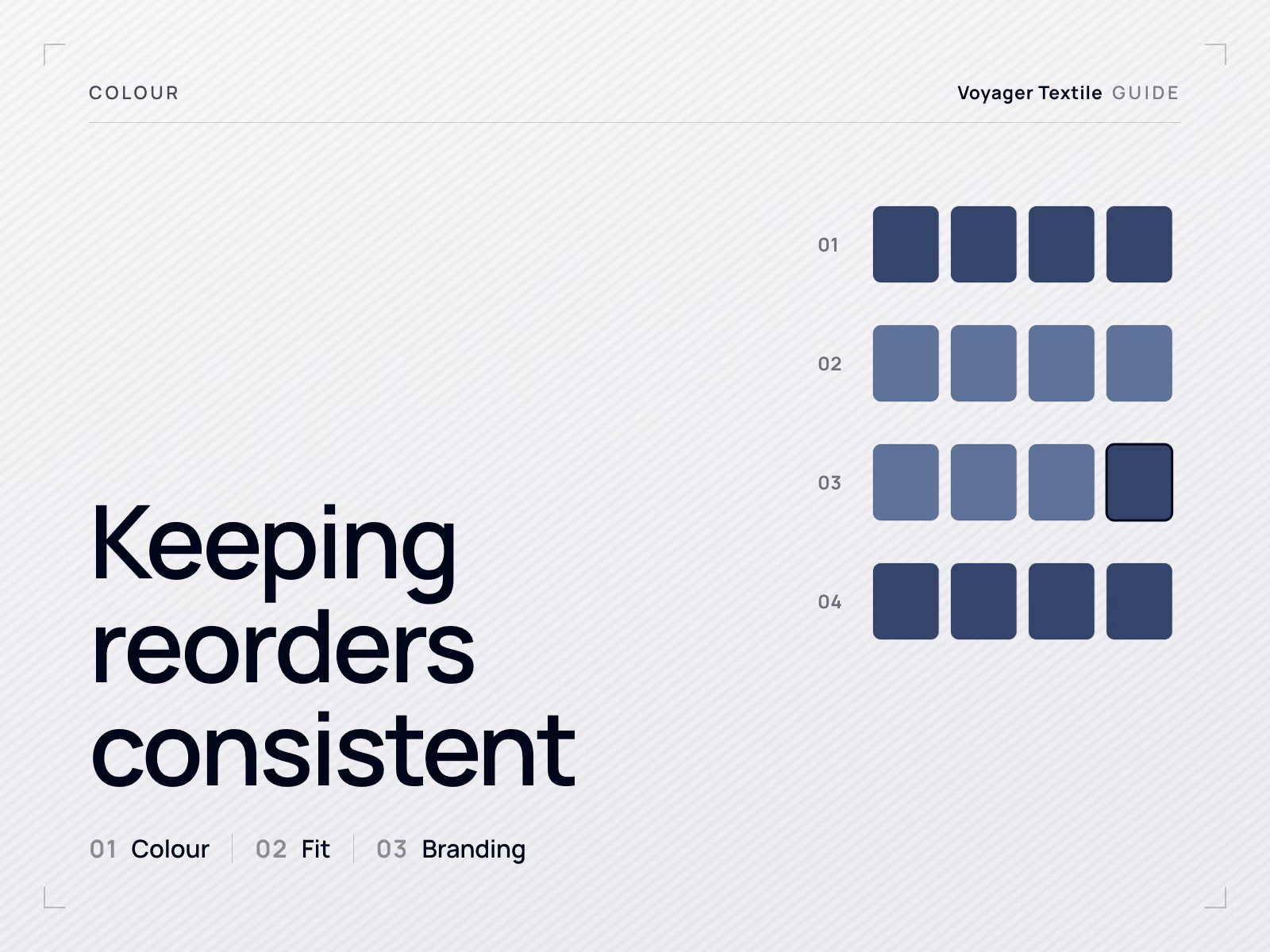
Two decisions protect this. Dye the fabric for the whole programme in one lot where quantities allow, which eliminates variation for that period. And keep an approved physical colour standard so later orders are matched to it rather than to a Pantone chip. Custom Pantone colour production at Voyager Textile starts at 300 pieces, and the mechanics are covered in the colour matching guide and the reorder consistency guide.
Branding that works across items
A programme usually spans several garments: a polo, a hoodie, a jacket, perhaps a cap. The same logo will not be applied the same way on all of them, because fabric and construction differ. Embroidery suits polos and jackets, while a print may be preferable on a lightweight tee.
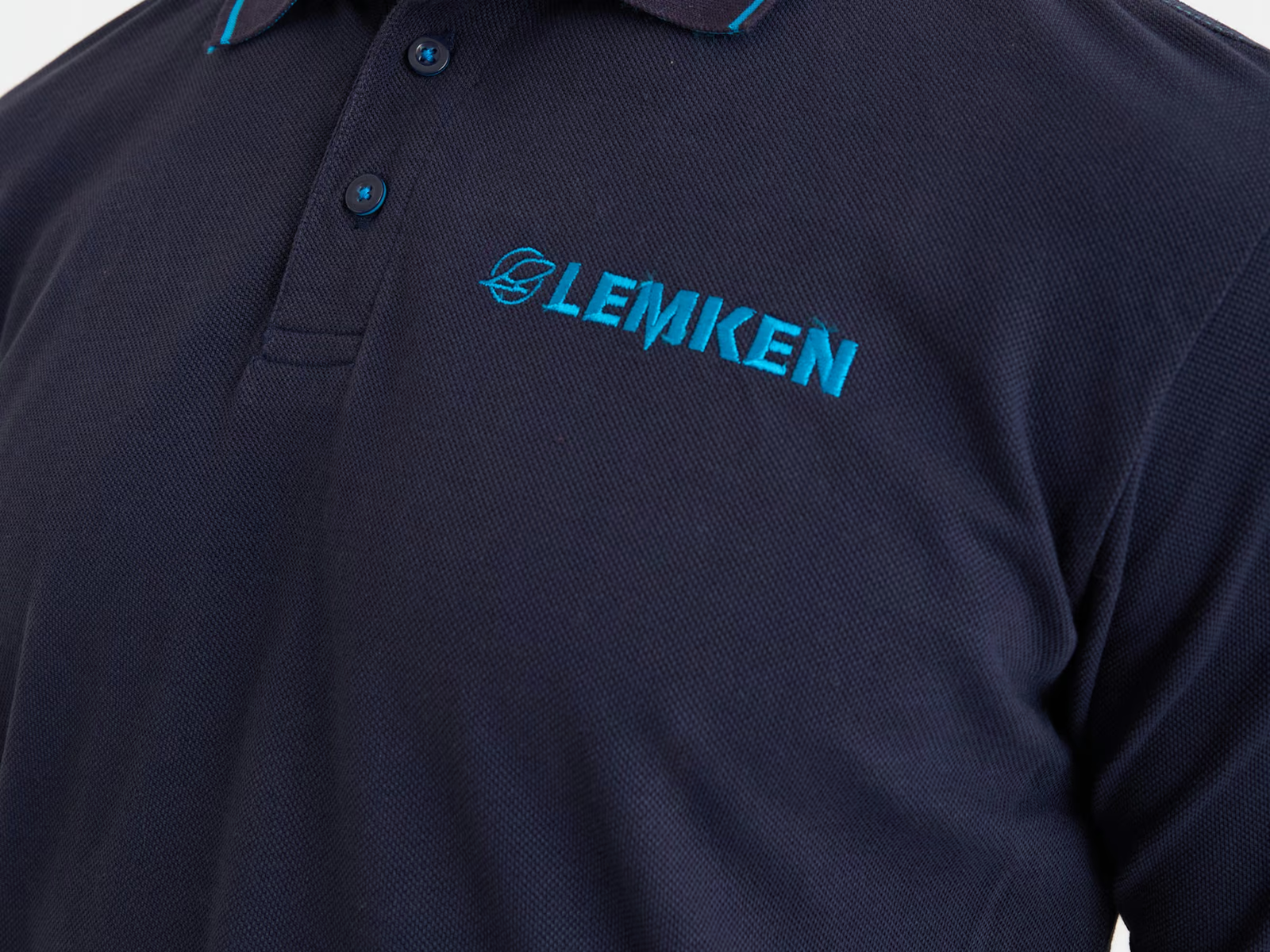
- Agree the logo size and position for each garment type, in centimetres from a fixed point.
- Decide whether the logo colour changes on dark and light garments, and approve both versions.
- Approve a stitch-out for embroidery and a strike-off for printing, on the actual fabrics.
- Record the approved decoration specification per garment so later orders reproduce it exactly.
Method selection is covered in the decoration guide, and file requirements in the artwork guide.
Approvals: agree the process, not just the product
Corporate programmes typically involve marketing for the brand, procurement for the commercial terms, HR or operations for the wearers, and sometimes a works council. Sampling stalls when it is unclear who decides.
- Name one person who consolidates feedback and gives the factory a single answer.
- Set a deadline for each approval stage and treat it as part of the delivery schedule.
- Circulate one sample set rather than sending different people different samples.
- Record approvals in writing with a date and a specification version.
Approval delay is a common cause of a missed date, as set out in the lead time guide.
Event programmes have a hard deadline
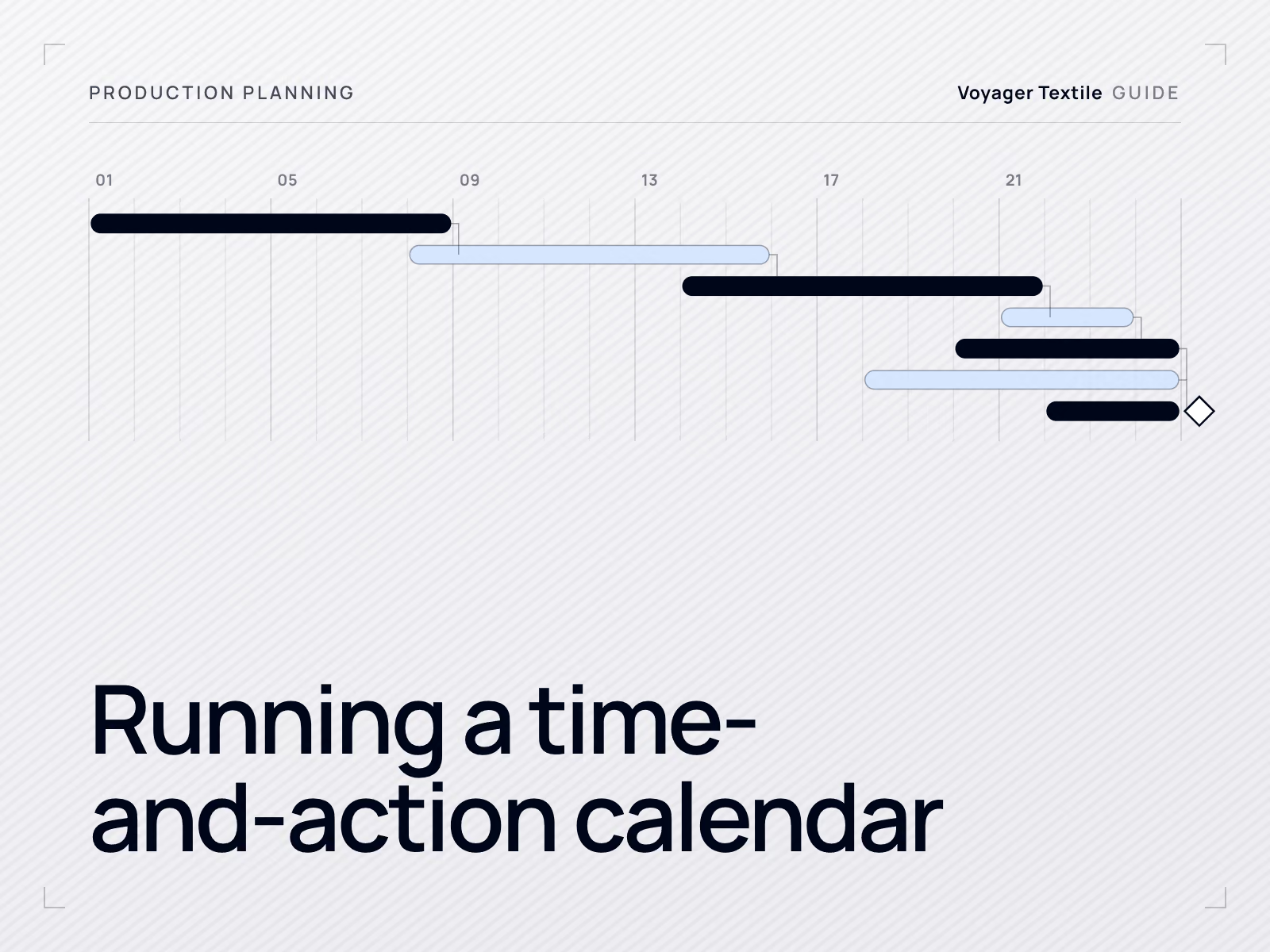
A conference or launch date does not move, so an event programme is planned backwards from it, the mechanics of doing that are in time-and-action calendars, with more contingency than a normal order: transport, customs clearance, packing, production, sampling and colour development all need their own allowance.
- Work backwards from the event date and add a buffer for clearance at the destination.
- Prefer available fabrics and stock colours when the timeline is tight, keeping custom colour for programmes with more room.
- Order a modest overage in the most-used sizes. Running out at an event is more expensive than a few spare garments.
- Confirm delivery address and receiving hours at the venue or warehouse early, since event venues often have narrow delivery windows.
Distribution and packing
How goods are packed decides how much work your team does after delivery. Specify it before production finishes rather than sorting cartons on arrival.
| Distribution model | Recommended packing |
|---|---|
| One central warehouse | Solid cartons by style, colour and size, clearly marked |
| Several sites | Cartons pre-packed per site to that site's size breakdown |
| Individual allocation | Individually bagged with name or size labelling, grouped per site or department |
| Event delivery | Packed by day, session or team, with clear external marking |
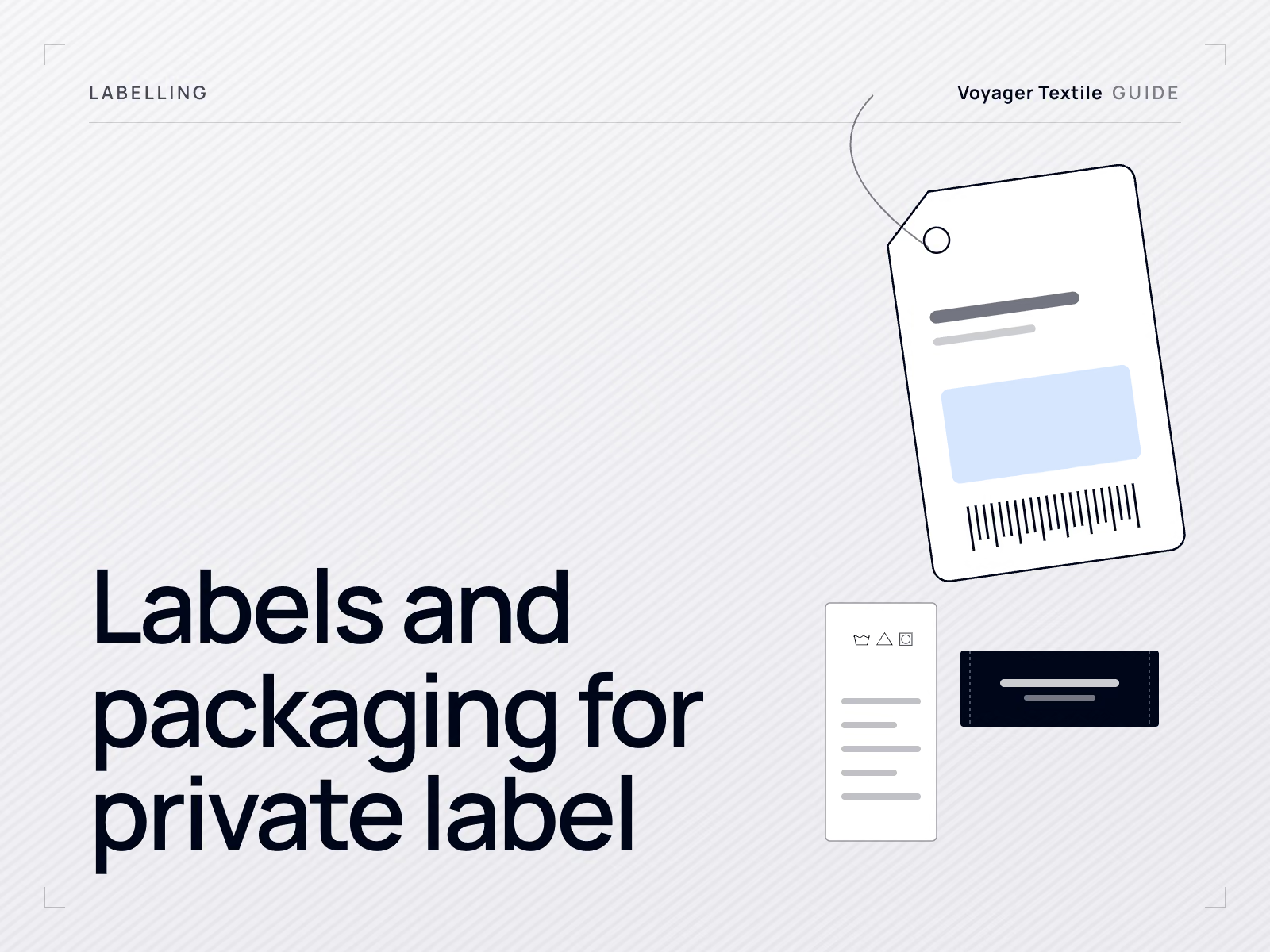
How a programme is boxed, marked and split between sites is a distribution decision as much as a packing one, and the options are set out in the labels and packaging guide.
Plan the replenishment model
A programme is a relationship rather than a purchase. Decide up front how repeat orders will work, because it determines fabric planning and price.
- Scheduled repeat orders, for example twice a year, with fabric booked for the whole programme.
- Buffer stock held by you, replenished when it falls below an agreed level.
- On-demand orders, which are the most flexible and the least predictable in price and lead time.
Whichever you choose, note that repeat orders are subject to the same minimums as first orders, since each needs its own fabric and production run. See the MOQ guide.
A realistic first-year plan
- Define groups, garments and headcount, then confirm the budget.
- Select fabric and colour approach, and decide whether custom colour is justified.
- Sample the garments and run a try-on session with a representative group.
- Confirm the size split from the survey and the try-on, not from a standard curve.
- Approve decoration on each garment type, with physical proofs.
- Place the bulk order, including buffer stock for new starters.
- Agree packing per site and confirm delivery addresses and receiving windows.
- Record the specification, colour standard and approved samples for next year's reorder.
Voyager Textile produces corporate and uniform programmes to specification for procurement teams, clinics, hospitality groups and sports organisations, with approved samples, patterns, colour standards and packing instructions kept on file so follow-up orders reproduce the original. See who we manufacture for.
Questions buyers ask
How do I work out the size split for a company clothing order?
Run a size survey using a measurement chart rather than asking people for their usual size, and confirm it with a try-on session using fit samples. Order buffer stock in the sizes most likely to be needed later rather than spreading it evenly.
Should we offer separate men's and women's cuts?
It depends on the garment and the group. A unisex polo works for many teams; for others, separate cuts materially improve comfort and how often the clothing is worn. Ask the wearers before deciding, since comfort is what determines use.
How do we make sure next year's order matches this year's?
Keep an approved physical colour standard and a sealed approved sample, book fabric for the programme where possible, and record the decoration specification per garment. See reorder consistency.
How far ahead should we plan for an event?
Work backwards from the event date through transport and customs clearance, packing, bulk production, sampling and colour development, then add a buffer. For a new product with custom colour, that usually means starting months rather than weeks in advance.
Can garments be packed separately for each office?
Yes. Cartons can be packed per site to that site's size breakdown, or individually bagged and labelled per person. Specify it before packing begins, because repacking a finished order afterwards is slow and expensive.
What is the minimum for a corporate clothing order?
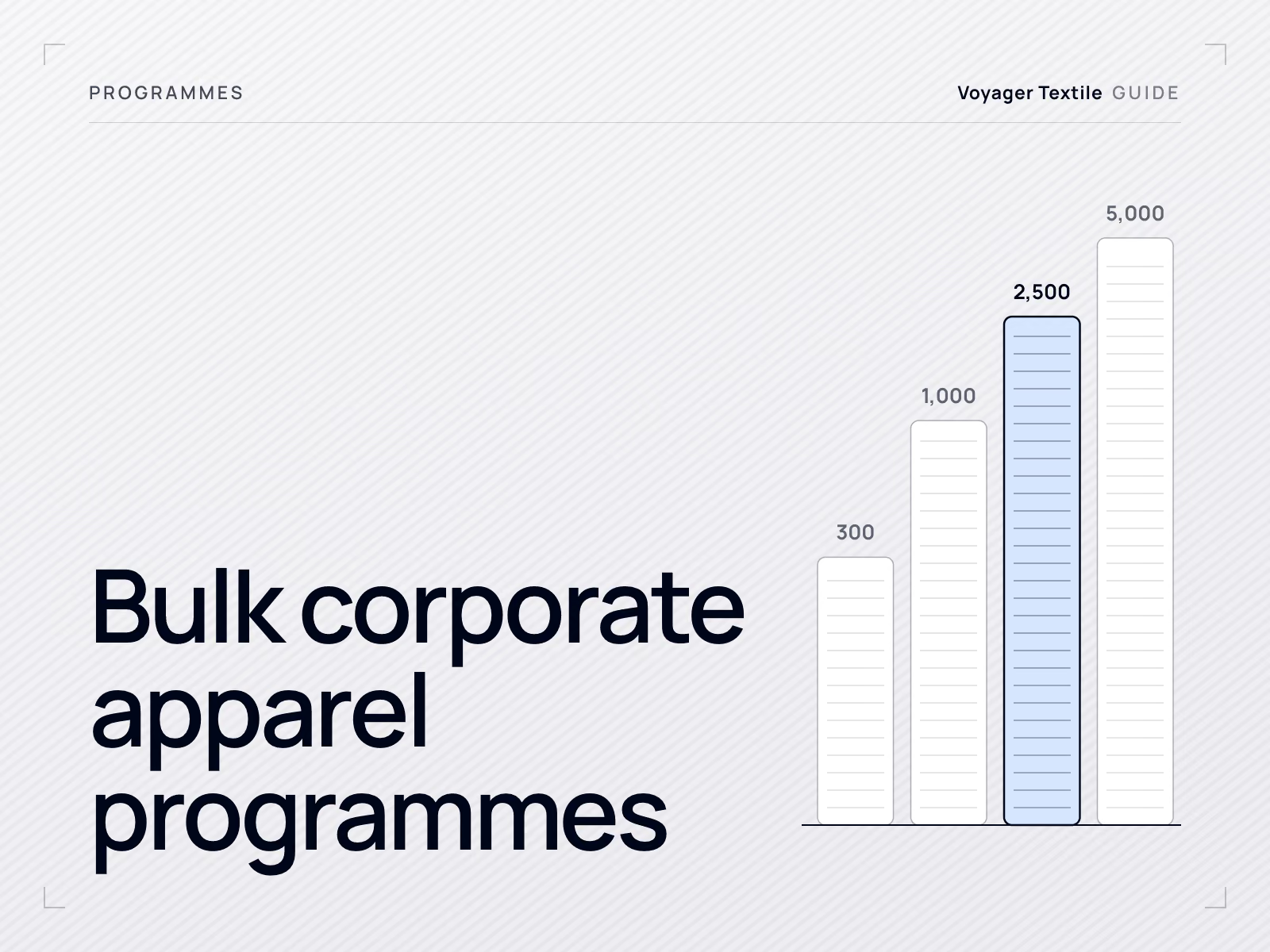
Custom apparel production at Voyager Textile starts at 300 pieces per colour and per style, and the same figure applies to custom Pantone colour production. Plan the annual quantity rather than the first delivery, because each repeat order needs its own fabric and its own production run and is therefore subject to the minimum again.
How do we handle new starters during the year?
Either hold buffer stock in the most likely sizes or agree a scheduled repeat order, ideally both. Decide before the first order, because it changes how much fabric should be booked.
Plan the programme, not just the first order
Tell us the headcount, the garments and how often you expect to reorder. We will propose fabric and colour planning that keeps year two matching year one, and quote the whole programme rather than one delivery.
Discuss a corporate programme