Programme types
Custom-Made Apparel vs Branded Blanks for Merchandise Buyers
Blanks win on speed, small quantities and low risk. Custom manufacturing wins when the product itself has to be different: your fabric, your fit, your exact brand colour, your labels. The decision point is usually the quantity at which decorated blanks stop being cheaper and start being merely easier.
Contents
Many merchandise and promotional programmes start with blanks: buy a stock garment, add a logo, deliver. It is a good model, and for a large share of projects it remains the right one. The difficulty comes when a client wants something their competitor cannot order from the same catalogue, or when the colour on the brand guidelines does not exist on any blank supplier's shade card.
This guide is about where that line sits, and what actually changes when you cross it.
What is cut and sew?
Cut and sew is garment production in which fabric is cut into pieces from a pattern and the pieces are sewn together into the finished garment. It differs from fully-fashioned knitting, where panels are knitted to shape, and from seamless knitting, where a machine knits the garment as a tube with few or no seams. It also differs from decorating blanks, where a ready-made garment only receives a print or embroidery. Voyager Textile makes cut-and-sew garments to your pattern, fabric and colour; seamless knitting is not offered.
What each model gives you
| Decorated blanks | Custom manufacturing | |
|---|---|---|
| Speed | Fastest. Stock exists, only decoration is needed | Slower. Development, sampling and production take weeks |
| Minimum quantity | Very low, often single pieces | A few hundred pieces per style in most cases |
| Fabric | Whatever the supplier stocks | Chosen or developed to your specification |
| Colour | Limited to the supplier's shade card | Custom Pantone colour production, from 300 pieces per colour and per style at Voyager Textile |
| Fit | The supplier's block, shared with everyone else | Your pattern, your proportions |
| Labels | Relabelling at best, with limits | Full private-label set, woven labels and hangtags |
| Differentiation | The logo only | The product itself |
| Repeatability | Depends on the supplier keeping stock | Depends on your own planning, which you control |
| Risk | Low. Buy what you need | Higher. You commit to a production quantity |
When blanks are clearly right
- The quantity is genuinely small, or the requirement is urgent.
- The product is a giveaway where the logo is the whole point.
- The client's brand colours are close enough to a stock shade.
- Reordering unpredictably in small quantities is more important than product identity.
- The budget will not support development, sampling and a production minimum. In practice this is the white label model, explained alongside the alternatives in the OEM, ODM and private label guide.
When custom manufacturing starts to make sense
- The colour has to be exact. A brand colour that does not exist on a blank shade card can only be achieved by dyeing fabric to it.
- The fabric matters. A specific weight, hand-feel or composition, for example a heavyweight fleece or a performance polyester, that the blank range does not offer.
- The fit is part of the product. Oversized, cropped, longline or a specific silhouette that stock blocks do not provide.
- Full private labelling is required. Woven brand labels, care labels in your format and your own hangtags, rather than a relabelled stock garment.
- Volume is high enough that the blank supplier's margin is significant. At that point you are paying a distribution markup on every piece.
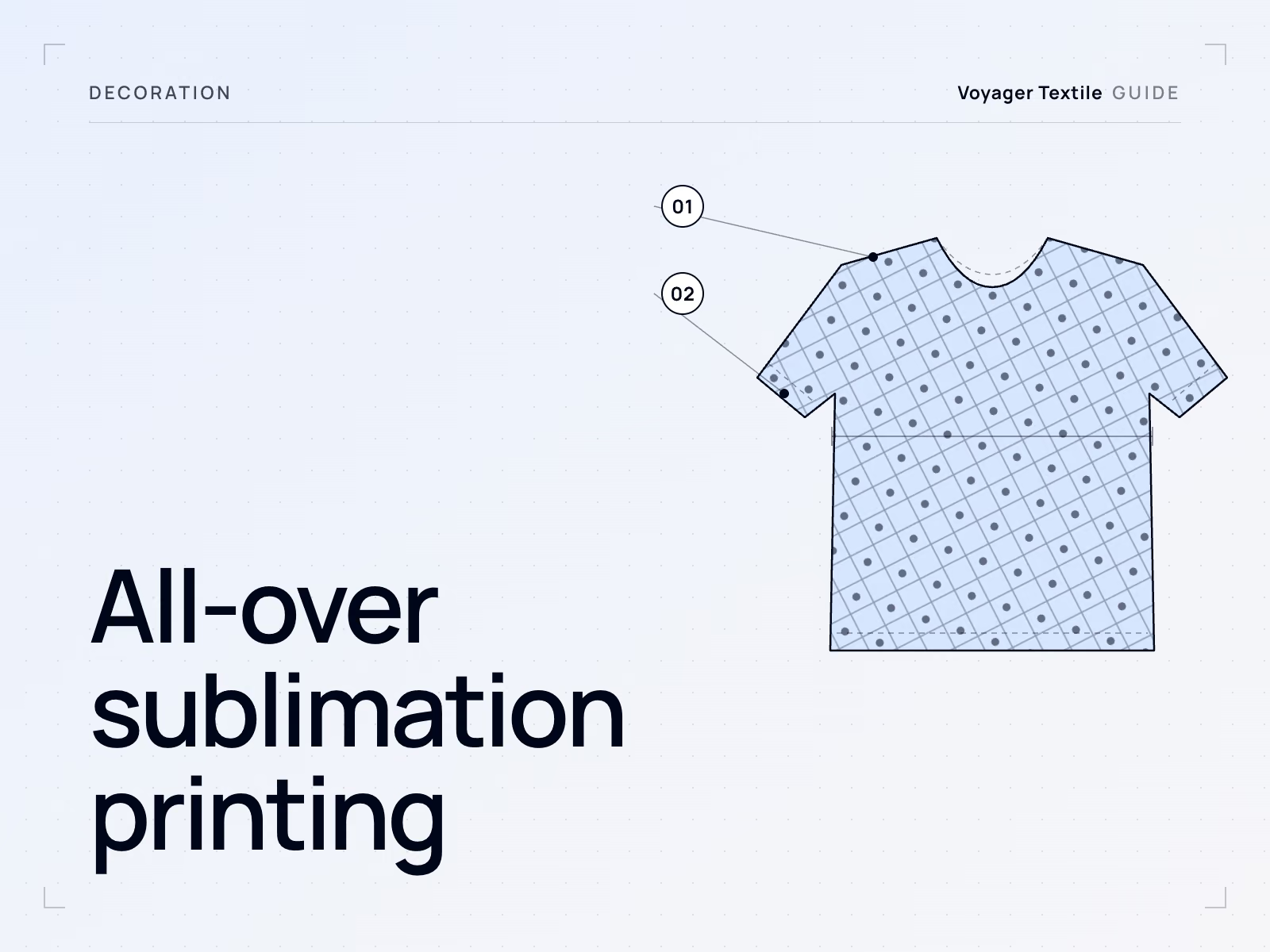
- The design cannot be applied to a finished garment. Full-coverage or across-seam graphics require all-over sublimation, where panels are printed before assembly.
- The client wants something nobody else can buy. This is the reason that usually decides it.
When a corporate wear programme outgrows catalogue blanks
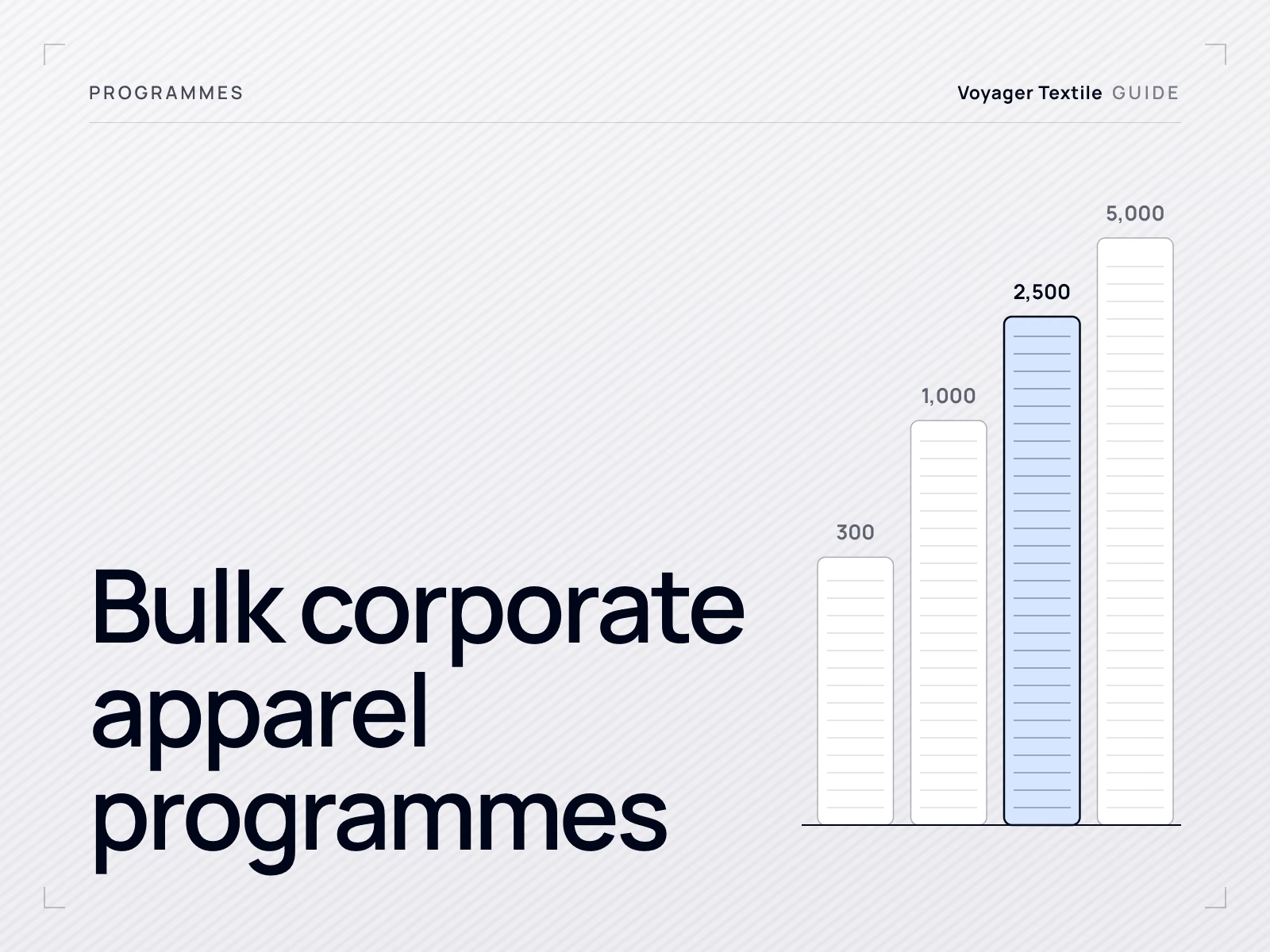
A corporate wear programme outgrows catalogue blanks when the blank starts to dictate the brand instead of carrying it. The usual signals: the stock shade card has no match for the brand colour, a style is discontinued between two reorders, sizes for new staff are out of stock, or several departments need a polo, a softshell and a shirt in one coordinated colour. Custom production answers each of these with a fixed specification: fabric dyed to the Pantone reference, a frozen measurement chart, and approved samples kept on file, so the second year is a reorder of the first. The trade-off is planning. Fabric and production are committed per order, at 300 pieces per colour and per style, so a staff roll-out needs a forecast of starters and replacements. How such a programme is set up is described on the corporate clothing page.
The economics, honestly
At small quantities, decorated blanks are usually cheaper per piece. The blank is produced at enormous scale, held in stock and sold with a modest distribution margin, and you pay only for decoration on top.
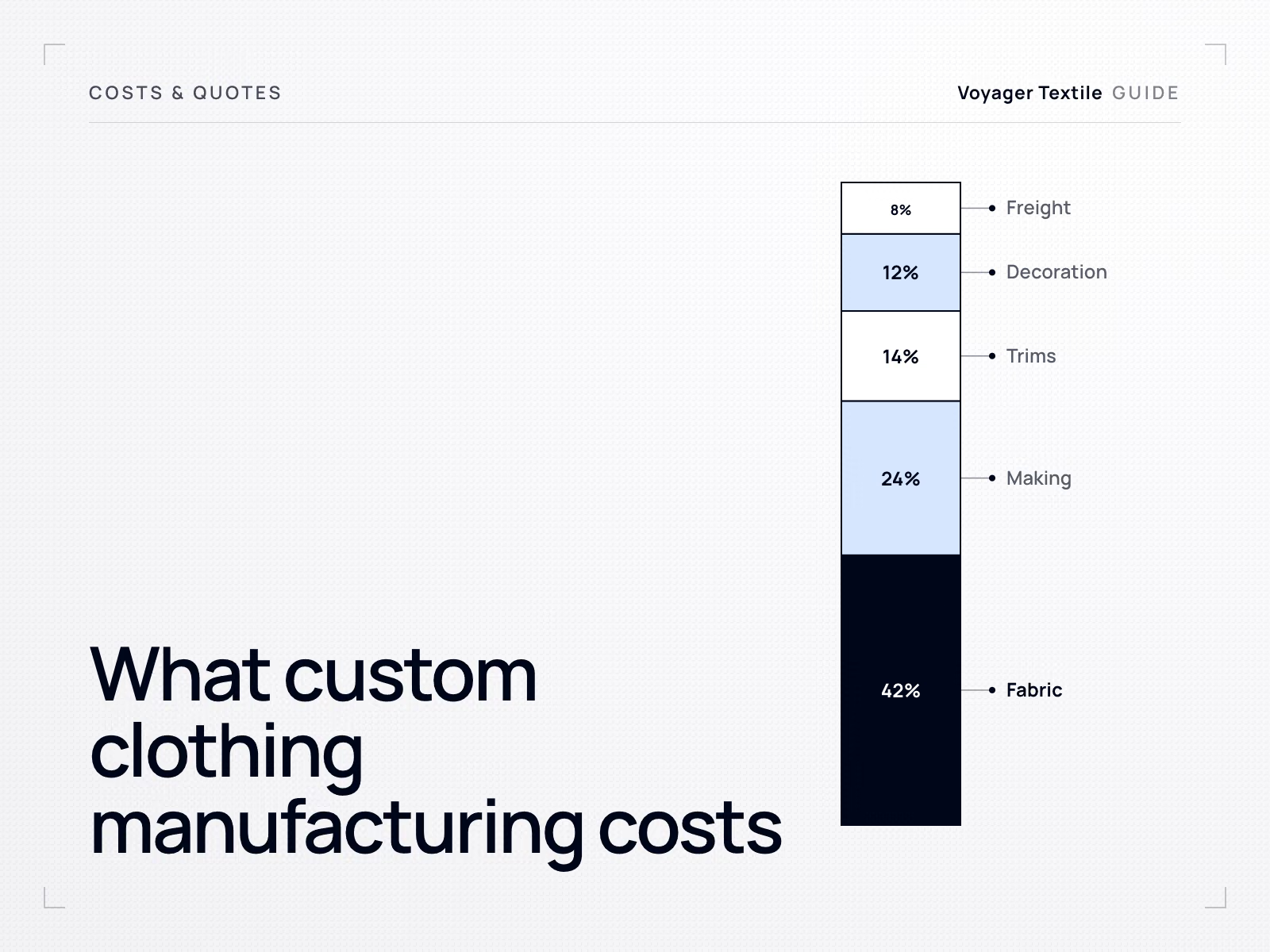
As quantities rise, two things change. The blank supplier's margin becomes a real cost multiplied across thousands of pieces, and custom production spreads its fixed set-up costs over more units. Somewhere in that range custom manufacturing becomes competitive on price, and it arrives with better fabric, correct colour and your own labels rather than as a like-for-like substitute.
Where exactly that point falls depends on the product, the fabric and how much decoration is involved, so the practical answer is to price both for your actual quantity. See the cost guide for what drives the custom side and the MOQ guide for why the minimum exists.
What changes in how you work
| Blanks | Custom | |
|---|---|---|
| Lead time | Days to weeks, driven by decoration | Weeks to months, including sampling and production |
| What you approve | A decorated sample | Fabric, fit, colour, decoration, labels and packing |
| Planning | Order as required | Forecast, book fabric, reserve capacity |
| Who holds stock | The blank supplier | You, or the factory by agreement |
| Reorders | Subject to the supplier's stock | Subject to your own planning and fabric booking |
The stock question is worth thinking through before committing. Custom production replaces a supplier's stock risk with your own, which is manageable with a realistic forecast and phased deliveries, as described in the scaling guide.
A hybrid model that works well
Many agencies run both, and deliberately. Fast, low-volume and unpredictable requirements stay on blanks. Flagship products, recurring annual programmes and anything where the client cares about the product itself move to custom manufacturing.
That split has a commercial advantage beyond cost. A custom product is difficult for a competitor to quote against, because they cannot simply price the same catalogue item with a smaller margin. It changes the conversation from price per unit to product.
Own-spec blanks for decorators and distributors
An own-spec blank is an unbranded garment made to the buyer's own specification, which the buyer then decorates or passes to its decorators. Voyager Textile holds no stock blanks: every own-spec blank is produced to order, at 300 pieces per colour and per style, with sizes split inside that quantity. For a decorator or a promotional distributor, the gain is control over what a catalogue blank fixes: fabric and weight, the fit block, neck and hem finishes, a neck label without a third-party brand, and a colour range chosen for the decoration method that follows. Send with the RFQ: composition and weight, the measurement chart, colours as Pantone references, label and packing requirements, and the planned decoration, so the fabric suits it. Programmes for resellers are described on the promotional textiles page and the merch page.
How to move a client from blanks to custom
- Start with one product, usually the highest-volume item in the programme.
- Use the existing blank as the reference garment: it defines the fit, and you can specify what to change.
- Fix the fabric and colour first, since those are the two visible improvements a client notices immediately.
- Sample properly and let the client handle the sample next to the blank they have been buying.
- Plan the first order at a realistic quantity rather than the minimum, so the unit price reflects the model fairly.
- Keep the specification, patterns and colour standards on file so the second year is a reorder rather than a project.
Voyager Textile works with promotional product agencies, merchandise companies and marketing teams on exactly this basis, producing to specification from 300 pieces per colour and per style. Previously produced merchandise references are in the catalogue, and the reference catalogue is often the fastest way to define a starting construction.
Questions buyers ask
Is custom manufacturing more expensive than decorating blanks?
At small quantities, usually yes. As volumes rise the gap narrows, because you stop paying a distribution margin on every piece and fixed set-up costs are spread over more units. Price both for your actual quantity rather than assuming either answer.
What is the minimum quantity for custom merchandise apparel?
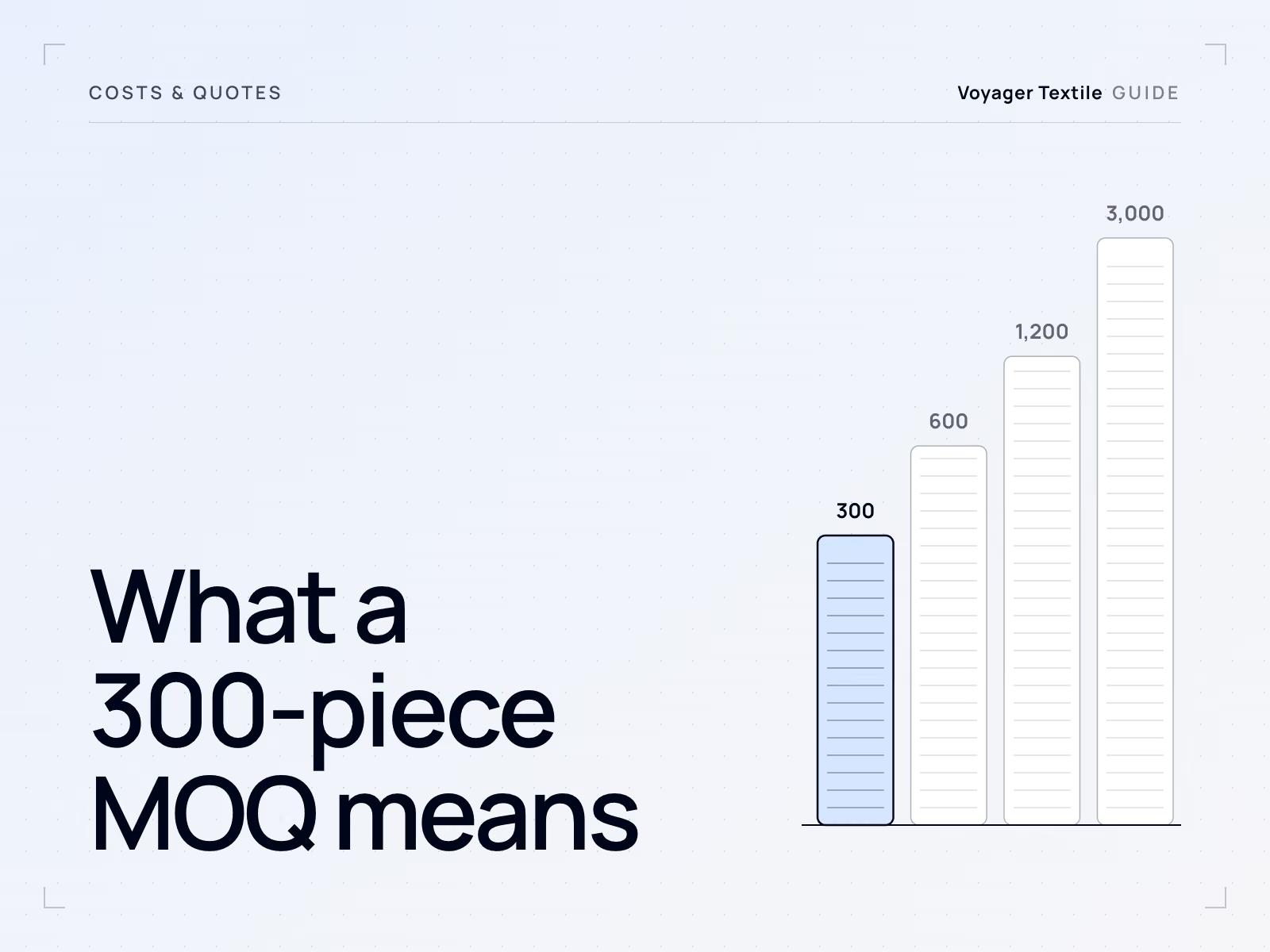
At Voyager Textile, 300 pieces per colour and per style, including custom Pantone colours and all-over sublimation. Blanks have no meaningful minimum, which is exactly why they suit small and urgent requirements.
Can I get a blank in my exact brand colour?
Only if it happens to exist on the supplier's shade card. An exact brand colour requires dyeing fabric to your reference, which means custom production. See Pantone colour matching.
Can I relabel a stock blank with my own brand?
Sometimes, within limits set by the blank supplier, and it is labour that has to be paid for. It also produces a garment that is still the same product underneath. Custom production gives you the full label set as part of manufacturing rather than as a modification.
How much longer does custom production take?
Weeks rather than days. Development, sampling and approvals come first, and bulk production at Voyager Textile typically takes 4 to 5 weeks after sample approval, plus transport. See the lead time guide.
Should an agency keep using blanks for some products?
Usually yes. Urgent, small and unpredictable requirements are what blanks are for. Move the recurring, high-volume or brand-critical products to custom production, where the difference is visible to the client.
Price one product both ways
Send us the blank you currently buy, the quantity and the client's requirements. We will quote a custom version with the fabric, colour, fit and labels you actually want, so you can compare the finished products rather than the garment prices.
Request a custom quotation