Specification, sampling and quality
Apparel Quality Control Explained: AQL, Tolerances and Testing
Apparel quality control includes in-process checks, final inspection and testing of relevant material and garment properties. Define the specification, tolerances, inspection plan and test criteria together; an approved sample is one of the references used.
Contents
Assess garments against the agreed specification, approved references, tolerances, test criteria and applicable requirements. Define these before production so acceptance decisions have a documented basis.
This guide covers what to define before production and how the three layers of checking fit together. It is product quality rather than social compliance, which is assessed separately and is covered in factory audits.
The three layers
| Layer | When | What it catches |
|---|---|---|
| Inline quality control | During cutting and sewing | Construction errors, seam faults and measurement drift while correction is still cheap |
| Final inspection | When the order is finished, before packing or shipment | Appearance, measurements, decoration, labelling, packing and workmanship against the approved sample |
| Laboratory testing | At stages and intervals set by the product requirements, material changes and agreed risk-based test plan | Shrinkage, colourfastness, pilling, strength and composition, which cannot be judged by eye |
The layers are not interchangeable. A final inspection cannot tell you whether a fabric will shrink, and a laboratory test cannot tell you whether the sleeves were set correctly. A fourth check sits before all of them, when the fabric arrives, and it is covered in incoming fabric inspection. At Voyager Textile every order is checked inline during sewing and piece by piece at final quality control against the approved sample and the customer's specification.
What AQL actually means
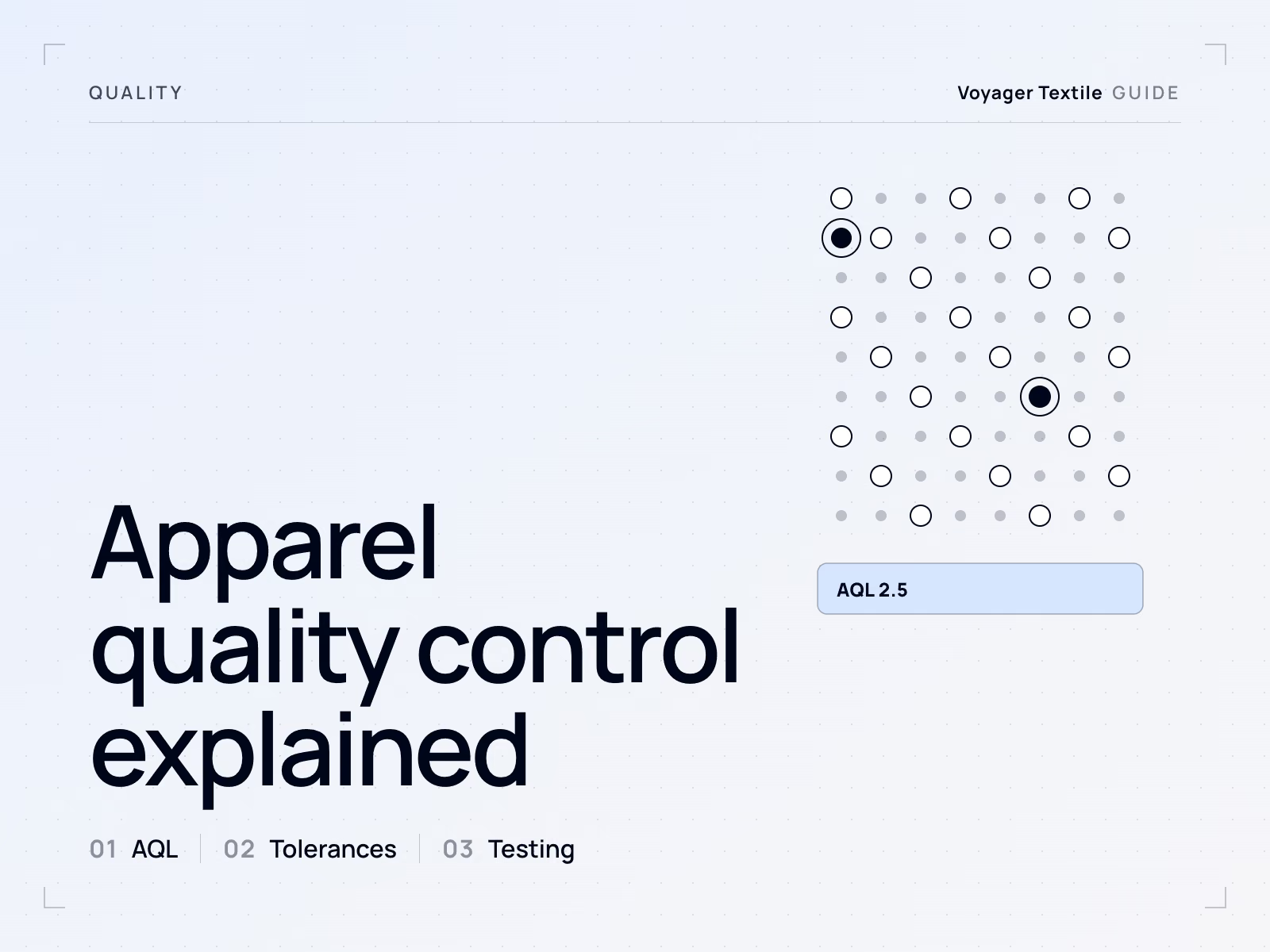
AQL stands for Acceptance Quality Limit. It is a parameter used in acceptance sampling schemes such as ISO 2859-1, not the entire inspection plan. Lot size, inspection level and the selected scheme also affect sample size and acceptance criteria. Agree whether the plan counts nonconforming units or individual nonconformities.
AQL-based sampling supports lot acceptance decisions; product requirements still define what counts as a nonconformity. Agree the sampling plan and defect classes according to product risk and applicable requirements. A passed sample inspection does not prove every unit is defect-free. Use the results as part of a longer-run record, as described in building a supplier scorecard.
In practice, buyers set separate limits for different defect classes. A common commercial arrangement is zero tolerance for critical defects, a tighter limit for major defects and a looser one for minor defects. Agree the exact numbers with your supplier or inspection company and put them in the order, rather than referring to AQL as though it were a single fixed setting.
Classifying defects before you argue about them
- Critical. Renders the product unsafe or unsellable, or breaches a legal requirement. A broken needle left in a garment, or a missing legally required label. Sampled visual inspection is a poor instrument for the first of those, which is why it has a control of its own.
- Major. A defect a customer would notice and reject: a visible stain, a broken seam, a misplaced print, a measurement outside tolerance.
- Minor. A deviation from the agreed requirements that does not materially affect use or appearance, such as a loose thread classified as minor in the inspection criteria. A shade difference within the agreed tolerance is not a defect on that basis alone.
Write down which category your product's likely faults fall into, especially anything specific to your design. If a print position 1 cm out is a major defect for you, say so, because that is not universal.
Measurement tolerances are half of quality control
Set target measurements, measuring methods and tolerances before production. These define acceptance criteria, but cutting, sewing, fabric behaviour and finishing still need control to keep garments within them.
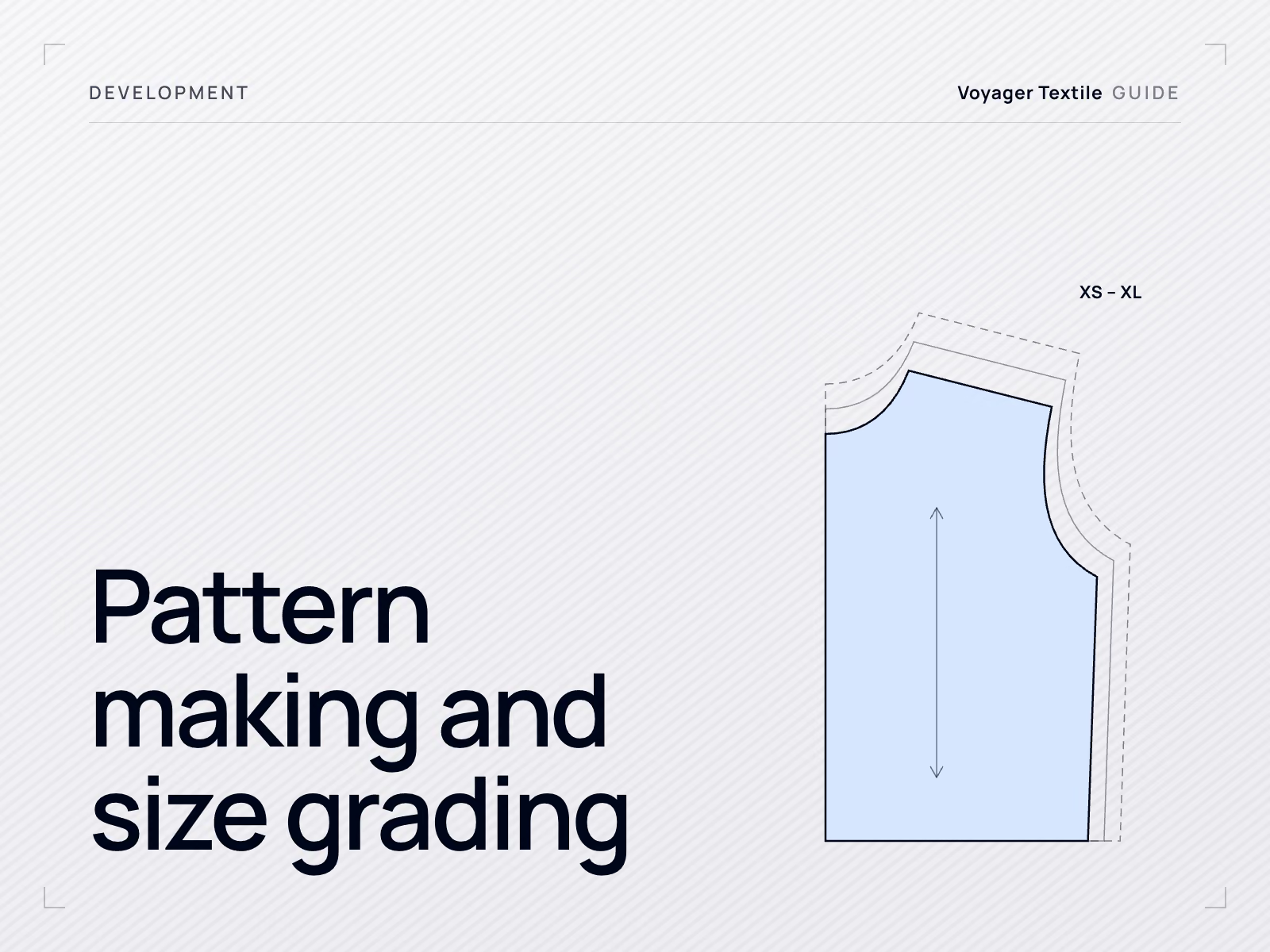
Set tolerances per point of measure according to fit, function, appearance, fabric and construction, and confirm them during sample approval. See pattern making and grading for how to build the chart.
Laboratory tests worth specifying
These are quality and care questions. Where a garment carries a performance claim, that is a third family again, with its own properties and methods, set out in performance claims.
| Property | Why it matters | Commonly specified as |
|---|---|---|
| Dimensional stability, or shrinkage | Decides whether the garment still fits after washing | Washing to a defined domestic wash procedure, with change in dimensions measured before and after |
| Colourfastness to washing | Prevents colour loss and staining of other garments | Wash fastness testing with an assessment of shade change and staining |
| Colourfastness to rubbing | Prevents colour transferring onto skin or other fabrics | Dry and wet rubbing tests, particularly relevant for dark and saturated shades |
| Colourfastness to perspiration and light | Relevant for sportswear, workwear and outdoor use | Perspiration and light exposure tests, specified where the end use justifies them |
| Pilling and abrasion | Surface appearance after wear, critical for fleece and knitwear | Separate pilling and abrasion methods, with agreed cycles, assessment criteria and endpoints |
| Seam and fabric strength | Structural performance in workwear and heavy use | Seam slippage, seam strength and bursting or tensile strength tests selected for the material and failure mode. See seam construction and failure modes. |
| Fibre composition verification | Confirms the label matches the fabric, which is a legal requirement in the EU and the US | Quantitative composition analysis by an accredited laboratory |
Verify fibre composition against the labelling rules for the EU or United States. Manufacturers, importers and distributors can have duties according to their role and market; agree who supplies the composition data and supporting evidence. Restricted-substance testing addresses chemical content and applicable limits, as explained in chemical test reports.
Who inspects, and when
Agree the factory inspection scope and any independent inspection before ordering, including who appoints the inspector and pays the fees. Independent checks can be useful for new suppliers or higher-risk orders. The handling of rejected goods must also meet applicable requirements, including the EU rules on destroying unsold apparel.
If you use a third party, agree the inspection standard, the sampling level and the defect classification with both the inspector and the factory before the goods are finished. Where a specific defect has already appeared, the production problems references cover what causes each one and where it originated. An inspection carried out against a standard the factory never saw produces a dispute rather than a decision. Voyager Textile's production has been subject to audits and inspections arranged by international customers, and buyer-side inspections are part of normal working practice.
What to define before production starts
- The approved sample, sealed and dated, held by both sides.
- The measurement chart with tolerances for every point of measure.
- The defect classification, including anything specific to your product.
- The inspection standard and sampling level, with acceptance numbers stated.
- Any laboratory tests required, with methods and pass criteria.
- The packing and labelling specification, since these are inspected too.
- What happens to failed goods: rework, discount, replacement, and who bears the cost.
Inspection can check specified safety-related features as well as workmanship, but cannot by itself establish overall product safety. Define the relevant design, material, testing and production controls through product safety documentation, including the requirements for children's apparel safety.
Common mistakes
- Specifying an AQL level without defining what counts as a defect.
- Supplying a measurement chart with no tolerances, then rejecting goods for being out of tolerance.
- Assessing colour under uncontrolled lighting. See Pantone colour matching.
- Testing nothing, then discovering shrinkage after customers have washed the garment.
- Booking a third-party inspection for a date when production will not actually be finished.
- Treating inspection as a substitute for a clear specification. Inspection measures conformity; it cannot create a standard that was never set.
Questions buyers ask
What does AQL mean in garment inspection?
AQL means Acceptance Quality Limit, a parameter used in acceptance sampling schemes such as ISO 2859-1. The complete plan also specifies lot size, inspection level, sampling scheme and acceptance criteria. Define nonconformities and whether you count affected units or individual nonconformities; a passing sample does not establish that every garment is defect-free.
What is the difference between inline and final inspection?
Inline inspection happens during cutting and sewing, when a problem can still be corrected cheaply. Final inspection happens on the finished order, before packing or shipment, and verifies the goods against the approved sample and specification. Both are needed; neither replaces the other.
Which tests should I specify for a cotton t-shirt programme?
Usually shrinkage after washing, colourfastness to washing and to rubbing, and fibre composition verification if you are labelling for the EU or the US. Add pilling for fleece and knitwear and seam strength for workwear. Confirm methods and pass criteria with your supplier and testing laboratory.
Do I need a third-party inspection?
It is worth it for a first order with a new supplier, for large orders and where a rejected delivery would be costly. For established repeat production with a factory that inspects properly and a clear sealed sample, many buyers inspect selectively rather than on every shipment.
How much variation in measurements is acceptable?
Set tolerances before production according to the product's fit, function, appearance, fabric and construction. Agree the measurement method and acceptance criteria with the factory; the tolerances must remain compatible with applicable product requirements.
Who pays if goods fail inspection?
That depends on what you agreed in the order, which is why the failure procedure should be written down in advance: rework, discount, replacement, and who bears the cost and the delay. A clear rule turns a dispute into a process.
Does Voyager Textile inspect every garment?
Every order is checked inline during sewing and inspected piece by piece at final quality control against the approved sample and the customer's specification. Buyer-side audits and third-party inspections are supported as part of normal working practice.
Agree the quality standard before production, not after
Send your measurement chart, tolerance requirements and any testing your market needs. We will confirm what is achievable for your fabric and construction and set the inspection standard in writing before the order starts.
Discuss quality requirements