Buyer reference
Apparel product development: from idea to a production-ready garment
Product development prepares a garment for bulk production. It converts an idea into a specification, a specification into a physical sample, and a sample into an approved reference that production can be measured against. Manufacturing begins where development ends.
Sampling is one part of a sequence that starts with a decision about what the product is and ends with a physical garment that both sides have agreed to reproduce.
Manufacturing steps: manufacturing process references.
The development sequence
Where development starts
These three starting points require different development work and can affect the schedule.
| Starting point | What exists already | What development has to establish |
|---|---|---|
| An idea or a sketch | Intent, references, a target customer | Everything: construction, measurements, materials, fit |
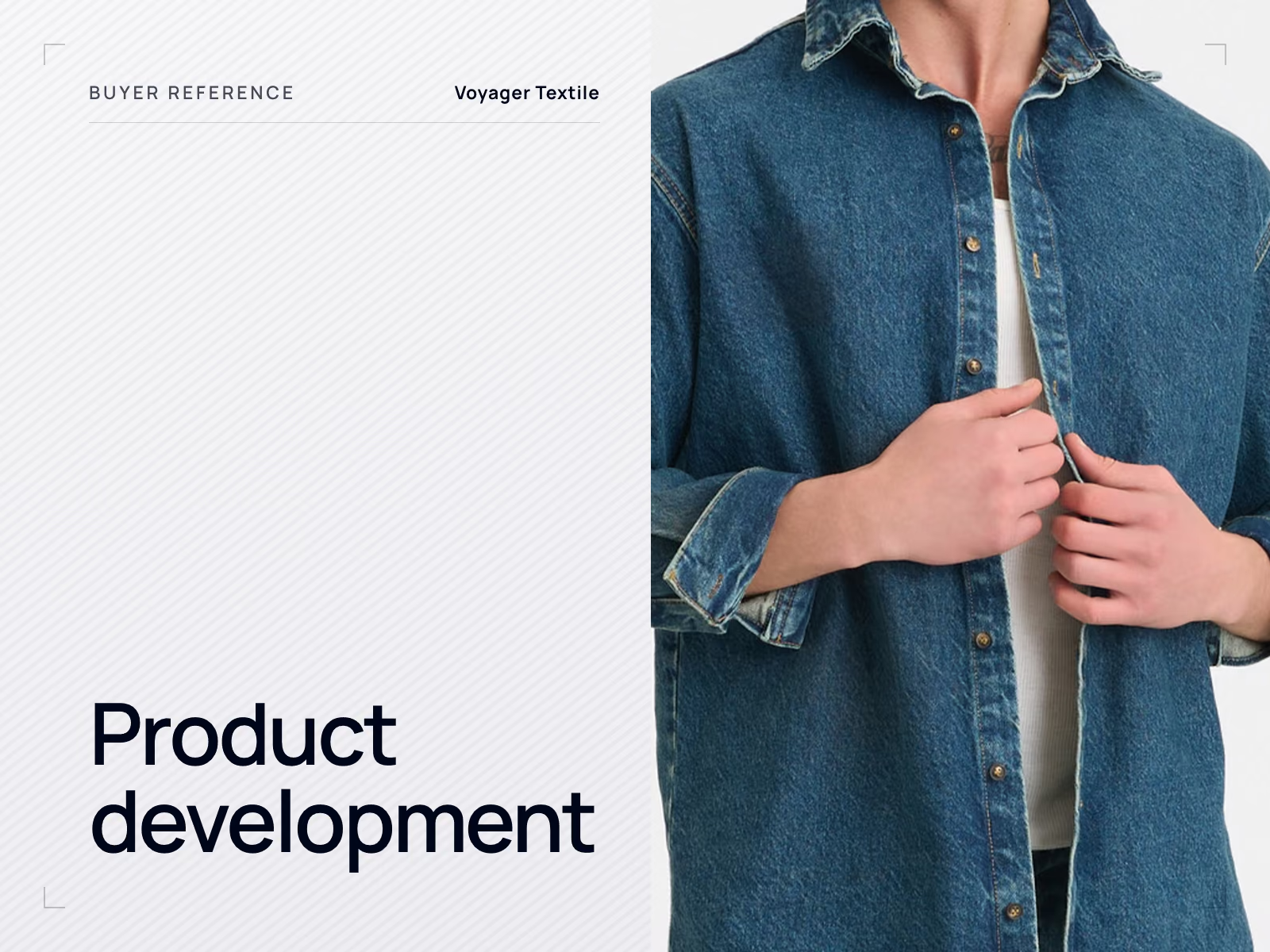
| A reference garment | Construction, proportion, detail, fit direction | Fabric, pattern, tolerances, the specific changes wanted |
| An existing product being improved | A working specification and known behaviour | The changes and their effects on construction, materials and fit |
Reference-garment methods and limitations: manufacturing from a reference garment.
Define the product requirements
The specification gives the brand and factory a shared definition of the garment. Record measurements, tolerances, fabric composition, structure and weight, and decoration positions in centimetres, alongside visual references.
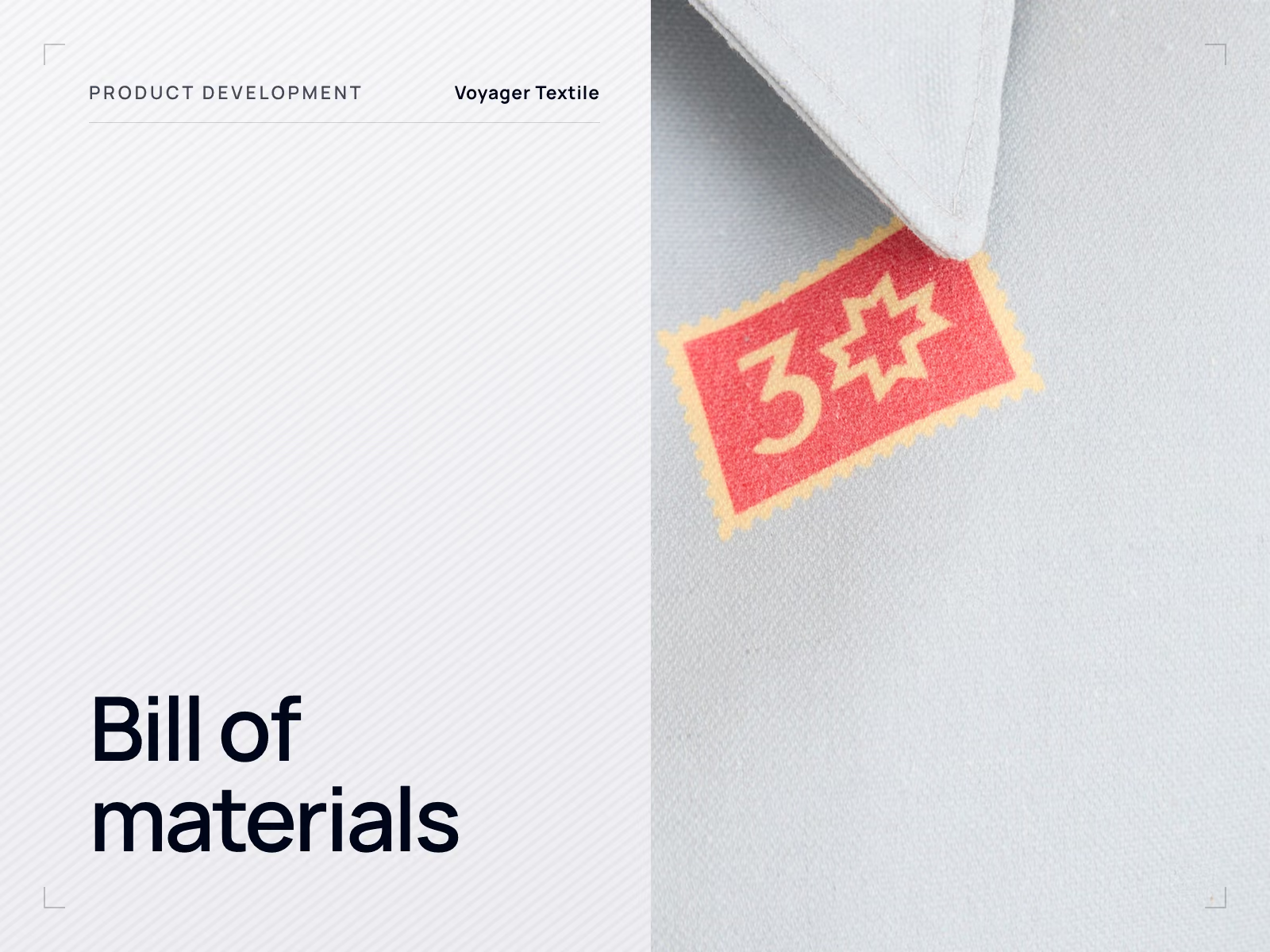
What a factory genuinely needs at each stage, and what can safely be left open at the beginning, is set out in what a clothing factory actually needs. The component list inside it has its own reference in the bill of materials.
Plan materials alongside pattern development
Fabric availability affects the development schedule. A change of fabric can alter drape, stretch, shrinkage and fit, so assess its effect on the pattern before approving the garment.
Practically, the fabric direction should be agreed before the pattern is finalised, and the first sample should be sewn in the intended fabric wherever availability allows. Structures, weights and behaviour are covered in the fabric references.
Prototypes, fit and revisions
The prototype tests construction, appearance and fit. If it uses a substitute fabric, record the limitations of that assessment and confirm the fit in the intended fabric before approval.
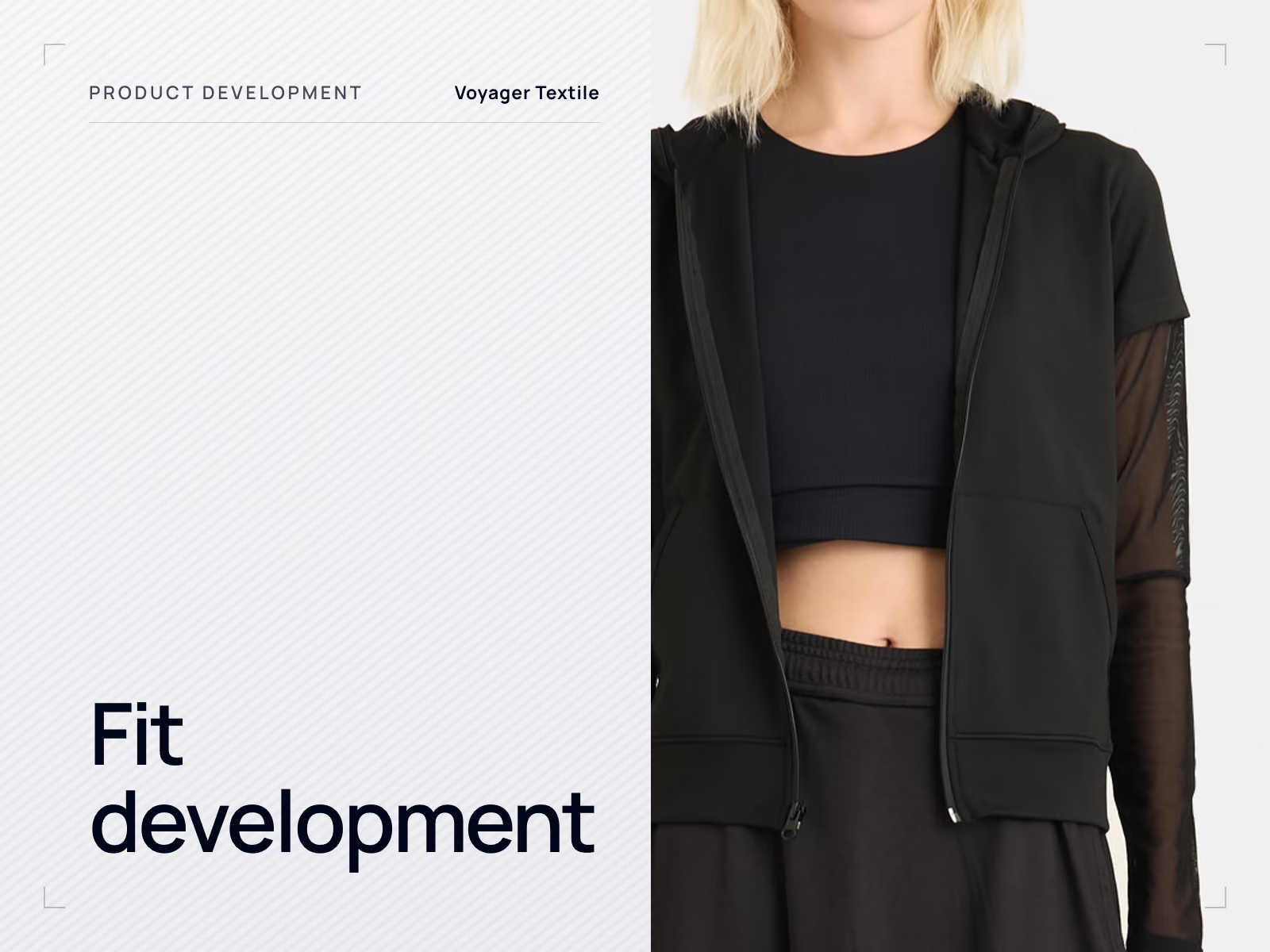
Revision rounds depend on the sample findings and the changes required. How fit is actually developed, and why two garments with the same chest measurement can fit differently, is covered in garment fit development.
The approvals that run alongside the garment
Material and decoration approvals run alongside garment development. Agree which physical samples and digital checks are required. Physical samples are needed to assess properties such as handfeel, stitch quality and colour on the actual material.
| What is approved | The physical proof | Why it cannot wait |
|---|---|---|
| Fabric quality | A swatch, and ideally a sample sewn in it | It decides the pattern and the fit |
| Colour | A lab dip on the actual fabric | Bulk dyeing cannot start without it |
| A strike-off on the actual fabric | Ink behaviour and colour differ by fabric | |
| Embroidery | A stitch-out on the actual fabric | Backing and density are fabric specific |
| Trims and labels | Physical components, in the final artwork version | They have their own minimums and lead times |
The colour mechanics behind lab dips and standards are in the colour matching guide, and file requirements for artwork are in the artwork guide.
Size validation
A fit approved on one size proves one size. Grading extends it across the range, and grading is not proportional scaling: neck width, sleeve length and body width change at different rates. Check intermediate sizes as well as the extremes.
Agree size-validation coverage according to the garment, fit requirements and size range. A loose fit or a small range does not by itself establish that untested sizes will be acceptable. See pattern and grading guide.
Sampling vocabulary is not standardised
Sample names vary between companies. Before approval, agree what each sample must demonstrate and which materials and specification version it represents.
| Common names | The question it answers |
|---|---|
| Development sample, proto, first sample | Can this construction be built as intended? |
| Fit sample | Does it measure and sit correctly? |
| Size set | Does the fit hold across the range? |
| Salesman sample, photo sample, showroom sample | Is it good enough to sell or photograph from? |
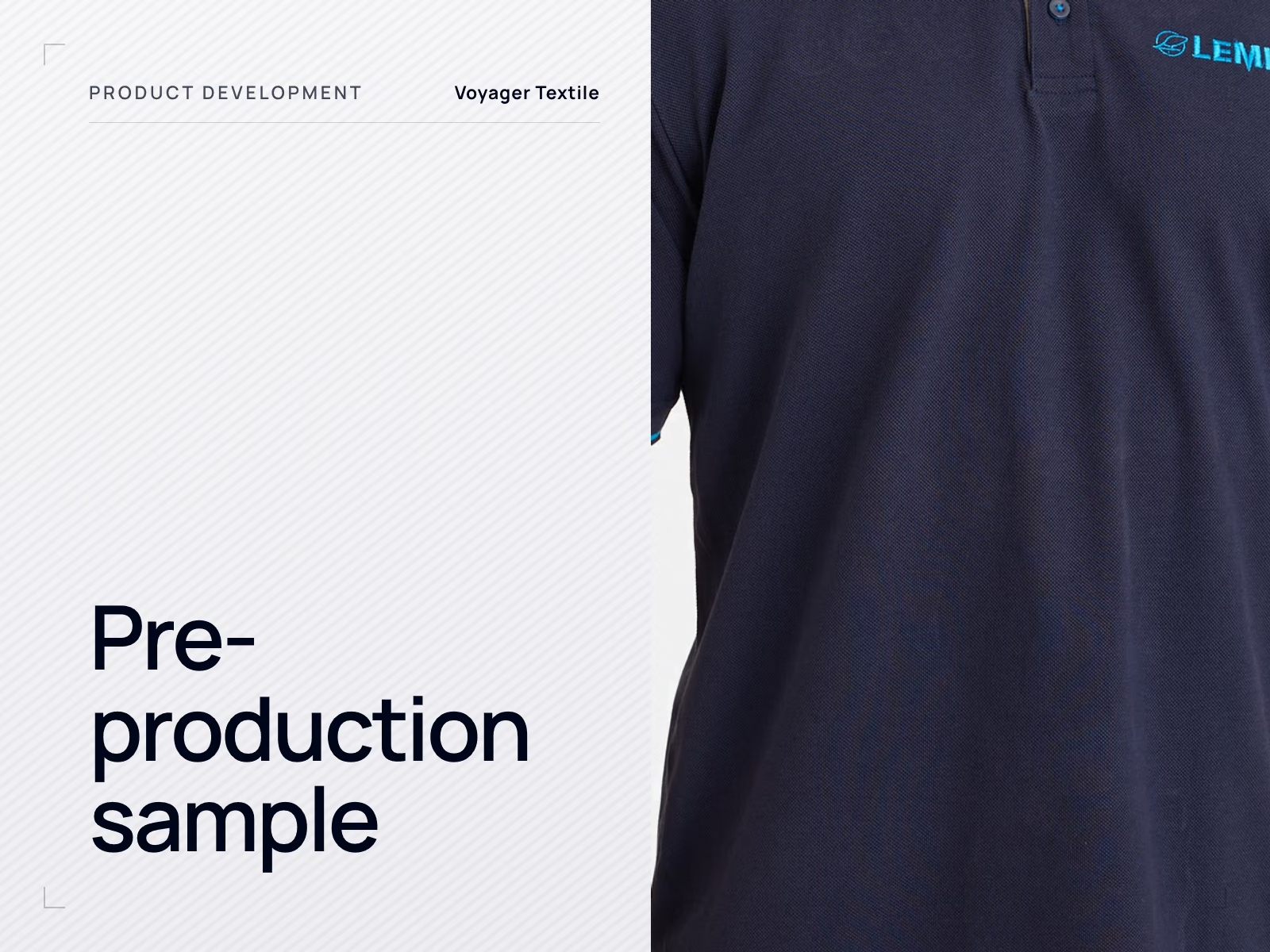
| Pre-production sample, PP sample | Is everything correct in the actual bulk materials? |
| Top of production, TOP, shipment sample | Does the line's output match what was approved? |
When a supplier uses a term you have not agreed, the useful response is to ask which of these questions the sample is meant to answer. The stage sequence is covered in the sampling guide, and the sample that carries the most commercial weight has its own reference in the pre-production sample.
Who does what
Development is a shared process with a clear split
The brand decides
- What the product is and who it is for
- Measurements, fit intent and tolerances
- Fabric direction, or the use the fabric must suit
- Colours, artwork and branding
- Which trims and labels are required
- What is acceptable, at every approval point
The manufacturer decides and delivers
- Whether the specification can be produced as written
- Pattern construction and how the measurements are achieved
- Machine, seam and stitch selection for the fabric
- Which mill and trim suppliers can meet the specification
- How long each stage realistically takes
- Raising anything unclear before it becomes a sample round
How long development takes
Development timing depends on material availability, pattern and sample work, revisions and approvals. Agree the sequence and lead times for the project, and update the schedule when materials or requirements change.
A clear brief and timely, documented approvals help keep development on schedule. See lead time guide.
How this works at Voyager Textile
Incoming specifications are reviewed for manufacturability before quotation, and anything that cannot be produced as written is raised rather than silently adjusted. Development starts from a tech pack, a reference garment or a clear brief. Bulk production typically takes 4–5 weeks after sample approval, depending on the product and project. Development, sampling and shipping require additional time. Approved samples, patterns and colour standards are kept on file so that a later order starts from the approved version rather than from the beginning.
Buyer questions
What is apparel product development?
The work that turns an idea into a garment a factory can reproduce: specification, material direction, pattern making, prototypes, fit evaluation, colour and artwork approvals, size validation and a pre-production sample. Manufacturing starts after it, using the approved sample as the reference.
How is product development different from manufacturing?
Development establishes what the product is; manufacturing produces it repeatedly. A factory can only manufacture consistently against a specification and an approved sample, which is what development exists to create.
How many samples does a new product need?
The number depends on the design, materials, fit requirements and review findings. Agree which samples are needed to check construction, fit, the size range and pre-production readiness, and plan revisions around the issues identified.
Can development start without a tech pack?
Yes. A reference garment with a list of changes, or measurements with clear photographs and a stated intent, is a workable starting point. What cannot be skipped is the decision-making: a factory can propose, but someone on the buyer's side has to approve.
When should fabric be decided?
Before the pattern is finalised, and ideally before the first sample is sewn. A change of fabric can alter drape, stretch, shrinkage and fit, so assess its effect on the pattern before approving the garment.
What ends product development?
An approved pre-production sample in bulk materials, with the specification version it corresponds to recorded. From that point the reference is physical, and production is measured against it rather than against the document alone.
Starting a new product?
Send what exists so far, whether that is a tech pack, a reference garment or a description. We review it for manufacturability, tell you what is still open, and set out what each development stage will need.
Start a development enquiry