

Reference
Apparel manufacturing glossary
The vocabulary that appears in tech packs, quotations and inspection reports, defined in one sentence each and followed by what the term actually changes for a buyer or a factory.
Follow the linked guides for more detail on the terms relevant to your project.
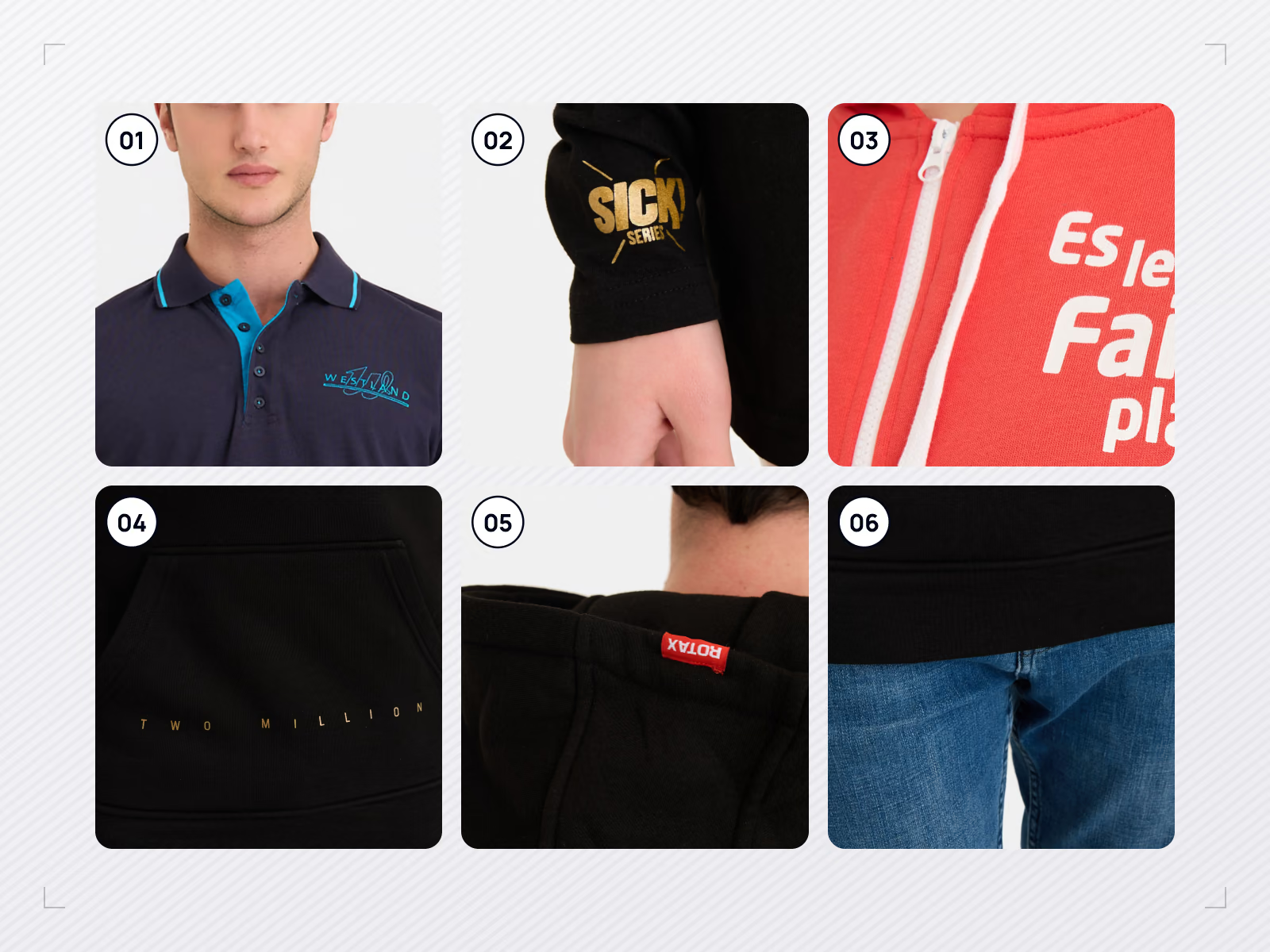
112 terms
Product development
The documents, samples and pattern work that turn an idea into something a factory can make repeatedly.
- Anorak
An anorak is a hooded jacket from a wind- and water-resistant shell, traditionally pulled on over the head through a half-length zip or placket; it is a raincoat only when the fabric is waterproof and the seams are sealed.
For a quotation, name the pull-on or full-zip opening and the level of water resistance you need, because shell fabric and seam sealing change the cost more than the name does.
Rain jacket and windbreaker manufacturing- Bib-and-brace trousersalso bib overalls, dungarees
Bib-and-brace trousers are work trousers with a front bib and adjustable shoulder straps, the braces, that cover the chest while leaving the arms free.
They are specified like work trousers, with fabric weight, reinforced knees, knee-pad pockets and tool pockets, plus the strap buckles and side openings that let the wearer put them on over other clothing.
Private label workwear- Bill of materialsalso BOM
The itemised list of every material and trim that goes into a garment, with the specification, colour, placement and supplier for each.
Missing BOM lines are a common cause of a late order, because trims are bought separately and often have longer lead times than the fabric.
Building a bill of materials- Bomber jacketalso flight jacket
A bomber jacket is a short, front-zip jacket gathered at the waist and cuffs with rib knit, usually lined and often lightly padded.
The rib trims carry much of the look, so their colour match to the shell and their recovery after washing belong in the specification alongside the shell fabric and lining.
Jacket and coat manufacturing- Coverallsalso overalls, boiler suit
Coveralls, also called overalls or a boiler suit, are a one-piece work garment covering body, arms and legs, closed with a front zip or press studs.
In British English overalls can also mean bib-and-brace trousers, so an enquiry should say whether the garment has sleeves. Fabric, pocket layout, knee reinforcement and reflective tape are specified per project.
Private label workwear- Fit intent
The written description of how a garment is meant to sit on the body, such as regular, relaxed with a dropped shoulder, or fitted through the waist.
Two garments can share a chest measurement and fit nothing alike, so the intent has to be recorded alongside the numbers.
Turning intent into an approved fit- Fit sample
A sample made specifically to check how the garment sits on a body or a form, usually in the base size only.
Fit comments have to be written as measurement changes rather than impressions, or the next sample corrects a different problem from the one you saw.
Fit development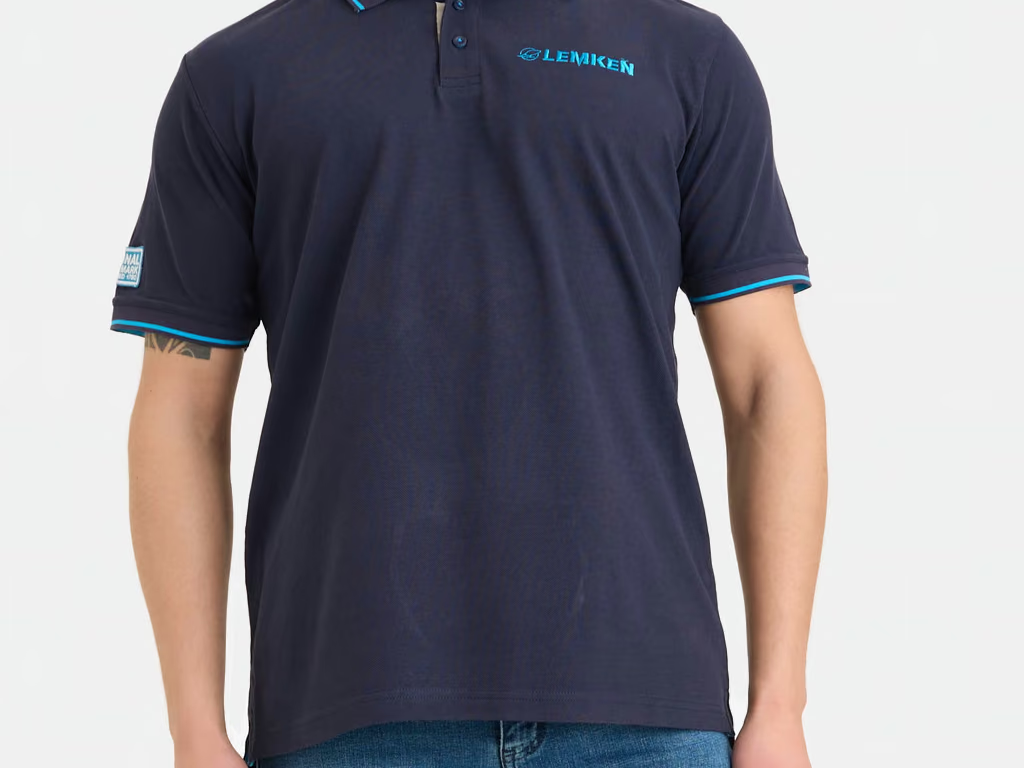
- Giletalso vest, bodywarmer
A gilet, called a vest in the United States and a bodywarmer in parts of Europe, is a sleeveless jacket that keeps the body warm while leaving the arms free.
It is made padded, quilted, softshell or fleece, and it is a common corporate and workwear layer because a logo on the chest stays visible over any shirt.
Vest and gilet manufacturing- Grading
The process of scaling a base-size pattern up and down to produce the rest of the size range.
It is not uniform scaling: different measurements grow by different amounts, and a badly graded range fits well in the middle and badly at the ends.
How grading actually works- Joggersalso sweatpants, track pants, jogging bottoms
Joggers, also called sweatpants or track pants, are trousers with an elasticated waist, usually a drawcord, and cuffed or tapered ankles, most often cut from French terry, fleece or a tricot knit.
They are frequently ordered as the bottom half of a tracksuit, so fabric, colour and trims are matched to the top.
Tracksuit manufacturing- Measurement specificationalso size chart, measurement chart
The table of finished garment measurements for every size, with a tolerance for each one.
It is what an inspector measures against, so a measurement without a tolerance cannot be passed or failed objectively.
- Pattern
The set of flat shapes that, when cut in fabric and joined, produce the three-dimensional garment.
Patterns include seam allowances, so a pattern and a measurement chart can disagree with each other unless both are stated.
Pattern making and grading- Point of measurealso POM
A defined place on the garment where a measurement is taken, described precisely enough that two people get the same number.
"Chest" is not a point of measure; "chest, 2.5 cm below the armhole, laid flat, doubled" is.
- Pre-production samplealso PP sample
The final approval sample, made with bulk fabric, bulk trims and the intended production method.
It is the reference bulk is judged against, which is why approving it in the wrong fabric removes much of its value.
What a PP sample proves- Prototype samplealso proto, first sample
The first physical version of a new style, made to test whether the design works as a garment at all.
It is often made in whatever suitable fabric is available rather than the intended one, so it answers questions about shape and construction, not about hand feel or shrinkage.
The sampling sequence- Puffer jacketalso quilted jacket, padded jacket
A puffer jacket is an insulated jacket whose filling, down or synthetic wadding, is held in place by stitched channels or quilted panels between an outer shell and a lining.
Fill type and weight decide warmth and price, so they are stated in the specification and confirmed per project at the quotation stage, together with the shell fabric and the quilting pattern.
Jacket and coat manufacturing- Salesman samplealso SMS
A sample made in advance of bulk so a brand can show or sell the product before production starts.
It is a commercial sample rather than a technical one, and approving it is not the same as approving production.
- Sealed samplealso counter sample
An approved sample retained by both parties as the physical reference for the order.
It settles arguments that documents cannot, because it shows what was actually agreed rather than what each side remembers agreeing.
- Size set
A set of samples covering several sizes, made to check that the grading works across the range rather than only in the base size.
It is the practical way to catch a grading error before bulk, and it is a sample stage often skipped to save time.
- Softshell jacketalso softshell
A softshell jacket is cut from a bonded laminate: a woven polyester face, often with elastane, bonded to a knitted backing such as microfleece, with a membrane between them in three-layer versions.
It is wind-resistant, breathable and stretchy but not fully waterproof, which makes it a common corporate and workwear outer layer.
Softshell jacket manufacturing- Tech pack
The document that describes a garment completely enough for a factory to cost it, sample it and produce it without guessing.
It is among the most useful things a buyer can improve, because every gap in it becomes a decision somebody else makes on your behalf.
What a tech pack must contain- Tolerance
The allowed deviation from a specified measurement before a garment is considered out of specification.
Tolerances are negotiated, not universal, and they should be tighter on measurements a customer notices than on ones nobody checks.
- Tracksuitalso jogging suit
A tracksuit is a matching set of a zip or pullover top and joggers, made from the same fabric, such as polyester tricot, French terry or fleece, in coordinated colours.
Because top and bottom are sold as one set, both pieces need to come from the same fabric lot or an approved shade band, or the colour difference shows when the set is worn.
Tracksuit manufacturing- Windbreakeralso windcheater, wind jacket
A windbreaker is a light jacket cut from a tightly woven shell, usually polyester or nylon, that blocks wind and sheds light rain but is not waterproof.
It is often unlined or mesh-lined and packable. Specify the shell fabric, any water-repellent finish, the lining and whether a hood stows in the collar.
Rain jacket and windbreaker manufacturing
Fabric and materials
Structures, weights and behaviours. Much of what a finished garment feels like is decided here.
- Brushed fleece
A knit whose back loops have been brushed open to raise a soft nap.
The raised nap has a direction, so all panels must be cut the same way or they read as different shades, which slightly increases fabric consumption.
Fleece reference- Colourfastness
How well a colour resists changing or transferring under a defined condition such as washing, rubbing, perspiration or light.
There is no single colourfastness number: each condition is a separate test with its own rating, so a claim has to say which one it refers to.
Colourfastness reference- Combed cotton
Cotton whose short fibres and impurities have been removed by an additional combing step before spinning.
It produces a smoother, more even yarn than carded cotton, which is visible in the finished fabric and reflected in the price.
- Dimensional stability
How well a fabric keeps its measurements through laundering.
It is what a shrinkage test actually measures, and it is a fabric property, so it is controlled at the mill and at fabric inspection rather than on the sewing line.
- Elastanealso spandex, Lycra
A highly extensible fibre blended into a fabric in small percentages to add stretch and recovery.
A small percentage change makes a large difference to behaviour, and elastane also changes how a fabric responds to heat, which affects both dyeing and pressing.
- Fabric relaxation
Letting rolled fabric rest, unrolled, before cutting so it can recover from the tension of winding and transport.
Cutting tensioned fabric produces panels that shrink back after sewing, so a garment can measure correctly on the table and be undersized by the time it is finished.
- French terry
A knit with a smooth face and unbrushed loops on the back.
Because the loops are left intact it is lighter and cooler than brushed fleece, which is the usual reason a product chooses one over the other.
French terry against brushed fleece- Greige fabricalso grey fabric
Fabric as it comes off the knitting or weaving machine, before dyeing and finishing.
Buying greige and dyeing to order is what makes custom colour possible, and it is also why colour development sits on the critical path of a schedule.
- GSMalso grams per square metre
The mass of one square metre of fabric, used as the standard way to compare fabric weight.
It is a weight, not a quality measure: yarn, knit structure and finishing all change how a fabric of a given GSM feels and performs, so two 180 gsm jerseys can be very different products.
How to use GSM properly- Hand feelalso handle
The subjective tactile character of a fabric: how soft, dry, smooth or full it feels.
It cannot be specified in words reliably, which is why fabric approval is done on a physical swatch rather than on a description.
- Interlock
A double-knit structure with an identical face on both sides, heavier and more stable than single jersey.
It does not curl and holds its shape better, which makes it a common choice where a smoother, more substantial hand is wanted.
Interlock reference- Open width
Knitted fabric that has been slit and finished flat rather than left as a tube.
It lets the pattern decide the garment's width, which is why many shaped and fitted knit products are cut from it.
Tubular against side seam- Pilling
The formation of small balls of tangled fibre on a fabric surface through abrasion in wear and washing.
It is assessed on rated scales under standard test methods rather than by opinion, and it is largely determined by fibre and yarn choice.
Pilling reference- Piqué
A knitted structure with a raised textured surface, most familiar as a standard polo shirt fabric.
The texture is functional as well as visual: it holds the fabric slightly off the skin and gives the garment more body than plain jersey.
Piqué reference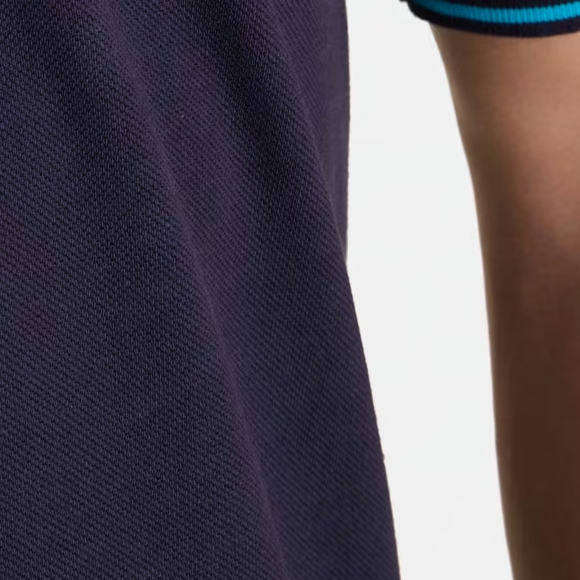
- Rib
A knit structure of alternating face and reverse columns, which gives it strong crosswise stretch and recovery.
It is the standard trim fabric for necklines, cuffs and hem bands precisely because it returns to shape after being stretched.
Rib knit reference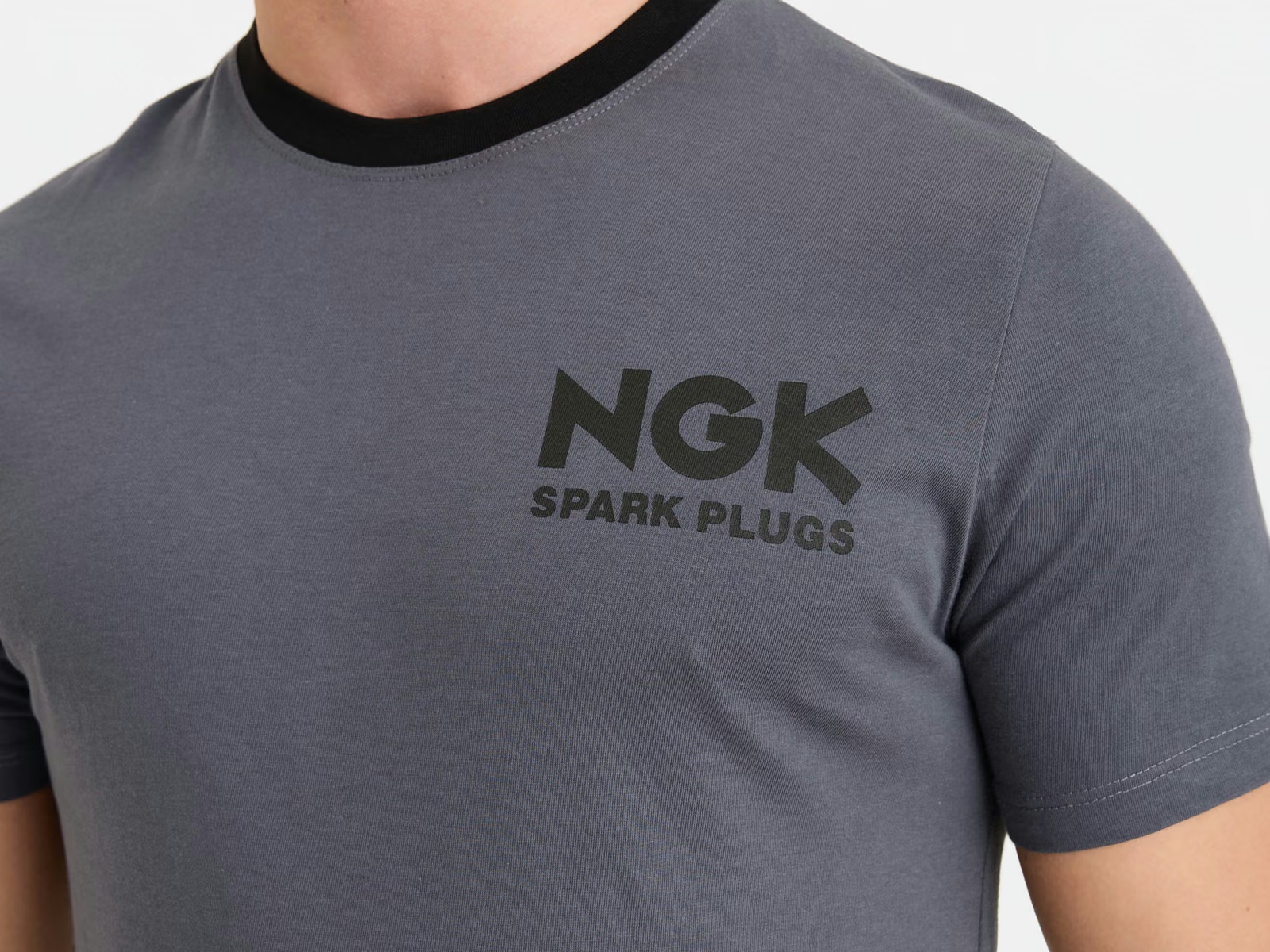
- Ring-spun
Yarn spun by twisting fibres continuously on a ring frame, as distinct from open-end spinning.
It generally produces a softer, finer yarn, and it is one of the reasons two fabrics at the same GSM can feel different.
- Shrinkage
The dimensional change a fabric or garment undergoes after washing and drying.
It is measured against defined laundering procedures rather than in the abstract, so a shrinkage figure is only meaningful alongside the wash cycle it was measured on.
When measurements change after washing- Single jersey
The basic weft-knitted structure with a smooth face and a looped back, used for many t-shirts.
It curls at the cut edge and has a natural tendency to skew, which is why its seams are overlocked and why fabric finishing matters more than the sewing.
Single jersey reference
- Spiralityalso twisting
The tendency of a knitted fabric to skew after washing, so that side seams rotate around the body.
It comes from yarn twist and knitting rather than from sewing, which is why it appears after the first wash and cannot be corrected at final inspection.
Diagnosing twisting- Tubular fabric
Circular-knitted fabric left as a continuous tube rather than slit open.
A garment body cut from it has no side seams, but its width is limited to the diameters the mill actually knits.
Tubular against side seam- Twill
A woven structure whose interlacing produces a visible diagonal line on the face.
The diagonal makes it drape and wear differently from a plain weave of the same weight, and it is the base construction for chinos, workwear and many uniform trousers.
Twill and gabardine- Yarn count
A number describing yarn fineness, expressed in one of several systems depending on the fibre and region.
It has to be read together with its system, because the scales run in opposite directions: in some, a higher number means a finer yarn; in others the reverse.
Manufacturing and construction
What happens between an approved sample and a packed carton, and the stitches and seams that hold it together.
- Bartack
A short, dense concentration of stitches used to reinforce a point that carries load.
Pocket corners, the bottom of a fly, belt loop ends and the top of a side vent are where garments tear first, and a bartack is the standard control.
- Bundling
Grouping cut panels by size, colour and lay so they stay together through the sewing line.
It is the control that prevents a garment being assembled from panels of two different shades, which is invisible in the cutting room and obvious on the finished piece.
- Chainstitchalso ISO 401
A stitch formed by a needle thread interlooping with a looper thread that forms a chain on the underside.
It extends more than a lockstitch and runs from a cone rather than a bobbin, which is why it is standard for long main seams on wovens.
Stitch types compared- Coverstitchalso ISO 406, ISO 605
A stitch with two or three parallel needle threads on the face and a looper thread covering the raw edge underneath.
It is the standard knit hem because it stretches, lies flat and finishes the edge in one operation; a single straight line on a knit hem means a lockstitch was used instead.
Stitch types compared- Cut and sew
Making a garment from fabric cut to a pattern, as distinct from decorating a ready-made blank.
It is what makes fabric, colour, fit and construction yours rather than the blank supplier's, and it is the reason minimum quantities exist at all.
Custom production against blanks
- Enzyme washalso biopolishing, cellulase wash
Wet processing using enzymes, most commonly cellulase, to remove surface fibres or produce a washed-down appearance.
It can be applied to fabric at the mill or to the sewn garment, and the phrase alone does not say which, so it is worth establishing the stage before assuming what a measurement or a fabric weight refers to.
Garment washing and finishing- Finishing
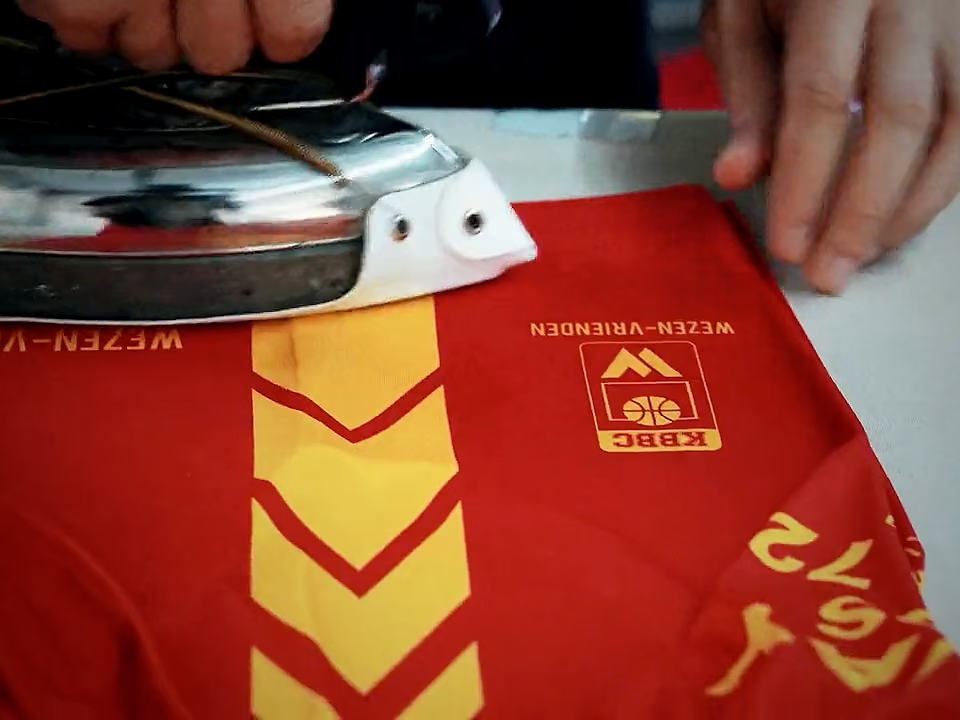
Everything done after sewing: trimming, pressing, labelling, folding, tagging and packing.
It is the last chance to catch a fault and the first thing a customer sees, and it is routinely underestimated in a production schedule.
- Flatseamalso flatlock, ISO 607
A stitch that joins two butted edges rather than overlapping them, so the seam has almost no thickness.
The word flatlock is used loosely for both this and a decorative coverstitch, so specify the ISO number when a ridge-free seam is a functional requirement.
Stitch types compared- Folder
An attachment fitted to a sewing machine that folds fabric or tape to a set width as it feeds into the needle.
It is the reason a bound edge or a waistband is consistent across thousands of pieces, and it is set for one finished width, so changing that width is a real change.
- Fusing
Bonding an interlining to a fabric using heat and pressure.
Fusing conditions have to suit both materials; when they do not, the bond fails in washing and the collar or placket surface blisters.
Interlinings explained- Garment washalso garment wet processing
An industrial wet process performed on the sewn garment before shipment, to change its appearance, surface, hand or dimensions.
It is not the same as consumer laundering and not the same as fabric finishing at the mill, and because it changes measurements and shade it has to be treated as part of the product specification rather than as a step added at the end.
Garment washing and finishing- Lay
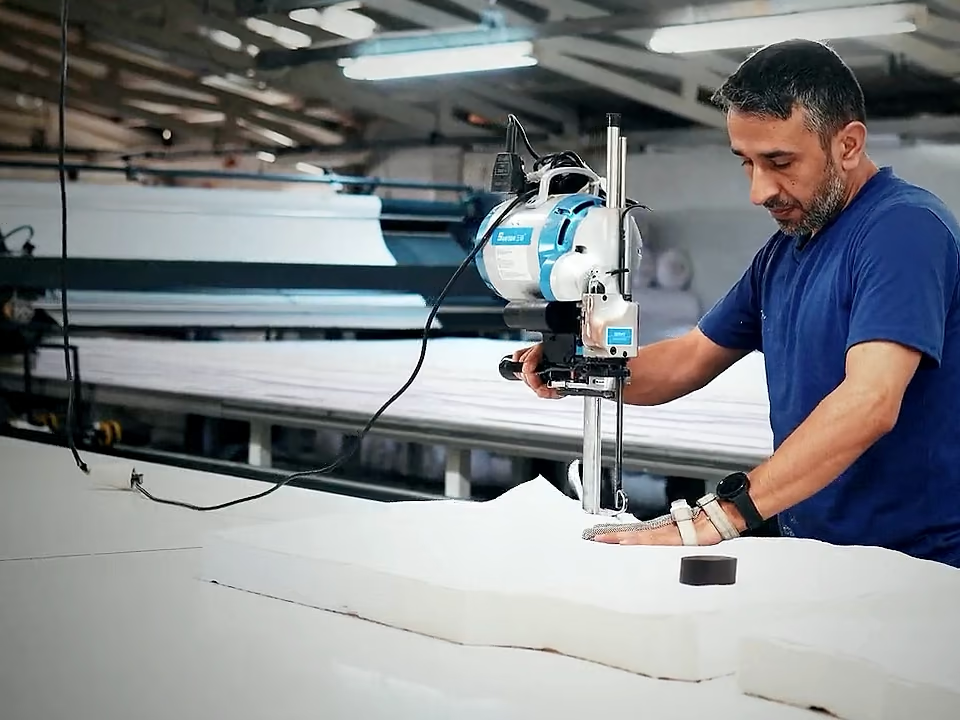
The stack of spread fabric plies that will be cut in one operation.
Panels from one lay behave alike; panels from different lays can differ slightly in shade and stretch, which is why cut parts are bundled and kept together.
- Lockstitchalso ISO 301
A stitch formed by a needle thread and a bobbin thread interlocking in the centre of the seam, identical on both faces.
It is precise and does not unravel, but it has very little extension, so it is the wrong stitch for a seam in a knit garment that has to stretch.
Stitch types compared- Marker
The layout that arranges every pattern piece for every size across the width of the fabric before cutting.
Marker efficiency decides how much fabric each garment consumes, so it is one of the largest single influences on cost.
How consumption is calculated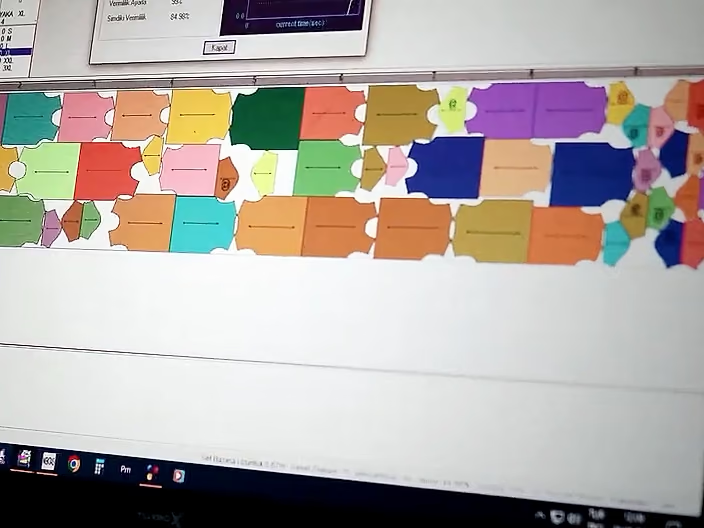
- Operation breakdown
The ordered list of individual sewing operations required to build a garment, each assigned to a machine type.
It is where a design becomes labour cost, because every construction detail adds operations rather than adding difficulty to an existing one.
How construction becomes work- Overlockalso overedge, serging, ISO 504
A stitch that joins two plies and wraps their cut edge at the same time.
It does two jobs in one pass, which is why it dominates knit assembly: the edge is enclosed as the seam is made and cannot curl out of it.
Stitch types compared- Safety stitchalso ISO 516
A combination stitch that forms a chainstitch seam and an overedge finish simultaneously in one pass.
It is why a woven trouser inseam does not need a separate serging operation, and it is a strong, productive way to build a woven seam.
Stitch types compared- Seam allowance
The width of fabric between the stitch line and the cut edge of the panel.
It is part of the finished measurement, so changing it changes the fit, which is why a measurement chart without seam allowances can contradict the pattern.
Seam types and classes- Spreading
Laying fabric out in multiple plies to the length of the marker, ready to be cut.
Tension during spreading carries straight through into the finished garment, which is why relaxed fabric and controlled spreading matter more than cutting speed.
- Stitches per inchalso SPI, stitch density
How many stitches are formed per unit length of seam.
It affects seam strength, seam extension and appearance at once, and it is one of the settings that determines whether a seam puckers.
Diagnosing seam puckering- Sub-assembly
A component built separately before it joins the main garment, such as a hood, a collar, a pocket or a lining.
Sub-assemblies are where much quality is won or lost, because a fault built into one is carried into every garment it is attached to.
- Trimalso component
A non-fabric item incorporated into or attached to a garment, such as a zip, button, snap, elastic, cord, tape or label.
Organisations classify sewing thread, interlining and labels differently, so the taxonomy varies; what matters is that the actual part is identified well enough to be bought again rather than described by category.
Trims and components
- Trim cardalso trim board
A physical reference holding the approved components for a product, used to settle appearance questions.
It is a working practice rather than a requirement of any standard, and it captures appearance far better than identity, so a card without a recorded source and article behind it is difficult to reorder from.
Trims and components
Colour and decoration
Getting the colour right, and putting artwork onto a garment without damaging it.
- Digitising
Converting artwork into the stitch file an embroidery machine runs, including stitch types, directions and sequence.
It is a skilled interpretation rather than a file conversion, and the same logo digitised twice will not embroider identically.
Artwork file requirements- Embroidery
Stitching artwork directly into the fabric with thread.
Cost is driven by stitch count rather than by physical size, and fine detail and small text are limited by what thread can physically resolve.
Printing against embroidery
- Garment dye
Dyeing after the garment has been assembled rather than dyeing the fabric first.
It produces a characteristic softened, slightly irregular appearance, and it requires the thread, trims and labels to be chosen for how they will react in the dye bath.
Garment dyeing- Heat transfer
Applying a pre-printed or cut design to a garment with heat and pressure.
It suits small quantities and complex artwork, and the bond depends on the fabric, so transfers should be wash-tested on the actual production fabric.
- Lab dip
A small piece of the actual fabric dyed to a target colour, submitted for approval before bulk dyeing.
Colour is approved on the fabric that will be used, because the same recipe produces different results on different fibres and structures.
Colour matching in apparel- Pantone
A commercial colour reference system whose numbered standards are widely used to communicate a target colour.
A Pantone number is a starting point, not an achievable target on every fibre: what gets approved is the lab dip on your fabric, not the chip.
Working with Pantone references- Piece dye
Dyeing fabric after it is knitted or woven, before it is cut.
It is the normal route for custom colour, and it is why colour approval sits before cutting on the schedule rather than after it.
- Plastisol
A PVC-based screen printing ink that sits on the fabric surface and must reach a specified temperature to cure.
Under-cured plastisol looks correct and fails in washing, which is why cure temperature is a process control rather than a judgement.
Why prints crack- Screen printing
Pushing ink through a mesh stencil onto the garment, one screen per colour.
Cost scales with the number of colours rather than with the size of the print, because each colour needs its own screen and its own pass.
Printing against embroidery- Shade band
An approved range showing the lightest and darkest acceptable shades for a colour.
It converts an unwinnable argument about exact colour into a pass or fail against agreed limits, which is how bulk dyeing is judged in practice.
Dye lot and shade variation- Strike-off
A test print of artwork on the actual production fabric, submitted for approval before bulk printing.
It is the print equivalent of a lab dip, and it is where ink colour, hand feel and registration are judged rather than on a screen.
- Sublimation
A process in which dye is transferred into polyester fibres as a gas under heat, becoming part of the fibre rather than a layer on top.
It only works on polyester and produces prints that cannot crack or peel, which is why it is widely used in sportswear and all-over designs.
All-over sublimation
- Water-based ink
A screen printing ink that penetrates the fibres rather than sitting on top of them.
It gives a much softer hand than plastisol and is less forgiving on dark fabrics, so the choice between them is a hand-feel and coverage decision.
- Yarn dye
Dyeing yarn before the fabric is made, so the colour is built into the structure.
It is what makes true stripes, checks and heather effects possible, and it commits the colour much earlier than piece dyeing does.
Commercial and trade
The terms that appear in quotations, contracts and shipping documents.
- A.TR
The movement certificate used for goods circulating under the customs union between the European Union and Türkiye.
It is what allows industrial goods in free circulation to move between the two without customs duty, so it belongs in the shipping documents rather than as an afterthought.
Shipping from Türkiye- Blank apparelalso blanks
Blank apparel is ready-made, undecorated clothing, usually T-shirts, sweatshirts and hoodies, bought from a wholesaler's stock range and then printed or embroidered.
Blanks allow very small quantities, but fabric, colour, fit and labels are the blank supplier's. Custom production to your own design replaces those choices with yours and brings a minimum quantity with it.
Custom production against blanks- Branded workwearalso logo workwear
Branded workwear is work clothing, such as work trousers, work jackets, coveralls and bib-and-brace trousers, made with the employer's logo, colours and labels.
It is specified for the job first: fabric strength, pockets, reinforcement and wash resistance come before branding. Protective clothing that has to meet a PPE standard is a separate category with its own requirements.
Private label workwear- CMTalso cut, make and trim
An arrangement in which the buyer supplies the materials and the factory is paid to cut, sew and finish them.
It gives the buyer direct control of the materials and transfers the material risk to them, including responsibility for what happens if the fabric is late or short.
Full package against CMT- Corporate wearalso corporate fashion, corporate clothing
Corporate wear is the clothing a company issues to its staff so that they present one brand identity, from polo shirts and shirts to knitwear, jackets and trousers in the company colours.
What sets it apart from merch is repetition: the same styles are reordered for new staff over years, so colour standards, size ranges and approved samples have to stay consistent.
Corporate clothing manufacturing- Full packagealso FPP, full package production
An arrangement in which the manufacturer sources the materials as well as producing the garment.
The factory carries the material risk and the buyer gets one price and one counterparty, which is why many first-time programmes run this way.
Full package against CMT- HS codealso tariff code
An internationally standardised classification number that determines how a product is treated at customs.
The code depends on the specific product, including fibre content and construction, and it drives both duty treatment and documentary requirements, so it should be confirmed for each style rather than assumed.
- Incoterms
A standard set of trade terms defining where responsibility, cost and risk pass from seller to buyer in an international shipment.
They decide who arranges and pays for transport, insurance and customs formalities, so a price is not comparable to another price unless both are quoted on the same term.
Shipping and trade terms- Lead time
The elapsed time from an agreed starting point to a defined finish, most usefully stated as separate stages rather than one number.
Sampling, material procurement, production and shipping are different clocks, and a single headline figure hides which one is the constraint.
Where lead time actually goes- Merchandise apparelalso merch, merch apparel
Merchandise apparel, usually called merch, is clothing made to carry a brand, band, event, club or creator identity and sold or given to that audience rather than sold as fashion.
The garment is the carrier and the artwork is the product, so decoration method, placement and colour matching usually decide the specification more than the cut does.
Custom merch manufacturing- MOQalso minimum order quantity
The smallest quantity a factory will produce for an order or for a specific variant within it.
Minimums exist because setup costs are the same whether you make three hundred pieces or three thousand, and they are usually driven by fabric and trim purchasing rather than by sewing.
How minimums work- ODM
Production of a design developed by the manufacturer, which the buyer selects and adapts.
It shortens development considerably and gives you less control, and the design is rarely exclusive unless that is agreed separately.
OEM, ODM, private label and white label- OEM
Production of a product to the buyer's own design and specification.
The buyer owns the design decisions and carries the development work, which is the arrangement many custom apparel programmes actually use.
OEM, ODM, private label and white label- Private label
Garments produced to a buyer's specification and sold under the buyer's brand.
The term describes ownership of the product decisions rather than a particular way of manufacturing.
Private label manufacturing
- Promotional textilesalso promotional apparel, promotional clothing
Promotional textiles are branded garments made to be given away at campaigns, trade fairs, sponsorships and events, where the logo carries the message and the garment is not sold.
The order is usually tied to a fixed event date, so the calendar is planned backwards from that date and the decoration is chosen for legibility at a distance.
Promotional textiles manufacturing- RFQalso request for quotation
A structured enquiry asking a manufacturer to price a specific product at a specific quantity.
A quotation is only as reliable as the specification behind it, so an RFQ that leaves construction and trims open will be re-priced later.
Writing a usable RFQ- Staff roll-outalso uniform roll-out
A staff roll-out is the date on which a company's employees receive a new or changed set of corporate wear or uniforms, often across several sites at once.
The production calendar is worked backwards from that date: staff size collection, sample and fit trial, bulk production and delivery to every site. A missed roll-out date usually costs more than the garments.
Planning a roll-out- White label
An existing product sold under a buyer's brand with little or no change to the product itself.
In the wider trade it is the fastest route to market and the least differentiated, because the same product is usually available to other buyers too. At Voyager Textile there are no ready-made styles: white label means unbranded production to the buyer's own design.
OEM, ODM, private label and white label
Quality and inspection
How conformity is checked, and the vocabulary an inspection report uses.
- AQLalso acceptable quality limit
A statistical sampling standard used to decide whether a production lot is accepted or rejected based on the number of defects found in a sample.
It is a sampling scheme rather than a quality promise: it sets how many pieces are checked and how many defects are tolerated, and the levels have to be agreed in writing before the order.
Quality control in apparel- Broken-needle controlalso needle control, sharps control
The factory system for accounting for sewing needles and other sharps, and for handling product when one breaks.
No statute names it, but buyer programmes commonly require it, and a written policy is a different claim from evidence that it operated on a particular order.
Needle control and metal detection- Care label
The label giving laundering and treatment instructions for the garment.
It is a claim you are making about the product, so it should follow from what was tested rather than from what is normal for the fabric.
Labelling requirements- Defect classificationalso critical, major, minor
The grading of faults by severity, which determines how many of each type a lot may contain before it fails.
What counts as major rather than minor is a matter of agreement, so two suppliers can apply the same AQL level and reach different verdicts.
- During production inspectionalso DUPRO
An inspection carried out partway through a production run, once enough pieces are finished to be representative.
It is the compromise between inline checking and waiting for the end: early enough to correct, late enough to reflect real production.
- Final inspectionalso FRI, final random inspection
An inspection carried out when production is complete and packed, on a sample drawn at random from the finished lot.
It confirms what was produced; it cannot tell you whether the fabric will shrink or whether the construction was right, which is why it is the last layer rather than the only one.
The layers of quality control- Four-point system
A fabric inspection method that assigns penalty points to faults according to their size, and totals them per unit of fabric.
The point scale is standardised; the pass mark is not, so the threshold has to be agreed rather than assumed.
Incoming fabric inspection- Inline inspection
Checking garments during production, at the sewing line, rather than after everything is finished.
It is a check that can still change the outcome, because a fault found on the line affects the pieces made so far rather than the whole order.
The layers of quality control- Needle detectoralso metal detector
Equipment that responds to magnetic material such as a broken sewing needle disturbing a magnetic field at its sensor head.
It is not a general metal detector and does not respond to everything metallic, and a rated test-piece sensitivity describes a reference condition rather than the smallest real fragment it will always find.
Needle control and metal detection- Third-party inspection
An inspection carried out by an independent company rather than by the factory or the buyer.
It is useful when neither party can be present, and it inspects against the specification it is given, so the brief matters as much as the inspector.
- Wash test
Laundering a finished garment under the conditions its care label specifies, then assessing what changed.
It is among the most informative tests a buyer can ask for, because shrinkage, print durability, colour bleeding and interlining failure all appear in the same test.
Planning a production project?
Send your reference or tech pack with the target quantities. We’ll review it and identify the specifications still needed.
Start a project