Cotton and blended knits
Single jersey
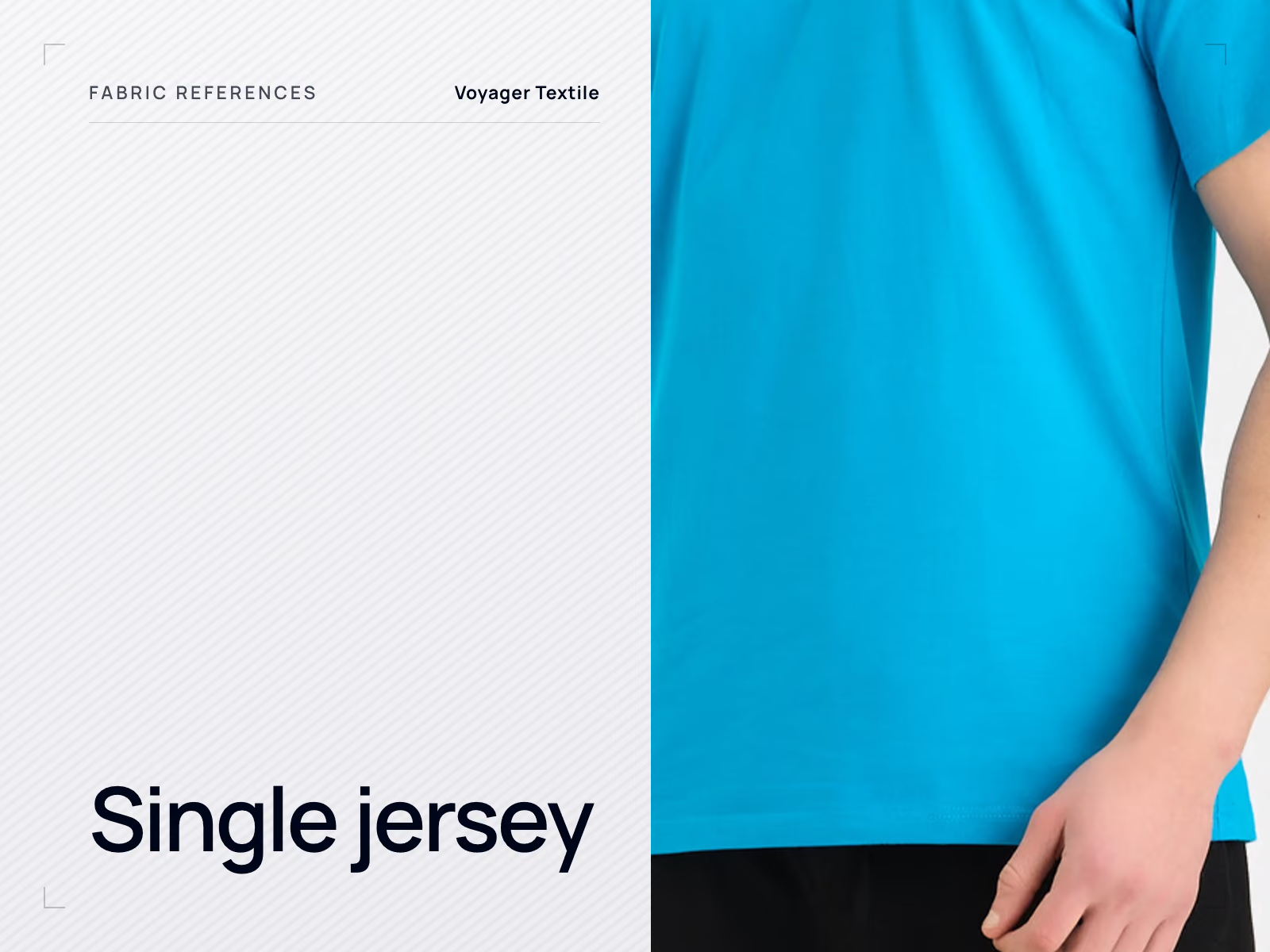
Single jersey is the simplest weft knit: one set of needles producing a smooth face and a looped back. It is a standard T-shirt fabric because it is light, economical and comfortable, and its two well-known weaknesses, edge curl and twisting, both come directly from that one-sided structure.
Contents
How it is built
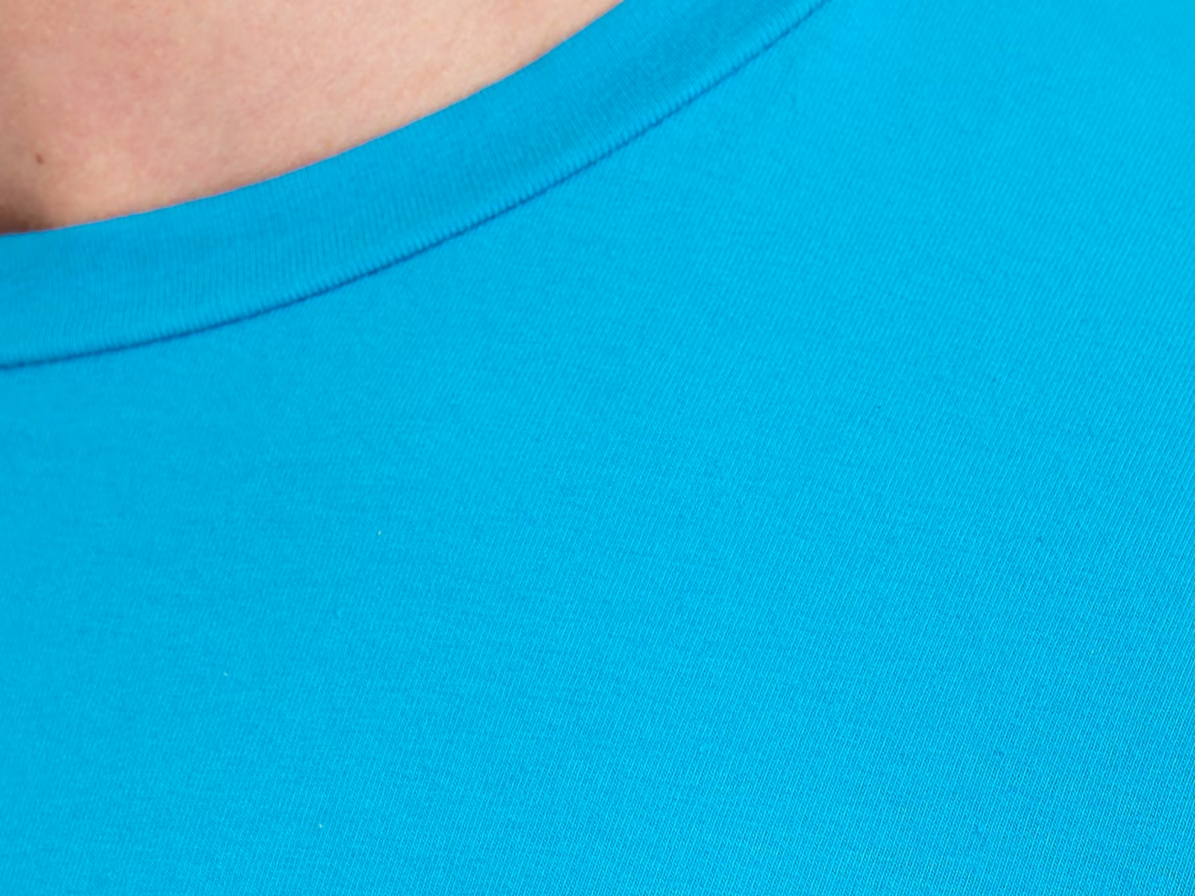
Single jersey is knitted on a single set of needles, so every loop is drawn in the same direction. That produces a fabric with two distinct faces: a smooth technical face of vertical loop legs, and a back of horizontal loop heads that feels slightly rougher. Much that is characteristic of the fabric follows from that asymmetry.
It is usually produced on circular machines, either as a tube or opened to a flat width. The tube matters commercially rather than technically: a body cut from tubular fabric has no side seams, which suits straight cuts and removes a sewing operation, while open-width fabric allows shaping at the side seam.
Why it curls at the edges
A cut edge of single jersey rolls, and it always rolls the same way: towards the back at the top and bottom edges, and towards the face at the sides. This is a consequence of the one-sided loop structure rather than a fault, and it is why single jersey garments have hemmed edges and ribbed necklines instead of raw ones.
It also matters in production: curling edges make spreading and cutting less forgiving than a stable double knit, and it is one reason interlock is chosen when a flat, non-curling edge is wanted.
Typical sourcing weights
| Yarn and construction | Indicative weight | Character | Typical use |
|---|---|---|---|
| Fine combed cotton, 30/1 or finer | Around 140 to 160 g/m² | Light, soft, drapes closely | Promotional tees, hot climates, layering |
| Combed cotton, around 24/1 | Around 165 to 190 g/m²; one mill lists 24/1 at 175 g/m² | The everyday retail and corporate weight | Standard T-shirts |
| Coarser or tighter construction | Around 200 to 250 g/m² | Denser, more structured, boxier | Premium and heavyweight tees |
| With elastane | Around 150 to 200 g/m²; one mill lists a brushed 40/1 with 5% elastane at 150 g/m² | Closer fit, better recovery | Fitted women's styles |
The weight tells you how much fabric you are buying, not how good it is. Two 175 g/m² jerseys can differ substantially depending on the yarn, which is the next section. General weight ranges by garment are in the GSM guide.
Yarn decides how it ages
- Combed against carded. Combing removes the short fibres, which produces a smoother, stronger yarn that pills less. Carded is cheaper and visibly fuzzier over time.
- Ring-spun against open-end. Ring-spun is finer and softer; open-end is more economical and firmer, and generally less refined in hand.
- Yarn count. A higher count number means a finer yarn, which gives a lighter, smoother fabric at the same construction.
- Single against plied. Plied yarns balance twist between the strands, which improves both hand and dimensional behaviour, and reduces the tendency to twist.
These four lines are where a fabric specification is either serious or vague. Stating only 100% cotton, 180 g/m² leaves all of them open.
Finishing
What happens after knitting changes the fabric as much as the knitting itself. Singeing burns off surface fibres for a cleaner face, biopolishing or enzyme washing reduces fuzz and improves smoothness, and compacting mechanically pre-shrinks the fabric so less movement is left for the customer's washing machine to find. A brushed finish raises a soft nap on the back for a warmer hand. All of these happen at the mill, on cloth: the same words are also used for processes carried out on the sewn garment, which is a different stage with different consequences.
Compacting is the one to ask about specifically. An uncompacted jersey carries more residual shrinkage, and it is a common reason a garment measures correctly at inspection and short after the first wash, as explained in why measurements change after washing.
The twisting problem
Single jersey is a structure particularly prone to spirality, the effect where side seams rotate around the body after washing. The cause is residual torque in the yarn releasing as the loops relax, and the risk is highest in fine, slackly knitted fabrics made from single yarns. Plied or twist-balanced yarns, alternating twist directions on the machine, a tighter structure and compacting all reduce it.
It is worth knowing before choosing the cheapest available quality, because it cannot be corrected once the fabric exists. The full diagnosis is in why T-shirts twist after washing.
Decoration behaviour
- Screen and transfer printing work well on a smooth jersey face, and body prints are usually applied to cut panels before assembly rather than to a finished garment.
- Embroidery needs an appropriate cut-away backing, because an unsupported light knit distorts under dense stitching.
- Light jerseys in white and pale shades should be checked for opacity before a dark print is placed behind them.
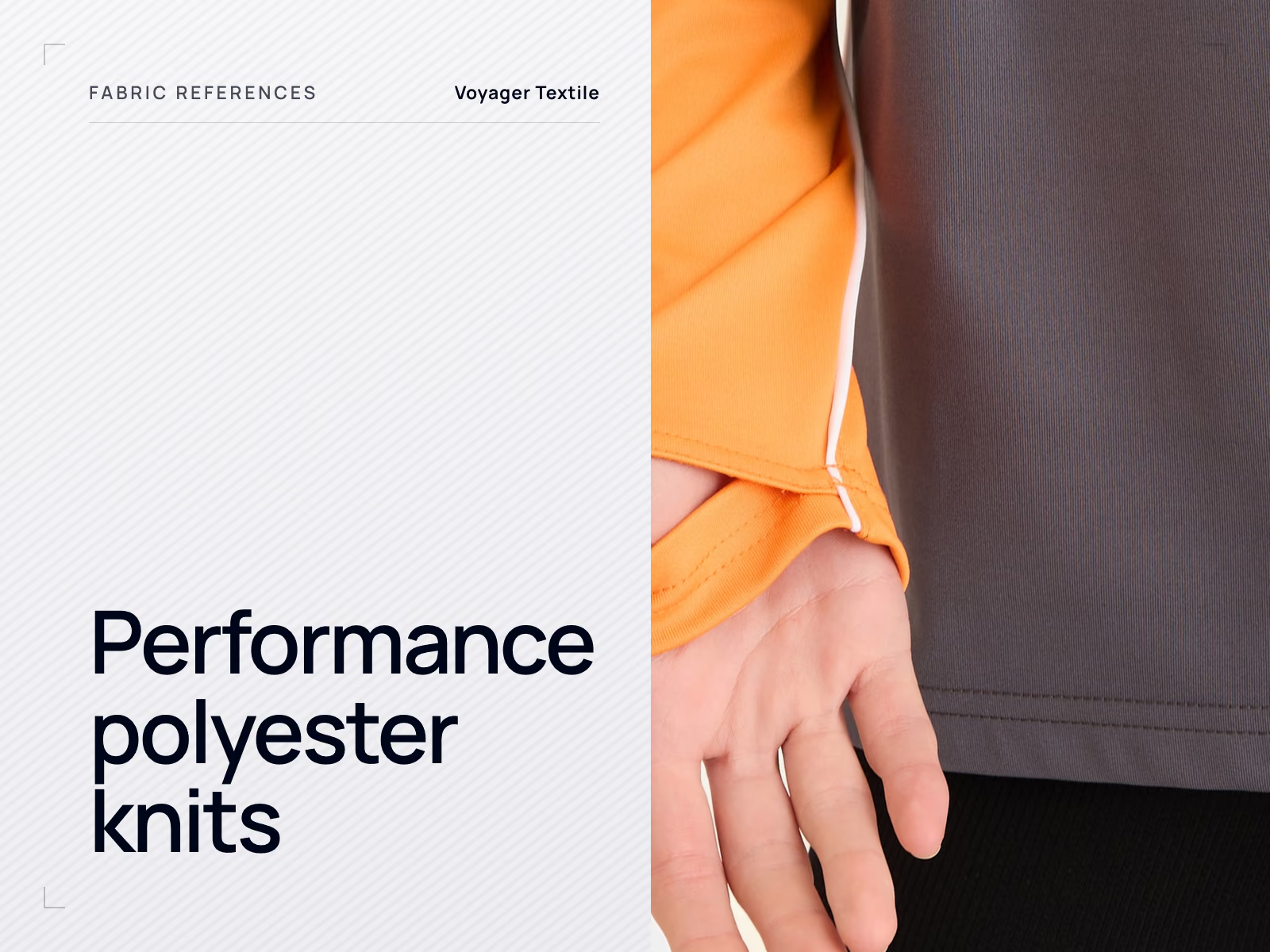
- Sublimation is not possible on cotton jersey; that requires polyester-based knits.
When to choose something else
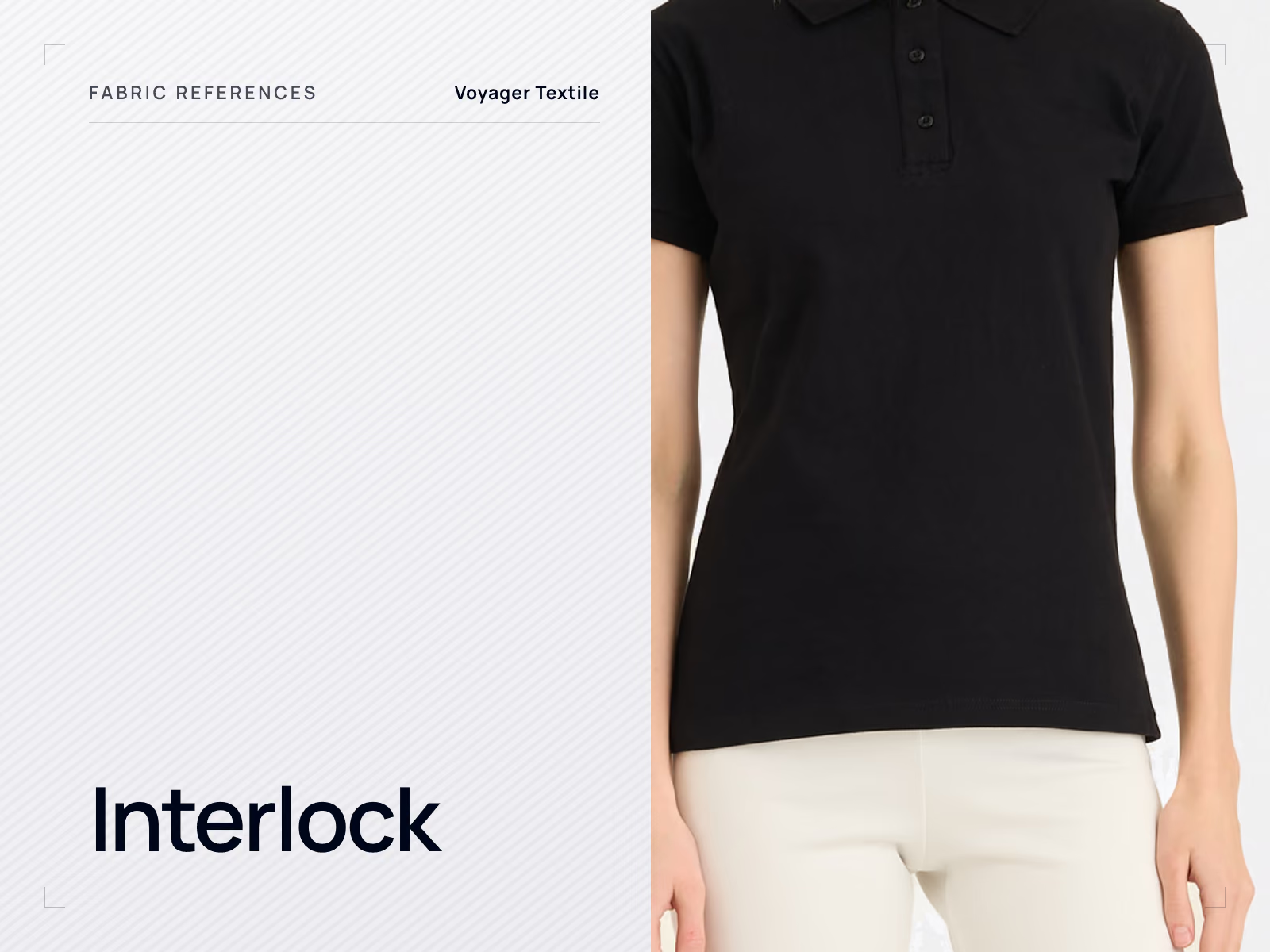
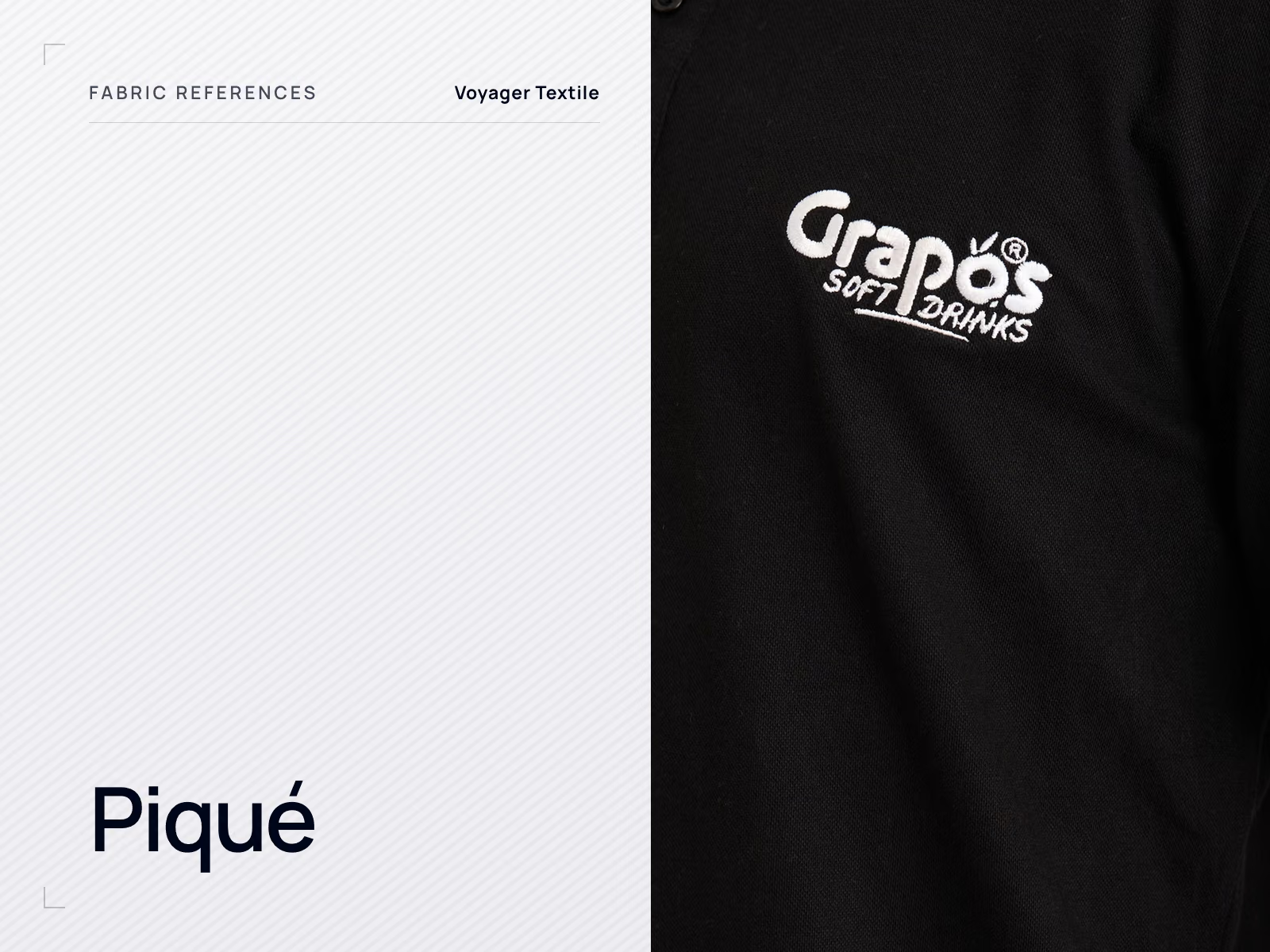
Single jersey is the right default for T-shirts and light layers. Move away from it when the garment needs a stable, non-curling edge or a smoother reverse, which points to interlock; when it needs body and surface texture for a collared garment, which points to piqué; or when it needs warmth and a soft inside, which points to French terry or brushed fleece.
Questions buyers ask about this fabric
Why does single jersey curl at the edges?
Because it is knitted on one needle bed, so the loops are all drawn in the same direction and the fabric has no balancing structure on the reverse. It is inherent to the construction, which is why single jersey garments are hemmed and have ribbed necklines rather than raw edges.
What weight of single jersey should I choose for T-shirts?
Around 165 to 190 g/m² covers many retail and corporate tees. Lighter, roughly 140 to 160, suits promotional programmes and hot climates; 200 to 250 gives a heavier, more structured garment. Check opacity in white and pale shades before deciding.
Is single jersey the same as cotton jersey?
Not quite. Single jersey describes the knit structure, and cotton describes the fibre. You can have single jersey in polyester, viscose blends or cotton with elastane, and cotton knitted into other structures such as interlock or piqué.
Does elastane change how single jersey behaves?
Yes, in two ways worth planning for. It improves recovery and allows a closer fit, and it changes shrinkage behaviour, so a version with elastane needs its own fit sample and its own wash test rather than inheriting the results from the plain quality.
Specifying a jersey for a programme?
Tell us the garment, the climate it will be worn in and how it will be decorated. We will propose a yarn, construction, weight and finish, and send a swatch before anything is committed.
Ask for a fabric proposal