Cotton and blended knits
Interlock
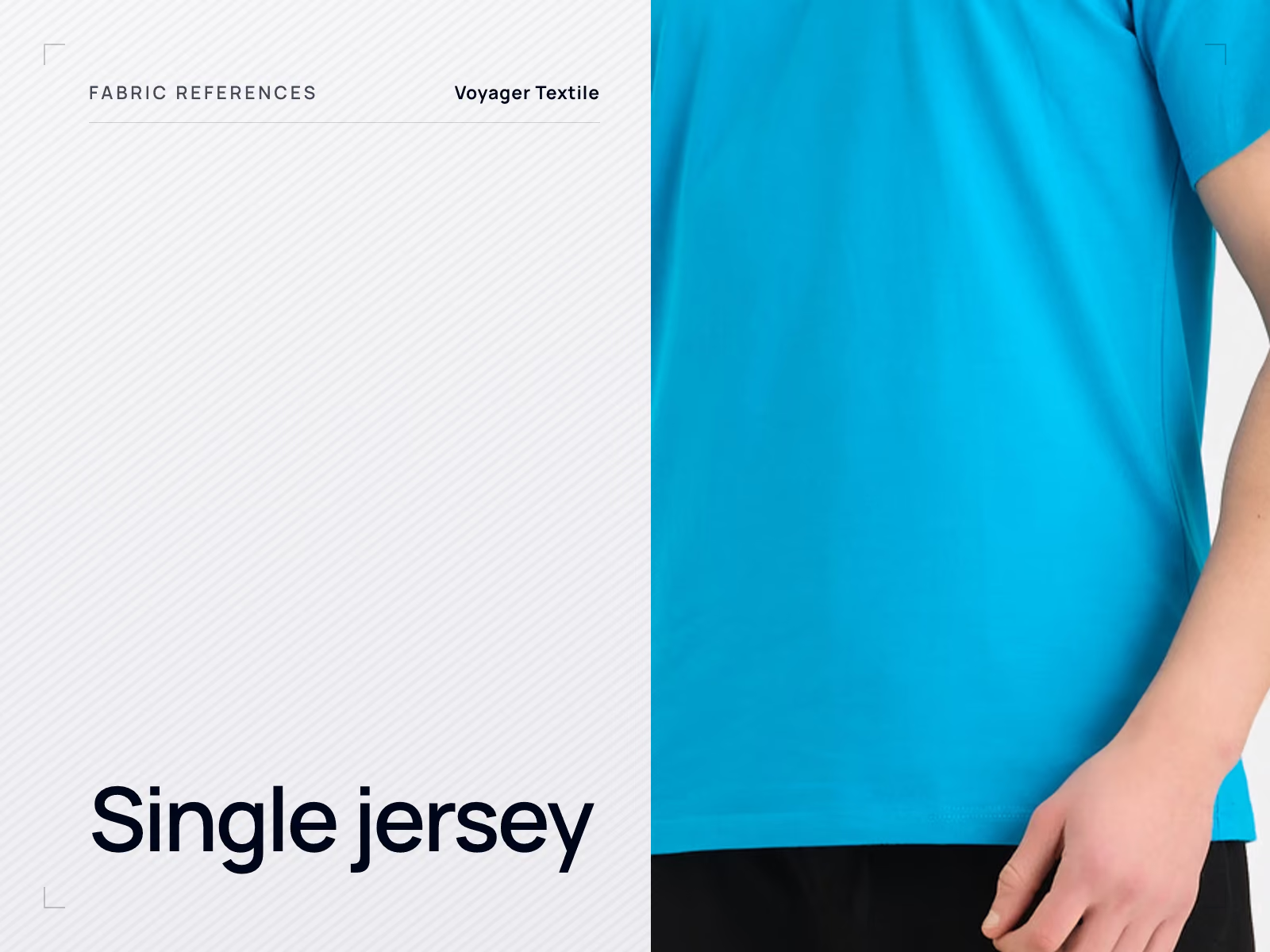
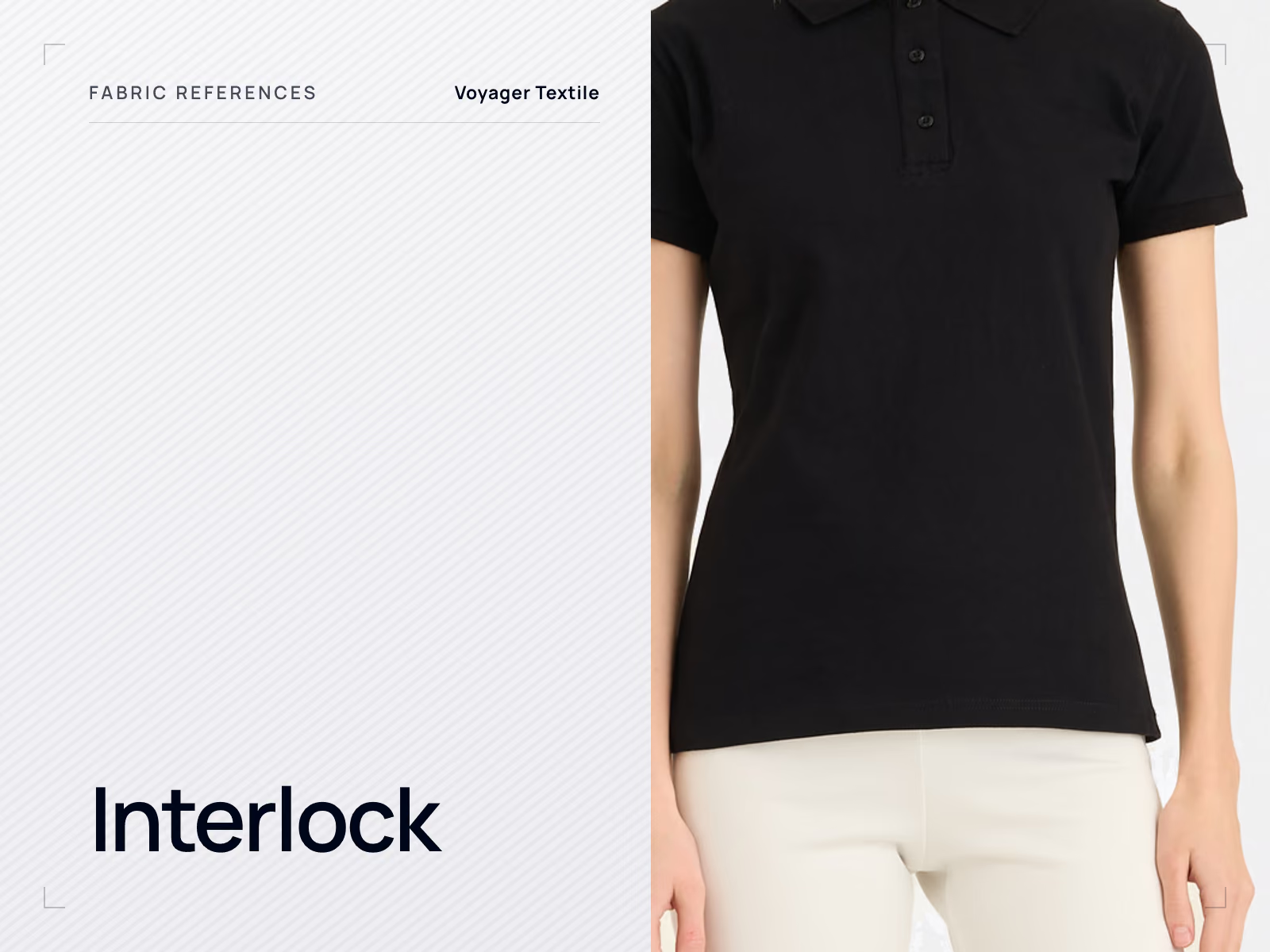
Interlock is a double knit: two needle beds producing a fabric that is smooth on both faces, thicker and more stable than single jersey at the same yarn. It does not curl at the edges, it holds its shape better, and it costs more because it uses more yarn for the same area.
Contents
What makes it a double knit
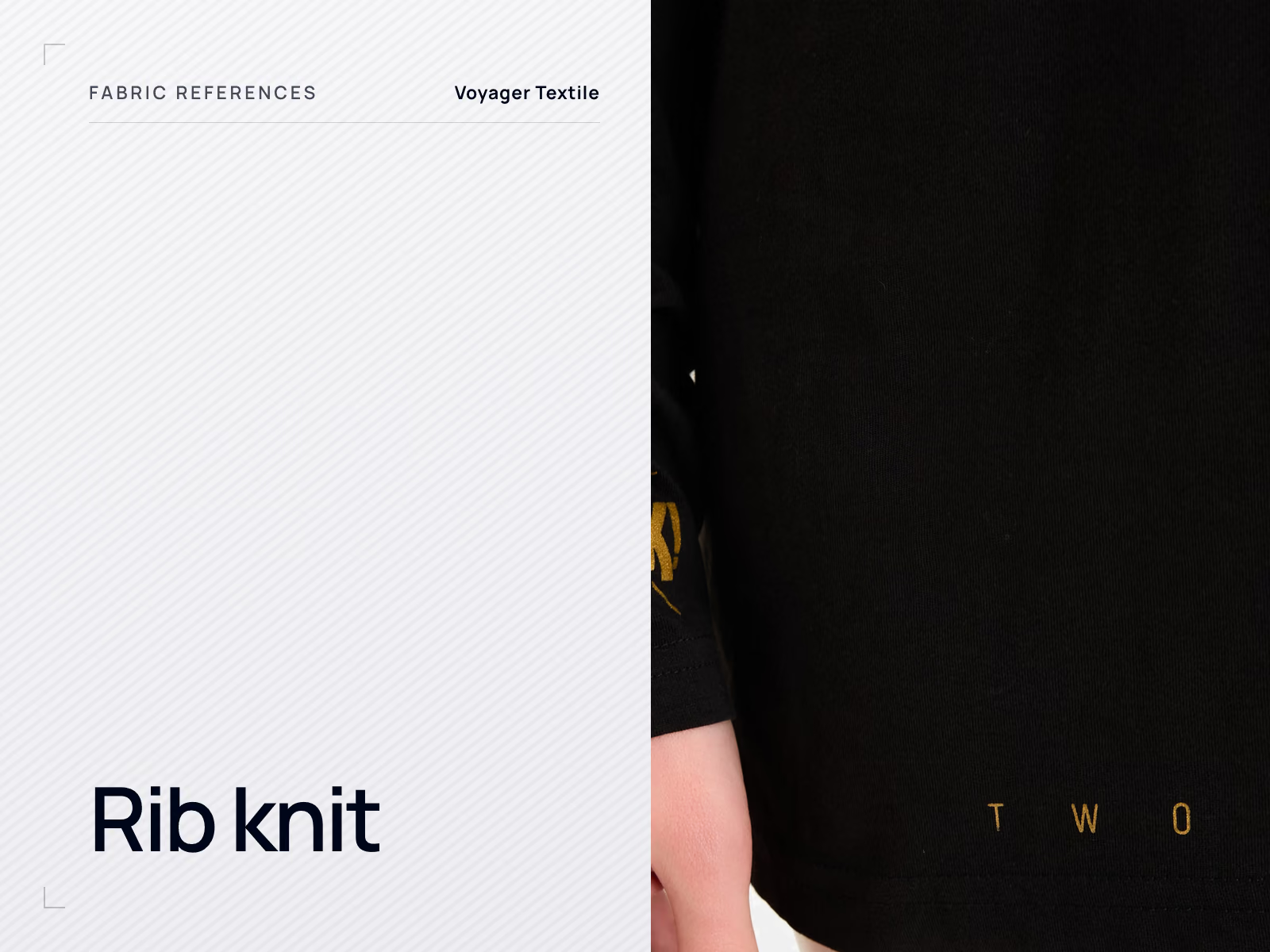
Interlock is knitted on two needle beds, producing what is effectively two rib fabrics interlocked with each other. The result is a fabric with the same appearance on both sides, no technical back, and considerably more structural balance than a single-faced knit.
That balance is the whole point. Because the loops are not all drawn in one direction, the fabric does not roll at a cut edge and it is far less prone to skewing after washing. It also feels denser and closes light better than a single jersey of similar weight.
Interlock or single jersey
This is a comparison many buyers need, and it is decided by how the garment has to behave rather than by preference.
| Single jersey | Interlock | |
|---|---|---|
| Faces | Smooth face, looped back | Smooth on both faces |
| Edge behaviour | Curls at cut edges | Lies flat |
| Stability | More prone to skew and length shrinkage | More stable in both directions |
| Stretch | More, with less recovery | Less, with better recovery |
| Opacity at equal weight | Lower | Higher |
| Yarn used per square metre | Less | More, so higher cost |
| Best for | Everyday tees, light layers, cost-driven programmes | Garments needing stability, a clean reverse or more body |
The cost difference is real and structural rather than a supplier margin: an interlock consumes more yarn for the same area. If a programme is price led and the garment is a simple tee, single jersey is usually the right answer. If the garment is fitted, will be worn without a layer over it, or needs a clean inside face, interlock earns its cost.
Typical sourcing weights
| Construction | Indicative weight | Notes |
|---|---|---|
| 40/1 combed cotton | Around 170 g/m² | Fine and smooth; a light interlock for tees and children's wear |
| 36/1 combed cotton | Around 190 g/m² | The common mid weight for better tees and dresses |
| Heavier cotton constructions | Around 200 to 220 g/m² | More body; suits fitted garments and structured tops |
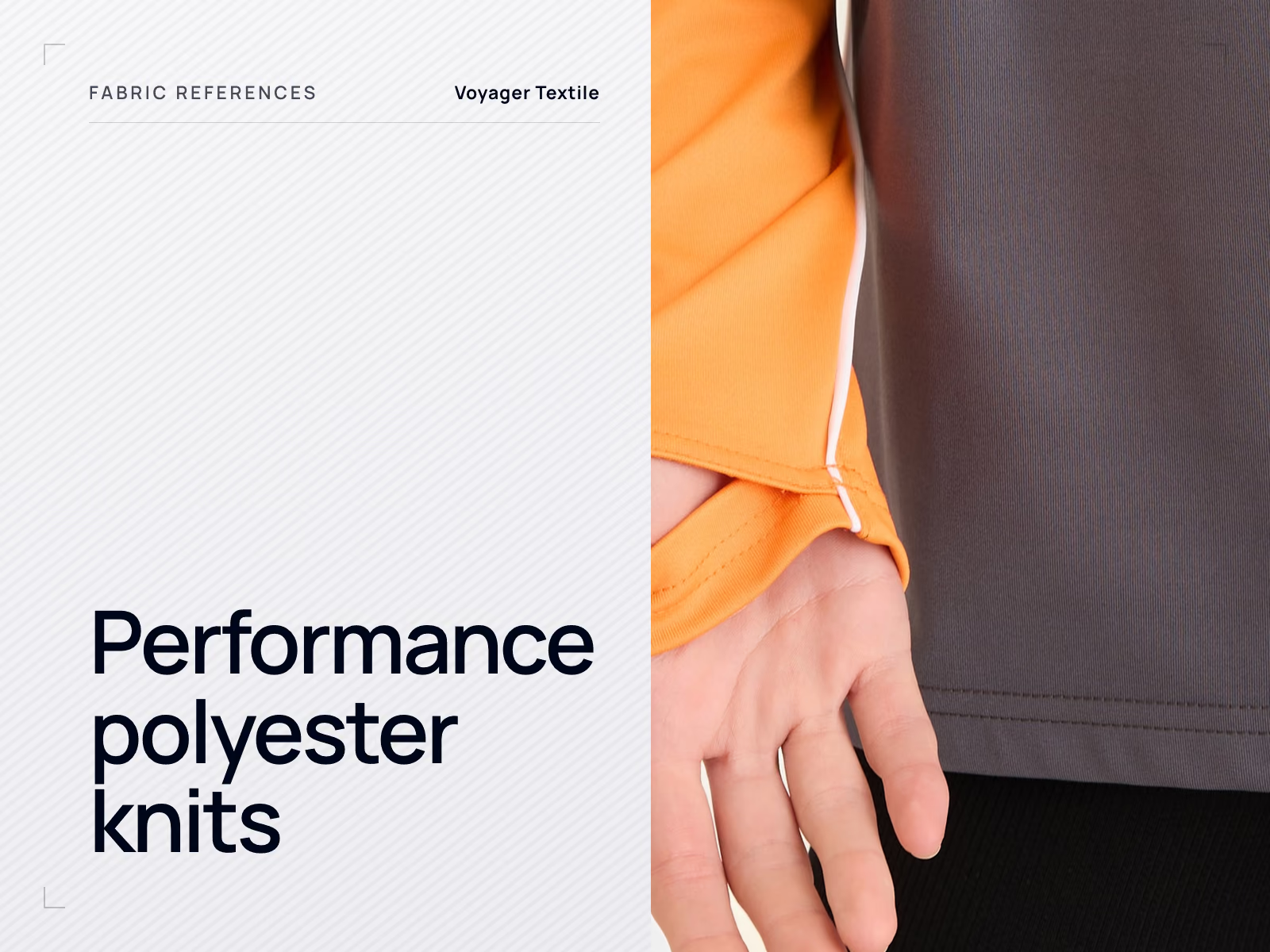
| Polyester interlock | Around 145 to 200 g/m² | Performance versions; see performance polyester knits |
Where interlock is the right specification
- Fitted garments that need recovery rather than stretch, where a jersey would bag at the elbow or the seat.
- Garments with a visible reverse, such as an open collar or a rolled cuff, where a looped jersey back would look unfinished.
- Children's wear, where stability and opacity matter and the garment is washed constantly.
- Medical and service garments, where dimensional stability under repeated hot washing is worth the extra yarn.
- Products with fine embroidery, because a smooth, stable base distorts less under dense stitching than a light jersey.
Behaviour in production and wear
Interlock is easier to spread and cut than single jersey because the edges lie flat, and it is less prone to the twisting that affects single-faced knits. It still shrinks, and it should still be relaxed before cutting and wash tested before bulk, because dimensional change is a property of the fibre and the finishing rather than of the number of needle beds.
In wear, the two behaviours worth specifying against are recovery, which is what stops a fitted garment losing shape, and surface durability, since a smooth double-faced fabric shows pilling clearly. Both are testable, as set out in fabric pilling.
Interlock and piqué
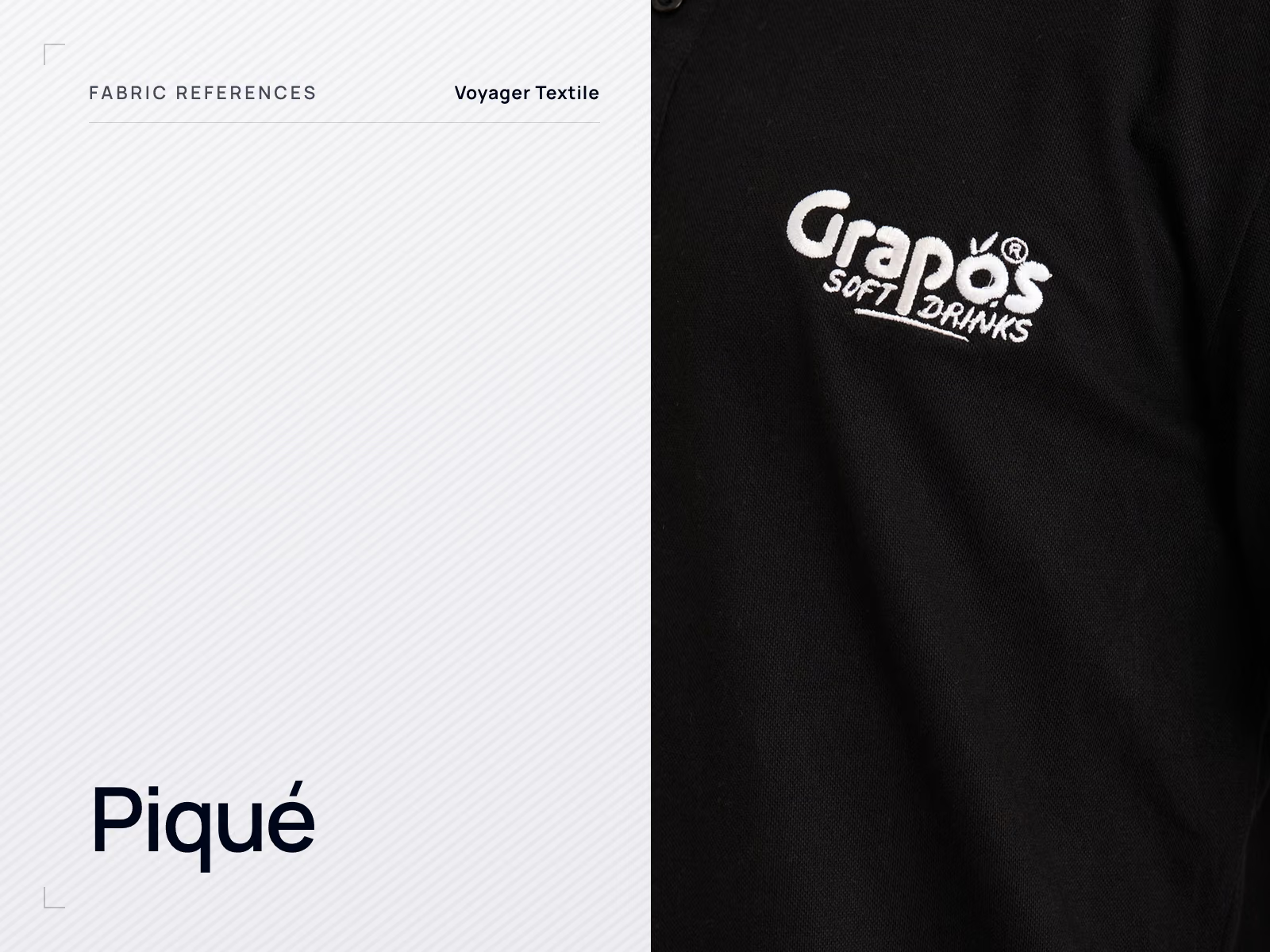
Both are used for polo shirts, and they read completely differently. Piqué carries a visible texture that hides light creasing and gives the classic polo appearance, while interlock is smooth and reads as a cleaner, more modern garment. The comparison is covered from the polo side in the piqué reference.
Questions buyers ask about this fabric
What is the difference between interlock and single jersey?
Interlock is knitted on two needle beds, so it is smooth on both faces, does not curl at the edges and is more stable, with better recovery and less stretch. Single jersey is knitted on one bed, so it has a looped back, curls at cut edges and stretches more. Interlock uses more yarn and therefore costs more.
Is interlock warmer than jersey?
At the same weight it feels denser and closes light better, which reads as slightly warmer, but it is not an insulating structure. For warmth the relevant choices are terry and fleece, covered in French terry and brushed fleece.
Does interlock shrink less than jersey?
It is generally more dimensionally stable, but it still shrinks, and how much depends on fibre, construction and finishing rather than on the structure alone. Relax it before cutting and wash test it before bulk exactly as you would a jersey.
Why is interlock more expensive?
Because the double-knit structure consumes more yarn for the same square metre. That is a material cost rather than a margin, which is why an interlock version of a garment is genuinely more expensive to produce than a jersey one.
Deciding between jersey and interlock?
Send the garment and how it will be worn and washed. We will quote both constructions so the cost difference is visible, and send swatches of each before you decide.
Compare two fabric options