Cotton and blended knits
Rib knit
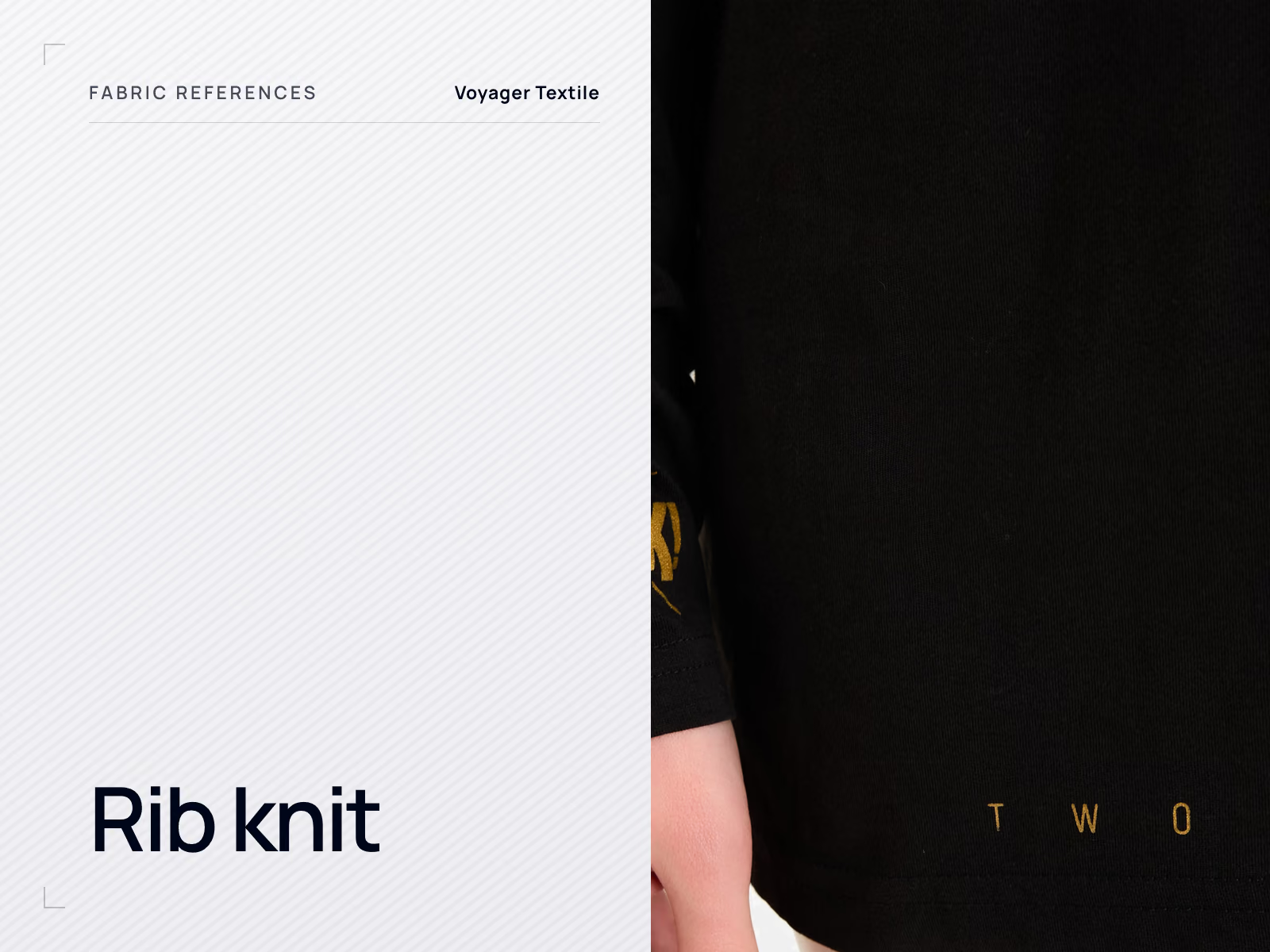
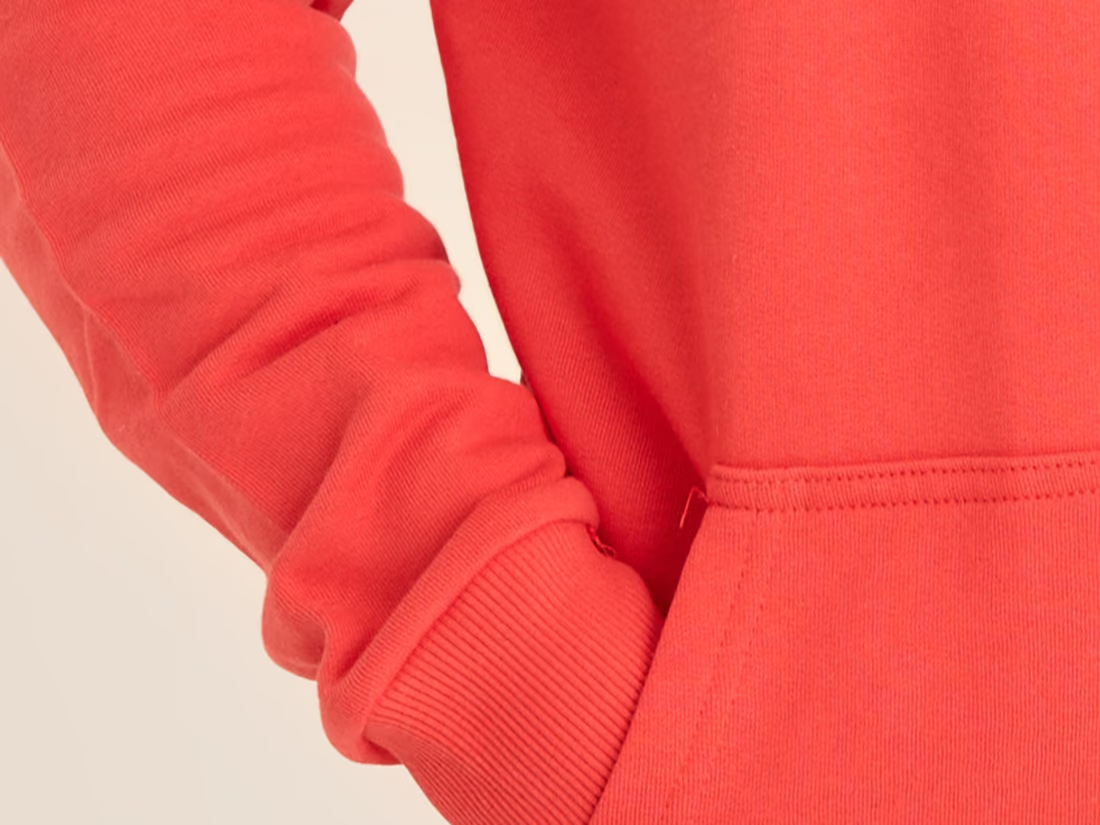
Rib is a knit built from alternating columns of face and reverse loops, which makes it stretch across the width and pull back. It is used where a garment has to open and then close again: necklines, cuffs, waistbands and collars. The property that matters is recovery, and it comes from the rib specification rather than from the sewing.
Contents
How rib works
In a rib structure the fabric alternates between columns of loops facing forward and columns facing backward. Those columns fold against each other at rest, so the fabric is thicker than its yarn suggests and hides a large amount of width within itself. When it is pulled, the columns open and the fabric extends substantially; when released, they close again.
The naming describes the repeat: a 1x1 rib alternates single columns, a 2x2 rib alternates pairs. A 1x1 is finer and flatter and recovers crisply, which suits necklines. A 2x2 is more pronounced, visually stronger and slightly bulkier, and is common on cuffs, waistbands and fashion garments. Wider ribs exist and read as a design feature rather than a trim.
Recovery is a specification, not a hope
Recovery is what stops a cuff going slack and a neckline going wide. It comes from three things, all decided before the garment exists: the structure, the yarn quality, and whether the rib contains elastane. How the rib is then cut and attached is the fourth, and it is covered in rib trims and neck finishing.
| Construction | Indicative weight | Behaviour |
|---|---|---|
| Cotton rib without elastane | Around 260 to 300 g/m² | Recovers by structure alone; adequate for necklines, weaker over time on cuffs |
| Cotton rib with light elastane | Around 280 g/m²; one mill lists a 20/1 2x1 rib with 40 denier lycra at 280 g/m² | Noticeably better recovery, the common specification for cuffs and waistbands |
| Cotton rib with heavier elastane | Around 320 g/m²; the same mill lists a 70 denier lycra version at 320 g/m² | Firm grip and strong recovery; suits heavyweight garments and workwear |
A specification that says only matching rib leaves all three variables to the supplier, and the cheapest acceptable answer is a rib without elastane. That is the origin of many complaints about cuffs going slack, which are covered from the symptom side in why necklines, collars and cuffs lose their shape.
Colour is a separate approval
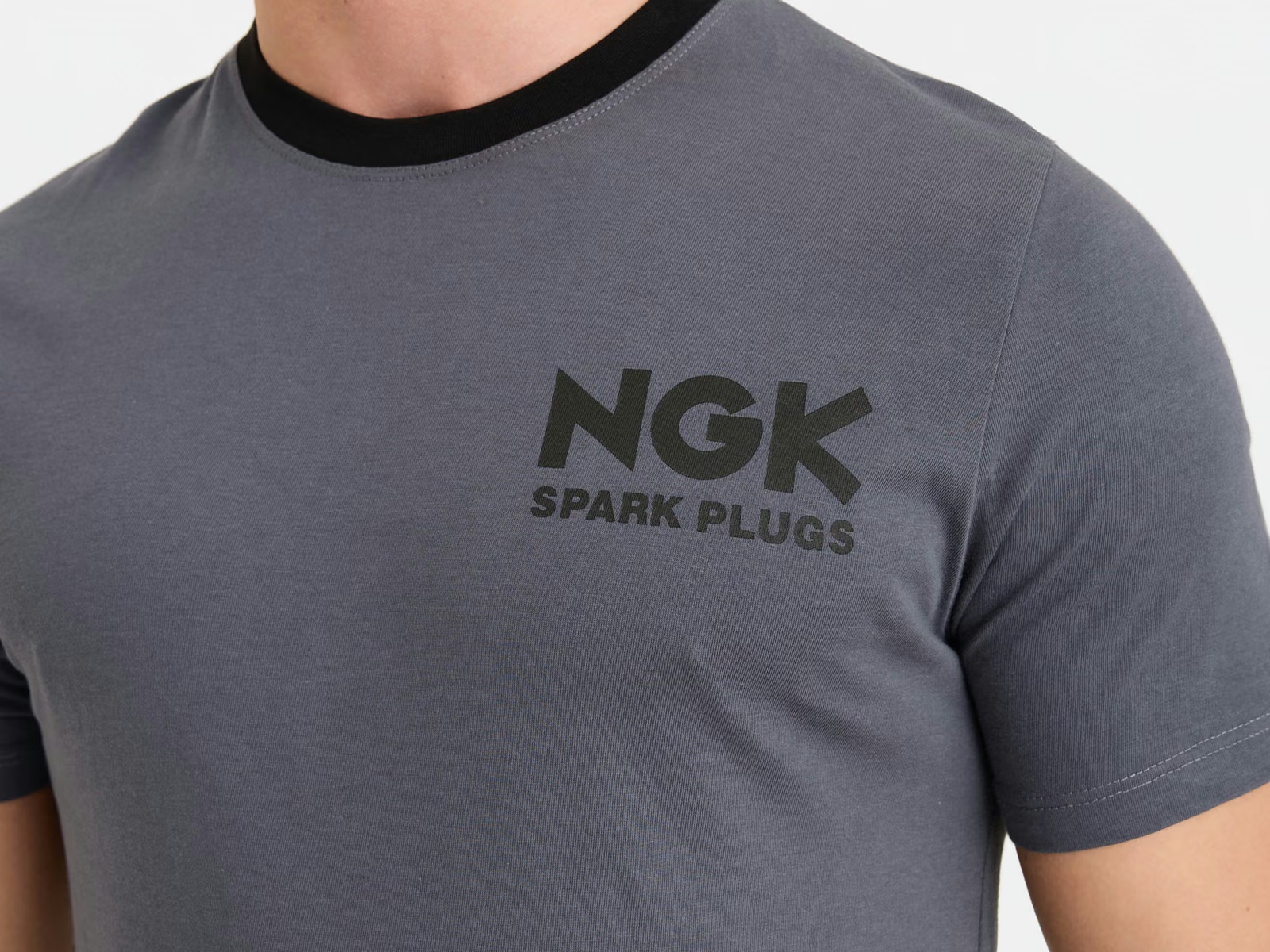
Rib is knitted and dyed separately from the body fabric, often on a different base construction. Two components dyed to the same reference will be close but not identical, and because rib sits directly against the body fabric at the neck and cuff, any difference is visible at exactly the point where it is least forgiving.
The practical rule is to approve the rib against the approved body fabric under controlled lighting rather than against a paper reference. Where a programme uses one colour across several fabrics, one of them should be nominated as the master and everything else matched to it, as set out in the colour matching guide.
Attachment: the setting that decides appearance
Rib is always cut shorter than the opening it is sewn into and stretched as it is attached. That ratio is what makes a neckline lie flat against the body and a cuff grip the wrist. Too little tension and the rib is longer than the opening needs, so it waves; too much and the opening is drawn in and puckered.
The ratio is rarely written in a tech pack, which means it is set by the factory and fixed by the approved sample. For a programme that will be reordered, ask for it to be recorded alongside the specification so it survives a change of production team.
Rib as a whole garment
Beyond trims, rib is used for complete garments: ribbed tops, dresses and activewear sets where the vertical texture is the design. Two things change when it moves from trim to body. Opacity has to be checked under stretch, because a rib opens when worn and a fabric that looks opaque flat may not be. And dimensional behaviour matters more, because a whole garment in a highly extensible structure will follow the body rather than hold a shape.
What to specify
Rib specification checklist
- Structure: 1x1, 2x2 or wider, with the repeat stated
- Composition, including elastane percentage or denier
- Weight target with a range
- Finished depth of each component: neckband, cuff, waistband
- Colour approval route, against the approved body fabric
- Recovery expectation, and that it will be checked after washing
- Whether the same rib will be used on reorders
The simplest useful test on a sample takes ten seconds: stretch a cuff firmly, hold it, release it, and see whether it returns. Repeat it after washing the sample. Many rib problems are visible in that test long before they reach a customer.
Questions buyers ask about this fabric
What is the difference between 1x1 and 2x2 rib?
The repeat. A 1x1 rib alternates single columns of face and reverse loops, giving a finer, flatter fabric that suits necklines. A 2x2 alternates pairs, which is more pronounced and slightly bulkier, and is common on cuffs, waistbands and ribbed garments.
Does rib need elastane?
Not always, but recovery is noticeably better with it, and for cuffs and waistbands on garments that will be worn regularly it is usually worth specifying. Without elastane the rib relies on structure alone, which recovers less well over time.
Why does the rib not match the body colour exactly?
Because it is a separate fabric, usually a different construction, dyed separately. Even at the same colour measurement two structures reflect light differently. Approve the rib against the approved body fabric rather than against a colour reference on paper.
How deep should a cuff or waistband be?
It is a design decision that should be stated as a finished measurement rather than described. Deeper ribs read more traditional and hold more securely; shallower ones read cleaner. Whatever you choose, put the number in the specification so reorders reproduce it.
Specifying rib for cuffs and necklines?
Tell us the garment and how it will be worn and washed. We will propose a rib structure, elastane content and depth, and wash-test the sample so recovery is proven before bulk.
Discuss a rib specification