Jersey and fleece knitwear
Hoodie Manufacturing Process
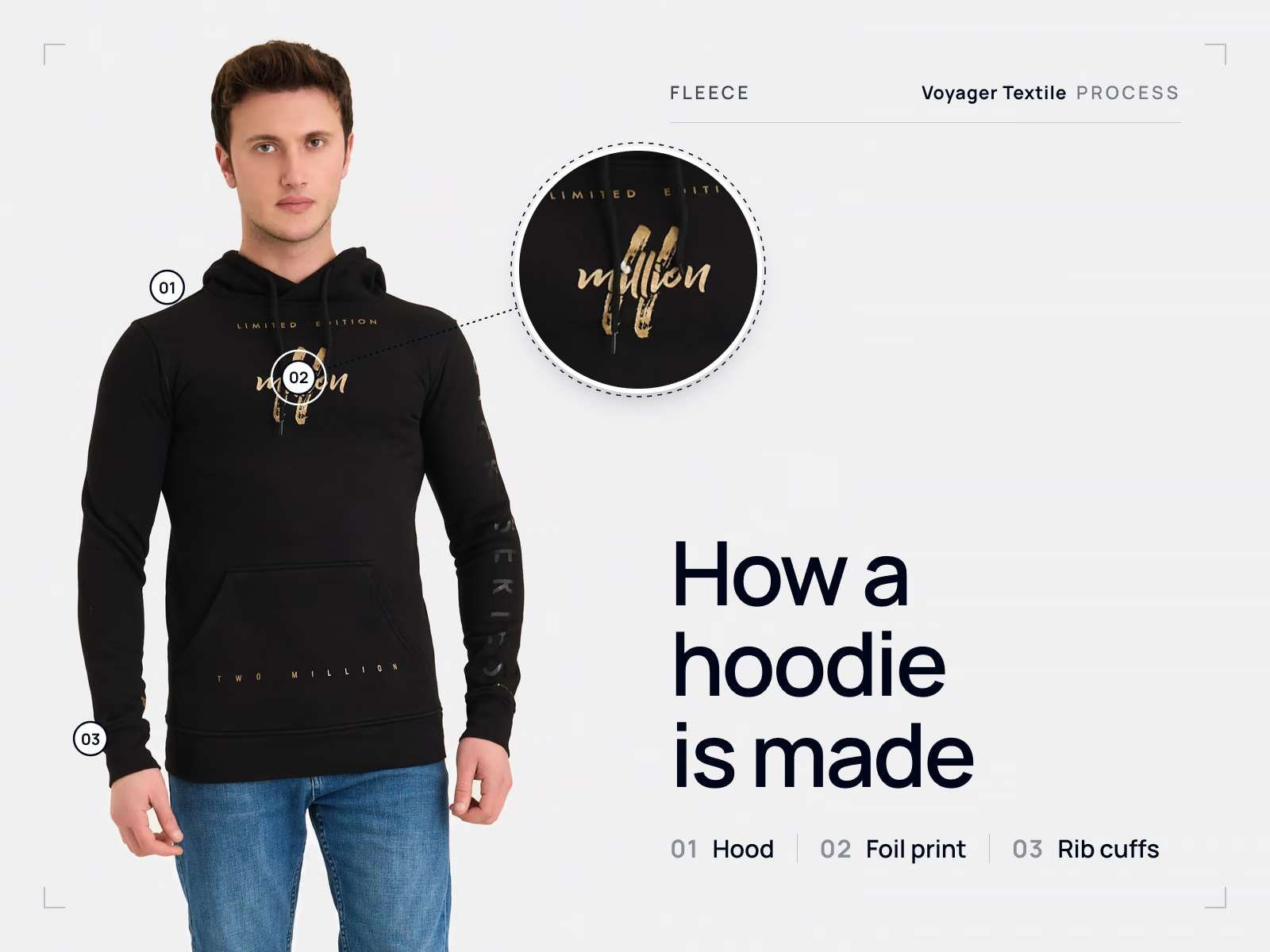
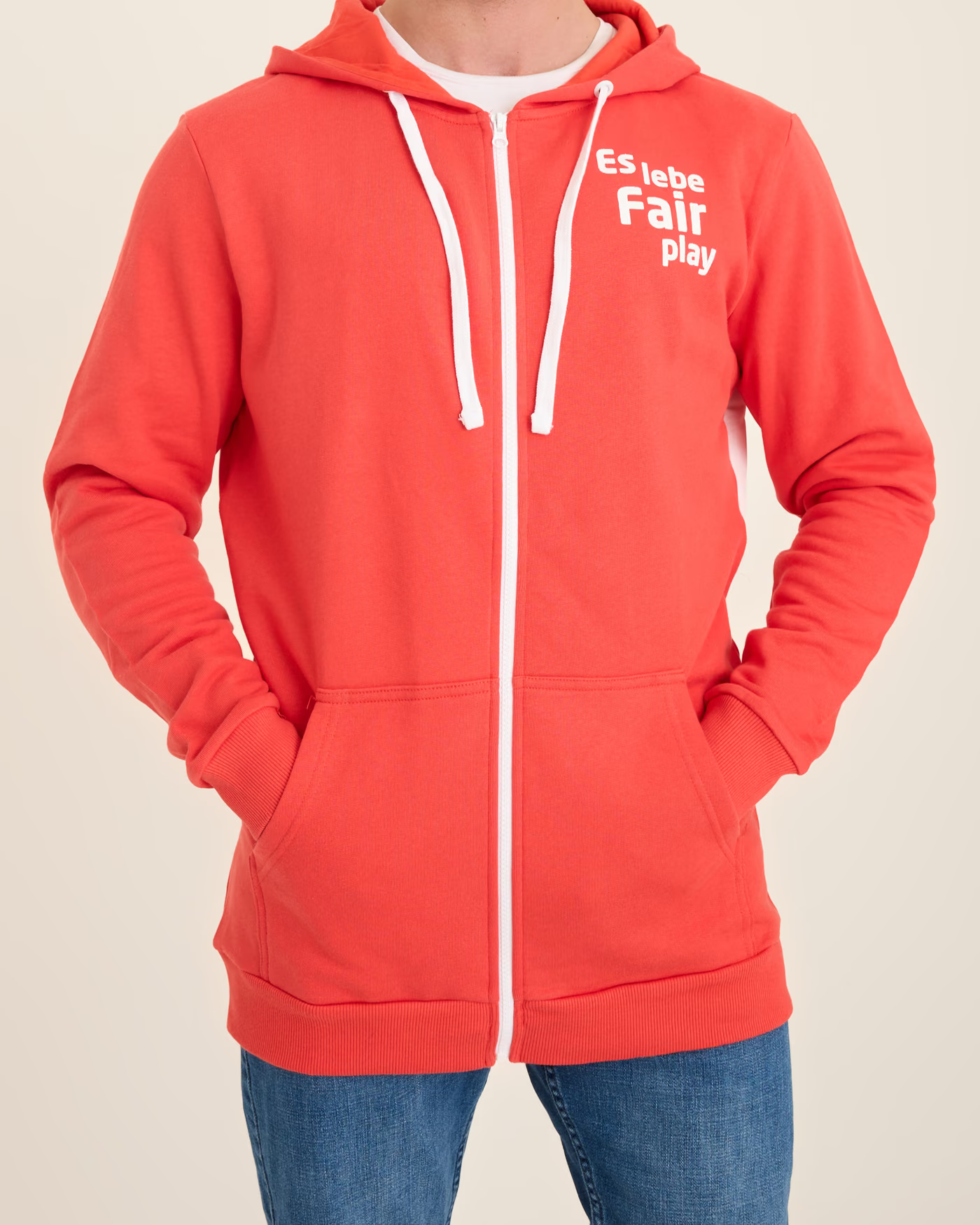
A hoodie is a sweatshirt with three additional assemblies: a hood, a pocket and, on zip styles, a full-length closure. Each is built as a sub-assembly before it meets the body, and each has its own symmetry check. The hood is the component that decides whether the garment looks right, because the eye reads any asymmetry in it immediately.
Contents
Hoodies carry more construction than most other jersey garments in normal production. The body follows the same logic as a crew-neck sweatshirt, so this page concentrates on what is different: building the hood, setting the pocket, handling a zip through ribbed edges, and the checks that catch the faults specific to each.
Hoodie production sequence
Fabric: the same families, different consequences
Hoodies use the same fabric families as sweatshirts: French terry for lighter, more breathable garments and brushed three-thread fleece for the classic weight, compared in detail in French terry and brushed fleece. What changes is that a hoodie has a hood, which doubles the fabric in that area, and often a lined hood, which doubles it again. Weight therefore compounds: the difference between a 300 and a 400 g/m² fleece is felt far more in a hooded garment than in a crew neck.
| Structure | Indicative GSM range | Character in a hoodie | Consideration |
|---|---|---|---|
| French terry | Around 240 to 300 | Lighter hood, softer drape, good for layering | Hood holds less shape; consider a lined hood for structure |
| Standard brushed fleece | Around 300 to 350; one mill lists combed cotton fleece at 320 g/m² ± 5 | The common retail and corporate hoodie weight | Balanced warmth, drying time and carton weight |
| Cotton and polyester fleece | Around 300 to 350; one mill lists a cotton and polyester fleece at 320 g/m² ± 5 | More dimensional stability and colour retention | The usual choice for uniform and merchandise programmes |
| Heavyweight fleece | Around 380 to 500 | Structured, boxy, streetwear positioning | Seam bulk at intersections becomes a real construction issue |
| Rib for cuffs and waistband | Around 280 to 320; one mill lists a 20/1 2x1 rib at 280 and 320 g/m² depending on elastane | Carries the recovery at wrist and hem | Specify quality and depth rather than accepting a default |
Where a hoodie is being developed for a streetwear brand, proportion and fabric quality do more for perceived value than weight alone. That commercial argument is set out in the streetwear sourcing guide. Merch, promotional textiles, corporate wear and workwear programmes for hoodies are covered on the hoodie and sweatshirt manufacturer page.
Building the hood
The hood is assembled as its own sub-assembly before it reaches the body, and its construction is a specification decision rather than a factory default. The panel options and their effect on hood shape are compared in hood construction.
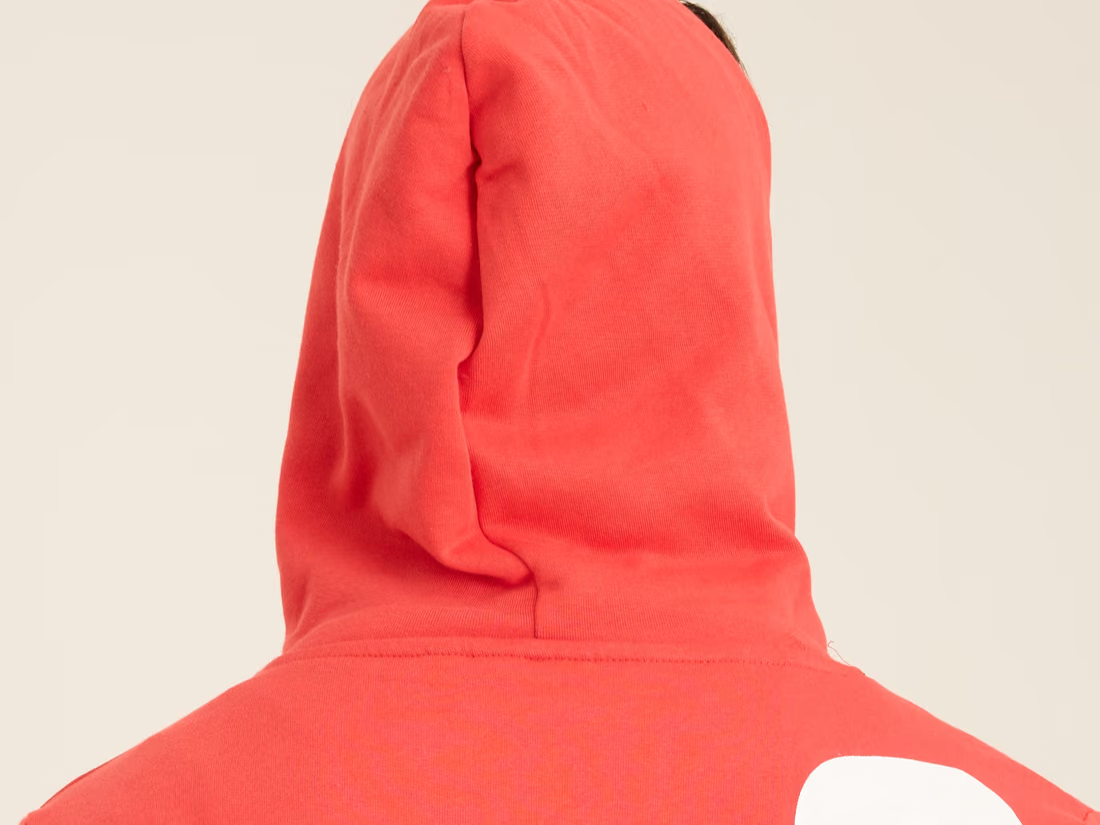
- Two-panel hood. Two mirrored panels joined by a centre seam running over the crown. Simple, economical, and the seam is visible from behind.
- Three-panel hood. Two side panels and a centre gusset panel. It gives a rounder shape that sits better on the head, and it is the more considered construction.
- Lined or double-layer hood. A second layer inside, in the same fabric or a contrast. It gives the hood structure so it stands rather than collapsing, adds warmth, and creates a clean inside face. It also doubles the fabric consumption for that component.
- Unlined hood with a folded edge. Lighter and cheaper, common on French terry styles.
Hood depth and height are measurements that belong in the tech pack, because they decide whether the hood frames the face or swallows it. On oversized styles they are often deliberately increased, and that change has to be graded across sizes rather than applied as one value.
Drawcords and eyelets
The drawcord runs through the hood opening, exiting through two eyelets at the front. Small decisions here are visible on every garment.
- Eyelet type. Metal eyelets are the traditional solution and need to be set cleanly through both hood layers. Stitched buttonholes are an alternative that avoids metal entirely, which some programmes require.
- Eyelet position. Set symmetrically either side of centre front, at a stated distance apart and from the hood edge.
- Cord specification. Width, construction, colour and whether the ends are tipped with metal or plastic, or simply knotted.
- Cord length. Specify it, and check that both ends hang equally when the garment is finished. Uneven cord ends are one of the most common finishing faults on hoodies.
The kangaroo pocket
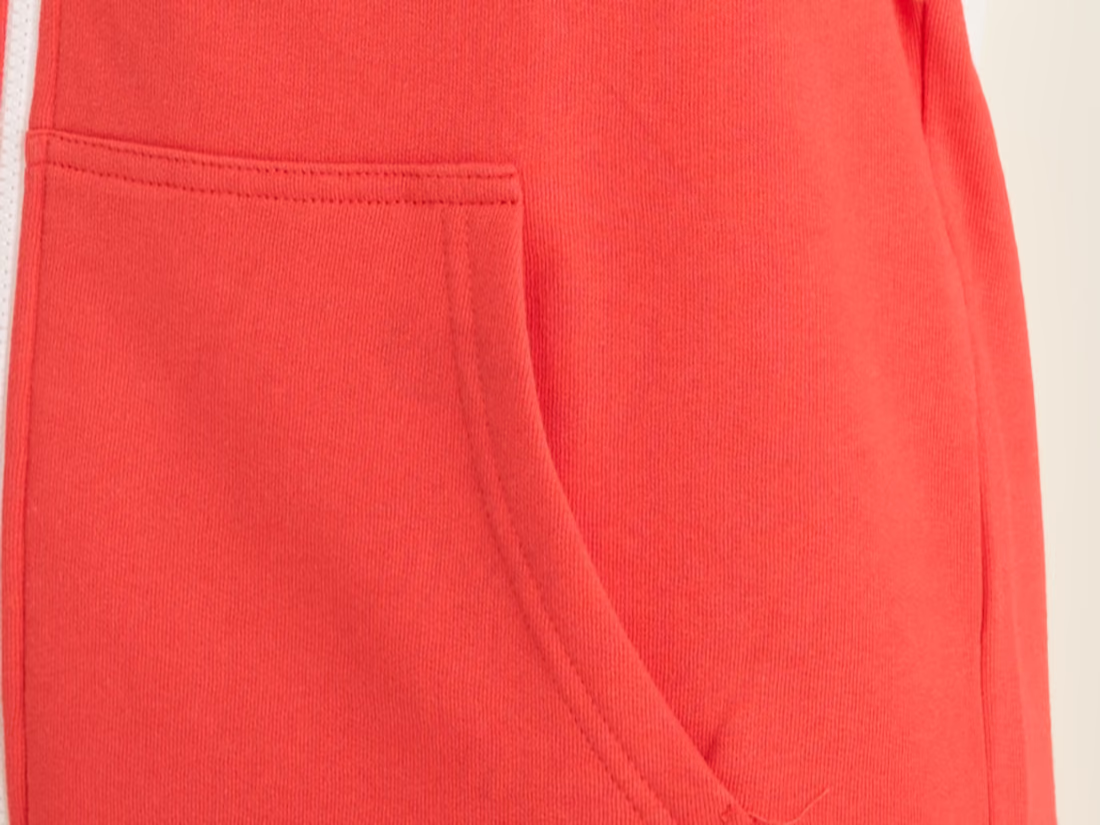
A front pouch pocket is built as a separate piece and attached to the body panel, usually before the side seams are closed. Three specification points decide whether it looks right and survives use.
- Placement. Measured from the bottom hem and from centre front. Two hoodies with identical measurements everywhere else read differently if the pocket sits 15 mm higher.
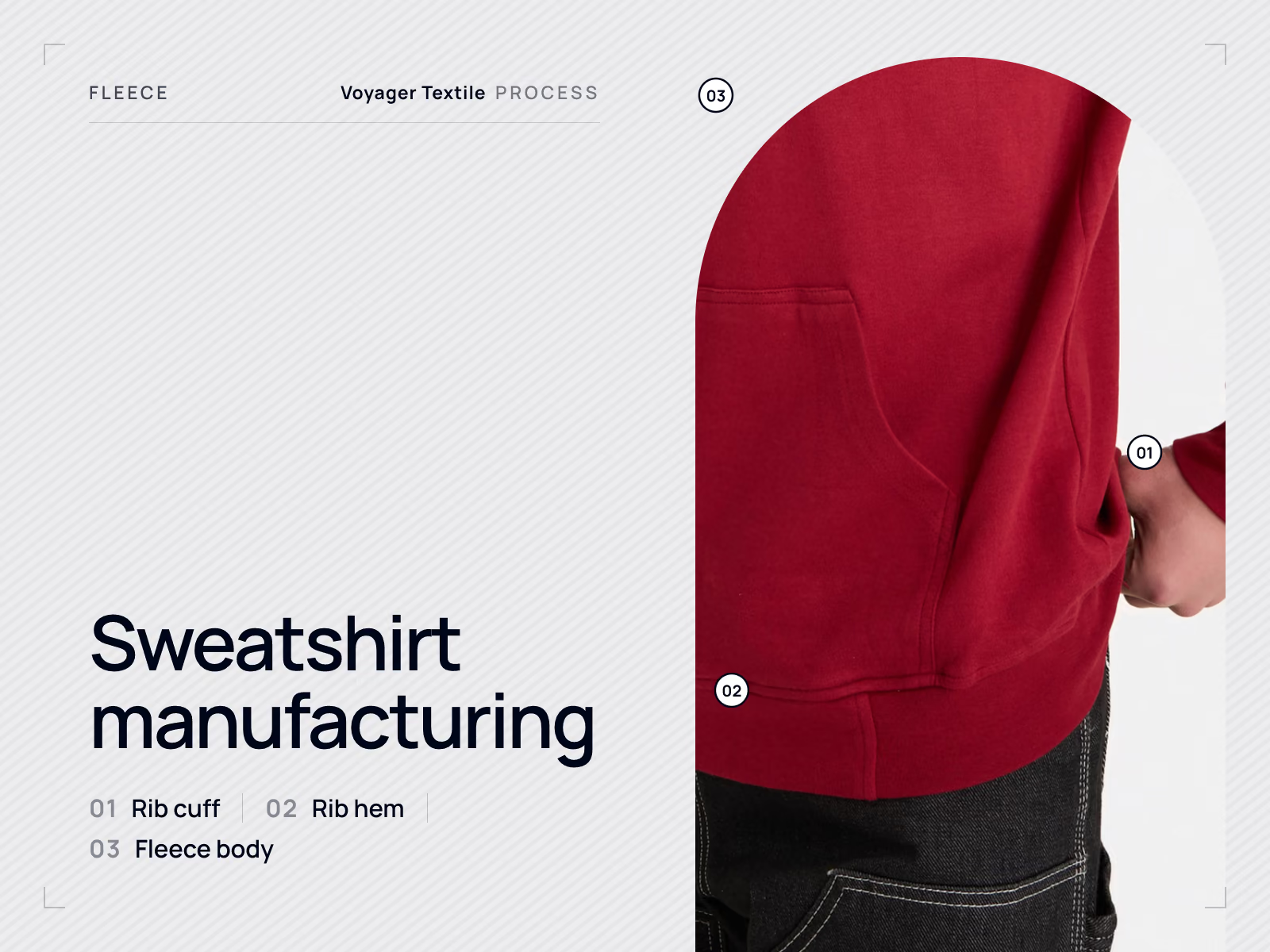
- Opening angle and finish. The diagonal opening is usually reinforced, often with a bartack at each end, because that is where the pocket takes stress from hands and phones.
- Pocket bag construction. Whether the pocket is a single applied panel or has a separate bag, and how the bottom edge is caught into the waistband.
On zip styles the pouch becomes two separate pockets divided by the closure, which changes the pattern and the reinforcement at the top of each opening.
Zip hoodies: what changes
Adding a zip changes more than one operation. The front becomes two panels, the hood is built to meet the closure cleanly at the neckline, the waistband is interrupted, and the pockets are split. The zip itself becomes a component decision.
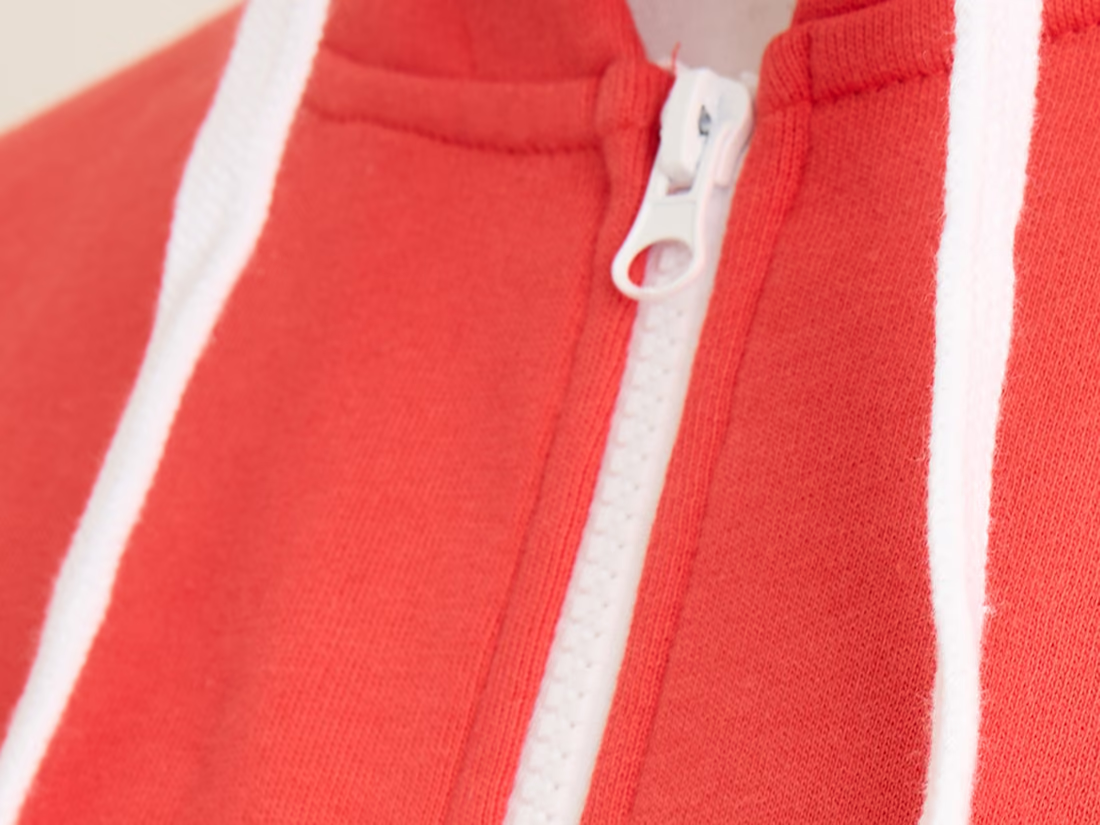
- Zip type and length. Usually an open-ended zip running the full front. Length is graded with the body, so it is ordered per size.
- Tape colour and teeth finish. Both are visible when the garment is worn open, and both can be specified or branded.
- Puller. A standard puller, a custom moulded puller or a cord pull. A custom puller is one of the cheapest ways to make a garment feel specified rather than generic.
- Facing or placket. Whether the zip is set into a facing that hides the tape from inside.
- Chin guard. A small piece at the top of the zip that stops the slider touching the skin.
Alignment is the risk. The zip must run straight, the two front halves must meet level at the hem, and the waistband and pocket openings must match across the closure. It is checked with the garment zipped and lying flat.
Decoration and when it happens
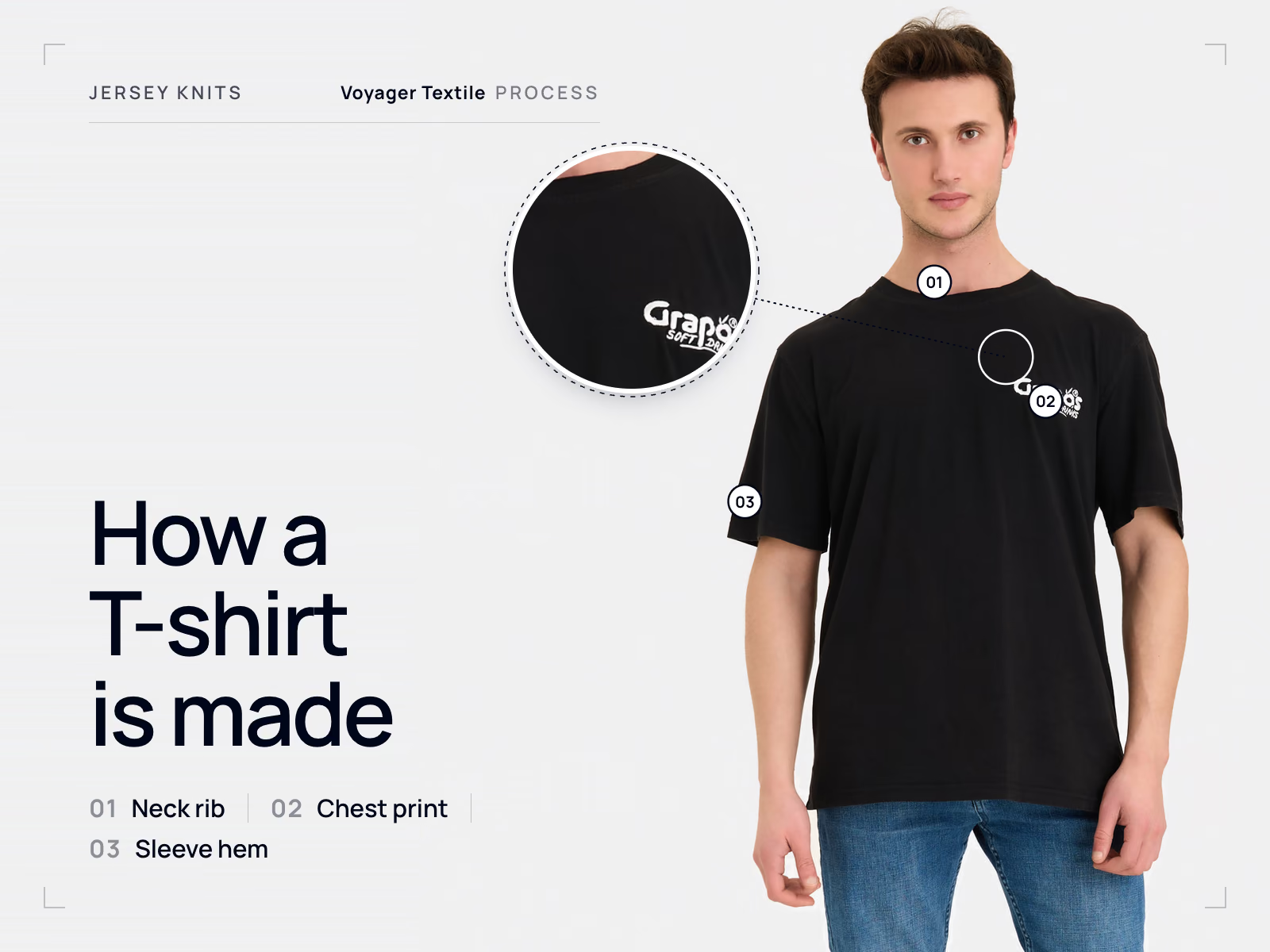
Large chest and back prints go on the flat panel before assembly. This matters more on a hoodie than on a tee, because a finished hoodie has a hood, a pocket and ribs in the way, and pressing evenly through those layers is difficult.
- Screen printing on panels. The standard for bold graphics at volume. On brushed fleece the nap absorbs ink, so solid artwork reproduces better than fine line work.
- Transfer printing, including DTF. For photographic or multi-colour designs, and for smaller placements on finished garments.
- Embroidery. Chest and sleeve positions are worked on panels with backing chosen for the fabric. Embroidering through a completed hood or across a pocket edge is avoided because the layers distort.
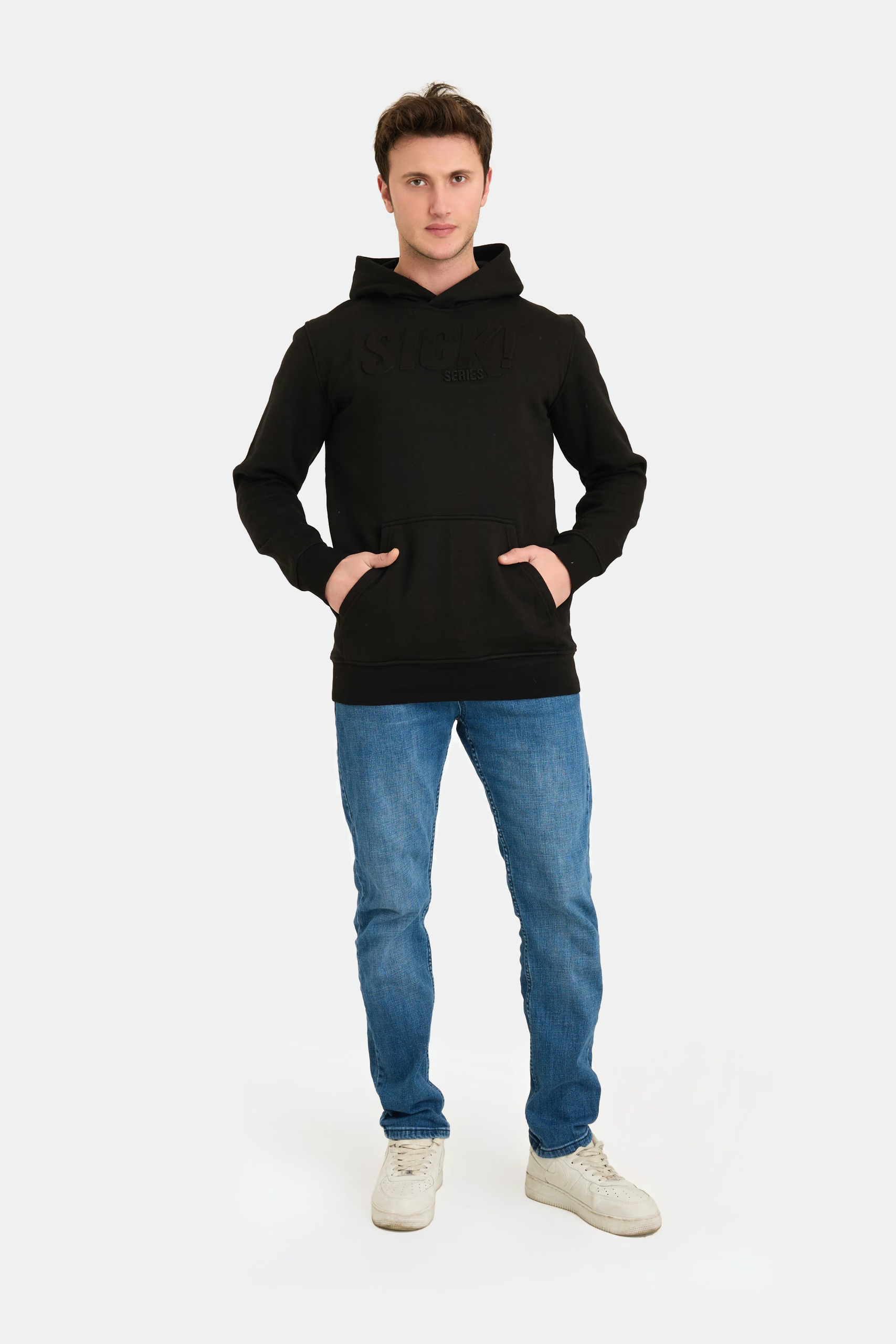
- Raised and embossed effects. Tonal branding that suits heavy fleece, run with specialist partners where the fabric and artwork allow.
- Appliqué. A stitched fabric piece, durable and effective at large scale on heavyweight garments.
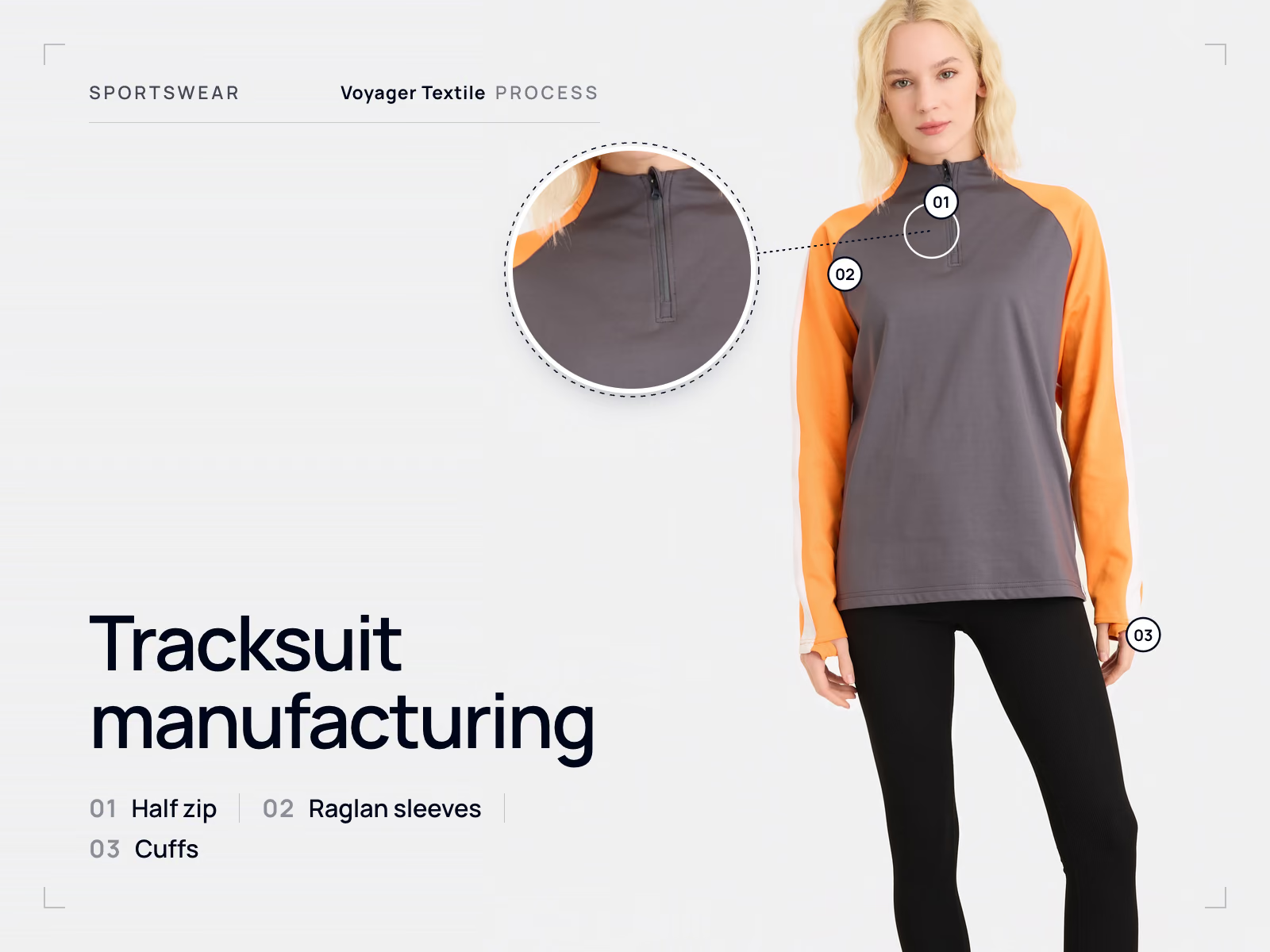
- Printed neck labels, custom drawcords and zip pullers. Branding through components rather than decoration, the same approach used on tracksuits.
Assembly sequence
- Panels are cut with the nap in one direction and bundled by size and colour.
- Chest and back decoration is applied to flat panels.
- The hood is assembled: panels joined, lining attached where used, edge finished, eyelets set.
- The pocket is prepared and attached to the front panel, with the opening reinforced.
- Shoulders are joined and taped.
- Sleeves are set, then side and underarm seams closed.
- The hood is attached to the neckline and the seam is finished, often with a tape that covers it inside.
- Cuffs and waistband are attached; on zip styles the closure is set and the facing finished.
- The drawcord is inserted and cut to length.
- Labels are attached, the garment is trimmed, steamed, measured and inspected.
Quality control: hoodie-specific checks
| Check | What it catches |
|---|---|
| Hood symmetry, left against right | The fault the eye notices first |
| Eyelet position and setting through both layers | Off-centre eyelets, loose or crushed metal |
| Drawcord ends equal when hanging | A common finishing fault on hoodies |
| Pocket placement and both opening angles | A pocket set high, low or asymmetrically |
| Bartack presence at pocket openings | The first point of failure in wear |
| Zip alignment, level hem when closed | Front halves that do not meet |
| Rib recovery at cuffs and waistband | Rib too weak for the garment weight |
| Seam bulk at side seam and waistband intersection | Distortion and skipped stitches in heavy fleece |
| Nap direction across panels and hood | Panels reading as different shades |
What to put in a hoodie tech pack
- Fabric: terry or fleece, composition, target GSM with a range, brushed or unbrushed.
- Hood: number of panels, lined or unlined, lining fabric, hood height and depth, edge finish.
- Eyelets: type, material, position and spacing.
- Drawcord: width, construction, tipping and finished length.
- Pocket: type, placement from hem and centre front, opening angle, reinforcement.
- Zip, where used: type, length per size, tape colour, puller and chin guard.
- Rib: structure, depth and elastane content for cuffs and waistband.
- Measurements with tolerances, including hood height and depth.
- Artwork: files, physical size and placement measured from a fixed point.
- Labels: main, size and care, plus back-neck finishing under the hood.
- Colours for body, rib, cord, zip tape and lining.
- Packing: fold, bag, hangtag, carton assortment.
Sampling
Photograph the sample worn as well as flat. A hood only reveals its shape on a head: whether it stands, how it frames the face, and whether the drawcord sits where it should. On oversized styles this is the difference between a considered proportion and a garment that is simply too big.
Ask for the sample in the intended fabric weight, because hood behaviour changes completely between a 280 g/m² terry and a 420 g/m² fleece. A pre-production sample with the actual zip, cord, eyelets and labels is the reference bulk is inspected against, as set out in the sampling guide.
What drives cost
- Fabric weight and hood construction. A lined three-panel hood in heavy fleece is a significant share of the garment's fabric.
- Number of operations. Hood, pocket, zip and rib attachment are each separate steps.
- Trims. Zip, eyelets, cord and custom pullers are components with their own minimums and lead times.
- Decoration. Print colours and placements, or embroidery stitch count.
- Fabric consumption. Oversized patterns and single-direction nap cutting both raise it.
Before you send a hoodie RFQ
- Pullover or zip
- Fabric type, composition and target GSM
- Hood construction: panels, lining, height and depth
- Eyelet and drawcord specification
- Pocket type and placement
- Zip type, tape colour and puller, if applicable
- Rib specification for cuffs and waistband
- Fit intent, size range and split
- Artwork with size and placement
- Colours for body, rib and trims
- Label set, packing and quantity per colour
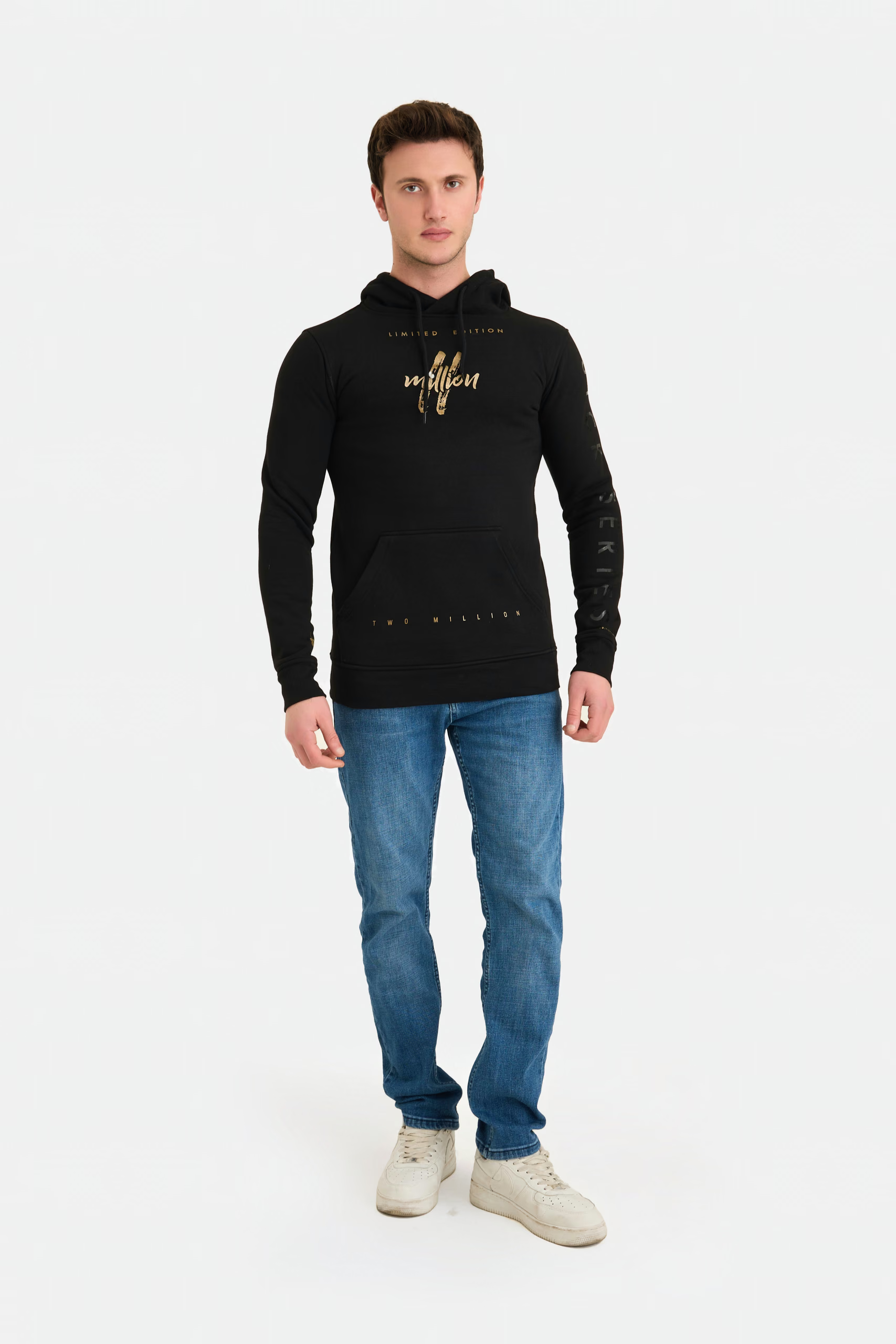
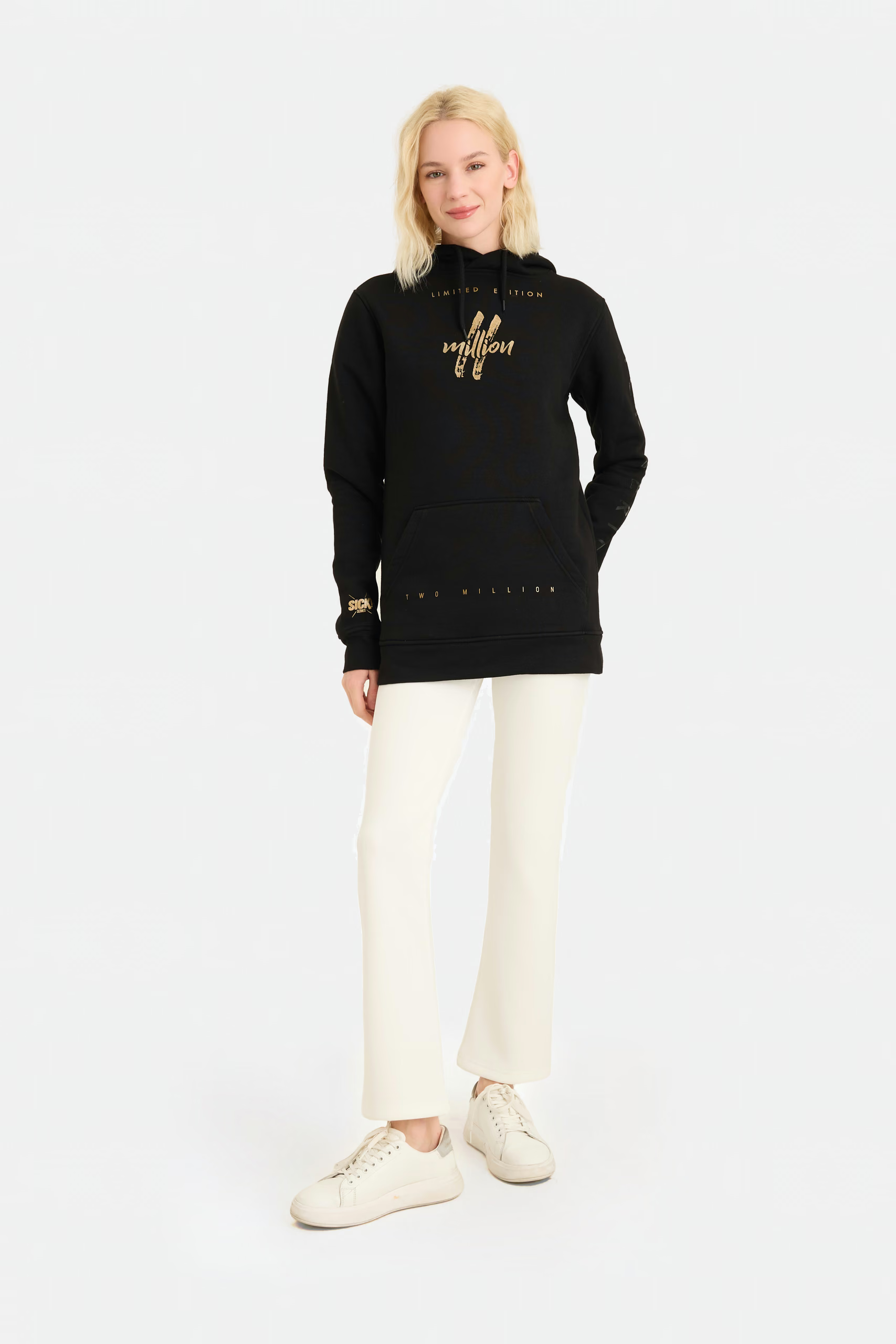
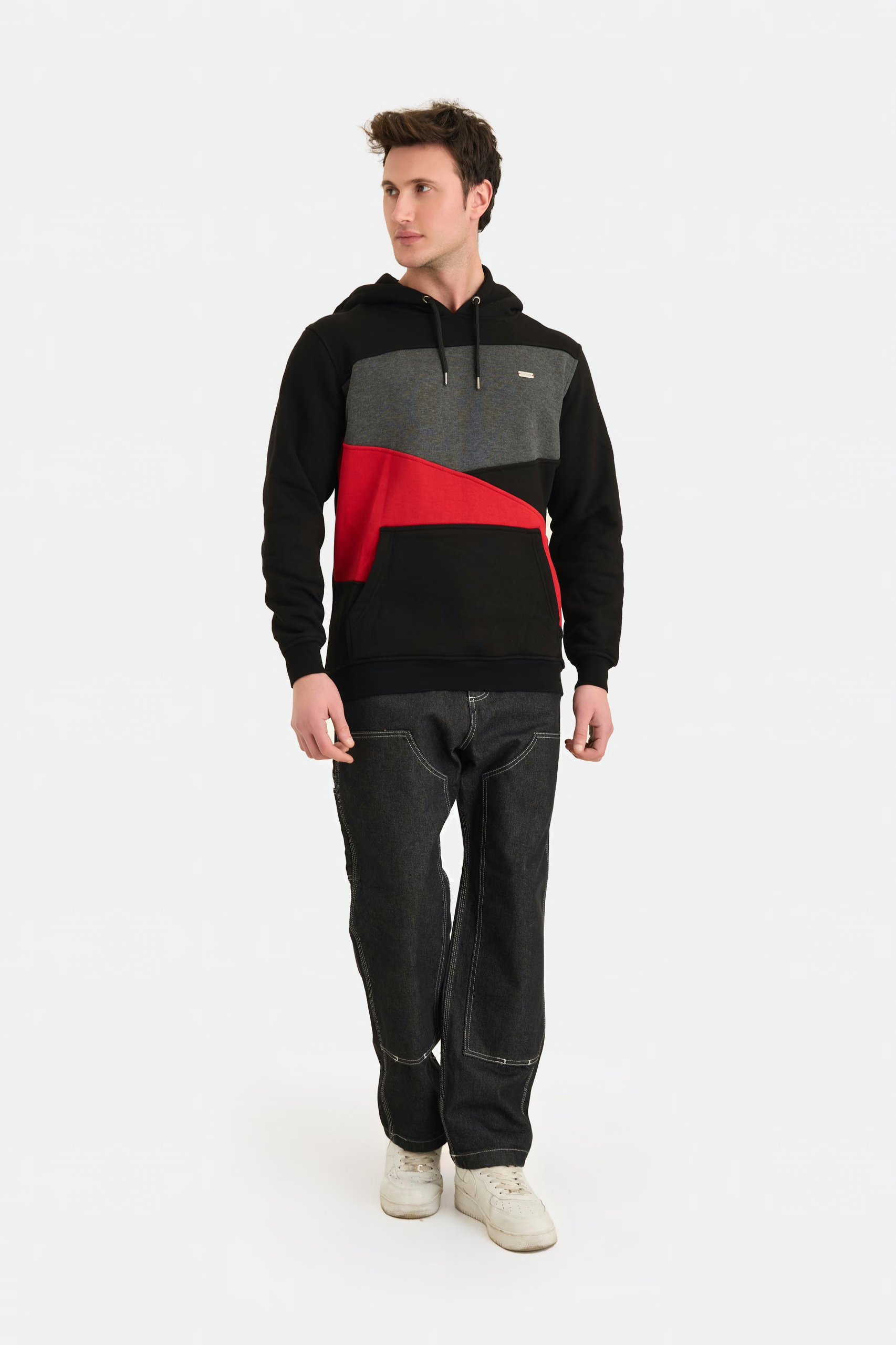
Hoodie references produced by Voyager Textile
Pullover and zip constructions produced to customer specification. Quote an article code to start from an existing build.
Buyer questions
How is a hoodie manufactured?
Fleece or terry fabric is relaxed and cut with the nap in one direction, and body prints are applied to the flat panels. The hood and the pocket are assembled as separate sub-assemblies, the body is joined at shoulders, sleeves and side seams, then the hood is attached, cuffs and waistband are set, the zip is fitted on zip styles, and the drawcord is inserted before finishing and inspection.
What fabric is normally used for hoodies?
Brushed three-thread fleece for classic hoodie weights, and French terry for lighter, more breathable garments. Cotton and cotton-rich blends are the norm; polyester-rich blends are used where dimensional stability under frequent washing matters more than hand-feel.
What GSM is suitable for a heavyweight hoodie?
Roughly 380 g/m² and above is where a hoodie starts to read as genuinely heavyweight, against about 300 to 350 g/m² for a standard one. Above that range the garment becomes warm, slower to dry and noticeably heavier to ship, so the weight should follow how it will be worn.
Is French terry or fleece better for a hoodie?
Neither is better in general. Fleece is brushed inside, so it is warmer, denser and holds hood shape better. French terry is unbrushed, lighter and more breathable, with a cleaner inside face. Choose from the climate and the intended use, and consider a lined hood if you want structure in a terry garment.
What is the difference between a two-panel and a three-panel hood?
A two-panel hood joins two mirrored pieces with a centre seam over the crown. A three-panel hood adds a centre gusset between the two sides, which produces a rounder shape that sits better on the head. The three-panel version costs slightly more and generally looks more considered.
When is embroidery applied to a hoodie?
Chest and sleeve embroidery is normally worked on the cut panel before assembly, with backing chosen for the fabric. Embroidery across a finished hood or over a pocket edge is avoided, because the layered fabric distorts under dense stitching.
Why do hoodie drawcords end up uneven?
Because the cord length is not specified, or because it is inserted without being centred before cutting. Both are avoidable: state the finished cord length in the tech pack and include equal cord ends as an item on the final inspection checklist.
Can a hoodie be produced in a custom Pantone colour?
Yes. Fabric is dyed to your reference with a lab dip approved before bulk dyeing, and the rib, cord and zip tape are matched to the approved fabric as separate components. At Voyager Textile custom Pantone colour production starts at 300 pieces.
What should be included in a hoodie tech pack?
Fabric and weight, hood construction with height and depth, eyelet and drawcord specification, pocket type and placement, zip details where used, rib specification, a measurement chart with tolerances, artwork with placements, the label set, and packing instructions.
How long does bulk hoodie production take?
At Voyager Textile, bulk production typically takes 4 to 5 weeks after sample approval, depending on the product and the project. Fabric sourcing, custom dyeing, trims such as zips and eyelets, sampling and transport are additional.
Ordering this garment from Voyager Textile
- Every garment is made to order, to your own design.
- The minimum order is 300 pieces per colour and per style. Sizes can be split inside the 300, and a custom Pantone colour carries the same minimum of 300 pieces. Polyester-based fabrics are assessed separately.
- A sample takes 5–7 business days. Bulk production takes 4–5 weeks after sample approval; development, sampling and shipping are additional.
- Cutting, sewing, embroidery, transfer printing and sublimation printing are done in our own factory in Türkiye. Screen printing and garment washing are coordinated with partner facilities.
Quantities, timing and any open point are confirmed per project at the quotation stage, once we have your specification or tech pack.
Request a quoteDeveloping a hoodie?
Send the fabric weight, hood construction, trims and artwork, or a reference hoodie you want matched. We sample in the intended fabric and photograph it worn, so hood proportion can be judged before bulk.
Send a hoodie brief