Outerwear and shells
Jacket and Coat Manufacturing Process
A lined jacket is two garments built separately and joined: a shell and a lining, each with its own panels, pockets and finishing. Add interlining, insulation or quilting and the layer count rises again. Outerwear costs more than most other categories because every one of those layers is a set of operations, and because errors compound through them.
Contents
- The layers, and what each one does
- Quilting happens before cutting
- Building the shell
- Building the lining, and joining the two
- Closures, pockets and hardware
- Decoration on outerwear
- Pressing as construction
- Quality control: outerwear-specific checks
- What to put in a jacket tech pack
- Sampling and lead time
- Buyer questions
Buyers often underestimate outerwear, because a jacket looks like a heavier version of a shirt. It is not. A lined jacket contains two complete garments that must be built to match each other, and a quilted or insulated one adds a third layer that changes the fabric before cutting even starts. This page explains where the work actually goes.
Lined jacket production sequence
The layers, and what each one does
| Layer | Typical material | Purpose | Consequence for production |
|---|---|---|---|
| Shell | Woven twill, canvas, denim, taslan, ripstop or coated polyester | Appearance, abrasion resistance, wind resistance | Decides the machinery, needle and thread |
| Lining | Taffeta, twill lining or mesh | Comfort, slip when putting the garment on, covers construction | A second complete garment to assemble |
| Interlining | Fusible or sew-in interlining | Structure at collars, facings, plackets and cuffs | A fusing operation with its own settings and quality checks |
| Insulation | Wadding or fibre fill in a stated weight per square metre | Warmth | Adds bulk at every seam and usually requires quilting |
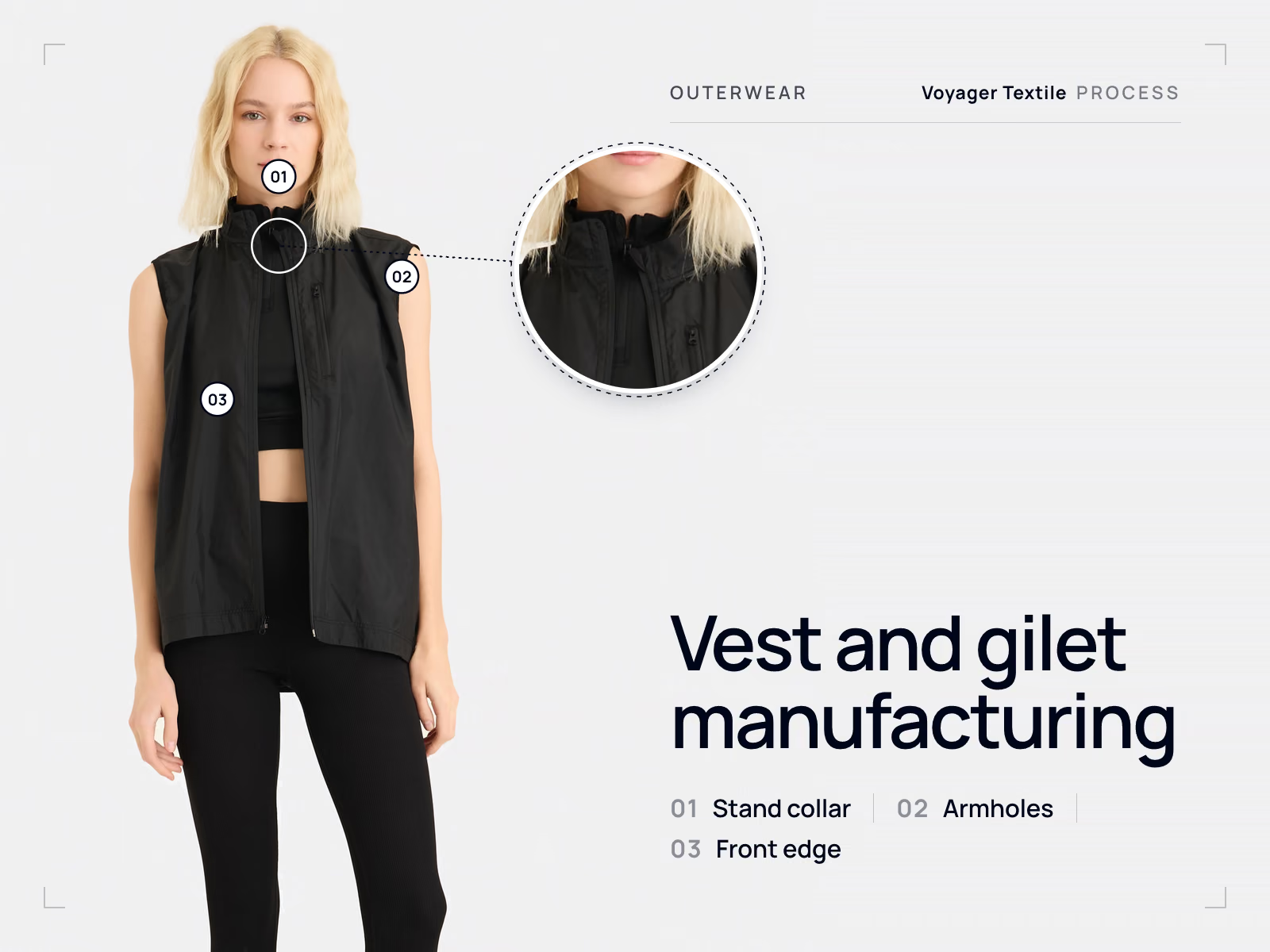
Not every jacket has all four. An unlined overshirt has one, a bomber usually has two, a quilted jacket has three or four, and a gilet applies the same layer logic without sleeves. Each addition is a step change in cost, not an increment, which is why an accurate quotation depends on stating the layer structure rather than describing the style.
Quilting happens before cutting
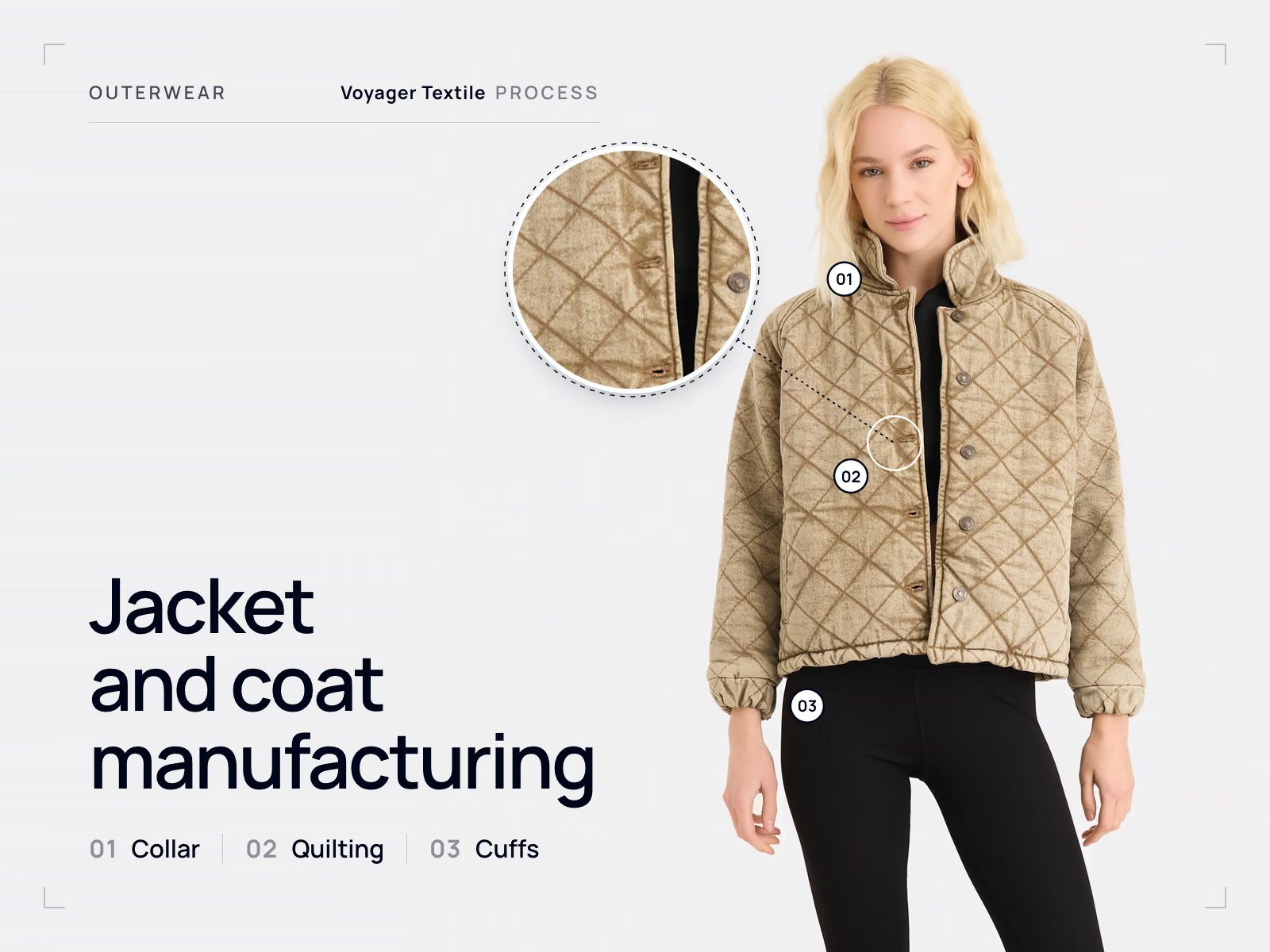
This is a process point many buyers do not expect. On a quilted jacket, the shell fabric, the wadding and often the lining are quilted together as flat yardage first, and the panels are then cut from that quilted fabric. Quilting after cutting is done for engineered panel designs, but the standard route is to quilt the material first.
- Quilt pattern. Horizontal channels, boxes, diamonds or an engineered pattern. Specify the channel width or box dimensions as measurements.
- Alignment across seams. Because panels are cut from quilted yardage, the quilting lines should meet at the side seams and shoulders. This is a cutting decision and it is checked on the sample.
- Wadding weight. Stated in grams per square metre. It is the number that decides warmth, bulk and cost, and it should be in the specification rather than described as light or warm.
- Stitch density. Closer quilting holds the fill more securely and gives a flatter look; wider channels look softer and allow more loft.
Building the shell
The shell is assembled in a conventional order, with all the sub-assemblies prepared first.
- Facings, collar pieces and any structural areas are fused with interlining.
- Pockets are constructed: welt, patch, zipped or in-seam, each with its own bag.
- Front and back panels are joined, with any yokes or panel seams closed.
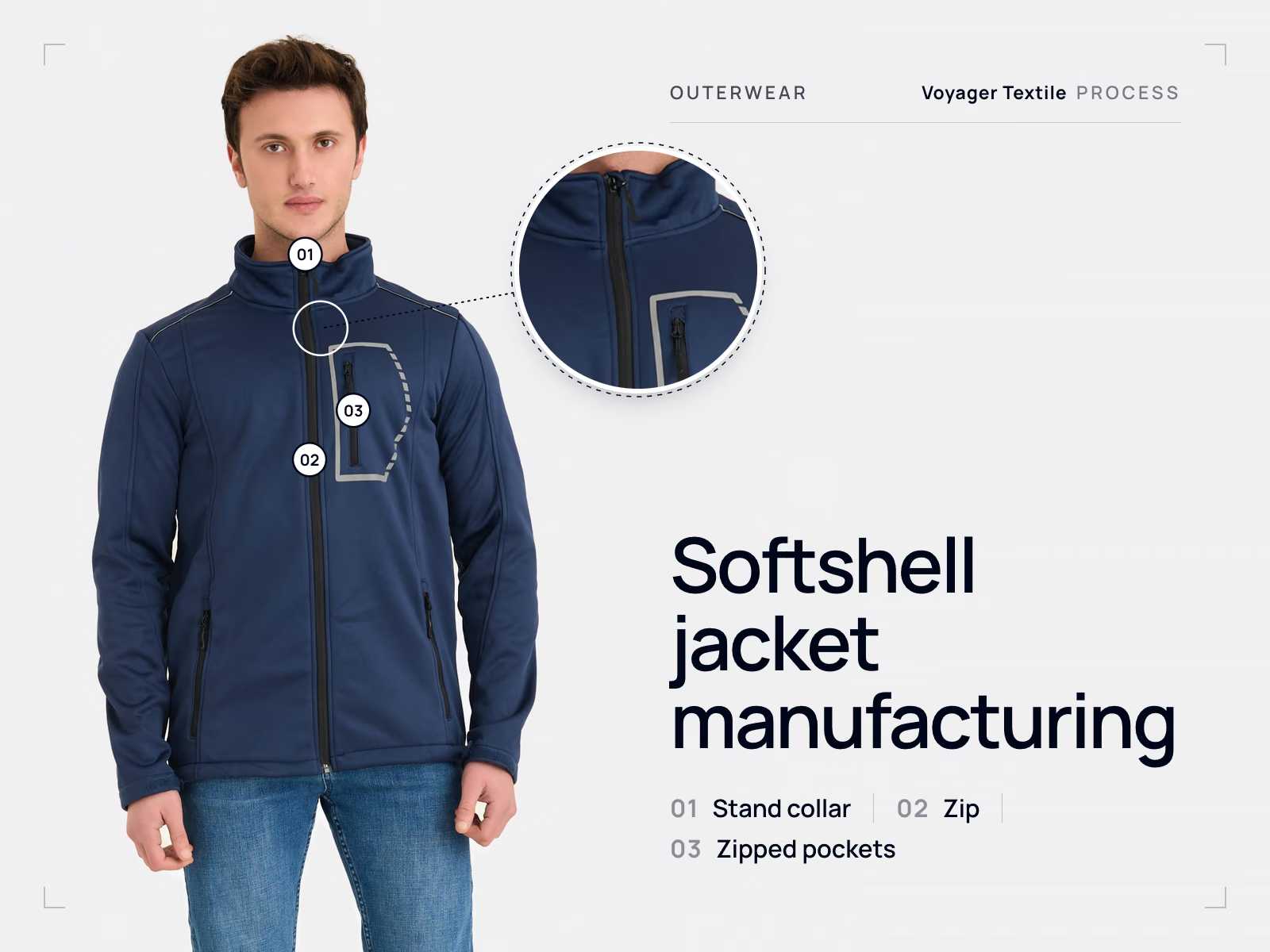
- The collar is assembled and attached, with the stand set so it sits correctly.
- Sleeves are set into the armholes, then the underarm and side seams are closed in a continuous operation.
- Cuffs are constructed: rib, elasticated, tabbed or plain with a placket.
Building the lining, and joining the two
The lining is assembled as its own complete garment, with its own sleeves and often its own internal pocket. It is then joined to the shell, usually at the facings, hem and cuffs, in the operation commonly called bagging out. What the lining, the facings and the interlinings each contribute is set out in linings, facings and interlinings.
- The lining is cut with a small amount of extra length and ease, so it does not pull the shell out of shape when the wearer moves.
- A pleat at the centre back of the lining gives movement room across the shoulders.
- The lining sleeve must match the shell sleeve in length once both are attached, or the cuff twists.
- Where an internal pocket is required, it is built into the lining rather than added later.
- The join at the hem determines whether the lining hangs free or is stitched down; both are valid and each looks different.
Many lining faults are the same fault: a lining that is slightly too short or too tight, which drags the shell and makes the jacket look badly hung. It is checked by putting the garment on and reaching forward.
Closures, pockets and hardware
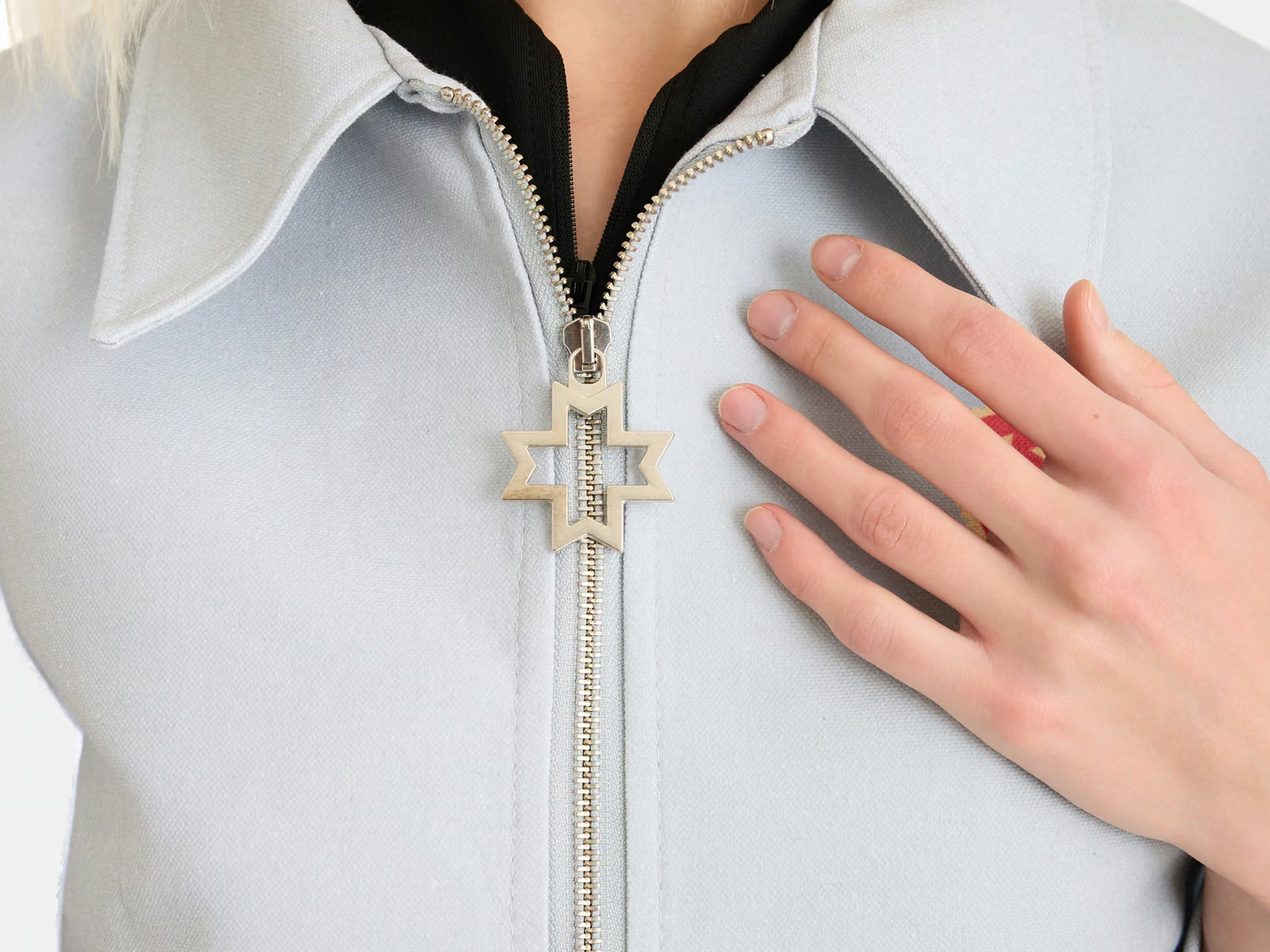
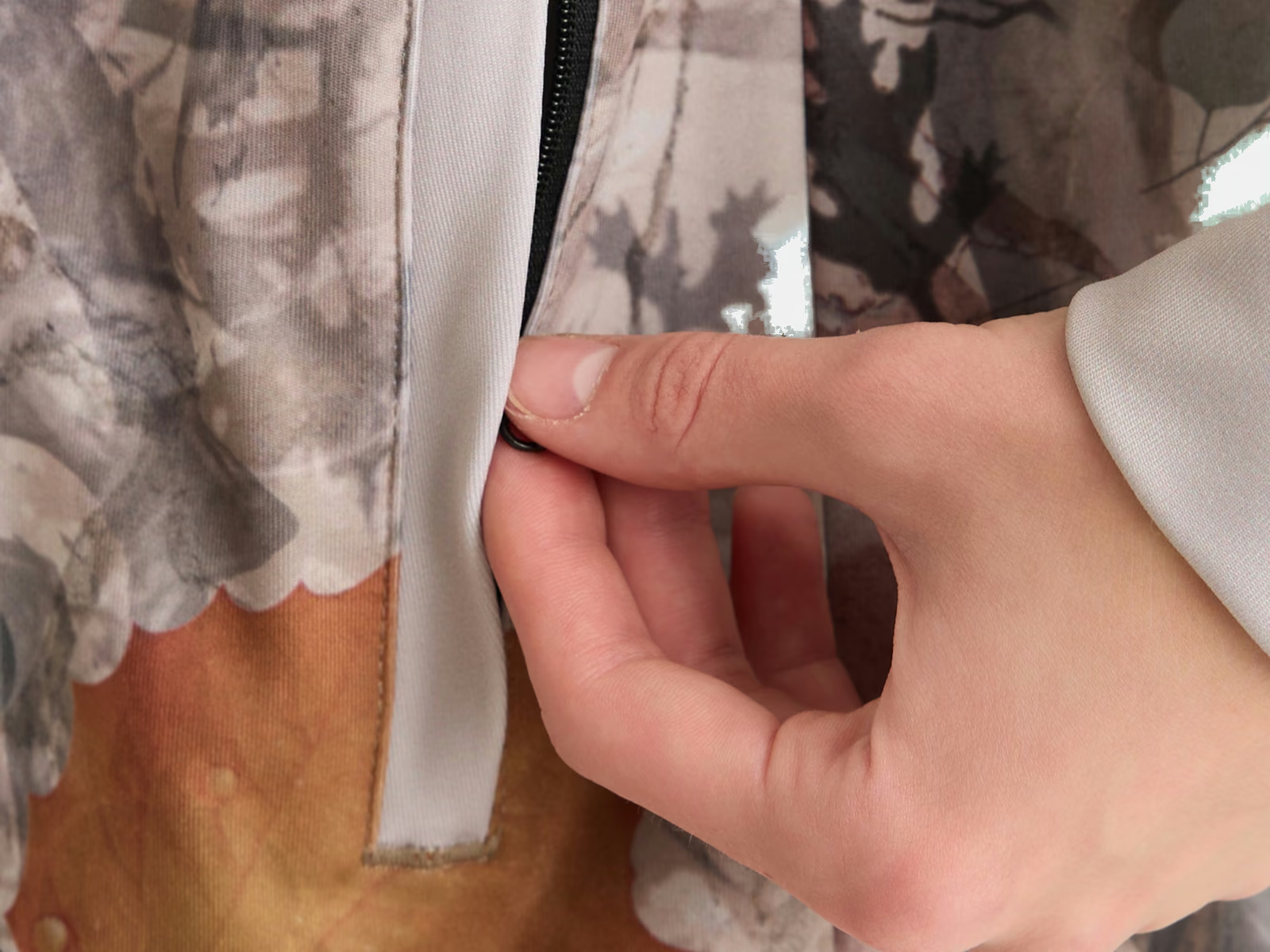
- Main zip. Open-ended and graded per size. A two-way zip lets the wearer open the hem while the chest stays closed, which is worth specifying on longer coats.
- Snap or button placket. An alternative or an addition to a zip, and a distinct construction with its own interlining and spacing.
- Storm flap. A covering strip over the zip. On a standard jacket it is a wind and appearance detail rather than a waterproofing feature.
- Pockets. Welt pockets read smart, patch pockets read casual and utilitarian, zipped pockets add security. Pocket bags must be anchored so they do not sag with use and do not print through the shell.
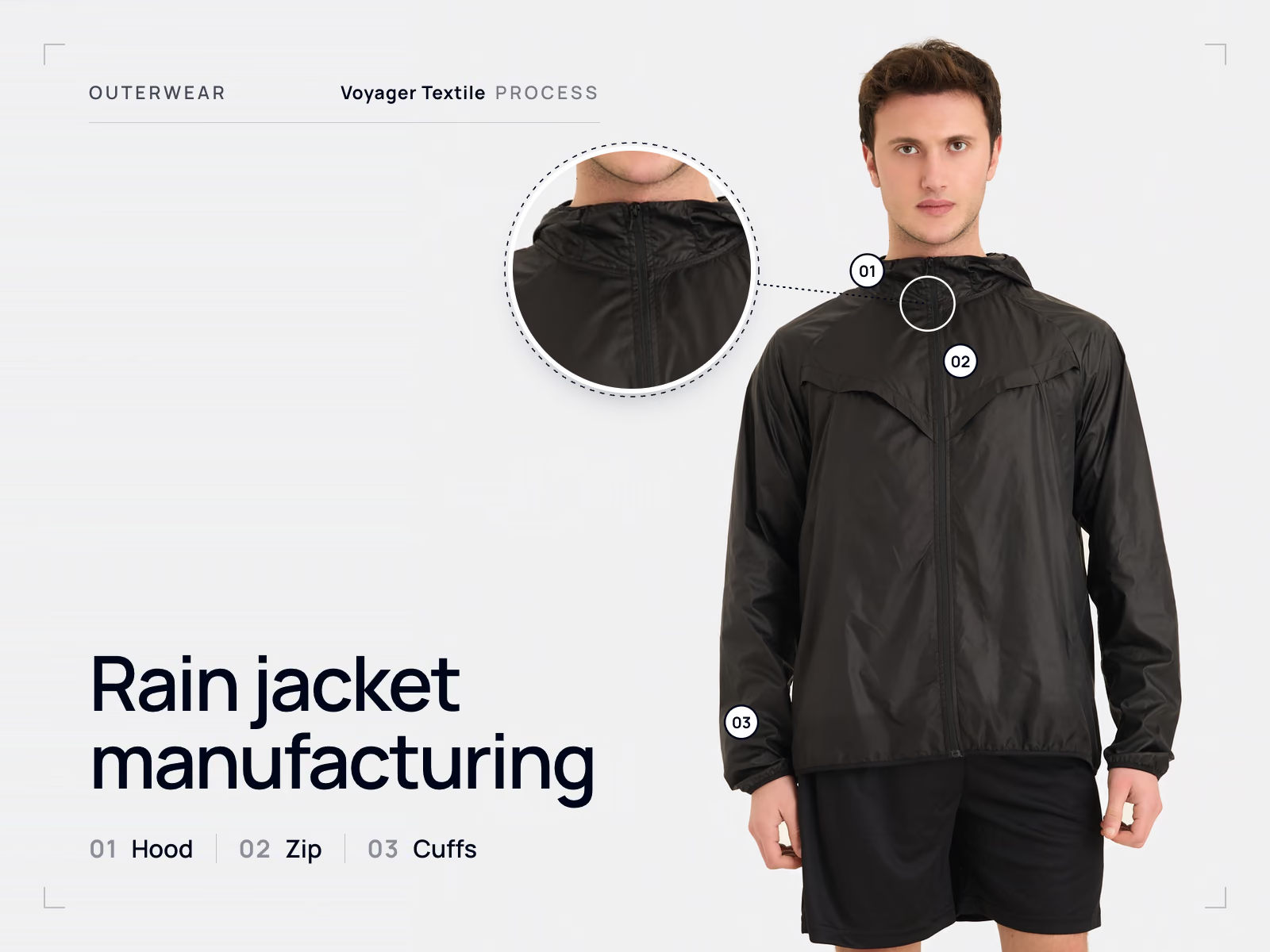
- Cuffs and hem. Rib cuffs and hem on a bomber, adjustable tabs on a field jacket, drawcords with toggles on a longer coat.
- Hardware. Zips, snaps, rivets and pullers are components with lead times and are frequently the branding opportunity buyers forget.
Decoration on outerwear
- Embroidery worked on the shell panel before assembly, so the stitching does not pass through lining or insulation.
- Applied patches, which suit heavier shells and avoid a large stitched area on the garment itself.
- Transfer printing on flat shell areas, with the temperature tested on the actual fabric first, since coated and technical shells are heat sensitive.
- Contrast panels, piping and topstitching, which are construction-level branding with no fabric consequence.
- Branded hardware: custom zip pullers, snaps and drawcord tips.
On any garment with insulation, avoid decorating through the quilted area if possible. A needle through a quilted panel passes through the fill and can distort the loft locally.
Pressing as construction
Woven outerwear is pressed at many points during assembly: seams pressed open, facings and collars pressed as they are built, pockets pressed before topstitching. The finished garment is then pressed to shape. On coated, laminated or heavily insulated shells, pressing temperature must be controlled or the fabric surface and the fill are damaged, so the pressing plan is part of the specification rather than a default.
Quality control: outerwear-specific checks
| Check | What it catches |
|---|---|
| Lining length and ease against the shell | A common outerwear fault: a lining that drags |
| Sleeve length, shell against lining | Twisted cuffs |
| Quilting alignment across seams | Panels cut without regard to the quilt pattern |
| Fill distribution and loft consistency | Uneven wadding or migration |
| Zip alignment and level hem when closed | A highly visible construction fault |
| Two-way zip function at both ends | Hardware that fails on first use |
| Fusing adhesion at collars and facings | Bubbling that appears after washing |
| Pocket bag anchoring and show-through | Sagging pockets and visible bags on light shells |
| Topstitch straightness and consistency | The detail buyers judge outerwear quality by |
| Symmetry: pockets, panels, cuffs | Left and right drifting apart |
What to put in a jacket tech pack
- Layer structure: shell, lining, interlining and insulation, each specified by material and weight.
- Shell fabric composition, weave, weight and finish.
- Lining fabric and where it is used, including sleeve lining if different.
- Insulation type and weight in grams per square metre, plus quilt pattern with channel or box dimensions.
- Collar construction and stand height; hood if fitted, and whether it is detachable.
- Main closure: zip type and length per size, or placket with snap spacing, plus storm flap.
- Pocket types, positions, dimensions and bag fabric.
- Cuff and hem treatment, including tabs, ribs or drawcords.
- Topstitching positions and widths.
- Hardware: zips, snaps, pullers, with material and finish.
- Measurements with tolerances, including sleeve length and body length.
- Decoration method, artwork and placement, with a fabric test where required.
- Pressing constraints for the specific shell.
- Labels and packing, including whether garments ship folded or hanging.
Sampling and lead time
Outerwear usually needs more sampling rounds than most other categories, because there are more variables and because the interaction between shell and lining only appears in a made garment. Budget for a development sample, at least one revision and a pre-production sample in the real materials.
Component lead times also matter more here. Zips, snaps, wadding and lining are separate purchases, and a jacket cannot be assembled until all of them are in house. Confirm trim availability at quotation stage rather than after the sample is approved. Bulk production at Voyager Textile typically takes 4 to 5 weeks after sample approval, depending on the product and the project.
Before you send a jacket RFQ
- Layer structure: lined, unlined, insulated or quilted
- Shell fabric and weight, or the intended conditions
- Lining fabric preference
- Insulation weight and quilt pattern, if applicable
- Closure type: zip, placket or both, and whether two-way
- Pocket configuration, inside and out
- Collar and hood requirement
- Cuff and hem treatment
- Hardware and any branded components
- Decoration method and artwork
- Size range, split and measurement chart
- Whether goods ship folded or hanging
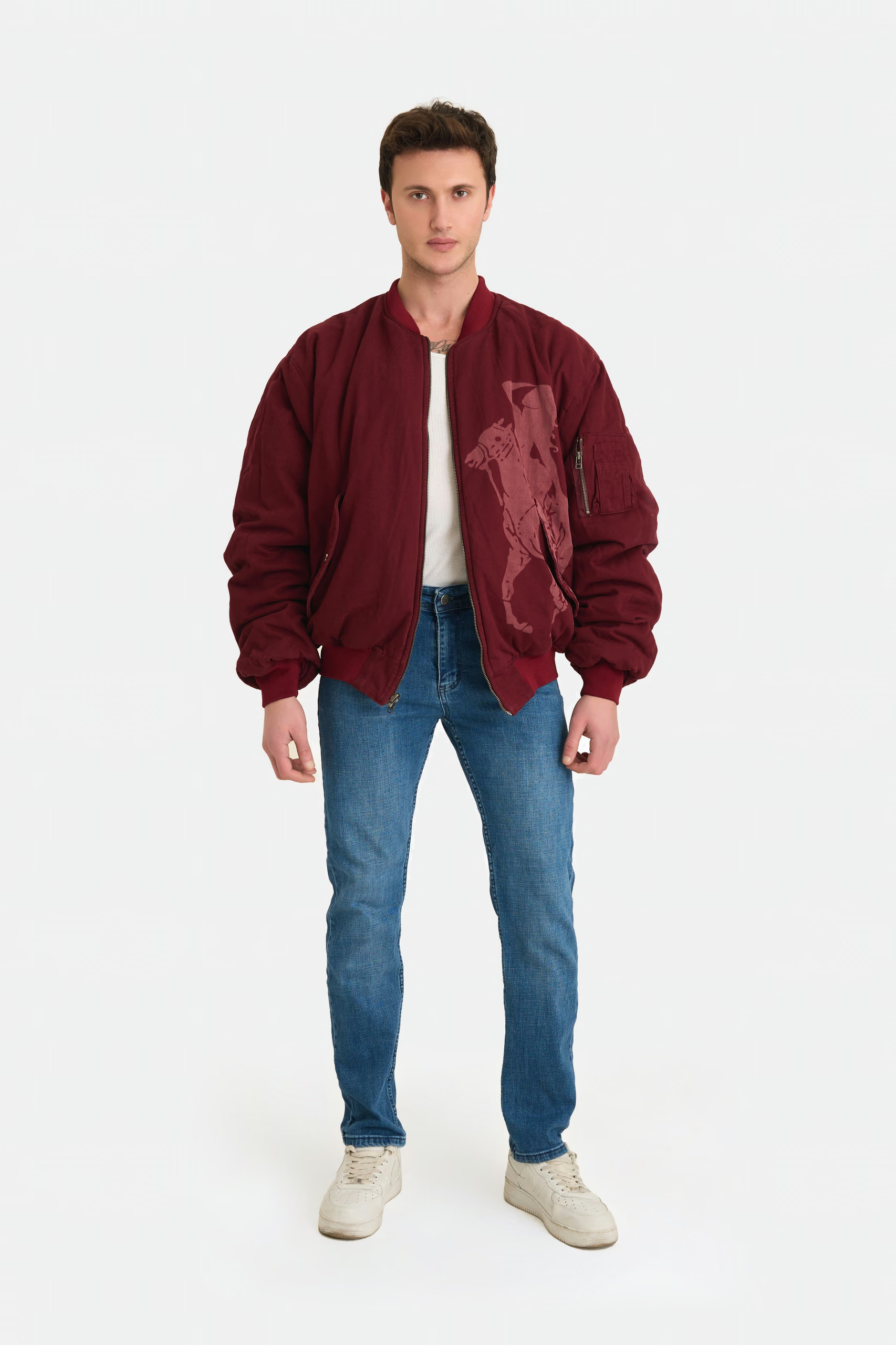
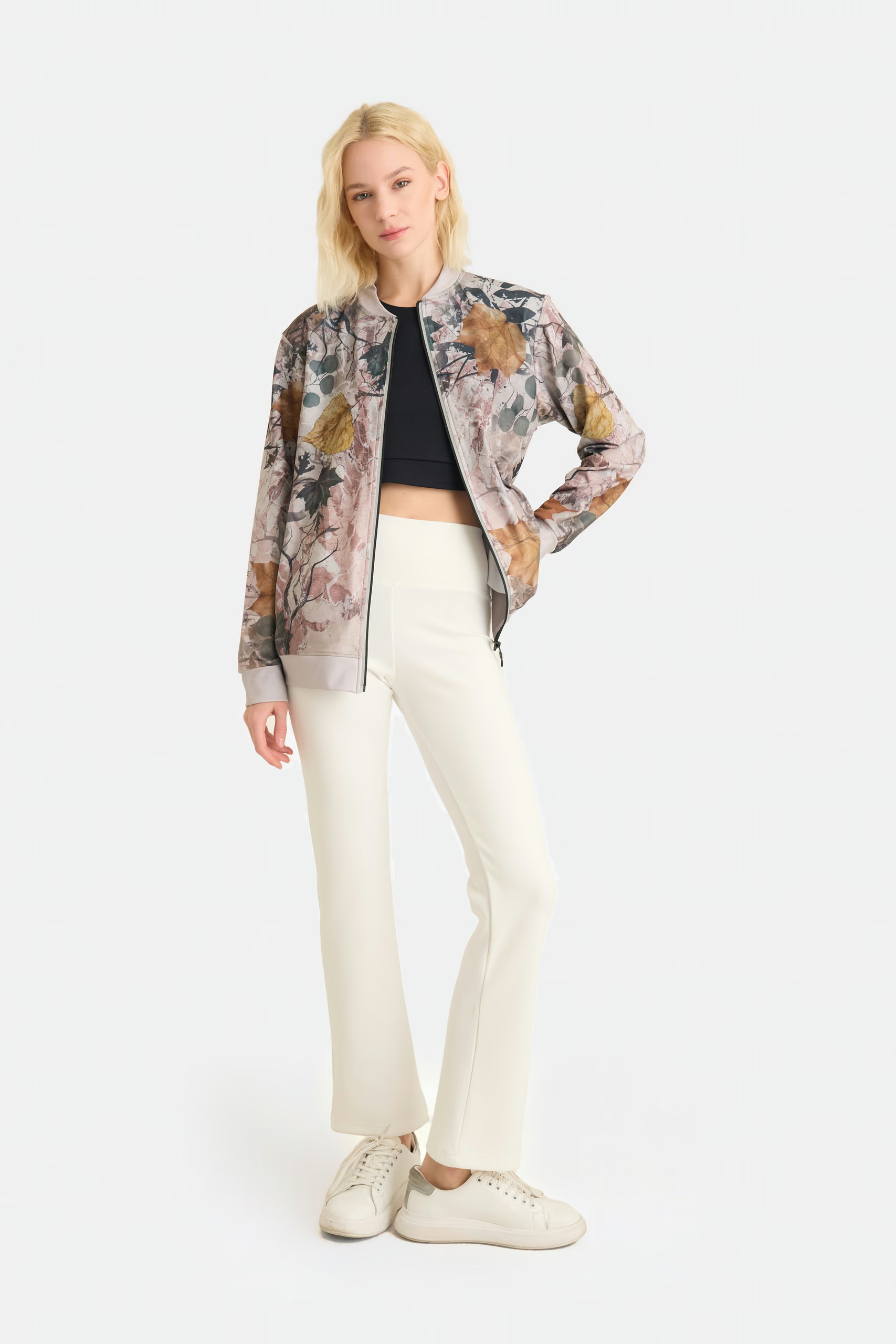
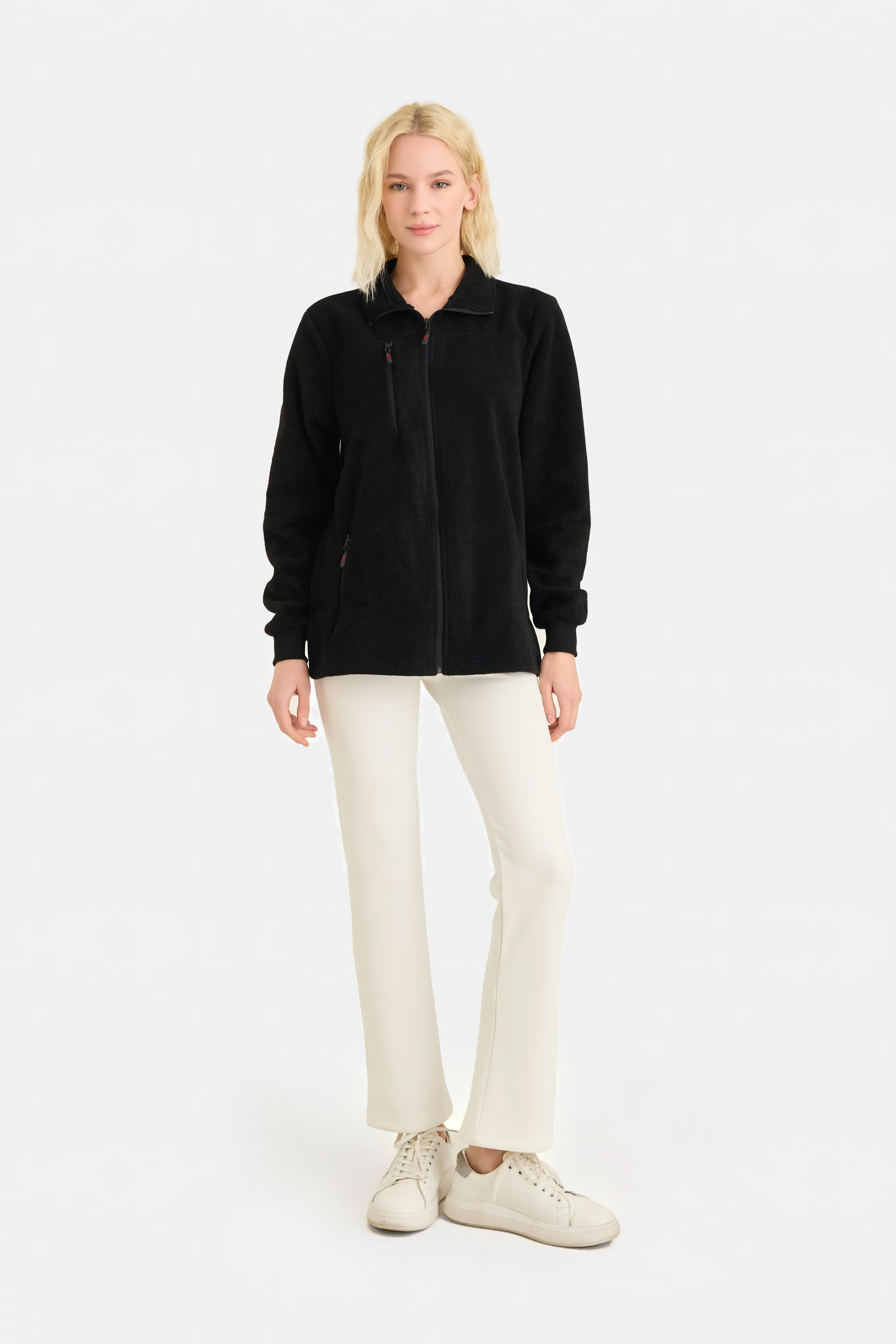
Jacket references produced by Voyager Textile
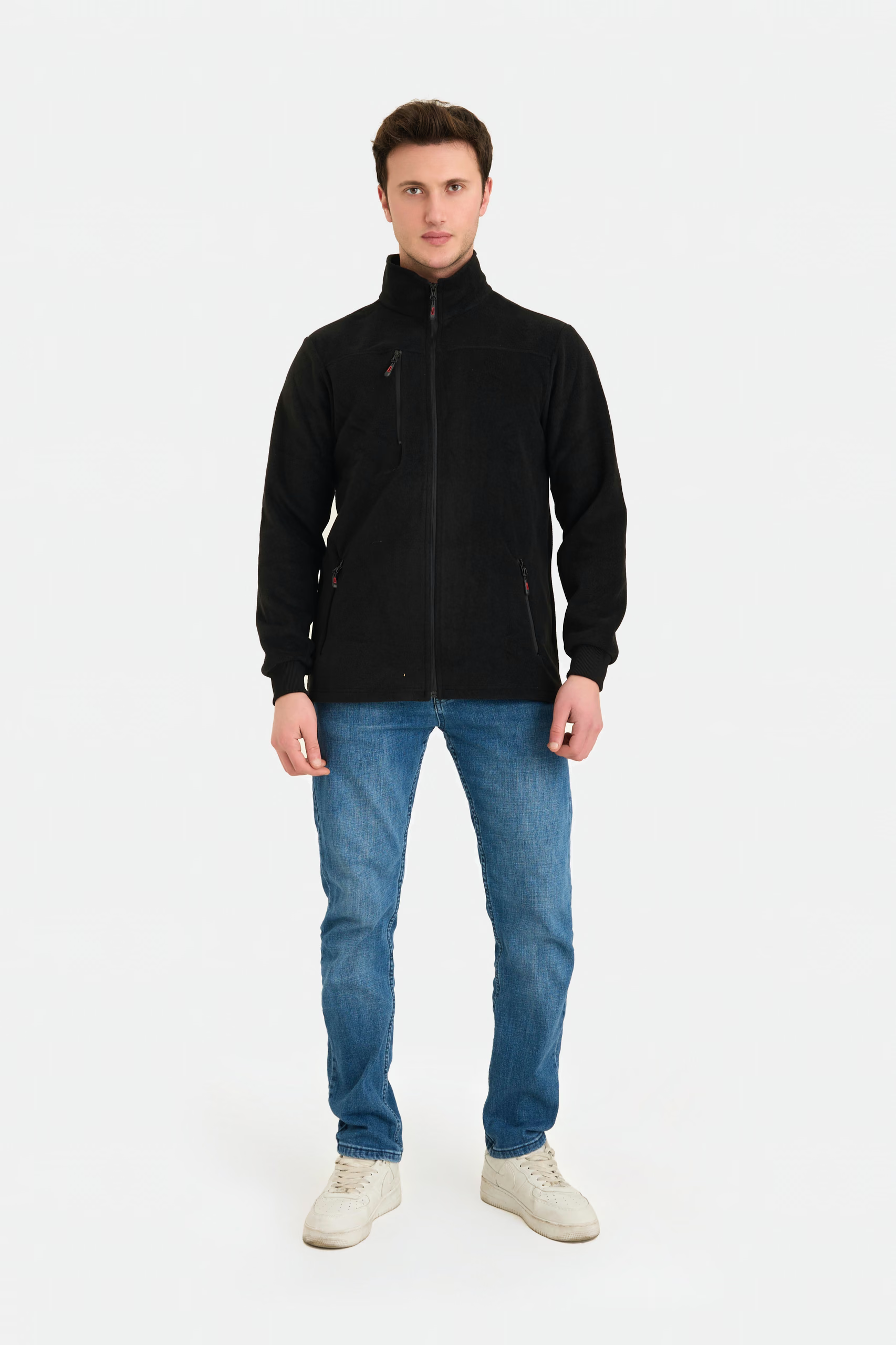
Lined, quilted and fleece constructions produced to customer specification.
Buyer questions
Why is jacket manufacturing more expensive than other garments?
Because a lined jacket is two complete garments built to match each other, and an insulated one adds a third layer. Each layer brings its own cutting, sewing and finishing operations, plus components such as zips, snaps, interlining and wadding, each with its own cost and lead time.
Is a quilted jacket quilted before or after cutting?
Usually before. The shell, wadding and often the lining are quilted together as flat yardage, and the panels are cut from that quilted material. Panel-by-panel quilting is used for engineered designs, but yardage quilting is the standard route.
How is insulation specified?
By material and by weight in grams per square metre, together with the quilt pattern and stitch spacing that hold it in place. Warm or light are not specifications. State the fill type accurately as well, because a claim on the label has to match the material used.
What is bagging out?
The operation that joins the separately assembled lining to the shell, usually at the facings, hem and cuffs, so the garment is finished with no raw edges visible inside. It is where many lining faults appear, because the lining must have enough length and ease to move with the shell.
Why does the lining in a jacket pull or twist?
Usually because it was cut too short or too tight, or because the lining sleeve does not match the shell sleeve length. The lining is normally cut with extra ease and a centre back pleat so it can move independently. Check it by putting the sample on and reaching forward.
What is interlining and where is it used?
A support material, fused or sewn in, that gives structure where a garment needs to hold its shape: collars, facings, plackets and cuffs. Poor fusing shows later as bubbling after washing, so fusing quality is a check on the sample rather than an assumption.
Should a jacket have a two-way zip?
On longer coats it is worth it, because it lets the wearer open the hem for movement or when seated while the chest stays closed. On short jackets it adds cost with less benefit. It is graded per size like any main zip.
Can outerwear be embroidered?
Yes, and it should be worked on the shell panel before assembly so the stitching does not pass through lining or insulation. On quilted areas, embroidery passes through the fill and can distort the loft locally, so patches or transfers are often better there.
Is a jacket the same as a rain jacket?
No. A standard jacket may be wind resistant and shower resistant, but rainwear uses coated or laminated fabrics with sealed seams and its own construction rules. Those are covered in the rain jacket process.
Ordering this garment from Voyager Textile
- Every garment is made to order, to your own design.
- The minimum order is 300 pieces per colour and per style. Sizes can be split inside the 300, and a custom Pantone colour carries the same minimum of 300 pieces. Polyester-based fabrics are assessed separately.
- A sample takes 5–7 business days. Bulk production takes 4–5 weeks after sample approval; development, sampling and shipping are additional.
- Cutting, sewing, embroidery, transfer printing and sublimation printing are done in our own factory in Türkiye. Screen printing and garment washing are coordinated with partner facilities.
Quantities, timing and any open point are confirmed per project at the quotation stage, once we have your specification or tech pack.
Request a quoteDeveloping a jacket or coat?
Send the layer structure, shell and lining requirements and any insulation weight, or a reference garment you want matched. We confirm trim availability early, because a jacket cannot be assembled until every component is in house.
Send an outerwear brief