Outerwear and shells
Softshell Jacket Manufacturing Process
A softshell jacket is built from a bonded laminate: a woven face fabric bonded to a fleece backing, sometimes with a membrane between them. It is water-repellent and breathable rather than waterproof. The manufacturing challenges are seam bulk, working with a fabric that must not be over-heated, and decorating a surface where a needle passes through every layer.
Contents
Softshell is a widely misunderstood fabric in corporate outerwear. It is frequently sold as waterproof, and it usually is not. Understanding what the laminate actually is, and what it can be claimed to do, is the first step in specifying one properly, and it also explains most of the construction decisions further down this page.
Softshell production sequence
What softshell actually is
Softshell is a bonded fabric rather than a single cloth. A woven face fabric, usually polyester or a polyester and elastane blend, is laminated to a knitted backing, typically a microfleece. Some constructions place a membrane or film between those two layers.
| Construction | Layers | Behaviour | Typical use |
|---|---|---|---|
| Two-layer softshell | Woven face bonded to a fleece backing | Wind resistant and breathable; water repellency comes from the finish on the face fabric | Corporate and everyday softshells, mild conditions |
| Three-layer softshell | Woven face, membrane, fleece backing | Higher wind and water resistance with breathability, at the cost of some suppleness | Technical and outdoor softshells |
| Stretch softshell | Face fabric with elastane, bonded backing | Moves with the wearer; the usual choice for active use | Sports, service and field roles |
Two further points are worth knowing when comparing quotations. A durable water repellent finish is a treatment with a service life: it wears and needs renewing, and it does not make a fabric waterproof. And a laminate is specified by its layers and its components, not only by its weight. Finished softshell laminates are commonly quoted somewhere in the region of 250 to 350 g/m², but that band is wide and the useful specification is the face fabric, the backing, the presence of a membrane, and the stretch.
Cutting bonded fabric
A bonded laminate behaves differently from a single-layer cloth in the cutting room. It is thicker, so fewer plies can be spread per lay, and it does not fray, so cut edges stay clean without overlocking. Some constructions can be laser cut for a sealed, finished edge, which removes bulk at the hem and pocket openings.
The other consequence is that every cut edge shows two or three layers. Where a raw edge is visible, for example inside a pocket opening, it should be a deliberate design decision rather than an accident of construction.
Seams: bulk is the main constraint
Every seam in a softshell joins at least four layers, because both panels are laminates. At an intersection such as the side seam meeting the hem, that becomes six or more. Managing this is the core sewing skill in softshell production.
- Seam allowances are kept consistent and often narrower than on a woven garment, so intersections stack predictably.
- Needle and thread are chosen for the thickness; the wrong needle skips stitches or damages the face fabric.
- Seams are topstitched to keep them flat, since a bulky seam that stands proud is uncomfortable and looks poor.
- On three-layer constructions, remember that every needle penetration passes through the membrane. That is why softshell seams are not normally taped and why the garment should not be presented as waterproof.
Zips, pockets and closures
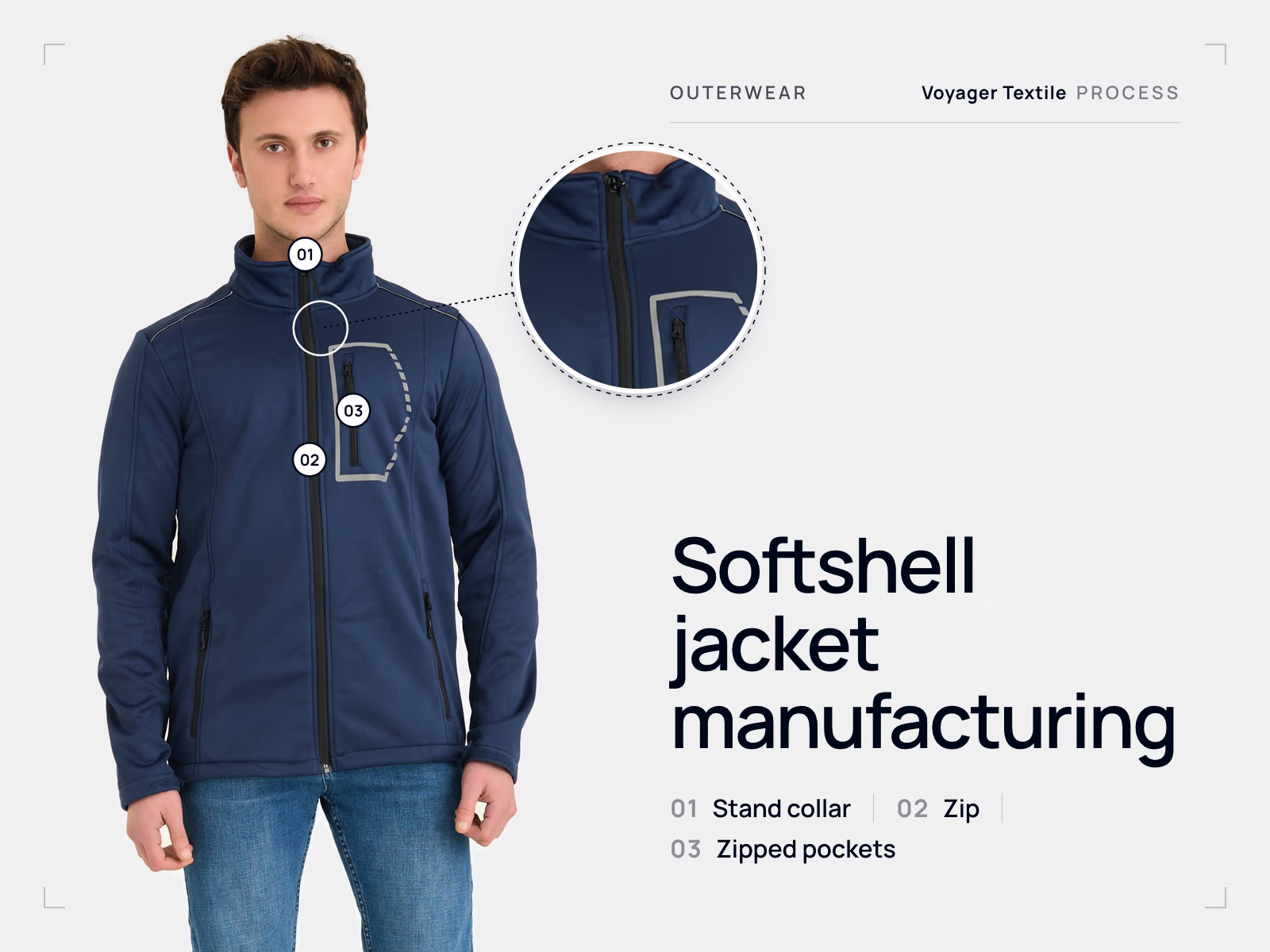
- Main zip. Open-ended, full length, graded per size, set into a facing so the tape is not against the wearer. Specify tape colour, teeth type and puller.
- Chin guard and zip garage. A small piece of fabric at the top of the zip that protects the chin, and a garage that houses the slider. Both are cheap and both are noticed.
- Water-resistant zips. Coated zips shed light water and are commonly used on softshells. They are water resistant, not waterproof, and the distinction belongs in your specification rather than in your marketing.
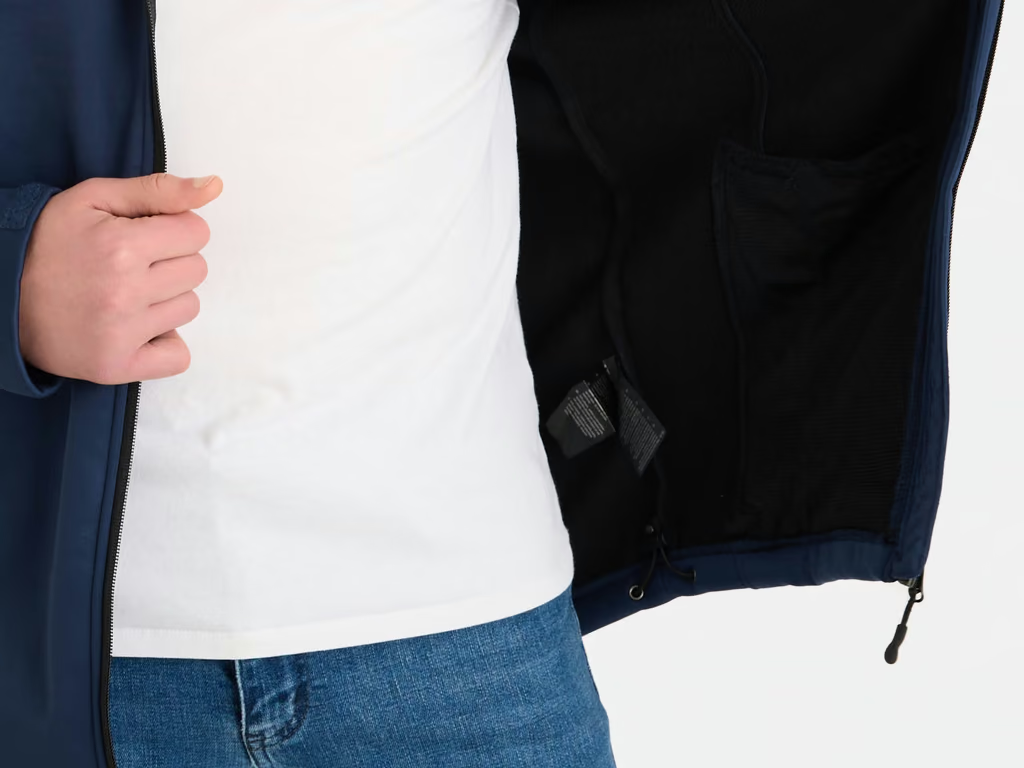
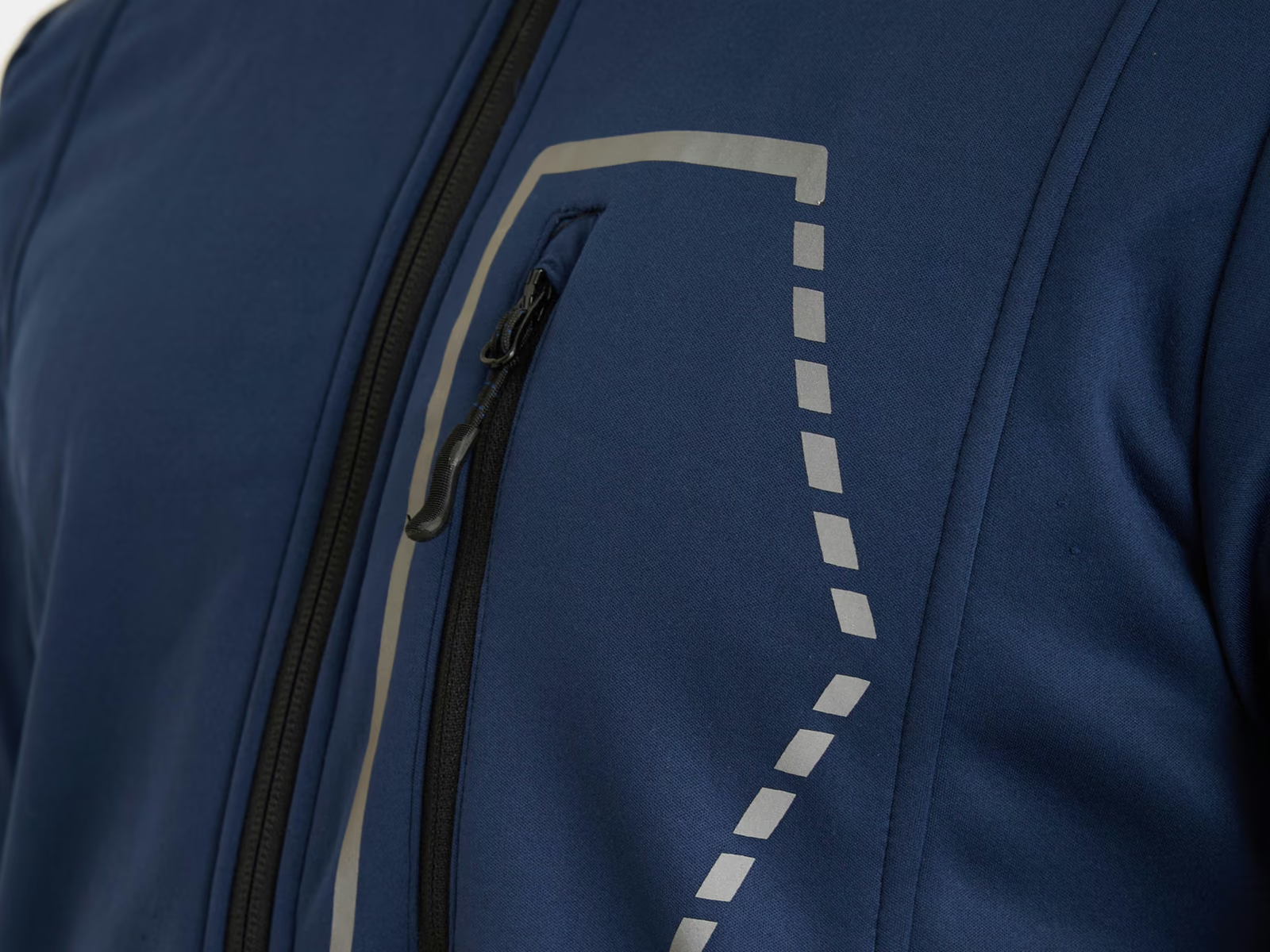
- Pockets. Zipped hand pockets are standard; a zipped chest pocket is common. Pocket bags are usually a lighter fabric to reduce bulk, and their attachment must not show through the face fabric.
- Cuffs. Hook-and-loop adjustment tabs, elasticated cuffs, or a plain bound cuff. Tabs are the most adjustable and are often specified in corporate programmes.
- Hem. A drawcord with toggles at the hem, or a plain bound hem. A drawcord adds two exit points that must be reinforced.
- Collar and hood. A high stand collar is the standard softshell finish, and the same laminate is often used for a matching vest. A hood is either fixed or detachable with a zip or press studs, and a detachable hood is a separate sub-assembly with its own cost.
Decoration on laminated fabric
This is where softshell programmes often go wrong, because the decoration decision has consequences for the fabric.
- Embroidery. Every stitch perforates all layers of the laminate, including any membrane. It is visible from the inside, it can look poor against a fleece backing, and on a three-layer construction it compromises the water resistance in that area. Where embroidery is required, it is normally worked on the panel before assembly with a backing, and a lined patch is often placed behind it.
- Applied badges and patches. A patch embroidered separately and attached to the jacket keeps the needle penetrations to the patch perimeter rather than across the whole logo area.
- Heat transfer. Effective on softshell face fabrics and it does not perforate the laminate, but temperature must be tested first. Excessive heat can damage the face fabric or affect the bond between layers.
- Printing directly onto the face fabric. Possible on some constructions and not on others; ask for a test on the actual laminate.
- Contrast panels and piping. Branding built into the construction, with no effect on the fabric's performance.
Whichever method is chosen, ask for a physical test on the actual laminate before bulk. A stitch-out or a transfer test on a scrap of the real fabric answers questions that no specification can.
Assembly sequence
- Panels are cut from the laminate, with edges kept clean and any laser-cut components prepared.
- Panel decoration is applied where it has been agreed, with a test already approved.
- Pockets are constructed: zips set into welts or seams, bags attached.
- Body panels are joined, with seam allowances controlled and topstitched to keep them flat.
- Sleeves are set and the underarm and side seams closed.
- The collar, and the hood where fitted, are assembled and attached.
- The main zip is set into its facing, with the chin guard and garage.
- Cuff tabs, hem drawcord and toggles are fitted, and reinforcement is added at the exit points.
- Labels are attached, the garment is inspected cold and packed.
Finishing: do not press it
Softshell is not pressed like a woven garment. Heat and pressure can damage the face fabric's finish and, on bonded constructions, can affect the adhesive between the layers. Garments are finished cold, hung or folded, and inspected without a pressing step. That is a genuine difference from other outerwear categories and it belongs in the production plan.
Quality control: softshell-specific checks
| Check | What it catches |
|---|---|
| Bond integrity at seams and edges | Delamination, the failure that ends a garment's life |
| Seam flatness at intersections | Bulk that has not been controlled |
| Stitch quality on thick sections | Skipped stitches from the wrong needle or thread |
| Zip alignment and level hem when closed | A highly visible construction fault on a jacket |
| Zip function under load and slider quality | A component often complained about |
| Pocket bag attachment showing through the face | A visible fault only apparent on the finished garment |
| Water repellency by spray testing, where specified | A finish that is absent or already degraded |
| Decoration appearance from both sides | Embroidery that looks poor against the backing |
| Cuff tab and toggle function | Trims that fail in the first weeks of use |
If a water-repellency requirement matters to your programme, specify a spray test method and a pass level in the specification rather than relying on the word repellent. The tests to consider and how to set them are covered in the quality control guide.
What to put in a softshell tech pack
- Laminate: number of layers, face fabric composition, backing type, membrane presence, stretch and finished weight.
- Water repellency requirement, with the test method and pass level if one is required.
- Main zip: type, length per size, tape colour, teeth, puller, chin guard and garage.
- Pockets: number, position, zip type and pocket bag fabric.
- Collar height, and hood construction including whether it is detachable.
- Cuff treatment: tabs, elastic or bound.
- Hem treatment: drawcord and toggles, or bound.
- Seam construction and topstitching detail.
- Decoration: method, artwork, placement, and confirmation that a test on the actual laminate has been approved.
- Measurements with tolerances, including sleeve length and body length.
- Labels, and confirmation that the garment is not pressed in finishing.
- Packing: folded or hanging, bagging and carton specification.
Sampling
Sample worn, with the zip closed, and check that the front hem is level and the collar sits without pushing into the chin. Move in it: softshell is bought for activity, and a jacket that pulls across the back when the wearer reaches forward will be rejected however well it measures.
Approve the decoration test separately from the garment sample. Finding out that an embroidered logo looks poor against the fleece backing after the fit sample has been approved wastes a round.
Before you send a softshell RFQ
- Two-layer or three-layer laminate, and whether a membrane is required
- Face fabric composition and whether stretch is needed
- Any water repellency requirement, with a test method if it is contractual
- Main zip specification and puller preference
- Pocket configuration
- Collar height and whether a hood is required, fixed or detachable
- Cuff and hem treatment
- Decoration method and artwork, with a note that a fabric test is required
- Size range, split and measurement chart
- Colours and any contrast panels
- Quantity and packing requirements
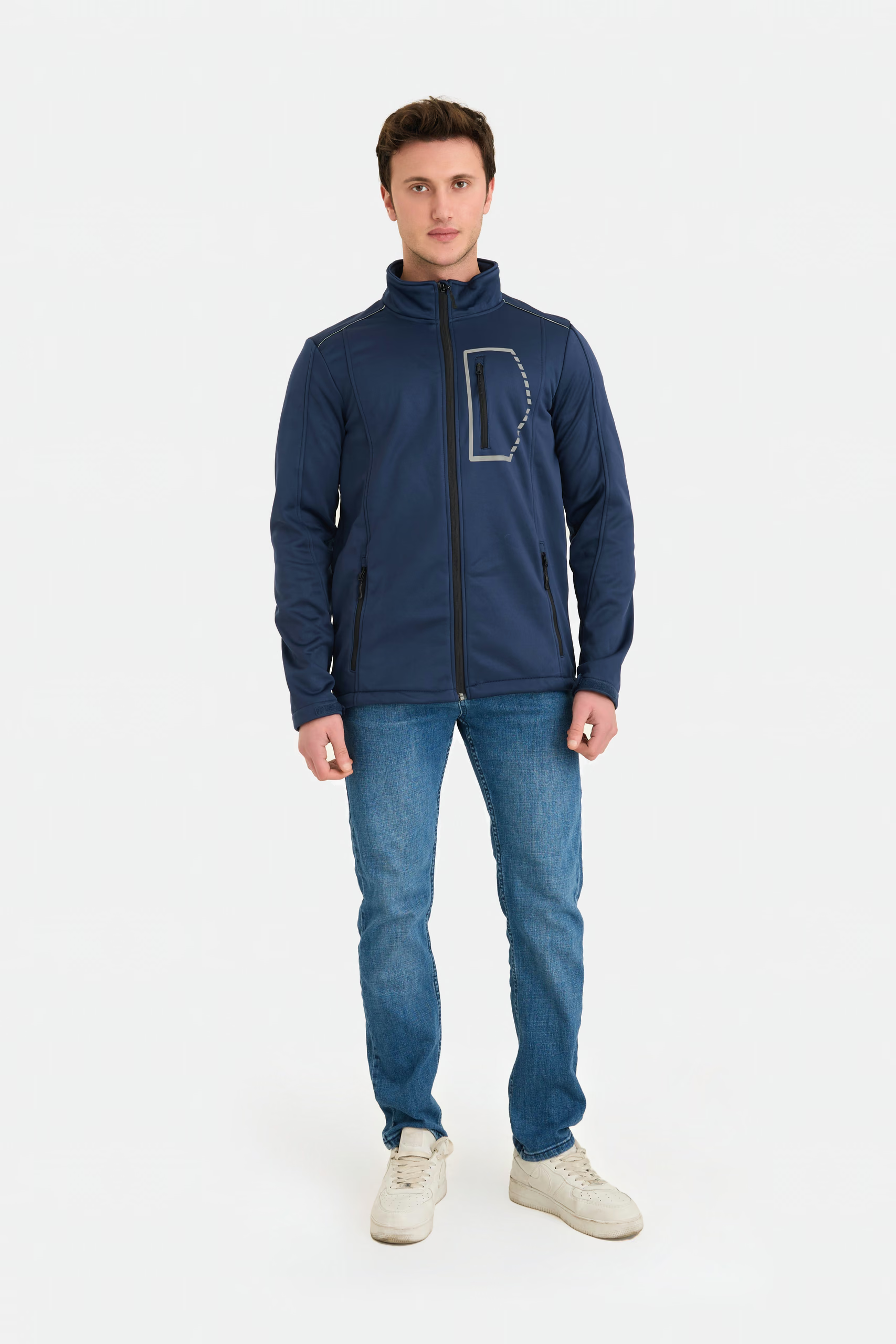
Softshell references produced by Voyager Textile
Produced to customer specification. Quote an article code to start from an existing construction.
Buyer questions
Is a softshell jacket waterproof?
Normally no. Softshell is typically water-repellent and breathable rather than waterproof, with two-layer constructions relying on the durable water repellent finish on the face fabric. Some three-layer constructions include a membrane and offer higher resistance, but any waterproof claim needs the specific material and finished garment to be tested. For genuine rain protection, a different construction is required.
What is the difference between two-layer and three-layer softshell?
Two-layer softshell bonds a woven face fabric to a fleece backing, with water repellency coming from the finish on the face. Three-layer softshell adds a membrane between those layers, giving higher wind and water resistance while keeping breathability, usually at the cost of some suppleness.
Can softshell jackets be embroidered?
Yes, but with consequences. Every stitch perforates all the layers, which is visible from the inside and, on a membrane construction, compromises water resistance in that area. Embroidery is normally worked on the panel before assembly with backing, and often with a patch behind it. Applied badges and heat transfers are alternatives that keep penetrations to a minimum.
Why should softshell jackets not be pressed?
Because heat and pressure can damage the face fabric finish and affect the adhesive bond between the laminate layers. Softshell garments are finished cold and inspected without a pressing step, which is a genuine difference from other outerwear.
What is a DWR finish and how long does it last?
A durable water repellent finish applied to the face fabric so water beads rather than soaks in. It is a treatment with a service life: it degrades with wear and washing and can be renewed. It does not make a fabric waterproof.
Are water-resistant zips waterproof?
No. Coated zips shed light water and are commonly used on softshells, but they are water resistant rather than waterproof. Keep the distinction in your specification and in anything you tell a customer.
What makes softshell harder to sew than a normal jacket?
Seam bulk. Every seam joins at least four layers because both panels are laminates, and intersections stack higher still. Seam allowances, needle and thread selection and topstitching all have to be controlled, and skipped stitches on thick sections are a common sewing fault.
What weight is a softshell fabric?
Finished laminates are commonly quoted somewhere around 250 to 350 g/m², but the band is wide and weight alone tells you very little. Specify the layer construction, the face fabric composition, the backing and any membrane instead, and confirm the finished weight for the specific article.
Can a hood be added to a softshell?
Yes, either fixed or detachable. A detachable hood is a separate sub-assembly attached with a zip or press studs, and it is a real cost item rather than a small variation. Decide before sampling, because it changes the collar construction.
Ordering this garment from Voyager Textile
- Every garment is made to order, to your own design.
- The minimum order is 300 pieces per colour and per style. Sizes can be split inside the 300, and a custom Pantone colour carries the same minimum of 300 pieces. Polyester-based fabrics are assessed separately.
- A sample takes 5–7 business days. Bulk production takes 4–5 weeks after sample approval; development, sampling and shipping are additional.
- Cutting, sewing, embroidery, transfer printing and sublimation printing are done in our own factory in Türkiye. Screen printing and garment washing are coordinated with partner facilities.
Quantities, timing and any open point are confirmed per project at the quotation stage, once we have your specification or tech pack.
Request a quoteSpecifying a softshell jacket?
Send the laminate requirement, zip and pocket configuration and your branding artwork. We test decoration on the actual laminate before bulk and tell you plainly what the fabric can and cannot be claimed to do.
Send a softshell brief