Outerwear and shells
Vest and Gilet Manufacturing Process
A vest is defined by what it does not have. With no sleeves, the armhole finish becomes a highly visible construction detail, the fit has to work over other garments rather than against the body, and the shoulder carries all the weight. The rest of the build follows whichever family the vest belongs to: softshell, padded, fleece or workwear.
Contents
Vests are usually specified as a jacket without sleeves, and that is the source of many of the problems with them. Removing the sleeves changes the pattern, the fit logic and the finishing, and it concentrates attention on two details that a jacket hides: the armhole edge and the shoulder line.
Vest production sequence
Four different garments called a vest
The word covers products with very little in common, so the first thing a specification must do is say which one it means.
| Type | Construction | Typical use | Key detail |
|---|---|---|---|
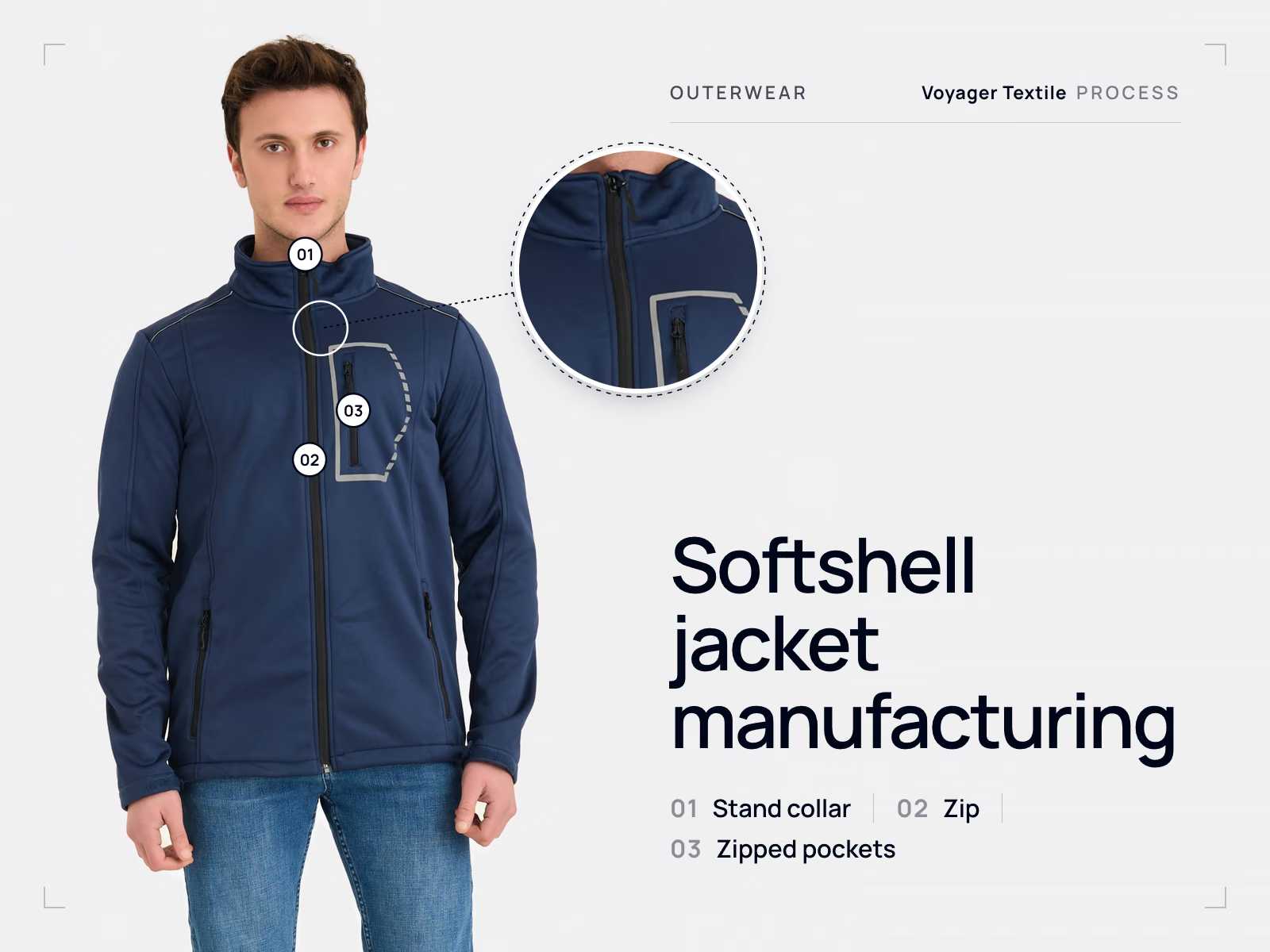
| Softshell vest | Bonded laminate body, unlined or part lined | Corporate and outdoor layering | Seam bulk and a decoration test on the laminate |
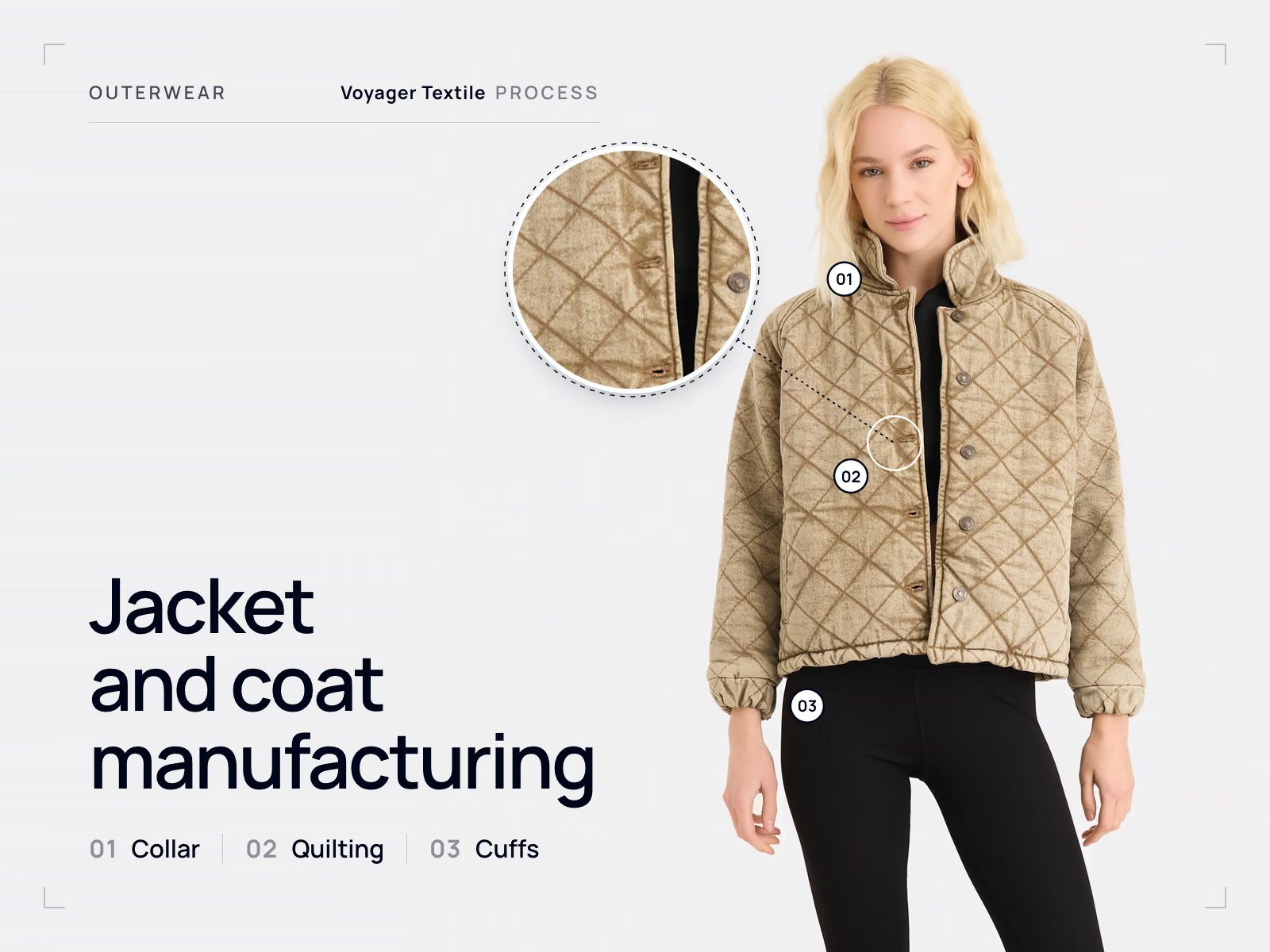
| Padded or quilted gilet | Shell, wadding and lining, usually quilted | Warmth over a jumper or jacket | Fill weight, quilt pattern and loft at the armhole |
| Fleece vest | Single-layer fleece, unlined | Indoor and mild-weather layering | Edge finishing on a fabric that does not fray |
| Workwear vest | Woven shell, often with a lining and multiple pockets | Field, logistics and service roles | Pocket capacity and reinforcement, and any visibility requirement |
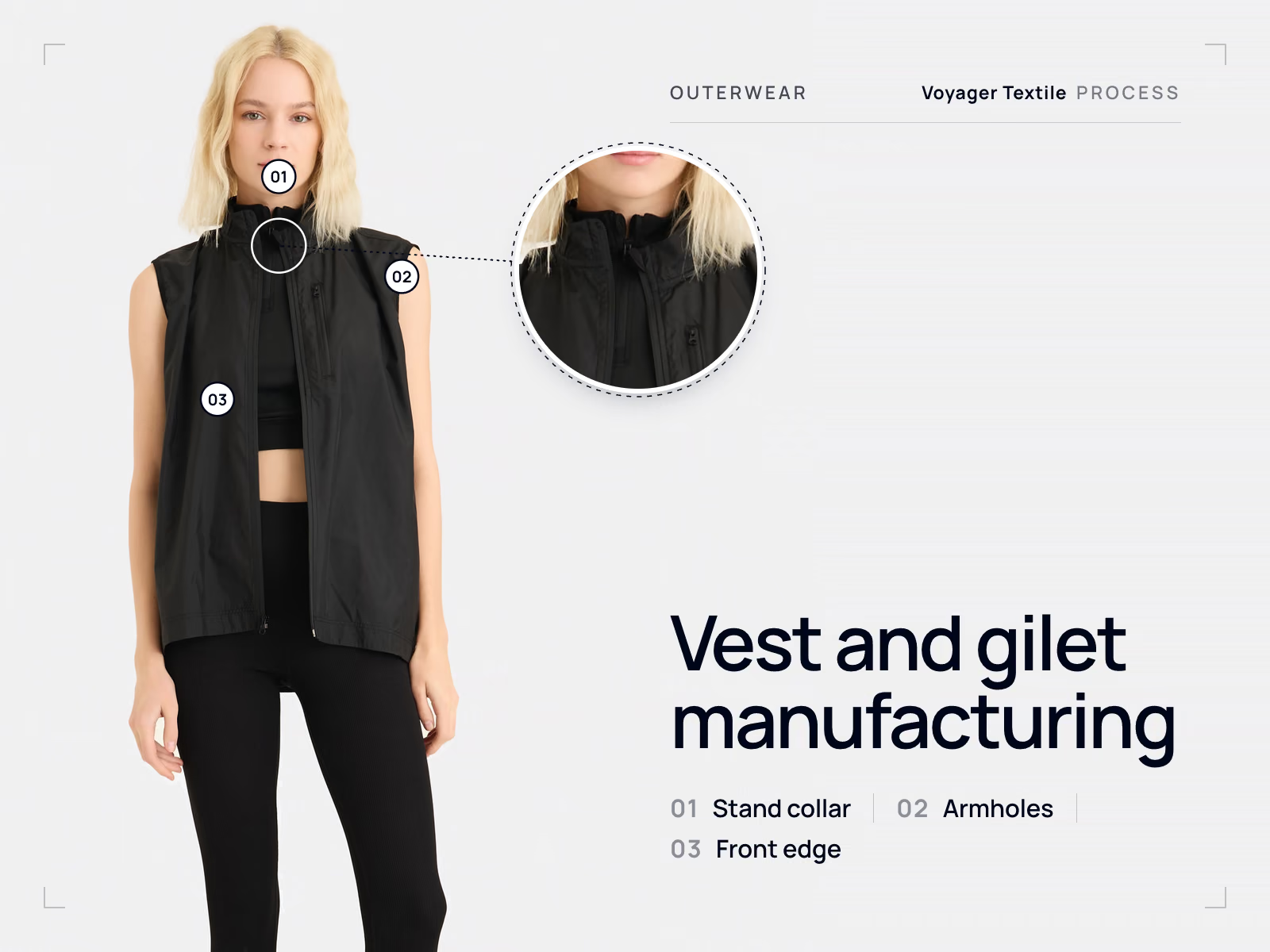
The armhole is the defining detail
On a jacket the armhole is hidden inside a sleeve. On a vest it is an exposed edge that the eye goes to immediately, and how it is finished tells you how carefully the garment was made.
- Bound armhole. A binding strip encloses the raw edge. Clean, low bulk, and common on softshell and technical vests. The binding colour can be a contrast detail.
- Faced armhole. A facing turned to the inside gives an unbroken outer edge and a more tailored look, at the cost of an extra pattern piece.
- Ribbed armhole. A knitted rib closes the opening and grips, used on bomber-style and casual gilets.
- Elasticated armhole. Elastic inserted into the edge so the opening closes over a layer beneath, common on padded workwear gilets.
- Bagged-out armhole. Where shell and lining are joined and turned at the armhole, producing a clean edge on a lined garment.
Armhole depth and width also need stating as measurements. A vest worn over a fleece needs a deeper, wider armhole than one worn over a shirt, and this is a common fit complaint on layering garments.
Fitting a garment that goes over other garments
A vest is rarely worn next to the skin, so it is patterned with more ease than a shirt or a jacket body of the same nominal size. State what it is intended to go over, because it changes the chest measurement, the armhole and the length.
- Say whether it is worn over a shirt, a fleece or a jacket, and sample it that way.
- Check shoulder width with the under-layer in place; a vest that pulls at the shoulder is unwearable regardless of chest measurement.
- Body length should cover the under-layer's hem, or deliberately sit above it, rather than falling awkwardly at the same line.
- For insulated gilets, remember that the fill itself takes up space; a quilted vest fits differently from a flat one at the same measurement.
Insulation and quilting
For padded gilets, the shell, wadding and lining are normally quilted together as flat yardage before cutting, and the panels are then cut from that quilted material. The two specification points that matter are the fill weight in grams per square metre and the quilt pattern, stated as channel widths or box dimensions.
One vest-specific consideration: loft at the armhole. A thick quilted panel finished with a narrow binding can look compressed and untidy at the opening. Either the fill is reduced near the edge or the finishing is chosen to accommodate the loft, and it is worth checking on the sample. Wider construction detail for insulated garments is covered in the jacket and coat process.
Zips, pockets and hem
- Main zip. Open-ended, full length, graded per size, set into a facing. On padded gilets a wind flap behind the zip is common.
- Chin guard. Particularly worth specifying on a vest, because the collar sits close to the face with no sleeve to distract from it.
- Pockets. Zipped hand pockets are standard. Workwear vests may carry chest, internal and utility pockets, and each needs its bag anchored so it does not sag when loaded.
- Internal pocket. Easy to add on a lined vest and frequently requested for corporate programmes.
- Hem. Plain bound, elasticated, ribbed, or with a drawcord and toggles. On a garment with no sleeves, the hem and the armhole are the two edges that define the silhouette.
- Collar. A stand collar is usual. A hood is possible and turns the garment into a different product, with its own pattern at the neck.
Decoration
Vests are a common corporate layer, so branding is usually part of the specification.
- Embroidery on the chest, worked on the panel before assembly so stitching does not pass through lining or fill.
- Applied patches, which suit quilted surfaces where direct embroidery would compress the loft.
- Heat transfer on the shell, with the temperature tested first on the actual fabric, particularly on laminates and coated shells.
- Back placements are effective on a vest, since the back is a single uninterrupted panel on most constructions.
- Contrast binding, zips and pullers, which brand the garment through its components.
Assembly sequence
- Materials are prepared: quilted yardage produced where the vest is insulated.
- Shell and lining panels are cut together, with quilt lines aligned across seams where applicable.
- Panel decoration is applied.
- Pockets are constructed and set into the fronts.
- Shoulder seams are joined, then the side seams.
- The lining is assembled and joined to the shell where the vest is lined.
- The armholes are finished by the specified method.
- The main zip is set into its facing, with the chin guard and any wind flap.
- The hem is finished, drawcords and toggles are fitted where used.
- Labels are attached, the garment is inspected and packed.
Quality control: vest-specific checks
| Check | What it catches |
|---|---|
| Armhole finish quality and symmetry, left against right | A highly visible detail on the garment |
| Armhole depth and width against the chart | A vest that binds over the intended under-layer |
| Shoulder line and width on a worn sample | Pattern ease that ignores layering |
| Quilt alignment across seams | Panels cut without regard to the quilt pattern |
| Loft consistency, especially near the armhole | Compressed or bunched fill at the edge |
| Zip alignment and level hem when closed | Front halves that do not meet |
| Pocket bag anchoring under load | Sagging pockets on workwear styles |
| Binding width consistency around the opening | Finishing that drifts along the edge |
What to put in a vest tech pack
- Vest type: softshell, padded, fleece or workwear, with the layer structure stated.
- Shell fabric composition and weight; lining fabric where used.
- Insulation weight in grams per square metre and quilt pattern, if insulated.
- Armhole finish: bound, faced, ribbed, elasticated or bagged out, with binding width.
- Armhole depth and width, and what the vest is intended to be worn over.
- Collar height, and hood if fitted.
- Main zip: type, length per size, facing, chin guard, wind flap.
- Pockets: number, type, position and bag fabric, including internal pockets.
- Hem treatment and any drawcord.
- Decoration method, artwork and placement, with a fabric test where required.
- Measurements with tolerances, taken over the intended under-layer where relevant.
- Labels and packing.
Sampling
Sample the vest worn over the garment it is meant to go over. A vest fitted over a shirt and then issued to staff who wear it over a fleece will be too tight at the armhole and the shoulder, and no flat measurement will have predicted it. Move the arms in it: reaching forward is where a shallow armhole is exposed.
Before you send a vest RFQ
- Which vest type: softshell, padded, fleece or workwear
- What the vest will be worn over
- Shell and lining fabrics, or the conditions it must suit
- Insulation weight and quilt pattern, if padded
- Armhole finish preference
- Collar height and whether a hood is required
- Zip specification and pocket configuration
- Hem treatment
- Decoration artwork and placement
- Any visibility or protective requirement, stated explicitly
- Size range, split and quantity
Gilet references produced by Voyager Textile
Produced to customer specification. Quote an article code to start from an existing construction.
Buyer questions
What is the difference between a vest, a gilet and a bodywarmer?
In practice they are the same garment described in different markets: a sleeveless layer worn over other clothing. What matters for production is which family it belongs to, because a softshell vest, a padded gilet, a fleece vest and a workwear vest are built completely differently.
How should a vest armhole be finished?
By binding for a clean low-bulk edge, by a facing for a more tailored look, by rib for a casual bomber style, by elastic where it must close over a layer beneath, or by bagging out on a lined garment. It is a highly visible detail on a vest, so it should be specified rather than left to the factory.
How much ease should a vest have?
More than a jacket body of the same nominal size, because a vest is worn over other garments. State what it is intended to go over, and sample it worn over that layer. Armhole depth and shoulder width are where insufficient ease shows first.
Is a padded gilet quilted before cutting?
Usually yes. Shell, wadding and lining are quilted together as flat yardage and the panels are cut from that material, which is why quilt lines should be checked for alignment across the side seams and shoulders on the sample.
Can a vest be embroidered?
Yes, and it is normally worked on the chest panel before assembly so the stitching does not pass through lining or fill. On quilted areas, an applied patch is often better than direct embroidery, because a needle through a quilted panel can compress the loft locally.
Are high-visibility vests the same as normal vests?
No. Garments intended to make a wearer visible in hazardous environments are regulated personal protective equipment in the EU with their own certification requirements covering materials and tape placement. A bright vest with reflective strips is not automatically certified, and the scope must be confirmed explicitly.
What is a common vest fit problem?
An armhole that is too shallow or too narrow for the layers underneath, which binds when the wearer reaches forward. It is invisible on a flat measurement and obvious on a worn sample, which is why vests should always be fitted over the intended under-layer.
What is the minimum order for custom vests?
Custom apparel production at Voyager Textile starts at 300 pieces. Because a vest can be built in four quite different ways, the practical minimum for your construction, lining and colour split is confirmed when the specification is reviewed.
Ordering this garment from Voyager Textile
- Every garment is made to order, to your own design.
- The minimum order is 300 pieces per colour and per style. Sizes can be split inside the 300, and a custom Pantone colour carries the same minimum of 300 pieces. Polyester-based fabrics are assessed separately.
- A sample takes 5–7 business days. Bulk production takes 4–5 weeks after sample approval; development, sampling and shipping are additional.
- Cutting, sewing, embroidery, transfer printing and sublimation printing are done in our own factory in Türkiye. Screen printing and garment washing are coordinated with partner facilities.
Quantities, timing and any open point are confirmed per project at the quotation stage, once we have your specification or tech pack.
Request a quoteSpecifying a vest or gilet?
Tell us which type you need, what it will be worn over and how it should be branded. We sample it over the intended under-layer so the armhole and shoulder can be judged properly.
Send a vest brief