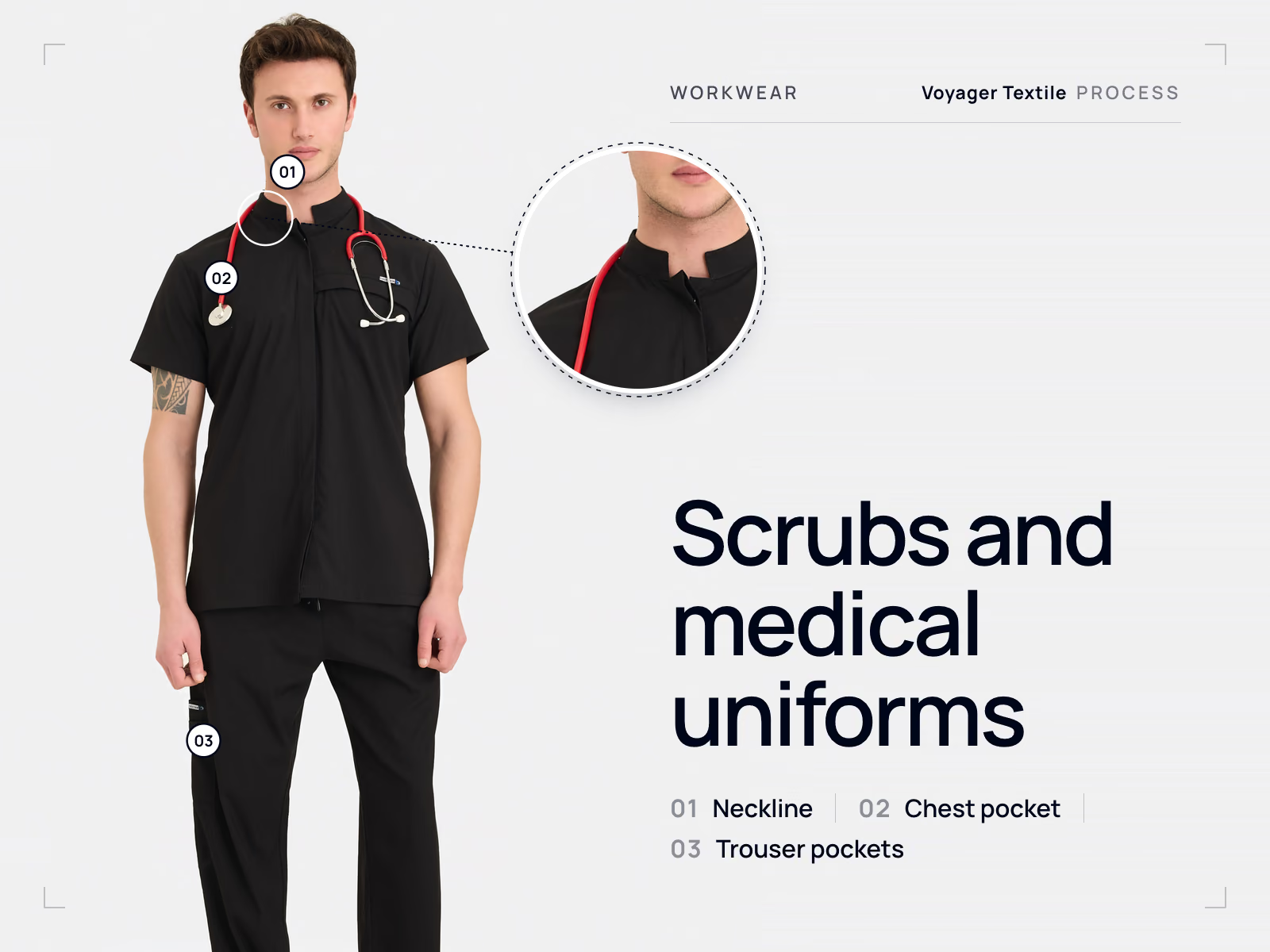
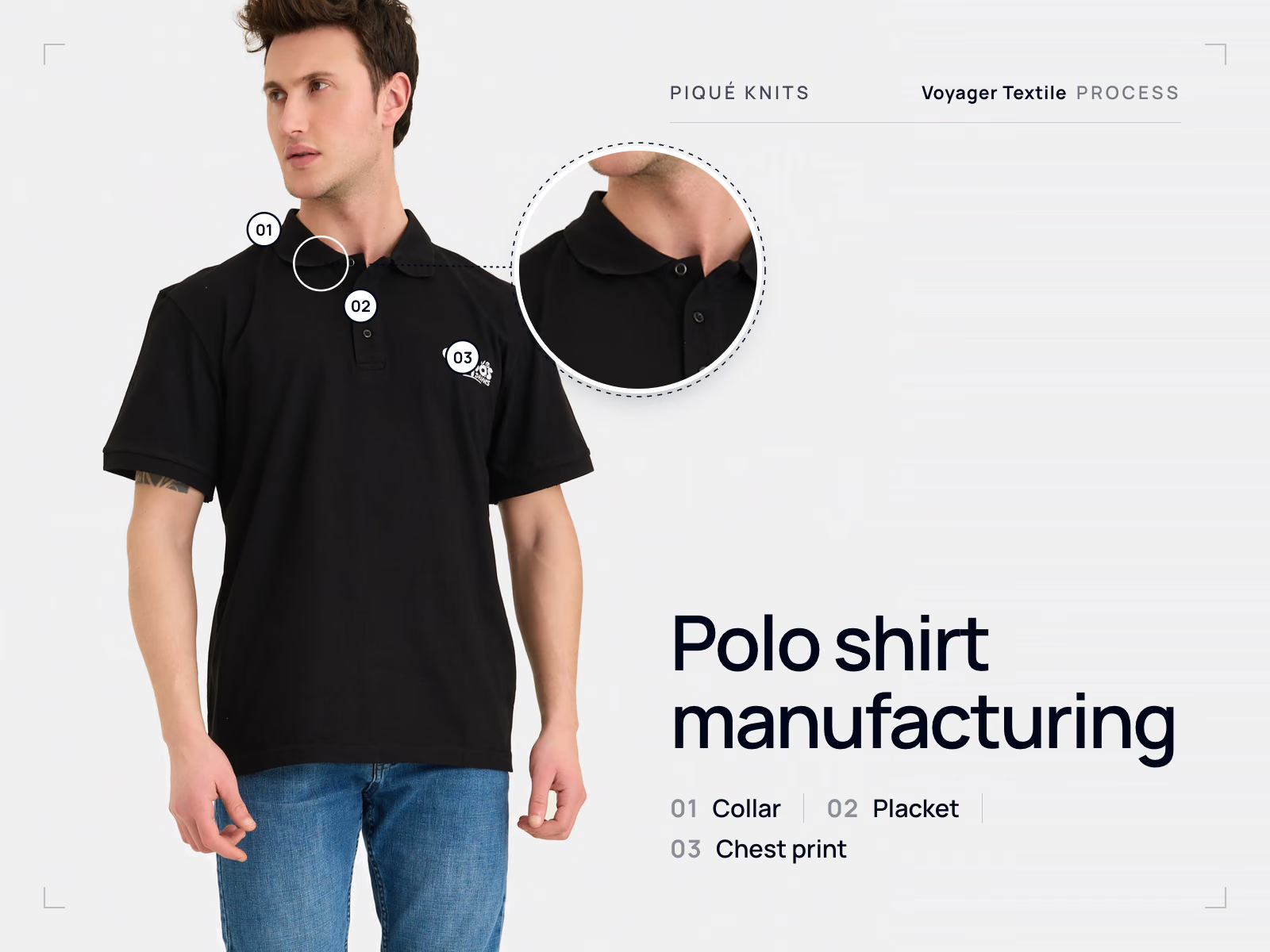
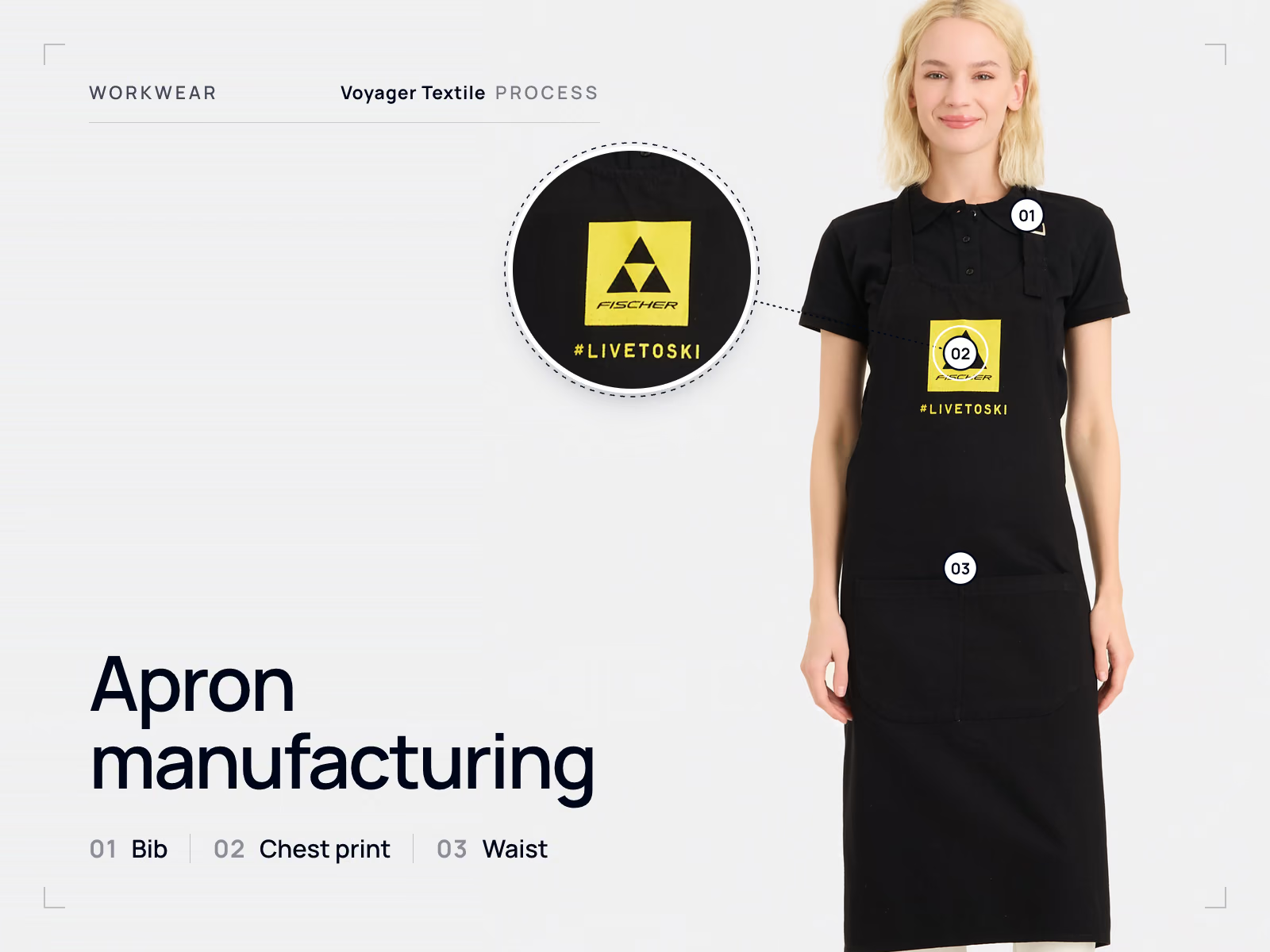
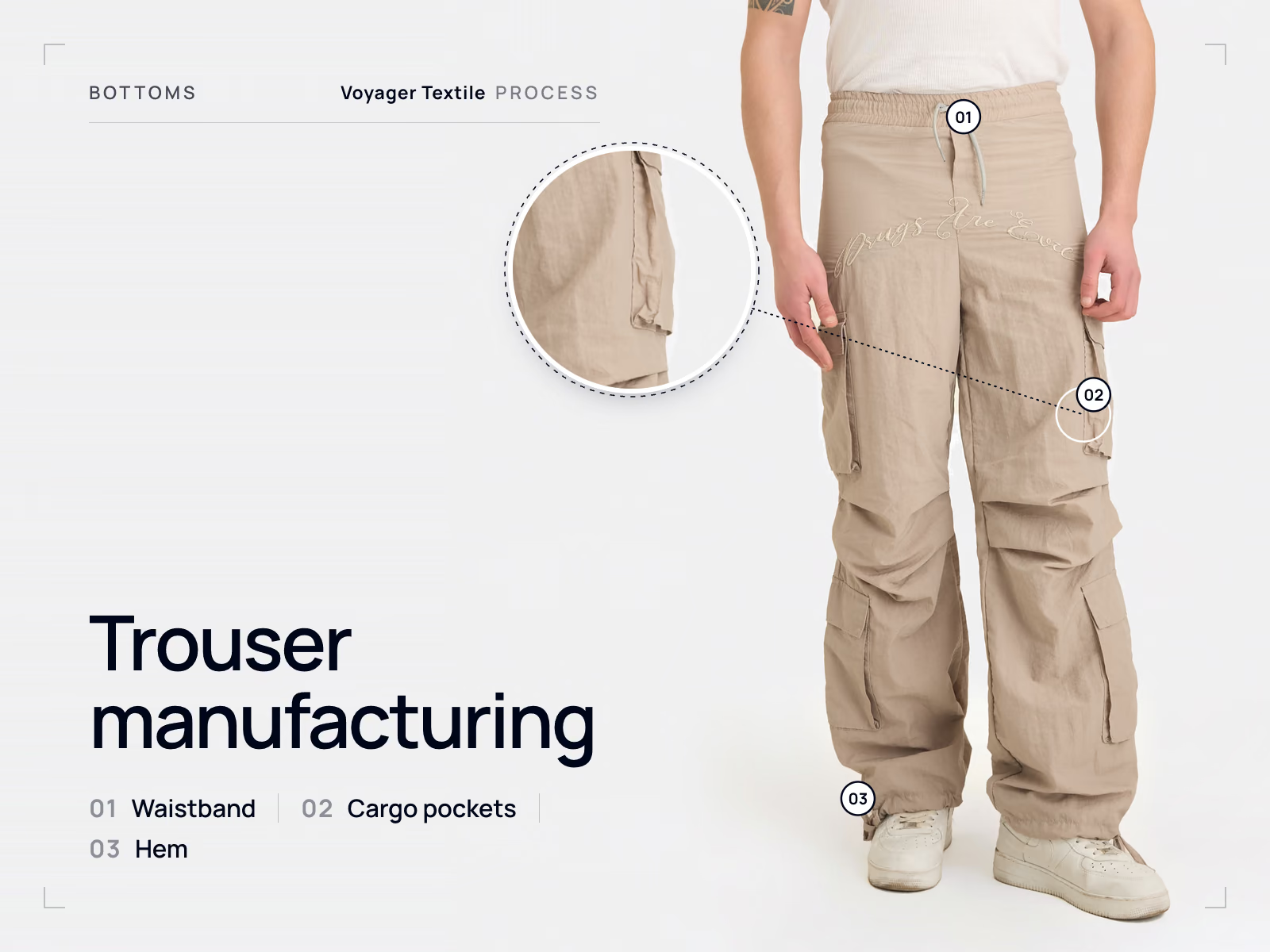
Uniform, medical and workwear
Uniform Manufacturing Process
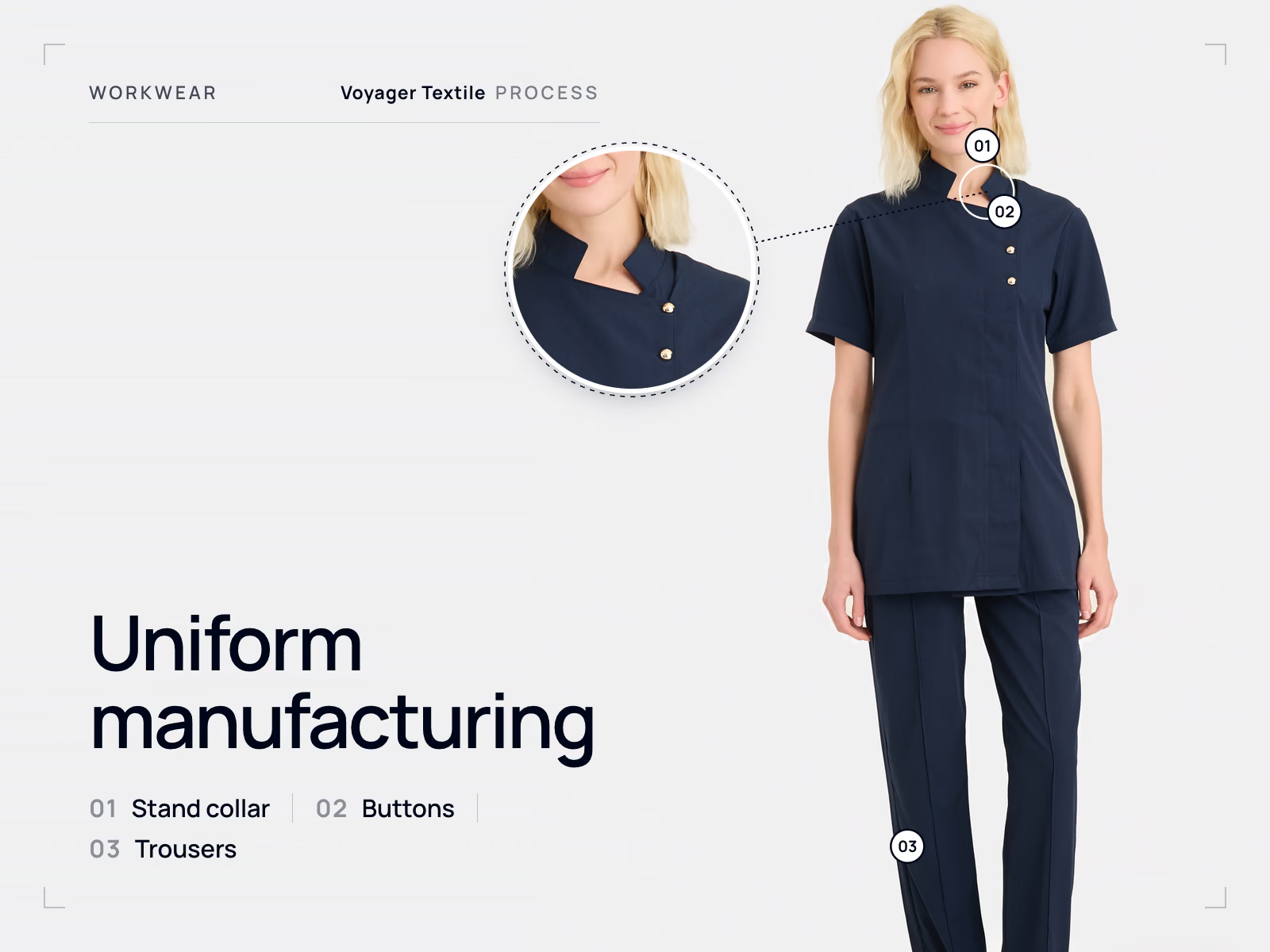
A uniform programme is not one garment, it is several garments that must look like one system and stay that way for years. Manufacturing it means booking one colour across different fabrics, holding one sizing logic across different patterns, applying branding in the same position on every item, and locking the specification so the third order matches the first.
Contents
- A programme is defined before a garment is designed
- One colour, several fabrics
- Sizing across a workforce, not a size curve
- Construction for laundering, not for a season
- Branding: the same logo in the same place on everything
- Producing the programme in one window
- Packing a uniform programme
- Quality control across a programme
- What to put in a uniform programme specification
- Sampling
- Buyer questions
Much garment production answers one question: how do we make this product well. A uniform programme adds a harder one: how do we make six different products look as though they were designed together, and keep them that way when a new employee joins in eighteen months. That second question drives many of the decisions below. This page covers the production side; the procurement and programme-planning side is in the workwear and uniform sourcing guide.
Uniform programme production sequence
A programme is defined before a garment is designed
The first production document is not a tech pack, it is a matrix: which roles wear which garments, in what quantities, and how often each item is replaced. It decides fabric volumes, size splits, and how many separate specifications the programme actually contains.
| Layer | Typical garments | What it must do |
|---|---|---|
| Core identity | Polo, shirt, tunic or T-shirt | Carry the brand, be worn daily, survive frequent washing |
| Bottoms | Trousers, skirts, scrub trousers | Fit a wide range of bodies and allow movement |
| Layering | Sweatshirt, fleece, softshell, gilet | Cover temperature variation without breaking the colour scheme |
| Role variants | Aprons, lab coats, tabards, high-visibility items | Identify function, and meet any applicable requirement for that role |
One colour, several fabrics
This is the central manufacturing problem of uniform production. A programme colour has to appear on a knitted polo, a woven trouser and a fleece layer, and those three fabrics take dye differently. They can be brought very close, but they will never be identical, and the difference is visible because the garments are worn together.
- Nominate one fabric as the master reference, usually the garment worn most visibly, and approve every other fabric against it under controlled lighting rather than against a paper reference.
- Approve all the fabrics in one session, laid side by side, rather than one at a time over several weeks.
- Book the fabric for the whole programme in one dye lot per quality where volumes allow. This removes variation for the life of that booking.
- Record the approved standards physically, and keep them out of light so they remain valid for later orders.
Custom colour production at Voyager Textile starts at 300 pieces, and lab dips are approved on the actual fabric before bulk dyeing. The mechanics are covered in the colour matching guide.
Sizing across a workforce, not a size curve
Retail sizing is a forecast. Uniform sizing is a list of named people, which is both easier and harder: easier because the quantities per size are knowable, harder because every one of those people has to be able to work in the garment.
- Publish the measurement chart with the size names, so people can self-select against measurements rather than remembered sizes.
- Provide fit samples for a try-on session before the bulk order. One session removes many later size complaints.
- Decide on cuts. A unisex fit works for some groups and not others. Where separate cuts are needed, they are separate patterns with their own sampling.
- Check the extremes. Approve a size set covering the smallest and largest sizes, since grading problems appear there rather than in the middle.
- Keep the size logic consistent across the programme, so that a person who wears a medium polo also wears a medium fleece.
- Plan buffer stock in the sizes most likely to be needed for new starters, rather than an even spread.
Construction for laundering, not for a season
Uniform garments are washed far more often than retail clothing, frequently at higher temperatures, and sometimes in industrial laundries. That changes fabric selection towards polyester-rich blends for dimensional stability and colour retention, and it changes construction at the points where garments fail.
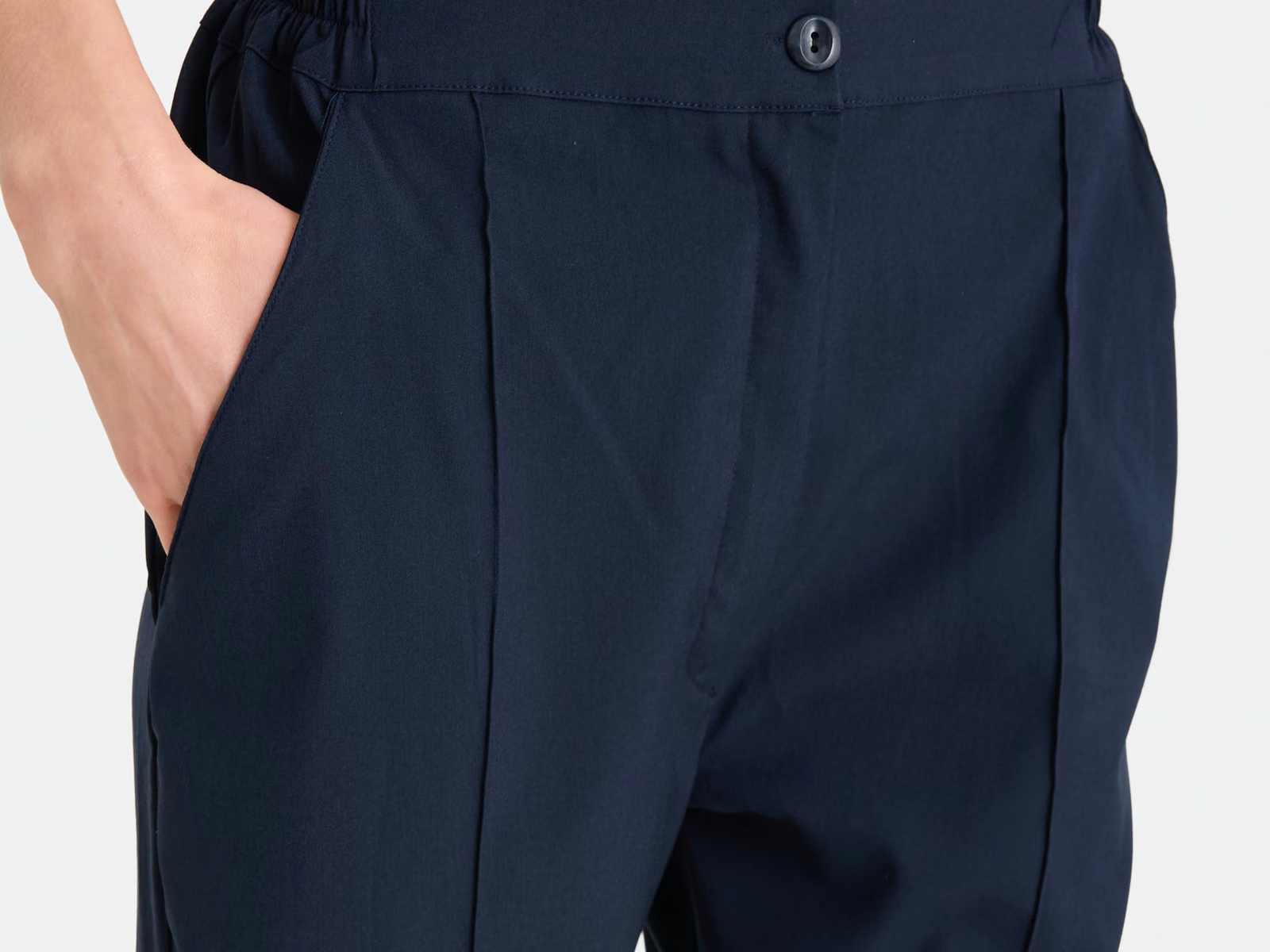
- Bartacks at pocket openings and at the top of vents, where hands and movement concentrate stress.
- Reinforcement at the crotch and inner leg on trousers, a common failure point in service wear.
- Thread quality chosen for repeated washing, which is invisible on a sample and decisive after a hundred cycles.
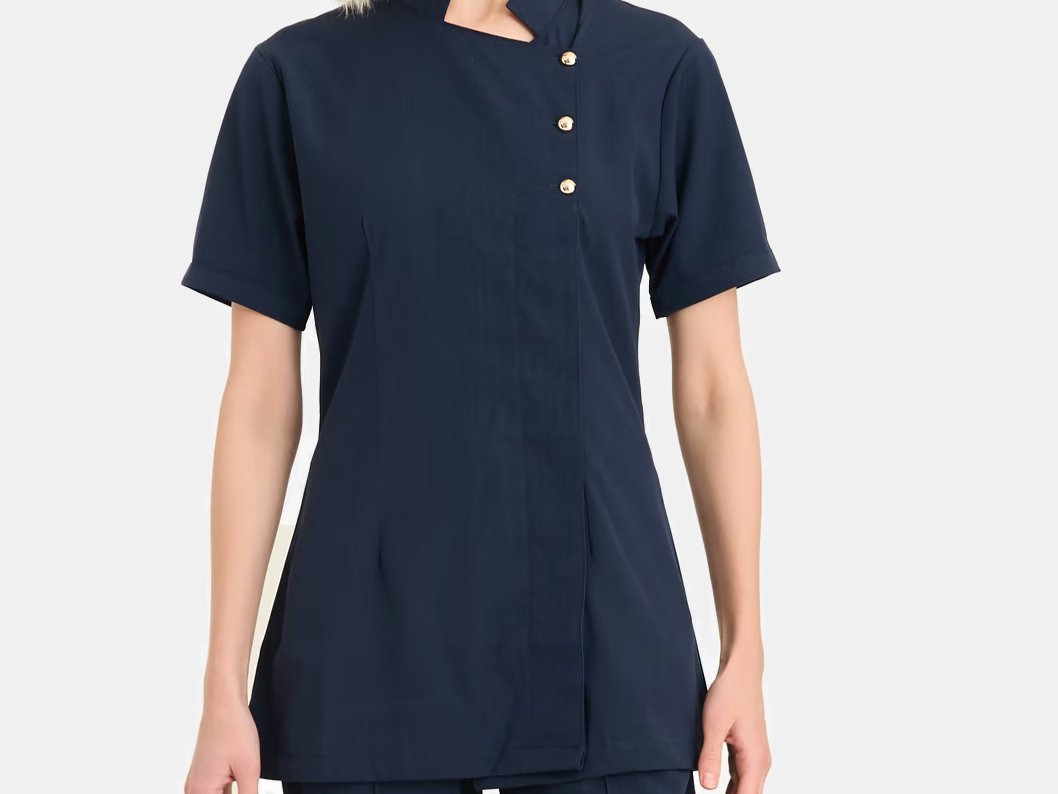
- Fastenings specified rather than defaulted: buttons that survive industrial laundry, or studs where buttons will not.
- Seam types chosen for durability rather than speed on the garments that take the hardest use.
Where garments will be industrially laundered, specify dimensional stability and colourfastness testing at the actual washing temperature rather than at a domestic cycle. Testing is covered in the quality control guide.
Branding: the same logo in the same place on everything
Embroidery is the standard for uniform branding because it survives laundering and reads as considered. The manufacturing requirement is consistency: the same digitised file, at the same size, in the same measured position, on garments with completely different constructions.
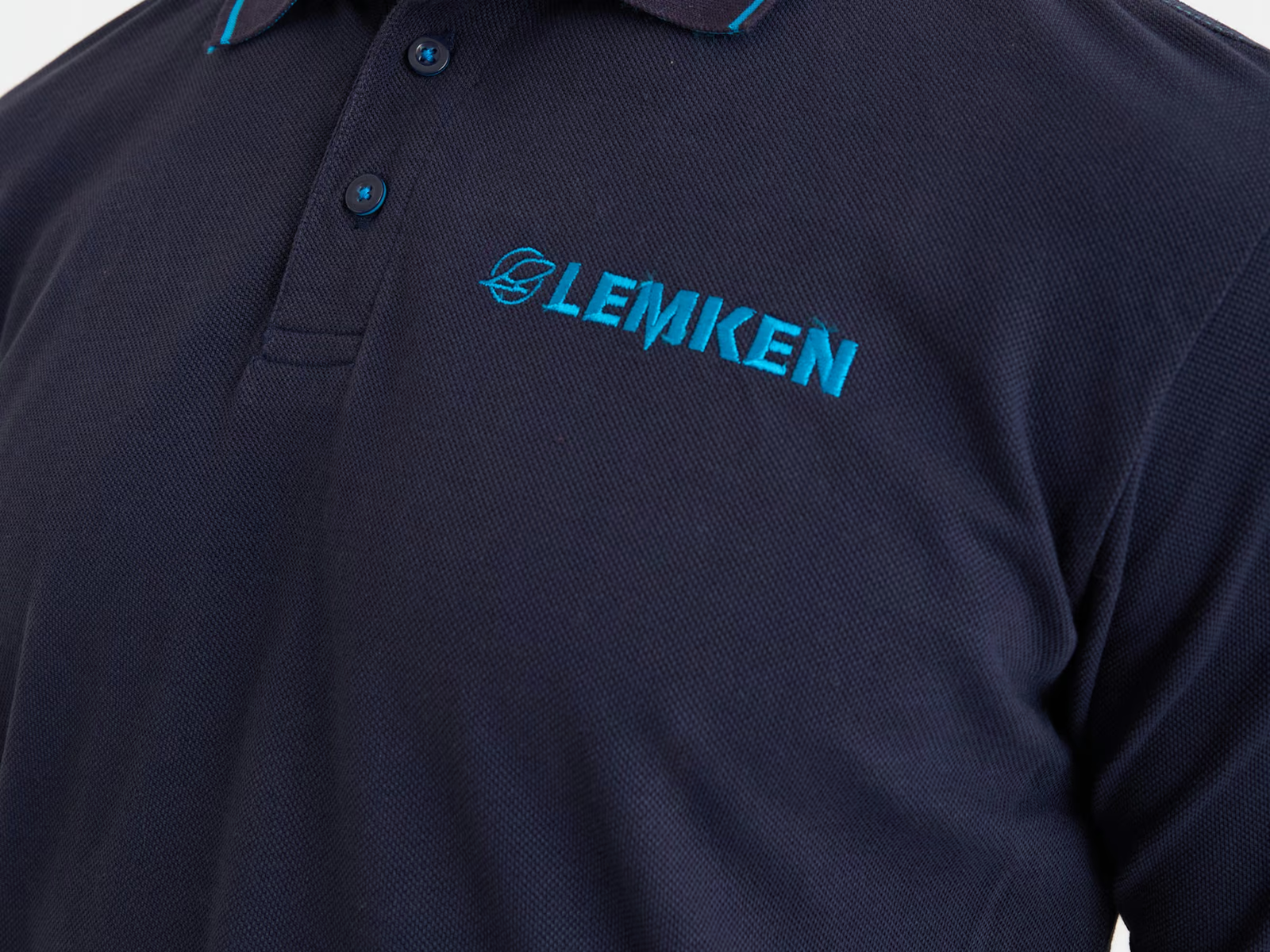
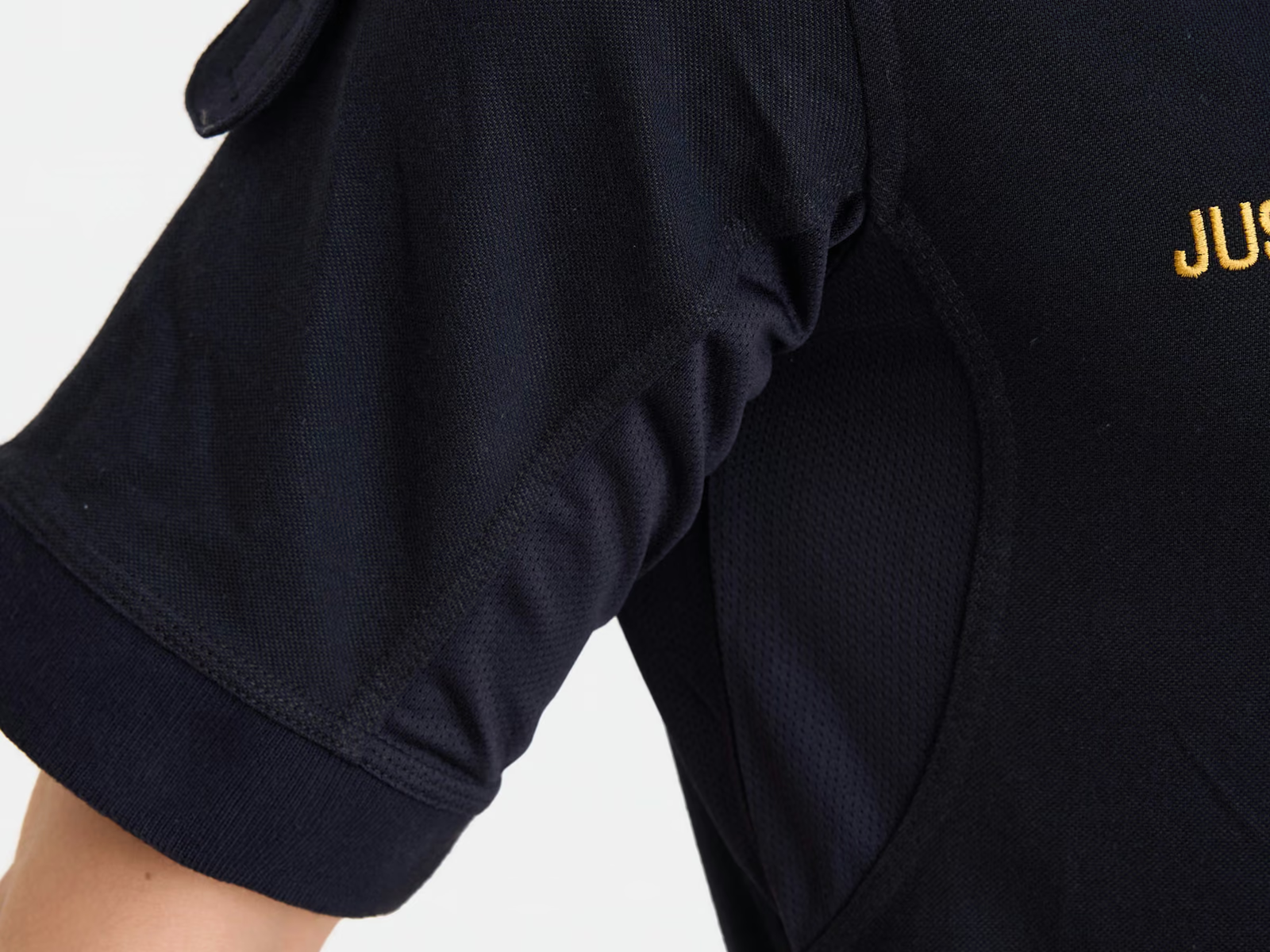
- Fix the logo size and position per garment type, measured from a fixed point such as the high point of the shoulder, and record it in each specification.
- Approve one stitch-out per fabric, because the same digitised file behaves differently on piqué, fleece and woven twill.
- Decide the logo colour version for light and dark garments, and approve both.
- Keep the digitised file with the programme records so later orders reproduce it exactly rather than being re-digitised.
- Where names or roles change, use applied badges, name tapes or heat-applied lettering rather than permanent embroidery on the garment.
Additional branding through patches, contrast panels and piping is often more durable and more distinctive than decoration, because it is built into the construction rather than applied to it.
Producing the programme in one window
Where possible, the garments in a programme are produced close together, from booked fabric, so that everything shipped in the first delivery genuinely matches. Splitting a programme across several months with fabric bought each time is a reliable way to end up with a fleece that does not match the polos.
For repeat orders, the controls are a sealed approved sample per garment, approved physical colour standards, a version-controlled specification and the retained embroidery file. Those four items are what make year three look like year one. See reorder consistency.
Packing a uniform programme
Packing is part of the manufacturing specification here, not a logistics afterthought, because how the goods arrive decides how much work the customer's team does.
| Distribution model | Packing approach |
|---|---|
| Central warehouse | Solid cartons by garment, colour and size, clearly marked |
| Multiple sites | Cartons pre-packed per site to that site's size breakdown |
| Individual allocation | Individually bagged and labelled per person, grouped by department |
| Role-based issue | Packed as complete sets per role so a new starter receives one pack |
Quality control across a programme
| Check | What it catches |
|---|---|
| Shade comparison across all garments together | Fabrics approved separately drifting apart |
| Logo position measured on each garment type | Branding that sits at different heights across the programme |
| Embroidery quality on each fabric | One digitised file behaving badly on a different surface |
| Measurements against tolerance per garment | Standard cutting and shrinkage drift |
| Wash testing at the real laundering temperature | Shrinkage and colour loss that appear in service |
| Reinforcement present at specified points | Missing bartacks, a common quiet omission |
| Pack contents against the allocation list | The failure that reaches an individual employee |
What to put in a uniform programme specification
- The role matrix: which garments each role receives, in what quantity, and the replacement cycle.
- Fabric per garment, with composition, weight and finish, and which fabric is the colour master.
- The programme colour with references, and confirmation that all fabrics are approved together.
- Measurement charts with tolerances per garment, and a consistent size logic across the programme.
- Cuts required: unisex, or separate cuts, per garment.
- Construction requirements, including reinforcement points and fastening types.
- Laundering regime, with any required testing and pass criteria.
- Branding: digitised artwork, size and position per garment type, plus name and role application method.
- Label content for the markets where garments are supplied.
- Packing model, including per-site or per-person allocation.
- Reorder plan: expected annual consumption including new starters and replacements.
Sampling
Sample the programme, not the garments. Approve all pieces in one session, worn together where possible, because a polo and a fleece that are each acceptable alone can look wrong side by side. Include the size set for the garments where fit varies most, usually bottoms and fitted tops.
Where the garments will be laundered industrially, wash a sample set before approving bulk. It is the cheapest possible way to find out that a colour will not hold.
Before you send a uniform RFQ
- Role matrix with headcount and garments per role
- Programme colour references and which garment is the master
- Fabric preferences or the laundering regime the garments must survive
- Cuts required per garment: unisex or separate
- Size range, and whether a survey or try-on session is planned
- Logo artwork, plus intended size and position per garment
- Name or role identification requirements
- Any protective or regulatory requirement for specific roles
- Packing model: warehouse, per site or per person
- Annual consumption estimate including new starters
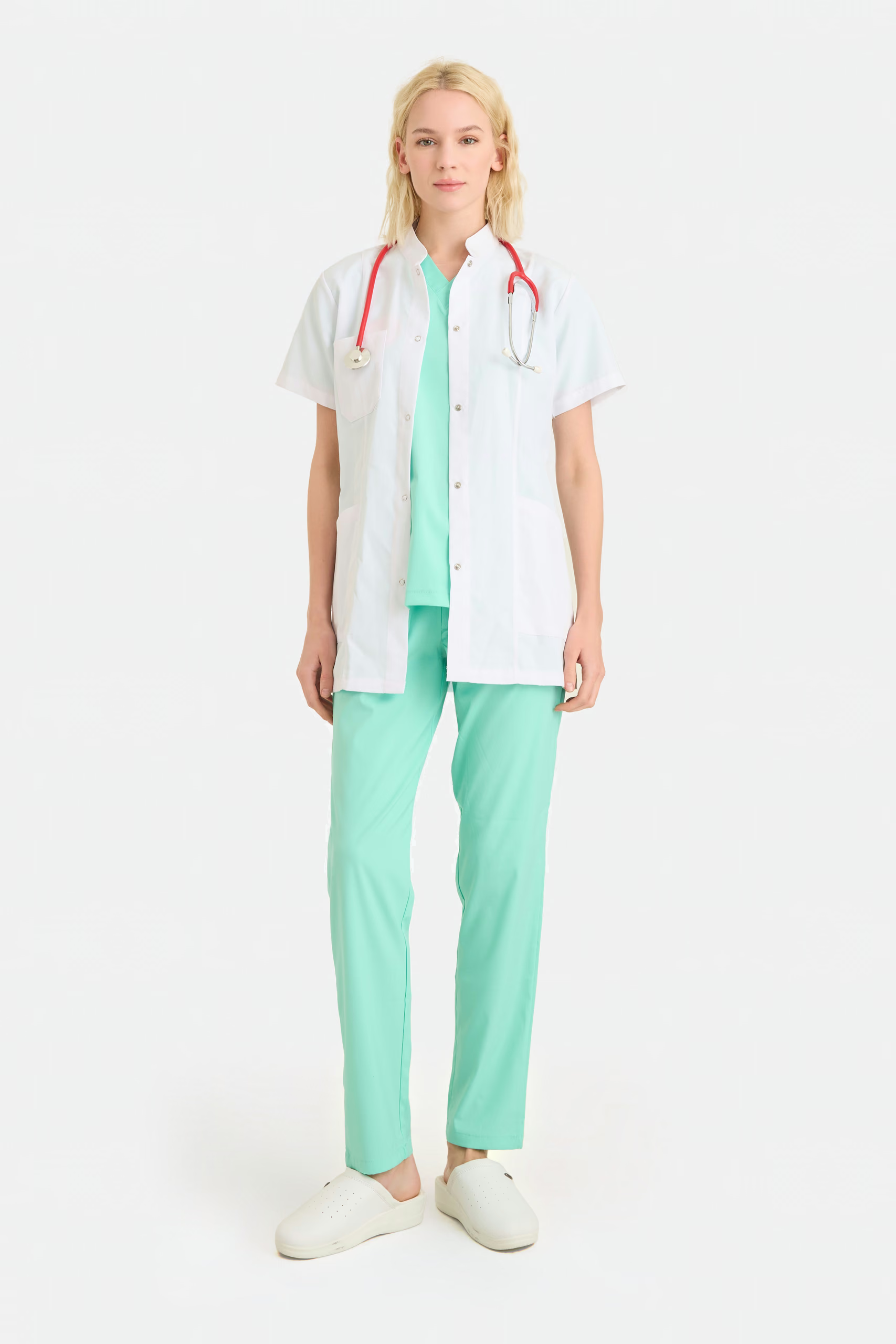
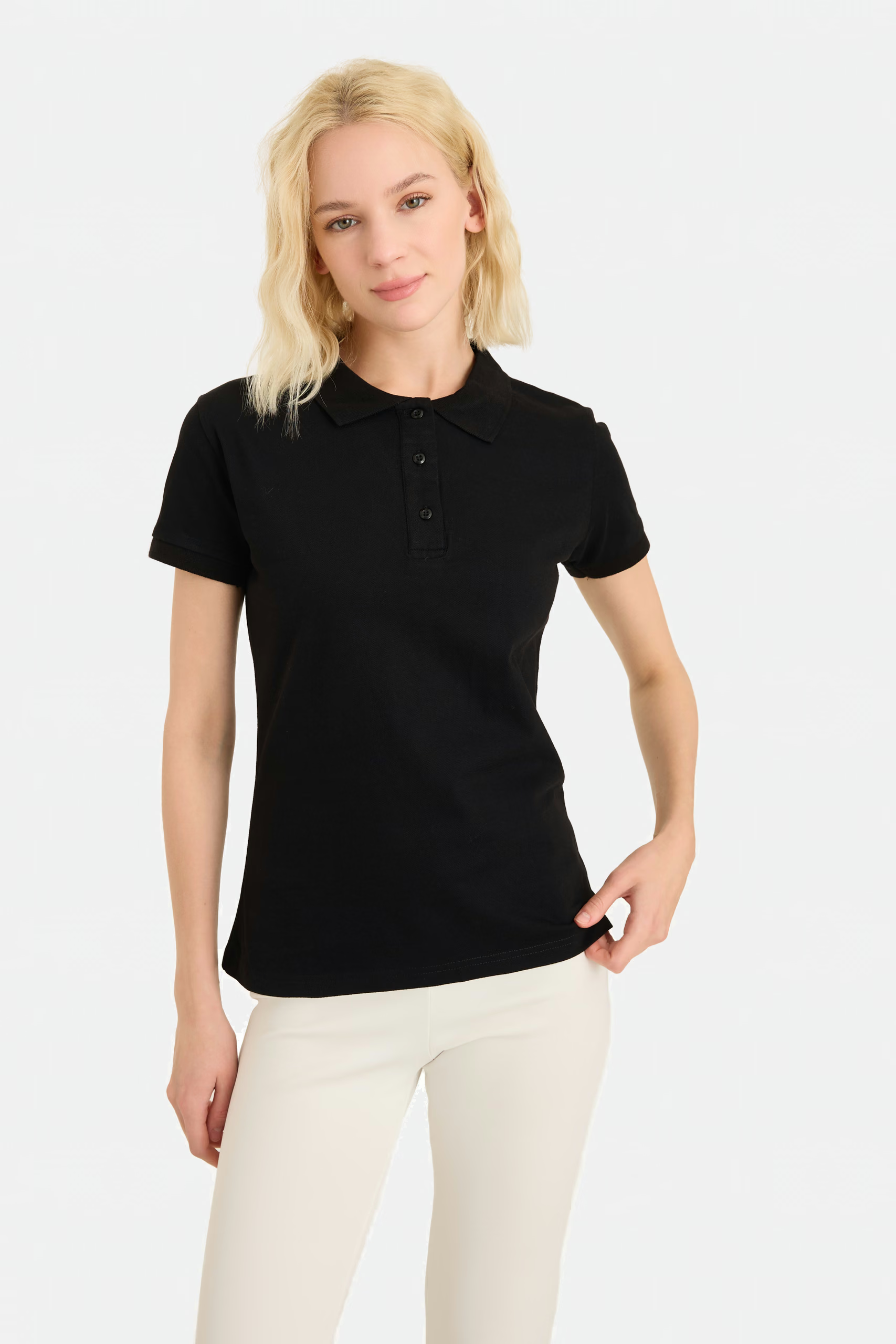
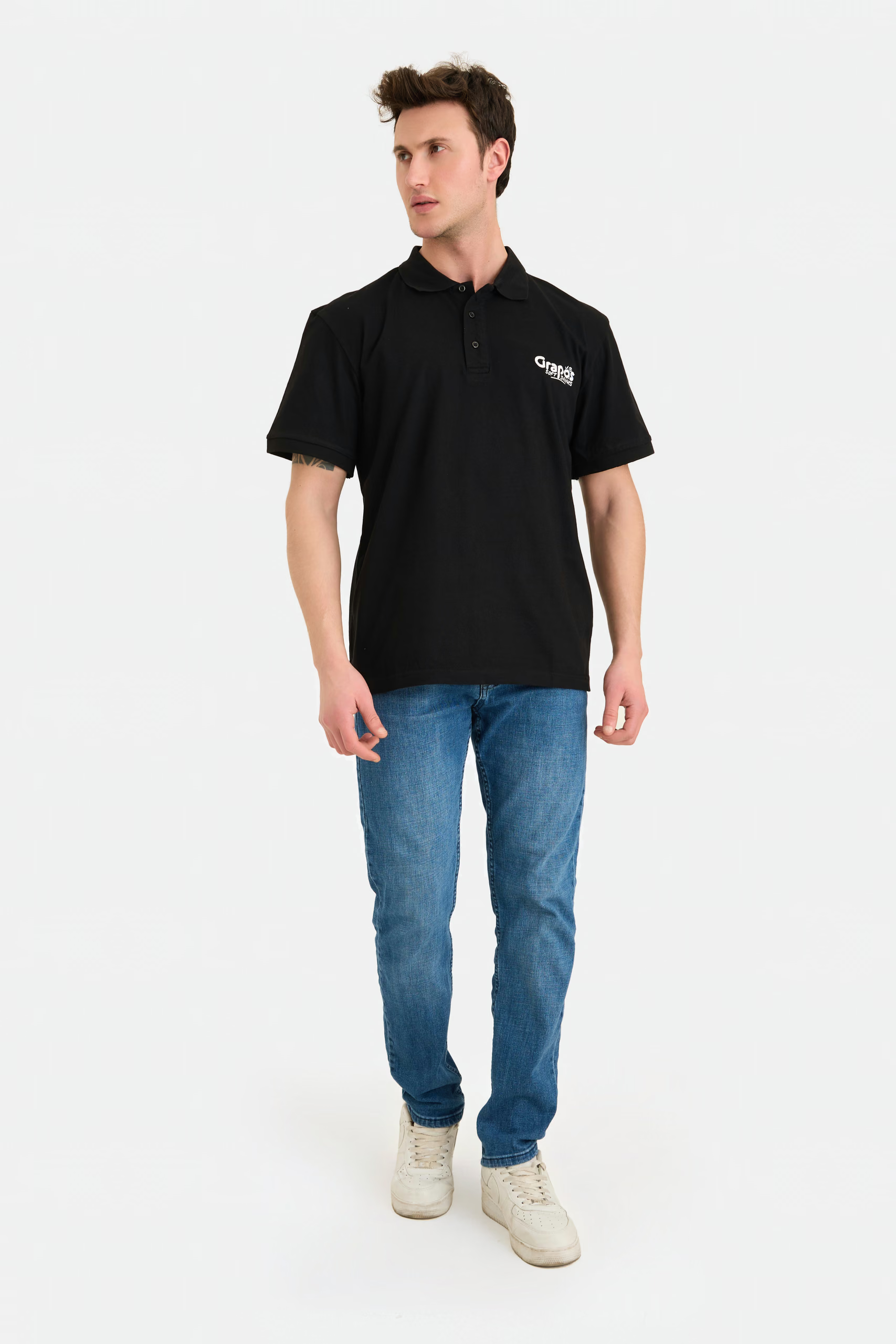
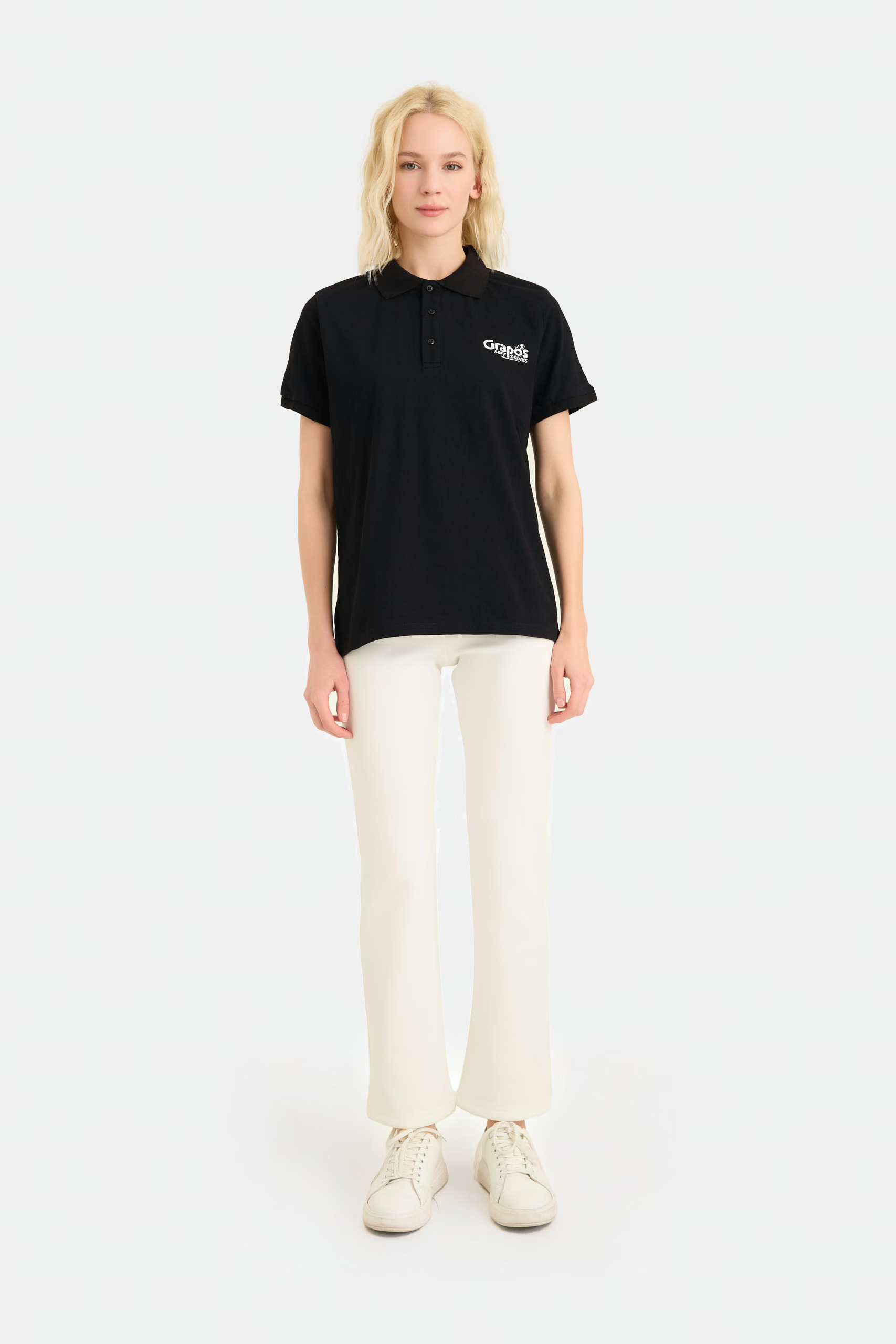
Uniform references produced by Voyager Textile
Produced to customer specification for corporate, hospitality, clinic and service programmes.
Buyer questions
How is a uniform programme manufactured?
The role matrix and quantities are defined first, then one colour standard is approved across every fabric in the programme, patterns and sizing are set with a consistent size logic, and all garments are sampled and approved together. Fabric is booked for the whole programme, the garments are produced in one window where possible, branding is applied in fixed positions, and goods are packed by warehouse, site or person.
Why do uniform garments sometimes not match each other in colour?
Because a knitted polo, a woven trouser and a fleece take dye differently, and because fabrics approved separately drift apart. Nominate one fabric as the master reference, approve all the others against it in one session under controlled lighting, and book fabric for the whole programme.
What fabric is used for uniforms?
It depends on the garment and the laundering regime. Polyester-rich blends are usual where garments face frequent hot or industrial washing because they hold dimensions and colour better, while cotton-rich fabrics are preferred where comfort in heat matters more. Choose from the wash regime first, then adjust for comfort.
How should sizing be handled for a workforce?
Publish the measurement chart with the size names so people select against measurements, run a try-on session with fit samples before the bulk order, keep the size logic consistent across garments, and order buffer stock in the sizes most likely to be needed rather than an even spread.
Can Voyager Textile produce certified protective clothing?
Certified personal protective equipment such as flame-retardant or high-visibility garments is a regulated category with its own certification requirements, and it must be confirmed explicitly with any manufacturer rather than assumed. Ordinary uniform and workwear production is a different scope.
How is employee identification added to uniforms?
Company branding is normally embroidered, using one digitised file at a fixed measured position on each garment type. Individual names and changing roles are better handled with applied badges, name tapes or heat-applied lettering, since permanent embroidery on a garment ties it to one person.
How do we make sure next year's order matches this year's?
Treat the programme record as the deliverable: a sealed sample per garment, a physical colour standard per fabric, one dated specification version, and the digitised embroidery file kept rather than recreated. Book fabric for the whole period where volumes allow. The controls are set out in the reorder consistency guide.
Can garments be packed per employee or per location?
Yes, and the model should be chosen before production ends rather than after delivery. The three common approaches are solid cartons for a central warehouse, cartons built to each site's own size breakdown, and individually bagged packs assembled per person or per role. Each changes how the goods are counted and checked at the line, which is why it belongs in the specification.
What is the minimum order for a uniform programme?
At Voyager Textile, custom apparel production starts at 300 pieces, and custom Pantone colour production also from 300 pieces. Because a programme contains several garment types, confirm at RFQ stage how the minimum applies per garment rather than to the programme as a whole.
Ordering this garment from Voyager Textile
- Every garment is made to order, to your own design.
- The minimum order is 300 pieces per colour and per style. Sizes can be split inside the 300, and a custom Pantone colour carries the same minimum of 300 pieces. Polyester-based fabrics are assessed separately.
- A sample takes 5–7 business days. Bulk production takes 4–5 weeks after sample approval; development, sampling and shipping are additional.
- Cutting, sewing, embroidery, transfer printing and sublimation printing are done in our own factory in Türkiye. Screen printing and garment washing are coordinated with partner facilities.
Quantities, timing and any open point are confirmed per project at the quotation stage, once we have your specification or tech pack.
Request a quotePlanning a uniform programme?
Send the role matrix, the colour you need to hold across garments and the laundering the clothing will face. We approve the fabrics together against one standard and sample the programme as a set.
Discuss a uniform programme