Woven bottoms
Trouser Manufacturing Process
Trouser production is a sequence of sub-assemblies. Pockets are built and set into the fronts, the fly is assembled around the zip, the legs are joined at inseam and side seam, and only then is the waistband applied. Pressing is part of the construction rather than a finishing step, and the fit is decided by rise and inseam more than by waist measurement.
Contents
- Bottom-weight fabric
- Pattern: the measurements that decide the fit
- Cutting
- Pockets
- The fly
- Waistband, curtain and belt loops
- Assembly sequence
- Pressing is construction, not finishing
- Quality control: trouser-specific checks
- Decoration on trousers
- Work trousers, bib-and-brace overalls and coveralls: construction choices
- Denim garments: jeans, denim jackets and overshirts
- What to put in a trouser tech pack
- Sampling
- Buyer questions
Trousers are among the most operation-heavy garments apparel buyers order. A plain tee is a handful of steps; a pair of chinos with front pockets, a zip fly, back welts, belt loops and a curtained waistband can be forty. That is why trouser quotations look higher than buyers expect, and why the specification has to be more detailed than for a knitted top.
Trouser production sequence
Bottom-weight fabric
Trousers use woven cloth heavy enough to hold a leg shape, which is why the category is called bottom-weight. The structures themselves are covered in twill and gabardine. The weight range is wide, and the choice sets both the drape and the working life.
| Fabric | Typical composition | Indicative weight | Character | Consideration |
|---|---|---|---|---|
| Cotton chino twill | 100% cotton, or with 2 to 3% elastane | Around 250 to 300 g/m² for year-round weights | Classic trouser cloth, holds a crease | Heavier winter cloths run higher, around 350 g/m² and above |
| Cotton gabardine | 100% cotton, sometimes blended | Around 250 to 280 g/m² | Tight twill, smooth face, tailored appearance | Suits smarter uniform and corporate trousers |
| Polyester and cotton workwear twill | Commonly 65/35 style blends | Around 195 to 300 g/m² | Durable, holds colour, dries faster | The usual choice where trousers are industrially laundered |
| Denim | Cotton, often with a little elastane | Around 8 to 14 oz, roughly 270 to 475 g/m² | Distinctive, ages with wear | Raw indigo can transfer colour; specify washing if required |
| Stretch woven | Cotton or synthetic base with 2 to 5% elastane | Around 220 to 300 g/m² | Comfort in service and active roles | Elastane changes shrinkage and needs its own fit sample |
| Technical ripstop and lightweight wovens | Polyester or blends | Around 150 to 220 g/m² | Light, quick drying, used for utility and cargo styles | Lighter cloth needs more reinforcement at stress points |
Pattern: the measurements that decide the fit
Waist is the measurement buyers quote and the least useful one on its own. Trouser fit lives in four others.
- Rise. Front rise and back rise, measured separately. They decide where the trouser sits and whether it pulls when the wearer sits down. A back rise that is too short is a common fit complaint.
- Inseam. Stated per size rather than as one value, and confirmed after washing where the fabric shrinks.
- Thigh and knee. These decide the leg shape far more than the hem opening does.
- Hem opening. The final taper measurement, and the one that dates a trouser quickly.
Front detailing is a pattern decision too: darts shape the back over the seat, while pleats at the front add room through the hip and change the silhouette. Grading matters here, because rise and thigh should not grow at the same rate as the waist. See pattern making and grading.
Cutting
Grain is more critical on trousers than on most other garments. A leg cut off-grain twists as soon as it is washed, so the side seam spirals towards the front. It cannot be corrected afterwards, and it is one of the defects most likely to cause a rejected delivery. Separating it from fabric-driven twist is covered in why garments twist after washing.
Legs are cut as mirrored pairs and bundled together, with pocket bags, waistband pieces, fly parts and belt loops cut and kept with them. On directional fabrics such as some twills and corduroys, all panels must run the same way.
Pockets
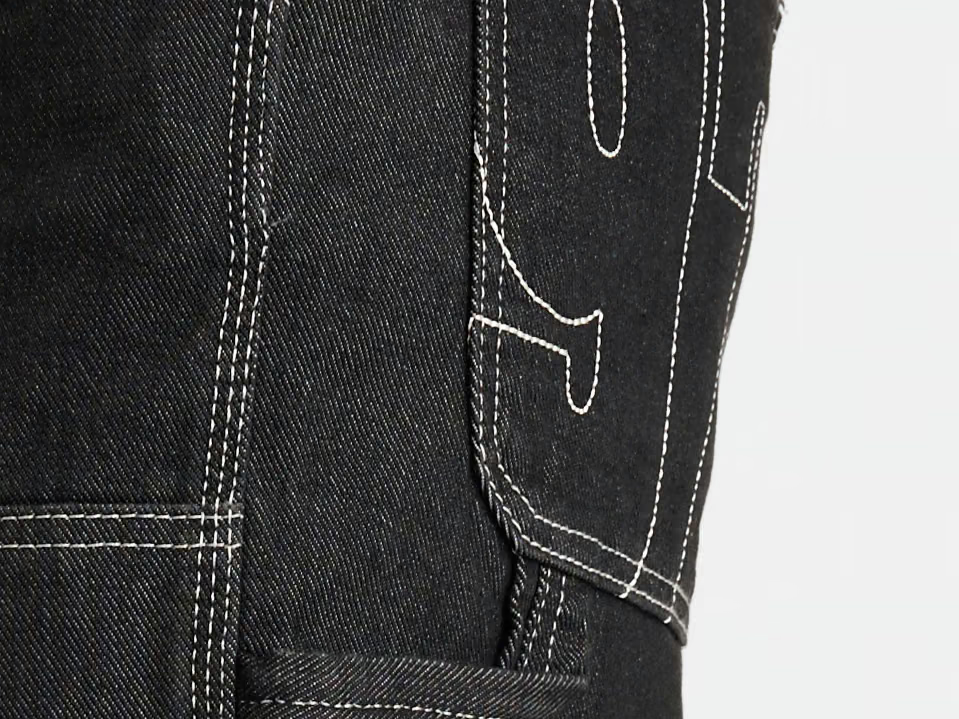
- Front pockets. Slanted or J-shaped openings with a pocket bag attached to the front panel and caught into the waistband and side seam. The opening edge is usually reinforced with a bartack at each end.
- Coin pocket. A small pocket set into the front right, traditional on chinos and jeans.
- Back pockets. Welt pockets for a smart trouser, patch pockets for casual and workwear styles, often closed with a button or a stud.
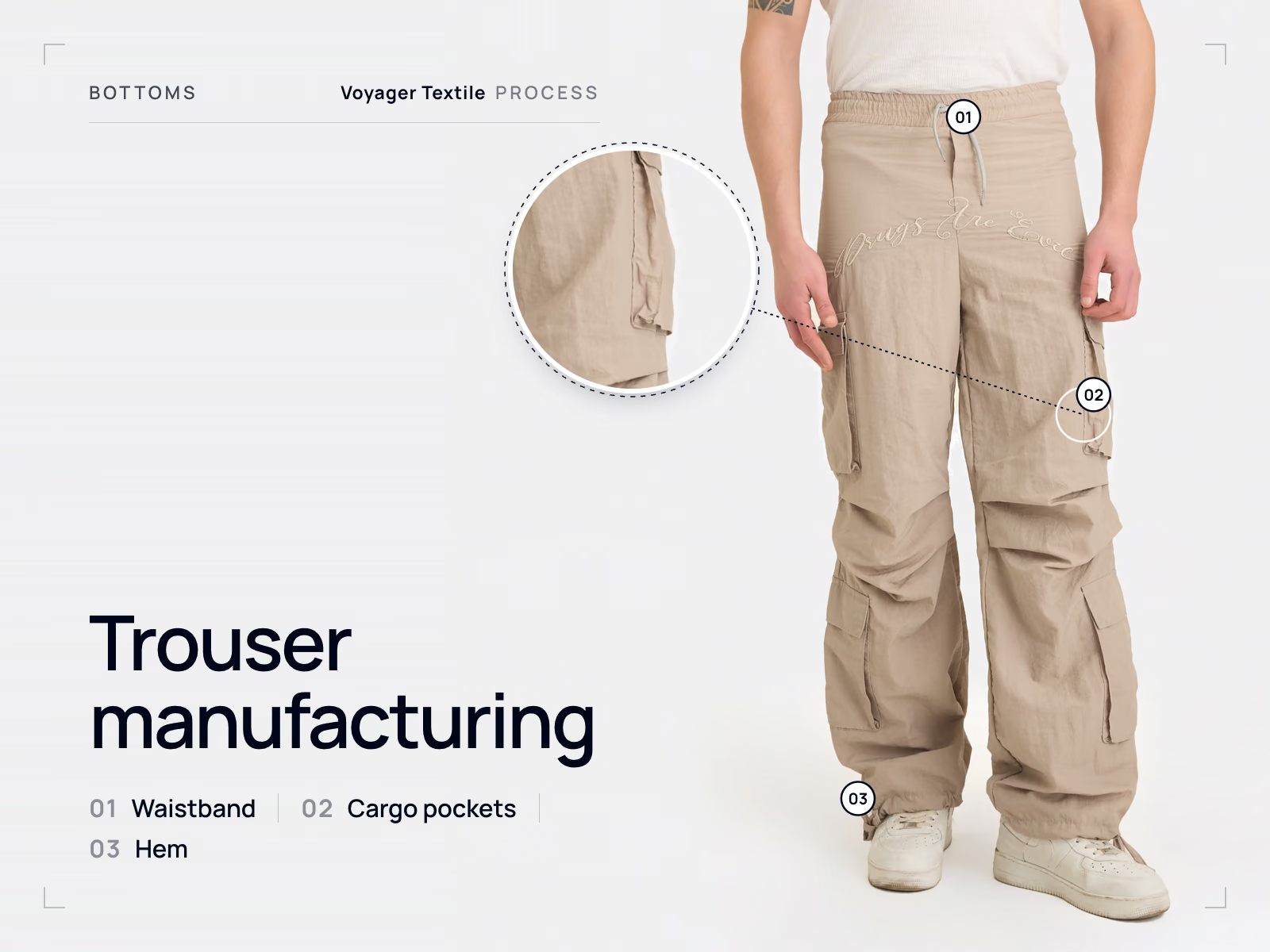
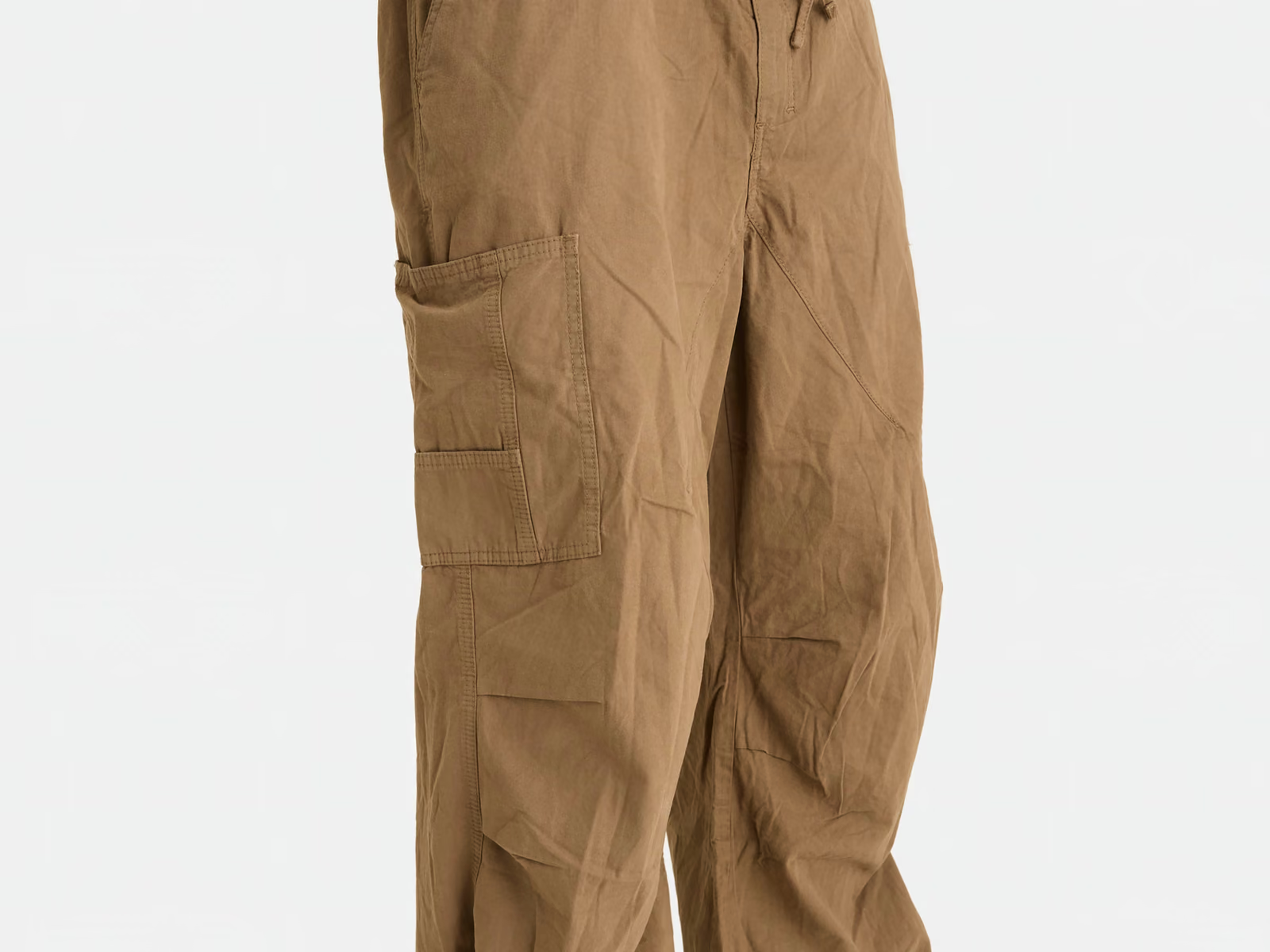
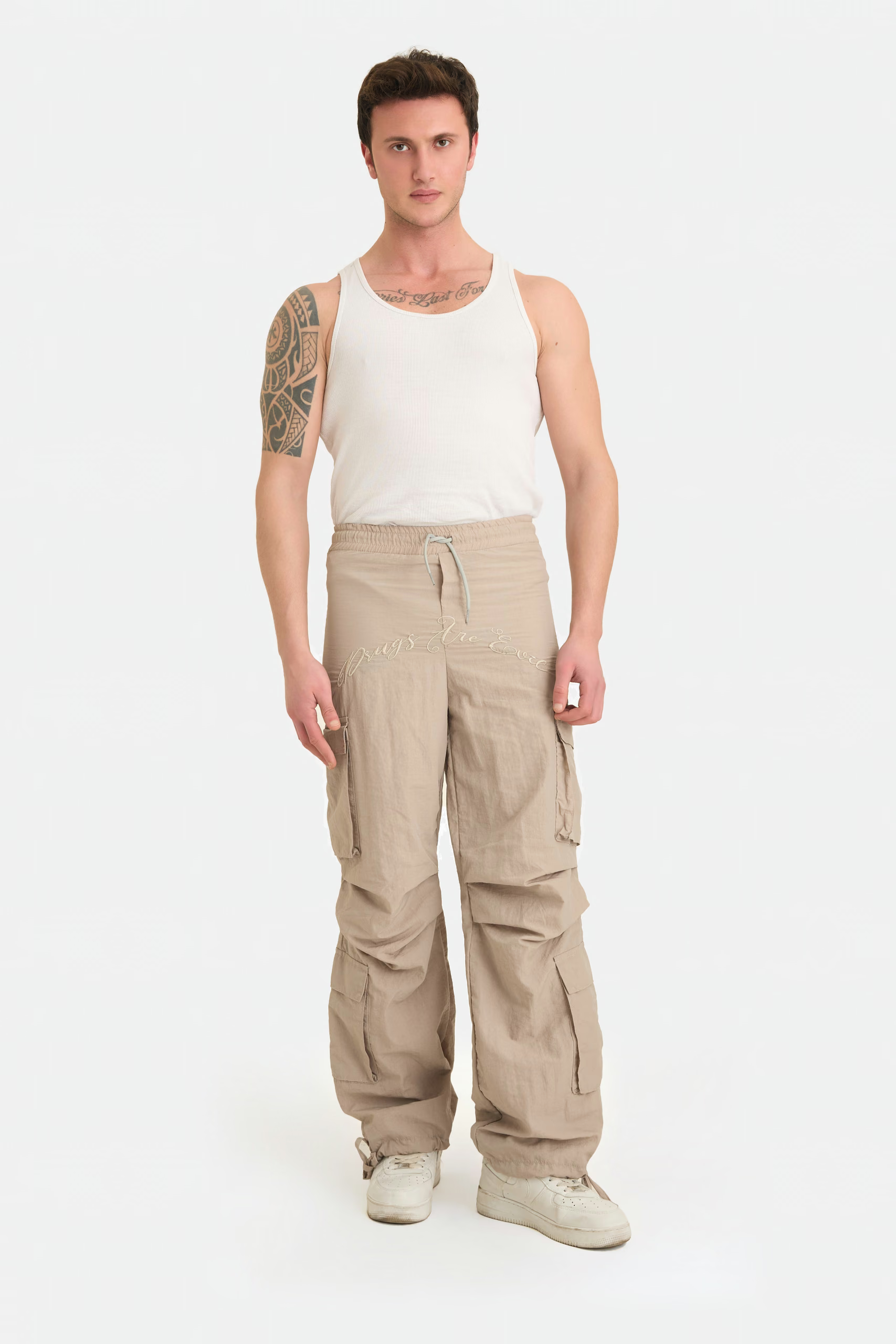
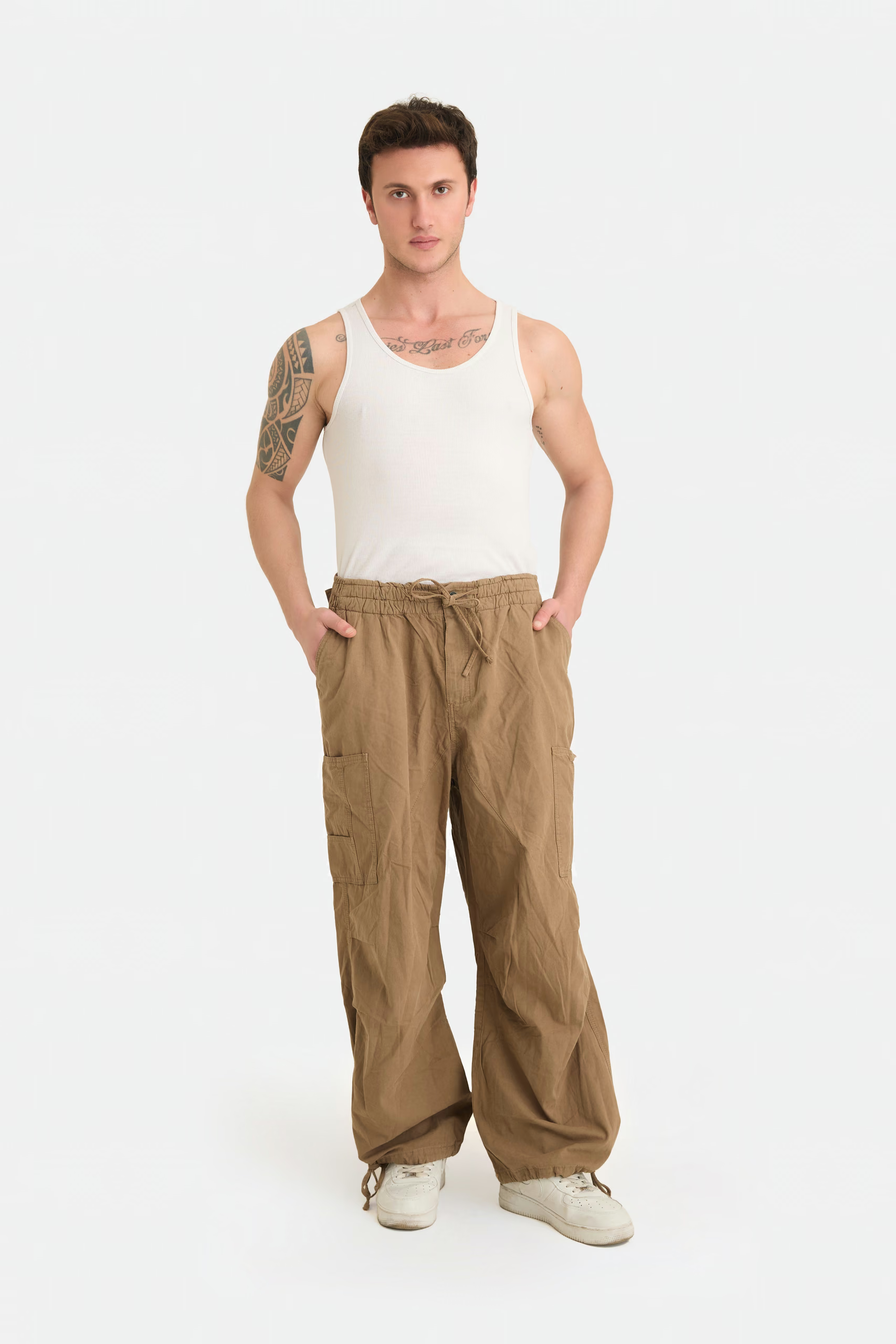
- Cargo pockets. Applied patch pockets on the thigh, sometimes with a bellows fold for capacity and a flap closure. Placement matters: too high and they are unusable, too low and they swing.
- Pocket bag fabric. Lighter than the shell to reduce bulk, but strong enough not to wear through. On pale trousers, check that the bag does not show through the front.
The fly
A zip fly is a small sub-assembly with several parts: the zip itself, a fly facing on one side, a fly shield behind the zip so the slider does not contact the wearer, and a topstitched curve, often called the J-stitch, that holds it all in place.
- Specify the zip type, length and finish, and whether the puller is standard or branded.
- Specify the fly shield, since omitting it is a comfort failure rather than a cost saving.
- State the topstitch style and width, because it is a visible design element on chinos and jeans.
- A bartack at the bottom of the fly is standard, and it is what stops the fly opening splitting under stress.
- Button-fly and elasticated alternatives exist and are separate constructions, not variants.
Waistband, curtain and belt loops
The waistband is applied after the legs are joined, and it is where a trouser reads as well made or not. The constructions themselves, fixed and elasticated, are compared in waistband and fly construction.
- Interlining. The band is usually fused or interlined so it holds its shape rather than folding over in wear. Specify it; an uninterlined band on a soft cloth collapses.
- Straight or contoured. A straight band is simpler; a contoured band follows the body and sits better at the back.
- Curtain. A finished inner facing at the waistband, standard on tailored trousers and a clear quality signal.
- Elasticated inserts. Common in workwear and service trousers, giving movement without an elasticated look at the front.
- Belt loops. State the number, width and placement, and require bartacks at both ends of each loop. Loops are a frequent failure point when they are only stitched.
- Closure. Button and buttonhole, hook and bar, or both. Hook and bar is more durable on heavier cloth.
Assembly sequence
- Front and back panels are prepared, with darts or pleats formed.
- Front pockets are constructed, bags attached, openings reinforced.
- Back pockets are built and attached, with welts pressed and secured.
- The fly is assembled: zip set, shield attached, J-stitch topstitched.
- Inseams are closed, then the side seams, or in the reverse order depending on the factory's method.
- The crotch seam is closed and reinforced, usually with a bartack at the junction.
- The waistband is prepared with its interlining and curtain, then attached, and belt loops are set and bartacked.
- Hems are finished at the specified length, and bartacks are applied at all remaining stress points.
- The trouser is pressed to shape, measured, inspected and packed.
Pressing is construction, not finishing
Woven cloth also shows seam quality more plainly than jersey does, so if a seam ripples the diagnosis in why seams pucker applies directly. Unlike a jersey garment, a woven trouser is pressed at several points during assembly. Seam allowances are pressed open so seams lie flat, welts and pockets are pressed as they are built, and the finished trouser is pressed to shape at the end. Where a permanent crease is wanted down the leg, it is set during pressing and specified in the tech pack rather than assumed.
Quality control: trouser-specific checks
| Check | What it catches |
|---|---|
| Leg twist after washing | Off-grain cutting, the defect that cannot be repaired |
| Inseam length, left against right | Cutting or sewing asymmetry |
| Front and back rise against the chart | A common source of fit complaints |
| Fly alignment, zip function and shield presence | Comfort and a visible construction fault |
| Bartacks at pocket corners, fly base, belt loops and crotch | The points where trousers fail in service |
| Waistband measurement and interlining flatness | A band that stretches or rolls in wear |
| Pocket bag show-through on pale fabric | A quality problem visible only on the finished garment |
| Hem level and evenness | Uneven finished length |
| Pressing quality and any specified crease | Appearance on arrival |
Decoration on trousers
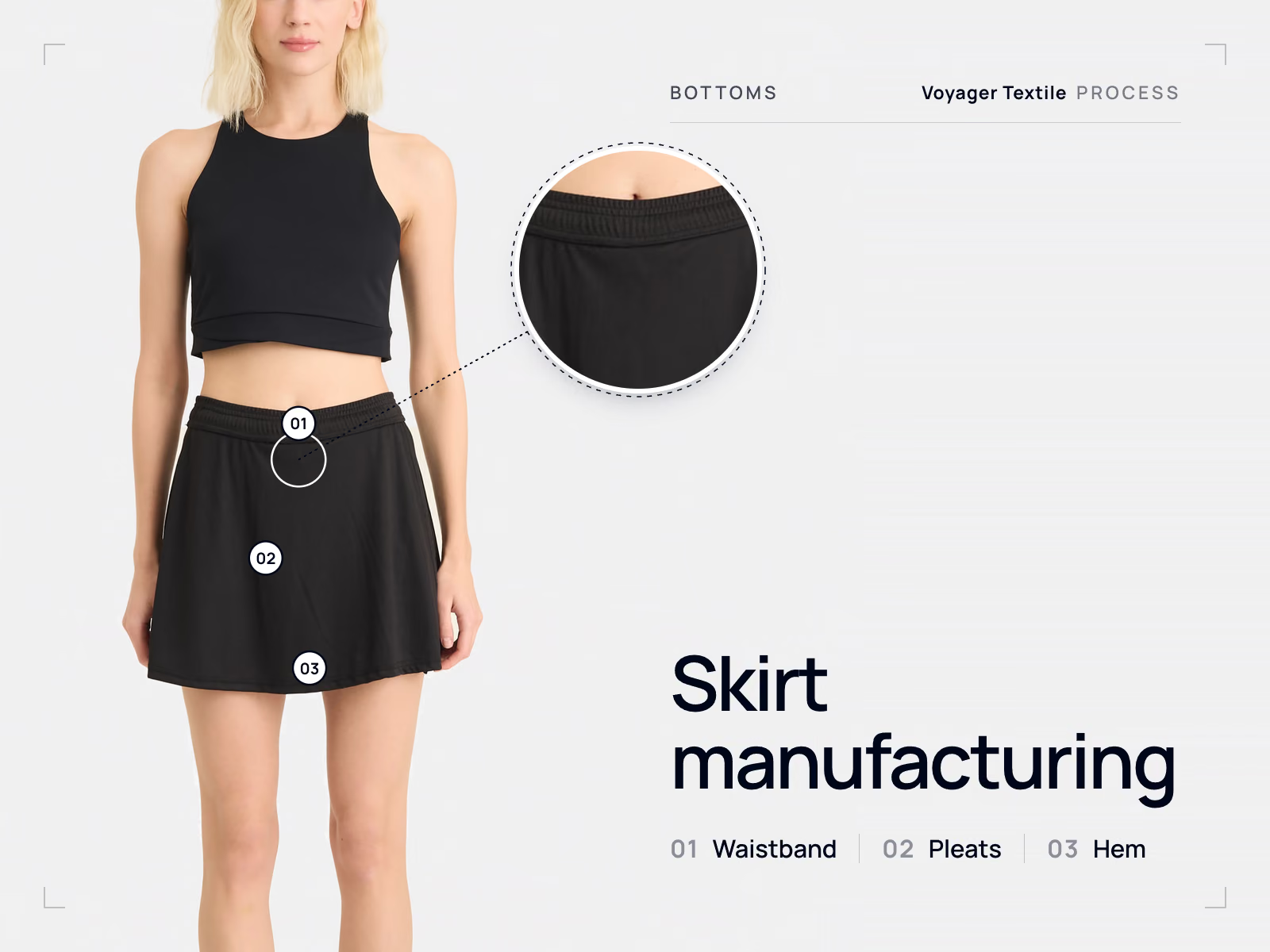
Trousers carry less decoration than tops, and it is usually applied to a specific area rather than the body. The same logic applies to skirts.
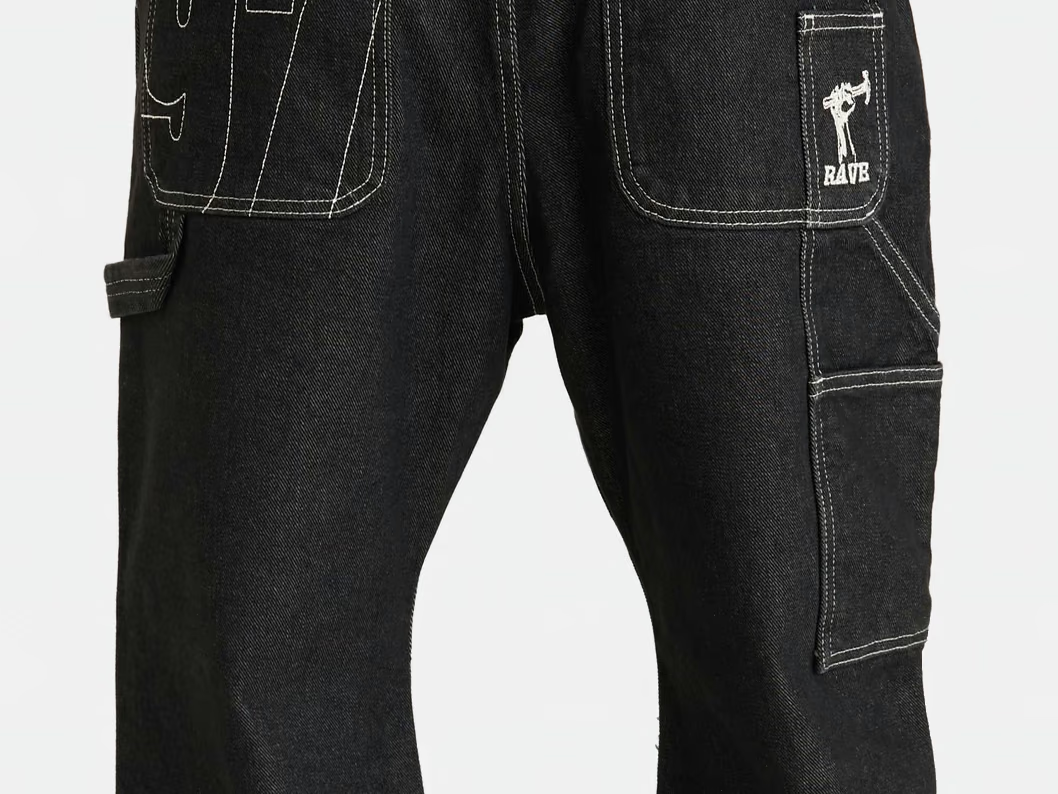
- Embroidery on a back pocket, thigh or hem, worked on the panel before assembly.
- Transfer or screen printing on a leg panel, again before assembly where the placement is large.
- Woven or leather-look patches at the back waistband, common on denim and utility styles.
- Branded hardware: buttons, rivets, zip pullers and drawcord tips.
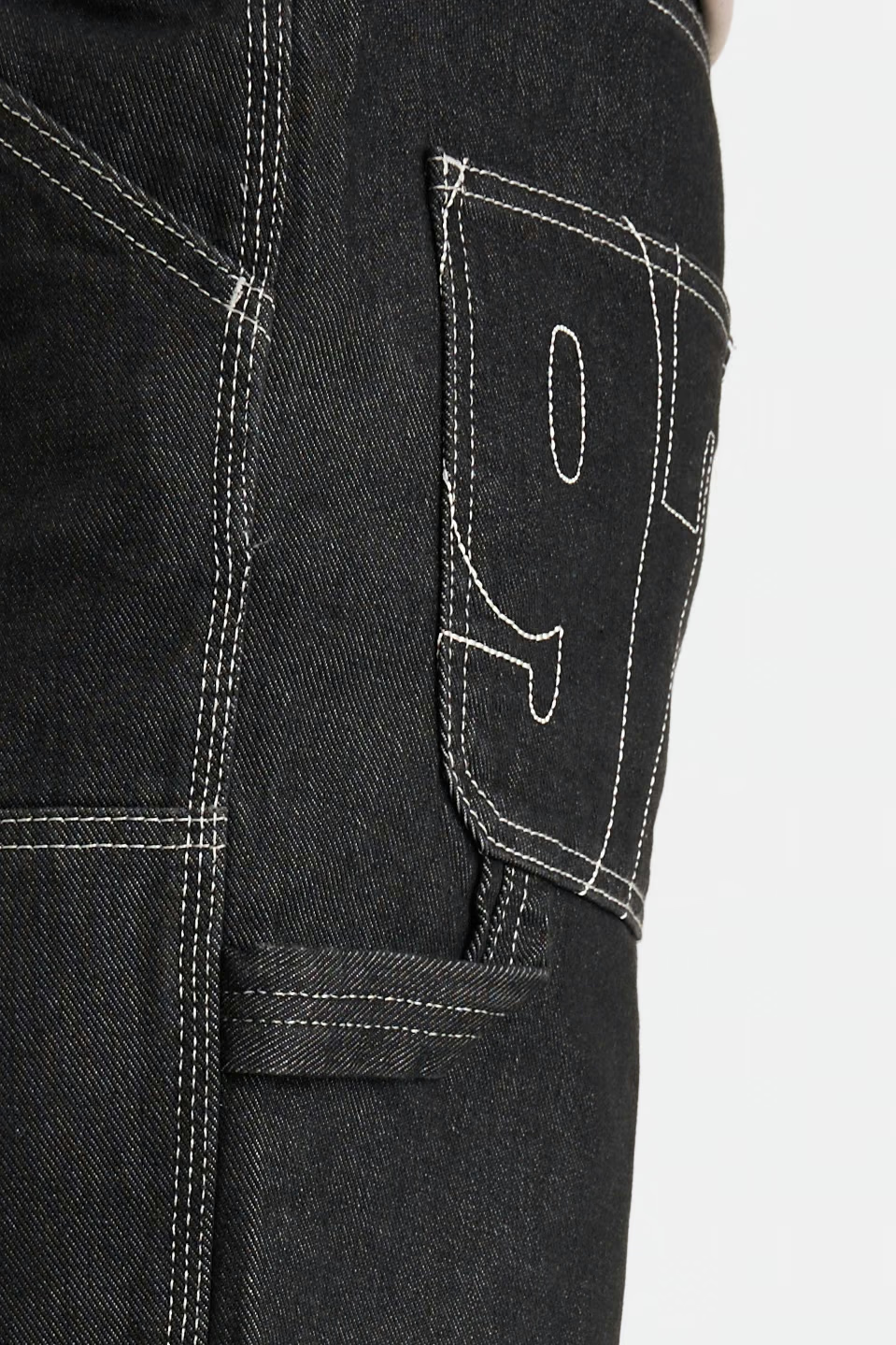
- Contrast stitching and taped seams, which are construction-level branding.
Work trousers, bib-and-brace overalls and coveralls: construction choices
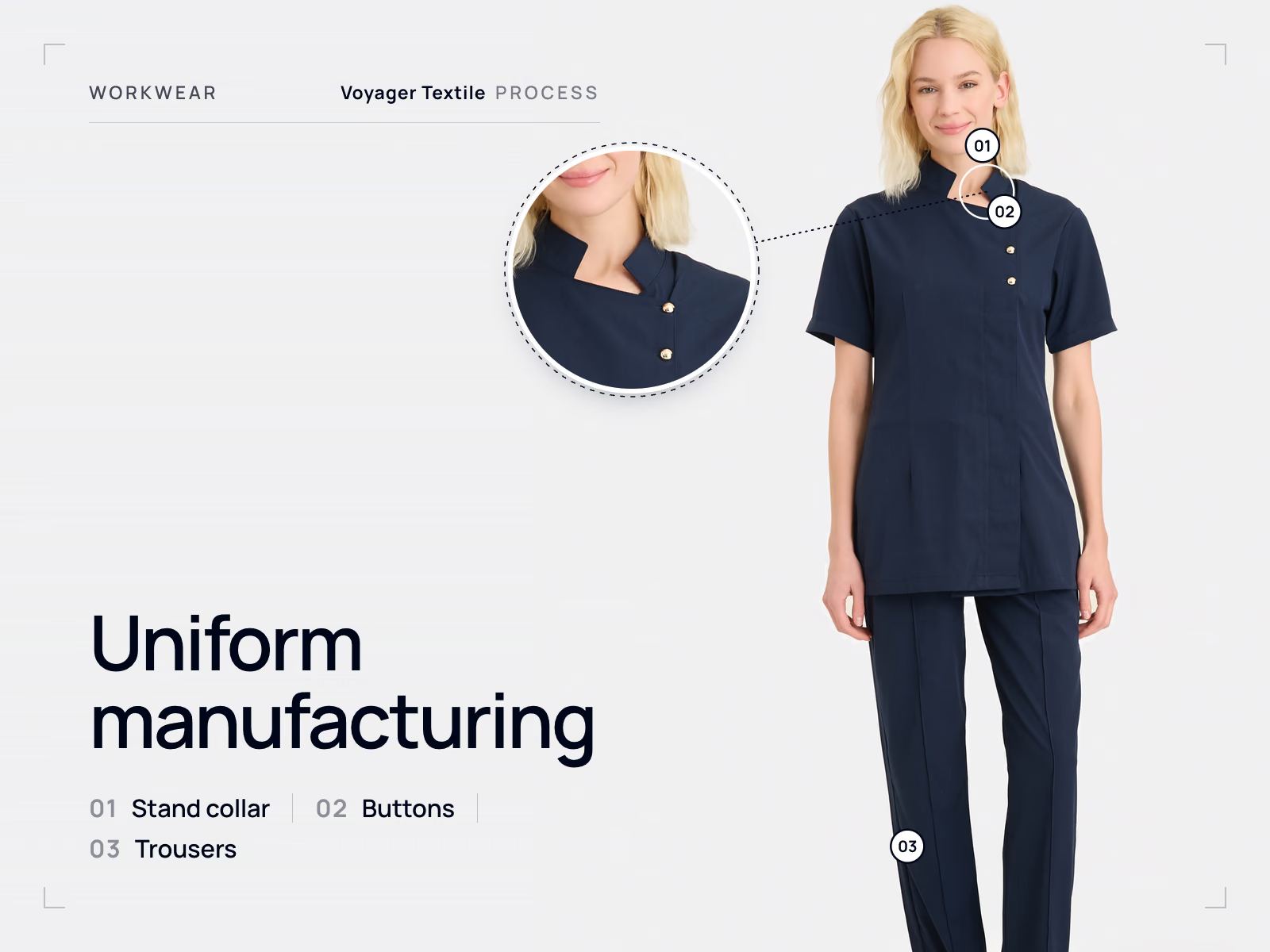
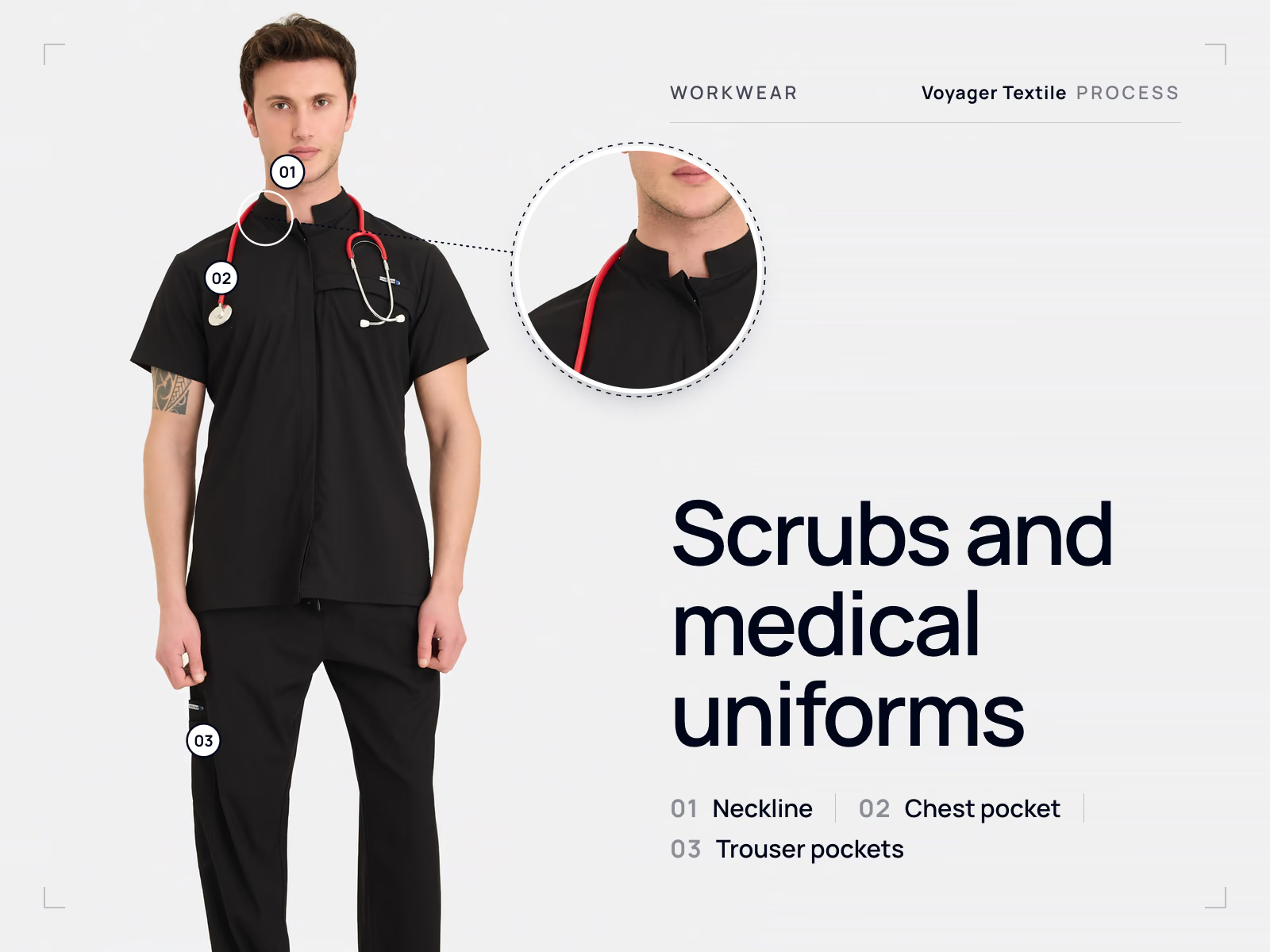
Voyager produces work trousers, bib-and-brace overalls and coveralls to the buyer's design; the specification has to settle the points below. Reinforcing fabrics and hardware are confirmed per project at the quotation stage.
| Point | Options and trade-offs |
|---|---|
| Knee-pad pockets | Height measured from the hem and graded per inseam; an adjustable pad position (two heights, or a top opening) for different leg lengths; sized to take EN 14404 knee pads |
| Bib-and-brace closures | Elasticated braces with buckles, side openings with buttons or press studs, a zipped bib pocket |
| Coverall closures | Two-way front zip under a storm flap, or press studs; elasticated back waist or an action back for reach |
| Stress points | Bartacks at pocket corners, fly base, loops and brace attachments; a crotch gusset for kneeling and climbing |
| Seams | Triple-needle felled seams on the seat and inseam, or bartacked single seams on lighter styles; see seam classes |
The trouser is designed to take knee pads and makes no protective-equipment claim of its own; testing a pad-and-trouser combination is a separate step for the brand. Fabric, laundering and branded workwear decoration are on the workwear manufacturer page.
Denim garments: jeans, denim jackets and overshirts
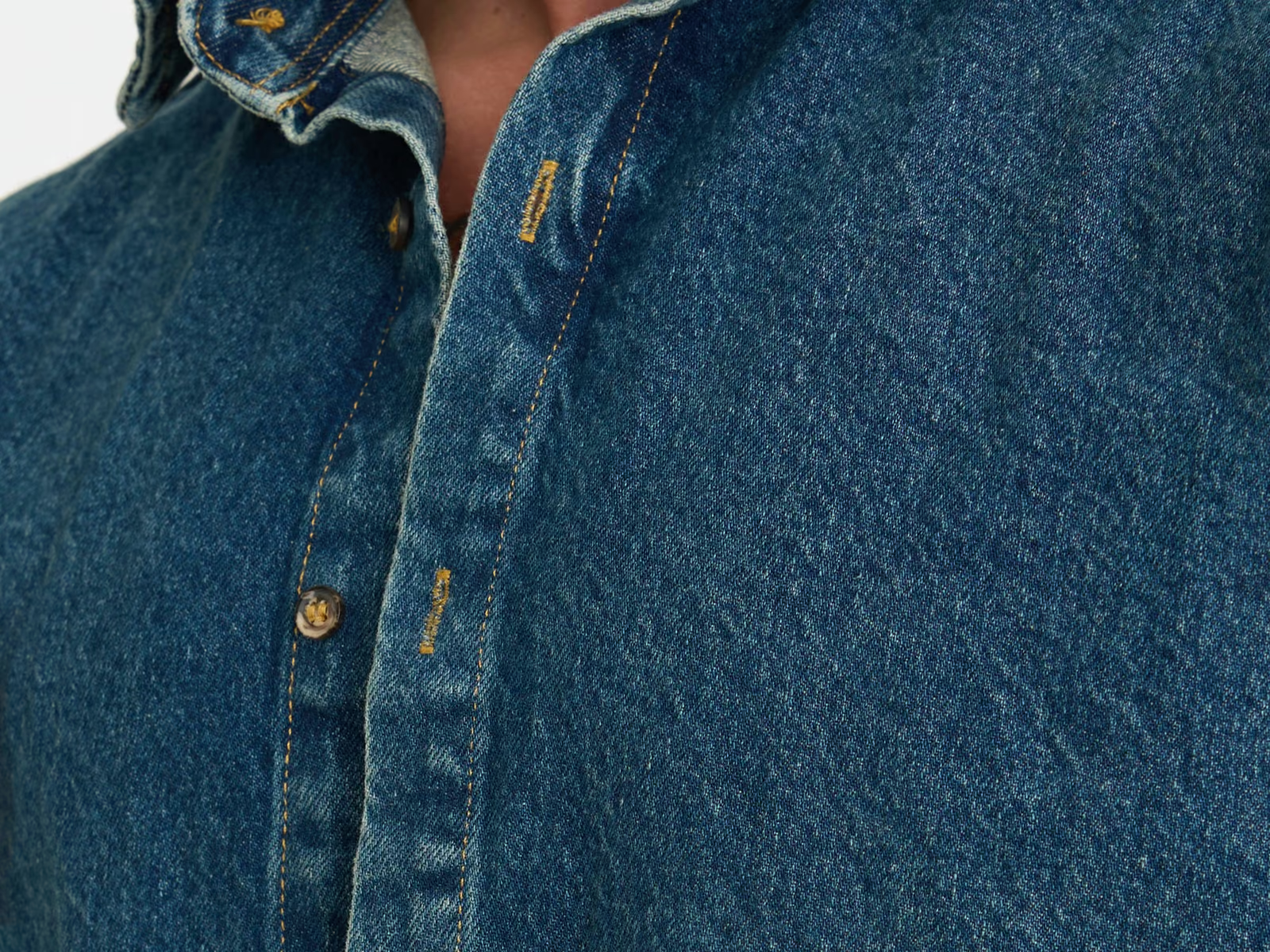
Jeans, denim jackets and denim overshirts are sewn in the factory to the buyer's design and washed at partner facilities, which run the rinse, stone, acid and mineral washes. The wash sets the final measurements, so the pattern allows for wash shrinkage and the specification states after-wash measurements. A wash standard, a garment or panel approved at sampling, fixes shade and abrasion for bulk. Construction differs from a chino mainly in felled seams on the seat and inseam, rivets at the pocket corners and a shank button, all bill of materials lines. The minimum is 300 pieces per colour and per style.
What to put in a trouser tech pack
- Fabric: composition, weave, weight and finish, with any elastane content.
- Front and back rise, thigh, knee, inseam and hem opening, per size, with tolerances.
- Front pocket style and opening shape, with pocket bag fabric.
- Back pocket type, dimensions and closure.
- Cargo pockets where used, with placement, dimensions and flap detail.
- Fly construction: zip type and length, shield, topstitch style and width.
- Waistband: height, interlining, straight or contoured, curtain, elasticated inserts.
- Belt loops: number, width, placement and bartacking.
- Closure: button, hook and bar, or both.
- Reinforcement points to be bartacked.
- Hem finish and any permanent crease.
- Decoration artwork with placements, and hardware branding.
- Whether measurements apply before or after washing.
Sampling
Sample trousers worn, sitting as well as standing. Rise problems only appear when the wearer sits, and they are a common reason a trouser sample is rejected after everything measured correctly. Where the fabric will shrink, wash the sample before confirming inseam and rise.
For a size range, approve a size set. Rise and thigh grading is where trousers often go wrong at the extremes, and it is not visible in the base size.
Before you send a trouser RFQ
- Fabric type, weight and whether stretch is required
- Fit intent, with rise, thigh, knee and hem opening
- Inseam lengths required per size
- Front and back pocket styles
- Cargo pockets, if any, with placement
- Fly type and zip preference
- Waistband construction, including any elasticated inserts
- Belt loops: number and width
- Closure type
- Laundering regime, if the trousers are workwear
- Decoration and hardware branding
- Size range, split and quantity
Trouser references produced by Voyager Textile
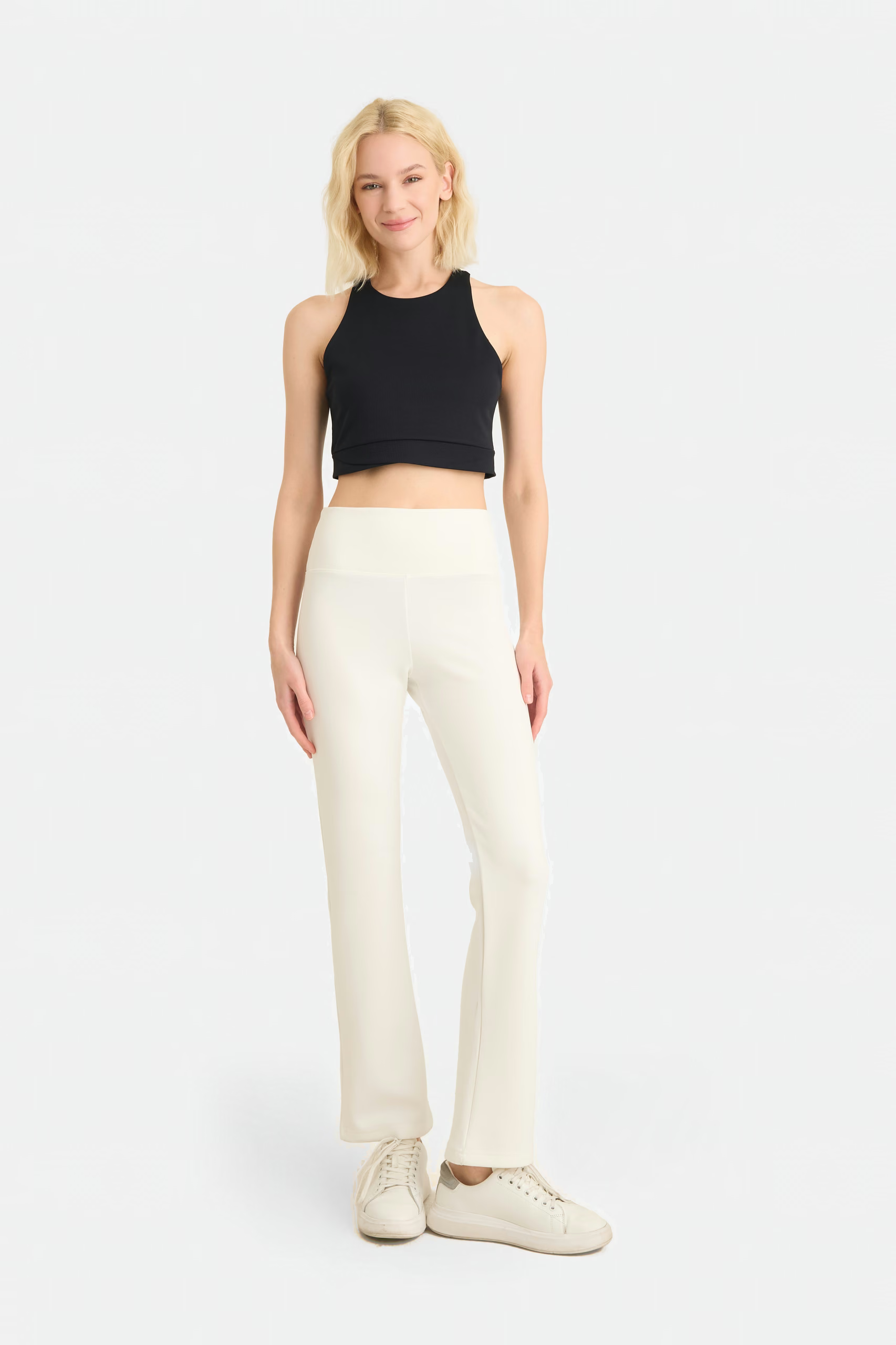
Woven bottoms produced to customer specification, including cargo constructions.
Buyer questions
How are trousers manufactured?
Panels are cut on grain and bundled in pairs, then pockets and the fly are built as sub-assemblies and set into the fronts. The legs are joined at inseam and side seam, the crotch seam is closed and reinforced, the interlined waistband and belt loops are applied, hems and bartacks are finished, and the trouser is pressed to shape before inspection.
What fabric weight is used for trousers?
Heavy enough to hold a leg shape without becoming stiff, which in practice means a bottom-weight cloth rather than a shirting. The choice depends on the role: a tailored trouser, a chino and a workwear trouser sit in different places. Indicative ranges by cloth type are in the twill and gabardine reference.
Why do trouser legs twist after washing?
Because the panels were cut off-grain. The fabric relaxes in washing and the side seam spirals towards the front. It cannot be corrected after production, which is why grain control at cutting is one of the most important checks in trouser manufacturing.
What is a common trouser fit problem?
Back rise that is too short, which pulls when the wearer sits down. Specify front and back rise separately as measurements, and always sample seated as well as standing.
What is a waistband curtain?
A finished inner facing inside the waistband, standard on tailored trousers. It gives a clean inside, helps the band hold its shape and is a visible quality signal. It is specified rather than assumed.
Where should bartacks be applied on trousers?
At the corners of pocket openings, at the base of the fly, at both ends of every belt loop, and at the crotch seam junction. These are the points where trousers fail in service, and missing bartacks are one of the most common quiet omissions.
Should trouser measurements be taken before or after washing?
Decide and state it. Cotton bottom-weights shrink, particularly in length, so a chart that does not specify the condition will produce inseams that pass at inspection and disappoint in wear.
Can trousers be produced with stretch?
Yes, using a woven fabric with 2 to 5% elastane. It improves comfort in service and active roles, and it changes shrinkage behaviour and pattern ease, so a stretch version needs its own fit sample rather than the same pattern in a different cloth.
How many sample rounds do trousers usually need?
More than a knitted top, because rise, thigh and inseam are usually adjusted at least once. Budget for a development sample, at least one fit revision and a pre-production sample, plus a size set where the range is wide.
Do you make jeans and denim jackets?
Yes, we make jeans and denim jackets as garments made to the buyer's design, sewn in our factory in Türkiye. Garment washing is coordinated with partner facilities. The minimum is 300 pieces per colour and per style, with sizes split inside the 300.
Ordering this garment from Voyager Textile
- Every garment is made to order, to your own design.
- The minimum order is 300 pieces per colour and per style. Sizes can be split inside the 300, and a custom Pantone colour carries the same minimum of 300 pieces. Polyester-based fabrics are assessed separately.
- A sample takes 5–7 business days. Bulk production takes 4–5 weeks after sample approval; development, sampling and shipping are additional.
- Cutting, sewing, embroidery, transfer printing and sublimation printing are done in our own factory in Türkiye. Screen printing and garment washing are coordinated with partner facilities.
Quantities, timing and any open point are confirmed per project at the quotation stage, once we have your specification or tech pack.
Request a quoteDeveloping a trouser?
Send the fabric, rise and inseam requirements and the pocket and fly detail, or a reference pair you want matched. We sample worn and seated, and wash-test where the fabric will move.
Send a trouser brief