

Waistband and fly construction on bottoms
The waistband is the part of a garment that carries its weight, sets its position on the body and takes the most repeated load. Whether it is a rigid band on a woven trouser or an elasticated channel on a jogger, the construction decides how the bottom sits and how long it goes on sitting that way.
Contents
Every bottom hangs from its waistband. If the band is wrong the garment sits at the wrong height, rotates around the body, or slides down, and none of those can be corrected by adjusting anything below it.
Trouser anatomy
The waistband, fly and pocket openings sit at the top of the garment; the inseam and outseam run down the inside and outside of each leg.
Fixed waistbands
A fixed waistband is a rigid band of fabric attached to the top of the garment, closed with a button, hook or clasp, and normally interlined so it holds a shape rather than folding. It is the construction on tailored trousers, chinos, jeans and many uniform trousers.
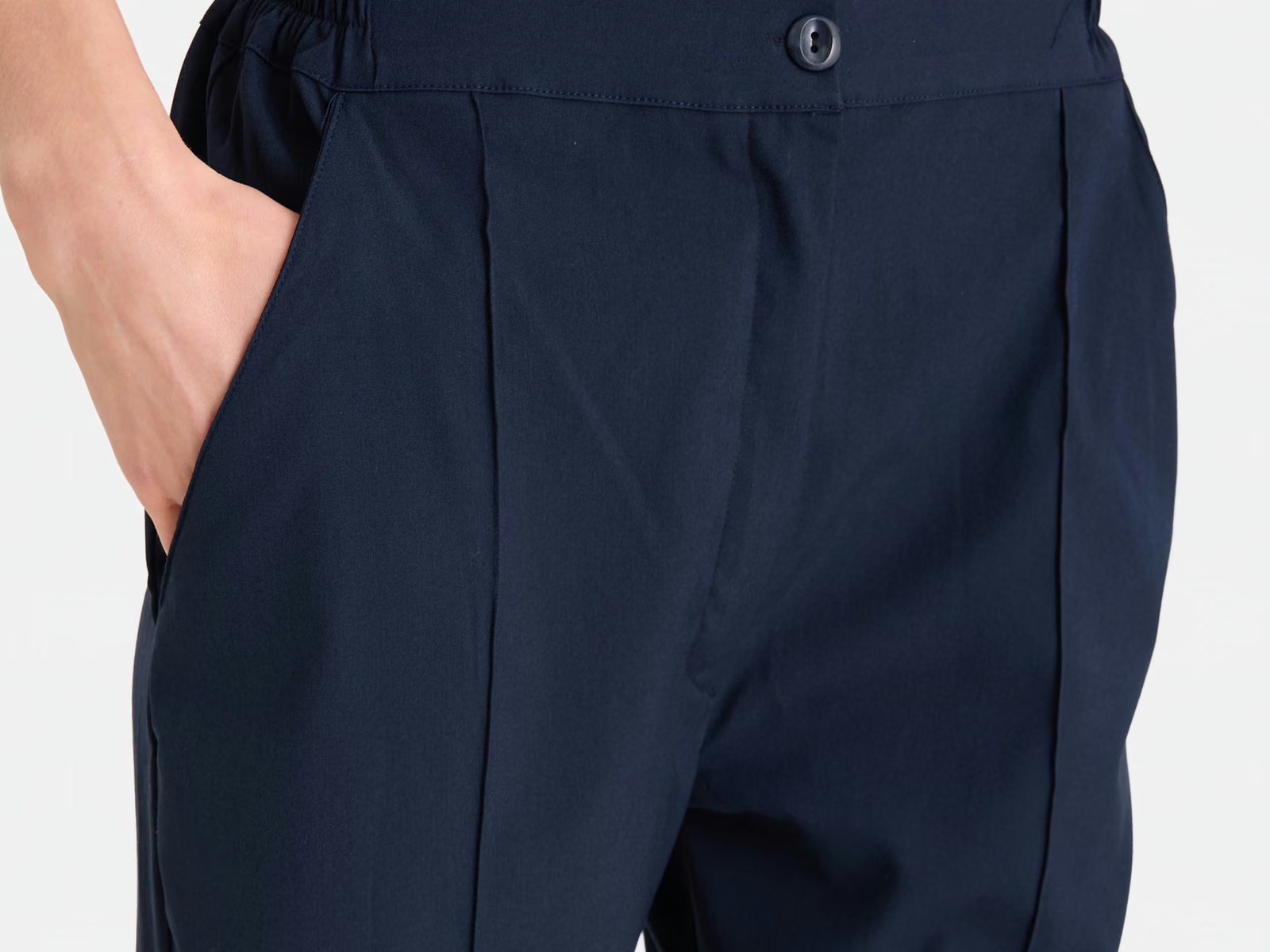
There are two ways to build it. A one-piece band is a single strip folded over the top edge, which A&E's seam reference lists as a binding construction sewn with a 401 chainstitch or a 301 lockstitch through a binding folder, the standard method for jeans. A two-piece band uses separate outer and inner strips, joined at the top, and A&E lists dedicated constructions for attaching a two-piece band to chinos and work trousers, including a version with a guide for the interlining.
| Construction | How it is built | Character |
|---|---|---|
| One piece | A single strip folded over the raw edge and stitched, through a folder | Fast, consistent, standard on jeans and casual trousers |
| Two piece | Separate outer and inner bands joined at the top | Cleaner inside, allows a different inner fabric, more operations |
| Curved | The band is cut on a curve to follow the body rather than as a straight strip | Sits better on the waist, more skilled, more fabric |
The interlining is what stops the band collapsing, and it has to be chosen for the fabric it is fused or sewn to. A band that ripples or bubbles after washing is normally an interlining problem, discussed in linings, facings and interlinings.
Elasticated waistbands
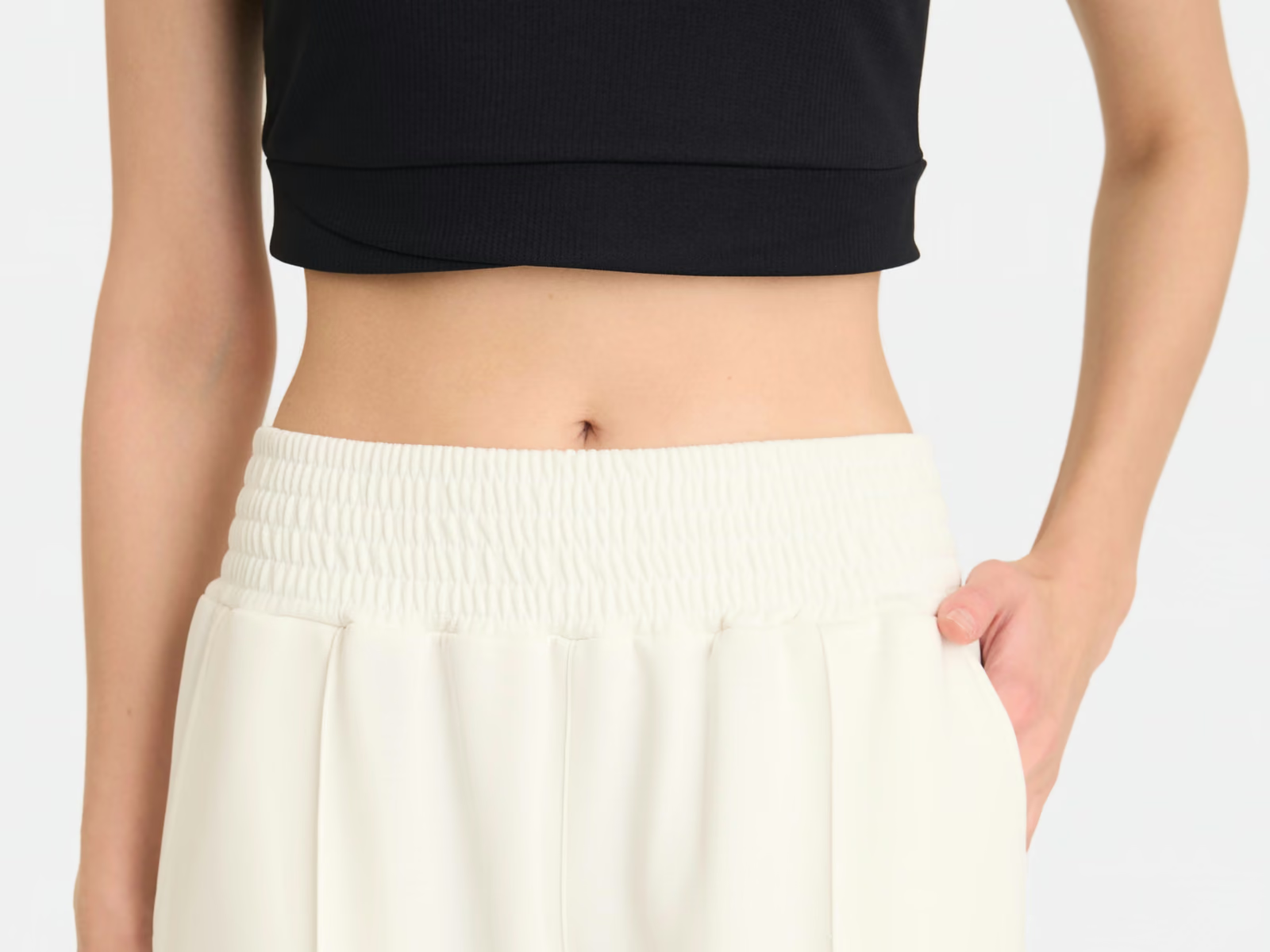
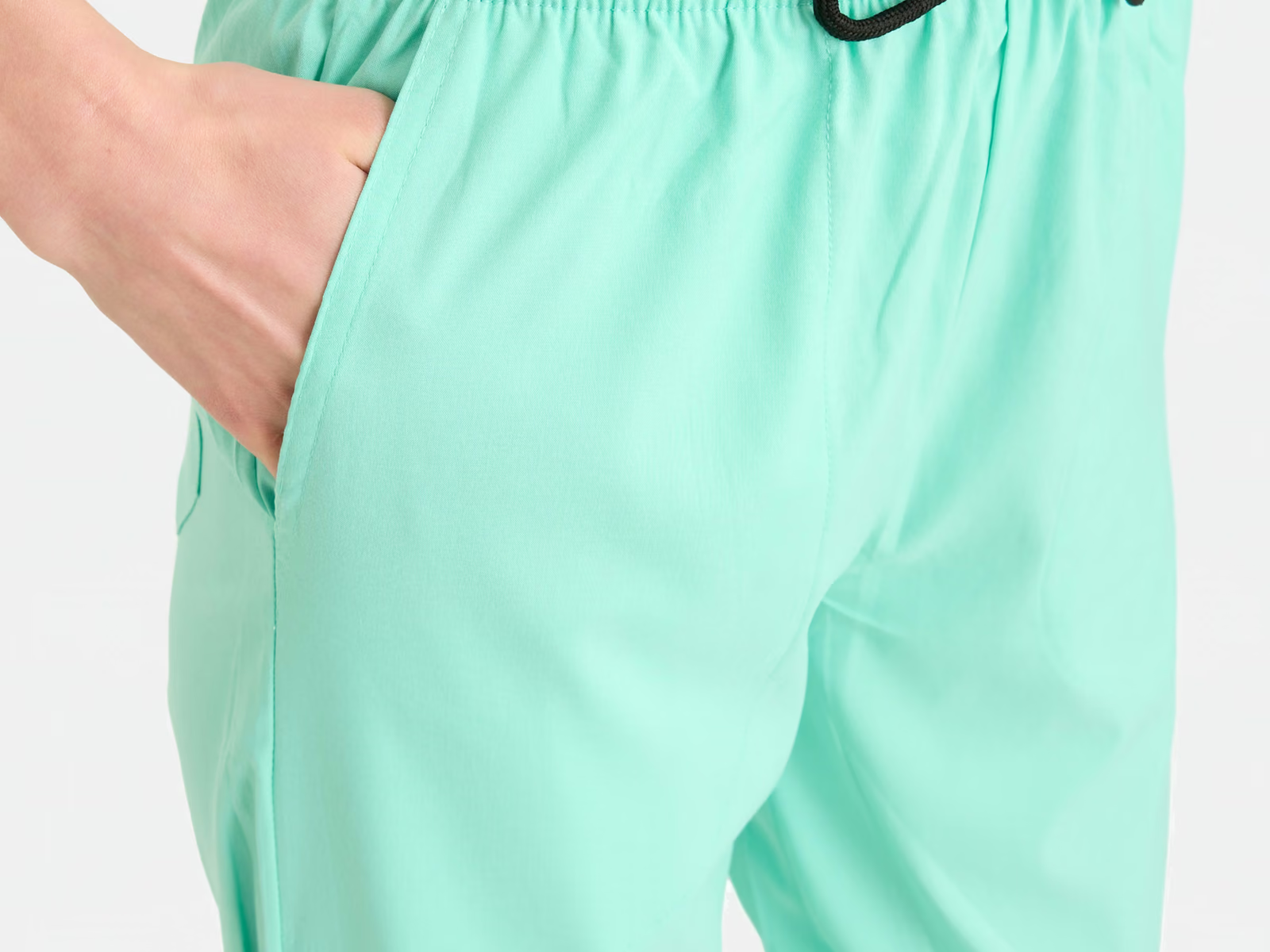
An elasticated band replaces the closure with a material that stretches and recovers. It is the construction on joggers, shorts, skirts, scrubs and many knit bottoms, and there are three distinct ways to build it, which behave differently.
| Construction | How it is built | Behaviour |
|---|---|---|
| Tunnelled elastic | A channel is formed at the top edge and the elastic is threaded through it, free to move inside | Softest and most comfortable; the elastic can twist inside the channel over time |
| Attached elastic | The elastic is stitched directly to the fabric, typically with several rows of 401 chainstitch | The elastic cannot twist or roll; A&E lists this construction for boxers and gym shorts |
| Exposed elastic | A branded or plain elastic band is attached at the top edge and is visible from the outside | The elastic is the design; requires a woven or knitted elastic finished on its face |
The choice is not only aesthetic. Tunnelled elastic is comfortable and prone to developing a twist, which is why it is often secured with a few stitches at the side seams. Attached elastic is more stable and firmer against the body. Exposed elastic is a bill of materials commitment, because the visible band has to be sourced in the right width, colour and branding well before production.
The cut length is the equivalent of the rib ratio described in rib trims and neck finishing, and it should be recorded the same way: the finished flat waistband measurement per size, in the measurement chart, so it can be checked with a ruler rather than argued about.
Drawcords in the waistband
A drawcord adds adjustment and, on many products, is the visible detail at the front. It runs either through the same channel as the elastic or through a separate one, and it exits through eyelets, a stitched opening or a gap left in the seam.
Two details are worth stating. The exposed cord length should be specified so it is equal on both sides and consistent across the run, and the cord ends need a finish, whether that is tipping, knotting or a stopper. On a garment where the cord shares a channel with the elastic, the cord and elastic can bunch against each other, which is why the two are often given separate channels on better-made products.
Fly construction
The fly is the opening at the centre front of a trouser, and it is more than a zip in a seam. A conventional fly is built from several components: the fly facing on one side, the fly shield behind it, the zip or button closure itself, and a curved topstitch line, usually called the J-stitch, that holds the facing in place and defines the visible shape.
A&E's reference lists constructions for attaching a zip tape between the shell and the facing, and for attaching a zip tape to a fly facing, which is the practical sequence: the zip is joined to the facing first and the facing is then set into the front. Button flies replace the zip with a placket of buttonholes but keep the same shield and topstitch structure.
Knit bottoms often have no fly at all, or a mock fly, which is a topstitched line that reproduces the appearance without an opening. That is a legitimate construction and it should be stated as such, because a mock fly and a real fly look identical in a flat photograph.
Belt loops
Belt loops are small and are made in a dedicated operation. A&E lists belt loop making as an edge-finishing construction, typically formed through a folder so the strip comes out at a consistent finished width, and then cut to length and attached.
Three things need specifying: the number and position of loops, the finished width and length of each, and how the ends are secured, which is normally a bartack. Position is a real design decision, because loops mark the waistband visually and their spacing has to grade sensibly across the size range rather than staying fixed.
What to specify
Waistband and fly specification lines
- Waistband type: fixed one-piece, fixed two-piece, curved, or elasticated
- Finished waistband height, and finished flat waist measurement per size
- For elastic: type, width, cut length relative to the waist, and whether it is stitched down
- Interlining where a fixed band is used
- Closure: button, hook and bar, or none, with the position stated
- Fly: real or mock, zip or button, fly length, and the topstitch shape
- Bartack positions, including the bottom of the fly and the ends of the belt loops
- Belt loops: number, position, finished width and length
- Drawcord: presence, type, exit method, finished exposed length and end finish
One further note on fit. The waistband is where a bottom's fit is especially sensitive to construction rather than to the pattern: the same trouser with a rigid band and with an elasticated band will fit different bodies acceptably, and the waistband decision should therefore be settled early in fit development rather than treated as a finishing detail. The full production sequence is in trouser manufacturing.
Bottoms references
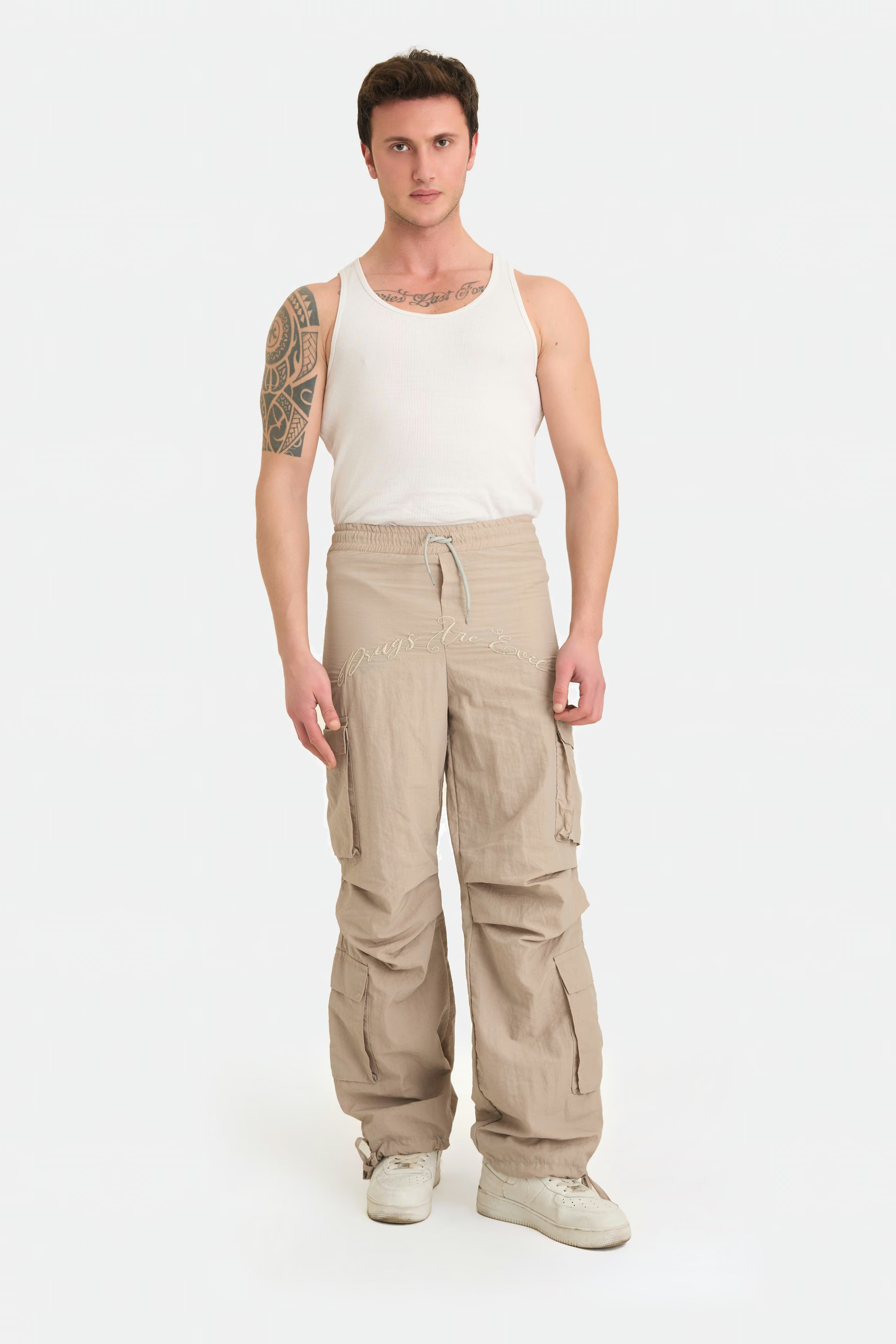
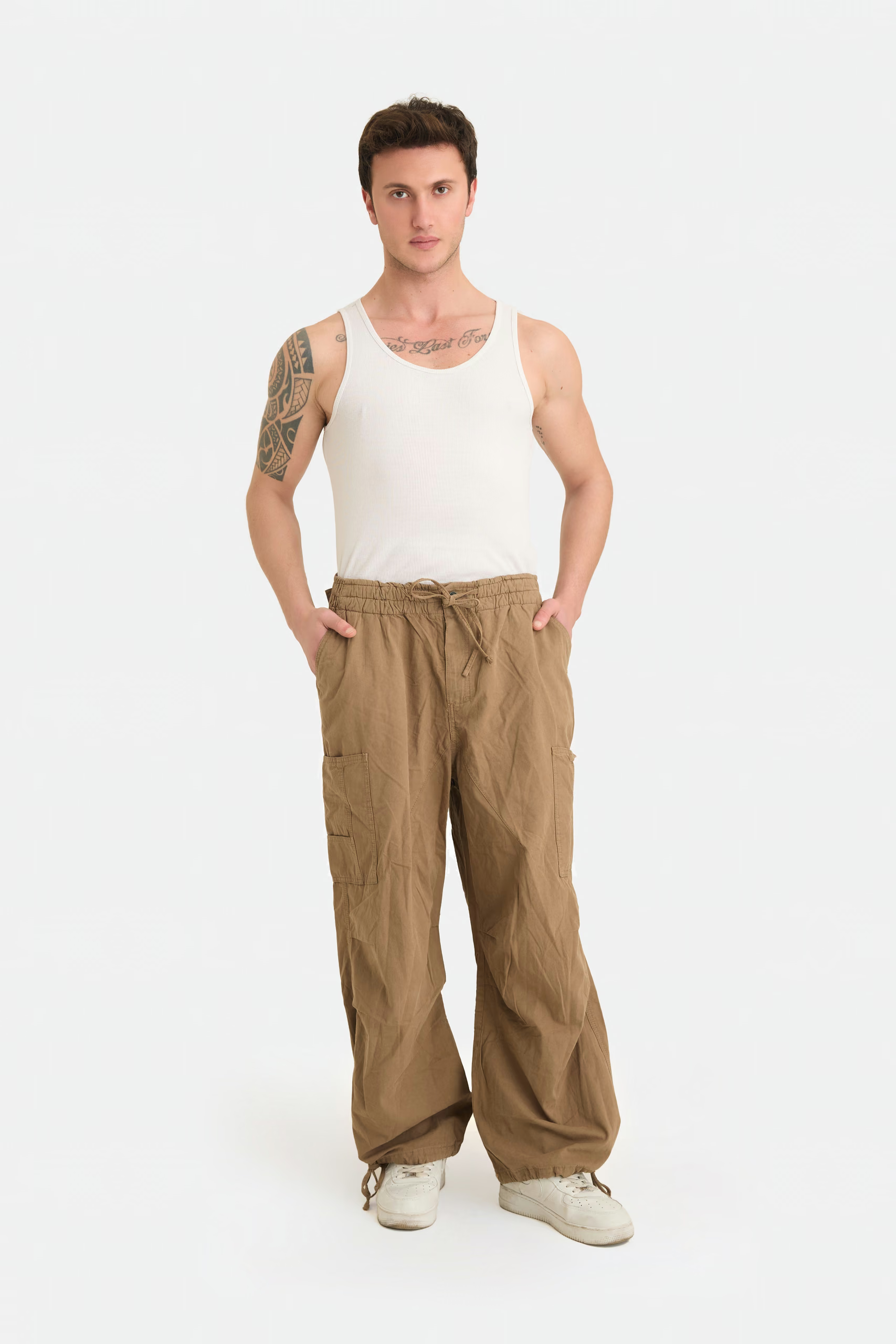
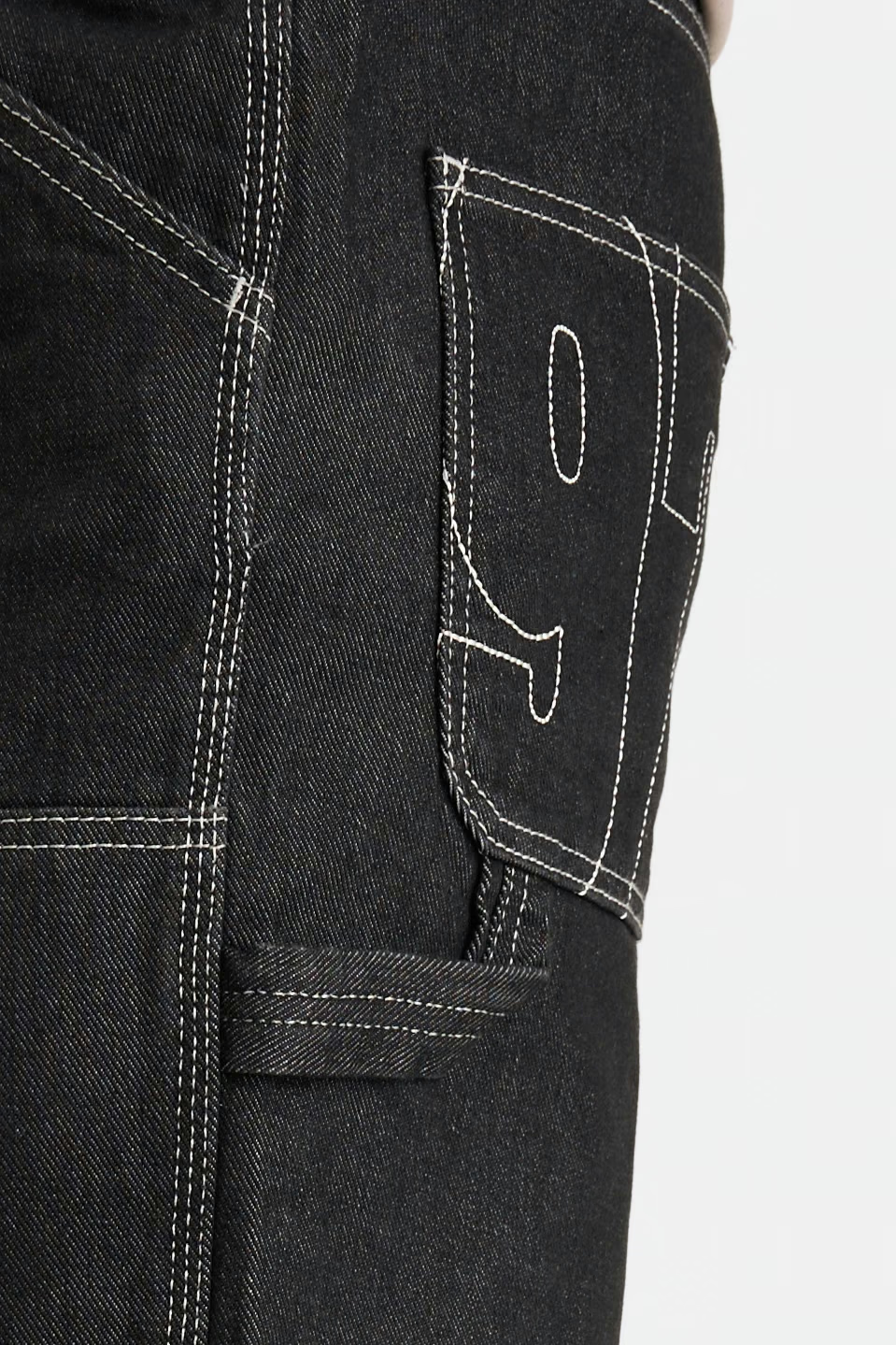
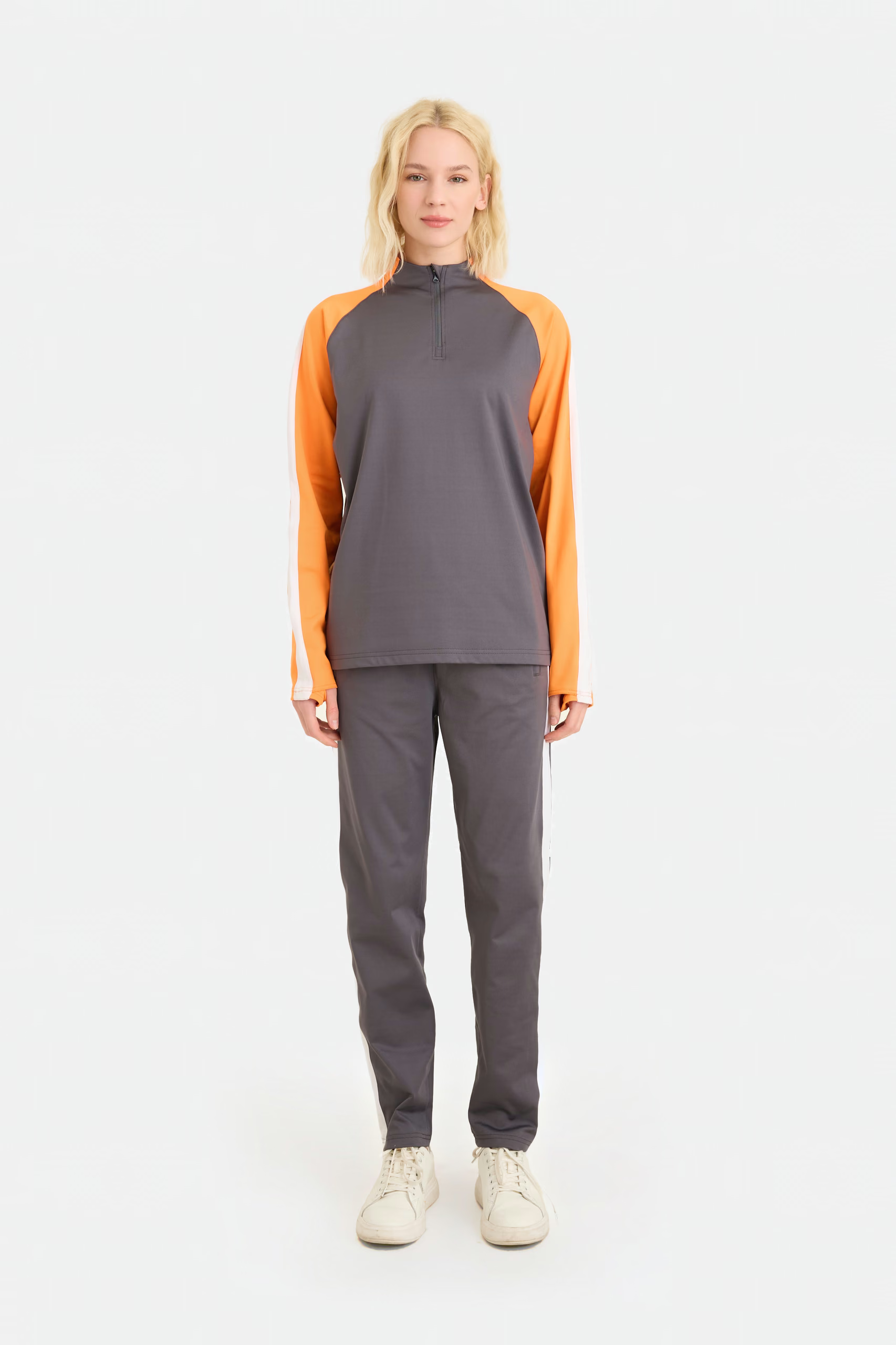
Trousers, cargo trousers and joggers previously produced to customer specifications.
Questions this raises
Is an elasticated waistband cheaper than a fixed one?
Usually, because it avoids the interlining, the closure and the buttonhole, and it is a faster operation. The saving is real but modest, and it should not be the reason for choosing one. A fixed band sets a defined waist position and a formal appearance; an elasticated band fits a wider range of bodies and suits casual and knit products.
Why does the elastic in my waistband twist?
Because it is tunnelled, which means it is free to move inside its channel. It is normal behaviour for that construction and it is usually controlled by stitching the elastic down at the side seams, or by using attached elastic instead, where the elastic is stitched directly to the fabric and cannot rotate.
What is a mock fly?
A topstitched line at the centre front that reproduces the appearance of a fly without an actual opening. It is common on knit and casual bottoms. It is worth stating explicitly in a specification, because a mock fly and a real fly are indistinguishable in a flat photograph.
How should I record the waistband measurement?
As the finished flat waistband measurement per size in the measurement chart, together with the elastic cut length where elastic is used. Recording an intention such as "snug fit" leaves the factory to interpret it, and different interpretations produce visibly different garments.
Settle the waistband before the fit round
A rigid band and an elasticated band fit differently on the same pattern. Telling us which one the product needs at enquiry stage saves a fit round later.
Start a project