Sportswear and performance
Tracksuit Manufacturing Process
A tracksuit is two garments that have to behave as one. The jacket and the bottom are manufactured separately, but they share a fabric, a colour standard and a size logic, and they are approved and packed as a set. Many tracksuit problems are matching problems rather than construction problems.
Contents
Tracksuit production is usually described as making a jacket and making a pair of bottoms. In a factory it is really three jobs, because the third one is making sure the two garments still look like a set after they have been cut from different rolls, sewn on different lines and washed twenty times. This page covers the top, the bottom and the matching separately, because those are the three places where things go wrong.
Tracksuit production sequence
Knitted or woven: two different tracksuits
The first decision changes everything downstream, including which machines the garment runs on.
| Fabric route | Typical composition | Indicative GSM range | Character | Consideration |
|---|---|---|---|---|
| Brushed polyester tricot | 100% polyester, warp knitted, brushed one side | Around 200 to 300 | The classic smooth-faced tracksuit cloth, soft inside | Heat sensitive: transfer settings must be tested to avoid press marks |
| Polyester interlock | 100% polyester | Around 145 to 200 | Lighter, smooth on both faces, good print surface | Suits training sets and sublimated designs |
| Cotton French terry or fleece | Cotton or cotton-rich | Around 280 to 350 | Casual, soft, closer to a sweatshirt set | Shrinkage control matters more than in polyester |
| Woven shell with lining | Polyester taslan, microfibre or ripstop, with mesh or taffeta lining | Shell around 65 to 120, plus lining | Wind-resistant, rustles, reads as a rain or warm-up suit | Two-layer construction, so it is a different sewing job entirely |
| Polyester with elastane | Polyester with roughly 5 to 10% elastane | Around 200 to 260 | Close-fitting modern training sets | Stretch changes both pattern and stitch selection |
Top: track jacket construction
A track jacket is a zipped top, and the zip changes the sequence. The front is two panels, the collar has to meet the closure cleanly, and the hem is interrupted.
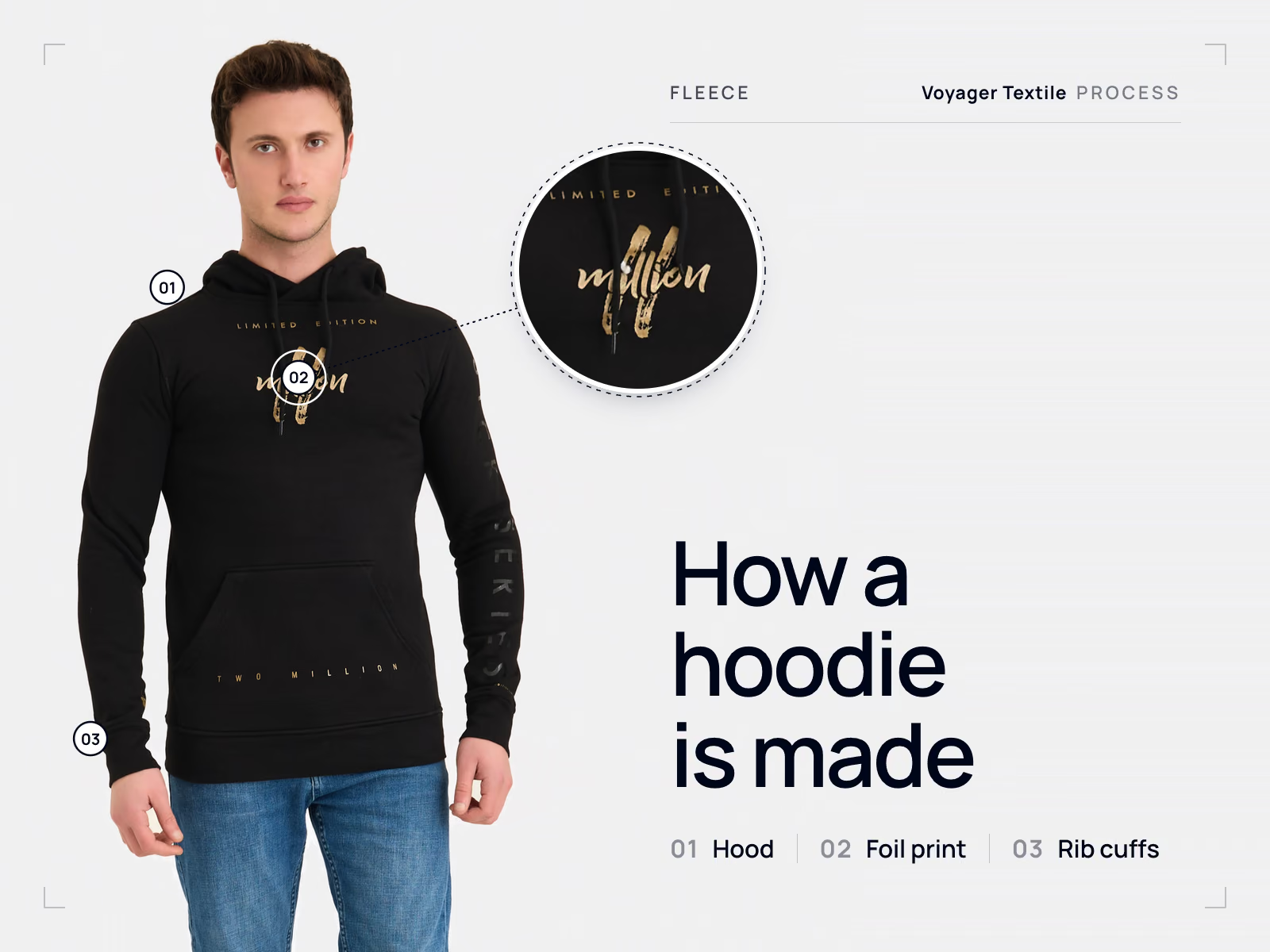
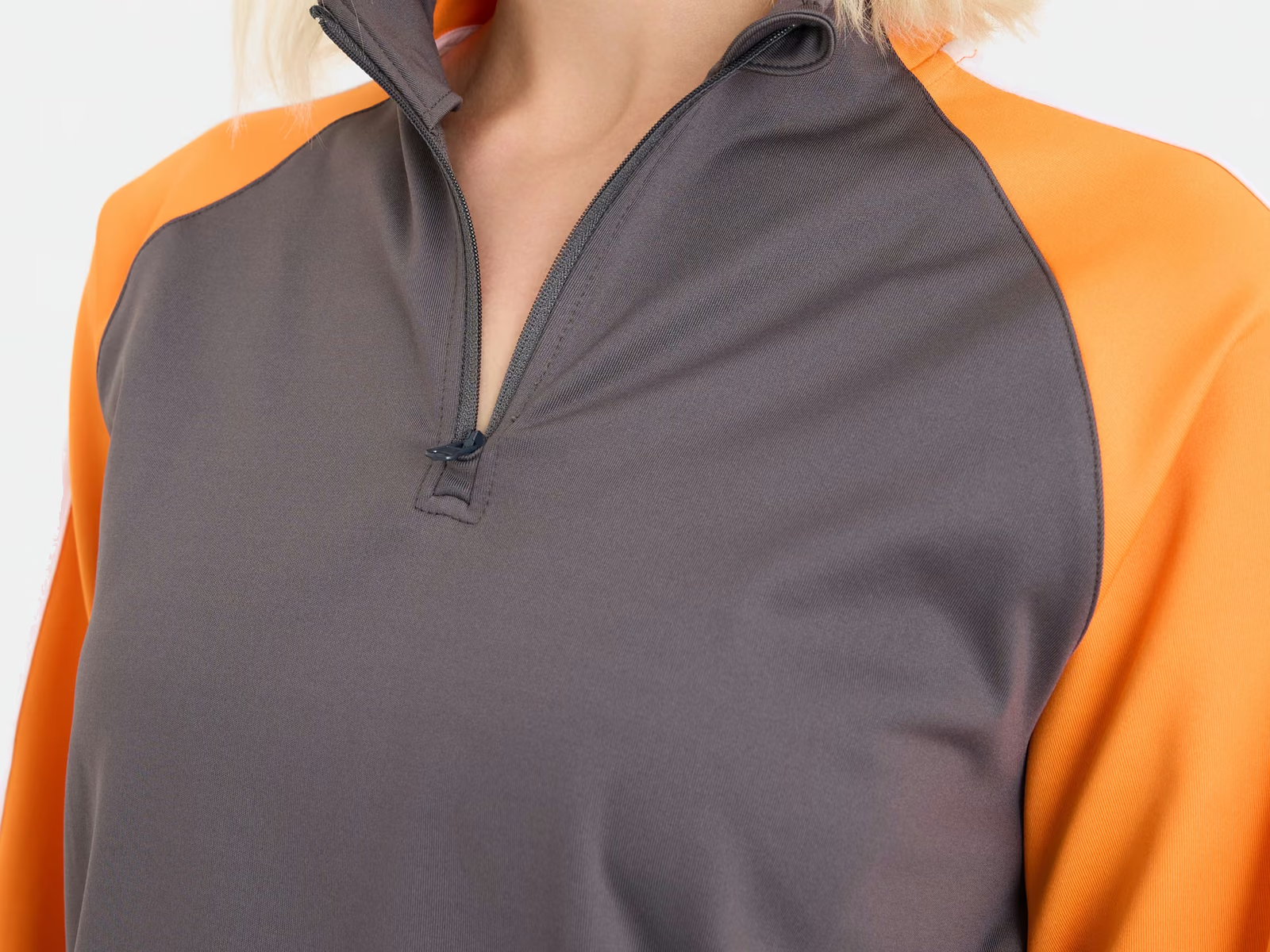
- Collar. A stand-up funnel collar is the classic; a hood is the alternative and changes the pattern at the neck and upper back.
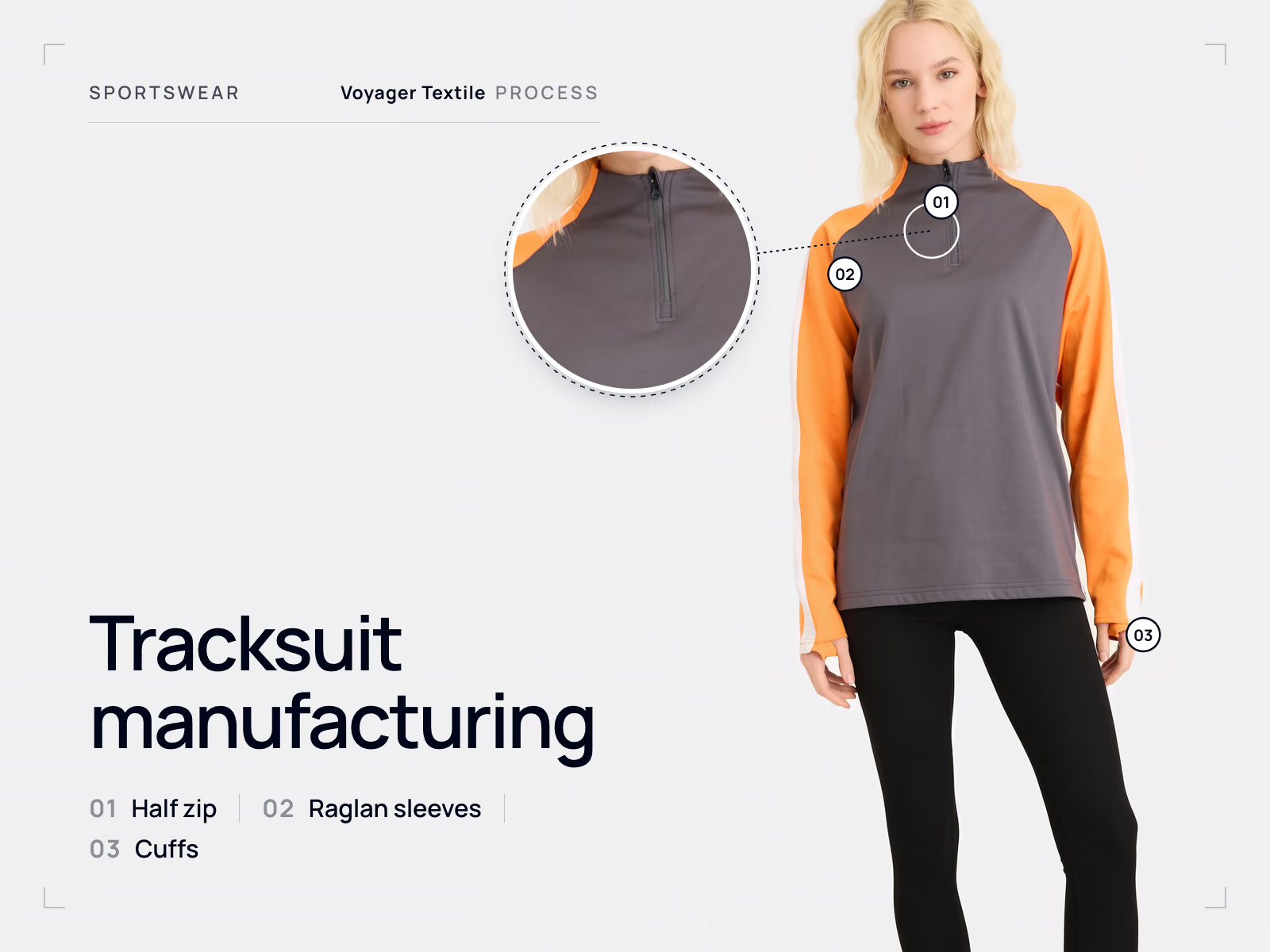
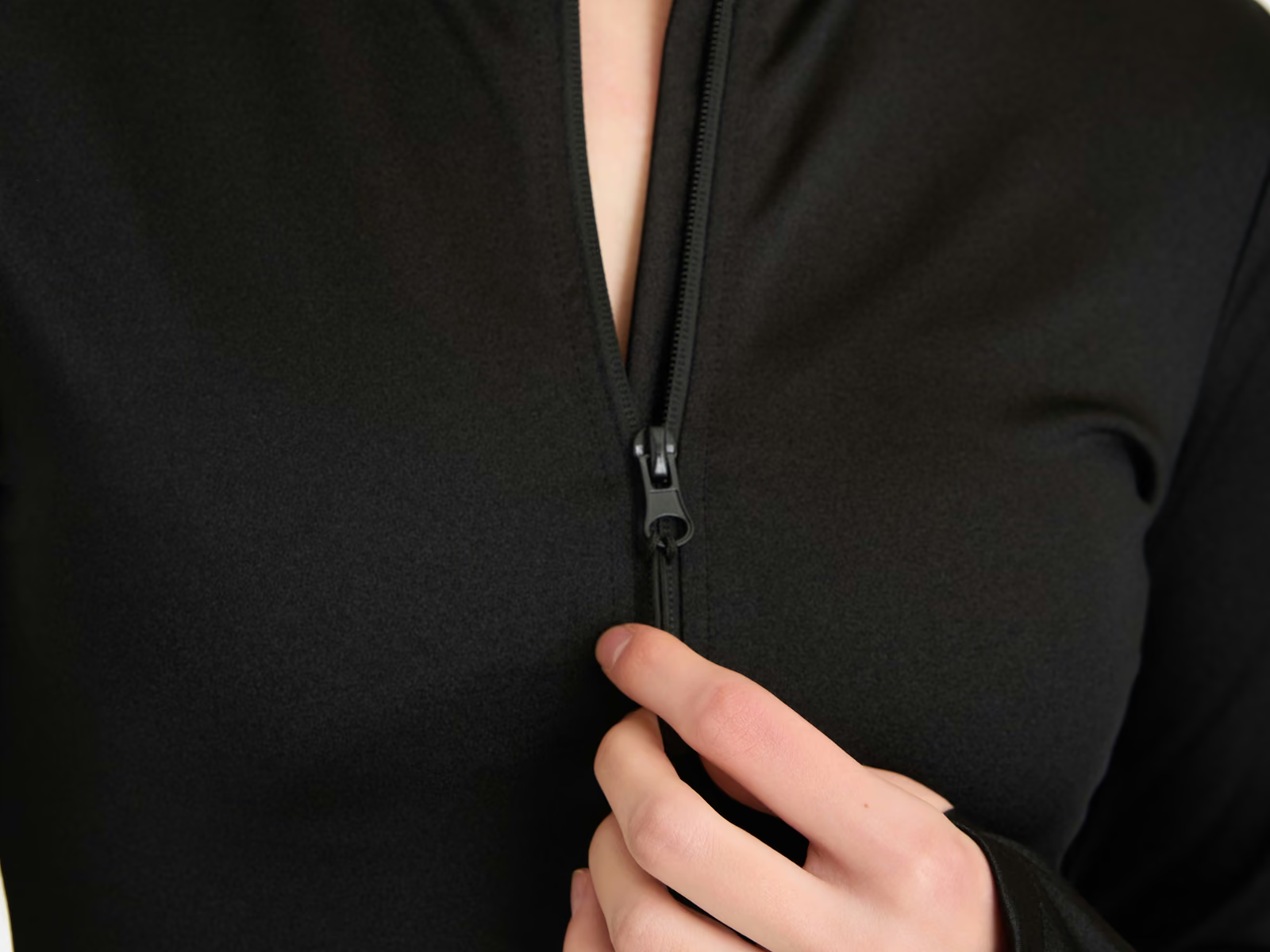
- Zip. Open-ended, full length, graded per size. Tape colour, teeth finish and puller are all visible and all specifiable. A chin guard at the top stops the slider touching the skin.
- Sleeve construction. Raglan for a sporting look and more shoulder movement, set-in for a more structured line. They are different patterns.
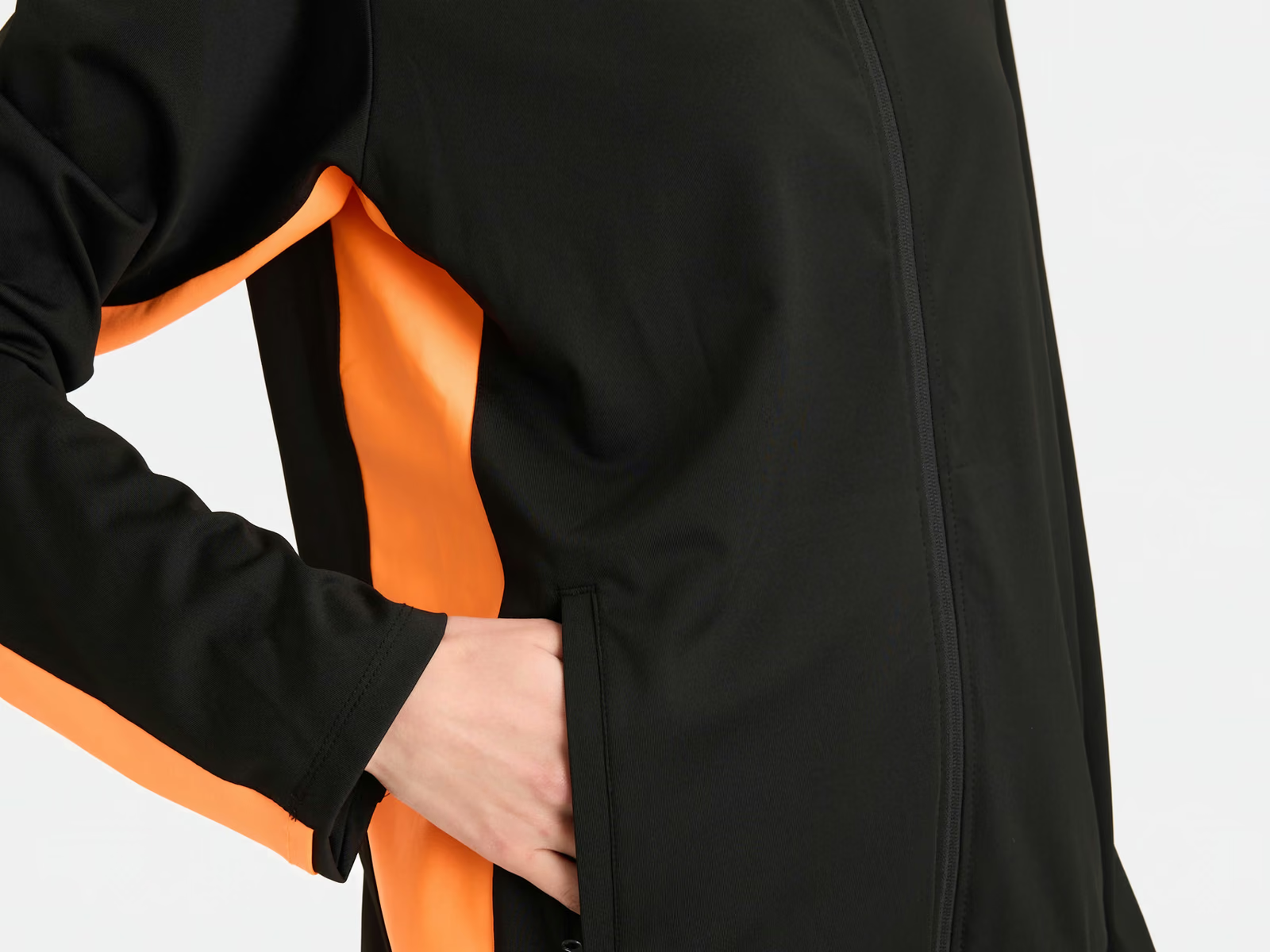
- Pockets. Side-seam pockets are simplest, welt pockets read cleaner, zipped pockets add a component and a construction step. Specify pocket bag fabric, since a heavy bag shows through a light shell.
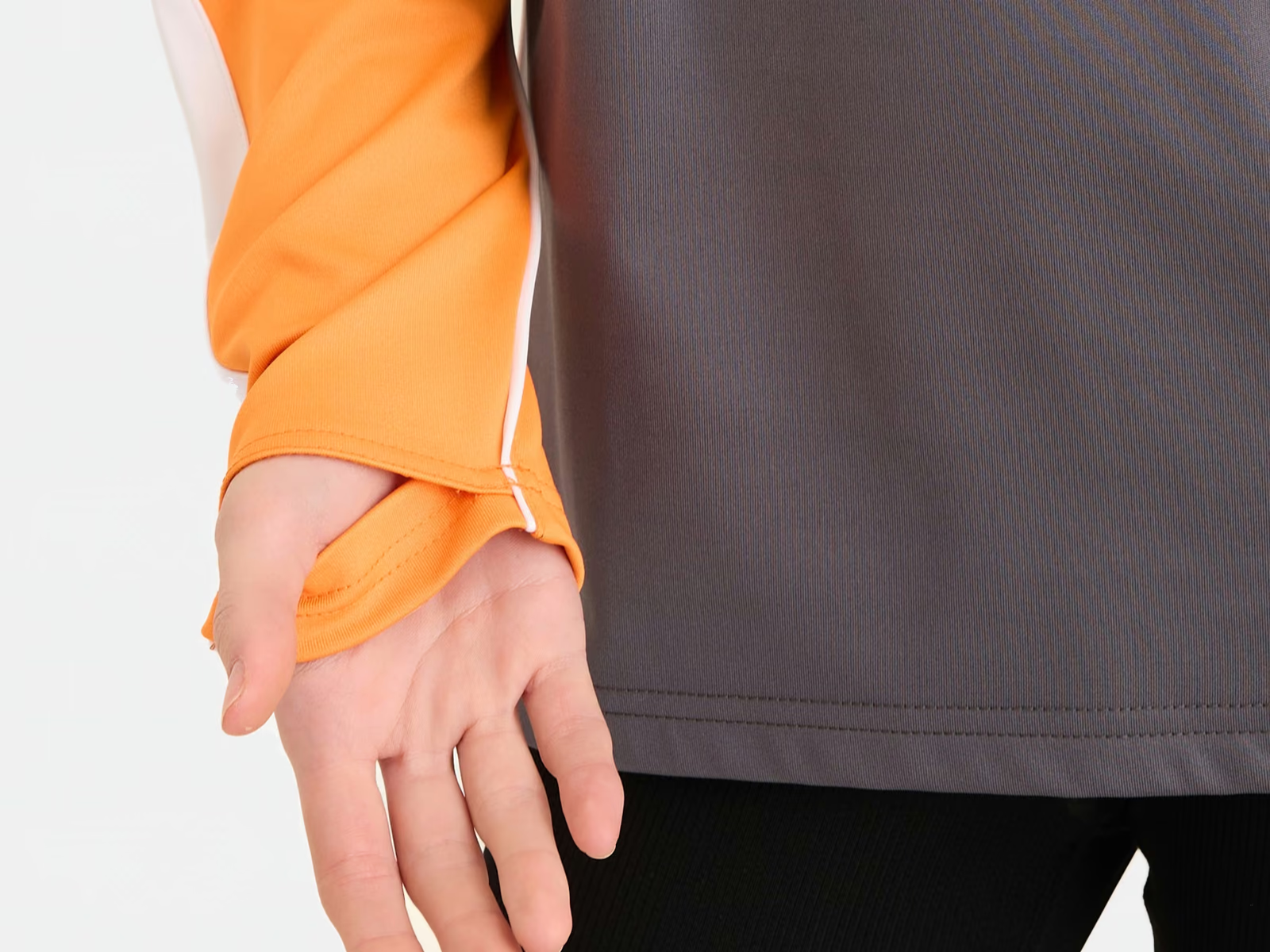
- Cuffs and hem. Rib for a classic set, elasticated for a sportier one, plain for a modern minimal look.
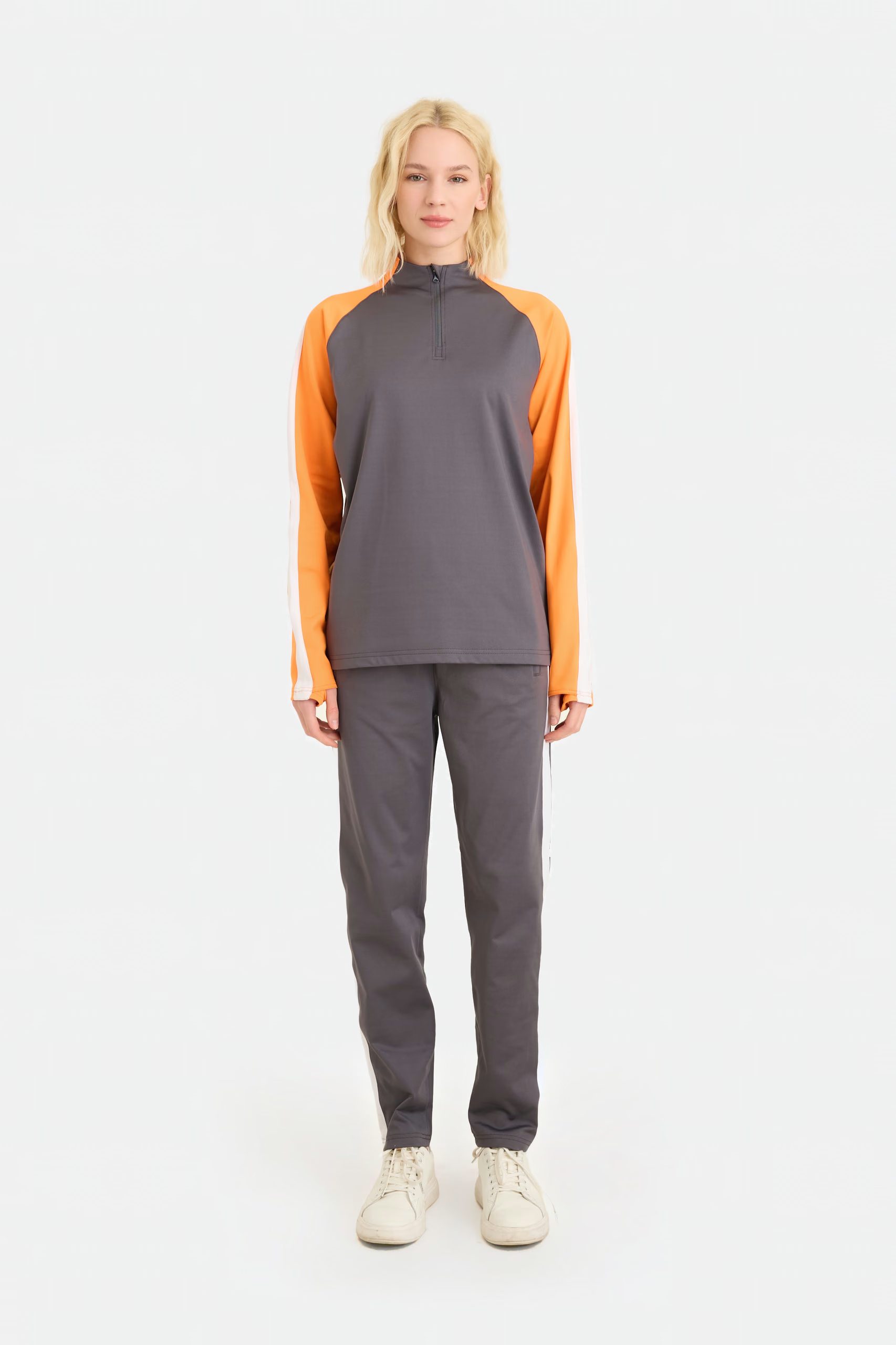
- Colour blocking and piping. The characteristic tracksuit detail, and the one that creates alignment work: blocks and stripes must meet across the side seam and the shoulder.
- Lining. Only on woven shells, where it changes the whole assembly into a two-layer job.
Bottom: where the fit is actually decided
Tracksuit bottoms look simple and are the piece customers complain about, because waistband and ankle behaviour decide comfort.
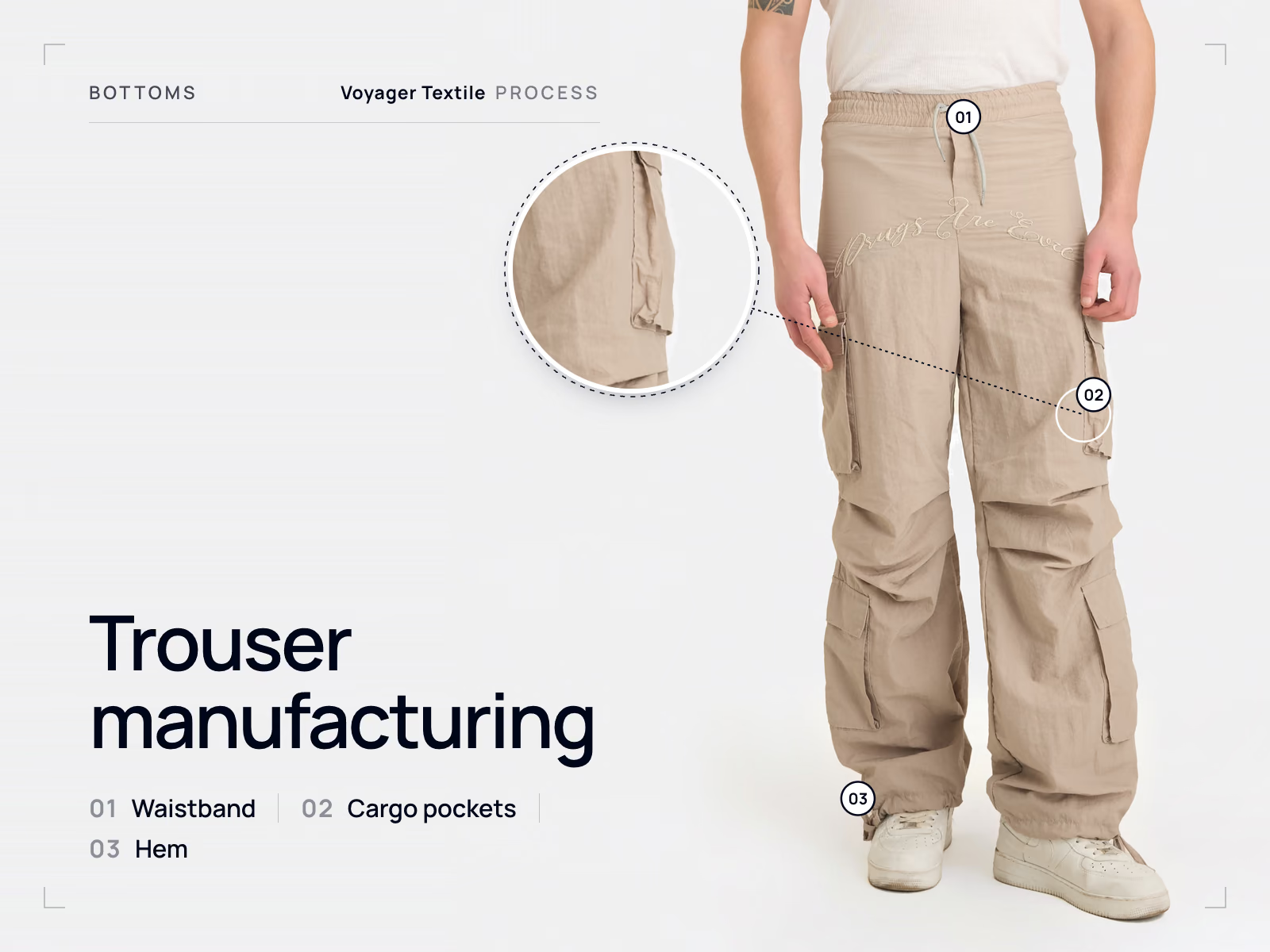
- Waistband. Three common constructions: elastic inserted into a self-fabric casing, a ribbed waistband, or a wide flat elastic with a folded finish. Each feels different and each has a different recovery behaviour.
- Drawcord. Specify width, construction, tipping and finished length, and whether it exits through metal eyelets, stitched buttonholes or a gap in the waistband seam.
- Rise. The measurement that decides whether the bottoms sit at the waist or below it, and one of the most common fit complaints when it is left unspecified.
- Pockets. Side-seam, zipped side, or a back pocket. Pocket bag fabric matters again, because a heavy bag prints through a light leg.
- Ankle finish. A ribbed cuff for the classic look, an elasticated hem, a plain open hem for a straight leg, or a zipped ankle where the bottoms go over footwear.
- Gusset. A panel at the crotch that removes the four-seam intersection, improving both movement and durability. Worth specifying on anything that will be trained in.
- Leg shape. Straight, tapered or flared, with the taper measured at the knee and hem rather than described.
Making the set match
This is the part unique to tracksuit production, and it is a planning job rather than a sewing one.
- One dye lot for the programme. The top and the bottom should come from the same fabric lot wherever the quantities allow. Two lots dyed to the same standard will be close but not identical, and on a worn set the difference is visible at the waist.
- Different fabrics need a master reference. Where the jacket uses a shell and the bottom a knit, or where rib trims are involved, nominate one fabric as the master and approve the others against it under controlled lighting.
- Trims match too. Zip tape, cord, rib and piping are separate components with separate dyeings. Approve them against the approved body fabric rather than against a paper reference.
- Grading logic. Decide whether the set is sold as a fixed pair or as separates. If people can order a medium top with a large bottom, both must be graded and stocked independently, and packing has to reflect it.
- Panel and stripe registration. Where a stripe runs down the sleeve and the leg, agree how closely they need to correspond and check it on the approved sample.
The controls that hold a set together over repeat orders are the same as for any repeat programme: a sealed approved sample of both pieces, approved physical colour standards and fabric booked for the whole programme. See reorder consistency.
Decoration on tracksuits
- Embroidery. The standard for a chest logo on a track jacket, worked on the panel before assembly.
- Transfer printing. Common for leg and back graphics. On brushed polyester tricot the transfer settings must be tested first, because polyester is heat sensitive and an over-hot press can leave a glazed mark around the graphic.
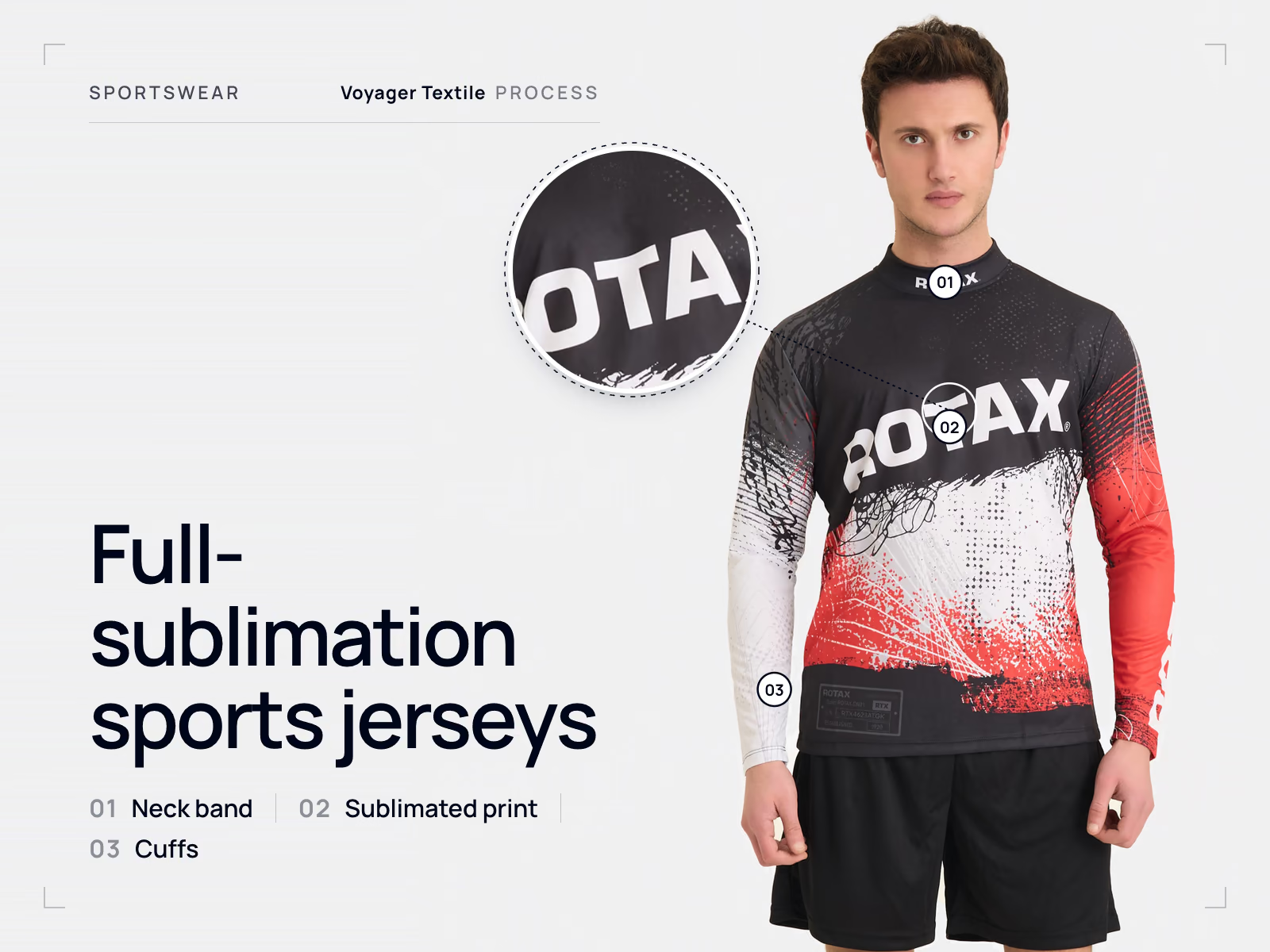
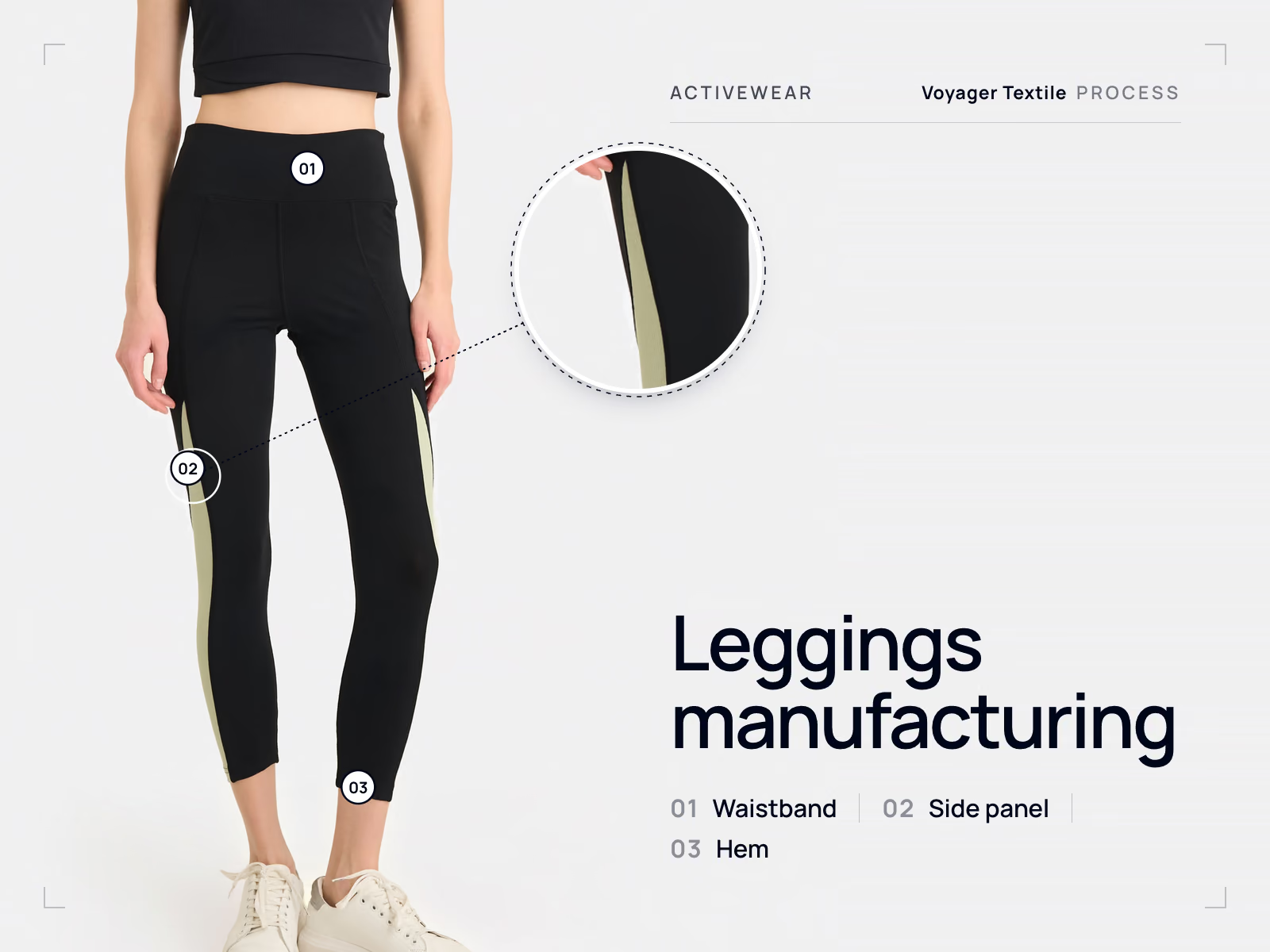
- Sublimation. Only on polyester, and only where the fabric is light enough to print. Matching leggings are often produced alongside a set. It suits panelled sports sets and allows a design to cross seams, as covered in the sublimated jersey process.
- Colour blocking and piping. Branding built into the construction, durable and distinctive, with no decoration cost per piece.
- Custom zip pullers, cords and printed neck labels. Component-level branding that suits sets well.
Assembly sequence
- Panels for both garments are cut, with colour blocks and stripes kept in register and the nap direction held on brushed fabric.
- Panel decoration is applied where the method requires a flat surface.
- Jacket: front panels prepared, shoulders joined, sleeves set, side seams closed, pockets constructed, collar attached, zip set into the facing, cuffs and hem finished.
- Bottom: pockets constructed, inseam and side seams closed, gusset set where used, waistband assembled with elastic and drawcord, ankle finish applied.
- Both garments are labelled, trimmed and pressed appropriately for the fabric.
- Set matching is checked, then the pieces are packed as pairs or as separates according to the packing specification.
Quality control: tracksuit-specific checks
| Check | What it catches |
|---|---|
| Top and bottom shade compared side by side | Two dye lots, or trims drifting from the body |
| Stripe and colour block alignment across seams | Cutting or sewing that has lost register |
| Zip alignment and level hem when closed | Front halves that do not meet |
| Waistband recovery after stretching | Elastic or rib specified too light for the garment |
| Leg twist and inseam measurement | Off-grain cutting, most visible after washing |
| Pocket symmetry on both garments | Placement drift between left and right |
| Transfer print edges on polyester | Glazing or press marks from excessive heat |
| Set contents in each pack | Mismatched sizes, the failure that reaches the customer |
What to put in a tracksuit tech pack
- Fabric for each garment, with structure, composition and target weight, plus lining where used.
- Confirmation that top and bottom share a colour standard, and which fabric is the master reference.
- Jacket: collar type, zip specification, sleeve construction, pocket type, cuff and hem finish.
- Bottom: waistband construction, rise, drawcord specification, pocket type, ankle finish, gusset, leg shape with taper measurements.
- Colour blocking and piping, with panel dimensions and how blocks should meet at seams.
- Measurement charts with tolerances for both garments.
- Decoration: artwork, method, size and placement on each garment.
- Labels for both pieces, and back-neck finishing on the jacket.
- Packing: as sets or separates, bagging, and how sizes are marked.
Sampling
Sample and approve both garments together, on a body. A jacket that looks correct alone can sit badly against the bottoms, often because the jacket hem and the waistband meet awkwardly. Check the two pieces side by side under controlled lighting for shade, and check a size set if the range is wide, because the leg taper and sleeve length are where grading shows first.
Before you send a tracksuit RFQ
- Knitted or woven route, with fabric weight
- Jacket collar type and whether a hood is required
- Zip specification and puller preference
- Bottom waistband construction and rise
- Ankle finish and leg shape
- Pocket types on both garments
- Colour blocking or piping, with a design reference
- Whether the set is sold as pairs or separates
- Size range and split for each garment
- Decoration artwork with placements
- Packing: sets or separates, and how they are marked
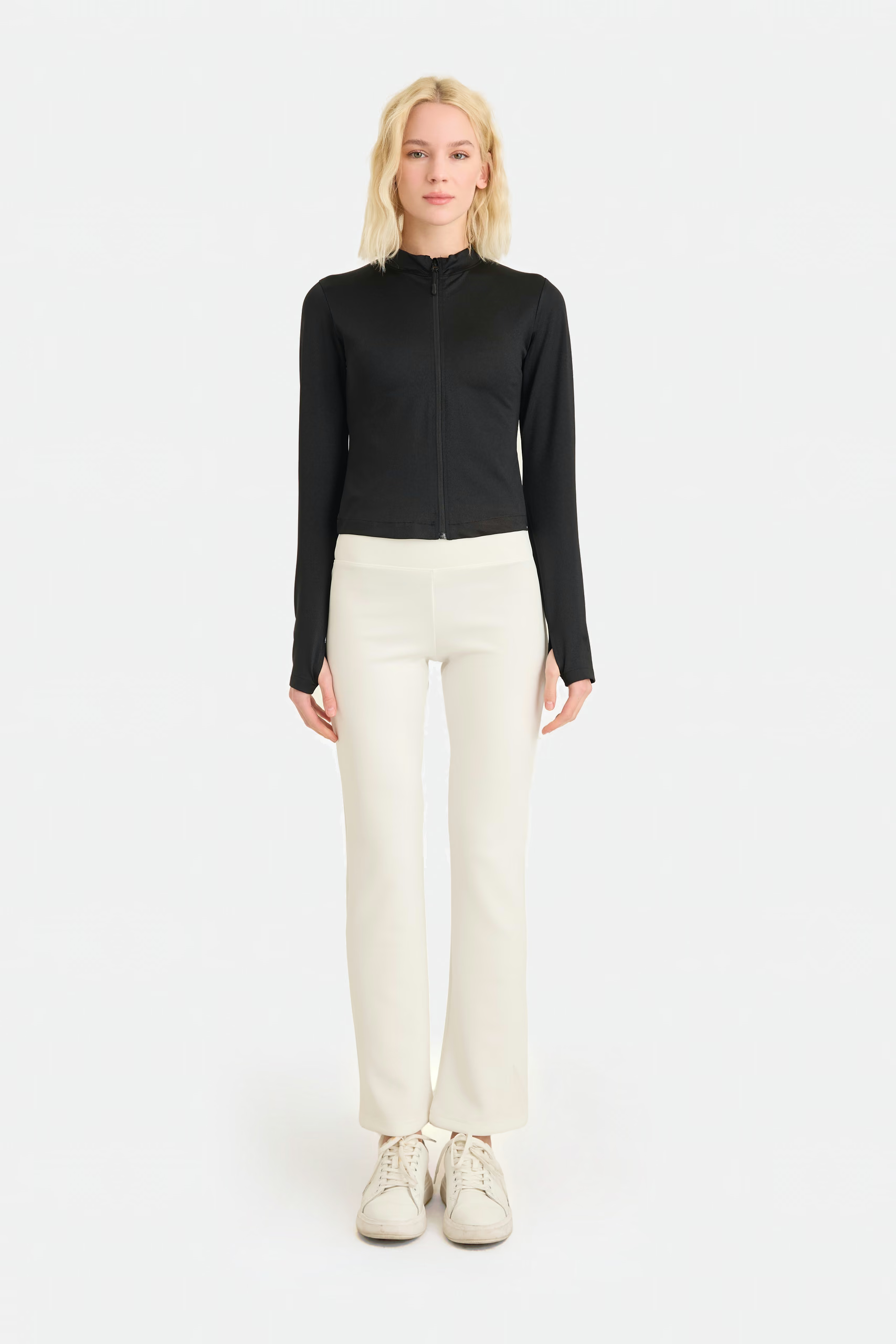
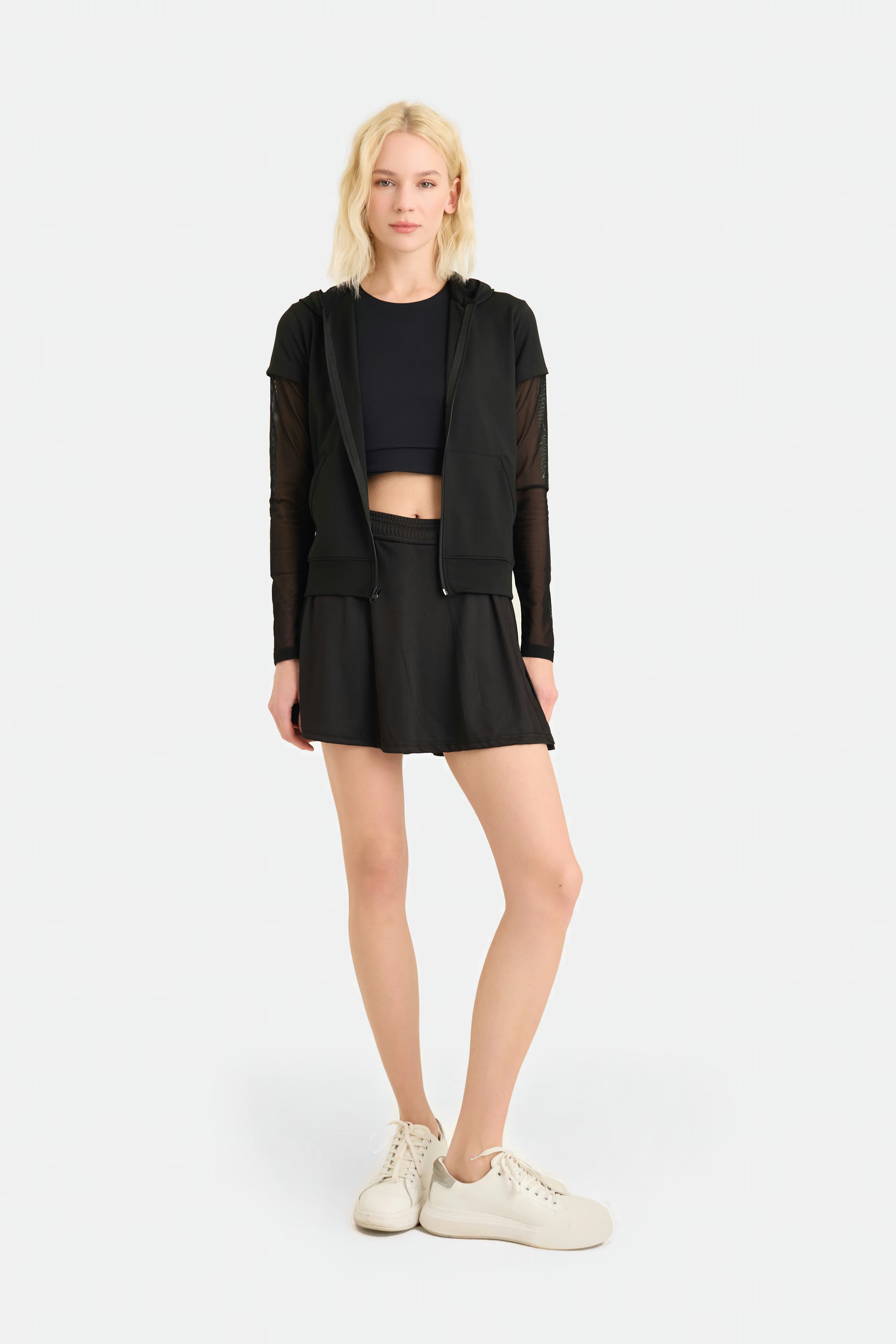
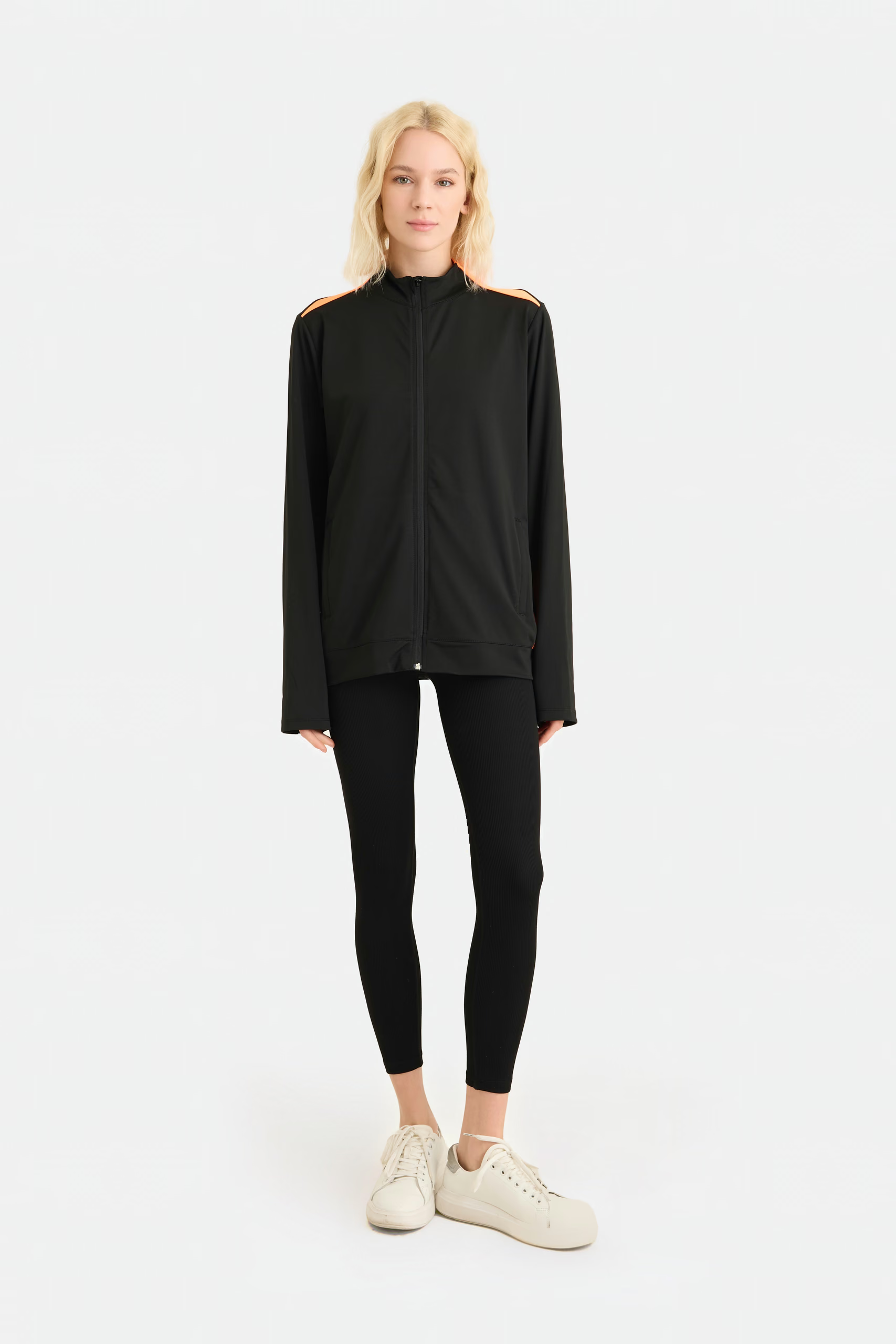
Track jacket and set references produced by Voyager Textile
Produced to customer specification. Quote an article code to start from an existing construction.
Buyer questions
How is a tracksuit manufactured?
The jacket and the bottom are produced as separate garments from a shared fabric and colour standard. Panels are cut with colour blocks kept in register, decoration is applied at the stage the method requires, the jacket is assembled around its zip and collar and the bottom around its waistband and ankle finish, then both pieces are checked against each other and packed as a set.
What fabric is used for tracksuits?
Brushed polyester tricot is the classic smooth-faced tracksuit cloth, typically around 200 to 300 g/m². Polyester interlock is lighter and prints well, cotton French terry or fleece gives a casual set closer to a sweatshirt, and woven polyester shells with a lining are used for warm-up and wind-resistant suits.
Why do the top and bottom sometimes not match in colour?
Usually because they were cut from different dye lots, or because the jacket and bottom use different fabrics that take dye differently. Book one dye lot for the programme where quantities allow, and where two fabrics are involved, nominate one as the master reference and approve the other against it.
Should a tracksuit be sold as a fixed set or as separates?
It is a commercial decision with a production consequence. Selling separates means both garments must be graded and stocked independently and packed individually, while fixed sets simplify packing but assume the wearer takes the same size top and bottom. Decide before the order, because it changes the size split and the packing specification.
What waistband is best for tracksuit bottoms?
Elastic in a self-fabric casing is common and forgiving. A ribbed waistband gives the classic sports look with more grip, and a wide flat elastic reads more modern. Whichever you choose, specify the elastic width and quality, because recovery is what customers actually judge.
Can tracksuits be printed with transfers?
Yes, and it is common for leg and back graphics. On brushed polyester tricot the transfer settings must be tested first, because polyester is heat sensitive and too much heat can leave a glazed mark around the graphic. Ask for a test on the actual fabric before bulk.
What is a gusset in tracksuit bottoms and is it worth it?
A gusset is a panel at the crotch that removes the point where four seams would otherwise meet. It improves freedom of movement and durability at the garment's highest-stress point, and it is worth specifying on anything that will actually be trained in.
Can a tracksuit be produced with a sublimated design?
Yes, on polyester fabrics. The fabric is printed before cutting, which allows designs to run across seams and panels. It suits sports sets and teamwear; the process is described in the sublimated jersey page.
What is the minimum order for custom tracksuits?
At Voyager Textile, the minimum is 300 pieces per colour and per style. Because a tracksuit is two garments, confirm at RFQ stage how the minimum applies to the set rather than assuming it.
Ordering this garment from Voyager Textile
- Every garment is made to order, to your own design.
- The minimum order is 300 pieces per colour and per style. Sizes can be split inside the 300, and a custom Pantone colour carries the same minimum of 300 pieces. Polyester-based fabrics are assessed separately.
- A sample takes 5–7 business days. Bulk production takes 4–5 weeks after sample approval; development, sampling and shipping are additional.
- Cutting, sewing, embroidery, transfer printing and sublimation printing are done in our own factory in Türkiye. Screen printing and garment washing are coordinated with partner facilities.
Quantities, timing and any open point are confirmed per project at the quotation stage, once we have your specification or tech pack.
Request a quoteDeveloping a tracksuit or training set?
Send the fabric route, the jacket and bottom details and any colour blocking. We sample both pieces together so the set can be judged as a set, and book fabric for the programme where volumes allow.
Send a tracksuit brief