Sportswear and performance
Full-Sublimation Sports Jersey Manufacturing Process
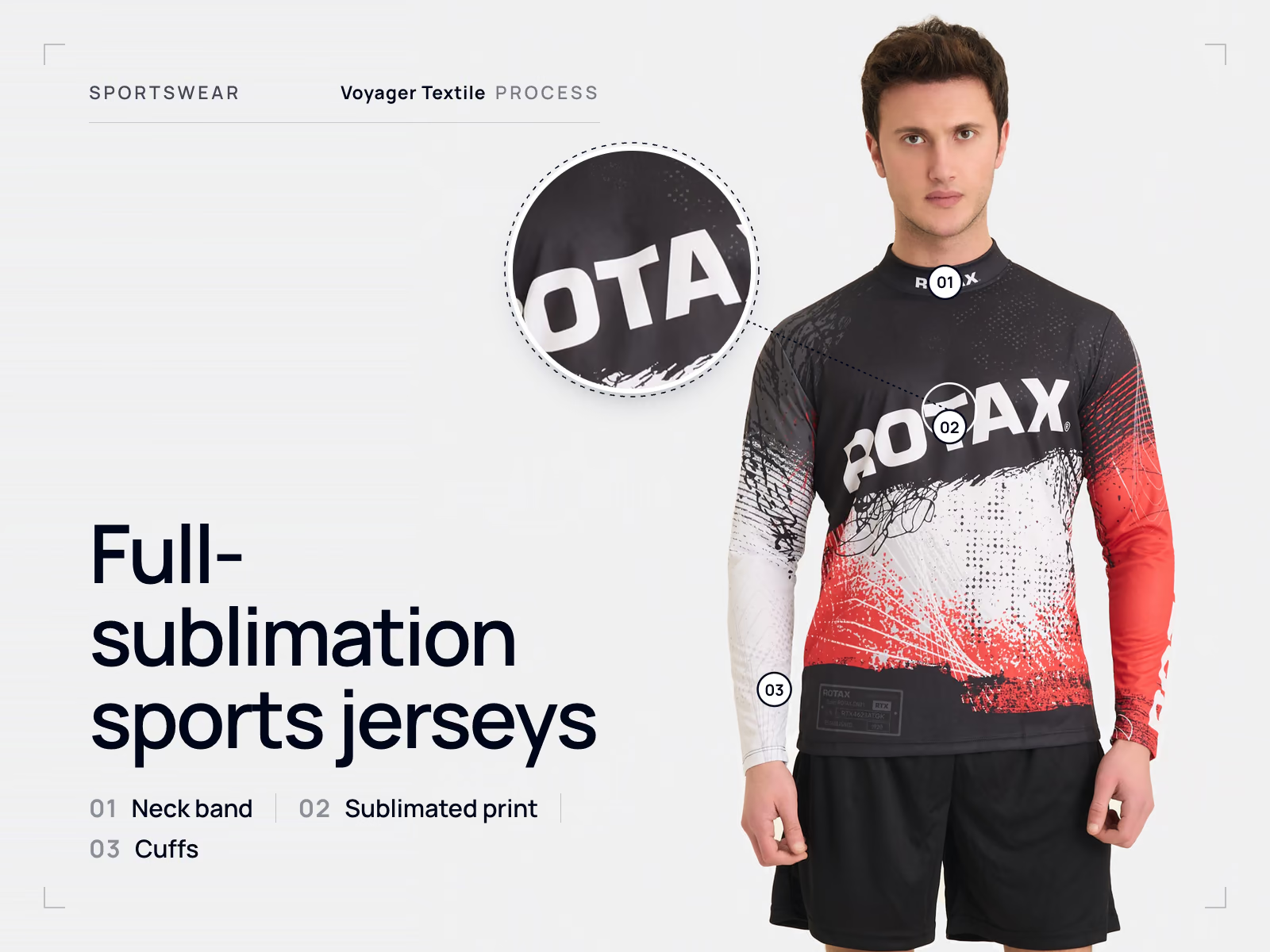
A fully sublimated jersey is printed before it is cut. Artwork is built to the actual pattern panels for every size, printed onto transfer paper, transferred into polyester fabric under heat, then cut and sewn. Because the colour is inside the fibre, there is no print layer to crack, and because the fabric is printed flat, graphics can run across the whole garment and over its seams.
Contents
- Why the fabric has to be polyester
- Artwork is engineered to the pattern, not placed on a mock-up
- Colour management
- Printing and transfer
- Cutting printed fabric
- Seam alignment: what is achievable
- Sewing a sublimated jersey
- Jersey construction by sport: basketball, volleyball, handball, ice hockey, cycling, motocross and goalkeeper kits
- Names, numbers and sponsor logos
- Quality control: sublimation-specific checks
- What to put in a sublimated jersey tech pack
- Sampling
- Minimums, cost and what makes a sublimated jersey expensive
- Buyer questions
Sublimated teamwear reverses the normal order of garment production. In almost every other process the garment is made and then decorated. Here the fabric is decorated and then made, which means the artwork has to be engineered to the pattern before a single panel is cut. Everything that follows, including where a sponsor logo can safely sit, comes from that one fact.
Sublimated jersey production sequence
Why the fabric has to be polyester
Sublimation dye changes from solid to gas under heat and bonds with polyester fibres. On cotton the colour does not hold in the same way, which is why fully sublimated garments are polyester based. Blends with a lower polyester content will take the print, but with reduced saturation, which reads as a faded or vintage effect rather than a fault.
The structures involved are covered in performance polyester knits. Two consequences follow. The dye is transparent, so it can only add colour, never remove it: there is no white sublimation ink, and anything that must appear white has to be the fabric itself. That is why sublimation is printed onto white or very light fabric. And because the colour lives in the fibre rather than on the surface, the finished graphic cannot crack or peel, and it adds no weight or stiffness to the garment.
| Structure | Typical composition | Indicative GSM range | Used for | Consideration |
|---|---|---|---|---|
| Micro-polyester jersey | 100% polyester | Around 110 to 150 | Light match jerseys, event shirts | Very light fabrics can show through; check opacity |
| Polyester interlock | 100% polyester | Around 145 to 200 | Team jerseys needing more body and structure | Smooth, stable face; a good surface for detailed artwork |
| Bird-eye and mesh structures | 100% polyester | Around 120 to 180 | Ventilated panels, side and underarm inserts | Open structures print with a visibly different texture |
| Polyester with elastane | Polyester with roughly 5 to 15% elastane | Around 170 to 240 | Close-fitting cycling and racing jerseys | Stretch fabric distorts artwork slightly when worn; allow for it |
| Brushed polyester | 100% polyester | Around 200 to 280 | Cooler-weather training tops and half-zips | Nap softens fine detail compared with a smooth face |
Artwork is engineered to the pattern, not placed on a mock-up
This is the step that separates a professional sublimated garment from a poor one. The design is not one image applied to a finished shirt. It is a set of full-size files built to the actual pattern pieces, including the parts of the fabric that will be consumed by seam allowances and lost in cutting.
- Full production scale. Panels are printed at real size, so artwork resolution must hold at those dimensions. A file that looks sharp on screen is not evidence.
- Image beyond the cut line. The design extends past the panel edge, because cutting carries a small tolerance and an unprinted white edge cannot be corrected afterwards.
- Seam allowances accounted for. Part of every printed panel disappears into the seam. A graphic that ends exactly at the panel edge will appear to end early on the finished garment.
- Per-size layouts. Each size has different pattern pieces, so the artwork is laid out for each size rather than scaled. A design that is balanced on a medium can look cropped on an extra large if it is simply enlarged.
- Critical elements away from seams. Sponsor logos, crests and text are positioned clear of seam lines wherever the design allows, because that is where alignment tolerance is consumed.
- Layered, editable files. Names, numbers and per-size adjustments are far easier to apply from a structured file than from a flattened image.
General file requirements across all decoration methods are in the artwork guide, and the method itself is explained in the all-over sublimation guide. Laying the artwork onto the panels is covered in sublimation artwork preparation, and arranging the crest, sponsors, number and name in sports jersey artwork layout.
Colour management
Sublimation colour is the product of ink, paper, printer profile, fabric and heat. The same file printed on two different fabrics will not give the same result, and no screen can predict it. The reliable approval is a printed strike-off on the actual fabric, assessed under controlled lighting.
For teamwear this matters commercially, because club and sponsor colours are often defined as brand colours. Supply the references you have, ask for a strike-off, and approve on the physical result. Where a colour cannot be reached, it is better to know at proof stage than after 500 shirts. The colour-approval logic is the same one described in the Pantone colour matching guide, even though the mechanism is printing rather than dyeing.
Printing and transfer
The engineered artwork is printed onto transfer paper with sublimation inks, then paper and fabric pass together through heat and pressure so the dye transfers into the fibres. Production scale determines the equipment: flat heat presses for panel-by-panel work, roll-to-roll calenders for continuous fabric.
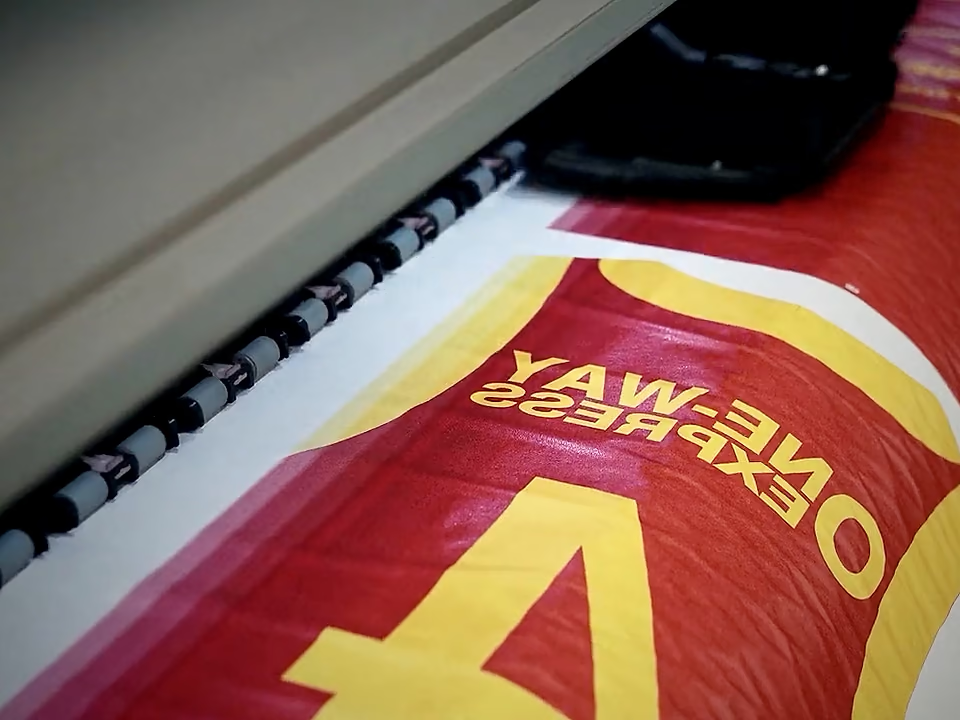
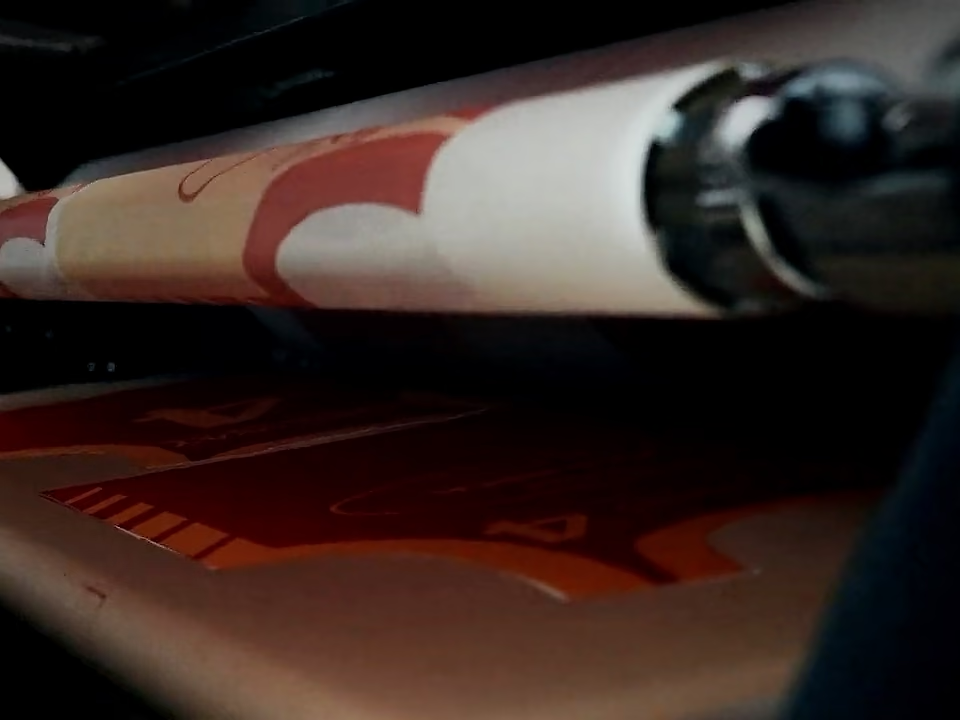
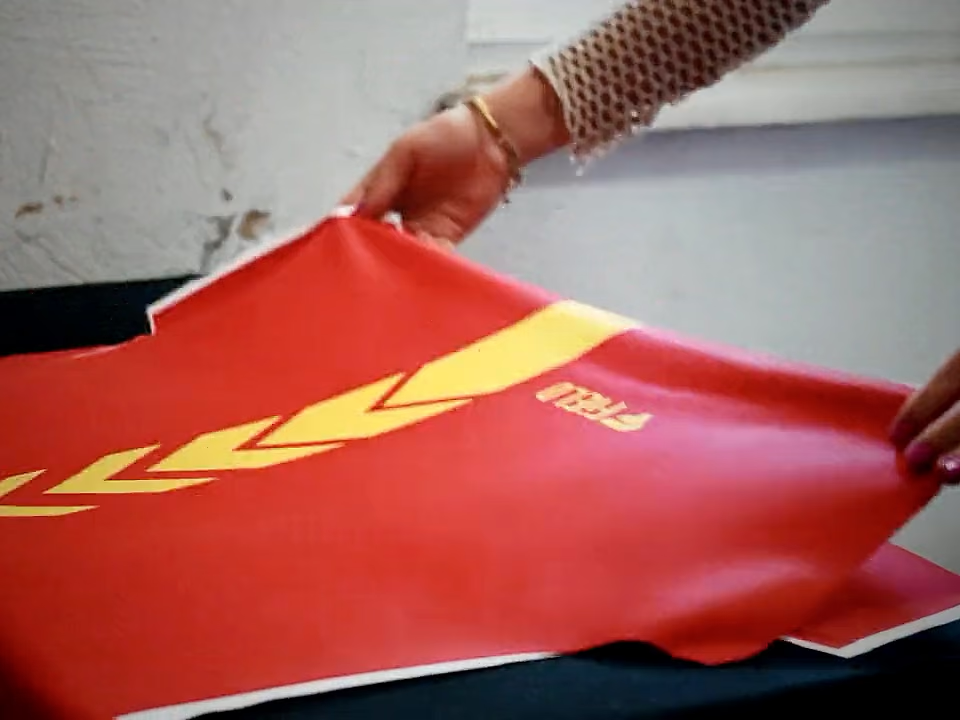
Two practical effects are worth knowing. Under-transfer leaves colour weak and washes out; over-transfer can blur detail and, on some fabrics, cause ghosting where the paper shifts during pressing. Both are covered, along with dye migration, in why printed colour changes on polyester. Both are settled at proof stage, which is exactly why the strike-off exists.
Cutting printed fabric
Once the fabric is printed, cutting is no longer a free operation. Panels have to be cut to the printed design rather than anywhere on the roll, so the marker is fixed by the artwork rather than optimised for fabric efficiency. That is one reason sublimated production is priced differently from cut-and-sew production in plain fabric.
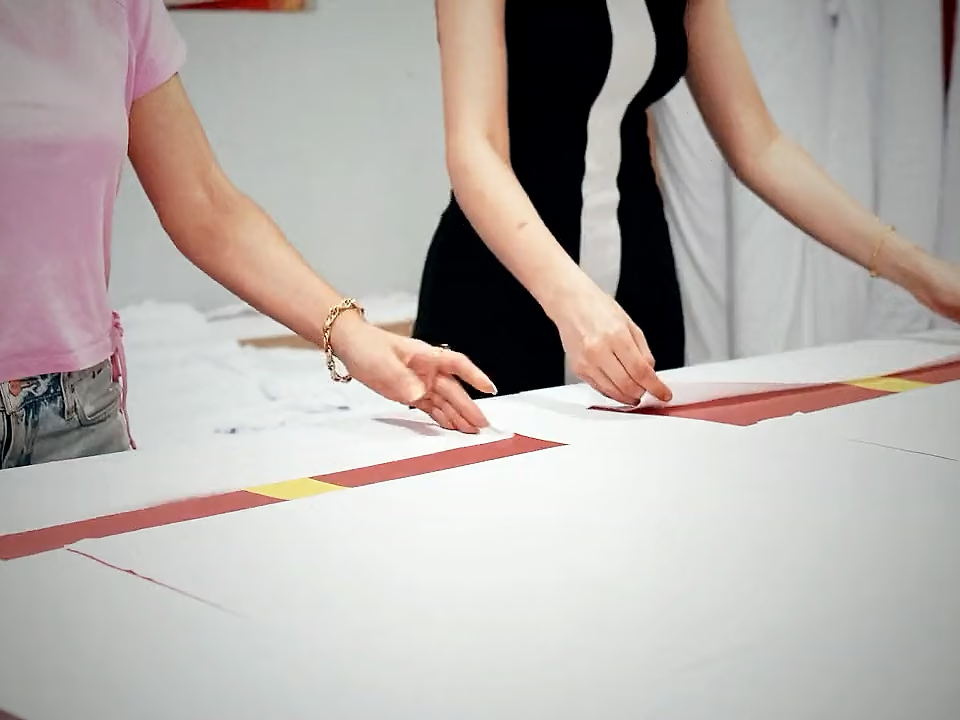
Alignment is checked at this stage: printed registration marks are used so that adjoining panels are cut in the correct relationship to one another. Errors here cannot be corrected in the sewing room.
Seam alignment: what is achievable
Registration is the technical name for how accurately a printed design lines up once the panels are joined, and on a jersey it is a quality parameter rather than a detail. Printing, cutting and seaming each contribute a small amount of movement, those contributions add up, and the result is agreed as a target rather than assumed.
- Bold, continuous patterns absorb small misalignment. A thin horizontal stripe crossing a side seam shows every millimetre.
- Keep logos, numbers and text away from seams where the design allows.
- Agree an alignment tolerance with the factory during sampling, and record it as part of the inspection standard.
- Judge alignment on the approved sample, not on a rendered mock-up.
Sewing a sublimated jersey
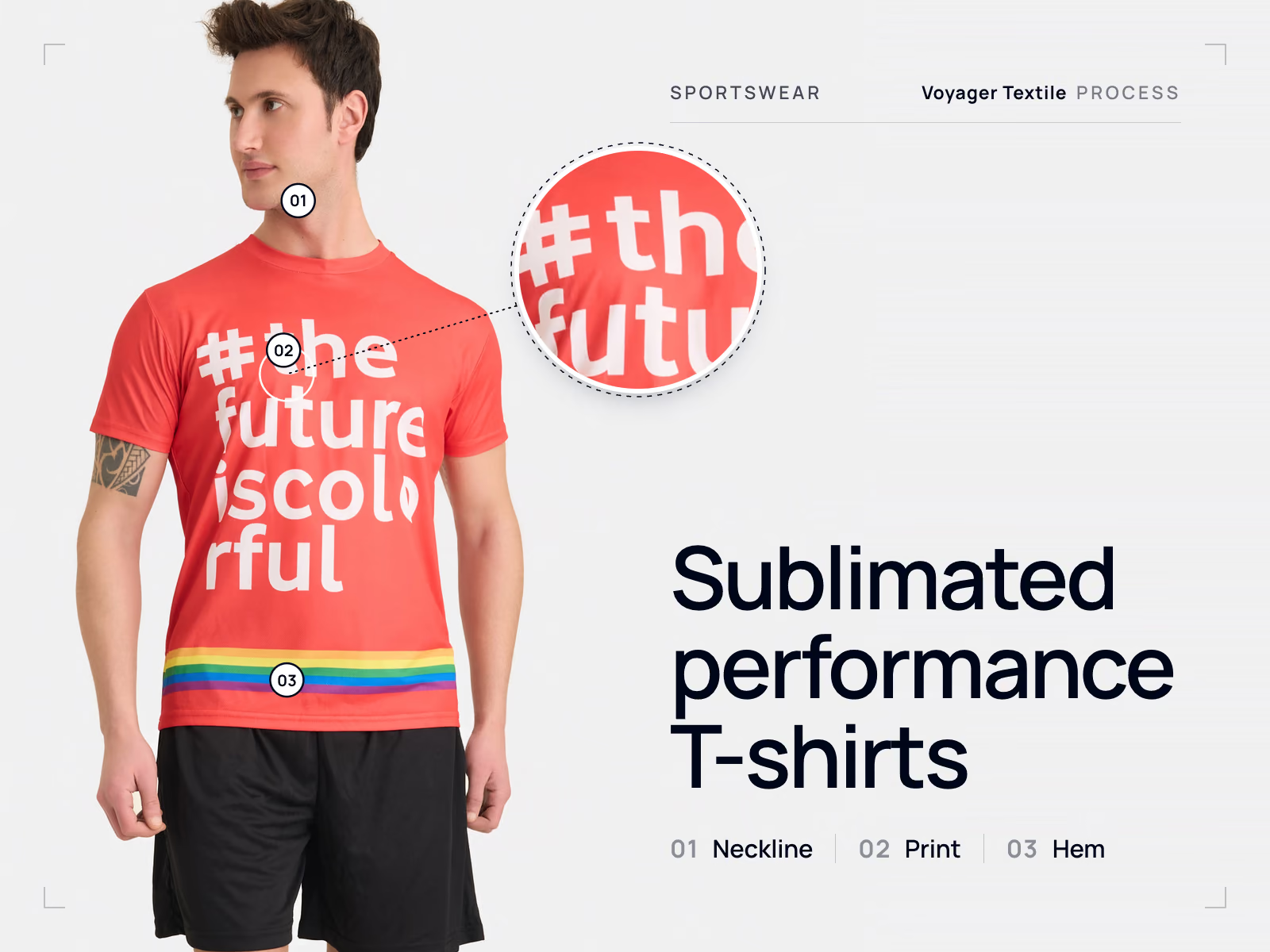
Assembly is conventional cut-and-sew work on polyester knits, usually overlock for the structural seams with coverstitch or flatlock where a low-profile finish is wanted against the skin. For a simpler garment printed the same way, see the sublimated performance T-shirt process. The construction decisions that matter are at the neck and the panels.
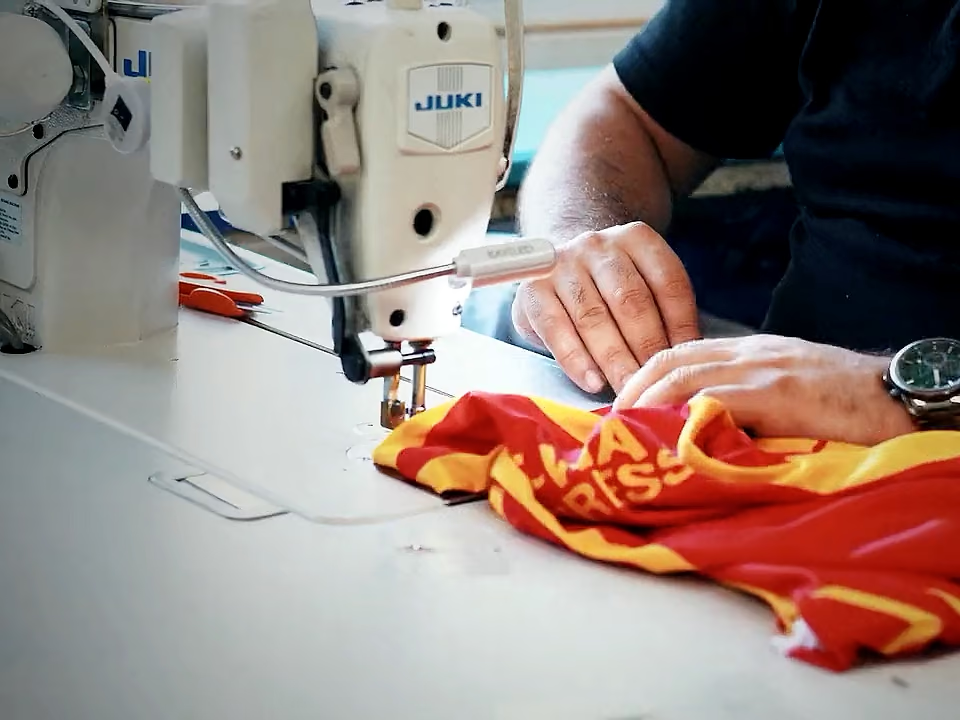
- Collar. Options include a self-fabric bound neck, a printed or plain rib collar, a V-neck with an insert, or a collar cut from the sublimated fabric so the design continues. Each looks different and each has a different cost.
- Panel construction. Side panels, underarm gussets and mesh inserts are pattern decisions that also change the artwork layout, so they are settled before the design is engineered.
- Sleeve construction. Set-in or raglan changes both the pattern and how a design flows across the shoulder.
- Hem finish. A plain coverstitched hem, an elasticated hem for cycling jerseys, or a silicone gripper where the garment must stay in place.
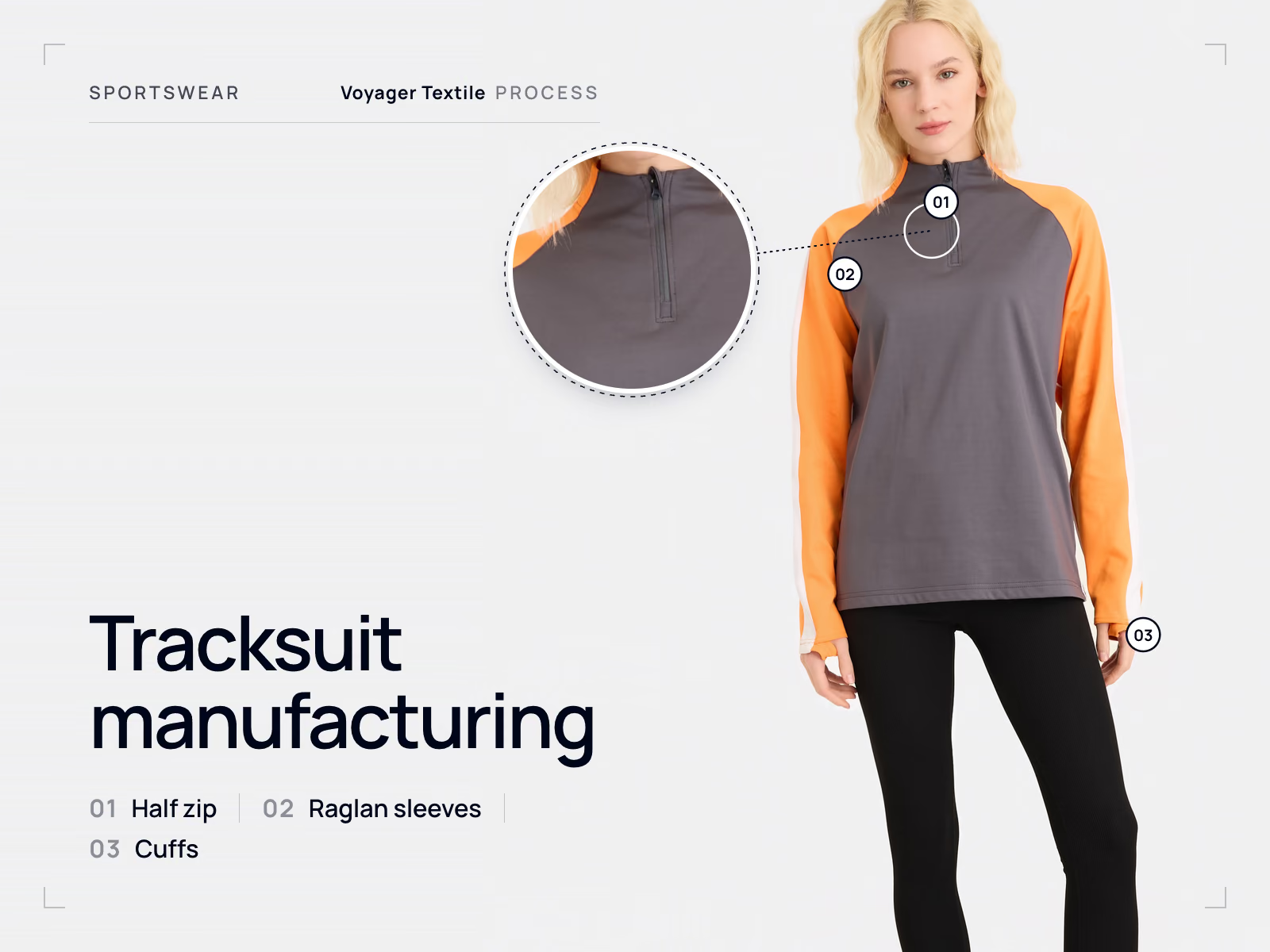
- Zip, on half-zip and full-zip styles. Set into a facing, with the artwork engineered so the design meets correctly across the closure.
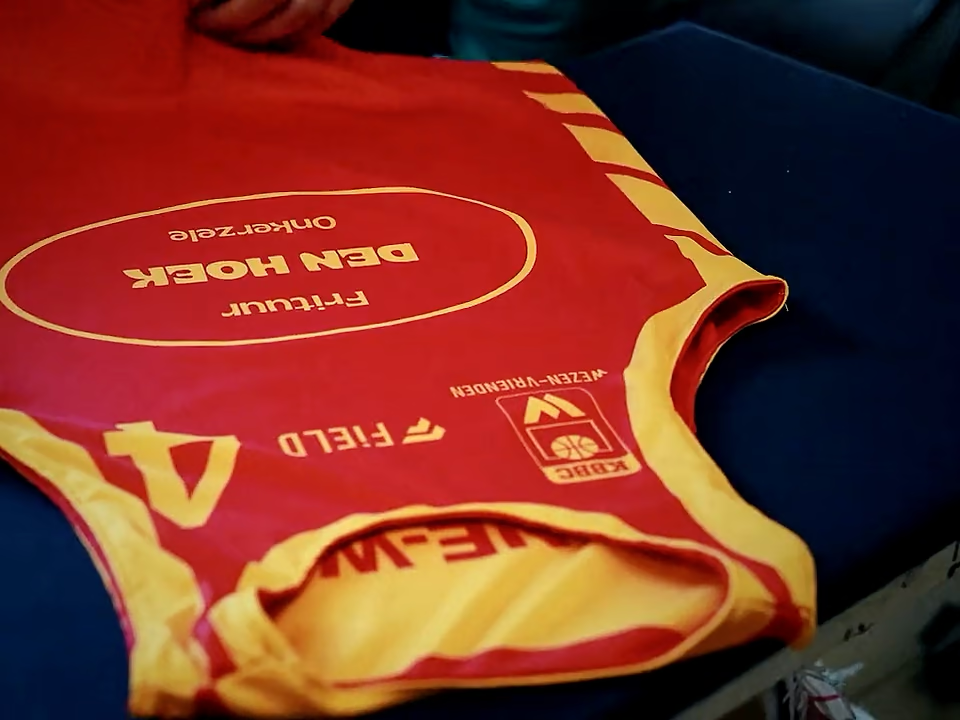
Jersey construction by sport: basketball, volleyball, handball, ice hockey, cycling, motocross and goalkeeper kits
The sublimation process is the same for every sport; the cut, the panels and the trims change. Panel layout decides where the artwork breaks, so the construction for the sport is fixed before the design is engineered to the pattern.
| Sport | Construction points |
|---|---|
| Basketball | Sleeveless, deep bound armholes, longer body; side mesh panels; reversible double-layer option |
| Volleyball | Close stretch fit; short, cap or no sleeves; numbers sized to the competition rules |
| Handball | Close fit with elastane; raglan sleeves, with the design engineered over the raglan seam |
| Ice hockey | Oversized to fit over pads; long sleeves, doubled elbows; fight strap and lace-up neck |
| Cycling | Stretch race or club cut, long back, full zip, rear pockets, silicone grippers |
| Motocross | Loose and long-sleeved with room for protection worn underneath; mesh vents print with a different texture |
| Goalkeeper | Long sleeves, looser cut, optional padded elbows; artwork separate from the outfield kit |
Kits, shorts and training tops for clubs and teams are covered on the sublimated teamwear manufacturer page.
Names, numbers and sponsor logos
There are two routes, and they are commercially different.
| Approach | How it works | Best when |
|---|---|---|
| Sublimated into the artwork | Names and numbers are part of the printed file, so they are inside the fabric with no surface layer | The roster is known before production and each garment is individual anyway |
| Applied afterwards | Heat-applied transfer numbers and letters are added to a finished garment | Names change during a season, or squads are supplied late |
Sublimated names and numbers cannot crack or peel and add nothing to the hand-feel, but they are fixed at printing. Applied numbers are flexible but sit on the surface. Many teamwear programmes use both: sublimated sponsor artwork and applied player names.
Quality control: sublimation-specific checks
| Check | What it catches |
|---|---|
| Colour against the approved strike-off | Drift between print batches or fabric rolls |
| Registration across seams | Cutting or sewing that has consumed the alignment tolerance |
| Print sharpness and ghosting | Paper movement or incorrect dwell during transfer |
| Full coverage to the edges | Insufficient bleed beyond the cut line |
| Consistency between panels of one garment | Panels printed in different runs |
| Logo and number position | Placement drift, most visible on chest and back |
| Measurements against tolerances | Standard cut-and-sew accuracy |
| Seam quality on stretch fabric | Skipped stitches and seam grin under extension |
Where the end use justifies it, add colourfastness to light and to perspiration alongside washing tests, since sportswear sees both. Testing is covered in the quality control guide.
What to put in a sublimated jersey tech pack
- Fabric: polyester structure, weight and any elastane content, plus mesh or panel fabrics.
- Pattern: panel layout, sleeve construction, side panels and inserts.
- Artwork: layered files built to the pattern, at full size, with bleed and seam allowance accounted for, per size.
- Colour references, and confirmation that approval is on a printed strike-off.
- Collar construction and neck finish.
- Names and numbers: sublimated or applied, with fonts, sizes and positions.
- Sponsor logos with positions measured from fixed points.
- Hem and cuff finishes, including elastic or gripper where used.
- Size range and split, with a measurement chart and tolerances.
- Labels: printed or woven, and whether a printed neck label is used.
- Packing: individual bagging, name or number identification per piece where relevant.
Sampling
Sublimated production has two approval points rather than one. The first is the printed strike-off, which settles colour and print quality on the actual fabric. The second is the sewn sample, which settles fit, panel alignment, collar construction and finishing. Approving only the second wastes a round, because a colour problem discovered on a finished sample means reprinting.
Check the largest and smallest sizes as well as the sample size, since artwork is laid out per size and balance can shift at the extremes. The general sequence is described in the sampling guide.
Minimums, cost and what makes a sublimated jersey expensive
Sublimation prices differently from other decoration. There are no screens and no colour separations, so a ten-colour design and a two-colour design print the same way and cost the same to print. What costs money is artwork preparation, which is per size and per style, and the fact that panels must be cut to the printed design rather than to the most efficient marker.
All-over sublimation production at Voyager Textile has the same minimum as other custom apparel: 300 pieces per colour and per style, with sizes split within it. See the MOQ guide.
Before you send a sublimated jersey RFQ
- Garment type: match jersey, training top, cycling or racing jersey
- Polyester fabric structure and weight, plus any mesh panels
- Artwork files, layered and at full size where available
- Colour references for club and sponsor colours
- Collar and neck construction
- Sleeve construction and hem finish
- Names and numbers: sublimated or applied, with the roster if known
- Sponsor logo positions
- Size range and split, including any individual sizing
- Quantity, remembering the minimum of 300 pieces per colour and per style
- Packing: individual bagging and per-player identification if required
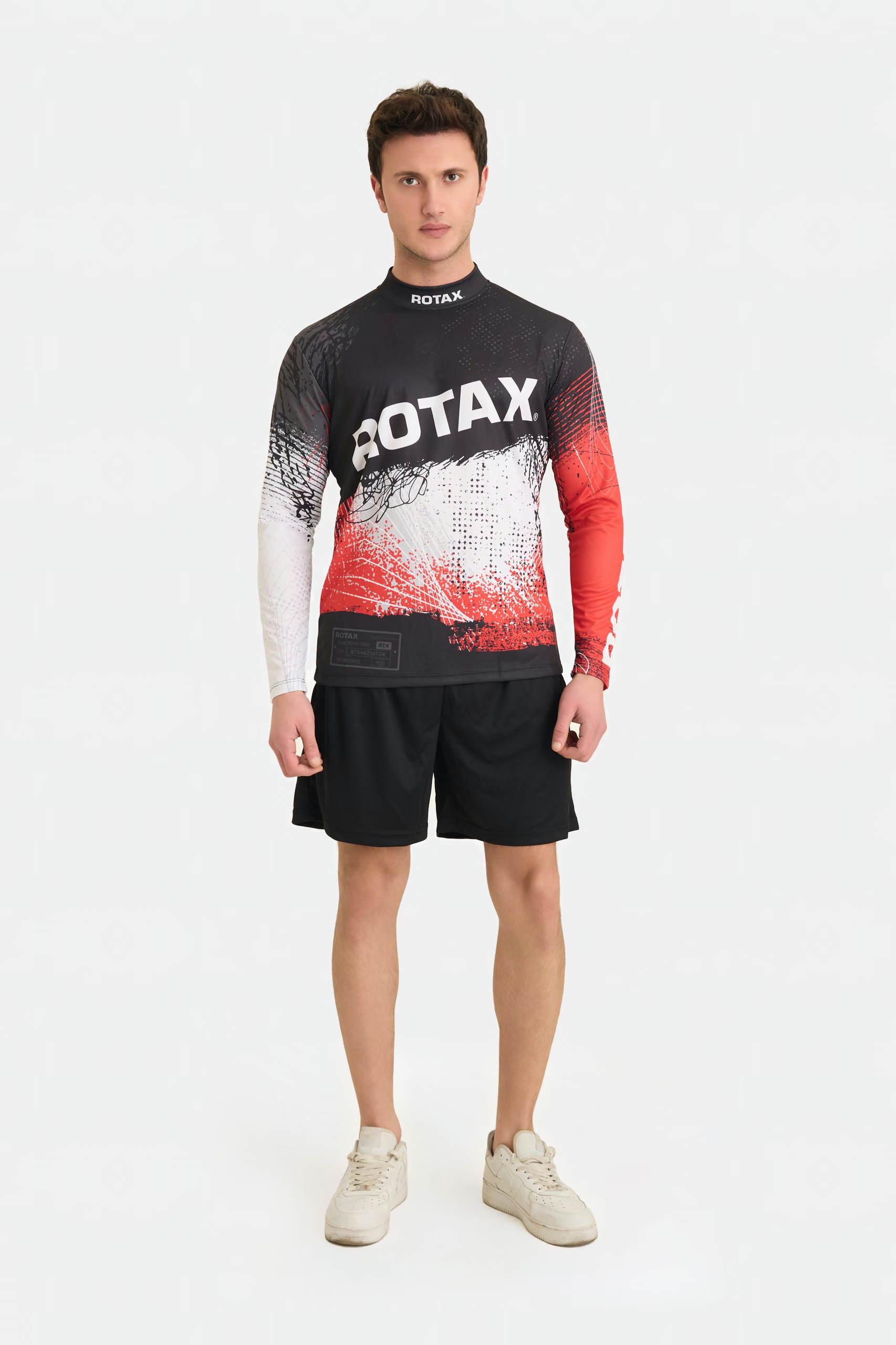
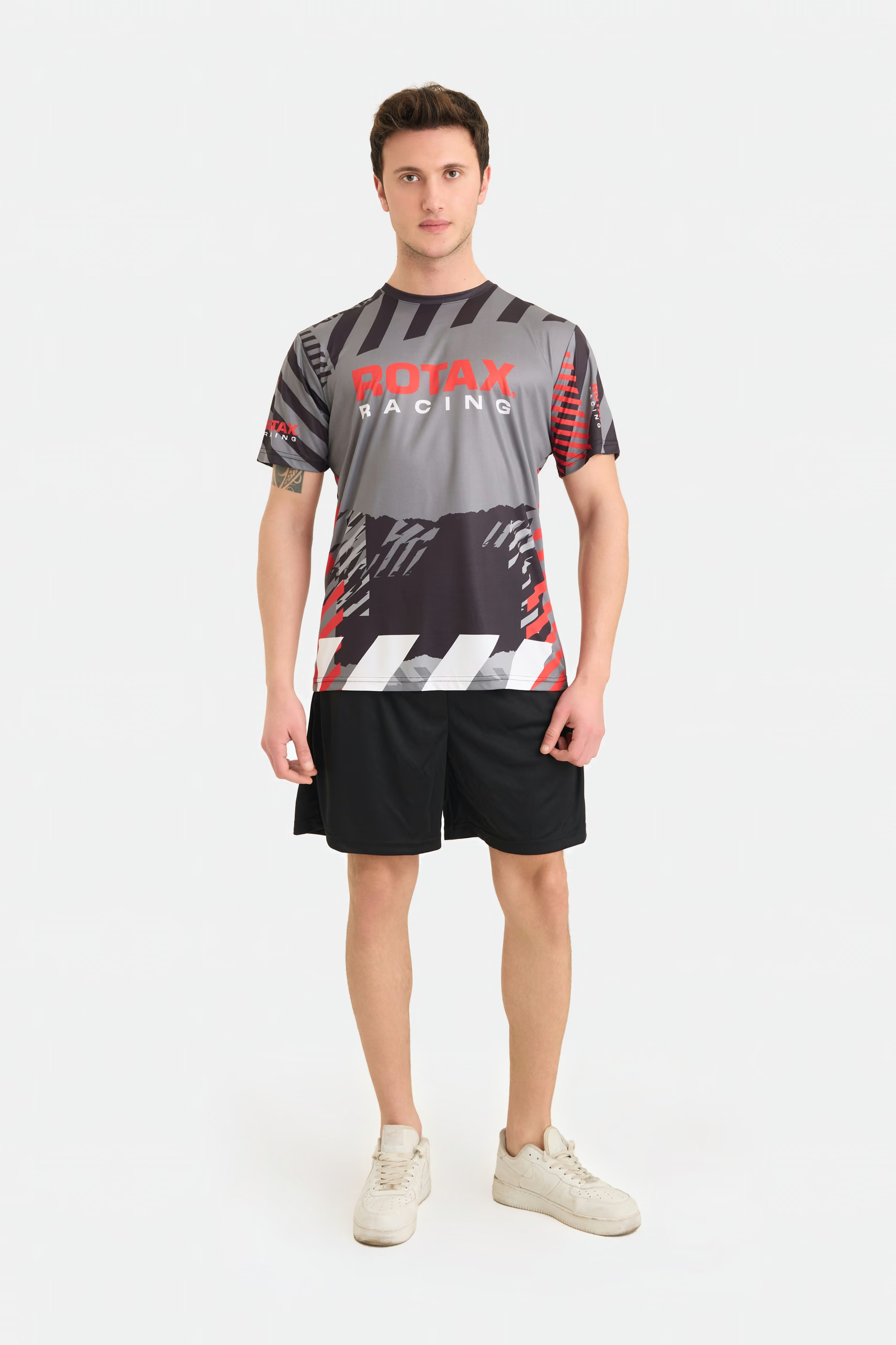
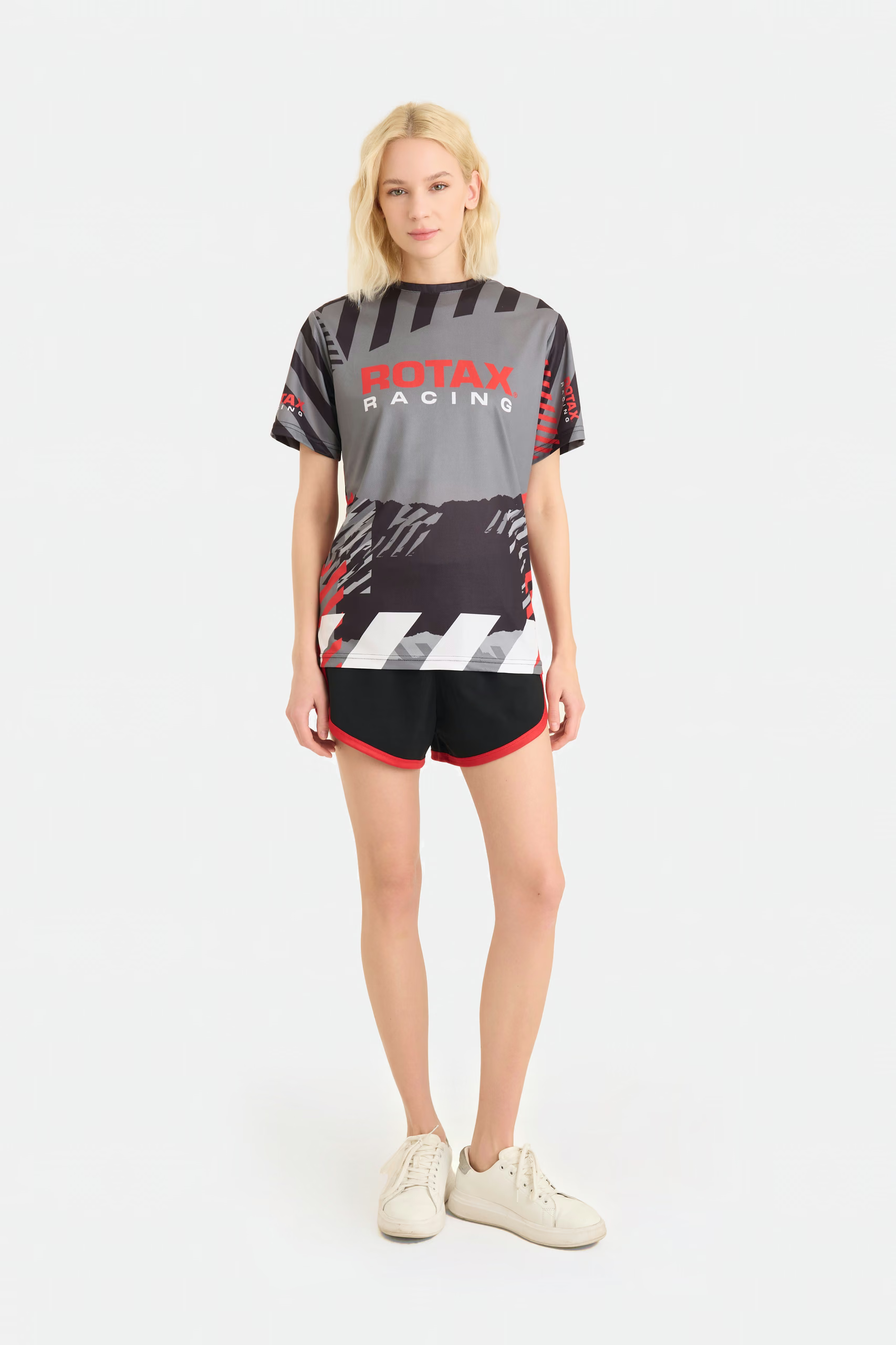
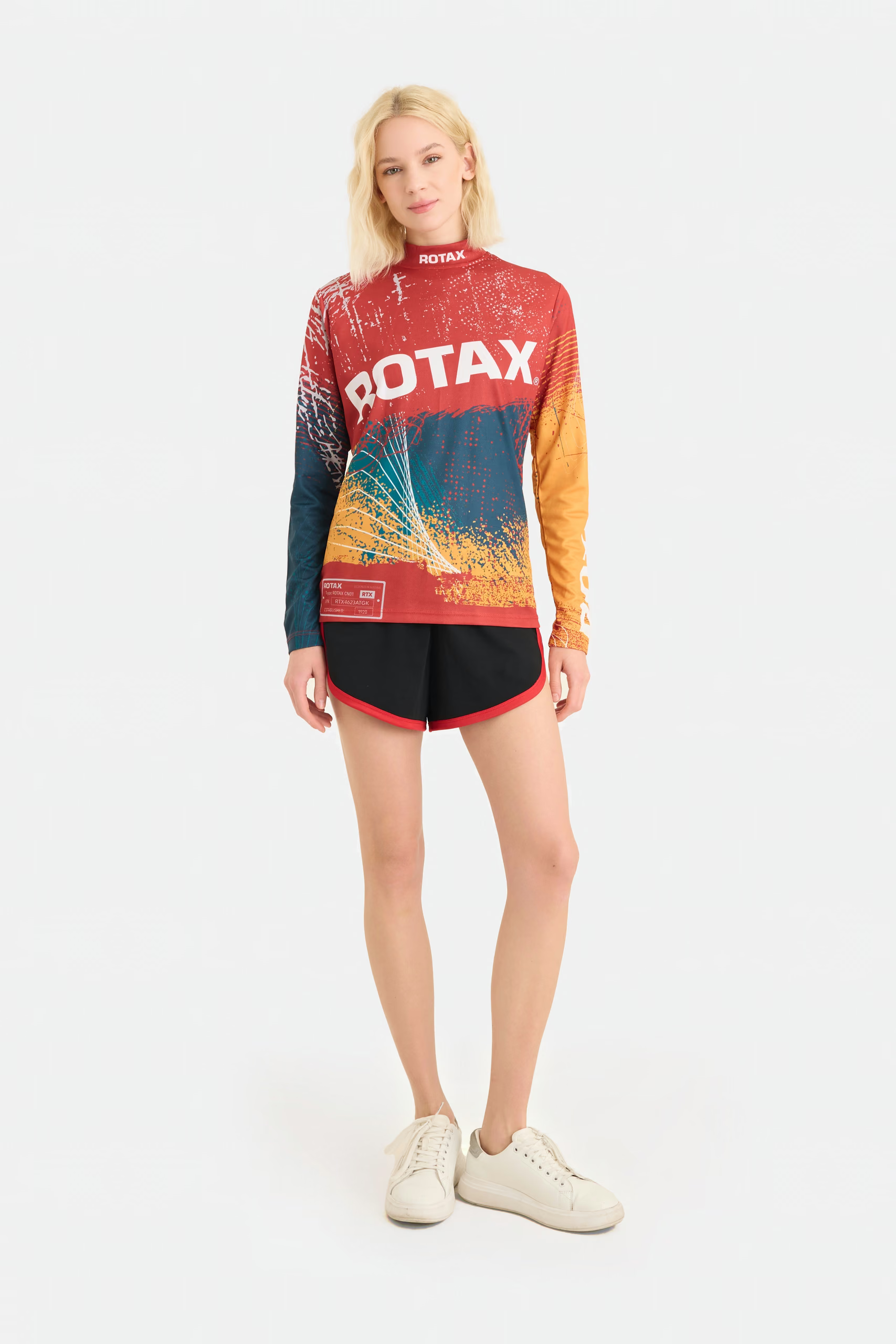
Sublimated jersey references produced by Voyager Textile
Produced to customer specification with sublimation printing run in house.
Buyer questions
How is a full-sublimation sports jersey manufactured?
The pattern is finalised first, then the artwork is engineered to the individual panels for each size. The design is printed onto transfer paper, transferred into polyester fabric under heat and pressure, and only then are the panels cut and sewn. Because the fabric is printed flat, the design can run across the whole garment and over its seams.
Why does sublimation require polyester?
Sublimation dye bonds with polyester fibres under heat. Cotton does not hold it in the same way, so the colour would not survive. Blends with lower polyester content will take the print at reduced saturation, which produces a faded look rather than a fault.
Can a sublimated jersey have white elements?
Only where the fabric itself is white, because sublimation ink is transparent and there is no white ink. That is why sublimation is printed onto white or very light fabric, with all colour created by the print.
What temperature is used for sublimation?
It depends on the equipment, ink and fabric. Ink manufacturer Sawgrass publishes a starting point of about 400°F, roughly 204°C, for 35 to 40 seconds at medium pressure on polyester, and states that press charts are a starting point and that actual press temperature should be verified. Industrial roll-to-roll calenders run different combinations, so parameters are confirmed by testing on the specific fabric.
Can the design continue across seams?
Yes, and it is the main reason to choose full sublimation. Matching is close rather than perfect on every piece, because printing, cutting and sewing each carry a small tolerance. Keep logos, numbers and text away from seams where the design allows.
Do you need separate artwork for each size?
Yes. Each size has different pattern pieces, so artwork is laid out per size rather than scaled. A design that is balanced on a medium can appear cropped or stretched on an extra large if it is simply enlarged.
Should player names and numbers be sublimated or applied?
Sublimated names and numbers are inside the fabric, so they cannot crack or peel and add no hand-feel, but they must be known before printing. Applied heat-transfer numbers can be added later, which suits squads confirmed late or names that change during a season. Many programmes combine both.
What is the minimum order for sublimated jerseys?
At Voyager Textile, 300 pieces per colour and per style, the same as for other custom apparel. Sizes can be split within the 300.
Does a sublimated print crack or fade?
It cannot crack or peel, because the colour is inside the fibre rather than on the surface. Colour can fade under prolonged exposure to strong light and high heat, which is the behaviour of dyed polyester rather than a fault of the print. Specify light and perspiration fastness testing where the end use justifies it.
How is colour approved for a sublimated jersey?
On a printed strike-off on the actual fabric, assessed under controlled lighting. Sublimation colour depends on ink, paper, printer profile, fabric and heat together, so no screen or digital proof is reliable evidence.
Can mesh panels be included in a sublimated jersey?
Yes, and they are common for ventilation at the sides and underarms. Open structures print with a visibly different texture from a smooth interlock, so include them in the strike-off rather than approving colour on the main body fabric alone.
Can sublimated jerseys be reordered later with the same colours?
Yes, and the approved strike-off is what makes it reliable. Keep the approved printed sample and the artwork files, and ask for a new strike-off if the fabric supplier or roll changes, since the fabric affects the printed result.
Ordering this garment from Voyager Textile
- Every garment is made to order, to your own design.
- The minimum order is 300 pieces per colour and per style. Sizes can be split inside the 300, and a custom Pantone colour carries the same minimum of 300 pieces. Polyester-based fabrics are assessed separately.
- A sample takes 5–7 business days. Bulk production takes 4–5 weeks after sample approval; development, sampling and shipping are additional.
- Cutting, sewing, embroidery, transfer printing and sublimation printing are done in our own factory in Türkiye. Screen printing and garment washing are coordinated with partner facilities.
Quantities, timing and any open point are confirmed per project at the quotation stage, once we have your specification or tech pack.
Request a quoteHave a teamwear design to produce?
Send the artwork, the fabric requirement and the roster or size split. We engineer the design to the pattern panels, produce a printed strike-off for approval, and sample before bulk. Production starts at 300 pieces per colour and per style.
Send a sublimation brief