Sportswear and performance
Leggings Manufacturing Process
Leggings are made from four-way stretch knit, and many production decisions follow from that. The fabric must stay opaque when stretched, the seams must extend without breaking, the crotch needs a gusset rather than a four-seam intersection, and the waistband has to recover after every wear. Pressing, which shapes most garments, plays little part here.
Contents
- Fabric: composition, weight and the two properties that matter
- Pattern: negative ease and how to specify measurements
- Panels: how many, and why
- The gusset
- Seams: flatlock and why it is used
- The waistband
- Decoration: what works on stretch
- Assembly sequence
- Quality control: leggings-specific checks
- What to put in a leggings tech pack
- Sampling
- Buyer questions
Leggings are a clear example of a garment where the fabric is the product. Two pairs cut from the same pattern in two different knits behave nothing alike: one holds, stays opaque and recovers, the other bags at the knee and goes translucent when the wearer bends. This page covers what to specify so you get the first one.
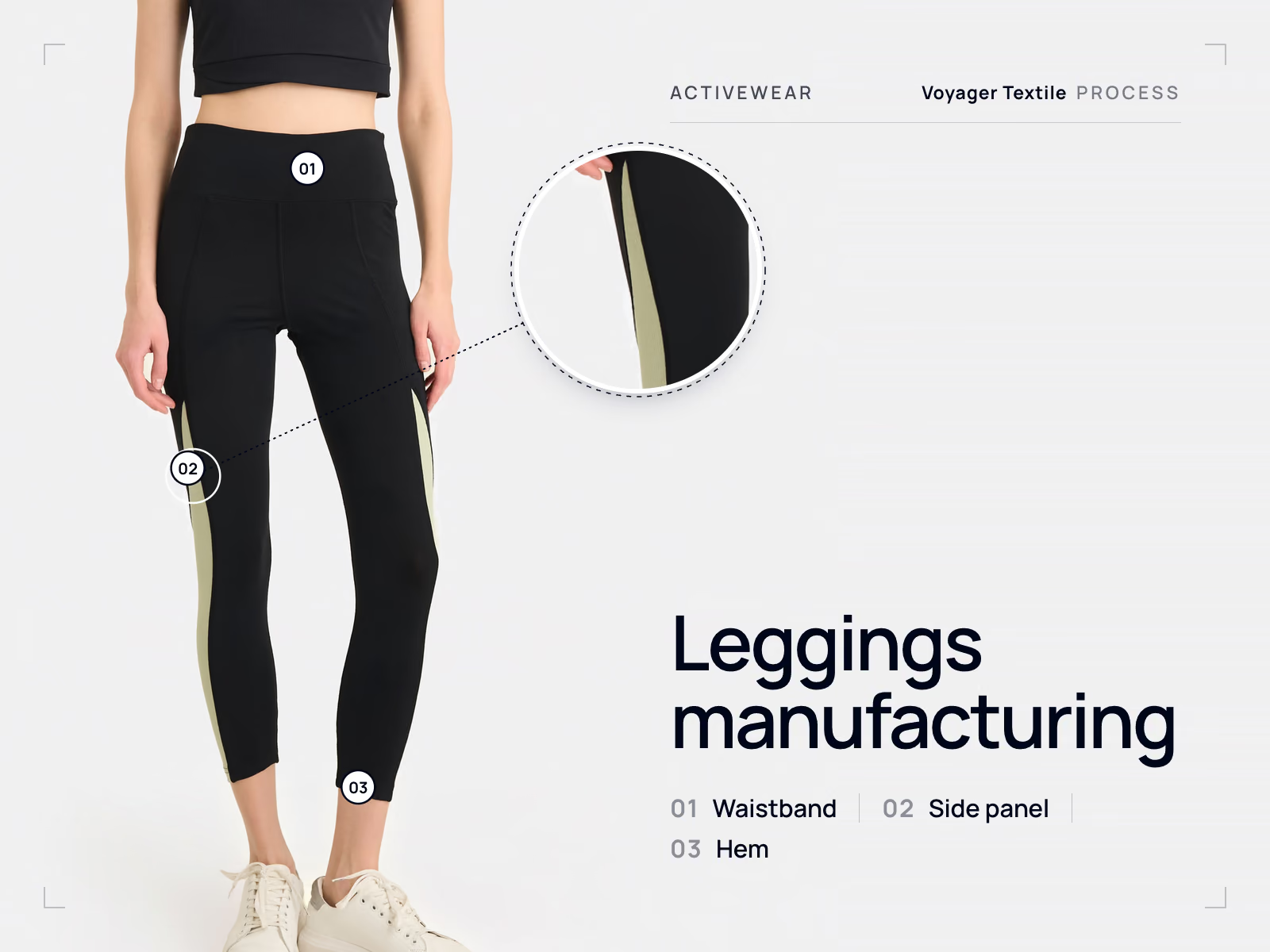
Leggings production sequence
Fabric: composition, weight and the two properties that matter
Legging fabric is a circular or warp knit with elastane. Two properties decide whether it works, and neither is weight. Recovery is the fabric's ability to return to shape after being stretched, which is what stops knees bagging. Opacity under tension is whether the fabric stays opaque when it is stretched over the body, which is the complaint that ends programmes.
| Structure | Typical composition | Indicative GSM range | Character | Consideration |
|---|---|---|---|---|
| Polyester and elastane knit | Roughly 85 to 90% polyester with 10 to 15% elastane | Around 170 to 220 | Good stretch and moisture behaviour, prints well | The usual choice where sublimation or transfer printing is planned |
| Polyamide and elastane knit | Roughly 80 to 85% polyamide with 15 to 20% elastane | Around 200 to 250 and upwards | Softer hand, high recovery, matte surface | Typically the premium option; sublimation is not suitable on polyamide |
| High-compression interlock | Polyester or polyamide with a higher elastane content | Around 240 to 280 | Firm hold, dense, reliably opaque | Compression is a fit and construction decision, not a fabric label |
| Cotton and elastane jersey | Cotton with roughly 5 to 8% elastane | Around 200 to 260 | Soft and comfortable for lounge and everyday wear | Lower recovery than synthetics; not suited to training use |
| Ribbed stretch knit | Polyester or polyamide with elastane | Around 220 to 280 | Textured surface, currently common in activewear sets | Rib structure changes both stretch and opacity; test both |
Pattern: negative ease and how to specify measurements
A legging pattern is cut smaller than the body it is meant to fit, so the fabric is under tension when worn. That is negative ease, and how much of it a pattern uses depends on the fabric's stretch and recovery. The consequence for a tech pack is simple: measurements must be stated in the relaxed state, flat and unstretched, or they cannot be checked consistently.
Rise is the other measurement that decides how leggings are received. High rise, mid rise and low rise are three different patterns rather than a styling note, and the rise interacts with the waistband construction. State it as a measurement rather than a description.
Panels: how many, and why
- Two-panel construction. A front and a back leg with inseam and side seams. The simplest and most economical.
- Side-seam-free construction. The leg is cut so there is no outside seam, which removes a line down the leg and a potential irritation point. It uses fabric differently and limits where panels can be placed.
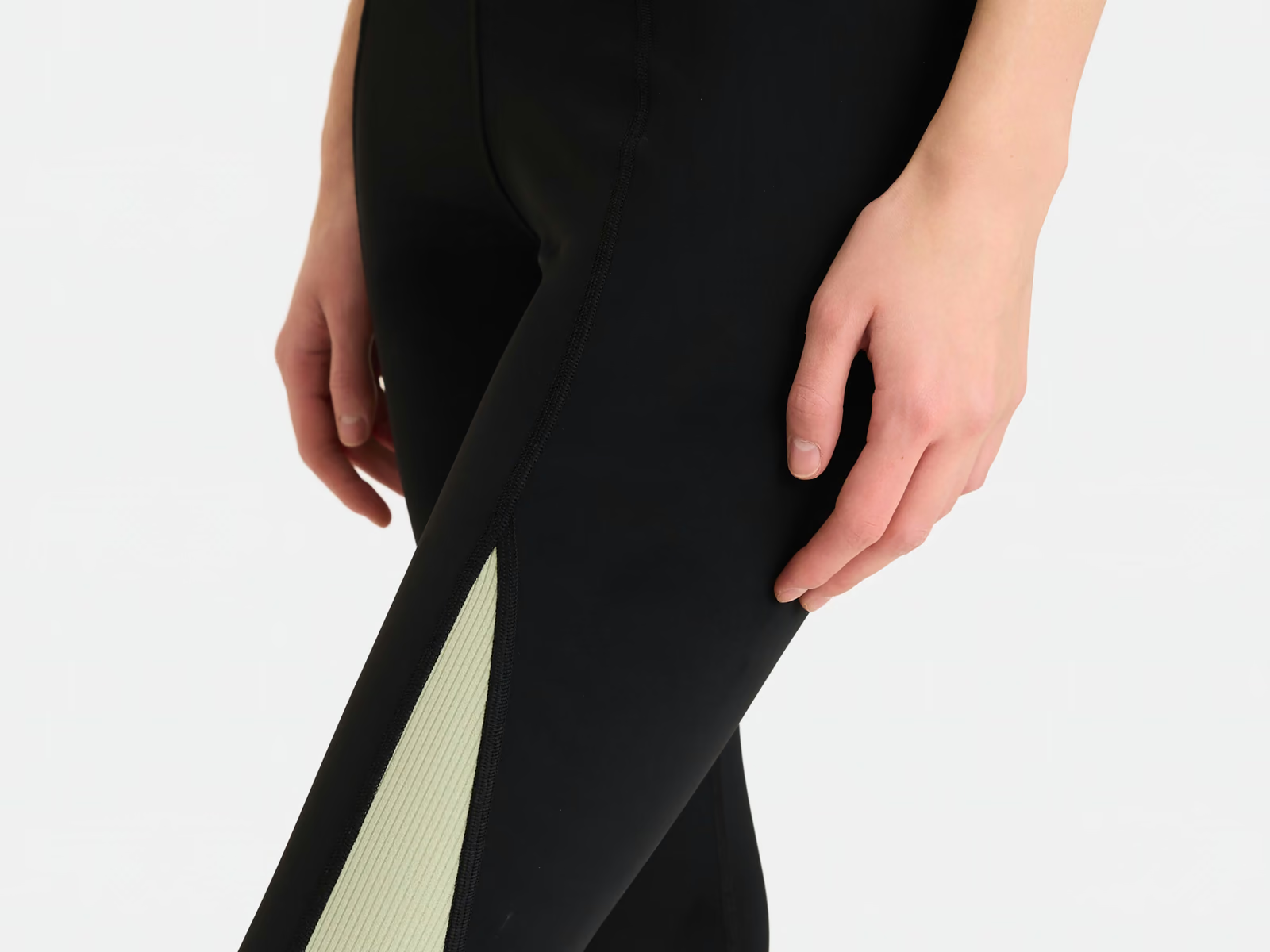
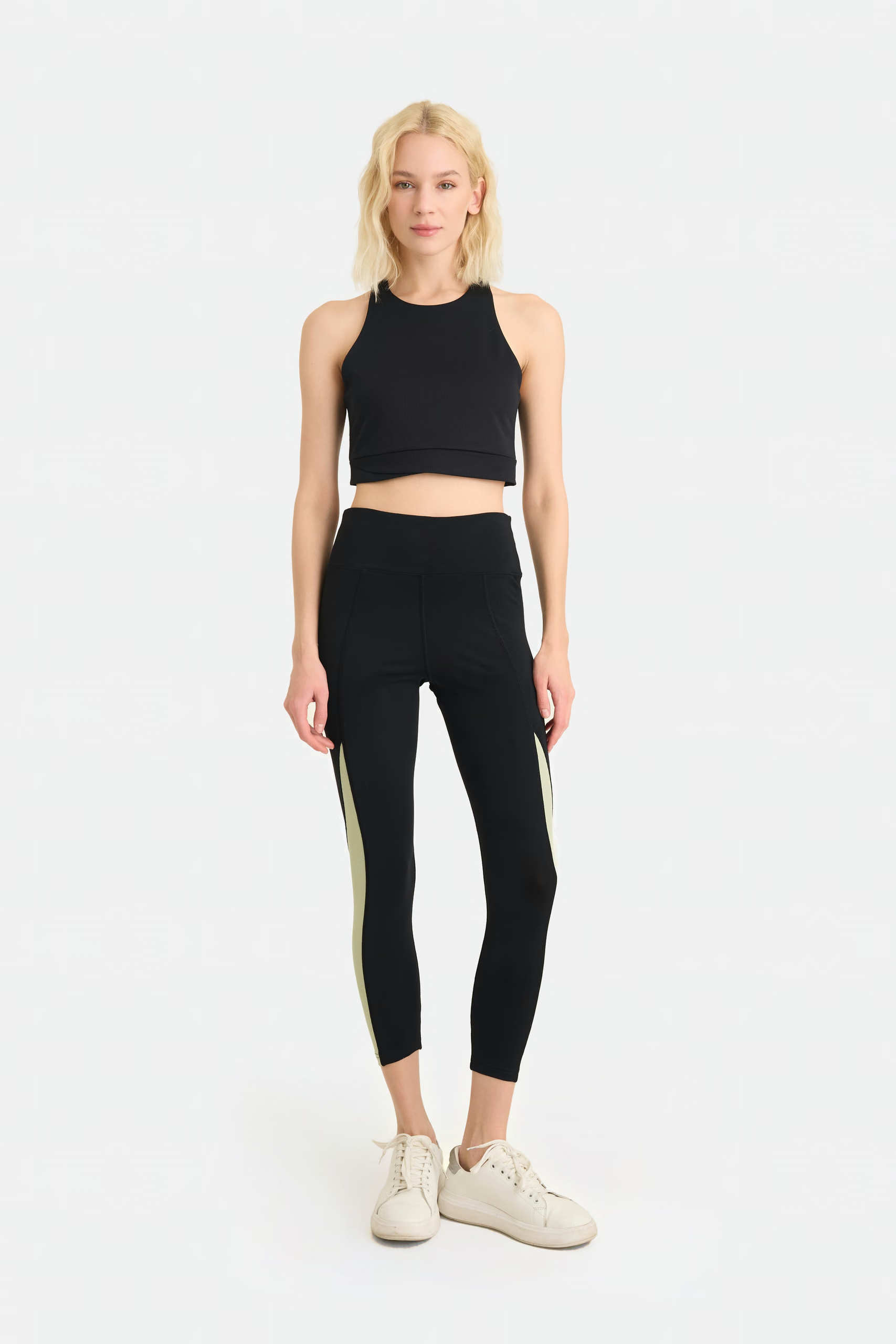
- Panelled construction. Additional shaped panels at the side, back or leg. This is how contour and colour blocking are created, and each panel is another seam to sew and align.
- Contrast or mesh inserts. Ventilation or design panels at the knee, calf or thigh, often matched to a tracksuit or training set. Each insert is a separate fabric that has to be approved for both colour and stretch, since a low-stretch insert restricts the whole garment.
The gusset
Where the two inseams and the crotch seam meet, four layers of fabric intersect at the highest-stress point of the garment. A gusset, usually a diamond or triangular panel, replaces that intersection with a smoother junction.
It improves freedom of movement, reduces the chance of seam failure and removes a pressure point in wear. It costs one extra small panel and one extra operation. For anything intended to be trained in, specify it.
Seams: flatlock and why it is used
Seams on stretch garments have to extend with the fabric. A conventional lockstitch will break under extension, so leggings are sewn on stretch-capable machines.
- Flatlock. Joins two panels edge to edge with no seam allowance standing proud, producing a flat seam that does not rub. It is the standard for performance leggings worn against the skin.
- Overlock with coverstitch. A conventional overlocked seam with the allowance topstitched flat. Slightly more visible than flatlock and generally more economical.
- Needles and thread. Ballpoint needles are used so the knit loops are displaced rather than pierced, and thread has to be chosen for extension. Why that matters on a knit is set out in thread and needles. Skipped stitches and seam grin on elastane fabric usually trace back to these settings rather than to the operator.
The waistband
The waistband is a common source of complaints alongside opacity, and there are several constructions.
| Construction | How it behaves | Suited to |
|---|---|---|
| Elastic in a folded self-fabric casing | Firm hold from the elastic, simple and reliable | Everyday and training leggings |
| Wide self-fabric waistband, no elastic | Softer hold that relies entirely on fabric recovery | High-rise styles in high-recovery fabric |
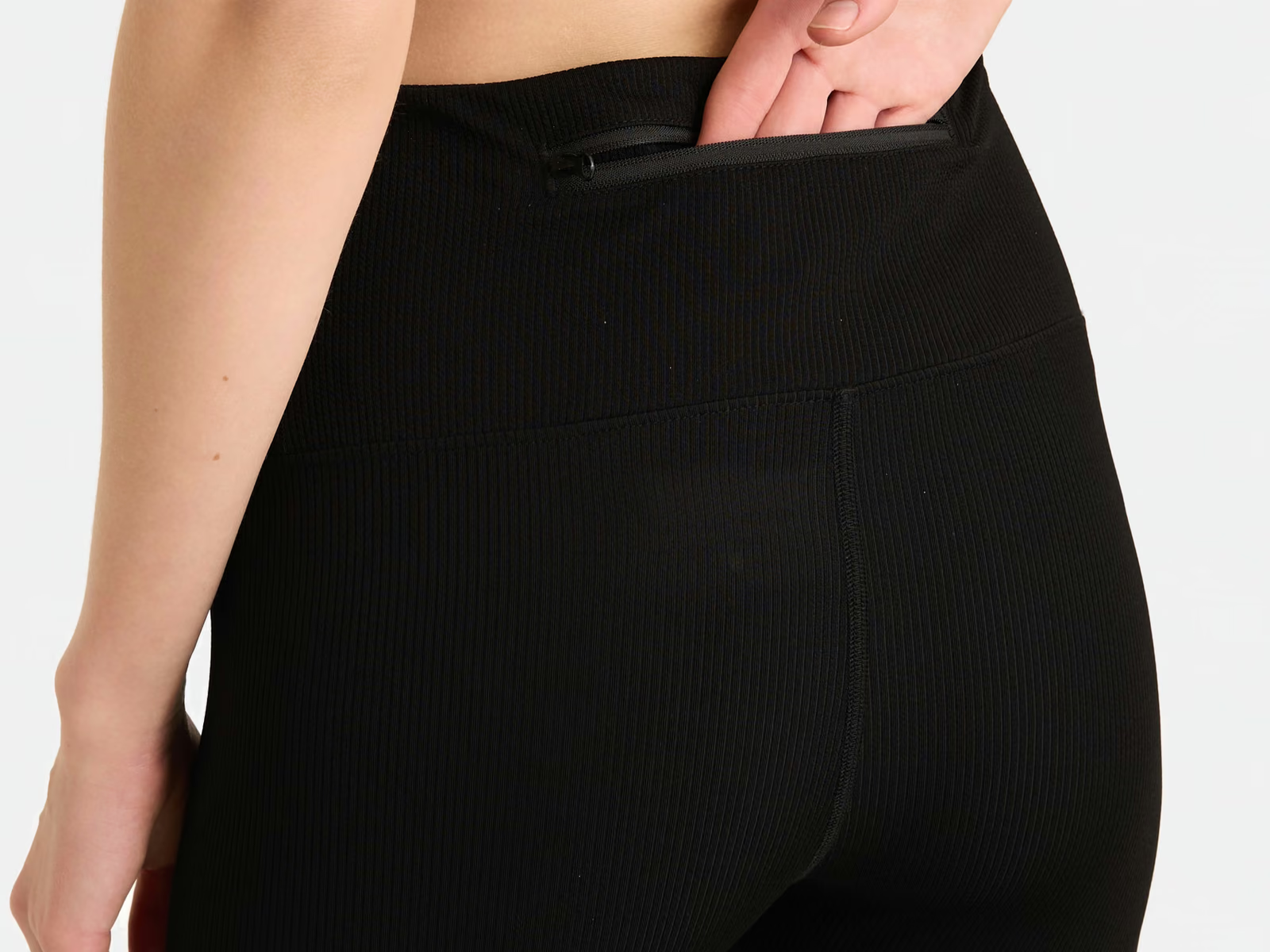
| Contoured or V-shaped waistband | Shaped to sit higher at the back, resists rolling | High-rise activewear |
| Waistband with an internal drawcord | Adjustable, useful across a wide fit range | Training and outdoor styles |
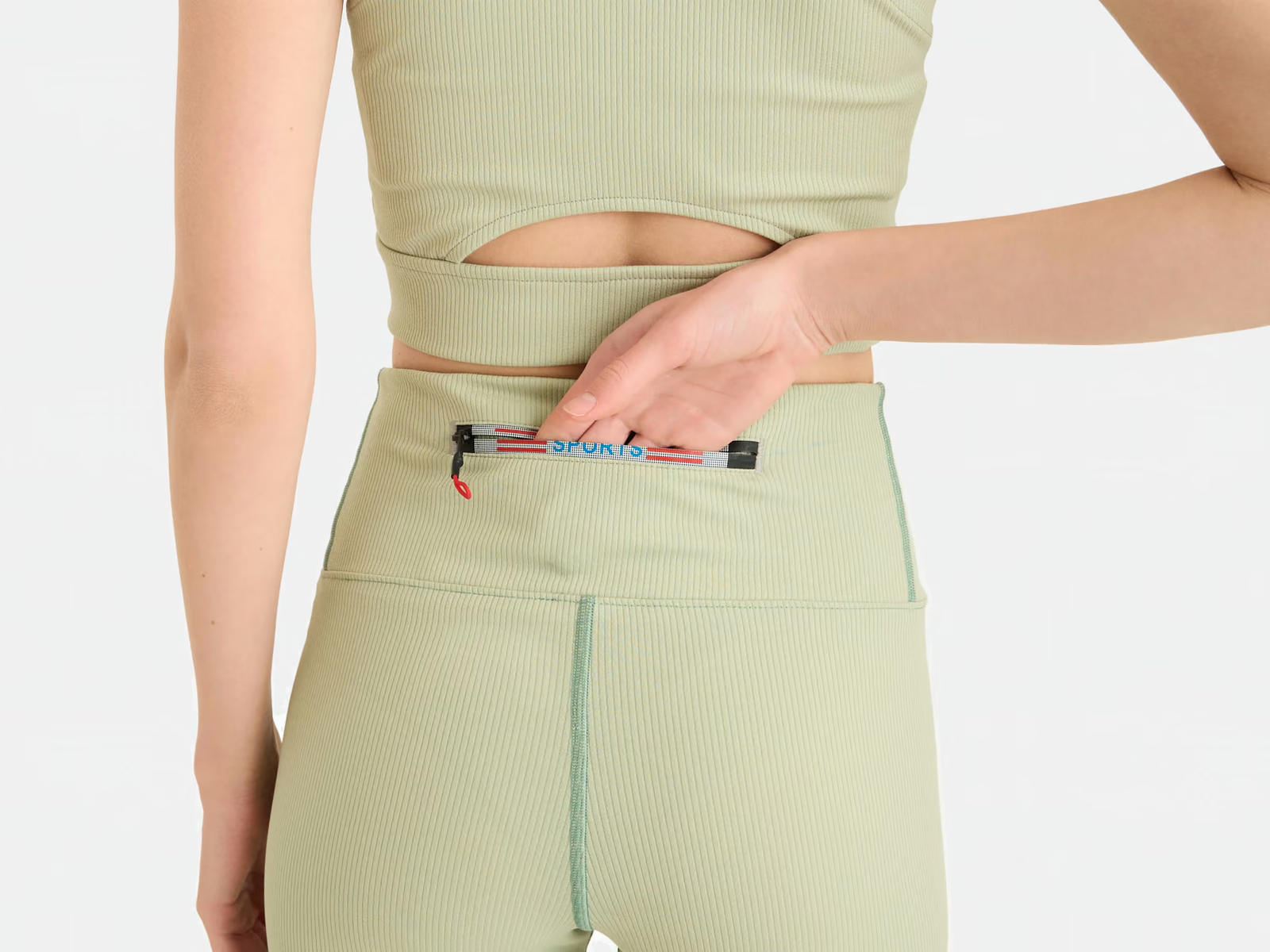
| Waistband with a hidden pocket | A small pocket set into the band for a key or card | Running and gym programmes |
Roll-down at the waist is the failure to watch for. It comes from a combination of rise, waistband height, elastic choice and fabric recovery, and it is assessed on a worn sample rather than flat.
Decoration: what works on stretch
Decoration options are narrower here than on most garments in this section, because whatever is applied must stretch with the fabric.
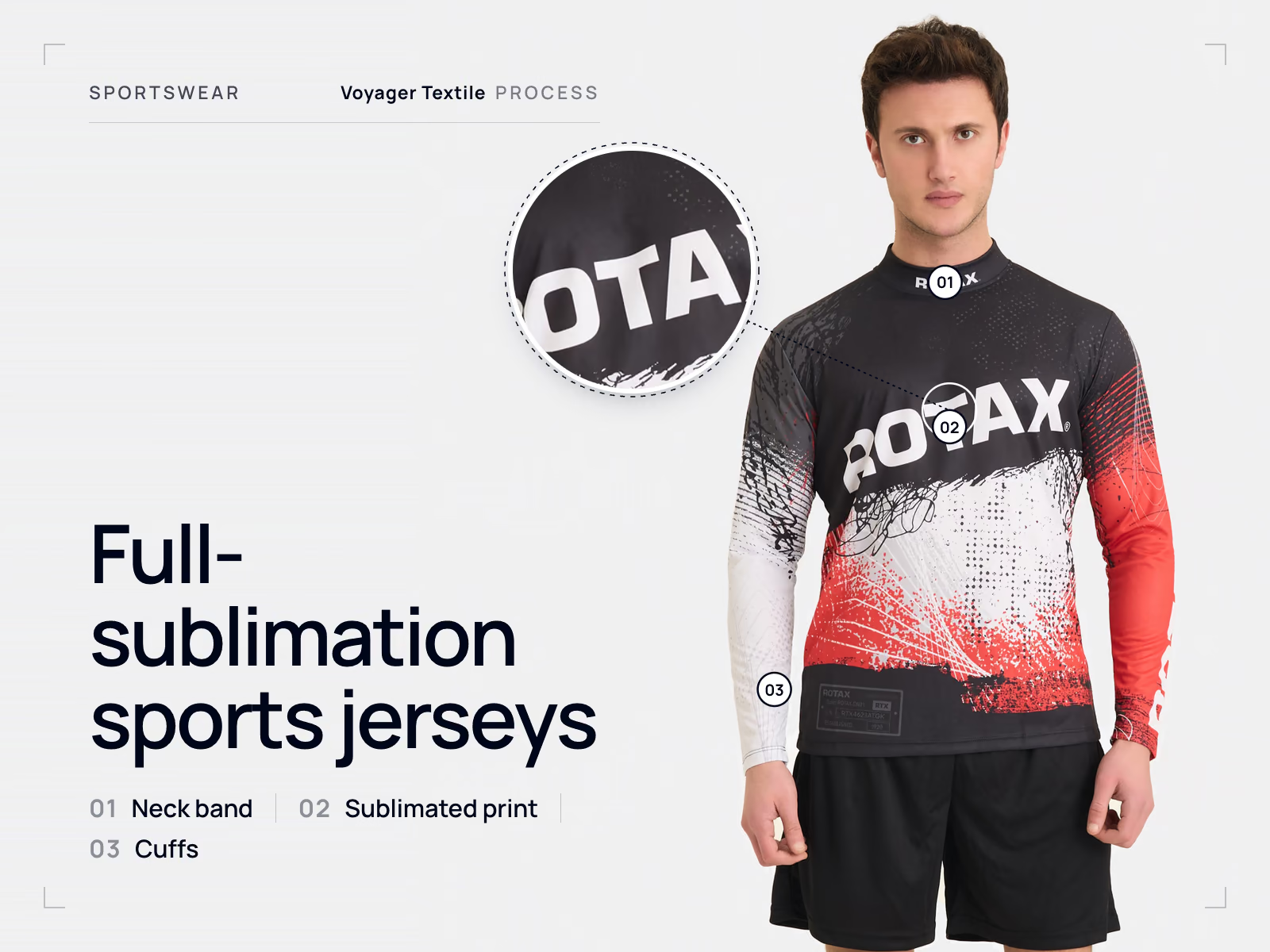
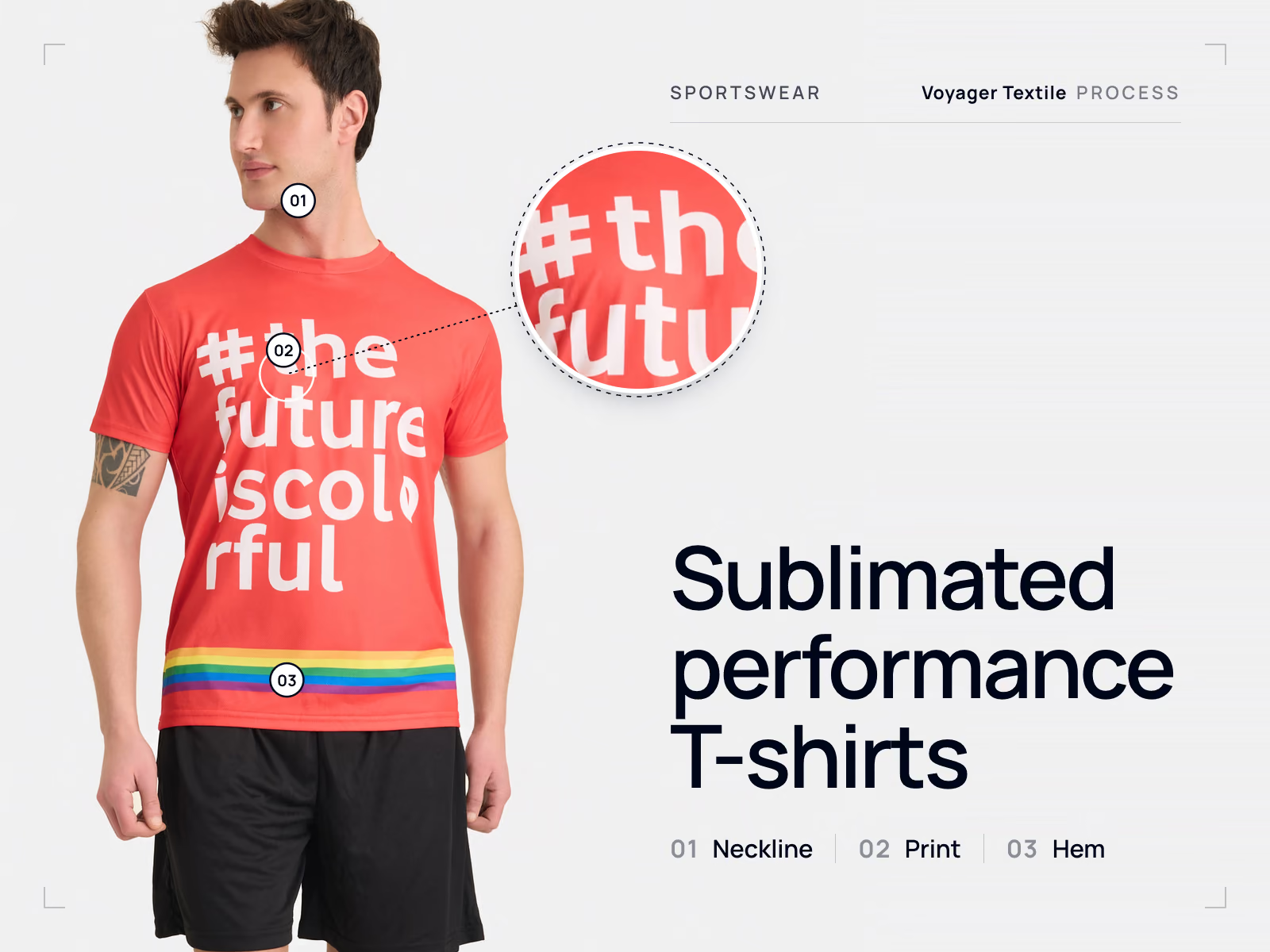
- Sublimation. The usual option for all-over designs on polyester-based fabric, printed before cutting so the pattern runs across panels. It adds no layer and cannot crack. It is not suitable on polyamide.
- Transfer printing. Works for logos and small placements, using transfer systems with enough elasticity for the fabric. A rigid transfer on a stretch panel will crack.
- Silicone or elastic prints. Designed to extend with the fabric, and often used for logos on activewear.
- Embroidery. Generally avoided on the main stretch panels, because stitching restricts extension and distorts the knit. Where it is used, it is placed on a stabilised or non-stretch area.
- Printed labels rather than woven. Woven labels at the waistband are a common irritation point, so a printed label or a heat-applied one is normally specified instead.
Assembly sequence
- Fabric is relaxed and spread without tension, since stretch fabric spread under tension produces panels that shrink back.
- Panels are cut, with any contrast or mesh inserts kept in register.
- Decoration is applied where the method requires flat fabric.
- Panels are joined: inseams, side seams where present, and any shaped panels.
- The gusset is set at the crotch intersection.
- The waistband is assembled with its elastic, drawcord or pocket, then attached.
- Hems are finished, usually coverstitched or left as a clean-cut edge on fabrics that do not fray.
- Labels are applied, the garment is inspected and packed.
Quality control: leggings-specific checks
| Check | What it catches |
|---|---|
| Opacity under stretch, in the actual colour | A common consumer complaint |
| Recovery after extension and after wear | Fabric that bags at the knee and seat |
| Waistband roll-down on a worn sample | Rise, band height and elastic mismatched |
| Seam extension without breaking | Wrong stitch type, needle or thread for the fabric |
| Skipped stitches and seam grin | Machine settings unsuited to elastane |
| Gusset alignment and symmetry | Comfort and durability at the highest-stress point |
| Measurements taken relaxed, not stretched | Inconsistent inspection results |
| Panel and print registration on sublimated styles | Design misalignment across panels |
What to put in a leggings tech pack
- Fabric: composition with elastane percentage, structure, target weight, and required stretch and recovery behaviour.
- An explicit opacity requirement, stated as a check under stretch in the actual colour.
- Rise as a measurement, and the waistband construction with band height.
- Elastic specification where used: width, type and quality.
- Panel layout: two panel, no side seam, or panelled, with any inserts.
- Gusset: required, with shape and dimensions.
- Seam type per seam: flatlock, or overlock with coverstitch.
- Hem finish and leg length, including any cropped or 7/8 length.
- Measurements in the relaxed state with tolerances.
- Decoration method, artwork and placement, with confirmation that it will extend with the fabric.
- Label type, with printed labels specified where a woven label would irritate.
Sampling
Leggings must be sampled worn. Flat measurements confirm the pattern, but opacity, recovery, waistband roll-down and seam comfort can only be assessed on a body in movement. Ask for the sample in the actual bulk fabric, since a substitute knit with different elastane content tells you nothing useful.
Where the programme allows, wash and re-check the sample. Recovery after washing is what determines whether the garment still fits in three months, and it is cheap to test before bulk. The general stages are covered in the sampling guide.
Before you send a leggings RFQ
- Fabric composition and elastane percentage
- Target weight and required opacity
- Rise and waistband construction
- Panel layout and any contrast or mesh inserts
- Gusset required or not
- Seam type preference
- Leg length and hem finish
- Size range and split, with relaxed measurements
- Decoration method and artwork
- Label preference, printed or woven
- Quantity per colour and expected reorders
Leggings references produced by Voyager Textile
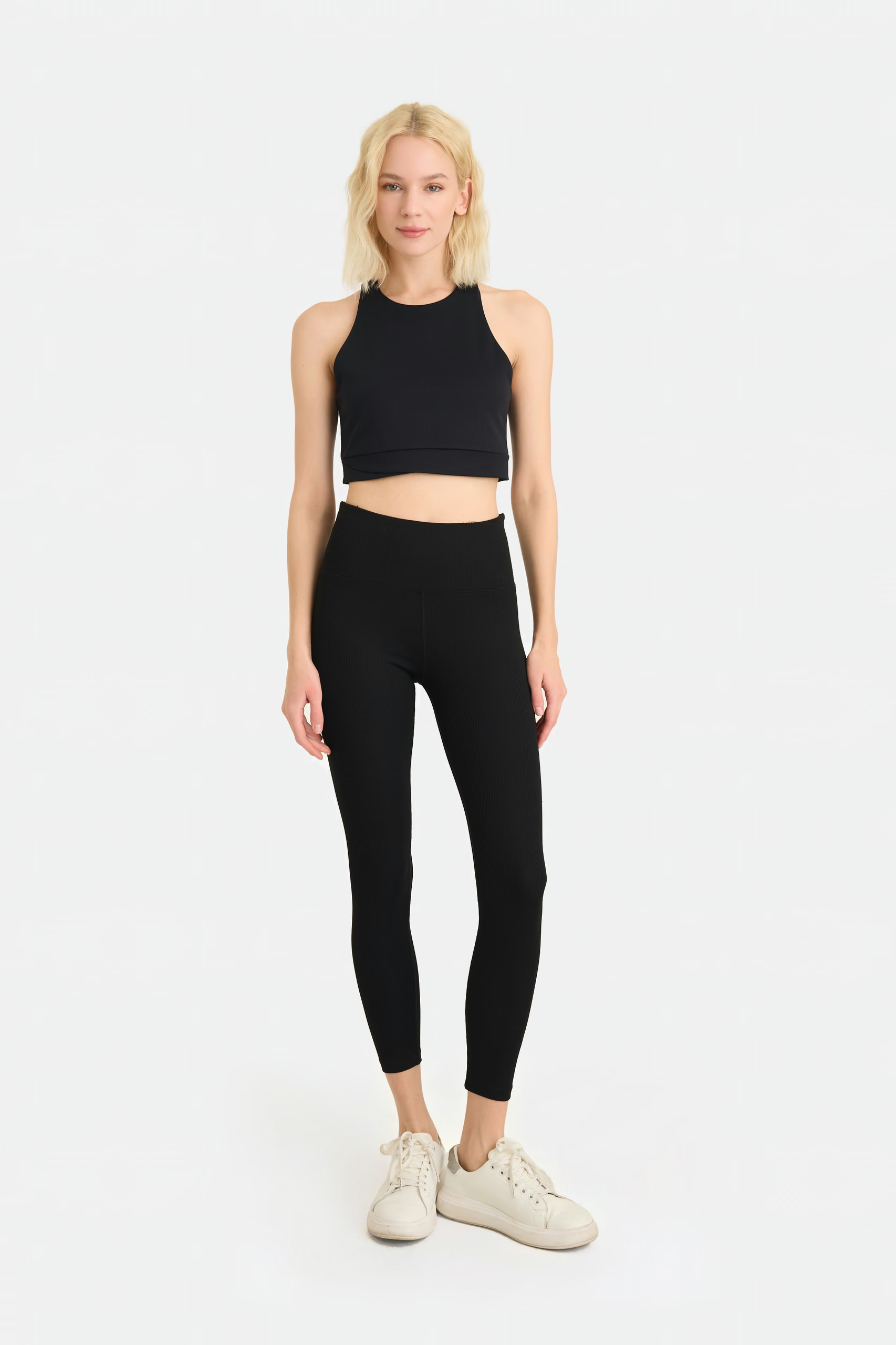
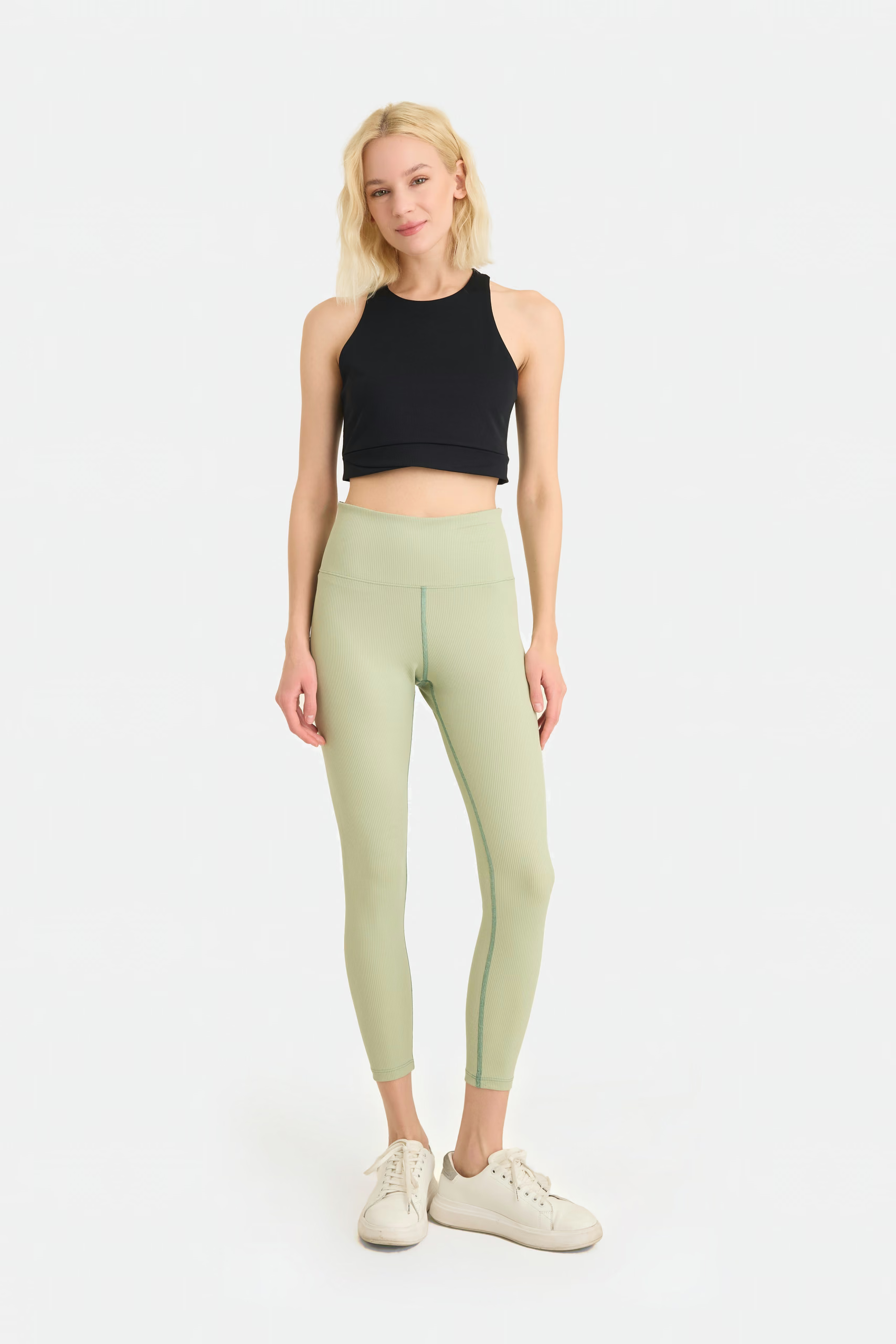
Produced to customer specification, including panelled constructions.
Buyer questions
What fabric is used for leggings?
Four-way stretch knits with elastane. Polyester and elastane blends around 170 to 220 g/m² are common and print well; polyamide and elastane blends around 200 to 250 g/m² and upwards have a softer hand and high recovery. Cotton and elastane jersey suits lounge use but has lower recovery for training.
What makes leggings opaque when stretched?
Knit structure, yarn and fabric density together, not weight alone. A denser interlock or a higher elastane content will usually hold opacity better than a lighter jersey at the same GSM. Always test opacity on stretched fabric in the actual colour, since light and mid shades are where it fails.
What is a gusset and do leggings need one?
A gusset is a small panel at the crotch that replaces the point where the inseams and crotch seam would otherwise meet. It improves movement, reduces the risk of seam failure at the highest-stress point and removes a pressure point in wear. For training leggings it is worth specifying.
What is a flatlock seam?
A seam that joins two panels edge to edge with no allowance standing proud, so the join lies flat against the skin. It is standard on performance leggings because it does not rub. The alternative is an overlocked seam topstitched flat, which is more economical and slightly more visible.
Why do leggings roll down at the waist?
Because the rise, waistband height, elastic and fabric recovery are not working together. It cannot be judged on a flat sample: assess it on a worn sample, and consider a contoured waistband that sits higher at the back if it is a recurring issue.
Can leggings be embroidered?
Generally not on the main stretch panels, because stitching restricts extension and distorts the knit. Logos are usually applied as elastic transfers or silicone prints, or sublimated into the fabric before cutting on polyester-based styles.
Can leggings be produced with an all-over print?
Yes, on polyester-based fabrics, using sublimation where the fabric is printed before cutting so the design runs across panels. It is not possible on polyamide fabrics, which is one of the trade-offs when choosing between the two fibre routes.
How should leggings measurements be recorded?
In the relaxed state, flat and unstretched, with tolerances. Stretch garments cannot be measured consistently under tension, and a chart that does not state the condition will produce disagreements at inspection.
What is the minimum order for custom leggings?
At Voyager Textile, the minimum is 300 pieces per colour and per style, including sublimated designs. Sizes can be split within the 300.
Ordering this garment from Voyager Textile
- Every garment is made to order, to your own design.
- The minimum order is 300 pieces per colour and per style. Sizes can be split inside the 300, and a custom Pantone colour carries the same minimum of 300 pieces. Polyester-based fabrics are assessed separately.
- A sample takes 5–7 business days. Bulk production takes 4–5 weeks after sample approval; development, sampling and shipping are additional.
- Cutting, sewing, embroidery, transfer printing and sublimation printing are done in our own factory in Türkiye. Screen printing and garment washing are coordinated with partner facilities.
Quantities, timing and any open point are confirmed per project at the quotation stage, once we have your specification or tech pack.
Request a quoteDeveloping leggings or an activewear set?
Send the fabric requirement, rise, waistband construction and any panel design. We sample in the actual bulk fabric and assess opacity and recovery on a worn sample before bulk.
Send a leggings brief