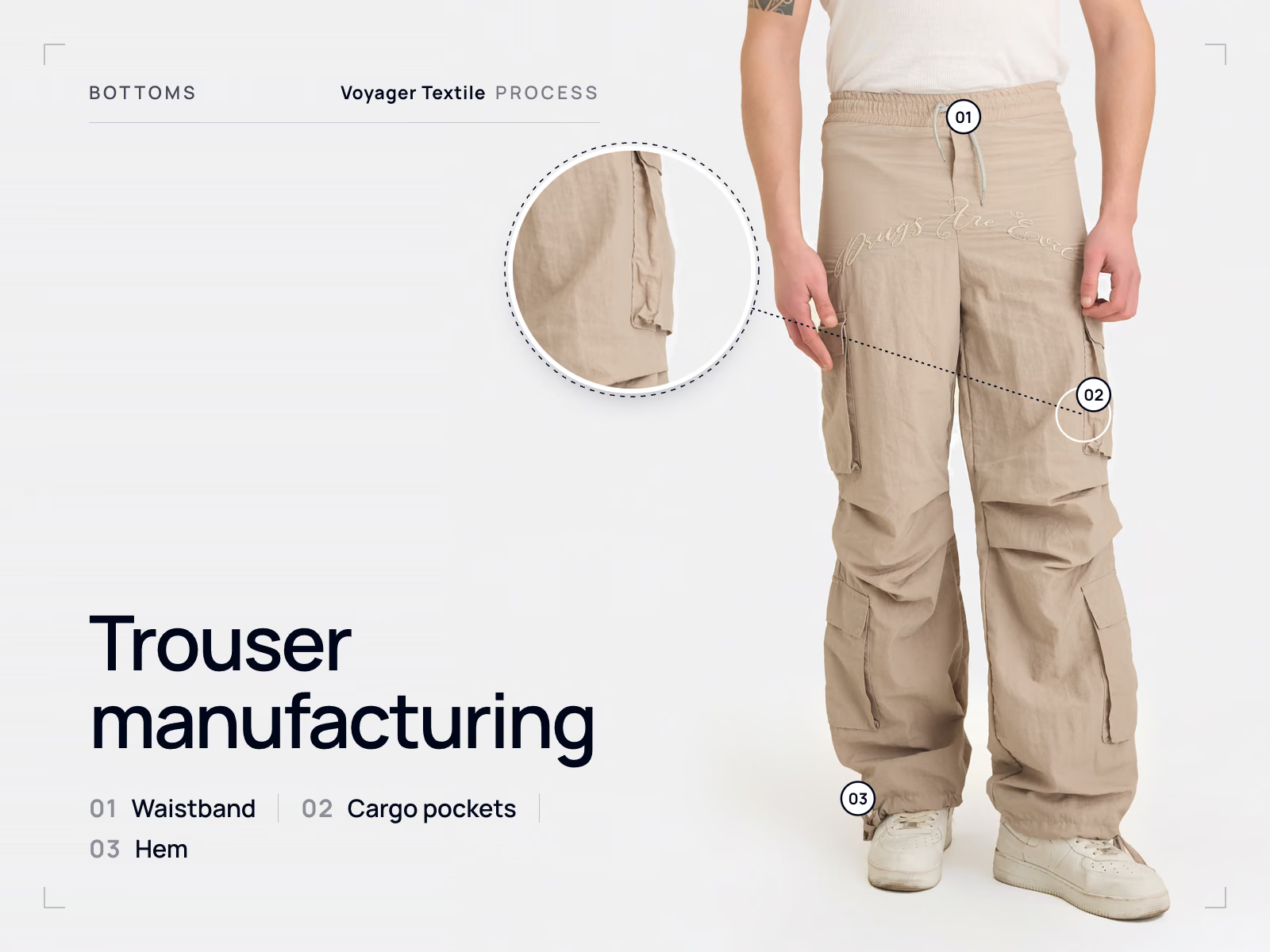
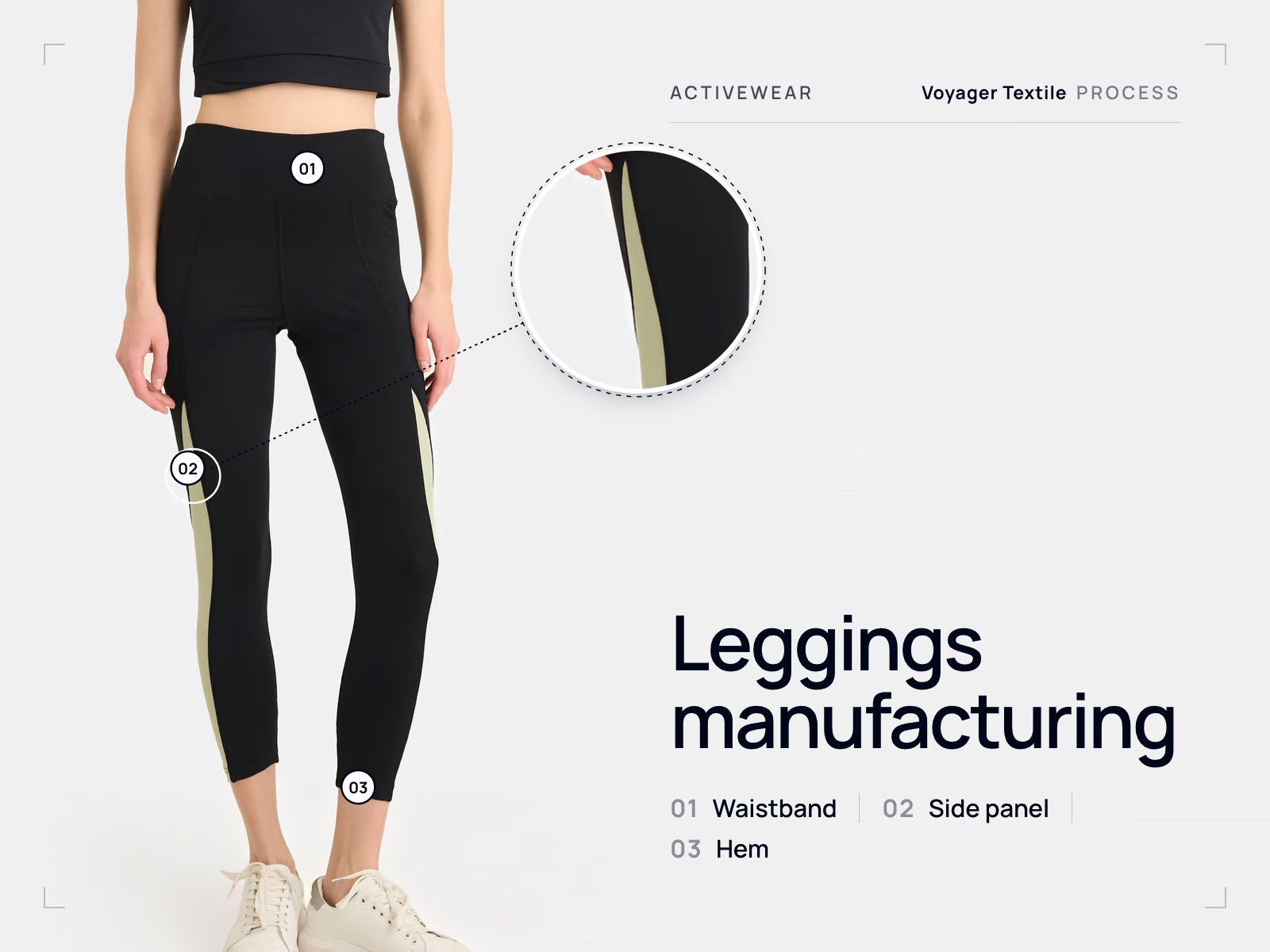
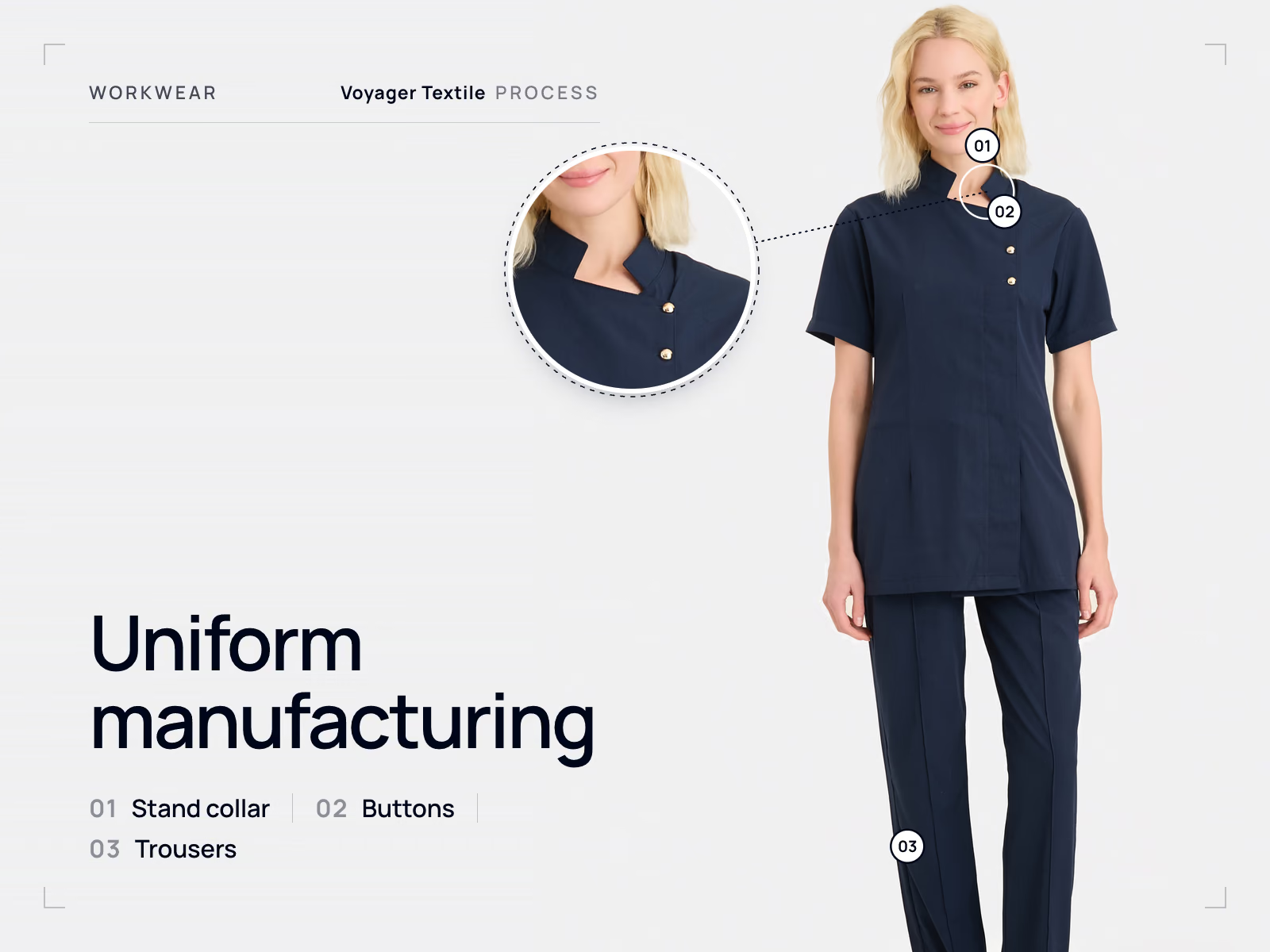
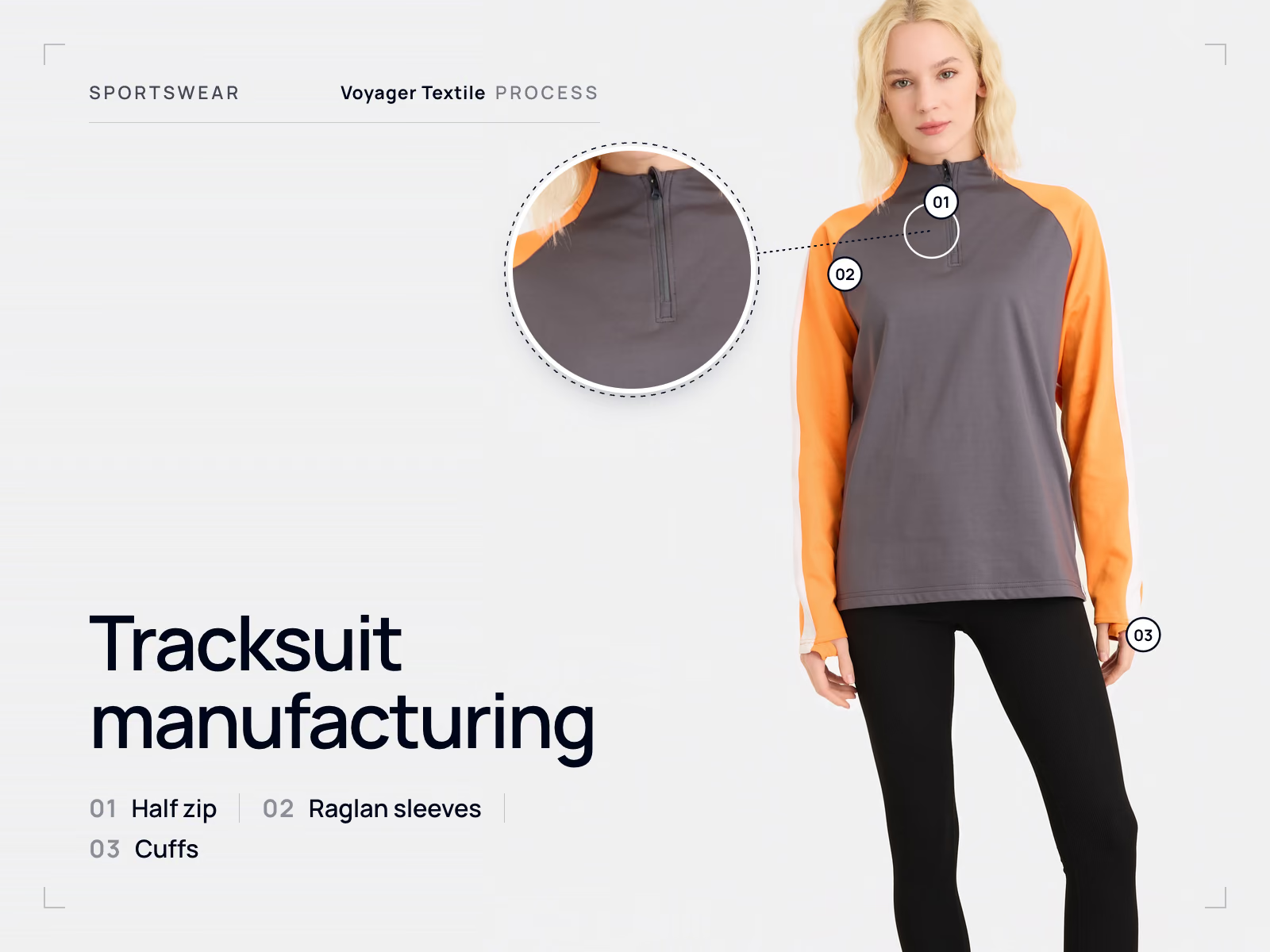
Woven bottoms
Skirt Manufacturing Process
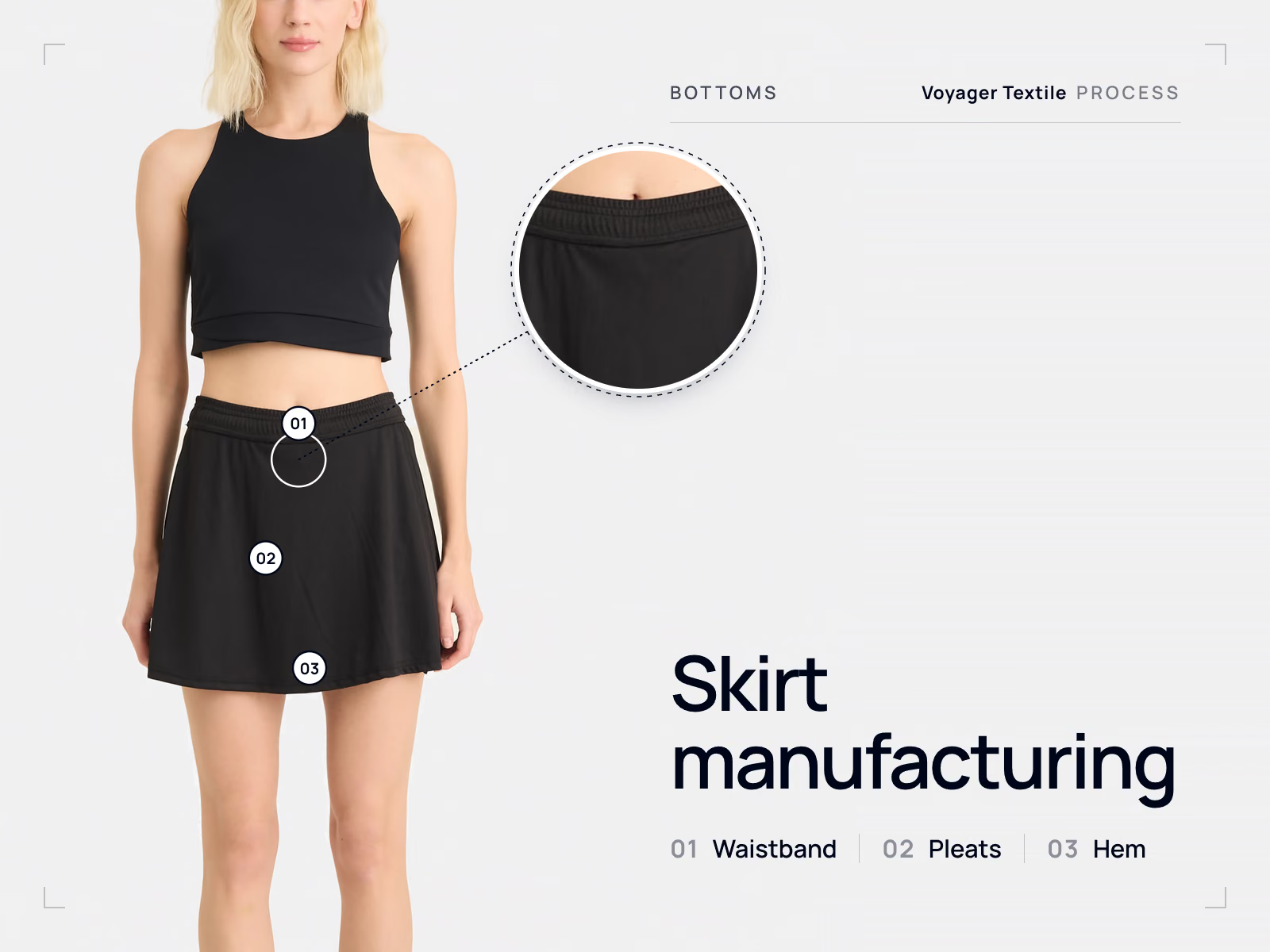
A skirt is a short garment with a long list of decisions: silhouette, waist treatment, closure, lining, pleats and hem. Pattern balance is what makes it hang level, pleat setting is what keeps a pleated skirt looking new, and pressing is a construction step rather than a finishing one.
Contents
Skirts have fewer operations than trousers and more ways to go wrong visually. There is no second leg to compare against, so any imbalance in the pattern shows immediately: a hem that rises at the back, a side seam that swings forward, a pleat set that opens unevenly. This page follows the construction and points out where balance is won or lost.
Skirt production sequence
Silhouette decides everything downstream
| Silhouette | Pattern character | Production consequence |
|---|---|---|
| Straight or pencil | Follows the hip, minimal flare | Needs a vent or slit for walking room; fit is unforgiving |
| A-line | Widens gradually from the hip | Forgiving fit, straightforward hemming |
| Flared or circle | Cut with substantial sweep | Fabric consumption rises sharply; hems need hanging time before levelling |
| Pleated | Fullness controlled by folds | Pleat setting and alignment become the main quality issue |
| Wrap | Overlapping front panels with a tie or fastening | Overlap depth and closure security must be specified |
| Sports skirt or skort | Outer skirt with an integrated inner short or legging | Two garments in one; the inner layer needs its own fit and fabric |
Pattern balance
Balance is the relationship between the front and the back of the pattern, and it is what makes a skirt hang level on a body rather than on a table. The back usually needs slightly more length and shaping than the front, because the body is not symmetrical front to back.
- Waist to hip. The measurement relationship that decides whether the skirt sits smoothly or pulls diagonal creases from the hip.
- Front and back length. State them separately. A hem specified as one figure will usually rise at the back on a fitted skirt.
- Hem sweep. The finished circumference, which decides walking room on straight shapes and drape on flared ones.
- Grain. On flared and circle skirts, panels behave differently on straight grain and on bias, and the hem drops unevenly if the grain is not controlled.
Fabric
| Fabric route | Typical composition | Indicative weight | Suited to | Consideration |
|---|---|---|---|---|
| Gabardine and twill | Cotton, polyester blends, sometimes with elastane | Around 200 to 300 g/m² | Tailored, A-line and pencil skirts, uniform programmes | Holds shape and takes a pressed edge well |
| Crepe and lighter wovens | Polyester or viscose blends | Around 120 to 200 g/m² | Fluid, drapey silhouettes | Usually needs lining for opacity and comfort |
| Poplin and shirting weights | Cotton or blends | Around 110 to 160 g/m² | Light summer and wrap skirts | Check opacity in pale colours |
| Ponte and stable knits | Polyester or viscose with elastane | Around 250 to 320 g/m² | Pull-on and comfort-fit skirts | Stable enough to behave like a woven while stretching |
| Polyester with elastane | Polyester with roughly 5 to 15% elastane | Around 170 to 240 g/m² | Sports skirts and skorts | Pleats can be heat-set permanently on polyester |
| Denim | Cotton, sometimes with elastane | Around 8 to 12 oz | Casual A-line and straight skirts | Heavier hems and seams; specify topstitching |
Pleats and how they are set
Pleating is an area where fibre choice has a direct consequence, and it is worth understanding before a design is finalised.
- Pleat type. Knife pleats all fold in one direction, box pleats fold away from each other, and inverted pleats fold towards each other. Each gives a different volume and a different fabric consumption.
- Pleat depth and spacing. Specify both as measurements. They determine how much fabric the skirt consumes, which is often more than buyers expect on a fully pleated style.
- Setting on synthetics. Polyester and polyester-rich fabrics can be heat set, so the pleats are effectively permanent and survive washing.
- Setting on natural fibres. Cotton, viscose and wool do not hold heat-set pleats in the same way. Pleats in those fabrics are usually stitched down for part of their length, or accepted as requiring pressing after washing. Say which you expect.
- Stitched-down pleats. Held with topstitching from the waist to the hip, which keeps the skirt flat over the body and lets the pleats open below.
Waist treatment and closure
- Separate waistband. Interlined so it holds its shape, straight or contoured. A contoured band sits better on a fitted skirt.
- Facing instead of a band. A cleaner line at the waist, faced on the inside, used on tailored and minimal designs.
- Elasticated waist. Full elastic in a casing for pull-on styles, or elastic at the back only with a flat front for uniform and service skirts.
- Closure. A concealed zip at the centre back is the tailored standard; a side zip is common on fitted styles; a wrap uses ties or a fastening; a pull-on style needs no closure at all but requires enough stretch or sweep to pass the hip.
- Zip quality. A concealed zip must lie flat and invisible, which depends on both the zip and the sewing. It is one of the details buyers notice most on a sample.
Lining
Lining is specified for three reasons: opacity, comfort against the skin, and to help the shell hang without clinging. It is not automatic, and it should be a deliberate decision rather than an assumption.
- Choose the lining fabric for slip and breathability, not only for colour.
- The lining is normally cut slightly shorter than the shell so it never shows at the hem.
- It is usually attached at the waist and left hanging free at the hem, so the two layers can move independently.
- On a slit or vent, decide whether the lining follows the opening or stops above it.
- For sports skirts, the inner layer is a functional short or legging rather than a lining, with its own fabric and fit.
Slits, vents and hems
A straight skirt needs walking room, provided by a slit or a vent. Both need a reinforcement at the top of the opening, because that is the point where the fabric tears when the wearer takes a long stride. State the height of the opening as a measurement.
Hem construction follows the shape. A straight hem can take a deep turned hem, which adds weight and helps it hang. A curved or flared hem needs a narrow hem, because a deep fold cannot lie flat on a curve. A blind hem gives an invisible finish on tailored skirts; a machine-stitched hem is faster and visible.
Assembly sequence
- Panels are cut on grain, with lining cut at the same time where used.
- Darts are formed and pleats are set or stitched down.
- Side and back seams are closed, leaving the closure opening.
- The zip is inserted, or the elastic casing is prepared on pull-on styles.
- The waistband or facing is attached and finished.
- The lining is assembled and attached at the waist.
- The skirt is hung so any bias sections settle, then the hem is levelled.
- The hem is finished, the garment is pressed, measured and inspected.
Pressing
Skirts are pressed during construction as well as at the end: seams pressed open, waistbands and facings pressed as they are built, pleats set and pressed. On a pleated skirt the pressing is the product, and pressing quality is a specification item rather than a finishing detail.
Quality control: skirt-specific checks
| Check | What it catches |
|---|---|
| Hem level on a form or model | Pattern imbalance and bias drop on flared shapes |
| Pleat depth, spacing and alignment | Drift across a pleated run |
| Pleat retention after a wash test | Pleats set on a fibre that will not hold them |
| Concealed zip lying flat and invisible | Zip insertion quality, one of the most visible faults |
| Waistband flatness and interlining | A band that folds over or twists in wear |
| Lining length and free hanging | A lining that shows at the hem or drags the shell |
| Slit or vent reinforcement | Tearing at the top of the opening |
| Side seam position on a body | A skirt that swings forward or twists |
What to put in a skirt tech pack
- Silhouette, with a sketch and reference images.
- Fabric: composition, weave or knit structure, weight, and lining fabric where used.
- Waist, hip, front length, back length and hem sweep, with tolerances.
- Waist treatment: band, facing or elastic, with height and interlining.
- Closure: type, position and length.
- Pleats: type, depth, spacing, and whether they are heat set or stitched down.
- Slit or vent: position, height and reinforcement.
- Lining: fabric, length relative to the shell, and attachment.
- Hem: type and depth.
- Inner short or legging where the skirt is a sports style, with its own fabric and fit.
- Pressing requirements, particularly for pleated styles.
- Labels and packing.
Sampling
Sample on a body, and look at the side seam from the side rather than the front. A skirt that measures correctly can still swing forward if the balance is wrong, and that is invisible flat. Walk in it: a straight skirt with an under-specified slit is comfortable standing still and unwearable in practice.
For pleated styles in natural fibres, wash-test the sample and look at the pleats afterwards. It is the reliable way to know whether the pleats will survive the customer's laundry.
Before you send a skirt RFQ
- Silhouette and a reference image or garment
- Fabric preference, or the drape and structure you want
- Front and back length, and hem sweep
- Waist treatment and closure type
- Pleat type, depth and spacing if pleated
- Whether pleats must survive washing
- Lining required or not
- Slit or vent height
- Inner short for a sports skirt, if applicable
- Size range, split and measurement chart
- Quantity and packing requirements
Skirt references produced by Voyager Textile
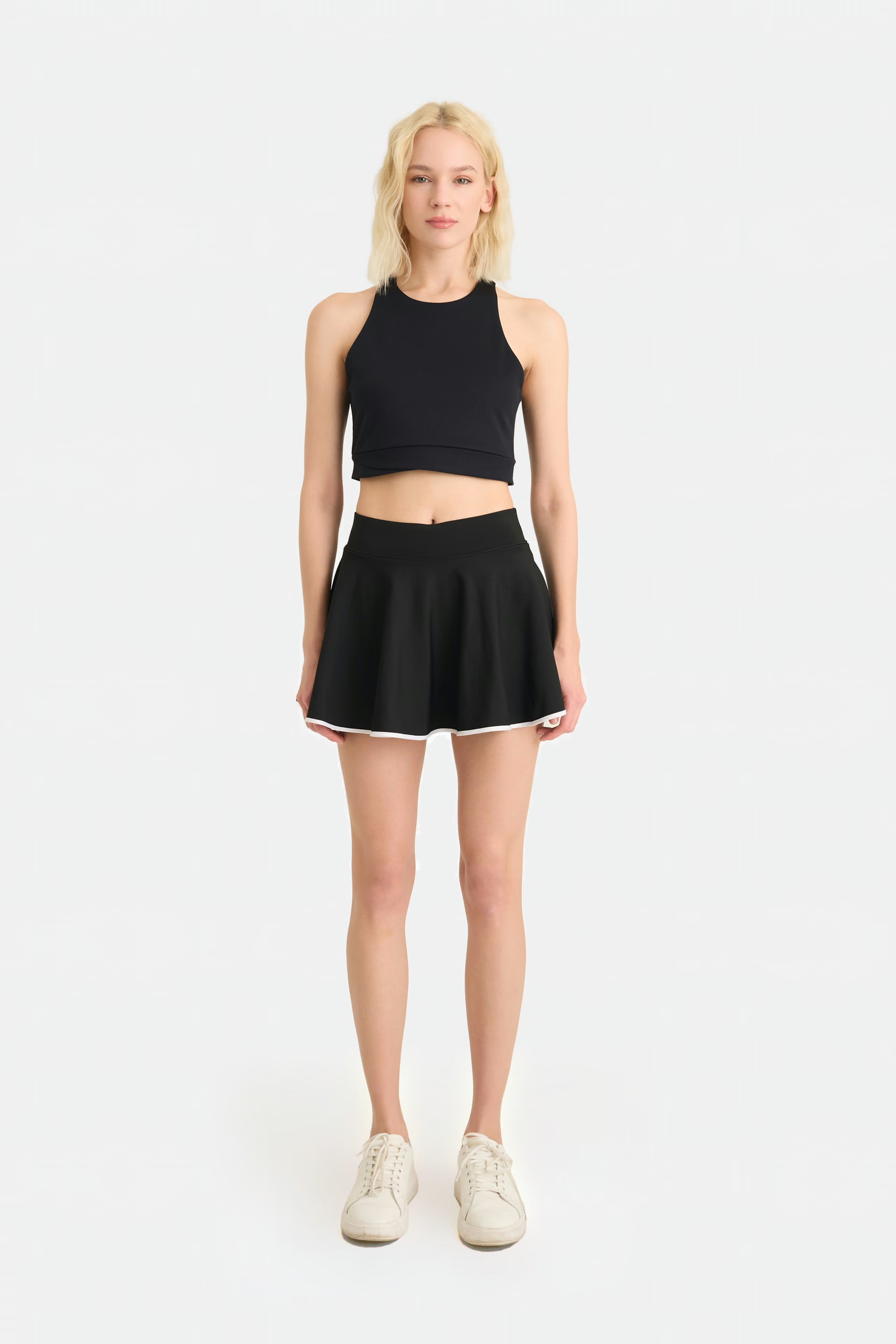
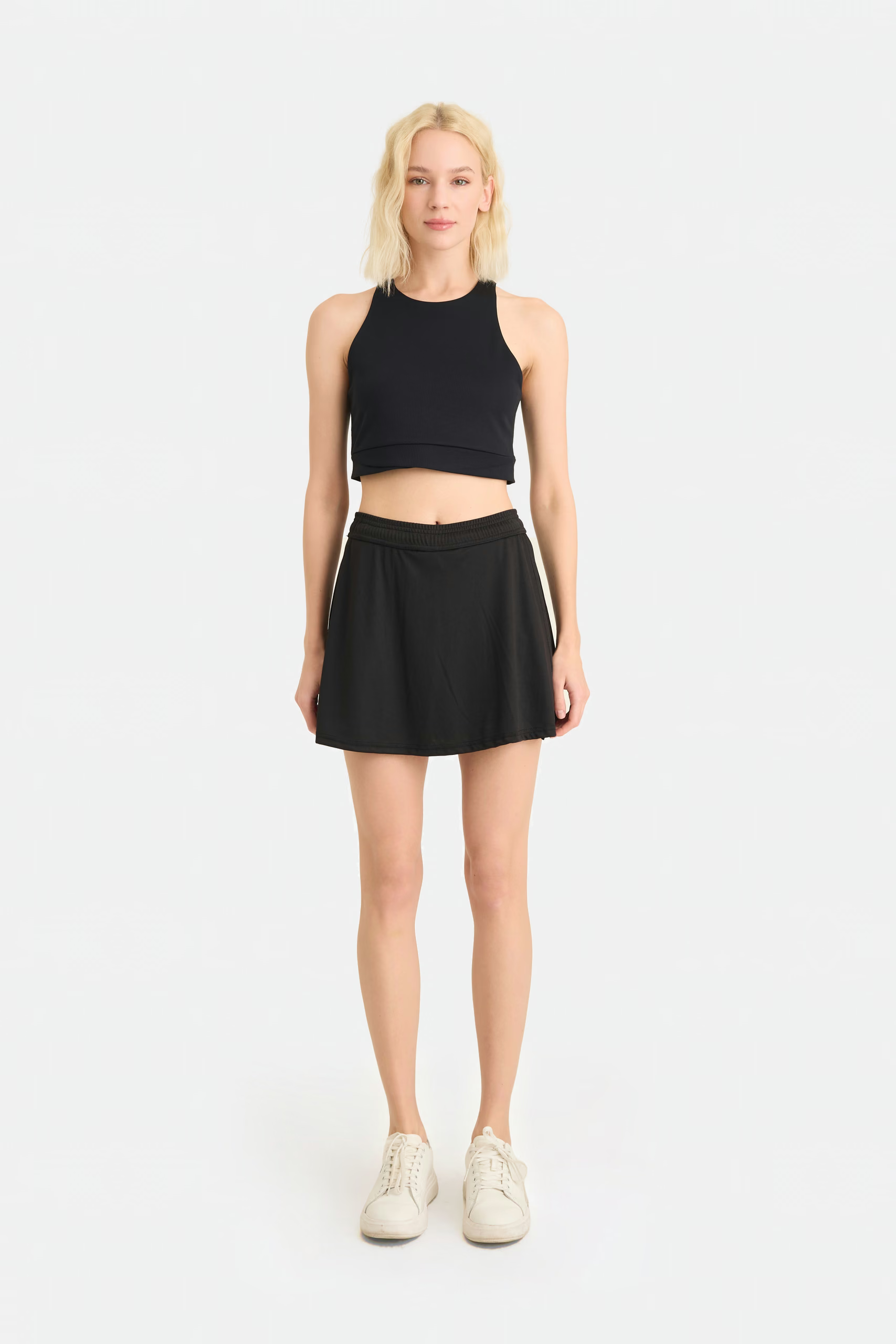
Produced to customer specification, including pleated and flared sports constructions.
Buyer questions
How is a skirt manufactured?
Panels are cut on grain with the lining where used, darts and pleats are formed, side and back seams are closed leaving the closure opening, the zip or elastic waist is fitted, the waistband or facing is attached, the lining is set at the waist, and the skirt is hung before the hem is levelled, finished and pressed.
Why does a skirt hem look uneven on the sample?
Usually because the flared or bias sections have not finished dropping, or because the pattern is unbalanced front to back. Factories hang assembled skirts before levelling the hem for exactly this reason. If it persists after hanging, the balance needs correcting in the pattern.
Can pleats be made permanent?
On polyester and polyester-rich fabrics, pleats can be heat set so they survive washing. Cotton, viscose and wool do not hold heat-set pleats in the same way, so pleats in those fibres are usually stitched down for part of their length or accepted as needing pressing after washing.
Does a skirt need lining?
Not always. Lining is specified for opacity, for comfort against the skin, and to stop a shell fabric clinging. Light, fluid and pale fabrics usually need it; a heavier twill or a knit skirt often does not.
What closure is best for a skirt?
A concealed zip at the centre back is the tailored standard and gives the cleanest line. A side zip suits fitted styles, a pull-on elasticated waist suits service and casual skirts, and a wrap uses ties. The choice affects the pattern, so it is decided before sampling.
How much fabric does a pleated skirt use?
Considerably more than an unpleated one, because every pleat folds fabric back on itself. Pleat depth and spacing decide how much, which is why they should be specified as measurements rather than described. It is the main reason pleated styles are quoted higher.
How is a sports skirt or skort constructed?
As two garments in one: an outer skirt with an integrated inner short or legging, each with its own fabric and fit. The inner layer is specified separately, including its own leg length and waist attachment, since it does the functional work.
What are common skirt fit problems?
A waist-to-hip relationship that does not suit the intended wearer, which shows as diagonal creases from the hip, and a back length that is too short, which makes the hem rise at the back. Both are pattern balance issues and both are visible only on a body.
Ordering this garment from Voyager Textile
- Every garment is made to order, to your own design.
- The minimum order is 300 pieces per colour and per style. Sizes can be split inside the 300, and a custom Pantone colour carries the same minimum of 300 pieces. Polyester-based fabrics are assessed separately.
- A sample takes 5–7 business days. Bulk production takes 4–5 weeks after sample approval; development, sampling and shipping are additional.
- Cutting, sewing, embroidery, transfer printing and sublimation printing are done in our own factory in Türkiye. Screen printing and garment washing are coordinated with partner facilities.
Quantities, timing and any open point are confirmed per project at the quotation stage, once we have your specification or tech pack.
Request a quoteDeveloping a skirt?
Send the silhouette, fabric direction and any pleat or lining requirements, or a reference skirt you want matched. We sample on a body so balance and hang can be judged before bulk.
Send a skirt brief