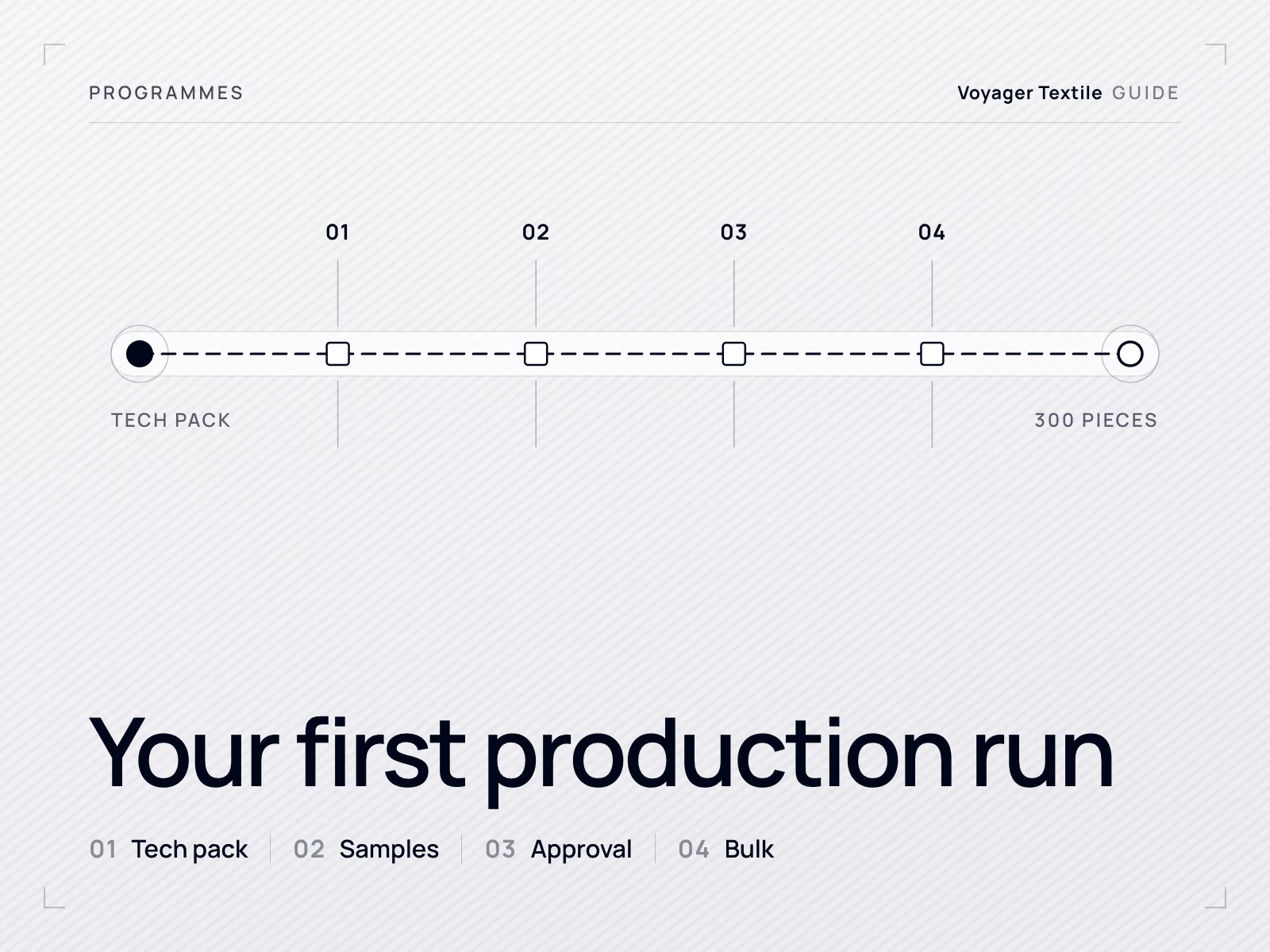
Specification, sampling and quality
Pattern Making and Size Grading for Bulk Apparel
Agree the measurements, tolerances, graded size chart and sample approval process before production. Confirm who supplies, reviews and approves the patterns. These records, together with fit checks in the intended fabric, support consistent production across sizes and reorders.
Contents
- Pattern, specification and sample: who owns what
- Points of measure: the language of fit
- Tolerances: defining acceptable variation
- Grading: sizes are not scaled copies
- Fit intent has to be stated
- Fabric behaviour changes the pattern
- Size labelling across markets
- What to approve, in order
- Keeping fit stable over time
- Questions buyers ask
Fit problems can arise from the specification, pattern, fabric, cutting, sewing or finishing. Before production, agree measurement methods, grading rules and tolerances, then verify them through sample and fit review. Investigate production deviations against those records instead of assuming a single cause.
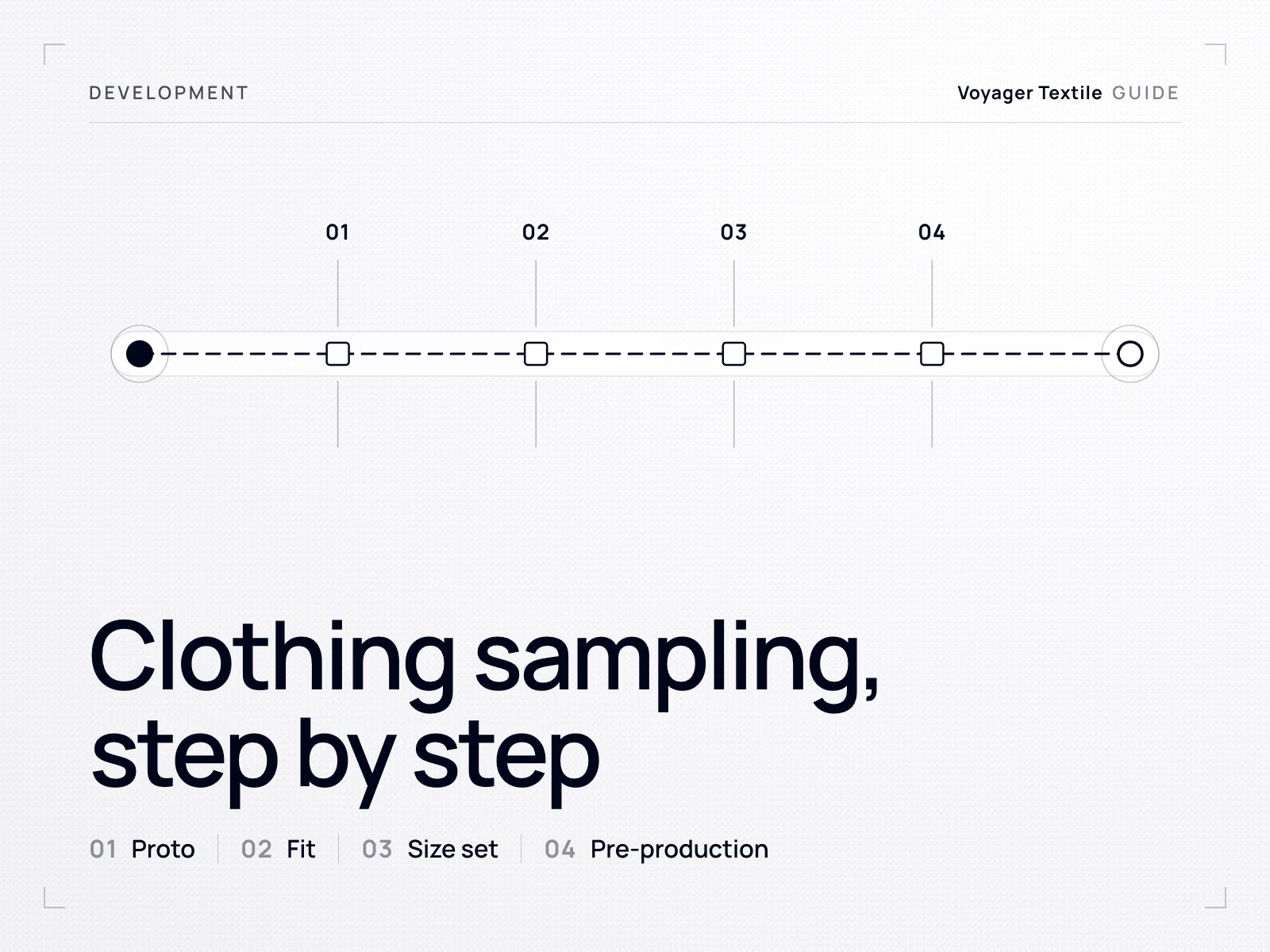
This guide covers the technical layer under sampling. For the sequence of sample stages themselves, see the sampling guide.
Pattern, specification and sample: who owns what
- The specification states what the garment should measure and how it should be constructed. Who owns and may use it depends on how it arose and what was agreed, see design ownership.
- The pattern defines the shapes used to cut the garment components. It may be supplied by the buyer or developed by a pattern maker, with allowances for construction and relevant fabric behaviour.
- The sample is the physical result used to assess measurements, construction and fit. Agree who approves the sample, the specification and any pattern revisions.
This distinction matters commercially. Ask at the start who owns patterns developed for your product, because it determines what you can take with you if you add or change factory later.
Points of measure: the language of fit
A point of measure is a defined place on the garment, measured in a defined way, with a target value. Chest width measured 2.5 cm below the armhole, flat, is a point of measure. Chest is not, because two people will measure it differently.
A workable measurement chart for a simple top usually includes body length from the high point of the shoulder, chest width, bottom width, shoulder width, sleeve length, sleeve opening, armhole, neck width and neck drop. Each entry needs three things: how it is measured, the target value in the base size, and the tolerance.
Tolerances: defining acceptable variation
No garment can be produced to an exact measurement every time. Fabric relaxes, cutting has a margin, and sewing has a margin. A tolerance states how much variation is acceptable at each point of measure, and it is what separates an acceptable garment from a defect.
Set tolerances for each point according to fit, function, appearance, fabric and construction. Pocket placement can require close control even when it does not determine the overall fit. Agree achievable values with the factory and record them on the measurement chart before approval; use them with the other agreed criteria during final inspection.
Grading: sizes are not scaled copies
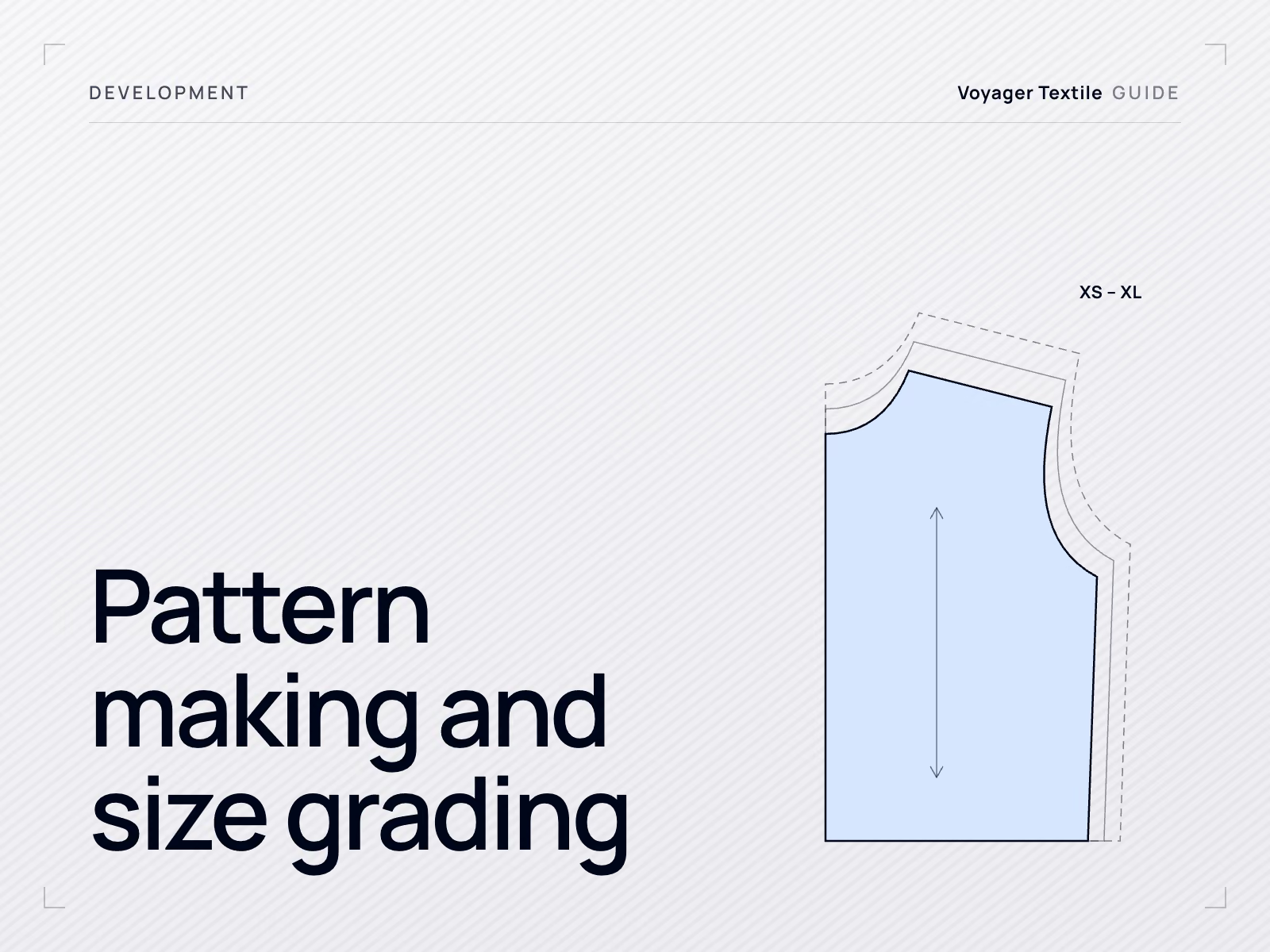
Grading is the set of rules that turns the base size into the rest of the range. It is not proportional scaling. Body width might grow by a consistent step across sizes, while neck width grows by much less and sleeve length by something different again, because human bodies do not grow uniformly in every dimension.
Agree the change at each measurement point between sizes and identify any sizes where the increments change. Review the complete graded chart and confirm fit in the agreed sample sizes before bulk production. Include intermediate sizes where the design or grading needs further checking.
Fit intent has to be stated
The same chest measurement can produce a regular fit or an oversized one depending on where the shoulder sits, how deep the armhole is and how long the body is. Fit intent is the description that ties those choices together, and it should be written down: regular fit, relaxed with dropped shoulder, oversized boxy with a wide body and short length, fitted through the waist. How that intent becomes an approved fit through sampling is covered in garment fit development.
The streetwear manufacturing guide covers how oversized proportions are built rather than simply sized up.
Fabric behaviour changes the pattern
| Fabric property | Effect on pattern and fit | What to agree |
|---|---|---|
| Shrinkage | Pattern compensation depends on measured shrinkage, fabric preparation and whether the target measurements apply before or after washing | Whether measurements are before or after wash, and the test method |
| Stretch and recovery | A stretch fabric can use a smaller pattern for the same worn fit | Measure relaxed, not stretched, and state it on the chart |
| Weight and drape | Heavier fabrics hang differently and can need different proportions | Confirm fit in the intended fabric, not a substitute |
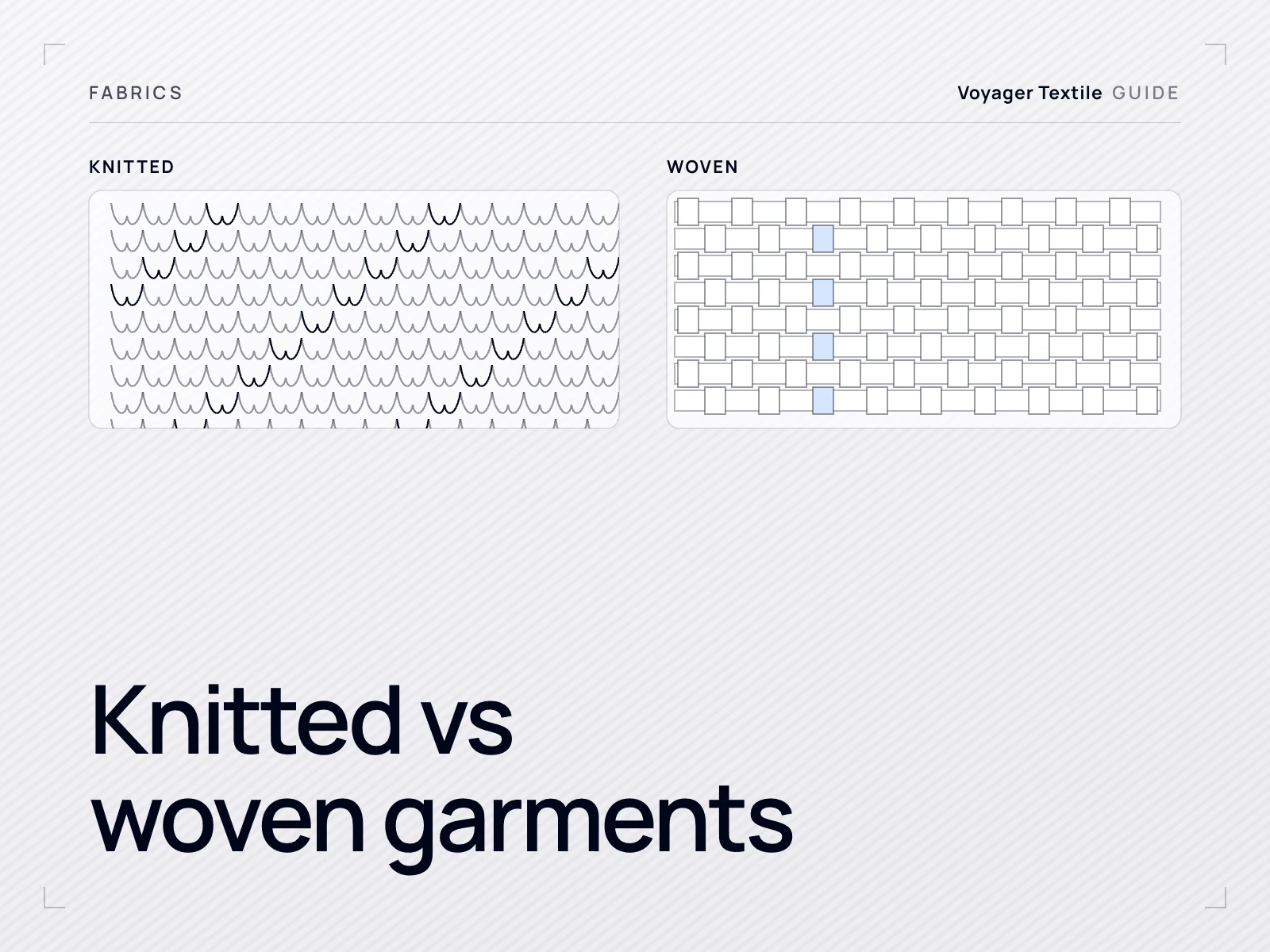
| Knit versus woven | Ease depends on stretch, recovery, construction and intended fit; neither knit nor woven structure alone determines the allowance | Reassess the pattern and fit when changing fabric construction; adapt the pattern and verify a sample where needed |
Check shrinkage against the agreed wash conditions and dimensional limits. See why measurements change after washing. Agree whether the measurement chart applies before or after washing, and specify a shrinkage test if the product will be washed frequently, as with workwear and uniforms. Fabric weight and construction are covered in the GSM guide and the knit versus woven guide.
Size labelling across markets
Sizes named S, M and L mean whatever your measurement chart says they mean. Numeric sizing differs between the EU, the UK and the US, and a garment labelled M for one market may need a different label for another even though the garment is identical.
Decide early which market convention your labels follow, and whether you need dual labelling. The garment is defined by measurements; the label is a marketing and market-compliance decision, and what adapting a range for another market actually involves is set out in market conversion. Label content requirements themselves are covered in the EU and US guides.
What to approve, in order
- The list of points of measure and how each is measured.
- The base size and its target values.
- The tolerance for each point of measure.
- The graded chart across the full size range.
- The fit sample checked against the measurement chart and on a suitable wearer or form; confirm the final fit in the intended fabric.
- The agreed size-set coverage, including intermediate sizes where fit or grading requires verification.
- Whether measurements apply before or after washing.
Keeping fit stable over time
Retain dated versions of the approved chart, patterns, sample and written approvals. Assess each proposed change and agree whether a revised sample or other verification is needed before updating the approval. Fit differences between orders can arise from materials, pattern changes or production variation. The reorder consistency guide describes checks for these differences.
Questions buyers ask
What is a point of measure?
A defined place on a garment, measured in a defined way, with a target value and a tolerance. Chest width measured 2.5 cm below the armhole while the garment lies flat is a point of measure. The word chest on its own is not, because it can be measured several ways.
What tolerance should I set on garment measurements?
Agree achievable tolerances for each measurement point with the factory, considering fit, function, appearance, fabric and construction. Record them on the measurement chart before approval. Pocket position may need close control even when it does not determine overall fit.
Do I approve the pattern or the measurements?
Agree who supplies, reviews and approves the patterns as well as the measurements and samples. Record the approved versions together so the production instructions match the physical reference. Pattern ownership and permitted use should be agreed separately.
Why do garments fit differently in the largest sizes?
A grade rule may not suit the intended body-size range, or material and construction differences may affect fit. Human body proportions do not increase uniformly across sizes. Review the full graded chart and check fit in agreed sample sizes, including intermediate sizes where needed.
Should measurements be taken before or after washing?
State the measurement condition on the chart: before washing, after the agreed wash and drying procedure, or both. Agree the test method, number of cycles and acceptable dimensional change for the intended use. Assess the results against those limits rather than treating every shrinkage change as a defect.
Can the same pattern be used for a knitted and a woven version?
Reassess the pattern when switching fabric construction. Ease depends on the actual stretch, recovery, drape and intended fit, not simply on whether the fabric is knitted or woven. Adapt the pattern as needed and verify fit in the proposed material before approval.
Have your measurements reviewed before sampling
Send your measurement chart or a garment you want matched. We will confirm the points of measure, propose tolerances for your fabric and flag anything that will not grade cleanly across the size range.
Request a technical review