Programme types
Private Label Streetwear Manufacturing in Turkey: Fabrics, Fits and Finishes
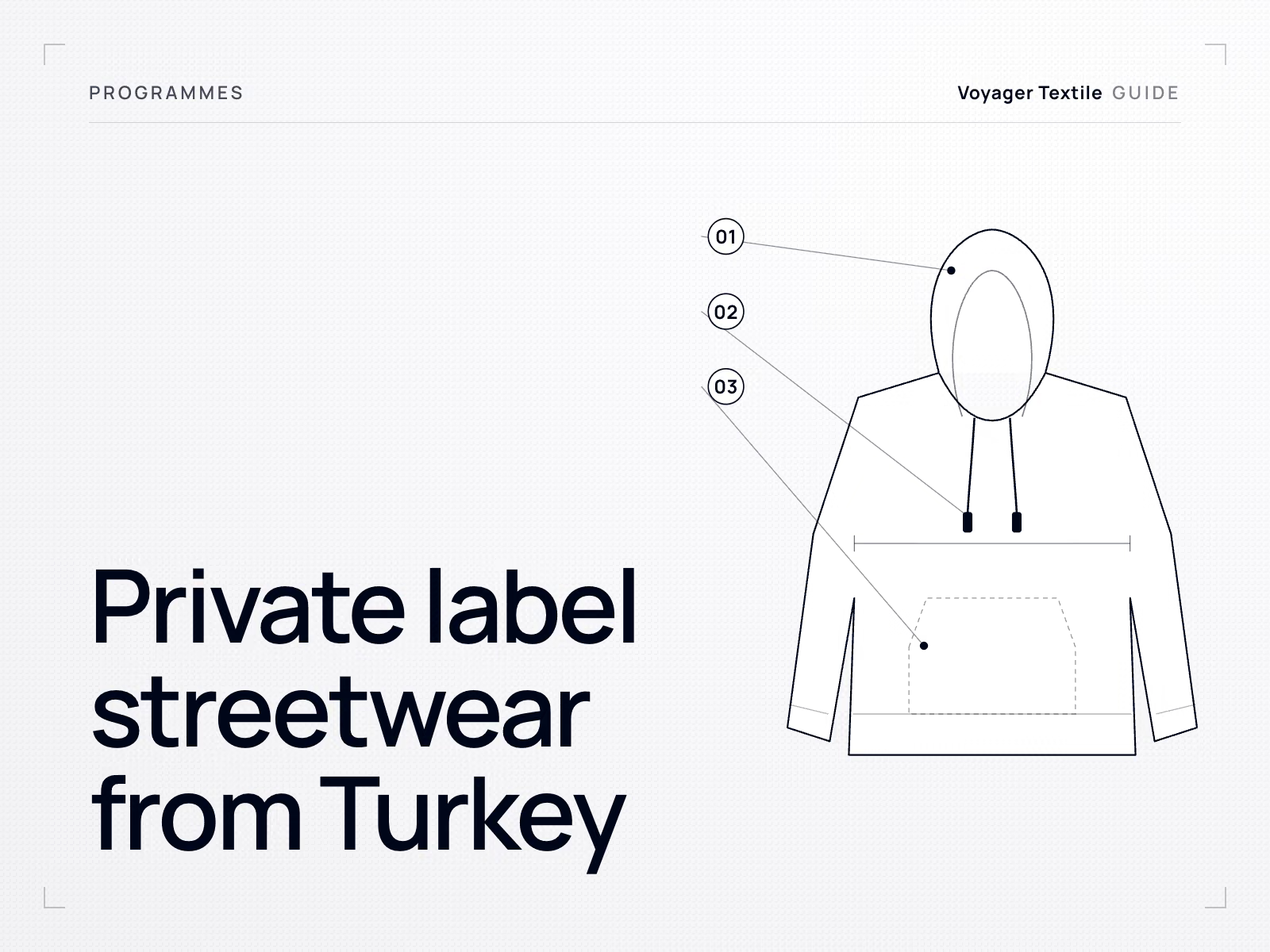
Streetwear quality comes from four decisions: fabric weight and quality, pattern proportion, rib and trim consistency, and finishing. Ordering a heavier fabric is the easy part. Getting the proportions right, and repeating them across sizes and reorders, is what separates a considered product from a scaled-up basic.
Contents
- Fabric: weight is necessary, not sufficient
- Proportion: how an oversized fit is actually built
- Streetwear bottoms: baggy, wide-leg and flared sweatpants, cargo and parachute trousers
- Rib and trims
- Washes and surface finishes
- Decoration that suits the category
- Branding details that shift perceived value
- Cost and quantity realities
- Sampling a proportion-led product
- Questions buyers ask
Streetwear is a technically demanding category to manufacture well, because the product is defined by proportion and hand-feel rather than by function. A hoodie that is 30 mm too narrow across the body or 15 mm too long in the sleeve is not defective, it is simply wrong, and no inspection standard will catch it.
This guide covers the production decisions behind that for brands making streetwear in Türkiye. It assumes you already have a brand and a design direction.
Fabric: weight is necessary, not sufficient
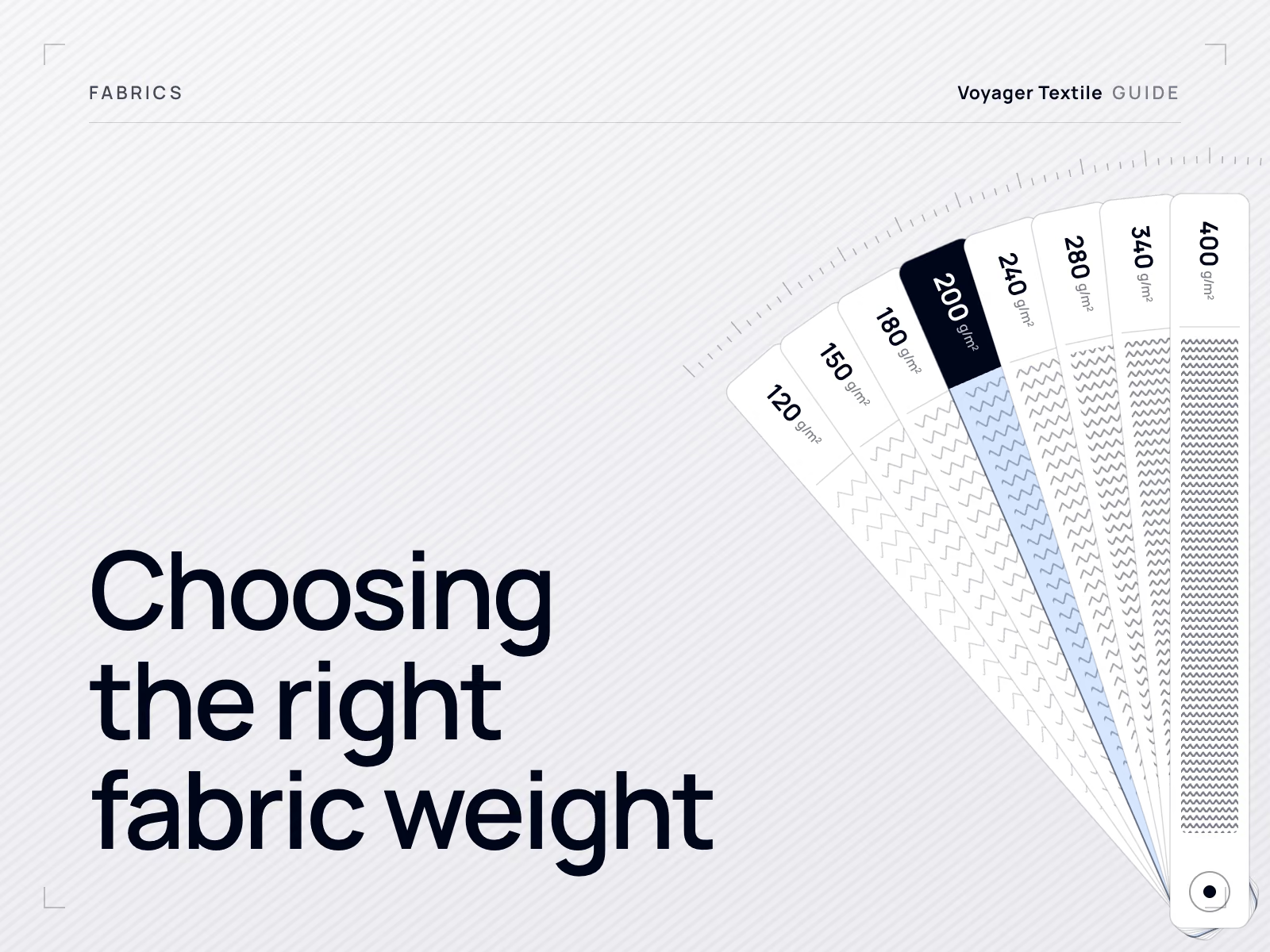
Heavyweight fabric is the entry ticket, and it is where many brands stop. Weight alone gives you a heavy garment; the rest of the specification decides whether it feels expensive.
| Product | Common weight range | What to specify beyond GSM |
|---|---|---|
| Heavyweight tee | Around 200 to 250 GSM | Combed ring-spun cotton, compacted finish, opacity in light colours |
| Standard hoodie | Around 300 to 350 GSM | Brushed fleece or loopback terry, and the softness of the brushing |
| Heavyweight hoodie | Around 380 to 500 GSM | Fleece quality, drying time, shrinkage control, and shipping weight |
| Sweatpants and joggers | Around 300 to 400 GSM | Usually matched to the hoodie fabric for a coordinated set |
Two fabric choices matter as much as the number. Brushed fleece is softer and warmer inside; loopback terry keeps the loops unbrushed, which reads cleaner, breathes better and shows structure. And yarn quality decides how the garment looks after ten washes: combed, ring-spun cotton pills less and holds its surface, which is exactly where cheap heavyweight garments fail. See the GSM guide and the composition guide.
Proportion: how an oversized fit is actually built
An oversized garment is not a larger size with a different label. Scaling a regular pattern up produces a garment that is simply too big, with sleeves that are too long and a neck that gapes. A true oversized fit changes the relationships between measurements.
- Shoulder. Dropped deliberately, so the sleeve head sits down the arm rather than at the shoulder point.
- Body width against length. The boxy silhouette comes from a wide body with a controlled, often shorter, length. Widen without shortening and the garment reads oversized in the wrong way.
- Armhole depth. Deeper to allow the drop, which changes how the garment hangs when the arms are down.
- Sleeve length and width. Recalculated for the dropped shoulder, not inherited from the regular block.
- Neck opening. Held in proportion, since a wide body with a small neck looks unbalanced.
- Hem and cuff ribs. Their depth and tension control whether the silhouette holds its shape or collapses.
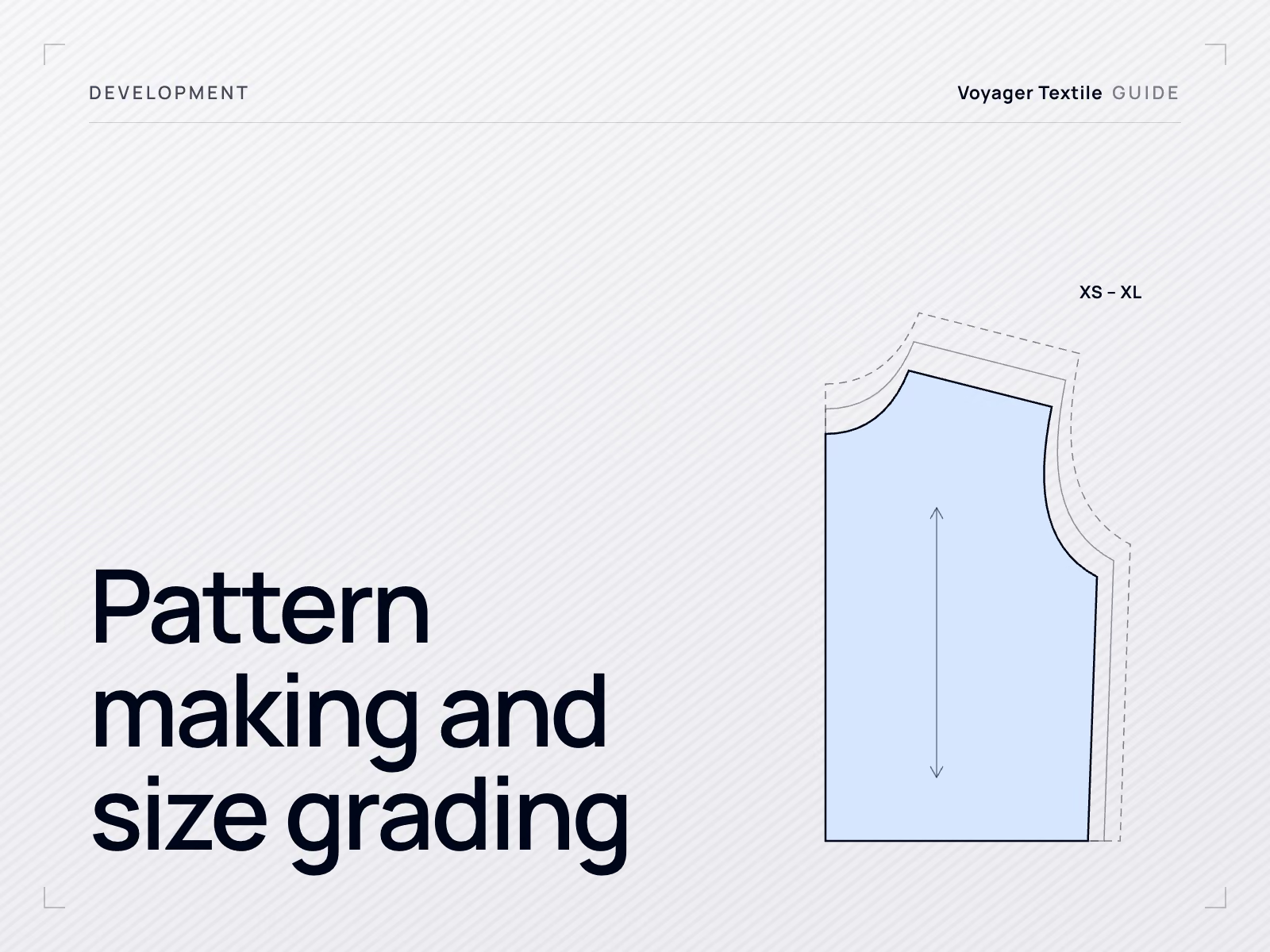
Write these as measurements, not adjectives. Send a reference garment where possible and state exactly what to keep and what to change. Grading matters here more than in many categories, because a boxy proportion must remain boxy in XS and in XXL, which requires deliberate grade rules rather than uniform steps. See pattern making and grading.
Streetwear bottoms: baggy, wide-leg and flared sweatpants, cargo and parachute trousers
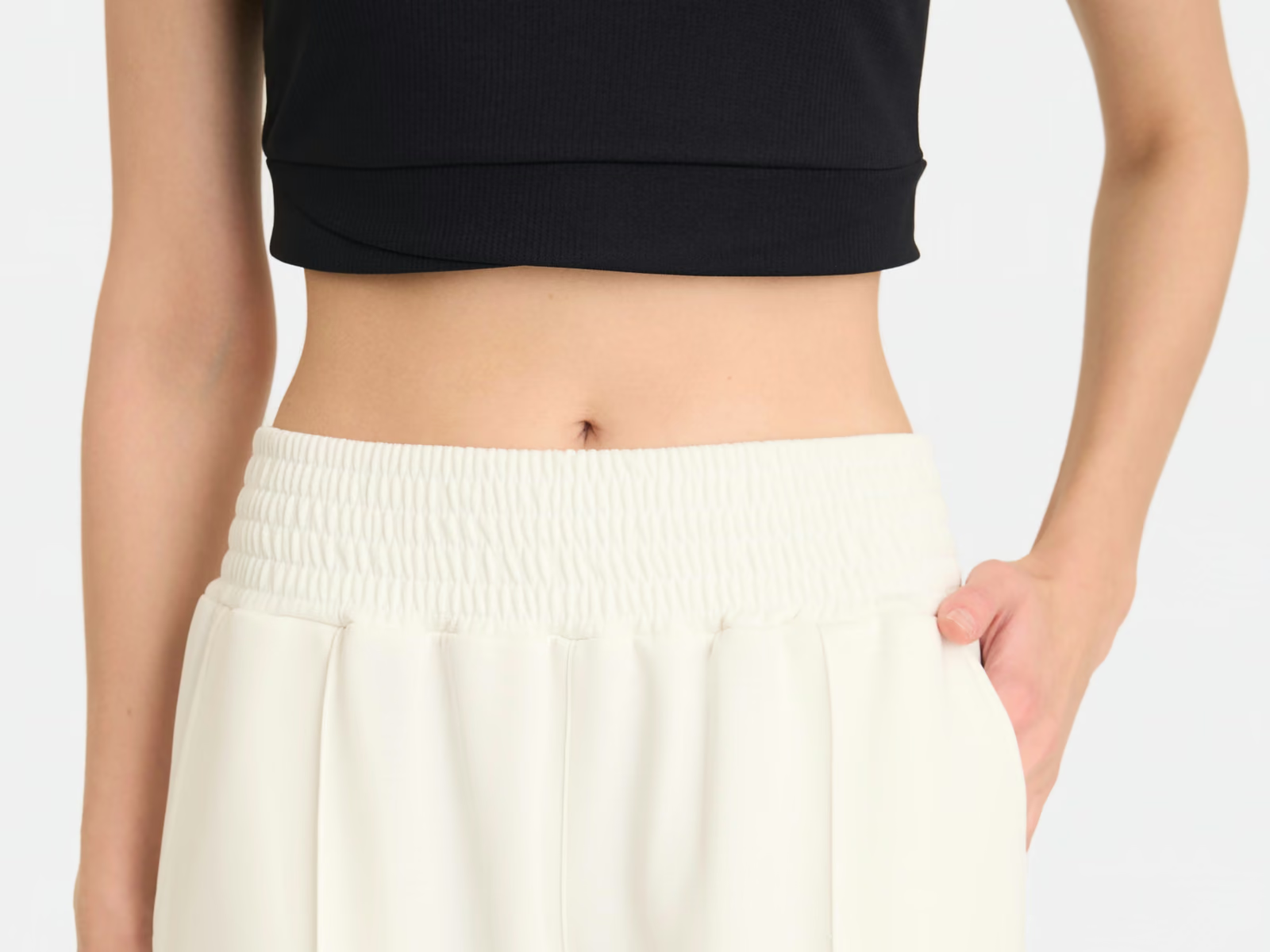
Streetwear bottoms are defined by the leg, and the leg is set by thigh, knee and leg opening, each stated per size together with inseam and rise. A baggy or wide-leg sweatpant keeps its width from thigh to hem, a flared sweatpant narrows to the knee and opens below it, and a stacked leg is a long inseam that gathers at the ankle. As with oversized tops, the grade rules have to keep the shape, so a wide leg in XS is still wide rather than straight.
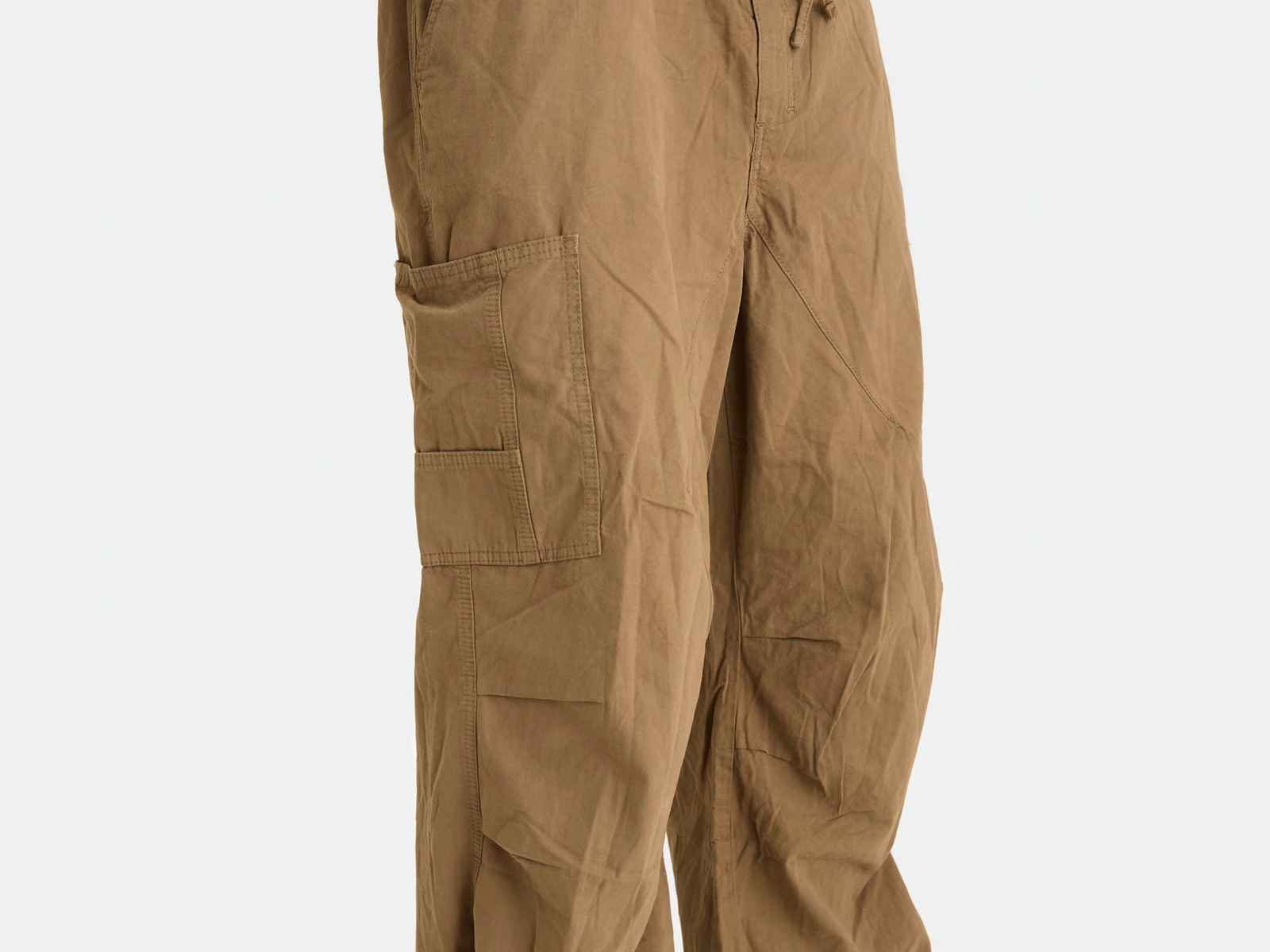
- Pockets. Cargo trousers carry bellows or flat patch pockets on the thigh, often with flaps and snap or hook-and-loop closures, positioned from the waist seam and side seam per size; see pocket construction.
- Parachute shell. Parachute trousers use a light woven shell such as nylon or polyester taffeta or ripstop, which creases and rustles by design; the shell is sourced or buyer-supplied and confirmed per project at the quotation stage.
- Hems. Elastic cuffs, a channel with drawcord and toggle, or an open hem; each changes the finished length, so it is fixed before the pattern.
- Waist. Elastic with an inner drawcord on fleece, or a waistband with a drawcord channel or belt loops on wovens.
Rib and trims
Rib is where streetwear quality is judged by touch. Cuffs and hems that lose their shape after a few wears undermine an otherwise good garment, and that behaviour comes from the rib construction and its elastane content rather than from the body fabric.
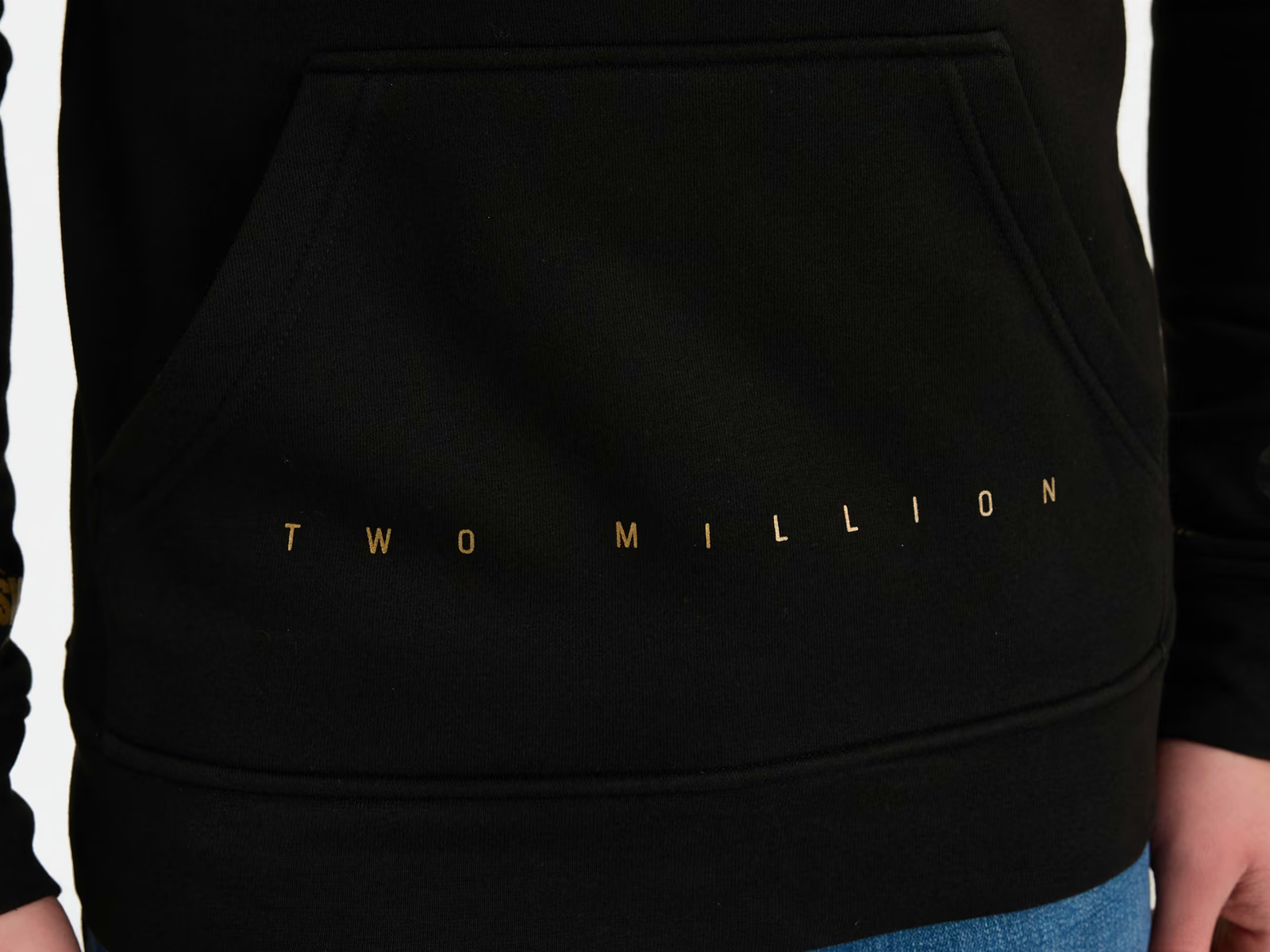
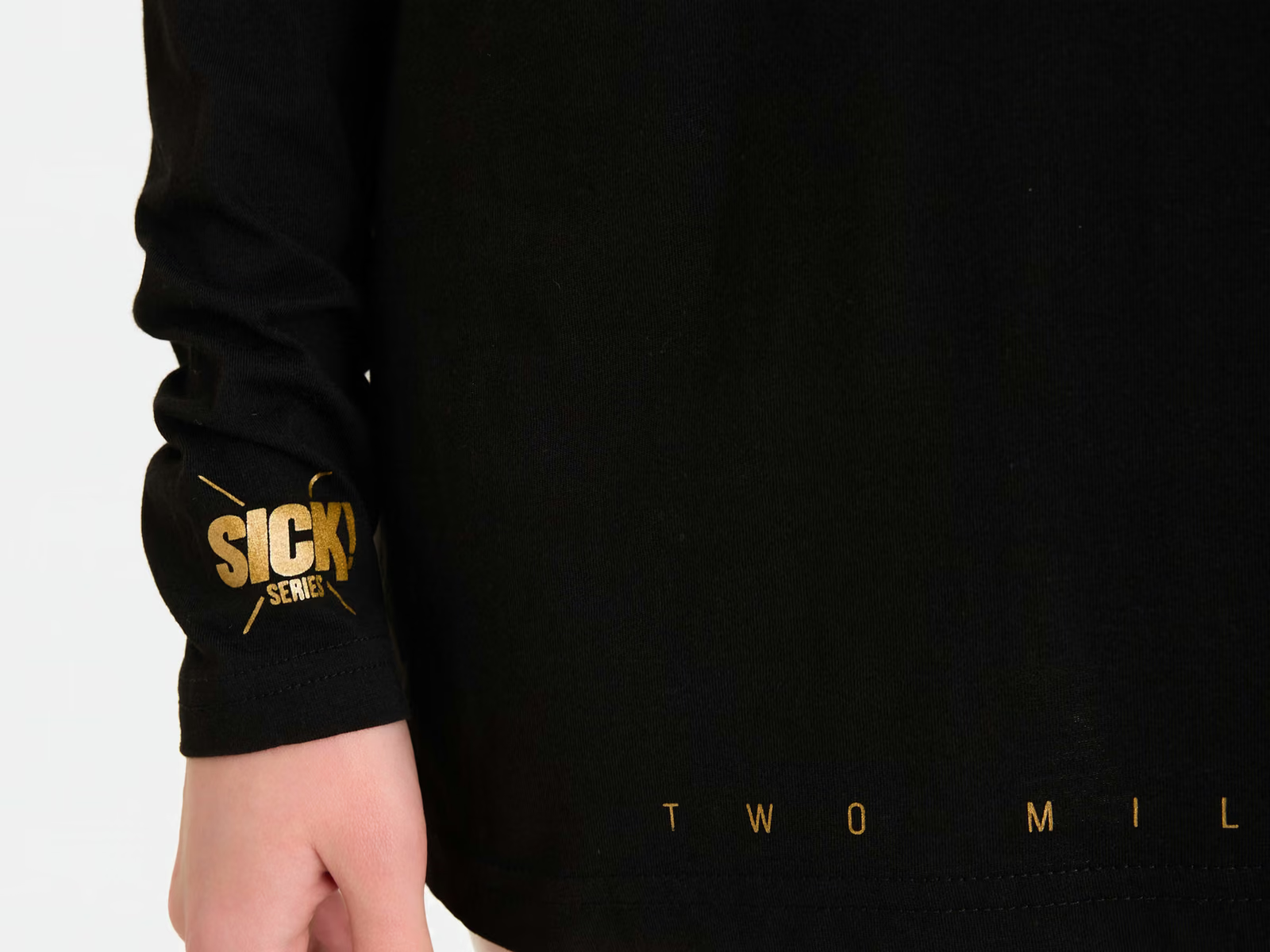
- Specify the rib quality, structure and depth, not simply matching rib.
- Approve the rib colour against the approved body fabric, not against a Pantone chip, since two fabric structures rarely match perfectly. See Pantone colour matching.
- Specify drawcord type, width, tipping and whether the ends are metal, and whether eyelets are metal or stitched.
- Decide zip type and finish early, since hardware has its own lead times.
- Consider self-fabric drawcords and covered details, which are quietly expensive but very visible.
Washes and surface finishes
Garment washing changes the character of a piece: enzyme and softening washes reduce stiffness and give a broken-in hand-feel, while garment or pigment dyeing produces the tonal, slightly uneven colour associated with vintage-look products.
Two practical points. Washes affect dimensions, so measurement charts must state whether they apply before or after washing, and shrinkage has to be built into the pattern. And washed or garment-dyed products have inherently more colour variation between pieces and between batches, which is part of the aesthetic but must be agreed as a tolerance rather than discovered at inspection.
Availability of specific wash and garment-dye processes varies between manufacturers, so confirm what a supplier can actually run before designing a collection around it. What each process does, and what has to be defined and approved before bulk, is covered in garment washing and finishing and garment dyeing.
Decoration that suits the category
| Technique | Where it fits in streetwear |
|---|---|
| Screen printing | Large graphics with a limited colour count; the standard for bold artwork at volume |
| Raised, puff and embossed effects | Tonal, tactile branding where the logo is felt as much as seen |
| Embroidery | Small chest logos, sleeve marks and applique, which read as premium |
| Transfer printing including DTF | Complex or photographic artwork, and smaller runs per design |
| All-over sublimation | Full-coverage graphics on polyester-based pieces, printed before assembly |
On heavy brushed fleece, remember that the surface absorbs ink and softens fine detail, so bold artwork reproduces better than thin line work. Method selection is covered in the decoration guide. At Voyager Textile, embroidery, transfer and sublimation printing run in-house, while screen printing and raised or embossed effects run with established partner facilities under our project management.
Branding details that shift perceived value
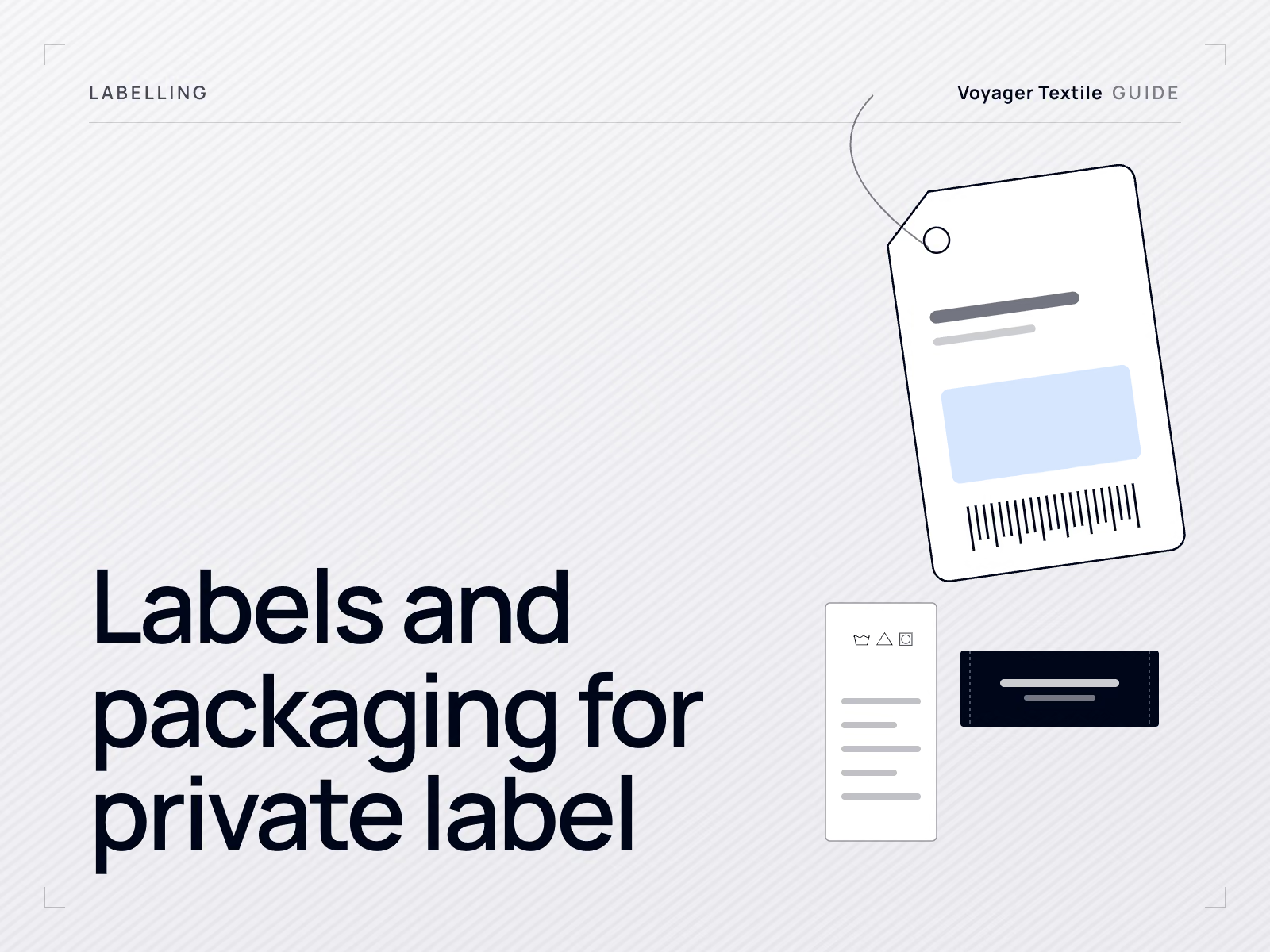
- Printed neck labels instead of sewn labels, which removes irritation and looks considered.
- Woven side-seam or hem labels, small and understated.
- Custom drawcord tipping or branded metal hardware.
- Hangtags on cord rather than plastic tag pins.
- Individual packaging, including printed or recycled-content polybags where your programme requires it.
These are inexpensive per piece and highly visible. Specify them with the garment, since labels and packaging have their own minimums and lead times, as covered in the labels and packaging guide.
Cost and quantity realities
Streetwear costs more to produce than the same garment in a lighter fabric and a regular fit, for two compounding reasons. Heavier fabric costs more per metre, and an oversized pattern uses more of it. A 400 GSM oversized hoodie can consume substantially more fabric than a 300 GSM regular one, before any decoration is added.
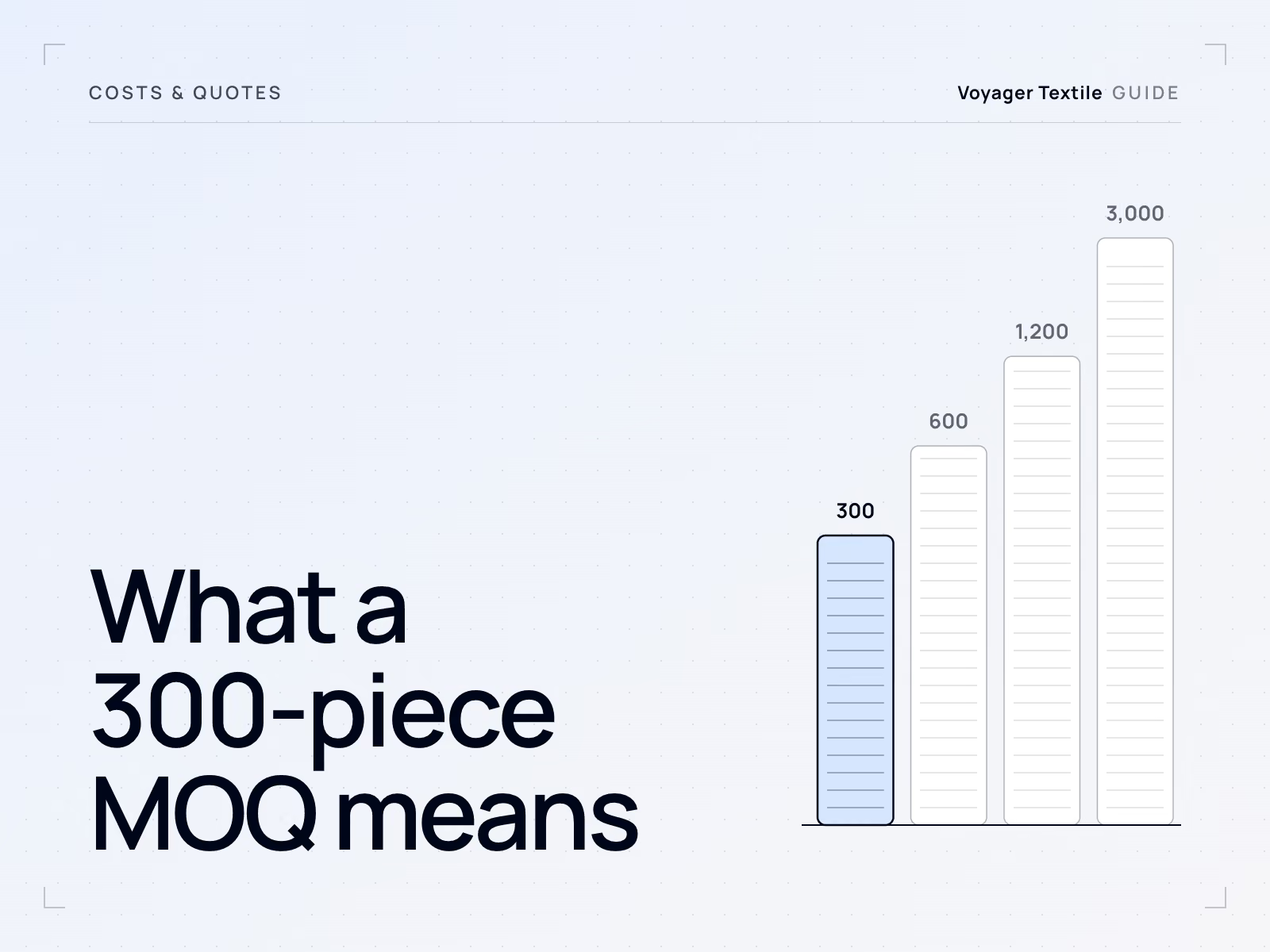
Plan quantities accordingly. Voyager Textile produces custom apparel from 300 pieces per colour and per style, with custom Pantone colour production also from 300 pieces. Concentrating on fewer colourways with more depth per colour is usually the right first-collection strategy, as explained in the MOQ guide and the cost guide.
Sampling a proportion-led product
- Send a reference garment and a measurement chart, and state which measurements are critical to the look.
- Ask for the first sample in the intended fabric weight, since drape on heavy fleece is different from drape on a substitute.
- Photograph the sample on a person, not only flat. Proportion is judged on a body.
- Give feedback in measurements, and keep the changes to one consolidated list per round.
- Approve a size set covering the smallest and largest sizes, since proportion is where grading fails.
- Approve a pre-production sample in bulk fabric with final trims, labels and decoration.
- Seal and date the approved sample, and keep a copy on your side for reorders.
Previously produced hoodie and streetwear references, including embossed and printed examples, are in the reference catalogue, and the construction sequence itself is covered in the hoodie manufacturing process.
Questions buyers ask
What GSM should a heavyweight hoodie be?
Roughly 380 to 500 GSM for a genuinely heavyweight product, against about 300 to 350 GSM for a standard hoodie. Above that range the garment becomes very warm, slow to dry and noticeably more expensive to ship, so choose the weight for how it will be worn.
How is an oversized fit different from a bigger size?
The relationships between measurements change: the shoulder is dropped, the armhole is deeper, the body is wider relative to its length and the sleeve is recalculated. Scaling a regular pattern up produces a garment that is simply too big rather than one that is intentionally oversized.
What is the difference between brushed fleece and loopback terry?
Brushed fleece is raised on the inside for softness and warmth. Loopback terry leaves the loops unbrushed, which is lighter, more breathable and shows a cleaner internal structure. Both are used for hoodies and sweatshirts, and the choice changes both feel and appearance.
Why do my cuffs lose their shape?
Usually rib quality: structure, elastane content and depth. Specify the rib rather than accepting a default matching rib, and check recovery on the sample by stretching and releasing the cuff rather than judging it visually.
Can garments be washed or garment dyed for a vintage look?
These processes exist and produce that character, and they also increase colour variation between pieces and affect measurements. Availability varies by manufacturer, so confirm what your supplier can run and agree a colour tolerance before designing a collection around it.
What is the minimum order for streetwear production?
At Voyager Textile, 300 pieces per colour and per style for custom apparel, with custom Pantone colour production also from 300 pieces. For a first collection, fewer colourways with more depth in each is usually a better use of the same budget.
Which print technique gives a tonal, textured logo?
Raised, puff or embossed effects, which create a tactile logo in a similar or matching colour. Feasibility depends on fabric and artwork and is assessed at specification review.
Send a reference garment and the proportions you want
For streetwear the fastest route is a physical reference plus the measurements you want changed. We will sample in the intended fabric weight and photograph it on a body so proportion can be judged properly.
Start a streetwear sample