Specification, sampling and quality
Garment Dyeing: How Dyeing After Assembly Changes What You Specify
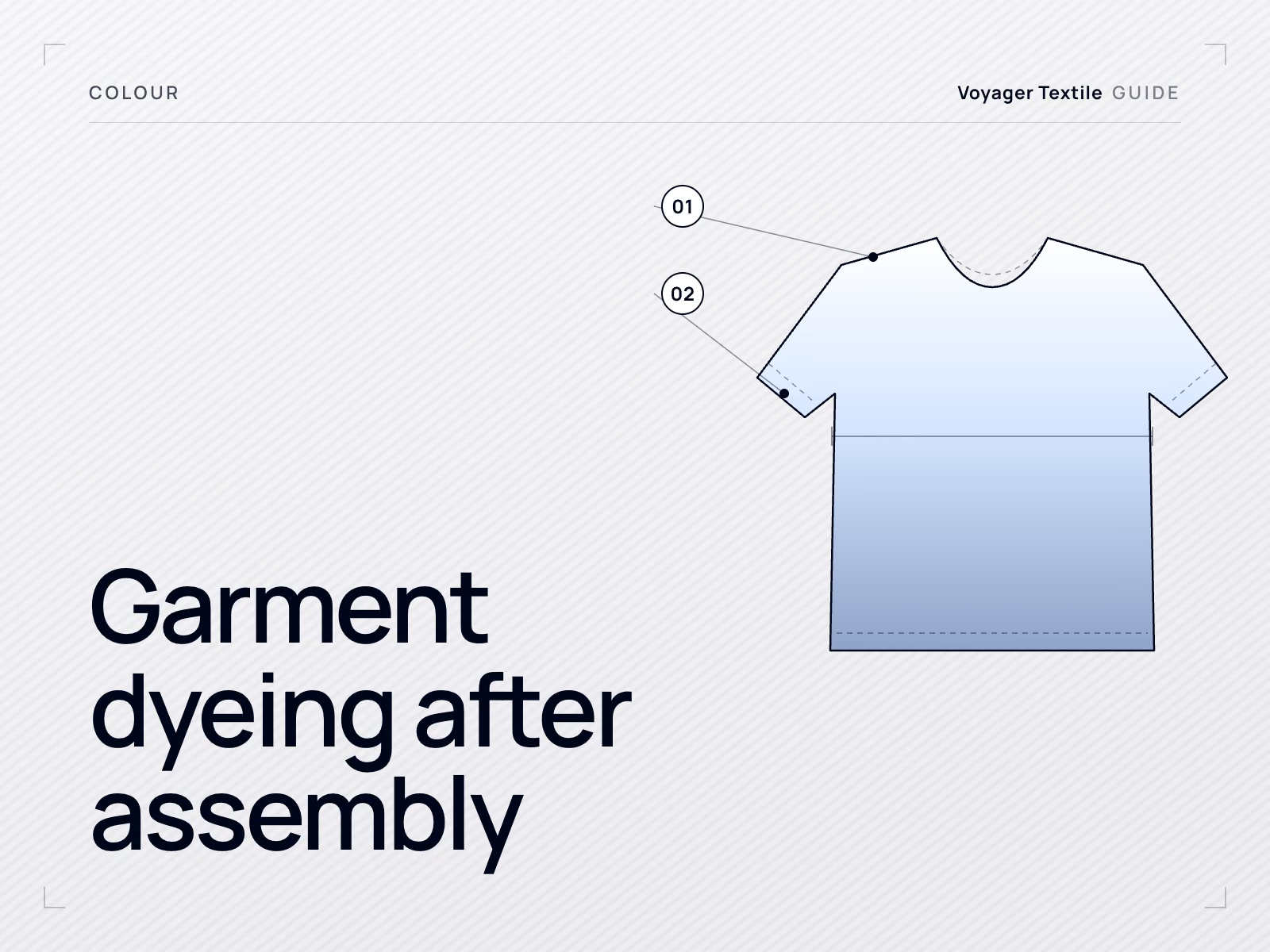
In garment dyeing, colour is applied after the garment is cut and sewn. The consequence is that the whole assembled product is processed at once, body fabric, sewing thread, ribs, interlinings, trims, hardware and labels, and each can respond differently. The result belongs to the garment, not to the body fabric, which changes what has to be specified and what has to be approved.
Contents
A piece-dyed garment is made from coloured cloth. A garment-dyed garment is made from undyed cloth and then coloured, with everything else that was sewn to it. That single change in sequence moves the colour decision downstream, and moves a whole set of material decisions upstream, because from the moment the sequence changes, a component that cannot survive the bath is a defect waiting to be made in bulk.
Where colour enters the sequence
There are three common points, and they are genuinely different products rather than three routes to the same one.
| Route | When colour is applied | What it makes possible |
|---|---|---|
| Yarn dyeing | Before the fabric is made | Stripes, checks and heather effects built into the structure; colour committed earliest |
| Piece or fabric dyeing | After knitting or weaving, before cutting | The normal route for custom colour; colour approval sits before cutting |
| Garment dyeing | After cutting and sewing | A softened, often tonal character; colour committed after the garment exists |
The commercial attraction of the third is that colour is decided late, garments can be assembled in undyed cloth and coloured against demand. The technical cost is that the decision arrives after every material choice has already been made and sewn in place. That trade is the whole subject of this guide.
For how colour targets themselves are set and matched, see Pantone colour matching; for why colour varies between lots and how that is normally handled, dye lot and shade variation.
The whole garment goes in together
This is the point that has to be understood before anything else makes sense. When a made-up garment is dyed, everything in it is exposed to the same process at the same time: body fabric, sewing thread, rib, interlining, pocketing, trims, hardware and labels. They are different materials and they behave differently.
One process, several materials
The garment enters as one object. What comes out is the combined response of every component in it, which is why a garment-dyed product cannot be assessed as body fabric plus a colour.
Undyed greige goods can be used, with a caveat worth knowing: garments can be cut oversized to compensate for the shrinkage that will occur, but doing so can adversely affect seam appearance. That is a real trade-off between dimension and looks, not a free adjustment.
Sewing thread
Thread is a component easily overlooked and visible when it goes wrong, because it runs along every seam of the garment.
Cotton Incorporated recommends 100% cotton or corespun cotton/polyester threads for garment dyeing, so that the thread dyes to nearly the same shade as the garment, the word is worth noticing, since it is not a claim of an exact match. Mercerised thread is noted to dye slightly darker, which can be used deliberately for effect on non-mercerised fabric, and is recommended as standard with mercerised fabric.
The thread specialist American & Efird states the constraint from the other direction: polyester sewing threads will not accept the cotton dyes used in the over-dyeing process. That is a statement about a dye system, not a universal property of polyester, it is also why corespun threads work, since the cotton sheath takes the cotton dye. The practical conclusion in their own bulletin is the right one: test your components.
One further interaction is worth flagging where a product is both over-dyed and enzyme washed. Cellulase acts on cellulose, and cotton thread is cellulose: threads with greater resistance to enzyme degradation exist specifically for this combination. If a programme stacks a cotton-dyeable thread with an aggressive enzyme process, the seam is being asked to do two conflicting things and that needs resolving at specification rather than at inspection.
Ribs, collars and cuffs
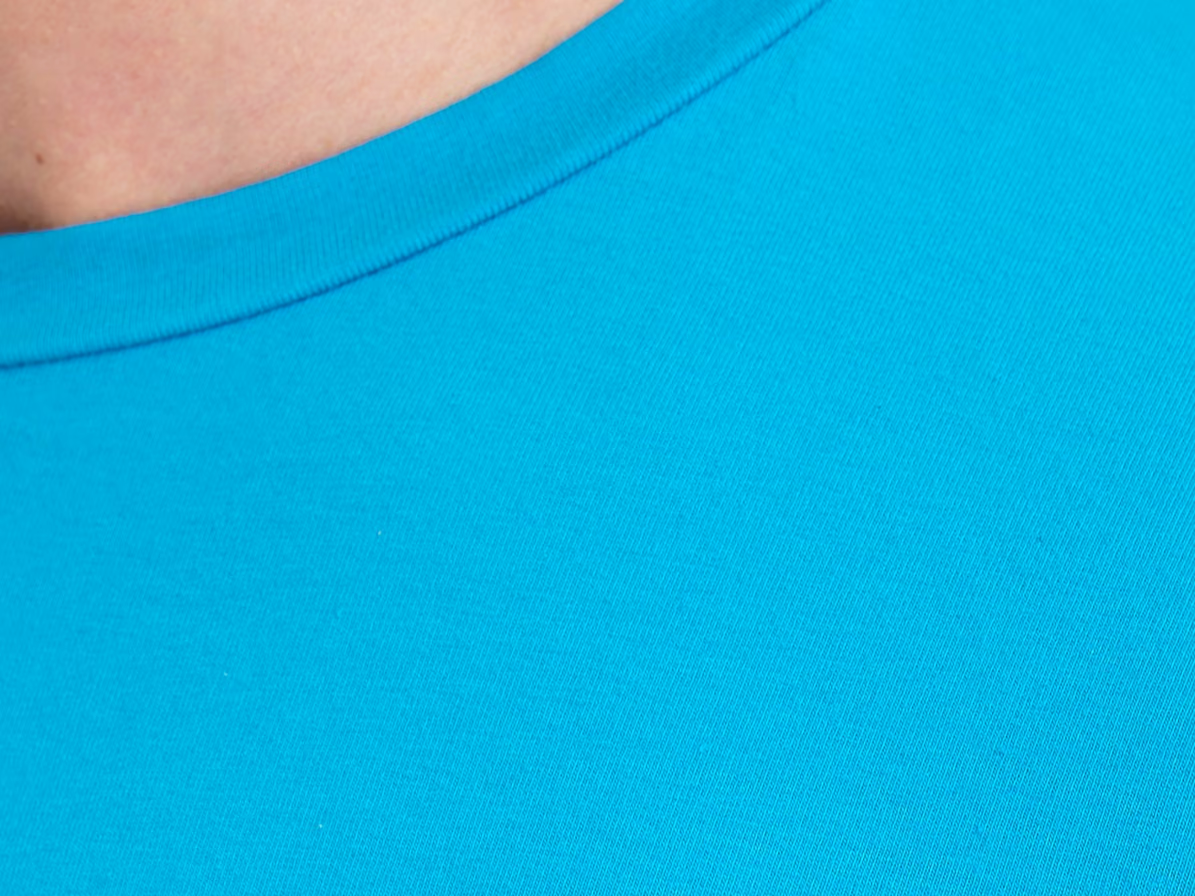
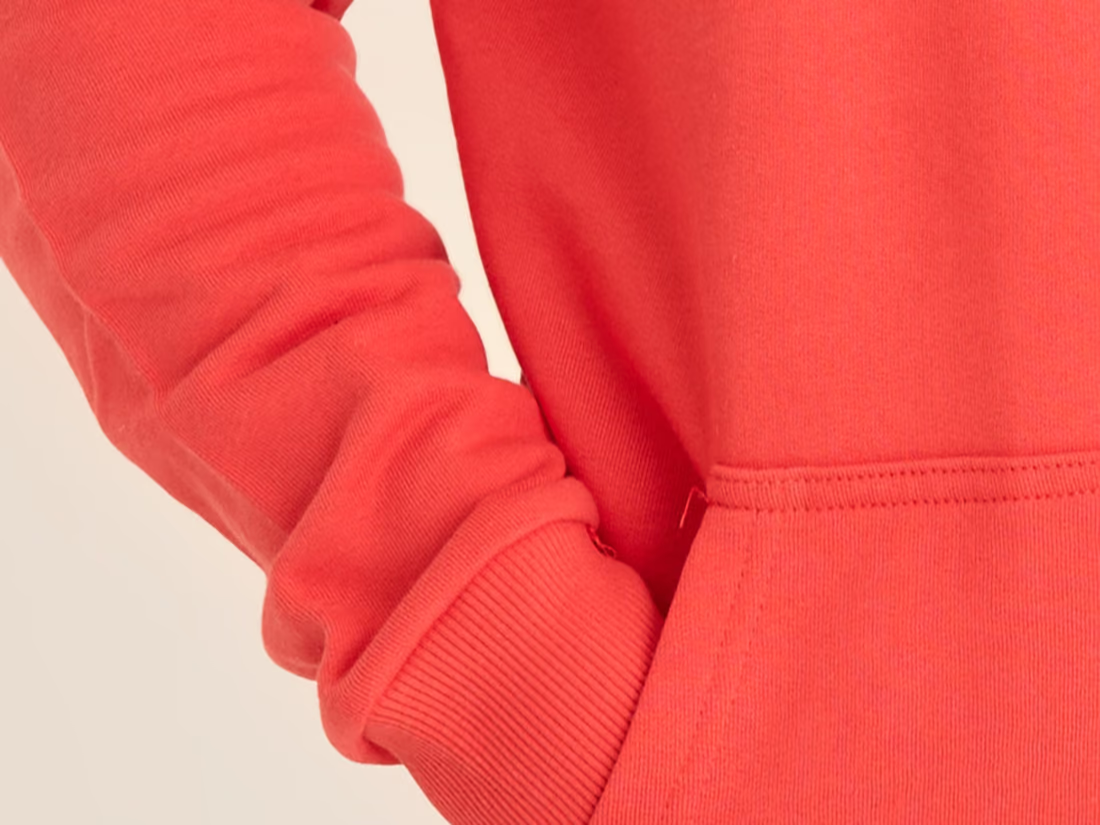
Ribs are a different fabric from the body, different structure, often different yarn, frequently containing elastane, and knitted at a different tension. Put through the same bath as the body they can take colour differently, change dimension differently and recover differently.
This is not a defect in itself. On many garment-dyed products the slight tonal difference between body and rib is part of the character. It becomes a problem only when nobody decided what it should look like, which makes it an approval question rather than an inspection one. Where recovery rather than shade is the issue, rib, collar and cuff shape loss covers what to specify; the rib itself is described in rib knit.
Trims, hardware and labels
Trim is not inert. Depending on the process it is exposed to water, chemistry, heat and mechanical action along with the garment, and published guidance treats trim selection as part of garment-dyeing design rather than as a downstream detail.
| Component | What is documented | What it means for the specification |
|---|---|---|
| Interlining and facing | Some blended interlinings pill and mat during garment dyeing; excessive shrinkage can make waistbands and similar areas look crumpled | A component that never shows can still ruin the outside of the garment |
| Pocketing | With a blended pocketing fabric the cotton portion dyes, but the resulting shade is not the same as the garment shade | Decide whether a visible tonal difference is intended or unacceptable |
| Zips | Nylon and polyester zips present no problem other than dye acceptance, and a coloured zip can be selected instead; non-ferrous metal components are preferred over other metals | Zip colour is a decision to make before dyeing, not a result to discover after it |
| Buttons | Plastic buttons usually cause no problems. Delicate buttons are sometimes attached after dyeing, for breakage or colour reasons. Metal parts can damage the inside of the vessel and cause abrasion to the garments | Some components belong in the bath and some belong after it, and a trim can damage other garments in the load |
| Trim fabrics | Different trim constructions create different effects; dyeability should always be considered, and delicate trims can be damaged | Contrast can be designed deliberately, which is a reason to choose trim construction rather than accept a default |
| Labels | Labels may be added after dyeing, or dye-resistant labels used; dye-sensitive labels also exist. The stated concern is legibility | Legibility is not only aesthetic, required label information has to remain readable |
| Loading | In open-chamber rotary machines the primary concerns are tangling and abrasion; garments may be inverted and seams tacked or fastened | How the garment is presented to the process is part of the process |
The label point deserves emphasis because it crosses into compliance. Fibre composition, care instructions and the identification a market requires have to be present and readable on the delivered garment, see EU apparel labelling and US labelling requirements. A label that has been dyed to illegibility is not a cosmetic problem; the choice between attaching labels after dyeing and using dye-resistant labels is being made for that reason as much as for appearance. Label and trim specification generally is covered in labels and packaging, and what it takes to approve a component and keep the approved one in bulk in trims and components.
Pigment garment dyeing and overdyeing
Pigment garment dyeing is a genuinely different system, not a style of the same one, and the difference has consequences a buyer should know about.
Pigments have no natural affinity for the fibre. In this process a cationic polymer is applied to the garment first and acts as the link between the fabric and the pigment; after dyeing, a binder must be applied to improve fastness to rubbing. It produces the weathered, distressed appearance without a subsequent garment wash, which is one reason wash and dye should not be treated as interchangeable routes to a look.
Overdyeing means colouring goods that have already been made up, and sometimes already wet processed, published wash procedures note that some of them leave garments suitable for overdyeing to create a different look. It is a variant of garment dyeing rather than a separate technique, and everything in this guide about components applies to it.
Two terminology cautions. Pigment dye, reactive dye, piece dye and overdye are not loose synonyms, the first two name colourant systems, the third names a stage, the fourth names a sequence, and using them interchangeably in a specification produces exactly the ambiguity this guide is trying to remove. And the technical literature is candid that reproducibility from one pigment dye lot to the next can be difficult, which is a reason to hold an approved reference rather than a reason to avoid the process.
Shade between pieces
Because the assembled garment is what is processed, shade becomes a property of the garment and of the load rather than of a roll of cloth. Variation between pieces is a normal characteristic of garment-dyed product, and on many products it is part of what the customer is buying.
That is not a licence for uncontrolled variation, and the two failure modes are opposite. Promising piece-to-piece uniformity that the process does not deliver sets up a rejection; treating any variation as inherent excuses results nobody approved. The workable position is an agreed visual standard for what the range of acceptable appearance is, established before bulk. No universal tolerance exists and this guide does not invent one, what is right depends on the product, the process and the market.
Approving a garment-dyed product
Everything above collapses into one practical rule: approve the product in the state it will be delivered in. A sample that was never dyed does not show the shade, the component behaviour, the dimensions or the hand of the product.
- The reference garment should be dyed, with the actual components in it, not the body fabric alone and not a substitute trim
- The measurement state should be named, because dyeing changes dimensions like any other wet process; see garment washing and finishing
- The colour standard and how it is judged should be agreed, including what range of appearance is acceptable between pieces
- Every visible component should have an intended result: matching, deliberately contrasting, or attached afterwards
- Components that will be attached after dyeing should be identified as such, so the sample and the bulk are built the same way
- The bill of materials should record the dye behaviour that was chosen, not only the part; see the tech pack
And for a repeat order, the thing that carries continuity is the approved dyed reference together with the material and component specification, not the words "garment dyed" on a purchase order. Reorder consistency covers why that distinction decides whether a second order looks like the first.
Questions buyers ask
What is garment dyeing?
Applying colour to a garment after it has been cut and sewn, rather than dyeing the fabric first. The assembled product is processed as one object, so the sewing thread, ribs, interlinings, trims and labels are all exposed to the dye process along with the body fabric.
Is garment dyeing the same as fabric dyeing?
No. Piece or fabric dyeing colours the cloth before it is cut, so the garment is assembled from material that is already the finished colour. Garment dyeing colours the assembled garment. They produce different visual character, commit colour at different points in the sequence, and require different material decisions.
Is garment dyeing better than piece dyeing?
Neither is universally better. Garment dyeing lets colour be decided later and gives a characteristic softened, often tonal result, at the cost of requiring every component to be compatible with the process. Piece dyeing gives a more uniform result and simpler component selection, at the cost of committing colour before cutting.
Can a finished garment be dyed after sewing?
Yes, that is what garment dyeing and overdyeing are. But a garment intended for it has to be built for it: the fabric prepared appropriately, the thread chosen for the dye system, and the trims and labels selected on the basis of how they will behave in the bath or attached afterwards.
Does sewing thread need to be compatible with garment dyeing?
Yes, and it is a common oversight. Published guidance recommends 100% cotton or corespun cotton/polyester threads so the thread dyes to nearly the same shade as the garment, and thread suppliers note that polyester threads will not accept the cotton dyes used in over-dyeing. The right answer depends on the dye system and the intended effect, so the components should be tested rather than assumed.
Why do ribs or threads show a different shade after garment dyeing?
Because they are different materials. Ribs differ from the body in structure, yarn and often elastane content; thread differs in fibre and construction, and mercerised thread dyes slightly darker than unmercerised. A tonal difference can be entirely intended, the problem is only when nobody decided what it should be.
Can buttons, zips and trims affect the result?
Yes. Some are simply not dyed and have to be chosen in a colour, some can be damaged, some can be attached after dyeing instead, and metal components can damage the machine and abrade the garments in the load. Trim selection is part of designing a garment-dyed product, not a downstream detail.
What is pigment garment dyeing?
A distinct system in which a cationic polymer is applied to the garment to bind pigment, which has no natural affinity for the fibre, followed by a binder to improve rub fastness. It produces a weathered, distressed appearance without a subsequent garment wash.
Why does a pigment-dyed garment keep fading?
Because it is designed to. The technical literature is explicit that the colours are intended to continue washing down over the life of the garment. Continued fade is the intended behaviour of the product, not a fastness failure, though deeper shades do have poorer rub fastness, which is a separate consideration.
What is an overdye?
Dyeing goods that have already been made up, and in some cases already wet processed, to produce a different colour or effect. It is a variant of garment dyeing, and the same component-compatibility questions apply to it.
Is a garment-dyed product colourfast?
Being garment dyed says nothing by itself about colourfastness. Fastness depends on the dye system, the shade depth, the substrate and the aftertreatment, and it is established by testing rather than inferred from the dyeing route.
Why can garment-dyed pieces vary in shade?
Because the assembled garment and its load are what is processed, so shade is a property of the garment rather than of a roll of cloth. Some variation is normal and often part of the product's character. It should be defined as an agreed range of acceptable appearance before bulk rather than argued about at inspection.
Do measurements change during garment dyeing?
Yes, like any wet process. Fabric is normally pre-relaxed to limit torque, seam puckering and shrinkage during dyeing and drying, and greige goods can be cut oversized to compensate, although that can affect seam appearance. As with any post-sewing process, the measurement specification needs to state which processing state it governs.
What should be approved before bulk garment dyeing?
A dyed reference garment built with the actual components, the colour standard and the acceptable range of appearance between pieces, the measurement state the specification governs, the intended result for every visible component, and which components are attached after dyeing rather than going through it.
Considering a garment-dyed product?
Tell us the product, the colour character you are after and the components you have in mind, and we will tell you what can be produced and what would need to be confirmed first.
Send an enquiry