Production reference
Apparel Manufacturing Processes: Tech Pack to Bulk
Custom apparel manufacturing runs in five phases: specification and costing, material sourcing and colour development, pattern and sampling, bulk production, then finishing, packing and export. Bulk normally starts only after a sample has been approved, and the order of the stages inside bulk changes with the garment.
Contents
- Phase one: brief, specification and feasibility
- Phase two: fabric, colour and trims
- Phase three: pattern, grading and sampling
- Phase four: bulk production
- Phase five: finishing, quality control and packing
- Where the sequence changes by garment
- What is Voyager Textile's own workflow
- Process guides by garment
- Common questions
Buyers usually meet garment production as a delivery date. Inside a factory it is a chain of decisions, and most of the ones that decide the finished product are made before anything is cut. This page sets out the full sequence, then shows where it changes depending on what is being made, with a page for each garment type.
The production sequence in five phases
Phase one: brief, specification and feasibility
A project starts with a request for quotation. The factory needs the product, the quantity, the fabric or at least the intended use, colours, the size range, decoration and the destination. A tech pack makes this precise, but a reference garment and a measurement list are a workable starting point.
The review that follows is a manufacturability check rather than an administrative one. A specification can be internally inconsistent: a measurement chart that does not match the sketch, a fabric that cannot hold the intended print, an artwork placement that falls across a seam, a construction detail that cannot be sewn in the stated fabric. Raising those points before quotation is the difference between a price that holds and a price that is revised twice.
- Product and construction, checked against what the factory can actually run.
- Measurements and tolerances, checked for internal consistency and for the fabric's behaviour.
- Fabric requirement, converted into a quantity so the mill can be approached.
- Colour approach, stock or custom, because that decides both cost and calendar.
- Decoration, checked against the fabric and the placement.
- Labels, packing and destination, which affect finished-goods handling and documentation.
Phase two: fabric, colour and trims
Fabric is the longest lead item in most projects and the largest single cost line in most knitted garments. Three routes exist. An available fabric in a stock colour is fastest. An available quality dyed to a custom colour adds a dyeing and an approval. A fabric developed to specification, knitted or woven to a required structure and weight, starts earliest of all.
Custom colour runs through lab dips: small pieces of the actual fabric dyed to the reference and submitted for approval before any bulk dyeing. The approved lab dip, not the paper reference, becomes the production standard. Voyager Textile produces custom Pantone colour from 300 pieces, and the mechanics are set out in the colour matching guide.
Trims are ordered in parallel and are a common cause of late delivery, because a finished garment cannot be packed without its labels. Woven and printed labels, hangtags, drawcords, zips, ribs and packaging each have their own minimum quantities and lead times, covered in the labels and packaging guide.
Phase three: pattern, grading and sampling
The pattern is the factory's means of achieving your measurements. It accounts for seam allowances, for how the specific fabric behaves, and for shrinkage, which is why a pattern developed for a jersey cannot be reused for a woven version of the same style. Grading then extends the base size across the range, and it is not proportional scaling: neck width, sleeve length and body width change at different rates.
Sampling is where the specification becomes an object that can be measured. Different projects need different stages, and no factory should claim a fixed number. A simple repeat may need one sample; a new fitted garment across a wide size range may need a development sample, a fit sample, a size set and a pre-production sample.
| Stage | Question it answers |
|---|---|
| Development or proto sample | Can this construction be built as drawn? |
| Fit sample | Does it measure and sit correctly? |
| Size set | Does the fit hold across the size range? |
| Pre-production sample | Is everything correct in the actual bulk materials? |
| Top of production | Does the first output of the line match what was approved? |
The full sequence and what to check at each stage is in the sampling guide. The commercial point is simple: the approved sample, not the tech pack, becomes the standard that bulk is inspected against.
Phase four: bulk production
Bulk begins once materials are in house and the sample is approved. The stages below are the common backbone. Their order shifts by garment, and the section further down explains where.
Fabric inspection and relaxation
Incoming fabric is checked for shade continuity across rolls, width, weight and visible faults. Knitted fabric is then relaxed: rolls are opened and left to recover from the tension of knitting, dyeing and finishing before cutting. Cutting tensioned fabric produces panels that shrink back afterwards, which shows up as garments that measure correctly at the cutting table and incorrectly at final inspection.
Spreading and cutting
Fabric is spread in plies to the marker, the layout that arranges every pattern piece for every size in the lay. Marker efficiency decides how much fabric each garment consumes, which is why an oversized or long-bodied style costs more before anything else changes, and it is the main variable behind fabric consumption per garment. Cutting follows the marker, and cut parts are bundled by size and colour so panels from one lay stay together through the line.
Decoration sequencing
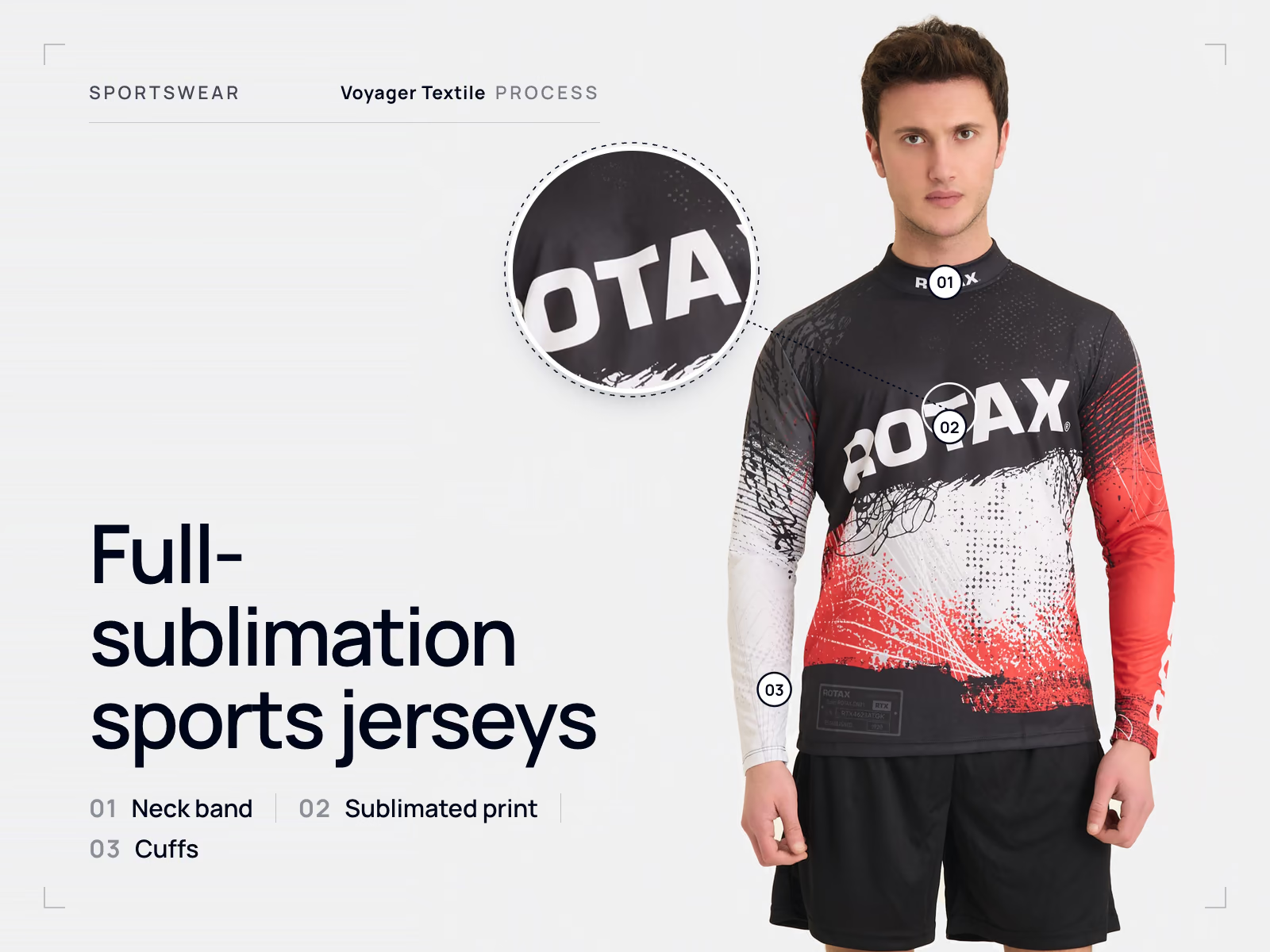
This is a stage buyers often assume is fixed, and it is not. Screen printing and transfer printing are frequently applied to cut panels before assembly, because a flat panel presses better than a finished garment and the print can run to the seam. Embroidery on a body panel is also usually worked before the panel is joined. Decoration on a finished garment is normal for smaller placements and for garments where the area is accessible. All-over sublimation is different again: the fabric itself is printed before the pieces are cut. The decoration comparison covers method selection, and each process page states where decoration falls in that garment's sequence.
Sewing and in-line control
Assembly runs as a balanced sequence of operations, each on the machine suited to it: overlock for knit seams, coverstitch for hems and neck finishes, lockstitch for wovens, bartack at stress points. In-line checks happen while a garment can still be corrected cheaply, which is the entire reason they exist. A measurement drifting at the second operation is a five-minute fix; the same drift found after final pressing is a rework order.
Phase five: finishing, quality control and packing
Finishing covers trimming loose threads, cleaning, and pressing or steaming where the fabric and the product justify it. Not every garment is pressed the same way: a structured woven jacket needs pressing as part of its construction, while a jersey tee is usually steamed lightly so the fabric is not stretched or glazed.
Final quality control checks the finished garment against the approved sample and the specification: measurements against the tolerance table, appearance, decoration position and quality, labelling, trims and workmanship. At Voyager Textile every order is checked in line during sewing and inspected piece by piece at final quality control. What buyers should define before production, including inspection level and defect classification, is covered in the quality control guide.
Packing is a specification, not an afterthought. Folding method, individual polybags, size and barcode labelling, inner boxes, solid or assorted cartons and carton marking all have to be agreed before the line reaches them, because repacking a finished order is slow and expensive.
Export preparation closes the sequence: commercial invoice, packing list, transport documentation and, for shipments moving between Türkiye and the EU, the A.TR movement certificate that lets industrial goods circulate without customs duty. The shipping guide covers Incoterms and who is responsible for what.
Where the sequence changes by garment
Garment manufacturing is not one universal flow. The phases above hold, but what happens inside them differs enough that the same factory runs a jersey tee and a lined jacket as genuinely different processes.
| Garment | What changes in the process |
|---|---|
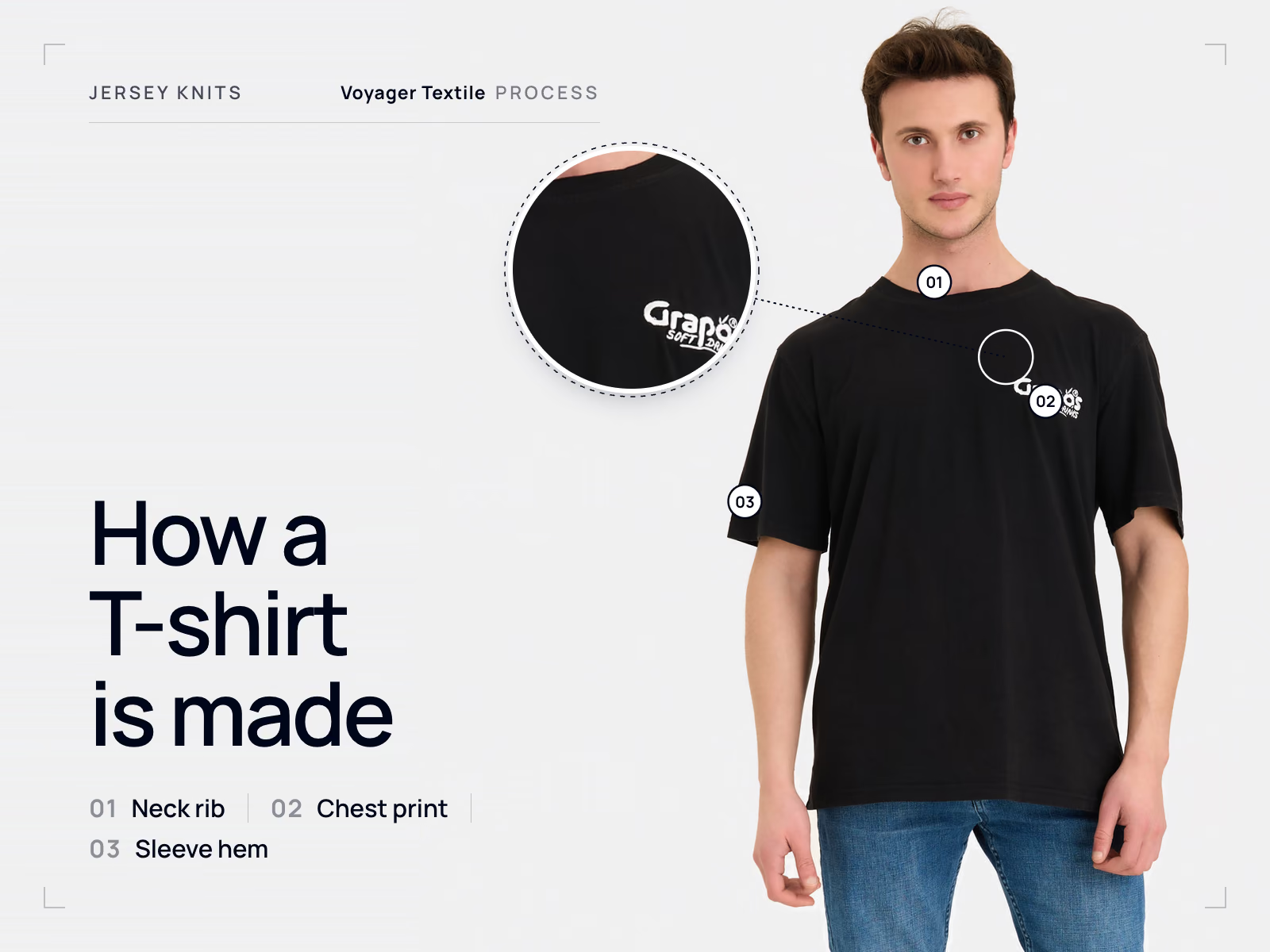
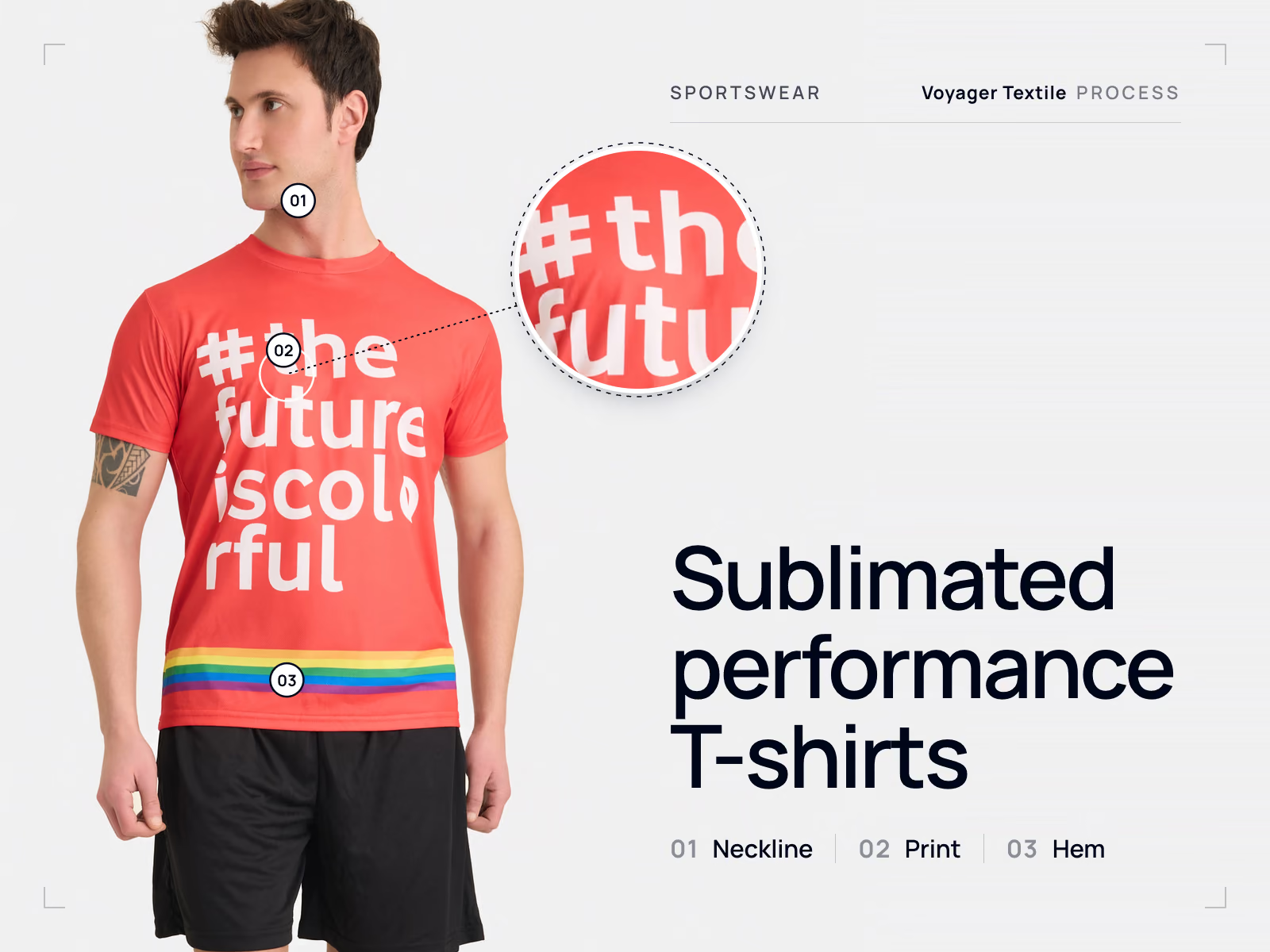
| T-shirts | Jersey relaxation and spirality control dominate; the neck rib is a sensitive operation; body prints usually run on cut panels |
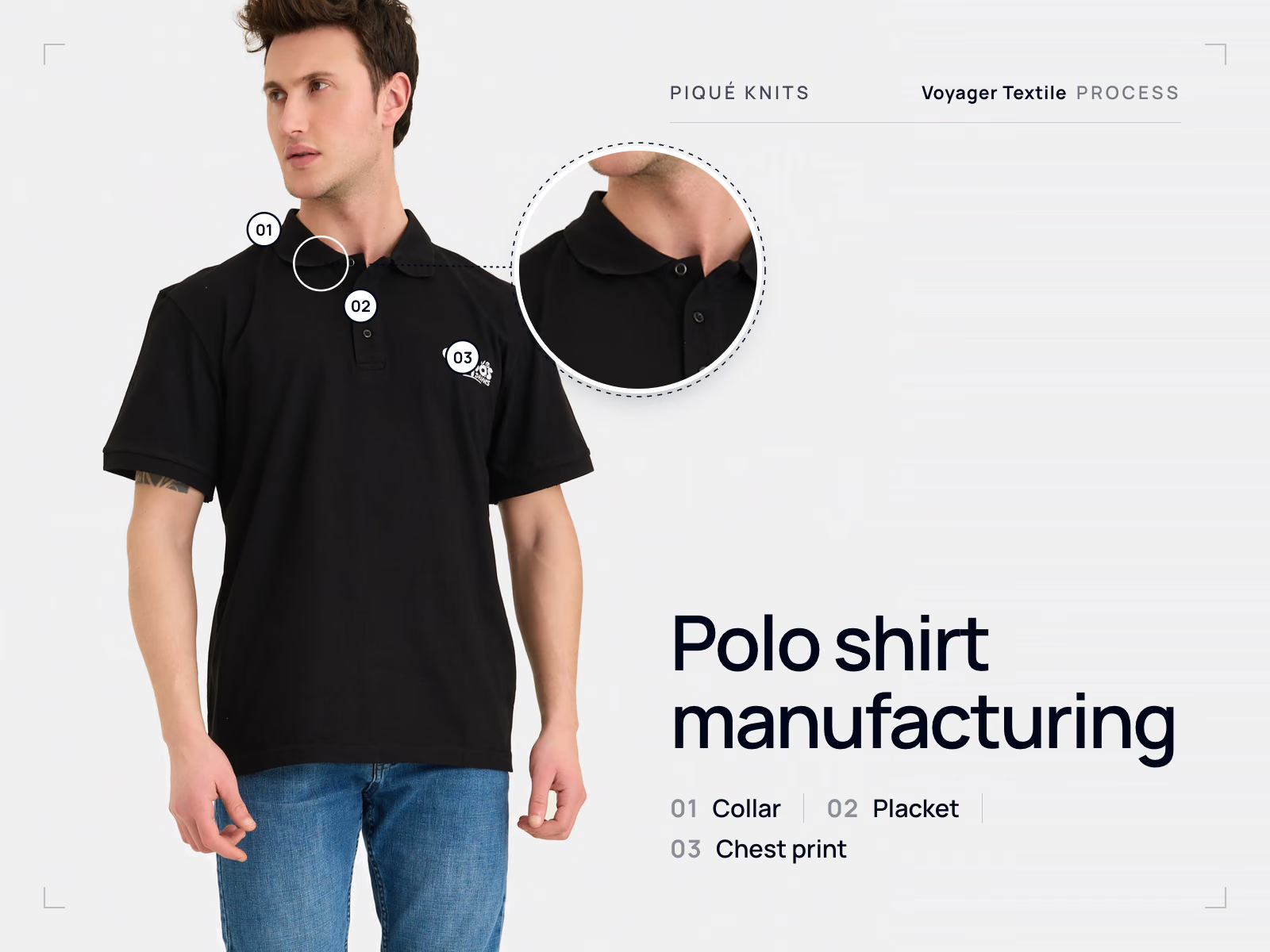
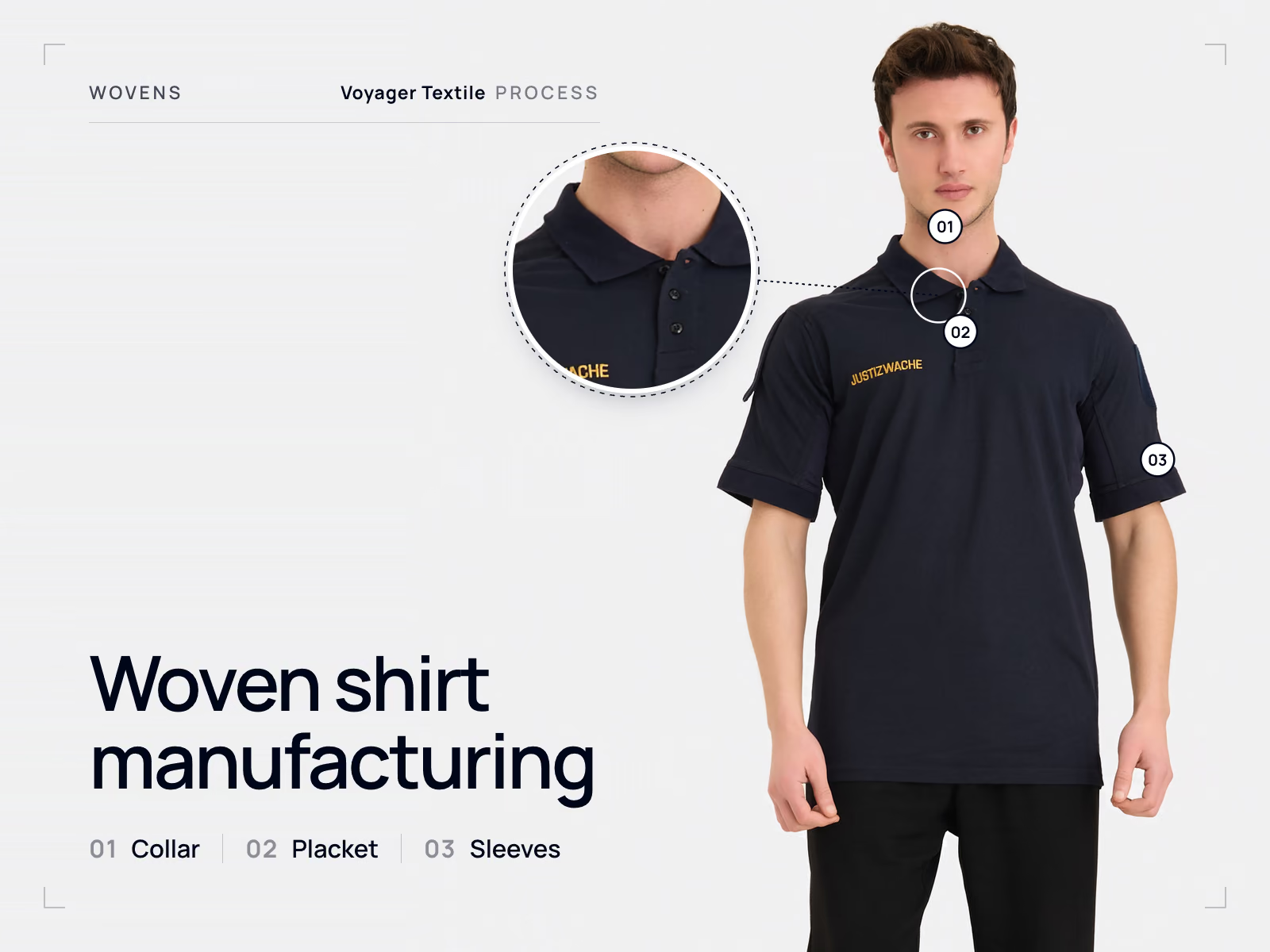
| Polo shirts | Collar and cuff are knitted separately and must match the body; the placket is the alignment-critical operation |
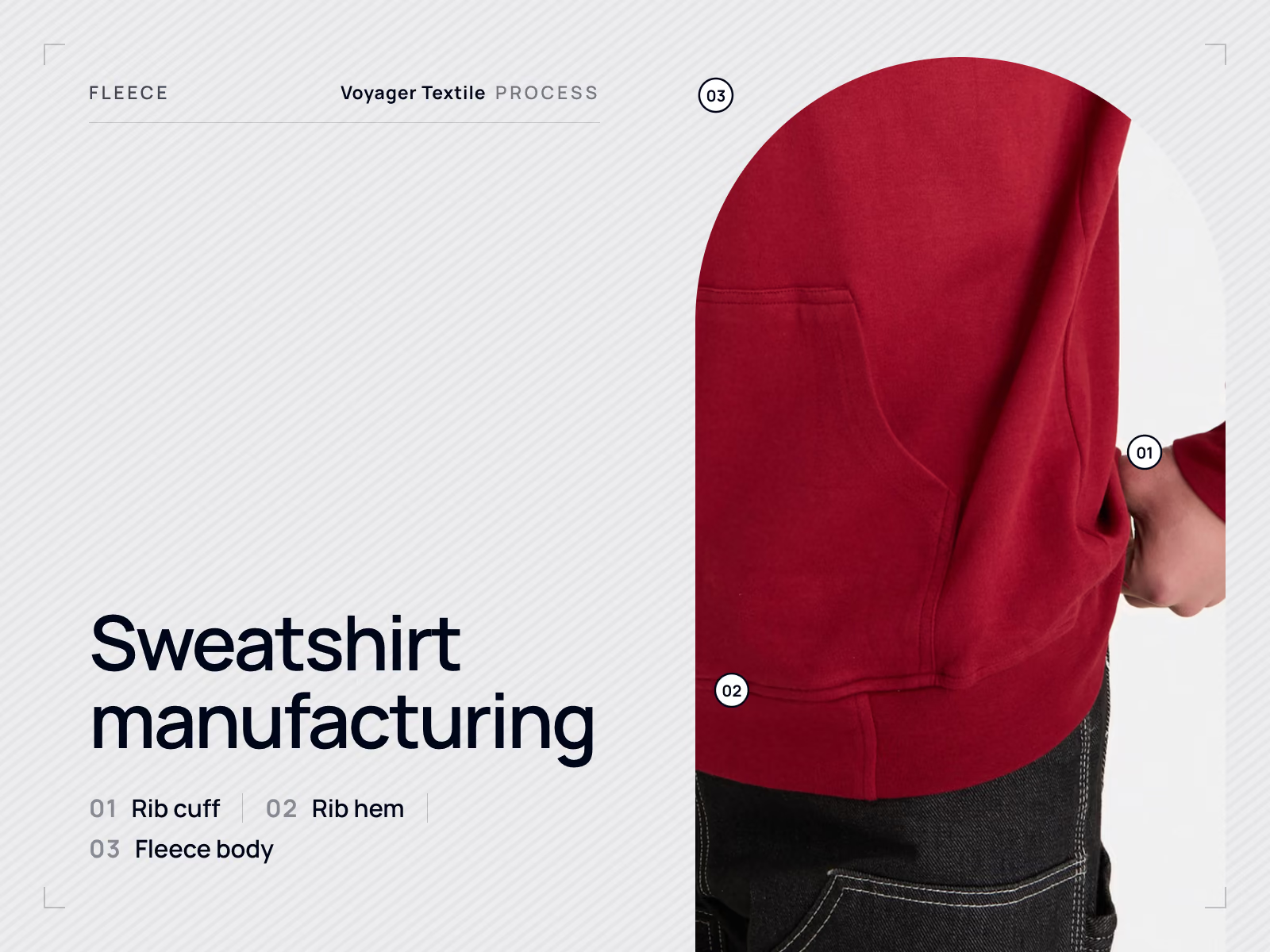
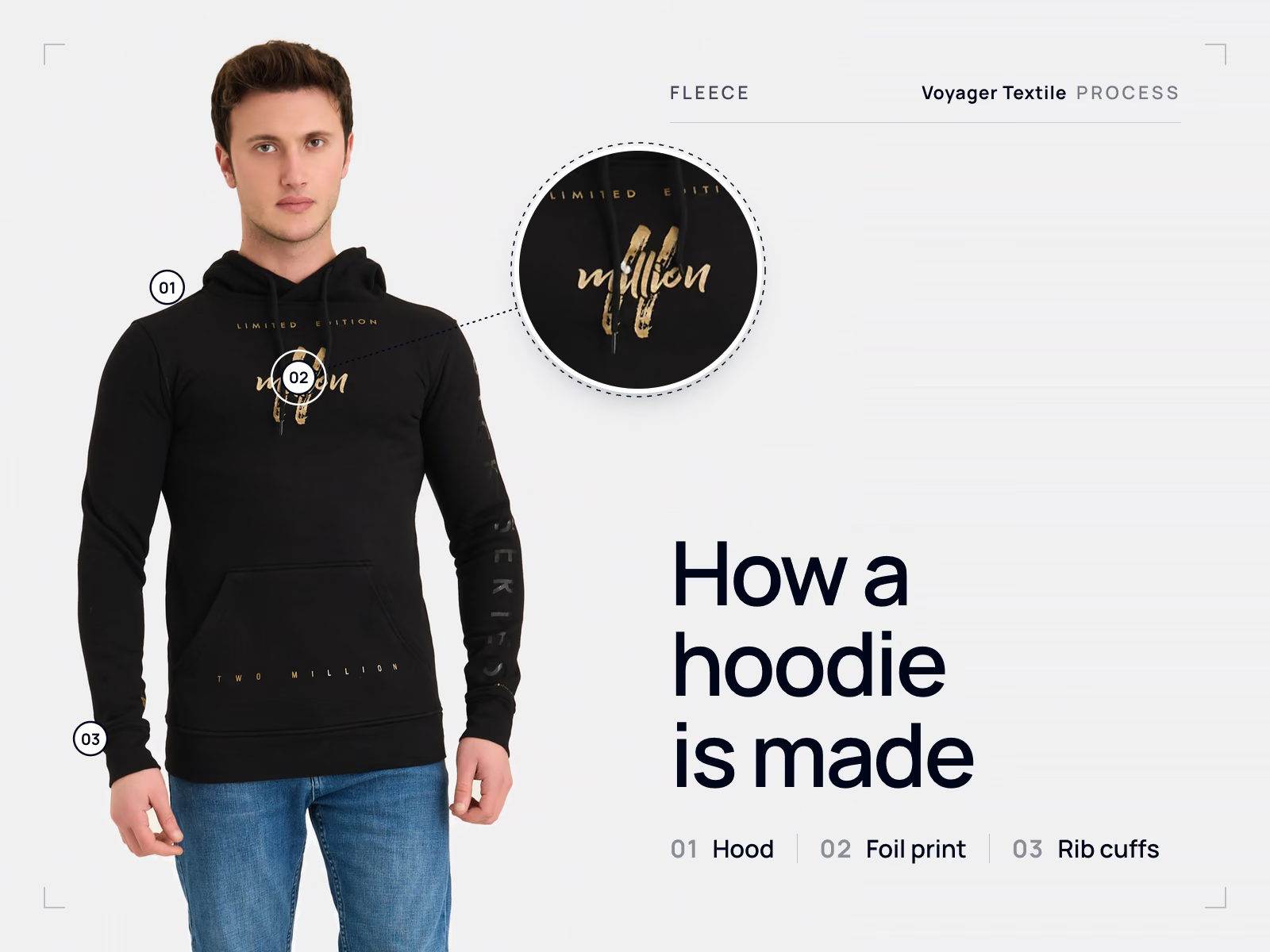
| Sweatshirts and hoodies | Heavier terry and fleece change cutting and seam bulk; hoods, ribs and drawcords add symmetry and recovery checks |
| Sublimated sportswear | The fabric is printed before cutting, so artwork is engineered to the pattern panels and registration becomes a quality parameter |
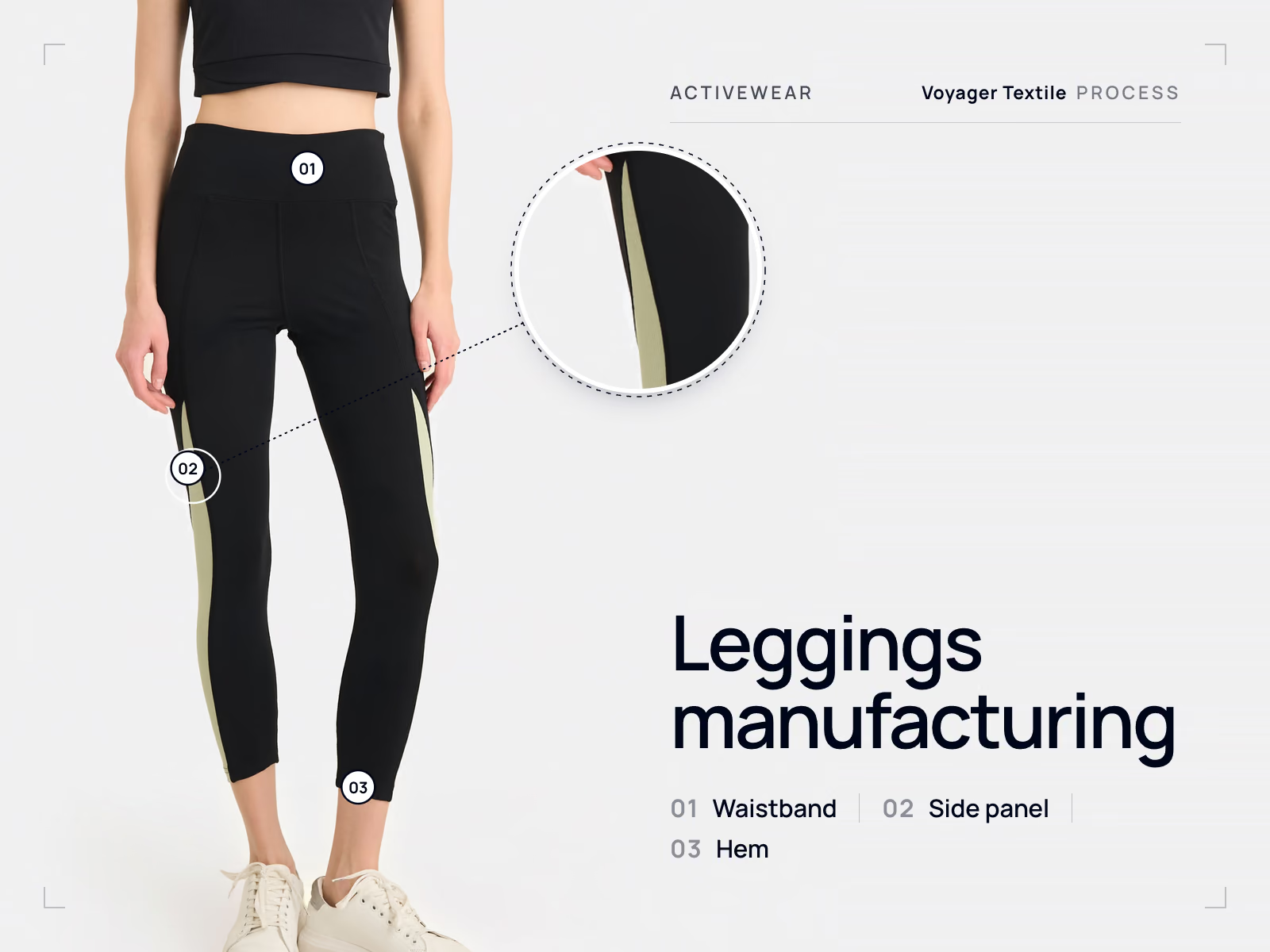
| Leggings and stretch garments | Four-way stretch handling, flatlock seams and opacity under tension take priority over pressing |
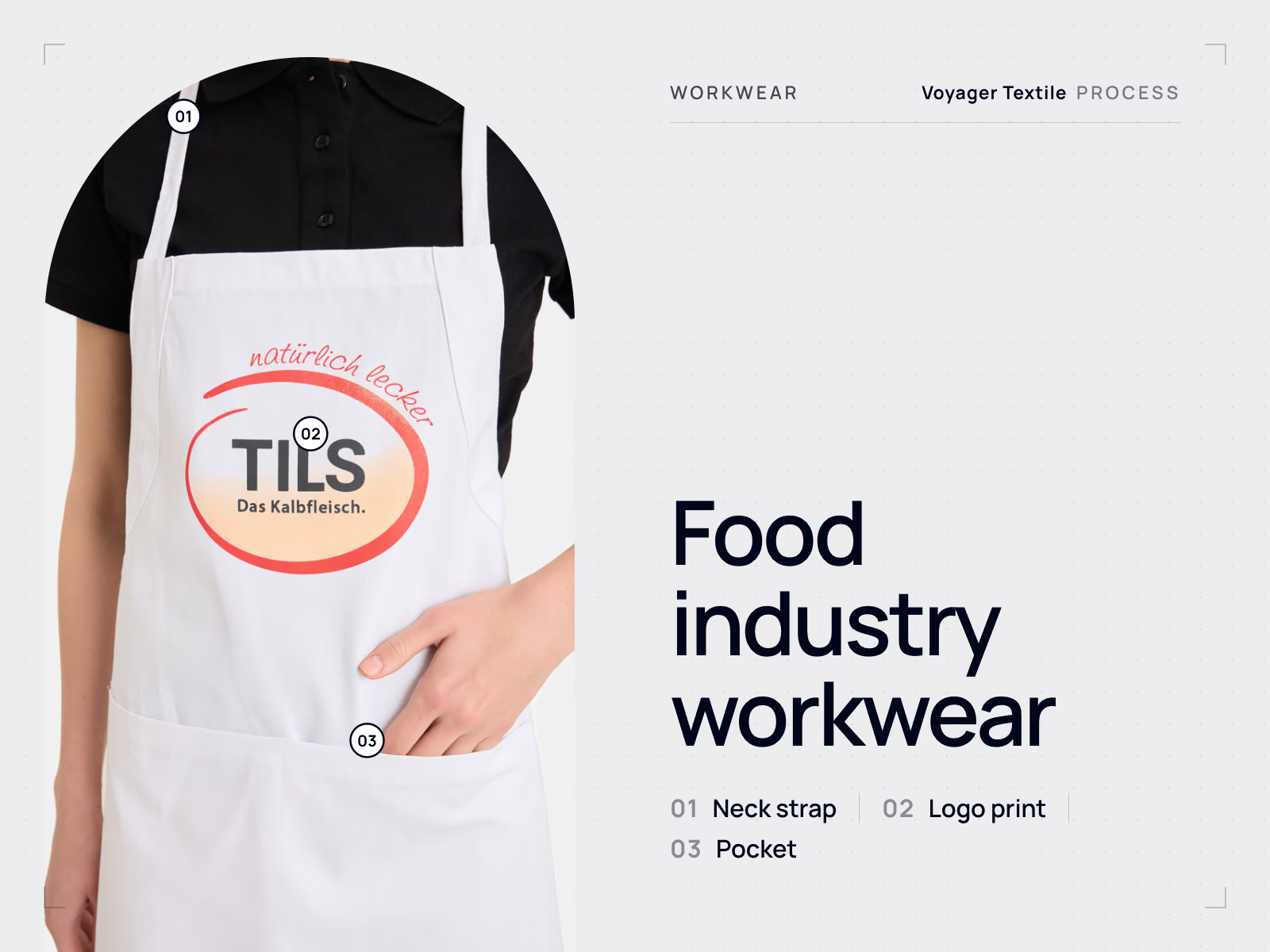
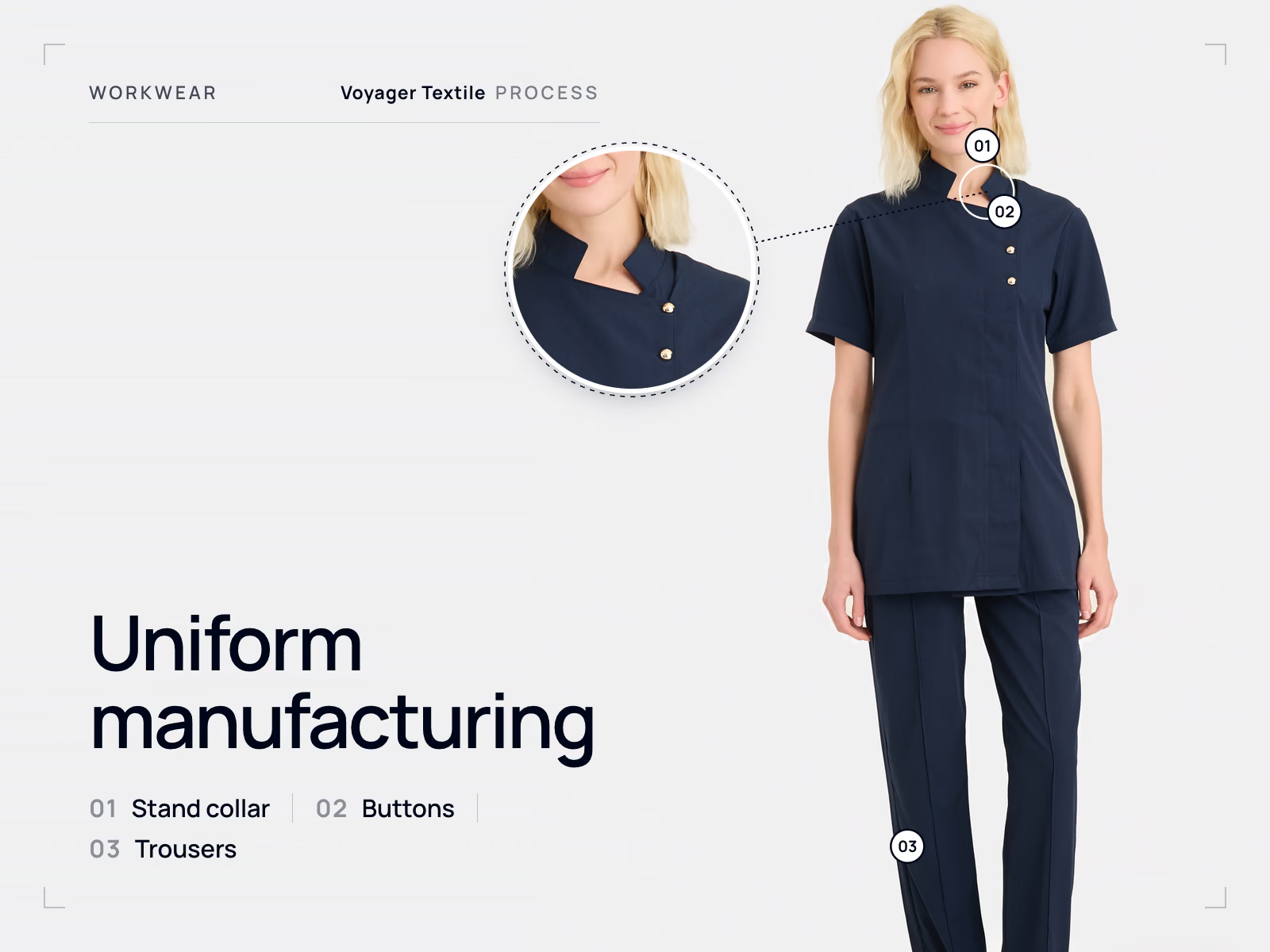
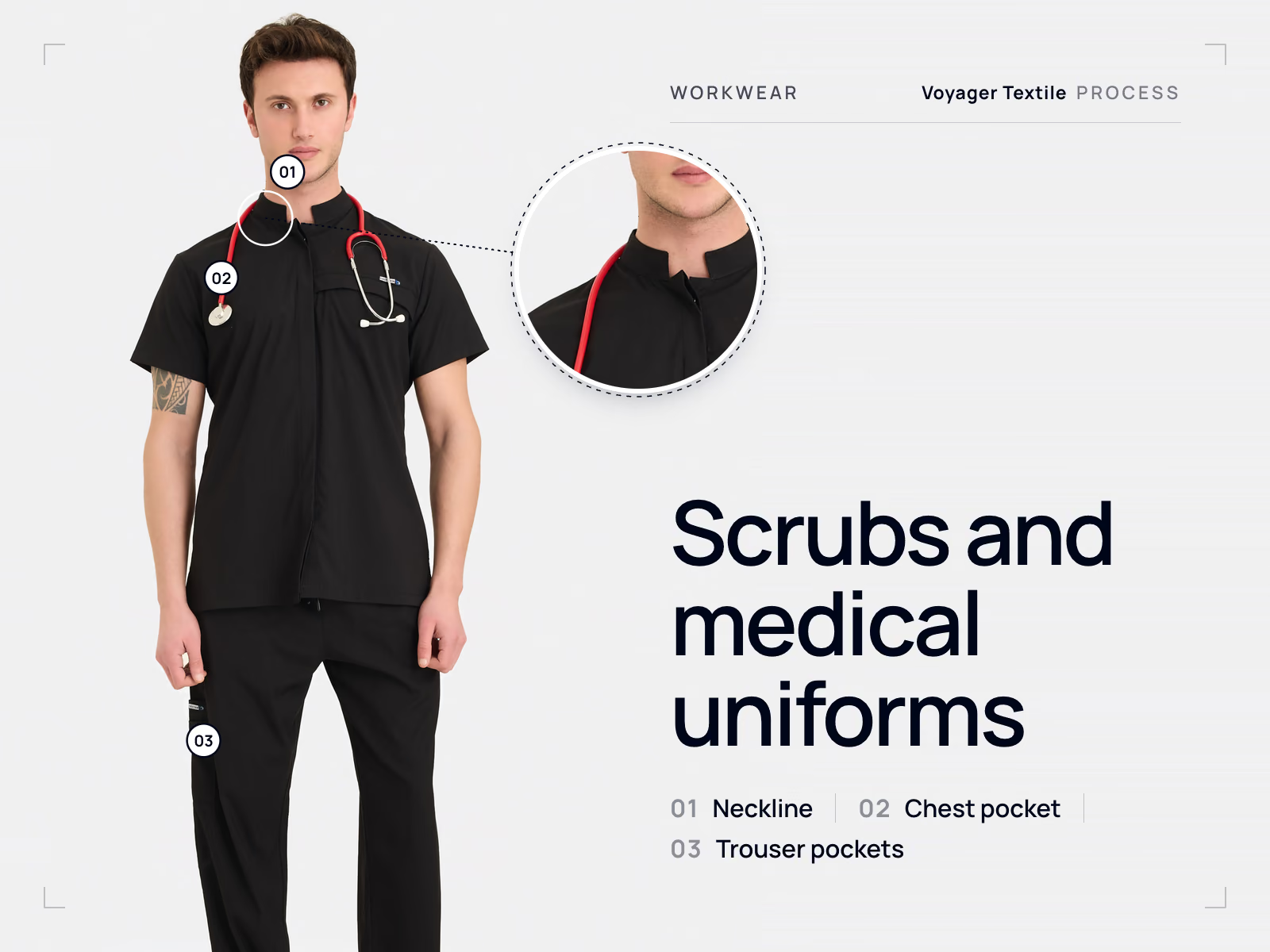
| Uniform programmes | Several garment types must match each other and stay identical for years, so material booking and version control lead the process |
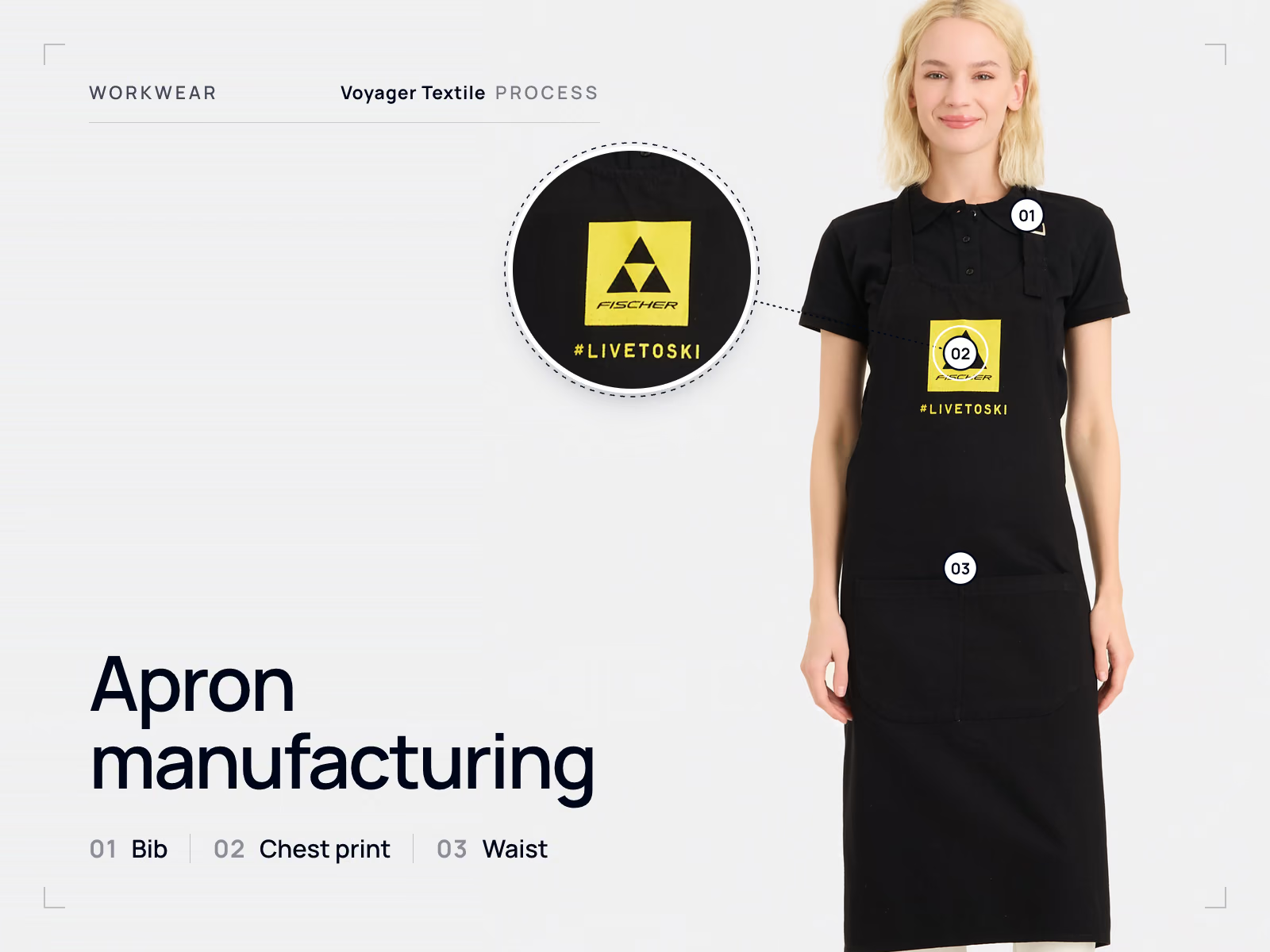
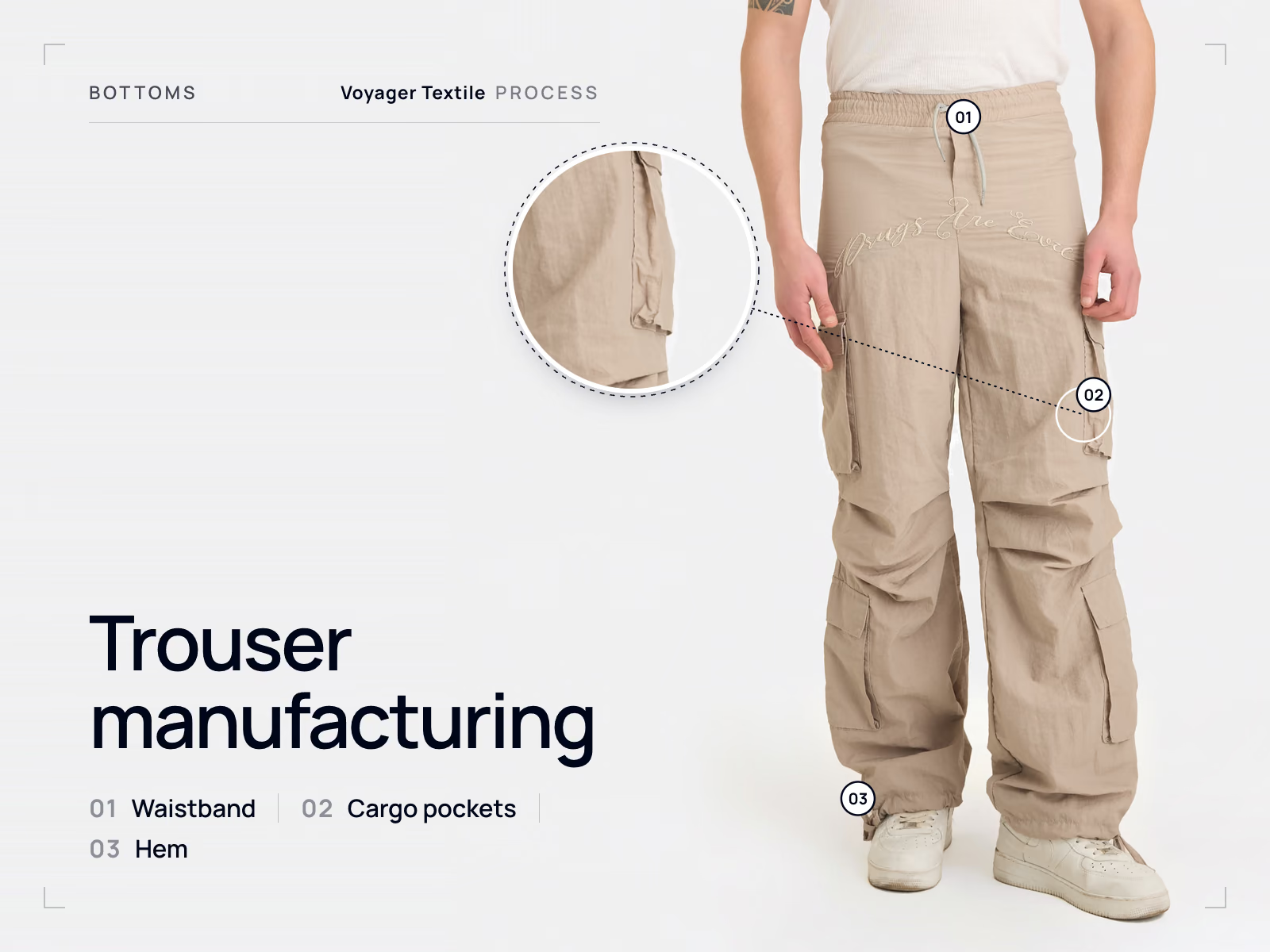
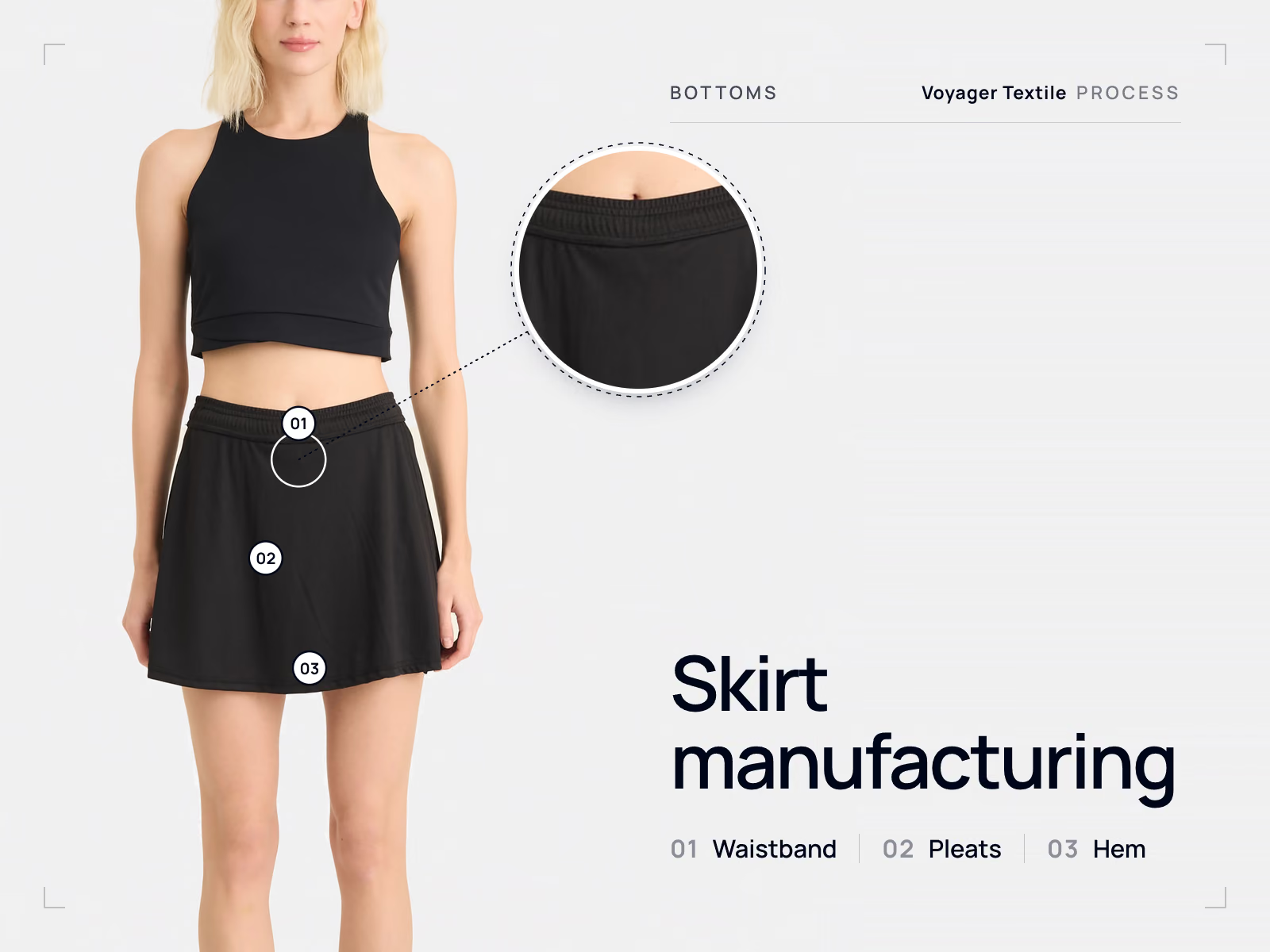
| Trousers and skirts | Waistband, closure and pocket construction are the sequence; pressing is part of construction rather than a final step |
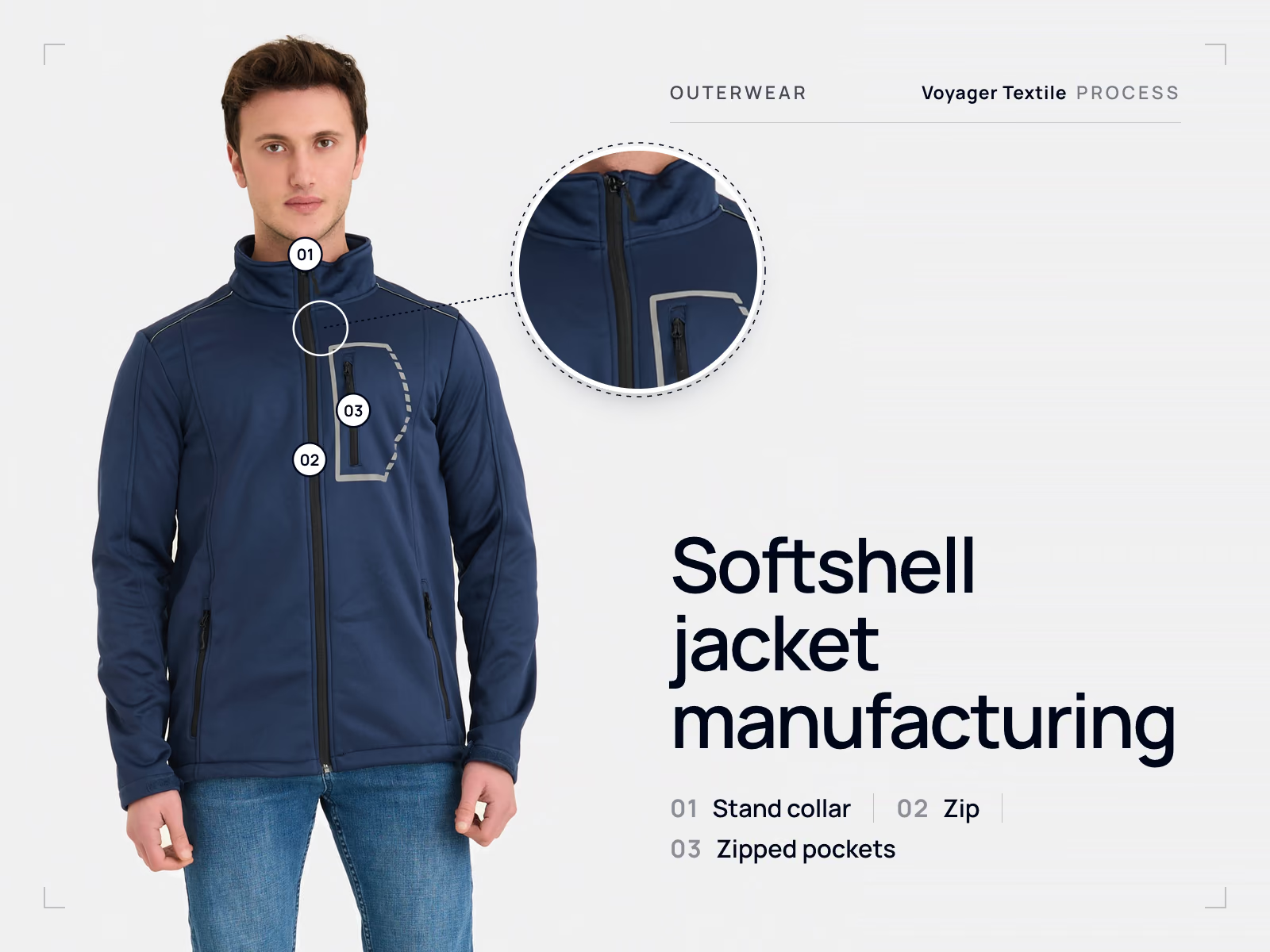
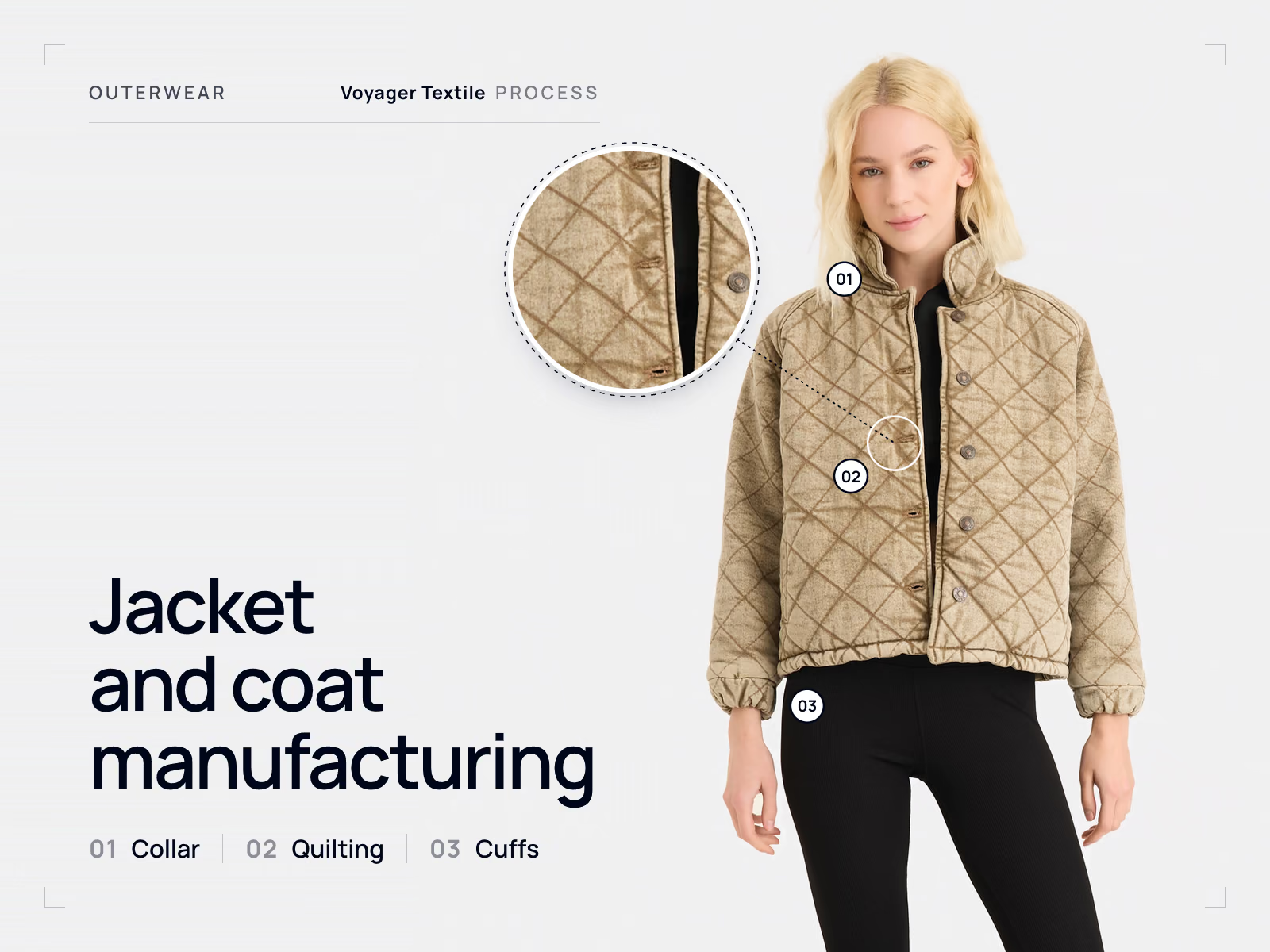
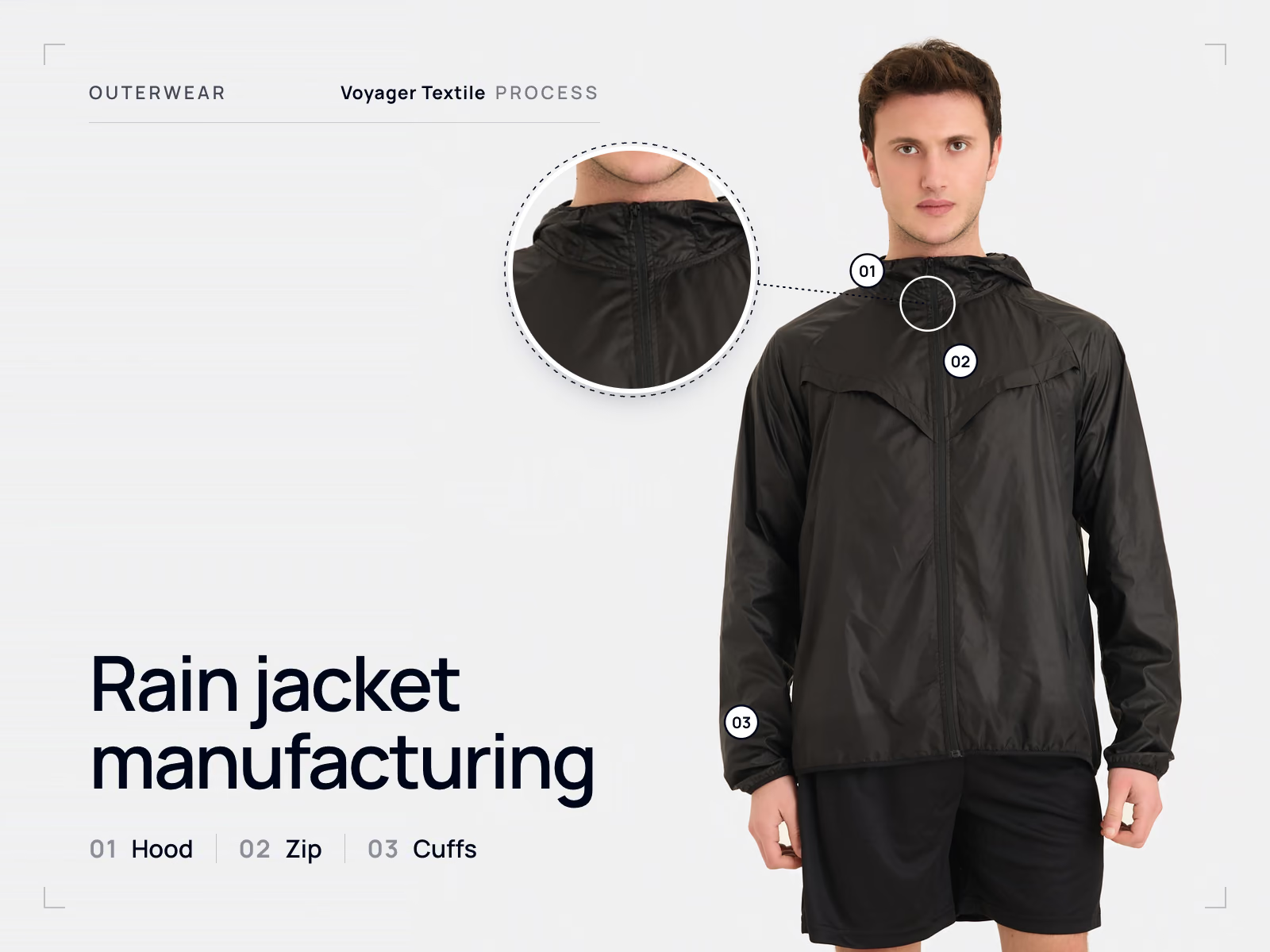
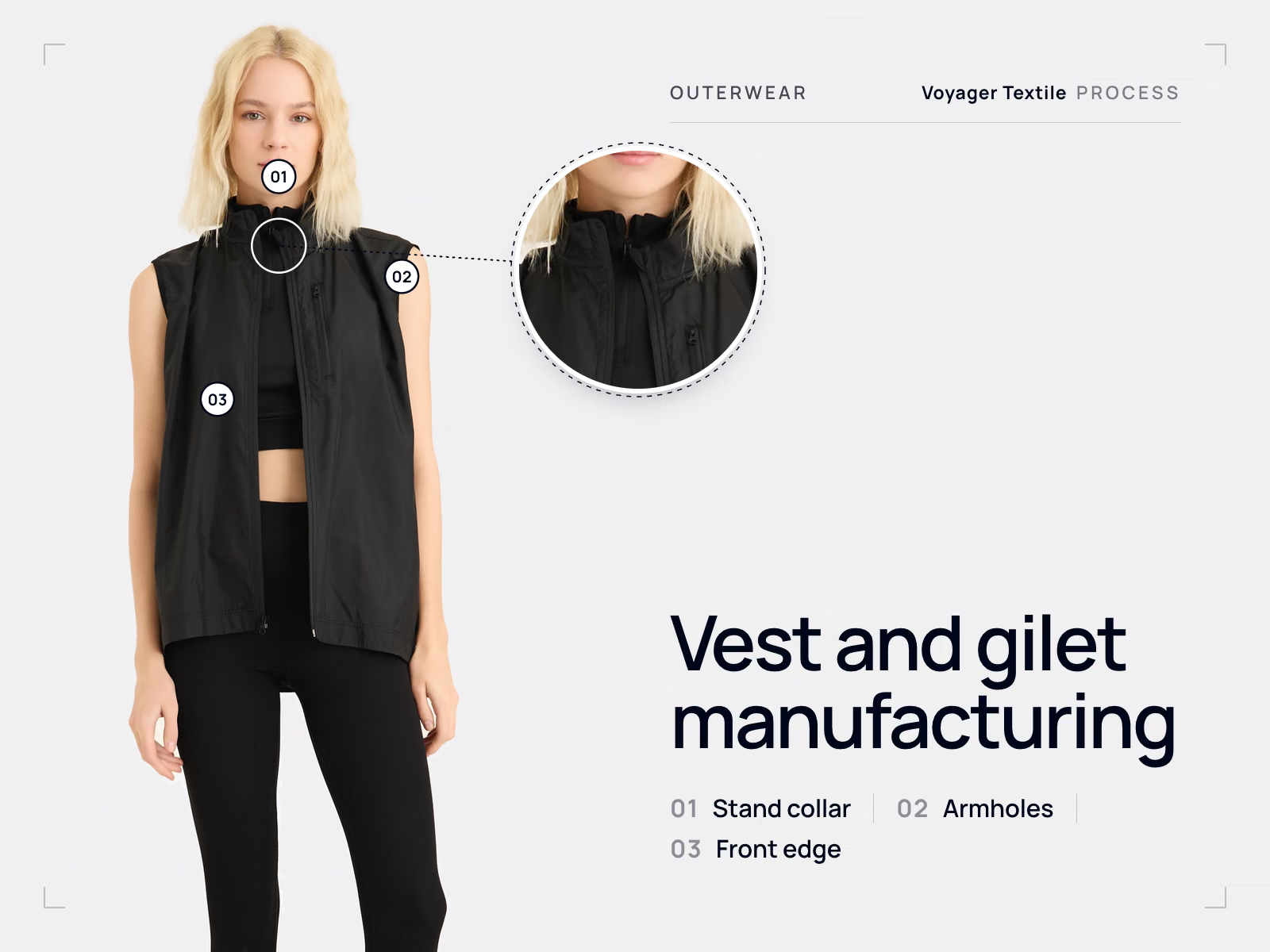
| Outerwear and shells | Multiple material layers, zips and seam management; decoration options are restricted by laminated or coated fabrics |
What is Voyager Textile's own workflow
Everything above is common apparel manufacturing practice, described so that it is useful whichever factory you work with. Voyager Textile's own workflow sits inside it as follows, and these are the only company-specific claims made on this page.
- Voyager Textile is a direct manufacturer and exporter in Türkiye producing private-label and custom garments to customer specification, with development, cutting, sewing, decoration, quality control and export preparation handled by a team of around 70 people in its own factory.
- Incoming specifications are reviewed for manufacturability, and anything unclear is raised before quotation.
- Bulk production starts only after a sample is approved, and typically takes 4 to 5 weeks from that point, depending on the product and the project.
- Embroidery, transfer printing and sublimation printing run in house. Screen printing and raised or embossed effects run with established partner facilities under Voyager's project management.
- Every order is checked in line during sewing and inspected piece by piece at final quality control against the approved sample.
- The minimum is 300 pieces per colour and per style, including custom Pantone colours and all-over sublimation.
- Monthly capacity is approximately 100,000 pieces.
- Approved samples, patterns, colour standards and packing instructions are kept on file so repeat orders reproduce the original.
The how we work section sets out the same sequence as a project timeline, and the reference catalogue shows garments already produced this way.