Jersey and fleece knitwear
Polo Shirt Manufacturing Process
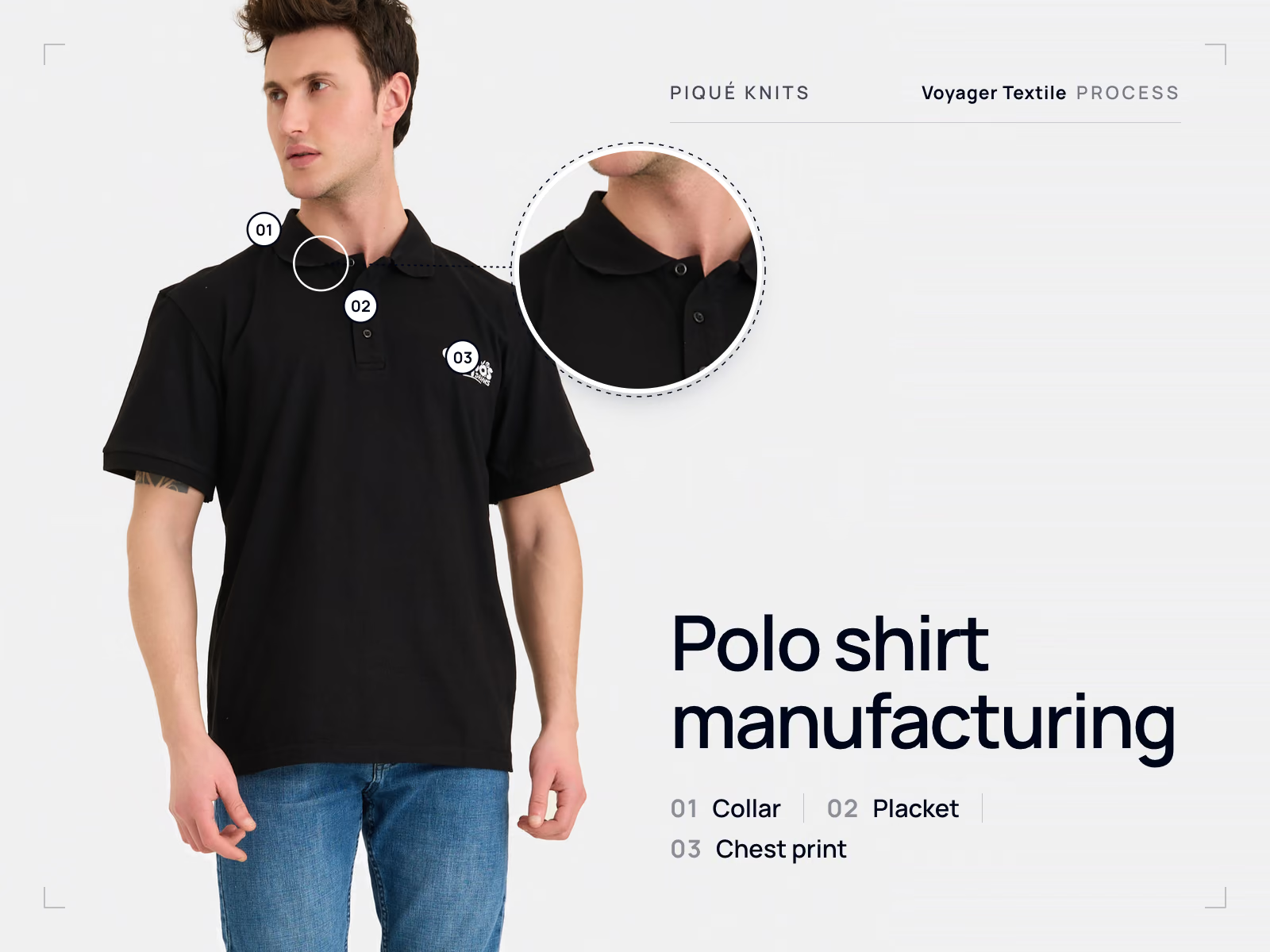
A polo shirt is a knitted garment built around three components a T-shirt does not have: a collar, a placket and usually a knitted cuff. The body is normally cut from piqué, the collar and cuffs are knitted separately to size, and the placket is set into the front before the shoulders are joined. Collar quality and placket alignment decide how the finished garment reads.
Contents
- What makes a polo different to manufacture
- Piqué and the alternatives
- The collar: a separate product inside the garment
- The placket
- Sleeves, cuffs and vents
- When branding is applied
- Assembly sequence
- Finishing and pressing
- Quality control: polo-specific checks
- What to put in a polo tech pack
- Sampling
- Polos in corporate and uniform programmes
- Buyer questions
Polos are the workhorse of corporate and uniform programmes, and they are considerably harder to make well than a T-shirt. The extra difficulty is concentrated in three places: a collar that is knitted rather than cut, a placket that must sit straight through wear and washing, and a fabric structure that behaves differently from plain jersey. Everything below follows that.
Polo shirt production sequence
What makes a polo different to manufacture
A T-shirt is four panels and a rib. A polo adds a collar, a placket with buttons and buttonholes, frequently a knitted cuff, and often side vents with a reinforced end. Each is an alignment-critical operation, and each is judged by eye on a person rather than measured flat. That is why polo production is a different job even in the same factory, and why sampling on a body matters more than it does for a tee.
Piqué and the alternatives
Piqué, sometimes written lacoste in mill catalogues, is a textured knit that gives the fabric more body and a slightly open surface. It hides creases and light marking better than plain jersey, which is exactly why it became the standard polo fabric for corporate and hospitality use.
| Structure | Typical composition | Indicative GSM range | Character | Consideration |
|---|---|---|---|---|
| Single piqué | 100% combed cotton, around 30/1 | Around 160 to 190; one mill lists 30/1 single lacoste at 160 g/m² | Classic textured surface, lighter hand | The default for corporate polos in warm climates |
| Double piqué | 100% combed cotton, around 30/1 | Around 190 to 220; one mill lists 30/1 double lacoste at 200 g/m² | Denser, more structured, holds shape better | Reads more premium and resists distortion in wear |
| Piqué with elastane | Cotton with around 3 to 5% elastane | Around 190 to 220; one mill lists a 30 denier elastane single lacoste at 200 g/m² | Comfort stretch, better fit retention | Changes shrinkage behaviour, so it needs its own fit sample |
| Cotton and polyester piqué | Blends, commonly polyester-rich for uniforms | Around 180 to 220 | Dimensional stability, faster drying, colour retention | The usual choice where garments face frequent hot washing |
| Jersey polo | Combed cotton single jersey | Around 160 to 200 | Softer, more casual drape | Less structure at the placket and hem than piqué |
| Interlock polo | 100% combed cotton | Around 170 to 200 | Smooth on both faces, stable | A cleaner surface for fine embroidery |
Composition follows the use. A hospitality or clinic programme washed several times a week is usually better served by a polyester-rich blend, while a retail polo is usually cotton. The trade-offs are set out in the composition guide.
The collar: a separate product inside the garment
This is a part buyers often underestimate. A polo collar is normally flat-knitted as a finished piece with its own edge, not cut from the body fabric, and the alternatives are set out in polo collar and placket construction. That has three consequences for planning.
- Collars are knitted to size. A collar for a small and a collar for an extra large are different pieces, so the size range is part of the collar order rather than a cutting decision.
- Collars are a separate dyeing. Collar yarn and body fabric are dyed independently, so shade matching between collar and body has to be approved deliberately. Approve the collar against the approved body fabric, not against a paper reference.
- Collar quality decides how the polo ages. A collar that curls, waves or loses its stand after washing ruins an otherwise good garment, and that behaviour comes from the collar's own construction and finishing rather than from the sewing, as explained in why collars and cuffs lose their shape.
Design options belong here as well: a plain collar, a tipped collar with contrast lines at the edge, a contrast collar, or a self-fabric cut collar for a softer casual look. Where a collar stand is used, it adds structure at the back neck and holds the collar upright. Each variant is a different component with its own lead time, so specify it before sampling rather than after.
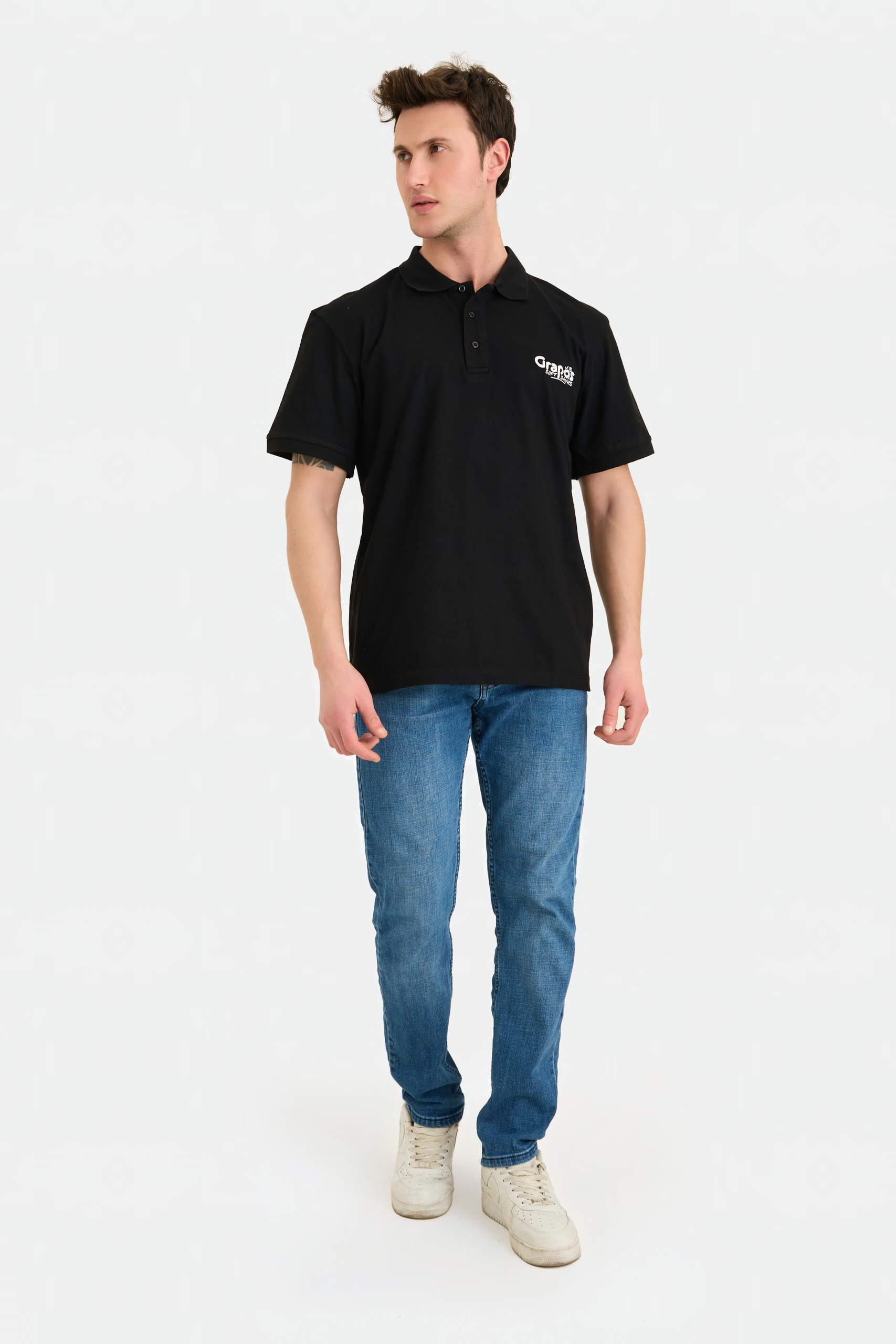
The two components that decide how a polo reads: a separately knitted collar, and a placket whose halves must meet level with the buttons on the centre front line.
The placket
The placket is the buttoned opening at the front, and it is the alignment-critical operation of the whole garment. It is normally constructed as a separate piece set into the front panel, with the two halves meeting so the buttons sit on the centre front line.
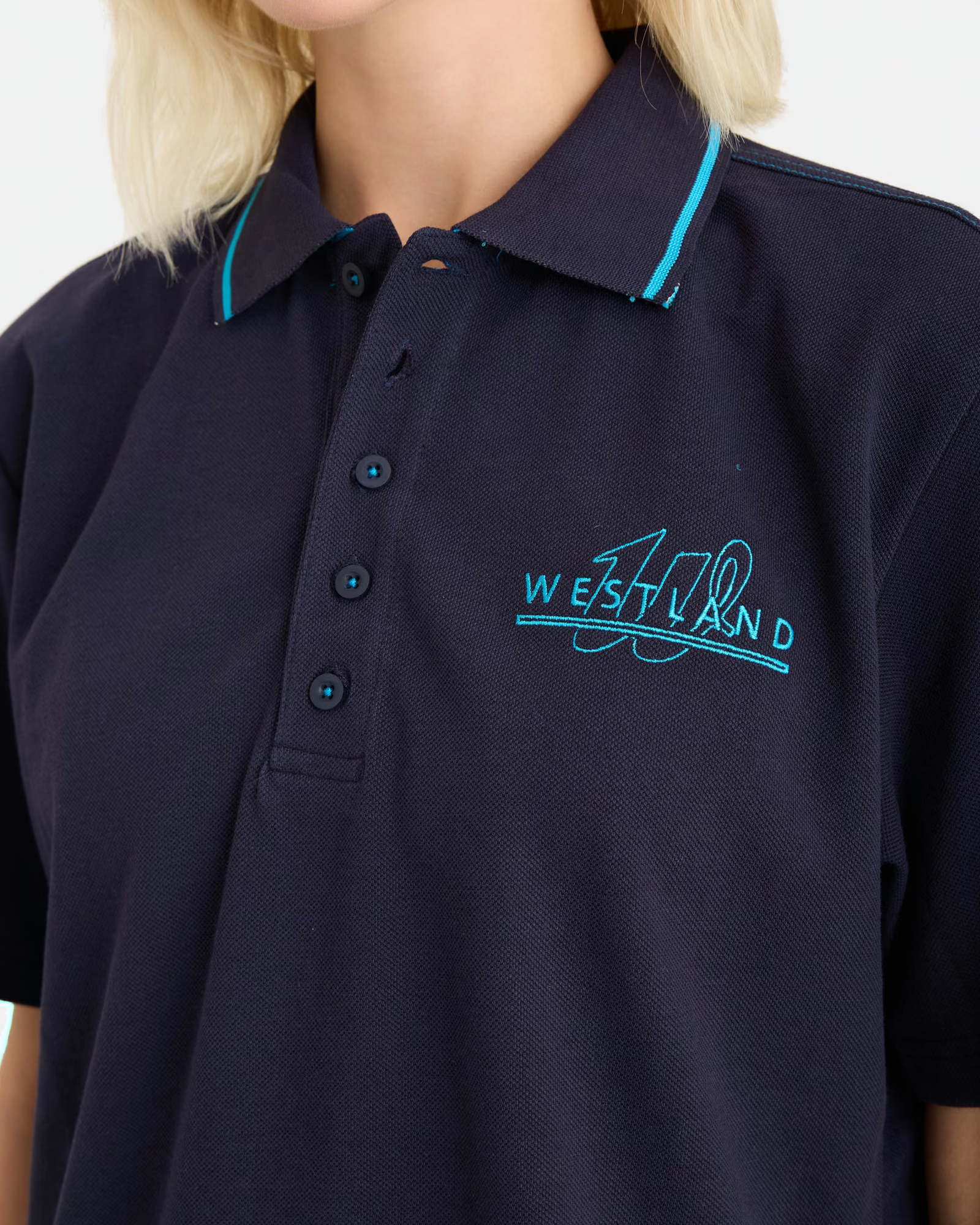
- Placket length and width decide the proportions of the front and how far the polo opens.
- Button count is usually two or three, and it should be stated with the spacing, not left to the factory.
- Buttonhole direction is a specification: horizontal buttonholes resist pulling open, vertical ones sit flatter.
- The bottom of the placket needs a finish, whether a bartack, a box stitch or a small reinforcement piece, because it is where the placket takes stress.
- Button quality and attachment matter more than they appear: a button that pulls off after five washes is a return, so specify the button and how it is attached.
Misalignment shows immediately. If the two halves of the placket do not meet level at the bottom, or the buttons do not sit on a straight line, the garment reads as badly made even when everything else is correct. This is one of the first things to measure on the fit sample.
Sleeves, cuffs and vents
Polo sleeves are finished either with a knitted rib cuff, which gives the classic sports look and grips the arm, or with a plain hem, which reads more casual and modern. The rib cuff is another knitted component with the same shade-matching consideration as the collar.
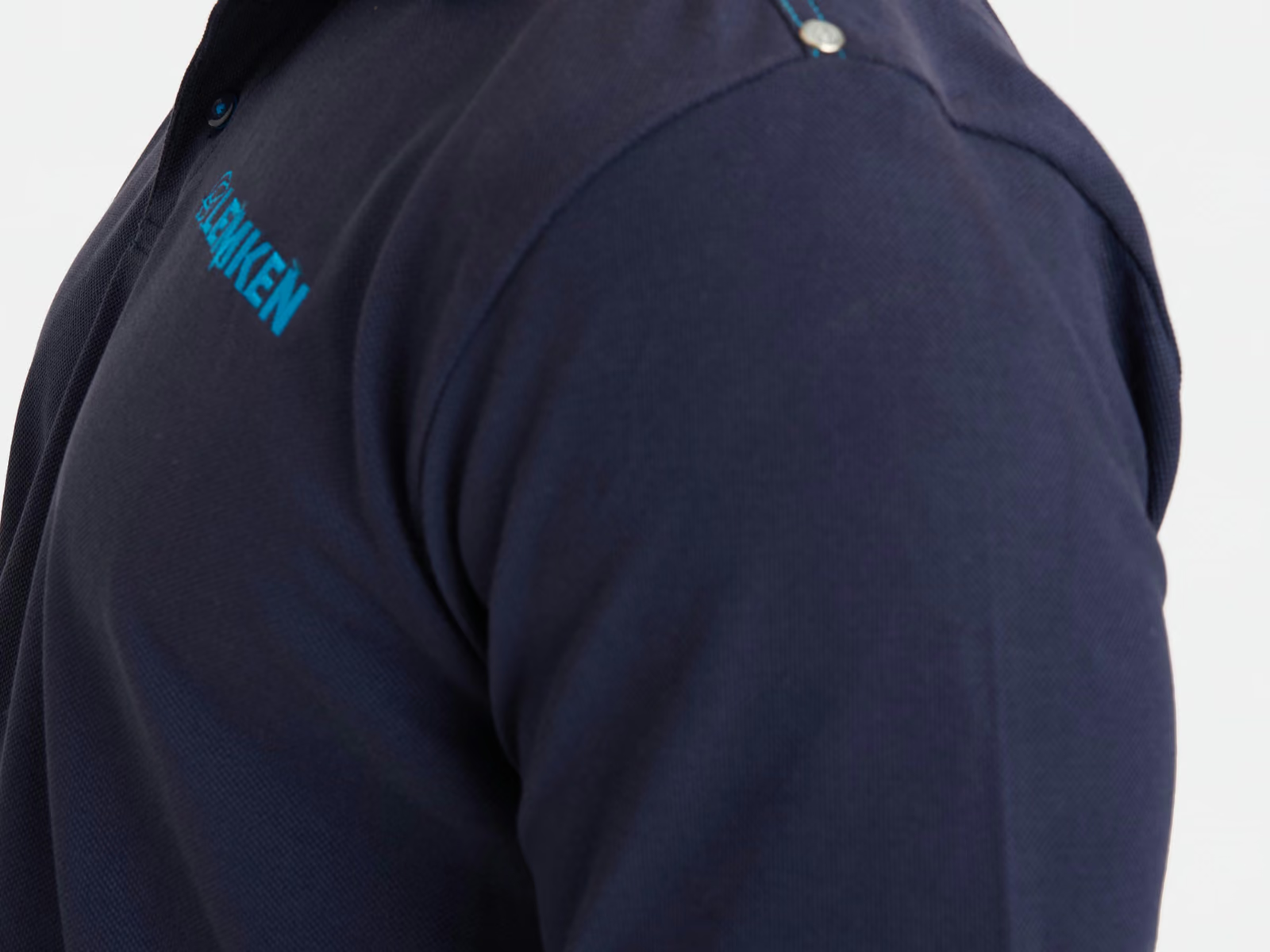
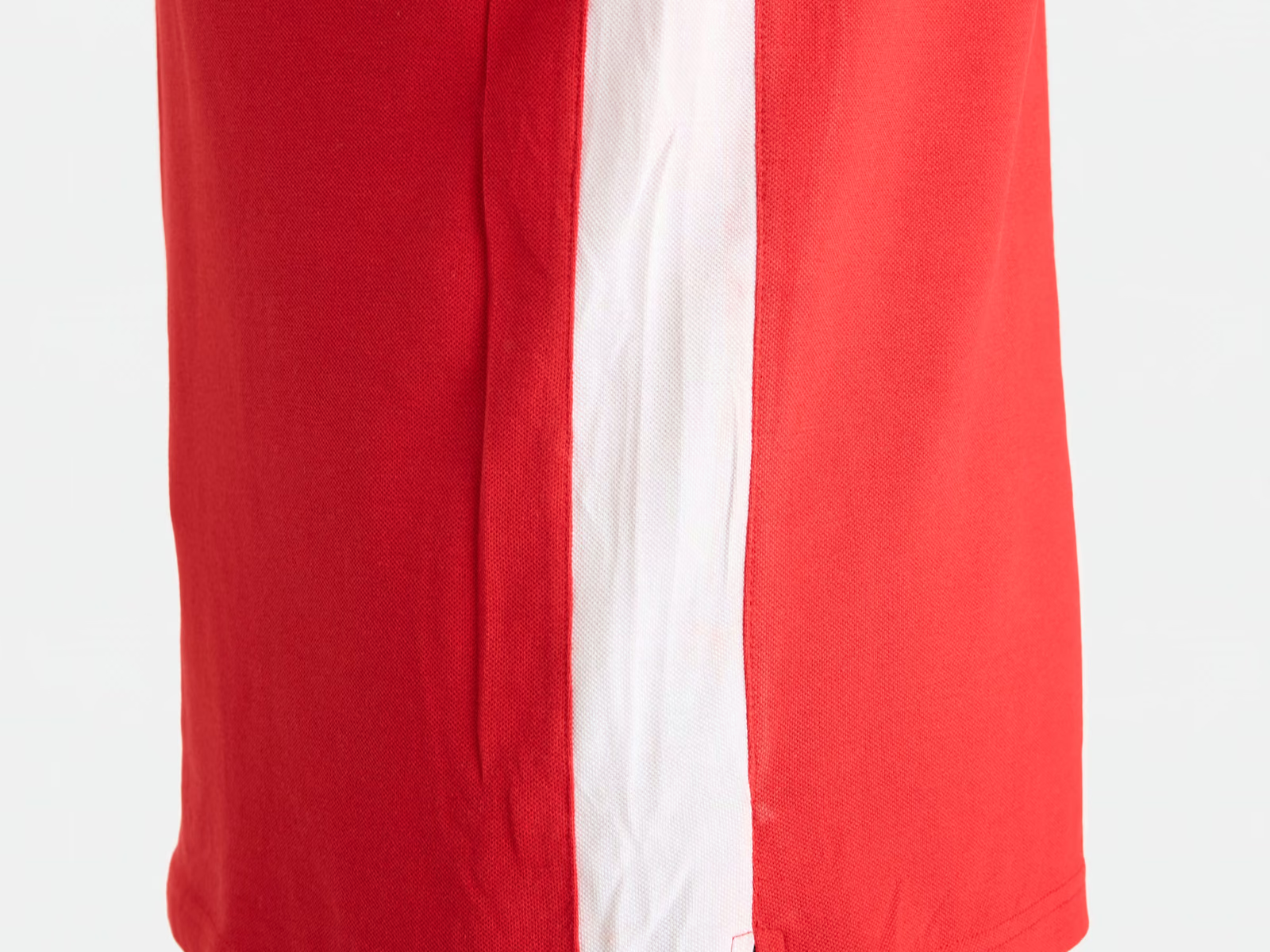
Side vents at the hem are common on corporate polos. They need a clean finish and a reinforcement at the top of the vent, since that point takes the stress when the garment is pulled. Where the vent is finished with a taped or bound edge, specify it, because it changes both the look and the cost.
When branding is applied
Embroidery is the standard for polos, particularly in corporate and uniform programmes, because it survives repeated washing and reads as more considered than a print on a textured surface. Chest embroidery is normally worked on the cut front panel before assembly, since a flat panel can be hooped cleanly and there is no finished garment to work around.
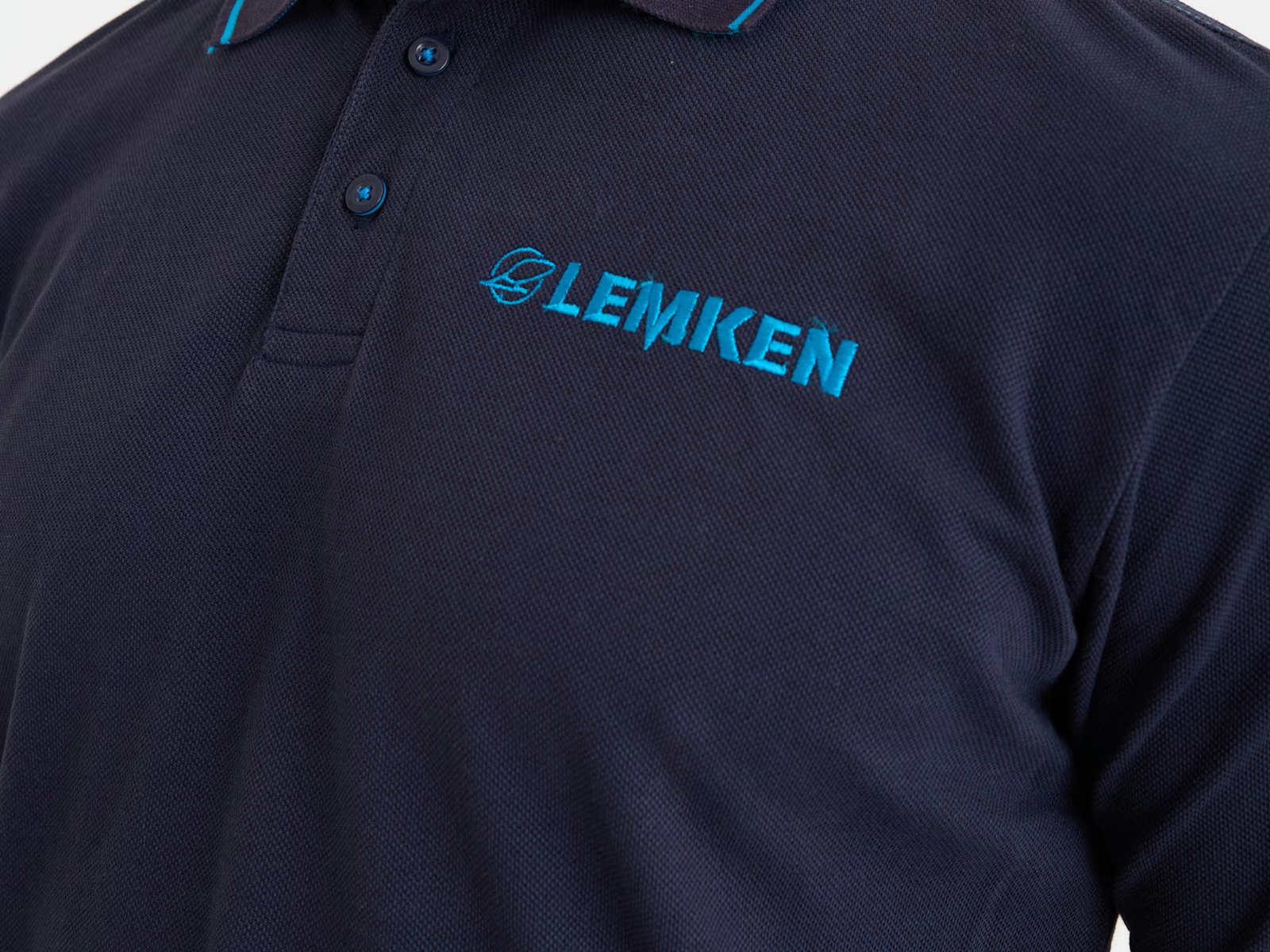
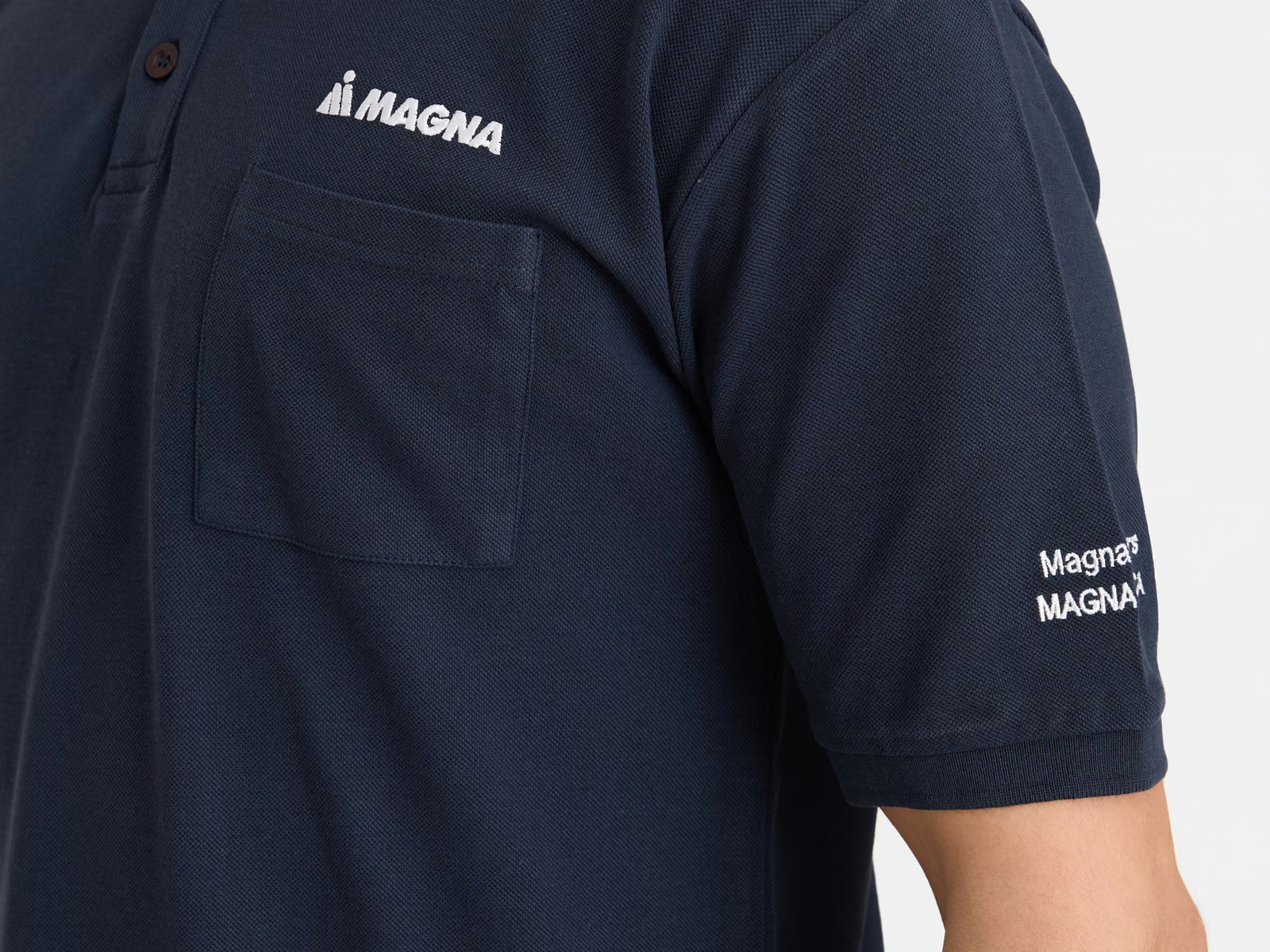
- Chest embroidery. Worked on the panel, with backing chosen for the piqué structure so the stitching does not distort the knit.
- Sleeve or back embroidery. Also panel work where the placement allows.
- Printing. Possible, but piqué's textured surface softens fine detail, so bold artwork reproduces better than thin lines.
- Collar tipping and contrast plackets. Branding through construction rather than decoration, and often a very durable option.
- Printed or woven neck labels. Specified with the collar, since the back neck construction has to accommodate them.
Embroidery needs a digitised stitch file rather than an image, and the digitising is specific to the size and the fabric. File requirements are in the artwork guide, and method selection in the decoration comparison.
Assembly sequence
- Prepare the front. The placket is constructed and set into the front panel, with the bottom finish applied.
- Decorate the panel if embroidery or a print is worked before assembly.
- Join and tape the shoulders, which stabilises the seam that carries the collar.
- Attach the collar, then finish the back neck with a tape or a facing so the seam is clean and comfortable.
- Set the sleeves flat, then attach cuffs where specified.
- Close the side and underarm seams, forming and finishing the vents where used.
- Hem the bottom or finish the vents to the specified detail.
- Work the buttonholes and attach the buttons to the placket.
- Attach labels, trim, press and inspect.
Finishing and pressing
Polos are pressed more deliberately than T-shirts. The collar and the placket are the areas that need it, since both should sit flat and square on the folded garment, and both are the first thing a buyer looks at when the carton is opened. Pressing is controlled so that the piqué surface is not flattened or glazed.
Quality control: polo-specific checks
| Check | What it catches |
|---|---|
| Placket alignment and level | A highly visible construction fault on a polo |
| Collar shape, stand and edge | Curling, waving or a collar that will not hold its stand |
| Collar and cuff shade against body | Separately dyed components drifting from the body fabric |
| Buttonhole position, size and finish | Buttons that sit off-line or holes that fray |
| Button attachment strength | Buttons lost in washing |
| Vent reinforcement | Splitting at the top of the side vent |
| Measurements against tolerances | Shrinkage and cutting drift |
| Embroidery position and backing | Distorted knit around a dense logo |
For programmes that face industrial laundering, add dimensional stability and colourfastness testing at the actual wash temperature. The tests worth specifying are set out in the quality control guide.
What to put in a polo tech pack
- Body fabric: piqué type, composition, target GSM with a range, and finish.
- Collar: knitted or self-fabric, width, depth, tipping or contrast detail, and whether a stand is used.
- Cuff: knitted rib or plain hem, with width.
- Placket: length, width, number of buttons, button spacing, buttonhole direction and bottom finish.
- Buttons: size, material, colour and attachment.
- Side vents: present or not, height and finish.
- Measurements with tolerances, including neck and placket length.
- Embroidery: digitised file, physical size and placement measured from a fixed point.
- Labels: main, size and care, plus back-neck finishing.
- Colours: Pantone references or approved swatches for body, collar, cuff and tipping separately.
- Packing: fold, bag, hangtag, carton assortment.
Sampling
Sample a polo on a body, not only flat. The collar stand, the way the placket sits when the garment is worn open, and the sleeve length relative to the cuff are all judged in wear. A development sample proves construction, a fit sample confirms measurements, and a pre-production sample in bulk fabric with the actual collar, buttons and embroidery is the reference bulk is inspected against.
For a uniform programme, add a size set. Collars are knitted per size, so the extremes of the range are where a collar-to-body relationship can go wrong. The stages are covered in the sampling guide.
Polos in corporate and uniform programmes
Much polo production is programme production rather than one-off orders, which changes what matters. Colour has to hold across years and deliveries, since garments bought in different orders are worn side by side. Sizes have to remain available and fit identically. Embroidery has to be reproduced from the same digitised file each time.
The controls are the same ones that make any repeat programme work: a sealed approved sample, an approved physical colour standard for body and collar, a version-controlled specification, and fabric booked for the programme rather than the order. See keeping reorders consistent and the uniform manufacturing process. Merch, promotional textiles, corporate wear and workwear programmes for polos are covered on the polo shirt manufacturer page.
Before you send a polo RFQ
- Piqué type, composition and target GSM
- Collar construction, width and any tipping or contrast
- Cuff type: knitted rib or plain hem
- Placket length, button count and spacing
- Button specification and colour
- Side vents: required or not
- Size range and split, plus a measurement chart or reference garment
- Embroidery artwork, size and placement
- Colours for body, collar and cuff, with Pantone references if custom
- Label set and packing requirements
- Quantity per colour and expected reorder pattern
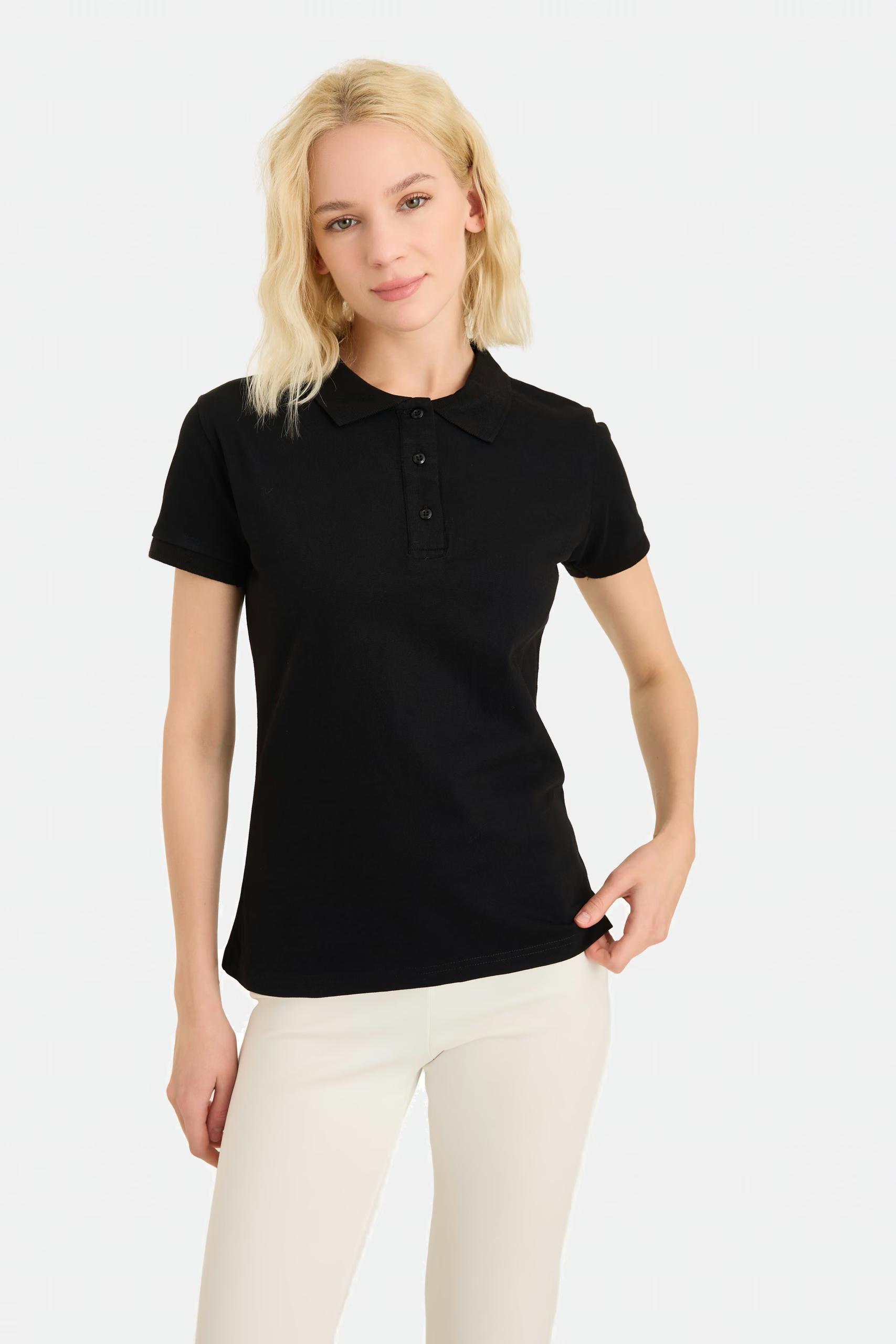
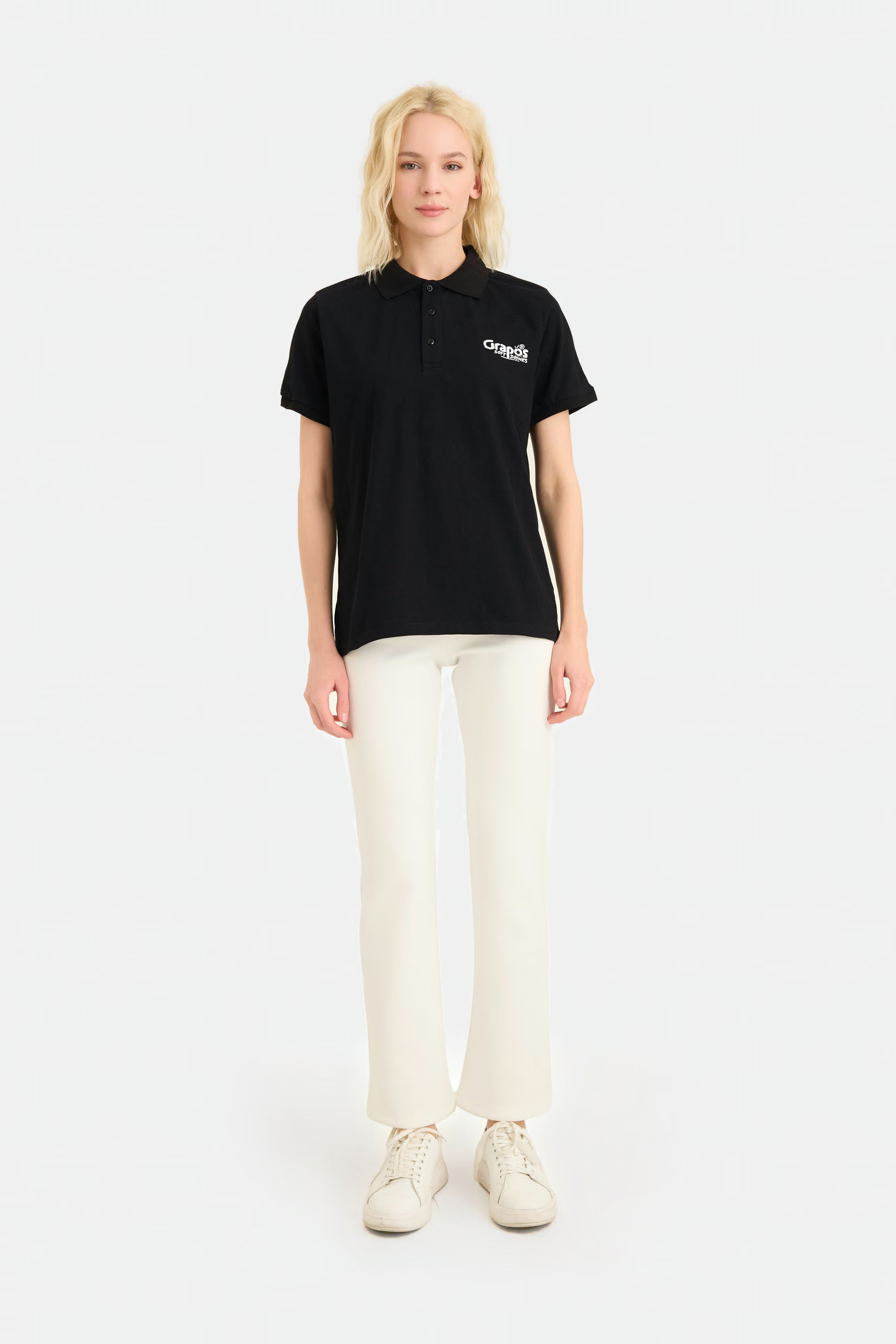
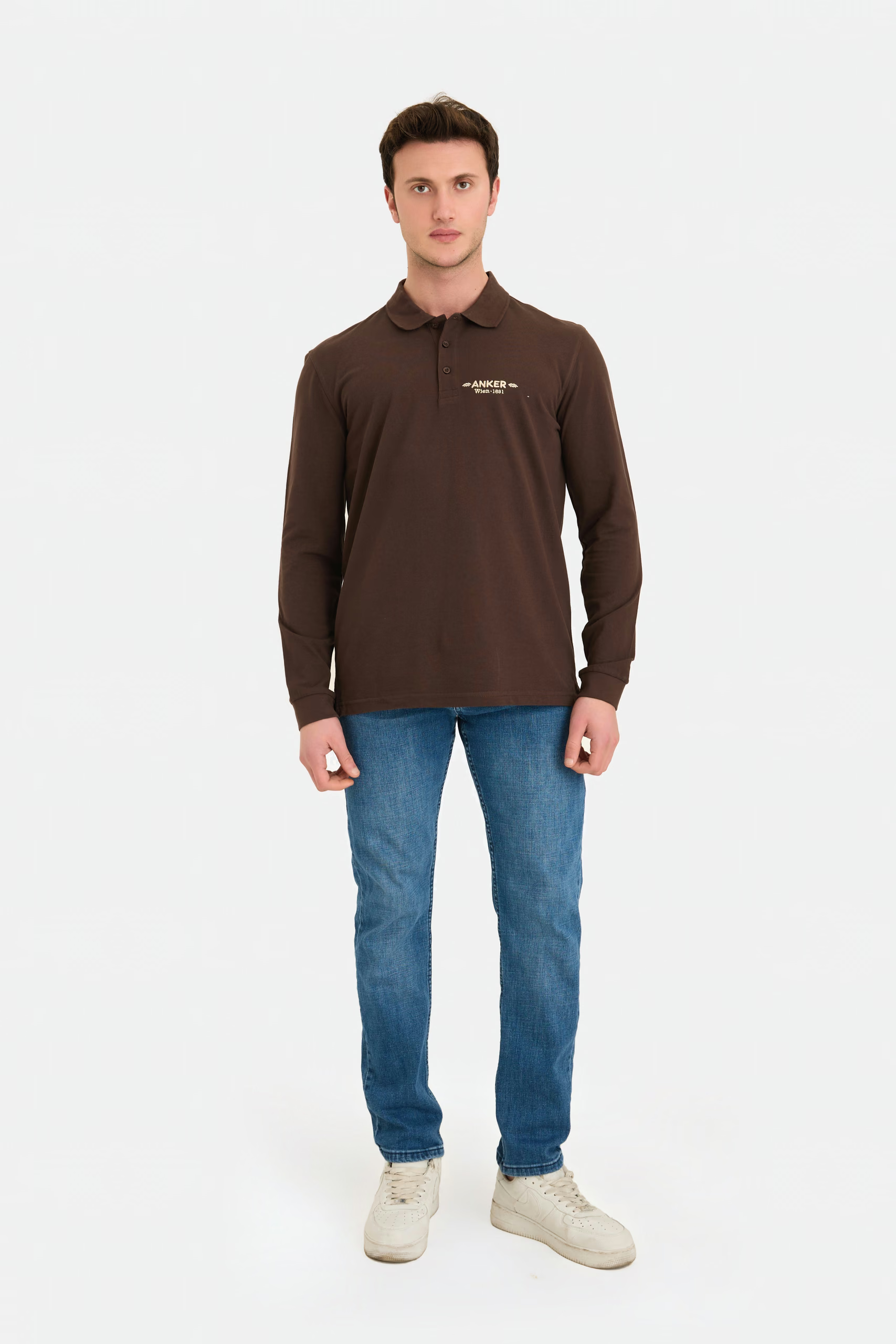
Polo references produced by Voyager Textile
Produced to customer specification. Quote an article code to start development from an existing construction.
Buyer questions
What fabric is commonly used for polo shirts?
Cotton piqué is a common structure, because its textured knit gives more body than plain single jersey and hides light creasing. Cotton and polyester piqué is used where garments face frequent washing, and stretch piqué with a small elastane content where fit retention matters. Jersey and interlock polos exist and read softer and more casual.
What is the difference between single and double piqué?
Double piqué is the denser structure. It typically sits around 190 to 220 g/m² against roughly 160 to 190 for single piqué, holds its shape better and reads more premium, while single piqué is lighter and better suited to warm climates.
Are polo collars cut from the body fabric?
Usually not. Collars are normally flat-knitted as separate finished pieces, produced to each size, with their own dyeing. That is why collar shade has to be approved against the approved body fabric and why the size range affects collar planning.
Why do polo collars lose their shape?
Because of the collar's own construction and finishing rather than the sewing. A collar with poor recovery curls or waves after washing. Check it on the sample by handling the collar after a wash test rather than judging a new sample, and specify the collar quality rather than accepting a default.
How many buttons should a polo have?
Two or three is standard, and the choice is a design decision rather than a technical one. What matters technically is that the count, the spacing, the buttonhole direction and the placket bottom finish are all specified, since these decide whether the front sits straight.
When is embroidery applied to a polo?
Chest embroidery is normally worked on the cut front panel before the garment is assembled, because a flat panel can be hooped cleanly. Backing is chosen for the piqué structure so that dense stitching does not distort the knit.
Can polos be produced in a custom Pantone colour?
Yes, and the collar and cuff need to be matched to the body as separate components. At Voyager Textile custom Pantone colour production starts at 300 pieces, with a lab dip approved on the actual fabric before bulk dyeing.
What is the minimum order for custom polo shirts?
At Voyager Textile, 300 pieces for custom apparel production. How a minimum applies to a specific product, colour split and size range is confirmed at RFQ stage; see the MOQ guide.
How do we keep polos identical across yearly reorders?
Keep a sealed approved sample, an approved physical colour standard for body, collar and cuff, a version-controlled specification and the same digitised embroidery file, and book fabric for the programme where volumes allow. See reorder consistency.
Ordering this garment from Voyager Textile
- Every garment is made to order, to your own design.
- The minimum order is 300 pieces per colour and per style. Sizes can be split inside the 300, and a custom Pantone colour carries the same minimum of 300 pieces. Polyester-based fabrics are assessed separately.
- A sample takes 5–7 business days. Bulk production takes 4–5 weeks after sample approval; development, sampling and shipping are additional.
- Cutting, sewing, embroidery, transfer printing and sublimation printing are done in our own factory in Türkiye. Screen printing and garment washing are coordinated with partner facilities.
Quantities, timing and any open point are confirmed per project at the quotation stage, once we have your specification or tech pack.
Request a quoteDeveloping a polo programme?
Send the fabric, collar detail, placket specification and embroidery artwork, or a reference polo you want matched. We confirm the collar and cuff approach, sample it and hold the specification on file for reorders.
Send a polo brief