Jersey and fleece knitwear
Sweatshirt Manufacturing Process
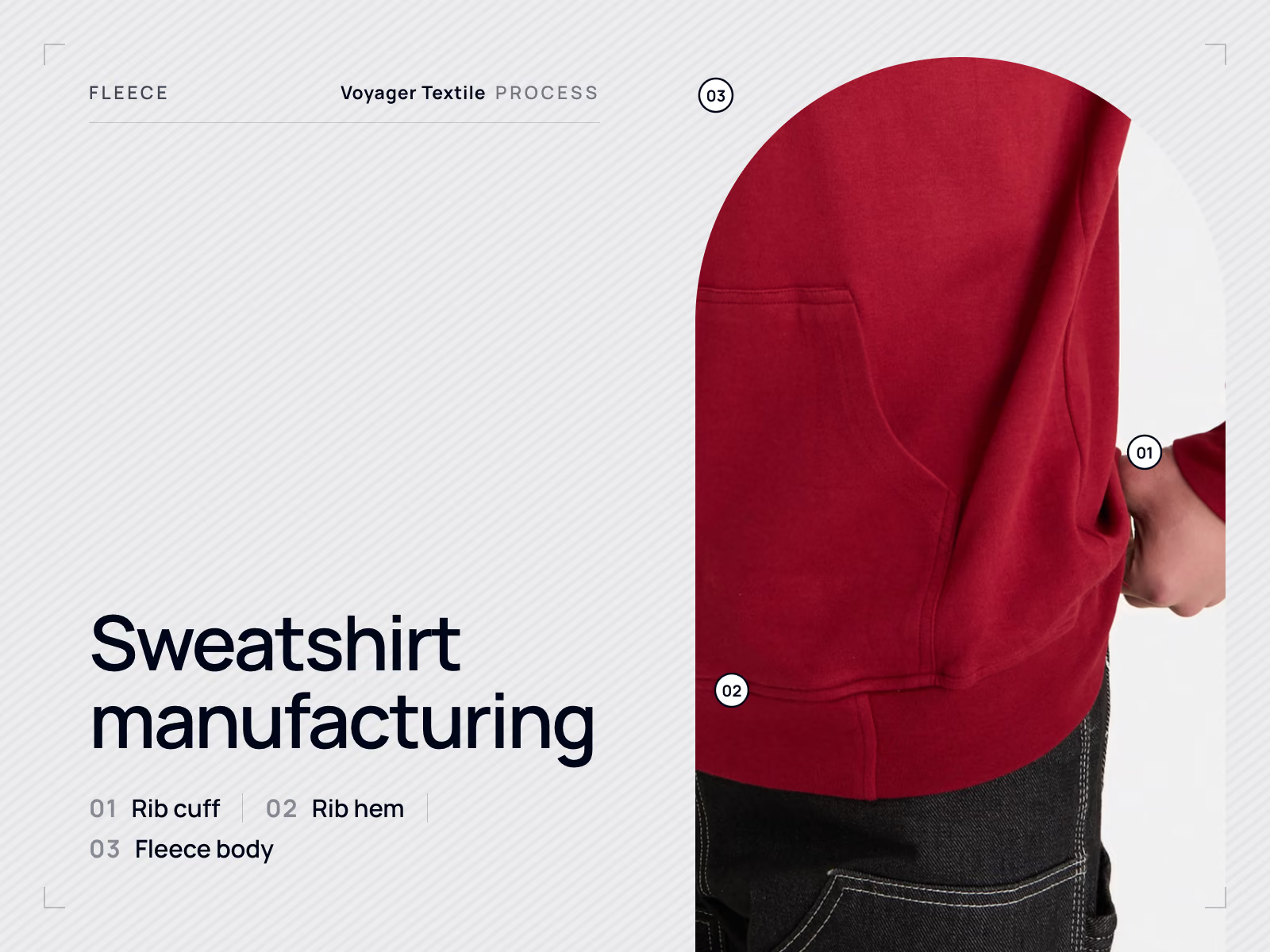
A crew-neck sweatshirt is built from French terry or brushed fleece, with ribbed neck, cuffs and waistband that carry the garment's shape. The body is cut and, where the artwork requires it, printed at panel stage, then assembled with the neck rib set into a taped shoulder line. The rib specification and the fabric's dimensional stability decide how it looks after twenty washes.
Contents
- French terry or brushed fleece
- The rib is the component that ages
- The V-insert at the neck
- Set-in or raglan sleeve
- Cutting and seam bulk
- Decoration on terry and fleece
- Assembly sequence
- Finishing and packing
- Quality control: sweatshirt-specific checks
- What to put in a sweatshirt tech pack
- Sampling
- What drives cost
- Buyer questions
A crew-neck sweatshirt is a hoodie with the complicated parts removed, which makes it a good garment to understand first. There is no hood to build, no pocket to align and usually no zip. What remains is fabric behaviour and rib control, and those two decide much about the finished product. If you are producing a hooded version, the additional operations are covered in the hoodie manufacturing process.
Sweatshirt production sequence
French terry or brushed fleece
The first decision is the inside of the fabric, and the material comparison behind it is set out in French terry and brushed fleece. Both structures start as a looped knit. French terry, sometimes called two-thread, leaves the loops unbrushed on the inside: it is lighter, more breathable, shows a clean loop structure and drapes more softly. Fleece, usually a three-thread construction, is brushed on the inside so the loops are raised into a soft nap: it is warmer, denser and reads as more substantial.
| Structure | Typical composition | Indicative GSM range | Character | Consideration |
|---|---|---|---|---|
| French terry, lightweight | 100% cotton or cotton-rich | Around 220 to 280 | Breathable, softer drape, cleaner inside face | Suits transitional and warm-climate programmes |
| French terry with elastane | Cotton with elastane, sometimes with polyester | Around 240 to 300 | Comfort stretch, better recovery at the body | Elastane changes shrinkage, so it needs its own fit sample |
| Three-thread brushed fleece | 100% combed cotton | Around 300 to 350; one mill lists a 30/30/10 combed cotton fleece at 320 g/m² ± 5 | The standard sweatshirt weight, warm and soft inside | Brushing raises the nap, which affects cutting direction |
| Cotton and polyester fleece | Commonly cotton-rich or 65/35 style blends | Around 300 to 350; one mill lists a 30/70/10 cotton and polyester fleece at 320 g/m² ± 5 | More stable, less shrinkage, holds colour | The usual choice for uniform and workwear programmes |
| Heavyweight fleece | Cotton or cotton-rich, coarser yarn or denser structure | Around 380 to 500 | Structured, boxy, premium positioning | Longer drying, heavier cartons, more fabric per piece |
| Rib for neck, cuffs and waistband | Cotton with elastane, matched to the body | Around 280 to 320; one mill lists a 20/1 2x1 rib at 280 g/m² with 40 denier and 320 g/m² with 70 denier elastane | Carries the recovery in the garment | Specify it; do not accept a generic matching rib |
Merch, promotional textiles, corporate wear and workwear programmes for sweatshirts are covered on the hoodie and sweatshirt manufacturer page.
Brushed fabric introduces a cutting rule that plain jersey does not have. The raised nap has a direction, and panels cut in opposing directions can read as different shades under the same light. All body panels must be cut in one direction, which slightly reduces marker efficiency and therefore adds fabric consumption.
The rib is the component that ages
Neck, cuffs and waistband are cut from rib, a structure that stretches and returns. Recovery is what keeps the cuffs gripping the wrist and the waistband holding the hem, and it comes from the rib's construction and elastane content rather than from the sewing.
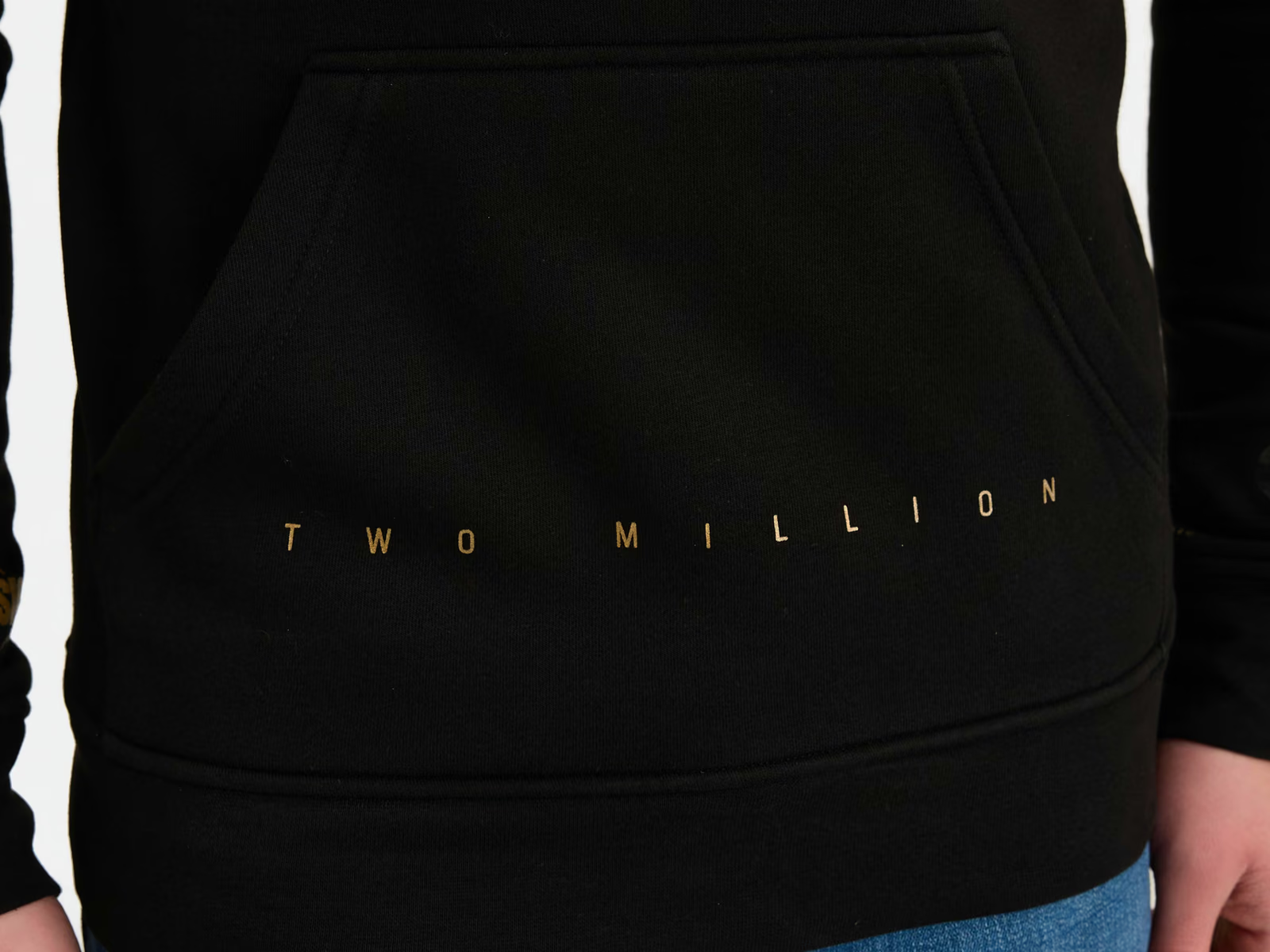
- Specify the rib quality, structure, depth and elastane content, not just the colour.
- Approve the rib against the approved body fabric under controlled lighting, since two structures never match perfectly.
- Test recovery physically on the sample: stretch a cuff, release it, and see whether it returns. Where recovery has already failed on a delivered order, the diagnosis is in why necklines, collars and cuffs lose their shape.
- Decide the attachment ratio, since the rib is cut shorter than the opening and stretched as it is sewn. Too little tension gives a slack cuff; too much gives a puckered one.
The V-insert at the neck
Traditional sweatshirts carry a small triangular panel at the centre front of the neckline, often called a V-insert or chest gusset. It began as a functional detail: it absorbs the stretch when the garment is pulled over the head and stops the neckline distorting, and on older constructions it also collected perspiration at the throat.
Many modern sweatshirts omit it, and both choices are valid. If you want it, specify its dimensions and how it is stitched, because it is a distinctive detail that buyers notice. If you omit it, pay more attention to neck rib recovery and shoulder taping, since those then carry the load alone.
Set-in or raglan sleeve
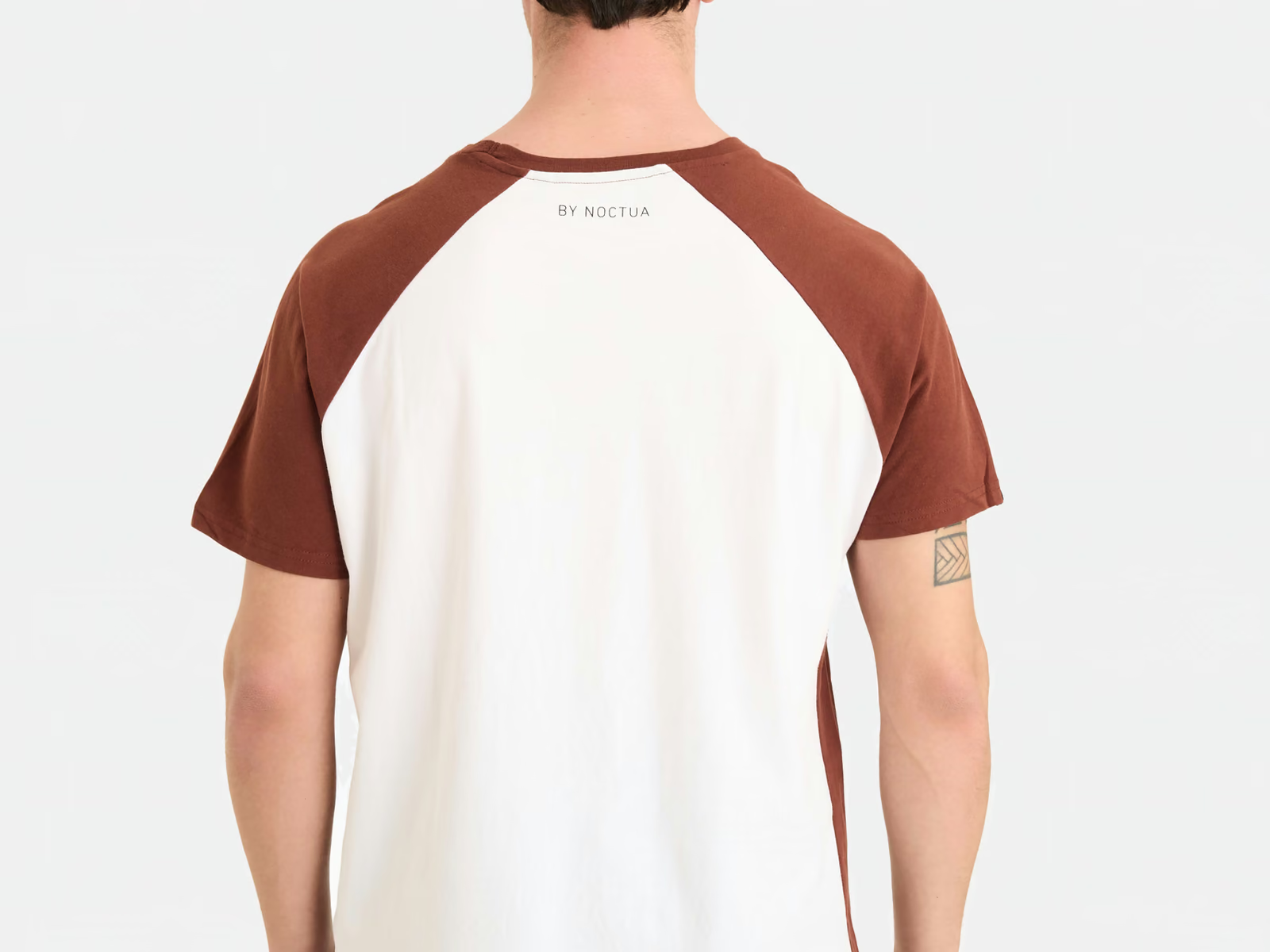
A set-in sleeve has a conventional armhole seam at the shoulder point and gives a structured, classic shape. A raglan sleeve runs in one piece from the underarm to the neckline, which removes the shoulder seam, allows more movement and reads as more sporting. The two are different patterns with different grading behaviour, so treat a change between them as a new development rather than an adjustment.
Cutting and seam bulk
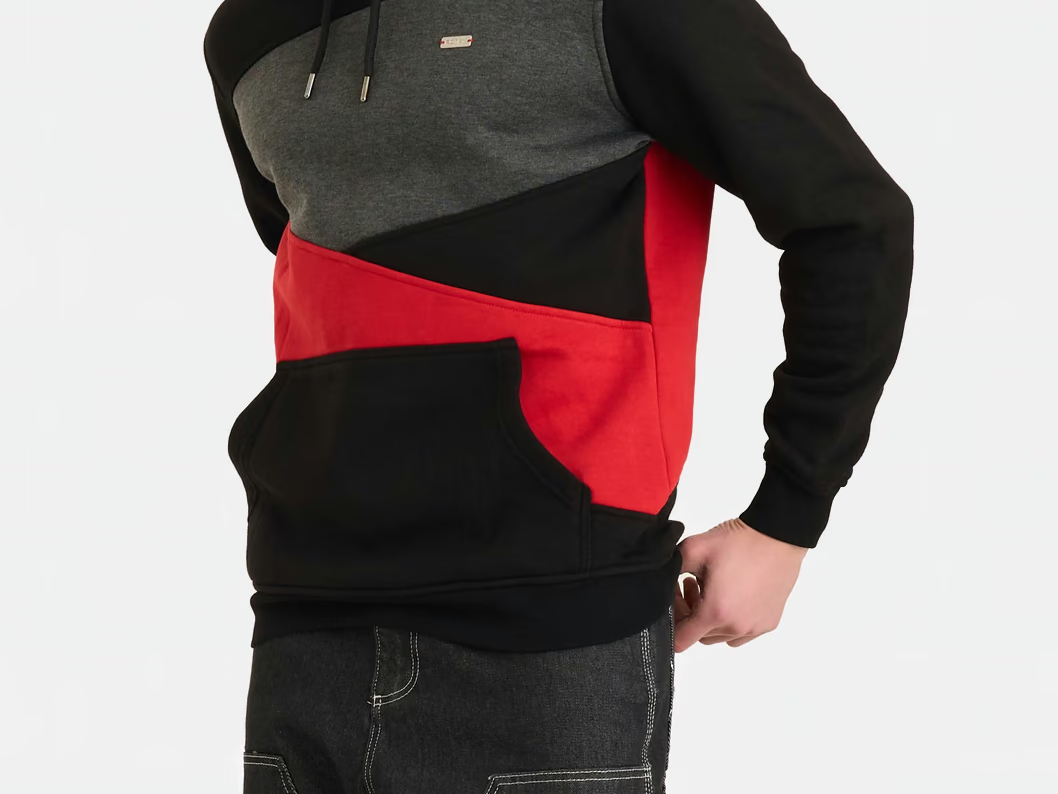
Heavier fabric changes the cutting room. Fewer plies can be spread in a lay, so cutting takes longer per garment. It also changes the sewing: where four layers of a heavy fleece meet, at the intersection of a side seam and a waistband, the seam becomes bulky and has to be handled properly or it distorts and shows through.
Two controls apply. Seam allowances are kept consistent so that intersections stack predictably, and the stitch type is chosen for the fabric weight: overlock for the structural seams, coverstitch where a flat, stretchable finish is needed. Neither is visible to a buyer in a photograph, and both are visible in a garment after a season.
Decoration on terry and fleece
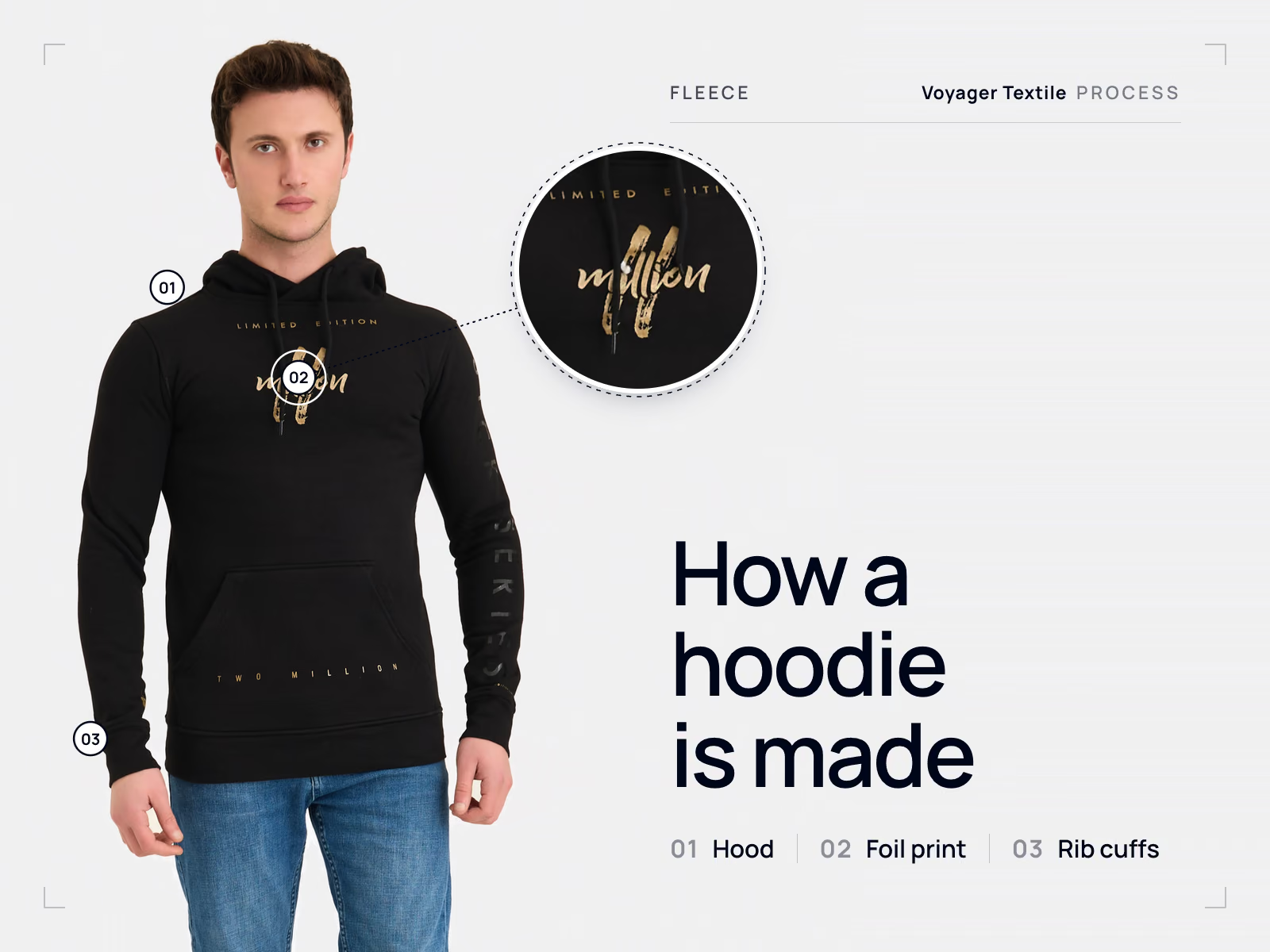
A large chest or back print is usually applied to the cut panel before assembly. That matters more on a sweatshirt than on a tee: a finished sweatshirt is thick, and pressing a print evenly through a hem, a rib and a body layer is harder than pressing a flat panel.
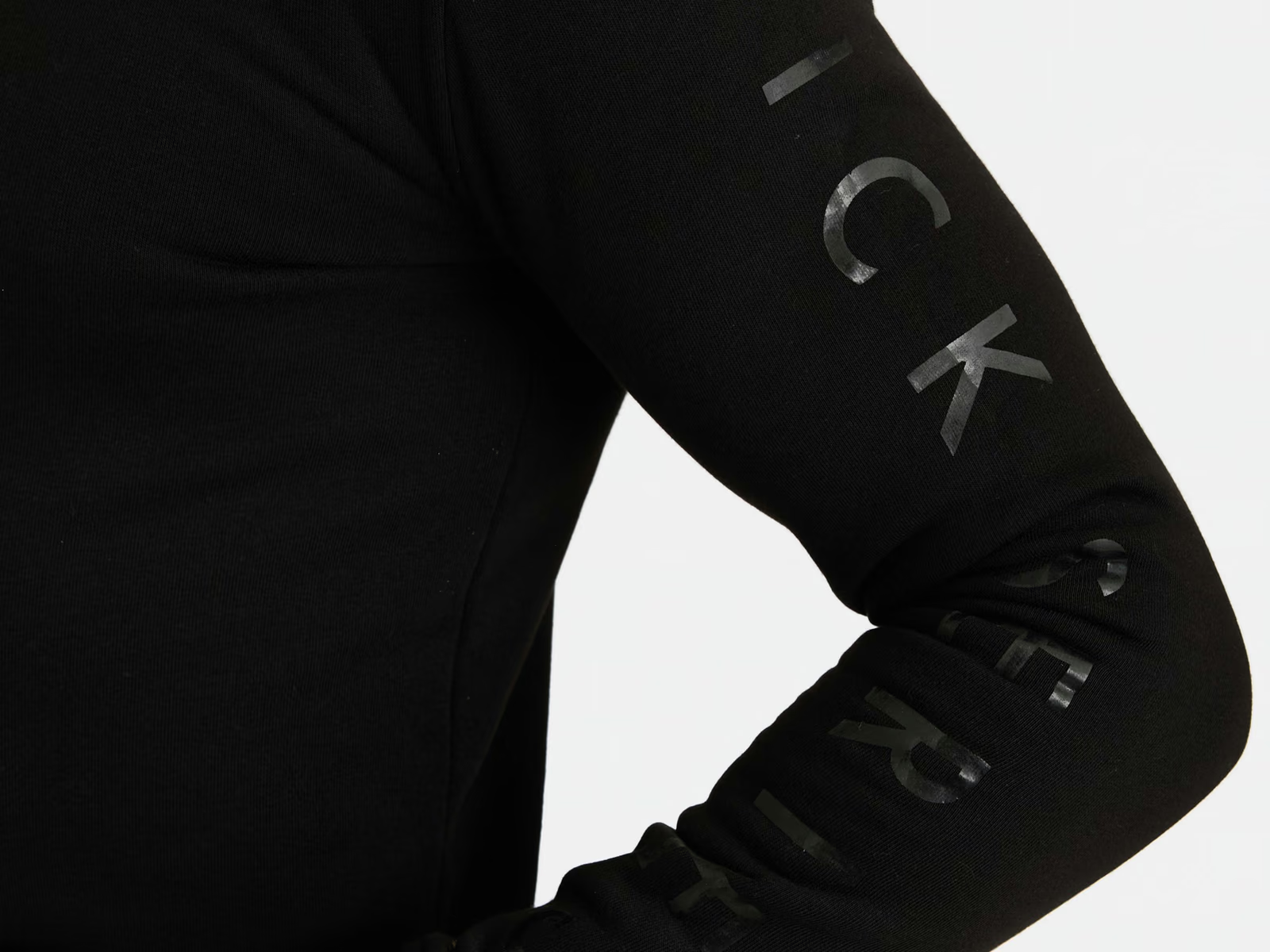
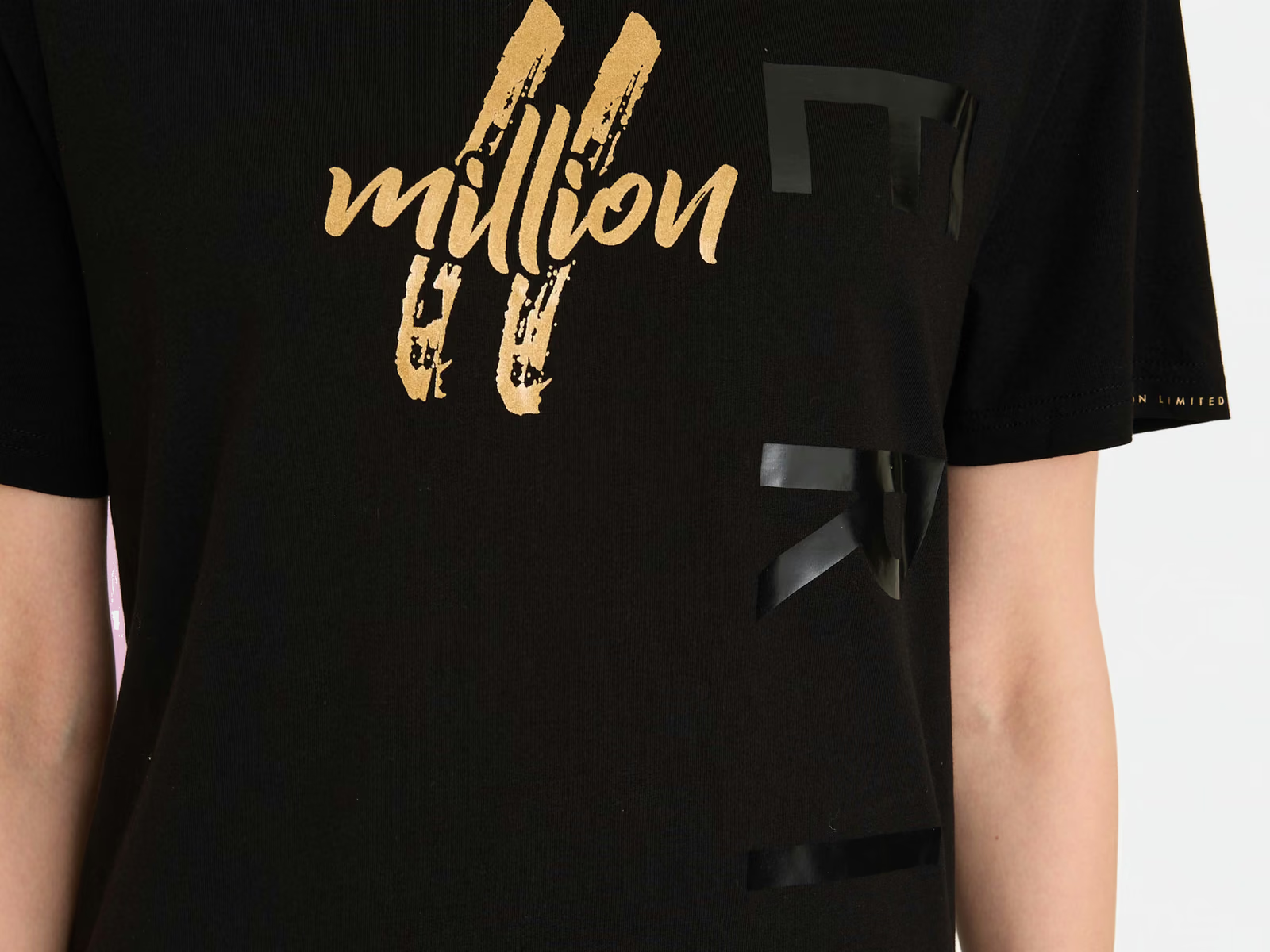
- Screen printing. The standard for bold graphics. A brushed surface takes ink differently from a smooth jersey, so allow for slightly softer edges and favour solid shapes over hairlines.
- Transfer printing, including DTF. Handles complex or photographic artwork, applied to panels or finished garments.
- Embroidery. Works well on terry and fleece with appropriate backing. Dense logos on a soft brushed surface need support or they sink into the nap.
- Raised and embossed effects. Tonal branding that suits heavier fabrics, run with specialist partners where the fabric and artwork allow.
- Appliqué. A stitched fabric patch, effective on heavier sweatshirts and durable in washing.
Which technique suits a given artwork, fabric and quantity is compared in the decoration guide. For a sweatshirt the practical question is usually narrower: does the design need the density of a screen print, the tonal effect of a raised finish, or the durability of embroidery.
Assembly sequence
- Cut panels are bundled by size and colour, with nap direction kept consistent.
- Body prints or panel embroidery are applied.
- Shoulders are joined and taped.
- The neck rib is joined into a ring, attached and finished, with the V-insert added first where specified.
- Sleeves are set, flat for a set-in construction or joined to the raglan line.
- Side and underarm seams are closed in a continuous operation.
- Cuffs and the waistband are attached at the specified ratio.
- Labels are attached, the garment is trimmed, steamed, measured and inspected.
Finishing and packing
Sweatshirts are steamed rather than hard-pressed. Heavy pressing flattens a brushed nap, which changes the appearance of the fabric permanently, so the treatment is light and the ribs are shaped rather than crushed. Folding is specified because a heavy garment folds differently from a tee and carton counts follow from it.
Quality control: sweatshirt-specific checks
| Check | What it catches |
|---|---|
| Measurements against tolerances, after relaxation | Shrinkage in heavier knits, most visible in body length |
| Rib recovery at cuffs and waistband | Rib specified or supplied too weak for the garment |
| Nap direction across panels | Panels cut in opposing directions reading as different shades |
| Rib and body shade under controlled lighting | Separately dyed components drifting apart |
| Seam intersections at side seam and waistband | Bulk, distortion and skipped stitches in heavy fabric |
| Neckline shape and V-insert symmetry | The first thing a customer sees |
| Print cure and adhesion on fleece | Under-cured ink on an absorbent surface |
What to put in a sweatshirt tech pack
- Body fabric: terry or fleece, brushed or unbrushed, composition, target GSM with a range.
- Rib specification: structure, depth, elastane content, and colour approval route.
- Sleeve construction: set-in or raglan.
- V-insert: required or not, with dimensions.
- Neck rib width and neck opening, with tolerance.
- Cuff and waistband depth and attachment ratio.
- Body length, chest, shoulder, sleeve length, with tolerances.
- Print or embroidery artwork, size and placement measured from a fixed point.
- Label set and back-neck finishing.
- Colours for body and rib, with Pantone references if custom.
- Packing: fold, bag, hangtag, carton assortment.
Sampling
Sample in the intended fabric weight. A sweatshirt sewn in a substitute fabric of a different weight tells you very little, because drape, seam bulk and the way the ribs sit all change with weight. Where the programme allows, ask for a wash test on the sample so shrinkage and rib recovery are known before bulk rather than after.
A pre-production sample in bulk fabric with the actual rib, labels and decoration is the reference that bulk is inspected against. The stages are described in the sampling guide.
What drives cost
- Fabric weight. A 400 g/m² fleece uses substantially more fabric per piece than a 280 g/m² terry.
- Fabric consumption. Longer or wider bodies, and the single-direction nap rule on brushed fabric, both raise consumption.
- Rib quality. A better rib costs more and is one of the few upgrades a customer feels immediately.
- Number of operations. V-inserts, contrast panels and taped seams each add sewing time.
- Decoration. Print colours and placements, or embroidery stitch count.
Before you send a sweatshirt RFQ
- Terry or fleece, brushed or unbrushed
- Composition and target GSM
- Rib specification for neck, cuffs and waistband
- Set-in or raglan sleeve
- V-insert required or not
- Fit intent and a measurement chart or reference garment
- Size range and split
- Artwork, size and placement for print or embroidery
- Colours for body and rib
- Label set and packing requirements
- Quantity per colour
Buyer questions
What is the difference between French terry and fleece?
Both are looped knits. French terry leaves the loops unbrushed on the inside, so it is lighter, more breathable and shows a clean loop structure. Fleece is brushed on the inside to raise a soft nap, making it warmer and denser. French terry suits transitional weights, fleece suits classic sweatshirt weights.
What GSM is right for a sweatshirt?
Roughly 300 to 350 g/m² covers most standard sweatshirts, with French terry programmes often around 220 to 300 and heavyweight constructions from about 380 g/m² upwards. These are sourcing ranges; yarn, structure and finishing change how a given weight feels and wears.
What is the small V-shaped panel at the neck for?
It is a V-insert or chest gusset. It absorbs stretch when the garment is pulled over the head, which helps the neckline hold its shape, and it is a recognisable traditional detail. Many modern sweatshirts omit it and rely on rib recovery and shoulder taping instead.
Why do cuffs and waistbands lose their grip?
Because of the rib itself: its structure, depth and elastane content, and the ratio at which it was attached. Specify the rib rather than accepting a generic matching rib, and test recovery on the sample by stretching a cuff and releasing it.
Should sweatshirt panels be cut in one direction?
On brushed fleece, yes. The raised nap has a direction, and panels cut in opposing directions can read as different shades in the same garment. It slightly reduces marker efficiency, which is one reason brushed fabrics consume more fabric per piece.
Is a sweatshirt printed before or after it is sewn?
Large chest and back prints are normally applied to the cut panel before assembly, because a flat panel presses more evenly than a finished garment with ribs and hems in the way. Smaller placements are often applied to the finished garment.
Does a sweatshirt need a different pattern from a hoodie?
Yes. The neckline, shoulder and upper back of a hooded garment are engineered to carry a hood, so the two are separate patterns even in the same fabric and fit. Treat a hooded version as its own development, as covered in the hoodie process.
How much does a sweatshirt shrink?
It depends on the fabric and its finishing rather than on the garment. Cotton terry and fleece move in washing, which is why fabric is relaxed before cutting and why shrinkage should be tested on the sample. Decide whether the measurement chart applies before or after washing and state it in the tech pack.
Ordering this garment from Voyager Textile
- Every garment is made to order, to your own design.
- The minimum order is 300 pieces per colour and per style. Sizes can be split inside the 300, and a custom Pantone colour carries the same minimum of 300 pieces. Polyester-based fabrics are assessed separately.
- A sample takes 5–7 business days. Bulk production takes 4–5 weeks after sample approval; development, sampling and shipping are additional.
- Cutting, sewing, embroidery, transfer printing and sublimation printing are done in our own factory in Türkiye. Screen printing and garment washing are coordinated with partner facilities.
Quantities, timing and any open point are confirmed per project at the quotation stage, once we have your specification or tech pack.
Request a quoteProducing a sweatshirt programme?
Send the fabric weight, rib requirements and artwork, or a reference garment you want matched. We sample in the intended fabric so drape and rib behaviour can be judged properly before bulk.
Send a sweatshirt brief