Cotton and blended knits
French terry and brushed fleece
French terry and brushed fleece start as the same thing: a knit with loops on the inside face. Terry leaves those loops intact, so it is lighter, more breathable and shows a clean loop structure. Fleece brushes them into a soft nap, which traps air and makes the fabric warmer, denser and softer, at the cost of a surface that can pill.
Contents
One structure, two finishing decisions
Both fabrics are built by adding an extra yarn during knitting that forms loops on the reverse of the fabric while the face stays smooth. Mills usually distinguish them by the number of yarns in the construction: a two-thread construction produces French terry, a three-thread construction produces the denser base used for fleece.
What separates the finished fabrics is brushing. The loops on the reverse are mechanically raised, breaking them open into a soft fibrous nap. Nothing else about the fabric changes: the face is still smooth, the composition is unchanged, and the weight is broadly similar. The consequences of that single step are what this page is about.
What brushing changes
| Property | French terry | Brushed fleece |
|---|---|---|
| Inside face | Visible intact loops, slightly textured | Soft raised nap |
| Warmth | Moderate; air moves through the structure | Higher; the nap traps air |
| Breathability | Better, which suits transitional weights and active wear | Lower, which is the point in cold conditions |
| Drying | Faster | Slower, particularly at heavy weights |
| Surface durability | The intact loop is relatively stable | The raised nap is more exposed, so pilling risk is higher |
| Appearance inside | Reads as considered and technical | Reads as comfortable and traditional |
| Cutting | No nap direction to observe | Panels must be cut in one direction, which raises consumption |
The last row has a cost consequence buyers rarely anticipate. A raised nap has a direction, and panels cut in opposing directions can read as different shades in the same garment. All panels therefore have to run the same way, which reduces marker efficiency and increases the fabric used per piece.
Typical sourcing weights
| Fabric | Indicative weight | Character | Typical garment |
|---|---|---|---|
| Light French terry | Around 220 to 260 g/m² | Transitional, breathable, drapes softly | Summer sweatshirts, light joggers, layering pieces |
| Standard French terry | Around 260 to 320 g/m² | The everyday terry weight with more body | Sweatshirts and hoodies for mild climates |
| Standard fleece | Around 300 to 350 g/m²; one mill lists combed cotton three-thread fleece at 320 g/m² ± 5 | The classic sweatshirt and hoodie weight | Retail and corporate sweatshirts and hoodies |
| Cotton and polyester fleece | Around 300 to 350 g/m²; one mill lists a cotton and polyester fleece at 320 g/m² ± 5 | More dimensional stability and colour retention | Uniform and merchandise programmes |
| Heavyweight fleece | Around 380 to 500 g/m² | Structured and substantial, slower to dry | Streetwear and premium heavyweight programmes |
Composition, and what it does to each
Cotton and cotton-rich versions of both fabrics feel better and age with more character. Polyester content improves dimensional stability, colour retention and drying, and it resists the flattening of the nap that heavy laundering causes in a cotton fleece. For a programme going through commercial laundry, a polyester-rich fleece is usually the more honest specification even when a cotton one feels better on the swatch.
Elastane appears in both, usually at a small percentage, for comfort stretch in fitted joggers and cuffed styles. It changes shrinkage behaviour, so a version with elastane needs its own wash test rather than inheriting the plain quality's result.
Decoration behaviour
- Printing on terry behaves much like printing on jersey, because the face is smooth and stable.
- Printing on fleece is the same on the face, but the fabric behind it is softer and more compressible, so heavy deposits can sink slightly and fine detail reads less crisply than on a flat knit.
- Embroidery works on both with an appropriate cut-away backing. On a soft brushed base, dense logos need enough support or they compress into the nap.
- Raised and embossed effects suit heavier fleece well, because the fabric has enough substance to hold a tonal impression.
Method selection across fabrics is compared in the decoration guide, and the failure modes are covered in prints cracking and embroidery puckering.
Choosing between them
- Choose French terry for warm and transitional climates, for garments worn indoors or during activity, where a clean inside face is part of the product, and where fast drying matters.
- Choose brushed fleece for warmth, for the soft inside a customer expects from a classic sweatshirt or hoodie, and for heavyweight products where substance is the point.
- Choose a polyester-rich version of either where the garment will be laundered hot and often.
- Consider a lined hood in terry if you want hood structure without moving the whole garment to a heavier fleece.
Neither is the premium option in general. A well-made 280 g/m² terry in combed ring-spun cotton is a better garment than a poorly made 400 g/m² fleece in carded open-end yarn, and the yarn line in the specification decides that more than the weight does.
What to test before bulk
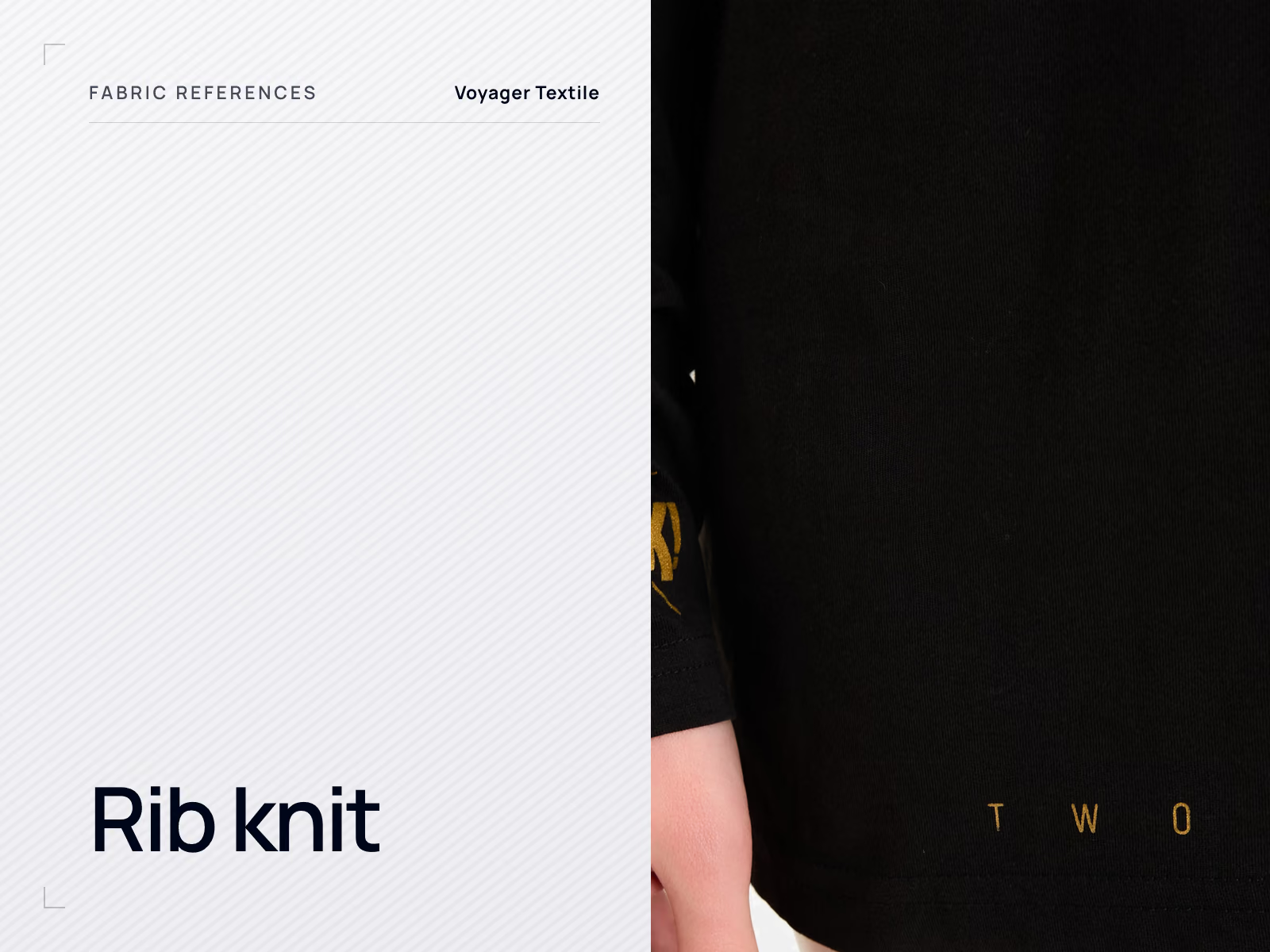
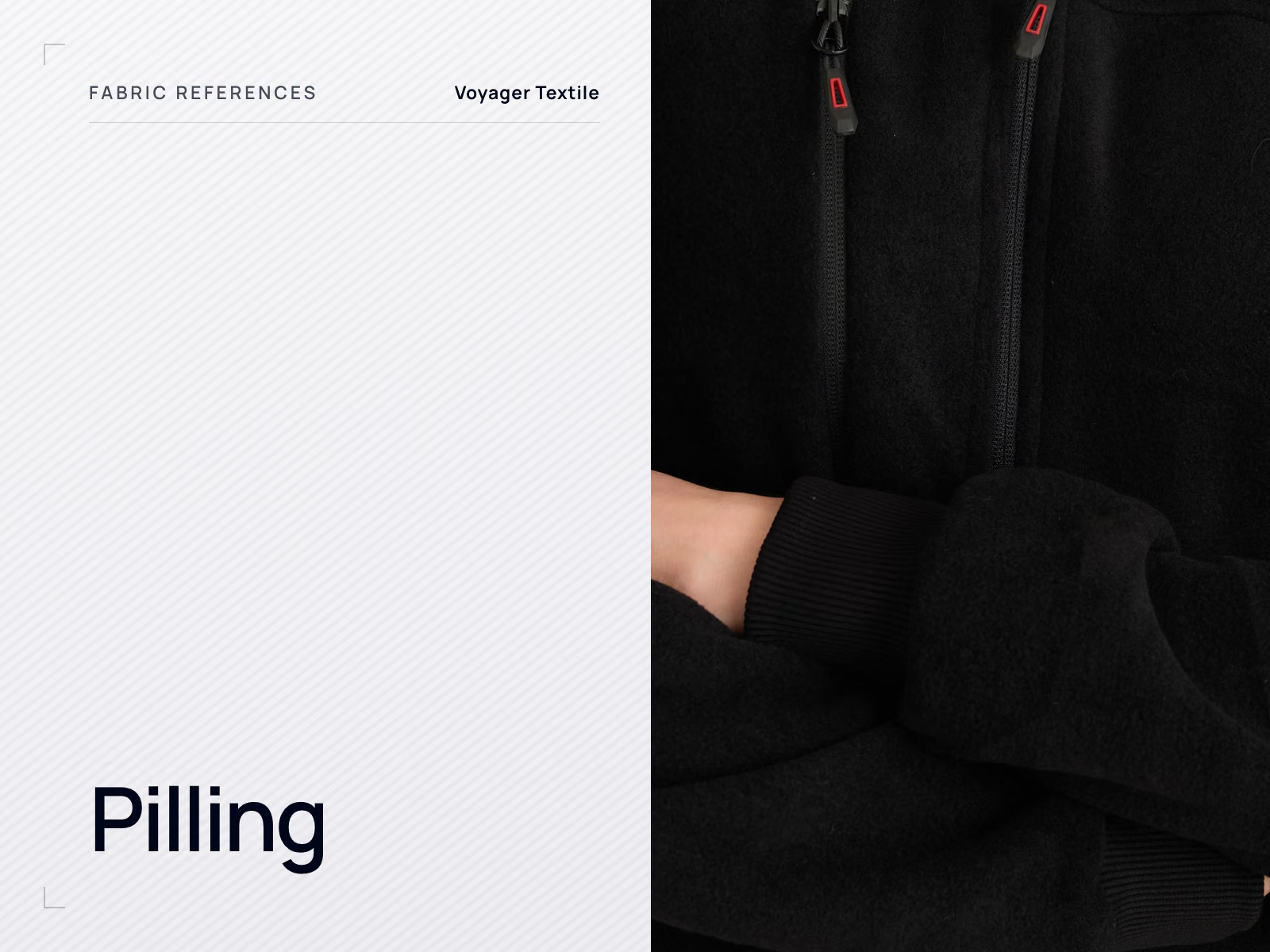
Three things, in this order. Dimensional stability, because heavy knits move and the effect is visible in body length. Pilling, particularly on brushed constructions, since the nap is the exposed surface. And rib recovery on the cuffs and waistband that go with the garment, which is a separate component with its own specification, covered in rib knit.
Questions buyers ask about this fabric
Is French terry or fleece better for hoodies?
Neither in general. Fleece is warmer and softer inside and gives the classic hoodie hand, while French terry is lighter, more breathable and dries faster, with a cleaner inside face. Choose from climate and use: fleece for cold-weather and heavyweight products, terry for transitional and active ones.
What do two-thread and three-thread mean?
They describe the number of yarns in the knit construction. Two-thread constructions produce French terry, and three-thread constructions produce the denser base normally brushed into fleece. Mills use these terms in article names, so they are worth recognising when reading a specification.
Does fleece pill more than terry?
Generally yes, because brushing raises the fibres and exposes them to abrasion. It is manageable with better yarn, a tighter base construction and appropriate finishing, and it should be tested rather than assumed. See fabric pilling.
Why does a fleece hoodie use more fabric than its weight suggests?
Partly because heavier fabric is heavier per square metre, and partly because the raised nap has a direction, so every panel must be cut the same way. That constraint reduces how efficiently the marker can be laid, which increases consumption per garment.
What weight should a standard sweatshirt be?
Roughly 300 to 350 g/m² covers many standard sweatshirts and hoodies, with French terry programmes often around 220 to 320 and heavyweight products from about 380 g/m² upwards. Treat these as sourcing ranges rather than rules.
Choosing a fabric for a sweatshirt programme?
Tell us the climate, the weight you have in mind and how the garments will be washed. We will send terry and fleece swatches at comparable weights so the decision is made by hand rather than on paper.
Request fabric swatches