Cotton and blended knits
Polar Fleece for Jackets and Gilets: Microfleece, Anti-Pill, Sherpa and Bonded Fleece
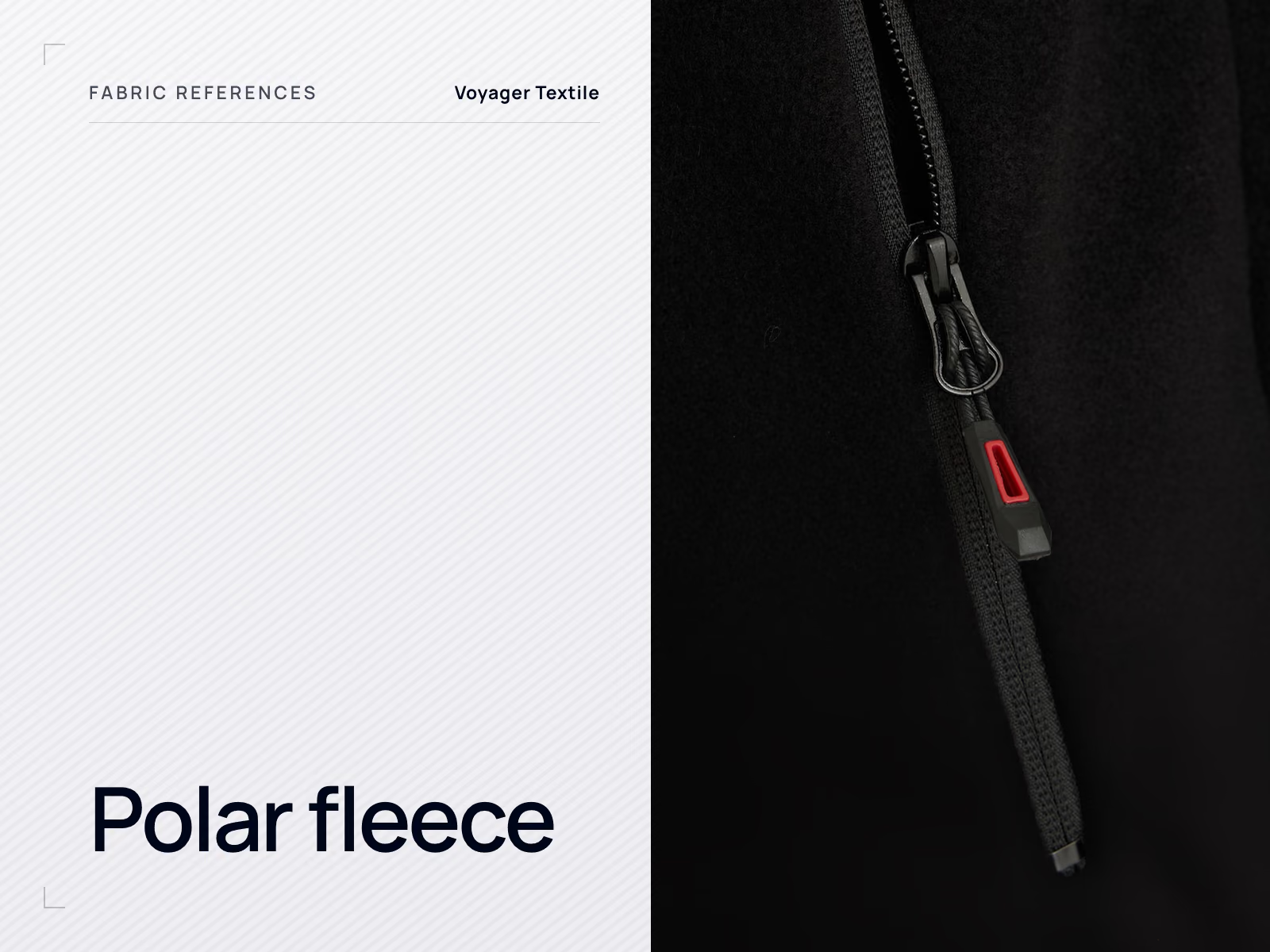
Polar fleece is a knitted polyester fabric whose surface is brushed to raise the fibres and then sheared to an even pile, on one side or both. It is warm for its weight, dries quickly and does not fray. Microfleece is the thin, fine-fibre version; anti-pill fleece is finished to resist pilling; sherpa has a long, curly pile on one face; bonded fleece is laminated to a shell fabric or a membrane.
Contents
What polar fleece is
Polar fleece is a polyester knit that has been brushed to pull fibres out of the yarn and form a pile, then sheared so the pile is the same height across the fabric. Single-sided fleece is raised on one face and keeps a flatter knit on the other; double-sided fleece is raised and sheared on both faces, which is the usual choice for an unlined jacket or gilet because the inside and outside both look finished.
Because the fibre is polyester, the fabric absorbs little water, dries quickly and stays warm when damp. The pile traps air, so a fleece is warm for its weight, but the open structure lets wind through. The cut edges do not fray, which is why collars, cuffs and hems on fleece garments are often bound rather than turned and hemmed.
Microfleece and standard polar fleece
Microfleece is polar fleece knitted from microfibre polyester yarns, which are made of finer filaments. It is thinner, lighter, softer and drapes more than standard fleece, so it is used for mid-layers, lightweight pullovers, linings and as the knitted backing of a softshell. Standard polar fleece has a loftier pile and more body, which suits outer jackets, gilets and work fleeces.
Mills describe fleece by weight in g/m² and by pile height, and the two go together: a heavier fabric with a short, dense pile feels different from a lighter one with a tall, open pile. The weight is specified per project and confirmed at the quotation stage, against a swatch. How g/m² is measured is explained in the GSM guide.
Anti-pill fleece
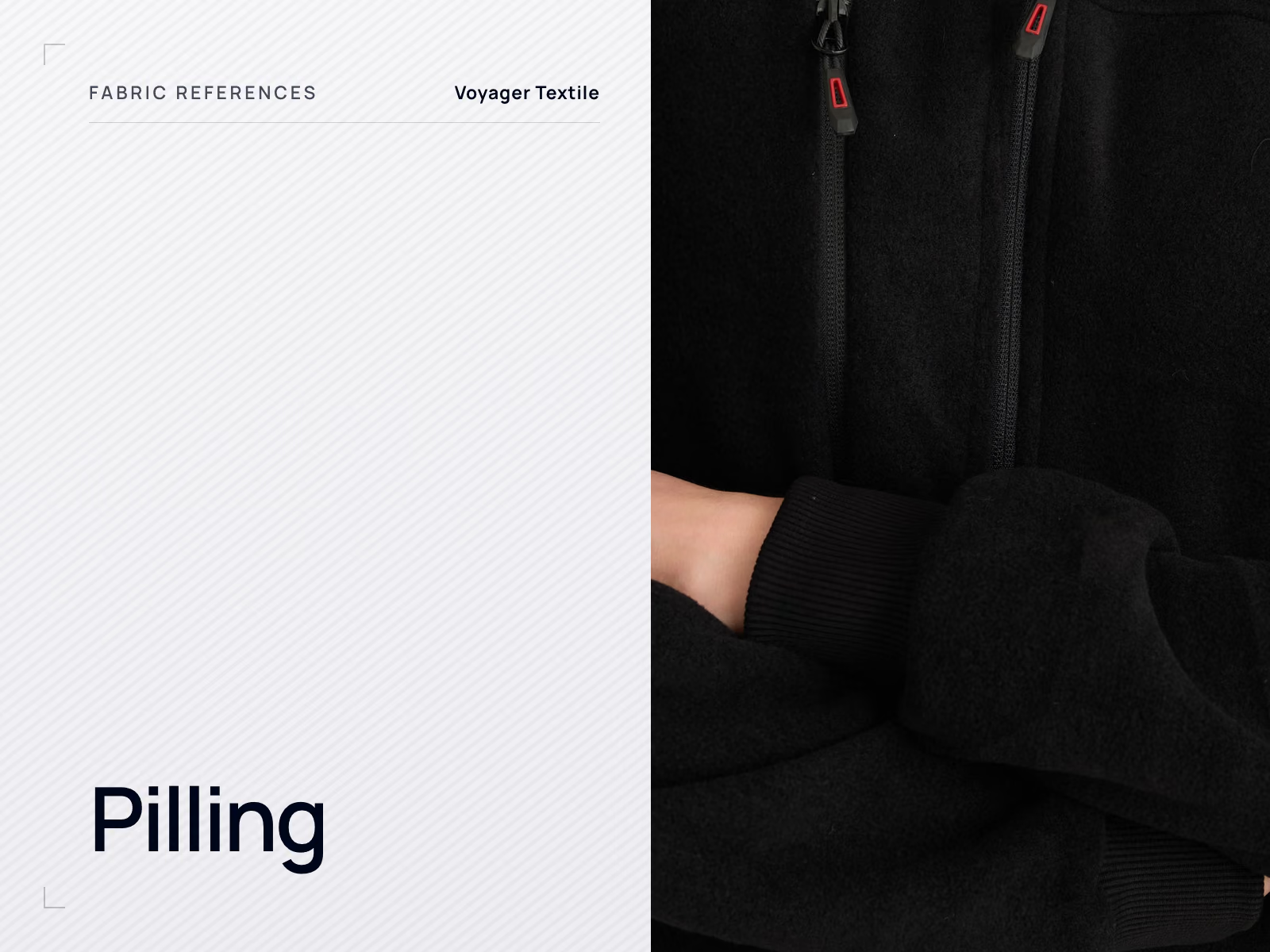
Anti-pill fleece is polar fleece whose yarn and finishing are chosen to reduce pilling on the raised surface. Pilling is the main quality risk on any fleece: the fibres are already raised, and strong polyester fibres hold the small balls on the surface instead of letting them break away. Shearing, heat setting and the yarn type all affect the result, so the finish name alone says little.
An anti-pill requirement becomes enforceable only as a test method, a cycle count and a minimum grade, for example ISO 12945-2, the modified Martindale method, at a stated number of cycles. The methods and the grading scale are explained in fabric pilling.
Sherpa fleece
Sherpa is a pile-faced fleece with a long, curly or nubby pile on one side that imitates sheepskin, and a flat knit on the other. It is bulkier and warmer than polar fleece at the same thickness and is used mainly for collars, hood linings and jacket linings, or as the whole body of a casual jacket. The long pile flattens under pressure and with washing, so its appearance after a wash test is worth checking at the sample stage.
Bonded fleece
Bonded fleece is fleece laminated to another layer: a woven shell fabric, a membrane or a second fleece. Bonding to a shell gives a softshell-type fabric with wind resistance; adding a membrane gives wind-blocking or water-resistant performance. The bond is part of the specification, because delamination after washing is the typical failure. The laminate itself is sourced from a specialist fabric supplier and confirmed per project at the quotation stage.
Which garments use polar fleece
| Garment | Typical fleece | Specification points |
|---|---|---|
| Fleece jacket, full zip or half zip | Double-sided polar fleece, anti-pill | Pile height, bound edges, zip and embroidery backing |
| Gilet, also called vest or bodywarmer | Double-sided polar fleece or bonded fleece | Armhole binding, chest logo placement, zip guard |
| Tracksuit top | Microfleece or light polar fleece | Colour match to the joggers, cuff and hem finish |
| Work jacket or work fleece | Anti-pill polar fleece, sometimes with woven reinforcement panels | Abrasion at shoulders and elbows, pocket layout, wash resistance |
| Softshell jacket backing | Microfleece bonded to a woven face | Bond strength after washing |
| Hood and collar linings | Sherpa or microfleece | Bulk at seams, shrinkage relative to the shell |
Fleece jackets and gilets are common in corporate wear and branded workwear, where the chest logo stays visible over a shirt. Workwear programmes are covered on the workwear page, and the garments on jacket and coat manufacturing and vest and gilet manufacturing. Embroidery on fleece needs a backing so the stitches do not sink into the pile, and heat transfers need a press temperature tested on the pile.
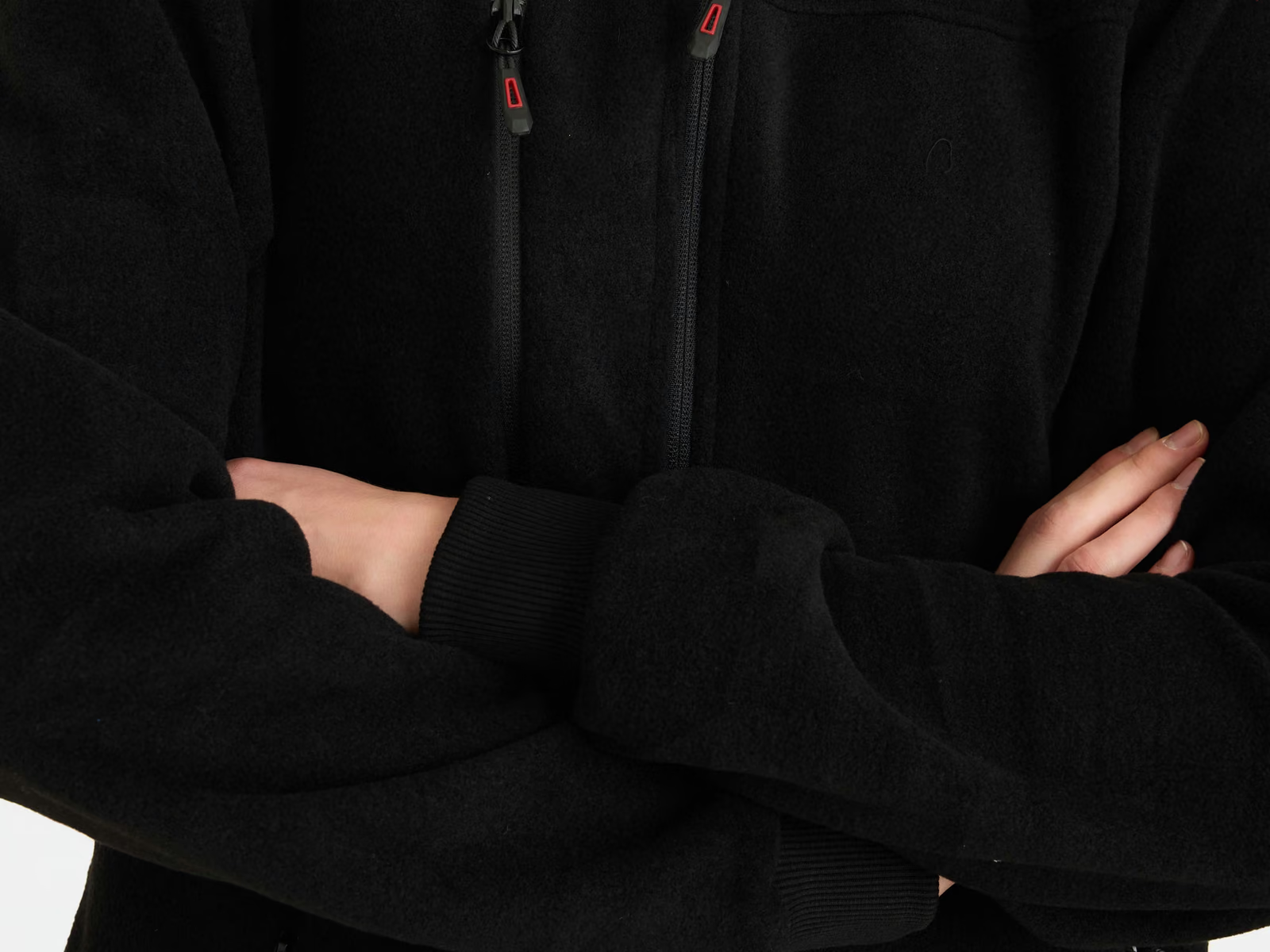
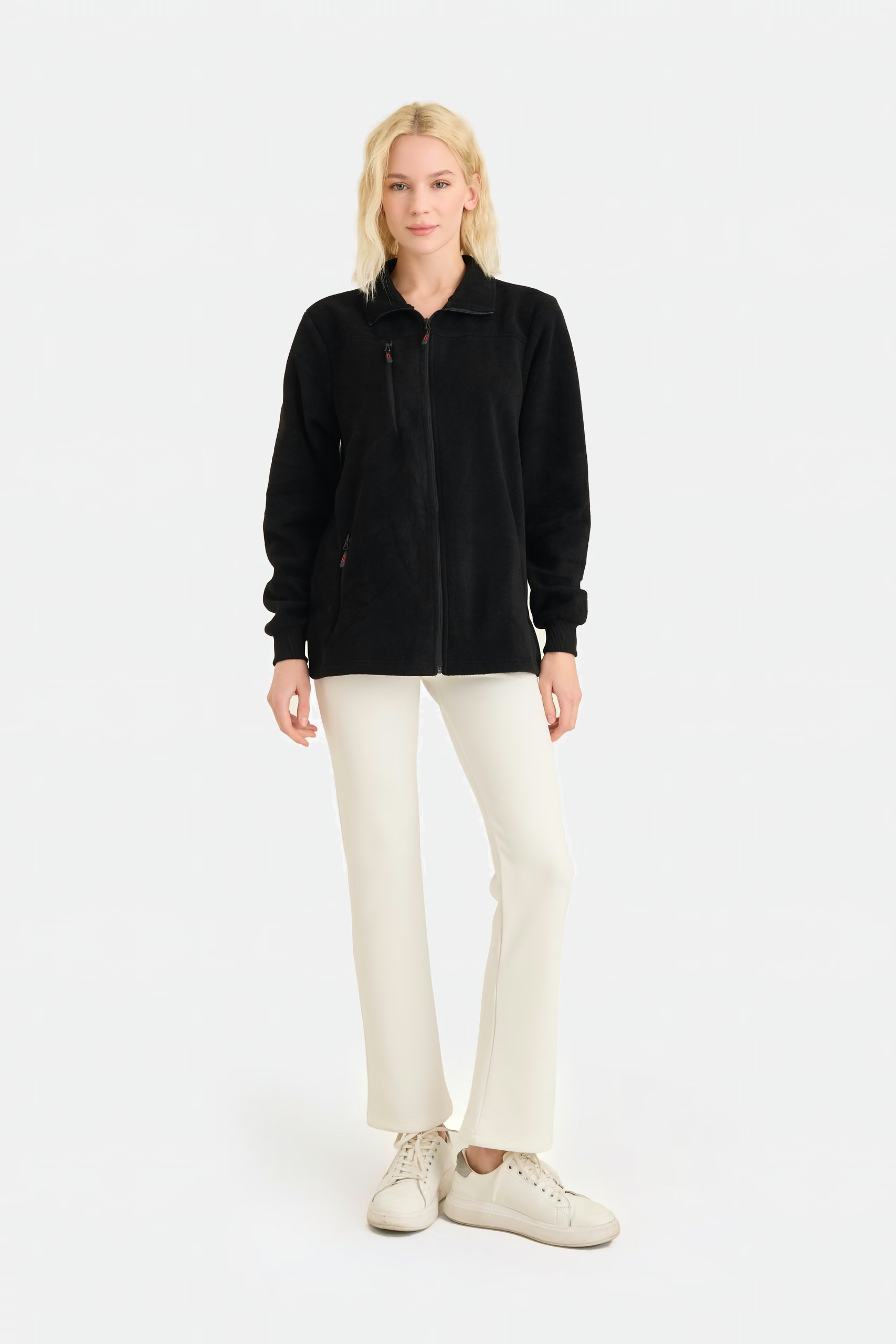
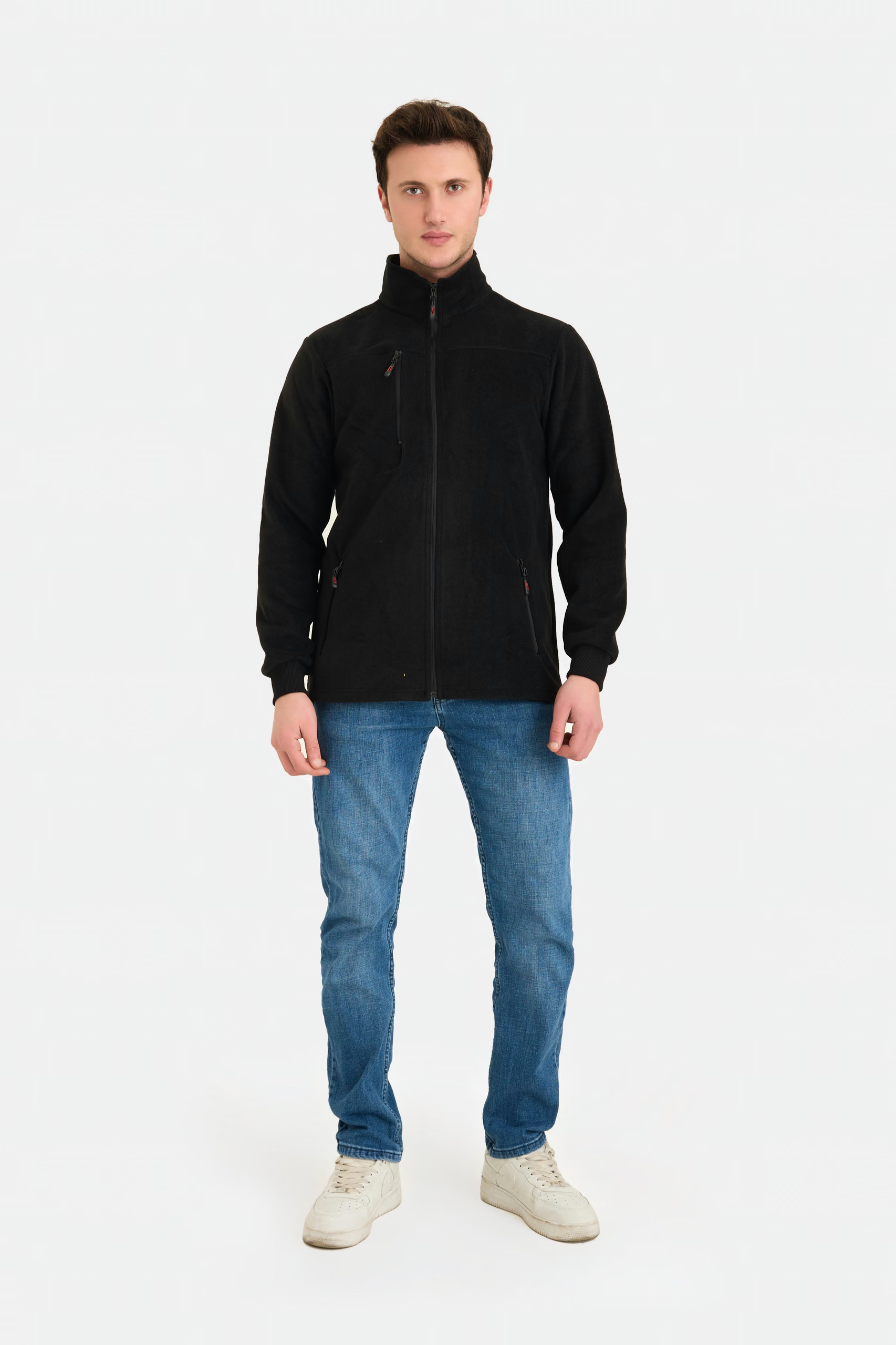
Fleece jacket references from previous production
Produced to customer specification. None of these is stock.
Polar fleece against French terry and brushed fleece
The fleece in a hoodie or sweatshirt is a different fabric: a cotton or cotton-polyester loopback knit brushed on the inside only, with a smooth face for printing. Polar fleece is polyester, raised on the outside as well, and is used for outer layers rather than sweatshirts. How sweatshirt fleece compares with French terry, including weights, is set out in French terry and brushed fleece.
What to specify in an RFQ for a fleece garment
Fleece specification lines
The fabric is buyer-specified, supplied by the buyer or sourced to the specification, and confirmed at quotation.
- Fabric type: polar fleece, microfleece, sherpa or bonded fleece, single- or double-sided
- Fabric weight in g/m² with a tolerance, and pile height where it matters to the look
- Anti-pill requirement as test method, cycle count and minimum grade, for example ISO 12945-2
- Colour standard: a Pantone reference or a physical standard, approved by lab dip. Polyester-based fabrics are assessed separately for custom colours
- Shrinkage limit after washing, tested to ISO 6330 and measured to ISO 5077
- Fibre shedding to ISO 4484-1, if the buyer requires it
- Recycled polyester content and a certified material such as GRS, if required, sourced where specified
- For bonded fleece: the layers, the membrane if any, and bond strength after washing
The minimum is 300 pieces per colour and per style. Colour matching on polyester is covered in Pantone colour matching, and shrinkage after washing in measurement change after washing.
Questions buyers ask about this fabric
What is the difference between polar fleece and sherpa?
Polar fleece has a short, even pile sheared on one or both faces. Sherpa has a long, curly pile on one face that imitates sheepskin, is bulkier and warmer, and is used mainly for linings, collars and casual jackets.
Is polar fleece the same as fleece in a hoodie?
No, polar fleece is not the same as hoodie fleece. Hoodie fleece is a cotton or cotton-polyester loopback knit brushed on the inside only. Polar fleece is polyester, raised on the outside too, and used for jackets and gilets.
What is anti-pill fleece?
Anti-pill fleece is polar fleece whose yarn and finishing reduce pilling on the raised surface. Specify it as a test method, cycle count and minimum grade, for example ISO 12945-2, rather than by the finish name.
Planning a fleece jacket or gilet?
Send the garment, the fleece type and weight you have in mind, the colours and the quantity per colour and style. The fabric and its test requirements are confirmed at quotation.
Send an RFQ