Performance and synthetic knits
Performance polyester knits
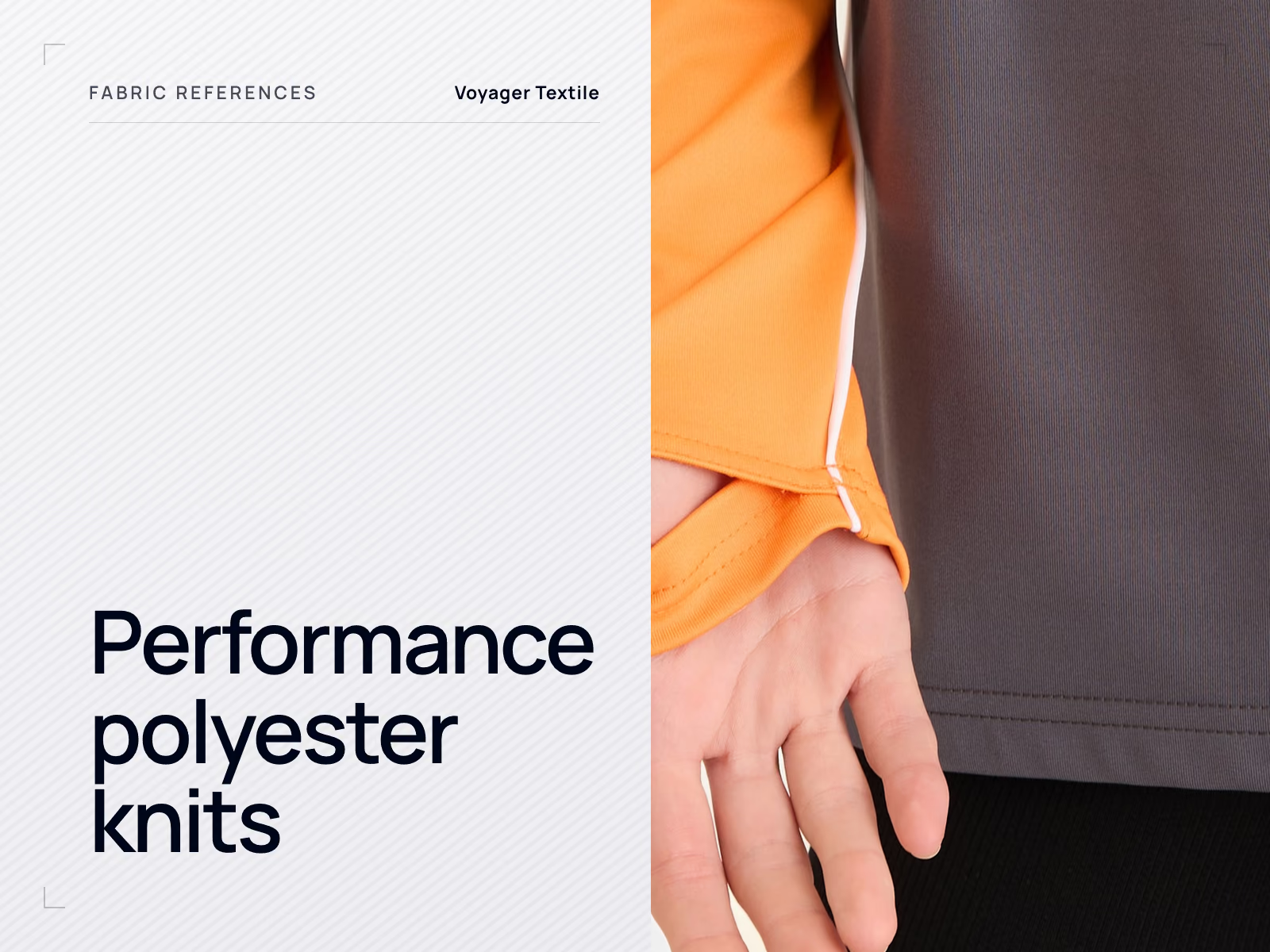
Performance fabric is a structure decision more than a fibre one. Polyester dries faster than cotton because the fibre absorbs very little water, but whether a fabric moves moisture, breathes and stays opaque depends on how it is knitted and finished. These are the structures that do that work, and the ones sublimation requires.
Contents
Why polyester, and what it does not do by itself
Polyester absorbs very little moisture into the fibre, so a wet polyester garment dries quickly and does not become heavy in the way cotton does. That is a property of the fibre, and it is the honest part of the performance claim.
What the fibre does not do on its own is manage moisture. Wicking, breathability and the feeling of staying dry come from the fabric structure and its finish: how open the knit is, how the yarn is textured, and whether a hydrophilic finish has been applied. Two 150 g/m² polyester fabrics can behave completely differently, which is why a specification that says only polyester leaves the important decision unmade. How to turn a moisture or breathability requirement into something measurable is set out in moisture, breathability and drying.
The structures and what each is for
| Structure | Indicative weight | Behaviour | Typical use |
|---|---|---|---|
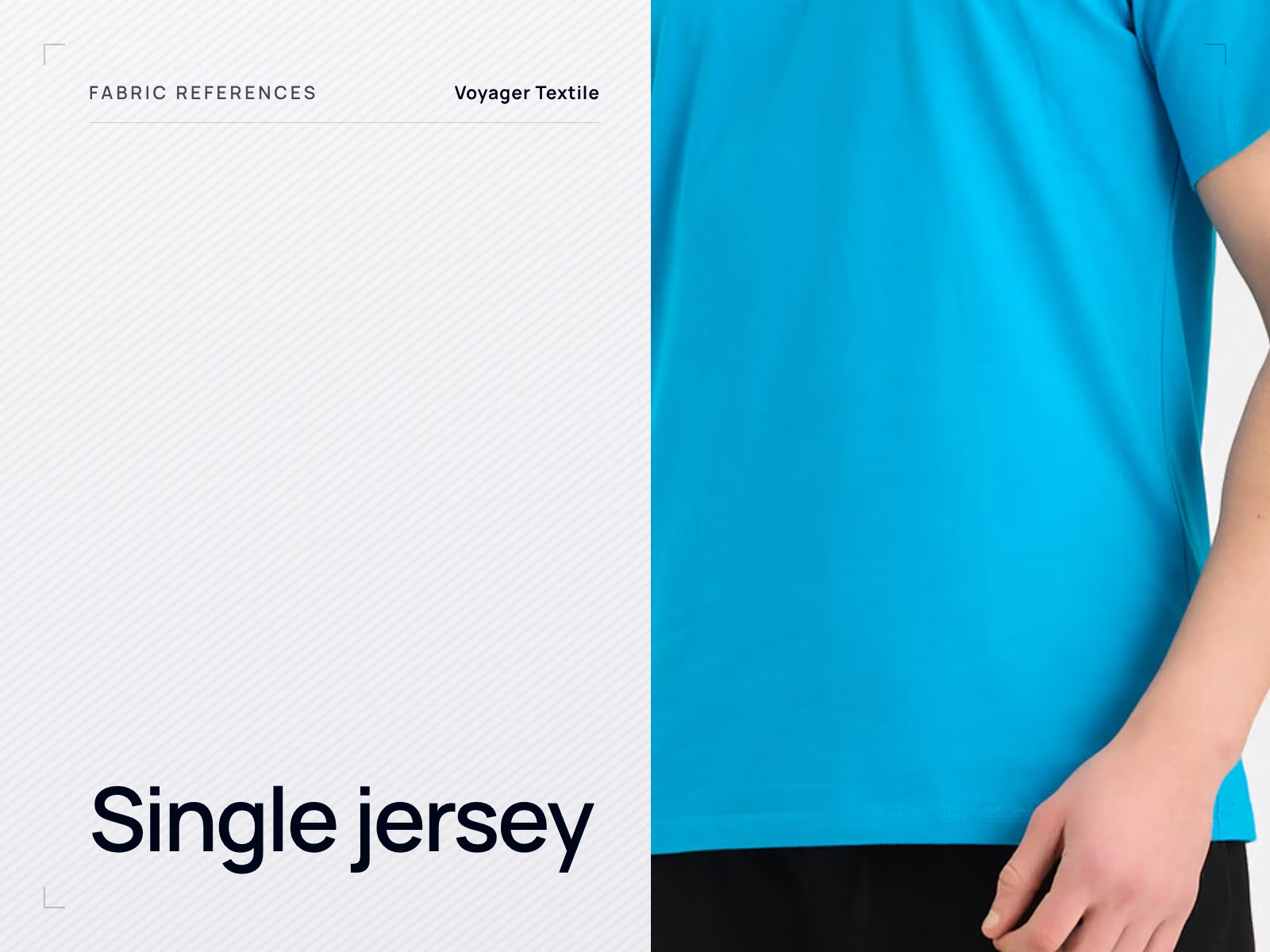
| Micro-polyester jersey | Around 110 to 150 g/m² | Light, smooth face, prints cleanly, very fast drying | Event and running shirts, light match jerseys |
| Bird-eye and honeycomb knits | Around 130 to 180 g/m² | Small open cells; more air movement for the weight, visible texture | Warm-weather training shirts, ventilated panels |
| Open mesh | Around 120 to 180 g/m² | Deliberately open; maximum airflow, minimum coverage | Underarm and side panels, linings, back yokes |
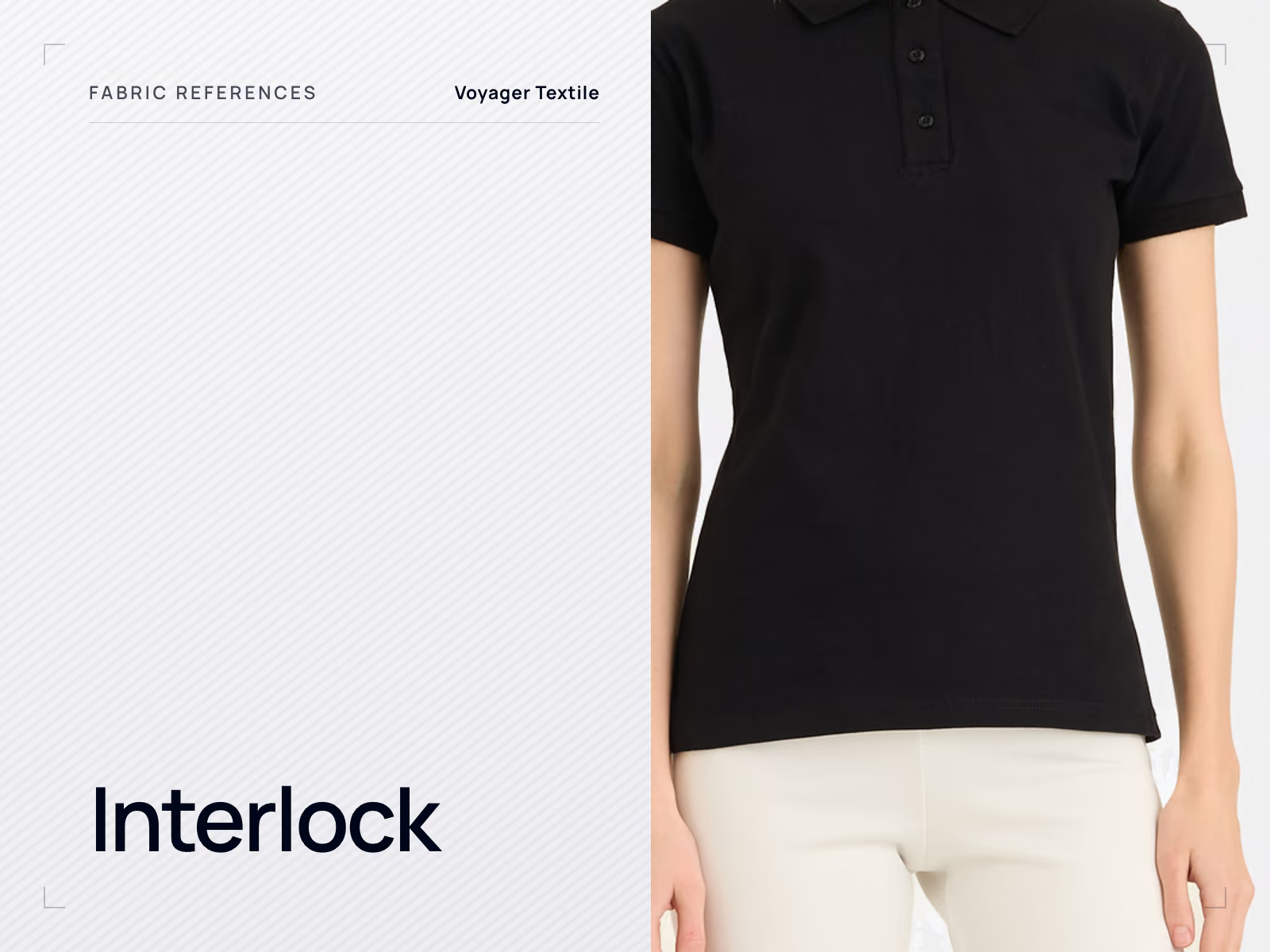
| Polyester interlock | Around 145 to 200 g/m² | Smooth on both faces, stable, more body | Team jerseys and training tops needing structure |
| Polyester with elastane | Around 170 to 240 g/m² | Four-way stretch with recovery | Fitted jerseys, cycling wear, leggings, activewear sets |
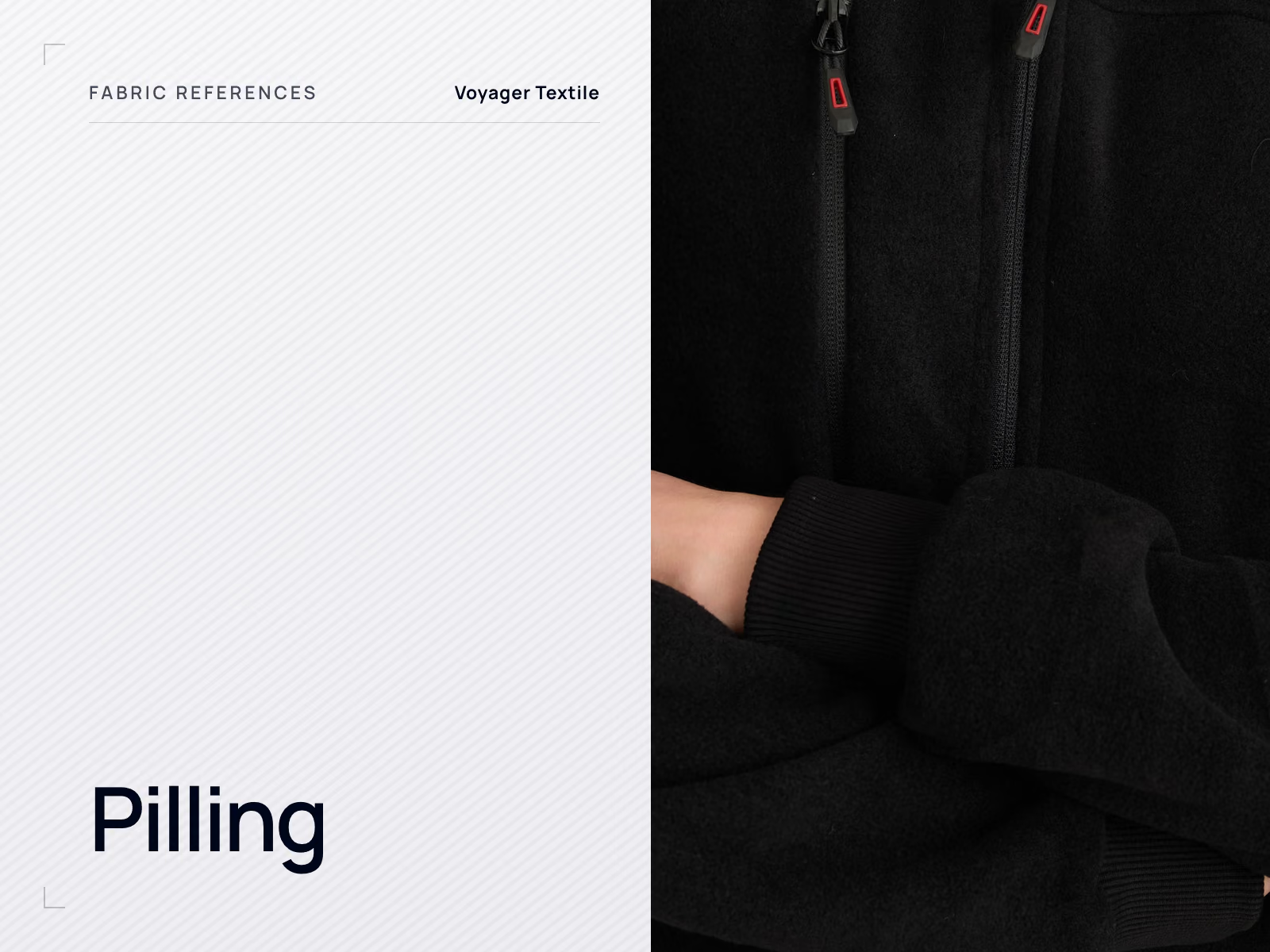
| Brushed polyester | Around 200 to 280 g/m² | Soft raised inside face for warmth | Cooler-weather training tops and tracksuit tops |
Sublimation only works on these fabrics
Sublimation dye bonds with polyester fibres under heat, which makes polyester-based knits the only realistic base for fully sublimated garments. Two consequences follow that are worth understanding at fabric selection rather than at artwork stage.
The dye is transparent and there is no white sublimation ink, so anything intended to appear white must be the fabric itself. That is why sublimated garments are printed onto white or very light fabric. And the printed result depends on the fabric: the same file transferred onto a smooth interlock and onto an open mesh will not look the same, because the surface and the polymer differ. Colour is therefore approved on a printed strike-off on the actual fabric, as covered in the sublimated jersey process and, when it goes wrong, in colour change on polyester.
Polyester or polyamide
Polyamide, often sold as nylon, is the other synthetic used in performance knits. It has a softer, more matte hand and generally better abrasion resistance and recovery, which is why premium leggings and swimwear frequently use it. It is also more expensive, and it does not accept sublimation, so a polyamide fabric rules out all-over printing.
For a programme that needs printed graphics, that single fact usually decides the fibre. For a plain or panel-blocked product where hand-feel and recovery matter most, polyamide is worth the cost.
The properties to specify and check
- Opacity under stretch. Test in the actual colour with the fabric extended as it will be in wear. Light and mid shades on stretch fabrics are where this fails.
- Recovery. Stretch and release repeatedly, and again after washing. Elastane loses performance under heat and mechanical stress, so a hot-laundered programme needs this verified rather than assumed.
- Snagging on open structures. Mesh and bird-eye catch on rough surfaces more readily than a closed knit. Consider where the panels sit on the garment.
- Heat sensitivity. Polyester is affected by heat in pressing and in transfer application, and excessive temperature can leave a glazed mark. Any transfer or press parameter should be tested on the actual fabric first.
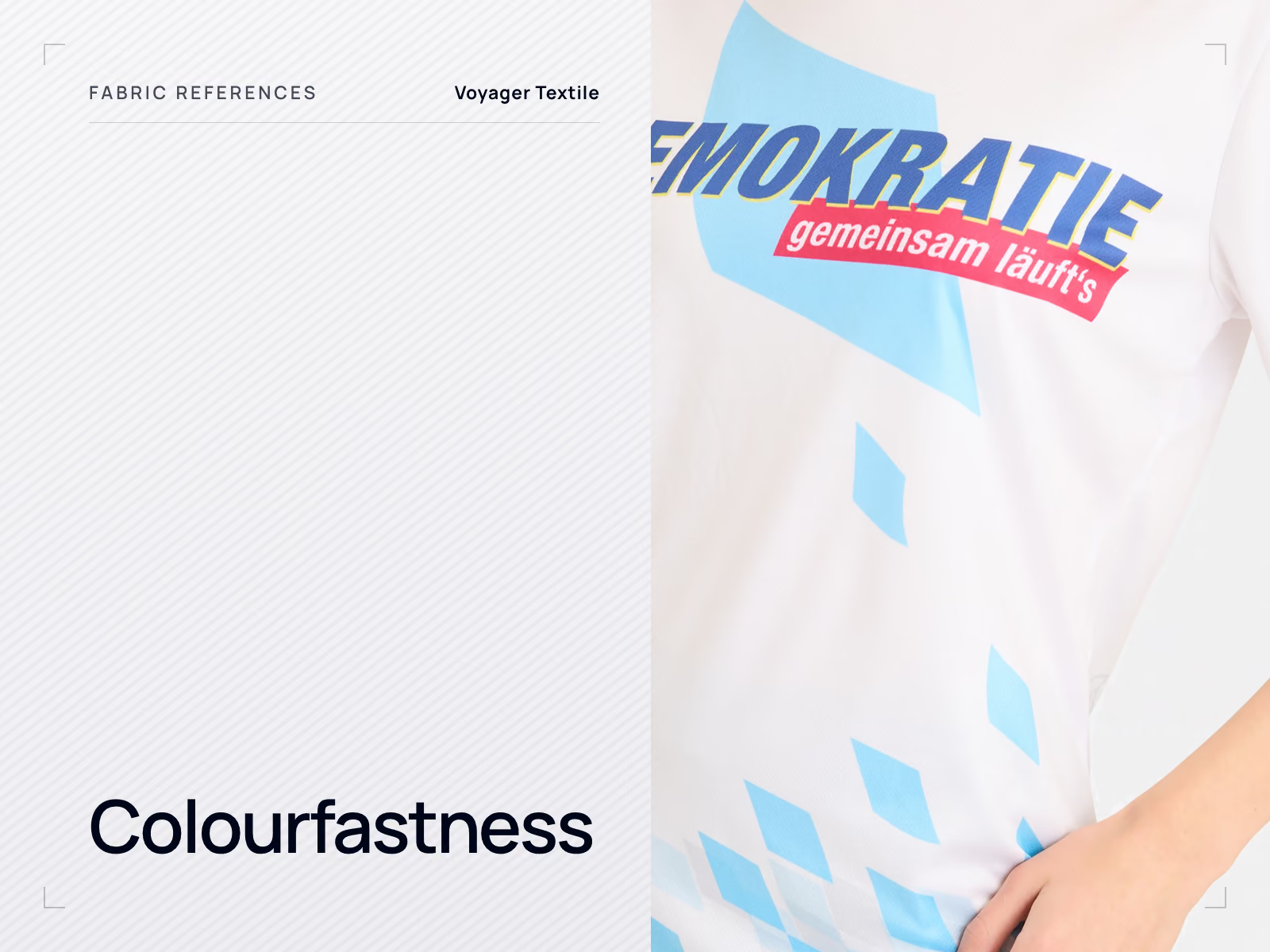
- Colourfastness to light and perspiration, both of which sportswear meets more than many garments. Testing is covered in colourfastness.
Where these fabrics are used
In practice a single sports garment often combines two or three of these structures: a smooth interlock or micro jersey body, mesh at the underarms and sides for ventilation, and an elastane-containing fabric at cuffs or panels that need to hold. Each of those is a separate approval for colour and for print, which is worth planning for rather than discovering at strike-off stage.
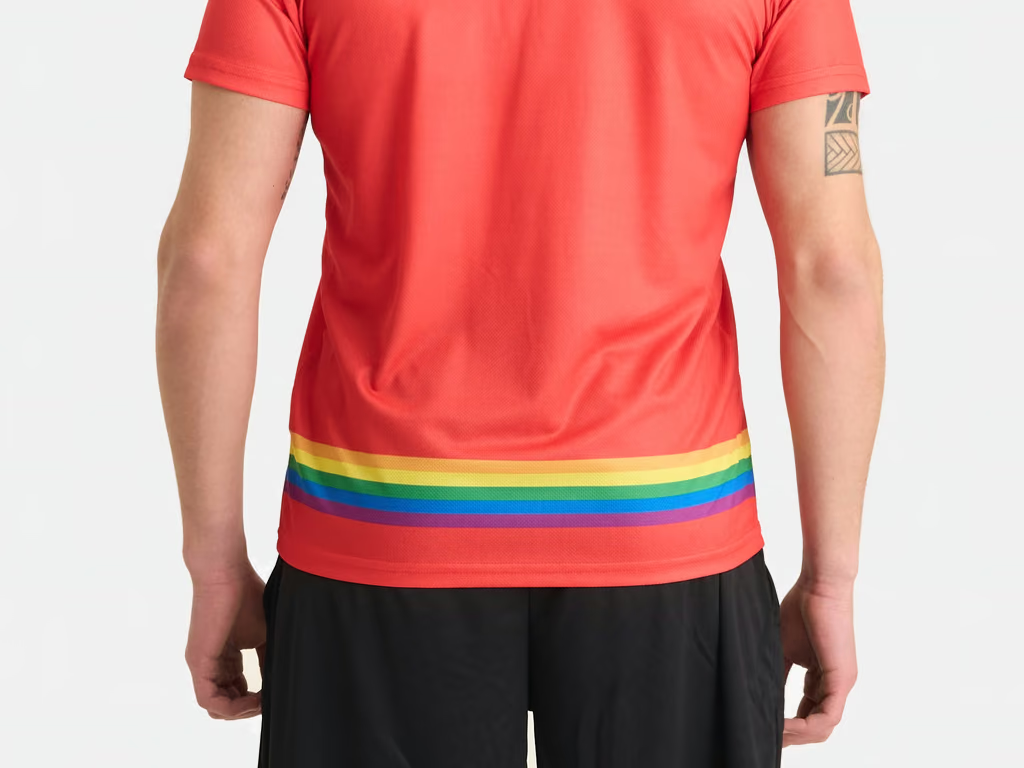
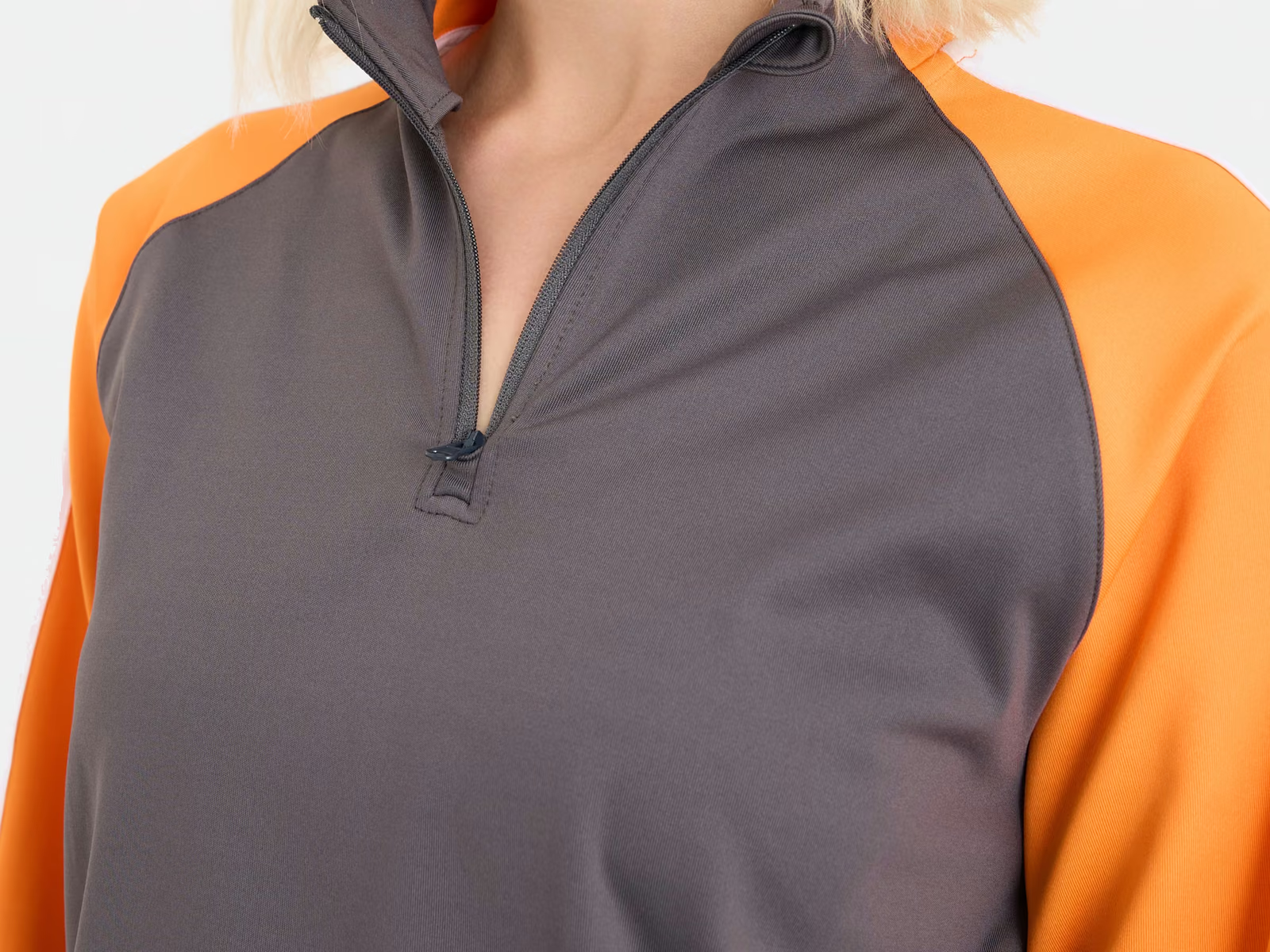
The garment-side detail is in the sublimated jersey, performance T-shirt and leggings process pages.
Questions buyers ask about this fabric
Does polyester wick moisture by itself?
Polyester dries quickly because the fibre absorbs very little water, but moving moisture away from the skin depends on the knit structure, the yarn and any finish applied. Specify the structure and any required finish rather than relying on the fibre name.
What weight of polyester should an event shirt be?
Roughly 110 to 150 g/m² for a light running or event shirt, and around 145 to 180 where the garment should feel more substantial. Open structures such as bird-eye breathe more for their weight than a closed knit at the same figure.
Can polyamide fabrics be sublimated?
No. Sublimation bonds with polyester, so a polyamide fabric rules out all-over sublimated printing. If printed graphics are part of the product, the fibre decision is effectively made for you.
Why does the same design look different on mesh and on interlock?
Because the surface and the structure differ. An open mesh has less area carrying the print and a visibly different texture, so colour reads differently. Include every fabric used in the garment in the strike-off rather than approving on the body fabric alone.
Are these fabrics suitable for embroidery?
Light and open performance knits are demanding for embroidery, because there is little structure to support dense stitching. It is possible with the right backing and reduced density, but transfers or sublimated artwork are usually the better technical answer on these fabrics.
Building a sportswear programme?
Tell us the sport, the climate and whether the design will be sublimated. We will propose the body and panel fabrics, and produce a printed strike-off on each one before bulk.
Discuss performance fabrics