Sportswear and performance
Sublimated Performance T-Shirt Manufacturing
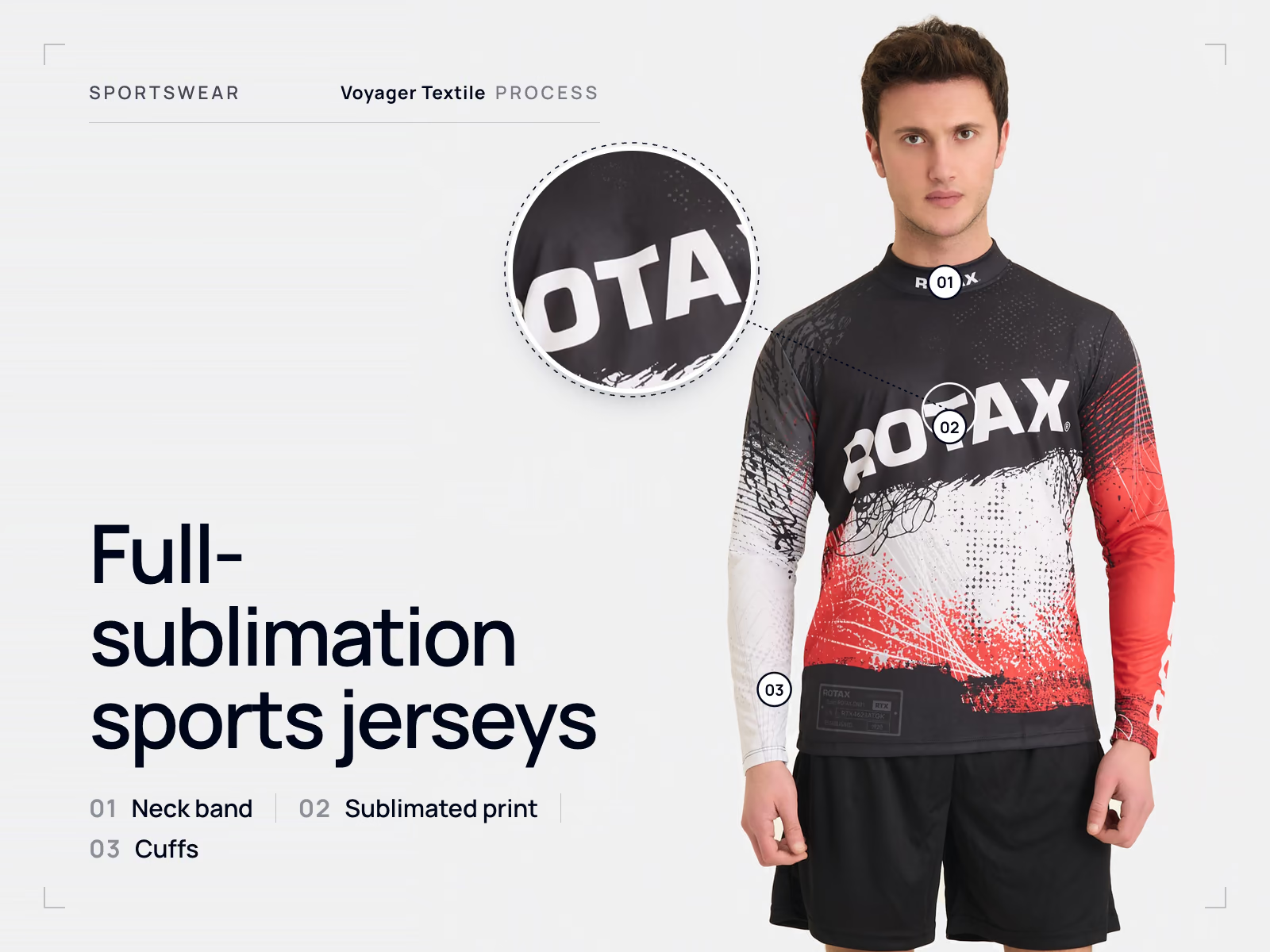
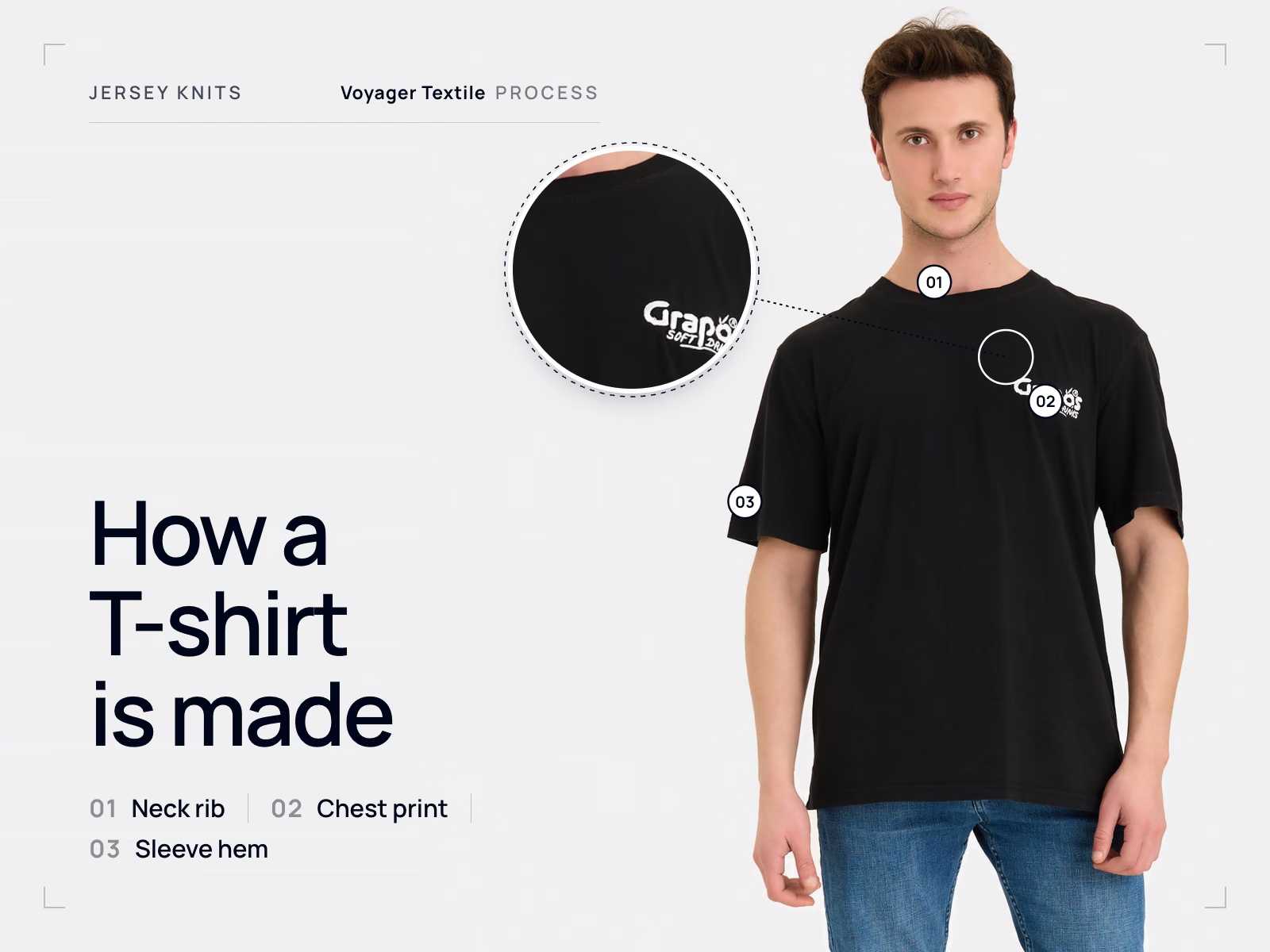
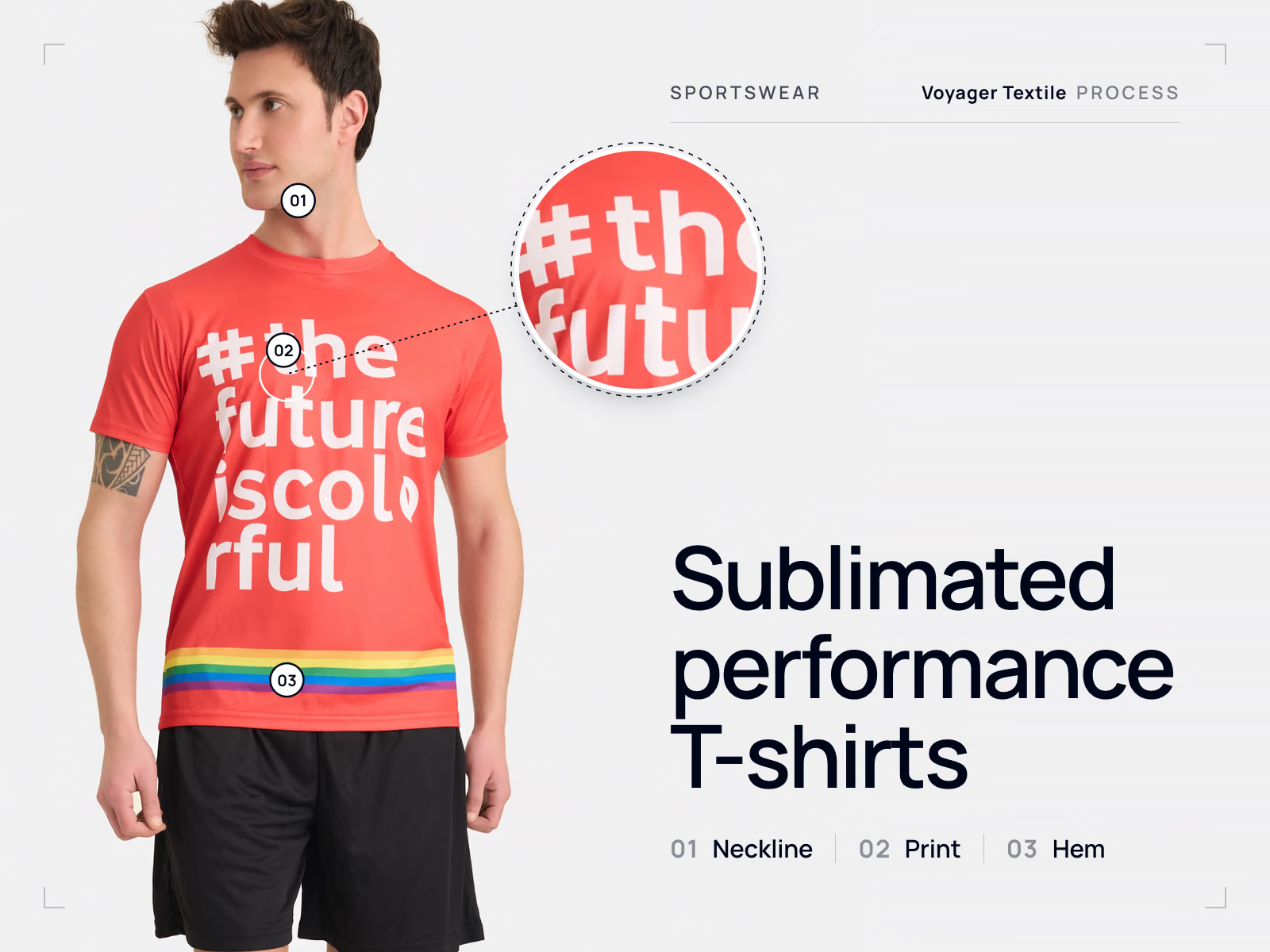
A sublimated performance T-shirt is a polyester tee printed before assembly, built for events, running and promotional programmes rather than for team competition. The construction is simpler than a match jersey, the fabric is usually lighter, and the production problem is repeatability across large quantities and wide size ranges rather than technical panel engineering.
Contents
Event tees, running shirts and sponsored promotional shirts share a process with team jerseys but few of their production problems. A team jersey is a small quantity of individually engineered garments with names, numbers and panel-critical artwork. An event shirt is a large quantity of the same garment in many sizes, where the difficulty is producing several thousand pieces that all look identical and arrive on a fixed date.
Performance tee production sequence
How this differs from a team jersey
| Team jersey | Performance or event tee | |
|---|---|---|
| Typical quantity | A squad or club kit, still 300 pieces per colour and style | Hundreds to thousands, in one design |
| Artwork | Engineered panel by panel, often per player | One design across the range, frequently a placed graphic rather than full coverage |
| Individualisation | Names and numbers per piece | None, or a single sponsor set repeated on every garment |
| Fit | Athletic or close, sometimes cut per position | Straight unisex fit, plus a women's fit where the programme needs it |
| Construction | Panels, gussets, mesh inserts, engineered collars | Simple four-panel tee with a bound or rib neck |
| The production problem | Registration and per-size artwork | Repeatability at volume and delivering a fixed date |
Fabric: lighter, and chosen for how it will be worn
Event tees are usually worn once for several hours, often outdoors and often while moving, so the fabric priorities are weight, breathability and how it feels against the skin. Team jerseys can afford more body; an event shirt usually cannot.
| Structure | Indicative GSM range | Character | Best suited to |
|---|---|---|---|
| Micro-polyester jersey | Around 110 to 140 | Light, smooth face, prints cleanly | Running and mass participation events |
| Bird-eye or honeycomb knit | Around 130 to 160 | Open structure with visible texture, airy | Warm-weather events and training shirts |
| Polyester interlock | Around 145 to 180 | More body, smoother surface, holds shape | Sponsored shirts that need to look substantial |
| Polyester with elastane | Around 170 to 220 | Close fit with stretch | Fitted training and cycling styles |
Full coverage or placed graphics
Not every sublimated shirt needs to be printed edge to edge, and choosing correctly saves both artwork time and cost.
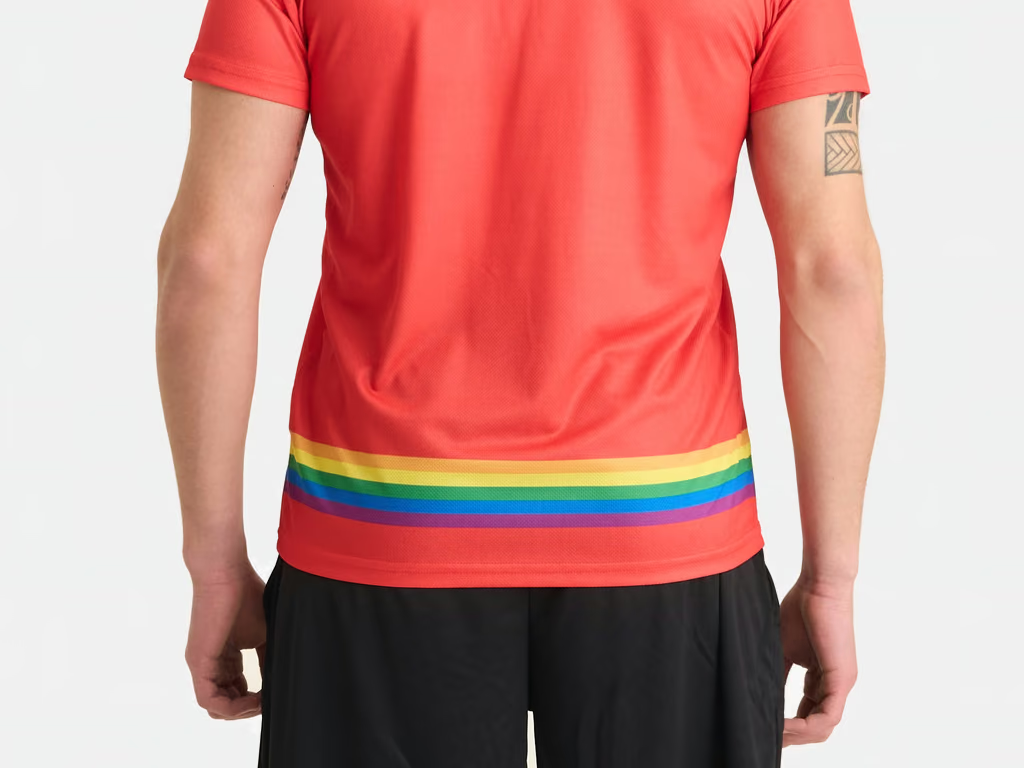
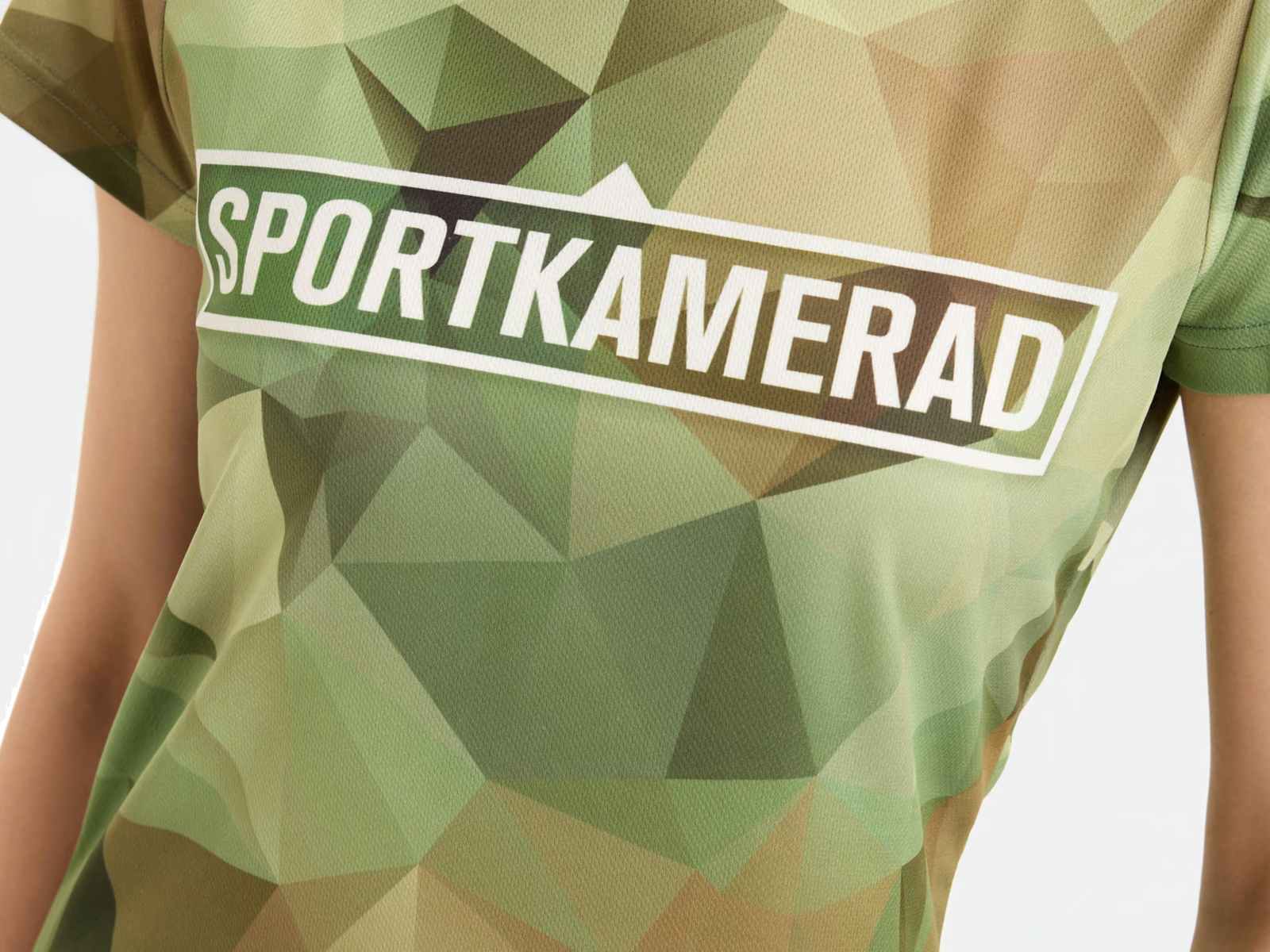
- Full coverage. The whole garment carries the design, including across seams. It is the strongest visual result and it needs artwork engineered to the pattern panels for every size.
- Panel or block designs. A coloured body with a printed yoke, sleeve blocks or hem band. Simpler artwork, still sublimated, and often enough for an event look.
- Placed graphics on a coloured ground. A front logo and a back sponsor block printed into an otherwise plain shirt. The artwork effort is much lower and per-size layout is simpler.
Because sublimation does not price per colour, a full-colour placed graphic costs no more to print than a single-colour one. The cost sits in preparation, so the practical question is how much of the garment genuinely needs to carry artwork.
Sponsor branding on event shirts
Event tees usually carry several logos at different sizes, supplied by different parties, arriving at different times. That is a production risk rather than a design one.
- Collect all logos as vector files before artwork is engineered, and confirm which is final.
- Fix the hierarchy and position of each logo in writing, measured from fixed points on the garment.
- Confirm brand colours and check them on the strike-off, since sponsors are often the parties most sensitive to colour.
- Agree a cut-off date after which no further logo can be added, because a late change means reprinting fabric rather than re-pressing a garment.
Sizing for a large participant group
A team knows its squad. An event does not know its participants, which changes how the order is planned. Two rules help. Use a straight unisex fit with a published measurement chart so people can self-select accurately, and build the size curve from the entry data or from previous editions rather than dividing the quantity evenly.
Because artwork is laid out per size in full-coverage designs, adding a size late is a real change rather than an administrative one. Confirm the full size range before artwork is engineered.
Construction
The garment itself is a simple tee, assembled much like a cotton T-shirt, which is why the process is efficient at volume.
- Printed panels are cut to the design, with registration checked between adjoining panels on full-coverage styles.
- Shoulders are joined and taped, since polyester knits stretch at the shoulder line under load.
- The neck is finished: a self-fabric binding for the cleanest sports look, or a rib for a more conventional tee appearance.
- Sleeves are set flat, then side and underarm seams closed in one operation.
- Sleeve and bottom hems are coverstitched, or finished flat where a low-profile seam is wanted.
- Labels are attached, or a printed neck label is used where a sewn label would be felt in wear.
A printed neck label is worth considering for anything worn during exercise. It removes a common comfort complaint in performance shirts and it is decided before construction, because it changes how the neckline is finished.
Quality control at volume
The checks are the same as for any sublimated garment, but the volume changes the emphasis: consistency between the first and the last carton matters more than any single piece.
| Check | What it catches |
|---|---|
| Colour against the approved strike-off, sampled across the run | Drift between print batches or fabric rolls |
| Logo position and size, measured from fixed points | Placement drift over a long run |
| Coverage to the edges on full-coverage styles | Insufficient bleed beyond the cut line |
| Neck finish and label comfort | A common wearer complaint on performance tees |
| Measurements by size across the range | Cutting drift on a large multi-size order |
| Size sorting and carton contents | The failure that actually ruins an event delivery |
For a fixed-date event, packing is part of quality: cartons packed by size, clearly marked, and where the distribution is by location, packed per site. Getting 3,000 correct shirts into the wrong carton structure is still a delivery failure.
What to put in the tech pack
- Fabric structure, composition and target weight, plus any performance requirement you can evidence.
- Coverage approach: full coverage, blocks or placed graphics.
- Artwork files, layered, with sponsor logos as vector.
- Logo positions and sizes measured from the high point of the shoulder and centre front.
- Colour references and confirmation of strike-off approval.
- Neck finish: binding or rib, and whether a printed neck label is used.
- Fit: unisex, women's fit, or both, with a published measurement chart.
- Size range and split, with the source of the split.
- Quantity and the delivery date, including any hard event date.
- Packing: individual bagging, size sorting, carton marking and delivery locations.
Sampling and lead time
Approve a printed strike-off before a garment is sewn, then a sewn sample for fit and finishing. For a fixed event date, work backwards through transport, packing, production, sampling and the strike-off, and set the artwork cut-off from that. The minimum is 300 pieces per colour and per style, and bulk production typically takes 4 to 5 weeks after sample approval, depending on the product and the project.
Before you send an event shirt RFQ
- Event date and the date shirts must be on site
- Quantity and the size split, with its source
- Fabric weight and structure preference
- Coverage approach: full, blocks or placed graphics
- All sponsor logos as vector files, with hierarchy
- Brand colour references
- Fit: unisex, women's fit, or both
- Neck finish and label preference
- Packing and delivery locations
- Any artwork still to be confirmed, and by when
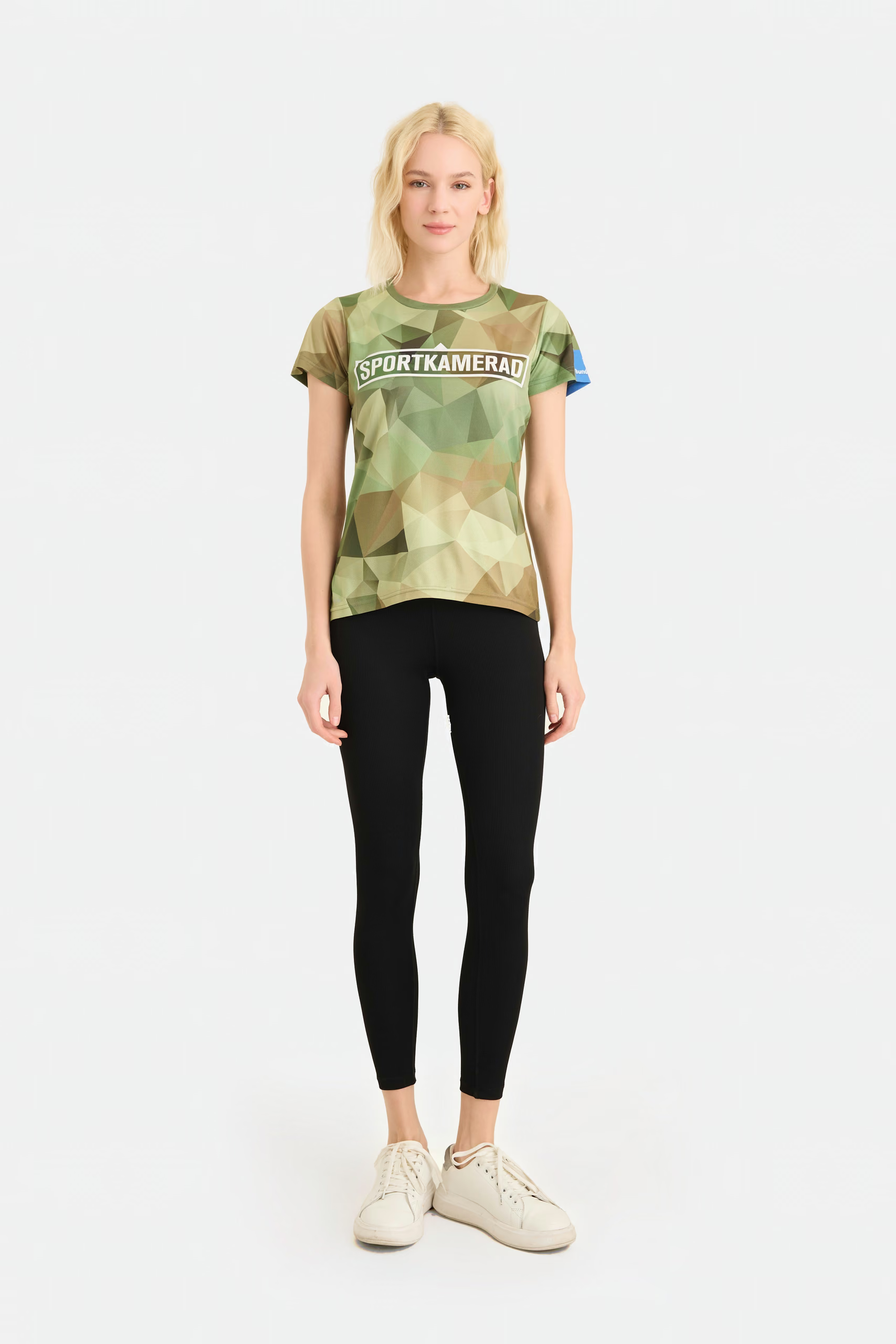
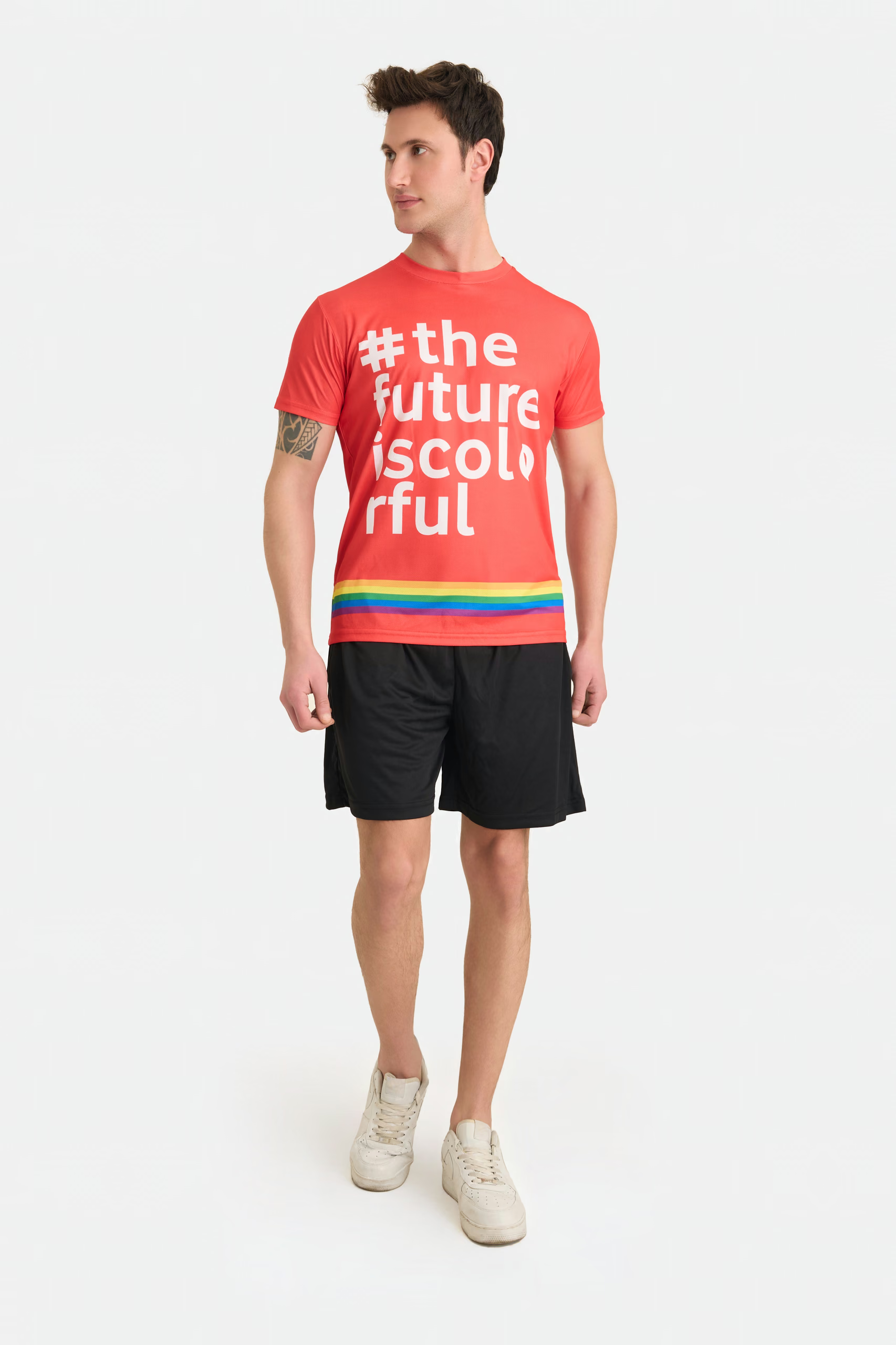
Sports tee references produced by Voyager Textile
Produced to customer specification, with sublimation printing run in house.
Buyer questions
What is the difference between a sublimated event shirt and a team jersey?
A team jersey is a small quantity of individually engineered garments, often with names and numbers and panel-critical artwork. An event shirt is a large quantity of one design across many sizes, usually with a simpler construction, where the production challenge is consistency at volume and hitting a fixed date.
What fabric weight suits a running or event T-shirt?
Roughly 110 to 140 g/m² for light micro-polyester jerseys used in running and mass participation events, and around 145 to 180 g/m² where the shirt should feel more substantial. Open structures such as bird-eye knits sit in between and breathe more for their weight.
Does the whole shirt have to be printed?
No. Sublimation can print full coverage, colour blocks, or placed graphics on a coloured ground. Because sublimation does not price per colour, a full-colour placed logo costs the same to print as a single-colour one, so the real question is how much of the garment needs artwork.
Can we add a sponsor logo after production has started?
Not without reprinting, because the design is printed into the fabric before the garment is cut. Set an artwork cut-off date when the order is placed and treat it as firm. Late sponsors can sometimes be handled with an applied heat transfer, which sits on the surface rather than in the fibre.
Should event shirts be unisex or fitted?
A straight unisex fit with a published measurement chart suits most events, because participants self-select and cannot try garments on. Adding a women's fit is worth it where the group justifies it, but it is a second pattern and a second artwork layout set.
How do we work out the size split for an event?
From entry data where you have it, or from a previous edition of the same event. Dividing the quantity evenly across sizes is a common cause of leftover stock at both ends of the range. Confirm the full size range before artwork is engineered.
Are sublimated shirts comfortable to run in?
The print itself adds no layer, weight or stiffness, because the colour is inside the fibre, so a sublimated shirt feels the same across a printed area as anywhere else. Comfort then comes from the fabric structure and the neck and seam finishing, which is why a printed neck label is worth specifying.
What is the minimum order for sublimated performance T-shirts?
300 pieces per colour and per style at Voyager Textile, with sizes split within it. Event programmes rarely test that limit, since the usual difficulty is the opposite one: producing several thousand identical shirts across a wide size range to a fixed date.
Ordering this garment from Voyager Textile
- Every garment is made to order, to your own design.
- The minimum order is 300 pieces per colour and per style. Sizes can be split inside the 300, and a custom Pantone colour carries the same minimum of 300 pieces. Polyester-based fabrics are assessed separately.
- A sample takes 5–7 business days. Bulk production takes 4–5 weeks after sample approval; development, sampling and shipping are additional.
- Cutting, sewing, embroidery, transfer printing and sublimation printing are done in our own factory in Türkiye. Screen printing and garment washing are coordinated with partner facilities.
Quantities, timing and any open point are confirmed per project at the quotation stage, once we have your specification or tech pack.
Request a quoteProducing shirts for an event?
Send the artwork, quantity, size split and the date the shirts have to be on site. We confirm the fabric, produce a strike-off for approval and plan production backwards from your event date.
Send an event shirt brief