

Private Label Activewear and Leggings Manufacturer in Turkey
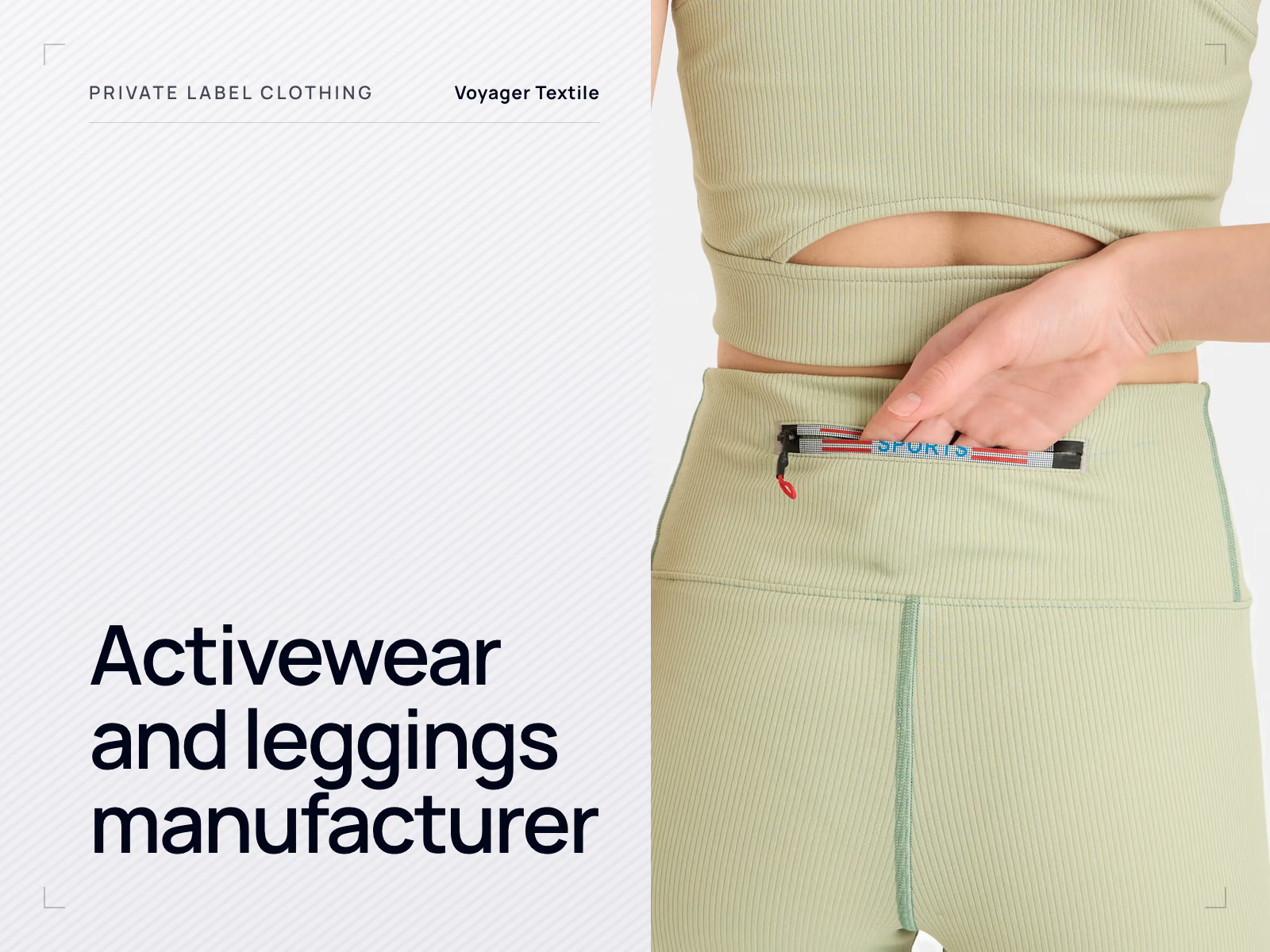
Voyager Textile makes private-label activewear, leggings, crop tops, tennis skirts and sports shorts in its own factory in Türkiye, for activewear brands, athleisure labels and new startups. The minimum is 300 pieces per colour and per style, a sample takes 5-7 business days, and bulk typically takes 4-5 weeks after sample approval. Everything is cut-and-sew to your design; seamless knitting is not offered.
Last reviewed:
Contents
- Cut-and-sew activewear, not seamless knitting
- What we make: leggings, crop tops, sets, tennis skirts and sports shorts
- Activewear fabrics and indicative weights
- Construction: seams, gussets and waistbands
- Decoration on stretch fabric: in-house and partner
- Tests, sizing and packing
- For activewear startups: a first run from 300 pieces per colour
- What changes the unit cost of activewear and leggings
- Producing in Turkey for European Brands
- Questions this raises
Voyager Textile is an apparel manufacturer with its own cutting, sewing, embroidery and sublimation floor in Türkiye, and it produces athletic apparel for brands in Europe and the United States. Orders start at 300 pieces per colour and per style, sizes are split inside that quantity, and a sample takes 5-7 business days.
Cut-and-sew activewear, not seamless knitting
Every activewear piece Voyager Textile makes is cut-and-sew: stretch fabric is spread, cut into panels and sewn with stitches that extend with the fabric. Seamless knitting, where a circular knitting machine produces a tube close to the finished garment shape, is not offered.
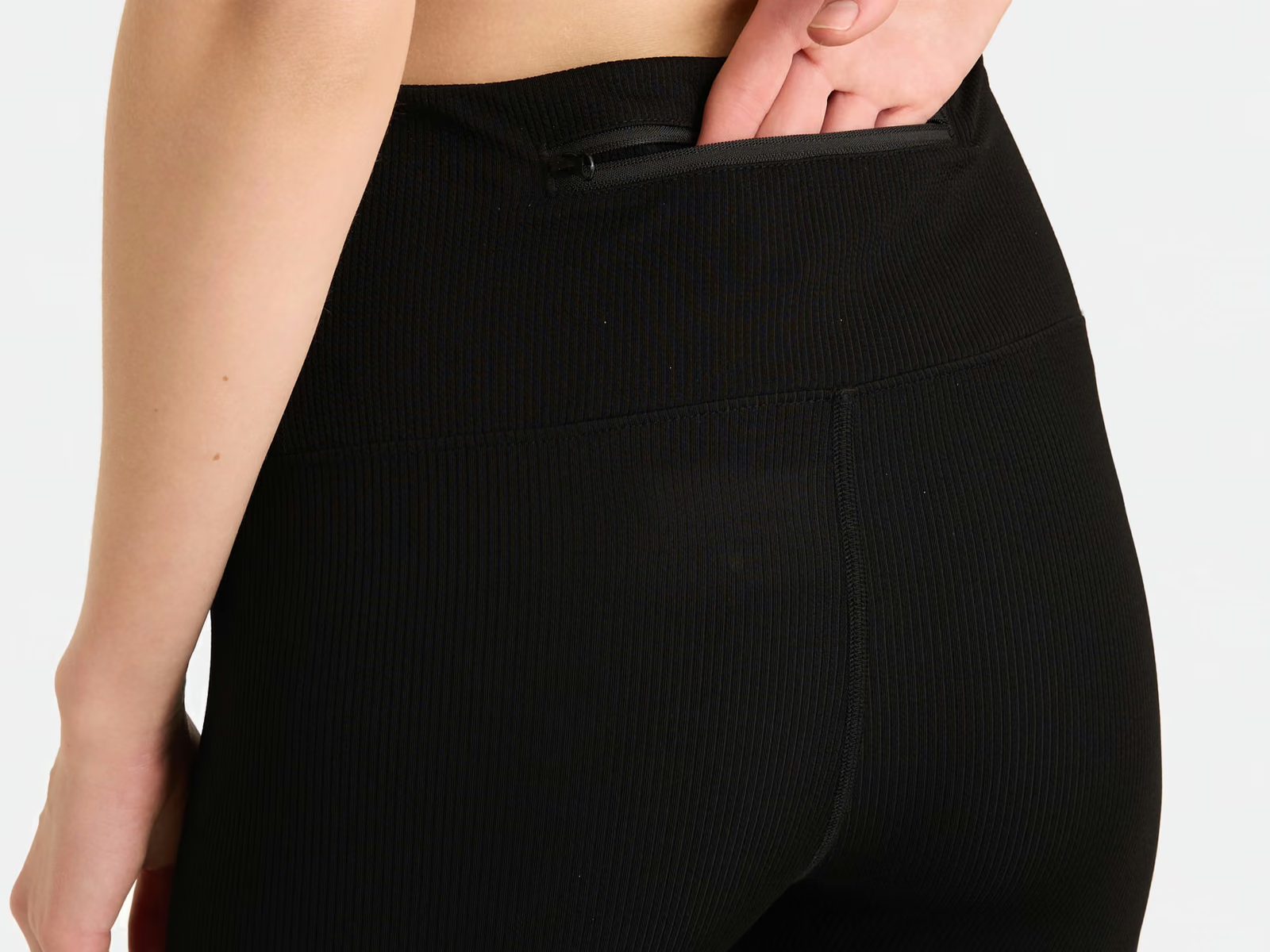
Panels can be colour blocked, a sublimated print can run across the whole leg, the waistband can carry a hidden key pocket, and the fabric choice is open: polyester or polyamide with elastane, ribbed stretch knit, mesh inserts. Where the reason for asking about seamless is a smooth outer leg, a side-seam-free leggings pattern, cut so there is no outside leg seam, is the cut-and-sew answer.
What we make: leggings, crop tops, sets, tennis skirts and sports shorts
Leggings, crop tops, sets, tennis skirts and sports shorts are made to your pattern or reference garment, with the fabric and construction specified for each style.
Leggings
Leggings are typically cut from four-way stretch knit with negative ease, a crotch gusset and flatlock or overlock-and-coverstitch seams, and the two properties that decide them are recovery and opacity when stretched. The full sequence, from fabric selection to the worn-sample check for waistband roll-down, is on the leggings manufacturing process page. Full-length, 7/8 and cropped lengths are separate leg-length specifications on the same block.
Crop tops
A crop top is a fitted knit top cut short so the hem sits above the waist, in jersey with elastane for everyday styles or in polyester or polyamide with elastane for training. The hem can be finished with a 406 coverstitch, a rib band or an elastic band, and sports styles usually have a lining or double layer at the front. Opacity is approved stretched, in the actual shade.
Activewear sets
A set pairs a crop top or training top with leggings or shorts in the same stretch knit, approved and packed together. The problem to plan for is matching: both pieces come from one dye lot where quantities allow, and rib or mesh inserts are approved against the main fabric for colour and stretch. How the 300-piece minimum applies to a set is confirmed at the quotation stage.
Tennis skirts and skorts
A tennis skort combines an outer skirt, flared or pleated, with an integrated inner short or legging, often with a ball pocket. Polyester-rich fabric can be heat set to retain pleats; check pleat retention on the selected fabric after the intended care cycle. The same construction is used for padel and golf skirts; silhouette, pleat type and pleat depth are specified as measurements, as described on the skirt manufacturing page.
Sports and running shorts
Sports shorts can have an attached elastic waistband, with or without an inner drawcord, a gusset and a coverstitched or split hem as specified for the style. Check waistband twisting and roll-down on the worn sample. Running shorts often add a mesh inner brief or a short inner tight, and trims such as contrast binding at the hem are part of the pattern. Sweat, work and woven shorts are on the shorts manufacturer page.
Training tops, track jackets and joggers
Half-zip training tops, fitted zip track jackets and joggers (also sold as sweatpants or track pants) complete an activewear capsule. Their construction is on the tracksuit manufacturing page; sublimated versions for clubs are on the sublimated teamwear page.
Activewear references produced by Voyager Textile
Produced to customer specification, cut-and-sew. References from previous production, not stock.
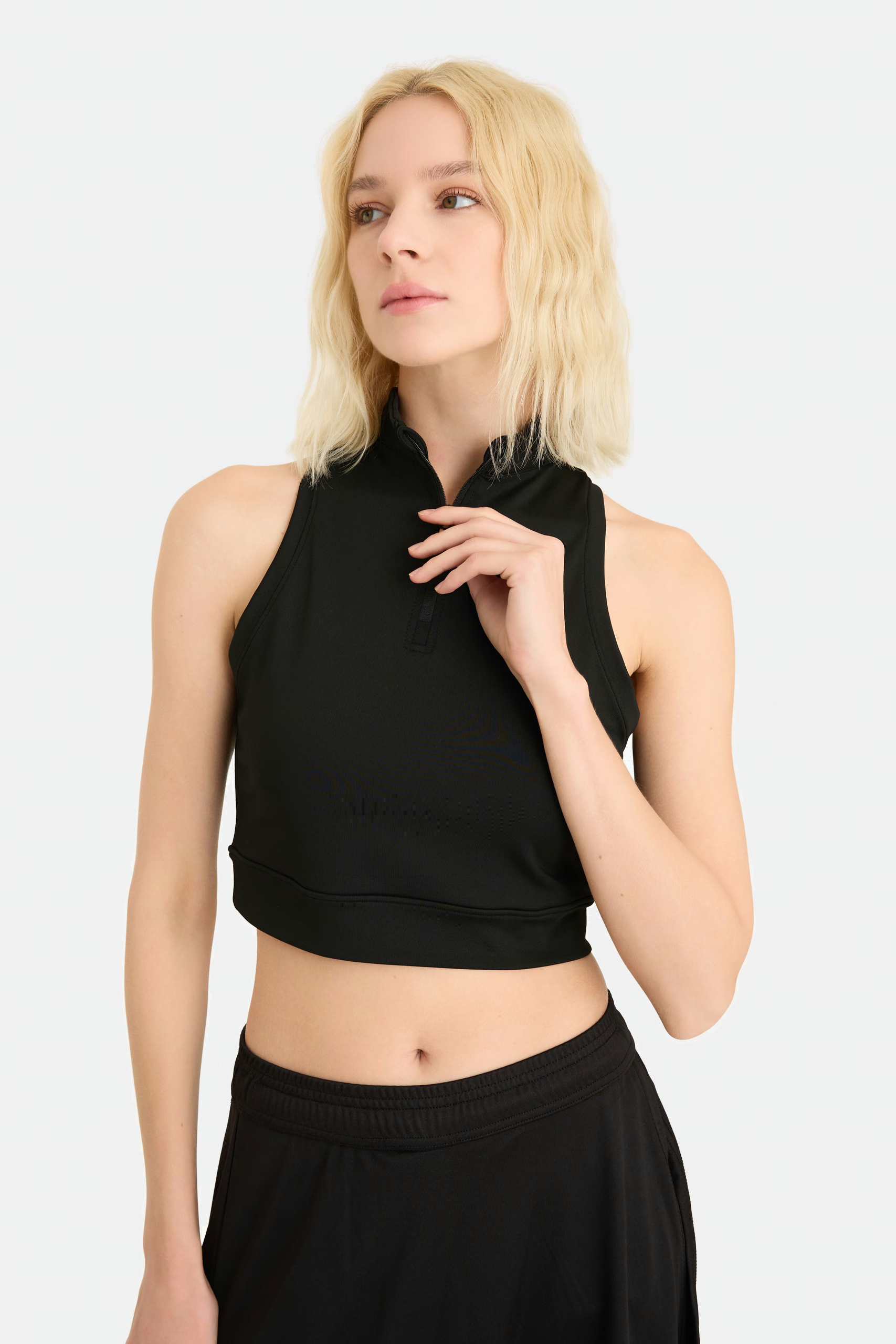 Black Halter Crop TopCrop Top · VT-CT-001
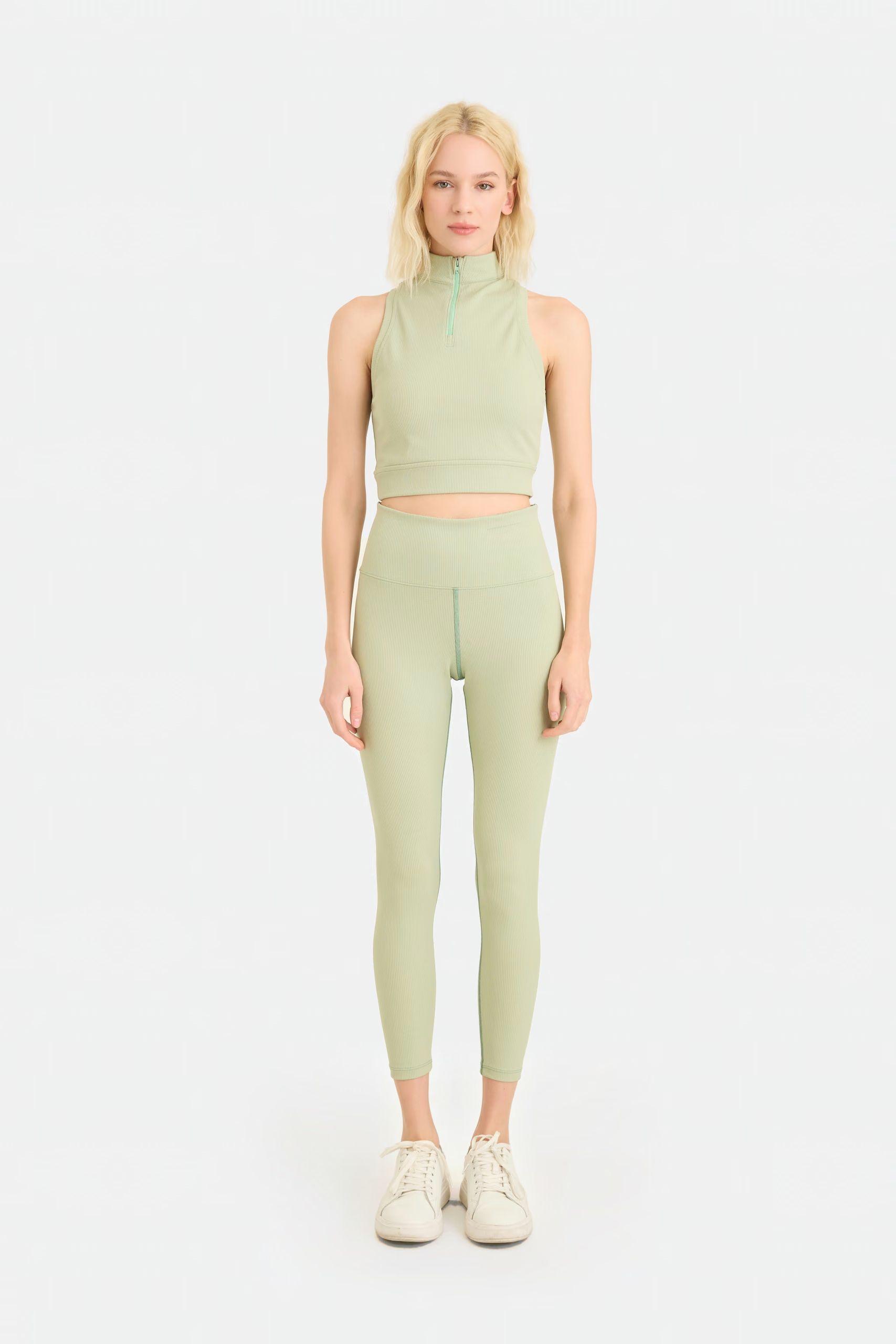 Sage Ribbed Crop TopCrop Top · VT-CT-002
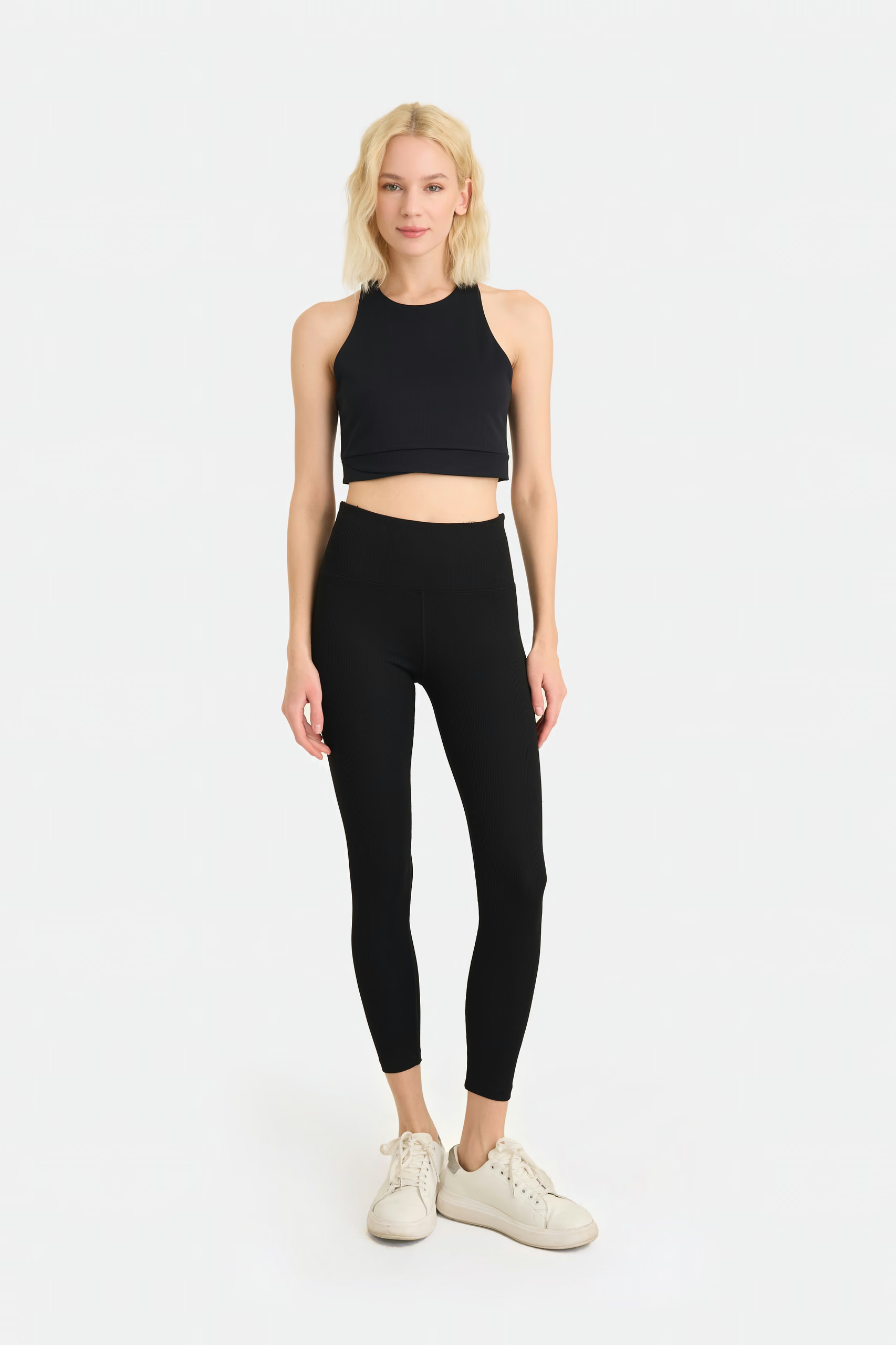 Black Plain LeggingsLeggings · VT-LG-001
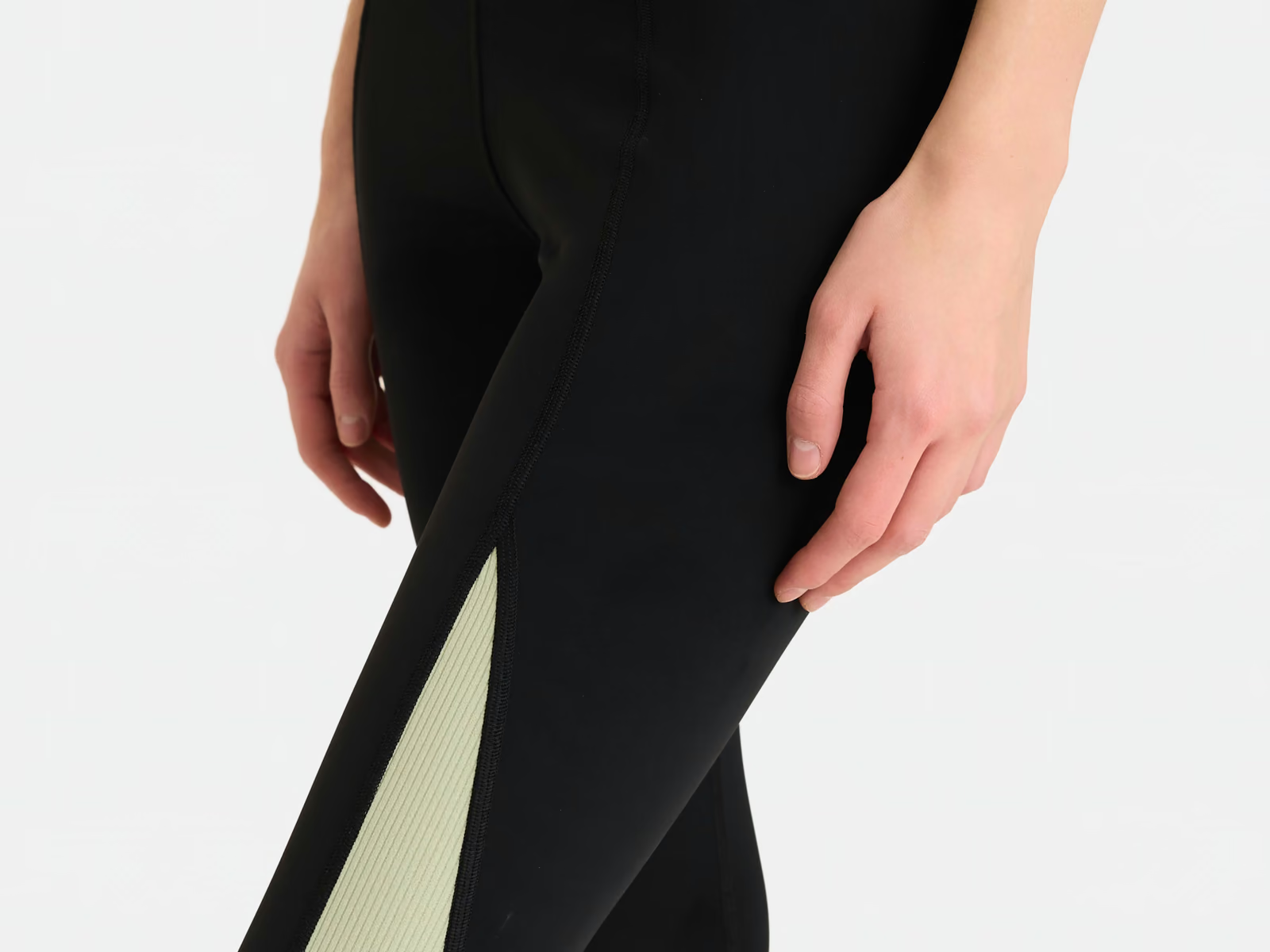
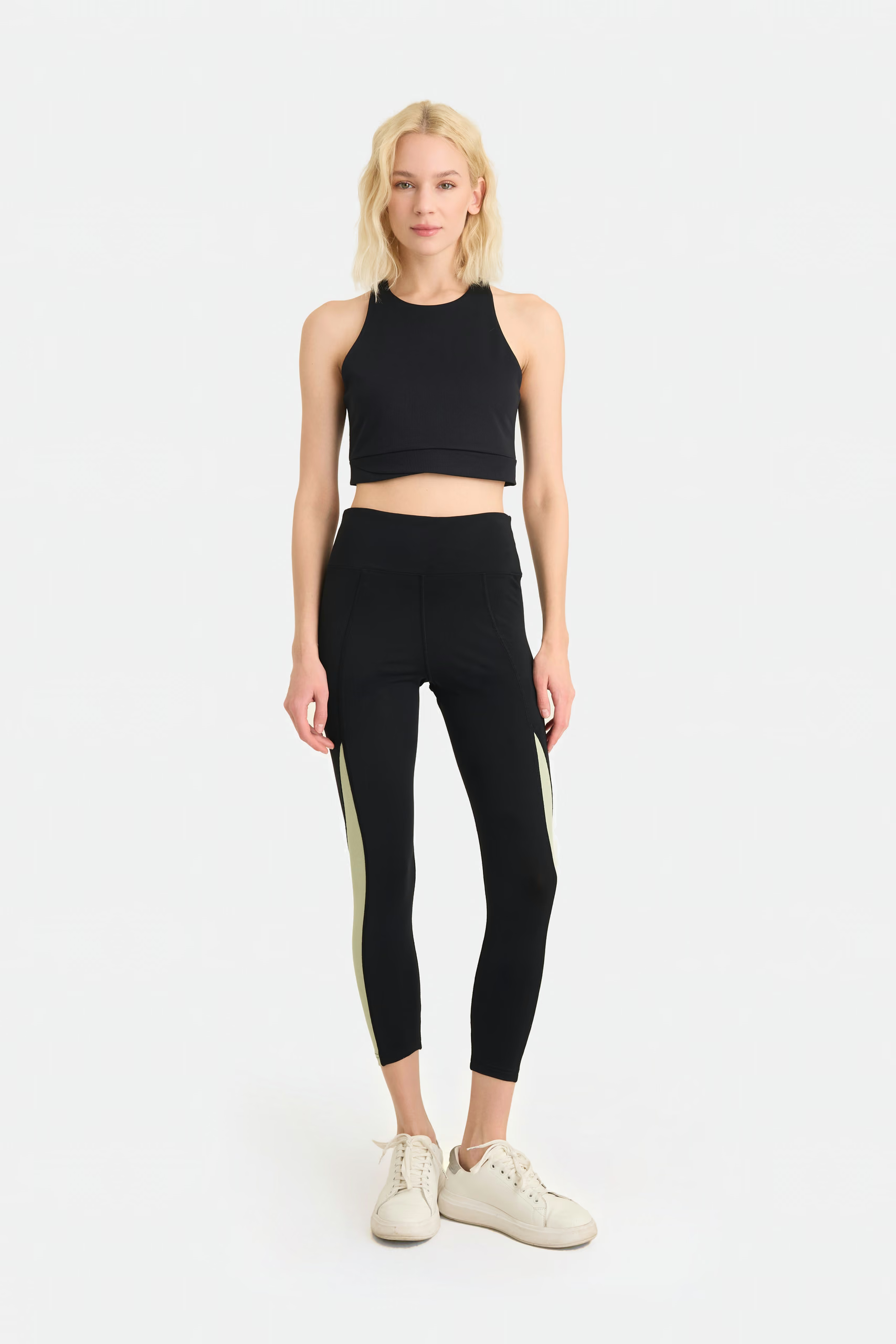 Black Sage Panel LeggingsLeggings · VT-LG-002
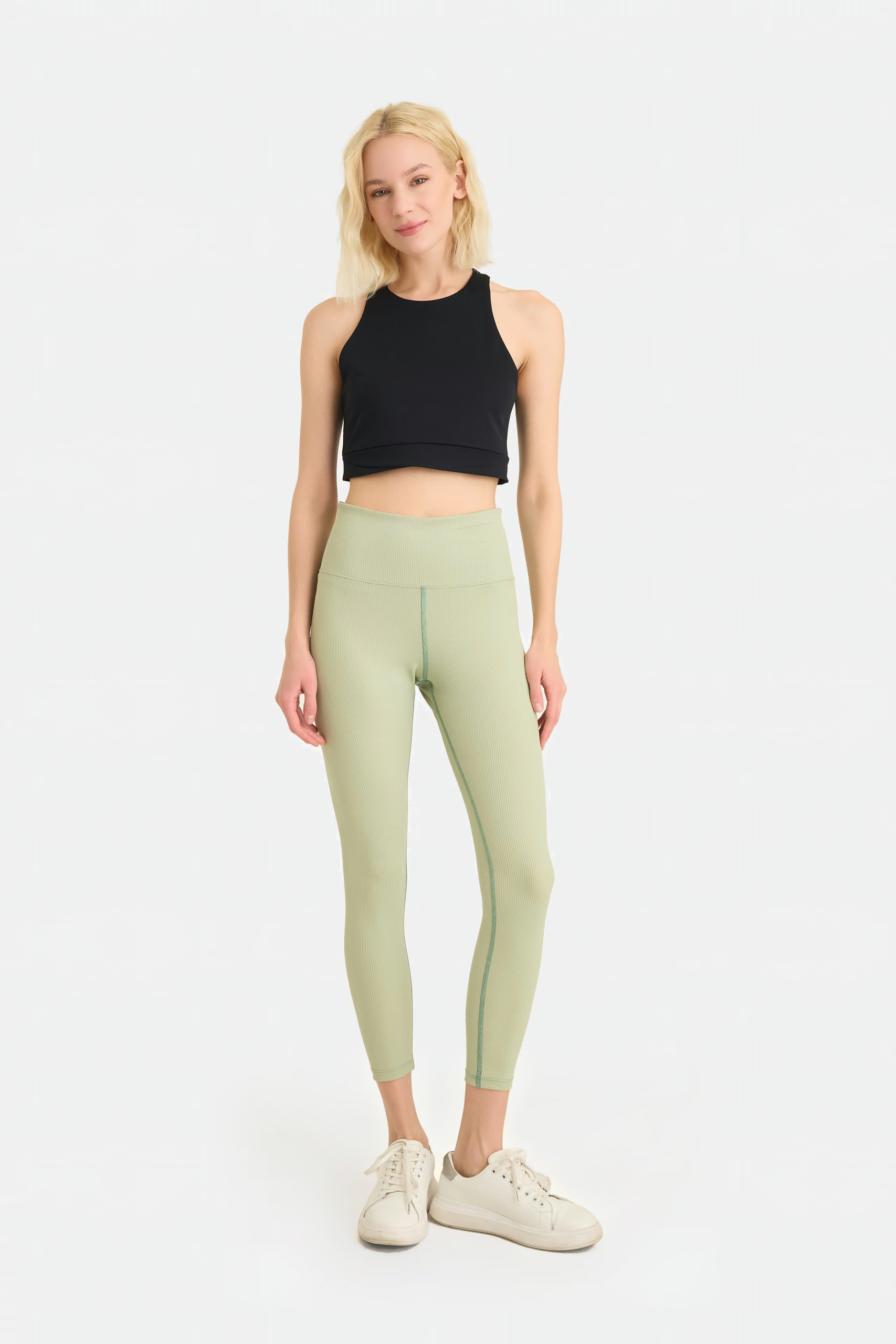 Sage Green LeggingsLeggings · VT-LG-003
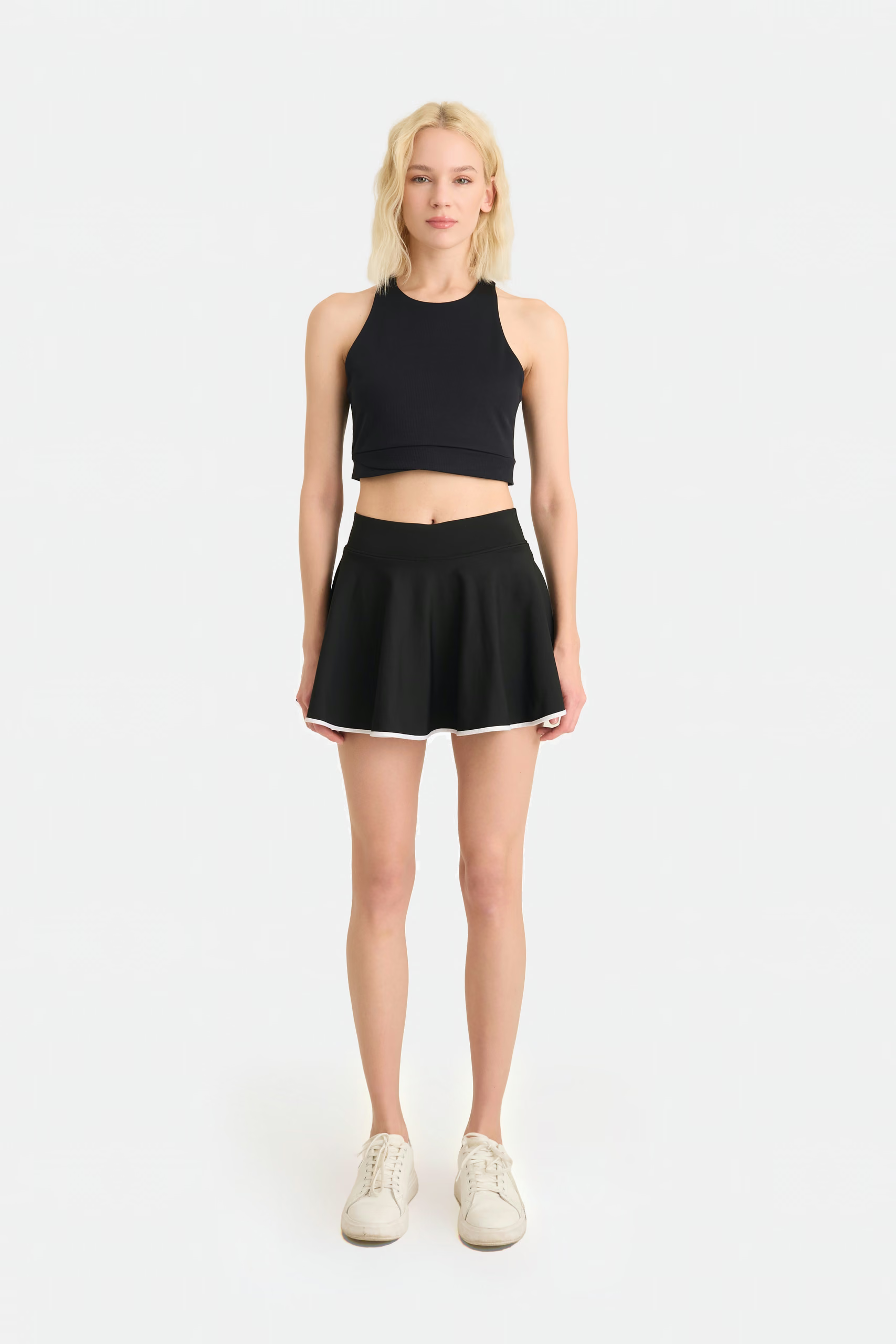 Black Flared Tennis SkirtSkirt · VT-SK-001
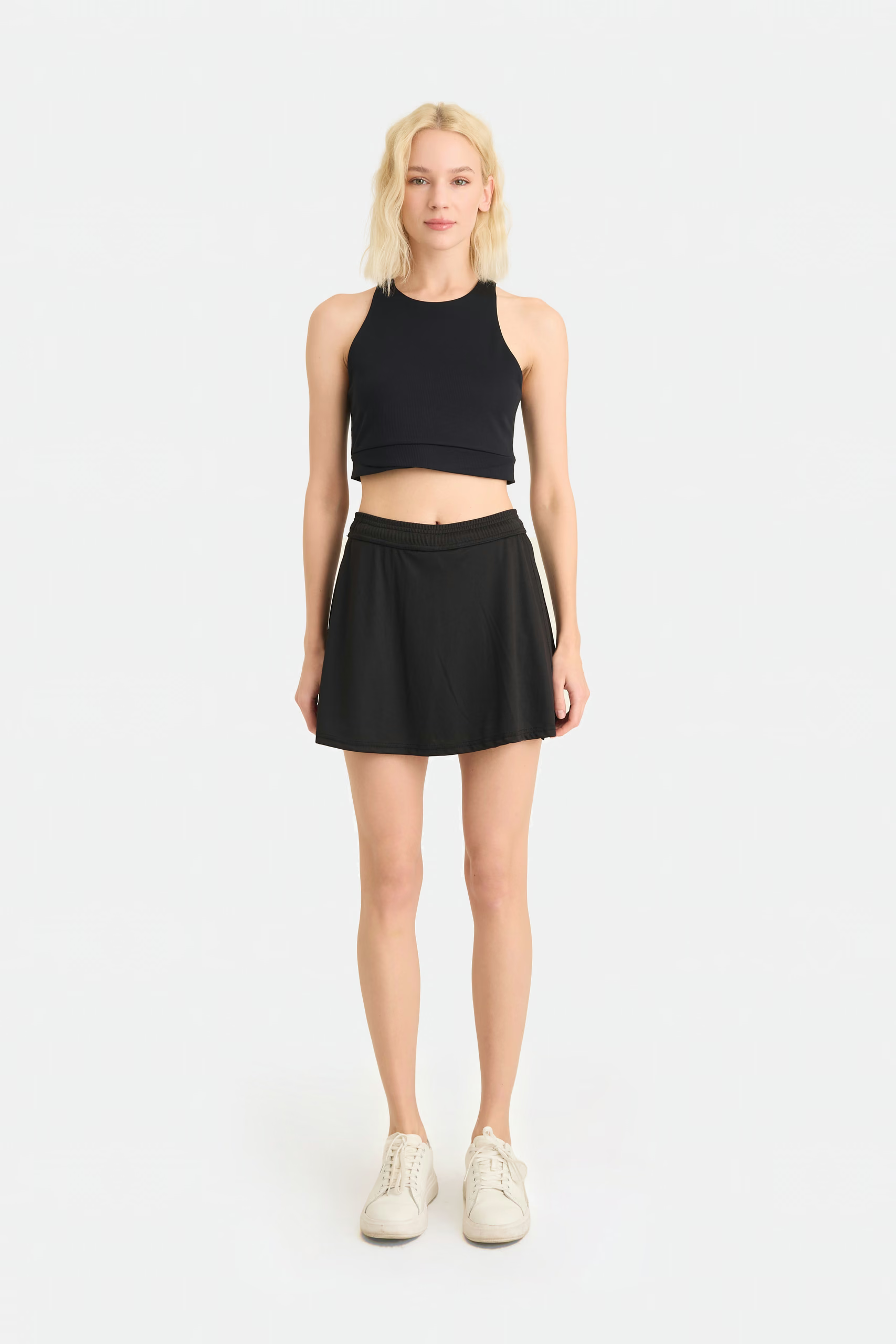 Black Pleated Tennis SkirtSkirt · VT-SK-002
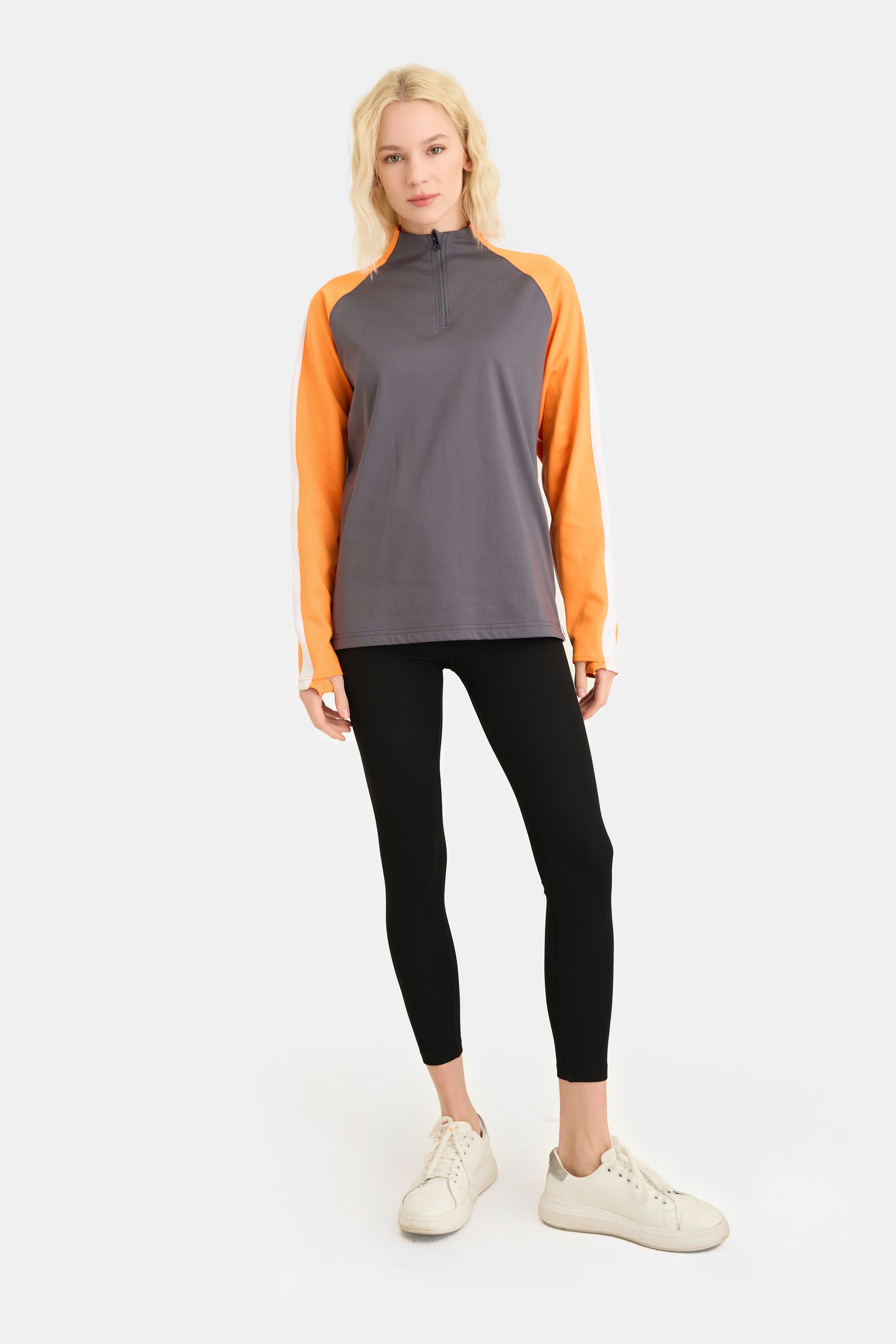 Women’s Training Set, Grey and OrangeActivewear Set · VT-ACS-001
Activewear fabrics and indicative weights
Activewear fabric is chosen by structure and elastane content first and by weight second, because two fabrics at the same weight can differ completely in opacity and recovery. The ranges below come from the site's performance polyester knits, single jersey and French terry and fleece pages; they are indicative, specified per project.
| Fabric | Indicative weight | Used for | Note |
|---|---|---|---|
| Polyester with elastane | Around 170 to 240 g/m² | Leggings, crop tops, fitted sets, shorts | Check four-way stretch, recovery and suitability for sublimation on the selected fabric |
| Polyamide with elastane | Confirmed per project | Leggings and sets where hand-feel and recovery lead | Hand-feel, sheen and print compatibility depend on the fabric; assess separately from polyester sublimation |
| Micro-polyester jersey | Around 110 to 150 g/m² | Loose training tees and running tops | Lightweight; check drying performance and opacity in light shades |
| Bird-eye and mesh | Around 120 to 180 g/m² | Ventilation panels, inner briefs, back yokes | Open structure prints and snags differently |
| Polyester interlock | Around 145 to 200 g/m² | Training tops, track jackets, tennis skirts | Smooth on both faces, stable |
| Brushed polyester | Around 200 to 280 g/m² | Cooler-weather training tops | Soft raised inside face |
| Single jersey with elastane | Around 150 to 200 g/m² | Lounge crop tops and athleisure tees | Cotton-rich options; assess recovery on the selected fabric |
| French terry | Around 220 to 320 g/m² | Joggers, sweat shorts, athleisure layers | Garment washing through partner facilities |
For all-over sublimation, select a suitable polyester-based fabric and approve a print trial on that fabric. Polyamide is another option for plain or colour-blocked leggings; assess its hand-feel, recovery and decoration compatibility on the sample. Recycled polyester can be sourced when specified. A supplier's GRS material certificate does not automatically certify the finished garment: the applicable supply-chain and product documentation must cover the claimed scope. See recycled content certification page.
Construction: seams, gussets and waistbands
Choose the stitch, thread and needle for the fabric and the extension required at each seam. A conventional 301 lockstitch generally has less extension than chainstitch or coverstitch, but performance depends on thread, settings and construction. Record the applicable ISO 4915 stitch type and verify the sewn sample; see stitch types page.
| Operation | Common stitch | Why |
|---|---|---|
| Seams against the skin on leggings and crop tops | 607 flatseam (ISO 4915 class 600) | Low-profile join; assess seam bulk and skin comfort on the worn sample |
| Structural seams on a more economical build | 514 four-thread overedge, topstitched flat with 406 | Extends with the fabric; slightly more visible |
| Hems on tops, skirts and shorts | 406 two-needle coverstitch | Stretches and looks finished |
| Attached elastic waistbands | Several rows of 401 chainstitch | Secures the elastic; check twisting and roll-down on the worn sample |
| Binding at necklines and armholes | 602 or 605 coverstitch through a folder | Stable edge, repeatable width |
A diamond or triangular gusset replaces the four-seam crotch intersection on leggings and training shorts. Waistbands are elastic in a folded casing, a wide self-fabric band that relies on fabric recovery, or a contoured high-rise band shaped higher at the back; waistband construction compares them. Trims are chosen for skin contact: printed or heat-applied labels rather than woven labels at the waistband, flat drawcords, and elastic specified by width and type.
Decoration on stretch fabric: in-house and partner
Decoration must accommodate the stretch required at its placement; assess it on the actual fabric. Sublimation and transfer printing run in our factory; silicone and screen-printed effects run through partner facilities.
| Method | Where | Fabric | Use on activewear |
|---|---|---|---|
| Sublimation printing | In our factory | Polyester-based only | All-over sublimation before cutting; include seam allowances in artwork and check alignment on the sewn sample. No added surface print film. |
| Transfer printing | In our factory | Polyester, polyamide, cotton blends | Logos and small placements with stretch transfer systems, tested for press marks |
| Embroidery | In our factory | Suitably stabilized areas | Waistband fronts, jacket chests, jogger legs; choose backing and stitch density for the fabric and check distortion and required stretch on a stitched sample |
| Silicone and screen prints | Partner facilities | Most knits | Elastic logo prints and gripper details |
| Garment washing | Partner facilities | Cotton-rich terry and jersey | Washed or faded athleisure layers |
Colour for sublimated styles is approved on a printed strike-off on the actual fabric, as the all-over sublimation guide describes. File requirements are in the artwork guide.
Tests, sizing and packing
Specify test methods, acceptance limits and the laboratory or party commissioning the tests. For activewear the usual set is ISO 105-E04 for colourfastness to perspiration, ISO 105-C06 for washing, ISO 12945-2 for pilling, and ISO 13938-2 for bursting strength on knits. A UPF claim needs test data from an appropriate method, such as EN 13758-1 behind it, and a wicking or anti-odour claim needs its own evidence; see UV protection and UPF, moisture and drying and antibacterial claims. For clothing marketed under EN 13758-2, also assess the garment classification and marking requirements; fabric test data alone does not establish garment conformity.
Patterns are made and graded in Gerber AccuMark to your size chart, including extended size ranges where your chart has them. Stretch garments are measured relaxed and flat, so the chart should say so, as covered in size charts for production. Packing follows your instruction: folded with a size sticker, individually polybagged, sets bagged together, and cartons marked for your warehouse; folding and polybagging lists what to specify. EU fibre labels name elastane under Regulation (EU) No 1007/2011, as the EU labelling guide explains.
For activewear startups: a first run from 300 pieces per colour
A new activewear label can start with one style in one or two colours: a legging in black and one seasonal shade is two runs of 300, with sizes split inside each. The minimum is per colour and per style, so a capsule of leggings, a crop top and a short in two colours is six runs, and a smaller first order usually means a narrower range rather than fewer pieces per style.
- What to bring. A tech pack, or a reference garment we measure and pattern from; see manufacturing from a reference garment and the tech pack guide.
- Fabric. We source to your requirement, or you supply fabric, including imported fabric.
- Pattern ownership. Who owns the pattern and grading files is agreed in writing; the design ownership guide sets out the options.
- Labels and packing. Your neck print, care label, hang tag and polybag, made to your artwork. No ready-made styles are sold; our "white label" production is unbranded production to your own design, as the private label and white label guide explains.
- Sequence. Pattern, sample in 5-7 business days, fit and wear test, then bulk typically in 4-5 weeks after sample approval. Your first production run walks through each stage.
Use a consistent body-size chart and fit targets across the range, with a suitable base pattern and grading rules for each garment type. Check fit across sizes and assess stretch and recovery at the waistband, seat and knee in the actual production fabric; a different lot or supplier can change the fit. Before bulk, agree colourfastness-to-washing and rubbing requirements, including ISO 105-X12 for rubbing, and test the printed or sublimated fabric accordingly. See Wash testing before bulk production.
What changes the unit cost of activewear and leggings
Fabric composition, elastane content, weight, finish and consumption affect the unit cost of activewear; compare quotations for the actual specification. Construction comes next, since flatseam stitching, extra panels, a gusset, a pocketed waistband and a lined crop top each add operations. Decoration cost depends on the method and number of placements; for all-over sublimation, artwork placement and the cutting layout affect fabric use. The number of colours, the quantity per colour and the packing instruction complete the picture, as the manufacturing cost guide explains.
Producing in Turkey for European Brands
Türkiye sits on the road corridor into the EU, and under the EU–Türkiye Customs Union (Decision No 1/95 of the EC-Turkey Association Council) apparel in free circulation moves into the EU without customs duty when an A.TR movement certificate accompanies the shipment; import VAT still applies, and the A.TR shows customs status rather than origin, as explained in A.TR and origin. Plan the order around the required delivery date. Bulk production typically takes 4-5 weeks after approval; development, sampling and shipping are additional, and the project schedule is confirmed at quotation. Transport options are in shipping apparel from Turkey, and the wider case in nearshoring clothing production for European brands.
Questions this raises
What is the minimum for custom activewear and leggings?
The minimum for custom activewear and leggings is 300 pieces per colour and per style. Sizes can be split inside the 300, and sublimated designs follow the same minimum. For sets, how the 300 applies is confirmed at the quotation stage.
How long does it take to make custom activewear?
Custom activewear takes 5-7 business days for a sample, and typically 4-5 weeks for bulk after sample approval. Pattern development, fit rounds and shipping are additional.
Can you make activewear to our own design and label?
Yes, we make activewear to your own design and label. Every product is made to your pattern or reference garment; there are no ready-made styles. Labels, hang tags and packing are produced to your specification.
Do you make seamless leggings?
No, we do not make seamless leggings. Seamless knitting is not offered; our leggings and activewear are cut-and-sew, with flatlock or coverstitched seams. A side-seam-free pattern removes the outer leg seam if a smooth side is the goal.
Can leggings have an all-over print?
Yes, leggings can have an all-over sublimated print on suitable polyester-based fabric, printed in our factory before cutting. Approve the colour on the actual fabric and check artwork alignment on the sewn sample. For polyamide styles, assess transfer or partner-printed silicone logos for compatibility with the selected fabric.
Do you make tennis skirts with inner shorts?
Yes, we make tennis skirts with inner shorts, flared or pleated, usually in polyester knit so the pleats can be heat set. Ball pocket, inner short length and pleat depth are specified per style.
Can we supply our own activewear fabric?
Yes, you can supply your own activewear fabric, including imported fabric. Opacity and recovery are then approved on the sample made from that fabric before bulk.
Planning an activewear or leggings range?
Send the tech pack or a reference garment, the fabric requirement and the colours. We reply usually within one business day and sample before bulk, from 300 pieces per colour and per style.
Start an RFQContinue with
- Jacket Manufacturer in Turkey: Softshell, Puffer, Fleece, Windbreaker and Bomber Jackets
- Tracksuit Manufacturer in Turkey: Track Jackets, Fleece Sets and Windbreaker Sets
- Hotel and Corporate Uniforms from Turkey for GCC Buyers
- Private Label Workwear Manufacturer in Turkey: Work Trousers, Jackets and Polos for Brands, Distributors and Company Programmes
- Medical Scrubs Manufacturer in Turkey: Private-Label Scrub Sets
- Shorts Manufacturer in Turkey: Sweat, Sports, Work and Woven Shorts Made to Your Design
- Sublimated Teamwear Manufacturer in Turkey: Football Kits, Training Wear and Club Programmes
- Polo Shirt Manufacturer in Turkey: Piqué, Corporate and Private-Label Polos
- Hoodie and Sweatshirt Manufacturer in Turkey: Heavyweight, Oversized and Zip Hoodies
- T-Shirt Manufacturer in Turkey: Regular, Heavyweight and Oversized T-Shirts
- Promotional Textiles Manufacturer for Distributors: Own-Brand T-Shirts, Polos, Sweatshirts and Hoodies Made in Turkey
- Corporate Clothing Manufacturer: Corporate Fashion Collections Made in Turkey in Your Brand Colours
- Custom Merch Manufacturer in Turkey: Cut-and-Sew Hoodies, Sweatshirts, T-Shirts and Shorts for Brands, Artists and Companies
- Full-package vs CMT apparel manufacturing
- Manufacturing clothing from a reference garment