

T-Shirt Manufacturer in Turkey: Regular, Heavyweight and Oversized T-Shirts
Voyager Textile makes custom T-shirts in its own factory in Türkiye, for clothing brands, merch companies, promotional distributors and corporate and workwear buyers in Europe and the United States. The minimum is 300 pieces per colour and per style, with sizes split inside the 300, and a sample takes 5-7 business days. Regular, heavyweight, oversized, long-sleeve and polyester sports tees are all cut and sewn to the buyer's own design, with bulk production typically taking 4-5 weeks after sample approval.
Last reviewed:
Contents
- Regular, Heavyweight and Oversized T-Shirts: Fabric and Weight
- Long-Sleeve and Sports T-Shirts
- Construction: Seams, Neck Rib and Hems
- Decoration: In-House and Partner Methods
- Sizing, Tests and Packing
- For Brands, Merch, Promotional, Corporate and Workwear Programmes
- What Changes the Unit Cost of T-Shirts
- Producing in Turkey for European Brands
- Questions this raises
Voyager Textile is a T-shirt manufacturer with its own cutting, sewing, embroidery and printing floor in Türkiye, producing for brands, merch, promotional, corporate and workwear programmes. Every order starts at 300 pieces per colour and per style, sizes can be split inside that 300, and the first sample takes 5-7 business days. Nothing is sold from stock: each T-shirt is made to the buyer's fabric, fit, colour, labels and packing, and the catalogue's T-shirt references are earlier production shown as a starting point.
Regular, Heavyweight and Oversized T-Shirts: Fabric and Weight
Single jersey is one option for T-shirts. This guide uses indicative examples of 140-160 g/m² for lighter tees, 165-190 g/m² for medium-weight tees and 200-250 g/m² for heavier tees. These are fabric-weight examples, not fixed categories or performance guarantees. Specify composition, yarn, knit structure and finish alongside weight, and approve the material for the intended use.
| Fabric | Indicative weight | Application examples | Point to settle before sampling |
|---|---|---|---|
| Single jersey, fine yarn | Around 140-160 g/m² | Promotional and event tees, hot climates | Opacity in white and pale shades |
| Single jersey, standard (for example 24/1 combed cotton) | Around 165-190 g/m² | Regular retail, merch and corporate tees | Combed or carded, ring-spun or open-end yarn |
| Single jersey, heavyweight | Around 200-250 g/m² | Heavyweight and oversized streetwear tees | Carton weight and fabric consumption per piece |
| Single jersey with elastane | Around 150-200 g/m² | Fitted women's tees | Fit, stretch recovery and dimensional change on the selected fabric |
| Interlock, cotton | Around 170-220 g/m² | T-shirts and children's wear with a smooth fabric face | Fabric weight, hand and consumption for the chosen construction |
| Micro-polyester jersey or bird-eye | Around 110-150 or 130-180 g/m² | Sports and running tees, sublimated tees | Sublimation suitability of the polyester print face, checked on a sample |
| Rib for the neckband | Around 260-340 g/m² for trim ribs | 1x1 or 2x2 neck rib | Elastane content and recovery |
Heavyweight describes fabric weight; oversized describes fit. An oversized pattern may use dropped shoulders, greater chest width, deeper armholes or a longer or cropped body. Specify the intended measurements and grading in Gerber AccuMark rather than assuming one combination. A 180 g/m² oversized tee and a 240 g/m² regular tee illustrate that weight and fit are independent choices. See streetwear guide and GSM guide.
Buyer-supplied fabric is accepted, including imported fabric. Where Voyager sources the fabric, certified materials (OEKO-TEX, GOTS, GRS) can be sourced where the buyer specifies them, subject to availability and certificate scope; a material certificate does not automatically certify the factory or finished garment. See verifying certification claims.
Long-Sleeve and Sports T-Shirts
For long-sleeve T-shirts, confirm the body and sleeve patterns together with the selected jersey. Sleeve finishes can include rib cuffs or coverstitched hems. Specify cuff fit and recovery for the wrist separately from neckband requirements, and include sleeve length and opening by size in the measurement chart.
Performance polyester knits are an option for sports T-shirts; choose the material for the intended use and tested performance. All-over sublimation depends on a suitable polyester print face, not on whether the garment is classed as sportswear. Sublimation runs in-house from 300 pieces per colour and per style. See sublimation performance T-shirt process.
Construction: Seams, Neck Rib and Hems
One crew-neck T-shirt construction uses five main parts: front, back, two sleeves and a neck rib, joined at taped shoulders with the sleeves set flat before the side seams are closed. The full sequence, including fabric relaxation and spirality control, is on the T-shirt manufacturing process page.
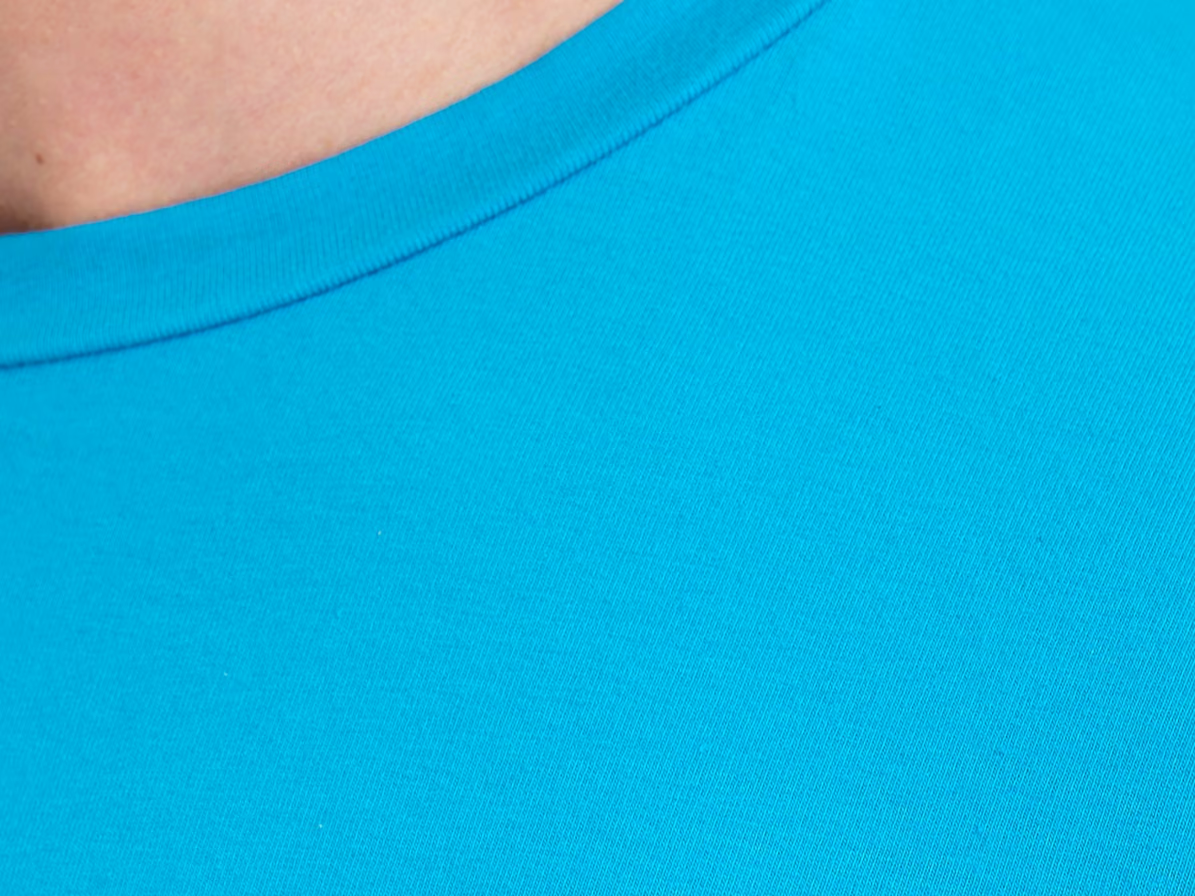
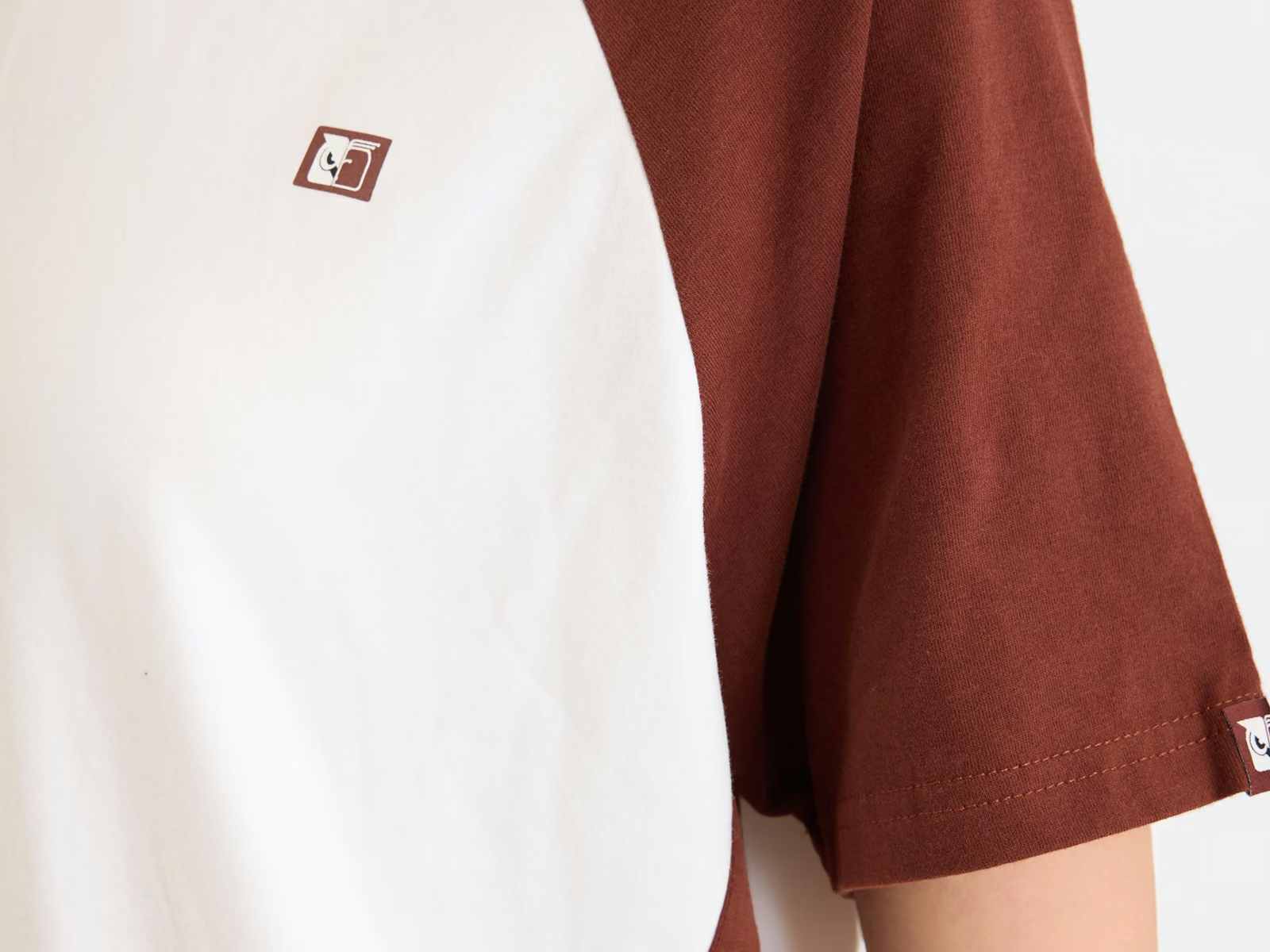
- Main seams. Shoulders and side seams are superimposed seams (the 1 (SS) class in ISO 4916) sewn with a 504 three-thread or 514 four-thread overedge, which stretches with the jersey. Check seam extension and strength on the selected construction; a 301 lockstitch has different extension properties, but does not inevitably break during dressing.
- Hems. Sleeve and bottom hems are coverstitched with a 406 two-needle coverstitch, the standard knit hem listed on the stitch types page.
- Neckline. A 1x1 or 2x2 rib is attached under tension and covered with a back-neck tape, or the neck is bound with a 602 or 605 coverstitch. Rib ratio and recovery decide whether the neckline stays flat; see rib trims and neck finishing.
- Shoulder tape. A narrow tape in the shoulder seam helps limit stretching in wear, which matters most on light jersey and on heavyweight tees that hang from the shoulder.
- Tubular or side-seam body. A body cut from knitted tube can have no side seams and suit straight cuts, including oversized styles when the tube width allows. Side seams allow shaping of the body. Specify the required fit and available fabric width; see tubular vs side-seam construction.
Decoration: In-House and Partner Methods
Embroidery, transfer printing and sublimation run in the Voyager factory; screen printing and garment washing are coordinated with partner facilities. Agree the decoration method, position and application stage during specification review. Depending on artwork and access, printing can be applied to cut panels or assembled garments.
| Method | Where | Suits |
|---|---|---|
| Flat embroidery | In our factory | Chest logos on standard and heavyweight jersey, with backing chosen for the fabric |
| 3D puff, chenille and appliqué embroidery | In our factory | Heavyweight jersey around 200-250 g/m² is an option; assess stitch density, backing and distortion on the actual embroidery sample |
| Transfer printing | In our factory | Multi-colour or photographic artwork, small placements, printed neck labels |
| Sublimation | In our factory | Suitable polyester fabric with a white or light-coloured print face; confirm fabric and print performance on a sample |
| Screen printing, including puff print | Partner facilities | Bold artwork with a limited colour count; application to panels or assembled garments depends on the design and access |
| Acid, mineral and stone washes | Partner facilities | Washed and faded looks on cotton heavyweight tees |
Specify reference points for each decoration position, such as the high point of the shoulder and centre front for a front print; see decoration placement in a tech pack. How methods compare by artwork and quantity is in the decoration guide, and why prints crack after washing in print cracking.
Sizing, Tests and Packing
Sizes are graded to your size chart. The measurement points that decide a T-shirt are body length from the high point of the shoulder, chest width, bottom width, shoulder width, sleeve length and opening, and neck opening and drop, each with a tolerance and a note saying whether it applies before or after washing. The chart format is covered in size charts for production.
A buyer can write these tests into the specification for a knitted T-shirt, with the laboratory and the acceptance limits agreed per project:
- Dimensional change: use the agreed washing and drying procedure from ISO 6330 and determine dimensional change according to ISO 5077; see wash testing before bulk production.
- Spirality after laundering: ISO 16322-3, the garment test for the twist described in why T-shirts twist.
- Pilling: select an appropriate method, such as ISO 12945-1 (pilling box) or ISO 12945-2 (modified Martindale), and agree the test duration and acceptance rating. These methods are distinct; see fabric pilling.
- Colourfastness: ISO 105-C06 to washing and ISO 105-E04 to perspiration; see colourfastness.
- Bursting strength: ISO 13938-2, the pneumatic method, suited to knitted fabric.
Packing follows your instruction: fold size, individual polybag, size sticker, hangtag and carton assortment by size and colour, or mixed cartons for direct delivery. See folding and polybagging and cartons and shipping marks.
For Brands, Merch, Promotional, Corporate and Workwear Programmes
Brands
Choose fabric weight, fit and decoration for the collection. Heavyweight and oversized tees are options for streetwear; see streetwear guide. The private label clothing page explains working with the factory on a brand's own specification.
Merch
For tour and artist merch, specify fit, cotton weight, colours and print positions to suit the collection. Large back and small chest prints are options. Screen printing and garment washing are handled by partner facilities. Sizes can be split within the minimum of 300 pieces per colour and per style; see merch manufacturing page.
Promotional
For promotional T-shirts, agree fabric weight, colours and the required wash performance. Approve these on a sample; a higher weight alone does not establish wash durability. Distributors can order unbranded T-shirts to their own specification for later decoration. See promotional textiles page.
Corporate
For corporate T-shirts, specify fit, fabric, brand colours and logo placement. Combed cotton and in-house chest embroidery are options. Women's and men's cuts are separate styles, each with a minimum of 300 pieces per colour and per style. See corporate clothing page.
Workwear
For work T-shirts, choose the fabric and decoration for the job and laundry process. Cotton-polyester jersey or interlock are options; confirm dimensional stability and decoration durability on the actual sample under the intended washing and drying conditions. See workwear page.
What Changes the Unit Cost of T-Shirts
Unit cost depends on fabric composition, weight and consumption; construction such as side seams, shoulder tape, rib quality and sleeve length; decoration method, placements and print colours; order colours and quantity above the 300 minimum; labels and packing. Higher g/m² increases fabric mass for the same area, while area consumption depends on pattern dimensions, usable width and cutting layout. See clothing manufacturing cost guide.
Producing in Turkey for European Brands
Türkiye sits on the road corridor into the EU, and under the EU–Türkiye Customs Union (Decision No 1/95 of the EC-Turkey Association Council) apparel in free circulation moves into the EU without customs duty when an A.TR movement certificate accompanies the shipment; import VAT still applies, and the A.TR shows customs status rather than origin, as explained in A.TR and origin. Plan the order around the required delivery date. Bulk production typically takes 4-5 weeks after approval; development, sampling and shipping are additional, and the project schedule is confirmed at quotation. Transport options are in shipping apparel from Turkey, and the wider case in nearshoring clothing production for European brands.
T-shirt references produced by Voyager Textile
Previously produced to customer specification. These are production references, not stock; include an article code when discussing the construction you need.
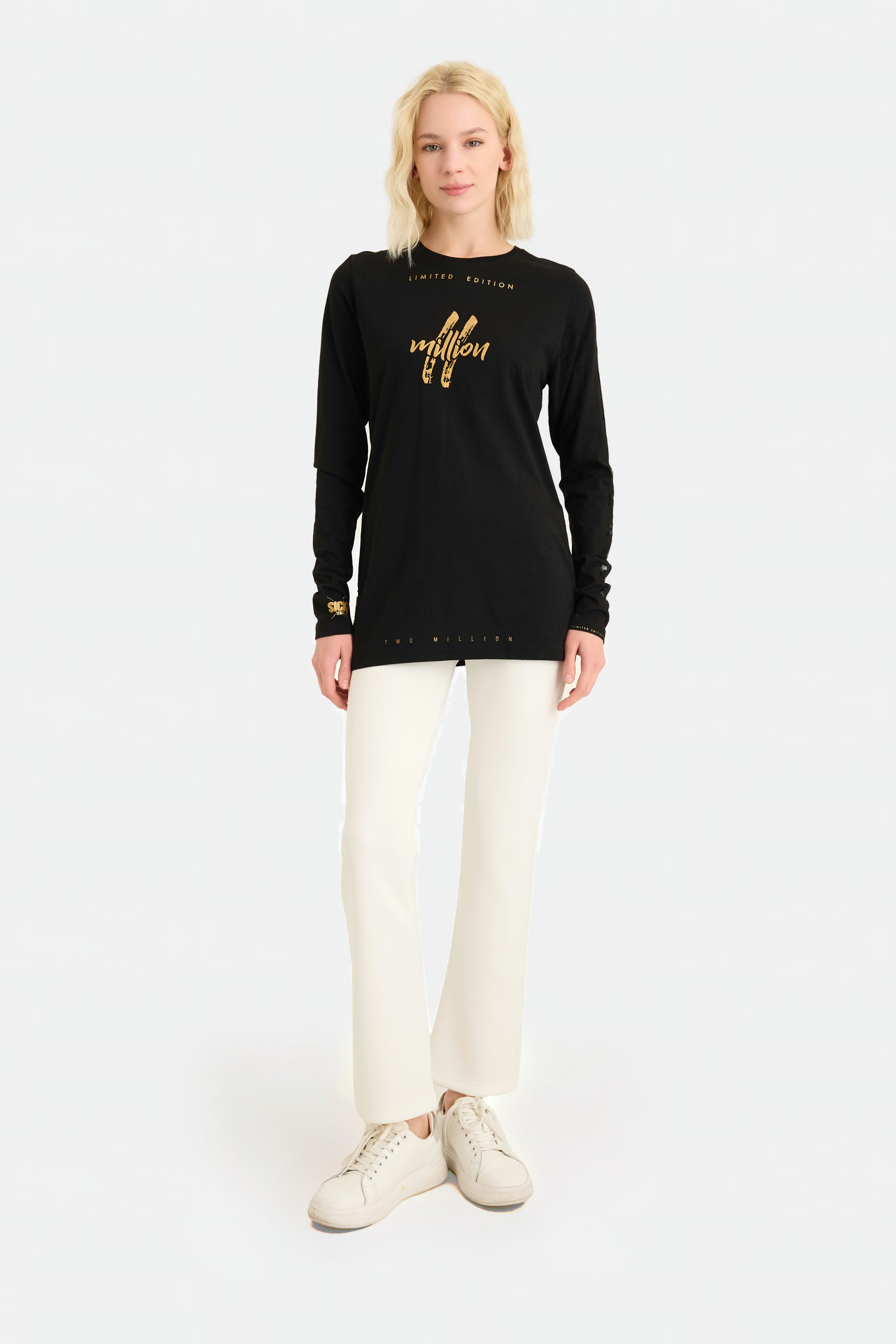 Women’s Black Long-Sleeve Tee, Gold Foil GraphicLong-Sleeve Tee · VT-LS-001
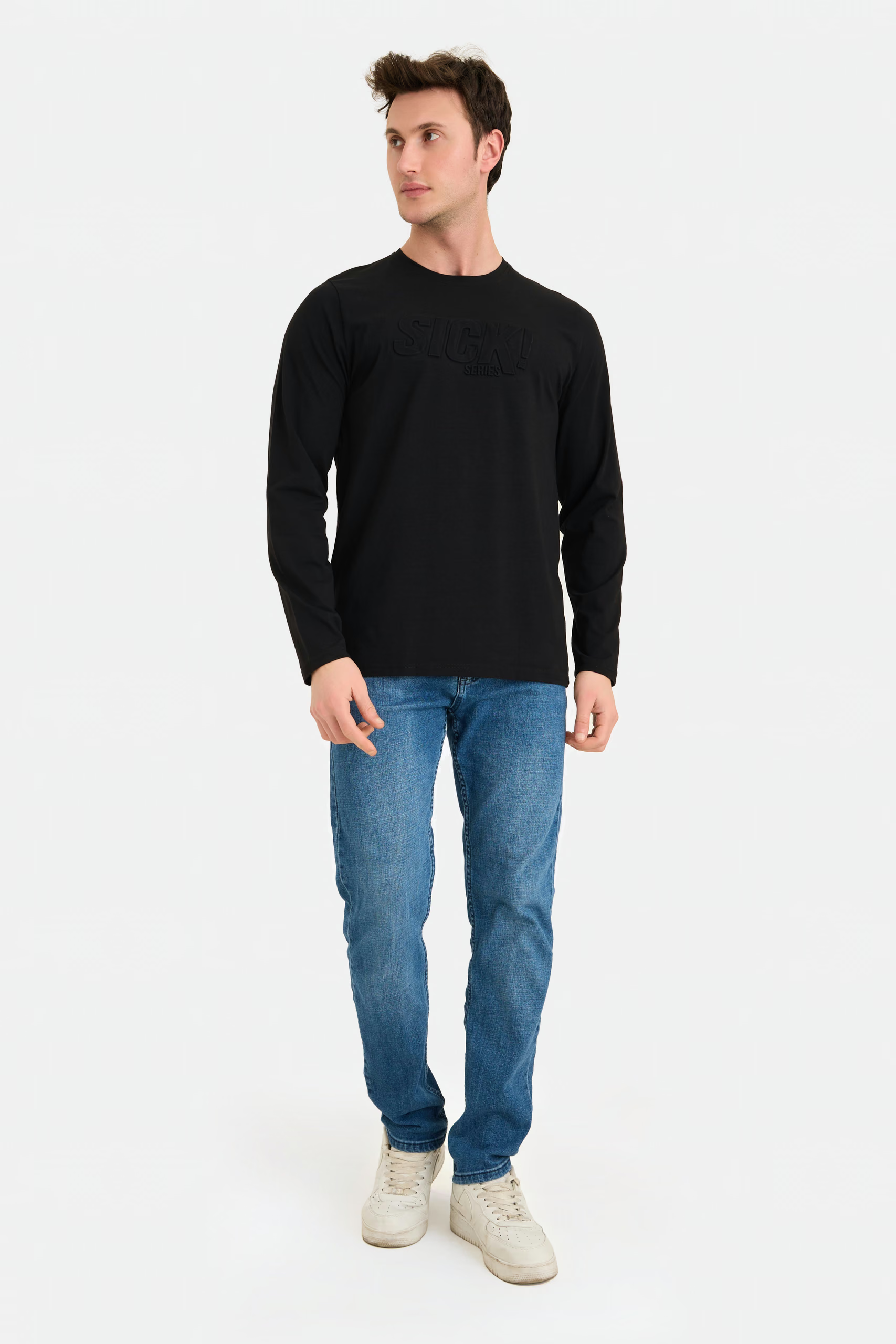 Black Plain Long-Sleeve TeeLong-Sleeve Tee · VT-LS-002
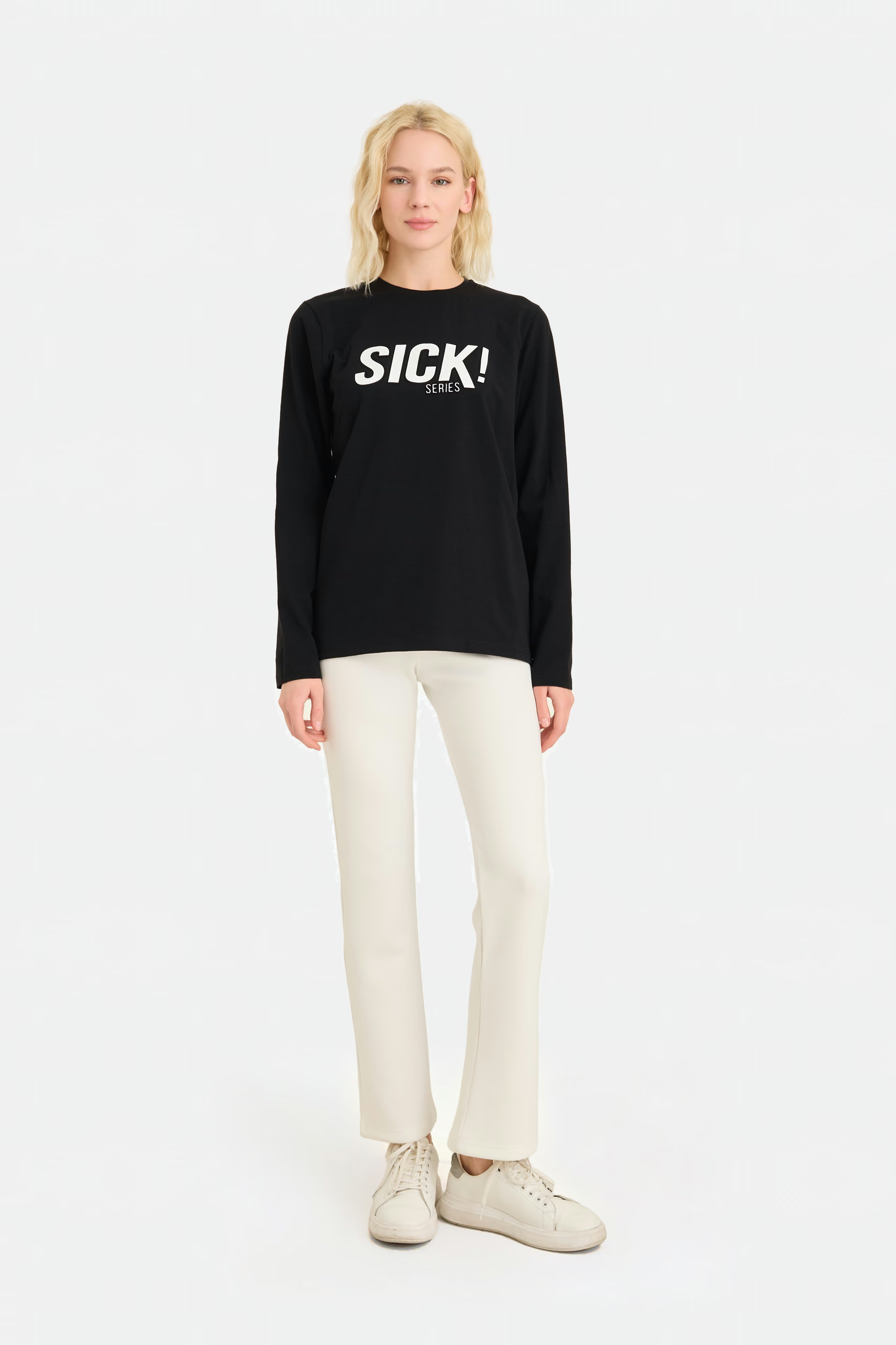 Women’s Black Long-Sleeve Tee, White Slogan PrintLong-Sleeve Tee · VT-LS-003
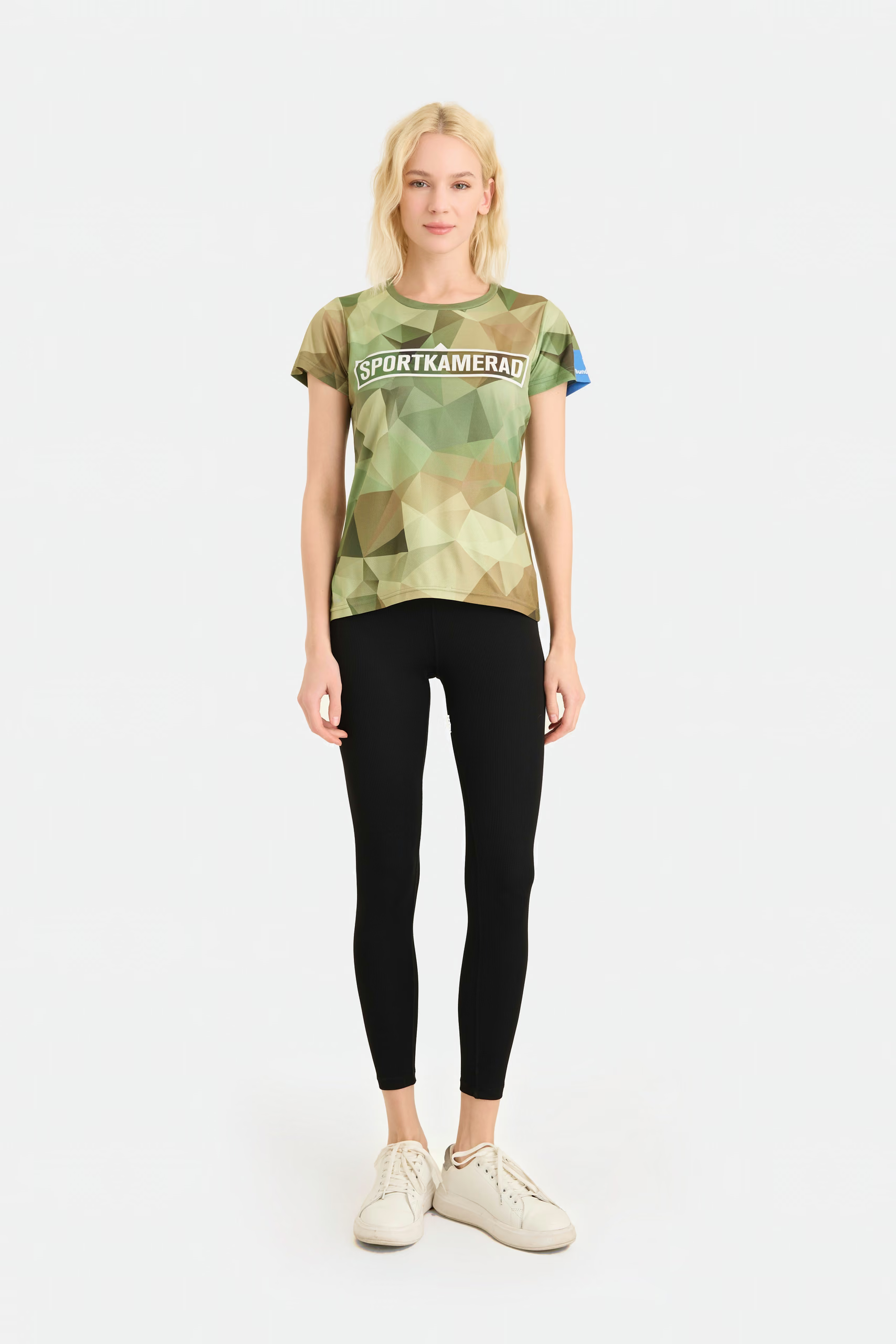 Women’s Camouflage-Print Sports TeeSports Tee · VT-SP-001
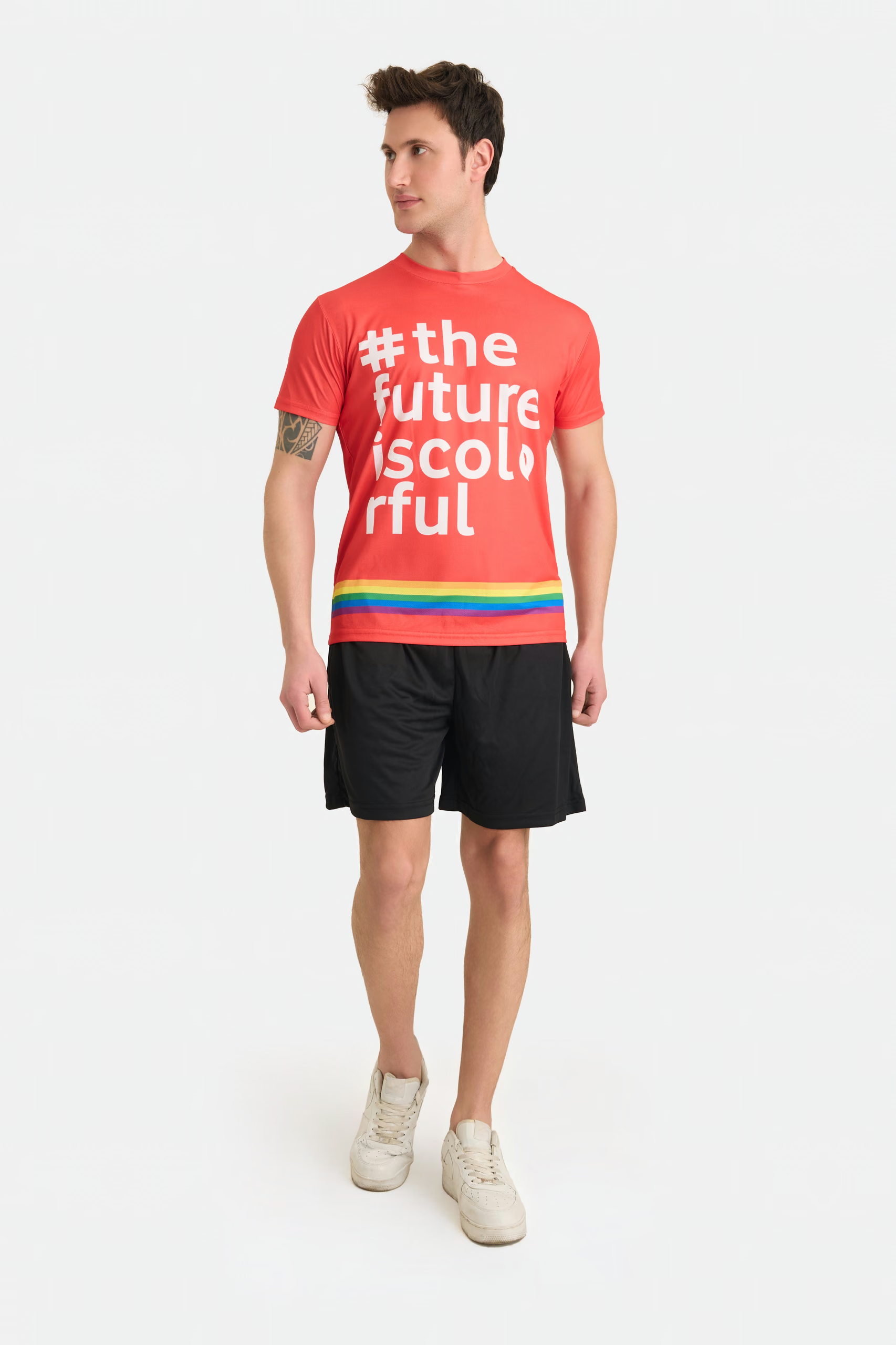 Red Sublimated Sports Tee, Rainbow HemSports Tee · VT-SP-002
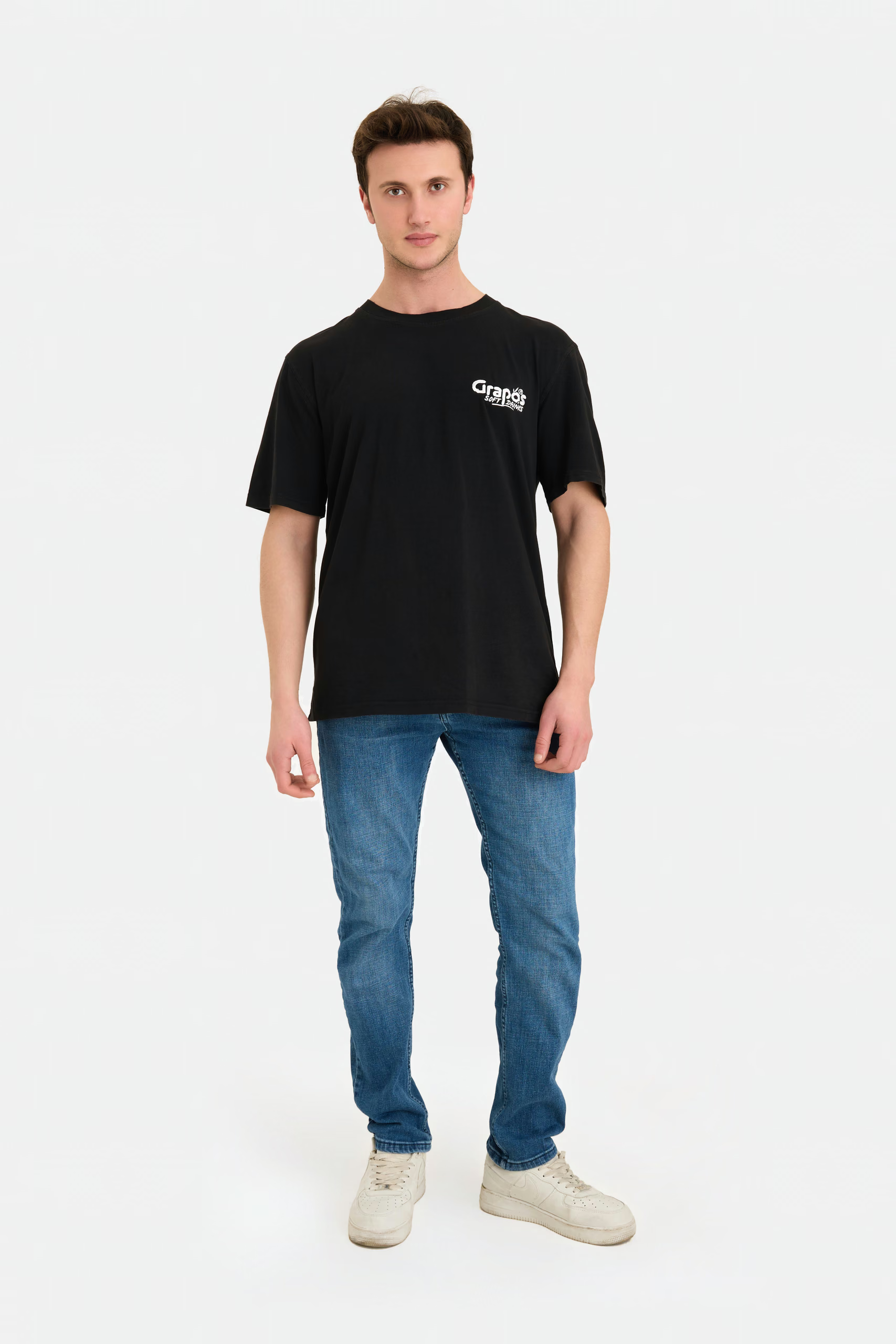 Black Crew Tee, Printed Chest LogoT-Shirt · VT-TS-001
Questions this raises
What is the minimum for custom T-shirts?
The minimum for custom T-shirts is 300 pieces per colour and per style. Sizes can be split inside the 300, and the same minimum applies to sublimated sports tees and to custom Pantone colours. The colour process for polyester-based fabrics is assessed separately.
How long does it take to make custom T-shirts?
Making custom T-shirts takes 5-7 business days for the sample, and typically 4-5 weeks for bulk production after sample approval. Development, fabric sourcing and shipping are additional.
Can you make T-shirts to our own design and label?
Yes, every T-shirt is made to your own design; there are no ready-made styles. Fabric, fit, colour, decoration, neck labels, care labels, hangtags and packing all follow your specification.
Do you make heavyweight and oversized T-shirts?
Yes, heavyweight and oversized T-shirts are made to order. Heavyweight single jersey sits around 200-250 g/m², indicative and specified per project, and oversized fits are drafted and graded in Gerber AccuMark to your measurements.
Do you sell blank T-shirts from stock?
No. Unbranded T-shirts are produced to the buyer's own specification from 300 pieces per colour and per style, for decorators and distributors who print or embroider them afterwards.
Can cotton T-shirts be sublimated?
Conventional dye sublimation does not produce a durable direct print on untreated cotton fibres. It requires a suitable polyester print face, assessed on a sample. For cotton T-shirts, options include in-house embroidery and transfer printing, or screen printing through partner facilities.
Planning a T-shirt order?
Send the fabric, weight, fit, size chart and artwork, or a reference T-shirt you want matched. We reply with what is missing, sample in 5-7 business days, and quote from 300 pieces per colour and per style.
Start an RFQContinue with
- Jacket Manufacturer in Turkey: Softshell, Puffer, Fleece, Windbreaker and Bomber Jackets
- Tracksuit Manufacturer in Turkey: Track Jackets, Fleece Sets and Windbreaker Sets
- Hotel and Corporate Uniforms from Turkey for GCC Buyers
- Private Label Workwear Manufacturer in Turkey: Work Trousers, Jackets and Polos for Brands, Distributors and Company Programmes
- Medical Scrubs Manufacturer in Turkey: Private-Label Scrub Sets
- Shorts Manufacturer in Turkey: Sweat, Sports, Work and Woven Shorts Made to Your Design
- Sublimated Teamwear Manufacturer in Turkey: Football Kits, Training Wear and Club Programmes
- Private Label Activewear and Leggings Manufacturer in Turkey
- Polo Shirt Manufacturer in Turkey: Piqué, Corporate and Private-Label Polos
- Hoodie and Sweatshirt Manufacturer in Turkey: Heavyweight, Oversized and Zip Hoodies
- Promotional Textiles Manufacturer for Distributors: Own-Brand T-Shirts, Polos, Sweatshirts and Hoodies Made in Turkey
- Corporate Clothing Manufacturer: Corporate Fashion Collections Made in Turkey in Your Brand Colours
- Custom Merch Manufacturer in Turkey: Cut-and-Sew Hoodies, Sweatshirts, T-Shirts and Shorts for Brands, Artists and Companies
- Full-package vs CMT apparel manufacturing
- Manufacturing clothing from a reference garment