

Seam types and seam classes: how fabric plies are arranged
A seam class describes how the fabric plies sit relative to each other before any thread goes through them. Four or five configurations cover almost all apparel, and each one produces a different balance of strength, thickness, appearance and cost, even when the stitch and the fabric stay the same.
Contents
ISO 4916 classifies stitched seams by how the material is arranged, sorting them into classes according to the number of components and their spatial configuration. In everyday factory use the classes are known by two-letter prefixes: SS for superimposed, LS for lapped, BS for bound, FS for flat and EF for edge finishing, with OS covering ornamental stitching. Individual constructions carry a full number, so a felled seam is LS 2.04.06 and a plain shirt hem is EF 6.02.01.
This page is about that arrangement. The thread geometry that joins the plies is a separate decision, covered in stitch types. The two combine in every operation: a seam class with no stitch specified is not yet a manufacturable instruction.
The four classes you will meet most
Cross-sections showing how the plies are arranged. Blue lines mark where the stitching passes through.
Superimposed seams
Two plies face to face, stitched near the edge, then opened out so the allowance sits inside the garment. A&E's seam reference calls SSa the most common seam construction for both wovens and knits, and notes that the seam margin has to be specified to maintain fit.
That last point is one buyers often miss. The seam allowance is not a detail of no consequence; it is part of the finished measurement. A shoulder sewn at 1 cm and the same shoulder sewn at 6 mm produce two different garments from the same pattern. Anything that changes seam allowance changes the fit, which is why allowance belongs in the specification alongside the measurements.
Lapped seams
The plies overlap rather than facing each other, and the stitching passes through the overlap. The family is large, because overlapping opens up constructions that a superimposed seam cannot produce.
| Construction | What it is | Where it appears |
|---|---|---|
| Felled seam (LS 2.04.06) | One allowance folded around the other and topstitched, so no raw edge remains on either face | Jeans, work shirts, jackets; generally sewn with a two- or three-needle 401 chainstitch |
| Lap seam (LS 2.01.01) | A simple overlap, edges left as they are because the fabric does not fray | Attaching knitted cuffs, setting elastic; generally sewn with a coverstitch |
| Seam and topstitch | A joined seam with a second line of visible stitching holding the allowance to one side | Side seams on jeans, chinos and jackets, where the topstitch is part of the look |
| Patch pocket setting (LS 5.31.01) | The pocket laid on the panel and stitched around the edge | Applied pockets on many garment types |
The felled seam is the one worth understanding in detail, because it is among the strongest common seams in mass-produced clothing. It encloses both raw edges, it is held by two or three rows of stitching rather than one, and it lies flat rather than standing proud. It also costs more: it is a folder-guided operation, it consumes more fabric in the allowance, and it is slower than an overlocked seam. When a buyer asks why one pair of trousers costs more than another that looks similar, this is frequently part of the answer.
Bound seams
A separate strip wraps the edge of one or more plies. The binding does three things at once: it finishes the raw edge, it adds a visible line, and it stabilises the edge against stretching. A&E's reference lists binding constructions sewn with a 602 or 605 coverstitch when the binding is knitted, and with 301 or 401 when it is a clean-finish woven binding.
Binding is the standard finish for a knit neckline where a rib band is not wanted, for armholes on vests and for internal seams in unlined jackets. Because it is folder-guided, it is also one of the more repeatable finishes in bulk production, which matters more than it sounds: an edge that is bound through a folder varies far less across thousands of pieces than an edge finished freehand.
Flat seams
Two edges butted together and covered by thread, with no overlap and therefore almost no thickness. A&E lists FSa 4.01.01 as flatseaming for underwear, fleece and exercisewear, generally sewn with a 607 stitch.
This is the specialist end of the range. It exists because a seam ridge against the skin causes chafing under sustained movement, and because a flat join is less visible under close-fitting garments. It is not a general-purpose construction: there is no allowance, the pattern has to be exact, and the machines are dedicated.
Edge finishes and hems
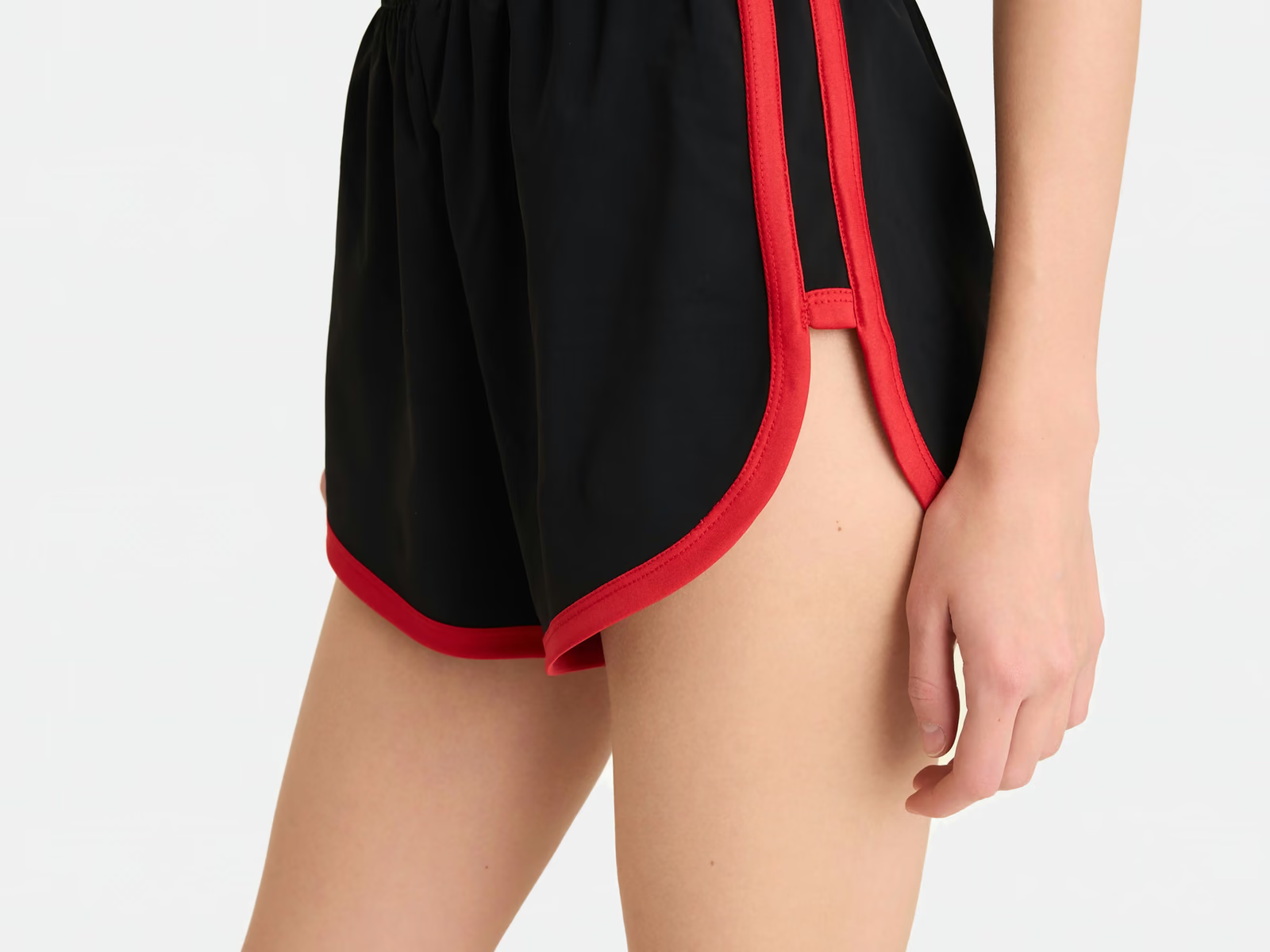
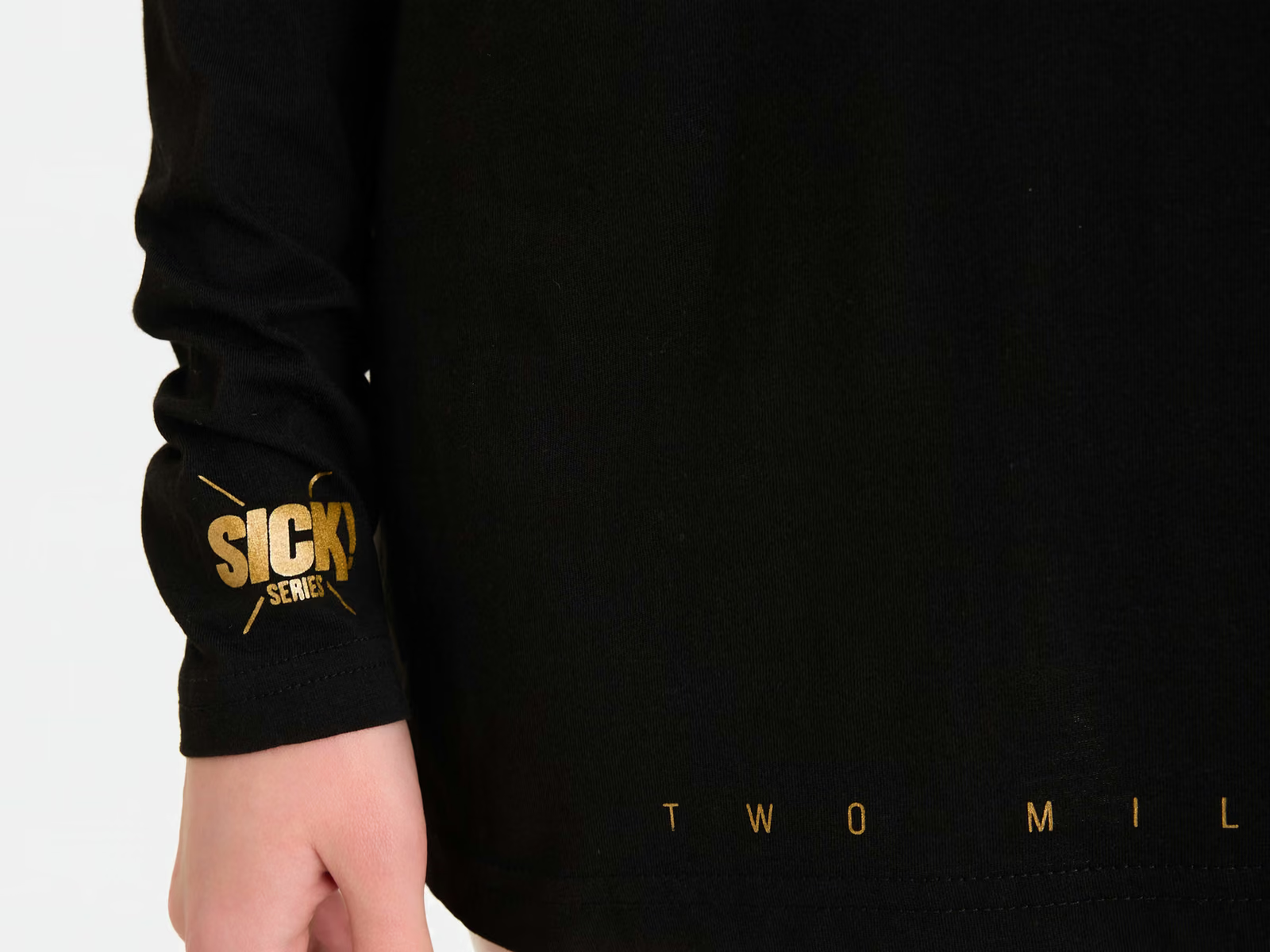
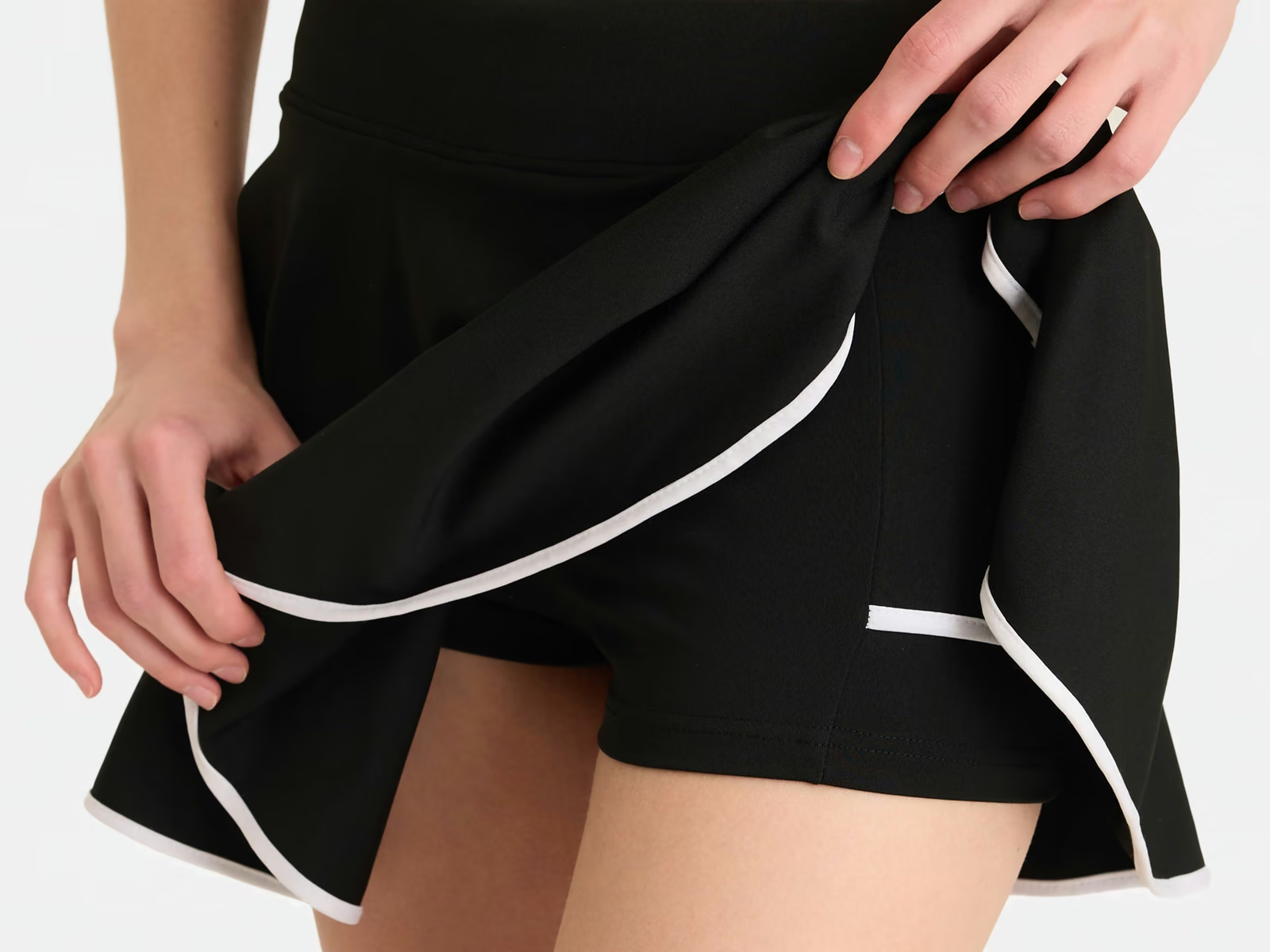
The EF class covers everything that finishes a single edge rather than joining two panels. That includes plain hems, blindstitched hems, serged edges, elasticated hems and belt loops.
| Finish | Construction | Typical stitch |
|---|---|---|
| Knit hem | Edge turned once and stitched, raw edge covered underneath | 406 two-needle coverstitch |
| Woven clean-finish hem | Edge turned twice so no raw edge remains | 301 lockstitch |
| Blindstitched hem | Stitch passes through part of the ply only, so it is invisible on the face | 103 blindstitch |
| Serged edge | Edge overcast without joining anything | 503, 504 or 505 |
| French seam | Seamed once with wrong sides together, trimmed, then folded and seamed again so the raw edge is enclosed | 301 lockstitch, two operations |
The French seam is a special case because it is two operations, not one, and because it produces an enclosed edge without any overlocking. It is used on fine and sheer wovens where an overlocked allowance would show through, and on unlined garments where the inside is visible. It costs two passes and a trimming step, and it is not a good choice on thick fabric, because folding the allowance twice doubles the bulk.
How the choice changes the garment
| Priority | Construction that serves it | Cost of choosing it |
|---|---|---|
| Lowest cost, adequate strength | Superimposed seam with an overedge stitch | The allowance sits to one side and is visible inside |
| Maximum durability | Felled seam | More operations, more fabric, slower line |
| Clean inside on an unlined or sheer garment | French seam or bound seam | Two operations, or the cost of the binding strip |
| No ridge against the skin | Flat seam | Specialist machines, no pattern tolerance |
| Stable edge that will not stretch out | Bound seam | Adds a visible line that has to suit the design |
Seam construction also decides how much thickness accumulates where seams cross. Four layers meeting at an underarm, or a felled inseam crossing a felled outseam at the crotch, produce a hard point that is uncomfortable, difficult to sew consistently, and prone to needle damage. Reducing bulk at intersections is a normal part of construction design, usually by changing one of the crossing seams to a flatter configuration or by staggering the join.
Writing seams into a specification
What a seam line should contain
- The seam class or the construction name, for example superimposed, felled or bound
- The seam allowance in millimetres, because it changes finished measurements
- The stitch type used to sew it
- Topstitch margin and number of rows where topstitching is part of the construction
- Binding width where a bound edge is used
- Which direction the allowance is pressed, where it is visible or affects the topstitch
Allowance is a line that often goes missing, and it has a directly measurable consequence. If the measurement specification and the seam allowances disagree, the garment cannot be right on both counts at once, and the factory will resolve the conflict without knowing which one you meant.
Questions this raises
What is a French seam and when should I ask for one?
A French seam is sewn twice: first with the wrong sides together, then trimmed, folded and sewn again so the raw edge is enclosed inside the seam. It is worth asking for on fine or sheer wovens where an overlocked allowance would be visible from the face, and on unlined garments where the inside of the seam is seen. It is a poor choice on heavy fabric because the double fold doubles the bulk.
Why is a felled seam more expensive than an overlocked seam?
It is a folder-guided operation with two or three rows of stitching, it takes a wider allowance and therefore more fabric, and it runs more slowly than a single overlock pass. What you buy for that is a seam with no exposed raw edge on either face and multiple rows holding the load, which is why it is standard on jeans and work shirts.
Does seam allowance really change the fit?
Yes, directly. The finished measurement is what remains after the allowances are taken, so sewing a garment at a wider allowance than the pattern assumed makes it smaller. If the tech pack gives measurements but not allowances, the two can disagree and the factory has to guess which one you meant.
Can I mix seam types in one garment?
Many garments already do. A shirt typically has felled side seams, a superimposed collar seam, an edge-finished hem and a bound or faced neckline. What matters is that each seam is specified rather than assumed, and that seams which cross each other do not accumulate unnecessary thickness where they meet.
Seam construction is quotable detail
Felled, bound and French seams are priced differently from plain overlocked seams. Telling us which construction you want with the enquiry gives you a quotation you can rely on.
Request a quotation