How fabric behaves
Fabric pilling
Pills form when short fibre ends work loose from the yarn, tangle at the surface and stay attached because a stronger fibre anchors them. That sequence explains much about pilling: which fibres pill, which yarns pill, which structures pill, and why a garment can look worn after a month while a similar one does not.
Contents
Pilling is a fault that often reaches a customer without ever appearing in an inspection report. The garment ships correctly, and after a few weeks the surface looks tired. Because it develops in use, the only way to control it is to specify and test for it before production, which means understanding what actually causes it.
How a pill forms
Three steps, in order. Abrasion in wear and washing pulls short fibre ends out of the yarn, producing fuzz on the surface. Continued rubbing tangles that fuzz into small balls. Then those balls either fall off, which is what happens on many all-cotton fabrics, or they stay attached because a strong fibre in the blend holds them in place.
The third step explains why cotton and polyester blends often look worse over time than pure cotton. Cotton fibres are relatively weak and the pills break away; polyester fibres are strong, so the pill remains anchored and accumulates. The blend is more durable in every other respect and worse in this one.
What makes a fabric more likely to pill
| Factor | Higher risk | Lower risk |
|---|---|---|
| Fibre length | Short staple fibres, more ends available to migrate | Longer staple, and continuous filament yarns |
| Yarn preparation | Carded yarn, which retains short fibres | Combed yarn, where short fibres have been removed |
| Spinning | Open-end yarn, hairier surface | Ring-spun yarn, finer and smoother |
| Twist | Low twist, fibres held loosely | Higher twist, fibres bound into the yarn |
| Structure | Slack knits and raised surfaces | Tighter constructions and smooth wovens |
| Finishing | Brushed surfaces, no surface treatment | Singeing and biopolishing, which remove surface fibre |
| Blend | Cotton with a strong synthetic that anchors pills | Single-fibre constructions where pills break away |
In practice the two lines that decide many cases are yarn quality and finishing. A combed, ring-spun yarn in a fabric that has been singed and biopolished is a substantially different product from a carded, open-end yarn in an untreated fabric, even when the composition and the weight on the specification are identical.
The fabrics most exposed
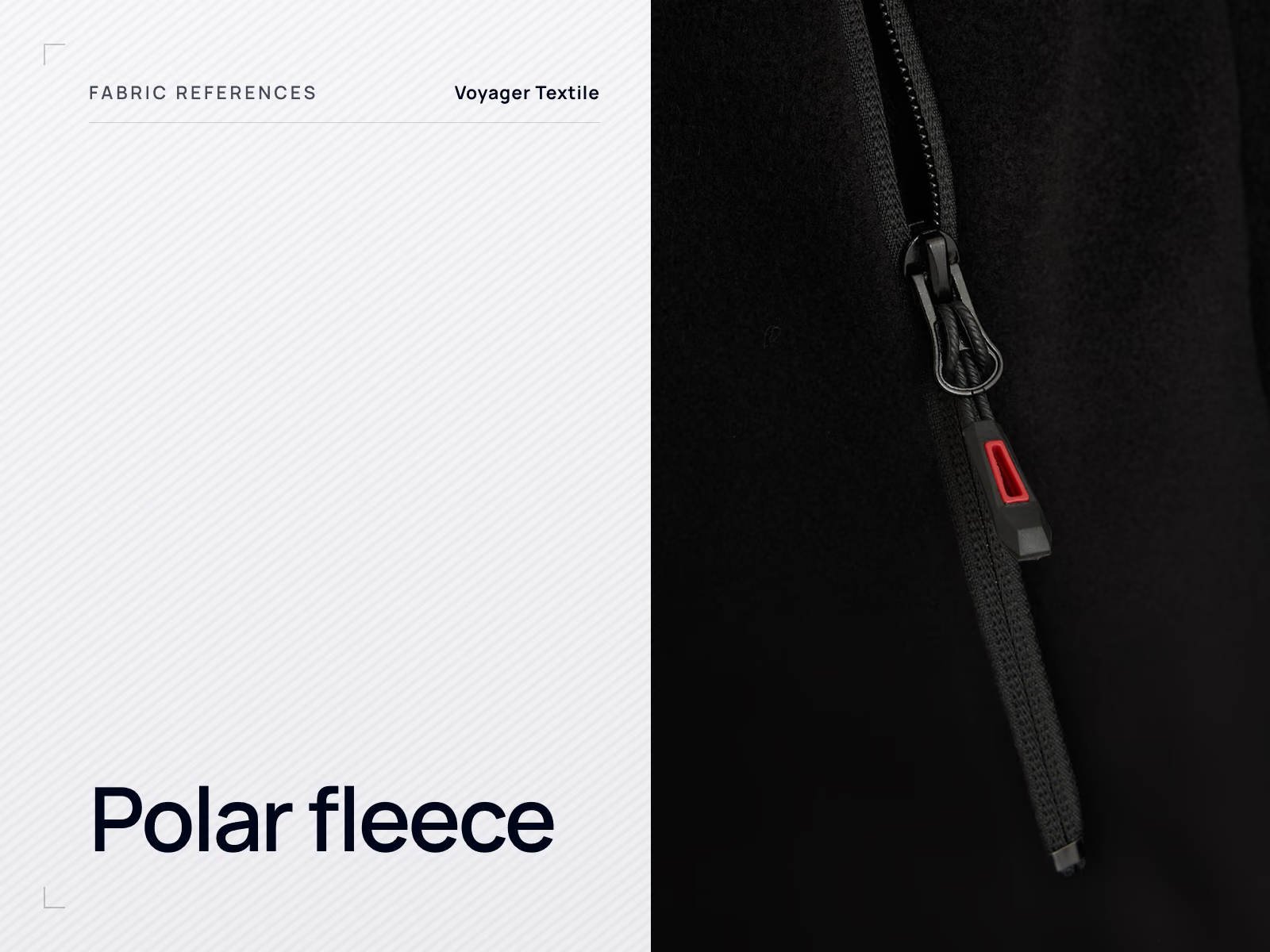
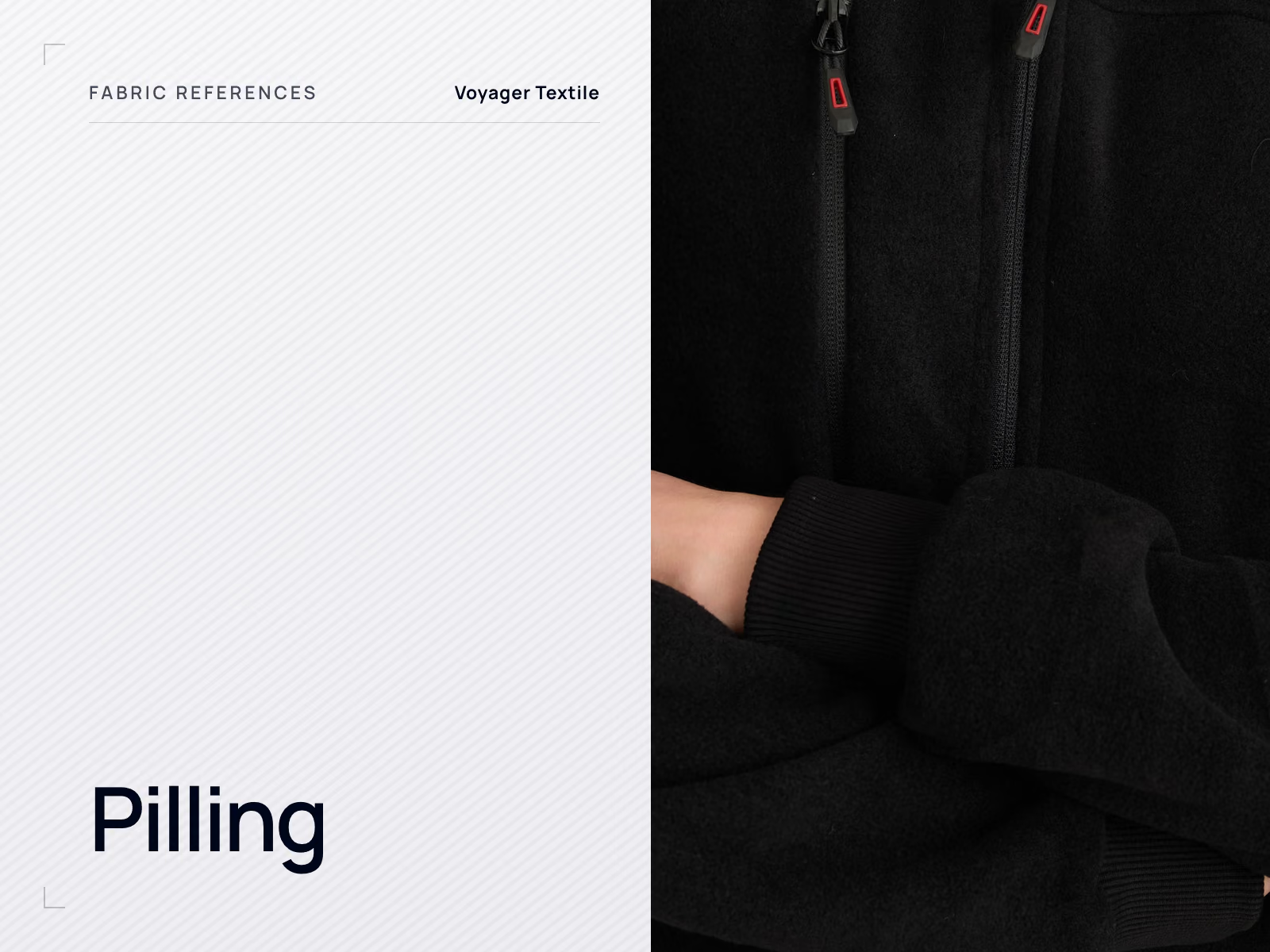
- Brushed fleece, because brushing deliberately raises fibre ends to the surface. It is the trade-off that comes with the soft hand, and it is managed with yarn quality and base construction rather than avoided. See French terry and brushed fleece.
- Blended jerseys, particularly cotton with polyester, for the anchoring reason above.
- Loosely knitted lightweight fabrics, where fibres are held less securely.
- Areas of concentrated abrasion, which is why pilling appears first under the arms, at the seat, on the inside of sleeves and wherever a bag strap sits.
How it is tested
Pilling is measurable, which turns it from a subjective complaint into a specification. The ISO 12945 series is the usual reference in Europe, and it covers more than one method because different fabrics need different mechanical action.
- ISO 12945-1, the pilling box method, tumbles specimens randomly. It was originally developed as the ICI box test and it suits looser knitted structures, where random tumbling generates pills more realistically.
- ISO 12945-2, the modified Martindale method, rubs specimens against each other under a defined load in a multi-directional path. It is generally the better fit for wovens and dense structures.
- ISO 12945-4 covers visual assessment of pilling, fuzzing and matting.
Results are graded by comparing the tested specimen against standard photographs or reference fabrics, on a scale from 5 for no change to 1 for severe pilling. A specification therefore reads as a method, a number of cycles and a minimum grade, which is something a mill can quote against and a laboratory can verify.
What to do about it in a programme
Where pilling is controlled
In the fabric specification
- Combed rather than carded yarn where the budget allows
- Ring-spun rather than open-end for smoother surfaces
- A tighter construction rather than the lightest acceptable one
- Singeing and biopolishing on jersey qualities
- A stated pilling test method, cycle count and minimum grade
In the product decision
- Accept that a brushed fleece will pill more than a flat knit, and choose the base accordingly
- Consider a single-fibre construction where surface appearance matters most
- Test the actual production fabric rather than relying on a previous order
- Set the requirement against how long the garment is expected to look new
- Include care instructions that reduce abrasion, such as washing inside out
When a delivered order is pilling
Establish first whether it is worse than the approved sample after equivalent wear and washing, because a fabric that always pilled at this rate is not a manufacturing fault. Then check whether the fabric used in bulk matches the specification on yarn and finish, since this is a common place for a substitution to show up: the same composition and weight, a cheaper yarn, and a visibly different surface after a month.
If no pilling requirement was specified and no test was run, the honest answer is usually that the fabric was never selected against this property. That is a specification lesson rather than a claim, and the fix belongs in the next order.
Questions buyers ask about this fabric
Why do cotton-polyester blends pill more than pure cotton?
Not because more pills form, but because they stay. Polyester fibres are strong enough to anchor the pill to the fabric, while weaker cotton fibres break and the pill falls away. The blend is more durable in most other respects, which is the trade-off.
Does a heavier fabric pill less?
Not necessarily. What matters is fibre length, yarn preparation, twist, construction tightness and finishing. A heavy brushed fleece in carded open-end yarn can pill considerably more than a lighter combed ring-spun jersey.
How do you specify pilling resistance?
As a test method, a number of cycles and a minimum grade, for example a Martindale or pilling box test to ISO 12945 at a stated cycle count with a minimum grade. A grade quoted without the method is not enforceable, because the same fabric grades differently under different tests.
Can pilling be removed from a garment?
Pills can be shaved off, which restores appearance temporarily and removes fibre from the fabric each time. It is a customer remedy rather than a production one. The real control is fabric selection.
Is pilling a manufacturing defect?
It is a defect when the delivered fabric performs worse than the approved sample or fails an agreed test. Where no pilling requirement was set, it is a specification gap rather than a workmanship fault, which is why the requirement belongs in the fabric approval.
Want a fabric that still looks new after a season?
Tell us how long the garment has to look new and how it will be washed. We will propose a yarn and finish specification and agree a pilling test before bulk rather than after the first complaint.
Discuss fabric durability