

Jacket Manufacturer in Turkey: Softshell, Puffer, Fleece, Windbreaker and Bomber Jackets
Voyager Textile makes custom softshell, puffer, polar fleece, windbreaker, bomber and denim jackets and gilets in its own factory in Türkiye, for brands, merch companies, promotional distributors and corporate and workwear buyers in Europe and the United States. The minimum is 300 pieces per colour and per style, with sizes split inside the 300, and a sample takes 5-7 business days. Every jacket is cut and sewn from textile fabric to the buyer's design, with bulk production typically taking 4-5 weeks after sample approval.
Last reviewed:
Contents
- Softshell jackets
- Puffer, quilted and padded jackets
- Polar fleece jackets and gilets
- Windbreakers and anoraks
- Bomber jackets, including reversible bombers
- Gilets, vests and bodywarmers
- Denim jackets
- Softshell, rain jacket or windbreaker: which shell fits the specification
- Decoration on jacket fabrics
- Sizing, tests and packing
- Who orders custom jackets
- What changes the unit cost of jackets
- Producing in Turkey for European Brands
- Questions this raises
Voyager Textile is a jacket manufacturer with its own cutting, sewing and embroidery floor in Türkiye, making softshell, puffer, polar fleece, windbreaker, bomber and denim jackets and gilets for brands, merch, promotional, corporate and workwear programmes. Every order starts at 300 pieces per colour and per style, sizes can be split inside that 300, and the first sample takes 5-7 business days. Voyager does not make leather jackets: every jacket on this page is cut from woven, knitted or bonded textile fabric to the buyer's own design, with bulk production typically taking 4-5 weeks after sample approval.
Construction details: jackets and coats, softshell jackets, rain jackets and raincoats, vests and gilets. For track jackets produced as part of a set, see tracksuit page.
Softshell jackets
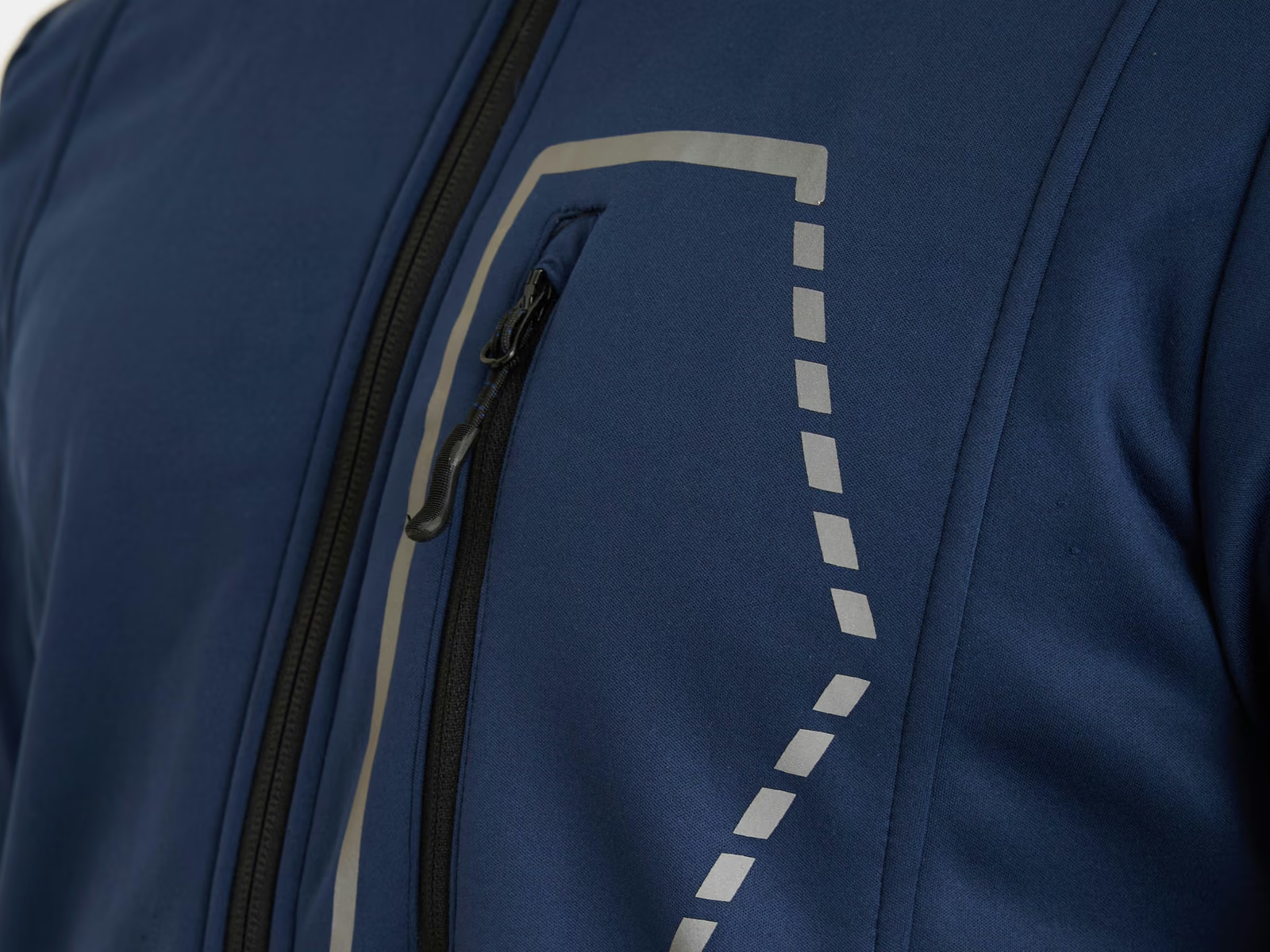
One softshell option is a bonded fabric with a woven polyester or polyester-elastane face and a microfleece backing; a three-layer version can include a membrane between them. It is specified by its layers, the stretch in the face and the finish on the face, not by weight alone. Water repellency and waterproof performance must be established for the selected fabric and garment construction. Set pressing temperature, pressure and time from the supplier's instructions and sample trials, since unsuitable heat or pressure can mark the face or damage the bond. Seam bulk and laminate cutting are covered on the softshell jacket process page.
Puffer, quilted and padded jackets
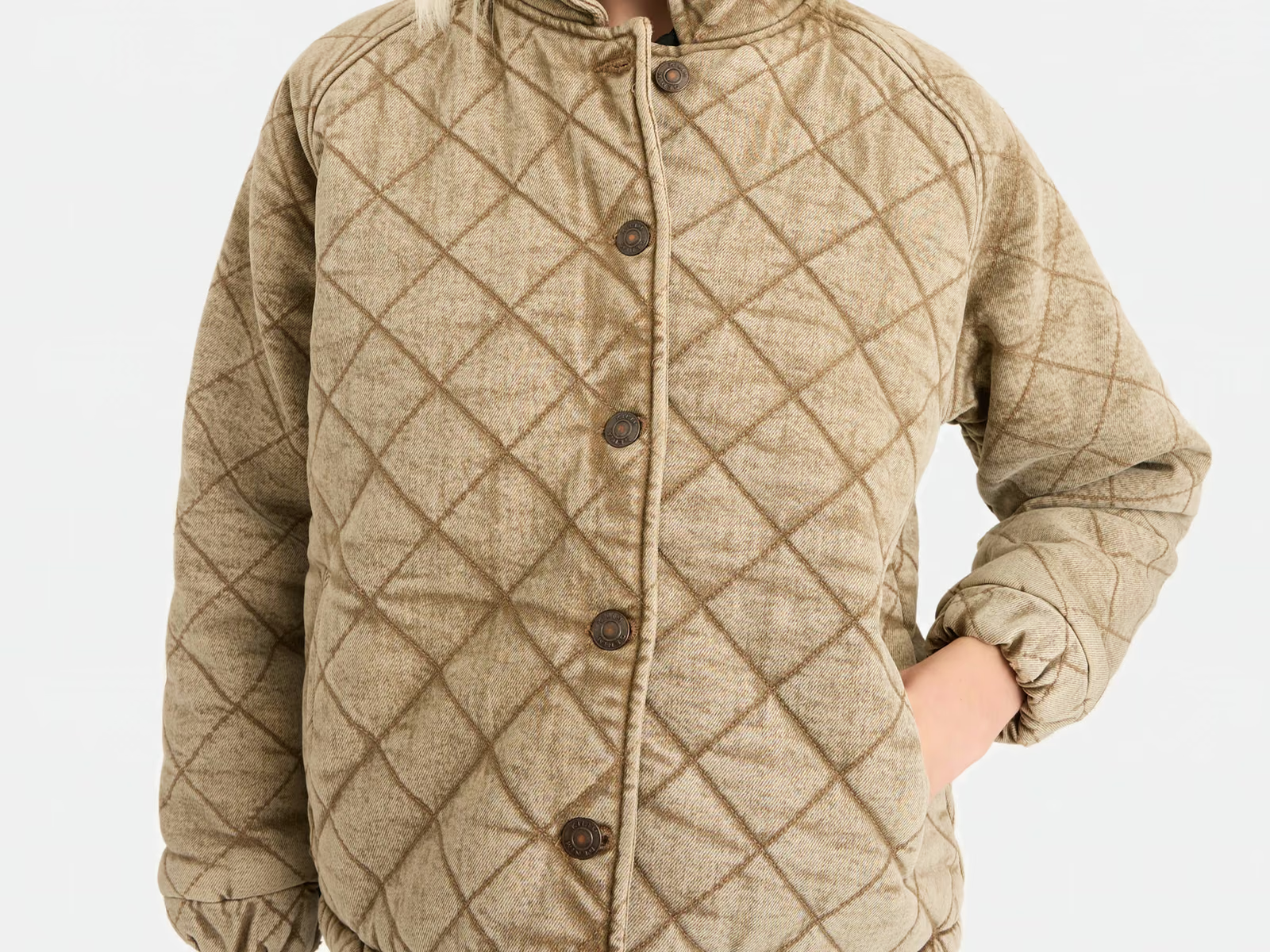
Specify the shell, insulation, lining and assembly sequence for each design. Quilting can be applied to yardage or individual panels; alignment across seams requires planned cutting and sewing. State the channel width or box size. Specify sheet insulation by type and mass per area in g/m²; for loose fill, define the filling material and net fill weight by garment or chamber. Fill, including down, is a sourcing decision confirmed per project, and the fill named on the label has to match the material actually used. Box-wall construction, and whether quilted yardage is bought in or quilted for the order, are confirmed per project at the quotation stage; the layer logic is on the jacket and coat process page.
Polar fleece jackets and gilets
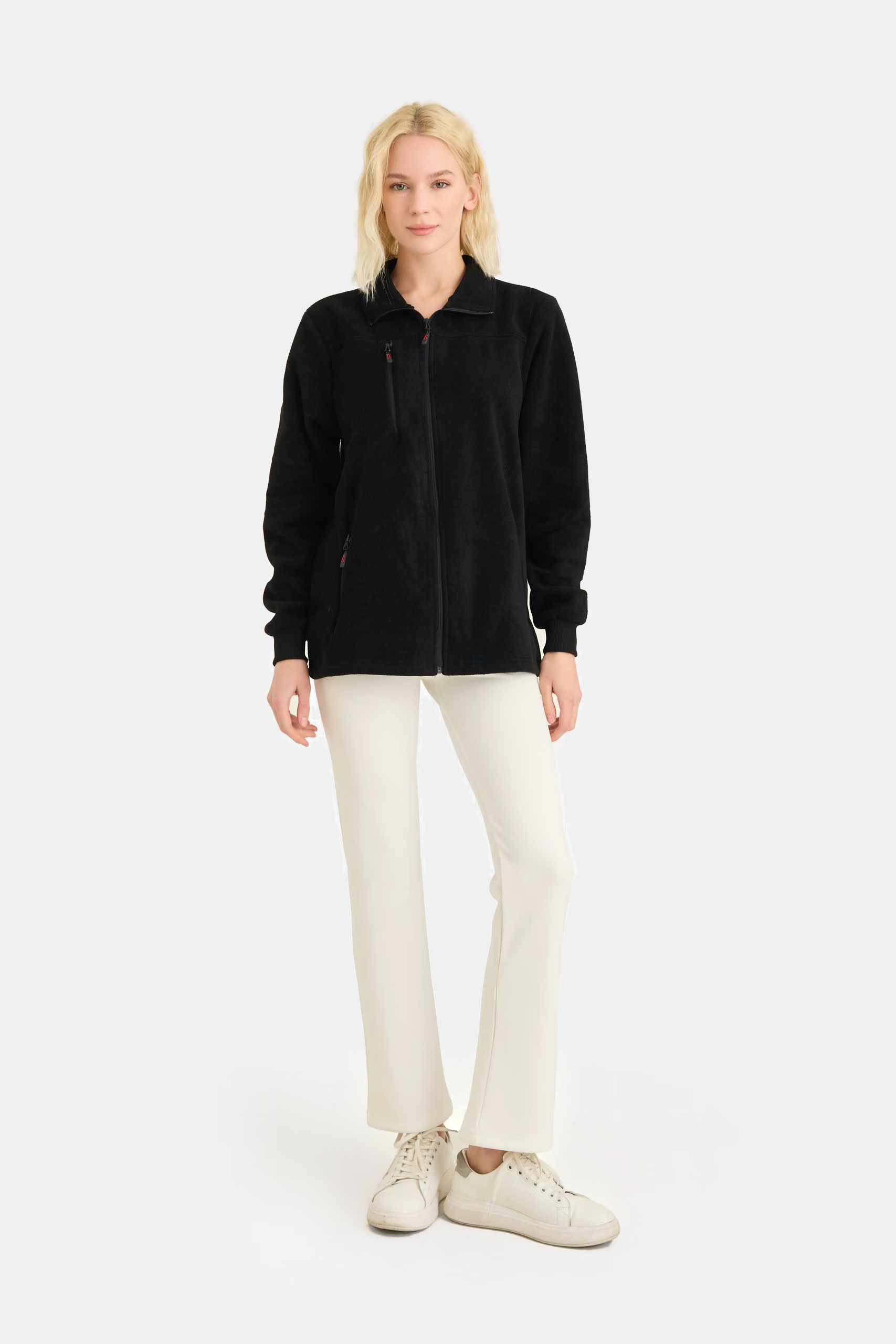
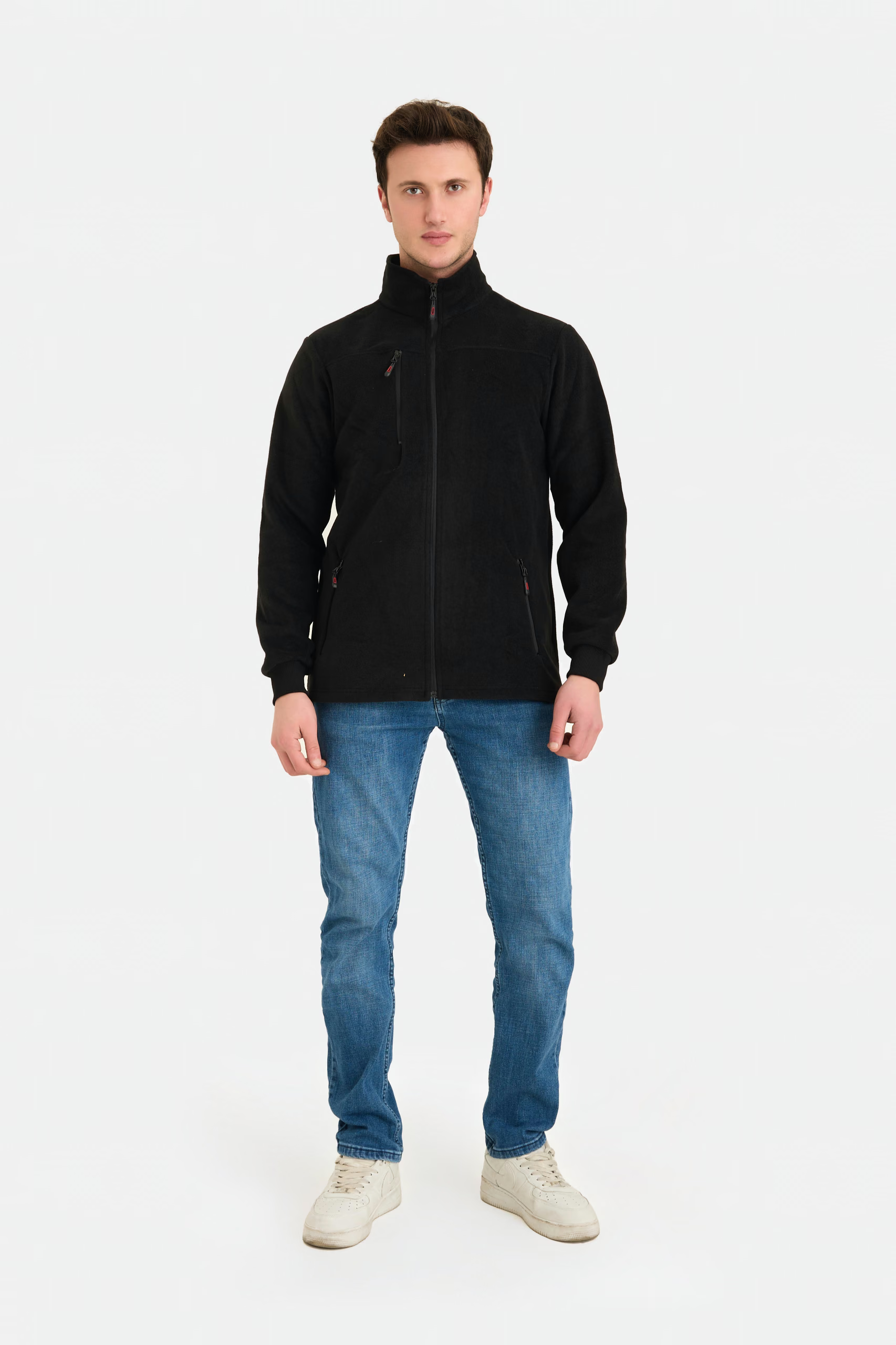
Polar fleece jackets and gilets are cut from a polyester knit brushed and sheared to an even pile, usually double-sided so the inside and outside both look finished. Because cut edges of polar fleece do not fray, collars, cuffs, armholes and hems are often bound with a stretch binding instead of turned and hemmed. Anti-pill fleece is specified as a test method, a cycle count and a minimum grade, for example ISO 12945-2, rather than as a finish name. Microfleece, sherpa and bonded fleece, and the RFQ lines for each, are on the polar fleece fabric page.
Polar fleece differs from sweatshirt fleece and French terry. Sweatshirt fabrics commonly use cotton or cotton-polyester loopback knits, with a brushed reverse for fleece or an unbrushed looped reverse for French terry. Polar fleece typically uses raised polyester pile. Confirm composition, pile construction, pilling, thermal performance, drying and wind resistance for the chosen fabric rather than inferring them from the name. Test prints on the actual surface. For embroidery, backing stabilizes the fabric; a suitable topping helps keep stitches above the pile. French terry and brushed fleece.
Windbreakers and anoraks
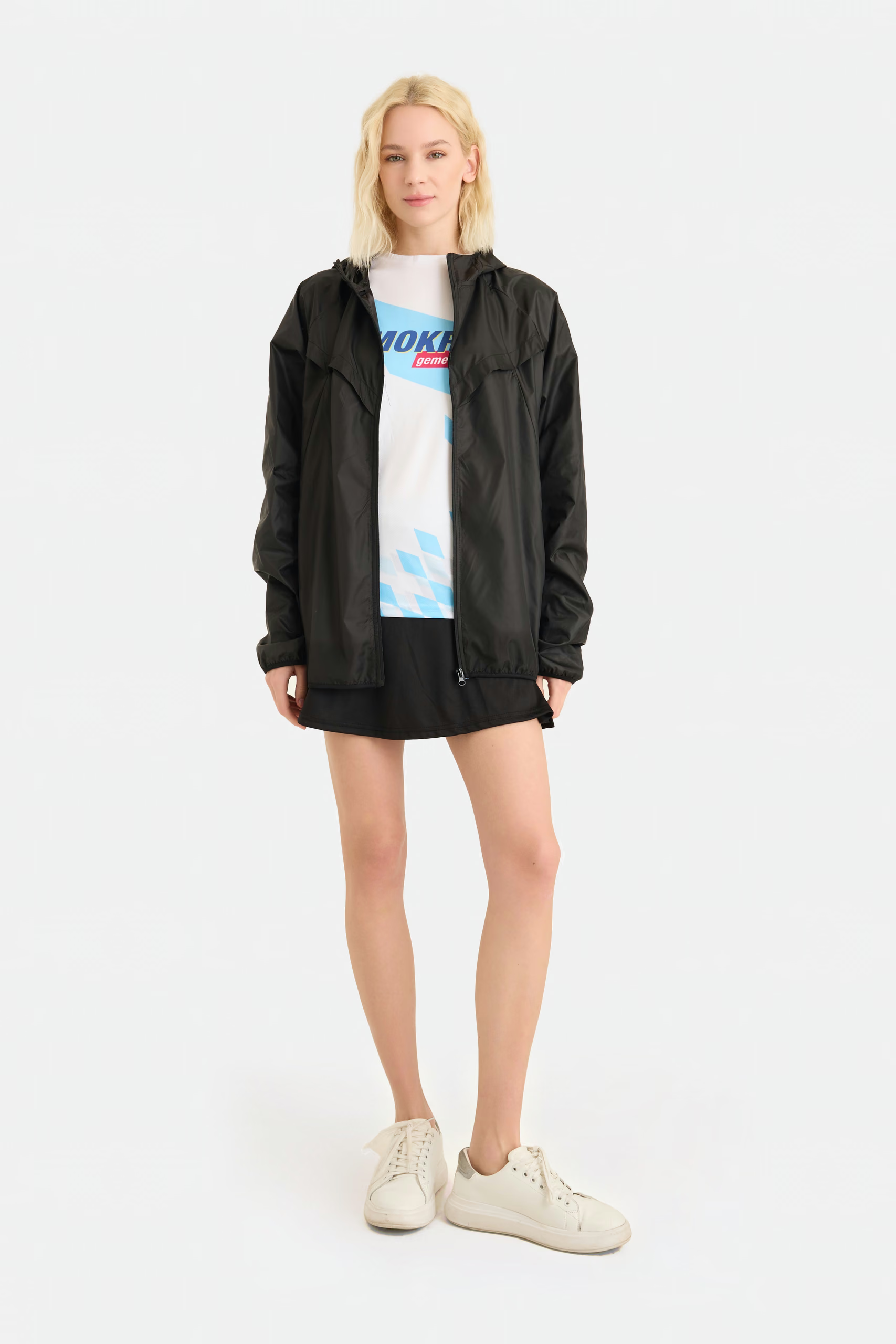
A windbreaker is a lightweight woven jacket, often made from tightly woven polyester or polyamide such as taslan or ripstop, with a water-repellent finish and no lining or a mesh lining. Protection from wind and rain depends on the actual fabric, seams and closures; a water-repellent finish alone does not establish waterproof performance. A pull-over anorak option has a half zip or front placket, often with a kangaroo or chest pocket, an adjustable hood and a drawcord hem. Hoods, toggles and cuff adjusters are specified as on any shell jacket; see hood construction and zip and closure construction.
Bomber jackets, including reversible bombers
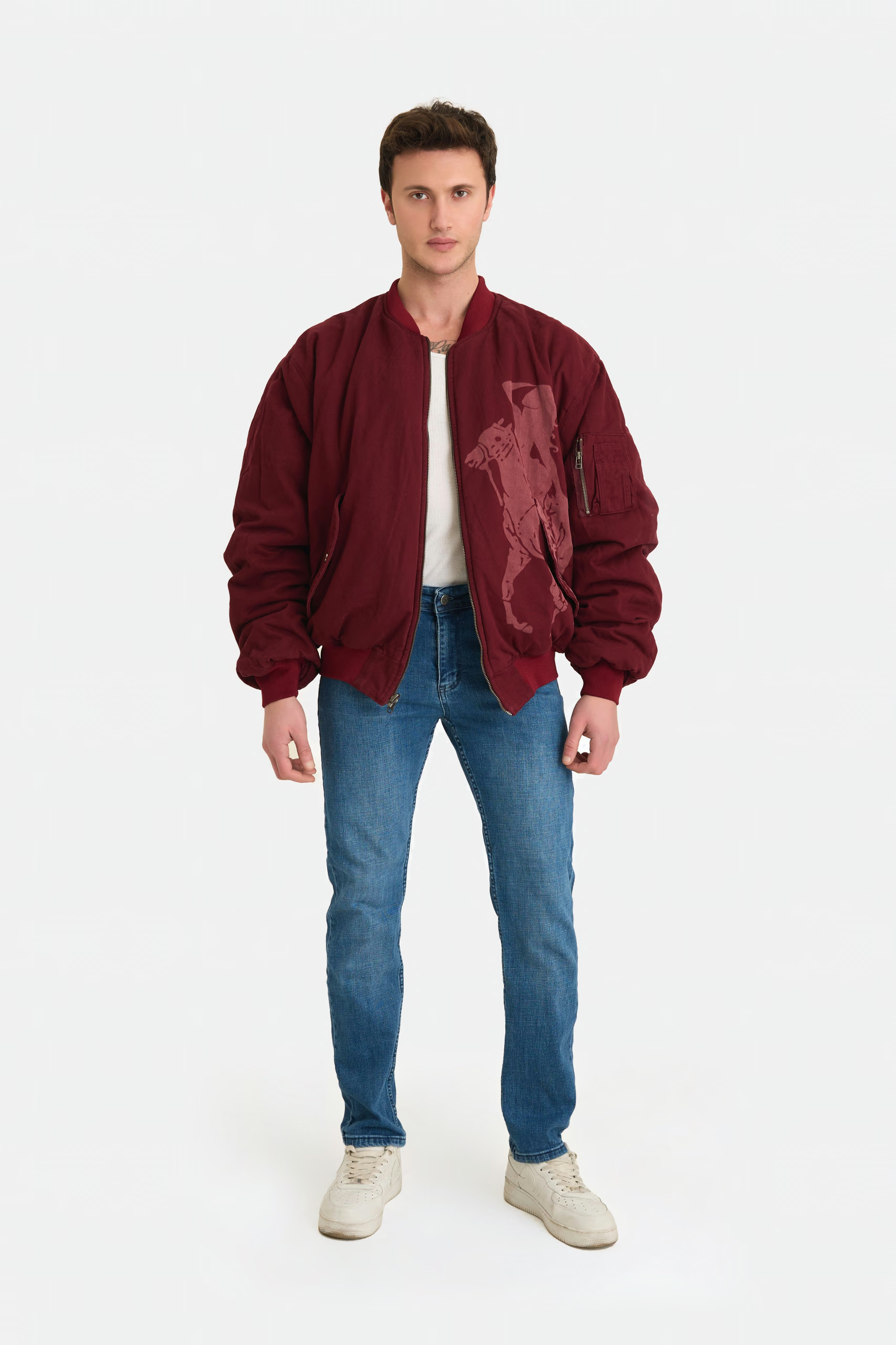
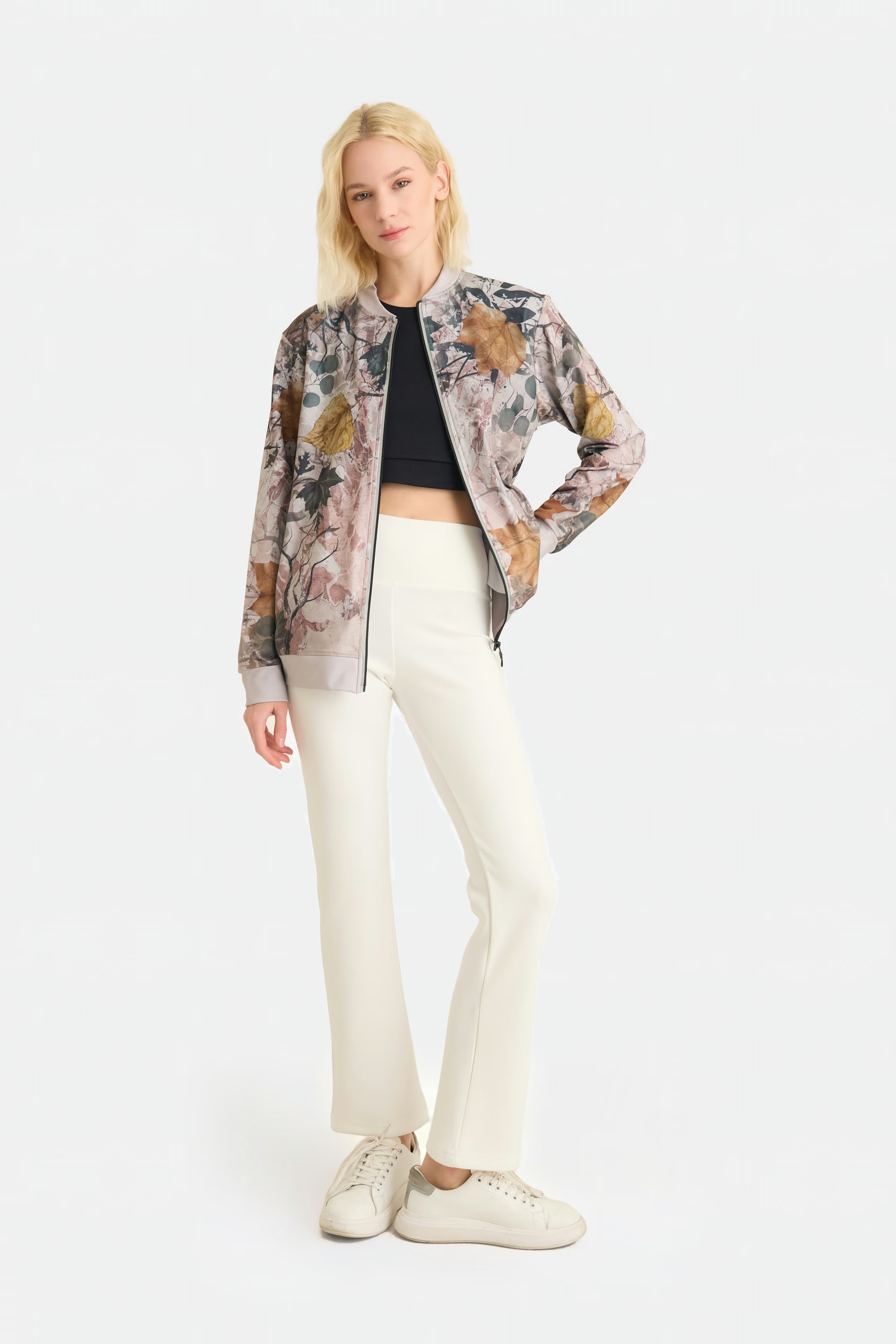
A bomber jacket is a short, usually two-layer jacket with a rib collar, rib cuffs and a rib waistband, a front zip and a lining; a padded bomber adds a thin insulation layer. Shells are commonly polyamide or polyester twill, satin or cotton twill, with a matching or contrast lining. Specify rib composition, height, stretch recovery and colour match with the shell; see rib trims and neck finishing.
A reversible bomber needs a finished appearance on both faces, with seam allowances concealed as the design requires and closures usable from either side. Agree pocket access, label placement and decoration for both faces. Embroidery can be worked before assembly where this avoids unwanted stitching through the opposite face; the sequence depends on the construction. Materials, assembly and cost are confirmed for the project at quotation.
Gilets, vests and bodywarmers
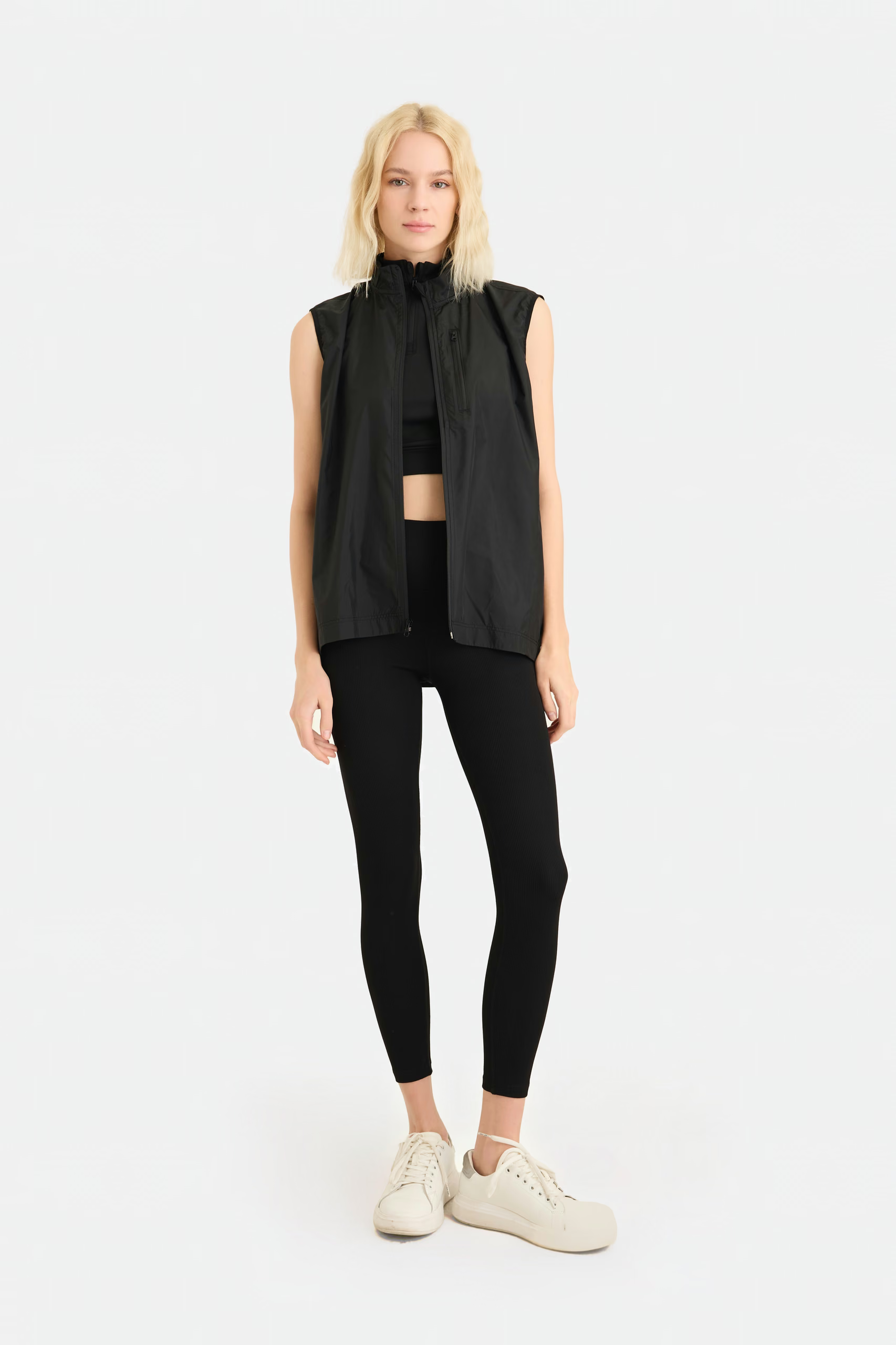
A gilet, vest or bodywarmer is a sleeveless jacket built on the same layer logic: padded and quilted, polar fleece, softshell, or a woven workwear vest with several pockets. The armhole can be bound or faced to sit cleanly over the intended underlayers. Set body ease and check armhole comfort and movement with those layers in place. The four types, armhole finishes and fit checks are on the vest and gilet process page. Bright colour and reflective tape alone do not establish conformity with EN ISO 20471; material performance, garment design and the required visible areas and placement must also be assessed. See high-visibility clothing.
Denim jackets
Denim jackets and denim overshirts are sewn in the factory to the buyer's design and washed at partner facilities, which run the rinse, stone, acid and mineral washes. Allow for wash shrinkage in the pattern and specify after-wash measurements with tolerances. Agree a reference sample and an acceptable range of shade and wash effect for bulk production. Shank buttons, rivets and topstitching thread are bill-of-materials lines; the denim route is described on the trouser manufacturing page, and wash types in the garment washing guide.
Softshell, rain jacket or windbreaker: which shell fits the specification
Choose the jacket construction to suit the intended use, fabric performance and seam requirements. The table shows construction options to confirm for the project at quotation.
| Type | Face fabric | Lining and membrane options | Seams | Typical use |
|---|---|---|---|---|
| Softshell | Woven polyester or polyester and elastane, bonded to a microfleece backing | Two-layer without a membrane, or three-layer with a membrane between face and backing; usually no separate lining | Sewn and topstitched flat; normally not taped | Corporate and outdoor layering, service and field roles, cool dry weather |
| Rain jacket | Woven polyester or polyamide, coated, or laminated to a membrane | Mesh or taffeta lining, or none on a three-layer laminate; insulated versions add wadding | Sealed with seam tape, fully or critically taped; welded on some heavy coated fabrics | Programmes where rain protection is part of the specification |
| Windbreaker | Tightly woven polyester or polyamide, such as taslan or ripstop, with a water-repellent finish | Unlined, mesh-lined or jersey-lined, in a membrane-free construction | Sewn, not taped | Light outer layers for teamwear, sport and merchandise |
| Anorak | The shell options of a windbreaker or a rain jacket | As for the shell it is built from | Sewn, or taped where it is built as a rain anorak | Pull-over outdoor and lifestyle styles |
Seam taping is a trade option confirmed per project at the quotation stage, and it only works on a fabric whose back the tape can bond to. Agree the test method and target for each requested property, such as waterproofness, wind resistance or breathability. EN ISO 811 measures a fabric's resistance to water penetration under hydrostatic pressure; that result alone does not establish the rain protection of a complete jacket. Specify garment-level checks separately where required. How a claim becomes a specification is explained in apparel performance claims, and water penetration, seam sealing and EN 343 on the rain jacket process page.
Decoration on jacket fabrics
Embroidery (flat, 3D puff, chenille, appliqué), transfer printing and sublimation run in the Voyager factory; screen printing and garment washing are coordinated with partner facilities. Decoration may be applied to cut panels or after assembly, depending on access and construction. Plan the sequence to avoid unintended stitching or heat damage to the lining and insulation; see embroidery placement and size.
| Fabric | Usual method | Point to test before bulk |
|---|---|---|
| Softshell laminate | Flat embroidery, transfer printing | Needle holes through a membrane; press temperature and bond after heat |
| Polar fleece | Flat embroidery with backing, appliqué | Stitches sinking into the pile; pile crushed by the press |
| Coated or laminated rain shell | Transfer printing at a controlled temperature, patches | Heat damage to the coating; needle holes in a sealed area |
| Windbreaker and bomber shells | Embroidery, transfer printing, screen printing at partner facilities | Puckering on light wovens; ink and transfer adhesion on polyamide |
| Quilted and padded shells | Patches, or embroidery on a panel that is not quilted | Loft distorted where the needle passes through the fill |
| Polyester shells in light colours | Sublimation | Suitable polyester print face; test on the actual fabric |
Sizing, tests and packing
Sizes are graded to your size chart. Beyond chest, body length from the high point of the shoulder and sleeve length, a jacket chart includes, as applicable to the design, across-back, hem width relaxed and extended on rib-hem bombers, zip length per size, hood height and opening, and pocket positions, each with a tolerance. Layering ease is part of the fit: a jacket worn over a hoodie needs more room than one worn over a shirt. The chart format is in size charts for production.
A buyer can write these tests into a jacket specification, with the laboratory and acceptance limits agreed per project:
- Pilling: ISO 12945-1 or ISO 12945-2 on polar fleece and brushed linings; see fabric pilling.
- Thermal resistance: ISO 11092 on the specified material or layer assembly under steady-state laboratory conditions. Set the target for that assembly; the result is not a temperature rating for the complete jacket.
- Material loss during washing: ISO 4484-1 on polyester fleece if required. The laboratory result does not directly predict material loss in domestic or commercial laundering.
- Dimensional change: washing and drying to ISO 6330 and measurement to ISO 5077, most important on denim and where shell and lining could shrink differently.
- Water penetration: EN ISO 811 for fabric hydrostatic resistance where rain protection is specified. Agree separate seam specimens, methods and garment checks with the laboratory for the required scope.
Jackets are bulky, so the fold size, polybag, hanger or flat pack, and carton count per size are specified up front; see folding and polybagging. The general tech pack format is in the tech pack guide.
Who orders custom jackets
Private-label jacket options include softshell, padded and bomber constructions with custom zip pullers or woven badges (private label clothing). Merch projects can use chenille, appliqué or embroidery on bombers, windbreakers and anoraks (custom merch); fleece jackets and gilets are options for promotional ranges (promotional textiles). Corporate and workwear projects can specify company colours, decoration and layering needs (corporate clothing, branded workwear). Approve colour and decoration on the actual materials, and define the care process and durability checks where frequent washing is required.
What changes the unit cost of jackets
The unit cost of a custom jacket moves with the number of layers, with the shell, lining and insulation fabrics, with laminates and seam taping, with zips and hardware, with the decoration method and placements, with the number of colours, with the quantity above the 300 pieces per colour and per style minimum, and with labels and packing. The full breakdown is in the clothing manufacturing cost guide.
Producing in Turkey for European Brands
Türkiye sits on the road corridor into the EU, and under the EU–Türkiye Customs Union (Decision No 1/95 of the EC-Turkey Association Council) apparel in free circulation moves into the EU without customs duty when an A.TR movement certificate accompanies the shipment; import VAT still applies, and the A.TR shows customs status rather than origin, as explained in A.TR and origin. Plan the order around the required delivery date. Bulk production typically takes 4-5 weeks after approval; development, sampling and shipping are additional, and the project schedule is confirmed at quotation. Transport options are in shipping apparel from Turkey, and the wider case in nearshoring clothing production for European brands.
Jacket references produced by Voyager Textile
Softshell, quilted, polar fleece, bomber and wind shell constructions previously produced to customer specification. These are previous custom projects, not stock. Include the article code in your brief as a reference for a new development.
Questions this raises
What is the minimum for custom jackets?
The minimum for custom jackets is 300 pieces per colour and per style, for softshell, puffer, fleece, bomber and windbreaker jackets alike. Sizes can be split inside the 300; sublimation and custom Pantone colours carry the same minimum. For polyester, the colour process is assessed separately; the minimum remains 300 pieces per colour and per style.
How long does it take to make custom jackets?
Making custom jackets takes 5-7 business days for the sample, and typically 4-5 weeks for bulk production after sample approval. Development, fabric, insulation and trim sourcing, and shipping are additional.
Can you make jackets to our own design and label?
Yes, every jacket is made to your own design; there are no ready-made styles. Shell, lining, insulation, zips, hardware, decoration, labels, hangtags and packing all follow your specification.
Do you make leather jackets?
No, Voyager does not make leather jackets. Jackets are cut and sewn from textile fabrics, such as woven shells, softshell laminates, polar fleece, denim and quilted fabrics, all to the buyer's own design.
Can you make a jacket with a bonded fleece or membrane fabric?
A jacket with a bonded fleece or membrane fabric is an option: the laminate is buyer-specified, supplied by the buyer or sourced from a specialist supplier, and confirmed at the quotation stage. Bond strength after washing and any water or wind claim need an agreed test method.
Do you make down jackets?
Fill, including down, is sourced and confirmed per project at quotation. Specify the fill composition, quilting pattern and net fill mass per garment or chamber, as applicable. The fill stated on the label must match the material used.
Planning a jacket order?
Send the jacket type and layer structure, shell, lining and insulation, trims, size chart and artwork, or a reference jacket to guide development. Sampling takes 5-7 business days; quotations start at 300 pieces per colour and per style.
Start an RFQContinue with
- Tracksuit Manufacturer in Turkey: Track Jackets, Fleece Sets and Windbreaker Sets
- Hotel and Corporate Uniforms from Turkey for GCC Buyers
- Private Label Workwear Manufacturer in Turkey: Work Trousers, Jackets and Polos for Brands, Distributors and Company Programmes
- Medical Scrubs Manufacturer in Turkey: Private-Label Scrub Sets
- Shorts Manufacturer in Turkey: Sweat, Sports, Work and Woven Shorts Made to Your Design
- Sublimated Teamwear Manufacturer in Turkey: Football Kits, Training Wear and Club Programmes
- Private Label Activewear and Leggings Manufacturer in Turkey
- Polo Shirt Manufacturer in Turkey: Piqué, Corporate and Private-Label Polos
- Hoodie and Sweatshirt Manufacturer in Turkey: Heavyweight, Oversized and Zip Hoodies
- T-Shirt Manufacturer in Turkey: Regular, Heavyweight and Oversized T-Shirts
- Promotional Textiles Manufacturer for Distributors: Own-Brand T-Shirts, Polos, Sweatshirts and Hoodies Made in Turkey
- Corporate Clothing Manufacturer: Corporate Fashion Collections Made in Turkey in Your Brand Colours
- Custom Merch Manufacturer in Turkey: Cut-and-Sew Hoodies, Sweatshirts, T-Shirts and Shorts for Brands, Artists and Companies
- Full-package vs CMT apparel manufacturing
- Manufacturing clothing from a reference garment