

Polo Shirt Manufacturer in Turkey: Piqué, Corporate and Private-Label Polos
Voyager Textile makes custom polo shirts in its own factory in Türkiye, for corporate-clothing suppliers, promotional distributors, workwear buyers, merch companies and brands in Europe and the United States. The minimum is 300 pieces per colour and per style, with sizes split inside the 300, and a sample takes 5-7 business days. Every polo is made to the buyer's own design, from the piqué and the collar to the placket, colour and labels.
Last reviewed:
Contents
- Own-Design Polos and Ready-Made Logo Polos
- Piqué and Other Polo Fabrics
- Construction: Collar, Placket, Cuffs and Vents
- Branding a Polo: Embroidery and Other Methods
- Sizing, Tests and Packing
- Golf polos and golf-brand ranges
- For Brands, Merch, Promotional, Corporate and Workwear Programmes
- What Changes the Unit Cost of Polo Shirts
- Producing in Turkey for European Brands
- Questions this raises
Voyager Textile is a polo shirt manufacturer with its own cutting, sewing and embroidery floor in Türkiye, producing piqué, corporate, sports and private-label polos for corporate, promotional, workwear, merch and brand programmes. Every order starts at 300 pieces per colour and per style, sizes can be split inside that 300, and the first sample takes 5-7 business days. Bulk production typically takes 4-5 weeks after sample approval, and each polo is built to the buyer's specification rather than taken from stock.
Own-Design Polos and Ready-Made Logo Polos
Voyager Textile manufactures polos to your design: you specify the fabric, collar, placket, fit, colour and labels. Decoration method and production stage are agreed for the design. Ready-made polos for later logo decoration are existing catalogue styles; quantities, stock and decoration options depend on the supplier.
| Own-design polo (what Voyager makes) | Ready-made logo polo (not offered) | |
|---|---|---|
| Fabric | Piqué type, weight and composition specified by you | Fixed by the catalogue style |
| Colour | Your Pantone reference for body, collar and cuff, from 300 pieces. The colour process for polyester-based fabrics is assessed separately. | The wholesaler's colour card |
| Collar and placket | Knitted, tipped, contrast or self-fabric collar; button count, buttons and placket length specified | As supplied |
| Fit and sizes | Your size chart, men's and women's cuts as separate styles | The wholesaler's size chart |
| Labels and packing | Your neck label, care label, hangtag and packing | The blank brand's labels, unless relabelled |
| Logo | Method, placement and application stage specified for the design | Added to the finished garment using a suitable decoration method |
| Quantity and timing | 300 per colour and style; sample 5-7 business days; bulk typically 4-5 weeks after approval, excluding development, sampling and shipping | Supplier minimum, stock availability and decoration leadtime apply |
For orders below 300 pieces per colour or short deadlines, assess catalogue polos with a decorator and confirm stock, minimum quantities and completion dates. Custom production allows you to specify the fabric, collar, fit and colour; repeat orders need current material availability and approval against the agreed specification. See custom apparel vs blanks and OEM, ODM, private label and white label. Voyager can manufacture unbranded polos to a distributor's own specification.
Piqué and Other Polo Fabrics
Piqué is a textured knit used for polo shirts. Fabric weight, yarn, construction and finish affect its hand, drape and performance. The examples below place single piqué around 160-190 g/m² and double piqué around 190-220 g/m²; these are illustrative ranges, with the actual fabric specified and sampled per project.
| Fabric | Indicative weight | Application examples | Point to settle before sampling |
|---|---|---|---|
| Single piqué, cotton | Around 160-190 g/m² | Warm-climate and promotional polos | Opacity and texture in pale shades |
| Double piqué, cotton | Around 190-220 g/m² | Year-round corporate and brand polos | Shape retention, hand and dimensional change after washing |
| Piqué with elastane | Around 190-220 g/m² | Fitted polos, service roles with movement | Fit, stretch recovery and dimensional change on the selected fabric |
| Polyester-rich piqué | Around 180-220 g/m² | Workwear and hospitality polos washed often | Colourfastness and drying performance under the intended care conditions |
| Cotton interlock | Around 170-220 g/m² | Smooth-faced polos for fine embroidery | Fabric weight, hand and consumption for the chosen construction |
| Single jersey | Around 165-190 g/m² | Softer, casual jersey polos | Placket support and appearance after sewing and washing |
| Polyester bird-eye or interlock | Around 130-180 or 145-200 g/m² | Sports and golf polos, sublimated polos | Sublimation suitability of the polyester print face, checked on a sample |
Buyer-supplied fabric is accepted, including imported fabric. Certified materials (OEKO-TEX, GOTS, GRS) can be sourced where specified, subject to availability and certificate scope; a material certificate does not automatically certify the factory or finished garment. Composition trade-offs for washing are in the cotton and polyester blends guide.
Construction: Collar, Placket, Cuffs and Vents
A polo combines a knitted body with a collar and front opening; sleeve finishes and other details follow the design. Assess both measurements against the specification and appearance and fit on the wearer. The main production stages are described in the polo shirt manufacturing process page.
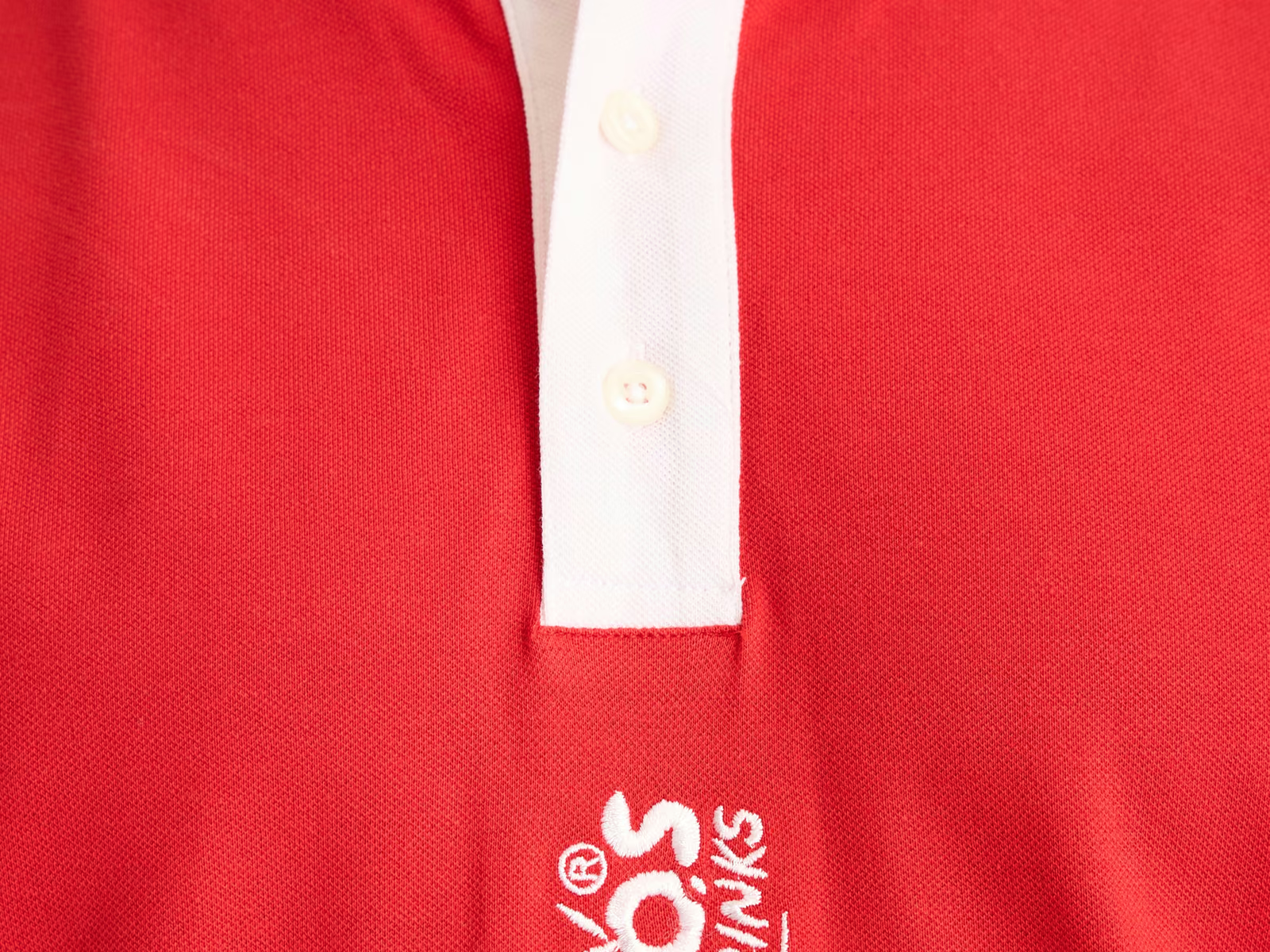
- Collar. Options include flat-knitted, tipped, contrast and cut-and-sew self-fabric collars. Specify dimensions across the size range, edge finish and any interlining. Approve the collar colour against the body fabric, especially when components are dyed separately. The collar source is confirmed per project at quotation; see polo collar and placket construction.
- Placket. Specify its construction, length, button count and spacing, buttonhole direction and reinforcement at the base. Choose stabilisation for the fabric and assembly method, then check for stretching or waviness on the sample.
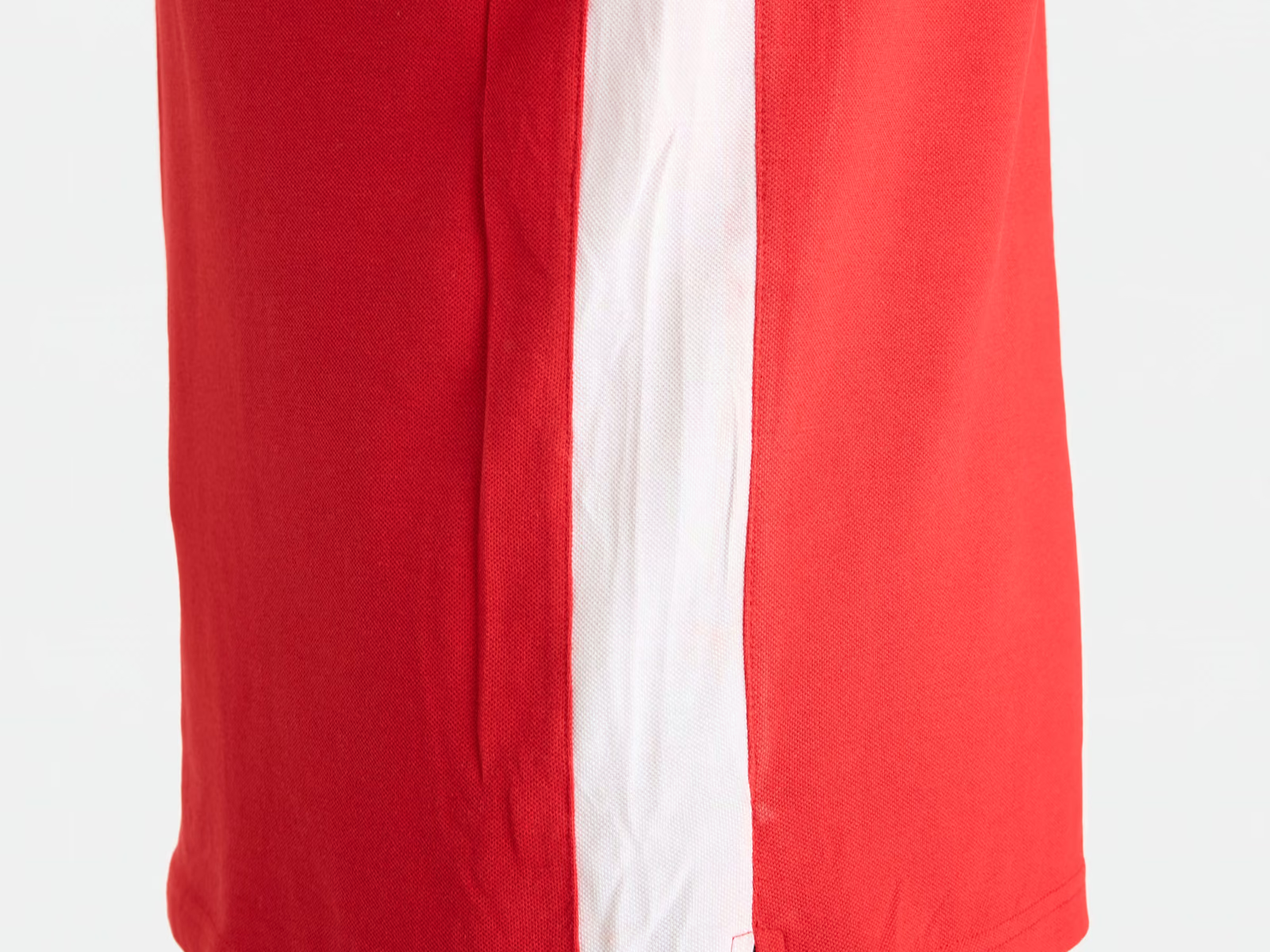
- Seams and hems. Options include 504 or 514 overedge seams and 406 coverstitched hems. Specify shoulder stabilisation and back-neck finishing, such as tape or facing, and confirm seam settings on the sample. See stitch types page.
- Cuffs and vents. A knitted rib cuff for the classic look, or a plain coverstitched hem for a modern one. Side vents, often with a longer back tail, are reinforced at the top where the garment is pulled.
If a delivered polo's collar curls or waves after washing, the causes are covered in why collars and cuffs lose their shape.
Branding a Polo: Embroidery and Other Methods
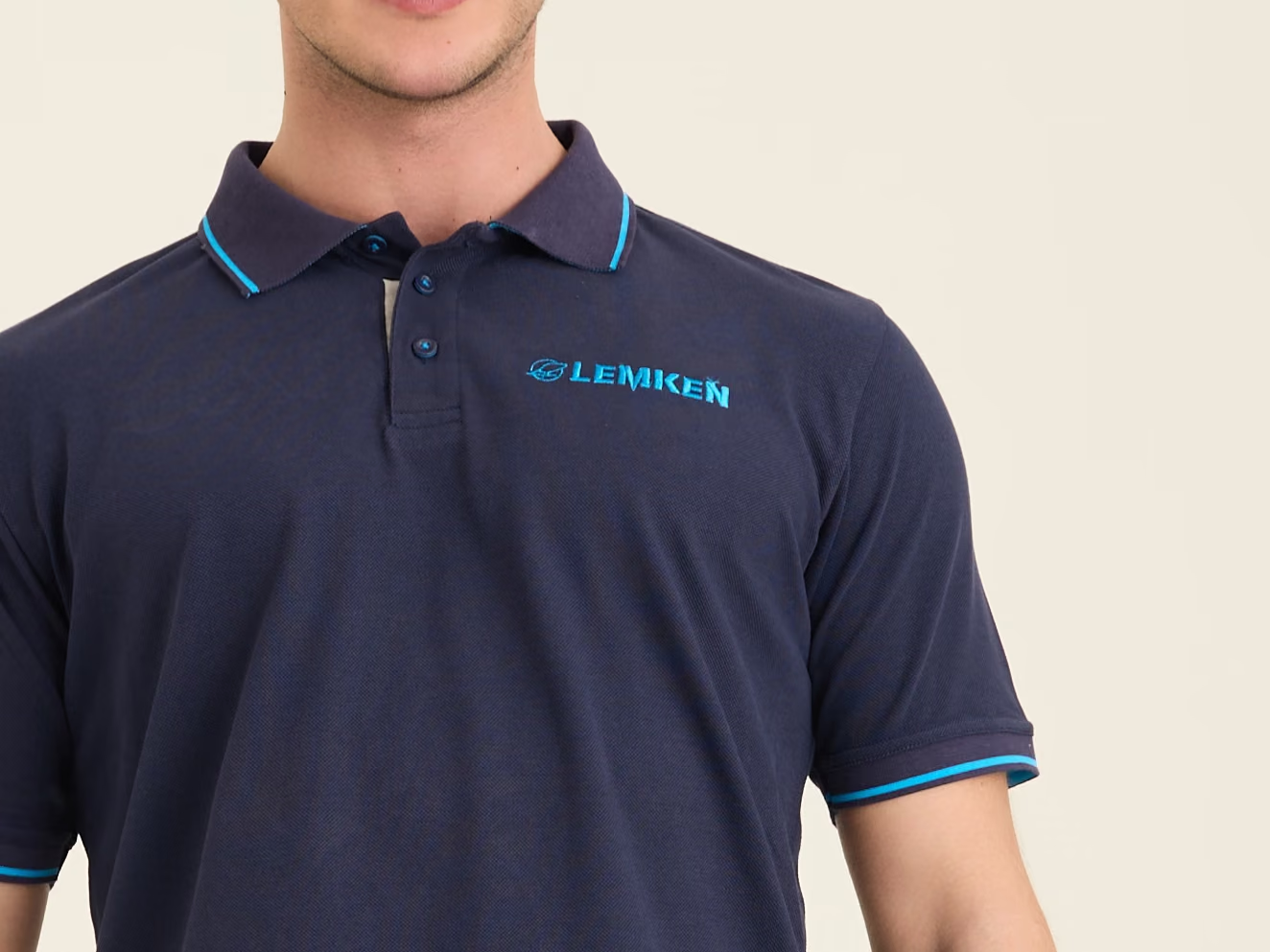
Embroidery is carried out in the Voyager factory. It can be applied to cut panels or an assembled polo, depending on access, placement and design. Confirm hooping and stabilisation on the selected fabric; other methods are listed below.
| Method | Where | Suits |
|---|---|---|
| Flat embroidery | In our factory | Chest, sleeve and back-neck logos on piqué, with backing chosen so the knit does not distort |
| 3D puff and appliqué embroidery | In our factory | Raised or patch logos on double piqué and heavier polos |
| Transfer printing | In our factory | Multi-colour logos, sponsor marks, printed neck labels |
| Sublimation | In our factory | Suitable polyester fabric with a white or light-coloured print face; confirm fabric and print performance on a sample |
| Screen printing | Partner facilities | Confirm artwork detail on a print sample using the selected piqué |
| Tipping, contrast collar and placket | Construction | Branding through colour |
Embroidery needs a digitised file for the fabric and size, described in the artwork files guide; logo size and position limits are in embroidery placement and size, and puckering around dense logos in embroidery puckering.
Sizing, Tests and Packing
Grade the body to the agreed size chart and specify collar and placket dimensions and button spacing for each size or size group. Measurement points include body length from the high point of the shoulder, chest, bottom width, shoulder, sleeve length and opening, collar length and point length, and placket length, each with a tolerance. Use the agreed size set, including sizes at the ends of the range, to check collar-to-neckline fit and overall grading before bulk.
- Dimensional change: use the agreed washing and drying procedure from ISO 6330 and determine dimensional change according to ISO 5077; see wash testing before bulk production.
- Pilling: select an appropriate method, such as ISO 12945-1 (pilling box) or ISO 12945-2 (modified Martindale), and agree the test duration and acceptance rating. These methods are distinct; see fabric pilling.
- Colourfastness: ISO 105-C06 to washing and ISO 105-E04 to perspiration, run on body, collar and cuff especially when the components are dyed separately; see colourfastness.
- Bursting strength: ISO 13938-2 for the piqué body.
These are tests a buyer can specify, with the laboratory and acceptance limits agreed per project. Polos are folded with the collar and placket square and bagged individually or per staff member, as the programme requires; see folding and polybagging.
Golf polos and golf-brand ranges
For golf polos, specify freedom of movement, moisture management and collar stability as performance targets. Fabric options include polyester or polyamide with elastane in bird-eye, fine piqué or smooth interlock structures. Confirm composition and weight at quotation, and assess the sample against agreed movement, moisture and drying requirements. See moisture, breathability and drying.
- Sleeves. Set-in and raglan are design options; assess fit and swing movement on the sample. Agree the finish, such as a coverstitched hem, self-fabric band or rib cuff.
- Collar. A self-fabric collar with a light interlining, or a flat-knitted collar firm enough to hold its roll on a stretch body.
- Placket. Options include two or three buttons, concealed buttons or a short zip. Specify reinforcement and check that the placket lies flat on the sample, especially with stretch fabric.
- Decoration. Agree logo positions, such as the left chest, sleeve or back yoke. Polyester sublimation is handled in-house; confirm fabric suitability on a sample. For embroidery on light knits, assess artwork size, stitch density and backing together.
For a golf range carrying a UPF rating, establish the intended market and tested garment configuration. EN 13758-1 covers testing apparel fabrics for solar UV protection; EN 13758-2 covers garment classification and marking, including design and coverage requirements. Apply the relevant requirements to the finished garment as well as the fabric. See UV protection and UPF.
For Brands, Merch, Promotional, Corporate and Workwear Programmes
Brands
For fashion, golf and athleisure collections, options include double piqué or piqué with elastane, tipped or contrast knitted collars, custom buttons, woven neck labels, longer back hems and side vents. Polyester bird-eye with sublimated panels is another option. Select the construction for the collection's design and performance requirements. See private label clothing.
Merch
For club, event and brand-shop collections, polos can use single or double piqué in the collection's colours, with embroidery or print at agreed positions. They can be coordinated with hoodies and tees; the minimum remains 300 pieces per colour and per style. See merch manufacturing page.
Promotional
Specify the fabric, weight and colours for the promotional programme. Polos can be supplied unbranded to a distributor's specification for later decoration, or embroidered in the factory. We do not hold stock polos. See promotional textiles page.
Corporate
For corporate polos, specify the fabric, brand colours, collar and cuff details, and embroidery. Women's and men's cuts are separate styles, each subject to 300 pieces per colour and per style. For reorders, confirm the approved references, current materials and colour approval. See reorder consistency and corporate clothing page.
Workwear
For work polos, choose the fabric, embroidery and reinforced details for the intended use and laundry process. Confirm dimensional stability and colourfastness through testing of the selected materials and garment construction. For industrial laundering, agree the relevant ISO 15797 washing and drying/finishing procedures and acceptance limits. See workwear page.
What Changes the Unit Cost of Polo Shirts
The unit cost of a custom polo moves with the piqué type, composition and weight, with the collar and cuff (plain, tipped, contrast or cut-and-sew), with the placket, buttons and vents, with the embroidery stitch count and the number of placements, with the number of colours in the order, since each colour needs its own collar and cuff match, with the quantity above the 300 minimum, and with labels and packing per staff member or per carton. The full breakdown is in the clothing manufacturing cost guide.
Producing in Turkey for European Brands
Türkiye sits on the road corridor into the EU, and under the EU–Türkiye Customs Union (Decision No 1/95 of the EC-Turkey Association Council) apparel in free circulation moves into the EU without customs duty when an A.TR movement certificate accompanies the shipment; import VAT still applies, and the A.TR evidences customs status rather than origin, as explained in A.TR and origin. For polo reorders, agree which approved samples, patterns, colour standards and embroidery files will be retained and available. Confirm current material availability, colour approval and any development needed before placing the repeat order. Transport options are in shipping apparel from Turkey, and the wider case in nearshoring clothing production for European brands.
Polo references produced by Voyager Textile
Previously produced to customer specification. These are production references, not stock; include an article code when discussing the construction you need.
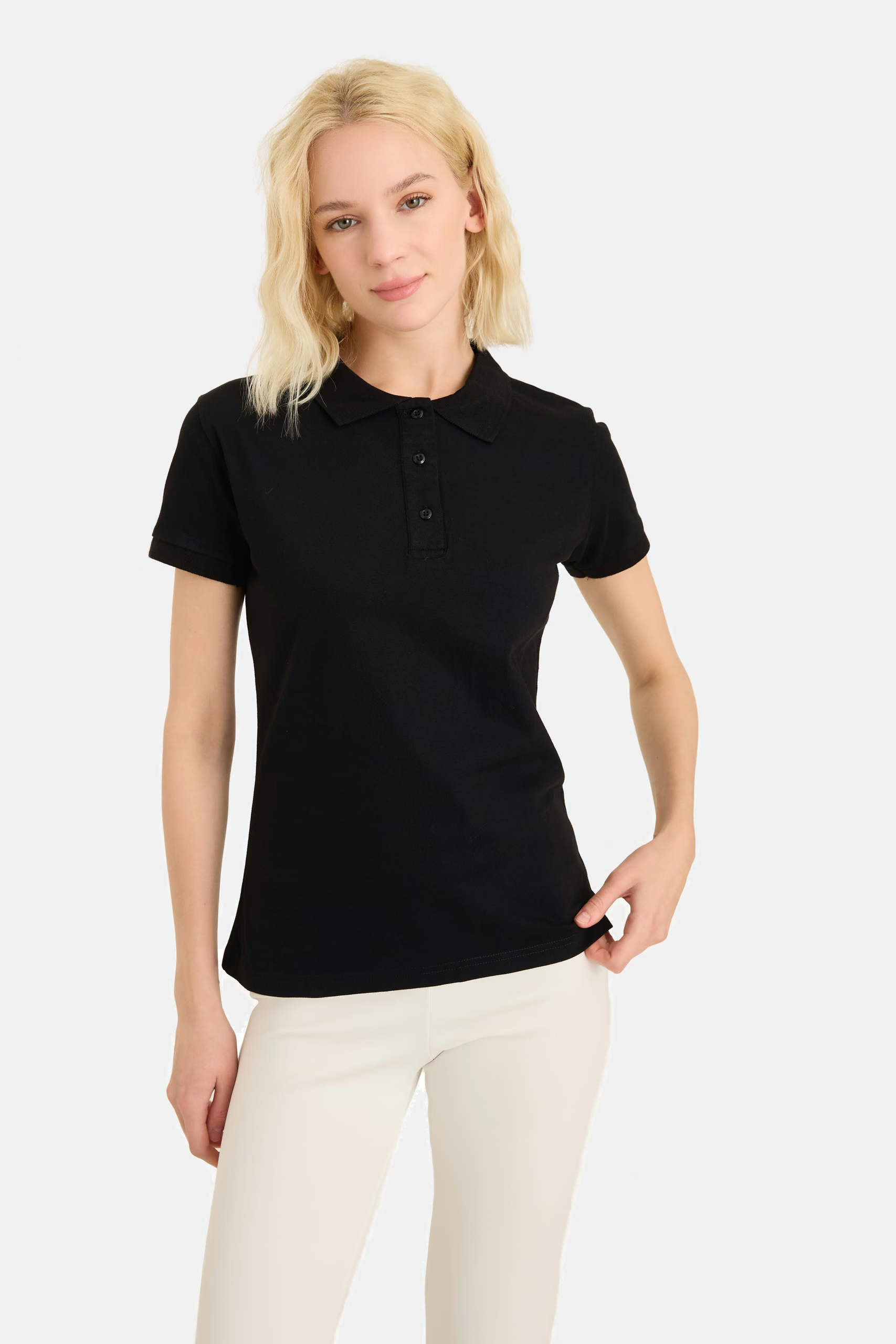 Women’s Black Fitted Pique PoloPolo Shirt · VT-PL-001
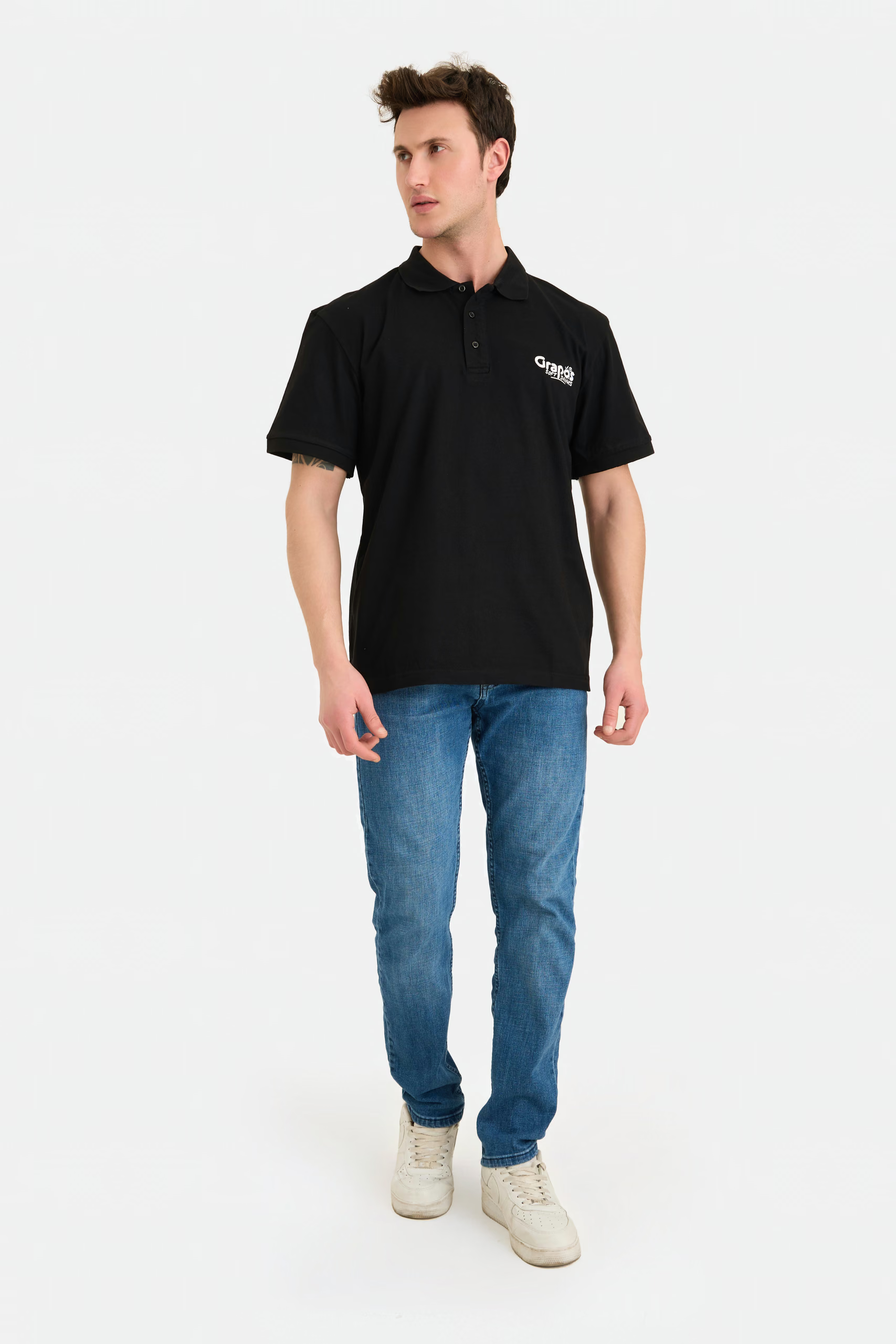 Black Piqué Polo, Printed Chest LogoPolo Shirt · VT-PL-002
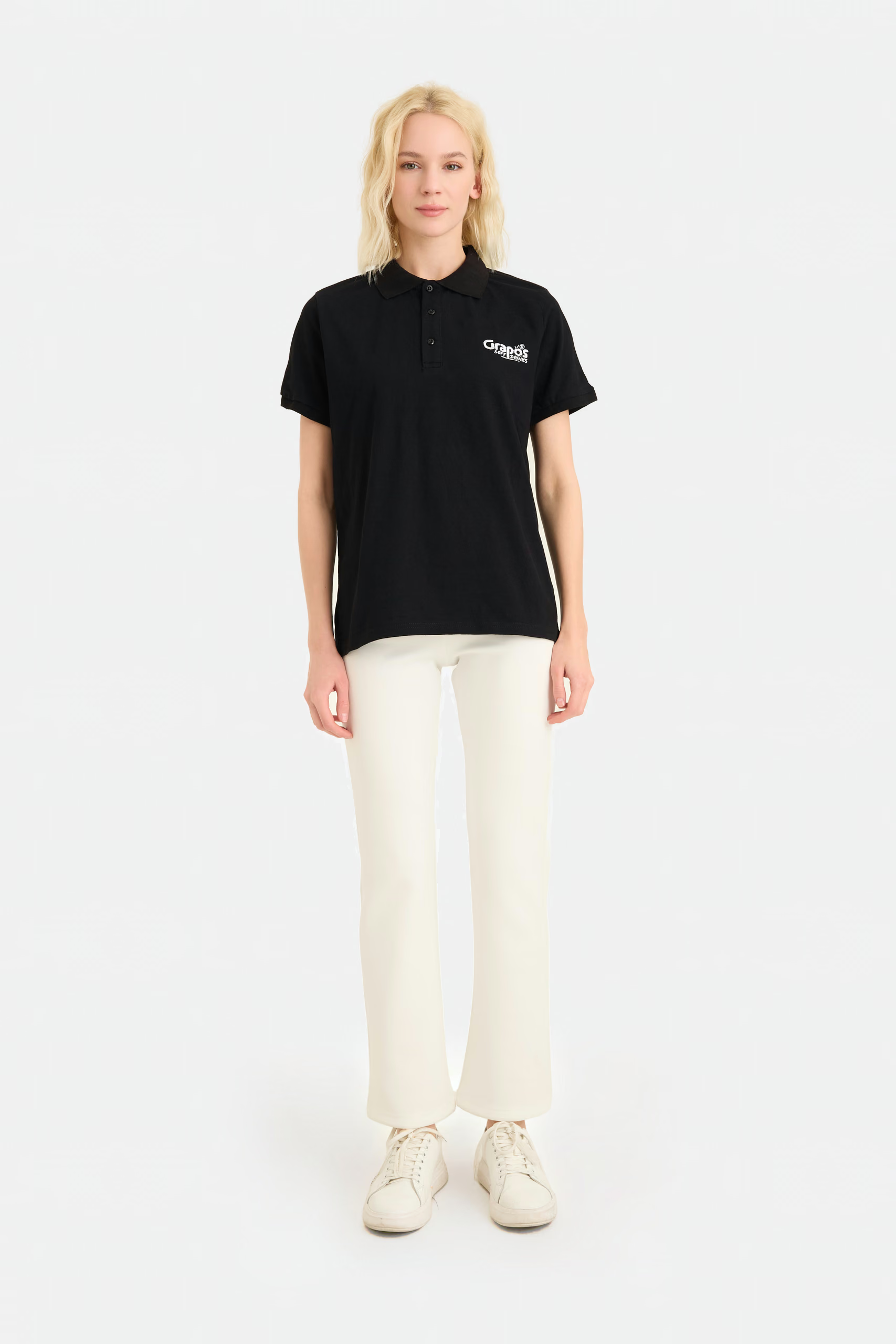 Women’s Black Piqué Polo, Printed Chest LogoPolo Shirt · VT-PL-003
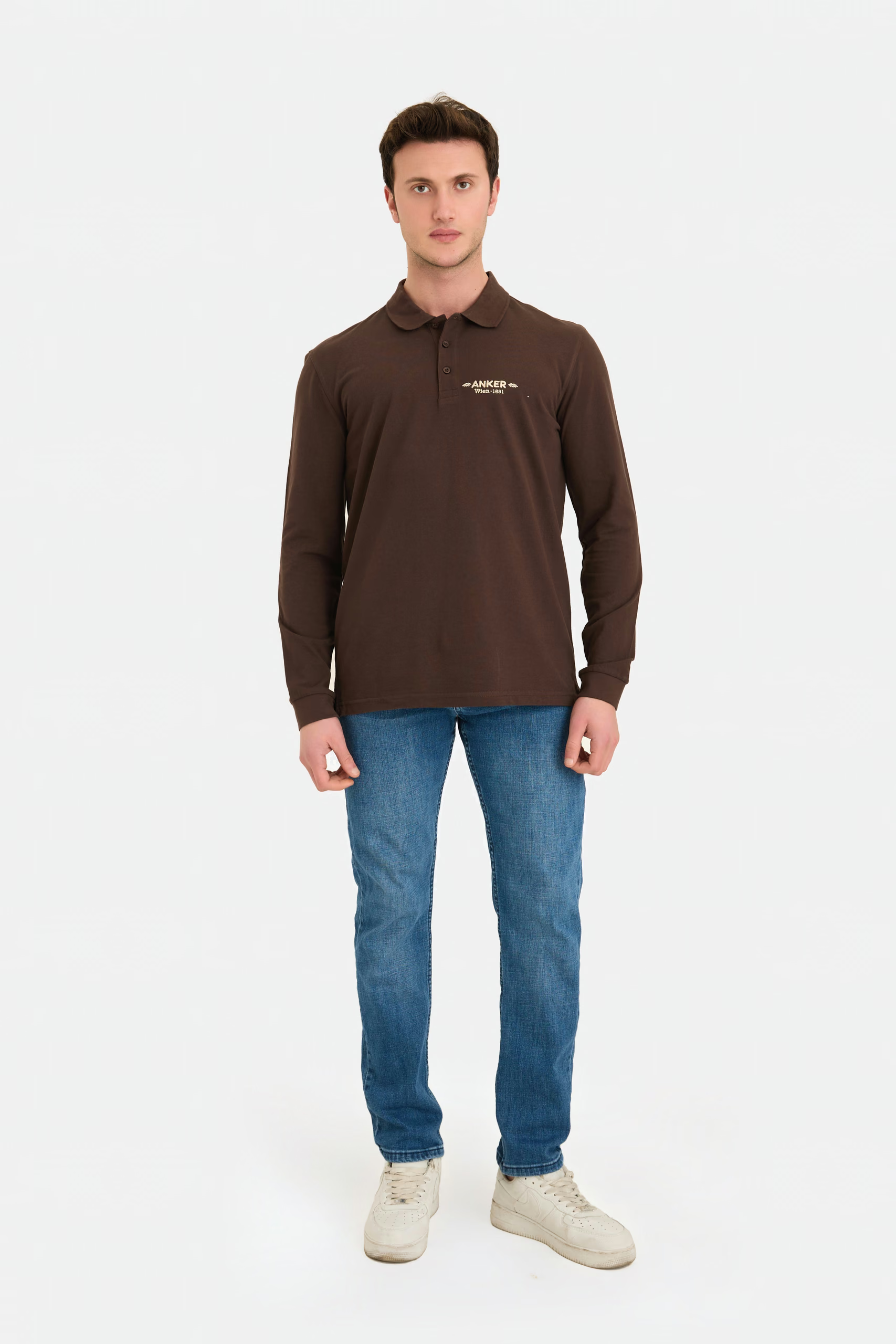 Brown Long-Sleeve Piqué PoloPolo Shirt · VT-PL-004
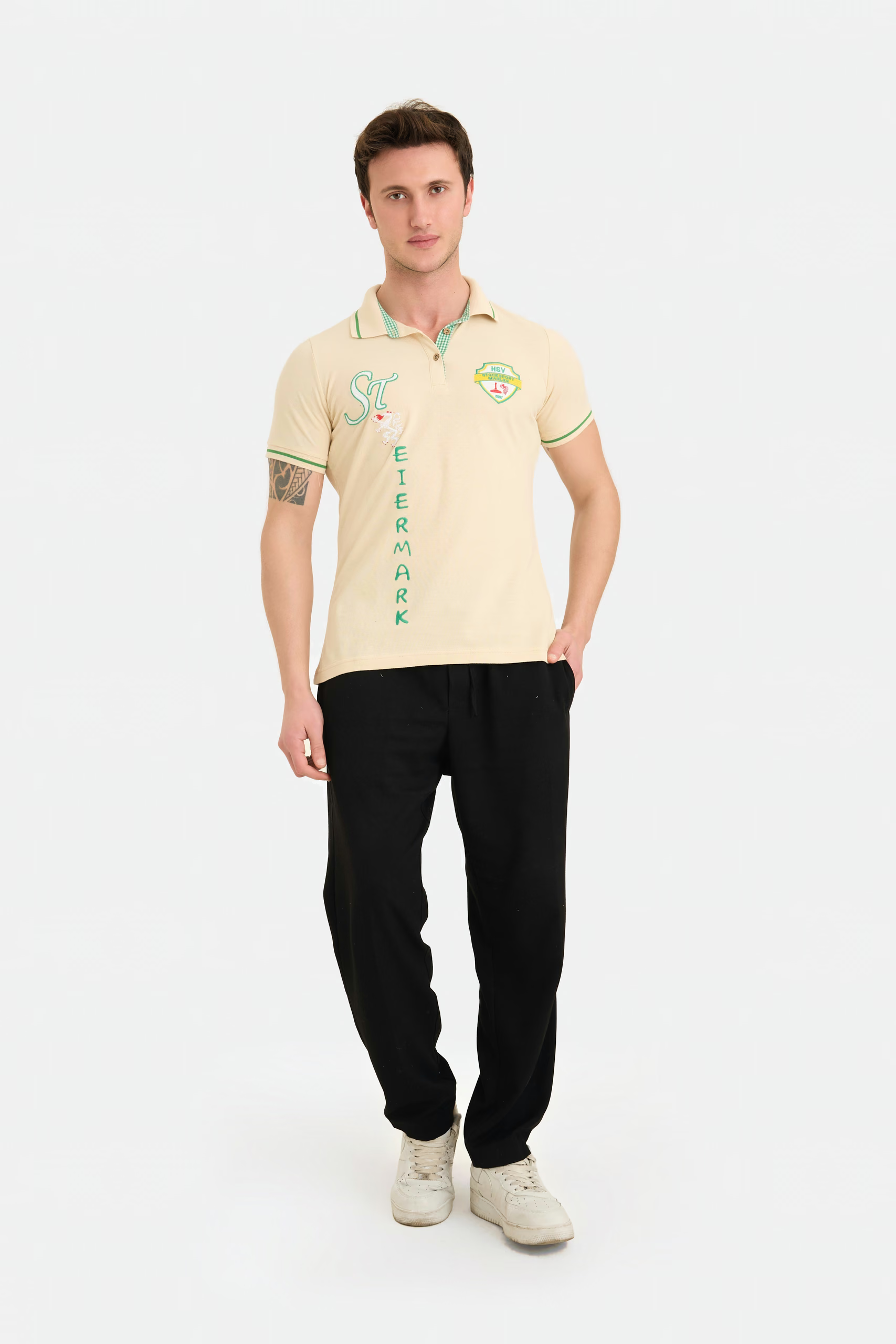 Cream Contrast-Tipped Piqué PoloPolo Shirt · VT-PL-005
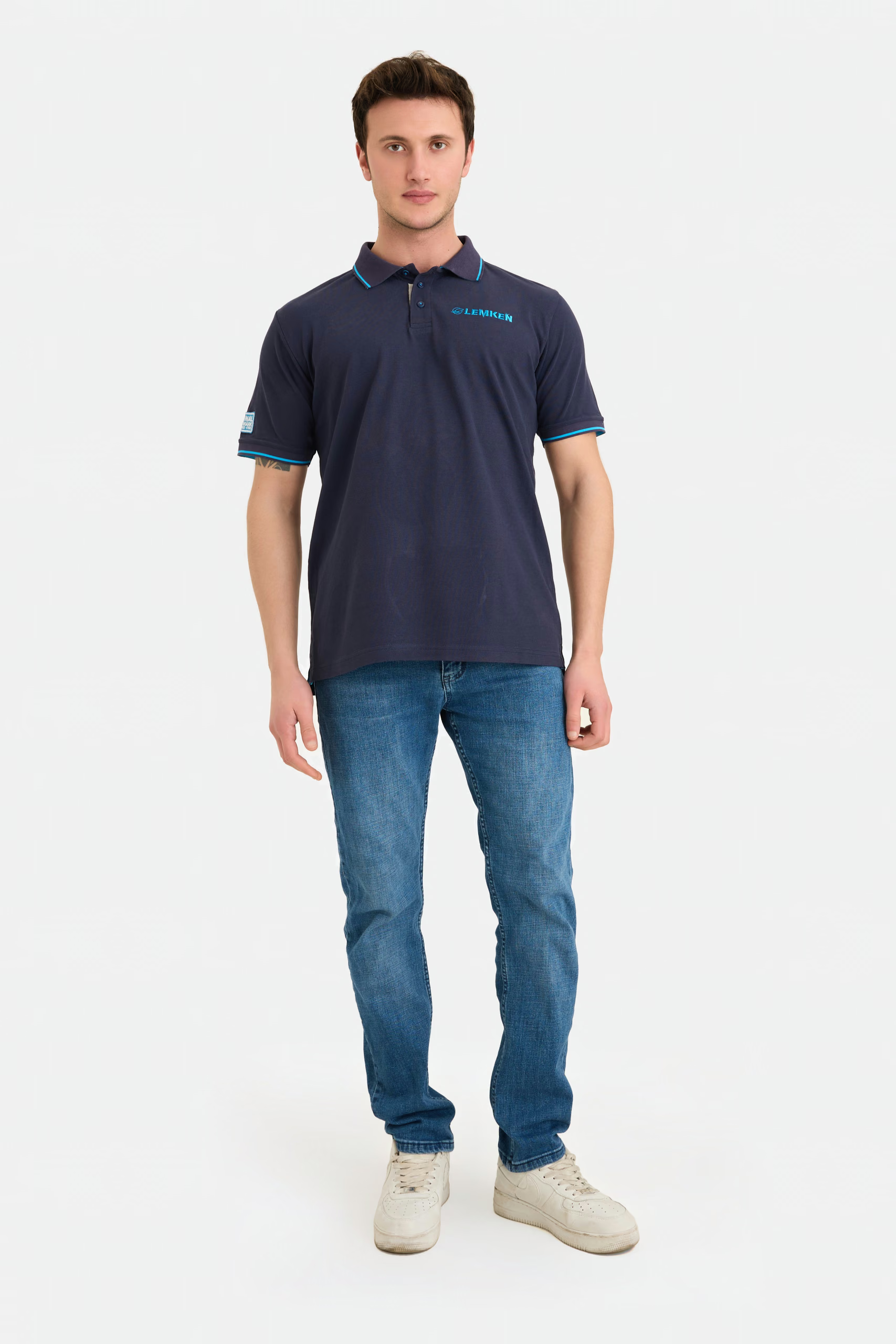 Navy Piqué Polo, Embroidered Corporate LogoPolo Shirt · VT-PL-006
Questions this raises
What is the minimum for custom polo shirts?
The minimum for custom polo shirts is 300 pieces per colour and per style. Sizes can be split inside the 300, and the same minimum applies to sublimated polos and to custom Pantone colours. The colour process for polyester-based fabrics is assessed separately.
How long does it take to make custom polo shirts?
Making custom polo shirts takes 5-7 business days for the sample, and typically 4-5 weeks for bulk production after sample approval. Development, fabric and collar sourcing and shipping are additional.
Can you make polo shirts to our own design and label?
Yes, every polo shirt is made to your own design; there are no ready-made styles. Piqué, collar, placket, buttons, colour, embroidery, labels and packing all follow your specification.
Do you sell ready-made polos for logo embroidery?
No. Polos are manufactured to the buyer's design from 300 pieces per colour and per style, and can be supplied unbranded to a distributor's specification.
Which piqué is best for corporate polos?
Choose piqué for the intended use, fit and laundry process. Double piqué around 190-220 g/m² and single piqué around 160-190 g/m² are indicative options, not rankings of shape retention or cooling. Confirm dimensional stability, colourfastness and comfort on the selected material and garment; polyester content alone does not establish suitability for hot washing.
Can polo collars be made in our brand colours?
Yes, polo collars and cuffs can be matched or tipped in your brand colours. Agree knitted-collar dimensions and size groups, then approve the colour and construction against the body fabric. The collar source is confirmed per project at quotation.
Planning a polo programme?
Send the piqué, collar and placket details, colours, size chart and logo file, or a reference polo you want matched. We reply with what is missing, sample in 5-7 business days, and quote from 300 pieces per colour and per style.
Start an RFQContinue with
- Jacket Manufacturer in Turkey: Softshell, Puffer, Fleece, Windbreaker and Bomber Jackets
- Tracksuit Manufacturer in Turkey: Track Jackets, Fleece Sets and Windbreaker Sets
- Hotel and Corporate Uniforms from Turkey for GCC Buyers
- Private Label Workwear Manufacturer in Turkey: Work Trousers, Jackets and Polos for Brands, Distributors and Company Programmes
- Medical Scrubs Manufacturer in Turkey: Private-Label Scrub Sets
- Shorts Manufacturer in Turkey: Sweat, Sports, Work and Woven Shorts Made to Your Design
- Sublimated Teamwear Manufacturer in Turkey: Football Kits, Training Wear and Club Programmes
- Private Label Activewear and Leggings Manufacturer in Turkey
- Hoodie and Sweatshirt Manufacturer in Turkey: Heavyweight, Oversized and Zip Hoodies
- T-Shirt Manufacturer in Turkey: Regular, Heavyweight and Oversized T-Shirts
- Promotional Textiles Manufacturer for Distributors: Own-Brand T-Shirts, Polos, Sweatshirts and Hoodies Made in Turkey
- Corporate Clothing Manufacturer: Corporate Fashion Collections Made in Turkey in Your Brand Colours
- Custom Merch Manufacturer in Turkey: Cut-and-Sew Hoodies, Sweatshirts, T-Shirts and Shorts for Brands, Artists and Companies
- Full-package vs CMT apparel manufacturing
- Manufacturing clothing from a reference garment