

Polo collar and placket construction
A polo is a simple garment with three demanding components. The collar has to hold a shape while being knitted from a stretchy structure, the placket has to stay flat and straight while carrying buttons, and both have to look identical across every piece in a production run.
Contents
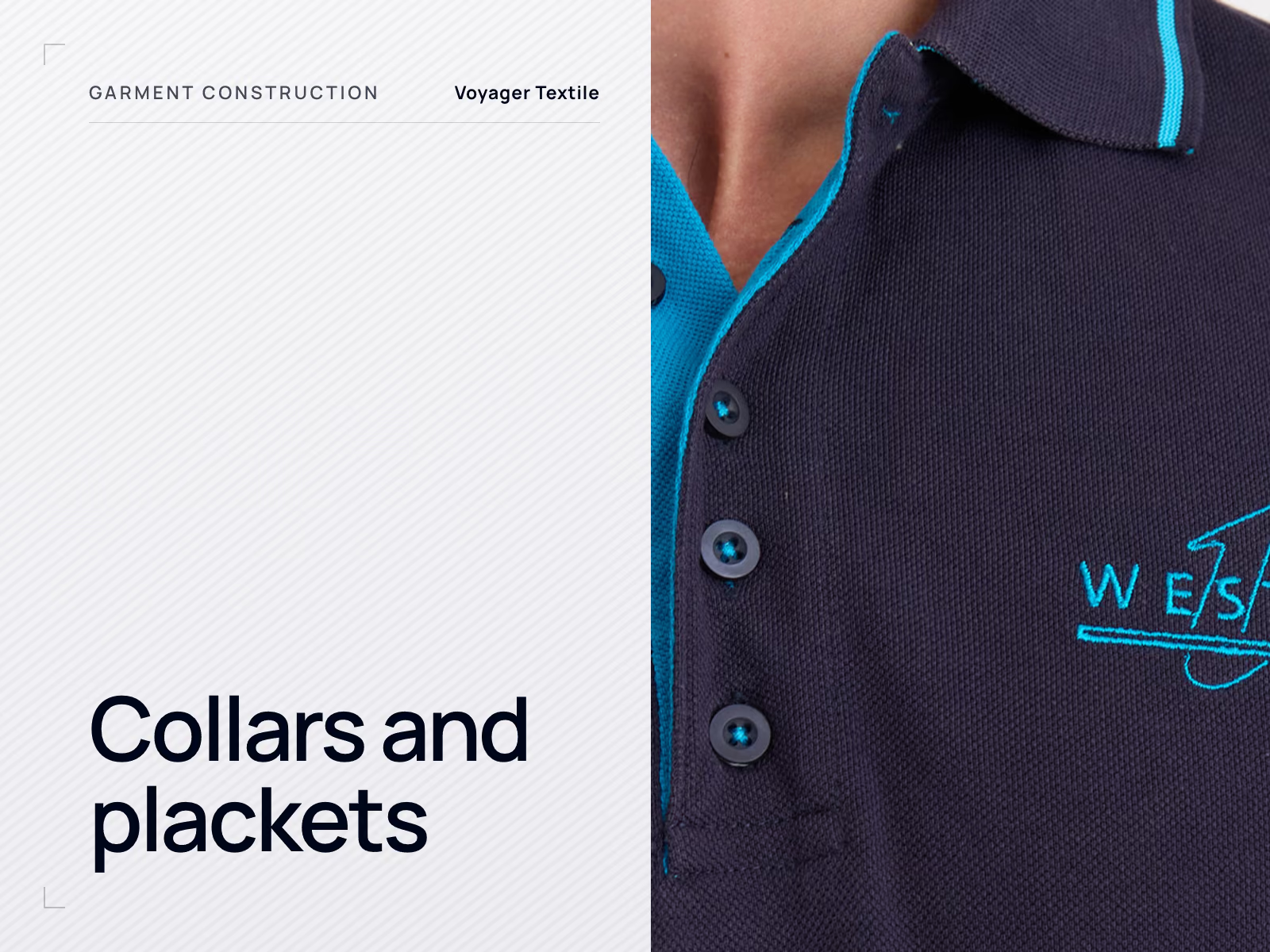
Polos are treated as an easy garment because the silhouette is simple. In production they are not. The collar and placket are small, visible, and unforgiving: a collar that rolls unevenly or a placket that bows is obvious from two metres away, and no amount of good fabric compensates for it.
Polo anatomy
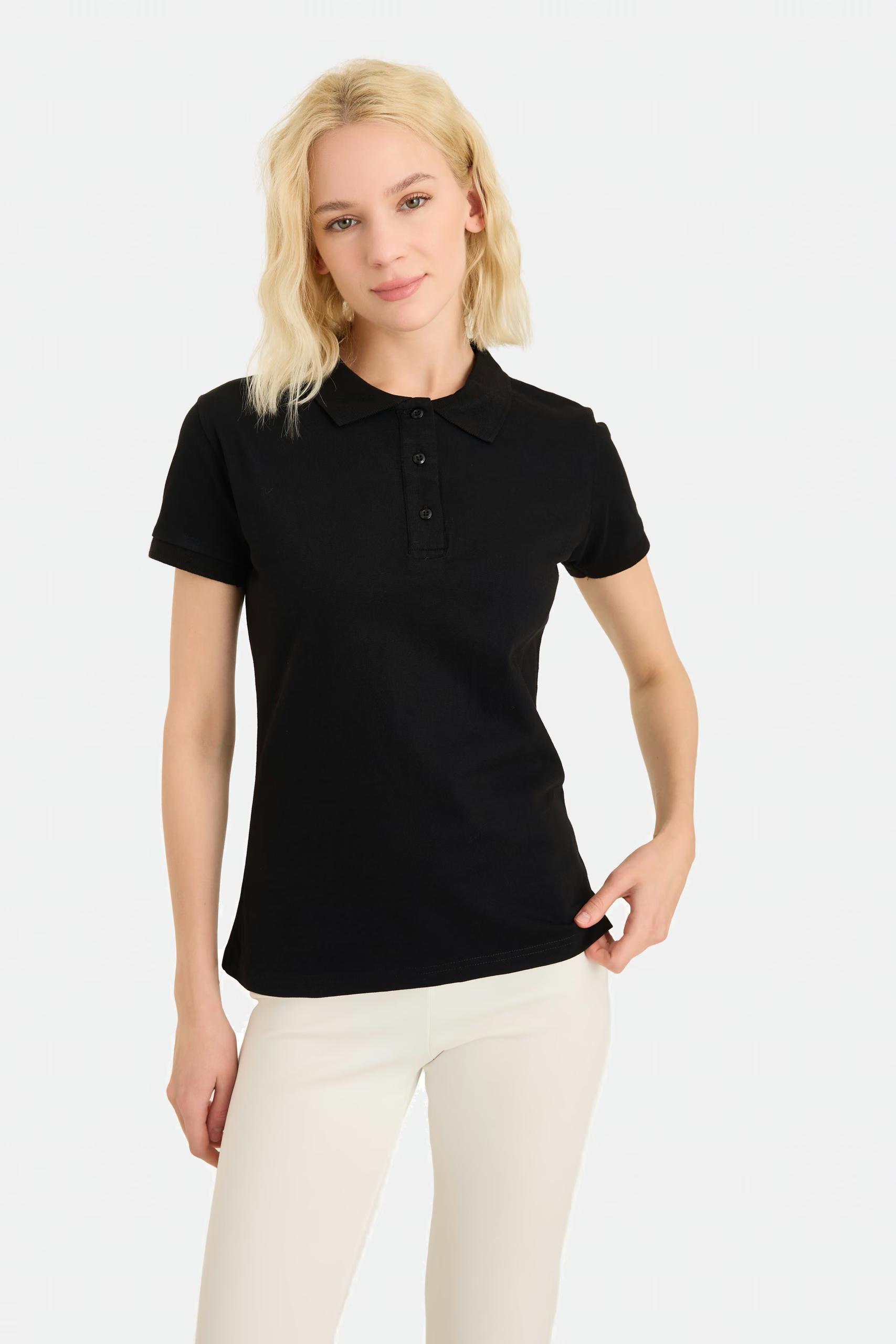
The four components that distinguish a polo from a t-shirt: collar, placket, cuff finish and side vent.
Knitted collars against cut-and-sew collars
There are two fundamentally different ways to make a polo collar, and they produce different products.
| Knitted collar | Cut-and-sew collar | |
|---|---|---|
| How it is made | Knitted to shape as a finished piece, with its own edges and often a tipped border | Cut from fabric, usually with an interlining, then stitched and turned |
| Edges | Finished by the knitting itself, so there is no seam around the outside | Seamed and turned, with a stitched edge |
| Shape retention | Depends on the rib structure and yarn; recovers like a rib trim | Depends on the interlining; behaves more like a shirt collar |
| Typical use | Piqué polos, corporate and promotional programmes | Fashion polos, heavier or structured products, woven-collar variants |
Knitted collars are bought as a trim, in a specific size, structure and colour, and they are ordered against the garment size range. That has a practical consequence for buyers: collars are a separate supply item with their own lead time and their own minimum, so a late change of collar colour is not a small change. It is one of the lines that belongs explicitly in the bill of materials.
Cut-and-sew collars give more design freedom, including contrast fabrics and woven collars on a knit body, but they introduce an interlining decision. The interlining sets how stiff the collar is and how it rolls, and it has to survive washing without bubbling or separating, which is discussed further in linings, facings and interlinings.
How the collar attaches
The collar is joined to the neckline and the seam is then covered, usually by a tape or a facing across the back neck. That covering does the same job it does on a t-shirt: it hides the allowance and stops the neckline extending.
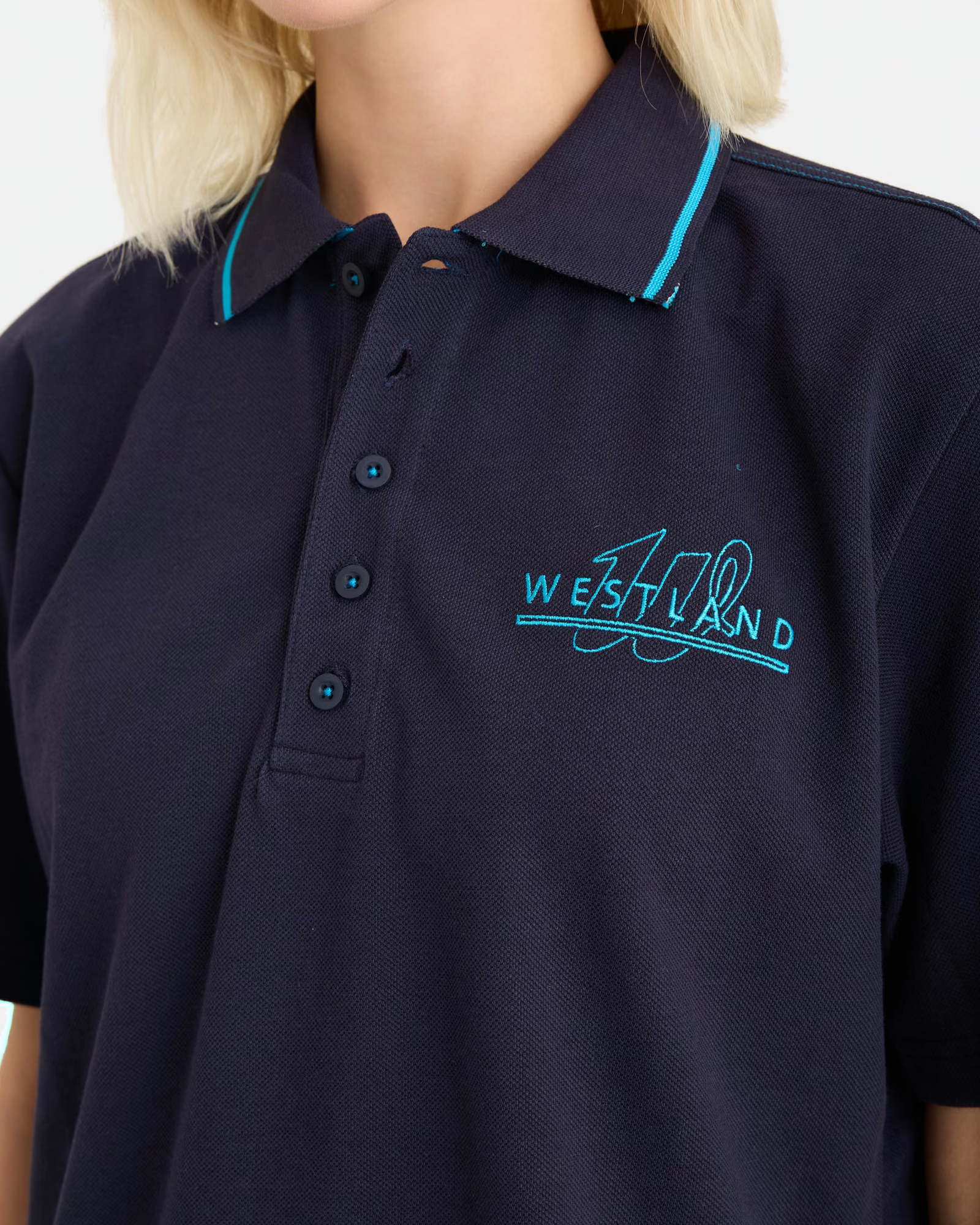
Two details decide whether the attachment looks right. The first is the relationship between the collar length and the neckline length, which is the same ratio problem described in rib trims and neck finishing: a collar cut too short pulls the neckline in and makes the collar stand away, one cut too long ripples. The second is where the collar ends meet the placket. If the collar is not centred on the placket, every piece in the production run will look slightly crooked at the front, and it is one of the first things an inspector checks.
Placket construction
The placket is a reinforced opening at the centre front, built so that one side carries buttonholes and the other carries buttons. On a knit polo it is normally a separate piece applied to the body, not a fold of the body fabric, because knit fabric on its own has neither the stability nor the straightness the opening needs.
All four depend on stabilisation. A knit placket is normally interlined so the fabric cannot stretch along its length while it is being sewn or while the buttonholes are cut. Without that, the placket grows slightly during sewing, ends up longer than the panel it is attached to, and the excess appears as a wave. This is a common polo defect and it is a construction cause, not a fabric one.
The bottom of the placket is the second recurring problem area. Where the two placket halves meet the body there is a concentration of layers and a point that takes load whenever the garment is pulled over the head. It is normally reinforced, often with a bartack or a stitched box, and the finish there should be specified rather than left to the factory's habit, because it is visible.
| Detail | Why it matters |
|---|---|
| Placket length and width | Both are visible proportions and both grade across the size range |
| Number of buttons | Two and three button plackets read differently and change the opening depth |
| Button size, material and colour | A bill of materials item with its own supply lead time |
| Buttonhole direction | Horizontal and vertical buttonholes behave differently under load |
| Interlining type | Sets the placket's stiffness and whether it stays flat after washing |
| Bottom finish | Bartack, stitched box or plain, and whether it is visible from the face |
Collar and placket choices for corporate polos
For corporate polos, the collar choice is mostly a colour decision. A knitted flat collar is knitted and dyed as a separate trim, so it has to be matched to the body and to the brand's Pantone reference, and tipping (one or two contrast stripes in the brand colour at the collar edge and the rib cuff) is set at the knitting stage. A self-fabric collar is cut from the body fabric, so it shares the body's dye lot and matches without a separate lab dip, but it needs an interlining to hold its roll. Where the knitted collars are knitted is confirmed per project at the quotation stage.
On a company-branded polo, placket length and button count decide how much room the left-chest logo has: a longer three-button placket pushes the logo outwards, and the embroidery should clear the placket edge by the same distance on every size. A back-neck stay tape in the brand colour adds a brand detail without another decoration step. State all four on the RFQ; the polo shirt manufacturer page covers fabrics and decoration, and corporate clothing covers the programme.
Side vents and the tail
Many polos are finished with a short slit at the bottom of each side seam, with the front hem sometimes cut shorter than the back. The vent is functional: it lets the hem open when the wearer sits or moves, so the garment does not ride up, and it lets a longer back tail stay tucked in.
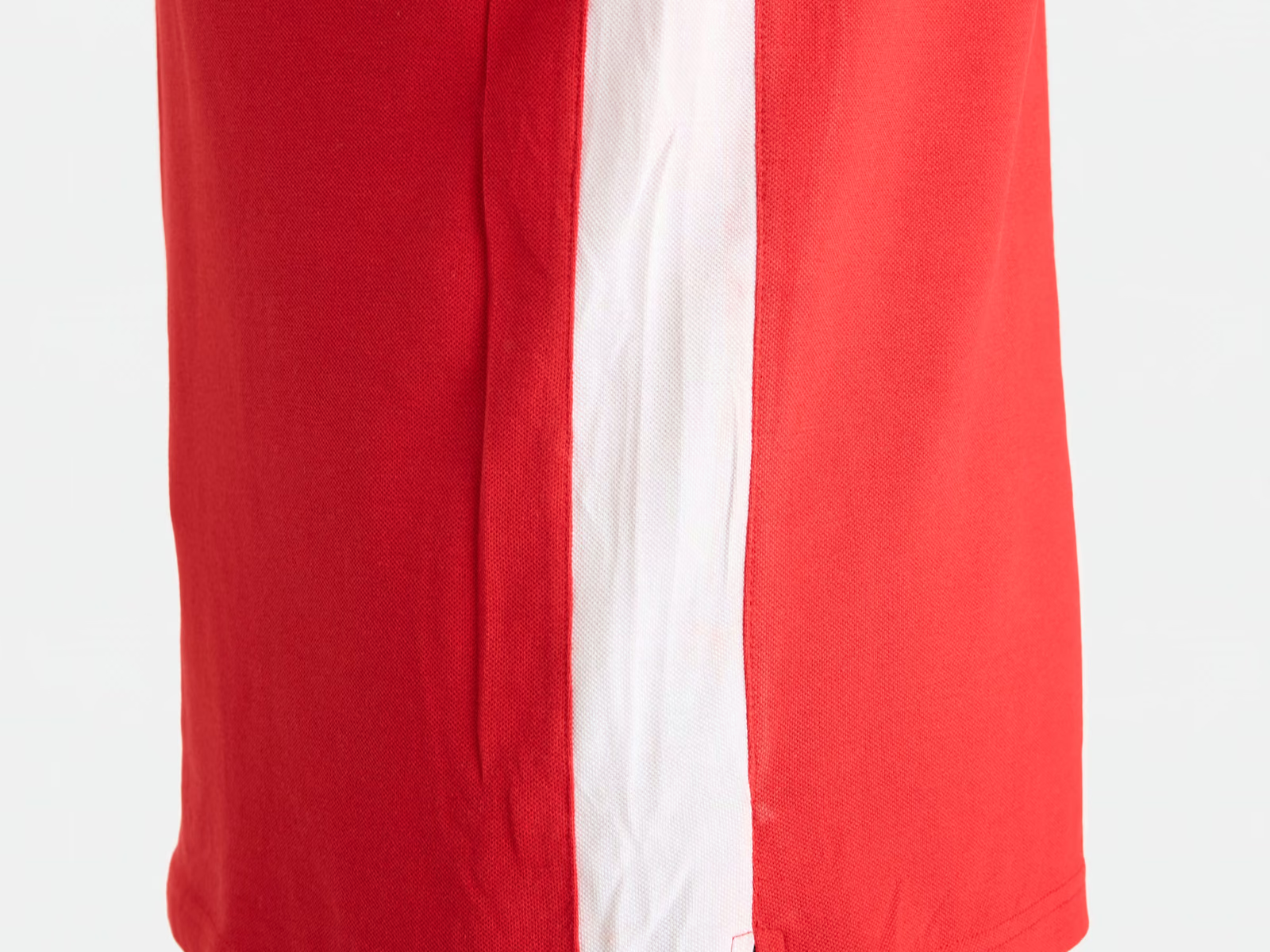
Construction matters at the top of the vent, which is where the side seam stops. That point takes all the load when the vent opens, so it is normally reinforced with a bartack. An unreinforced vent tears there, and it will tear on the customer rather than in the factory. The height of the vent, the difference between front and back hem lengths, and the presence of the bartack are all specification lines.
Cuffs and sleeve finishing
Polo sleeves are finished either with a knitted rib cuff, a self-fabric turned hem, or a plain coverstitched hem. A rib cuff grips the arm and holds the sleeve in position, which suits corporate and sports products; a plain hem lets the sleeve hang, which suits relaxed styling. This is the same trade-off described in rib trims, applied at the sleeve.
Decoration interacts with all of this: a chest logo has to clear the placket, and collar or placket embroidery is normally worked before assembly, as set out in embroidery placement and size. Where a knitted collar is used, the cuffs are usually knitted to match it, and they are ordered as part of the same trim package. That is a supply consideration as much as a construction one: a change to the collar colour changes the cuffs too.
Checking a polo
What to look at on a polo sample
In this order, because each check depends on the previous one being correct.
- Is the collar centred on the placket, with equal collar ends on both sides
- Does the collar lie flat when the garment is laid down, without rippling or pulling
- Is the placket straight along its full length, with no wave
- Do the two placket halves align at the bottom, and is the bottom reinforced
- Are buttonholes cut cleanly, correctly spaced and positioned centrally
- Are the side vents equal in height, and bartacked at the top
- Are the collar, cuffs and body an acceptable colour match under the agreed light source
The production sequence that builds all of this is covered in polo shirt manufacturing, and the fabric that many polos are made from is described in the piqué reference.
Polo references
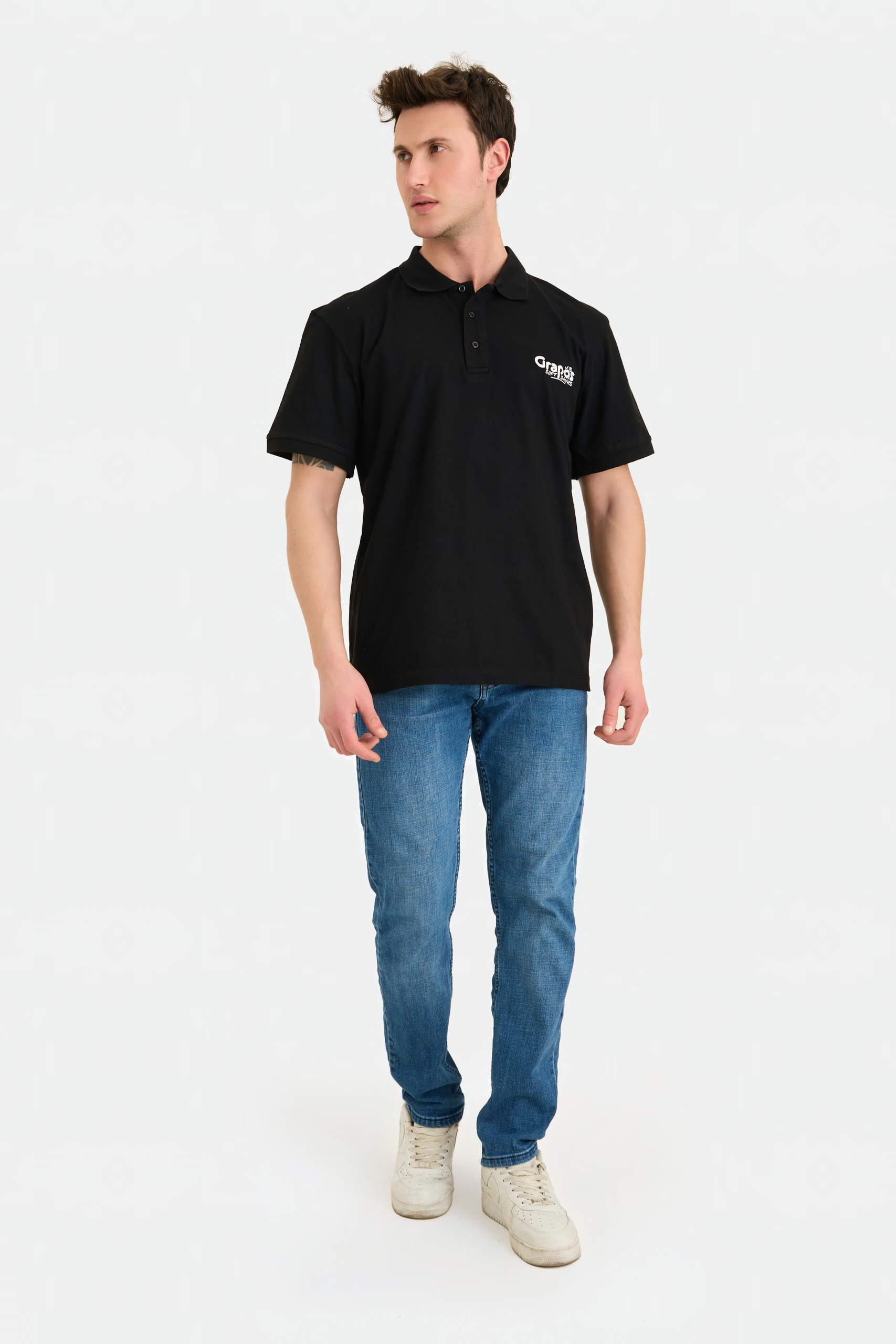
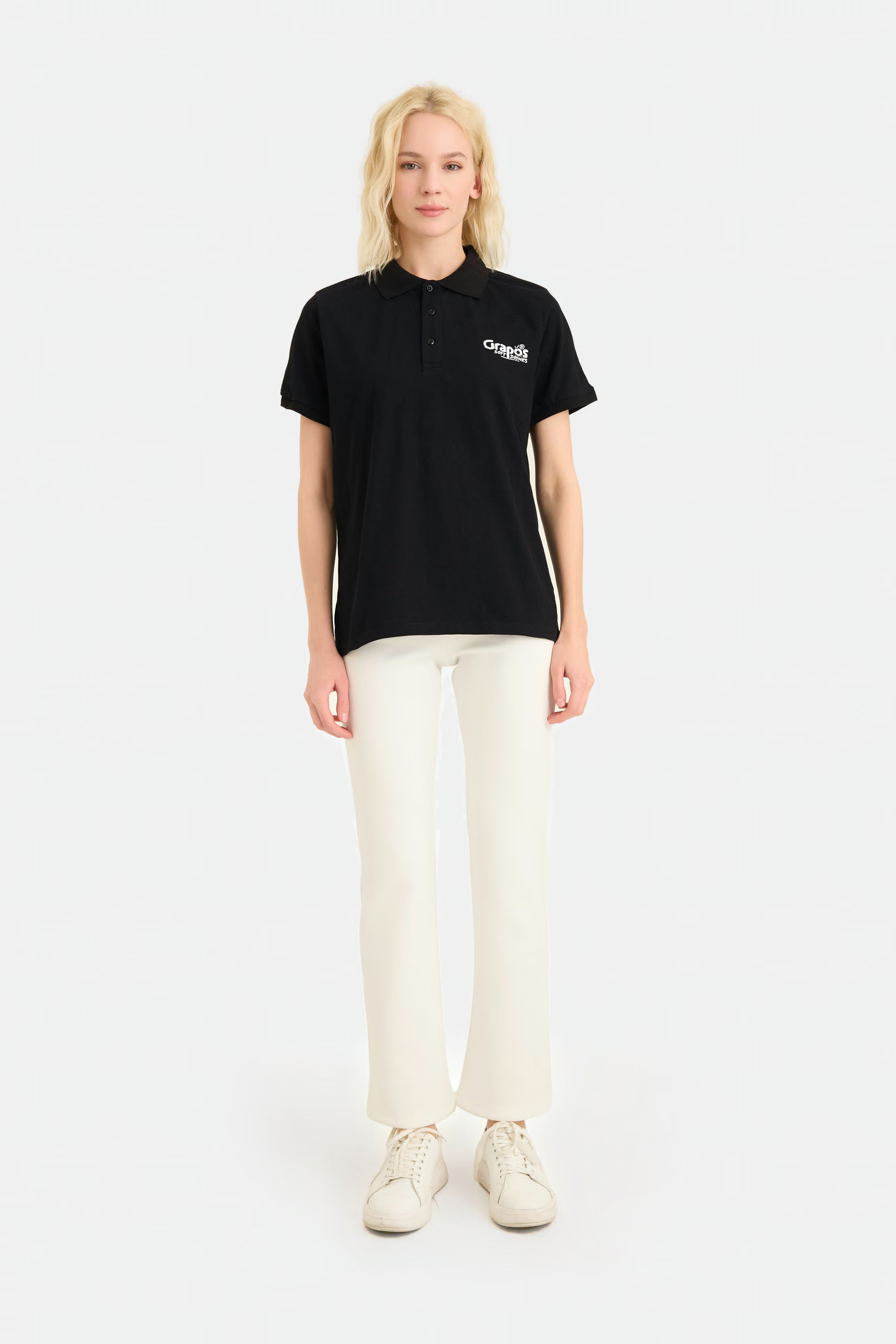
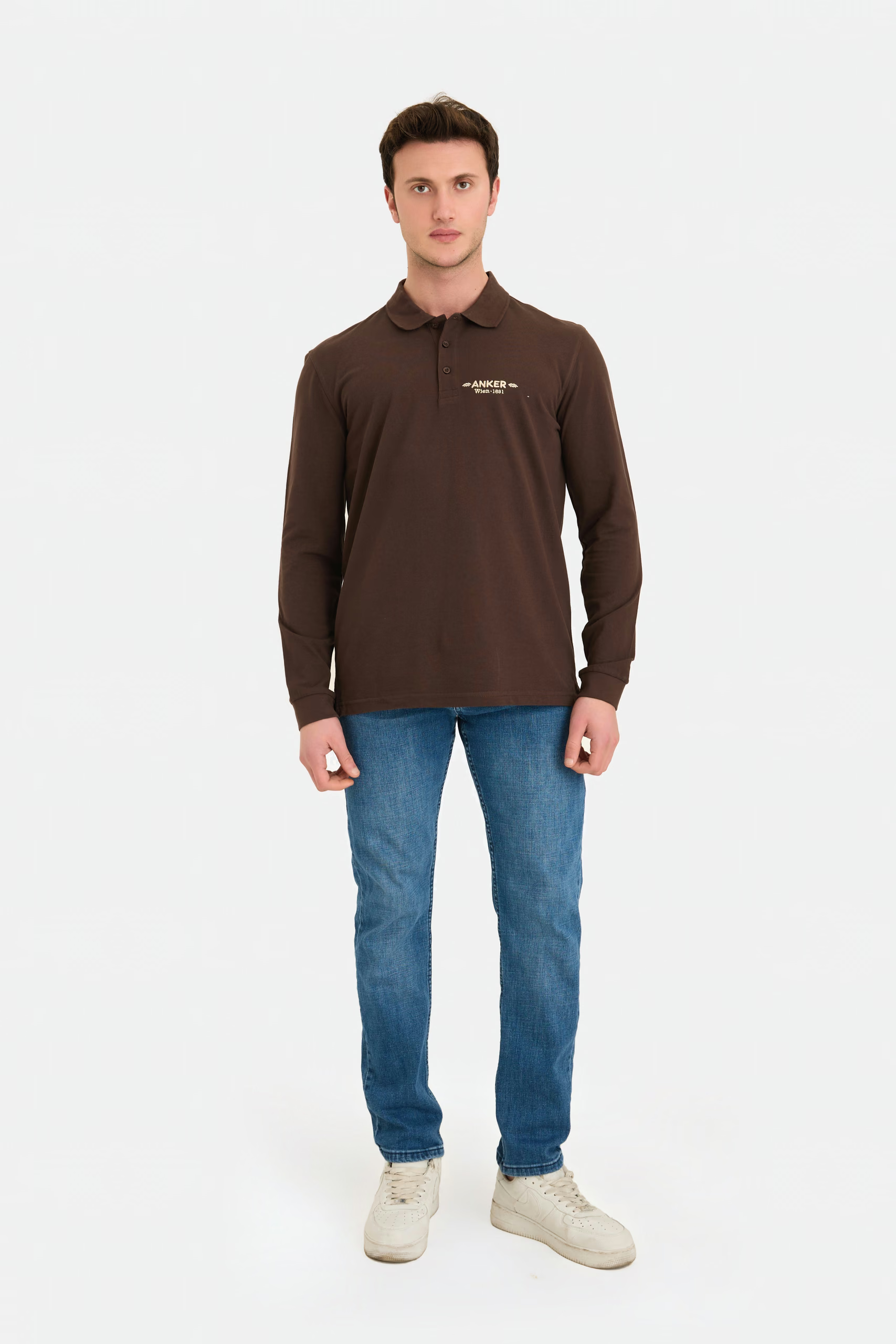
Polo shirts previously produced to customer specifications.
Questions this raises
Why does my polo placket wave instead of lying flat?
Usually because the placket was not stabilised enough for the fabric. Knit fabric extends along the placket while it is being handled and sewn, so the finished placket ends up longer than the panel it is attached to and the excess shows as a wave. The fix is in the interlining and the handling, not in the body fabric.
Is a knitted collar better than a cut-and-sew collar?
Neither is better in general. A knitted collar has no seam around its edge and recovers like a rib trim, which suits piqué polos and corporate programmes. A cut-and-sew collar gives more design freedom and behaves more like a shirt collar, with an interlining setting its stiffness. The right answer depends on the product.
Do I need side vents on a polo?
They are optional and they are a real functional feature rather than decoration: they let the hem open when the wearer moves and allow a longer back tail. If you include them, the top of each vent needs reinforcement, because that point takes all the load when the vent opens.
How late can I change collar colour?
Earlier than most buyers expect. Knitted collars and matching cuffs are bought as trims with their own lead time and minimums, so a colour change after trims are committed can hold the whole order. Treat collar and cuff colour as a bill of materials decision, not a finishing decision.
Polos live or die on the collar and placket
Send the collar type, placket detail and trim colours with your enquiry and we can quote and sample against them directly rather than assuming a house standard.
Request a quotation