Cotton and blended knits
Piqué
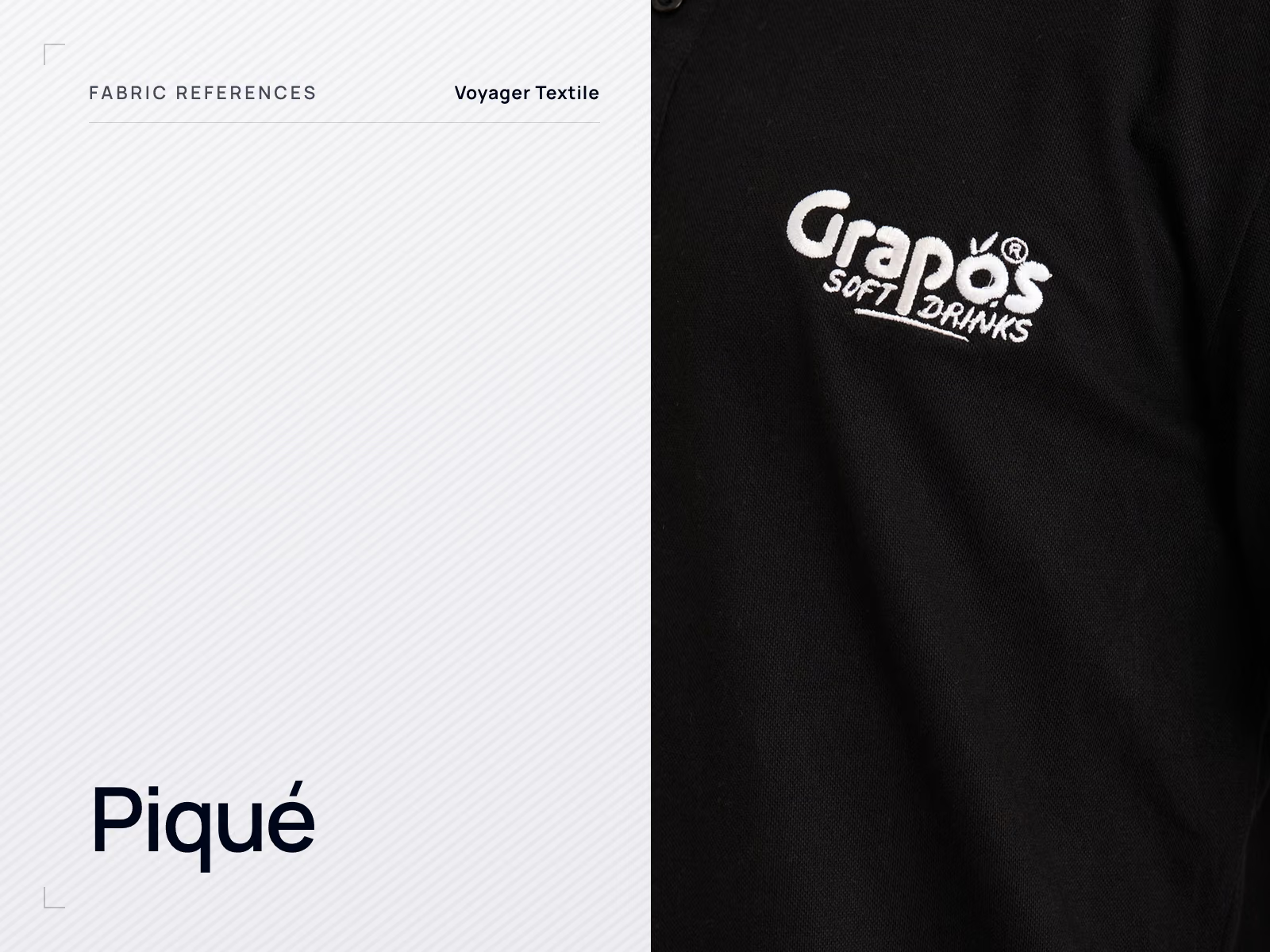
Piqué is a textured knit built from a repeating raised pattern rather than a flat loop surface. That texture gives the fabric more body than plain jersey at a similar weight, hides light creasing and marking, and is the reason it became a standard polo shirt fabric for corporate and hospitality use.
Contents
What the texture is
Piqué is knitted so that raised and recessed areas repeat across the surface, producing a small regular texture rather than the flat face of plain jersey. Mills often list it as lacoste, and the two words describe the same family of structures.
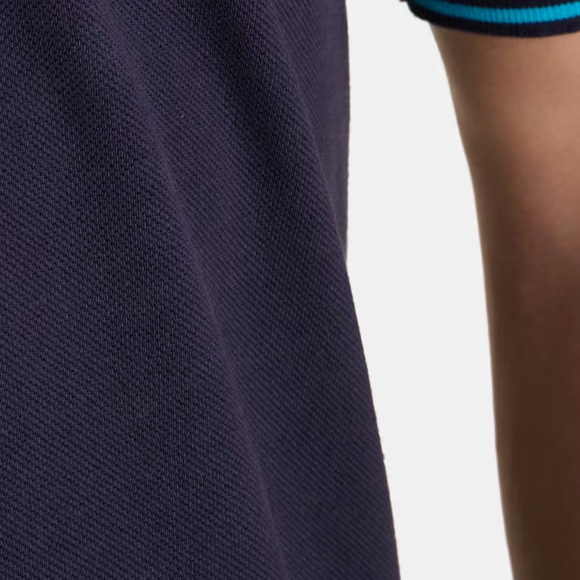
The texture is not decorative. It gives the fabric more thickness and body for its weight, it breaks up the surface so that creases and light marking are less visible, and the small air pockets make it feel cooler in wear than a flat fabric of similar weight. Those three properties are why the fabric survives in uniform programmes where garments are worn all day and washed constantly.
Single and double piqué
| Structure | Indicative weight | Character | Typical use |
|---|---|---|---|
| Single piqué | Around 160 to 190 g/m²; one mill lists a 30/1 combed cotton single lacoste at 160 g/m² | Lighter, more open texture, cooler | Warm climates, summer corporate polos, sports polos |
| Double piqué | Around 190 to 220 g/m²; one mill lists a 30/1 double lacoste at 200 g/m² | Denser, more structured, holds shape better | Premium and year-round corporate polos |
| Piqué with elastane | Around 190 to 220 g/m²; one mill lists a single lacoste with 30 denier elastane at 200 g/m² | Comfort stretch and better fit retention | Fitted polos, service roles with movement |
| Polyester-rich piqué | Around 180 to 220 g/m² | Dimensional stability, faster drying, colour retention | Programmes facing frequent or industrial laundering |
The choice between single and double is usually climate and positioning rather than quality. Double piqué reads more substantial and holds a shape better; single piqué is more comfortable in heat. Both are legitimate for a corporate programme, and the decision should be made with a swatch in hand rather than from a specification sheet.
Piqué or jersey for a polo shirt
Both are used, and the difference is visible from across a room.
- Piqué looks like a polo shirt. The texture gives structure at the placket and hem, it hides creasing, and it is what many people picture when a corporate polo is specified.
- Jersey looks like a T-shirt with a collar. It is softer and drapes closer to the body, which suits a casual or fashion-led product, and it shows creases and marks more readily.
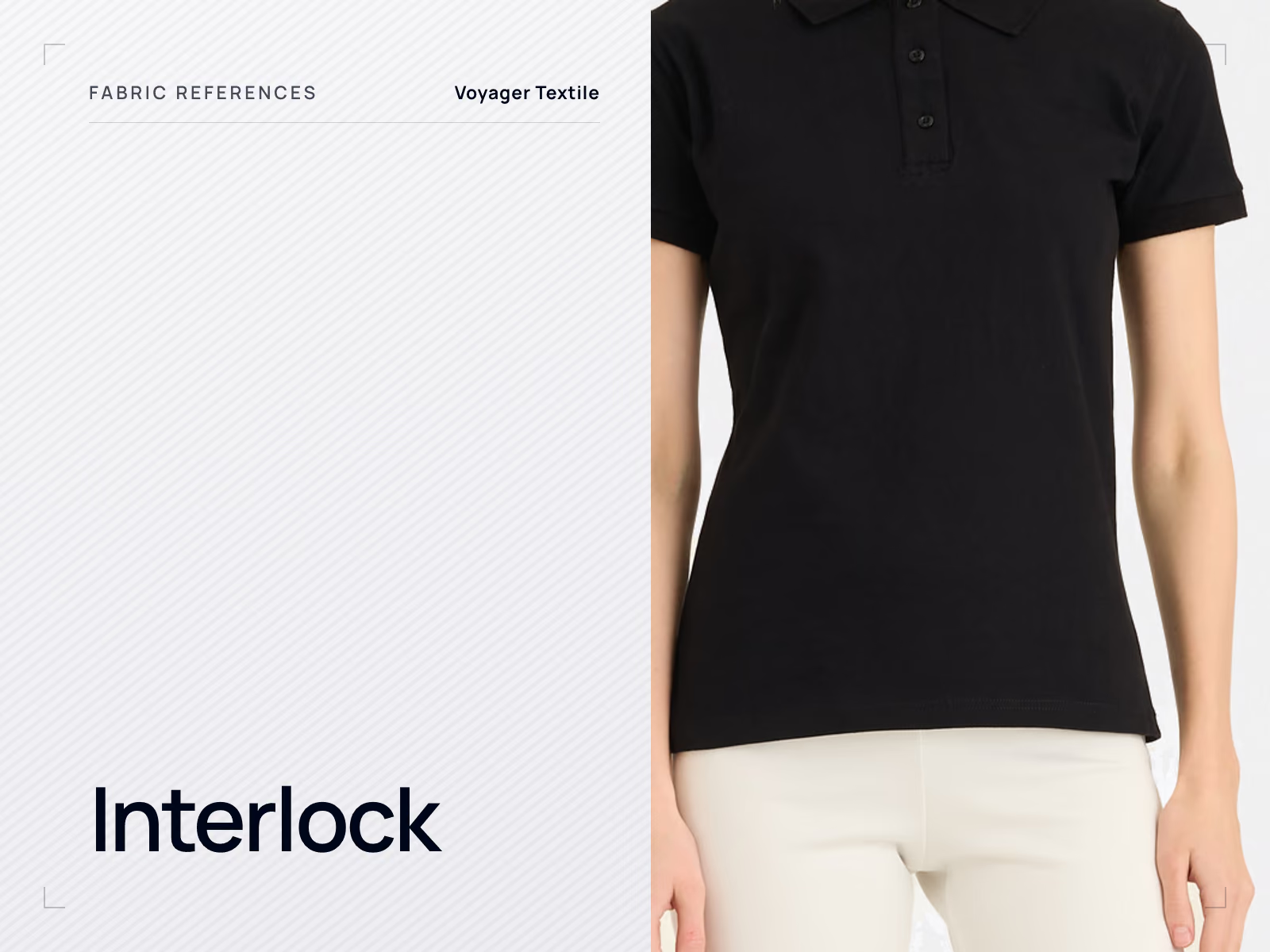
- Interlock sits between them: smooth like jersey but more stable and with a cleaner reverse, which suits a modern minimal polo.
For a uniform programme worn daily, piqué is usually the safer specification, because the properties that matter are creasing, marking and shape retention rather than softness. For a retail polo where hand-feel drives the sale, jersey or interlock may be the better product. The construction side of a polo, including the collar and placket, is covered in the polo shirt manufacturing process.
The components that come with it
A piqué polo is rarely one fabric. The collar and usually the cuffs are flat-knitted separately, produced to each size, and dyed independently from the body. That has two consequences worth planning for at fabric stage rather than at sampling.
Colour has to be approved across components rather than against a paper reference, because a knitted collar and a piqué body reflect light differently even when both are dyed to the same standard. And collar quality is its own specification: a collar that curls or loses its stand after washing is a component problem, not a sewing one, as explained in why necklines, collars and cuffs lose their shape.
Decoration on a textured surface
- Embroidery is the usual choice and works well: piqué is stable enough to support a chest logo with appropriate backing, and stitching reads cleanly against the texture.
- Printing is possible, and the raised texture softens fine detail. Bold, solid artwork reproduces better than thin line work or small type.
- Placement for both is normally worked on the cut panel before assembly, so the piece can be hooped or pressed flat.
- Contrast collar tipping and plackets brand the garment through construction, which is durable and costs nothing per piece in decoration.
Behaviour worth testing
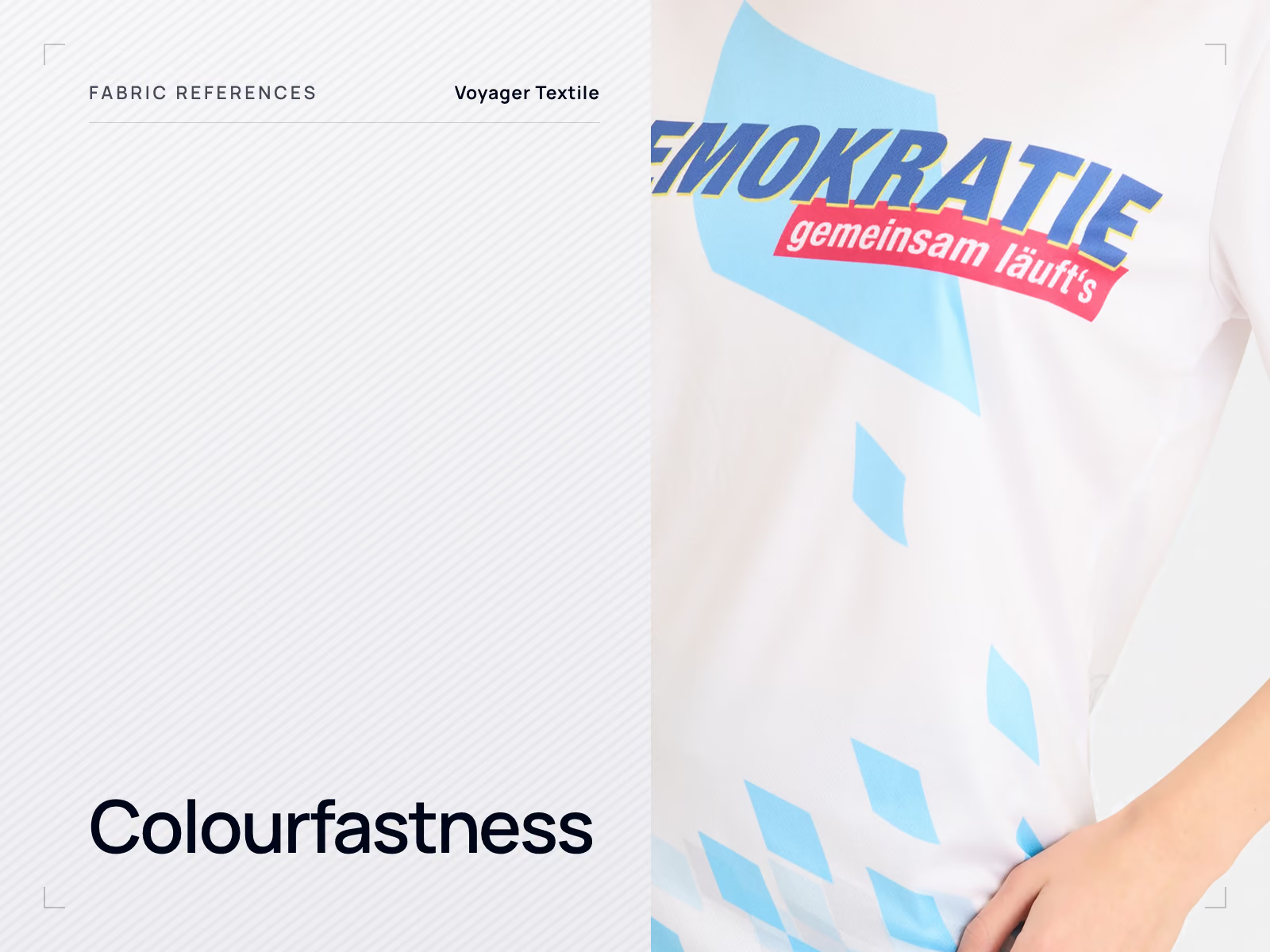
Two properties decide whether a polo programme still looks acceptable after a year. Dimensional stability, because a shrunken polo shows immediately at the placket and hem, and surface durability, because a textured knit that pills looks worn quickly. Both should be tested at the actual wash temperature the programme will face, particularly where garments go through a commercial laundry. Testing is covered in fabric pilling and colourfastness.
Questions buyers ask about this fabric
What is piqué fabric?
A textured weft knit with a small repeating raised pattern rather than a flat surface. The texture gives the fabric more body for its weight, hides light creasing and feels cooler in wear, which is why it is a standard polo shirt fabric.
What is the difference between single and double piqué?
Double piqué is the denser structure, typically around 190 to 220 g/m², and holds its shape better. Single piqué is lighter, roughly 160 to 190 g/m², with a more open texture that is cooler to wear. Both are used for corporate polos.
Is piqué or jersey better for polo shirts?
Piqué for uniform and corporate programmes, because it resists creasing and marking and holds structure at the placket. Jersey for a softer, more casual product where hand-feel matters more than appearance through a working day. Neither is technically superior; they answer different requirements.
Why is lacoste sometimes used as the name?
Many mills, particularly in Türkiye, list piqué structures as lacoste in their article names. It refers to the same family of textured knits, and single and double lacoste correspond to single and double piqué.
Can piqué be printed?
Yes, though the raised texture softens fine detail, so bold solid artwork reproduces better than thin lines or small text. Embroidery is more common on piqué for exactly that reason.
Specifying polos for a programme?
Tell us the climate, the laundering and whether the polos will be embroidered. We will propose a piqué structure and weight, and send swatches of the single and double options with a matching collar to handle. The collar and placket options themselves are set out in [polo collar and placket construction](/garment-construction/polo-collar-and-placket-construction).
Ask for polo fabric options