Choosing a manufacturer
OEM, ODM, Private Label and White Label Clothing: What Is the Difference?
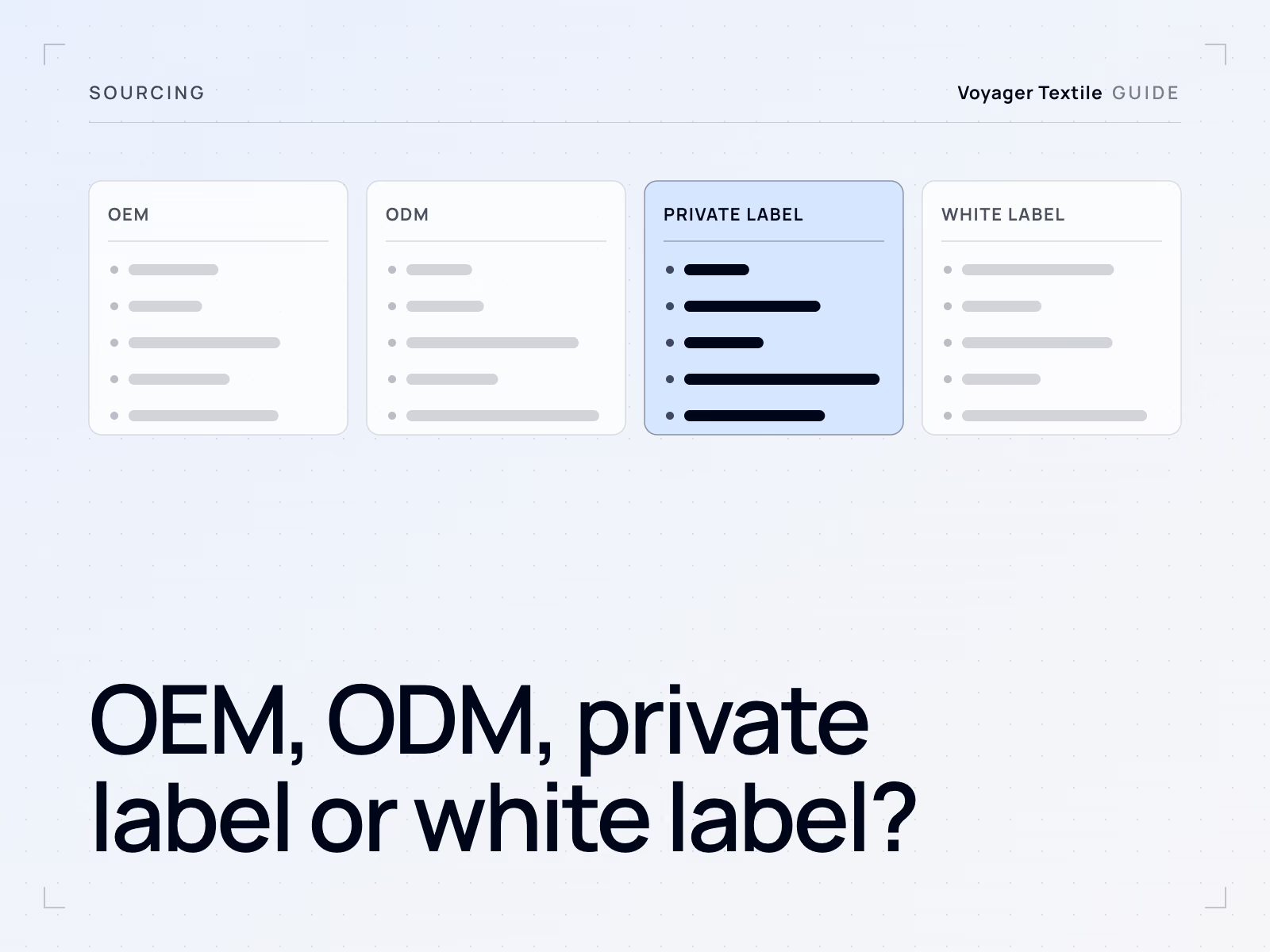
Private label clothing is apparel made by a manufacturer and sold under the buyer's own brand, with the buyer's labels and packaging and, in most programmes, the buyer's own design and specification. OEM and ODM describe who designs the product: the buyer in OEM, the factory in ODM. In general trade usage white label means a standard product sold under several buyers' brands; at Voyager Textile it means unbranded production to the buyer's own design.
Contents
- OEM: you own the design, the factory builds it
- ODM: the factory brings the design, you adapt it
- Private label: about branding, not about who designed it
- White label: a standard product with your name on it
- Which model fits which buyer
- Questions that decide the model in practice
- How this works at Voyager Textile
- Questions buyers ask
These four terms are used loosely across the industry, and suppliers frequently apply them to the same service. The distinction that actually matters is simple: who owns the design and the specification, and therefore who is responsible when the product needs to change. Read them that way and the confusion clears up.
| Model | Who owns the design | What the buyer supplies | Minimum | Typical use |
|---|---|---|---|---|
| Private label | The buyer, or the factory where the product is built on an ODM base; the brand is always the buyer's | Brand identity, labels and packaging, and usually the design and specification | Set per style and colour by the factory; at Voyager Textile 300 pieces per colour and per style | Clothing brands, retailers' own-brand lines, merch and corporate wear under the buyer's name |
| White label | In general usage the supplier, whose standard product is sold to several buyers. At Voyager Textile the buyer: unbranded production to the buyer's own design | In general usage a logo or label for a standard product; at Voyager Textile the design, with branding added later by the buyer or a decorator | In general usage set by what the supplier holds; at Voyager Textile 300 pieces per colour and per style | Decorators, promotional distributors and resellers that brand the garments themselves |
| OEM | The buyer | Design, tech pack, measurements, fabric and colour specification | Set per style and colour by the factory; at Voyager Textile 300 pieces per colour and per style | Brands with a defined product that has to be their own |
| ODM | The factory, which offers a developed design for the buyer to adapt | Brand, colours, branding artwork, requested modifications | Set by the factory for its own range. At Voyager Textile every product is made to the buyer's design | Buyers without a design of their own who accept that other buyers can order the same base product |
| Blank | The blank supplier; the garment is a finished, unbranded stock product | Decoration artwork only | Usually low, because the garment is already in stock | Small runs and quick decoration jobs. Voyager Textile produces to order instead; see custom apparel versus blanks |
OEM: you own the design, the factory builds it
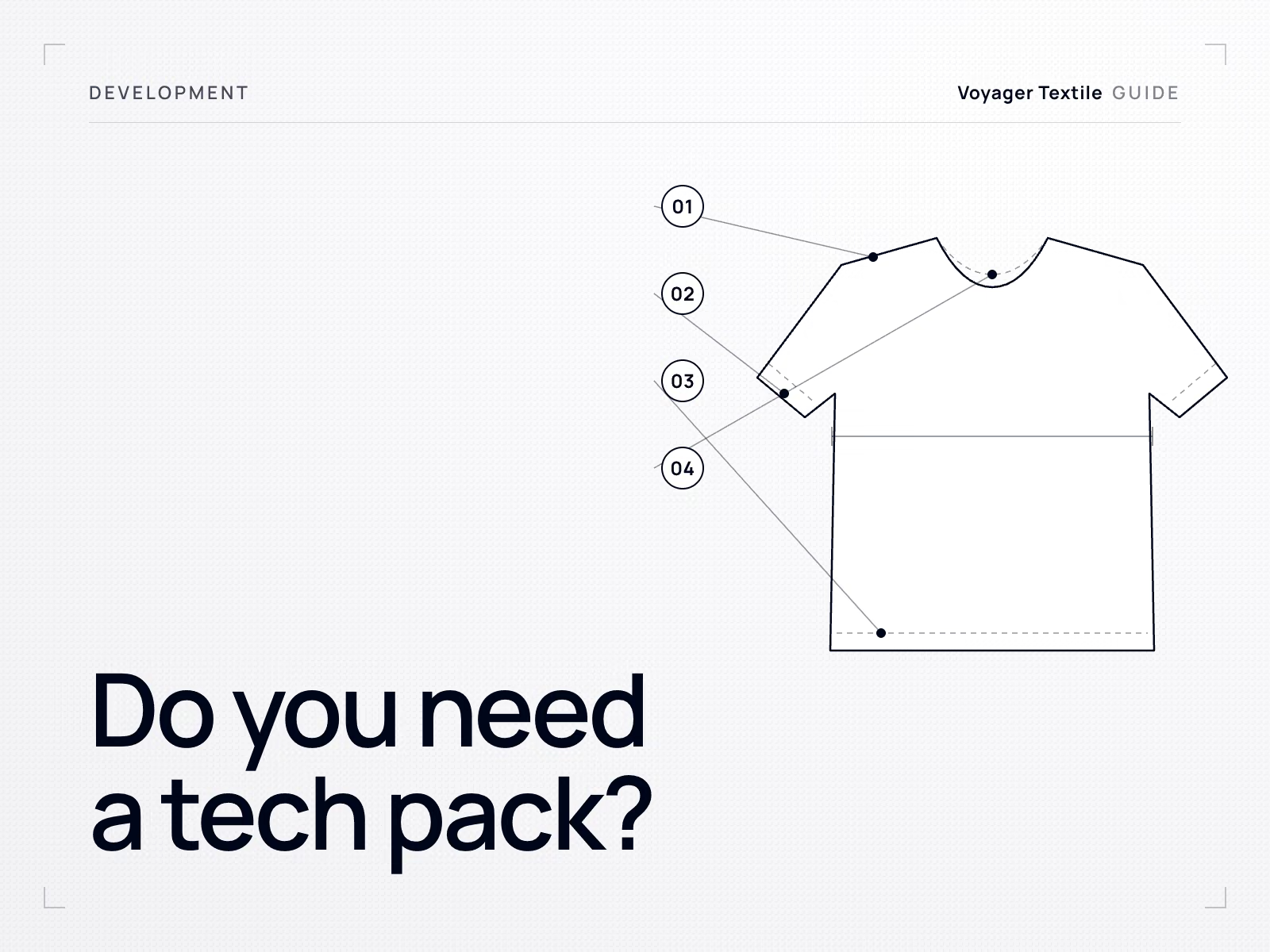
In an OEM arrangement the buyer supplies the product definition and the factory manufactures to it. In apparel that means a tech pack or an equivalent specification covering construction, measurements, fabric composition and weight, colours, trims, decoration and packing. The factory contributes manufacturability feedback, pattern execution, sampling and production, and it should tell you when a specification cannot be produced as drawn.
This is the model many brands use once they have a defined product. It gives you full control of fit, fabric and detail, and it makes the product genuinely yours, but it requires you to make decisions. A factory cannot approve a fit on your behalf. If you are not sure what to supply, the tech pack guide sets out the minimum a factory needs.
ODM: the factory brings the design, you adapt it
In an ODM arrangement the manufacturer already has a developed product, and the buyer adapts it: colours, fabric options within what the factory offers, branding, sometimes small construction changes. Development time is shorter and cost is lower, because the pattern and the sampling work already exist.
The trade-off is control and distinctiveness. You are working inside a design someone else owns, and unless you have negotiated otherwise, other buyers can order the same base product. That is not a problem for a promotional programme or a staff uniform. It is a problem for a brand whose product is the differentiator. Ask two questions before choosing ODM: what exactly can be changed, and who else can buy this style.
Private label: about branding, not about who designed it
Private label describes the commercial relationship rather than the development route. It means the goods are sold under the buyer's brand rather than the manufacturer's, and it can sit on top of either OEM or ODM development. Selling under your own brand is also a fact that often decides regulatory roles, including who counts as the producer for textile end-of-life obligations. A retailer's own-brand hoodie is private label whether the retailer designed it from scratch or adapted a factory design.
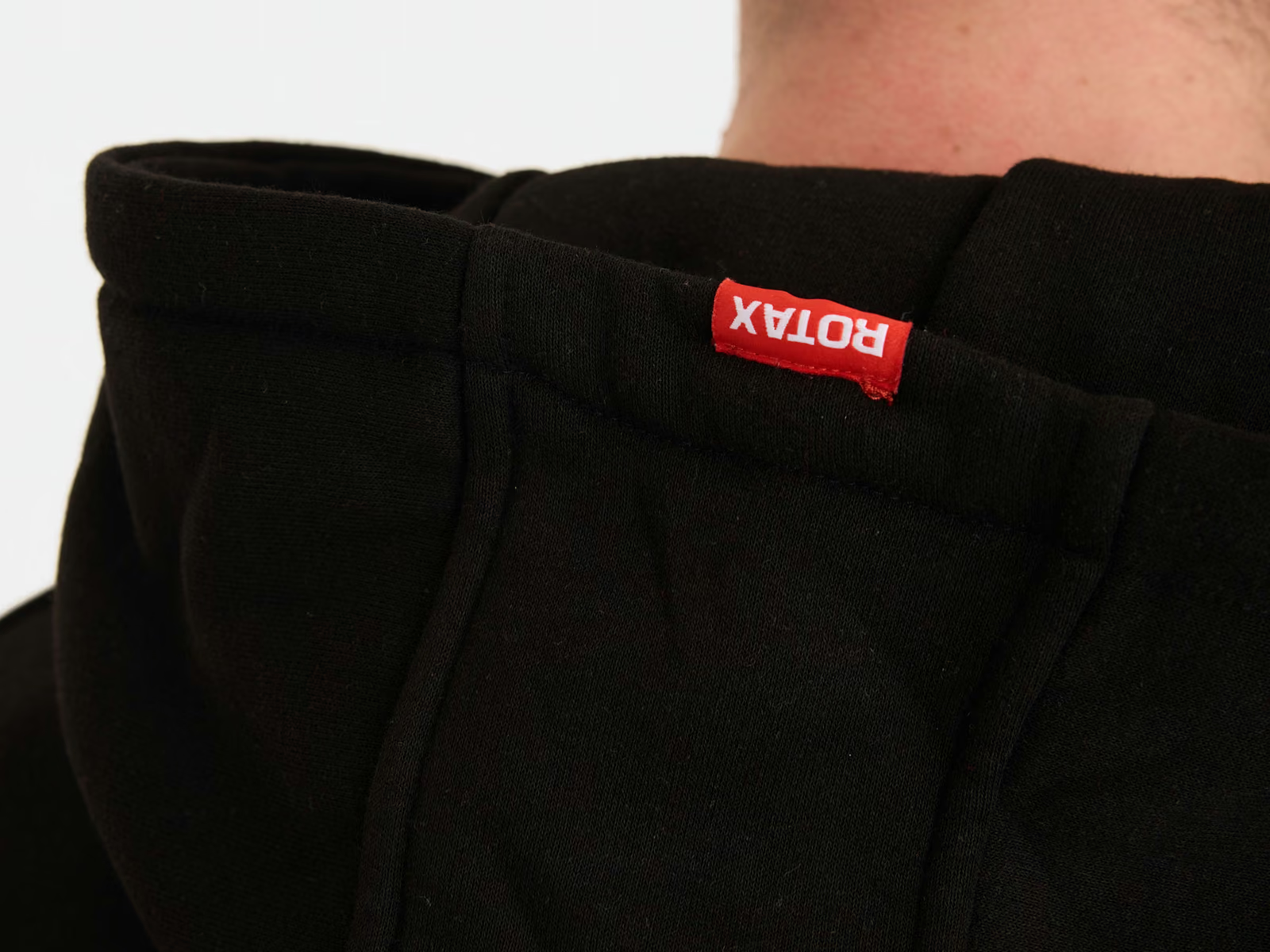
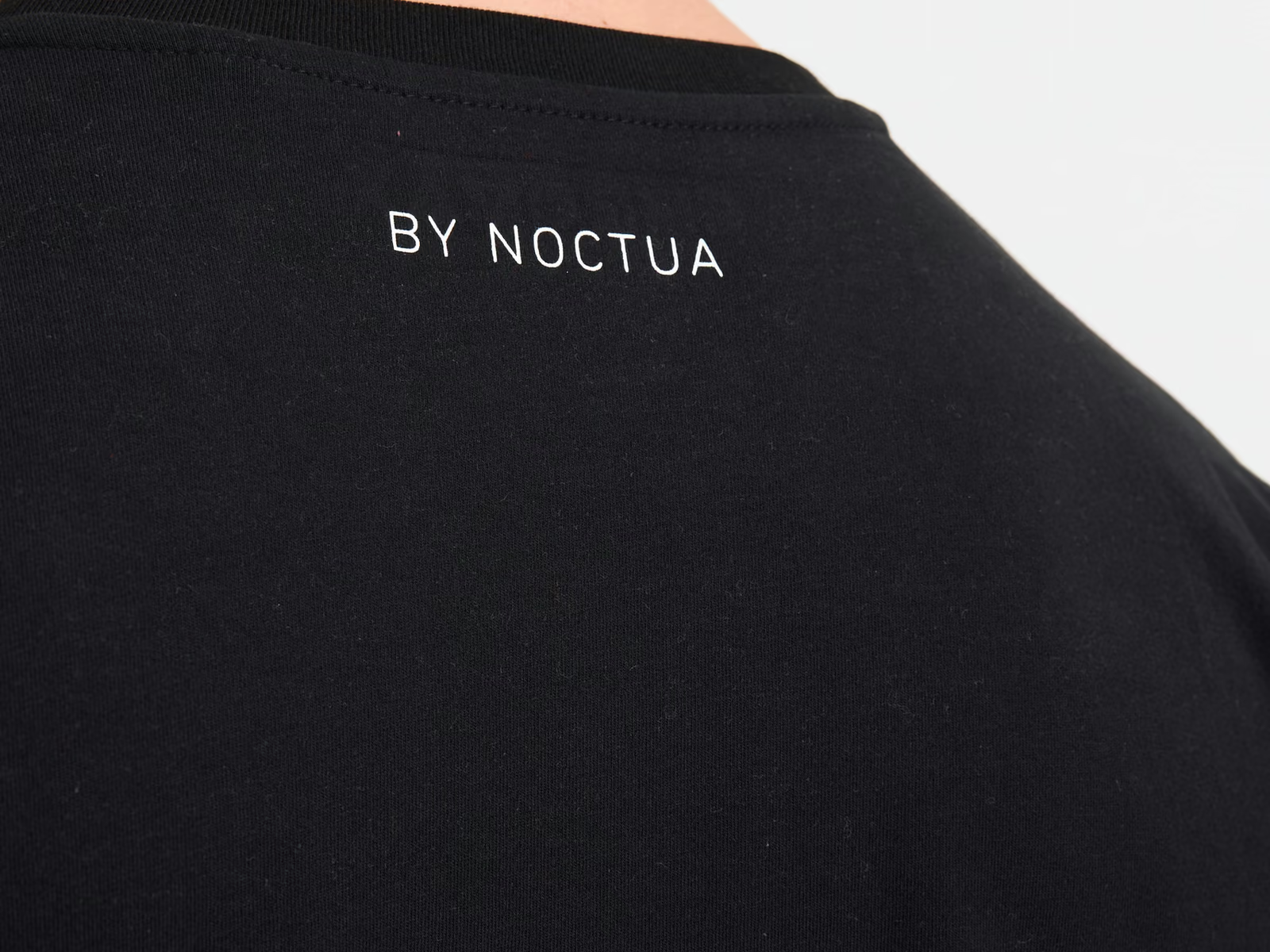
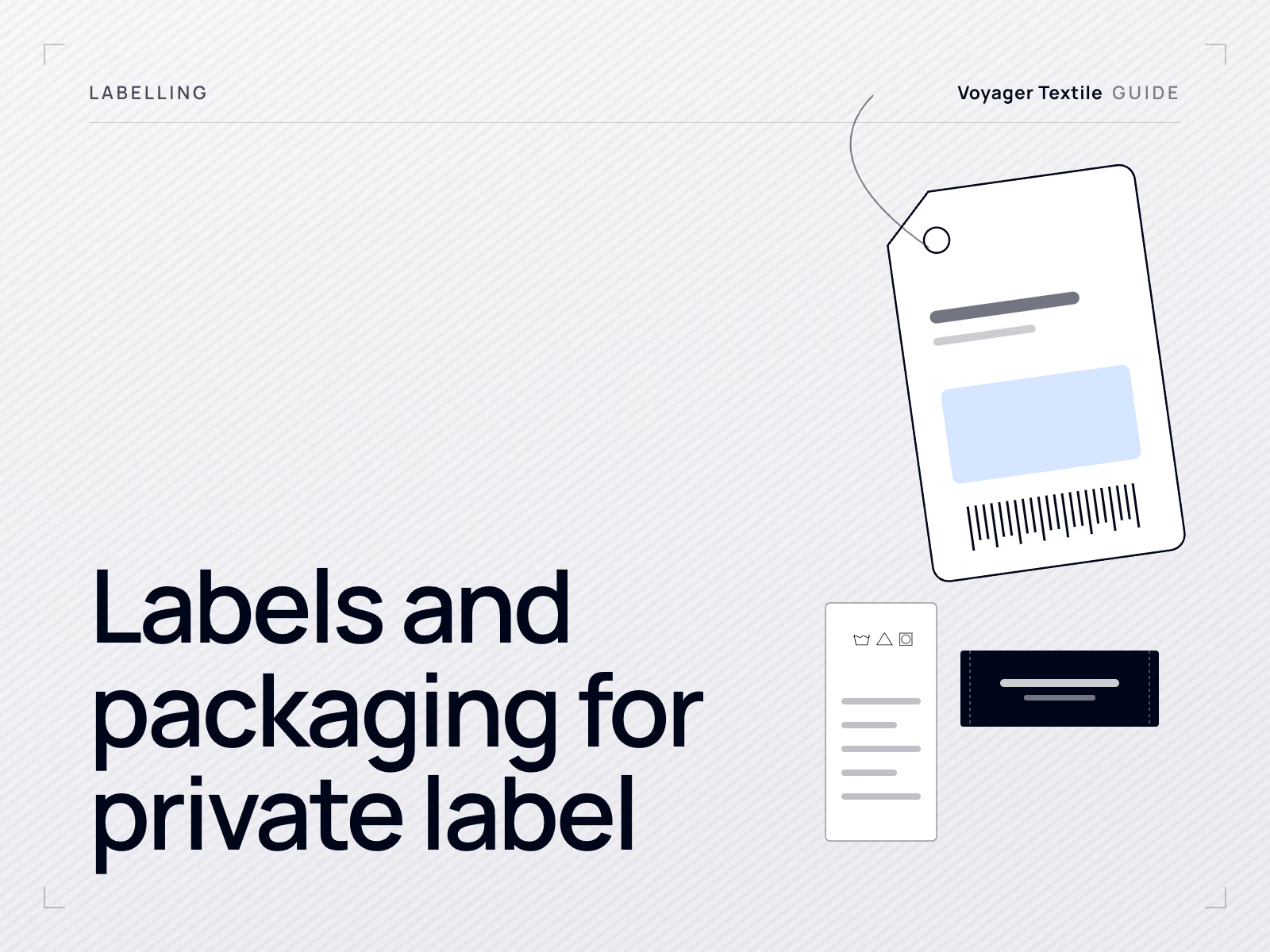
What makes a private-label programme work in practice is the branding infrastructure around the garment: woven neck labels, printed care labels carrying the legally required information, size labels, hangtags and packing. Those elements are part of production and belong in the specification from the start. See labels and packaging, and for what the law requires on the label itself, the EU and US labelling guides.
White label: a standard product with your name on it
In the wider trade, white label means a supplier's standard product is sold to several buyers, each applying its own brand. In apparel this often appears as blank garments decorated with a logo, or catalogue styles relabelled for a customer. On this site, white label means unbranded production to your own design, made to order. The trade meaning is still worth knowing, because it is fast and low risk for the buyer and produces a product that a competitor can offer identically.
For many merchandise and promotional programmes that is entirely rational. For a brand trying to build a product identity it is a ceiling. The custom manufacturing versus branded blanks guide covers where that ceiling starts to hurt and what changes when you move to custom production.
Which model fits which buyer
| If you are | Usually the right starting model | Why |
|---|---|---|
| A clothing brand with a defined product | OEM | Fit, fabric and construction are the product, so they have to be yours |
| A new brand without technical resources | ODM, moving to OEM | Start from an existing pattern, then take ownership as the product proves itself |
| A retailer building an own-brand line | Private label, usually over OEM | You need control of quality and price, and the brand is the point |
| A promotional or merchandise agency | White label or ODM, OEM for standout projects | Speed and price usually win, until a client wants something nobody else has |
| A corporate or uniform buyer | ODM or OEM depending on continuity needs | Consistency over years matters more than novelty |
Questions that decide the model in practice
- Do you own a design, or are you looking for one? This alone separates OEM from ODM.
- Can someone on your side approve a fit sample against measurements? If not, plan for ODM or budget for technical support.
- Does the product need to be unmistakably yours, or is the logo the differentiator?
- How often will you reorder? Long repeat programmes justify the development cost of OEM.
- Who will own the patterns and approved samples? Agree this in writing regardless of model.
How this works at Voyager Textile
How the working relationship runs in practice, from brief to reorder, is covered in the private label section, and the commercial split of who buys the materials is compared in full package versus CMT. Voyager Textile manufactures on an OEM and private-label basis: production runs to the customer's specification, under the customer's brand, from 300 pieces per colour and per style for custom apparel. Where a buyer does not yet have a full tech pack, development starts from reference samples, measurements and a clear brief, and we tell you what is missing before quoting. The reference catalogue shows constructions already produced for previous customers, which is often the fastest way to define what you want. Nothing shown there is stock: each record is a manufacturing reference produced to a customer's own specification.
Questions buyers ask
What is the difference between private label and white label clothing?
Private label means the product is sold under your brand and is normally specified for you, so it can be exclusive. White label means a standard product is sold under several different brands, so the product itself is not exclusive. The difference is exclusivity of the product, not of the logo.
Is OEM the same as private label?
They describe different things. OEM describes who designed and specified the product, which is the buyer. Private label describes whose brand appears on it. Most private-label apparel programmes are produced on an OEM basis, but a private-label product can also be based on a factory design.
Which model is cheapest to start with?
ODM and white label are cheapest at the start because the design and pattern work already exist. OEM costs more in development but gives you a product you control, which usually pays back across repeat orders. The cost guide shows which cost lines development actually affects.
Can I switch from ODM to OEM later?
Yes, and it is a common path. Start from an existing construction, learn what your customers want changed, then commission your own pattern and specification. Agree at the outset who owns patterns developed for you, so the transition is straightforward.
Does OEM mean the factory can sell my design to someone else?
It should not, and a reputable factory treats a customer's design and specification as confidential. Whether it may be used for anyone else is an exclusivity question rather than a confidentiality one, and the two are separate. Put both in writing in your order terms rather than assuming either, especially for a distinctive construction or print. See confidentiality and exclusivity.
Do I need a tech pack for an ODM order?
Not a full one, because the base product already exists. You still need to specify colours and Pantone references, sizes and size split, branding artwork and placement, labels and packing. Those details decide whether the delivered goods match what you expected.
How do private label brands work?
Private label brands work by having a manufacturer produce clothing that is sold under the brand's own name and labels. The brand sets the design, fit, fabric and branding and approves the samples; the factory produces to that specification. See private label clothing.
What is the difference between a brand and a private label?
A brand is the name customers buy; private label describes how that brand's products are made. A private label brand owns its name, labels and usually its design, and has the garments made by a manufacturer that does not put its own name on them.
Is private label merch the same as white label promotional products?
No. Private label merch is sold under the buyer's own brand and labels. White label promotional products at Voyager Textile are made unbranded to the buyer's own design, never taken from a stock range. See merch and promotional textiles.
Not sure which model your project needs?
Describe the product and where you are starting from, whether that is a full tech pack, a reference garment or a sketch. We will tell you what development it needs and quote on that basis.
Discuss your project