

Tubular and side-seam construction in knit garments
A knit body can be made from fabric knitted as a continuous tube, in which case it has no side seams, or cut from open-width fabric and joined down both sides. The difference starts at the knitting machine rather than in the sewing room, and it affects fit, consumption and how the garment behaves after washing.
Contents
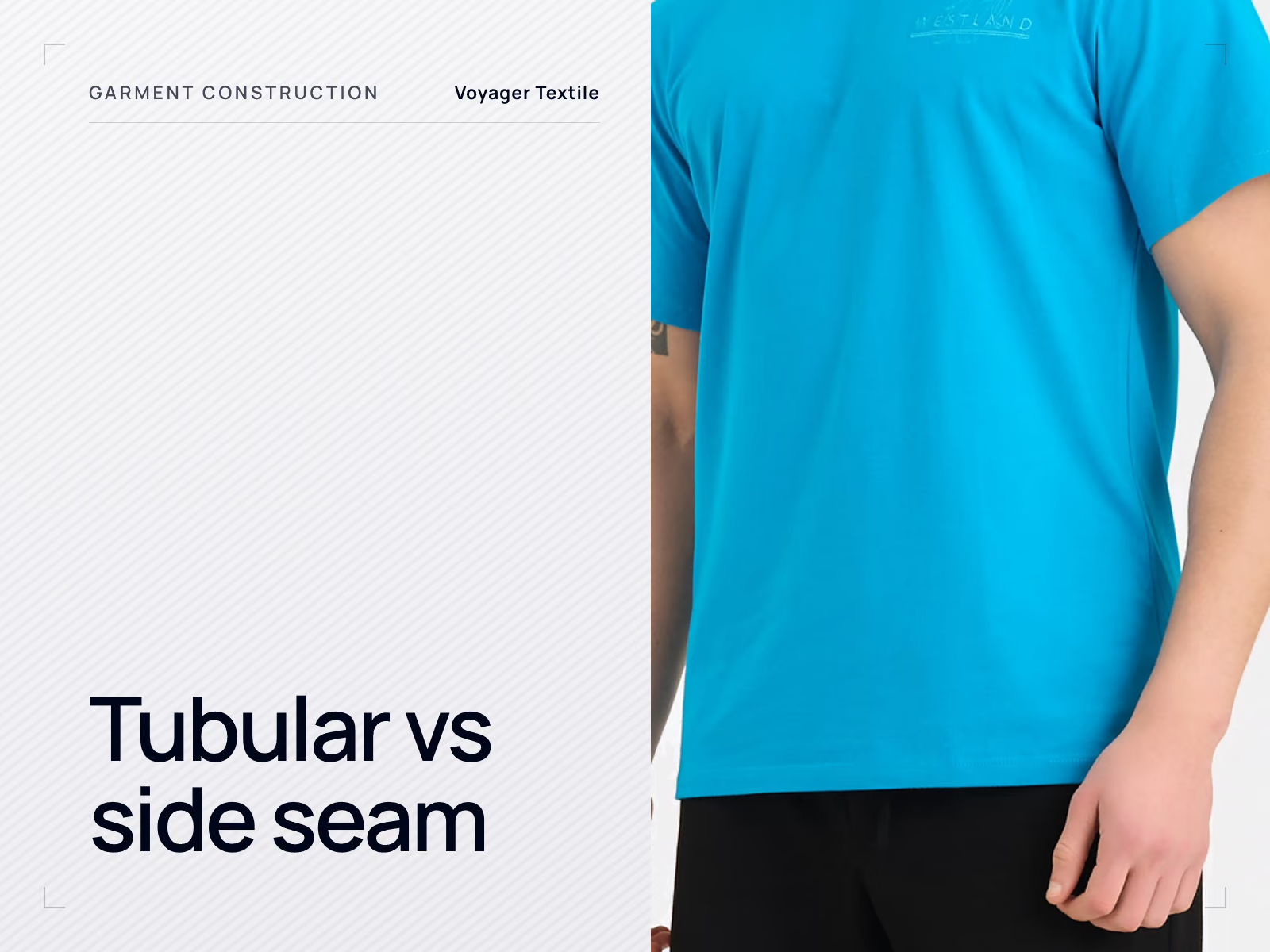
This is one of the few construction choices a buyer can identify by looking inside a garment. Reach into the body of a t-shirt: if there is a seam running down each side, it was cut from flat fabric. If the body is a continuous ring of fabric, it was made from a knitted tube.
Body construction compared
Dashed lines show where a side seam would fall on a tubular body.
Where the difference actually starts
Circular knitting machines produce fabric as a tube. That tube can be slit open and finished flat, giving open-width fabric, or left as a tube. Tubular construction uses the tube at close to its knitted diameter, so the body of the garment is the fabric's own circumference and no side seam is needed.
That constraint is the important part. A tubular body is only available in the diameters the mill actually knits, which means the garment's chest measurement is limited by the fabric rather than by the pattern. Every size in the range needs a tube of the right diameter. Side-seam construction has no such limitation: any width can be cut from open-width fabric, so the pattern is free.
What changes in the garment
| Tubular | Side seam | |
|---|---|---|
| Body | No side seams | Seamed down both sides |
| Width | Set by the knitted tube diameter | Set by the pattern |
| Shaping | Straight, boxy body | Can be shaped, tapered or fitted |
| Sewing operations | Fewer, no side seaming | Two side seams to sew |
| Typical use | Basic tees, promotional and blank-style products | Fitted and fashion products, anything with a shaped silhouette |
The operational saving is real but small. Two side seams on a t-shirt are quick overlock operations, so the labour difference is modest. What is often larger is the effect on fabric use: a tubular body wastes very little because the tube is used at its knitted width, while a side-seam body depends on how efficiently the panels nest in the marker. That relationship is covered in fabric consumption.
Tubular construction and twisting
A strong technical argument against tubular bodies is spirality. Single jersey knitted on a circular machine has an inherent tendency for its loops to lean, and after washing that lean shows up as the fabric rotating around the body. On a garment with side seams, that rotation is visible as the seams migrating towards the front and back. On a tubular garment there are no seams to migrate, but the fabric still rotates, and it shows instead as a twisted hem or a graphic that has moved off centre.
In other words, tubular construction does not remove spirality, it removes one of the ways you notice it. The actual control is in the yarn, the knitting and the finishing, which is what t-shirt twisting and spirality covers, and it is checked at incoming fabric inspection rather than at the sewing machine.
Which one to specify
For much custom production the answer is side seam, because custom work usually means a specific fit rather than an available tube. Tubular becomes attractive on high-volume basic programmes where the fabric is already being knitted to a matching diameter.
How this appears in a specification
Write it as a construction line, not as a fabric line: state whether the body is tubular or side seamed. If it is tubular, the tube diameter has to be agreed for every size in the range before the pattern is finalised, because the pattern cannot correct a diameter that is not knitted. If it is side seamed, specify the seam type, the stitch and the allowance in the normal way, as covered in seam types.
One further point applies to both: the hem. Whether or not the body has side seams, the bottom hem on a knit body is normally a two-needle coverstitch, and the hem depth is a specified measurement. A deeper hem hangs differently and consumes more fabric.
Knit body references
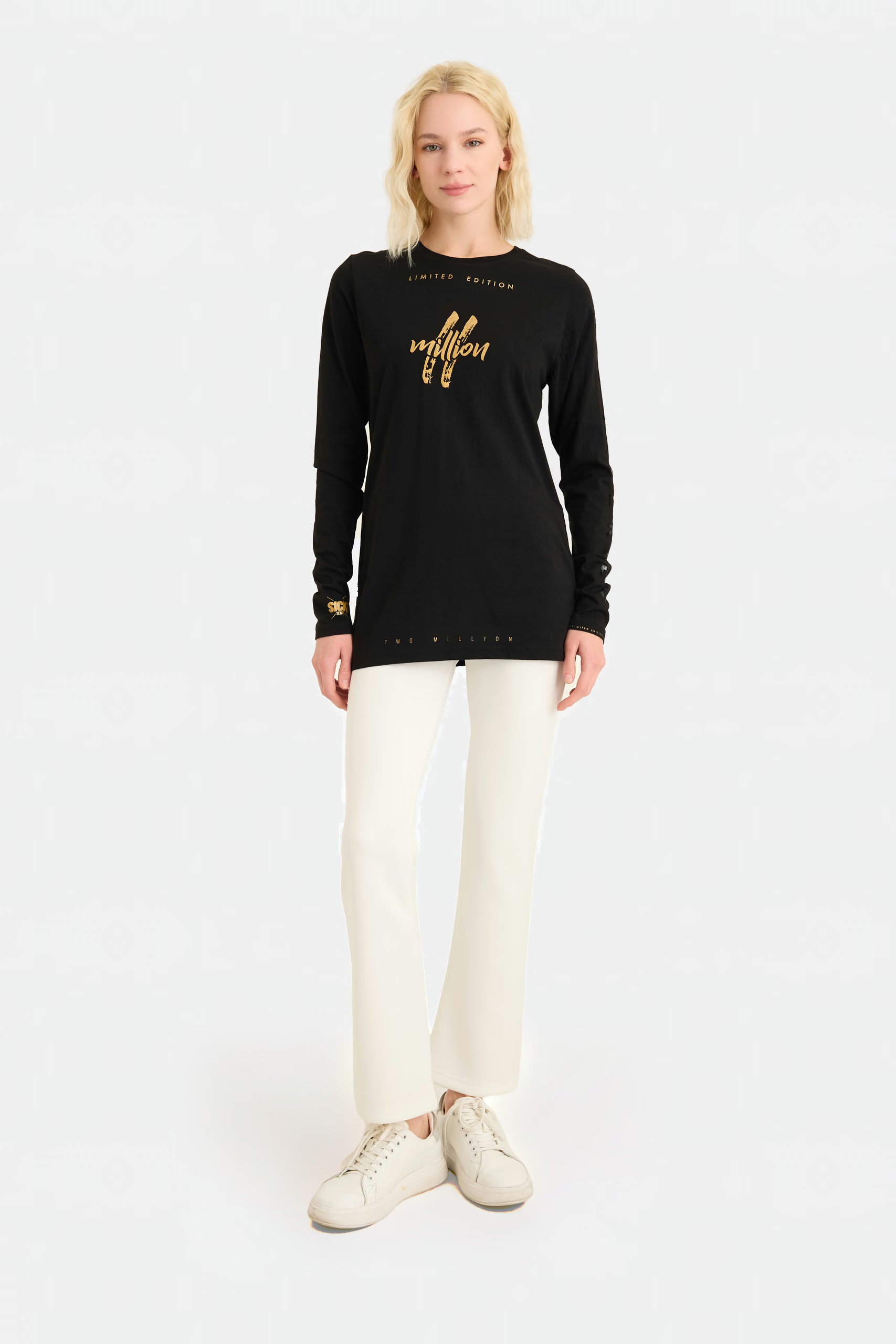
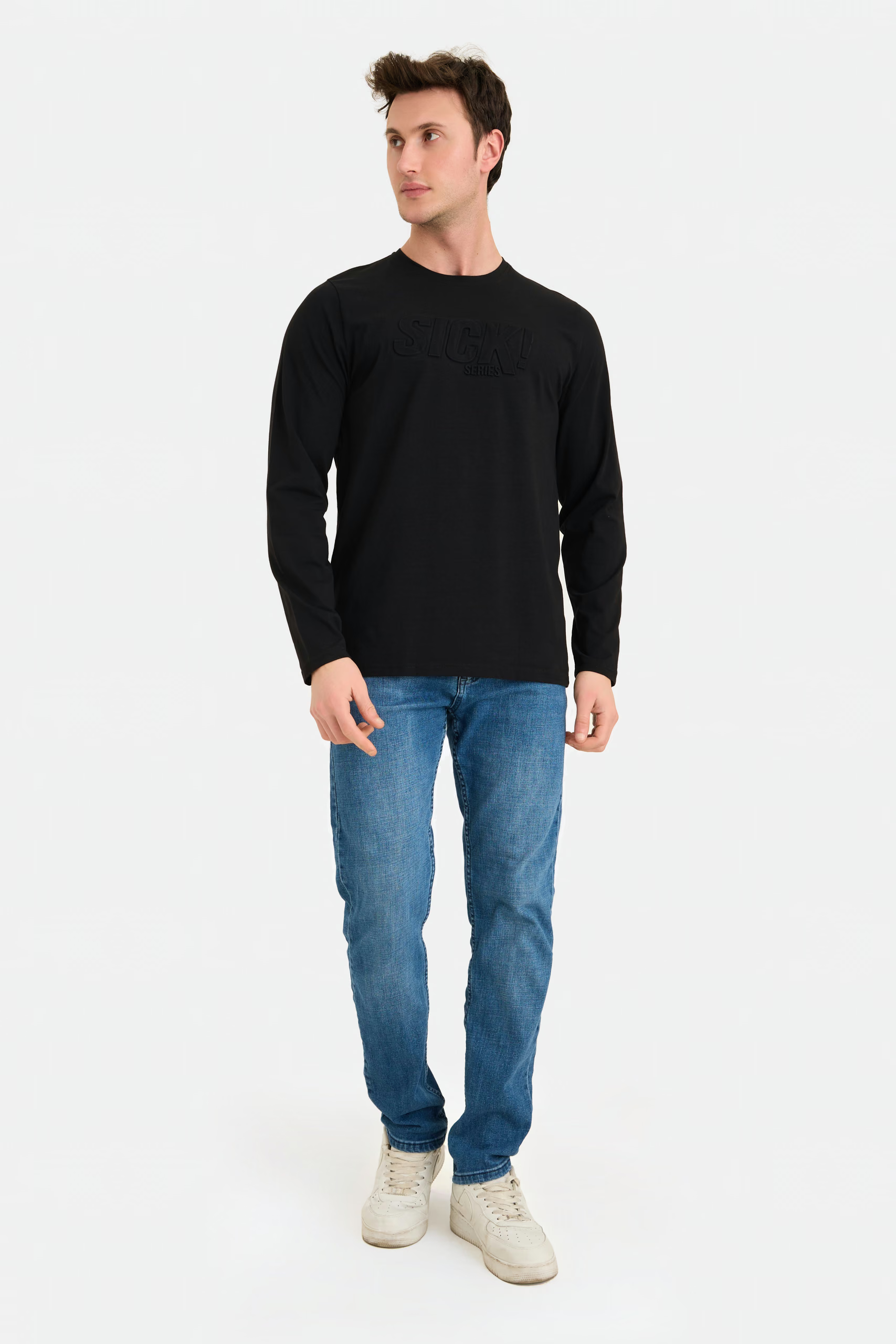
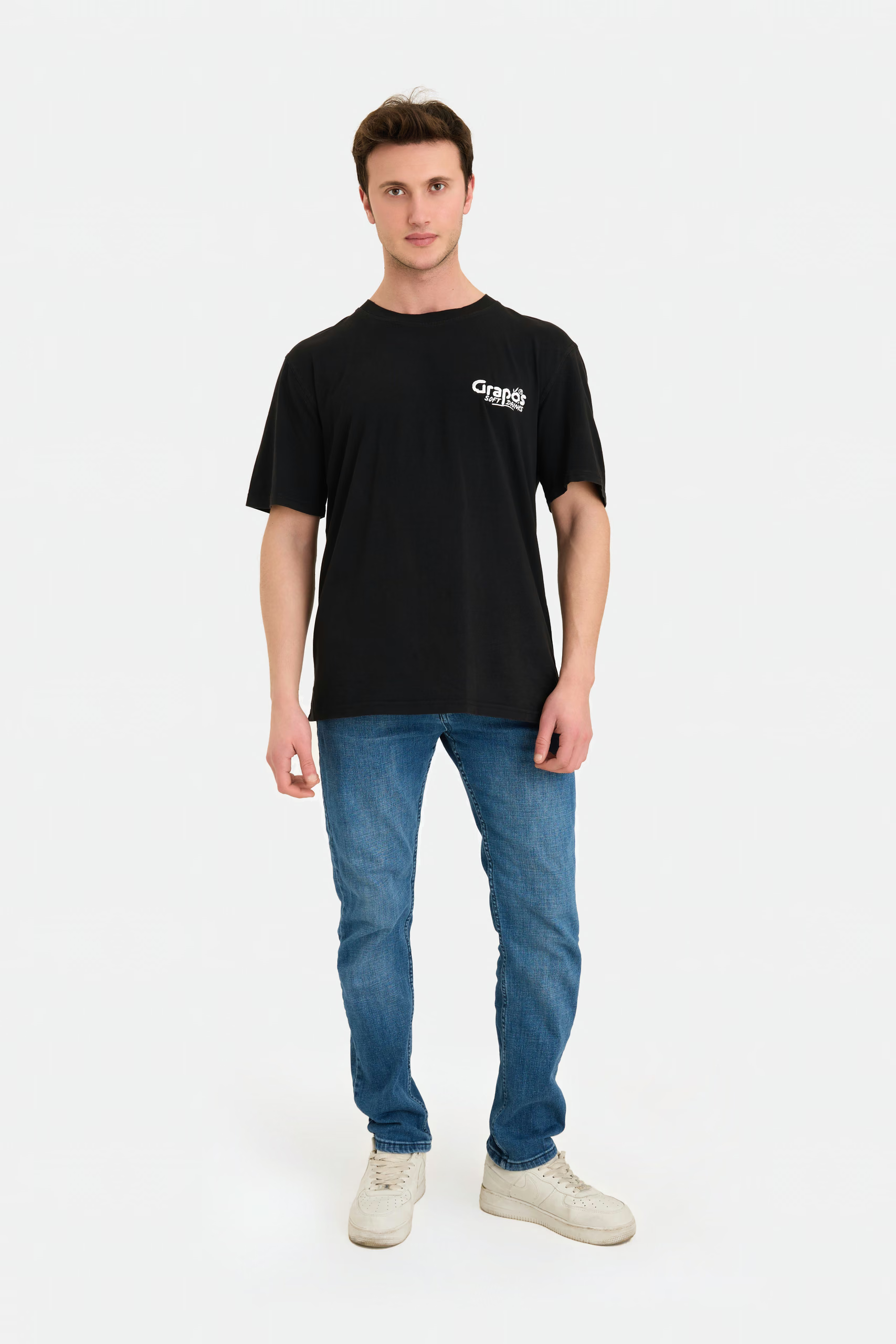
T-shirt and long-sleeve references previously produced to customer specifications.

Questions this raises
Is a tubular t-shirt better quality than one with side seams?
No. They are different constructions with different purposes. Side seams allow the body to be shaped, which is why fitted and fashion products use them. Tubular bodies are straight and are common on basic and promotional programmes where the knitted tube diameter suits the size range.
Does tubular construction stop a t-shirt from twisting?
It removes an obvious symptom, because there are no side seams to migrate around the body, but it does not remove the cause. Spirality comes from the yarn, the knitting and the finishing, and on a tubular garment it shows up in the hem and in the position of a print instead.
Can the same style be produced both ways?
Only if the fabric is available in both forms and the fit works as a straight body. Moving from side seam to tubular is not a sewing change, it is a fabric and pattern change, and the finished width becomes limited to what the mill knits.
Tell us how the body should be built
Whether a body is tubular or side seamed changes the fabric we buy, not just the way it is sewn. Raising it with the enquiry avoids a re-quote later.
Request a quotation