Specification, sampling and quality
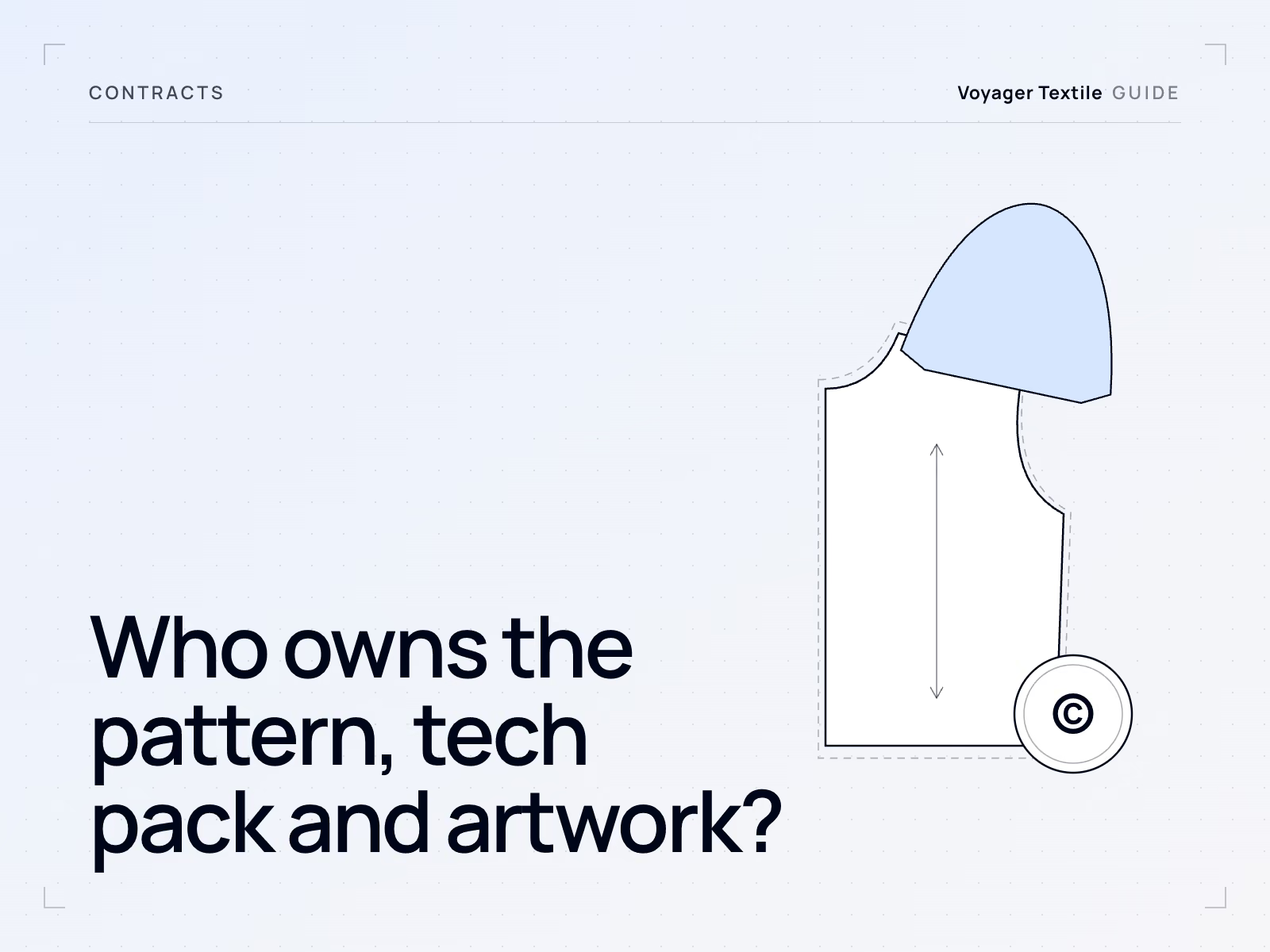
Who Owns the Pattern, Tech Pack and Artwork?
Ownership of the pattern is rarely discussed until the moment it matters, which is usually the day a buyer wants to move production. The honest answer is that it depends on what was agreed, so the useful work is agreeing it. This guide sets out the asset categories, the questions each one raises, and what to settle before files start moving.
Contents
A private-label programme generates a surprising number of assets. A specification, a set of measurements, artwork, a graded pattern, a digitised embroidery file, colour separations, photographs, an approved sample. Some of them the buyer brought, some the factory made, and several were built by both. Almost none of it gets discussed until somebody wants to take it somewhere else.
Have the agreement reviewed for the relevant jurisdiction and project. General guidance cannot determine the rights or obligations of the parties to a specific contract.
Five different questions, routinely collapsed into one
Much of the confusion in this area comes from using the word IP for five separate things. Separating them makes most of the rest straightforward, because each has a different answer and a different instrument behind it.
| Concept | The question it answers |
|---|---|
| Ownership | Who owns the asset, or the right in it |
| Licence or permission | Who may use it, for what purpose, for how long |
| Confidentiality | Who may disclose it, and who may use it for what |
| Exclusivity | Whether the same or a similar thing may be supplied to anyone else |
| Registration | Whether a formal right has been applied for and granted, in a particular territory |
This guide is about the first two and about registration. Confidentiality and exclusivity have their own instruments and their own failure modes, and they are covered in confidentiality and exclusivity.
The asset categories
It helps to stop thinking about the product and start thinking about the things that make it. Four categories cover almost every programme, and they behave differently.
Where the questions arise
A map of where the questions sit, not an answer to any of them. The answers come from the agreement, which is why the unasked ones surface at the worst possible moment.
Buyer-supplied artwork and brand assets
Logos, print artwork, graphics, label artwork, packaging artwork. These usually originate with the buyer or with a designer the buyer engaged, and they are the assets buyers most confidently describe as theirs. Two things are worth checking anyway.
- Where did it actually come from. Artwork produced by a freelance designer, an agency or a marketplace may or may not have come with the rights the buyer assumes, depending on what that engagement said. This is worth establishing before it goes into production, not after.
- What permission comes with it. A file being in your possession is not the same as being entitled to apply it to goods for sale. That is particularly true of anything carrying somebody else's brand.
The specification
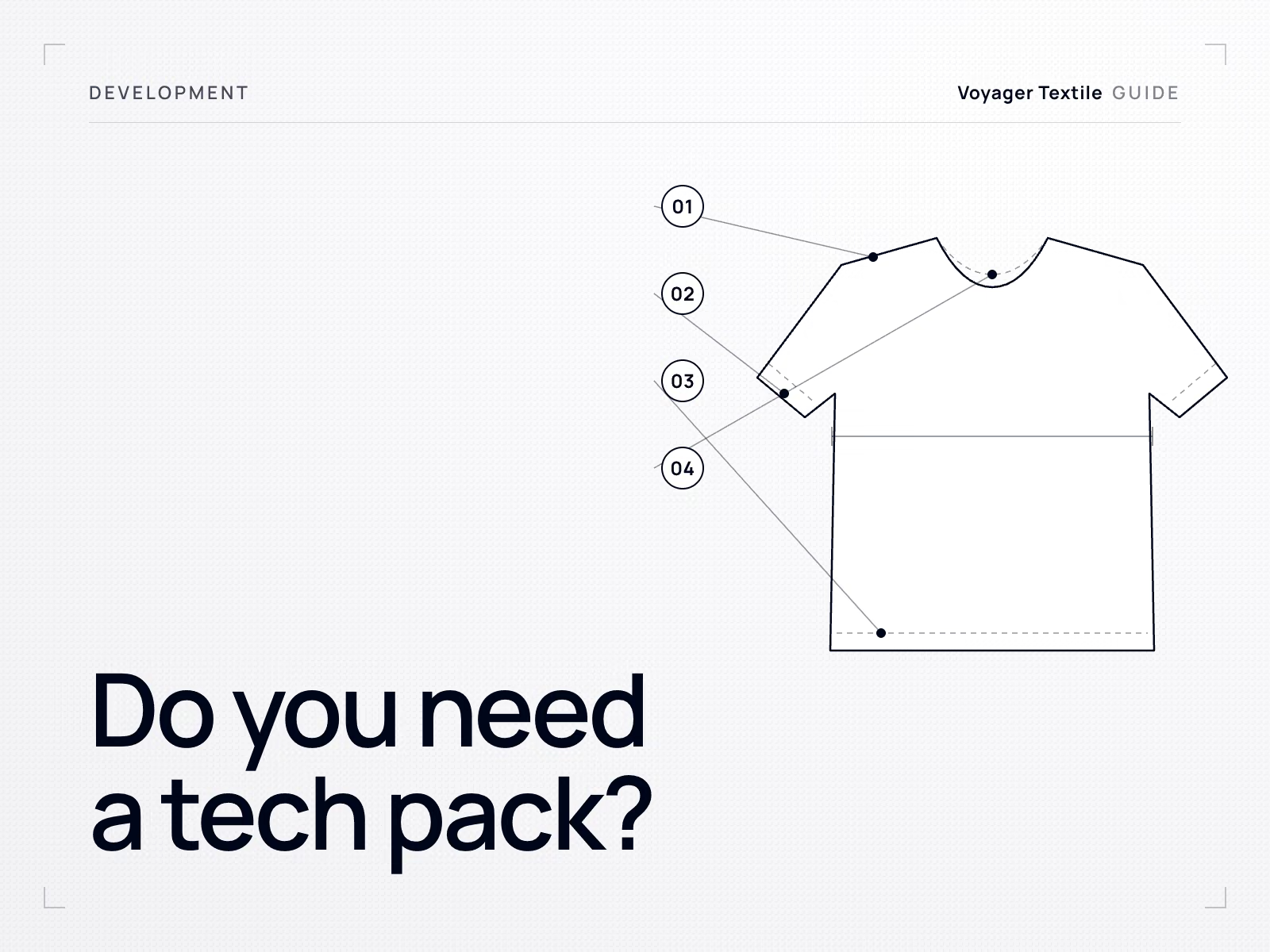
A tech pack can be brought complete by the buyer, developed by the factory from the buyer's instructions, written by an external technical designer, or built jointly over several sample rounds, which is a common case and often the least documented. What ends up in it is a mixture: the buyer's product decisions, and the manufacturer's technical solutions to them.
There is no universal rule about who owns a jointly developed document, which is exactly why it is worth a sentence in the order terms rather than an assumption on both sides. What a tech pack should contain is a separate question, covered in what a factory actually needs.
Pattern work
This is an asset buyers often ask about, and the one with the least default answer. Development can run several ways, and they are not equivalent.
| How the pattern arose | What is worth agreeing |
|---|---|
| The buyer supplied a finished pattern | Whether the factory may retain it, and what happens to it at the end of the relationship |
| The factory created it from the buyer's specification | Who may use, modify, transfer or reuse it, and whether the buyer receives a copy |
| The factory adapted one of its own existing blocks | Where the boundary sits between the factory's block and the buyer-specific adaptation |
| The factory developed it from a reference garment | The same, plus the separate question of what the reference itself permits |
| An external pattern maker created it | What that engagement said, since neither buyer nor factory may hold what they assume |
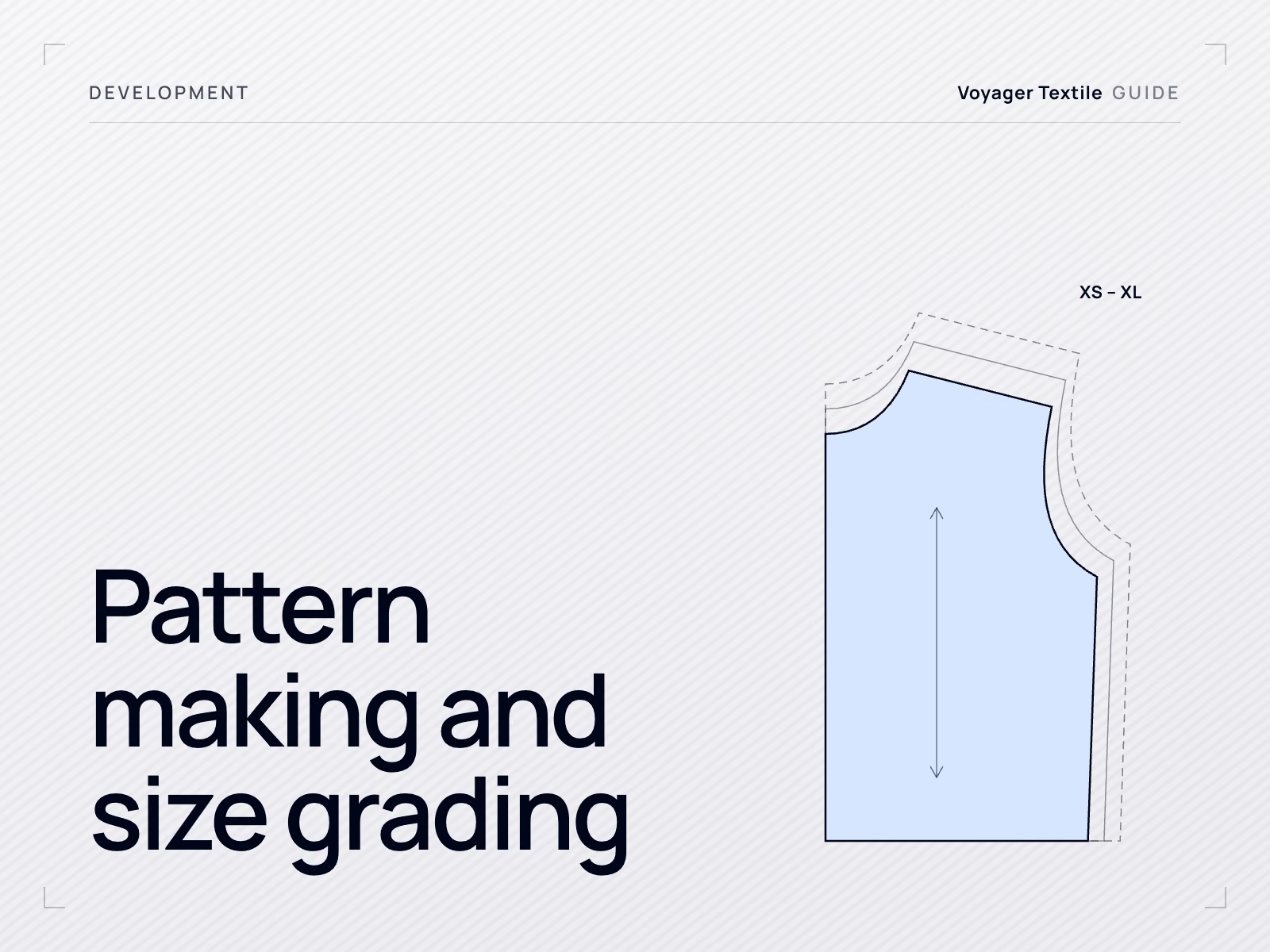
The third route is a frequent source of friction. A manufacturer arrives with base blocks, standard constructions and accumulated fit know-how built over years and at its own cost. A programme then produces buyer-specific adaptations of that. Neither side owns the whole of the other's contribution by default, and a buyer who assumes a development gives them the factory's block is asking for something quite different from what they think they are asking for. How pattern work is actually done is covered in pattern making and grading.
Production setup files
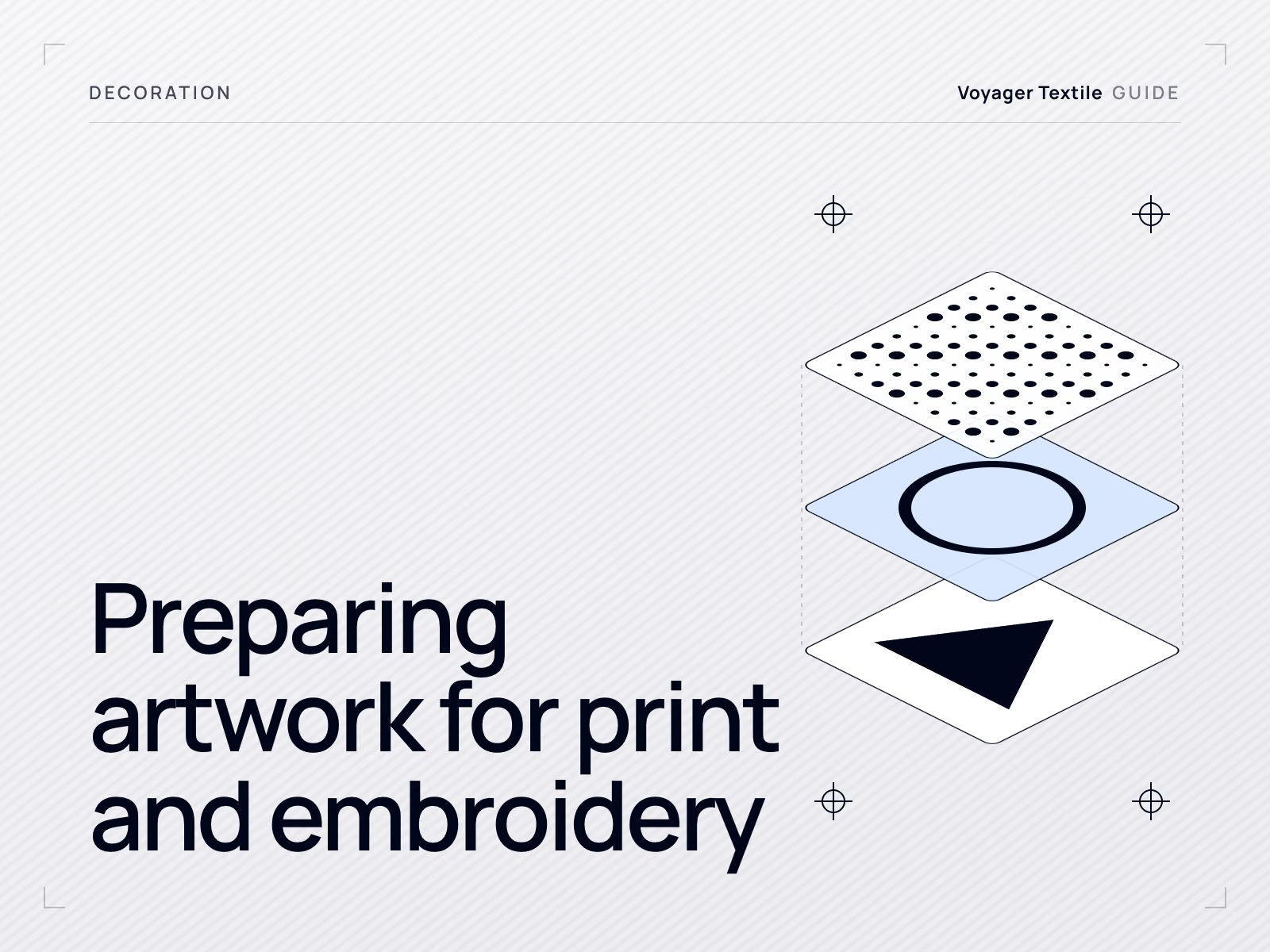
The category buyers discover late. A digitised embroidery file, a set of colour separations, a screen, a transfer layout: each of these embodies the buyer's artwork *and* a piece of skilled manufacturing work, and each is frequently held by a decorator rather than by either principal.
Digitising is the clearest case, because it is genuinely interpretive work rather than a file conversion: the same logo digitised twice does not embroider identically. So there is a real question about who may keep and reuse the resulting stitch file, and it has no default answer. Where that file lives matters practically as well as commercially: it is the difference between a new supplier reproducing your embroidery exactly and re-digitising it from scratch. See artwork files for decoration.
Paying for development does not settle ownership
This is a common misconception in the subject, and it is worth answering directly. Paying a sample fee, a pattern charge or a digitising charge does not by itself establish who owns or controls the result. It pays for work performed under whatever commercial terms were agreed, and what may then be kept, modified, reused or transferred is a separate question.
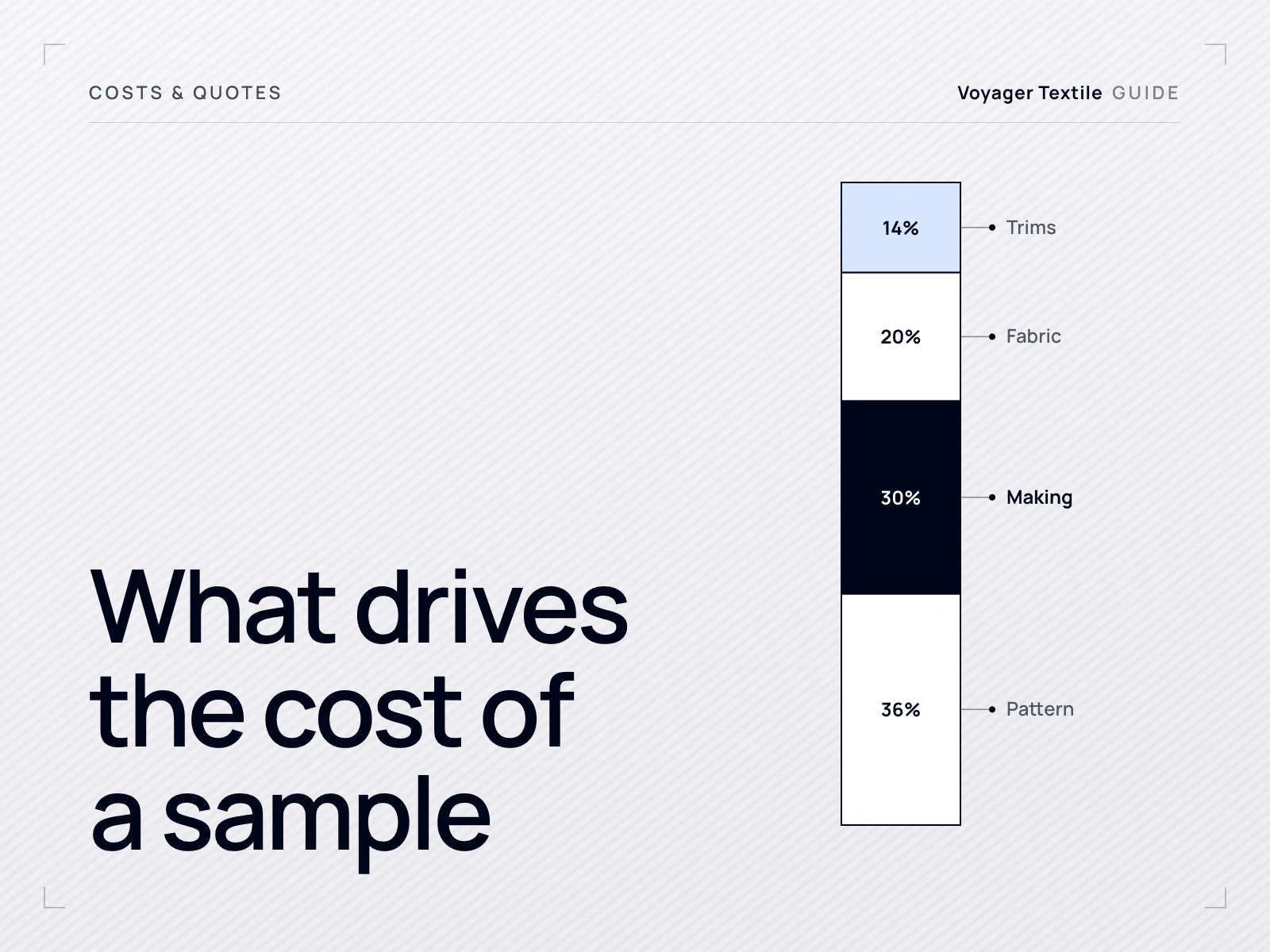
That is not a supplier being difficult. It is the same logic that applies when you pay an agency for a campaign or a developer for software: the deliverable, the rights and the future use are three different lines, and mature arrangements state all three. What a development charge actually covers is set out in what determines the cost of a sample; who ends up controlling the output of that work is this question, and the two are frequently answered as though they were one.
Third-party brands and logos
A buyer sends artwork carrying somebody else's brand, such as a sports team, an entertainment property, a university or a fashion label, and asks for it to be applied. The artwork arriving in an email establishes that the buyer has the file. It establishes nothing about whether the goods may lawfully be made and sold carrying that mark.
This is not scepticism about a particular customer. Licensed merchandise is an entirely normal business, and the authorisation chain behind it is normal too: a brand owner, sometimes a licensee, sometimes a sublicence, and a written permission that says which products, which territories and which period are covered. Where a programme carries third-party marks, establishing that chain is ordinary diligence on both sides. The same chain matters at the other end of a product's life, because an expired contractual restriction is one of the narrow grounds on which unsold stock may be destroyed. See the EU rules on destroying unsold apparel.
Reference garments, and where the benchmark stops
Sending a garment is one of the most efficient briefs in apparel, and development from a reference garment covers how that work runs. What that page also says, correctly, is that reproducing logos, brand names or protected design elements is a different matter. This section is about that boundary.
What a reference communicates, and what it does not license
Whether any particular element of a garment is protected depends on the law of the relevant territory and on the facts. This diagram separates the questions; it does not answer either of them.
Make this exactly is a sentence factories hear regularly, and it usually means something reasonable: match this fit, this construction, this fabric weight, this standard of finishing. Used that way a competitor garment is a legitimate and precise benchmark, and asking a factory to hit a workmanship standard you can hold in your hand is good sourcing.
Reproducing the branding, the original artwork or a distinctive protected appearance is a different request with different consequences, and the difference does not depend on how the request is phrased.
The same applies to images. A design being visible on a social platform, a marketplace listing or a brand's own site says nothing about whether it may be reproduced for sale. Availability is not permission, and neither is the absence of a visible registration.
Registration, and why it is territorial
Formal registration is a fifth question, separate from the four above. It is worth understanding structurally, because rights are territorial and the systems genuinely differ, which is the whole point of this section rather than a detail within it.
- European Union. EU design law is now set out in Regulation (EU) 2026/715 on European Union designs, which codified the earlier framework as reformed by Regulation (EU) 2024/2822 and Directive (EU) 2024/2823 and has applied since 1 July 2026. The reform replaced the term *Community design* with European Union design, so the current terms are the registered EU design and the unregistered EU design. Member States must transpose the Directive by 9 December 2027. Current information is published by EUIPO.
- Unregistered protection exists in the EU as well as registered: an unregistered EU design arises on first disclosure in the EU and protects against copying for a limited period, with independent creation a defence. The practical consequence is that the absence of a registration does not mean the absence of a right.
- United Kingdom. Since leaving the EU system the UK operates its own registered and unregistered design rights, administered by the Intellectual Property Office.
- United States. Product appearance is protected principally through design patents rather than a registered design right, and copyright reaches features of a garment only in limited circumstances. See the USPTO.
- Internationally, the Hague System administered by WIPO allows a design application covering multiple territories through one procedure.
Three different kinds of right are involved and they are not interchangeable. Broadly, original artwork and graphics are the territory of copyright; the appearance of a product is the territory of design rights; brand names, logos and other source identifiers are the territory of trade marks. Which of them applies to any particular thing, and whether it applies at all, depends on the law of the relevant territory and on the facts. Patents are a different subject again and are not covered here.
What to settle before files start moving
None of this needs a lawyer to begin with. It needs the questions asked at the point where the answers are cheap, which is before development rather than during a supplier transition.
Before development starts
Commercial clarity, not legal completeness. Where the stakes are high, take advice on the wording.
- Identify which artwork you are supplying, and where each piece originated.
- Identify anything carrying a third party's brand, and establish the authorisation position before it goes into development.
- Say what any reference garment is being used for, and supply your own branding for the product being made.
- Agree who is developing the pattern, and what may be done with it afterwards by each side.
- Agree where the boundary sits between the factory's existing blocks and know-how and your product-specific development.
- Agree who holds production setup files such as digitising, separations and screens, and whether they can be released or transferred.
- Agree whether you receive copies of the files, in which formats, and when.
- Agree what happens to all of the above at the end of the relationship or on a transfer.
- Settle confidentiality and, if it matters, exclusivity as separate questions. See confidentiality and exclusivity.
- Keep revision control on everything, so that what was supplied and what was developed is a matter of record rather than recollection.
The last point does more work than it looks like it does. When a specification is revised eleven times across two sample rounds, the question of who contributed what quickly becomes unanswerable unless somebody kept the versions. That is not a legal exercise. It is the same discipline the tech pack guide recommends for entirely practical reasons.
And the moment all of this surfaces is a transfer. A buyer wanting to move a product to another manufacturer discovers what they can actually take with them, which is why moving production to a new manufacturer recommends agreeing pattern ownership and file custody at the start of a relationship rather than at the end. That advice is easy to follow before there is anything to argue about.
Questions buyers ask
Who owns the tech pack in private-label clothing production?
It depends on what was agreed and on how the document arose. A tech pack the buyer brought complete, one the factory wrote from the buyer's instructions, and one built jointly across several sample rounds are different situations, and a jointly developed specification contains both the buyer's product decisions and the manufacturer's technical solutions. There is no universal rule, which is the reason to write it into the order terms.
Who owns a pattern created by a manufacturer?
There is no default answer, and it depends on the agreement and on how the pattern arose. A pattern developed entirely to a buyer's specification, an adaptation of a block the factory built at its own cost over years, and a pattern made by an external pattern maker are all different situations. What matters commercially is agreeing who may use, modify, transfer and reuse it.
Does paying for sampling mean I own the pattern?
Not by itself. Paying a sample fee, a pattern charge or a digitising charge pays for development work under agreed commercial terms. What may then be kept, modified, reused or transferred is a separate question that the agreement settles, in the same way that paying an agency for a campaign and owning the rights in it are two different lines.
Can I take a factory-created pattern to another manufacturer?
That depends on what was agreed about who may use and transfer it, and on who holds the files. It is a question buyers often discover unanswered at the moment they need it, and it is straightforward to settle at the start of a relationship. The related practical issue is that digitised embroidery files and print separations are frequently held by a decorator rather than by either party.
Can a manufacturer copy a garment I send as a reference?
A reference garment is a legitimate benchmark for fit, construction, material behaviour and workmanship, and developing from one is normal practice. Reproducing logos, brand names, original artwork or a distinctive protected appearance is a separate matter with its own rights questions, and whether any particular element is protected depends on the law of the relevant territory and on the facts.
Is changing a competitor's design slightly enough to avoid IP problems?
No, and any rule offering a percentage of change or a number of details to alter is a superstition rather than a principle. Calling a product inspired by something does not change its status either, because the label the parties use has no bearing on whether a right has been affected. If a design is close to somebody else's, that is a question for legal advice rather than for a modification formula.
What should a factory be given before applying a third-party logo?
Enough to establish that production and sale of those goods carrying that mark is authorised. Supplying the artwork demonstrates possession of a file and nothing more. What evidence is appropriate depends on the programme and the risk, and there is no single universal document, but the authorisation chain behind licensed merchandise is a normal thing to ask about.
If a design is not registered, is it free to copy?
No. Unregistered protections exist in several systems: an unregistered EU design, for example, arises on first disclosure and protects against copying for a limited period, and other rights such as copyright in artwork or trade mark rights in a logo can apply regardless of any design registration. The absence of a visible registration establishes very little.
Settle it before development, not during a transfer
Tell us what you are supplying, what you want developed and what you need to be able to take with you afterwards. We would rather answer those questions in the first conversation than have either side assume an answer.
Start an enquiry